
The Trialogues
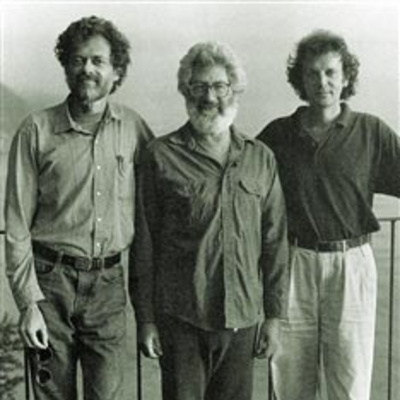
The Trialogues features unedited recordings of discussions between Rupert Sheldrake, Ralph Abraham, and Terence McKenna that took place from 1989 to 1998 in America and England. The conversations cover a wide range of topics including science, philosophy, and consciousness. The podcast is sourced from the Sheldrake.org website.
Episodes
20. Fields, Brains and Chaos
Part I Esalen, California, 1991. Not found in a book. Fields as the interface between the mind and brain. The role of fields in our understanding of physical reality. Can all order in nature be traced to the organising or patterning influence of fields? Memory and mental fields. A morphic field theory of the mind. Modelling brain function and the relationship between the mind and the brain. The co
19. Psychedelics and the Computer Revolution
Part I: Esalen, California, 1991. Not found in a book. What are the connections between psychedelics and the computer revolution? Some examples of the causal relationship between psychedelic use and creativity in the computer industry. A look at the parallel chronologies and future synthesis of computers and psychedelics. Creativity as a natural resource. Electronic media is returning us to an eye
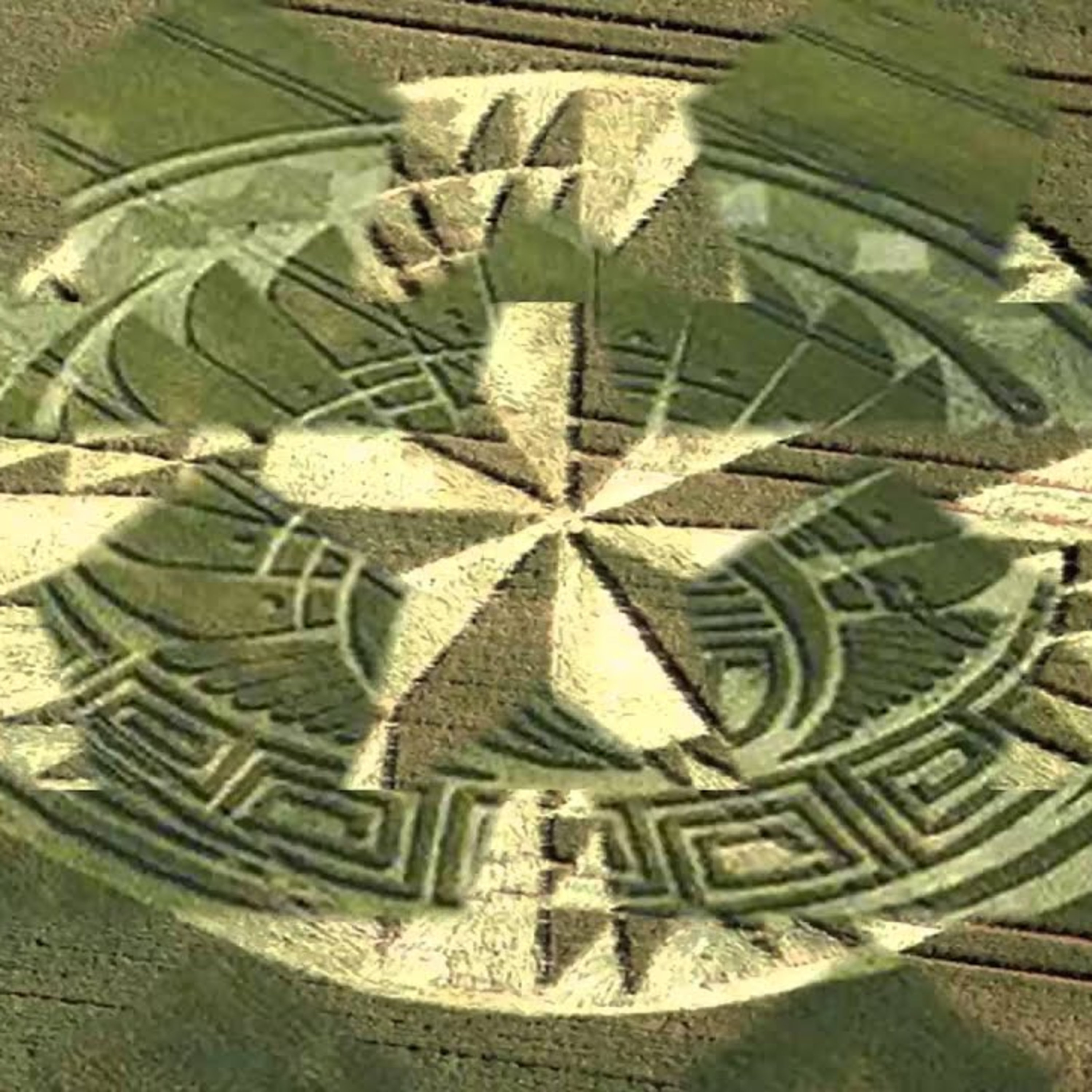
18. Crop Circles
Part I Esalen, California, 1991. Not found in a book. Exploring the crop circle phenomenon. The Plasma Vortex theory. Why are crop circles associated with megalithic sites? The evolution of their patterns and features. A look at some of the diverse theories: from migrating hedgehogs to the celestial theory. Is there a single satisfying explanation? Is the hoax theory an unlikely explanation? Teren
17. Cannabis
Part I: Esalen, California, 1991. Not found in a book. Terence's interest in cannabis. The feminising and boundary-dissolving influence of cannabis. Cannabis intoxication and dreams. Cannabis and anxiety. Victorian tales of cannabis. The influence of hashish on India and the Middle East. Cannabis as the carrier of a new set of values. A tool for creativity and the enhancement of empathy and commun
16. Gender Issues
Part I Esalen, California, 1991. Not found in a book. Ralph's hypothesis of androgyny. A person's soul does not necessarily share the gender restriction of the biological body. Social practices that emphasize gender differences can hinder the exposure of a complete person. Achieving maximum androgyny through the exploration of sexual experience. Proposals for the salvation of the nuclear family. H
15. Saving the World
Part 1: Esalen, California, 1991. Not found in a book. What can be done to solve the problem of over-population and resource depletion? Could encouraging a population policy save the world without disregarding individual concerns? How do you provoke a shift in consciousness that would result in people wanting less children? Resource depletion in high-tech societies. The prejudice against only chil

14. Grass Roots Science
Part 1: Chapter 1 of The Evolutionary Mind. The institutionalisation of mainstream science has alienated the public and marginalised the amateur base of science. A new model for science is both possible and necessary. The need for big science to reintegrate with grassroots science. Examples of important low budget amateur research projects. How the computer revolution and the formulation of specif
13. The Apocalypse
Part 1: Chapter 10 of Trialogues at the Edge of the West. The apocalyptic tradition: paranoid self-fulfilling prophecy or an intuition of instability? Stripping the provincialism from apocalyptic messages. Apocalyptic scenarios, including the 'God-whistle' theory. The ecological catastrophe as the appropriate interpretation of the Apocalypse. Steering the Apocalypse toward a tolerable conclusion.

12. Education in the New World Order
Part 1: Chapter 10 of Trialogues at the Edge of the West. The apocalyptic tradition: paranoid self-fulfilling prophecy or an intuition of instability? Stripping the provincialism from apocalyptic messages. Apocalyptic scenarios, including the 'God-whistle' theory. The ecological catastrophe as the appropriate interpretation of the Apocalypse. Steering the Apocalypse toward a tolerable conclusion.
11. The Resacralisation of the World
Part 1: Chapter 8 of Trialogues at the Edge of the West. In what ways can we bring the sacred back into the world? Ralph's religious background. Loss of connection to the sacred as a root cause of world problems. Resumption of rituals. Resacralization of music. The aesthetics of the world soul. Feminism, the revival of partnership society and a reinvigorated psychedelic priesthood. Revival of Goth
10. The Unconscious
Part 1: Chapter 7 of Trialogues at the Edge of the West. What is the nature of the unconscious, and how can we access its restorative powers? Bifurcation theory of the unconscious. Evil and the repression of chaos. Escape from evil by bringing the unconscious back. The idea of the sacred city. From psychedelic partnership phase to restrictive dominator phase. Alcohol and cultural neurosis. The age
9. Entities
Part 1: Chapter 6 of 'Trialogues at the Edge of the West'. Are disincarnate and non-human entities mental projections or non-physical, autonomous entities? What can we learn from them? Their variety and persistence in human history. Early modern science and angelic communication. The shamanic model. The aversion to the irrational in Christianity and science. The need to analyze the entities' messa
8. Light and Vision
Part I: How is our own vision related to light, and how is the perception of the world soul related to light? What is the connection between physical light and other definitions of light? Where are visual images located? Attention felt across space and the sense of being stared at. The electromagnetic field as the medium of the morphic field. A look at some possible experiments in this area. Dowsi

7. Chaos and the Imagination
Part I: How can chaos theory and full access to the imagination aid us in our understanding of the world and in the creation of our future? Chaos in mythology. The repression of chaos, the rise of patriarchy and the fall into history. The chaos revolution. Bringing chaos tangential to the burning planet. Vision plants and shamanism. Our 'secret history' and how it relates to the Gaian mind. The cr
6. Creativity and Chaos
Part I: The chaos revolution, chaotic attractors and indeterminism in nature. The emergence of form from the field of chaos. The formative process in cooling. Is the mathematical realm of the world soul in co-evolution with ordinary reality? The potential of mathematics to aid us in our own evolution by extending our language for dealing with complex systems. Visual intuitions and the Butterfly Ef
5. Creativity and the Imagination
Part I: The crisis in science: collision between the permanent and evolutionary views of the nature of reality. The universe as an evolving system of habits. Did natural law exist before the Big Bang? Cosmic creativity, imagination and the womb of chaos. Chaotic sudden perturbations. The Omega Point. The ego's response to chaos. The cosmic attractor in the evolutionary process.
Part 2 (45:08): How
4. History, Fractals and Change
The fractal idea of history, and millenia as the plateaus of history. These bifurcation periods as opportunities to influence the creation of the future. What kind of future or change are we trying to create? The need for the enhancement and spread of clarity. Psychic pets and their role in breaking the spell of rationalism. Psychedelics, the World Wide Web and psychic pets as forms of boundary di
3. Consciousness and Machines
A discussion on the evolution of consciousness as it relates to machines. Symbolic logic, nanotechnology and the possibility of a synthetic super-intelligence. Artificial Intelligence as a part of ourselves that could shape our evolution. Virtual computers as the source of the AI. Partnership or conflict between human and machine? How much control do we have in the evolution of machine intelligenc
2. The Evolutionary Mind
What could have been the cause for the breakthrough in the evolution of human consciousness around 50,000 years ago? Collective memories of predation and how they may shape our minds today. The role of the imagination in our evolution. Physiological evolution and the idea of divine brain surgery. The psilocybin hypothesis. The transformation of human nature through connection with higher levels of
1. Cast of Characters
An introduction to the first series of public trialogues held at Esalen, California in 1989. Morphic Resonance, the novelty wave, chaos mathematics, and their roles in the paradigm shift. The vision of nature as alive, and a new understanding of the soul of the world. The three masks - evolutionary creativity, the cosmic imagination and chaos. Insights into the nature of time. The practical applic
Recommended

Learn English A2 with Daily News | Simple English Listening Practice

پلی لیست | PlayList
Conspiracy Files with Paige Carter
Bad Friends

Learn 50 English Phrases While You Sleep | Everyday English Phrases & Vocabulary
This Past Weekend w/ Theo Von
Dateline NBC
Back to the 80s Radio

Crime Stories with Nancy Grace
Bible Tea

این نقطه
TED Business
