HomePodcastsThe Story of Peru: The Inca Legacy and Modern Nation Building — Fexingo History
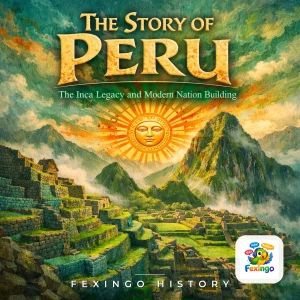
The Story of Peru: The Inca Legacy and Modern Nation Building — Fexingo History
Fexingo173 EpisodesOct 13, 2026
From the cloud-wreathed peaks of the Andes to the arid coastal plains, Peru's history is a tapestry of ancient civilizations, imperial ambition, and resilient nation-building. Lucas and Luna guide listeners through the rise of the Inca Empire—from its mythical origins in the Valley of Cusco under Pachacuti to the vast network of roads, terraces, and storehouses that sustained Tawantinsuyu. They explore the intricacies of Inca governance, the worship of Inti, the sun god, and the mummified remains of emperors that held political power beyond death. The show then pivots to the Spanish conquest: the betrayal at Cajamarca, the capture of Atahualpa, and the tragic fall of a civilization. But this is not a story that ends with the colonial era. Over centuries, indigenous traditions fused with European and African influences to shape modern Peru. Lucas and Luna dissect the wars of independence, the figure of Simón Bolívar, the devastating War of the Pacific, and the complex legacy of the Shining Path uprising. They examine how the discovery of Machu Picchu rekindled national pride, the ongoing struggle over land rights and Quechua language preservation, and the tensions between neoliberal.
Episodes
Tupac Amaru II: The Last Inca RebellionOct 13, 20268:08This episode explores the dramatic life and execution of José Gabriel Condorcanqui, known as Túpac Amaru II, who led the largest indigenous uprising against Spanish rule in colonial South America. We trace his transformation from a respected local cacique and tax collector to a revolutionary leader inspired by Enlightenment ideals and Inca heritage. The narrative details the brutal repression foll
The Battle of Vilcabamba: Last Stand of the IncaOct 11, 20269:45By 1572, the Spanish had conquered Cusco and executed the last ruling Sapa Inca, but a rump state persisted in the high jungle fortress of Vilcabamba. This episode explores the final, desperate campaign to extinguish Tawantinsuyu’s independence. We follow General Apu Kuti Yupanqui and his son Titu Cusi as they wage a guerrilla war against the relentless forces of Viceroy Francisco de Toledo. The n
The Jesuit Missionaries and the Andean SyncretismOct 10, 202610:05This episode explores the complex relationship between the Jesuit order and the Andean world in the seventeenth and eighteenth centuries. We examine how missionaries like Juan de Arona navigated indigenous beliefs to establish missions in the Amazonian foothills. The narrative covers the concept of syncretism, where Catholic saints were mapped onto Pachamama and other local deities. We also discus
The Last Inca: Tupac Amaru II's RebellionOct 9, 20267:03This episode explores the dramatic uprising of José Gabriel Condorcanqui, known as Túpac Amaru II, in 1780s Peru. We trace his transformation from a respected local leader to the figurehead of a massive anti-colonial revolt against the Bourbon reforms. The narrative details the brutal suppression led by Viceroy Agustín de Jáuregui and the execution of Túpac Amaru II in Cusco’s main plaza. We exami
The Jesuit Rebellion: Inca Resistance in the AmazonOct 8, 20268:19We often think of Inca resistance ending with the fall of Vilcabamba, but the fight for sovereignty continued deep in the rainforest. This episode explores the unique alliance between the Jesuit missionaries and the indigenous communities who used the mission system as a shield against colonial exploitation. We look at the life of Juan de Arona, a mestizo leader who navigated the treacherous polit
The Inca Bridge of the Sun: Qoyllur Rit'i PilgrimageOct 7, 20268:04In this episode, we travel beyond the stone ruins and silver mines to explore one of South America’s most vibrant living traditions: the Qoyllur Rit'i pilgrimage. We follow the journey of thousands of Andean devotees who climb to the snow line at Ausangate to honor Pachamama and the Star Prince, blending pre-Columbian astronomy with Catholic devotion. Lucas details the history of the syncretic rit
The War of the Two PachacutisOct 6, 202610:10While history remembers Pachacuti as the empire-builder who reshaped the Andes, his rise was paved with civil war. This episode explores the brutal conflict between Inca rulers Huáscar and Atahualpa, focusing on the role of the general Rumiñahui and the strategic siege of Cusco. We examine how internal division left the empire vulnerable to Pizarro’s small force, tracing the military campaigns tha
Atahualpa’s Ransom: Gold, Silver, and the Price of an EmpireOct 5, 20268:44In this episode of The Story of Peru, we explore the most famous ransom in history and the complex reality behind Atahualpa’s capture by Francisco Pizarro in 1532. While popular lore claims the Inca emperor filled a room with gold to secure his freedom, the actual transaction involved massive quantities of silver and intricate colonial accounting that fueled the Spanish Crown. We examine how Pizar
The Quipu Masters: How Inca Knots Managed an EmpireOct 4, 20267:31While the Spanish burned libraries, Inca administrators relied on quipus—knotted cords—to govern a vast empire. This episode explores the sophisticated world of the khipukamayuq, the master knot-makers who turned yarn into data. We trace how these systems tracked everything from silver taxes to population censuses across the Andes. The narrative focuses on the tension between oral tradition and wr
The Spanish Plague and the Inca Population CollapseOct 3, 20268:14While we often focus on the military conquest or the architectural marvels of the Tawantinsuyu, there is a silent, devastating force that reshaped Peru long before the final fall of Vilcabamba. This episode explores how smallpox arrived in the Andes decades before Pizarro’s armies reached Cusco, triggering a demographic catastrophe that fractured the empire from within. We trace the path of the di
The Inca Bridge Builders of the AndesOct 2, 20267:34We often think of the Inca Empire as a place of stone cities and silver mines, but their most enduring legacy might be invisible beneath our feet. This episode explores the Chasqui runners and the suspension bridges that connected Tawantinsuyu across the deepest ravines of the Andes. We look at how the Qhapaq Ñan road system relied on materials like ichu grass and cotton to span gaps that would ha
Inca Quipu: The Knots That Built an EmpireOct 1, 202610:15Before the Spanish arrived, the Inca Empire of Tawantinsuyu had no written language, yet it managed to administer a vast territory stretching from modern-day Colombia to Chile. This episode explores the quipu, a sophisticated system of knotted cords that served as the empire’s primary tool for record-keeping and communication. We examine how khipukamayuq, or quipu masters, encoded complex data ran
Inca Mummies and Colonial Power in CuscoSep 30, 20269:21In Episode 248, we explore how Viceroy Francisco de Toledo weaponized the mummified ancestors of the Sapa Inca to consolidate Spanish control over the Andes. Following the fall of Vilcabamba, Toledo did not just conquer land; he conquered time. We examine his controversial decree to gather every known royal corpse from Machu Picchu to Ollantaytambo and parade them through the streets of Cusco. Thi
The Spanish Inquisition’s Andean Witch HuntSep 29, 20268:45In 1570, the Spanish Crown launched a terrifying campaign against the indigenous population of Peru that has little to do with traditional witchcraft and everything to do with imperial control. This episode explores the Auto-da-fé in Cusco, where the Holy Office of the Inquisition targeted Andean religious practices under the guise of heresy. We focus on the trial of Sayri Túpac’s courtiers and th
Inca Gold and Spanish Silver: The Colonial EconomySep 28, 20265:30While earlier episodes covered the military fall of the Neo-Inca State and the brutality of the mita labor system, this episode examines the economic machinery that followed. We explore how Viceroy Francisco de Toledo formalized the extraction of wealth from Potosí and Cusco, transforming the Andes into the financial engine of the Spanish Empire. Lucas and Luna discuss the specific policies Toledo
Inca Mummies and Colonial Power in CuscoSep 27, 20266:56This episode explores the unsettling intersection of Inca ancestor worship and Spanish colonial rule in late sixteenth-century Cusco. We focus on the 1571 decree by Viceroy Francisco de Toledo, which mandated the public display of royal mummies to legitimize Spanish authority over the Andes. Lucas and Luna examine how the Spaniards repurposed sacred sites like the Coricancha and Sacsayhuaman for t
Inca Bloodlines and Colonial Cusco: The Mestizo IdentitySep 26, 20268:46We trace how the conquest of Tawantinsuyu reshaped modern Peru through the lens of mestizaje. After episodes on the Inca state, textiles, and rebellions, we focus on the human reality of mixing cultures in colonial Cusco. We explore Diego de Castro Titi Yupanqui’s chronicle, which offers a rare Indigenous perspective on Spanish rule. You will hear about the kuraka class, their negotiated power, an
Inca Silver: How Potosí Built Modern PeruSep 25, 202610:05This episode explores the economic transformation of colonial Peru through the lens of the silver mines at Potosí and the mita labor system. We examine how the Spanish Crown repurposed Inca administrative structures to extract wealth, focusing on Francisco de Toledo’s reforms in the 1570s. The conversation details the brutal reality of the mitayos, the role of indigenous nobles like Diego Cristóba
The Andean Mita: Inca Labor to Colonial Silver MinesSep 24, 20267:05In this episode of The Story of Peru, we explore the harrowing transformation of the mita system from a reciprocal Inca labor obligation into the brutal engine of the Spanish colonial economy. Lucas and Luna trace how Viceroy Francisco de Toledo codified this forced labor draft in 1573, redirecting indigenous communities toward the silver mines of Potosí. We examine the specific mechanics of the m
Inca Labor Systems and the Colonial MitaSep 23, 20268:39We explore how the Spanish Crown repurposed the Inca mita for silver extraction in Potosí, fundamentally altering Andean society. Lucas and Luna discuss the brutal realities of the colonial labor draft, the demographic collapse it caused, and the resistance strategies employed by indigenous communities. We examine specific figures like Diego de Castro Titi Yupanqui and the administrative decisions
Inca Road Builders: Qhapaq Ñan EngineeringSep 22, 20266:20This episode explores the Qhapaq Ñan, the Great Inca Road system that connected Tawantinsuyu across some of the most treacherous terrain on Earth. We trace how the empire didn't just build roads, but engineered an entire logistical ecosystem including chaski messenger stations, suspension bridges made of ichu grass, and tambos waystations. Lucas and Luna examine the labor demands behind this infra
Inca Stone Craft: How Earthquakes Shaped CuscoSep 21, 20269:12While many episodes cover the political struggles of the Inca Empire, this episode focuses on the physical legacy that survived conquest and time: the ashlar masonry of Cusco. We explore how Pachacuti’s great earthquake in the mid-15th century didn't just destroy the city but forced a revolution in engineering. Lucas and Luna examine the specific techniques behind the interlocking polygonal stones
The Andean Revolutionaries Who Outsmarted SpainSep 20, 20266:31In Episode 238, Lucas and Luna explore the lesser-known indigenous uprisings in late colonial Peru that predated Tupac Amaru II. We focus on Diego Cristóbal Túpac Amaru’s guerrilla campaign in Vilcabamba, his diplomatic maneuvering with Spanish viceroyies, and the strategic use of terrain to resist the Viceroyalty of Peru for decades. The conversation details how Inca nobles maintained sovereignty
The Inca Quipu: Decoding the Andes Without WritingSep 19, 20267:54This episode explores the sophisticated system of knotted strings known as quipu, which served as the administrative backbone of the Tawantinsuyu. We examine how khipukamayuq used color, position, and knot type to record census data, tax obligations, and historical narratives without a written script. The discussion covers the colonial destruction of these records, the role of Diego de Castro in p
The Quipu That Saved Peru: Decoding the Inca LegacySep 18, 20266:59For centuries, historians dismissed the quipu as mere accounting tools, a limitation of a culture without written script. But recent breakthroughs in computational archaeology suggest these knotted cords held something far more complex: a rich oral history and administrative language that survived the Spanish conquest. We explore how Dr. Marc Acuto and his team at IBM used machine learning to deco
The Last Inca Uprising: Tupac Amaru II's RevoltSep 17, 202610:25In 1780, José Gabriel Condorcanqui, known as Tupac Amaru II, launched the largest indigenous uprising in colonial South America. This episode explores how a nobleman with Tawantinsuyu lineage leveraged his status as a kuraka to organize a massive rebellion against the Spanish corregidores and the Viceroyalty of Peru. We trace the brutal siege of Cusco, the strategic reforms proposed by Manuel Amat
Inca Textile Economy and the Power of ClothSep 16, 20266:56While previous episodes have explored the grandeur of Inca architecture, the complexity of the quipu, and the brutality of Spanish conquest, this episode turns its gaze to the material foundation of Tawantinsuyu: textiles. We examine how cloth was not merely a commodity but the primary currency, diplomatic tool, and administrative metric of the empire. Lucas traces the journey from alpaca fleece t
Pachacuti's Earthquake and the Inca Seismic MiracleSep 15, 202610:09This episode explores the architectural genius of the Inca Empire through the lens of their most enduring test: the earthquake. We focus on Emperor Pachacuti, who transformed Cusco into a testament to seismic resilience after the devastating tremors of the late fourteenth century. Lucas walks us through the specific engineering techniques—ashlar masonry, trapezoidal doors, and polygonal stones—tha
The Jesuit Rebellion: Inca Nobles in Colonial CuscoSep 14, 20269:06This episode explores the unexpected resilience of Inca nobility in colonial Cusco, focusing on the Jesuit Rebellion led by Juan de Santa Cruz Pachacuti Yamque Salcamayhua and Tupac Amaru I. While earlier episodes covered the military fall of Vilcabamba and the brutal suppression of Tupac Amaru II’s uprising, we turn to a quieter, more complex struggle for power within the city itself. We examine
The Inca Quipu: Decoding the Andes Without WritingSep 13, 20268:34While European chronicles describe the grandeur of Tawantinsuyu, they often missed its most sophisticated technology: the quipu. This episode explores how the Inca empire managed a vast domain without a written alphabet, relying instead on knotted cords and colored strings to record taxes, census data, and perhaps even history. We follow the journey from the mit'a labor system to the Spanish destr
Manco Inca's Guerrilla War and the Fall of VilcabambaSep 12, 202610:36While previous episodes covered the grand architecture and sacred landscapes of the Inca Empire, this episode turns to the desperate, decades-long resistance that followed the Spanish conquest. We trace Manco Inca Yupanqui’s dramatic escape from Cusco in 1536 and his establishment of a hidden stronghold in the cloud forests of Vilcabamba. Lucas walks through the tactical brilliance of the Inca gue
The Mestizo Chronicles: How Inca Blood Built Modern PeruSep 11, 20267:25In this episode, we explore the complex legacy of mestizaje in post-colonial Peru, focusing on how indigenous nobility and Spanish settlers intertwined to shape a new national identity. We examine the lives of figures like Diego de Castro Titi Yupanqui, an Inca descendant who navigated the colonial bureaucracy with surprising agency, and the legal strategies used by kurakas to protect land rights
Tupac Amaru II's Rebellion and the Price of ReformSep 10, 202610:45In 1780, José Gabriel Condorcanqui, known as Tupac Amaru II, launched a massive indigenous uprising against Spanish rule in Peru. This episode explores how his rebellion was not just a violent revolt but a calculated attempt to restore Inca sovereignty while challenging the exploitative colonial system. We examine the role of the corregidores, the brutal suppression led by Viceroy Agustín de Jáure
Tupac Amaru II and the Last Inca UprisingSep 9, 202610:02In 1780, José Gabriel Condorcanqui, who took the name Tupac Amaru II, led the largest indigenous rebellion against Spanish rule in colonial South America. This episode explores how a minor magistrate in Tinta, Peru, transformed into a revolutionary leader by appealing to his people's grievances against the mit'a labor system and abusive corregidores. We trace his initial successes, the brutal sieg
The Last Inca: Vilcabamba and the Fight for SurvivalSep 8, 20267:23After Manco Inca fled Cusco, the remnants of the Tawantinsuyu established a hidden stronghold in the cloud forests of Vilcabamba. This episode explores the final thirty-eight years of Inca sovereignty, focusing on the strategic brilliance and tragic fate of Sayri Tupac and his younger brother, Titu Kusi Yupanqui. We examine how these rulers navigated a precarious balance between Spanish demands an
Inca Textiles: The Language of Cloth and PowerSep 7, 20268:55While we often fixate on Inca stone masonry or the vast Qhapaq Ñan road system, the true currency of Tawantinsuyu was cloth. This episode explores how woven textiles served as money, political tribute, and a complex visual language encoded in color and pattern. We trace the journey from raw alpaca fleece to the finest cumbi garments worn by the elite, examining how the state controlled every stage
Manco Inca's Siege of Cusco: The Last Great Inca DefenseSep 6, 20268:20In 1536, just months after the Spanish conquest of the Inca heartland, Manco Inca Yupanqui launched a massive uprising that nearly drove the conquistadors out of Peru entirely. This episode explores the dramatic siege of Cusco, where tens of thousands of indigenous warriors surrounded the city, cutting off supply lines and engaging in brutal urban warfare against Francisco Pizarro’s small garrison
The Spanish Plague That Toppled the Inca EmpireSep 5, 20269:47Before Pizarro arrived in 1532, a deadly pathogen carried by enslaved Africans swept through the Andes from Mexico. This episode explores how the smallpox epidemic of 1527-1528 struck Tawantinsuyu with devastating precision, killing Emperor Huayna Capac and his designated heir Ninan Cuyupi during a time of peace. The resulting civil war between half-brothers Atahualpa and Huáscar fractured the emp
The Spanish Inquisition in Cusco: Faith and FearSep 4, 20269:25In 1572, Viceroy Francisco de Toledo launched a sweeping campaign to dismantle the spiritual heart of the Inca Empire. This episode explores the forced removal of sacred stones, the burning of mummies, and the systematic destruction of huacas across Cusco. We examine how the Spanish Inquisition operated in the Andes, not just as a religious court but as an instrument of cultural erasure. Through t
The Jesuit Rebellion: Inca Nobles and Colonial PowerSep 3, 20268:45In Episode 221, we explore the surprising resilience of Inca nobility in colonial Cusco through the lens of the Jesuit Rebellion. While previous episodes covered the brutal conquest and the fall of the Sapa Inca, this episode focuses on the complex political maneuvering that allowed figures like Juan de Santa Cruz Pachacuti Yamque Salcamayhua to wield significant influence decades after the empire
Inca Silver Mines and the Price of Spanish GoldSep 2, 20266:13This episode explores the paradox of Inca metallurgy, where gold was sacred but silver was common, until the discovery of Cerro Rico in Potosí changed everything. We trace how Francisco de Toledo’s mita system forced indigenous labor into the mines, creating a wealth that funded the Spanish Empire while devastating Andean communities. Through the stories of kurakas like Huamán Poma de Ayala and th
The Jesuit Rebellion: How Inca Nobles Kept PowerSep 1, 20268:13In 1650s Cusco, a Spanish priest named Juan de Santa Cruz Pachacuti Yamque Salcamayhua did something radical: he wrote the greatest defense of Inca civilization in its own language. This episode explores how the Jesuit order, initially sent to convert Indigenous peoples, instead became their unlikely protectors against colonial exploitation. We trace the life of Tupac Amaru I, the first indigenous
Inca Roads Beyond the Empire: The Chachapoya and the Cloud ForestAug 31, 20269:49In this episode, Lucas and Luna step off the Qhapaq Ñan and into the cloud forests of the northern Andes, where the Chachapoya people — the 'Cloud Warriors' — built a world of cliff tombs and circular stone villages. We follow their encounters with the Inca Empire, from the fierce resistance of the fortress of Kuelap to the eventual integration under Tupac Inca Yupanqui. We explore how the Chachap
Inca Cusco: The City of the Sacred PumaAug 30, 20269:28In this episode, Lucas and Luna explore the Inca capital of Cusco, a city planned in the shape of a puma and built to be the center of the Tawantinsuyu. They discuss the original street grid, the role of the Waqaypata plaza, and the palaces of the Sapa Incas, including the famous Hatunrumiyoc with its twelve-angled stone. They also examine how the Spanish conquest transformed the city, from the co
Inca Bridge Building: Rope Bridges Across the AndesAug 29, 20268:38Before the Spanish arrived, the Inca Empire stretched along the spine of the Andes, a landscape carved by deep canyons and raging rivers. To hold it together, Inca engineers built a network of suspension bridges woven from plant fiber — some spanning over a hundred feet. These were not crude lassos; they were carefully maintained structures, replaced every year or two with fresh rope, and guarded
The Inca's Royal Road: Qhapaq ÑanAug 28, 20269:48In this episode, Lucas and Luna explore the Qhapaq Ñan, the Inca road system that stretched over 24,000 miles across the Andes. They trace its origins from pre-Inca trails to its expansion under Pachacuti, and follow its path from Cusco through Quito to the coast. Along the way, they discuss how the road was built without the wheel, the role of chaskis and tambos, and how the Spanish used it to co
Waq'as and the Sacred Landscape of the IncaAug 27, 20267:41In this episode of The Story of Peru, Lucas and Luna explore the hidden world of waq'as — the sacred objects, places, and shrines that formed the spiritual backbone of the Inca Empire. From the huacas of Cusco to the ceque system that organized them into a cosmic map, discover how these living presences governed daily life, ritual, and even politics. The conversation touches on the role of the wil
Inca Water Worship: Springs, Canals, and Sacred FlowAug 26, 20268:17In this episode of The Story of Peru, we dive into the Inca's deep relationship with water — not just as a practical resource, but as a sacred force. From the engineered canals of Tipón, which still flow today, to the ritual baths of Tambomachay, we explore how the Inca honored water deities and integrated them into their agricultural and ceremonial life. Lucas and Luna discuss the concept of the
Inca Stone Masonry: Fitting the Andes TogetherAug 25, 20267:43In this episode, Lucas and Luna explore the remarkable stone masonry of the Inca Empire, focusing on the famous polygonal walls of Cusco and Machu Picchu. They discuss how the Incas, without iron tools or the wheel, shaped and fitted massive stones so precisely that a knife blade cannot slip between them. The conversation covers the techniques of pounding, polishing, and fitting stones, the role o
Inca Farming Terraces: Engineering the AndesAug 24, 20267:12In this episode, Lucas and Luna step back from the gold and the battles to look at the ground itself — the terraces that fed the Inca Empire. We trace the origins of Andean terracing back thousands of years before the Inca, then see how the Inca scaled it up to industrial levels. We talk about the engineering genius: the layered fill of rocks, sand, and soil that drained water and prevented landsl
Inca Bronze Working: Alloys of the AndesAug 23, 20268:38While the Inca are famous for gold and silver, their mastery of bronze was the true technological engine of Tawantinsuyu. In this episode, Lucas and Luna explore how Andean metallurgists developed a unique arsenic bronze centuries before the Inca, and how the Inca state perfected tin bronze for tools, weapons, and ritual objects. They discuss the mines of the Andes, the alloying process, and the s
The Inca Sun Temple of Coricancha: Gold, Eclipses, and ConquestAug 22, 20268:05In this episode of The Story of Peru, Lucas and Luna explore the Coricancha, the Inca Empire's most sacred temple complex in Cusco. They trace its transformation from a shrine to the sun god Inti, to a golden showcase of imperial power under Pachacuti, to its destruction during the Spanish conquest. Along the way, they discuss the temple's role in astronomical observation, the ceque system that li
The Inca's Sun Stone: Intihuatana and Cosmic TimeAug 21, 20267:56This episode of The Story of Peru turns away from the familiar conquest narrative to focus on a lesser-known marvel of Inca engineering and astronomy: the Intihuatana, or 'hitching post of the sun.' Lucas and Luna explore how these carved stone pillars anchored Inca cosmology, marking solstices, equinoxes, and the sacred rhythm of the agricultural year. They discuss the most famous Intihuatana at
The Inca Empire's Secret Weapon: Quinoa and AgricultureAug 20, 20267:30In this episode, Lucas and Luna explore the agricultural backbone of the Inca Empire, focusing on how quinoa and other native crops sustained a civilization that stretched along the Andes. From the terraces of Moray to the chinampas of the highlands, discover the engineering and cultivation techniques that fed millions. They discuss the role of the ayllu in communal farming, the significance of th
The Inca Queen's Legacy: Coya Mama Ocllo's Forgotten StoryAug 19, 20268:20In this episode of The Story of Peru, we trace the life and legacy of Coya Mama Ocllo, the principal wife of the Sapa Inca Pachacuti and the mother of Tupac Inca Yupanqui. Through her story, we explore the political and symbolic role of the coya in the Inca Empire — how she embodied the moon, managed the panaca, and wielded soft power in a world dominated by men. We discuss the marriage customs of
The Chasqui Relay: Running the Inca Empire TogetherAug 18, 20267:31In this episode of The Story of Peru, Lucas and Luna explore the human network that kept the Inca Empire connected: the chaskis, relay runners who carried messages and goods along the Qhapaq Ñan. They discuss the rigorous training, the khipu records, the tambos that supported them, and the social status of these runners, drawing on accounts from Pedro de Cieza de León and Inca Garcilaso de la Vega
The Last Sapa Inca: Tupac Amaru's Final StandAug 17, 20267:44In 1572, the last Inca emperor knelt in the main plaza of Cusco, and with his death, a dynasty that had ruled the Andes for centuries came to an end. This episode tells the story of Tupac Amaru, the final Sapa Inca of Vilcabamba, and the Spanish campaign that hunted him down. We follow his flight from the rebel stronghold, the betrayal that led to his capture, and the dramatic execution that shock
The Inca's Bridge to the Future: Quipu Beyond NumbersAug 16, 20266:12In this episode, Lucas and Luna explore the khipu—the knotted-string recording system of the Inca—as more than an accounting tool. They discuss recent breakthroughs by researchers like Sabine Hyland and Manuel Medrano, who are uncovering possible narrative and even literary dimensions in these cords. The conversation touches on the Spanish chroniclers' accounts, the khipukamayuqs who maintained th
The Inca Tax System: Mit'a Labor and the State's DemandsAug 15, 202610:11In this episode, Lucas and Luna unpack the Inca labor tax known as the mit'a, the rotary draft that required every able-bodied man to contribute weeks of work to the state. Unlike the European corvée, the mit'a was embedded in the Inca worldview of reciprocity, where the Sapa Inca, as the son of Inti, was expected to redistribute the fruits of this labor. From the vast agricultural terraces and st
Inca Child Sacrifice: The Capacocha RitualAug 14, 20268:41In this episode, Lucas and Luna explore the Inca practice of capacocha, the ritual sacrifice of children that took place at the empire's most sacred sites. They discuss the mummy known as the 'Llullaillaco Maiden', discovered on an Andean peak in 1999, and what her frozen remains reveal about Inca religion and politics. The conversation covers the role of the Sapa Inca, the selection of children,
The War of the Two Brothers: Atahualpa vs HuáscarAug 13, 20269:10In this special 200th episode, Lucas and Luna dig into the Inca civil war that tore Tawantinsuyu apart just before Pizarro's arrival. Atahualpa and Huáscar, sons of Huayna Cápac, fought a brutal succession war from 1529 to 1532. The episode traces the rival claims, the key battles at Tumipampa and Huanucopampa, and the brutal purges that followed. It examines how this internal conflict weakened th
Inca Sun Temple of Coricancha: Gold, Eclipses, and ConquestAug 12, 20267:13This episode of The Story of Peru turns to the Coricancha, the Inca empire's most sacred temple, dedicated to Inti the sun god. We trace its construction under Pachacuti, its golden splendor that dazzled the first Spaniards, and the astronomical precision of its design. We follow how the conquistadors stripped its gold for Atahualpa's ransom, how the Dominicans built Santo Domingo church atop its
The Huarochiri Manuscript: Inca Myths After ConquestAug 11, 202615:30In this episode, Lucas and Luna delve into the Huarochirí Manuscript, a 17th-century Quechua document that preserves Inca and Andean myths, rituals, and oral traditions after the Spanish conquest. They explore its discovery, its unique perspective as a record written by indigenous authors, and its vivid stories of gods like Cuniraya and Cavillaca, the struggle between Pariacaca and Huallallo Carhu
The Lost Inca City of Choquequirao: Cusco's Sacred SisterAug 10, 20268:41In this episode of The Story of Peru, Lucas and Luna leave Machu Picchu behind to explore Choquequirao, the 'Cradle of Gold' perched high above the Apurimac River. Discover how this sprawling Inca city was built under Pachacuti, why its terraces and plazas rival those of its famous neighbor, and how it became a refuge for the last Incas fleeing Spanish conquest. Learn about the distinctive llama c
The Inca Sun Festival: Inti Raymi and Sacred RitualAug 9, 20268:37In this episode of The Story of Peru, Lucas and Luna explore the Inca festival of Inti Raymi, the winter solstice celebration dedicated to the sun god Inti. They trace its origins under Pachacuti, its central role in Cusco's ceremonial calendar, and the rituals that tied the Sapa Inca to the cosmos. The conversation covers the ceque system, the role of the willaq u mu (high priest), the use of coc
Inca Baths: Ritual Purity and the Water Temples of the AndesAug 8, 20268:49In this episode, Lucas and Luna explore the sacred role of water in the Inca world, focusing on the famous Inca Baths at Cajamarca and the lesser-known ritual baths of Tipón and Tambomachay. They discuss how flowing water was seen as a living force, linked to the divine ancestors and the earth mother Pachamama. The conversation covers the engineering of these baths, the ceremonies performed there,
The Inca Road Beyond Empire: Qhapaq Ñan's Living LegacyAug 7, 20266:29In this episode, Lucas and Luna explore the Qhapaq Ñan, the Inca road system that stretched 40,000 kilometers across the Andes. They trace its origins before the Inca, its engineering marvels like rope bridges and stairways, and its role in imperial control. But the story doesn't end with the Spanish conquest. The episode follows the road's afterlife under colonial rule, its rediscovery by explore
The Inca Colony of Vilcabamba: Life After EmpireAug 6, 20268:28What happened to the Inca people after the Spanish took Cusco? This episode follows the remnants of the royal family to Vilcabamba, the last stronghold of the neo-Inca state. We explore how Manco Inca, his sons Sayri Tupac and Titu Cusi, and finally Tupac Amaru tried to keep the empire alive from 1539 to 1572. Learn about their alliances with Amazonian tribes, the failed peace negotiations, the mi
The Khipu: An Inca Ledger Without WritingAug 5, 20267:41How did the Incas run a vast empire without a written language? In this episode, Lucas and Luna explore the khipu, the knotted string devices that carried census data, tax records, and even stories across the Andes. From the chaskis who delivered them along the Qhapaq Ñan to the khipukamayuqs who tied and read them, they uncover a system far more flexible than simple accounting. They travel back t
Inca Gold: The True Story of Atahualpa's RansomAug 4, 202610:17In this episode, Lucas and Luna dig into one of the most famous episodes in the conquest of Peru: the ransom of Atahualpa. They examine the incredible amount of gold and silver that filled a room in Cajamarca in 1533, the logistics of transporting it across the Andes, and the question of how much was actually melted down. They explore the tension between Inca and Spanish ideas of value, the role o
Inca Bridges: Rope Spanning the AndesAug 3, 20268:05Before the Spanish arrived, the Inca Empire spanned 2,500 miles of the Andes, and its lifeline was the Qhapaq Ñan road system. But the most astonishing feats weren't the stone pavements—they were the bridges. In this episode, Lucas and Luna explore the suspension bridges woven from ichhu grass and maguey fiber, some stretching over 150 feet across river gorges. Discover how bridge building was org
The Inca Postal System: Chaskis and the Qhapaq ÑanAug 2, 20268:47Before the internet, before the Pony Express, the Inca Empire ran a relay messenger service that could move a message across the Andes faster than any horse. In this episode, Lucas and Luna follow the chaskis — the fleet-footed runners who carried news, quipus, and even fresh fish for the emperor along the Qhapaq Ñan. They explore the way stations called tambos, the specialized training and social
Inca Stone Masonry: The Mystery of Perfect JointsAug 1, 20269:04In this episode, Lucas and Luna dig into the Inca's astonishing stonework — the precision-cut blocks of Sacsayhuamán and the seamless walls of Cusco that still baffle engineers today. They explore how the Inca shaped hard andesite and granite using only stone hammers, bronze tools, and abrasive sand, and why they chose irregular polygonal joints over mortar. Lucas walks through the famous twelve-a
The Inca Ceque System: Sacred Lines of the AndesJul 30, 20265:21Imagine 41 invisible lines radiating from the Temple of the Sun in Cusco, each lined with dozens of sacred shrines called huacas, governing everything from the calendar to water distribution to the social order of the empire. This episode dives into the ceque system, the Inca's sophisticated way of organizing sacred space and time. Lucas and Luna unpack how these ceremonial pathways tied together
Inca Agriculture: How Terraces and Potatoes Fed an EmpireJul 30, 20265:12In this episode, Lucas and Luna explore the remarkable agricultural systems that sustained the Inca Empire. From the massive terraces carved into the Andes to the diverse crops like potatoes, maize, and quinoa, the Incas engineered a food network that fed millions. Lucas explains the role of the ayllu in communal farming, the mit'a labor tax for state lands, and the ingenious freeze-drying techniq
The Capture of Atahualpa: The Day That Changed PeruJul 29, 20267:09In this episode, we dive into the dramatic encounter at Cajamarca in 1532, where Francisco Pizarro and a small band of Spanish conquistadors captured the Inca emperor Atahualpa. We explore the political backdrop of a fresh civil war between Atahualpa and his brother Huáscar, the fateful meeting in the plaza, the attack that killed thousands, and the famous ransom of a room filled with gold. But wh
Inca Mummies: The Living Dead of TawantinsuyuJul 29, 20267:44In Inca Peru, the dead didn't just rest in peace. Mummies of past Sapa Incas were kept in palaces, consulted on matters of state, and paraded through Cusco during festivals. These revered bodies, known as mallqui, were believed to retain life force and influence the living. Lucas and Luna explore the ritual care of Inca mummies—how they were preserved, housed, fed, and even married to maintain dyn
The Inca Conquest of the Chimu EmpireJul 28, 20264:54Long before the Incas ruled the Andes, the Chimu Empire dominated the north coast of Peru from their capital Chan Chan. This episode explores how the Inca ruler Pachacuti and his son Topa Inca Yupanqui embarked on a campaign to absorb Chimu, a powerful civilization with advanced metallurgy, massive adobe cities, and a complex irrigation system. We discuss the strategic challenges—desert, fortified
Inca Astronomy and the Sacred Calendar of TawantinsuyuJul 28, 20268:23The Inca were master astronomers, weaving celestial observation into the fabric of their empire. This episode explores how they tracked the sun, moon, and stars to build a sacred calendar that governed agriculture, religion, and imperial power. We discuss the Intihuatana stone at Machu Picchu, the role of the sun god Inti and the moon goddess Mama Quilla, the dark cloud constellations of the Milky
Machu Picchu Engineering: The Royal Estate in the CloudsJul 27, 20265:52In this episode, Lucas and Luna explore the hidden engineering of Machu Picchu, the 15th-century Inca royal estate built for Emperor Pachacuti high in the Andes. They discuss the precise dry-stone masonry that withstands earthquakes, the intricate terraces that prevented erosion and supported agriculture, and the astronomical alignments of the Intihuatana stone. Learn how the site was supplied wit