BEAM There, Done That
BEAM There, Done That is a podcast about building real systems with Elixir, Erlang, and the BEAM. Each episode dives into practical lessons from shipping software on the BEAM: architecture decisions, scaling challenges, operational failures, and the patterns that actually work. No hype, just hard-won experience from engineers who've been there.
Episodes
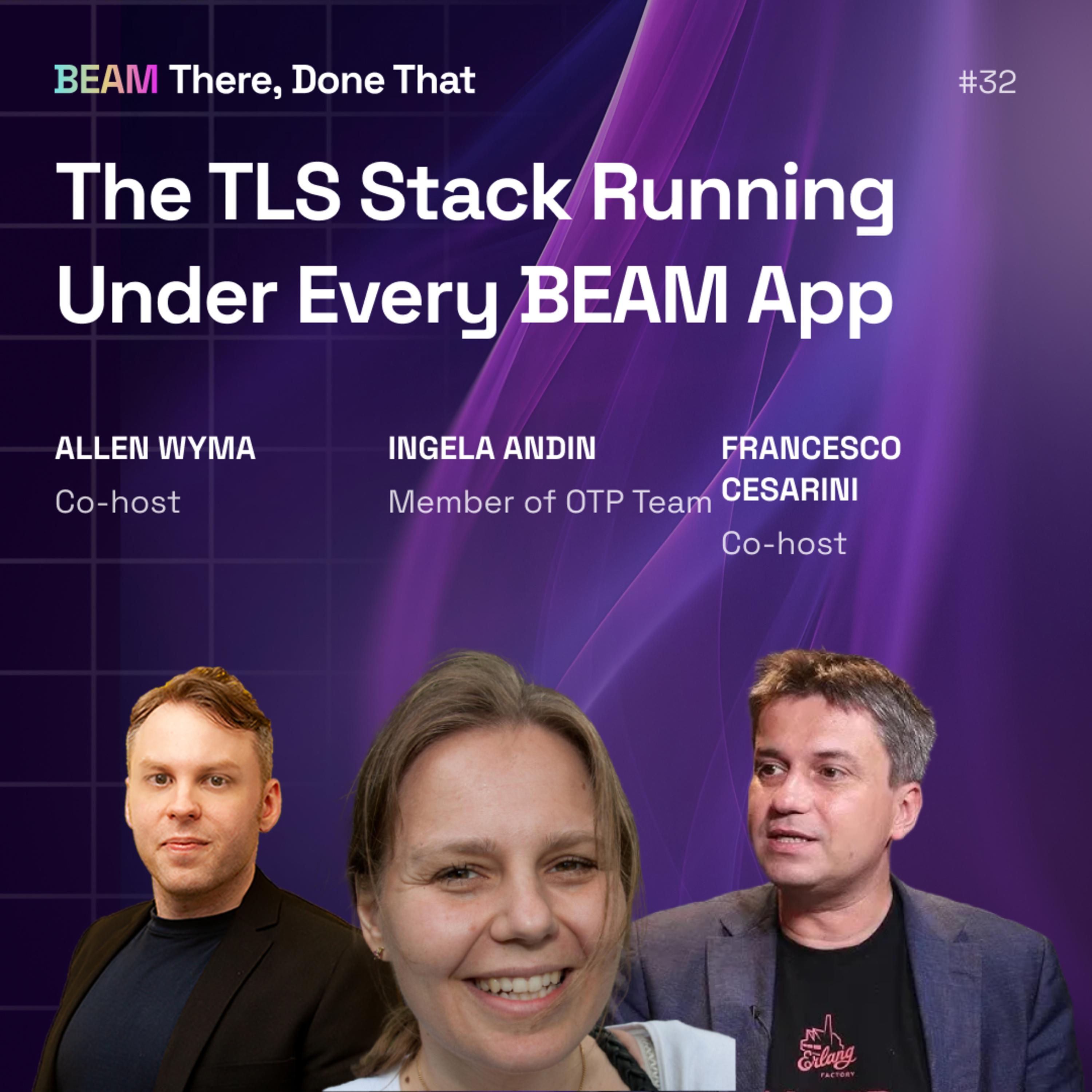
Ingela Andin on the TLS Stack Running Under Every BEAM App
Every secure connection made from an Erlang, Elixir, or Gleam application runs through code she wrote. Most developers have never heard her name.Ingela Andin has spent more than two decades on the OTP team at Ericsson, maintaining the TLS stack — the piece of infrastructure underneath HTTPS, LDAP, SMTP, and every other secure protocol in the BEAM ecosystem. She is the first point of contact when a
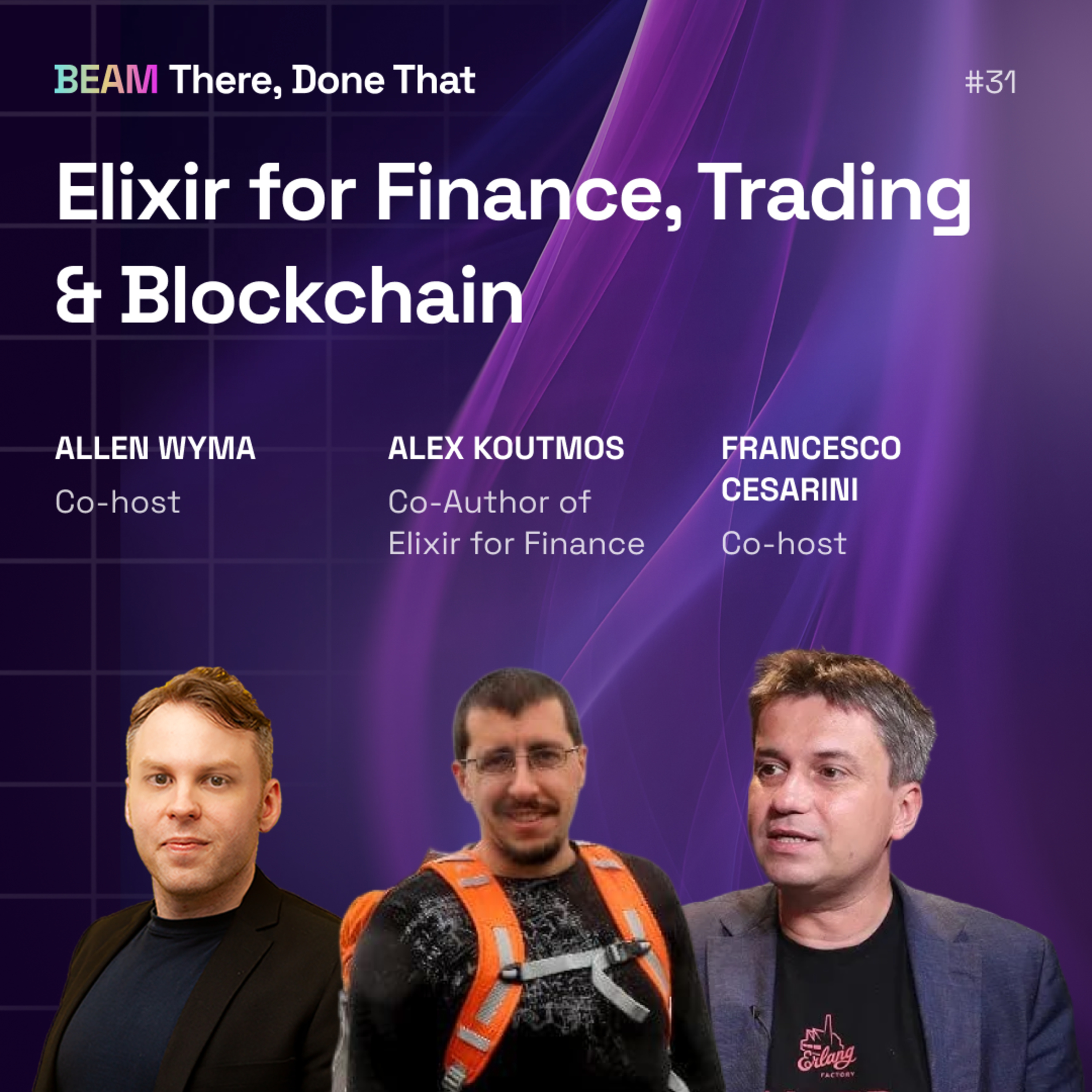
Alex Koutmos on Elixir for Finance, Trading & Blockchain
Brex runs on Elixir. Klarna runs on Erlang. Mastercard is believed to use it. And most of the community that builds on these systems watches them with PromEx - a library written by today's guest.Alex Koutmos has been in the Elixir ecosystem for over a decade. He wrote PromEx - the Prometheus metrics library most of this audience runs in production - and he's just written Elixir for Finance
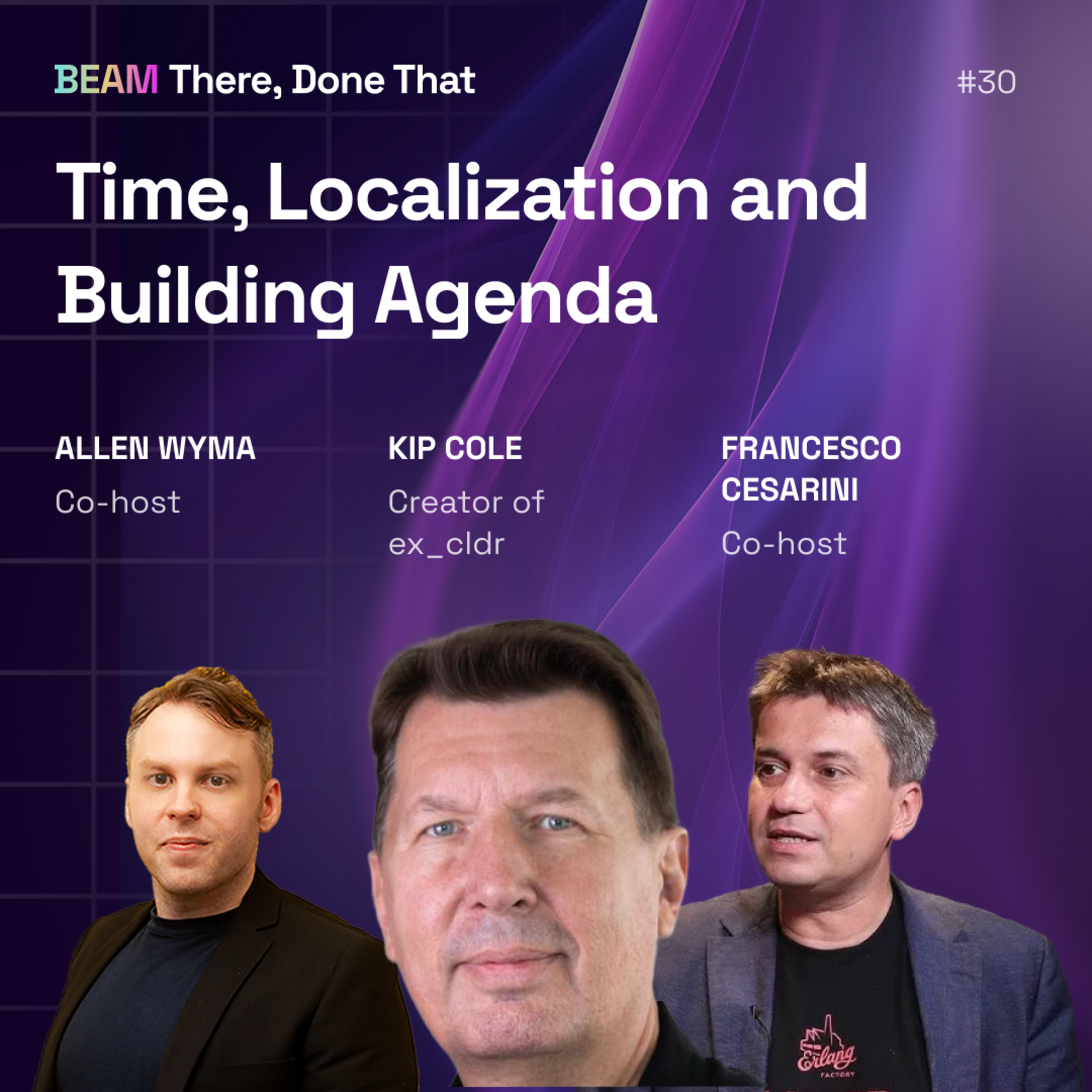
Kip Cole on Time, Localization and Building Agenda
The Navajo Nation inside Arizona observes daylight saving. The Hopi reservation inside the Navajo Nation skips it again. There's a corner of the Yucatan Peninsula that takes 20 minutes to drive through and costs you an hour on your sat nav. No compiler warns you about any of this.Kip Cole has spent 10 years building the Elixir libraries that handle what software gets wrong about human reality:
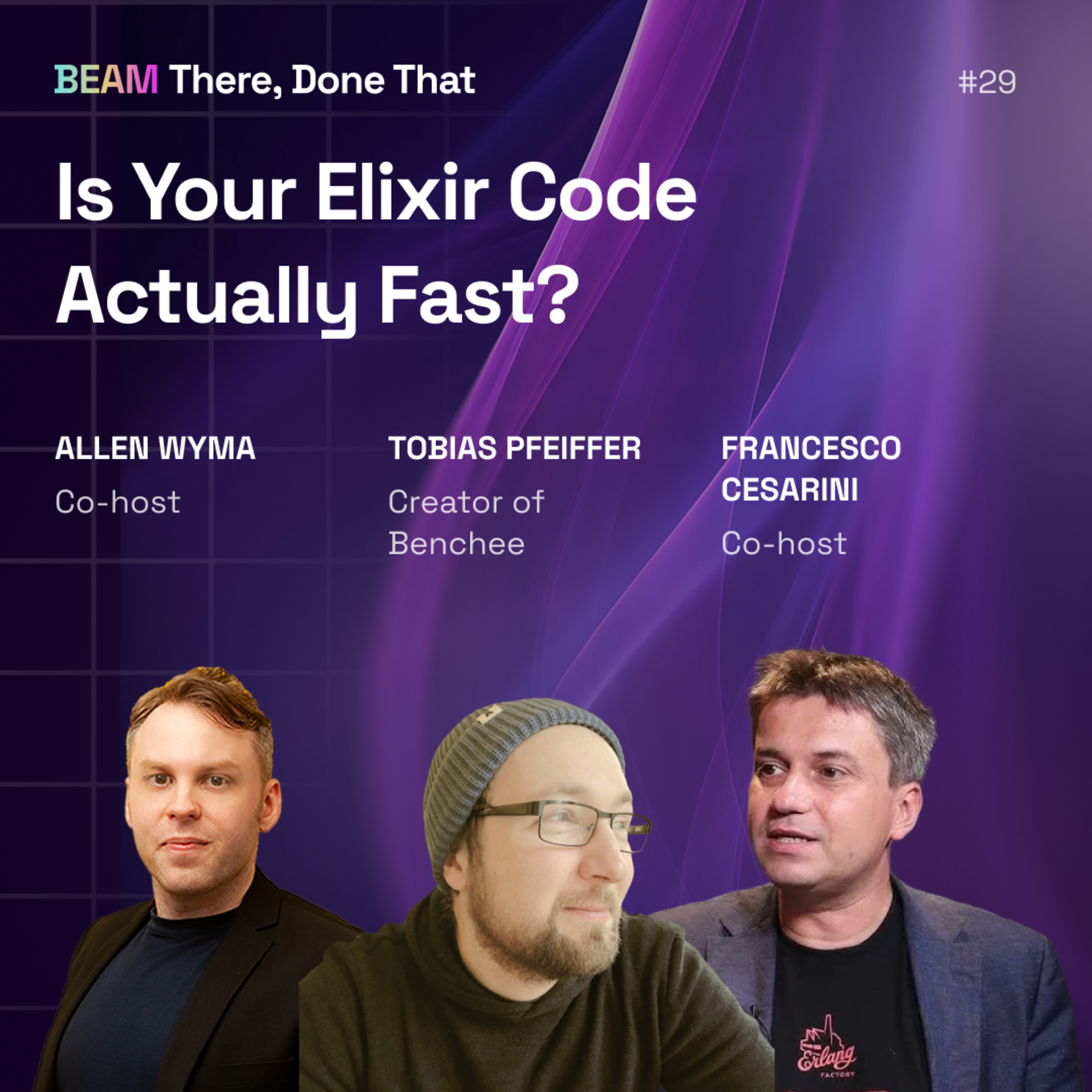
Is Your Elixir Code Actually Fast? Tobias Pfeiffer on Benchmarking
Everyone has an opinion about whether the BEAM is fast or slow. Almost nobody has actually measured it properly.Tobias Pfeiffer -PragTob on the internet, benchmarking nerd, real-time engineer at Supabase -came to Elixir from Ruby because Ruby couldn't handle WebSockets at scale. Then he learned the language the way he learns every language: by building a benchmarking library. Ten years later,

Louis Pilfold on Building Gleam - Static Types on the BEAM
What if the BEAM had a language that felt like talking to a friend instead of fighting a compiler?That's the problem Louis Pilfold set out to solve. He loved the BEAM. He missed static types. Every other option was a tradeoff he couldn't live with. So he built Gleam - and after years of quietly saying no to everything he wasn't sure about, it's gathered a community, found productio

How WhatsApp Fixed Erlang's Tooling Problem | Roberto Aloi & Michał Muskała
Part one established that Erlang scales. Part two is about what comes after - keeping a codebase that large healthy for years, when most engineers arrive having never written Erlang before.WhatsApp's answer was to invest in the language itself. The formatter, the language server, the type checker. And then to open source almost all of it back to the community - not as charity, but because dive
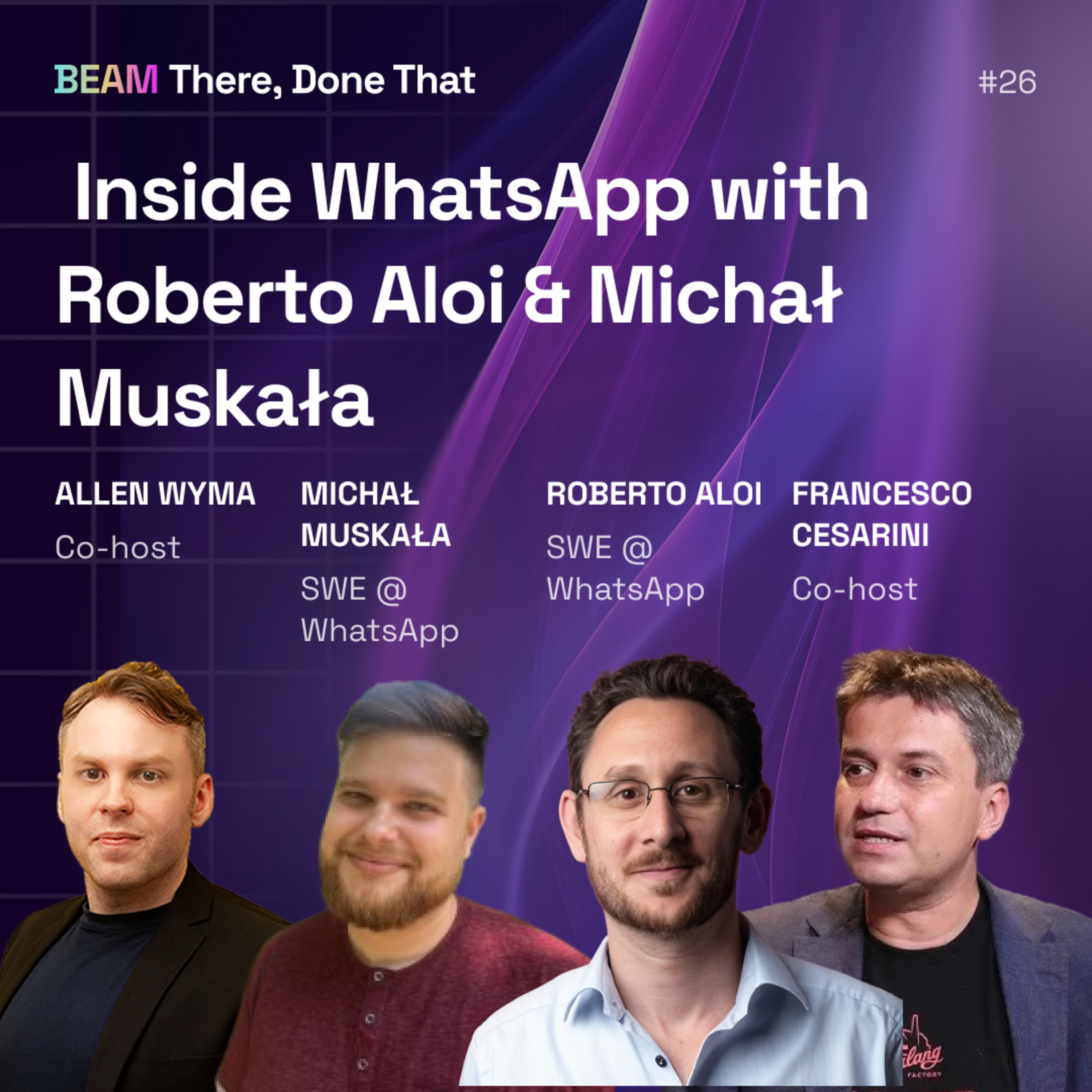
Inside WhatsApp with Roberto Aloi & Michał Muskała
Everyone quotes WhatsApp when the topic of Erlang and scale comes up. Fewer people know what it actually looks like from the inside - what was hard, what was never hard, and what the team spent their time on once the concurrency stopped being the problem.Roberto Aloi and Michał Muskała work on the team keeping it running. This is the first of two episodes with them.Topics include:what Roberto'
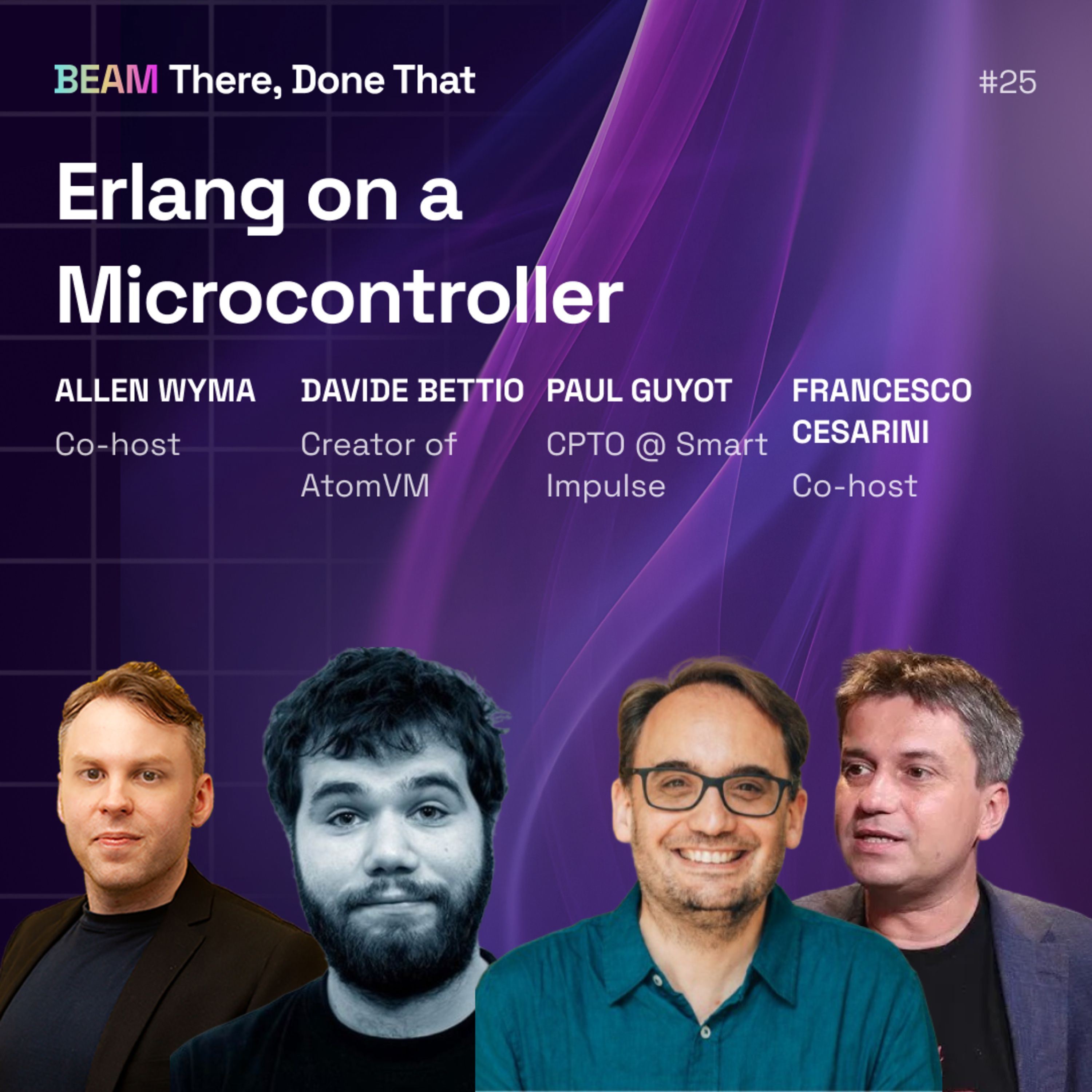
Erlang on a Microcontroller: Davide Bettio & Paul Guyot on AtomVM
In 1952, Marvin Minsky and Claude Shannon built a box with a single switch. When you flip it, the only thing it does is reach out and switch itself back off. Seventy years later, 5,000 of those boxes are sitting on desks worldwide — and the thing making them tick is Erlang, running on a chip smaller than a fingernail.Davide Bettio built AtomVM, the virtual machine that makes this possible. Paul Gu
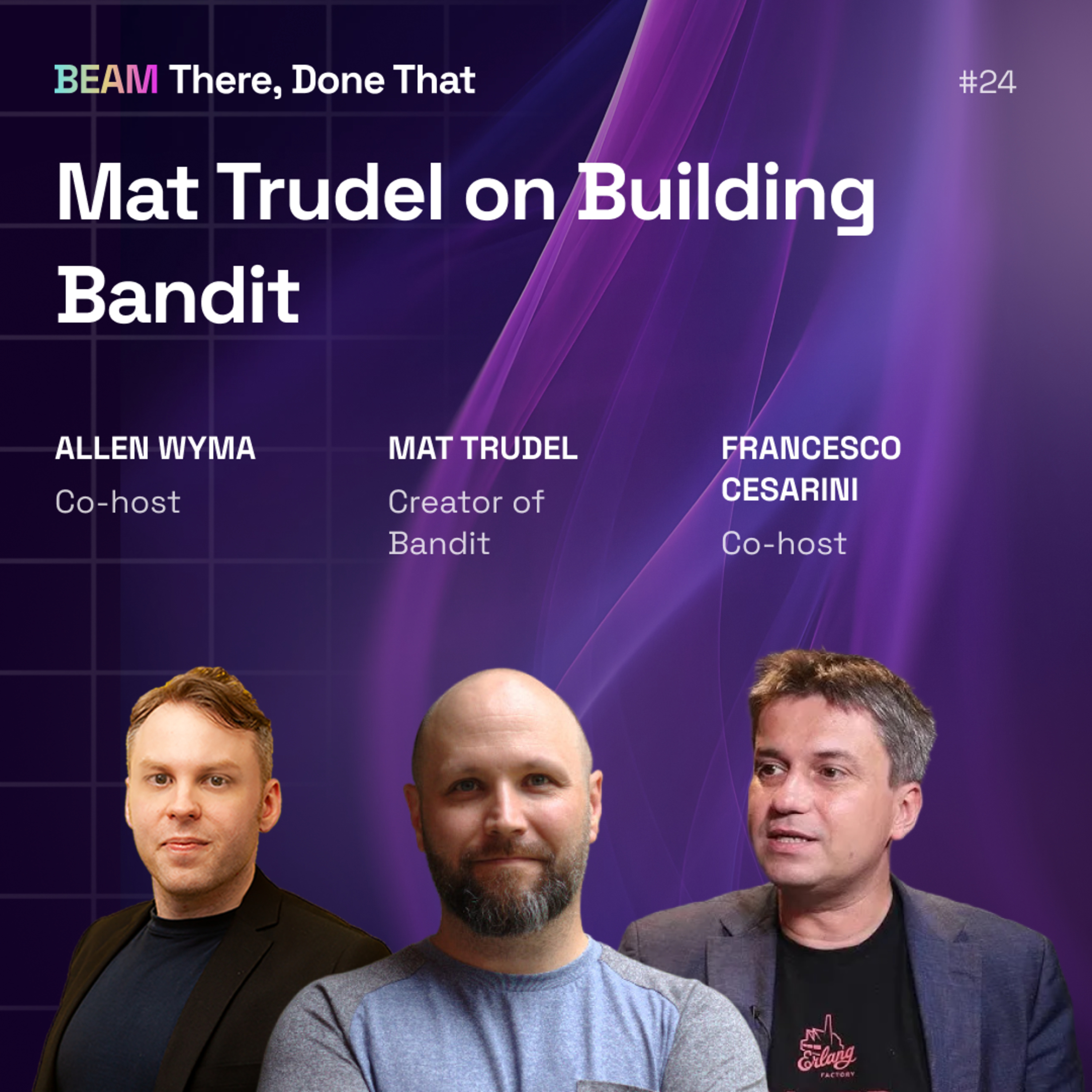
Mat Trudel on Building Bandit - the Web Server Running Your Phoenix App
Bandit quietly became the default web server in Phoenix. Mat Trudel wrote it by hand, in pure Elixir, as a side project - and kept it that way even as AI changed how everyone else writes code.This episode goes two places at once: the engineering of a foundational piece of infrastructure most developers never think about, and an honest conversation about what it means to keep building something by
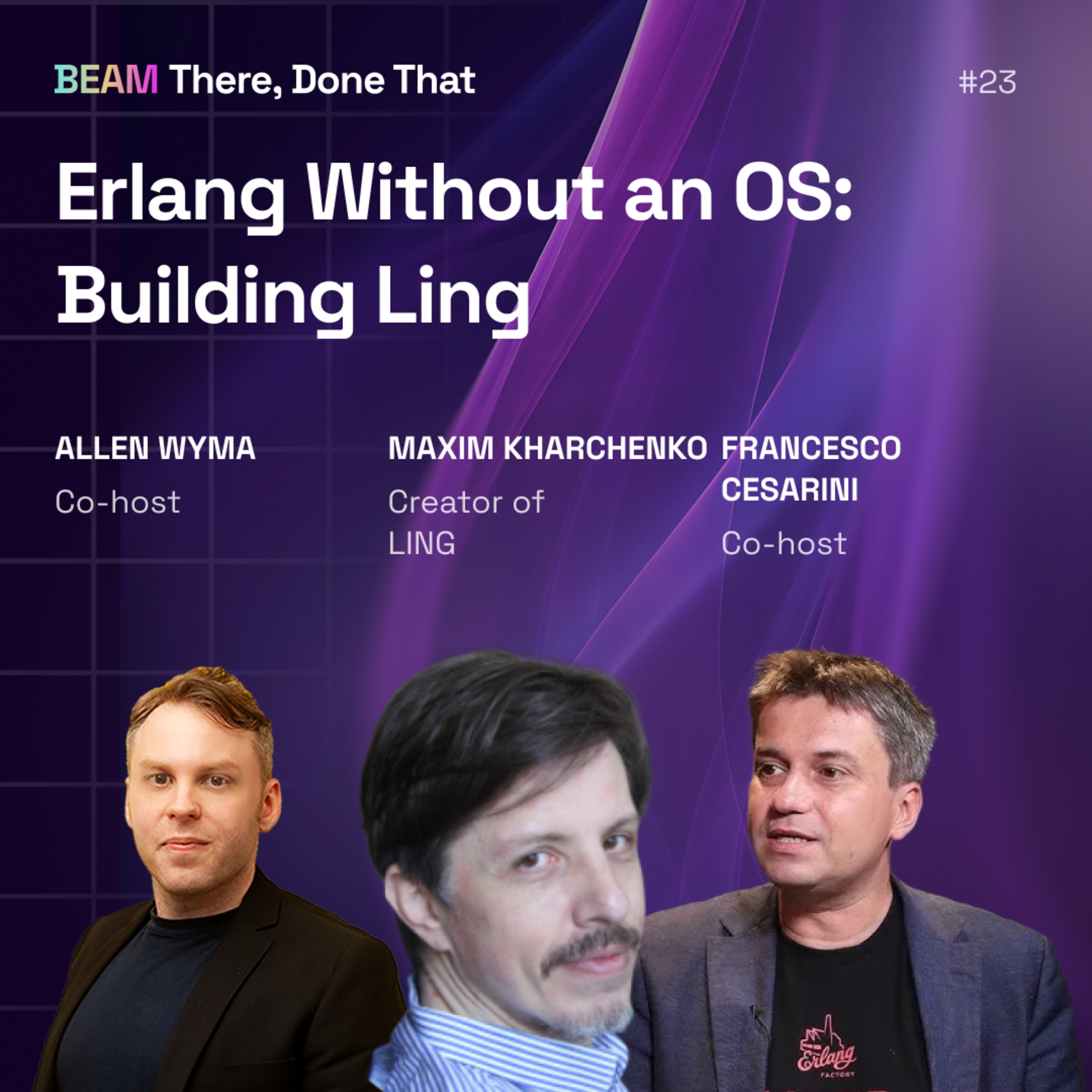
Erlang Without an OS: Maxim Kharchenko on Building LING
Booting OTP without a Linux kernel underneath it. Running Erlang directly on a Xen hypervisor. Implementing a VM where every single out-of-memory condition is explicitly handled — not a single allocation without a recovery path.Maxim Kharchenko spent five to eight years building Ling, a from-scratch Erlang runtime that runs without an operating system. Not a fork of the BEAM. Not a modification. A
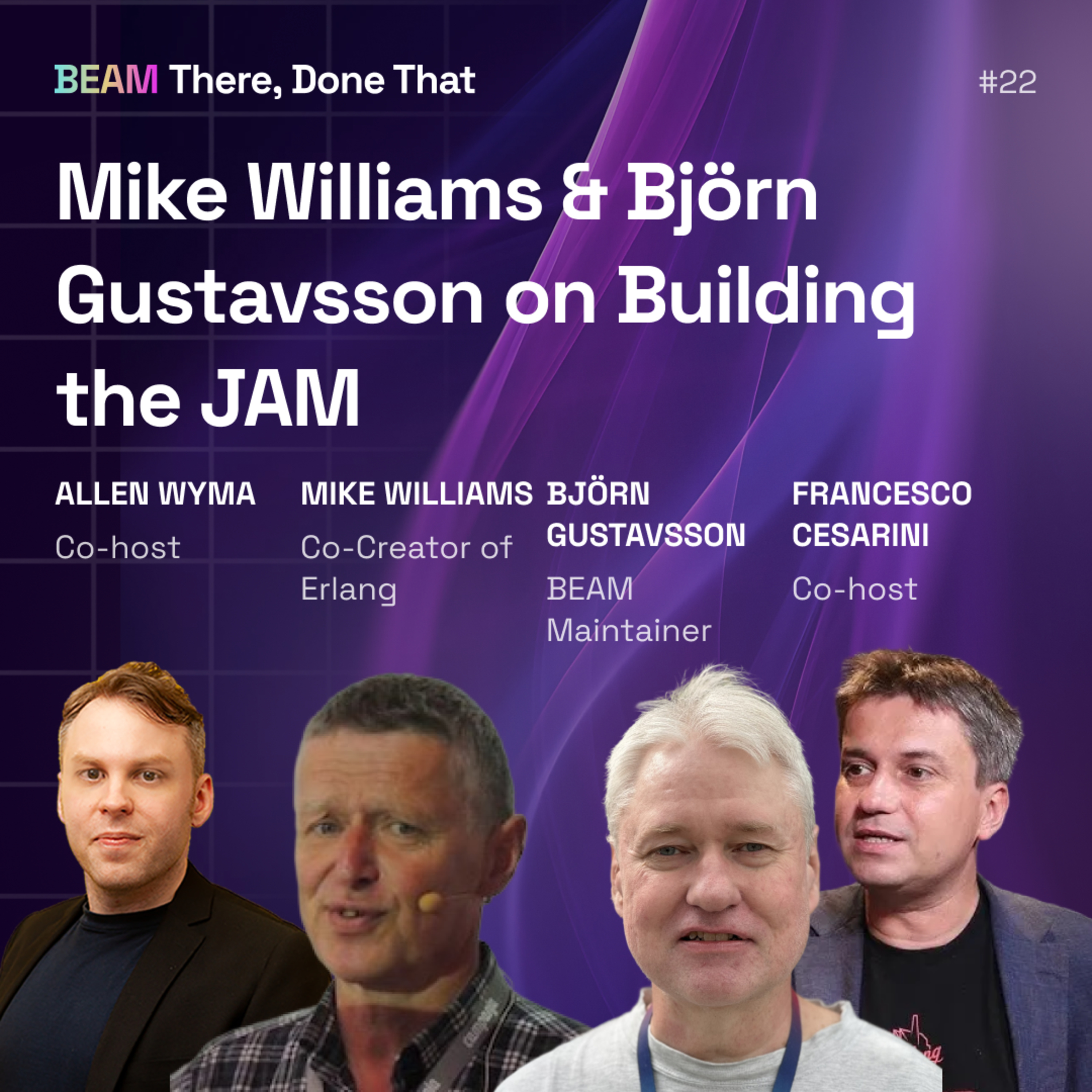
Mike Williams & Björn Gustavsson on Building the JAM
Before the BEAM, there was the JAM - Joe's Abstract Machine. It was the first virtual machine that made Erlang fast enough to run in production, and it was built by a handful of people at Ericsson's computer science lab who had a mandate to do whatever they wanted.Mike Williams wrote large parts of the emulator. Björn Gustavsson inherited it in 1996 and built what came after. In this episo
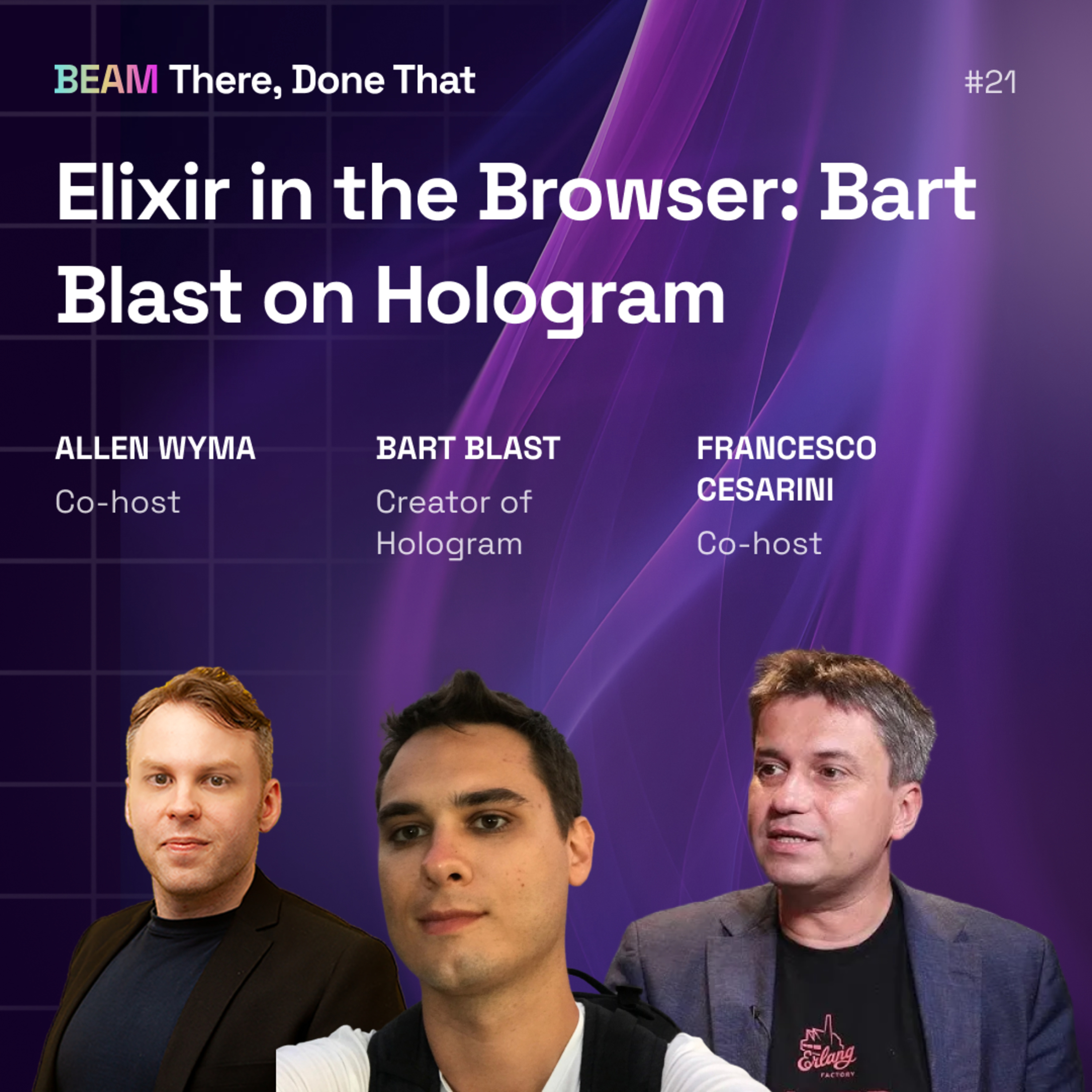
Elixir in the Browser: Bart Blast on Hologram
What if instead of making your server smarter to handle the browser, you just ran your Elixir in the browser instead?That's the bet Bart Blast has been making for six years - three of them full time. Hologram is a full-stack web framework that compiles Elixir to JavaScript and rebuilds the Erlang runtime in the browser: pattern matching engine, OTP guarantees, boxed types, all of it. No JavaScript
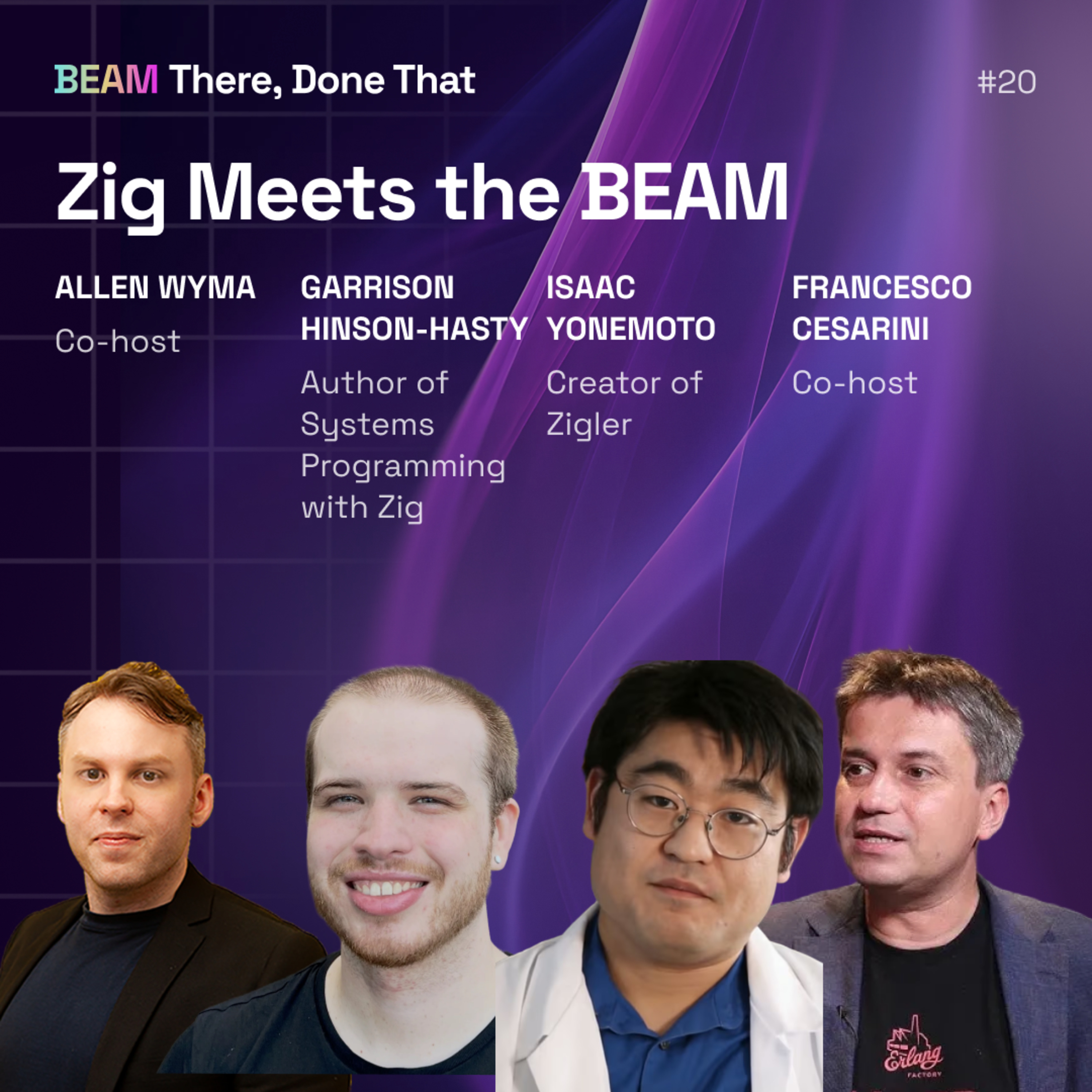
Zig Meets the BEAM: Garrison Hinson-Hasty & Isaac Yonemoto on Safer Native Code
Everyone who's ever written a C NIF for the BEAM knows the story. You have a bottleneck, you reach for native code, it works - until one day it doesn't, and instead of a process crashing, the whole node goes down. A segfault in a NIF takes the entire BEAM with it, bypassing every fault-tolerance guarantee OTP was designed to provide.This episode asks a simple question: do we have to accept
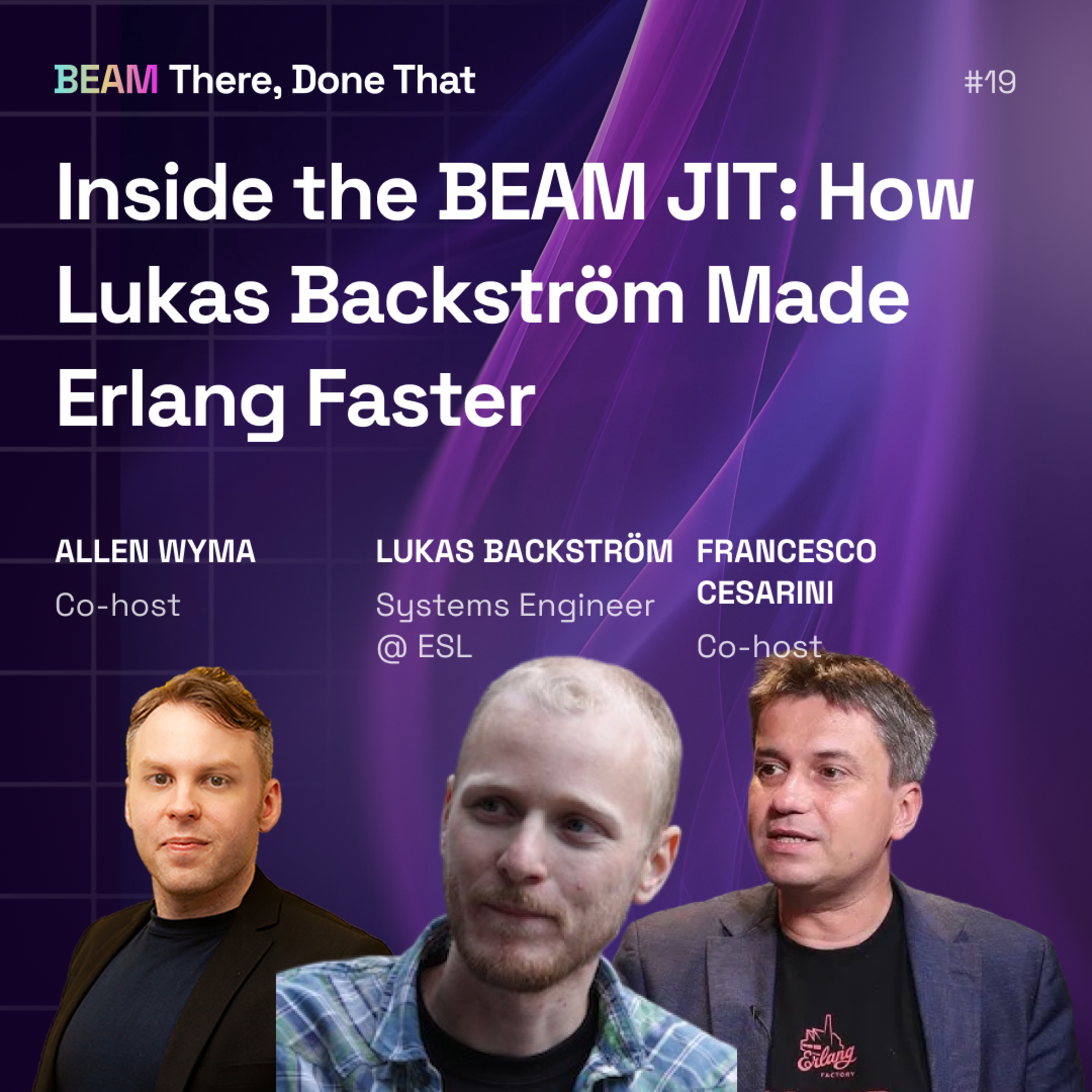
Inside the BEAM JIT: How Lukas Backström Made Erlang Faster
In 2021, Erlang got something it had been promised for years: a Just-In-Time compiler. The person who built the first working prototype, spent years on failed experiments before it, and quietly shipped it to every Erlang and Elixir system on the planet is Lukas Backström — OTP team member since 2009, Francesco Cesarini's former student, and one of the most consequential engineers in the ecosys
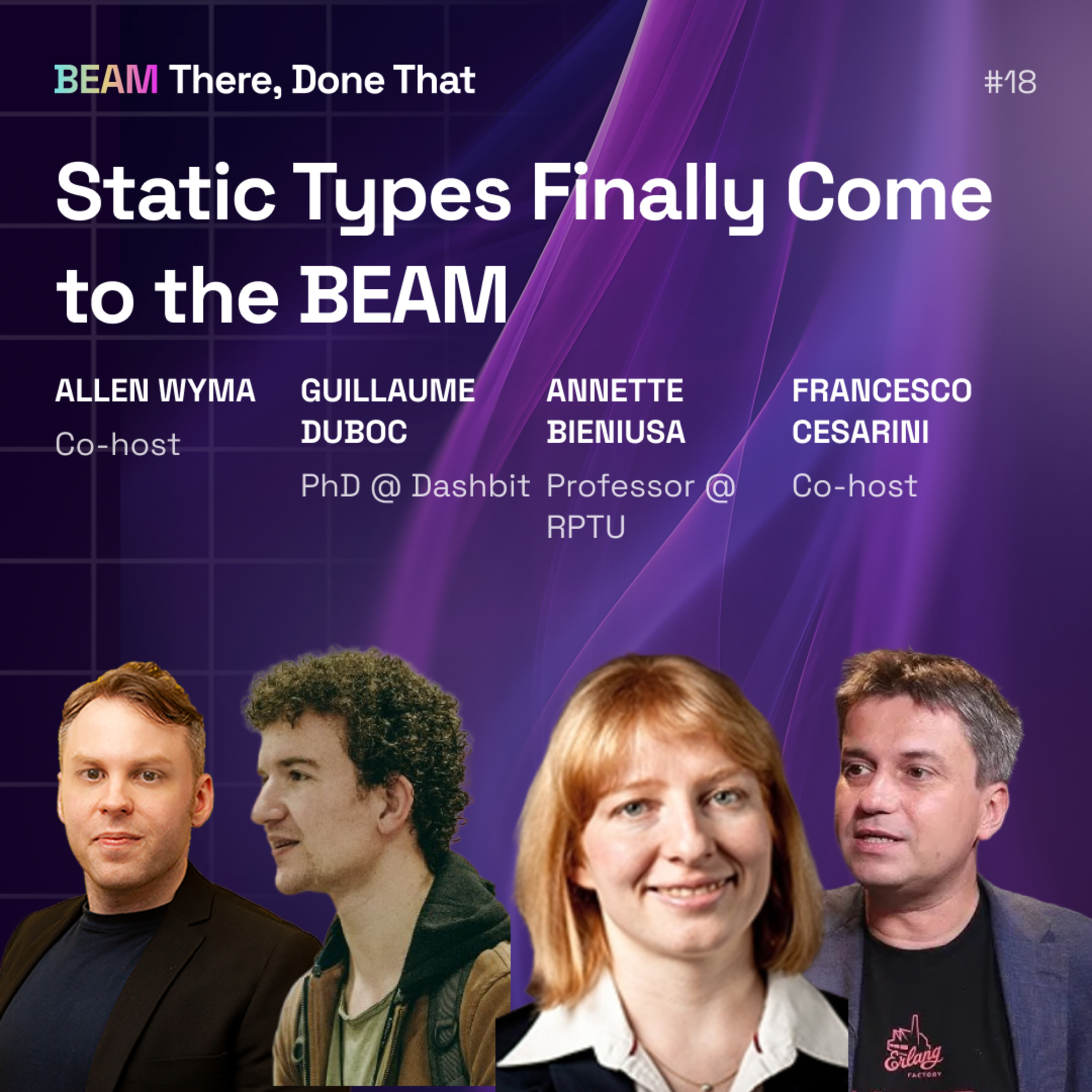
Static Types Finally Come to the BEAM | Annette Bieniusa & Guillaume Duboc
Joe Armstrong once said anyone can write a type system covering 90% of Erlang — it's the remaining 10% that defeats even the brightest minds in computer science. He was referring to Philip Wadler. That was 1995. Thirty years later, the BEAM is finally converging on an answer.In this episode, Alan Wyma and Francesco Cesarini sit down with Annette Bieniusa, professor of software technology at RP
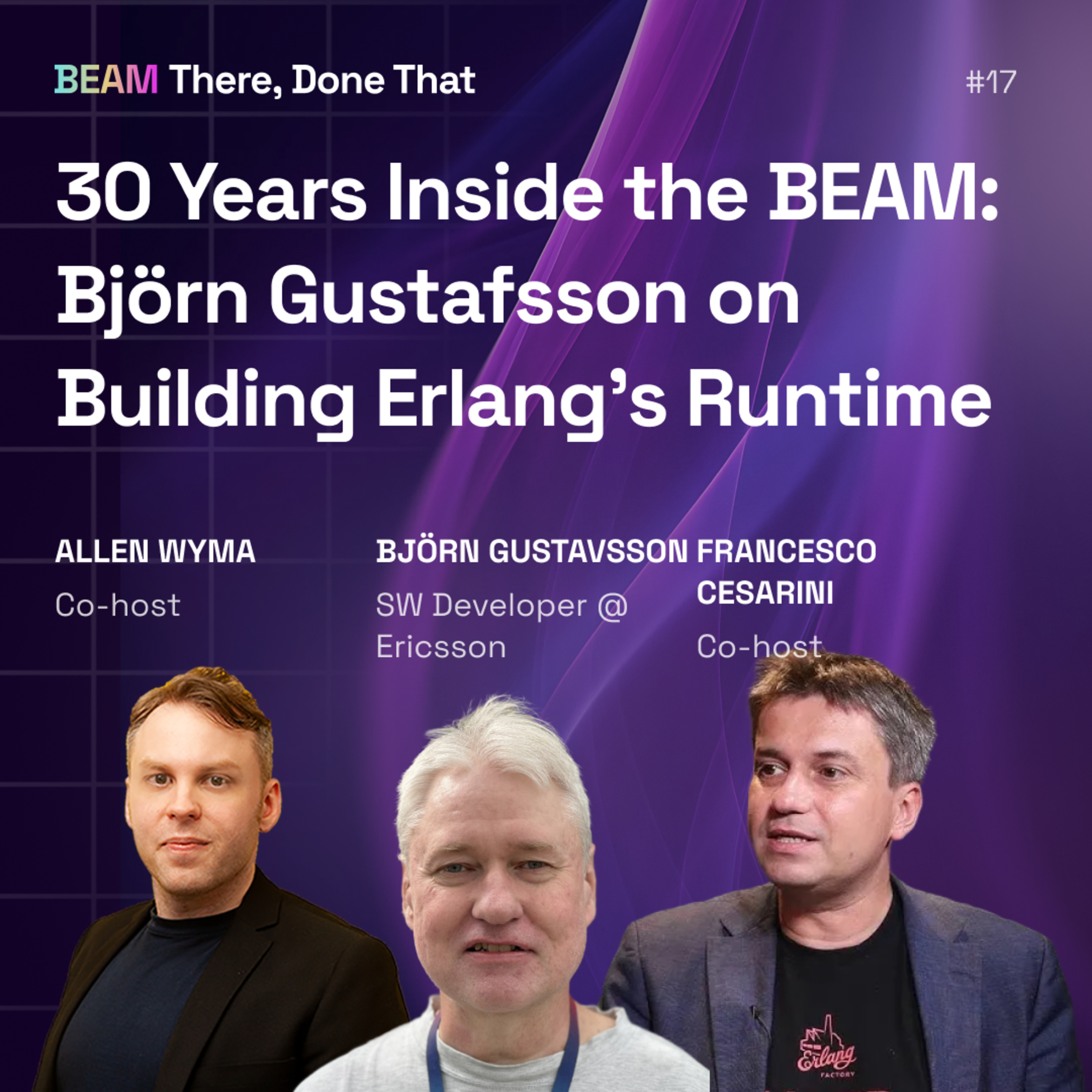
30 Years Inside the BEAM: Björn Gustafsson on Building Erlang's Runtime
Three engineers. Three different virtual machines. One conversation that started with the JAM and ends with the JIT compiler.Allen Wyma and Francesco Cesarini sit down again with Björn Gustafsson — member of the OTP team since 1996, and the person who has personally shepherded the BEAM through every major transition since taking it over from Bogdan Wódzicki — for a deep dive into 30 years of runti
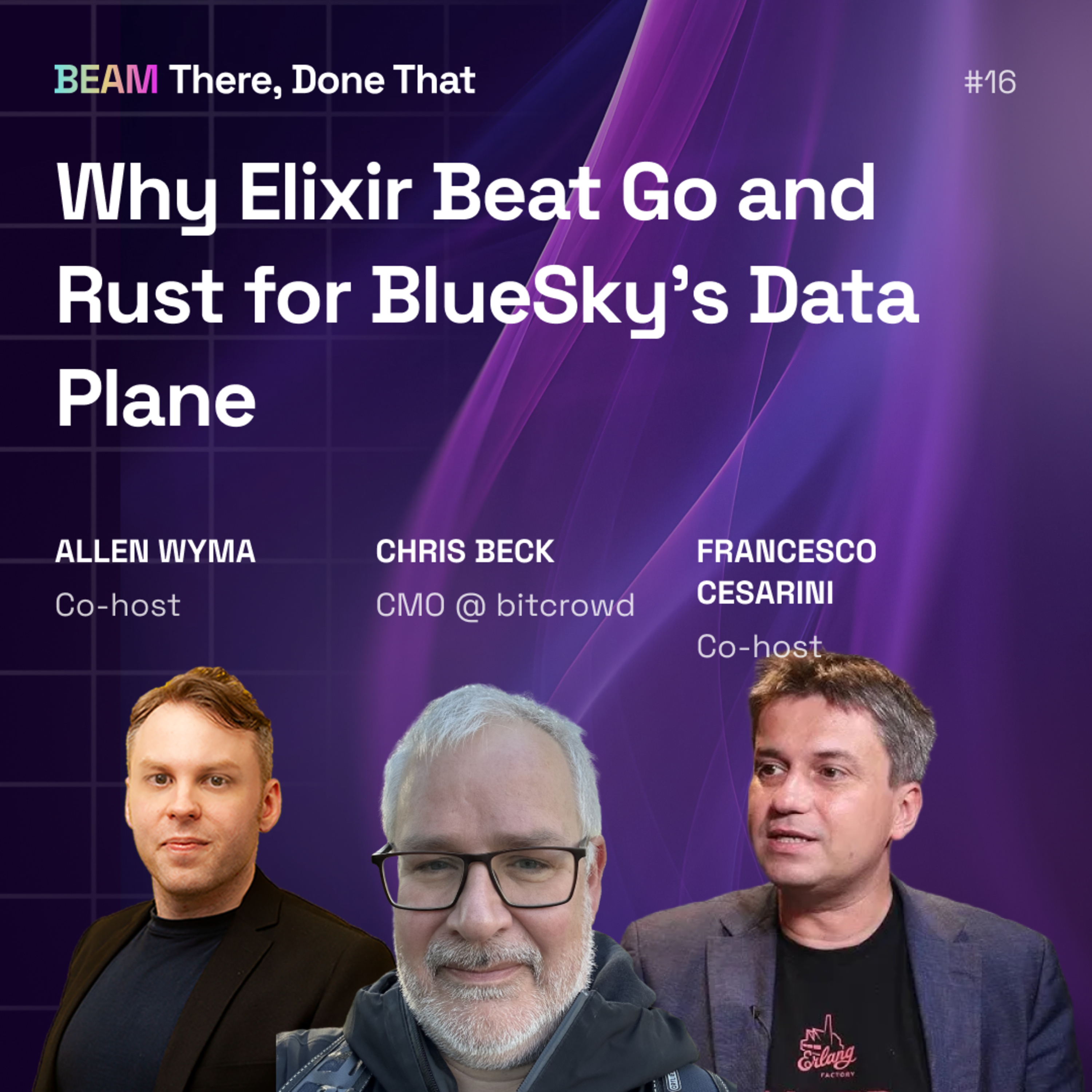
Why Elixir Beat Go and Rust for BlueSky's Data Plane | Chris Beck
There's a gap between BlueSky's open reference implementation (handles a few hundred thousand users) and BlueSky's own production system (handles millions, but runs on infrastructure most teams can't replicate). Chris Beck and his team at Bitcrowd set out to close it -and ended up somewhere they didn't expect.In this episode, Allen Wyma and Francesco Cesarini talk to Chris Beck
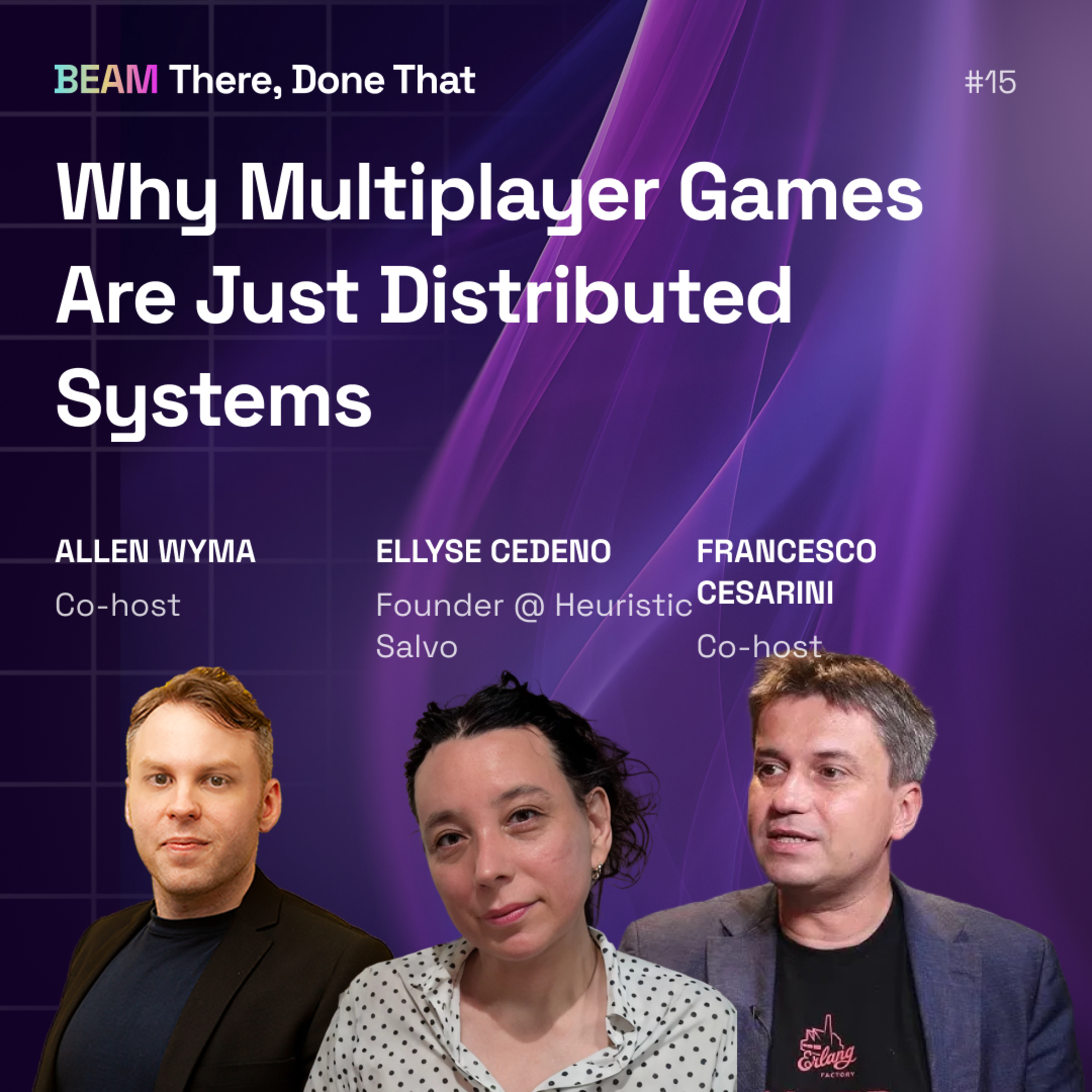
Why Multiplayer Games Are Just Distributed Systems | Ellyse Cedeno on BEAM & the Actor Model
Every player is a process. Every monster is a process. Every zone is a process. Sound familiar?In this episode, Allen Wyma and Francesco Cesarini sit down with Ellyse Cedeno - technology and product leader with 25+ years across online games, distributed systems, and real-time platforms - to explore why the BEAM and the actor model are a natural fit for multiplayer game servers, and why the games i

Who Builds the Next Generation of Senior Devs? Bruce Tate on AI, Juniors, and the Career Path Crisis
The dashboards are green. PRs are shipping faster than ever. So why are seniors quietly burning out — and juniors not actually learning?In this episode, Allen Wyma and Francesco Cesarini sit down in person with Bruce Tate — author of Seven Languages in Seven Weeks, co-author of 10+ books on Elixir, and founder of Groxio — who just shut down a 10-year mentoring organization because the junior devel
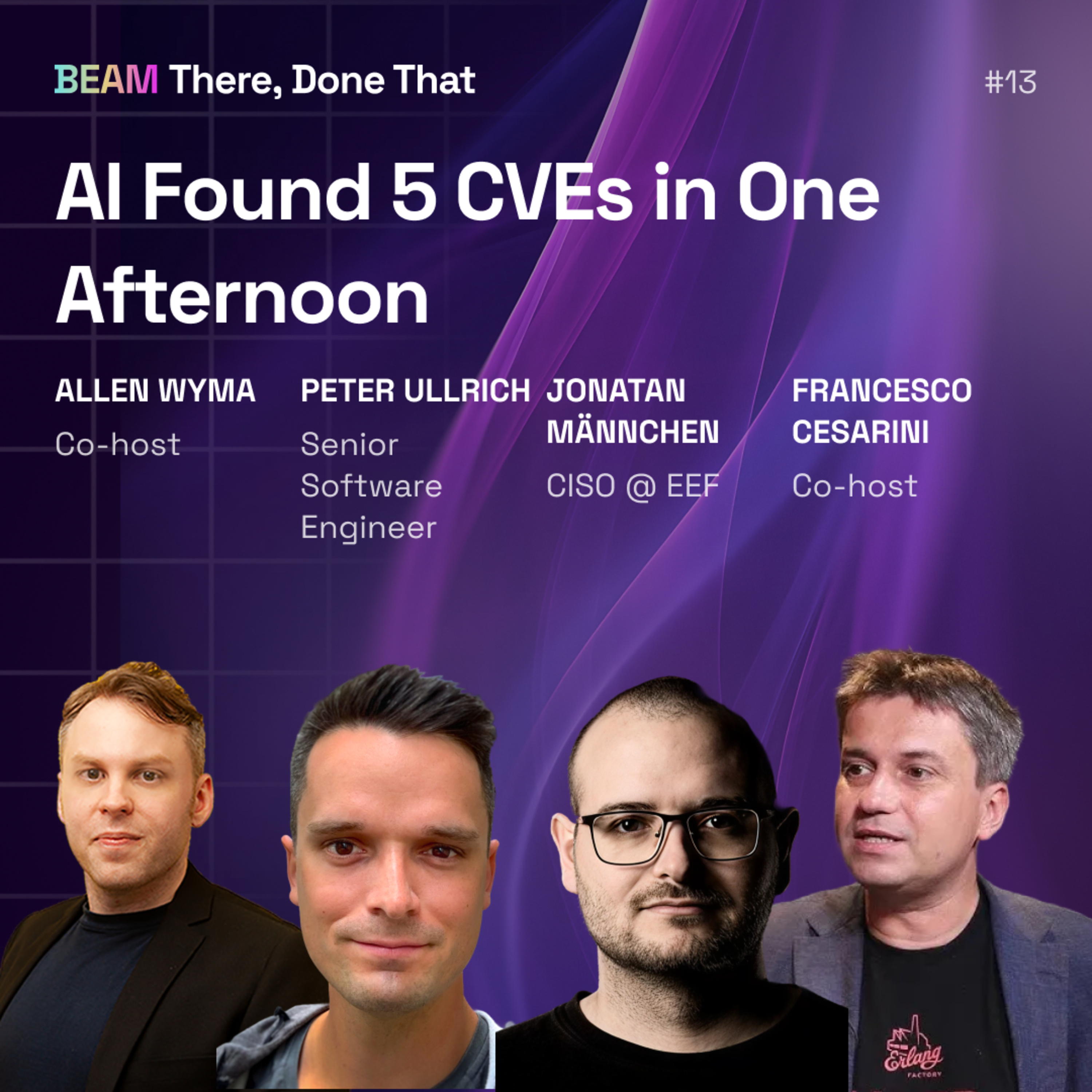
AI Found 5 CVEs in One Afternoon — The BEAM Security Wake-Up Call | Peter Ullrich & Jonathan Machen
The BEAM ecosystem spent decades flying under the radar - too niche to attract serious attackers. That era is over.In this episode, we sit down with Peter Ullrich, the developer who ran a $10 experiment at ElixirConf EU in Málaga and discovered a vulnerability that could crash the BEAM with a 13-character string - with zero prior security experience. Then we hear from Jonathan Machen, CISO of the

Inside the BEAM: Björn Gustavsson on Maps, Records, and Runtime Design
For the first time in over a decade, the Erlang runtime is gaining a new native data type — and on this episode of BEAM There, Done That, hosts Francesco Cesarini and Allan Wyma sit down with Björn Gustavsson, known by many as the “B” in BEAM. Björn takes listeners deep into the history of records, maps, tag bits, and the architectural trade-offs that shaped the Erlang runtime from the 1990s to to
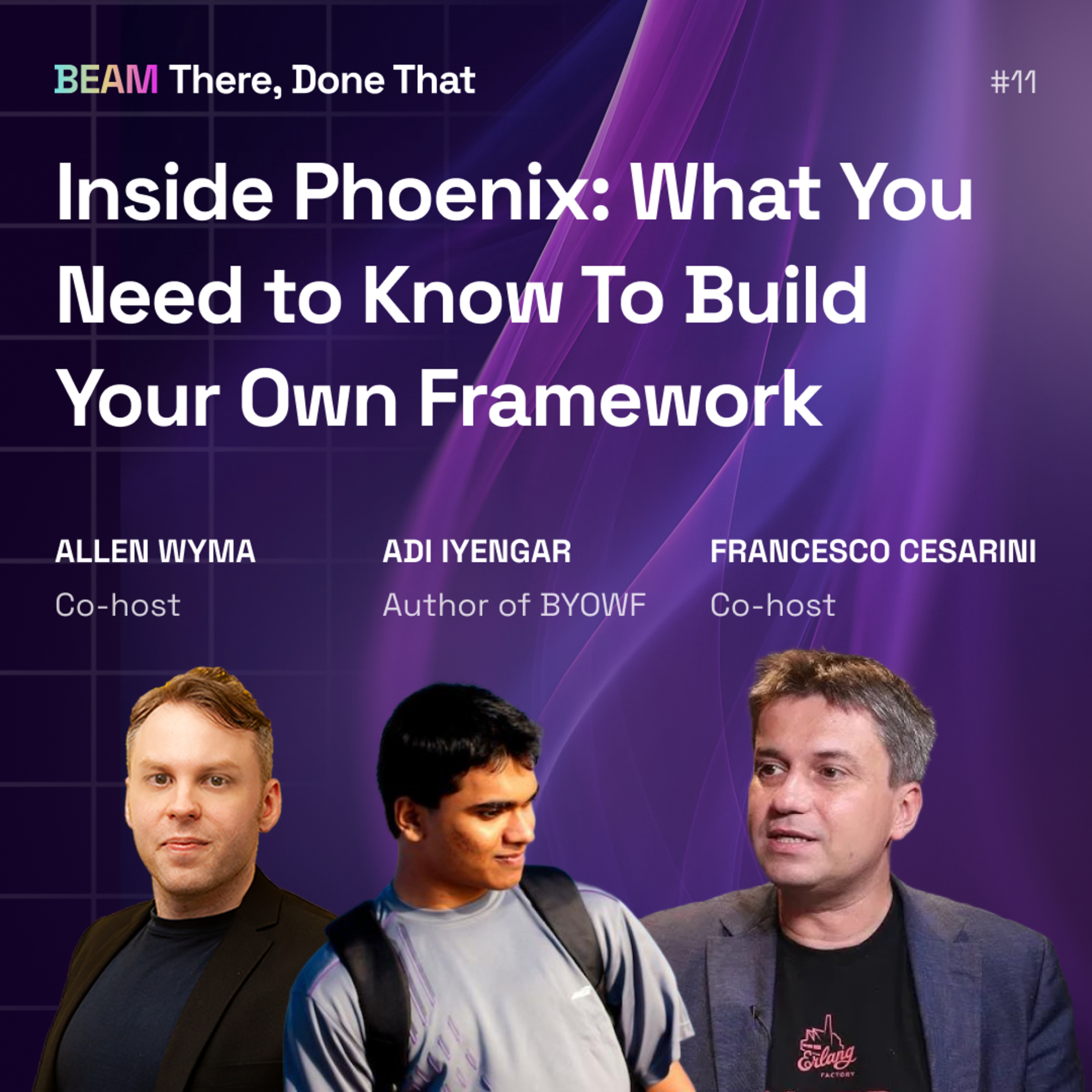
Inside Phoenix: A Plug, a Macro, and What You Need to Know To Build Your Own Framework
Three and a half years, one book, and a clearer answer to what Phoenix is actually doing under the hood.Phoenix makes building web apps in Elixir feel effortless, but how much of that is genuine elegance and how much is metaprogramming hiding the complexity? Adi Iyengar spent three and a half years writing Build Your Own Web Framework in Elixir to find out, and in this episode he sits down with Fr
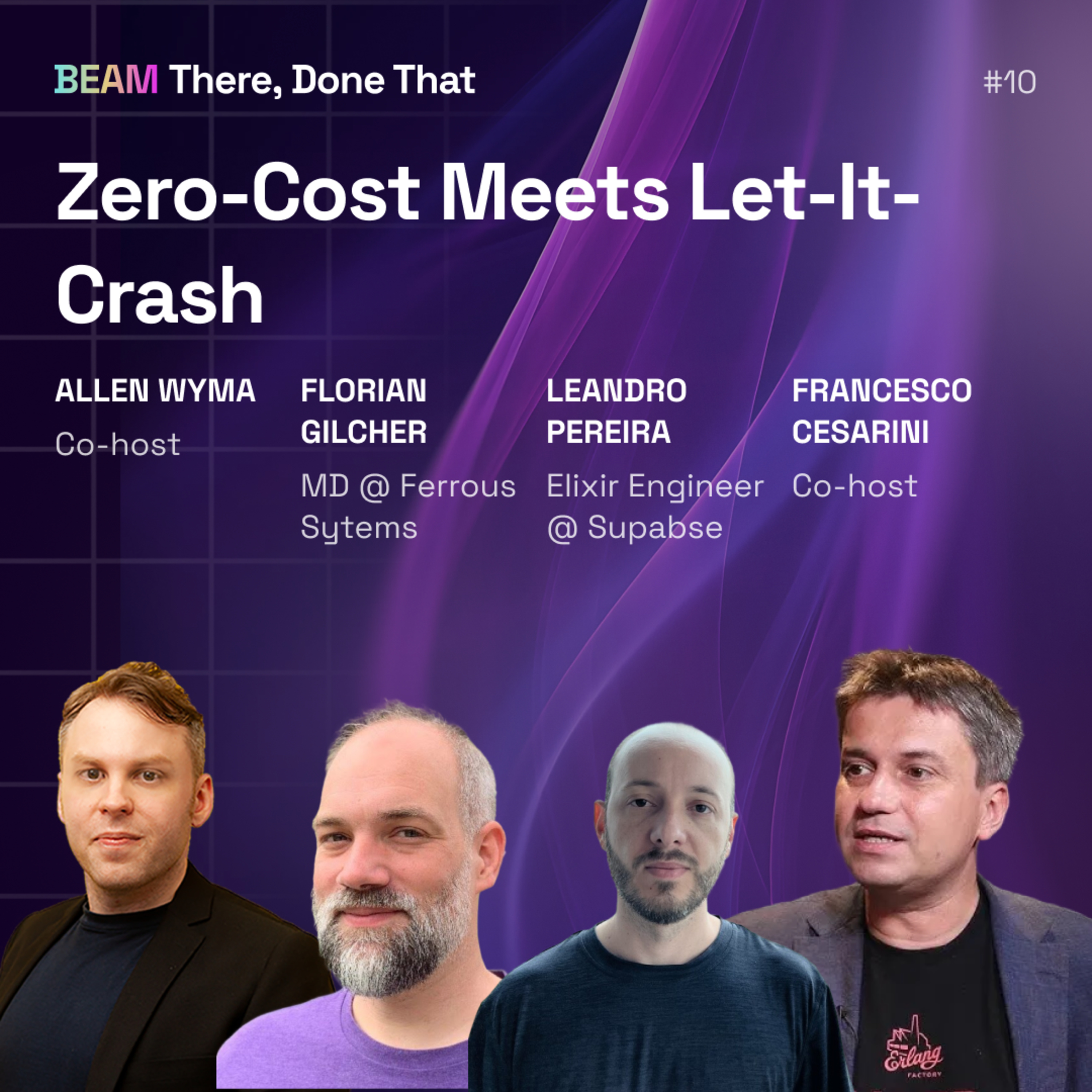
Zero-Cost Meets Let-It-Crash: The Rust + Elixir Power Combo
In this episode of BEAM There, Done That, hosts explore what really happens when the high-level concurrency and fault-tolerance of Elixir meet the low-level performance and control of Rust. The conversation dives into interoperability patterns—NIFs, ports, and emerging tooling—and where each language shines when building real-world systems that need both resilience and raw speed. Joining the discu
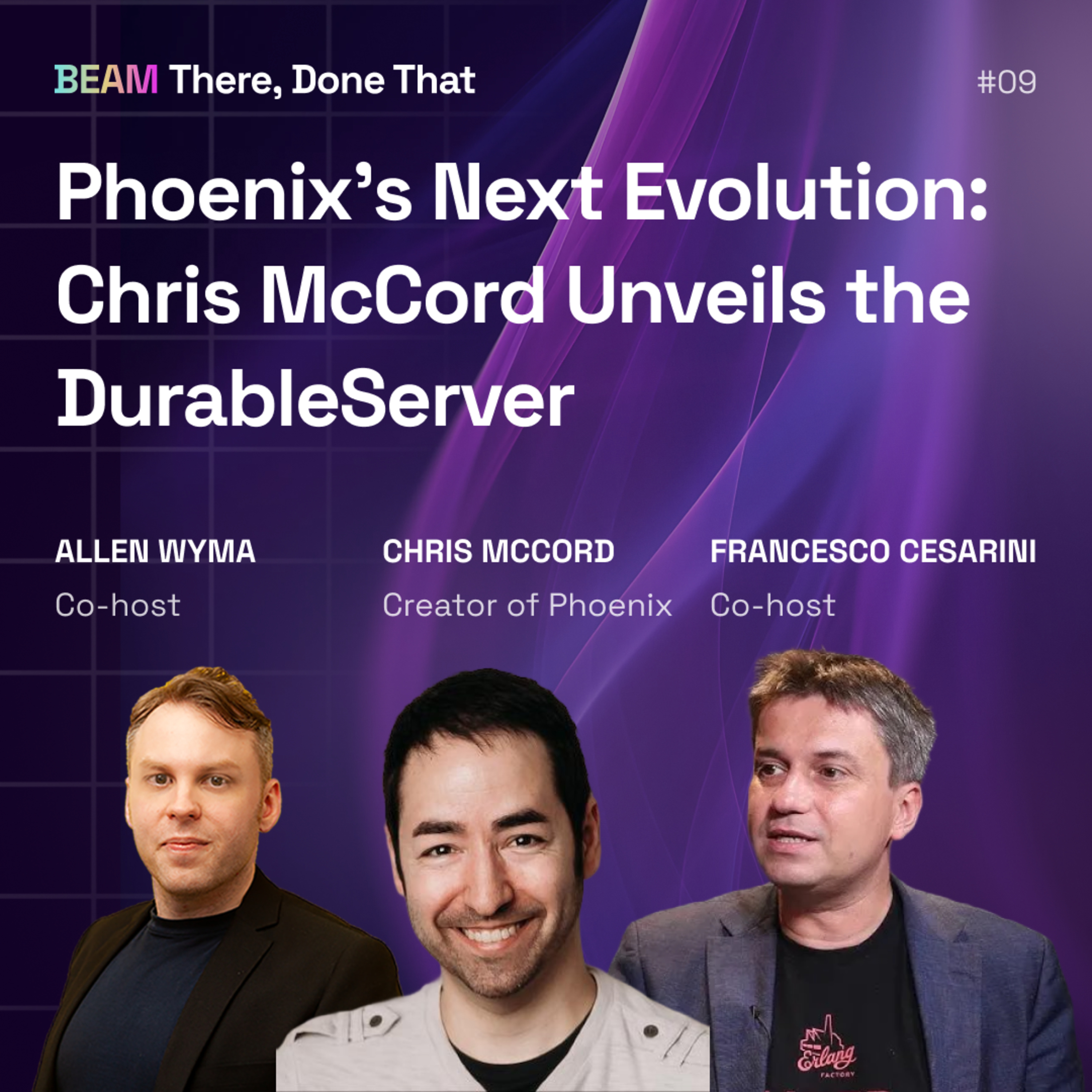
Phoenix’s Next Evolution: Chris McCord Unveils the DurableServer
In this episode of BEAM There, Done That, hosts Francesco Cesarini and Allen Wyma sit down with Chris McCord, the creator of the Phoenix Framework, for a deep dive into the evolving world of Elixir, distributed systems, and durable processes on the BEAM.Fresh from ElixirConf EU, Chris shares the story behind his latest work on durable servers—a powerful abstraction that brings persistence, global
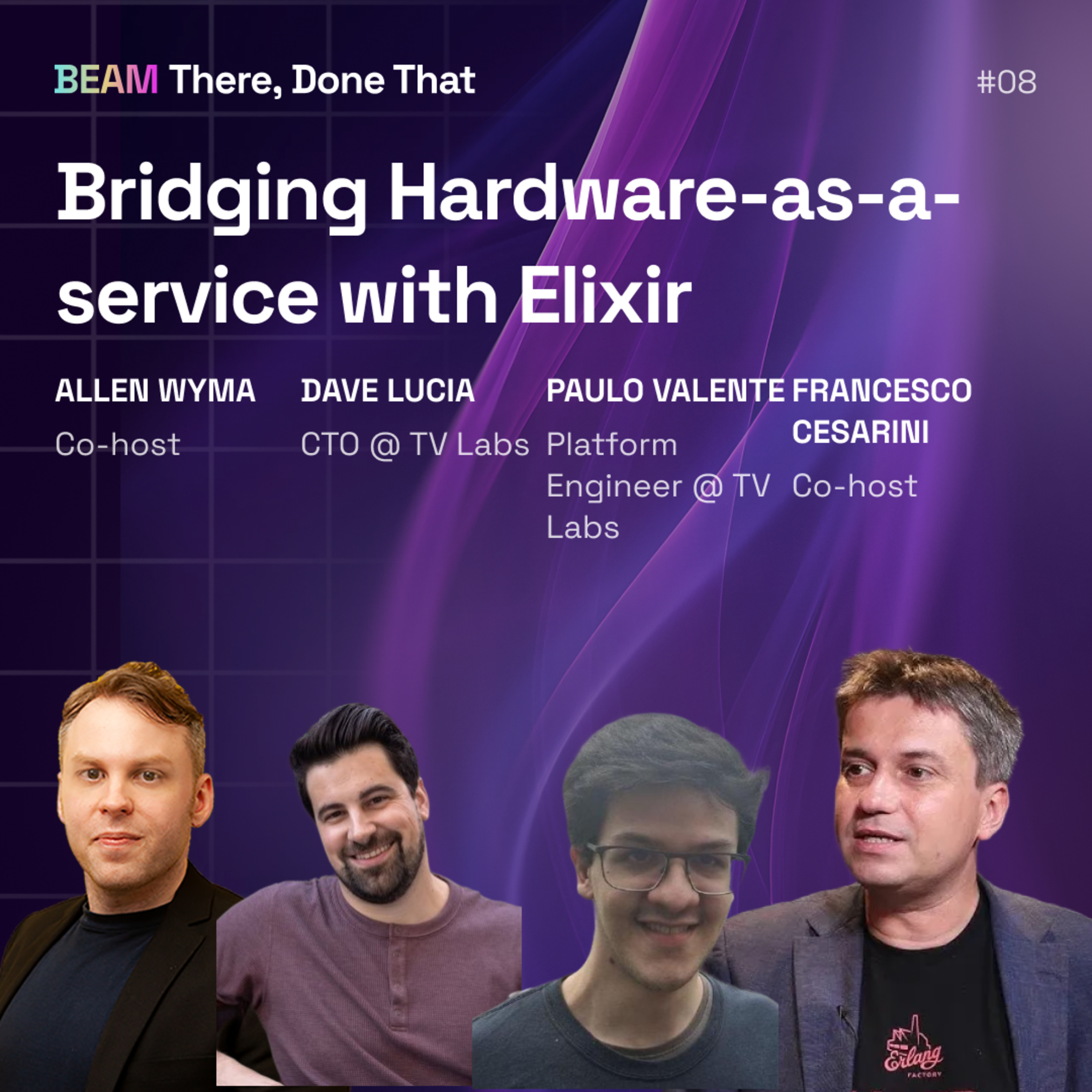
Bridging Hardware-as-a-service with Elixir: Inside TV Labs’ Platform With Dave Lucia and Paulo Valente
In this episode of BEAM There, Done That, co-hosts Francesco Cesarini and Allen Wyma sit down with Dave Lucia, co-founder and CTO of TV Labs, and Paulo Valente, AI specialist and maintainer of Nx. The conversation explores a novel and compelling use case of Elixir, Luerl, and the BEAM. It’s a deep dive into how TV Labs operates a hardware-as-a-service platform, enabling clients to test and optimiz

The Code is the Instrument: Sam Aaron on the Why of the Sonic Pi
The Code is the Instrument: Sam Aaron on the Why of the Sonic Pi
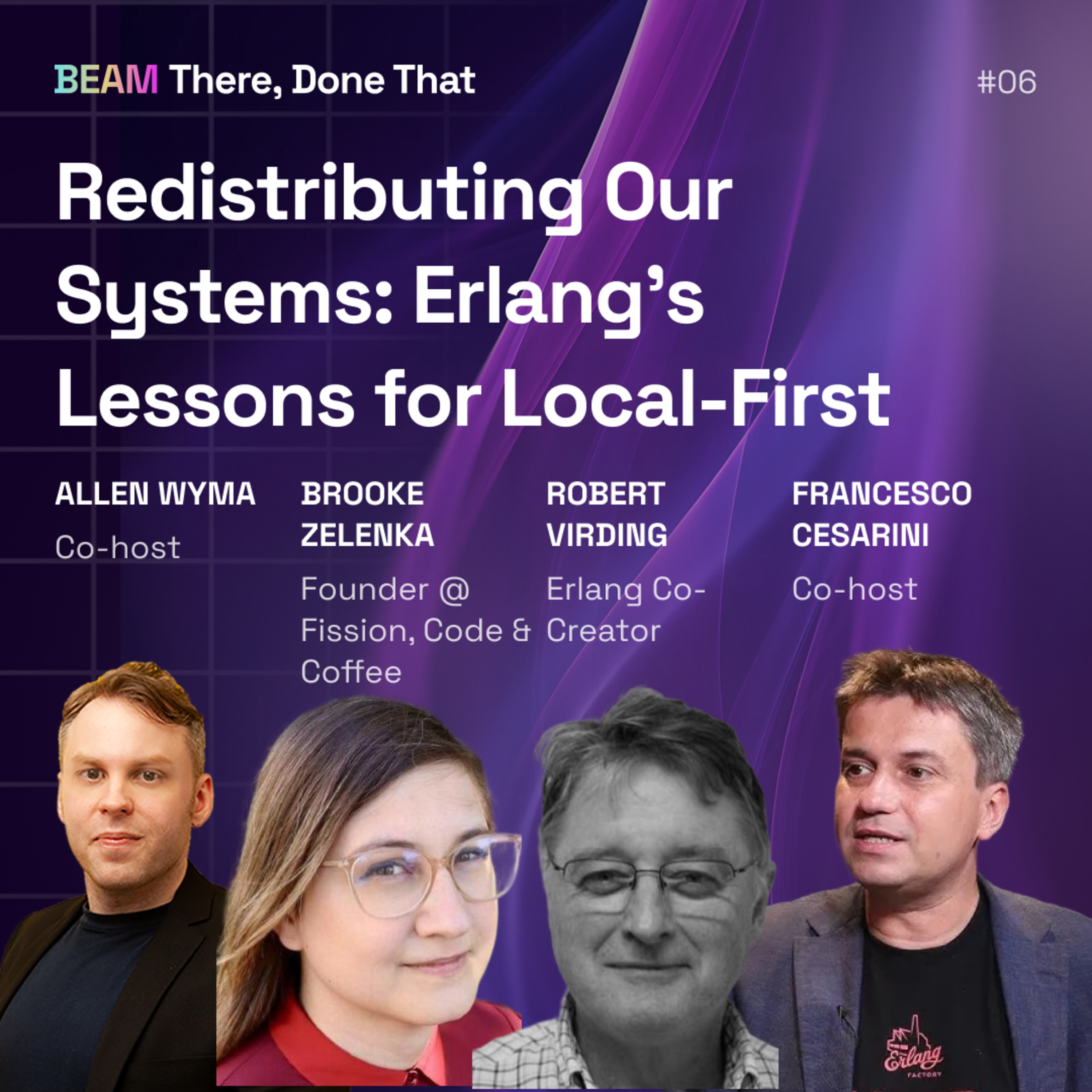
Redistributing Our Systems. Erlang's Enduring Lessons for Local-First
Erlang was designed for reliability in telephone switches, but its core principles — isolated processes, message passing, “let it crash supervision — anticipated problems we’re only now grappling with at scale. Four decades later, these ideas are finding new expression in local-first software: apps that work offline, sync peer-to-peer, and put users back in control of their data.In this podcast, R
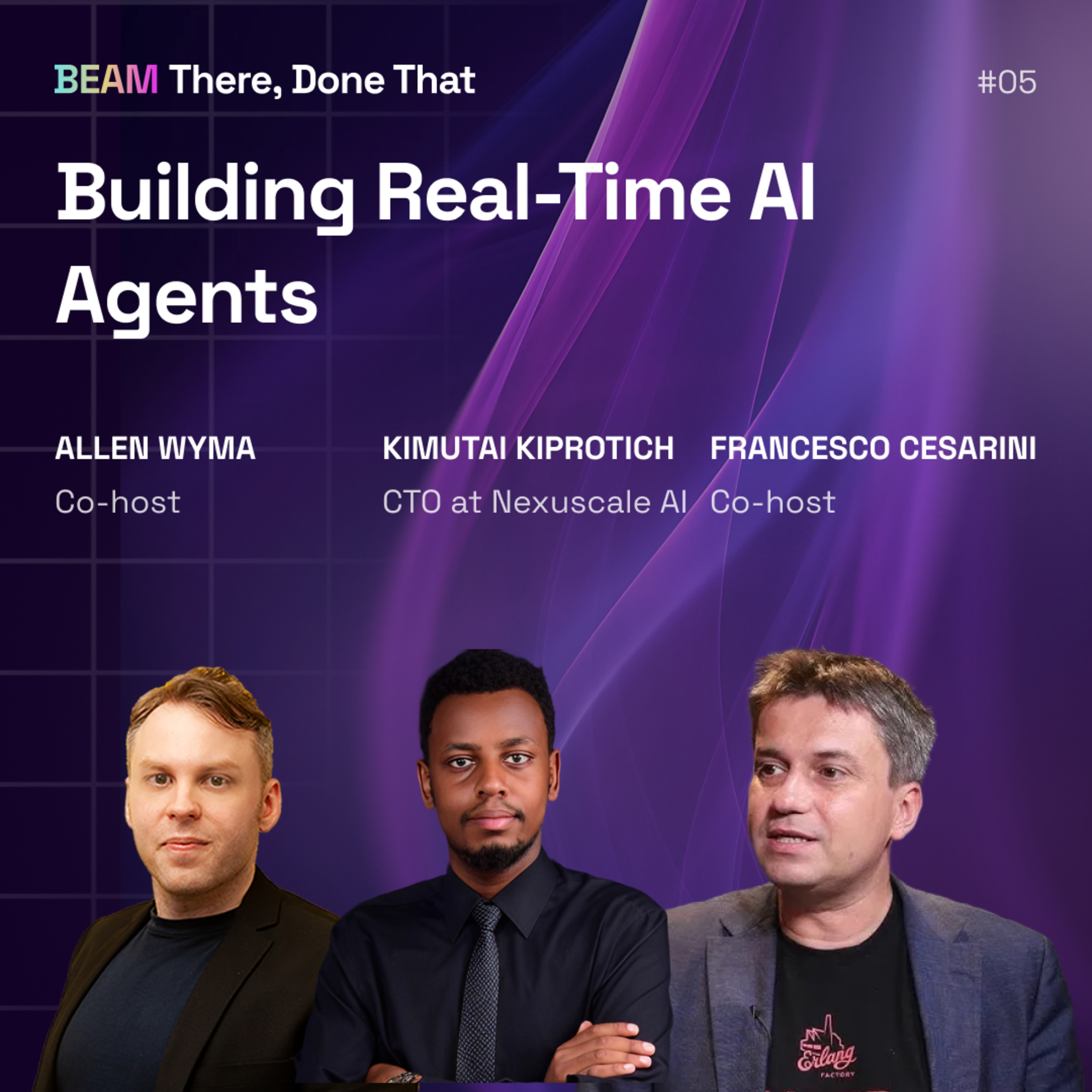
Building Real-Time AI Agents with Kimutai Kiprotich
We catch up with Kimutai Kiprotich about using Elixir and the BEAM to build AI Agents.
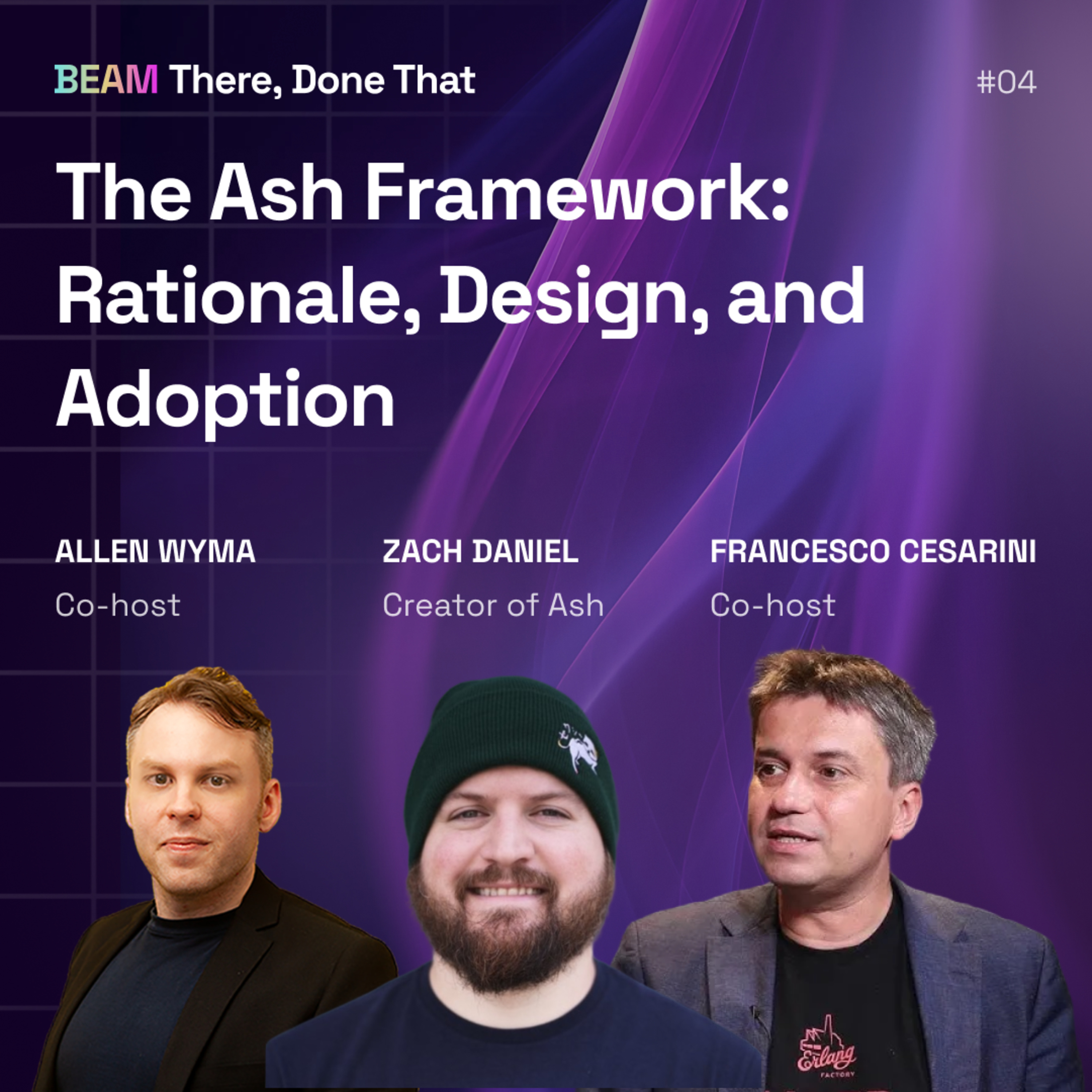
The Ash Framework: Rationale, Design, and Adoption — with Zach Daniel
We catch up with @zach_daniel about @ashframework .
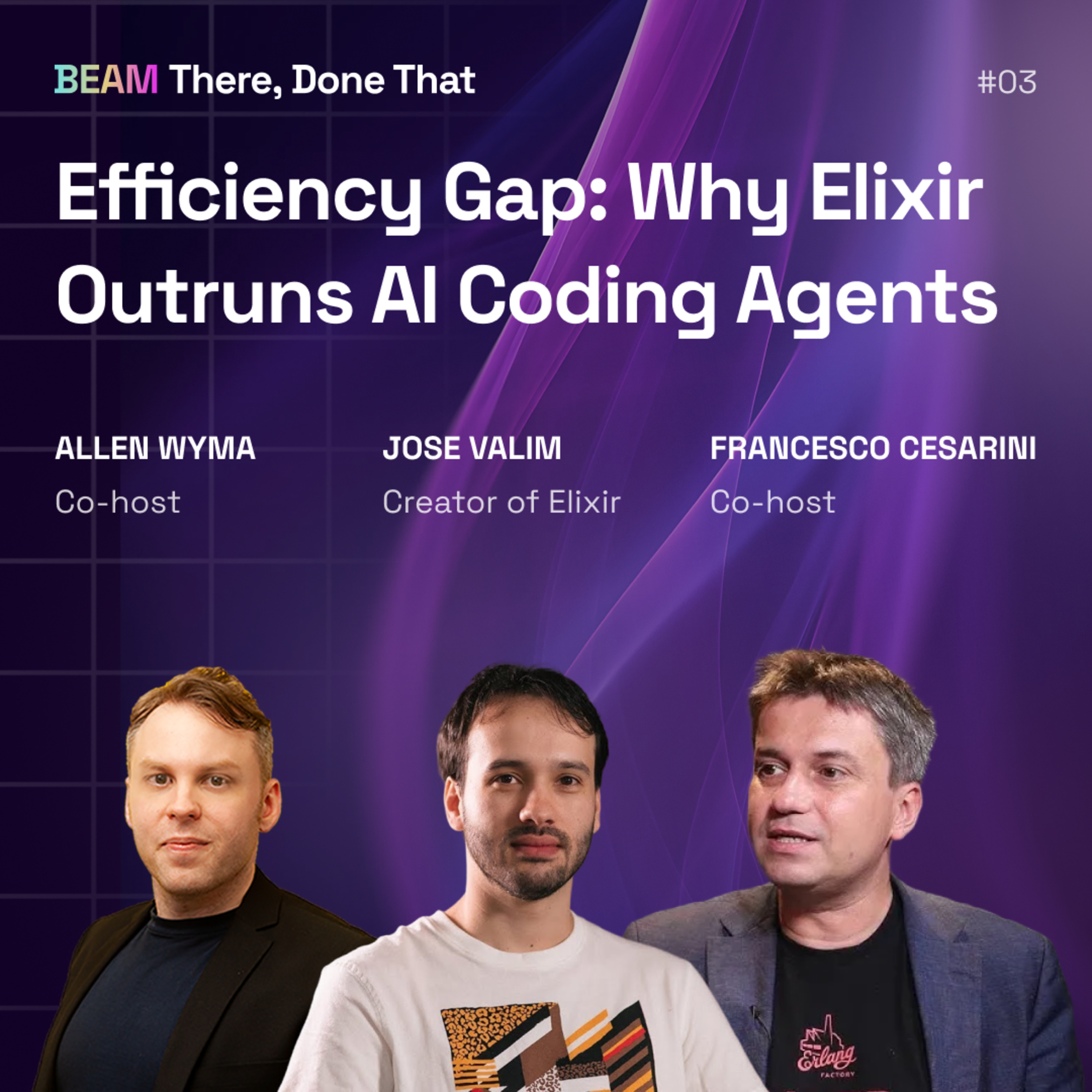
Efficiency Gap: Why Elixir Outruns AI Coding Agents
We catch up with Jose Valim and talk about the future of #Elixir and how #Elixir #agent #ai #coding
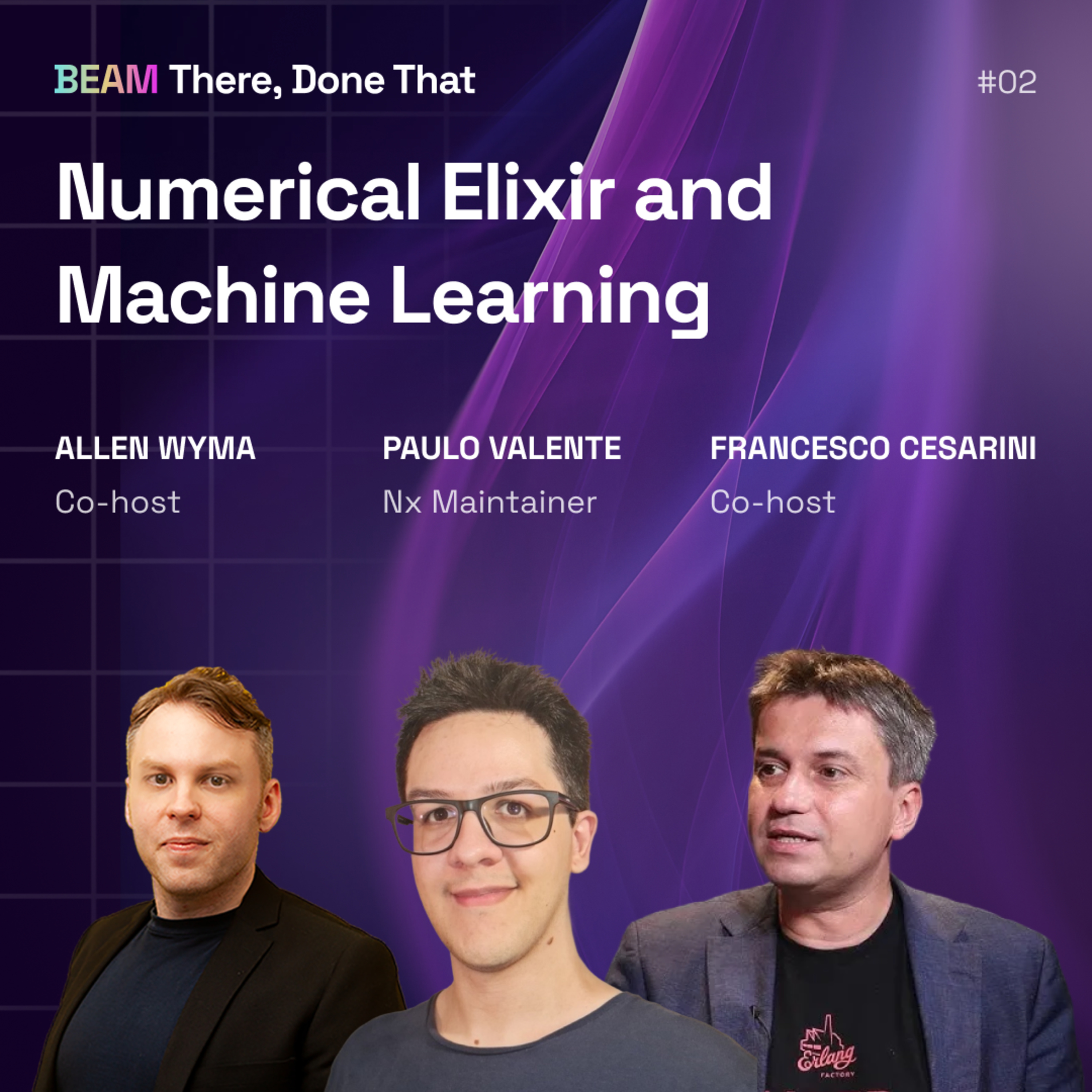
Numerical Elixir and Machine Learning with Paulo Valente
Paulo Valente comes onto the show to discuss #elixir 's #nx library and the state of #machinelearning in #elixir
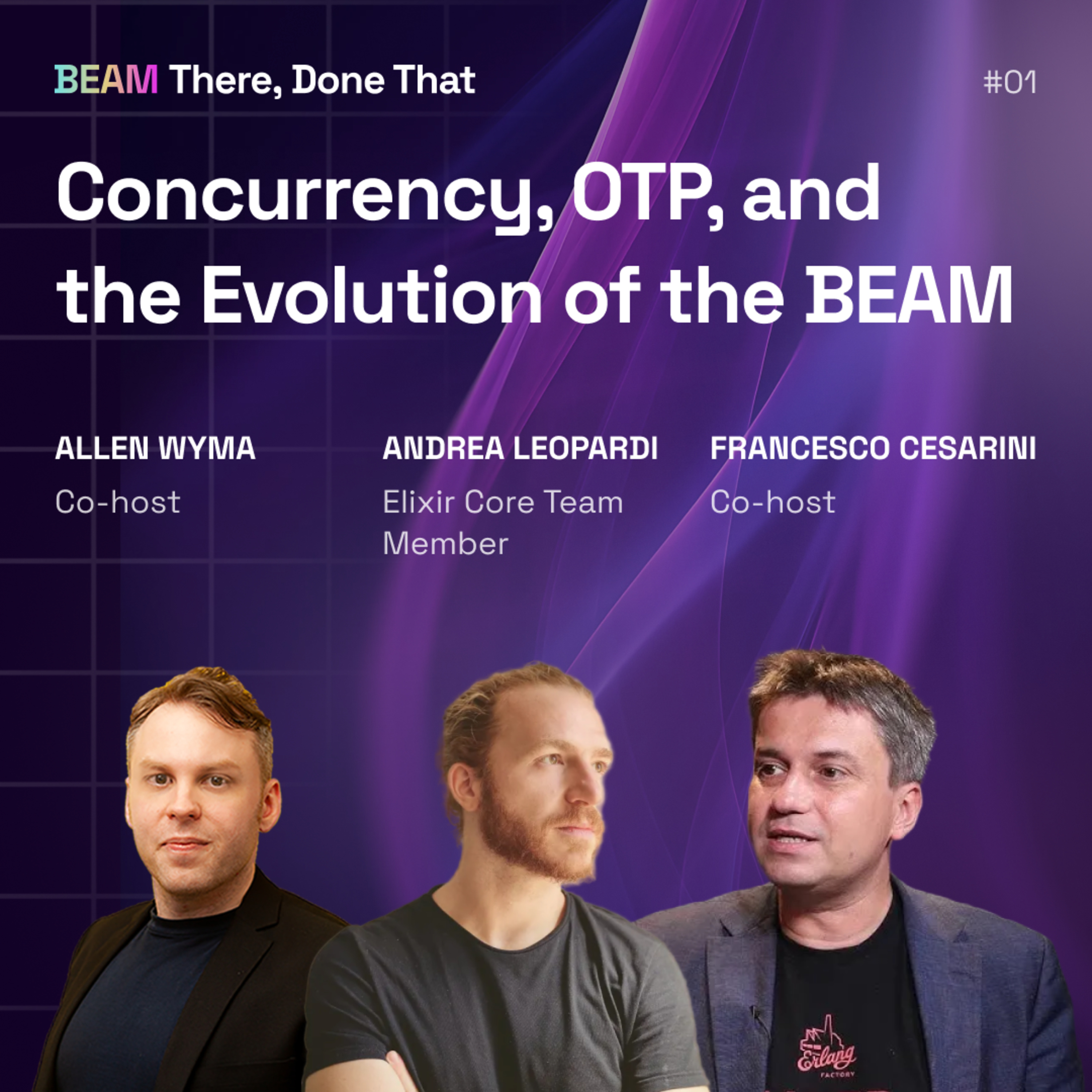
Concurrency, OTP, and the Evolution of the BEAM
Francesco, Allen, and Andrea Leopardi discuss concurrency, OTP, and the evolution of the BEAM.
Recommended

Talk About Talk - Executive & Leadership Communication Skills

English with Olivia | Slow Conversations & Vocabulary

Stand In The Circle

SLOW ENGLISH PODCAST (A1-A2) With Subtitles | Daily Videos | English With Us Podcast

Learn English A2 with Daily News | Simple English Listening Practice

پلی لیست | PlayList

Conspiracy Files with Paige Carter

Bad Friends

Learn 50 English Phrases While You Sleep | Everyday English Phrases & Vocabulary

This Past Weekend w/ Theo Von

Dateline NBC

Back to the 80s Radio
