
POMEPS Middle East Political Science Podcast
This podcast discusses news and innovations in the Middle East. It is produced by the Project on Middle East Political Science (POMEPS). Each episode features interviews with scholars and experts. Topics include political developments, conflict, and policy. The podcast aims to bring academic research to a broader audience.
Episodes
Anatomy of an Opposition (S. 16, Ep. 2)
On this week's episode of the podcast, Anne Kirstine Rønn of the Aarhus University joins Marc Lynch to discuss her book, Anatomy of an Opposition: The Struggle Against Sectarianism in Postwar Lebanon. The book traces the anatomy of these diverse movements, examining their key characteristics, strategies, and internal tensions. Drawing on Pierre Bourdieu’s concepts, it analyses how resistance again
Iraq's Shi'a warriors: From Battlefield to Parliament (S. 16, Ep. 1)
On this week's episode of the podcast, Inna Rudolf of Kings College London joins Marc Lynch to discuss her book, Iraq's Shi'a Warriors: From Battlefield to Parliament. By examining the PMU’s self-positioning as a pillar of Iraq’s defence infrastructure, this book offers a critical perspective on the prospects for Security Sector Reform (SSR) and highlights the limitations of externally driven Disa
Betrayal of the Homeland (S. 15, Ep. 15)
On this week's episode of the podcast, Samer Abboud of Villanova University joins Marc Lynch to discuss his book, Betrayal of the Homeland: Disloyal Subjects in Wartime Syria. In the book, Abboud argues that the Syrian regime sought to entrench its rule during wartime through bifurcating society into “loyal” and “disloyal” subjects—and punishing those it deemed treacherous. The regime framed the c
Iran and the Bomb (S. 15, Ep. 14)
On this week's episode of the podcast, Sina Azodi of the George Washington University joins Marc Lynch to discuss his book, Iran and the Bomb: The United States, Iran, and the Nuclear Question. The book shows that because the strategic logic of the nuclear program transcends the regimes type, dismantling the Iranian nuclear program is not viable policy option for the United States. Instead, the US
Ba‘thist Iraq through Archives (S. 15, Ep. 13)
On this week's episode of the podcast, Samuel Helfont of the Naval War College at the Naval Postgraduate School joins Marc Lynch to discuss his new edited volume, Ba‘thist Iraq through Archives: Reflections, Explorations, and Opportunities (co-edited with Lisa Blaydes). This volume brings together leading scholars to take stock of what we have learned from over a decade of research using the Ba'th
Outlasting the War on Terror in Iraq (S. 15, Ep. 12)
On this week's episode of the podcast, Kali Rubaii of Purdue University joins Marc Lynch to discuss his new book, Resurgency: Outlasting the War on Terror in Iraq. The book expands the temporal and descriptive categories of what war is—and what resistance looks like. By asking what actions and dispositions make sense when conditions of survival are diminished, and when today may be better than tom
Force Without Authority (S. 15, Ep. 11)
On this week's episode of the podcast, Jason Brownlee of University of Austin-Texas joins Marc Lynch to discuss his new book, Force Without Authority: America's Wars in the Middle East and South Asia. The book explores why the United States' costliest military operations since Vietnam came up short and pushed Republican and Democratic leaders toward withdrawal and retrenchment. The book delivers a
Counterrevolution in Egypt (S. 15, Ep. 10)
On this week's episode of the podcast, Hossam el-Hamalawy joins Marc Lynch to discuss his new book, Counterrevolution in Egypt: Sisi's New Republic. The book is a rare and comprehensive examination of the structures, hierarchies, and methods of the military, police, and intelligence agencies. Drawing on meticulous research, it reveals the strategies deployed to suppress the revolutionary wave, fro
Smuggling Law: Unsettled Sovereignties in Turkey’s Kurdish Borderlands (S. 15, Ep. 9)
On this week's episode of the podcast, Fırat Bozçalı of University of Toronto joins Marc Lynch to discuss his new book, Smuggling Law: Unsettled Sovereignties in Turkey’s Kurdish Borderlands. Taking readers from border villages, mountain passes, and road checkpoints to courtrooms, law offices, and forensic laboratories, Fırat Bozçalı examines how Kurdish smugglers, with the help of their lawyers,
Syria: A Modern History (S. 15, Ep. 8)
On this week's episode of the podcast, Daniel Neep of the Arab Center Washington DC joins Marc Lynch to discuss his new book, Syria: A Modern History. Modern Syria has seen violence, repression, and autocracy, suffering through tragedy after tragedy over the past century. In the book, Neep offers a gripping narrative of how Syrians have navigated these events. Never losing sight of the fates of or
West Asia: A New American Grand Strategy in the Middle East (S. 15, Ep. 7)
On this week's episode of the podcast, Mohammed Soliman of the Middle East Institute joins Marc Lynch to discuss his new book, West Asia: A New American Grand Strategy in the Middle East. In the book, Soliman argues that it is time for the United States to move decisively away from nation-building and get back to the business of order-building. To do so will require zooming out, in both geographic
A Waning Crescent: Why the Era of Islamism is Coming to an End (S. 15, Ep. 6)
On this week's episode of the podcast, Mohammed M. Hafez of the Naval Postgraduate School joins Marc Lynch to discuss his new article, “A Waning Crescent: Why The Era of Islamism is Coming to an End.” In the episode, Hafez argues that "Islamism, in all its forms, has failed in achieving the major goal: which is empowering Muslims through Islamic renewal, and providing good governance and military
Twilight of the Saints (S. 15, Ep. 5)
On this week's episode of the podcast, Stéphane Lacroix of Sciences Po joins Marc Lynch to discuss his new book, Twilight of the Saints: The History and Politics of Salafism in Contemporary Egypt. The book examines the history of Salafism in Egypt from its 1920s emergence in Cairo’s scholarly circles through the present day, shedding new light on the movement’s shifting relationship to politics.
Jordan: Politics in An Accidental Crucible (S. 15, Ep. 4)
On this week's episode of the podcast, Sean Yom of Temple University joins Marc Lynch to discuss his new book, Jordan: Politics in an Accidental Crucible. In the book, Yom provides a concise yet authoritative synthesis of the Hashemite Kingdom's development from its founding over a century ago to the present. He explores Jordan's government, society, economy, and foreign policy in a systematic man
Return of Tyranny (S. 15, Ep. 3)
On this week's episode of the podcast, Killian Clarke of Georgetown University joins Marc Lynch to discuss his new book, Return of Tyranny: Why Counterrevolutions Emerge and Succeed. Clarke explains both why counterrevolutions emerge and when they are likely to succeed. He forwards a movement-centric argument that emphasizes the strategies revolutionary leaders embrace both during their oppositio
Mirages of Reform (S. 15, Ep. 2)
On this week's episode of the podcast, Steven Monroe of the National University of Singapore joins Marc Lynch to discuss his new book, Mirages of Reform: The Politics of Elite Protectionism in the Arab World. Monroe uses the case of Jordan to discuss the broader failures of economic reform across the Middle East. He develops a theoretical framework focused on the ability of connected elites to sh
Civilizing Contention: International Aid in Syria's War (S. 15, Ep. 1)
Welcome to Season 15 of the POMEPS Middle East Political Science Podcast! On this week's episode of the podcast, Rana Khoury of the University of Illinois at Urbana-Champaign joins Marc Lynch to discuss her new book, Civilizing Contention: International Aid in Syria's War. Khoury asserts that to understand civilian and refugee activism in war, we must regard the international actors and organizati
The Revolution within (S. 14, Ep. 13)
On this week's episode of the podcast, Yasmin Moll of the University of Michigan joins Marc Lynch to discuss her new book, The Revolution Within: Islamic Media and the Struggle for a New Egypt. This book challenges conventional accounts of the 2011 revolution and its aftermath as a struggle between secular and religious forces, reconsidering what makes a practice virtuous, a public Islamic, a way
Road to October 7 (S. 14, Ep. 12)
On this week's episode of the podcast, Erik Skare of the University of Oslo joins Marc Lynch to discuss his new book, Road to October 7: A Brief History of Palestinian Islamism. In this book, Erik Skare argues that Palestinian Islamism is far more complex and dynamic than generally assumed. The phenomenon has continuously developed through disputes between moderates and hardliners.
Music for this
Decentralization, Local Governance, and Inequality (S. 14, Ep. 10)
On this week's episode of the podcast, Kristen Kao and Ellen Lust of the University of Gothenburg join Marc Lynch to discuss their new book, Decentralization, Local Governance, and Inequality in the Middle East and North Africa. This book directs our attention toward the ways in which decentralization is “lived locally” by citizens of the MENA region, underscoring the simultaneous influences of in

The King Can Do No Wrong (S. 14, Ep. 11)
On this week's episode of the podcast, Scott Williamson of the University of Oxford joins Marc Lynch to discuss his new book, The King Can Do No Wrong: Blame Games and Power Sharing in Authoritarian Regimes. This book stresses the importance of understanding autocratic blame games. Scott Williamson argues that how autocrats share power affects their ability to shift blame, so that they are less vu
Contested City (S. 14, Ep. 9)
On this week's episode of the podcast, Alissa Walter of Seattle Pacific University joins Marc Lynch to discuss her new book, Contested City: Citizen Advocacy and Survival in Modern Baghdad. . The book offers a history of state-society relations in Baghdad, exploring how city residents managed through periods of economic growth, sanctions, and war, from the oil boom of the 1950s through the withdra
Making Sense of the Arab State (S. 14, Ep. 8)
On this week's episode of the podcast, Steven Heydemann of Smith College joins Marc Lynch to discuss his new book, Making Sense of the Arab State. This book grapples with enduring questions such as the uneven development of state capacity, the failures of developmentalism and governance, the centrality of regime security and survival concerns, the excesses of surveillance and control, and the incr
Centers of Power in the Arab Gulf States ( S. 14, Ep. 7)
On this week's episode of the podcast, Kristian Coates Ulrichsen of Rice University joins Marc Lynch to discuss his new book, Centers of Power in the Arab Gulf States. This book offers a comparative analysis of military, political, economic and religious power in Bahrain, Kuwait, Oman, Qatar, Saudi Arabia and the UAE, as well as of the power of narrative. Ulrichsen sheds light on the varying conce
Islamic State (S.14, Ep. 6)
On this week's episode of the podcast, Austin J. Knuppe of Utah State University joins Marc Lynch to discuss his new book, Surviving the Islamic State:Contention, Cooperation, and Neutrality in Wartime Iraq. This book offers an insightful account of how Iraqis in different areas of the country responded to the rise and fall of the Islamic State. Austin J. Knuppe argues that people adopt survival r
Women, Money, and Political Participation (S. 14, Ep. 5)
On this week's episode of the podcast, Bozena Welborne of Smith College joins Marc Lynch to discuss her book, Women, Money, and Political Participation in the Middle East. This book examines women, money, and political participation in the Middle East and North Africa focusing on women’s capacity to engage local political systems. The research that Welborne presents here expands the discussion of
Mayors in the Middle (S. 14, Ep. 4)
On this week's episode of the podcast, Diana Greenwald of the City College of New York joins Marc Lynch to discuss her new book, Mayors in the Middle: Indirect Rule and Local Government in Occupied Palestine. Diana B. Greenwald offers a new theory of local government under indirect rule through a historically informed, empirically nuanced analysis of towns and cities across the West Bank. The boo
Wars of Ambition (S. 14, Ep. 3)
On this week's episode of the podcast, Afshon Ostovar of the Naval Postgraduate School joins Marc Lynch to discuss his new book, Wars of Ambition: The United States, Iran, and the Struggle for the Middle East. This book offers a sweeping, comprehensive history of the post-9/11 wars in the Middle East and the politics that fueled them. Ostovar discusses both the decline of American influence in the
The Abraham Accords (S. 14, Ep. 2)
On this week's episode of the podcast, Elham Fakhro of the Harvard Kennedy School joins Marc Lynch to discuss her new book, The Abraham Accords: The Gulf States, Israel, and the Limits of Normalization. In this book, Elham Fakhro demonstrates how shared security concerns, economic interests, and regional political shockwaves led to a surprising strategic convergence between the Gulf states and Isr
From Jihad to Politics (S. 14, Ep. 1)
Welcome to Season 14 of the POMEPS Middle East Political Science Podcast!
On this week's episode of the podcast, Jerome Drevon of International Crisis Group joins Marc Lynch to discuss his new book, From Jihad to Politics: How Syrian Jihadis Embraced Politics. In the book, Drevon offers an examination of the Syrian armed opposition, tracing the emergence of Jihadi groups in the conflict, their do
Zanzibar Was a Country (S. 13, Ep. 25)
On this week's episode of the podcast, Nathaniel Mathews of Binghamton University joins Marc Lynch to discuss his new book, Zanzibar Was a Country: Exile and Citizenship between East Africa and the Gulf. This book traces the history of a Swahili-speaking Arab diaspora from East Africa to Oman. The stories of postrevolution exiles and emigrés from Zanzibar provide a framework for the broader transr
Field Notes: The Making of Middle East Studies in the United States (S. 13, Ep. 24)
On this week's episode of the podcast, Zachary Lockman of New York University joins Marc Lynch to discuss his new book, Field Notes: The Making of Middle East Studies in the United States. This book reconstructs the origins and trajectory of area studies in the United States, focusing on Middle East studies from the 1920s to the 1980s. Lockman shows how the Carnegie, Rockefeller, and Ford foundati
The Resilience of Parliamentary Politics in Kuwait (S. 13, Ep. 23)
On this week's episode of the podcast, Courtney Freer of Emory University joins Marc Lynch to discuss her new book, The Resilience of Parliamentary Politics in Kuwait: Parliament, Rentierism, and Society. This book provides an unprecedented holistic treatment of grassroots contemporary Kuwaiti politics in English in over two decades, incorporating the country's political dynamics into broader deba
My Brother, My Land (S. 13, Ep. 22)
On this week's episode of the podcast, Sami Hermez of Northwestern University and Sireen Sawalha join Marc Lynch to discuss their new book, My Brother, My Land: A Story from Palestine. This is the story of Palestinian resistance that follows Sireen's family after walking back to Palestine against the traffic of exile. Through the lives of the Sawalha family, and the story of Iyad's involvement wi
The Political Science of the Middle East and The Uprisings of Gaza (S.13, Ep. 21)
On this week's episode of the podcast, Alexander Cooley of Barnard College joins Marc Lynch to discuss Cooley's review essay, The Uprisings of Gaza: How Geopolitical Crises Have Reshaped Academic Communities from Tahrir to Kyiv. This essay reflects upon the contributions of Marc Lynch's edited volume (The Political Science of the Middle East: Theory and Research Since the Arab Uprisings) to addres
Redefining Ceasefires (S. 13, Ep. 20)
On this week's episode of the podcast, Marika Sosnowski of the University of Melbourne Law School joins Marc Lynch to discuss her new book, Redefining Ceasefires: Wartime Order and Statebuilding in Syria. This book explores how ceasefires are not only military tactics but are also tools of wartime order and state-building. While ceasefires have been used in Syria to halt violence and facilitate pe
Smugglers and States (S. 13, Ep. 19)
On this week's episode of the podcast, Max Gallien of Institute of Development Studies joins Marc Lynch to discuss his new book, Smugglers and States: Negotiating the Maghreb at Its Margins. This book examines the rules and agreements that govern smuggling in North Africa, tracing the involvement of states in these practices and their consequences for borderland communities. Gallien demonstrates t
The Gulf Monarchies After the Arab Spring (S.13, Ep. 18)
On this week's episode of the podcast, Cinzia Bianco of the University of Exeter joins Marc Lynch to discuss her new book, The Gulf Monarchies After the Arab Spring: Threats and Security. This book applies an original theoretical framework to unpack the threat perceptions and strategic calculus driving the behavior of new impactful regional players in the Middle East and North Africa. Bianco looks
Soldiers of Democracy? (S. 13, Ep. 17)
On this week's episode of the podcast, Sharan Grewal of the College of William and Mary and the Middle East Initiative at Harvard University joins Marc Lynch to discuss his new book Soldiers of Democracy? Military Legacies and the Arab Spring. The book argues that a military's behavior under democracy is shaped by how it had been treated under autocracy. This scholarly volume illustrates this theo
Egypt Under El-Sisi (S. 13, Ep. 16)
On this week's episode of the podcast, Maged Mandour of the Carnegie Endowment for International Peace joins Marc Lynch to discuss his new book, Egypt under El-Sisi: A Nation on the Edge. His book follows President Sisi's regime in the aftermath of the coup that brought him to power, as a chronology of the devastating political, economic, and social consequences of direct military rule. Mandour ex
Moroccan Other-Archives (S. 13, Ep. 15)
On this week's episode of the podcast, Brahim El Guabli of Williams College joins Marc Lynch to discuss his new book, Moroccan Other-Archives: History and Citizenship After State Violence. The book shows how Moroccan cultural production has become an other-archive: a set of textual, sonic, embodied, and visual sites that recover real or reimagined voices of these formerly suppressed and silenced c
The Rebel's Clinic (S.13, Ep. 14)
On this week's episode of the podcast, Adam Shatz of Bard College joins Marc Lynch to discuss his new book, The Rebel's Clinic: The Revolutionary Lives of Frantz Fanon. In this searching biography, Adam Shatz tells the story of Frantz Fanon’s journey as a prominent intellectual activist of the postcolonial era. Shatz offers a dramatic reconstruction of Fanon’s extraordinary life—and a guide to th
Repression in the Digital Age (S.13 Ep. 13)
On this week's episode of the podcast, Anita Gohdes of the Hertie School joins Marc Lynch to discuss her new book, Repression in the Digital Age: Surveillance, Censorship, and the Dynamics of State Violence. Gohdes looks at how digital technology supports traditional, violent state repression. Her book draws on theory and evidence to examine the link between censorship, surveillance, and violent r
Middle East Scholar Barometer (S. 13, Ep. 12)
On this week’s episode of the podcast, Shibley Telhami of the University of Maryland joins Marc Lynch to discuss the Middle East Scholar Barometer. The Middle East Scholar Barometer is a project of University of Maryland’s Critical Issues Poll and George Washington University’s Project on Middle East Political Science. It aims to probe the assessments of scholars of the Middle East, particularly m
The Ghosts of Lebanon, It's Just How Things are Done, & Unreported Realities (S. 13, Ep. 11)
On this week's episode of the podcast, Sarah Parkinson of Johns Hopkins University joins Marc Lynch to discuss some of her latest publications. Her article, The Ghosts of Lebanon: To See What Lies Ahead in Gaza, Look Back to Israel’s 1982 Invasion, in the Foreign Affairs Journal, looks at the lessons of Israel’s disastrous 1982 invasion of southern Lebanon—and what they suggest about the outcome
Refuge and Resistance (S. 13, Ep. 10)
On this week's episode of the podcast, Anne Irfan of University of College London joins Marc Lynch to discuss her new book, Refuge and Resistance: Palestinians and the International Refugee System (Starts at 0:33). This book is a groundbreaking international history of Palestinian refugee politics. Irfan traces the history and politics of UNRWA’s interactions with Palestinian communities, particul
Politics as Worship (S. 13, Ep. 9)
On this week's episode of the podcast, Sumita Pahwa of Scripps College, joins Marc Lynch to discuss her new book, Politics as Worship: Righteous Activism and the Egyptian Muslim Brothers. Sumita Pahwa explores the question of why leading Islamist movements like the Egyptian Muslim Brothers embrace electoral politics while insisting that their main goal is “working for God,” and how they reconcile
Politics in the Crevices (S. 13, Ep. 8)
On this week's episode of the podcast, Sarah El Kazaz of SOAS, University of London, joins Marc Lynch to discuss her new book, Politics in the Crevices: Urban Design and the Making of Property Markets in Cairo and Istanbul. In this transnational ethnography of neighborhoods undergoing contested rapid transformations, Sarah El Kazaz reveals how the battle for housing has shifted away from tradition
Shouting in a Cage & Saudi Arabia and the GCC (S. 13, Ep. 7)
On this week's episode of the podcast, Sofia Fenner of Colorado College joins Marc Lynch to discuss her new book, Shouting in a Cage: Political Life After Authoritarian Co-optation in North Africa. The book offers new ways to understand co-optation’s power and its limits by examining two co-opted parties, the Wafd Party in Egypt and the Istiqlal Party in Morocco. Sofia Fenner argues that co-optati
Good Rebel Governance & Hamas and Gaza (S. 13, Ep. 6)
On this week's episode of the podcast, Dipali Mukhopadhyay of the University of Minnesota join Marc Lynch to discuss her new book (co-authored with Kimberly Howe of Tufts University), Good Rebel Governance: Revolutionary Politics and Western Intervention in Syria. This book moves the scholarship on insurgent rule forward by considering how governing authority arises and evolves during violent conf
The Caliph and The Imman & REMENA (S. 13, Ep. 5)
On this week's episode of the podcast, Toby Matthiesen of the University of Bristol joins Marc Lynch to discuss his new book, The Caliph and the Imam: The Making of Sunnism and Shiism. This book is an authoritative account of Islam's schism that for centuries has shaped events in the Middle East and the Islamic world. This dispute over who should guide Muslims, the Caliph or the Imam, marks the or
Syria Divided & Perspectives on Politics (S. 13, Ep. 4)
On this week's episode of the podcast, Ora Szekely of Clark University joins Marc Lynch to discuss her new book, Syria Divided: Patterns of Violence in a Complex Civil War. Szekely draws on sources including in-depth interviews, conflict data, and propaganda distributed through social media to examine how these competing narratives have shaped the course of the conflict. Szekely argues that the co
The Suspended Disaster & Turkey/Syria Zoom (S. 13, Ep. 3)
On this week's episode of the podcast, Thomas Serres of the University of California, Santa Cruz joins Marc Lynch to discuss his new book, The Suspended Disaster. In his book, he examines the dynamics of the Algerian political system, offering new insights into the last years of Bouteflika’s rule and the factors that shaped the emergence of an unexpected social movement. He argues that the Algeria
Afterlives of Revolution & Shia Power (S. 13, Ep. 2)
On this week's episode of the podcast, Alice Wilson of the University of Sussex joins Marc Lynch to discuss her new book, Afterlives of Revolution. Alice Wilson considers the "social afterlives" of revolutionary values and networks, looking particularly at the legacies of officially silenced revolutionaries in Oman.
Marsin Al-Shammary, Sajad Jiyad and Fanar Haddad Shia, contributors on Power Com
Making Democracy Safe for Business & APSA Virtual Posters (S. 13, Ep. 1)
In this week's episode, Robert Kubinec of NYU Abu Dhabi joins Marc Lynch to discuss his book,. Kubinec argues that businesses must respond to changes in how perks and privileges are distributed after political transitions, either by forming political coalitions or creating new informal connections to emerging politicians. Employing detailed case studies and original experiments, Making Democracy S
Research Ethics and Israel's Annexation of the West Bank (S. 12, Ep. 30)
On this week's episode of the podcast, Rabab El Mahdi of the American University in Cairo, Janine Clark of the University of Toronto, Laryssa Chomiak of Centre d'Études Maghrébines à Tunis (CEMAT), and Rima Majed of the American University of Beirut join Marc Lynch to discuss the ethical challenges and positionally of research. (Starts at 1:41). Dahlia Scheindlin of Century International and Yael
POMEPS 14th Annual Conference (S. 12. Ep. 29)
On this week's episode, Marc Lynch talks with members of the POMEPS Steering Committee and Advisory Board on a variety of topics at the POMEPS Annual Conference held at GWU in late May 2023. Noora Lori of Boston University, Rima Majed of American University of Beirut, Wendy Pearlman of Northwestern University discuss migration and refugee studies. (Starts at 1:01). Curtis Ryan of Appalachian Stat
Yemen in the Shadow of Transition and the End of American Primacy (S. 12, Ep. 28)
Stacey Philbrick Yadav of Hobart and William Smith Colleges joins Marc Lynch to discuss her new book, Yemen in the Shadow of Transition: Pursuing Justice Amid War. The book shows how the transitional process was ultimately overtaken by war, and explains why features of the transitional framework nevertheless remain a central reference point for civil actors engaged in peacebuilding today. (Starts
Dying Abroad and The Racial Muslim (S. 12, Ep. 27)
Dying Abroad and The Racial Muslim (S. 12, Ep. 27) by Marc Lynch
Democracy or Authoritarianism & Upcoming Turkish Elections (S. 12 Ep. 26)
In this week's episode, Marc Lynch speaks with Sebnem Gumuscu of Middlebury College about her book, Democracy or Authoritarianism: Islamist Governments in Turkey, Egypt, and Tunisia. The author draws upon extensive fieldwork in three countries to explain why some Islamist governments adhered to democratic principles and others took an authoritarian turn following electoral success. (Starts at 0:53
Iraq Against the World and Developments in Sudan (S. 12, Ep. 25)
Samuel Helfont of the Naval Postgraduate School joins Marc Lynch to discuss his new book, Iraq Against the World: Saddam, America, and the Post-Cold War Order. In the book, Helfont offers a new narrative of Iraqi foreign policy after the 1991 Gulf War to argue that Saddam Hussein executed a political warfare campaign that facilitated this disturbance to global norms. The book explores how the move
COVID and Gender in the Middle East & Sudan's Civil War Crisis(S. 12, Ep. 24)
Rita Stephan of North Carolina State University and Maro Youssef of the University of Southern California join Marc Lynch to discuss their new book, COVID and Gender in the Middle East. Stephen, editor of the book, gathers an impressive group of local scholars, activists, and policy experts, to provide empirical evidence of COVID’s gendered effects. The book examines a range of national and locali
Security Politics & Beirut's Southern Suburbs (S. 12, Ep. 23)
David Roberts of King’s College London joins Marc Lynch to discuss his new book, Security Politics in the Gulf Monarchies: Continuity and Change. Roberts offers a definitive guide to continuity and change in the Gulf region. He explores the forces challenging and bolstering the status quo across the political, social, economic, military, and environmental dimensions of security.
Jeroen Gunning o
Monitors and Meddlers & Underdevelopment of Southern Iraq (S. 12, Ep. 22)
Sarah Bush of Yale University and Lauren Prather of the University of California, San Diego join Marc Lynch on this week's podcast to discuss their new book, Monitors and Meddlers: How Foreign Actors Influence Local Trust in Elections. Bush and Prather explain how and why outside interventions influence local trust in elections, a critical factor for democracy and stability.
Marsin Alshamary of t
China's Rise in the Global South & Anti-Blackness and Identity in Tunisia (S. 12, Ep. 21)
Dawn Murphy of the US National War College joins Marc Lynch on this week's podcast to discuss her book, China's Rise in the Global South: The Middle East, Africa, and Beijing's Alternative World Order.The book examines China's behavior as a rising power in two key Global South regions, the Middle East and Sub-Saharan Africa. Murphy compares and analyzes thirty years of China's interactions with th
Oil Money & The Struggle for Supremacy (S. 12, Ep. 20)
Davis Wight of the University of North Carolina joins Marc Lynch on this week's podcast to discuss his book, Oil Money: Middle East Petrodollars and the Transformation of US Empire, 1967-1988. The book is an expansive yet judicious investigation of the wide-ranging and contradictory effects of petrodollars on Middle East–US relations and the geopolitics of globalization. Although petrodollar ties
Popular Politics, Ambivalent Allies, and Making Tunisia non-African (S. 12, Ep. 19)
Mohammad Ali Kadivar of Boston College joins Marc Lynch on this week's podcast to discuss his book, Popular Politics and the Path to Durable Democracy. The book challenges the prevailing wisdom in American foreign policy that democratization can be achieved through military or coercive interventions, revealing how lasting change arises from sustained, nonviolent grassroots mobilization. (Starts at
Media of the Masses and Turkey/Syria Earthquake Relief (S. 12 Ep. 18)
Andrew Simon joins Marc Lynch on this week's podcast to discuss his new book, Media of the Masses: Cassette Culture in Modern Egypt. The book investigates the social life of an everyday technology—the cassette tape—to offer a multisensory history of modern Egypt. Enabling an unprecedented number of people to participate in the creation of culture and circulation of content, cassette players and ta
The Lebanon Uprising of 2019 (S. 12, Ep. 16)
On this week's episode, Marc Lynch is joined by the editors and authors of the new book, The Lebanon Uprising of 2019: Voices from the Revolution. The book includes include stories about specific events and struggles, views of the uprising from various regions of the country, and reflections on topics such as the labor struggle, disability, the student movement, foreign interventions, the struggl

Order Out of Chaos and Staple Security (S. 12, Ep. 15)
David Siddhartha Patel of Brandeis University joins Marc Lynch on this week's podcast to discuss his new book, Order out of Chaos: Islam, Information, and the Rise and Fall of Social Orders in Iraq. Combining rational choice approaches, ethnographic understanding, and GIS analysis, this book reveals the interconnectedness of the enduring problem of how societies create social order in a stateless
The War in Court and the Egyptian Economy (S. 12, Ep. 14)
The War in Court and the Egyptian Economy (S. 12, Ep. 14) by Marc Lynch
Beyond the Lines and Emotional Sensibility (S. 12, Ep. 13)
Sarah Parkinson of Johns Hopkins University joins Marc Lynch on this week's podcast to discuss her new book, Beyond the Lines: Social Networks and Palestinian Militant Organizations in Wartime Lebanon. The book shows that most militants approach asymmetrical warfare as a series of challenges centered around information and logistics, characterized by problems such as supplying constantly mobile fo
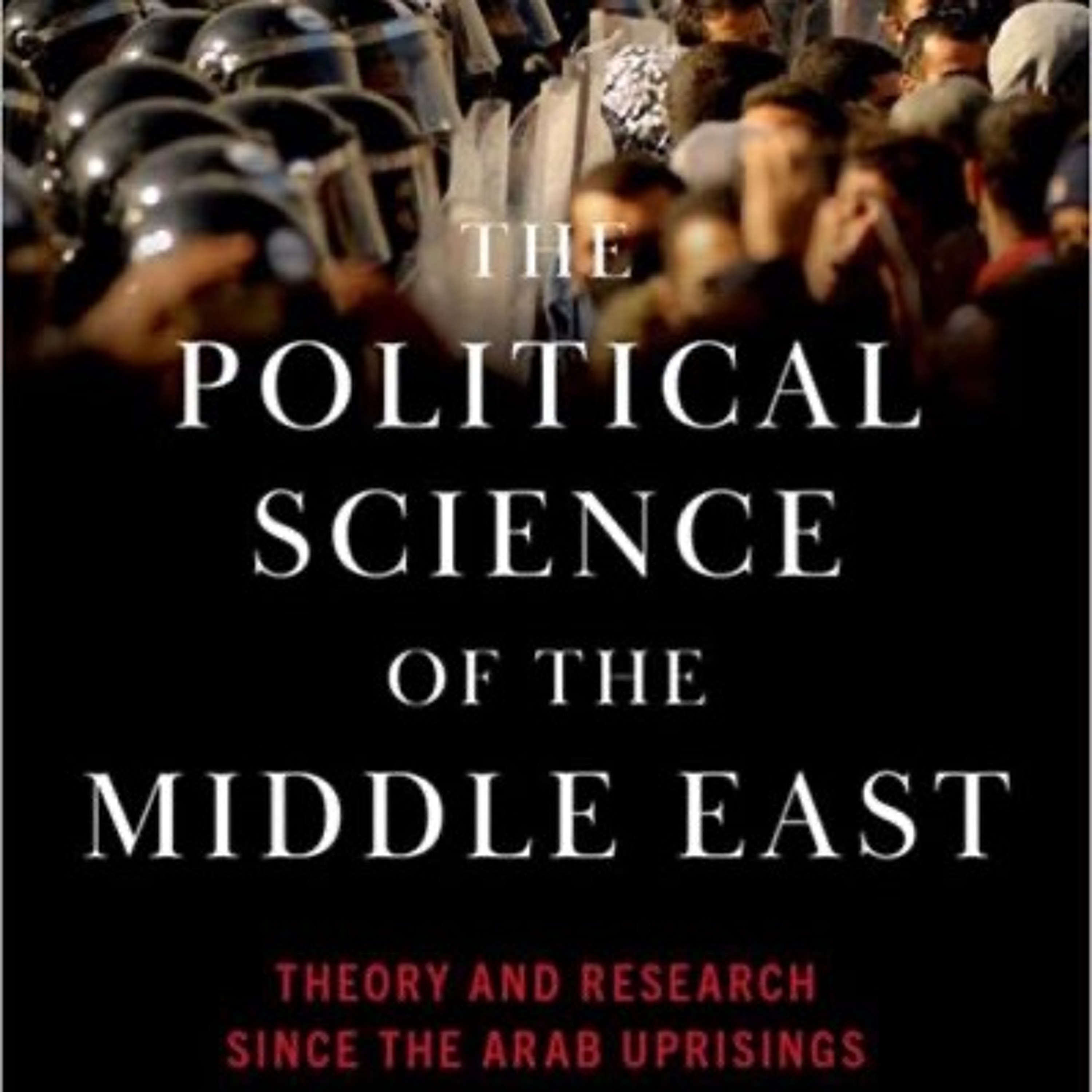
Ch12 Triumph over Adversity: Reflections on the Practice of Middle East Political Science
Ch12 Triumph over Adversity: Reflections on the Practice of Middle East Political Science by Marc Lynch
Political Power & Sustainability, The Afterlife Goes On, Political Economy (S.12, Ep. 12)
Tobias Zumbragel of University of Hamburg joins Marc Lynch on this week's podcast to discuss his new book, Political Power and Environmental Sustainability in Gulf Monarchies. The book analyzes the political dynamics behind the sustainable transformation in the oil and gas-rich Gulf and explains the political factors behind the green transformation. (Starts at 1:02). Nermin Allam of Rutgers Univer
A Landscape of War & Burnings, Beatings, and Bombings (S. 12, Ep. 11)
Munira Khayyat of The American University in Cairo joins Marc Lynch on this week's podcast to discuss her new book, A Landscape of War: Ecologies of Resistance and Survival in South Lebanon. The book analyzes life along the southern border of Lebanon, where resistant ecologies thrive amid a terrain of perennial war. (Starts at 1:45). Neil Ketchley of the University of Oxford discusses his new arti
Competitive Authoritarianism in Algeria & Demobilization in Morocco (S. 12, Ep. 9)
Dalia Ghanem of the European Union Institute for Security Studies joins Marc Lynch on this week's podcast to discuss her new book, Understanding the Persistence of Competitive Authoritarianism in Algeria. The book analyzes the secrets behind the Algerian regime’s survival and the pillars of its longevity. (Starts at 0:42). Sammy Zeyad Badran of The American University of Sharjah, discusses his new
In the Shade of the Sunna, Migration After the Arab Uprisings, & Female Electability (S. 12, Ep. 8)
Aaron Rock-Singer of the University of Wisconsin-Madison joins Marc Lynch on this week's podcast to discuss his new book, In the Shade of the Sunna: Salafi Piety in the Twentieth-Century Middle East. The book analyzes how Salafism is a creation of the twentieth century and how its signature practices emerged primarily out of Salafis’ competition with other social movements. (Starts at 0:55). Rana
Creating Consent in an Illiberal Order, Arab Protests, & Environmental Politics (S. 12, Ep. 7)
Jessica Watkins of the London School of Economics joins Marc Lynch on this week's podcast to discuss her new book, Creating Consent in an Illiberal Order: Policing Disputes in Jordan. The book focuses on the development of the Jordanian police institution to demonstrate that rather than being primarily concerned with law enforcement, the police are first and foremost concerned with order. (Starts
Digital Authoritarianism in the Middle East & Authoritarian Adaptation (S. 12, Ep. 6)
Marc Owen Jones Hamad bin Khalifa University joins Marc Lynch on this week's podcast to discuss his new book, Digital Authoritarianism in the Middle East: Deception, Disinformation and Social Media. The book analyzes how social media has been weaponised by states and commercial entities in the Middle East. (Starts at 0:45). Andre Bank of the German Institute for Global and Area Studies and Sean Y
Classless Politics, OPEC+ Oil Politics, & Political Violence (S. 12, Ep. 5)
Hesham Sallam of Stanford University joins Marc Lynch on this week's podcast to discuss his new book, Classless Politics: Islamist Movements, the Left, and Authoritarian Legacies in Egypt. The book offers an account of the relationship between neoliberal economics and Islamist politics in Egypt that sheds new light on the worldwide trend of “more identity, less class.” (Starts at 0:59). You can re
Recommended

The Healer Revolution

Becoming: HER with Nikki Spoelstra

Booked, Blonde & Busy w/ Olivia Ponton

McKinsey on Consumer and Retail

megahired.com

Hard Knocks Podcast

Effective Weight Loss for Moms | High protein, Strength Training, Lose Weight, Meal Planning, Fat Loss, Healthy Habits

The Human-Animal Connection - Pet Life Radio Original

The Daily

World News Tonight with David Muir

The Joe Rogan Experience

English Vocabulary Help
