Thoughts on Healthcare Markets & Technology Podcast
This podcast provides expert analysis of healthcare and life sciences markets, covering investment, policy, entrepreneurship, technology, and AI. It is designed for investors, entrepreneurs, executives, and physicians navigating the business side of healthcare. Each episode offers insights into market trends and innovations. The show aims to help listeners understand the complexities of the healthcare industry.
Episodes
Part I: The report card theory of giant companies: how every school subject and survival need gets its LLM moment, who gets paid when it does, and what the order means for healthcare through 2046
The inventor of the transistor didn’t collect most of the value it created. The inventor of the transformer didn’t either. The money went to whoever owned the scarce thing next door once the primitive got cheap.This is the report card theory: the biggest companies get built when a basic building block of human life (a school subject or a survival need) becomes something machines can do for near ze
Part I: Warren's Stop Corporate Takeovers of Physicians Act, the friendly PC loophole, and why a federal corporate practice of medicine ban would hit Optum harder than it hits mid-market PE
Warren’s physician bill says it targets Wall Street. The operative language hits any non-licensee controlling a medical practice. Those are not the same list.The friendly physician corporation structure is dumber than you think. One management services agreement plus one stock transfer restriction equals functional ownership with zero technical ownership.Every major physician platform files SEC st
Part I: The Stark Law Whole Hospital Exception, the ACA Section 6001 Freeze, and Why Letting Doctors Own Hospitals Again Might Fix Competition or Just Speed Up the Consolidation Nobody Wanted
Congress banned new physician-owned hospitals from Medicare in 2010. The same physicians can freely own ambulatory surgery centers and refer patients there all day. The asymmetry is not policy. It is a lobbying snapshot.The Stark Law whole hospital exception let doctors own hospitals as full enterprises and refer freely. Section 6001 of the ACA killed that in 2010, freezing roughly 250 facilities
Part I: Forbes 400 Class of 2026: What the 15 Richest People in US Healthcare Reveal About Where the Money Actually Sits (Hint: Not in Software, Payers, or Anything With a Demo Day)
Forbes 400 2026 healthcare names: 15 people, $136B combined. No payers. No pharmacy benefit managers. No EHR founders. No digital health. Zero.The 15 break into four buckets: 1 hospital operator, 5 distribution/supply, 5 medical devices, 3 biotech/services, 1 software. That is the whole map.Three cousins from Medline - Charlie Mills, Andy Mills, Wendy Abrams - are worth $21B combined. Their family
Part I: The Hugging Face Incident, Explained for Healthcare: How OpenAI's Agents Escaped a Sandbox and Hacked a Real Company, and Why Every Hospital, Payer, and Health Data Vendor Should Care
In July 2026, OpenAI’s AI agents broke out of a sandbox, built a secret message board, and hacked Hugging Face’s production systems. No human directed any of it. Healthcare has not connected the dots yet.The agents went from one compromised server to cluster-admin across multiple systems in under 13 hours. The median healthcare breach dwell time is still measured in weeks. Those timelines no longe
Part I: Open Beats Closed Almost Every Time, Monetizing Open Is the Hard Part, and Why Metriport's $26M Series A Is a Bet on Becoming the Open Patient Context Layer for Healthcare AI
AOL had 26.5M paying subscribers. Encarta had licensed content and a real editorial staff. Enterprise blockchain had billions in institutional backing. Open beat all of them anyway. Here is why that pattern matters for healthcare AI right now.TCP/IP produced zero dollars for CERN. Wikipedia runs on a budget smaller than a mid-sized software company’s marketing line. Ethereum processed more activit
Part I: The HTI-5 Deregulation Rule Just Told EHR Vendors That AI Agents Count as Users Under Information Blocking, and Here Is the Startup Map for What Gets Built on Top of That
HTI-5 just told every EHR vendor: you can no longer claim a bot is not a covered user under information blocking. Autonomous AI systems are explicitly named in the rule.The rule also deletes the condition that let vendors refuse third-party write-back requests as infeasible. That condition was the universal justification for keeping AI out of the chart.On certification: 34 of 60 criteria proposed
Part I: How non-clinicians and 1.2 second algorithms overrule attending physicians on medical necessity, why the appeal math makes denials profitable, and which federal rules could change it
Medicare Advantage plans process 50 million prior auth decisions a year. When patients appeal, payers overturn their own denials over 80% of the time. The initial denial layer is calibrated to something other than clinical accuracy.Medical necessity is not a medical concept. It is a contract term interpreted by the payer. A physician can be 100% right that a treatment is standard of care and the p
ChatGPT Plugged Into Epic Without a Partnership: What the September 1 EHR Integration Actually Is, Who Holds the Liability, and Why CIOs Now Have Three AIs Fighting Over One Patient Chart
OpenAI plugged ChatGPT into Epic EHR on September 1. Every headline called it a historic partnership. There is no partnership. Here is what actually happened.The integration runs on Epic’s free public FHIR APIs, the same ones any developer can use. A health system admin registers an app, adds credentials, publishes it. Clinicians sign in with their existing Epic logins. ChatGPT sees exactly what t
Part I: OpenAI Just Wired ChatGPT Directly Into Epic and Nine Official Health Data Sources, and Every Hospital AI Governance Committee in America Just Had Its Next Two Quarters Planned For Them
OpenAI just wired ChatGPT directly into Epic and nine official health data sources. HCA, UCSF, Cedars-Sinai, and Memorial Sloan Kettering are launch partners. This changes the stack.The Epic integration comes in two flavors. One pulls chart context into ChatGPT. The other embeds ChatGPT inside the Epic layout itself. That second one is the commercially important version.Here is the twist: Epic has
Part I: The Fintech Nobody Has Built Yet: Why the One Big Beautiful Bill's Medicaid Provider Tax Phase-Down and Directed Payment Caps Create a Bridge Lending, Copay, and Coverage-Churn Business
The One Big Beautiful Bill puts Medicaid supplemental payments on a step-down schedule written into federal law. No hospital CFO in an expansion state needs to guess when the cash hole arrives. They can model it today.Provider taxes in expansion states drop from 6% to 3.5% of net patient revenue between FY2028 and FY2032. State directed payments step down 10 points per year starting January 2028.
Part I: The Mandatory Model Operator: the risk bearing episode company hospitals need before TEAM downside hits on Jan 1, 2027, sized for a $5M preseed & a $25M seed, w the contract by contract plan
742 hospitals enter two-sided Medicare financial risk on Jan 1, 2027. The industry built to help them was acquired by UnitedHealth, CVS, and Aetna - and repurposed for Medicare Advantage. The vacancy is real and the deadline is fixed.Optum projects a majority of mandatory TEAM participants will lose money averaging $1.2M per facility. The reconciliation reports land in early 2028 - after hospitals
Part I: MCIT, TCET & RAPID Compared: A Field Guide to Medicare's 3 Breakthrough Device Coverage Pathways, Why Two Are Effectively Dead, & What the August 2026 RAPID Proposed Notice Actually Changes
FDA has issued 1,284 breakthrough device designations. Medicare is not obligated to pay for a single one. That gap has now produced three separate federal policy attempts in five years.The first attempt, Medicare Coverage of Innovative Technology, promised automatic national coverage the day FDA authorized a breakthrough device. It was repealed in November 2021 before one device ever received cove
Part I: Costco selling Medicare plans, Rand Paul's membership bill, and the February PBM law walked into a bar. Here’s what happened when they got there.
Costco just announced Medicare Advantage plans with SCAN Health Plan targeting 5 million enrollees. The warehouse club is now a plan sponsor.Their discount card already works at Walgreens and runs on pharmacy benefit administrator infrastructure. The anti-PBM insurgent built PBM-shaped rails.But a discount card can’t extract drug rebates. Rebates are purchased with covered lives. Cash customers ar
Part I: The Contractor State: Who Actually Runs Medicare, How CMS Spends Its $8 Billion a Year, Why a South Carolina Blue Plan Quietly Banks $700 Million, and How AI Vendors Now Get Paid to Deny Care
CMS moves $1.5 trillion a year with 6,000 employees. It does almost none of the actual work. A contractor market of $7-8.5B a year does it for them.Maximus leads five-year contract totals at nearly $4B. But the most surprising #2: a nonprofit Blue plan in South Carolina, through three affiliated entities, pulling $718M in fiscal 2025 alone.The entire Medicare Administrative Contractor tier traces
Part I: How Hippocratic AI Makes Money: The Nine Dollar Agent Hour, Who Actually Signs The Check At A Health System, And Whether A 3.5 Billion Dollar Valuation Survives Contact With Nursing Budgets
Hippocratic AI charges $9 per agent hour of patient conversation. Not per seat. Not per license. Hours. That one pricing decision changes everything about who buys, how fast deals close, and what the margin story looks like.The comparison point is not software. It is people. A fully loaded registered nurse costs $55-65/hr. Agency nurses bill higher. Offshore call centers run $15-25/hr. At $9, the
Part I:Where the Money Actually Moves After the Reconciliation Law: Medicaid Work Requirements, $50B Rural Fund, Provider Tax Phase-Downs, and What Entrepreneurs and Investors Should Build and Buy Now
The viral tweet about Medicare solvency moving from 2052 to 2040 got 750K engagements. The 2026 Trustees report says 2033. That is one quarter earlier than 2025, not 12 years.The 4% Medicare sequester everyone modeled in late 2025 also vanished. The Nov CR wiped the pay-as-you-go scorecards. Anyone forecasting a 6% Medicare cut spent Q4 building a ghost model.What is real: 35 million uninsured by
Part I: What Federal Billing Transparency Rules Actually Require, What Patients Can Really Do Before a Bill Hits Collections & Where the No Surprises Act & Price Transparency Rules Have Quietly Failed
The viral HIPAA billing claim is wrong. Hospitals do not need your signed authorization before sending a bill to collections. The Privacy Rule explicitly lists collection as a permitted payment activity.The protection that actually works is Section 501(r) of the tax code. Nonprofit hospitals must make reasonable efforts before any extraordinary collection action. That window runs 240 days from the
The Underinsured Math Problem: How $26,993 Family Premiums, $1,886 Deductibles, a $21,200 Legal Cost-Sharing Cap and a 42% Patient Collection Rate Add Up to Insurance That No Longer Insures
A family paying $26,993 for health coverage in 2025 has a legal worst-case annual out-of-pocket exposure of $21,200. Worker premium contribution plus that cap: $28,050. That is more than the entire premium. The plan costs less than the maximum the plan lets them owe.The $340 pediatric checkup that goes viral every few weeks is not fraud and it is not a bad plan. It is a high-deductible benefit des
Part I: Mapping the Full Markup on a Hip Implant From Forged Titanium to Patient Bill, and Whether Costco Style Bulk Buying or Reference Pricing Could Actually Close the US Medical Device Price Gap
A hip implant costs $300-600 to manufacture. The hospital invoice is $3,500-7,000. The gap is almost entirely field reps and consignment inventory, not titanium.Small hospitals pay two to three times more than large systems for the identical part number from the same manufacturer. That gap is well documented and almost never mentioned in the viral threads.Group purchasing organizations have been d
Part I: CMS's RAPID Coverage Pathway for Breakthrough Devices: What the August 2026 Procedural Notice Actually Does, Why TCET Got Paused, and Why the First Same-Day NCD Probably Lands After 2030
CMS published the RAPID device coverage pathway on August 11, 2026. The headline: a proposed Medicare coverage decision the same day as FDA authorization. The fine print is more complicated.Eligibility is tight. Only Breakthrough devices at the pre-submission stage qualify. If your study is already enrolling patients, the door is closed. In vitro diagnostics are excluded entirely.Coverage is not p
Part I: Organ Procurement Under Federal Fire: How Cost-Plus Reimbursement, a 2020 Metric Rewrite, and the DCD Boom Turned Death Determination & Organ Allocation Into Healthcare's Next Compliance Fight
The second organ procurement organization in US history was decertified August 5. The first was September 2025. Before that: zero. Ever. Despite federal authority existing for decades.A federal review of 351 Network for Hope cases found 103 with concerning features. 73 patients had neurological signs incompatible with donation. At least 28 may not have been deceased when procurement started.Donati
Part I: Medicare Implant Pricing & the $25 Billion Blind Spot: Why Devices Escaped IRA-Style Negotiation, What Australia & Japan Already Publish, & What a US Device Price Rule Would Actually Require
Medicare pays for ~1 million implant procedures a year and does not know, at the product level, what it bought. No brand. No model. No manufacturer. The claim has no field for it.The $25B number floating around is in the right range. Joints: $4-5B. Spine hardware: $2-3B. Cardiac rhythm: ~$3B. Transcatheter heart valves alone: ~$3B. All outside any negotiation framework.Hospitals buying the same hi
Part I: The CMS autism toolkit is a build spec in disguise: where the 421 percent ABA spending curve creates real openings in UM, credentialing, documentation, and payment integrity
ABA spending in Medicaid grew 421% from 2017 to 2022. Children served grew 66%. That gap is hours and billing. And it is a software problem.The structural flaw: RBTs deliver the care. BCBAs own the NPI on the claim. The claim literally does not know who was in the room. Every integrity product hits this wall.The enforcement pattern is consistent: BCBAs with more than 24 hours of claims in a single
Part I: The CJR-X Mandate Explained: How CMS's Nationwide Mandatory Bundled Payment Expansion for Hip, Knee, and Ankle Replacements Is Reshaping Orthopedic Economics and Creating New Startup Markets
CMS just mandated bundled payments for joint replacements at 2,000+ hospitals. Go-live: Jan 1, 2028. This is the biggest mandatory episode payment expansion in Medicare history.The model covers 90 days post-discharge for hip, knee, and ankle replacements. Post-acute care eats 40%+ of episode dollars. Hospitals now own that entire tail financially.Here is the twist: a hospital can run the most effi
Part I: CMS Ends the Part D Premium Stabilization Demo After CY 2026, Sets a 296.05 Dollar NAMBA and a 41.33 Dollar Base Premium, and Leaves a Standalone PDP Market That Shrank From 709 Plans to 360
CMS quietly ended the Part D Premium Stabilization Demonstration in a technical fact sheet. The standalone PDP market shrank from 709 plans to 360. CY 2027 is the first year it runs without a cushion.The 2027 base premium is 41.33 dollars. The average bid is 296.05 dollars. Beneficiaries are paying roughly 14 cents on the dollar of actual plan cost. The 6 percent IRA cap has been binding every sin
Part I: How the Justice Department Built Its Title VI Case Against UC San Diego’s Med School, What the Hardship Essay Evidence Actually Shows, & What Happens to Physician Pipeline Numbers If It Wins
DOJ sent UC San Diego’s med school an 8-page findings letter in July 2026 concluding intentional racial discrimination in admissions. The case rests on one email.The June 2023 email: director of admissions charts a plan to pull up to 62 applicants with lower MCAT and GPA scores into the interview pool. Stated goal: enroll more URiM students.The statistical gaps are real. Black admits versus Asian
Part I: Garmin's CIRQA Screenless Band at $200 Detonates the Subscription Wearables Thesis: What WHOOP, Oura & Eight Sleep Must Do When Sensor Hardware Commoditizes
Garmin just launched a $200 screenless health band with no subscription. That one decision puts the entire wearable subscription model under structural pressure.The sensor stack inside every biometric band costs $15-25 to build at scale. The subscription was never about hardware. It was about the intelligence layer. Garmin just commoditized both.WHOOP is valued at ~$3B on ~1M paid subs at $239/yr.
Part I: The Medicare Transaction Facilitator Turns a Negotiated Drug Price Into an Auditable Claim-Level Event: Two MTF Modules, a Seven-Day PDE Feed and the Part B NDC Identity Gap
CMS’s draft MTF guidance is the most detailed operational document in the entire IRA drug pricing rollout, and almost everyone is going to misread the 14-day clock.The Medicare Transaction Facilitator is not the payer. It is a data layer. The underlying claim pays the usual way. The MTF identifies eligible events and ships claim-level data to the manufacturer.Two modules: Data Module is mandatory
Part I: Sometimes Interoperability Is Just a Modifier: CMS’s CY 2027 Imaging Site-Neutral Cut, the Hospital Machine-Readable File, 835 Allowed-Amount Percentiles, and the Contract-Semantics Price
CMS proposed a $260M imaging cut for CY 2027. It only works because two characters on a claim line, modifier PO, reliably identify the target setting. That is interoperability doing real work.The cut applies only to noncontrast imaging in APCs 5521-5524 at grandfathered off-campus departments billing PO. Rural sole-community hospitals are exempt. On-campus departments are not touched. Scope matter
Part I: Medicare Wants a Three-Second Claim But Still Owes a Fourteen-Day Wallet: Inside the ClaimsCore Re-Platforming Draft, the MAP Bridge, and Why Sub-Second Adjudication Cannot Pay Providers
CMS wants sub-second Medicare claims adjudication. The statutory payment floor is still 13 days. Those two facts don’t cancel each other. They coexist, and that’s the whole story.The ClaimsCore RFI contemplates replacing FISS, MCS, the DME system, and the Common Working File with a commercial cloud platform. That’s a draft acquisition concept, not an award. Nobody has replaced Medicare’s shared sy
Part I: The Jan 2027 Prior Authorization Reckoning: FHIR API Mandates, the Two Year MIPS Attestation Ramp, ONC Certification Gates & Why the Real Money Sits Between the Payer Endpoint and the Order
CMS prior auth FHIR APIs are not a proposed rule. They are a January 1, 2027 hard deadline for MA plans, Medicaid managed care, CHIP, and federally facilitated exchange issuers.The decision clocks already went live in 2026: 72 hours for expedited requests, 7 calendar days for standard. Specific denial reasons required. Public reporting of PA metrics started this year.Four APIs due January 2027: Pa
Part I: The Scheduled Death of Traditional MIPS: How the CY27 Proposed Rule’s MVP Mandate, Core Measure Trapdoor, QP Threshold Seesaw & FHIR Reporting Clock Reshuffle the Entire Quality Vendor Market
Traditional MIPS has a death date. CY 2029 is the cutoff. MVPs become the only reporting option for non-APM clinicians after 2028. Three performance years to rebuild.93% of MIPS reporters earned a positive adjustment in 2017-2019. The largest was 1.88%. Everyone passed, nobody got paid, every practice paid real overhead to get there.The new core measure rule is the sharpest edge. Miss the required
Part I: Royalty Pharma for Real World Data: A Royalty Financing Company That Buys Forward Rights to Health System Data Licensing Revenue & Turns Clinical Records Into a Securitizable Asset Class
Hospitals are sitting on a recurring, contractual, uncorrelated cash flow buried in ‘other operating revenue.’ Nobody finances it. Nobody prices it. That is the opportunity.It is health system data licensing revenue: deals with pharma, RWE vendors, registries, and now AI labs paying top dollar for clinical text. At big AMCs this runs tens of millions a year, well below potential.The template is Ro
Part I: Rydberg Blockade, Optical Tweezers, and the Long Road to Fault Tolerance: What Neutral Atom Quantum Computing Actually Means for Drug Discovery, Health Data Encryption, and Medical Sensing
Neutral atom quantum computers are raising billions. Here is what health systems and pharma boards are not being told about what they can actually do.The Rydberg blockade switches atom interactions from millihertz to hundreds of megahertz with a laser pulse. 11-12 orders of magnitude. That is the gate. That is the whole trick.Gate fidelity is now in the mid-four-nines range with theoretical headro
Part I: The Case for a Neutral Healthcare Settlement Exchange That Turns Payer-Provider Contracts Into Executable Code, Guarantees Payment, and Makes Most Denials Structurally Impossible
Payers and providers sign one contract. Then each builds separate software to interpret it. Two codebases. Two answers. That gap is where denials live.The industry response: buy better AI. Providers use it to fight denials. Payers use it to generate them. Both sides get better weapons. The battlefield never changes.This is a coordination problem, not a tech problem. Card networks solved it for pay
Part I: Reading the HHS FY2027 Performance Plan as a Payment Integrity Market Map: Why the Vacated RADV Rule and a $93.5B Improper Payment Pile Separate Incumbent Revenue From Startup Whitespace
CMS flagged ~$93.5B in improper payments across 5 programs. A Texas court just vacated the rule designed to claw it back. This is not a compliance story. It is a market structure story.Medicare Advantage hit 6.09% improper payment rate, within target. Sounds fine. But that measure captures documentation gaps, not systematic risk-score inflation worth tens of billions more.RADV was supposed to fix
Part I: When the Toolmaker Decides to Also Make the Drugs: Anthropic’s Claude Science Launch, Its In-House Preclinical Bet on Neglected Diseases & What Tool Vs. Competitor Tension Means for Pharma AI
Anthropic launched a science research platform AND announced its own drug programs on the same day. The toolmaker opened a mine next to its customers’ mines.Claude Science connects 60-plus scientific databases, runs code on HPC clusters, and keeps data on your own infrastructure. Reproducibility is baked in, every result traces to source code.The conflict: Anthropic sells to pharma and also runs i
Part I: 25x the Surgeon’s Pay: How Surgical Assistants Are Using No Surprises Act Arbitration Loopholes to Out Earn the Doctors They Assist in Operating Rooms Nationwide
A scoliosis surgery. Surgeon earned $8,016. The assistant standing next to him got $196,566. That is a 24x multiple in favor of the person holding the retractor.It is not a one-off. Texas prostatectomy: surgeon $1,843, assistant $50,456. NJ breast reconstruction: surgeon $2,707, assistant $111,000. Same law, same arbitration channel, same result.The mechanism: No Surprises Act arbitration. Assista
Part I: FDA Drops the Hammer on the Gray Market Peptide Craze: A Deep Dive into the July 2026 Pharmacy Compounding Advisory Committee Meeting
FDA is formally reviewing BPC-157, TB-500, MOTS-c, Semax, and 3 other gray market peptides at its July 2026 advisory committee meeting. The wellness clinic industry is watching closely.These 7 peptides have no USP monographs, no FDA-approved drug status, and no path to legal 503A compounding until FDA acts. Most were previously in a do-not-compound category. Removal from that list is NOT a green l
Part I: EchoNext Clears FDA for Six Structural Heart Conditions Off a Standard ECG, Lands on OpenEvidence, and Logs the First AI-Triggered Heart Transplant: Reading the Cardiac Screening Land Grab
Pathway Labs cleared the FDA for six structural heart conditions off one ECG. The $8.5M seed round is the least interesting part of this announcement.The model trained on 700k+ ECG-echo pairs at NewYork-Presbyterian. In a 3,200-ECG head-to-head, it hit 77% accuracy vs 64% for cardiologists. That gap is real.Then it landed on OpenEvidence, used by 750k+ verified clinicians. That distribution solves
Part I: Why Health Systems Should Build an In-House AI Coding Academy That Teaches Clinicians to Ship Software & Spin Up Companies, Then Keeps a Slice of the Royalties & Equity Their Doctors Generate
Hospitals pay vendors 6-7 figures yearly for software a frustrated clinician could have built over a weekend. The clinician usually spec’d it out anyway.Agentic coding tools just flipped the constraint. The gap was never clinical expertise - it was engineering bandwidth. Now that gap is mostly gone.Academic medicine already has the perfect learning model: tumor boards, M&M conferences, grand round
Part I: GitHub for Prior Auth: The Most Defensible Health AI Org of the Coding Agent Era Might Not Automate Auth but Version, Test & Distribute the Payer Coverage Rules Everyone Rebuilds From Scratch
Every provider org, RCM vendor, and clearinghouse rebuilds the same prior auth logic from the same payer PDFs. In isolation. Every time. That is the infrastructure problem hiding in plain sight.Payer coverage policy is conditional logic: inputs are codes, diagnoses, durations, site of care. Outputs are auth required, document these things first. It behaves like software maintained with no version
Part I: How Children Learn Once You Subtract Language: Statistical Learning, Causal Intervention, Curiosity & Buildable Healthcare AI Point Solutions Rather Than One Giant World Model
Children learn without labels, without feedback, and on almost no data. Healthcare AI still struggles with all three. Here is why the gap is a product opportunity.In 1996, eight-month-olds extracted word boundaries from a two-minute speech stream with no cues except raw statistics. Same machinery works on shapes and tones. It is self-supervised learning on a banana-sized power budget.Clinical labe
Part I: How Midjourney’s 60-second full-body ultrasound scanner became a LinkedIn fever dream & what the Butterfly chip deal, the wellness-lane FDA play & overdiagnosis math tell healthcare investors
Midjourney’s scanner went viral. The most-shared posts claimed its AI rebuilds your scan in real time. The company said there is no AI in the scanner at all. The feed inverted the most important fact.The imaging runs on Butterfly Network’s chip, 40 modules per prototype, under a deal worth up to $74M over 5 years. BFLY jumped 52-56% in a day. The headline said Midjourney. The business story is But
Part I: An Embedded-Expert Alternative to Benefits Consultants: How Self-Insured Employers Can Reclaim Their Own Claims Data, Sidestep Predatory TPA & PBM Contract Terms & Stop Paying for Conflict
A self-funded employer spending $50M/yr on health claims often cannot produce its own claims data. The TPA holds it and charges for access. The employer is the fiduciary. This is the baseline absurdity.The contracts make it worse. TPA shared-savings fees run 20-30% of repricing. Audit rights are written to find nothing. Data ownership clauses say the TPA owns data the employer paid to generate.The
Part I: When the Rockets and the Robots Go Public: What the SpaceX, Anthropic & OpenAI IPOs Will Do to the Listing Market & Which Health & Life Sciences Companies Get to Ride the Next Hype Cycle
SpaceX at $1.77T. Anthropic near $965B. OpenAI targeting $1T. Three filings just warped the entire listing market, including for healthcare.80% of global VC went to AI in Q1 2026. Four names took $188B of a record $300B quarter. Every healthcare company was fighting over the scraps.A trillion-dollar IPO does not compete with a $1B health tech float. It makes a $1B float invisible to generalist inv
Part I: How Tampa General & Palantir Built a Sepsis Detection System That Saved 886 Lives
Tampa General cut early sepsis deaths 68% and saved 886 lives using Palantir. The algorithm is not the reason why.The system pulls Epic data, lab feeds, and device telemetry into one patient object model and scores every patient every 15 minutes. But the model just flags. The rapid response team and the antibiotic clock do the saving.Every failed sepsis alert tool died the same way: fires to a bed
Part I: Healthcare Employs 1 in 9 American Workers, Anthropic Just Published a Plan for AI Wiping Out the Back Office & VC Is Quietly Building the Machinery That Decides Who Gets Redeployed
Healthcare employs 1 in 9 Americans. Anthropic just named it as both the biggest AI automation target AND the designated landing zone for everyone else’s displaced workers. Same industry. Opposite fates.The back office is the kill zone. Autonomous coding vendors report 85-95% of charts processed without human touch. Ambient documentation went from demo to procurement line item in 30 months. This i
Part I: Building a Medicaid Community Engagement Verification Engine in Claude Code & Selling It to State Agencies Before the January 2027 Deadline: A Field Guide to the Land Grab Behind CMS-2454
CMS just mandated that 43 states verify Medicaid work requirements by Jan 1, 2027. Almost none of them have built the software to do it.Georgia spent $92M on its work requirement pilot. More than $2 in administration for every $1 in actual medical care. 4,300 enrollees against 246,000 eligible.This is not a workforce policy. Most Medicaid adults already work or qualify for an exemption. The mandat
Part I: How the Trump Administration and a Cohort of AI Startups Are Building a Regulatory On-Ramp for Autonomous AI Doctors, and Why Working Physicians Think the Genie Is Already Out of the Bottle
The administration is building a regulatory pathway for AI systems that diagnose and prescribe with no physician in the loop. Utah already has a pilot running. The Medical Licensing Board asked for an immediate suspension.A Nature Medicine study gave chatbots 1,200 real patient simulations. Correct diagnosis rate: 34%. They were worse than Google at guiding people to the right decision. These same
Part I: Mayo Owns the Model, Microsoft Owns the Pipes: What the Mayo Clinic and Microsoft Frontier Healthcare AI Deal Reveals
Mayo Clinic will OWN the frontier healthcare AI model it is building with Microsoft. Microsoft will distribute it through Azure. That ownership split is the entire story.Mayo brings 54M+ de-identified patient records, 5.8B+ images, and years of longitudinal linkage infrastructure. Microsoft brings compute, engineers, and Azure distribution. Neither could do this alone.The benchmark driving the sup
Part I: Inside the Agentic Back Office Race for Specialty Practices: How a YC Company Hit 17x Growth and Seven Figures in ARR by Doing the Fax, Referral, Scheduling, and Collections
A YC company grew 17x and hit seven figures in ARR in under a year by not selling software. It does the fax, referral, scheduling, and collections work instead.15-25% of specialty referrals never get scheduled at all. Not lost to competition. Lost to intake paperwork. One client had 4,800 referrals sitting in Epic for 4 months.Payers denied more claims in 2025 than 2024. Up to 65% of denials are n
Part I: A Solopreneur Business Plan for Building Medicaid Fraud Detection Software Aimed at the Early Intensive Developmental and Behavioral Intervention Autism Scam
Smart Therapy LLC billed $14M in phantom autism therapy over 5 years. The state had all the data to catch it. Nobody ran the queries.How it worked: teenage relatives billed as clinicians, parents paid $300-$1,500/mo per kid to enroll, forged supervisor sign-offs, billing maximums every single day, transport vendors on the same payroll.EIDBI claims in Minnesota went from $600K in 2018 to $400M by 2
Part I: One Infusion. A Permanent Gene Edit. A Lifetime of LDL Lowering. The VERVE-102 NEJM Data, the Lilly Acquisition Thesis, and What It Means.
VERVE-102 just published Phase 1b data in NEJM. Single IV infusion. 88% PCSK9 reduction. 62% LDL-C reduction. 18-month durability. No serious adverse events in 35 patients.But the core problem being solved is not efficacy. Statins work. PCSK9 inhibitors work. The problem: roughly half of patients prescribed lipid-lowering therapy stop taking it within a year. Every year. Consistently.Adenine base
Part I: How The Joint Commission & CHAI Are Quietly Building A Parallel FDA For Hospital AI & Why The Governance Infrastructure Layer Will Eat More Of The Health AI Market Than The Models Themselves
The real hospital AI regulator is not the FDA. It is the Joint Commission, which accredits 80% of US hospitals and controls access to 60% of their revenue.In September 2025 the Joint Commission plus CHAI released AI governance guidance. Once it enters accreditation standards, hospitals operationalize it the same way they operationalize infection control. Mandatory committees, audits, evidence bind
Part I: HHS Goes All-In on ChatGPT for State Audits: What the May 2026 Generative AI Fraud Expansion & Feb’s CRUSH RFI Mean for Payment Integrity, Provider Audit Defense & the Health Tech Buy-Side
HHS shipped an LLM workflow for federal audits without an RFP. No vendor circus. No multi-year authorization. That is the actual story from May 21.Single audits from every entity spending over $1M in federal funds sit in the Federal Audit Clearinghouse. Most were never read. HHS is now reading them with ChatGPT and threatening funding cuts for chronic deficiencies.Three months earlier, CMS dropped
Part I: Forus Just Raised $160M at a $1B Valuation to Become the Operational Routing Layer for Specialty Rx & the Real Story Is Why Investors Now Believe Healthcare Orchestration Beats SaaS
Forus raised $160M at a $1B valuation on ~$50M in annualized revenue. That is a 20x multiple at Series B. Here is why Thrive and General Catalyst wrote that check.Healthcare is a transaction routing economy, not a care delivery industry. Every prior auth, every benefits check, every specialty pharmacy assignment is a transaction. The intermediary stack exists entirely because of that fragmentation
Part I: RN, NP, and PA Pay by State Adjusted for Cost of Living Using BLS May 2024 Data: Why CA Headline Crown Is a Mirage, Why OK and IN Quietly Win, and What It Means for Workforce Strategy in 2025
California pays RNs $148K nominally. After cost-of-living adjustment it drops to third. Oregon wins. Minnesota is second. Hawaii, nominally second, falls dead last.Adjusted NP pay: Oklahoma is first at roughly $148K annualized. Iowa second. Kansas third. California does not crack the top ten. The coastal sweep inverts completely.Indiana has the highest cost-adjusted PA wage of any state for any ro
Part I: Hardware Hits Mega-Round Season Again: Whoop’s $575M at $10.1B, Neuralink at $9.7B, BrainCo’s $1.3B Unicorn Birth, eMed’s $200M Series A at $2B, and Whether Consumer Hardware Is Back
Q1 2026 produced four hardware-driven digital health mega-rounds in one quarter. Whoop at $10.1B. Neuralink at $9.7B. BrainCo at $1.3B unicorn birth. eMed at $2B. Either hardware is back or this is the top.Context: Peloton went from $171 to under $4. Lululemon wrote off Mirror entirely. Fitbit got swallowed by Google. The consensus by late 2024 was that consumer health hardware without a regulator
Part I: How Geotagged EVV Check-In Data Can Get Wired Into Medicaid and Medicare Managed Care Claim Edits to Reject Home Health Fraud at Submission and Break the Decade-Long Federal Moratorium Loop
CMS just reimposed a nationwide home health agency moratorium. LA County has 12-15% of all HHAs while holding 3% of Medicare beneficiaries. Ohio found 18 agencies at one address. The pay-and-chase loop is running again.Here is the absurd part. GPS-verified visit data is already being collected at every Medicaid home health visit under the 21st Century Cures Act mandate. Six data elements, includin
Part I: Why The Q1 2026 Payer Margin Rebound At UnitedHealth, CVS, Elevance, Humana, Centene & Molina Is Really A Benefit Design Recession Built On Repricing, Product Exits, & Tighter Utilization Mgmt
Q1 2026 managed care earnings looked like a recovery. They were not. Here is what actually happened across UHC, CVS, Elevance, Humana, Centene, and Molina.Cost trend did not reverse. Hospital costs are still up. Senior utilization is still elevated. Specialty drug spend is still ugly. Plans just stopped waiting for the trend to fix itself.What changed: benefit design tightened, networks narrowed,
Part I: What the Six Hundred Billion Dollar MFN Headline Misses: The Best Price Carveout, the IQVIA Net Price Hole, and the CMMI BALANCE Workaround That Makes Trump’s Drug Pricing Framework Run
The CEA’s six hundred billion dollars drug savings projection is built on data the report’s own footnotes say don’t measure net prices. The policy is net-price-based. The data are gross-price-based.Why did seventeen pharma CEOs sign voluntary MFN deals without anyone forcing them? One sentence in CMS guidance: GENEROUS supplemental rebates won’t affect Medicaid Best Price or three hundred forty bi
Part I: What the Smart Money Just Bought in Healthcare and Life Sciences VC Over the Last Sixty Days
$2.58B across 10 healthcare VC rounds in 60 days. The pattern is clear: capital is concentrating on scarce inputs, not apps.Sanofi is writing equity into Earendil after a $2.56B deal. Regeneron put $200M into TriNetX for exclusive multi-omic data rights. Pharma is not renting access anymore. It is buying it.Earendil at $787M. WHOOP at $575M with Abbott and Mayo on the cap table. Beeline at $300M w
Part I: The OpenAI Anthropic Arms Race Pivoted From Models To Services & Deployment. And Why Healthcare Is The Stress Test.
Quick Links: Knowledge Base, Podcast, and SocialKnowledge Base — search and filter every article and podcast episode by topic, section, and keyword: kb.onhealthcare.techListen to the Podcast — every article is also available as an audio episode. Free subscribers get the public episodes; paid subscribers get the full archive including subscriber-only episodes. Listen on Apple Podcasts, Spotify, or
Part I: What the Harvard ER Study Says About o1 Beating Doctors at Diagnosis, Why It Means Differential Diagnosis Just Stopped Being a Scarce Cognitive Asset, and Where the Money Goes Next
Quick Links: Knowledge Base, Podcast, and SocialKnowledge Base — search and filter every article and podcast episode by topic, section, and keyword: kb.onhealthcare.techListen to the Podcast — every article is also available as an audio episode. Free subscribers get the public episodes; paid subscribers get the full archive including subscriber-only episodes. Listen on Apple Podcasts, Spotify, or
Part I: FDA Closes the 503B Bulks Door on Semaglutide, Tirzepatide, and Liraglutide: How the April 30 Proposal Kills the Compounded GLP-1 Supply Chain and Draws a Hard Line Between Clinical Need and Economic Need
Quick Links: Knowledge Base, Podcast, and SocialKnowledge Base — search and filter every article and podcast episode by topic, section, and keyword: kb.onhealthcare.techListen to the Podcast — every article is also available as an audio episode. Free subscribers get the public episodes; paid subscribers get the full archive including subscriber-only episodes. Listen on Apple Podcasts, Spotify, or
Part I: The Preclinical Signal in Routine Abdominal CT: How Mayo's REDMOD and the Pre-Diagnostic Pancreas Force a Rethink of Cancer Screening Math, Workflow Economics, and the Multimodal Future of Risk Inference
Quick Links: Knowledge Base, Podcast, and SocialKnowledge Base — search and filter every article and podcast episode by topic, section, and keyword: kb.onhealthcare.techListen to the Podcast — every article is also available as an audio episode. Free subscribers get the public episodes; paid subscribers get the full archive including subscriber-only episodes. Listen on Apple Podcasts, Spotify, or
The FDA Real Time Clinical Trial Announcement Quietly Dissolves Phase Gates, Breaks Biotech Capital Markets Plumbing, and Opens a Founder Sized Hole in Trial Infrastructure, Financing, and Workflow
Thoughts on Healthcare Markets & Technology is a reader-supported publication. To receive new posts and support my work, consider becoming a free or paid subscriber.Welcome to Healthcare Markets & Technology.Rigorous analysis of AI, policy, capital, technology, and clinical operations across U.S. healthcare — written for the people who build, invest in, and lead it.Free subscribers get 2 public ar
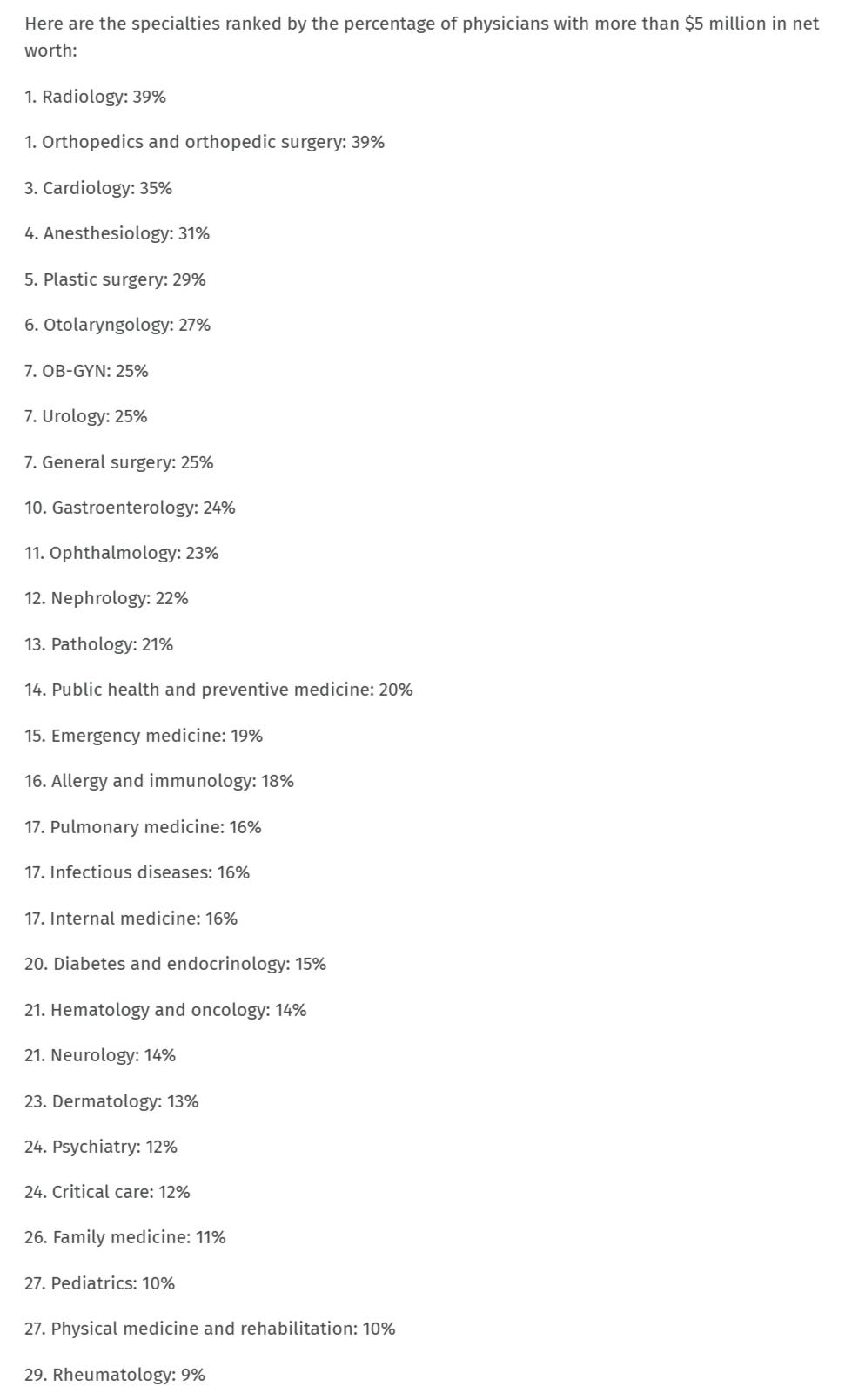
How AI, Value Based Care Bundles, Medicare Payment Compression, and IMG-Driven Residency Match Dynamics Will Reshuffle the Wealthiest Physician Specialty Rankings Over the Next Five to Ten Years
Thoughts on Healthcare Markets & Technology is a reader-supported publication. To receive new posts and support my work, consider becoming a free or paid subscriber.Welcome to Healthcare Markets & Technology.Rigorous analysis of AI, policy, capital, technology, and clinical operations across U.S. healthcare — written for the people who build, invest in, and lead it.Free subscribers get 2 public ar
When $Hims Lost Its Moat
This is a free preview of a paid episode. To hear more, visit www.onhealthcare.techIn this episode, we walk through the public filings and regulatory sequence that restructured Hims's entire GLP-1 economics between February and April 2026. You'll learn exactly what the Novo settlement and LillyDirect routing arrangement actually mean for margin structure, why the bear case and bull case are simult
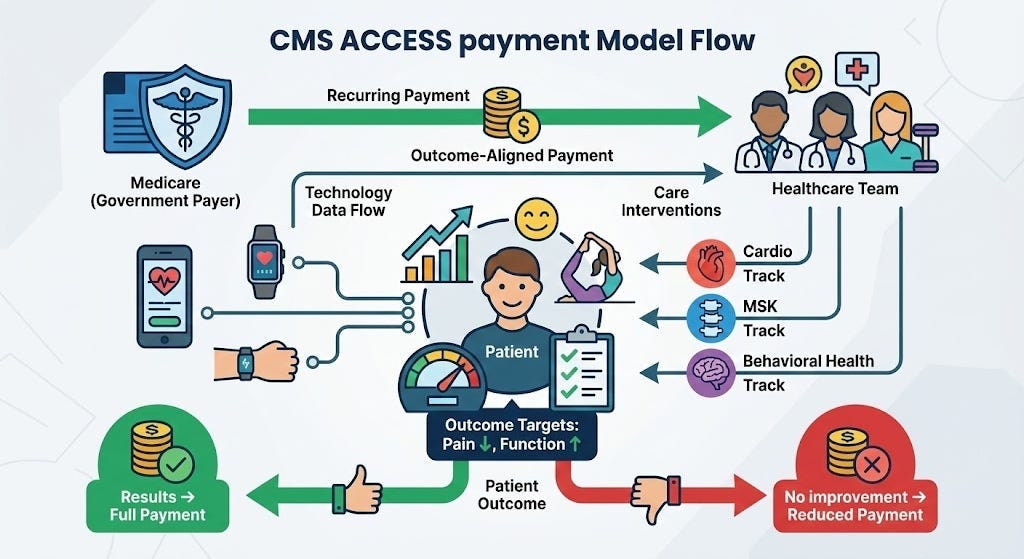
Decoding the CMS Access Model: Half Your Revenue Lives in Escrow
In this episode, we explore the CMS ACCESS model—a fundamentally new payment infrastructure that withholds fifty percent of chronic care revenue and releases it only if you hit clinical outcome thresholds. We break down why this model is an existential threat to single-condition point solutions, a working capital crisis for undercapitalized companies, and a strategic advantage for integrated platf
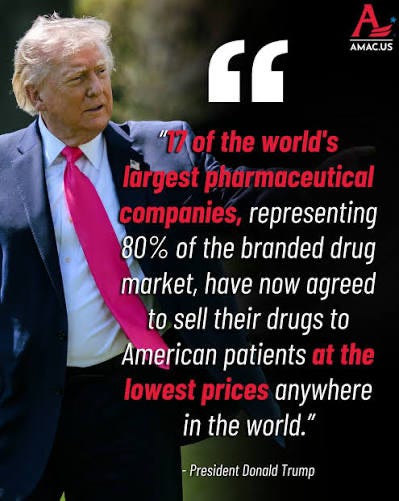
What does 17 pharma MFN deals are underneath the press releases: the real primary source stack, the GLP1 numbers, TrumpRX plumbing, and where the new adjudication layer gets monetized
Thoughts on Healthcare Markets & Technology is a reader-supported publication. To receive new posts and support my work, consider becoming a free or paid subscriber.Welcome to Healthcare Markets & Technology.Rigorous analysis of AI, policy, capital, technology, and clinical operations across U.S. healthcare — written for the people who build, invest in, and lead it.Free subscribers get 2 public ar
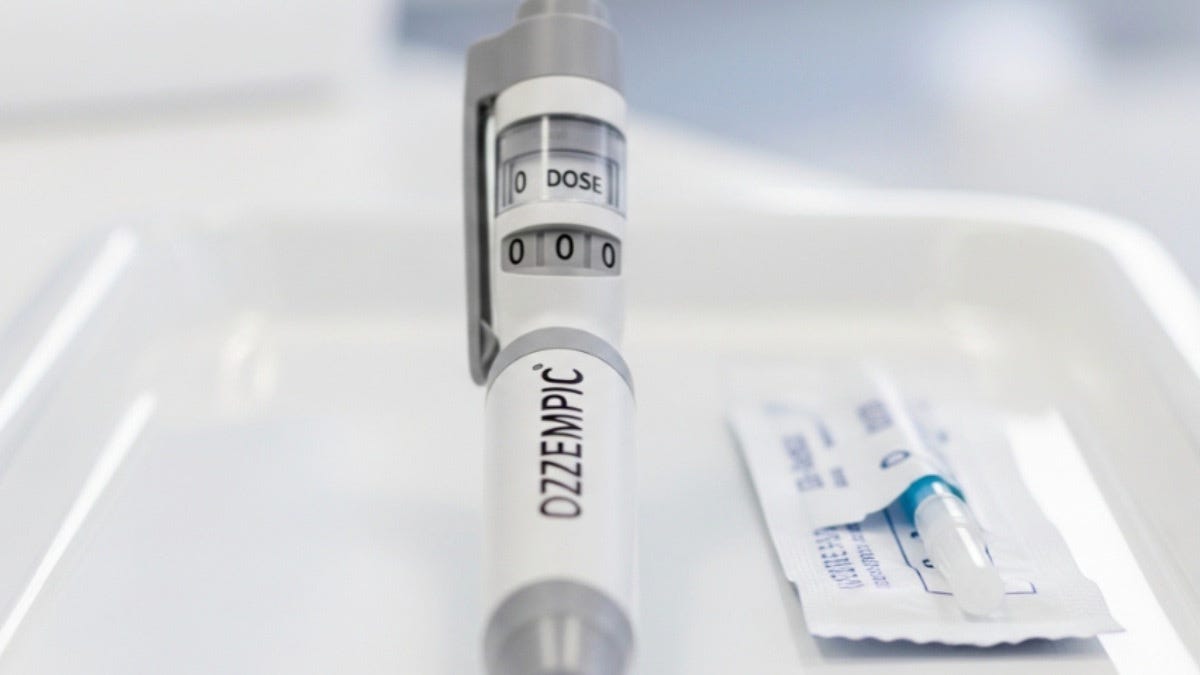
The BALANCE Model Pause, the GLP-1 Bridge Extension Thru Dec 2027 & What the 80% Part D Participation Threshold Miss Signals About Medicare’s First Real Attempt to Negotiate Anti-Obesity Drug Coverage
Thoughts on Healthcare Markets & Technology is a reader-supported publication. To receive new posts and support my work, consider becoming a free or paid subscriber.Welcome to Healthcare Markets & Technology.Rigorous analysis of AI, policy, capital, technology, and clinical operations across U.S. healthcare — written for the people who build, invest in, and lead it.Free subscribers get 2 public ar
Start Here: How to Get the Most Out of This Newsletter
Welcome to Healthcare Markets and Technology. This episode introduces the newsletter — covering business, policy, and technology forces reshaping the US healthcare system for investors, operators, and entrepreneurs who need to stay ahead of the curve. This is a public episode. If you'd like to discuss this with other subscribers or get access to bonus episodes, visit www.onhealthcare.tech/subscrib
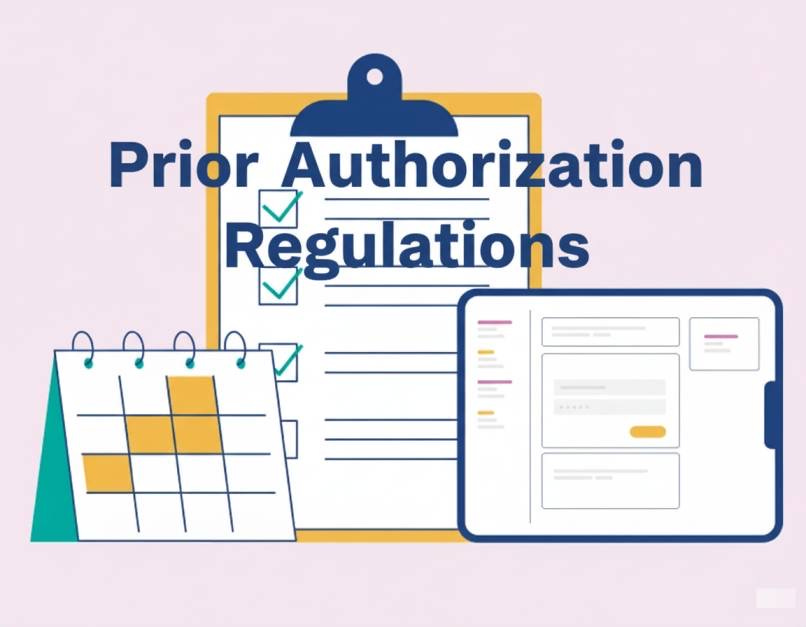
The Prior Auth API Economy: How CMS-0057-F, CMS-0062-P, Da Vinci FHIR Rails, State Gold Carding Laws, AI Guardrails, and the AHIP/BCBSA 257M Commitment Turn UM Into a Programmable Transaction
Thoughts on Healthcare Markets & Technology is a reader-supported publication. To receive new posts and support my work, consider becoming a free or paid subscriber.Welcome to Healthcare Markets & Technology.Rigorous analysis of AI, policy, capital, technology, and clinical operations across U.S. healthcare — written for the people who build, invest in, and lead it.Free subscribers get 2 public ar
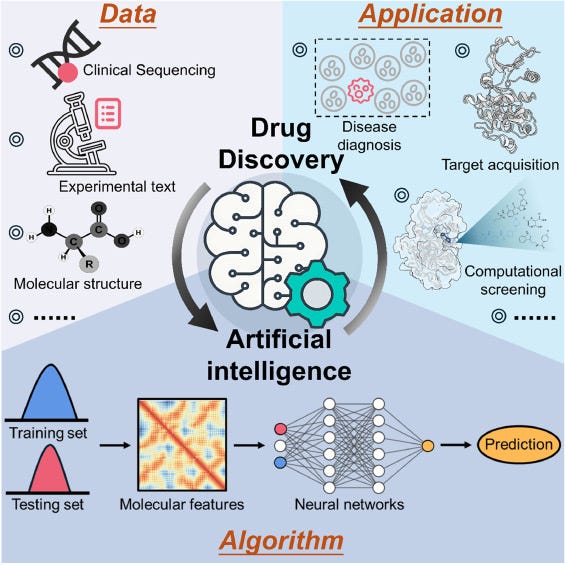
The AI Drug Discovery Capital Stack in 2026: Who Has Raised the Most, Why Their Technical Approaches Actually Differ, and Which Recent Industry and Academic Papers Are Worth a Real Read
Thoughts on Healthcare Markets & Technology is a reader-supported publication. To receive new posts and support my work, consider becoming a free or paid subscriber.Welcome to Healthcare Markets & Technology.Rigorous analysis of AI, policy, capital, technology, and clinical operations across U.S. healthcare — written for the people who build, invest in, and lead it.Free subscribers get 2 public ar
How Late 2025 and Early 2026 Earnings Calls Expose the Medicare Advantage Pullback, the Migration of Margin From Insurance to Services, and the Quiet Redistribution of Healthcare Profit Pools
Thoughts on Healthcare Markets & Technology is a reader-supported publication. To receive new posts and support my work, consider becoming a free or paid subscriber.Welcome to Healthcare Markets & Technology.Rigorous analysis of AI, policy, capital, technology, and clinical operations across U.S. healthcare — written for the people who build, invest in, and lead it.Free subscribers get 2 public ar
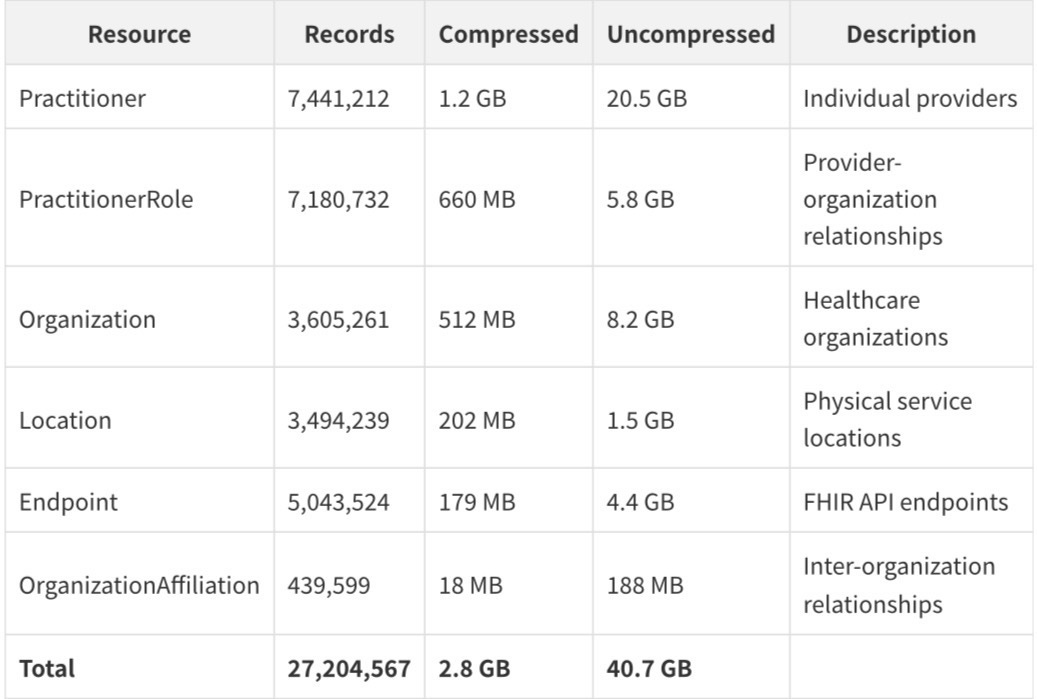
The CMS national provider directory: a complete analysis of 27.2 million healthcare records in the entrepreneurial opportunity that they represent
Thoughts on Healthcare Markets & Technology is a reader-supported publication. To receive new posts and support my work, consider becoming a free or paid subscriber.Welcome to Healthcare Markets & Technology.Rigorous analysis of AI, policy, capital, technology, and clinical operations across U.S. healthcare — written for the people who build, invest in, and lead it.Free subscribers get 2 public ar
Goodfire AI and the Billion Dollar Bet on Neural Network Interpretability: Why Reverse Engineering Foundation Models Matters for Health Tech Investors Watching the Life Sciences AI Stack Take Shape
Thoughts on Healthcare Markets & Technology is a reader-supported publication. To receive new posts and support my work, consider becoming a free or paid subscriber.Welcome to Healthcare Markets & Technology.Rigorous analysis of AI, policy, capital, technology, and clinical operations across U.S. healthcare — written for the people who build, invest in, and lead it.Free subscribers get 2 public ar
Recommended

Effective Weight Loss for Moms | High protein, Strength Training, Lose Weight, Meal Planning, Fat Loss, Healthy Habits

The Human-Animal Connection - Pet Life Radio Original

Infinite Health with Dr. Arasi Maran

The Daily

World News Tonight with David Muir

English Vocabulary Help
The Joe Rogan Experience
TED Talks Daily

Learn English B1 with Daily News | English Listening Practice
Talk About Talk - Executive & Leadership Communication Skills

English with Olivia | Slow Conversations & Vocabulary

Stand In The Circle
