Stoa Conversations: Stoicism Applied
This podcast features hosts Caleb Ontiveros and Michael Tremblay discussing Stoic philosophy and its application to daily life. Each episode explores how to build resilience, develop virtue, and make sense of the world through ancient Stoic teachings. The show aims to provide practical insights for modern living, drawing from the wisdom of thinkers like Marcus Aurelius and Seneca. Listeners can expect thoughtful conversations on meditation, ethics, and personal growth, with new episodes released weekly.
Episodes
The Trichotomy of Control Is a Mistake (Episode 236)
Some things are up to you. Some are not. What about the things you can influence?That question led William Irvine to turn Epictetus’s dichotomy of control into a trichotomy: things you control, things you don’t, and things you partly control, like whether you win a tennis match.Michael thinks this is a mistake. Epictetus knew our choices influence outcomes and left that category out on purpose. Hi
The Conquest of Nature | The Abolition of Man Part III (Episode 235)
Every gain in our power over nature is also a gain in some people’s power over other people.That’s the argument at the center of the final chapter of C.S. Lewis’s The Abolition of Man. Once human nature becomes one more thing to conquer, values stop being handed down and start being engineered. Teachers become conditioners.Caleb and Michael close out the series. They cover what Lewis means by the
Epictetus and His Critics (Episode 234)
Emily Wilson translated The Odyssey. She also reviewed a new translation of Epictetus, and she wasn’t impressed.Michael thinks she got him wrong. Not because she doesn’t know the ancient world. She does. Because her criticisms rest on misreadings that a lot of smart, well-read people make.Caleb and Michael work through three of them. Epictetus ignores collective action. Epictetus wrote therapy for
Stoic Psychology: Are We Born Blank Slates? (Episode 233)
Are we blank slates? Or does the mind come pre-furnished?The Stoics said blank. Aetius describes a newborn soul as a sheet of paper waiting to be written on. Every idea you have got there through experience. Plato said the opposite. Your soul already knew everything and forgot it at birth. Learning is just remembering.Michael and Caleb work through both views, then run them against modern psycholo
C.S. Lewis and the Tao | The Abolition of Man Part II
Most people who say values are just opinions don’t actually believe it. They have values. They defend them. They just save the skepticism for everyone else.That’s C.S. Lewis’s charge in the second chapter of The Abolition of Man. Caleb and Michael work through his argument: why altruism, self-interest, and instinct all fail to ground morality, and why Lewis thinks you have to appeal to what he cal
The Odyssey Movie Review (Episode 231)
Caleb and Michael both saw the film. This is a proper review.Caleb and Michael share what they think and work through what lands and what doesn’t.Don’t worry this is our last bit of Odyssey content for sometime.(00:00) Introduction: A Proper Review of Nolan’s Odyssey(03:30) Ranking Nolan’s Films(08:15) Zeus’s Law and Odysseus’s Guilt(13:45) An American Odyssey(19:00) A Fair Fight: Softening the S
Stoicism in Christopher Nolan's Odyssey (Episode 230)
Is Christopher Nolan’s Odyssey more Stoic than Homer’s?Caleb shares a quick solo take. A look at the movie through a Stoic lens.There are “spoilers” – don’t listen yet if you don’t want to hear about Nolan’s approach.(00:00) Introduction: A Stoic Take on Nolan’s Odyssey(03:50) Gods as Nature, Not Beings(07:40) Responsibility and Hard Choices(10:10) Perseverance: Seneca on Odysseus(11:10) The Siren
Men Without Chests | The Abolition of Man Part I (Episode 229)
Can you say a waterfall is sublime? Or are you just describing your feelings?C.S. Lewis thought this question mattered more than it looks. In the first chapter of The Abolition of Man, he argues that modern education smuggles in a dangerous idea: that value judgments are just reports of emotion. Nothing to debate. Nothing to get right or wrong.Caleb and Michael work through Lewis’s argument in thi

Why You Should Be A Skeptic With Massimo Pigliucci (Episode 228)
In this episode, Caleb talks with Massimo Pigliucci about his new book, How to Be a Happy Skeptic, and the thinker at its center: Cicero. They trace skepticism from Pyrrho’s radical doubt to the Academics, who found a better path. You don’t need certainty. You need to know how sure to be, then act (or not).The Stoics and skeptics argued for decades over whether truth leaves a mark you can trust. W
Stoicism and Buddhism 101 (Rerun)
People love to pair Stoicism and Buddhism. Both blame suffering on desire. Both teach a kind of meditation. Both are about 2,500 years old. So how similar are they, really?Michael and Caleb run a Buddhism 101 for Stoics. They start with the Buddha: a prince who had everything, saw old age, sickness, and death for the first time, and walked away from the palace to figure out why we suffer. From the
Excellence Is Boring (Episode 227)
What makes some people excellent at their craft and others just average? Michael walks through a classic 1989 sociology paper on Olympic swimmers and pulls out three lessons that apply directly to Stoic practice.The answer is not what most people expect. It is not extreme effort. It is not raw talent. Excellence turns out to be mundane. It is how you do the boring things, every day, for a long tim

Caleb's Life Philosophy (Episode 226)
What’s the core of Stoicism worth keeping? And where does it fall short?Caleb shares his life philosophy in this companion to Michael’s earlier episode. He builds the case for Stoicism from the ground up, then turns it on itself. If happiness has to be up to us, what does that say about the rest of life? And what do you do with the parts of human experience that don’t fit neatly into propositions?
Reflections from Athens
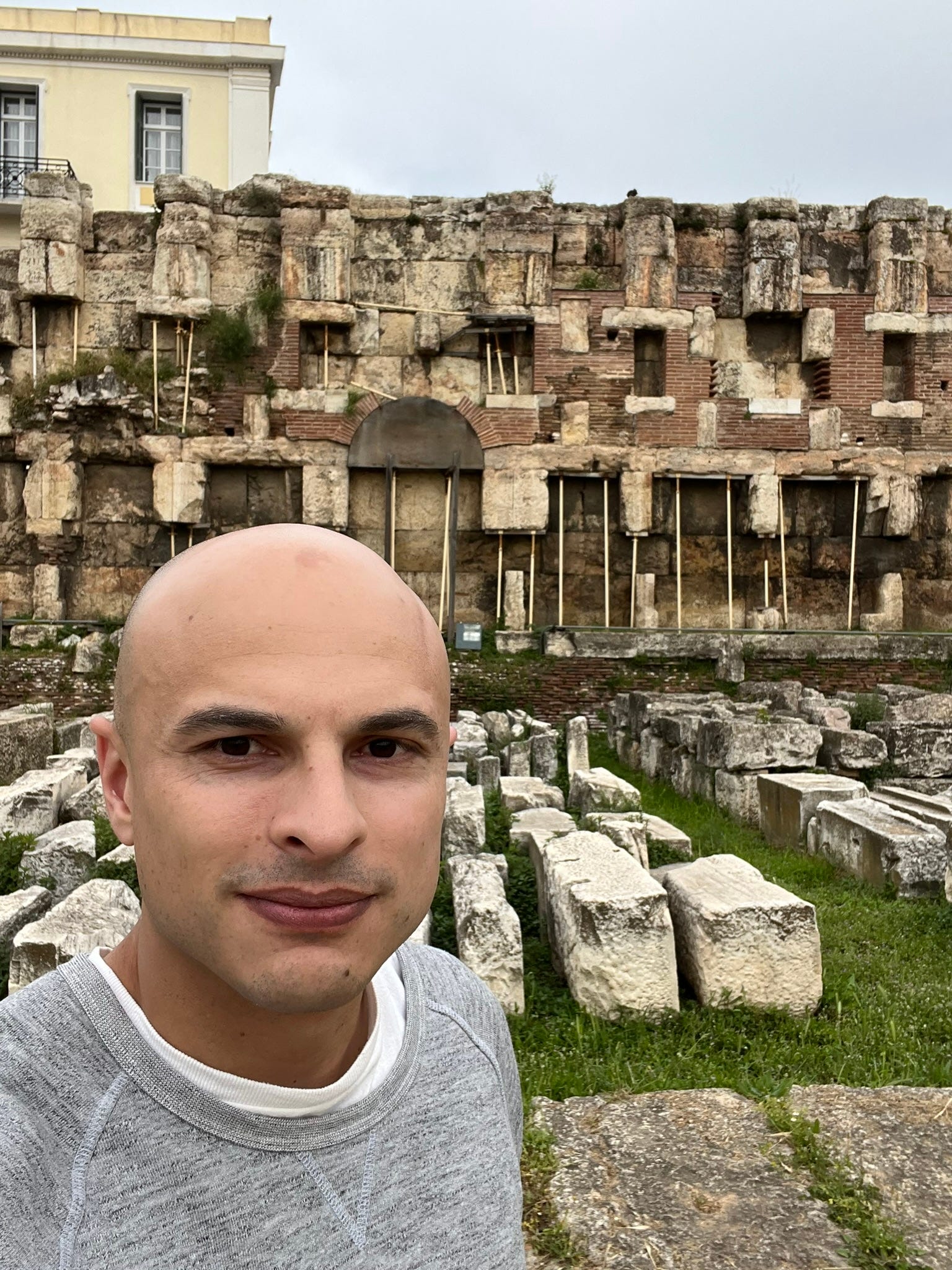
Caleb shares reflections from a recent pilgrimage to Athens. He walks through the ruins of the Stoa Poikile, the painted porch where Stoicism was born, and finds the irony of a philosophy of impermanence enduring in stone fragments thousands of years later. He visits the Acropolis, the Lyceum where Aristotle taught, and thinks about what makes Athens worth visiting today.(00:00) Visiting the Stoa
Musashi’s Book of Five Rings: The Water Book (Episode 224)
Your mind should be quietly vibrating. Not tense, not slack, not leaning in any direction. That’s Musashi’s opening instruction in the Water Book and it sounds a lot like what the Stoics were after.Caleb and Michael continue their series on Musashi’s Book of Five Rings with the second book: Water. Where Book One laid out general strategy, this one gets into the craft itself: swordsmanship as a len
The Stoic Case for Introspection (Episode 223)
Some guy goes on a podcast and argues against introspection. Caleb pushes back.This solo episode uses the viral debate as a launching pad for what the Stoics actually think about self-examination. Caleb draws a sharp line between the kind of introspection the critics hate — guilt, rumination, dwelling on the past — and the kind Marcus Aurelius practiced: forward-looking, demanding, and grounded in
What Stoics Find in the New Testament (Episode 222)
Michael picks up the New Testament for the first time and does something unusual: he treats Jesus not as a religious figure, but as a philosopher. A contemporary of the Stoics and Epicureans, teaching in the same era, competing for the same minds. The results are surprising.Some of Jesus’ core teachings land hard from a Stoic lens. Vice lives in desire, not action. The cowardly adulterer is worse
Michael's Life Philosophy
What does a historian of Stoicism actually believe? Michael puts his money where his mouth is and lays out his personal philosophy of life from scratch.The result is something between Stoicism and Aristotle — keeping the Stoic emphasis on character and agency while smuggling in a little more common sense about the human condition.(00:00) Why articulate a personal philosophy?(04:00) The geometric m
Four Ways To Be Happy (Episode 220)
Marcus Aurelius gives us a recipe for happiness in Meditations 2.16.Caleb breaks down the four ways we do the exact opposite: fighting reality, turning away from others, being ruled by pleasure and pain, and acting without purpose. Sometimes the best path to happiness isn’t chasing it directly, but removing what makes us miserable.(01:00) The Four Items: A Recipe for Happiness(03:50) First: Stop F
The Roman Socrates Tells Us How To Live (Episode 219)
The teacher of Epictetus deserves more attention than he gets. Michael returns to Musonius and pulls out three themes: philosophical minimalism, a complicated egalitarianism, and surprisingly specific practical advice. Musonius distrusts overly academic philosophy. He wants simple arguments that appeal to common sense, then action. He argues women should study philosophy because they share the sam
Musashi’s Book of Five Rings: The Ground Book (Episode 218)
What can a 17th-century samurai who won 60 duels to the death teach us about living well?Caleb and Michael explore the first book of Miyamoto Musashi’s classic work. The Ground Book lays a foundation that cuts across all pursuits. The conversation draws connections to Stoic ideas about indifference, adaptability, and the danger of becoming too attached to any particular school or method.(03:30) Mu
How to Be Smarter (Episode 217)
What do the Stoics mean by intelligence? And how do you actually develop it?Caleb breaks down prudence into six trainable components from the ancient Stoic Arius Didymus: sound judgment, circumspection, shrewdness, sensibleness, soundness of aim, and ingenuity. Each gets a week. Each gets concrete exercises.This isn’t abstract philosophy. It’s a practical program for sharpening your thinking in wh
What We Read, Watched, and Learned in 2025 (Episode 216)
Michael and Caleb look back on their favorite reads, conversations, and discoveries from the year.They discuss why Cicero’s On Ends deserves a spot on every Stoic’s reading list, what the New Testament and Stoicism have in common, and the power of keeping philosophical maxims close at hand. The conversation covers a Spanish Jesuit’s handbook on practical wisdom, Plato’s failed attempt to mentor a
A Stoic Book Review of the Odyssey (Episode 215)
The founders of Stoicism—Zeno, Cleanthes, Chrysippus—all wrote about Homer. Zeno’s longest work was called Homeric Problems. When we read the Odyssey, we’re reading what the Stoics read. We’re studying their curriculum.Following this tradition. Michael and Caleb examine what makes the Odyssey Stoic and what makes it decidedly not. Odysseus perseveres through failures, temptations, and divine oppos
Who Gets To Call Themselves Stoic (Episode 214)
Who gets to call themselves a Stoic? Michael and Caleb tackle the issue of who is and isn’t a Stoic. Grounding their discussion in Michael’s recent article: (03:00) The Stoic alignment chart: theory purists to rebels(11:00) Benefits of gatekeeping: maintaining truth and standards(21:00) Epictetus as motivating gatekeeper(26:30) Risks: pedantry and missing the forest for trees(40:00) When gatekeepi
Stoic Ideas That Cut Against Modern Culture (Episode 213)
Some Stoic ideas cut against modern culture. Michael and Caleb examine seven truths that challenge how we think about politics, anger, success, and evil.The Stoics make claims most people won’t like hearing. Politics can’t ruin your happiness. Anger is always wrong. Being a victim doesn’t make you virtuous. You can’t choose all your obligations. Nearly everyone lives in luxury today. Some lives ar
Conversation w/ Daniel Greco - Yale Professor of Philosophy
Get full access to The Stoa Letter at www.stoaletter.com/subscribe
Becoming Rich Won't Make You Free (Episode 212)
Caleb explores Seneca’s warning about wealth from Letter 17 and why material success may be a trap. The episode questions whether financial independence really delivers freedom or just creates new forms of dependence.Download the Stoa app (it’s a free download): https://stoameditation.com/podIf you try the Stoa app and find it useful, but truly cannot afford it, email us and we’ll set you up with
Question Every Impression | Ancient Skepticism (Episode 211)
Michael and Caleb examine skeptical modes from Sextus Empiricus. These arguments show why you can’t trust your sense impressions. The Stoics and skeptics were rival schools. But they agreed on one thing: most people live under illusion. The skeptics said you can never overcome that. The Stoics said you can, but only if you’re extremely careful. Both agree you need to interrogate every impression.(
How to Resist Pressure (Episode 210)
Ever say yes when you meant no? Caleb and Michael explore Plutarch’s guide to resisting pressure and not being a pushover.Plutarch identifies the root problem as oversensitivity to shame. You care too much about violating social norms.The conversation covers when to respect social convention versus when to break it. They examine historical examples of caving gone wrong, from Creon and Medea to mur
How to Face Hardship | Boethius and The Consolation of Philosophy (Episode 209)
When you’re in prison waiting to die, what can philosophy do for you? Michael and Caleb read Boethius’s Consolation of Philosophy - a book written by a Roman senator facing execution. It’s philosophy tested at the breaking point. The book works through arguments for why you shouldn’t be angry at fortune. Some are practical - don’t complain about losing externals when externals always change. Other
Dealing with Change (Episode 208)
Nothing stays the way you want it. Your job disappears. Relationships end. Everyone you know will die. The cities you live in will cease to exist. Michael and Caleb explore three Stoic strategies for accepting what you can’t control.(03:20) The Word “Nostalgia”(04:10) Strategy 1: Nothing Belongs to You (12:20) Strategy 2: Expand Your Time Horizon(19:20) Thinking in Life Stages (25:20) Strategy 3:
Ask Us Anything (Episode 207)
Thank you for tuning into our live video! Join us for our next live video in the app.This episode is taken from our recent Substack Live episode where we covered reader questions. Follow us on Substack: https://www.stoaletter.com/ to catch the next one. Get full access to The Stoa Letter at www.stoaletter.com/subscribe
Eclecticism with Anya Leonard from Classical Wisdom (Episode 206)
How much ancient philosophy should you steal? Caleb and Anya Leonard from Classical Wisdom explore the art of philosophical eclecticism, from Heraclitus’s cryptic fragments to philosophical rivals between Stoics and other schools.We start with Heraclitus, the riddling philosopher who wrote that you can’t step in the same river twice. His idea that strife creates harmony deeply influenced the Stoic
Hunters Talk About Spears (Episode 205)
Philosophy talks about big ideas. The good life. Virtue. Happiness. But talking about aspirations isn’t enough. You need mechanisms—concrete practices that actually change behavior.Caleb examines why serious thinkers focus on mechanisms over aspirations. Discussions about mechanisms force action and generate information. Discussions about aspirations turn into complaints about the world.The Stoics
Stoicism, Freedom, and Ernst Jünger with Sam Alaimo (Episode 204)
Sam Alaimo is a Navy SEAL who discovered Stoicism after leaving the military. He is a cofounder of Zero Eyes, an AI company stopping gun violence, and writes at whatthen.org. Caleb and Sam discuss how affluent societies need philosophy, whether virtue alone makes life good, and why Ernst Jünger remains one of history’s most fascinating thinkers. The conversation moves from ancient philosophy to Wo
Ancient and Modern Myths with Michael Fontaine (Episode 203)
Have we traded ancient wisdom for modern myths?In this episode, Caleb speaks with Cornell classics professor Michael Fontaine.Fontaine argues that psychiatry and mythology both offer competing stories about human suffering. The ancients had three models: medical treatment, spiritual purification, or taking responsibility for your choices. Today we’ve mostly picked door number one and forgotten the
Anger And Society (Episode 202)
Caleb explores why anger works as social currency. If you're not angry when someone hurts your friend, do you really care about them?People aren't wrong to read meaning into your emotional responses. If most angry people care and most calm people don't, anger becomes useful data. The Stoic who stays calm has to work harder to prove they care.(00:00:00) Introduction and context from Donald Robertso
Stoicism & Anger w/ Donald Robertson
Caleb and Michael interview Donald J. Robertson on Anger and Stoicism.We’ll be doing more live events and chats. Get the Substack app and stay tuned. Get full access to The Stoa Letter at www.stoaletter.com/subscribe
Two Practices For Zen Stoicism (Episode 201)
Most of our thoughts are wrong. That's the problem with thinking—we make judgments about good and bad that don't match reality. Zen practitioners figured this out centuries ago.Caleb explores two Zen practices that Stoics can steal. The first is alert observation: notice thoughts when they arise, then let them pass without getting caught up in them. Don't fear thoughts—just don't be slow to notice
Should Stoics Use AI (Episode 200)
Should Stoics use AI? Michael and Caleb tackle this modern question by examining how ancient philosophy guides our relationship with new technology. They explore the risks of overconfidence, the difference between knowledge and mere reminders, and when AI becomes a useful tool versus a dangerous crutch.The conversation reveals why Plato's concerns about writing still matter today and how the Stoic
Stoic Exercise Tier List (Episode 199)
Caleb and Michael going live with Donald J. Robertson this Thursday at 5 PM ET. Join us on the Substack app!https://open.substack.com/live-stream/53794?r=5jw33r&utm_medium=iosMichael ranks ten core Stoic exercises from least to most transformative based on a decade of practice. One could say he cuts through the theory to share which techniques actually work.All of these practices are good. But Mic
Effective Altruism as a Life Philosophy (Episode 198)
Can you do good and do it wrong? Michael and Caleb examine effective altruism - the movement that treats helping others like an optimization problem.They explore how EA demands you maximize impact rather than feel good about helping. The conversation reveals why Superman should probably quit fighting crime and start generating renewable energy instead.(03:10) Peter Singer's drowning child argument
Memory Palaces and Stoic Eating with Andrew Perlot (Episode 197)
How memory and diet shape your character. Andrew Perlot , former journalist and health coach, explains why the Stoics obsessed over both.(00:00:56) What Stoicism is and why Andrew is drawn to it(00:05:32) Favorite Stoic philosophers(00:09:00) Diet and Stoicism(00:21:10) Why religious groups like Seventh Day Adventists succeed with diet(00:24:30) Shame vs virtue in food choices(00:29:20) Practical
The Unfettered Mind | Stoic Zen (Episode 196)
Caleb and Michael explore Takuan Soho's The Unfettered Mind, examining how Zen Buddhism approaches mental training through the concept of "no mind." They discuss why stopping the mind creates ignorance and how this differs from Stoic approaches to reason and attention.They examine how mental stopping manifests in combat, conversation, and performance - from sword fighting to basketball arcade game
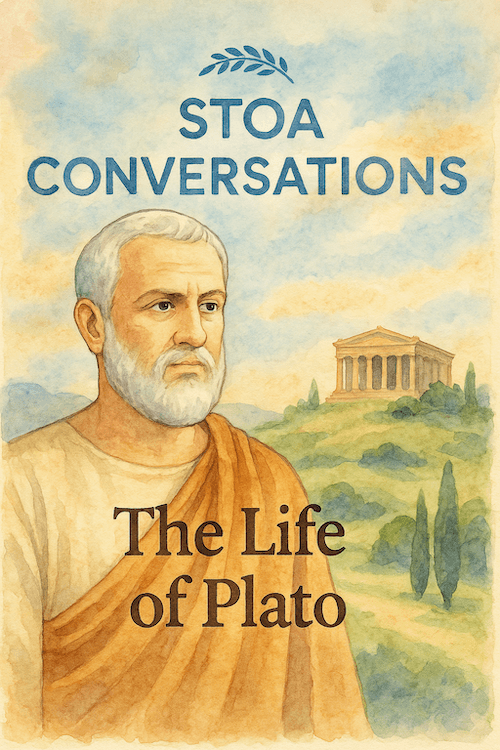
The Life of Plato (Episode 195)
Philosophy meets biography in this deep dive into Robin Waterfield's new book on Plato. Michael and Caleb explore how the philosopher's life shaped his ideas, from witnessing tyranny and democracy's failures in his youth to his later failed attempt to reform a Sicilian tyrant.Plato was an aristocrat who saw his relatives join the brutal Thirty Tyrants, watched democracy execute his mentor Socrates
10 Key Stoic Ideas (Episode 194)
Michael breaks down the ten most important concepts you need to understand ancient philosophy's most practical school of thought.These are the core ideas that built a 2,000-year-old system for living well. From happiness and virtue to the dichotomy of control, each concept builds on the last to create a complete framework for human flourishing. (00:00:00) Introduction: Why These 10 Ideas Matter (0
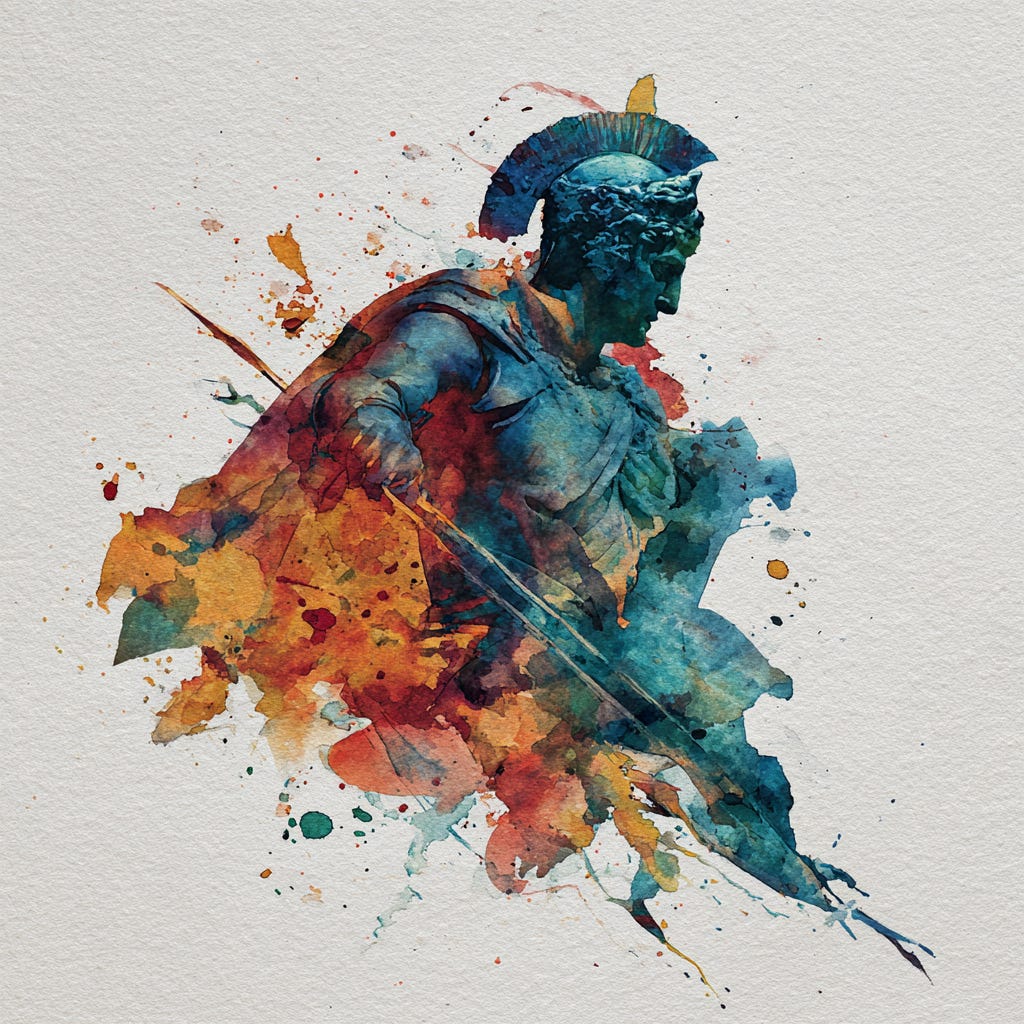
When Being Good at Your Job Makes You a Bad Person (Episode 193)
What happens when the roles life gives you conflict with being a good person? Caleb and Michael tackle one of Stoicism's puzzles: when excellent performance in your job, relationships, or responsibilities seems to require abandoning virtue.Starting with Machiavelli's brutal advice to princes, they work through modern examples where this tension emerges. The activist who uses propaganda for a just
The Ring of Gyges (Episode 192)
What would you do if you could get away with anything?Plato's famous thought experiment cuts straight to the heart of human nature. If you had a ring that made you invisible—if you could take, do, or have anything without consequence—what would you do? More importantly, what should you do?Michael explores what the Stoics believed about this thought experiment and what it reveals about their philos
Therapy vs Philosophy (Episode 191)
When life hits hard, where do you turn? Philosophy, therapy, or coaching? Michael and Caleb examine and debate the fundamental differences between these approaches to human suffering and growth.They explore why Stoicism offers a prescriptive vision of the good life while therapy remains deliberately non-judgmental. The conversation reveals when philosophy works best as preventative strength traini
Seneca On The Creation of Earthquakes (Episode 190)
In this episode, Caleb and Michael review the 2023 film "Seneca, On the Creation of Earthquakes" starring John Malkovich. They explore how the movie portrays the Roman Stoic philosopher during his final day, examining themes of hypocrisy, performance versus genuine philosophy, and the challenges of living up to Stoic ideals.(00:00:56) Background on the film(00:04:07) Overall impressions(00:08:38)
Marcus Aurelius On What To Read (Episode 189)
Should you really be reading all those "great books"? Marcus Aurelius had strong opinions about this. He repeatedly told himself to throw away his books and stop getting distracted by endless reading lists.In this episode, Caleb challenges the popular Great Books movement and explores what Marcus Aurelius would think about our obsession with reading everything. The emperor-philosopher believed rea
The Stoic Paradoxes (Episode 188)
The Stoics made claims that sounded completely crazy to regular people. Only virtue is good. All crimes are equally bad. Everyone who isn't perfectly wise is literally insane.These weren't just philosophical word games. They were deliberate provocations designed to force people to think differently about what really matters in life.Caleb and Michael break down Cicero's six famous Stoic paradoxes a
Misunderstanding the Dichotomy of Control (Episode 187)
Most people learn about Stoicism through the dichotomy of control. It sounds simple: focus on what's up to you, ignore what isn't. But this apparent simplicity is dangerous.The dichotomy of control becomes the lens through which people view all of Stoicism. Get it wrong, and everything else falls apart. You end up passive when you should act, frustrated when you should be patient, or convinced Sto
An Underrated Stoic Exercise: Circumscribing The Present (Episode 186)
Are you stressed about the future? Deep-dive into this Stoic exercise from Marcus Aurelius for living the moment, without anxiety or regret.Michael Tremblay covers the Stoic practice of circumscribing the present.***Subscribe to The Stoa Letter for weekly meditations, actions, and links to the best Stoic resources: www.stoaletter.com/subscribeDownload the Stoa app (it’s a free download): https://s
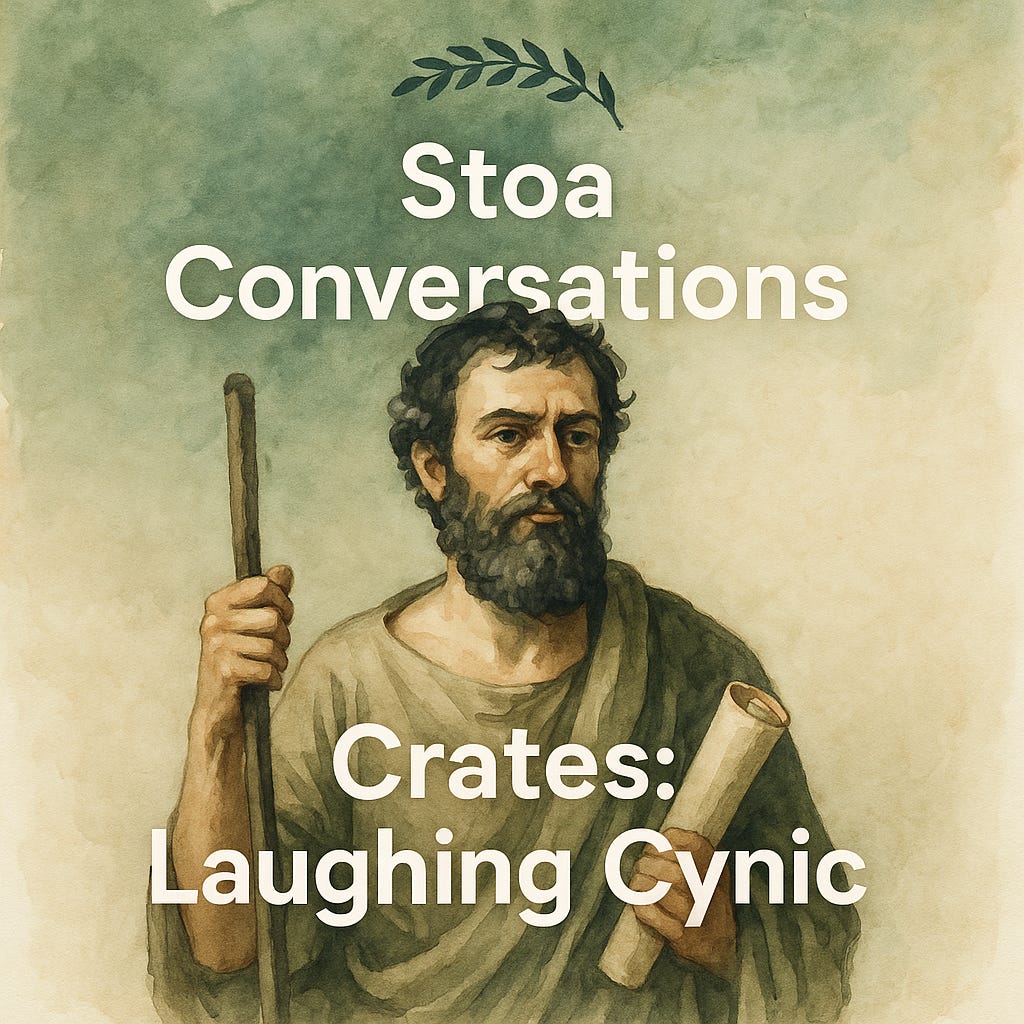
The Laughing Cynic Who Taught Stoicism's Founder (Episode 185)
Discover the philosopher who transformed Zeno from shipwrecked merchant to Stoicism's founder. While modern cynics see only self-interest, Crates lived joyfully with nothing but "a wallet and tattered cloak." This philosopher sold his inheritance, mocked social hierarchies, and treated everyone as equals—from generals to donkey drivers.Michael and Caleb explore how Crates' rejection of convention
Introduction to Aristotle's Golden Mean (Episode 184)
In this episode, Michael Tremblay and Caleb Ontiveros explore Aristotle's ethics, focusing on his doctrine of virtue as the golden mean. They break down how Aristotle's view differs from Stoicism—from his three-part soul to his idea that virtues are skills developed through practice. Learn why Aristotle saw courage as a balance between cowardice and rashness, why feeling the right emotions matter
Wrestling with Stoic Ethics: Cicero's On Ends V (Episode 183)
In this final exploration of Cicero's "On Ends," Michael and Caleb break down Book V, where Cicero reveals his own philosophical sweet spot – an Aristotelian-Platonic approach that challenges both Stoicism and Epicureanism.Against a backdrop of ancient Athens, Cicero's characters debate the core question: What makes a truly good human life? They navigate the middle path between Stoic rigidity (whe
The Stoic Fragments: Hidden Wisdom from Epictetus (Episode 182)
Discover the hidden gems of Stoic philosophy in this exploration of Epictetus' fragments - those powerful passages preserved by other philosophers but lost from his main works.Caleb and Michael unpack these concentrated nuggets of wisdom, from the surprising idea that we should value people by their capacity to help friends rather than harm enemies, to the famous "persist and resist" maxim that ca
Forgive Your Enemies with Epictetus (Episode 181)
In this episode, Michael Tremblay explores Epictetus' radical approach to anger and forgiveness. Discover why the Stoics believed we should pity rather than punish those who harm us, and how this ancient wisdom offers a practical path to emotional freedom in your daily life. Through Epictetus' teachings, learn the liberating power of seeing wrongdoers as victims of their own confusion.***Download
Trolleys, Torture, and Moral Dilemma's (Episode 180)
Michael and Caleb dive into classic philosophical thought experiments to uncover Stoic solutions to impossible choices. From the infamous Trolley Problem to the Happiness Machine, they examine how Stoicism's focus on virtue, context, and roles provides a unique framework for moral decision-making.Unlike utilitarian or rule-based ethics, the Stoic approach emphasizes character over consequences, ye
Why Stoicism is False | Cicero's On Ends IV (Episode 179)
Caleb and Michael break down Book IV of Cicero's "On Ends" - his powerful critique of Stoic ethics.Discover why Cicero believed the Stoics fell short by prioritizing virtue alone while dismissing external goods. Is Stoicism just playing word games with what's "good" versus "preferred"? Would the perfect Stoic and the perfect Aristotelian behave the same way? This episode tackles the core tensions
7 Stoic Habits You Can Start Today (Episode 178)
Living like a Stoic is about getting the little things right. In this episode, Michael Tremblay discusses 7 Stoic habits you can start today to build a more thoughtful, resilient, and Stoic you.(01:25) Thinking Well(14:24) Living Philosophically(17:58) Preparing for Adversity(30:15) Summary***Subscribe to The Stoa Letter for weekly meditations, actions, and links to the best Stoic resources: www.
The Classic Defense Of Stoic Ethics | On Ends Book III (Episode 177)
In this episode of Stoic Conversations, Caleb and Michael break down Book III of Cicero's On Ends - the definitive ancient defense of Stoic ethics.Discover why the Stoics believed virtue alone is sufficient for happiness, and how they justified their unique system of values. Follow along as they unpack Stoic moral development, from our earliest instincts to the cultivation of wisdom.On Ends Book I
Seneca's Medea | Revenge, Violence, and Stoicism (Episode 176)
Seneca's brutal play "Medea" reveals what happens when rage takes control. A betrayed wife, an indecisive husband, and a tragic ending that challenges Stoic ideals. In this episode, Caleb and Michael analyze Seneca's bloody retelling of the Medea myth - where passion overcomes reason with devastating consequences.Dana Gioia on Seneca and The Madness of Hercules (Episode 74)(04:28) Historical Back
Against The Epicureans | On Ends Book II (Episode 175)
Caleb and Michael take on Book II of Cicero’s On Ends. In this books Cicero goes off against the Epicureans. What do you think?On Ends Book IAristippus: The Philosopher Who Mastered Pleasure(02:43) Different Kinds Of Pleasure(16:34) Turning AgainstThe Stoics(18:02) Ranking Pleasures(24:40) Epicurean Rebranding?(30:55) Epicureans Ignore Virtue(34:28) Utilitarianism(38:18) Topsy Turvy Value System
Politics And Amor Fati With Erick Cloward (Episode 174)
In this episode, Michael talks with Erick Cloward, the host of the Stoic Coffee Break Podcast. Erick talks about his journey into Stoicism, his recent use of Amor Fati, and how to have difficult conversations, especially with those you politically disagree with.(08:49) How Stoicism Makes A Difference (16:33) Amor Fati (31:03) Amor Fati And Politics (39:33) Hard Conversations (56:06) Bringing Peo
Making Proper use of Impressions with Epictetus (Episode 173)
Epictetus tells us the chief task of philosophy is just one thing: Make proper use of impressions. In this episode, Michael Tremblay does a deep dive into what this means, how we can do it, and why, for Epictetus, it is the most important thing there is.*** Download the Stoa app (free): https://stoameditation.com/podFor those who find the app valuable but face financial constraints, email us for
The Epicureans | On Ends Book I (Episode 172)
In 45 BC, amid the turmoil of the Roman Civil War, Cicero wrote one of philosophy's most important works on the meaning of life. This episode unpacks Book I of "On Ends," exploring the clash between Epicurean pleasure-seeking and Stoic virtue.(01:14) Meeting Cicero(06:18) Latin over Greek (11:40) On Ends Core Debates (16:03) Cicero attacks(20:44) Why Pleasure isn't Everything (27:28) The Epicurean
The First Cynic | Antisthenes (Episode 171)
Caleb and Michael discuess teacher of Diogenes and the grandfather of Stoicism. Before there were Stoics arguing about virtue, there was Antisthenes. A warrior turned philosopher who studied under Socrates.(02:40) Antisthenes The Man(07:32) Cynicism(12:42) How To Become Cynical(21:27) Virtue is Action(23:58) Socratic Influence(27:02) Antisthenes in Action(29:38) Death(34:34) Irreverance(36:09) The
Stoic Guide to Mastering Desire | Epictetus Handbook 14 (Episode 170)
Freedom isn't about having enough money to do what you want. It's about wanting what you can actually control. In this episode, Michael breaks down Epictetus's radical handbook chapter 14, revealing the four key principles of Stoic desire – and why wanting the wrong things makes us slaves to circumstance.***Subscribe to The Stoa Letter for weekly meditations, actions, and links to the best Stoic r
Going Meta With Metacognition (Episode 169)
The ancient Stoics never used the term "metacognition," but this modern psychological concept illuminates the core of their philosophy. Michael and Caleb explore how the Stoic emphasis on examining our thoughts—what psychologists now call metacognition—is central to both Stoic theory and practice. They unpack why the Stoics saw this capacity for mental self-reflection as divine, how it distinguish
Top 7 Things I Learned about Stoicism from Running (Episode 168)
Ancient and modern Stoics aren't just thinkers - they are runners too. In this episode, Caleb explores how the simple act of running illuminates core Stoic principles about pain, perception, and perseverance. ***Subscribe to The Stoa Letter for weekly meditations, actions, and links to the best Stoic resources: www.stoaletter.com/subscribeDownload the Stoa app (it’s a free download): https://stoam
Aristippus: The Philosopher Who Mastered Pleasure (Episode 167)
Meet ancient Greece's original hedonist. Unlike later philosophers who preached asceticism, Aristippus embraced luxury, courted kings, and still kept his freedom. A student of Socrates who chose pleasure over asceticism, he founded a school of thought that spread through generations of his family. This conversation explores how Aristippus balanced the pursuit of pleasure with self-mastery, challen
The Roman Emperor on Strength, How to Transform Misfortune Into Fortune, And Death (Episode 166)
In this episode, Michael and Caleb explore Meditations 4.49-51, where Marcus Aurelius discusess resilience, misfortune, death, and simplicity. Be like a promontory against crashing waves.(01:09) 49, Section 1(08:20) 49, Section 2(11:21) It's Not Things Themselves That Harm Us(15:44) Powerful Phrases(17:45) Stoicism Is For Everyone(21:21) 50(33:39) 51***Subscribe to The Stoa Letter for weekly medit
Goodhart's Law and Stoicism (Episode 165)
Goodhart’s Law says: when a measure becomes a target, it ceases to be a good measure. But if that’s true, how should we measure our philosophical progress? In this episode, Michael Tremblay wrestles with this question.***Download the Stoa app (free): https://stoameditation.com/podFor those who find the app valuable but face financial constraints, email us for a free account.Listen to more episode
Stoicism for When You're Stuck (Episode 164)
Get these tested Stoic strategies pull you out of bed and back into life's beauty. Michael and Caleb explore ancient wisdom for reconnecting with meaning through nature, duty, and proper thinking.(00:47) Set Up(04:33) Crisis in Thinking(10:29) Finding Purpose(19:18) Beauty(26:59) Play With Time(38:43) Be Gentle(42:08) Summary *** Download the Stoa app (free): https://stoameditation.com/podFor thos
Why Other People Do Wrong – Socrates Was Right! (Episode 163)
No one chooses to be wrong. This core Stoic teaching, inherited from Socrates, shaped how ancient philosophers viewed human behavior and mistakes. In this episode, Caleb explores why the Stoics believed people only do what they think is best – even when those choices seem obviously wrong to others.The episode tackles challenging questions: How do addictions and bad habits fit into this framework?
The Second Arrow (Episode 162)
Pain is inevitable. Suffering is optional. In this episode, we explore a powerful Buddhist concept that mirrors Stoic wisdom: the Second Arrow. The first arrow is the pain life throws at us - rejection, loss, failure. The second arrow? That's the one we shoot at ourselves through our reactions, stories, and judgments. Michael Tremblay discusses the Buddhist parable of the second arrow and what it
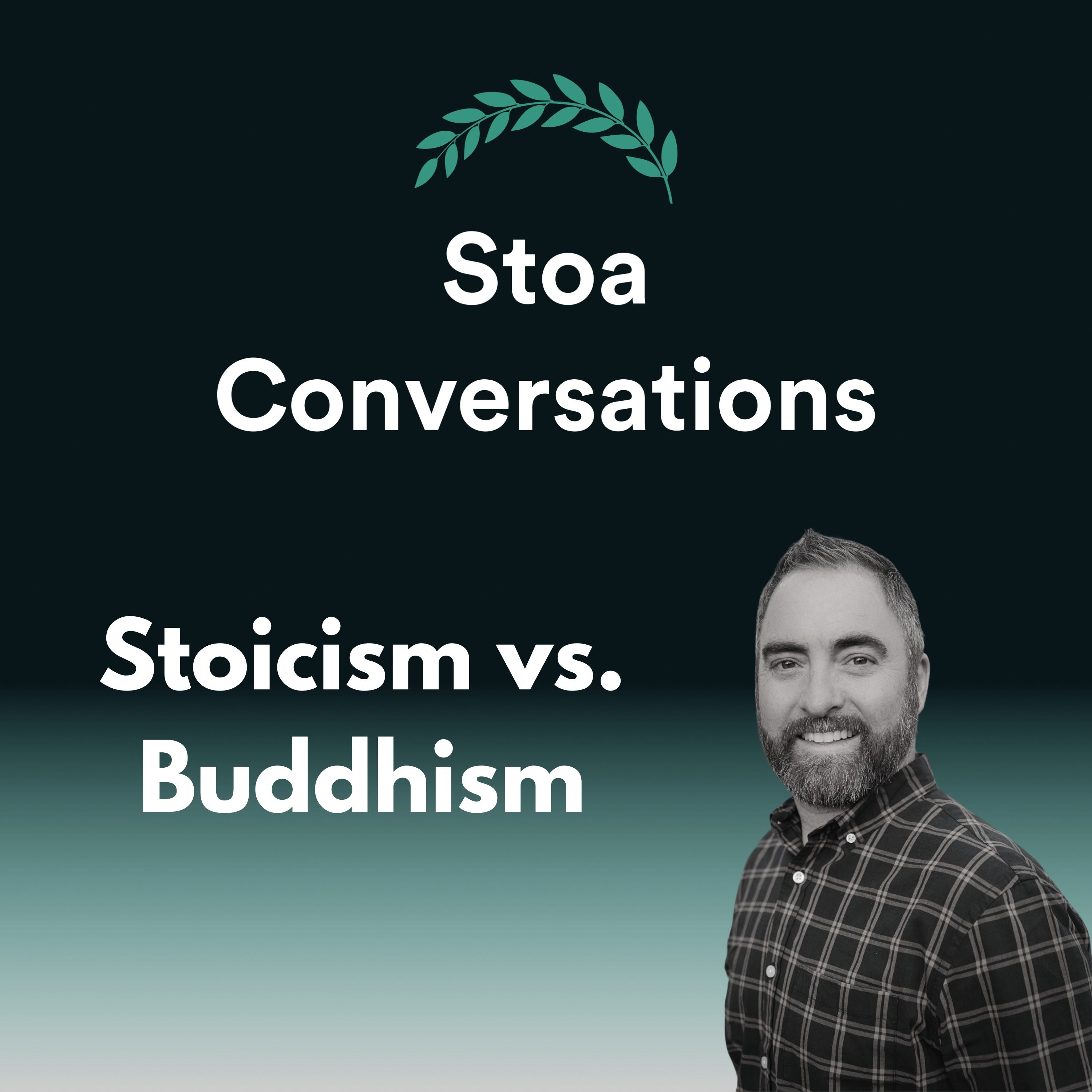
Noah Rasheta on Stoicism vs. Buddhism (Episode 161)
Author and Podcaster Noah Rasheta explores the parallels between Buddhism and Stoicism with Michael Tremblay.Whether you're seeking practical wisdom or philosophical insight, this conversation offers tools for living more skillfully – regardless of which tradition resonates with you.From handling grief and identity to achieving wisdom, we uncover where these philosophies converge and diverge.Noah
Making Epistemology Cool Again (Episode 160)
Caleb and Michael discuss Stoic epistemology—how to think well, avoid ignorance, and form justified beliefs. They explore the importance of skepticism, setting realistic standards for truth, and cultivating expertise to navigate complex decisions.(00:00) Common Sense(04:54) Default To Skepticism(09:38) Criterion of Truth(18:31) Common Sense(29:10) Building Confidence Through Expertise (35:01) Epis