
Cardiology Trials
This podcast explores pivotal clinical trials in cardiovascular medicine that have significantly influenced the field. It aligns with the publications on the Cardiology Trial's Substack. The episodes delve into key studies that have shaped modern cardiology practice.
Episodes

Summary and discussion of CASTLE-AF and CASTLE-HTx
For full review of the trials, please visit https://cardiologytrials.substack.com/ Get full access to Cardiology Trial’s Substack at cardiologytrials.substack.com/subscribe

Summary and discussion of CABANA and EARLY-AF
For full review of the trials, please visit https://cardiologytrials.substack.com/ Get full access to Cardiology Trial’s Substack at cardiologytrials.substack.com/subscribe

Summary and discussion of EAST-AFNET 4
For full review of the trial, please visit https://cardiologytrials.substack.com/ Get full access to Cardiology Trial’s Substack at cardiologytrials.substack.com/subscribe

Summary and discussion of ANDROMEDA, ATHENA and PALLAS
For full review of the trials, please visit https://cardiologytrials.substack.com/ Get full access to Cardiology Trial’s Substack at cardiologytrials.substack.com/subscribe

Summary and discussion of SAFE-T and RACE II
For full review of the trials, please visit https://cardiologytrials.substack.com/ Get full access to Cardiology Trial’s Substack at cardiologytrials.substack.com/subscribe

Summary and discussion of AFFIRM and RACE
For full review of the trials, please visit https://cardiologytrials.substack.com/ Get full access to Cardiology Trial’s Substack at cardiologytrials.substack.com/subscribe

Special episode (ACC 2026: CHAMPION-AF, HI-PEITHO)
This is the article John referenced that discusses Watchman https://www.heartrhythmjournal.com/article/S1547-5271(17)31200-6/abstract Get full access to Cardiology Trial’s Substack at cardiologytrials.substack.com/subscribe

Summary and discussion of VICTORIA and VICTOR
For full review of the trials, please visit https://cardiologytrials.substack.com/ Get full access to Cardiology Trial’s Substack at cardiologytrials.substack.com/subscribe

Summary and discussion of DAPA-HF and EMPEROR-Reduced
For full review of the trials, please visit https://cardiologytrials.substack.com/ Get full access to Cardiology Trial’s Substack at cardiologytrials.substack.com/subscribe

Special episode (AHA 2025: OCEAN, ADAPT AF-DES)
Get full access to Cardiology Trial’s Substack at cardiologytrials.substack.com/subscribe

Special episode (AHA 2025: VESALIUS-CV, DECAF)
Get full access to Cardiology Trial’s Substack at cardiologytrials.substack.com/subscribe

Summary and discussion of PARADIGM-HF and PIONEER-HF
For full review of the trials, please visit https://cardiologytrials.substack.com/ Get full access to Cardiology Trial’s Substack at cardiologytrials.substack.com/subscribe

Special episode (ESC 2025: AQUATIC, VICTOR)
Get full access to Cardiology Trial’s Substack at cardiologytrials.substack.com/subscribe

Special episode (ESC 2025: REBOOT-CNIC, BETAMI-DANBLOCK, DIGIT-HF)
Discussion of landmark trials presented at the European Society of Cardiology (ESC) congress 2025 Get full access to Cardiology Trial’s Substack at cardiologytrials.substack.com/subscribe

Summary and discussion of BEST and SENIORS
For full review of the trials, please visit https://cardiologytrials.substack.com/ Get full access to Cardiology Trial’s Substack at cardiologytrials.substack.com/subscribe

Review of the A-HeFT trial
N Engl J Med 2004;351:2049-2057Background: Endothelial dysfunction, reduced nitric oxide availability, and increased oxidative stress occur in patients with heart failure and contribute to cardiac remodeling. In the V-HeFT I trial, combining isosorbide dinitrate (a nitric oxide donor) with hydralazine (an antioxidant) improved outcomes in patients with systolic heart failure. However, its long-ter

Review of the CHARM-Alternative trial
THE LANCET 2003;362:772-776Background: Angiotensin converting enzyme inhibitors (ACEi) reduce mortality and morbidity in patients with systolic heart failure (see CONSENSUS and SOLVD trials). However, registry data showed that up to 20% of patients with systolic heart failure were not taking ACEi. One of the frequent causes for intolerance to ACEi is cough. Angiotensin converting enzyme inhibitors

Summary and discussion of Carvedilol Prospective Randomized Cumulative Survival Study, Val-HeFT, CHARM-Added and CIBIS-II
For full review of the trials, please visit https://cardiologytrials.substack.com/ Get full access to Cardiology Trial’s Substack at cardiologytrials.substack.com/subscribe

Review of the CIBIS-II Trial
The Lancet Volume 353, Issue 9146 p9-13 January 02, 1999Background: Accumulating data at the time suggested functional benefits of antagonism of beta-adrenoreceptors in patients with heart failure. Multiple specific beta-blockers were being tested in trials. The CIBIS 1 trial found a trend towards 20% lower mortality in the bisoprolol (a highly cardio-selective beta-blocker) group and 30% fewer ad

Review of the CHARM-Added trial
THE LANCET 2003;362:767-771Background: Angiotensin II which plays a role in ventricular remodeling and progression of heart failure can be produced by pathways independent of angiotensin convening enzyme. Preliminary studies showed that the combination of angiotensin II blockers with angiotensin-converting enzyme inhibitors (ACEi) improves hemodynamics and reduces ventricular remodeling.Cardiology

Review of the Val-HeFT trial
N Engl J Med 2001;345:1667-1675Background: Angiotensin II is a peptide hormone that is part of the renin–angiotensin–aldosterone system (RAAS). Angiotensin II is a potent vasoconstrictor and growth-stimulating hormone. Data suggested that it plays a role in ventricular remodeling and progression of heart failure. Although treatment with angiotensin-converting enzyme inhibitors (ACEi) reduce angiot

Review of the Carvedilol Prospective Randomized Cumulative Survival Study
N Engl J Med 2001;344:1651-1658Background: The MERIT-HF trial demonstrated the efficacy of the selective beta blocker metoprolol CR/XL for well selected patients with chronic systolic heart failure who were on optimal therapy with an ACEi and diuretic. The trial randomized nearly 4,000 patients and was stopped early due to the benefit of the drug on all-cause mortality but it also reduced major mo

Summary and discussion of U.S. Carvedilol Heart Failure, DIG, RALES, MERIT-HF, and ATLAS
For full review of the trials, please visit https://cardiologytrials.substack.com/ Get full access to Cardiology Trial’s Substack at cardiologytrials.substack.com/subscribe

Review of the ATLAS trial
Circulation 1999;100:2312-2318Background: The CONSENSUS and SOLVD trials established the effectiveness of angiotensin converting enzyme inhibitors (ACEi) in reducing mortality and morbidity in patients with systolic heart failure. Both trials used enalapril with a target dose of 20mg twice a day (max dose) in the CONSENSUS trial and 10mg twice a day (medium dose) in the SOLVD trials. In real-world

Review of the MERIT-HF trial
Lancet 1999;353:2001-07Background: Beta-blockers directly reduce cardiac contractility and myocardial oxygen demand. For decades, they were avoided in patients with acute and chronic heart failure over concerns they would facilitate decompensation of the condition. The therapeutic cornerstones of treatment, prior to the modern era of clinical trials, focused on managing symptoms and quality of lif

Review of the RALES trial
N Engl J Med 1999;341:709-717Background: The renin–angiotensin–aldosterone system (RAAS) is activated in patients with systolic heart failure. While this activation initially helps increase blood volume and maintains blood pressure, chronic activation promotes cardiac fibrosis and remodeling. In patients with systolic heart failure, inhibition of the RAAS with angiotensin-converting enzyme inhibit

Review of the DIG trial
N Engl J Med 1997;336:525-33Background: Digoxin is a natural drug that comes from the Foxglove plant (Digitalis purpurea). It has been used for the treatment of congestive heart failure for over 200 years. At the time this trial was undertaken, it was given to the overwhelming majority of patients with severe congestive heart failure. The percentage of patients on digoxin was over 90% in all of th

Review of the U.S. Carvedilol Heart Failure Study
N Engl J Med 1996;334:1349-1355Background Before 1990, the prevailing idea held that the negative inotropy of beta-blockers would harm patients with impaired systolic function. Yet part of the progression of systolic heart failure involved over stimulation of the sympathetic nervous system. Norepinephrine can exert adverse effects on the circulation, both directly and indirectly. Smaller trials of

Summary and discussion of V-HEFT II and SOLVD
For full review of the trials, please visit https://cardiologytrials.substack.com/ Get full access to Cardiology Trial’s Substack at cardiologytrials.substack.com/subscribe

Review of the SOLVD trials
N Engl J Med 1991;325:293-302N Engl J Med 1992;327:685-691Cardiology Trial’s Substack is a reader-supported publication. To receive new posts and support our work, consider becoming a free or paid subscriber.Background: Systolic heart failure affects millions worldwide and is associated with high mortality and morbidity. If left untreated, the one-year mortality ranges from 15-50%, depending on th

Review of the V-HEFT II trial
N Engl J Med 1991; 325:303-10Background Enalapril was found to be superior to placebo for patients with severe, class IV heart failure in the CONSENSUS trial and the regimen of Hydralazine-Isosorbide dinitrate was found to be superior to Prazosin as well as placebo for stable patients with mild heart failure in the original V-HEFT I trial. No sufficiently powered trials in this space had been perf

Summary and discussion of V-HEFT I and CONSENSUS
For full review of the trials, please visit https://cardiologytrials.substack.com/ Get full access to Cardiology Trial’s Substack at cardiologytrials.substack.com/subscribe

Review of the CONSENSUS trial
N Engl J Med 1987; 314:1429-35Background Prior to the publication of this study, digoxin and diuretics were the mainstay of chronic heart failure management. No therapy had yet been shown to reduce mortality or improve heart failure outcomes in patients with severe disease. The results of the V-HEFT trial had been published in the prior year, which demonstrated that the vasodilator combination of

Review of the V-HEFT I Trial
N Engl J Med 1986; 314:1547-52Background Into the mid-1980’s, digoxin and diuretics were the mainstay of chronic disease management for congestive heart failure. Vasodilator agents were also commonly used based on limited data of their favorable hemodynamic effects. No sufficiently powered trials in this space had been performed to assess whether administration of vasodilators or any other agents

Review of the CULPRIT-SHOCK Trial
N Engl J Med 2017;377:2419-2432Background: A small fraction of patients with acute myocardial infarction (5-10%) have cardiogenic shock. These patients have a high baseline mortality. Early revascularization had been established as better than initial stabilization with medical therapy. Many patients with cardiogenic shock due to acute myocardial infarction (AMI) have multivessel disease. The ques

Summary and discussion of MOSCA-FRAIL and SENIOR-RITA
For full review of the trials, please see https://cardiologytrials.substack.com/ Get full access to Cardiology Trial’s Substack at cardiologytrials.substack.com/subscribe

Review of the SENIOR-RITA trial
N Engl J Med 2024;391:1673-1684Background: Non-ST elevation myocardial infarction (NSTEMI) is the most common acute coronary syndrome subtype in adults over 75 years old. However, these patients were underrepresented in landmark NSTEMI trials. Older adults with multiple comorbidities face an increased risk of mortality. While NSTEMI contributes to this risk, they also have competing risks such as

Review of the MOSCA-FRAIL trial
JAMA Intern Med 2023;183:407-415Background: As we have previously discussed, trials comparing invasive versus conservative management in patients with non-ST elevation myocardial infarction (NSTEMI) have yielded mixed results. The average age of participants in these studies was in the 60s, and multiple comorbidities were relatively uncommon. However, many NSTEMI patients seen in clinical practice

Summary and discussion of TACTICS-TIMI 18, RITA 3 and ICTUS
For full review of the trials, please visit https://cardiologytrials.substack.com/ Get full access to Cardiology Trial’s Substack at cardiologytrials.substack.com/subscribe

Review of the ICTUS trial
N Engl J Med 2005;353:1095-1104Background: Prior trials on revascularization in patients with acute coronary syndromes without ST-segment elevation have yielded mixed results. While FRISC II and TACTICS-TIMI 18 demonstrated a significant reduction in myocardial infarction, this benefit was not observed in RITA 3. None of these trials showed a significant reduction in mortality. Further research is

Review of the RITA 3 trial
The Lancet 2002;360:743-751Background: The TACTICS-TIMI 18 trial showed that an early invasive strategy in beneficial in selected patients with unstable angina or non-ST-elevation myocardial infarction (NSTEMI). These positive findings contrasted the findings from some earlier studies.Cardiology Trial’s Substack is a reader-supported publication. To receive new posts and support our work, consider

Review of the TACTICS-TIMI 18 trial
N Engl J Med 2001;344:1879-1887Background: Acute coronary syndrome is broadly categorized into unstable angina, non-ST-elevation myocardial infarction (NSTEMI) and ST-elevation myocardial infarction (STEMI). In unstable angina, there is no rise in cardiac biomarkers, although some challenge this clinical entity in the current era of high sensitivity troponins. In NSTEMI, there is elevation of card

Summary and discussion of PRAMI, COMPLETE and FULL REVASC
For full review of the trials, please visit https://cardiologytrials.substack.com/ Get full access to Cardiology Trial’s Substack at cardiologytrials.substack.com/subscribe

Review of the FULL REVASC trial
N Engl J Med 2024;390:1481-1492Background: In patients with ST-elevation myocardial infarction (STEMI), opening the culprit artery improves outcomes. Nearly half of STEMI patients have disease in other coronary arteries. Whether revascularizing these non-culprit arteries improves outcomes remained uncertain. The PRAMI trial showed improvement in outcomes with complete revascularization but was rel

Review of the COMPLETE trial
N Engl J Med 2019;381:1411-1421Background Percutaneous coronary intervention (PCI) had been clearly established as the standard of care for ST elevation myocardial infarction. Yet many patients taken for PCI have multiple lesions in addition to the culprit. The benefit of routinely treating additional significant lesions has been unclear, with previous smaller trials showing reductions in composit

Review of the PRAMI Trial
N Engl J Med 2013;369:1115-23Background: The COURAGE trial was published in 2007. It compared up-front PCI to medical therapy alone in patients with stable CAD. Preventive PCI did not reduce the chance of dying or having a heart attack over a median follow up time of 5 years. The results rocked the cardiology world because for years prior to the publication of COURAGE, the standard of care called

Summary and discussion of TAPAS and TASTE
For full review of the trials, please visit https://cardiologytrials.substack.com/ Get full access to Cardiology Trial’s Substack at cardiologytrials.substack.com/subscribe

Summary and discussion of trials of fibrinolysis vs invasive strategy in STEMI
For full review of the trials, please visit https://cardiologytrials.substack.com/ Get full access to Cardiology Trial’s Substack at cardiologytrials.substack.com/subscribe

Review of the TASTE trial
N Engl J Med 2013;369:1587-1597N Engl J Med 2014;371:1111-1120Cardiology Trial’s Substack is a reader-supported publication. To receive new posts and support our work, consider becoming a free or paid subscriber.Background: In the TAPAS trial, thrombus aspiration in patients with ST elevation myocardial infarction (STEMI) improved coronary reperfusion as evident by coronary blush grade and electro

Summary and discussion of OAT
For full review of the trial, please visit https://cardiologytrials.substack.com/ Get full access to Cardiology Trial’s Substack at cardiologytrials.substack.com/subscribe

Review of the TAPAS trial
N Engl J Med 2008;358:557-567Background: ST-segment elevation myocardial infarction (STEMI) is caused by disruption of an atherosclerotic plaque, leading to intraluminal thrombosis that partially or completely blocks the coronary artery. Opening the blocked artery using percutaneous coronary intervention (PCI) restores blood flow and is the standard of therapy for these patients. In many patients,

Review of the STREAM trial
N Engl J Med 2013;368:1379-1387Background In 2013, it had been established that primary PCI for STEMI was the preferred strategy. Yet many patients did not have prompt access to primary-PCI capable hospitals and transfer delays could impact outcomes. The vast majority of patients with STEMI who present to non-PCI facilities do not subsequently get primary PCI within recommended times.Cardiology Tr

Summary and discussion of FAME and RIVAL
For full review of the trials, please visit https://cardiologytrials.substack.com/ Get full access to Cardiology Trial’s Substack at cardiologytrials.substack.com/subscribe

Review of the OAT Trial
N Engl J Med 2006;355:2395-407Am Heart J 2011;161:611-21Background: Registry data suggests that 10-20% of patients with a STEMI present more than 12 hours after the onset of symptoms. The optimal treatment for such patients is unknown. In some cases, the inciting event may have occurred weeks prior and been mistaken for indigestion or another non-life threatening condition. Such patients may prese

Review of the DANAMI-2 trial
N Engl J Med 2003;349:733-742Background: In patients with ST elevation myocardial infarction, treatment with balloon angioplasty improved outcomes compared to fibrinolysis, as seen in the Primary Angioplasty in Myocardial Infarction Study Group trial. Other trials showed similar findings. However, these trials were relatively small in size and mainly conducted at hospitals with high experience in

Review of the Primary Angioplasty in Myocardial Infarction Study Group trial
N Engl J Med 1993;328:673-679Background: Previous trials established that thrombolysis improves mortality in patients with acute myocardial infarction, as seen in the GISSI-1 and ISIS-2 trials. However, thrombolysis has limitations, including an increased risk of bleeding and the inability to achieve arterial patency in approximately 20% of the cases. As a result, there was a growing interest in t

Review of the RIVAL trial
THE LANCET 2011;377:1409-1420Background: When patients undergo coronary angiography, a hollow tube called a sheath is inserted into an artery. The primary function for the sheath is to provide a stable entry point into the artery, allowing for the safe navigation of instruments to the coronary arteries. Traditionally these sheaths were inserted into the femoral artery. One of the common complicati

Review of the FAME trial
N Engl J Med 2009;360:213-24Lancet 2015;386:1853-60Background: Fractional flow reserve (FFR) is a measure of the physiologic significance of a coronary stenosis that is defined as the ratio of maximal blood flow in a stenotic artery to normal maximal flow. It is measured during coronary angiography by calculating the ratio of distal coronary pressure measured with a coronary pressure guidewire to

Summary and discussion of NORSTENT
For full review of the trial, please visit https://cardiologytrials.substack.com/ Get full access to Cardiology Trial’s Substack at cardiologytrials.substack.com/subscribe

Review of the NORSTENT trial
N Engl J Med 2016;375:1242-1252Background: The first drug-eluting stent (DES) was approved by the FDA in 2003 following the publication of the RAVEL trial. Since then, newer generations of DES were developed and were tested in clinical trials. The majority of trials comparing DES to bare-metal stents (BMS) showed reduction in repeat revascularization with DES but no significant reduction in death

Our discussion of "Revisiting the PLATO trial"
Get full access to Cardiology Trial’s Substack at cardiologytrials.substack.com/subscribe
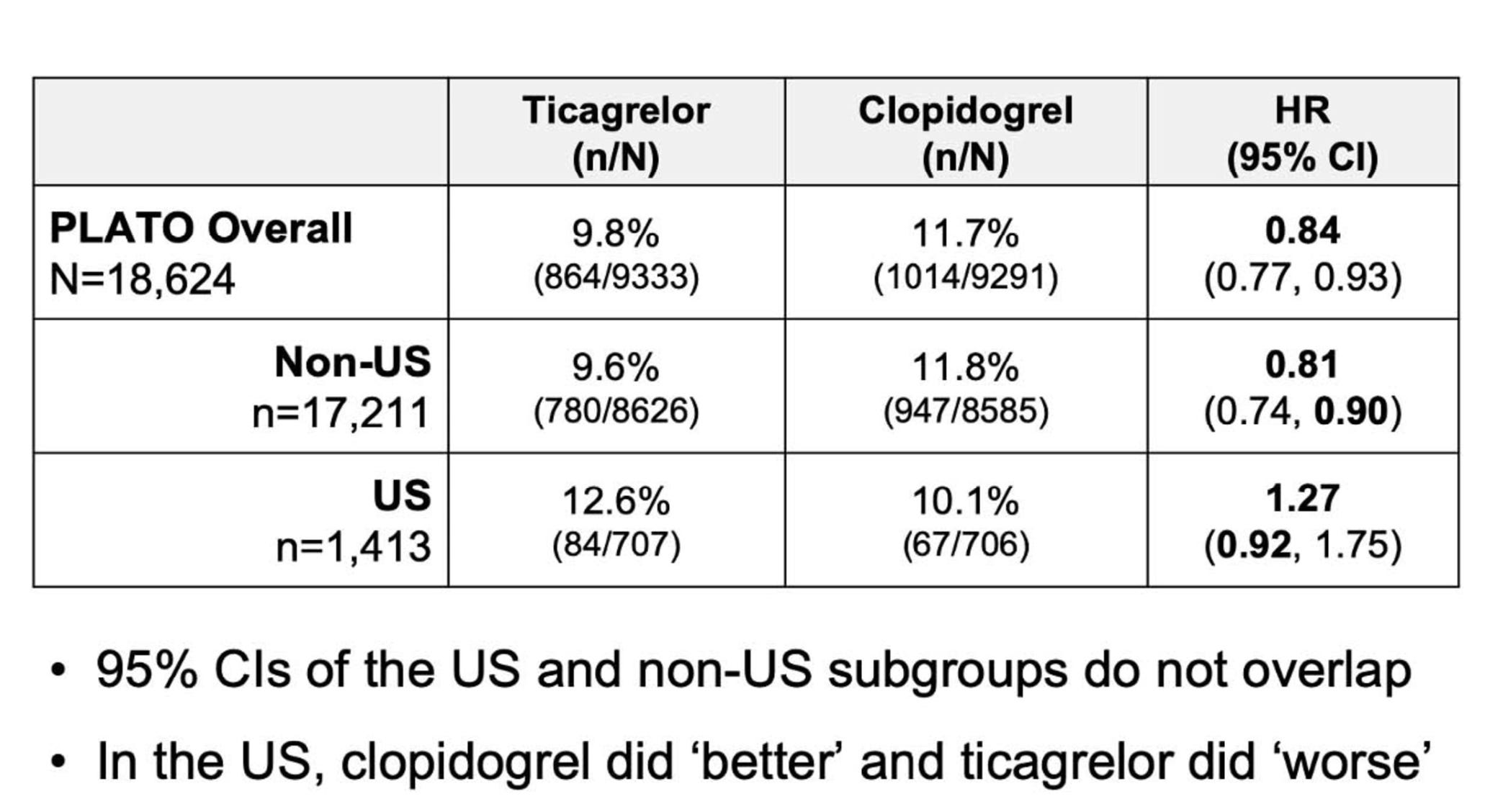
Revisiting the PLATO trial
Our initial review of the PLATO trial, published in April 2024, was based on the data available to us at that time. We have since became aware of new information that reduces our confidence in the PLATO results. This new information has major implications for clinical practice. Cardiology Trial’s Substack is a reader-supported publication. To receive new posts and support our work, consider becomi

Summary and discussion of RAVEL, TAXUS-IV and SPIRIT IV
For full review of the trials, please visit https://cardiologytrials.substack.com/ Get full access to Cardiology Trial’s Substack at cardiologytrials.substack.com/subscribe

Review of the SPIRIT IV Trial
N Engl J Med 2010;362:1663-74.Background: The RAVEL and TAXUS-IV trials compared the sirolimus- and paclitaxel-eluting 2nd generation stents to 1st generation bare metal stents. Both trials reported improvements in surrogate endpoints - “in-stent luminal loss” was the primary endpoint of RAVEL and “ischemia-driven target-vessel revascularization” was the primary endpoint of TAXUS-IV. Neither trial

Review of the TAXUS-IV trial
N Engl J Med 2004;350:221-31Background: For the past year we have been posting reviews of seminal trials in cardiovascular medicine. It is our anticipation that these will ultimately be published in a textbook format that will be indexed by major subject headings and the reviews will be presented in chronological order. However, in curating postings for Substack we have had to jump around in order

Review of the RAVEL trial
N Engl J Med 2002;346:1773-1780Background: Percutaneous revascularization of the coronary arteries is frequently performed for patients with stable and unstable angina. By the late 1990s and early 2000s, most percutaneous coronary interventions (PCI) were performed with intracoronary stent placement rather than balloon angioplasty alone given lower rates of angiographic detected restenosis with st

Summary and discussion of FAME 3, BARI 2D and PREVENT
For full review of the trials, please visit https://cardiologytrials.substack.com/ Get full access to Cardiology Trial’s Substack at cardiologytrials.substack.com/subscribe

Review of the PREVENT trial
The Lancet Volume 403, Issue 10438 p1753-1765May 04, 2024Background Cardiologist have long been taught that acute plaque rupture leading to myocardial infarction is more likely to come from non-flow-limiting lipid-rich atherosclerotic plaques. The concept of the vulnerable plaque is surely one of the reasons that revascularization of high-grade stable coronary artery disease does not reduce myocar

Summary and discussion of trials of PCI vs CABG
For full review of the trials, please visit https://cardiologytrials.substack.com/ Get full access to Cardiology Trial’s Substack at cardiologytrials.substack.com/subscribe

Review of the BARI 2D trial
N Engl J Med 2009;360:2503-2515Background: Type 2 diabetes increases the risk of cardiovascular events and death. Previous trials comparing revascularization versus medical therapy included patients with diabetes, however, a large-scale trial specifically focusing on patients with type 2 diabetes was lacking.Cardiology Trial’s Substack is a reader-supported publication. To receive new posts and su

Review of the FAME 3 trial
N Engl J Med 2022;386:128-137Background: Patients with three-vessel coronary artery disease have better outcomes when revascularization is performed using coronary artery bypass grafting (CABG) compared to percutaneous coronary intervention (PCI), as seen in the SYNTAX and FREEDOM trials. Fractional flow reserve (FFR) was not required and was not routinely performed in these trials.Cardiology Tria

Review of the EXCEL trial
N Engl J Med 2016;375:2223-2235Background: Smaller randomized trials have shown that outcomes are not significantly different when patients with left main disease are treated with percutaneous coronary intervention (PCI) or coronary artery bypass grafting (CABG). In the subgroup of patients with left main disease in the SYNTAX trial, outcomes were similar between PCI and CABG in patients with low

Review of the NOBLE Trial
Lancet 2016;388:2743-52Background: PCI was commonly used for the management of patients with left main coronary artery disease and favorable pathology (i.e., absence of complex lesions). This was recommended by the guidelines at the time and based mainly on the prespecified subgroup of 705 patients with left main disease in the SYNTAX trial. The NOBLE trial sought to more rigorously test the hypot

Review of the FREEDOM trial
N Engl J Med 2012;367:2375-2384Background: The first large trial to compare PCI vs CABG was SYNTAX. In the subgroup of patients with diabetes, which made up approximately 25% of the trial population, PCI was associated with a higher rate of adverse events compared to CABG, primarily driven by higher rates of repeat revascularization in the PCI group.The Future Revascularization Evaluation in Patie

Review of the SYNTAX trial
N Engl J Med 2009;360:961-972Background: After its introduction in 1968, the use of coronary artery bypass grafting (CABG) in patients with coronary artery disease grew rapidly. Although early trial results were mixed (see the Veterans Administration Cooperative study, the European Coronary Surgery Study and the CASS study), advancements in surgical techniques and the use of arterial conduits impr

Review of the ORBITA-2 trial
N Engl J Med 2023;389:2319-2330Background: Percutaneous coronary intervention (PCI) does not reduce mortality or myocardial infarction as seen in COURAGE, FAME 2, ISCHEMIA and ISCHEMIA-CKD. However, unblinded studies have indicated that revascularization may improve symptoms, which is a key factor in driving PCI decisions for many patients. ORBITA was the first blinded, placebo-controlled trial of

Summary and discussion of ISCHEMIA, ISCHEMIA-CKD, ORBITA and REVIVED-BCIS2
For full review of the trials, please visit https://cardiologytrials.substack.com/ Get full access to Cardiology Trial’s Substack at cardiologytrials.substack.com/subscribe

Review of the REVIVED-BCIS2 trial
N Engl J Med 2022;387:1351-1360Background: Systolic heart failure and obstructive coronary artery disease often coexist. Some patients show improvement in left ventricular systolic function after revascularization, which led to the development of the concept of myocardial hibernation. In this state, areas of the heart that are exposed to repetitive ischemia reduce their contractility to help facil

Review of the ORBITA trial
The Lancet Volume 391, Issue 10115, 6–12 January 2018, Pages 31-40Background: For decades, cardiologists commonly used percutaneous coronary intervention (PCI) for the relief of angina. It made sense because PCI resulted in near complete resolution of blood flow through a stenosed vessel. The problem facing evidence-based clinicians was that no previous trial had compared PCI to a placebo (sham)

Review of the ISCHEMIA and ISCHEMIA-CKD trials
N Engl J Med 2020;382:1395-407 - ISCHEMIAN Engl J Med 2020;382:1608-16 - ISCHEMIA-CKDBackground: The COURAGE trial, published in 2007, represented a major reversal in cardiovascular medicine. In patients with stable CAD an initial strategy of revascularization plus medical therapy did not reduce the chance of dying or having a heart attack compared to an initial strategy of medical therapy alone.
Recommended

English with Olivia | Slow Conversations & Vocabulary

Stand In The Circle

SLOW ENGLISH PODCAST (A1-A2) With Subtitles | Daily Videos | English With Us Podcast

Learn English A2 with Daily News | Simple English Listening Practice

پلی لیست | PlayList

Conspiracy Files with Paige Carter

Bad Friends

Learn 50 English Phrases While You Sleep | Everyday English Phrases & Vocabulary

This Past Weekend w/ Theo Von

Dateline NBC

Back to the 80s Radio

Crime Stories with Nancy Grace
