At the Water's Edge
The At the Water's Edge Podcast explores national security and geopolitics from an insider's perspective. It examines how national power, industrial policy, diplomacy, and military might shape global affairs and America's role in the world. The show offers deep dives into the forces that influence international relations and strategic decision-making.
Episodes
U.S. Brigades Last 24 Hours Against Ukraine’s Drones | MG Duane Miller
What happens when a U.S. brigade trains against Ukraine's drone forces? They usually have to reset the exercise within 24 hours. Major General Duane Miller, until recently Deputy Commanding General of Security Assistance Group–Ukraine, explains why America is not ready for the speed of modern war.
After more than two years watching Ukraine fight, MG Miller argues that the speed of learning is no
The Rise of the Mecca Alliance: Turkey, Pakistan, and Saudi Arabia's Game Plan
Fifty-nine days after it was signed, the Mecca Pact has been activated. Saudi Arabia, Pakistan, and Turkey have agreed to send forces to defend the kingdom against the Houthis. The alliance itself isn’t the real danger. The danger is when it was formed.
Scott breaks down how the Houthis pushed Riyadh to call in its new allies: strikes on four Saudi cities, attacks on the East-West pipeline that le
The Most Dangerous Weeks of the Iran War Are Here | Robert Pape
We’re in the most dangerous weeks of the Iran war since March, and the midterms are the reason. Professor Robert Pape returns to explain the wicked incentives pushing President Trump toward escalation before November 3rd, and why every option likely landing on his desk hands Tehran the advantage.
Pape walks through the three clocks converging on the midterms. The USS Theodore Roosevelt and a secon
The Truth About Veteran Support Systems and How to Fix Them
Veterans die by suicide at a rate 72% higher than their civilian peers, and women veterans at a rate 101% higher. Lyndsay Tkach, Wounded Warrior Project's Director of Mental and Brain Health Services, has spent twelve years working on that problem. In the series finale, she explains why she calls suicide "a human issue" rather than only a medical one, and what it would take to reach veterans at sc
Is Iran's War Spreading? Three Incidents, One Dangerous Pattern
Masked men with vans full of fuel outside the British base that launched B-52s against Iran. A FlyDubai co-pilot stabbing his captain on a flight to Tel Aviv. A drone knocking out power to the Prophet's Mosque in Medina. Three incidents in one week, as Iran's 45-day deadline on the U.S. blockade expires and a third American carrier heads for the region.
Is Iran launching a terror campaign? I don't
Trump needs a "LAST CHAPTER" in Iran | Trita Parsi
Trita Parsi argues Trump is looking for a "last chapter" in Iran, an ending that makes the whole war look worth it, and that diplomacy won't give him one.
Iran's president flew to New York in the middle of a war to put a deal on the table, and Trump rejected it within days. Trita Parsi, co-founder and executive vice president of the Quincy Institute for Responsible Statecraft, joins At the Water's
Trump is TRAPPED in Iran's "DIPLOMACY" | Robert Pape
Iran offered Trump a seven-day path to end the war. Robert Pape explains why taking it or refusing it both hurt him before the midterms.
Iran's president came to the UN in New York with a deal on the table: a quick end to the fighting and a return of nuclear inspectors, in exchange for money up front. University of Chicago political scientist Robert Pape argues the offer is a trap. Any upfront p
Why Our Special Forces Are Losing the Silent Battle
Joe Stabley is a Special Forces medic turned physician assistant — one of the most demanding career fields in the military, followed by a doctorate-adjacent civilian one. By any outward measure, he was a success. He also spent the better part of a decade managing suicidal ideation that started with a friend's death on a peacetime deployment before 9/11, and that he describes as something he still
The Real Reason Saudi Arabia Is Buying 48 F-35s
For more than a decade, Israel has been the only country in the Middle East flying a fifth-generation stealth fighter. That's about to change.
The Trump administration has approved the sale of 48 F-35s and 49 engines to Saudi Arabia. Congress has 30 days to object. It almost certainly won't.
But the purchase is counterintuitive. The F-35 has lost some of its luster: one was confirmed hit by rada
When the Military is Pulled into Politics | Robert Pape
The midterms are five and a half weeks away, and Professor Robert Pape says most of the warnings are aimed at the wrong window. Political violence around elections isn't mainly about intimidating voters before Election Day. The real danger zone opens the moment the polls close and the counting starts, and it runs all the way through certification. The question is whether the losers will accept the
The Invisible War: How Gray Zone Attacks Work | fmr. NSC director F. David Diaz
Sabotage. Arson. Drone swarms over critical infrastructure. Cyber intrusions into American water utilities. Gray zone attacks are built to look like accidents, fall between agencies, and do their damage before anyone connects the dots.
Fmr. NSC Director F. David Diaz, a Marine officer turned State Department and Joint Staff strategist who now teaches at Georgetown, joins Scott to break down his ne
She Didn't Look Like a Veteran in Crisis. That Was the Problem.
Sam Hargrove spent years being known for her smile — while privately battling a rage she couldn't explain, seven rounds of anger management, and a night she nearly drove her car into a tree. A communications specialist caught in an explosion in Iraq, Sam faced a specific kind of dismissal on top of everything else: "ain't nothing wrong with you," the running joke aimed at a "chair force" veteran w
What Happens If the US Uses a Nuclear Weapon on Iran | Robert Pape
University of Chicago professor Robert Pape (Bombing to Win, The Escalation Trap) is back for his weekly read on the U.S.-Iran conflict — and this one goes to a darker place than usual. Pape lays out how Iran is quietly becoming an oil hegemon through the Houthis and Iraqi militias, why the IRGC's threat to "shock the world" might be a signal about Pickaxe Mountain, and what actually happens — mil
The Houthis Just Dragged Europe Into the Iran War
The Houthis just took the entire Red Sea coastline — and it's about to drag Europe into a war it wanted no part of.
In ten days, Houthi forces captured Yemen's Red Sea coast, seized the strait's key islands, and helped force the shutdown of Saudi Arabia's emergency oil pipeline — closing the second major chokepoint Saudi Arabia needs to move crude, right after Hormuz. Brent crude is over $107 a ba
The Neuroscience of Suicidal Ideation: Why the Brain Can't See a Way Out
What's actually happening in someone's brain in the moments before they decide to end their life? Lindsey Gray, Suicide Prevention Manager at Wounded Warrior Project, breaks down the neuroscience — why the prefrontal cortex goes offline, why the amygdala floods the system with threat signals, and why suicide isn't a character failure but, as she puts it, "a breakdown in the brain."
This conversati
October 7 Was “A Reenactment,” Not a Rupture | Robert Malley
Rob Malley has spent three decades inside the peace process he now argues was never built to succeed. He negotiated at Camp David under President Clinton, led Obama's Iran nuclear negotiations that produced the JCPOA, served as Biden's Special Envoy for Iran, and ran the International Crisis Group. He's now a Senior Fellow and Lecturer at Yale's Jackson School and co-author, with Hussein Agha, of
Iran Now Controls the Red Sea's Only Oil Bypass | Robert Pape
The Houthis have seized control of the Red Sea and the Bab el-Mandeb Strait — and with the US Navy already stretched thin in the Strait of Hormuz, there's no clear path to reopening it. Professor Robert Pape returns to break down how we got here: Iran's methodical, multi-pronged campaign to choke off all three of the world's remaining oil buffers (the US Strategic Petroleum Reserve, Chinese import
Bin Laden Lost the War. America is Still Paying the Price
Twenty-five years after 9/11, one question still doesn't have a clean answer: did Osama bin Laden actually win?
In this solo episode, Scott Kelly goes goal-by-goal through what bin Laden said he wanted — U.S. troops out of Saudi Arabia, an end to support for Israel, toppled Arab regimes, a global caliphate, and an America bled into bankruptcy — and scores each one against what actually happened ov
He Wanted to Die. Surviving Changed Everything
Zach Tidwell enlisted in the Marine Corps wanting to go to war — and missed it. What followed was an affair, a traumatic brain injury, and a depression he refused to talk about, convinced he could just decide his way through it the same way he'd decided his way through infantry training. In March 2019, that ended with a suicide attempt that left him blind and partially deaf.
In this conversation,
The Iran War Exposed America’s Real Weakness | Sean O’Keefe
Sean O'Keefe returns for his third appearance on the show — and this time, he's not pulling punches. Three months into the war with Iran, the former Secretary of the Navy and NASA Administrator makes the case that nobody in Washington can articulate what winning actually looks like. Not the White House, not the Pentagon, not the people who sent troops into the region in the first place.
We go deep
A Culture of Silence: The Real Crisis Behind the Army Secretary’s Exit
Dan Driscoll just resigned as Army Secretary after eighteen months — the shortest tenure in the role's modern history. That alone is a story. But he's the latest name on a list of more than 80 senior military leaders forced out or sidelined since January 2025, a purge with no precedent in the post-WWII era. This week, I connect Driscoll's exit to the Washington Post's report on four-star commands
Iran Has Put America in a No-Win Scenario | Robert Pape
Six months into the Iran war, the exchange of fire over the Strait of Hormuz just restarted. Professor Robert Pape returns to break down why the U.S. strike on Larak Island and Iran's retaliation against Jordan (and reportedly the UAE) aren't tit-for-tat — they're a denial strategy straight out of his book Bombing to Win. We cover the Army Secretary's resignation, the 82nd Airborne's extended depl
The 82nd Airborne Just Revealed How Long This War Could Last
We're Not Leaving: What the 82nd Airborne's Year-Long Extension Tells Us About the Iran War
The 82nd Airborne Division exists to deploy anywhere in the world within 18 hours. This week, its command team told paratrooper families their CENTCOM deployment is extending to a full year — and buried in that letter is the clearest signal yet of how long the United States expects to stay engaged with Iran
Trump's Trade War Could Starve His Own War Machine
Trump just invoked a Depression-era tariff statute that's never been used at this scale — against the one G7 ally that's a sole-source supplier for the U.S. Army's artillery propellant and a critical link in the F-35 supply chain. Scott breaks down the actual USMCA timeline, which of the administration's five stated justifications for the trade war actually holds up, and why the timing — six mont
Trump’s Economic D-Day Will Backfire | Robert Pape
The ceasefire MOU with Iran has expired, and Treasury Secretary Scott Bessent has launched what he's calling an "economic D-Day" — the same day Iran's new National Security Council chief, Mohsen Rezaei, threatened to shut the Strait of Hormuz to any nation that cooperates with US sanctions.
Professor Robert Pape returns to the show with the historical argument he's been building for months: since
Washington Is Watching. Iran Is Moving. | Robert Pape
Iran has moved from survival to ambition to hard power — and it's reshaping the balance of power in the Middle East while Washington stays on the sidelines.
University of Chicago Professor Robert Pape returns for his weekly real-time breakdown of the U.S.-Iran conflict. This week: a tentative Iran-Oman deal on Strait of Hormuz traffic, Iran's new list of demands to reopen it, two overlapping def
"This Is Strategic Paralysis" | Robert Pape on the Power Vacuum in the Persian Gulf
This is the latest episode in The Escalation Trap, an ongoing series with Robert Pape of the University of Chicago tracking the war with Iran in real time — and the first episode where audience questions go directly to Pape on air.
We open with what's actually known about the pause in strikes and the low-level Iran-Oman talks over Hormuz transit fees, which Pape argues is not a sign of progress bu
Former Acting Chairman of the Joint Chiefs: “The Colossus Is Awake”
America Can't Build Weapons Fast Enough | The Pentagon's Former Acting Chairman Explains Why
Admiral Chris Grady (Ret.) spent over 40 years in the Navy, commanded at every level from ship to fleet, and served as Vice Chairman of the Joint Chiefs of Staff — including a stretch as Acting Chairman during one of the most chaotic weeks in recent Pentagon history. Now retired and serving as a Distinguis
You Can’t Bomb Iran Into Surrender | Robert Pape
This is the latest episode in The Escalation Trap, an ongoing series with Robert Pape of the University of Chicago tracking the war with Iran in real time. Pape recorded this episode without power of his own — tornadoes had just knocked out electricity across the south side of Chicago — and turns his own blackout into a working case study for what it would actually mean for the U.S. to take down I
This Should Be Illegal. It's Not
Cities and towns across America are signing non-disclosure agreements with corporations — and in some cases, officials aren't even allowed to tell the public an NDA exists. Investigative journalist Miranda Spivack joins the show to explain how local government secrecy became a national security issue.
Miranda spent twenty years at The Washington Post covering state and local government. Her new bo
The War Is Spiraling | Robert Pape on Iran and the Escalation Trap
The war with Iran has entered what Robert Pape, Professor at the University of Chicago, calls the "spiral phase" — a dynamic that's both vertical, with harsher strikes on both sides, and horizontal, with the Red Sea now pulled into the conflict via a Houthi blockade. This week brings the death of three more U.S. service members, bringing the total to 17, a bombing campaign now targeting Iranian ci
"Iran's Supreme Leader Just Called for Attacks on Americans Worldwide" | Robert Pape
The war with Iran is back on, and according to Robert Pape, Professor at the University of Chicago, we are now knocking on the door of the most dangerous stage of the conflict yet. This week, Pape walks through why Iran's Supreme Leader has issued a call for revenge attacks on Americans anywhere in the world, why that statement closely parallels the fatwa issued against Salman Rushdie three decade
Joe Kent: 'Israel Drove This Decision, Not Us'
Joe Kent spent 21 years in Army Special Forces and the CIA before becoming President Trump's Director of the National Counterterrorism Center — then walked away from it, resigning in protest over the war with Iran.
This week I sit down with him to talk about what he saw from inside the administration in the weeks before he quit, why he believes Israel drove the decision to strike, and what it actu
Iran's Funeral Just Changed the War | Robert Pape's Warning to Washington
Just days after President Trump's Fourth of July weekend, Iran held a massive funeral for its slain leadership — and millions turned out. In this week's installment of our ongoing series on the war with Iran, Robert Pape, Professor at the University of Chicago and one of the leading scholars on coercion, airpower, and political violence, argues that the funeral marks a turning point that has nothi
Iran Is Not Deterred | Robert Pape on the Escalation Trap
This is the latest episode in The Escalation Trap, an ongoing series with Robert Pape of the University of Chicago tracking the war involving the United States, Israel, and Iran in real time.
After new strikes in the Strait of Hormuz, U.S. bombing inside Iran, Iranian missile attacks on U.S. bases in Kuwait and Bahrain, and renewed talk of a ceasefire, Pape argues that the conflict is not ending.
The Future of PTSD Treatment Is Already Here. Why Can’t Veterans Access It?
In the final episode of our PTSD series, Scott speaks with Dr. Jessica Maples Keller of Emory University about the future of psychedelic-assisted therapy for PTSD.Emory has been studying MDMA and psilocybin in a clinical setting, with a focus on how these treatments might enhance evidence-based care like prolonged exposure therapy. Dr. Maples Keller explains how clinical trials are designed, why
The Deal Is Signed. The War Isn’t Over. | Robert Pape on Iran
This is the latest episode in The Escalation Trap, an ongoing series with Robert Pape of the University of Chicago tracking the war with Iran in real time.
The U.S. and Iran have signed a memorandum of understanding. But according to Pape, that does not mean the war is over.
Instead, the battlefield may be shifting to the negotiations themselves.
Pape argues that while the U.S. and financial marke
Why Veterans Are Going Overseas for Psychedelics | PTSD Part 2
Why Veterans Are Going Overseas for Psychedelics
In part two of our PTSD series, Scott speaks with Jesse Gould, founder of the Heroic Hearts Project and a former Army Ranger from the 75th Ranger Regiment, about why some veterans are seeking psychedelic-assisted treatment outside the traditional U.S. medical system.
Jesse shares his own story of leaving the military, struggling with PTSD, anxiety,
A Deal Doesn’t End This War | Robert Pape on Iran
This is the latest episode in The Escalation Trap, an ongoing series with Robert Pape of the University of Chicago tracking the war with Iran in real time.
Reports suggest the U.S. and Iran may be moving toward a deal. But Pape argues that a signing ceremony, memorandum, or public claim of victory does not necessarily mean the war is ending.
For frontline U.S. forces in CENTCOM and the Gulf, the r
Surviving War Was Only the Beginning | PTSD Part 1
Surviving war is only the beginning for many veterans.
In Part 1 of this series on post-traumatic stress disorder, At the Water’s Edge examines what PTSD is, why it is so often misunderstood, why many veterans wait years before receiving care, and what effective treatment can look like.
This episode features three voices from Wounded Warrior Project: Dr. Erin Fletcher, Director of Warrior Care Net
Iran Is No Longer Just Surviving | Robert Pape on the Escalation Trap
This is the latest episode in The Escalation Trap, an ongoing series with Robert Pape of the University of Chicago tracking the war with Iran in real time.
After 100 days of war, Pape argues that the conflict is no longer in its opening phase — but it is nowhere near over. Instead, the war has entered what he calls the middle of the escalation trap: a grinding phase where weeks of boredom can be p
Trump Thought Iran Would Collapse. He Was Wrong. | Trita Parsi
President Trump thought Iran would collapse quickly. According to Dr. Trita Parsi, that assumption may be one of the central miscalculations that pulled the United States deeper into war.
In this episode of At the Water’s Edge, Scott Kelly speaks with Dr. Trita Parsi, co-founder and Executive Vice President of the Quincy Institute for Responsible Statecraft, about the war with Iran, the limits of
Bombing and Talking at the Same Time | Robert Pape on Iran and the Escalation Trap
This is the latest episode in The Escalation Trap, an ongoing series with Robert Pape of the University of Chicago tracking the war with Iran in real time.
After two weeks of ceasefire claims, strikes, and renewed negotiations, Pape argues that the conflict is not moving toward real stability. Instead, the U.S. and Iran may be entering what he calls a new era of instability.
Even if a memorandum o
Former NASA Chief: America Has Lost the Meaning of Power | Iran, Artemis II & U.S. Decline
Former NASA Administrator and Secretary of the Navy Sean O’Keefe returns to At the Water’s Edge for a conversation about American power, strategy, space, war, and national identity.
At a moment when the United States is confronting conflict with Iran while also advancing the Artemis program, O’Keefe explores a deeper question: what actually makes America powerful?
Drawing on decades of leadership
The War That Ends American Dominance | Robert Pape on Iran
The war with Iran may be more than another crisis in the Middle East.
In this latest installment of The Escalation Trap, Robert Pape argues that the conflict is becoming a hinge event — almost the inverse of the 1991 Gulf War. Instead of demonstrating American military dominance, this war may be revealing the limits of U.S. power when tactical military strength no longer produces strategic outcome
The Danger Zone Is Here | Robert Pape on Iran, Nuclear Weapons, and the Escalation Trap
This is the latest episode in The Escalation Trap, an ongoing series with Robert Pape of the University of Chicago tracking the war with Iran in real time.
Pape argues that the conflict has now entered the true danger zone. The negotiation track, he says, may be effectively dead for weeks or months — not because talks are impossible, but because the core issues at stake are zero-sum.
Unlike a real
Former NSC Official: The Iran War Exposed America’s Broken Strategy | Negah Angha
Former State Department senior advisor and National Security Council official Negah Angha joins At the Water’s Edge to discuss what the war with Iran reveals about American strategy, alliances, and decision-making.
Angha explains how major national security decisions are supposed to move through the U.S. government, why inconsistent objectives and poor consultation with allies can weaken America
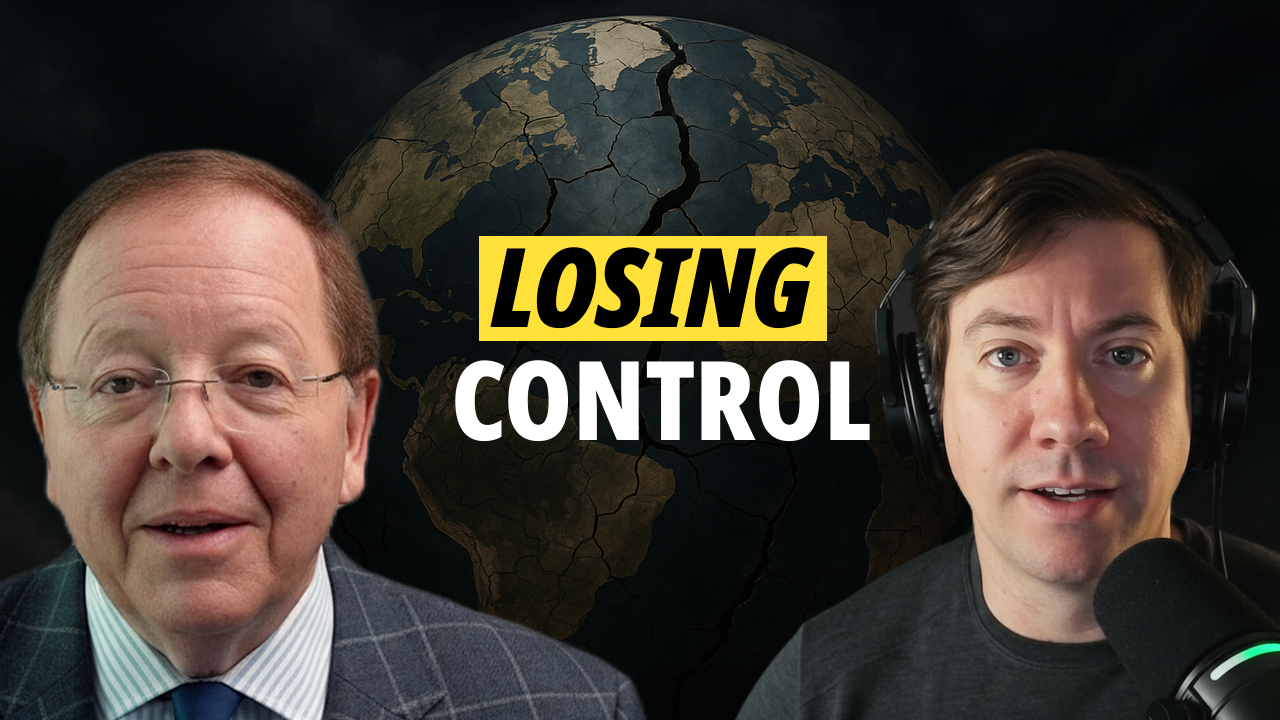
The U.S. Is Losing Control | Robert Pape on Iran, China, and the Escalation Trap
This is Part 7 of The Escalation Trap, an ongoing series with Robert Pape of the University of Chicago tracking the war with Iran in real time.
This week, the Trump administration announced Project Freedom, an effort to reopen the Strait of Hormuz by escorting ships through the waterway. At the same time, Iran is working with Pakistan and Turkey to expand overland trade routes, Hezbollah has incre
Are We Already in World War III? Ukraine, Iran, and the New Global Conflict | Paul Poast
Are the wars in Ukraine and Iran separate conflicts—or part of something larger?
In this episode of At the Water’s Edge, Scott sits down with Paul Poast, Associate Professor at the University of Chicago, to unpack his argument that we may already be living in a new era of “world war.”
Rather than a 20th-century style global conflict, Poast explains how today’s wars can be defined by multiple inter
“NATO Is Dead” — Robert Pape on Iran and the New Power Map
This is Part 6 of an ongoing series with Robert Pape (University of Chicago) tracking the Iran conflict in real time.
Over the past week, we saw renewed efforts to restart negotiations—including a Pakistan-backed diplomatic push—but no meaningful progress. Ceasefires continue to be announced and collapse just as quickly.
At the same time, something more significant may be taking shape beneath the
Special Forces Aren’t Ready for Drone Warfare | John Kowalski
Drones are already reshaping modern warfare—from Ukraine to the Red Sea to the Strait of Hormuz.
In this episode, Scott sits down with U.S. Army Special Forces Major John Kowalski to break down what that means for the future of conflict—and whether America is ready for it.
Drawing on real-world examples from Ukraine, Iranian-backed proxy forces, and conflicts around the globe, Kowalski argues that
This Isn’t a Negotiation | Robert Pape on the Iran War
This is Part 5 of an ongoing series with Robert Pape (University of Chicago) analyzing the Iran conflict in real time.
Over the past week, multiple ceasefires were announced—and just as quickly fell apart. At the same time, the U.S. and Iran have continued escalating pressure through a de facto blockade dynamic around the Strait of Hormuz.
But the most important takeaway from this conversation is
What Happens If Iran Loses Control of Its Terror Network? | Dr. Colin P. Clarke
What happens if Iran loses control of its global network of proxy groups?
In this episode of At the Water’s Edge, Scott sits down with Dr. Colin P. Clarke, Executive Director of the Soufan Center, to break down how terrorism is evolving—and why the next phase may be more dangerous than the last.
They explore Iran’s strategy of using proxy organizations like Hezbollah and the Houthis, and why disma
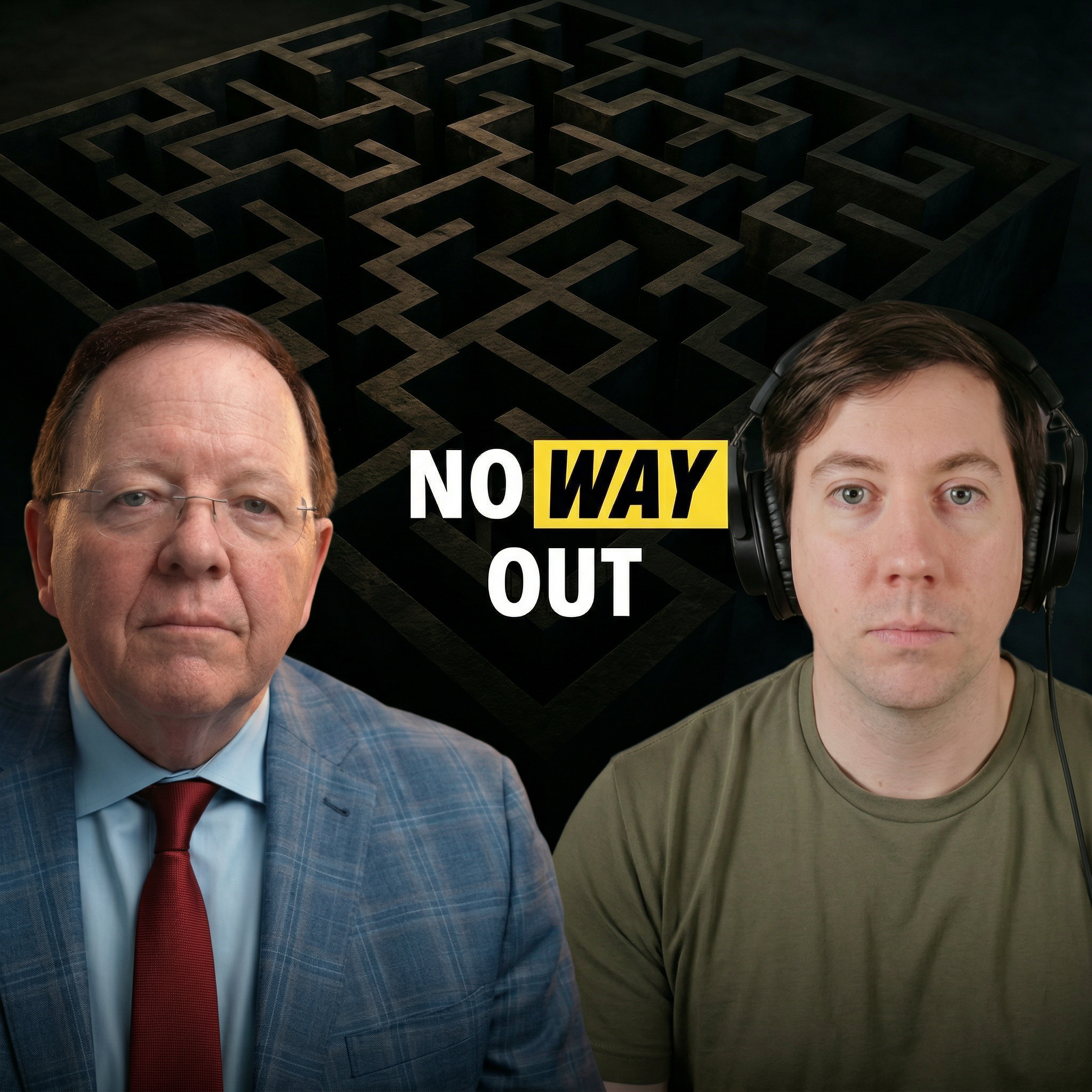
No Way Out of the Escalation Trap | Robert Pape on Iran
This is Part 4 of an ongoing series with Robert Pape (University of Chicago) tracking the Iran conflict in real time.
Over the past week, several developments point to a deeper shift in the trajectory of the war:
A ceasefire briefly emerged—then collapsed within 24 hours
The U.S. and Iran moved toward a full blockade dynamic in the Strait of Hormuz
Conflicting signals from the Trump
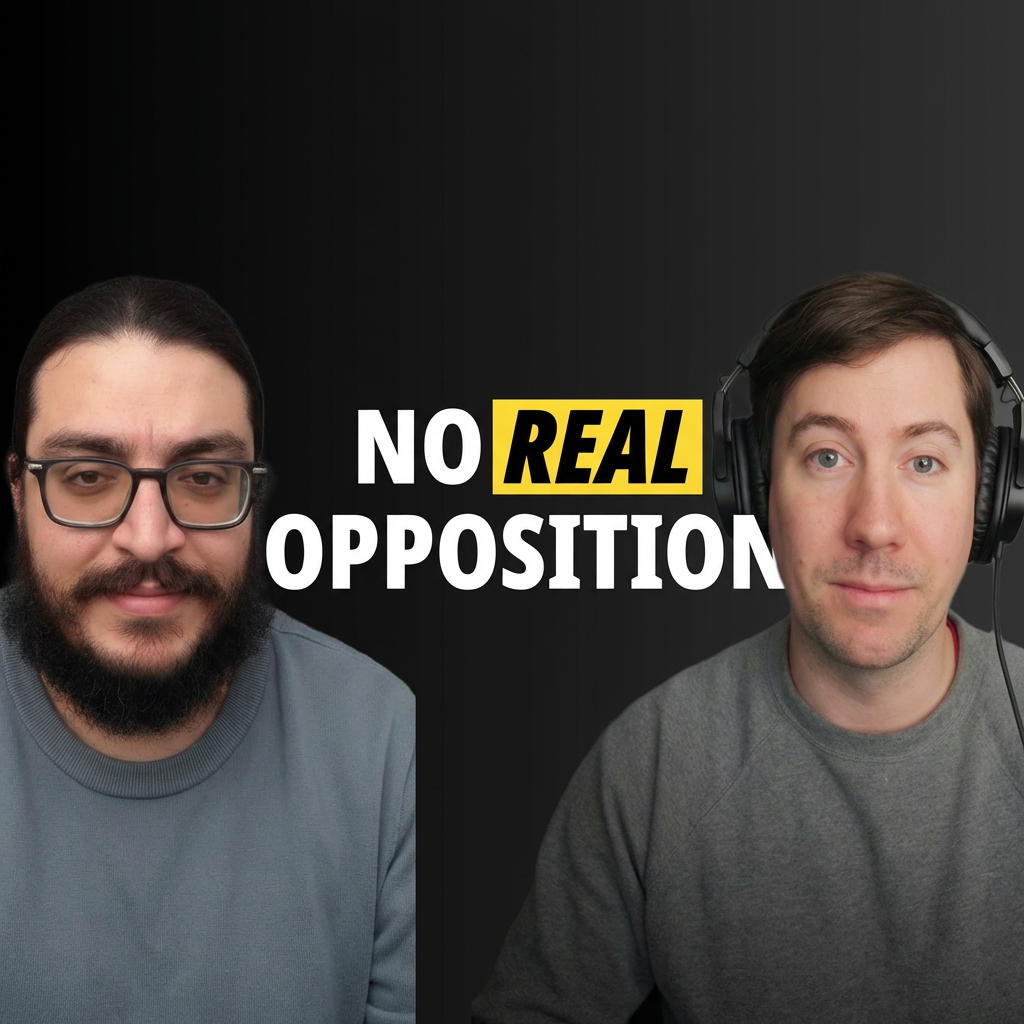
Why Iran’s Regime Isn’t About to Fall (And What Everyone Gets Wrong) | Arash Azizi
For years, many in Washington have assumed that pressure, protests, or targeted strikes could trigger regime change in Iran.
But what if those assumptions are fundamentally wrong?
In this episode, Scott sits down with Arash Azizi, a writer and historian focused on Iranian politics, to break down what’s actually happening inside Iran right now—beyond the headlines.
They discuss why the Iranian regi
The Short War Illusion Is Over | Robert Pape on Iran Escalation
This is Part 3 of an ongoing series with Robert Pape (University of Chicago) analyzing the escalation dynamics of the Iran conflict in real time.
Over the past week, several developments have shifted the trajectory of the war:
U.S. ground forces entered Iran for the first time in a limited rescue operation
Continued strikes on energy infrastructure across the region
Increasing pressu
AI for Warfighters: What Silicon Valley Gets Wrong | Tyler Saltsman
Most people think AI is ready for modern warfare.It’s not.In this episode, I sit down with Tyler Saltsman, Founder and CEO of EdgeRunner AI, to break down what artificial intelligence can actually do on the battlefield—and where it falls short.Tyler is building domain-specific AI models designed to operate directly on-device, enabling warfighters to make better decisions in real time without relyi
We’re Nearing Stage 3 — And It May Be Irreversible | Robert Pape
This is Part 2 of an ongoing series with Robert Pape (University of Chicago) breaking down the escalation dynamics of the current conflict with Iran. Follow him at his substack: https://escalationtrap.substack.com/
Over the past week, the situation has evolved rapidly:
Additional U.S. forces are deploying to the region
Energy infrastructure across the Gulf is under attack
Proxy actors,
The Drone Threat Is Already Here
Episode Title:The Drone Threat Is Already Here
Episode Description:
Drones are no longer just a battlefield problem.
From Ukraine to the Middle East, unmanned systems are reshaping how wars are fought—cheap, scalable, and increasingly accessible to both states and non-state actors.
But the most important shift may not be happening overseas.
It’s happening at home.
In this episode, Scott sits down
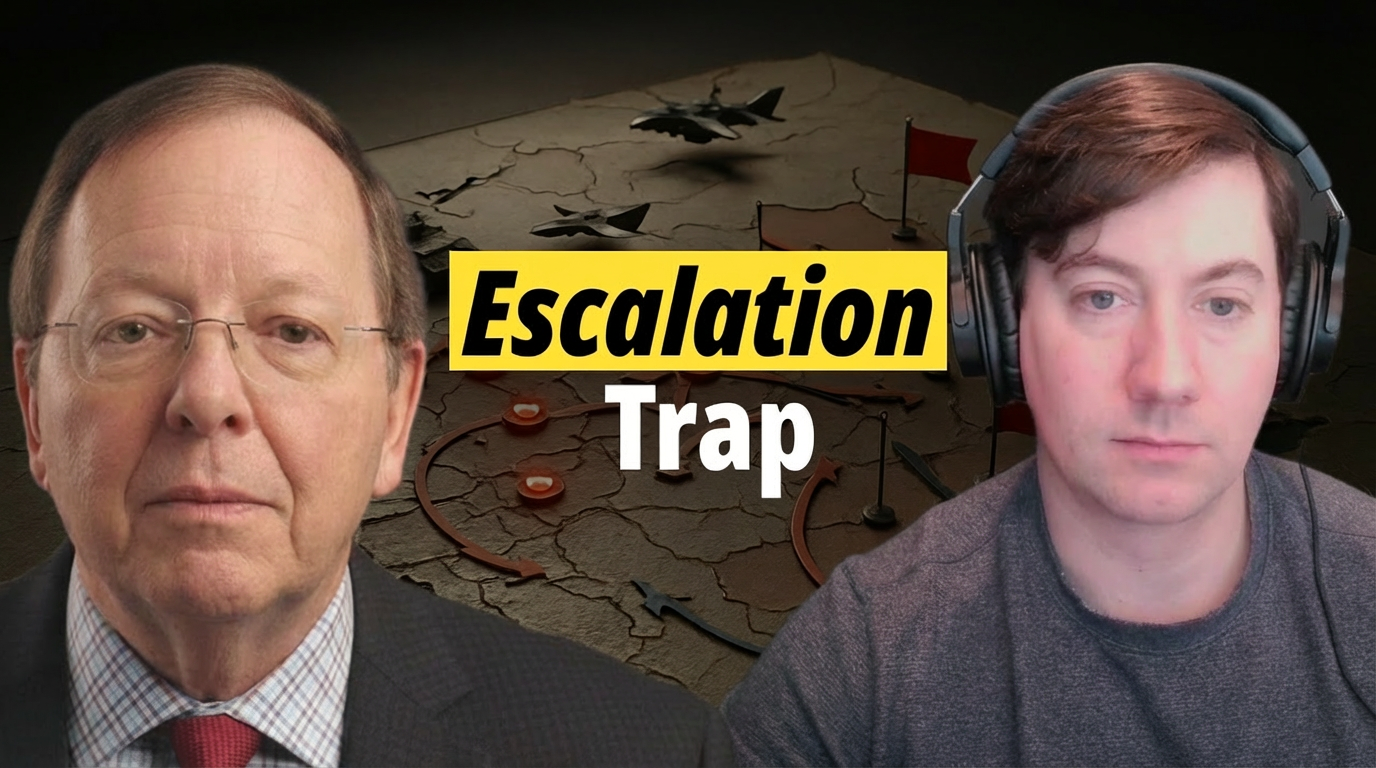
The Escalation Trap
The Escalation Trap: Robert Pape on Iran, Airpower, and Strategic Failure
Robert Pape will be giving a live briefing the status of the conflict and what stage 3 escalation looks like at 5pm EST 22 March 26 on his substack, Escalation Trap.
Robert Pape Robert Pape's Substack HERE (https://escalationtrap.substack.com/)
Description:
What if the biggest risk in war isn’t failure—but success?
In this
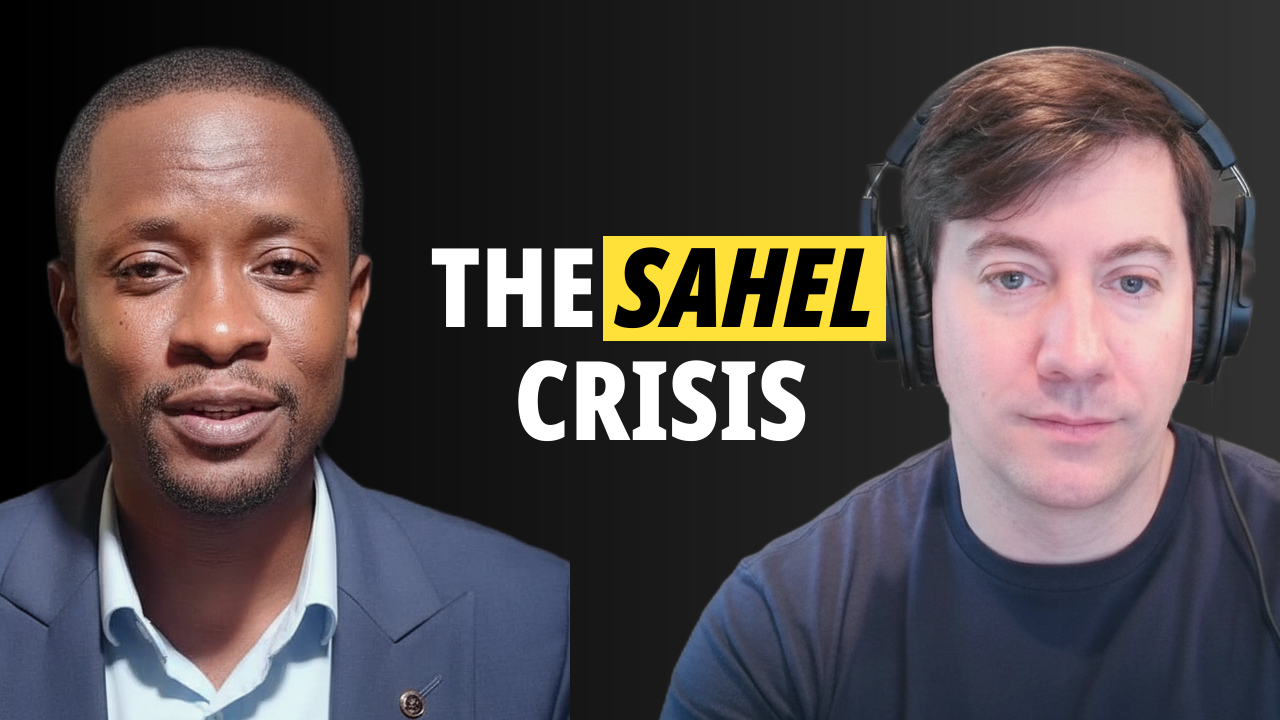
Coups, Wagner, and Jihadists: The Battle for the Sahel
The Sahel region of West Africa has become one of the most unstable security environments in the world. A wave of military coups, expanding jihadist insurgencies, and the growing influence of Russia and the Wagner Group are reshaping the geopolitical landscape across Mali, Burkina Faso, Niger, and the surrounding region.
But what is actually driving the crisis?
In this episode of At the Water’s Ed
The Transparent Battlefield: Lessons From the War in Ukraine | Samuel Bendett
What is the war in Ukraine teaching the world about modern warfare?
In this episode of At the Water’s Edge, Scott Kelly speaks with Samuel Bendett of the Center for Naval Analyses, one of the leading analysts tracking Russian military adaptation and the role of drones and emerging technology on the battlefield.
They discuss how Western analysts misunderstood Russian capabilities before the 2022 in
Can Veterans Fix Congress? | with Richard Ojeda
Retired Major Richard Ojeda joins At the Water’s Edge to discuss his campaign for North Carolina’s 9th Congressional District, why he believes veterans should play a larger role in American politics, and what he sees as the biggest failures of Washington today.
Ojeda spent 24 years in the U.S. Army, much of that time at Fort Bragg, before returning to his hometown in southern West Virginia, where
War Is the Easy Part. What Happens After Iran’s Regime?
The United States and Israel are now at war with Iran. Airstrikes, missile exchanges, and regional escalation have reshaped the strategic landscape in a matter of days.
But the larger question remains:
What happens next inside Iran?
In this follow-up conversation, Scott Kelly is joined again by Zolal Habibi, a member of the Foreign Affairs Committee of the National Council of Resistance of Iran (N
Air Dominance Was Our Advantage. It May Also Be Our Blind Spot with Ethan Brown
Ethan Brown returns to At the Water’s Edge to discuss the second volume of his JTAC trilogy, Visual Friendlies: Tally Target, which examines the evolution of close air support during the surge years in Iraq (2006–2008) and Afghanistan (2011–2013).
We explore how 20 years of uncontested air dominance reshaped American warfighting culture — from precision targeting in dense urban battle spaces to t
Protests, Resistance Units, and the Future of the Iranian Regime
In this episode of At the Water’s Edge, Scott sits down with Zolal Habibi, an activist affiliated with the National Council of Resistance of Iran (NCRI), to examine the structure, strategy, and claims of Iran’s organized opposition movement.
The conversation explores recent protest activity, internet shutdowns, disputed casualty figures, and the role of so-called “resistance units” operating insid
America Can Fight for a Week with Jahara "Franky" Matisek (PhD)
Episode: Jahara “Franky” Matisek (USAF Lt Col) — Fixing America’s Broken Arsenal
Guest: Lt Col Jahara “Franky” Matisek, U.S. Air Force | PhD Political Science | prolific writer on strategy, security assistance, and the defense industrial base
What this episode is about
America’s military can execute at breathtaking speed—but sustaining a long war is a different game. In this conversation, Lt Col J
Earned, Not Given: A PhD in the Human Condition with MG (ret) Matt Smith
Retired Major General Matt Smith joins Scott to unpack why veteran transition isn’t just a “feel-good” topic—it’s a long-term national security issue tied directly to readiness and recruiting. They discuss Emory University Goizueta Business School’s Master of Business for Veterans (MBV) Program, the importance of community during transition, and how veterans can translate military leadership into
The A-10 Isn’t Obsolete — Our Thinking About War Is
🎙️ Episode Description
In this episode of At the Water’s Edge, Scott Kelly is joined by former Air Force pilots, Tactical Air Control Party (TACP) veterans, and military scholars to take on one of the most contentious debates in U.S. defense policy: should the A-10 Warthog be retired?
Drawing on combat experience from Iraq and Afghanistan, Pentagon planning, and military history from World War II
Bringing Them Home with LTG (ret.) Walt Piatt, CEO Wounded Warrior Project
In this episode, Scott and LTG (ret.) Walt Piatt discuss the critical issue of supporting veterans as they transition from military to civilian life. They explore the role of the Wounded Warrior Project in providing essential services, the challenges veterans face in reintegration, and the importance of finding purpose after service. The conversation also delves into the complexities of navigating
The Wild World of Global Trade with Wendy Cutler
In this conversation, Wendy Cutler, a former U.S. trade negotiator, discusses the complexities of international trade, the role of government in negotiations, and the evolving landscape of U.S. trade policy. She emphasizes the importance of understanding cultural nuances in negotiations, the impact of political changes, and the need for a balanced approach to trade that considers both economic pr
Going Viral on TikTok and meeting the Jonas Brothers
In this conversation, Scott shares his unexpected journey from a viral resume incident to appearing on national television. He discusses the challenges and excitement of being contacted by major media outlets, preparing for his appearance on The Tonight Show with Jimmy Fallon, and the surreal experience of meeting the Jonas Brothers. Scott reflects on the importance of veteran transitions and the
Drones Are Evolving, Can We Protect Ourselves?
The conversation with Logan Harris, CEO of Spotter Global delves discusses how radar combined with other sensors are critical to detecting threats in real time and enable decision makers to counter the threat of drone. The risks of drone used by nefarious actors is matched by the risk of inadvertent civilian use and Logan shares his recommendations for policy makers to protect our critical infrast
Is America's Financial Flu Fatal? Guest Douglas Holtz-Eakin (PhD)
In this conversation, Douglas Holtz-Eakin discusses the pressing issues surrounding America's national debt and fiscal health. He explores the implications of government shutdowns, the role of deficits in economic growth, and the structural challenges posed by entitlement programs. Holtz-Eakin emphasizes the need for political leadership to address these issues and the importance of long-term thi
The Shanghai Cooperation Organization: A New Era
In this conversation, Henrietta Levin, a senior fellow at CSIS, discusses the evolving dynamics of the Shanghai Cooperation Organization (SCO) and its implications for global governance, US-China relations, and regional partnerships. She highlights China's ambitions to reshape the international order, the complexities of India-China relations, and the significance of recent developments within th
#28 AI and Government's Data Dilemma with Jake Dyal, CEO of Certus Core
Send us a text Scott and Jake Dyal, CEO of Certus Core, discuss the intersection of AI, data integration, and national security. They explore the challenges faced by government agencies in managing and utilizing data, particularly in the context of drone and sensor data. Jake shares insights from his experience transitioning from government service to the private sector, highlighting the bureaucra
#27 Foreign Policy Polling Insights with Alex Tarascio
Send us a textIn this episode of 'At the Water's Edge,' host Scott interviews Alex Tarascio, a pollster from Cygnal, a private GOP polling firm known for its accuracy. They discuss the intricacies of polling, the differences between private and public polling, and the impact of partisanship on polling results. Alex shares insights on current voter sentiment, the role of corporate clients, and the
#26 Trump's National Security Strategy with Jahara Matisek (PhD)
Send us a textIn this episode, Scott and Dr. Jahara 'FRANKY' Matisek discuss the current state of global conflicts, particularly focusing on the dynamics between Israel and Iran, and the tensions between Pakistan and India. They delve into Trump's national security strategy, exploring its foundations and implications, including a modern interpretation of the Monroe Doctrine. The conversation also
#25 Avoiding Nuclear War between Pakistan and India with Pakistani Senator Bushra Anjum
Send us a textIn this episode, Senator Bushra Anjum Butt discusses the escalating tensions between Pakistan and India, particularly focusing on the implications of the Indus Water Treaty and the need for international mediation. She emphasizes Pakistan's mission of peace and the importance of diplomacy over war, while also addressing the role of the U.S. in influencing regional stability. The conv
#24 The Evolution of Close Air Support from WWII to GWOT with Dr. Steve Call
Send us a textIn this conversation, Dr. Steve Call discusses the evolution of air support in military operations, focusing on the role of Tactical Air Controllers (TACPs) and the historical context of air-ground integration. He highlights lessons learned from World War II, the Korean War, and the Vietnam War, emphasizing the importance of close air support (CAS) in modern warfare. Dr. Call also ad
Recommended

این نقطه

TED Business
Dark Night Tales with Brian King

Fantasy Flex

زن بودن

Medicine with Meaning

Yours Truly Johnny Dollar Collection

Take Back Your Health®

CBS Radio Mystery Theater | Old Time Radio

Solved Murders - True Crime Stories

紐約鳥|New York Aperture
The Swerve Podcast: Obscure Topics | Conspiracy Theories
