The OPSEC Podcast
The OPSEC Podcast, hosted by Allen P., a former Navy aircrew and cybersecurity professional, explores operational security in everyday life. It covers signature reduction, security operations, privacy strategies, and situational awareness. The show emphasizes practical, actionable intelligence for protecting personal privacy and security, drawing on the host's 15 years of experience in intelligence and cybersecurity. Episodes release every two weeks.
Episodes
The Voter File: Voter Data Brokers, Political Profiling, and Protecting Your Privacy
# The Voter File: Voter Data Brokers, Political Profiling, and Protecting Your PrivacyYou registered to vote. In nearly every state, that created a public record that voter data brokers can buy, enrich, and resell. This episode follows your registration from the county clerk into a private industry that fuses it with everything else known about you, builds political profiles that score your belief
Ghost Signal: AI Voice Cloning Threats and Protecting Your Family From Digital Fraud
Ghost Signal: Ghost Signal: AI Voice Cloning Threats and Protecting Your Family From Digital FraudFor your whole life, a familiar voice has been proof of identity. A few seconds of audio from a social media clip is now enough to clone the voice of someone you love, and many cloning tools ask for little more than a name and an email address. This episode breaks down how AI-powered social engineerin
Know Your Enemy: Border Phone Searches, Data Wipes, and Travel Privacy
Summary:Samuel Tunick triggered a GrapheneOS duress wipe on his Google Pixel during a warrantless but lawful CBP border search. He's now charged with destroying property to prevent lawful seizure.This episode rejects two easy narratives. First, that Tunick is a victim: he made a deliberate choice with foreseeable consequences, and agents operated within their authority. Second, that the privacy to
Follow the Money: Payment History Surveillance and How to Protect Your Financial Privacy
Summary: Every financial transaction creates a permanent record: at the bank, the card network, the payment app, the data broker who purchased it, and the government reporting infrastructure mandated by the Bank Secrecy Act. This episode maps the complete architecture of financial surveillance—from 78,000 government reports filed daily, to Mastercard's transaction data sales, to Plaid's middleware
Podcast Update: What's New, What's Not, and What's Next
An update from Allen on where the show is headed. Production has been handled by our friends and partners at Grey Dynamics up to this point. Their production engineer is moving on to other opportunities, which gives us the chance to bring the full production process in-house. The show is taking about a month off to set that up, the style and quality are staying exactly the same, and the release sc
Know Your Threat Level: GrapheneOS vs. SovereignOS — Which One Should You Actually Be Running?
SovereignOS is a fork of GrapheneOS — Spicy Corp took the gold standard of open-source mobile security and gave it what they call "the Shelby treatment." Like Carroll Shelby re-engineering the Mustang into the GT350, they stripped attack surfaces at the kernel level, replaced stock Google branding, and added operational capabilities GrapheneOS was never designed to include. This episode covers wha
COVERT Protocol Action #5: Audit Your Social Media Accounts
Audit your social-media exposure, review all your public or private social-media accounts and online profiles; check what personal information (photos, posts, bio data, connections) is visible; then remove, reduce, or restrict exposure of anything risky or unnecessary.Steps to audit your social media exposure:1. Make a full list of every social-media profile or public/social online account you’ve
Walmart to WhatsApp: The Hidden Systems Mapping Your Behaviour
For the past decade, people have underestimated the most powerful surveillance system ever built, not by intelligence agencies, but by corporations. Every movement you make, every store you walk into, every website you open, every conversation near your phone, it’s all collected, correlated, sold, and fed back into behavioural models more invasive than anything that Langley or the Kremlin could ev
COVERT Protocol Action #1: Implement a Password Manager
Allen Pace presents the Covert Protocol, a structured methodology that will combine through different episodes the OPSEC Podcast principles with the CIA Triad practices. By using these two frameworks in tandem, this process aims to equip everyday users (like you) with both the strategic mindset and the practical tools needed to increase security, reduce vulnerabilities, and enhance personal privac
Faraday Shielding: The Counter-Surveillance Tool For Family Holidays and Everyday Carry
For more than a decade, intelligence agencies, data brokers, and criminal syndicates have quietly relied on the same vulnerability: your wireless signals. Your phone, your credit cards, your passport, your key fobs — they all broadcast data constantly, whether you realise it or not. And every signal can be intercepted, cloned, profiled, or used against you.In this episode of The OPSEC Podcast, we
Your Android Phone Is Volunteering You for Mass Surveillance: The Graphene OS OPSEC Fix
Courts can’t agree if geofence warrants are constitutional – but law enforcement is using them anyway. Your phone is volunteering you for mass surveillance operations right now.In 2024, one court declared geofence warrants “categorically unconstitutional” mass surveillance. Another court said they’re perfectly legal. When the law can’t agree on what’s legal, you need to take matters into your own
How the CIA Owned an Encryption Company for 50 Years (And Why Your VPN Might Be Next)
For 50 years, 130 governments trusted Crypto AG to protect their most secret communications. Every single message was being read by the CIA and German intelligence. Operation Rubicon was the longest-running espionage operation in history. The CIA secretly bought a Swiss encryption company in 1970, installed backdoors in every device, and sold “secure” communications to governments worldwide. Nobod
Masked Payment Cards: Operational Tradecraft for Protecting Financial Footprints
From an operational-security perspective, financial metadata is one of the most actionable intelligence vectors available to adversaries and fraudsters alike. In this episode of The OPSEC Podcast, host Alan Pace — speaking from field experience — delivers a concise intelligence-grade briefing on masked payment cards (e.g., Privacy.com) and how to incorporate them into a practical OPSEC posture for
COVERT Protocol Action #2: Audit and Secure Your Financial Accounts
Your money is one of the most targeted assets you own, and one of the easiest to compromise if left unattended. Modern financial attacks start with reused passwords, exposed debit cards, unsecured networks, and excessive data leakage.In this episode of The OPSEC Podcast, we apply the full Covert Protocol framework — Control, Obfuscate, Verify, Encrypt, Reduce, Track — to financial security. From e
How Soldiers’ Workout Data Exposed CIA Black Sites (Your OPSEC Wake-Up Call)
In 2018, a fitness app accidentally exposed secret CIA black sites, military bases, and soldier patrol routes to enemy forces worldwide. Strava’s “harmless” heat map revealed 3 trillion GPS data points, lighting up covert locations in Afghanistan, Syria, and Africa like Christmas trees. Soldiers had unknowingly painted targets on their own backs, just by logging their daily runs. In this episode o
OPSEC 101: The True Cost of Digital Carelessness
Meet Alex – a regular guy who lost everything because of one social media post and zero OPSEC.While Alex slept peacefully, a hacker drained his bank accounts, stole his identity, and destroyed his digital life. His crime? Posting a photo of his new iPhone at the Verizon store.In this inaugural episode of The OPSEC Podcast, you’ll discover:The exact 20-minute process hackers use to destroy lives (A
COVERT Protocol Action #7: Harden your Devices
Harden your Devices: strengthen the security and privacy of your phones, tablets, laptops, and desktop computers by reducing their attack surface, protecting stored data, and blocking common threats. This includes encrypting data at rest, securing network traffic, tightening web browsing, and using malware protection. Hardened devices are much safer if lost, stolen, or actively targeted.Steps to H
COVERT Protocol Action #4: Harden your Communications and Services
AI assistants have been positioned as productivity tools. Structurally, they are the most sophisticated data collection interfaces ever built — ones that convince users to voluntarily disclose their most sensitive information in the form of natural language conversation. This episode covers what ChatGPT, Gemini, and Copilot actually do with your data, the corporate exposure epidemic (77% of employ
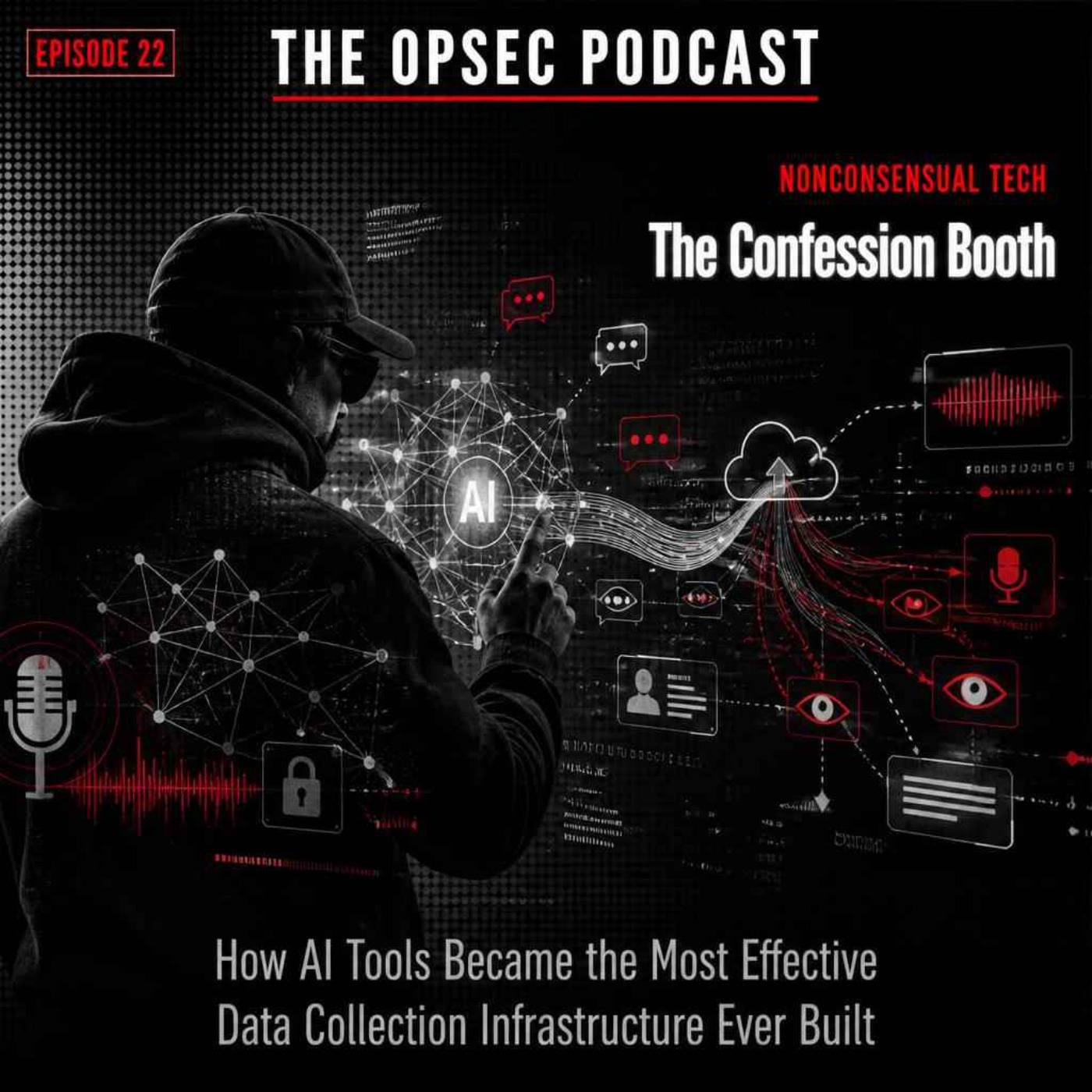
The Confession Booth: How AI Tools Became the Most Effective Data Collection Infrastructure Ever Built
AI assistants have been positioned as productivity tools. Structurally, they are the most sophisticated data collection interfaces ever built — ones that convince users to voluntarily disclose their most sensitive information in the form of natural language conversation. This episode covers what ChatGPT, Gemini, and Copilot actually do with your data, the corporate exposure epidemic (77% of employ
COVERT Protocol Action #9: Harden your Home Network
Strengthen your home network so that your router and connected devices are resilient against attacks, unauthorised access, and privacy invasions. This includes upgrading to more secure firmware, encrypting local and internet traffic, and creating network-level protections that block unwanted connections whileallowing only legitimate ones. A hardened home network reduces the risk of compromise for
COVERT Protocol Action #8: Audit and Clean Your Online Exposure
Systematically reduce your publicly visible personal information by identifying where your data appears online (search engines, data brokers, people-search sites) and using services to request removal or opt-out, so third parties and automated systems can’t easily collect, sell, or expose your PII. This step helps protect against spam, identity theft, unsolicited marketing, and malicious activity
COVERT Protocol Action #6: Audit Your Children Social Media Accounts
Throughout the latest episode, we have discussed operational security in professional settings. Today, we are bringing Gabriel Fanelli, director of training at Grey Dynamics and a former United States SIGINT operator with a Bronze Star commendation, to talk about something more than hardening your devices and obfuscating your networks: Family SecurityFirst of all, you are not your kids' best frien
$12.5 Billion Stolen in 2024: The 5-Layer OPSEC Strategy That Could Save Your Bank Account
In 2024, Americans lost $12.5 billion to financial fraud – a staggering 25% increase from the previous year. Your bank account structure is making you a target.Most people make the same fatal mistake: they use one checking account for everything. Income flows in, bills flow out, debit cards get compromised, and criminals drain everything while you sleep.In this deep-dive episode of The OPSEC Podca
COVERT Protocol Action #10: Segment your Online Personas
Deliberately create separate digital identities or “personas” for different parts of your online life so that your personal information, behavior, and interactions don’t all link back to a single profile. This reduces linkage between activities (shopping, social, work, banking, etc.), limits how much data ad networks and trackers can build about you, and helps contain exposure if one profile is co
COVERT Protocol Action #3: Implement Multi-Factor Authentication whenever possible
Implement multi-factor authentication (MFA) on every account, using the strongest method available with a graduated approach:1. Audit all important accounts (email, banking, cloud storage, social media, password manager) to check whether MFA is supported.2. For each account, go to the security or login settings and enable MFA. Choose the strongest method the service supports.3. If using an authent
The OPSEC Alias Playbook: Why Your Real Identity Should Never Touch the Internet
Every time you use your real name online, you’re volunteering to be tracked, profiled, and monetized. You never agreed to this system, but you’re trapped in it anyway.Companies have created fake rules that 99% of people would reject on a fundamental level: surrender all your personal data or you can’t use our services. But here’s the truth – unless there’s a legal requirement, they don’t need your
From Ukraine War Zones to Your Pocket: Why Signature Reduction Could Save Your Life
Russian soldiers are dying because stolen Ukrainian iPhones are broadcasting their every move. Your phone is doing the same thing to you right now.In the Russia-Ukraine conflict, troops are being hunted down through cell phone signatures. One Ukrainian soldier used Apple’s “Find My Device” to track Russian forces who stole his iPhone and earbuds. They thought they got free electronics – instead, t
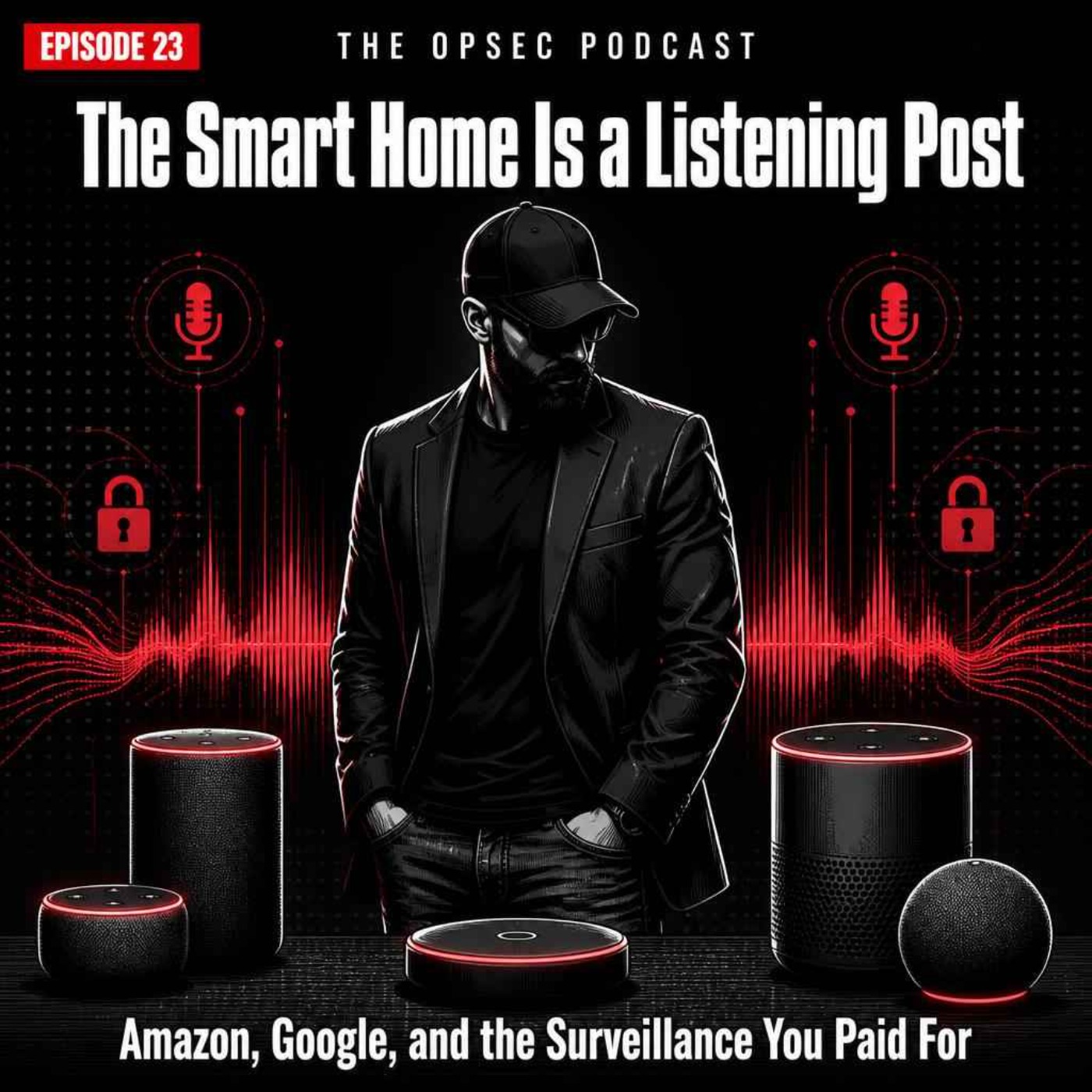
The Smart Home Is a Listening Post: Amazon, Google, and the Surveillance You Paid For
Most people think of their smart home devices as tools they control. They're not. Echo speakers, Ring cameras, smart TVs, and Google Nest devices are surveillance nodes operated by companies whose business model depends on the data they generate — stored on infrastructure you don't own, accessible to law enforcement through legal channels you didn't agree to, and governed by policies that can chan
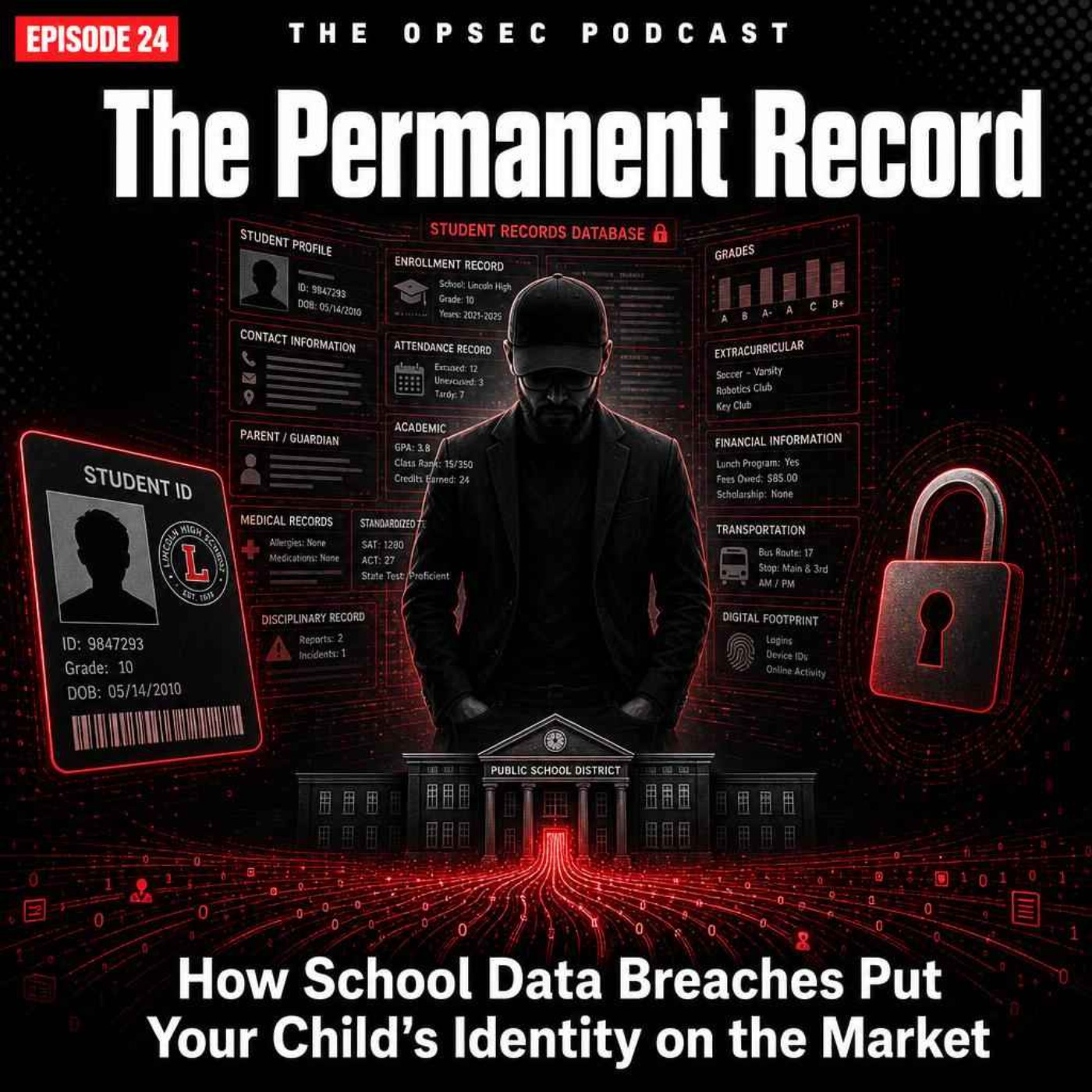
Permanent Record: How School Data Breaches Put Your Child's Identity on the Market
Public schools have become one of the softest, highest-value targets in the ransomware economy. They hold enormous amounts of sensitive data on children, run on tight budgets with little security staff, and depend on third-party vendors that keep getting breached. This episode maps the current threat landscape: the PowerSchool breach that exposed roughly 62 million students and 9.5 million teacher
Recommended
The Joe Rogan Experience

English Vocabulary Help

TED Talks Daily

Learn English B1 with Daily News | English Listening Practice

Talk About Talk - Executive & Leadership Communication Skills

English with Olivia | Slow Conversations & Vocabulary

Stand In The Circle

SLOW ENGLISH PODCAST (A1-A2) With Subtitles | Daily Videos | English With Us Podcast

Learn English A2 with Daily News | Simple English Listening Practice

پلی لیست | PlayList

Conspiracy Files with Paige Carter

Bad Friends
