Time Across the Solar System
Time Across the Solar System is a science podcast that explores what time means on different planets in our solar system. It compares the lengths of days and years on worlds like Jupiter, Venus, and Earth, turning NASA data into vivid, cinematic storytelling. Each episode blends scientific facts with imaginative narration and cosmic soundscapes, making planetary science personal and engaging. The show aims to make listeners rethink their experience of time through the lens of space.
Episodes
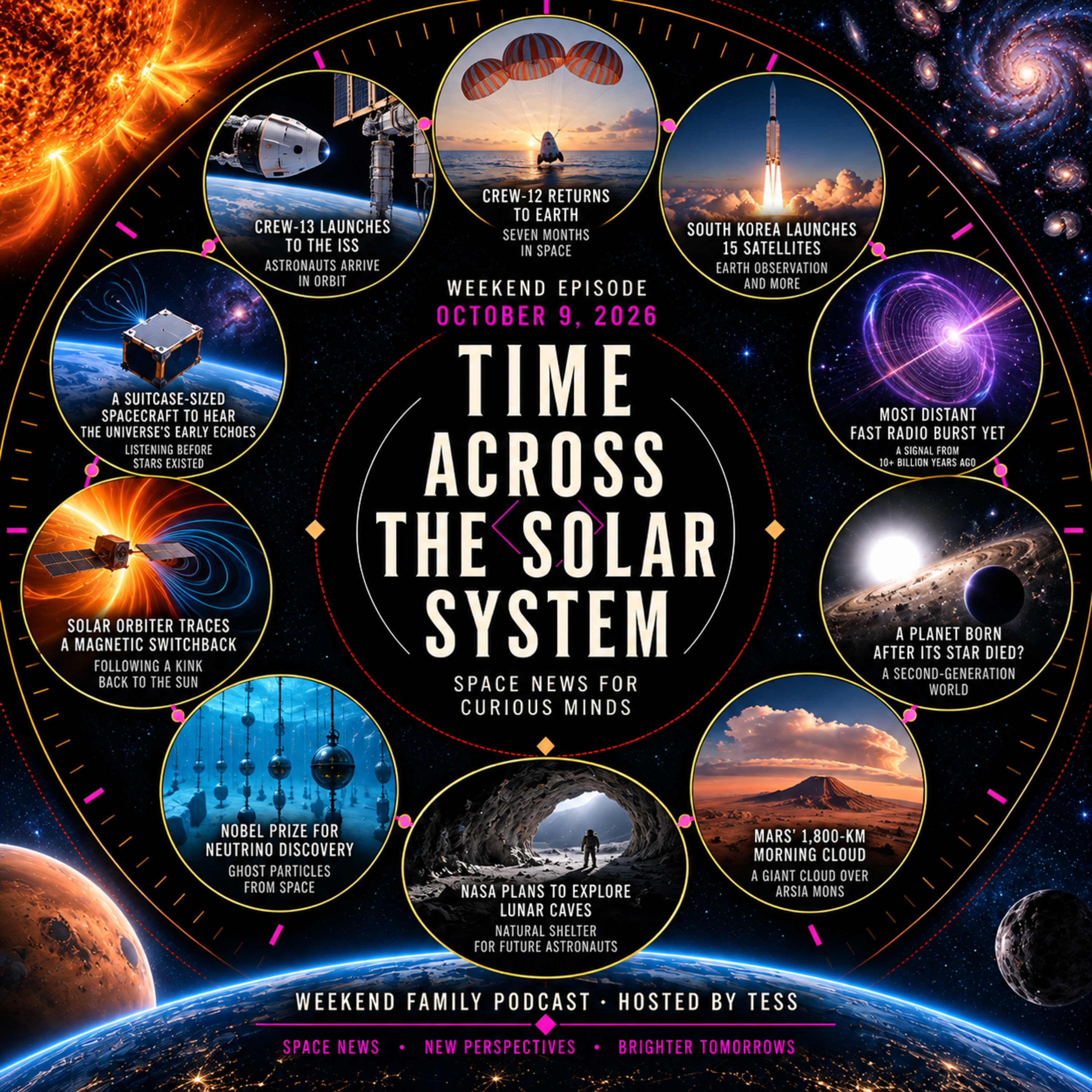
Crew-13, a 10-Billion-Year Radio Burst & a Planet Born After Its Star Died
Crew-13 has arrived at the International Space Station, Crew-12 is back on Earth, and astronomers have traced a fast radio burst whose signal travelled for more than ten billion years before reaching us.This week on Time Across the Solar System, Tess explores ten stories showing that nothing in space runs on just one clock.We follow Crew-13’s rapid journey to the ISS, Crew-12’s return after seven
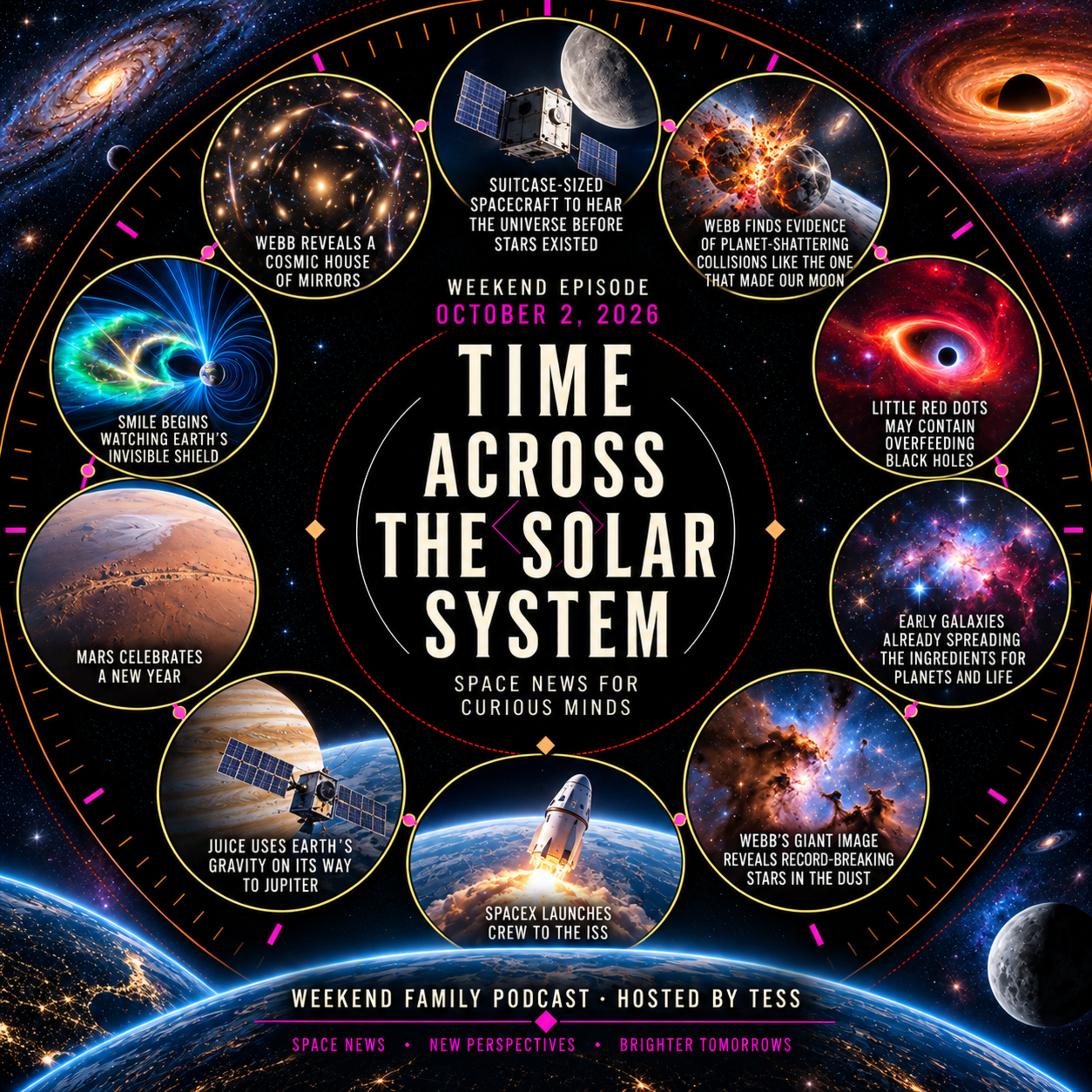
Before the First Stars, Webb’s Cosmic Mirrors & Planet-Shattering Collisions
Could a suitcase-sized spacecraft listen to the universe before the first stars existed?This week on Time Across the Solar System, Tess explores ten stories about one of astronomy’s most extraordinary rules: the farther into space we look, the further back in time we see.We meet CosmoCube, a small spacecraft designed to hide behind the Moon and listen for ancient hydrogen from the cosmic dark ages
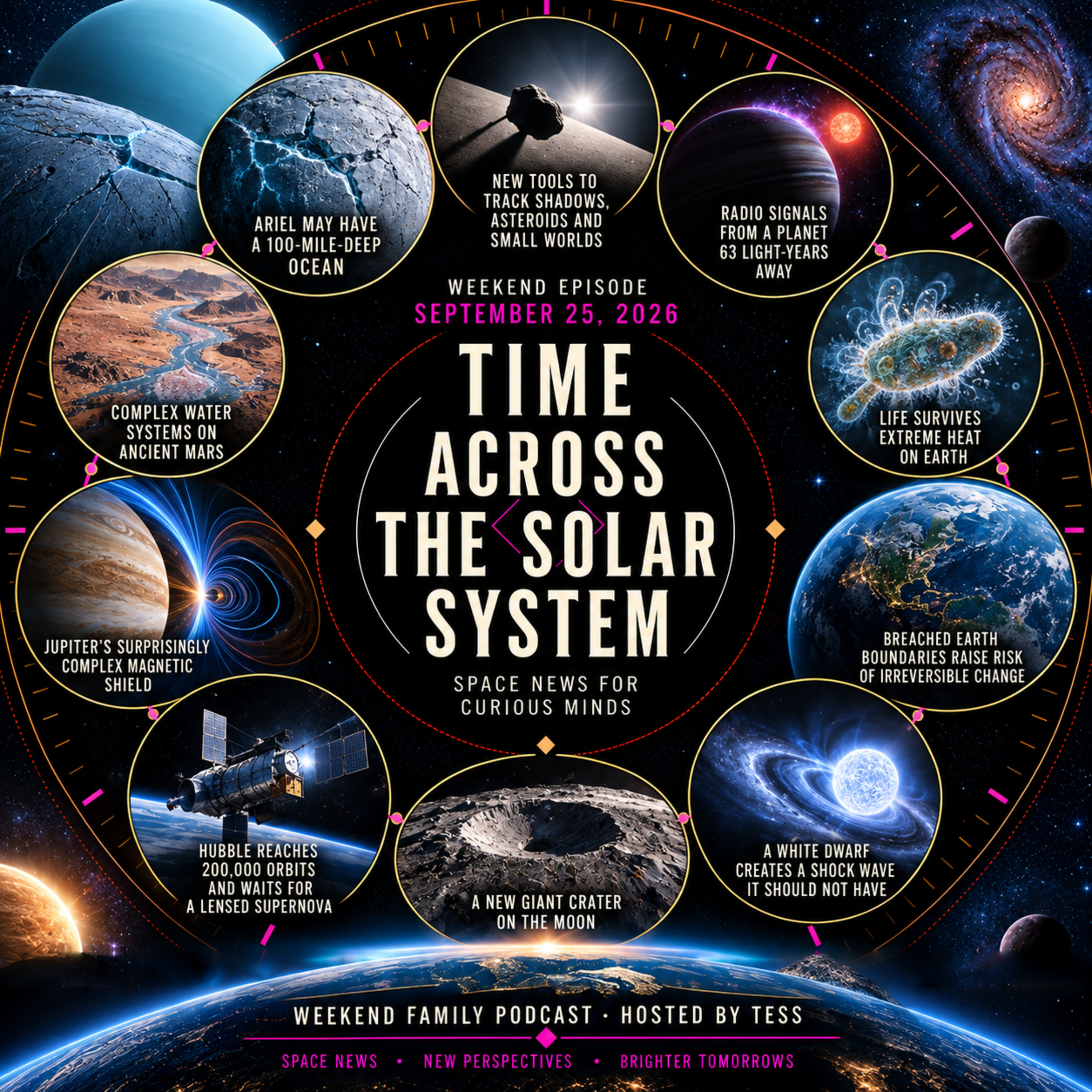
A 100-Mile Ocean on Ariel? Radio Bursts from Another Planet & Ancient Mars
A moon of Uranus may once have hidden an ocean more than one hundred miles deep. Astronomers have detected radio bursts coming directly from a planet sixty-three light-years away. And NASA is uncovering a much more complicated history of water on ancient Mars.This week on Time Across the Solar System, Tess explores ten stories about something astronomy does remarkably well: discovering things we c
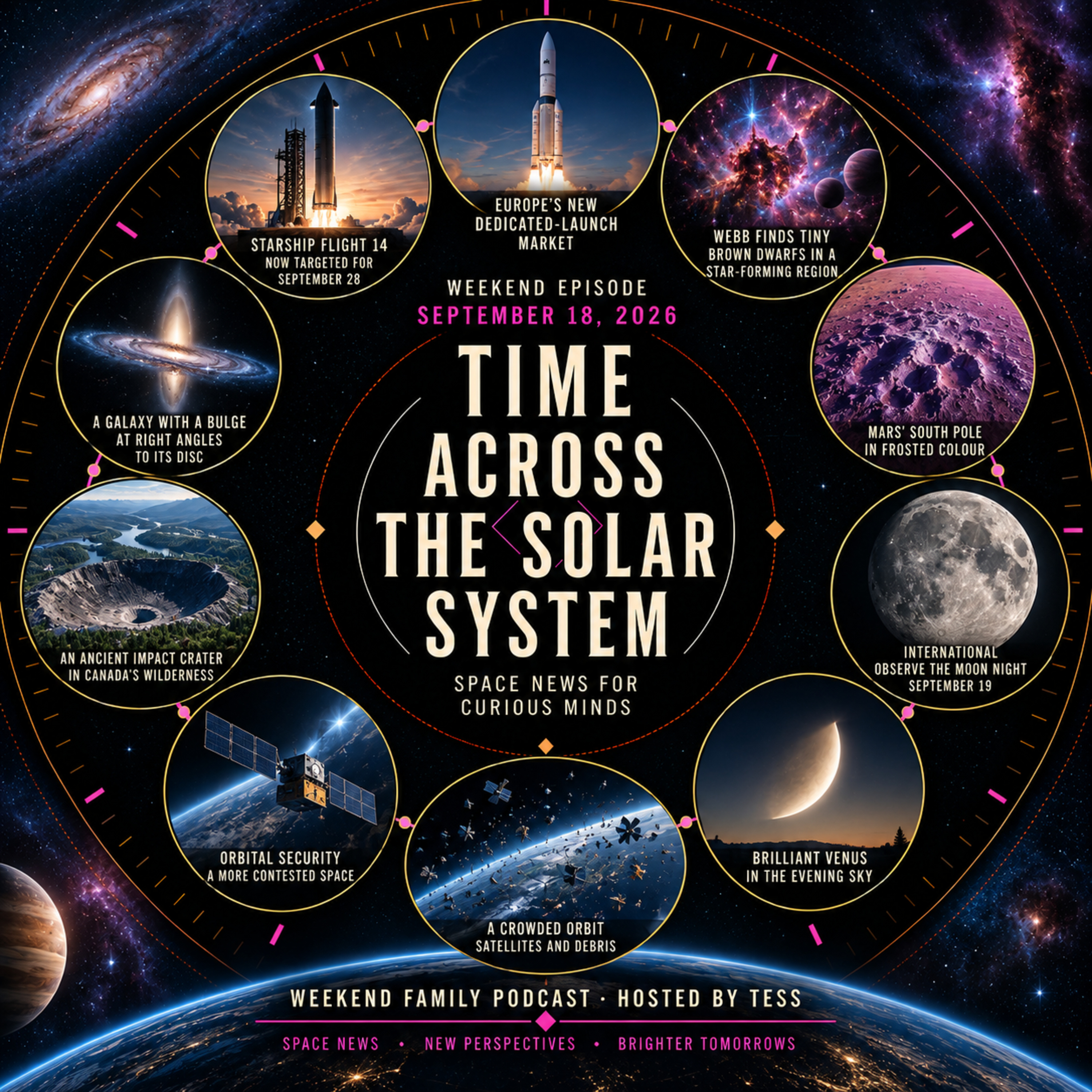
Starship Flight 14, Purple Mars & a Galaxy Spinning Sideways
Starship has a new launch date. Mars has turned purple. And Hubble has found a galaxy whose centre appears to be rotating in a completely different direction from the rest.This week on Time Across the Solar System, Tess explores ten stories showing how space is becoming a place humanity must not only explore, but also schedule, monitor and manage.We look at SpaceX’s next Starship flight, Europe’s
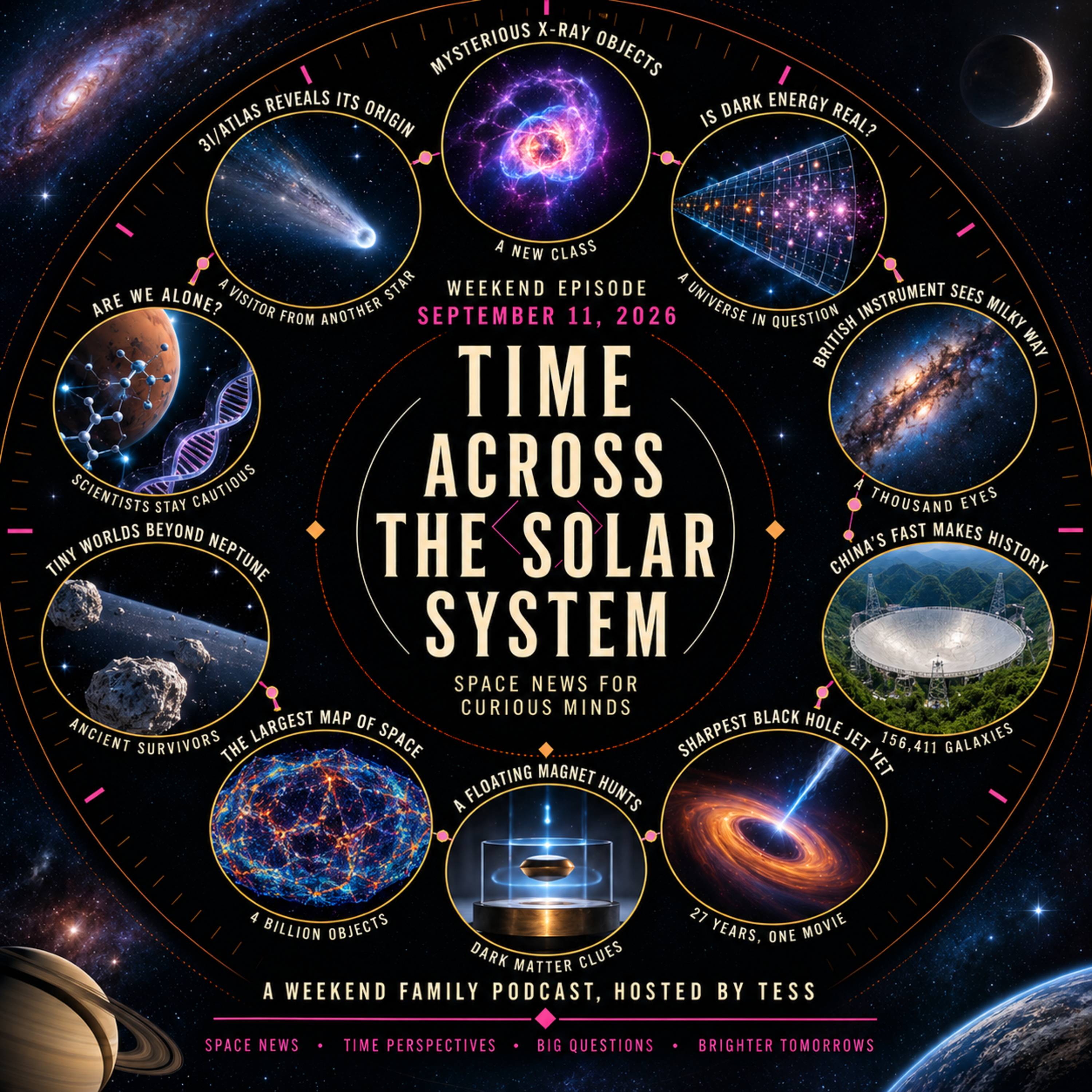
Mysterious X-Ray Objects, 3I/ATLAS & the Dark Energy Question
This week on Time Across the Solar System, Tess explores ten stories about the records the universe leaves behind.Astronomers uncover a mysterious new class of hypersoft X-ray sources hidden in old Chandra data. Interstellar comet 3I/ATLAS offers clues about the star system where it was born. A new analysis questions whether cosmic expansion is really accelerating. The MOONS instrument begins peer
Roman Launches, Saturn’s Decagon & Mars Gets an Internet
This week on Time Across the Solar System, Tess explores ten stories showing why timing matters everywhere in space.The Nancy Grace Roman Space Telescope begins its journey toward L2, NASA selects Blue Origin for a future Mars communications network, and astronomers report a remarkable ten-sided atmospheric structure around Saturn’s south pole.We also follow China’s Tiangong space station across t
Blood Moon Eclipse, Roman Telescope Launch & Artemis Astronaut Honors — Space News for Kids (Aug 28, 2026)
This week on Time Across the Solar System: a 93% partial lunar eclipse turned the Moon copper-red over the UK and Ireland, NASA's Nancy Grace Roman Space Telescope prepares to launch this weekend, and the Artemis II astronauts receive the Congressional Space Medal of Honor for their historic Moon flyby. Plus: Turkey joins the Artemis Accords, NASA studies whether Earth microbes could survive a
Hidden Stars, Black Hole Stars & the Sun’s Final Bow | Space News
The James Webb Space Telescope is rewriting the story of the universe — from its earliest galaxies to the eventual fate of stars like our Sun.This week on Time Across the Solar System, Tess explores six remarkable discoveries across cosmic time: JWST finds unexpectedly large populations of hidden, faint stars in ancient galaxies; the Treasure Chest cluster in the Carina Nebula gets a surprising ne
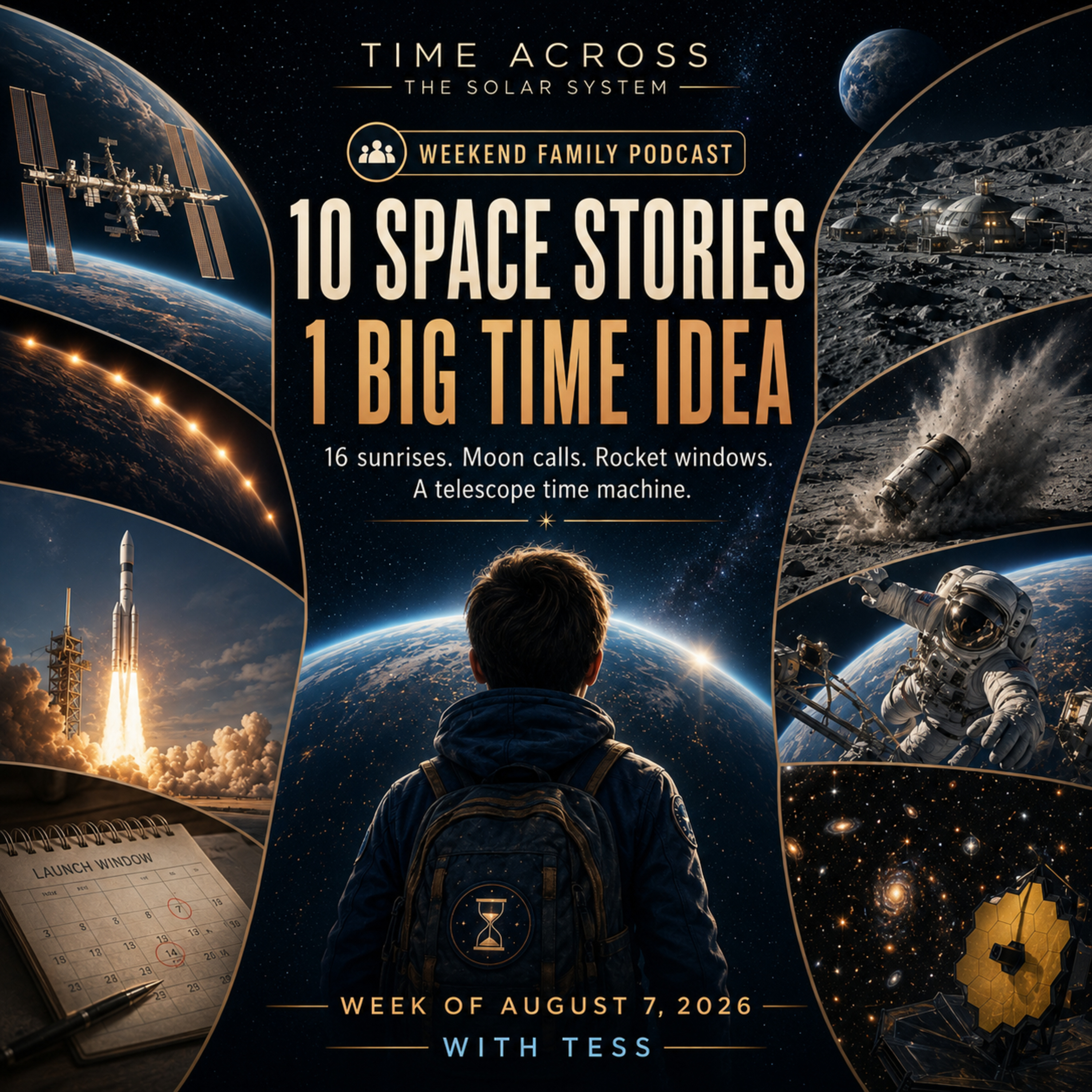
Space News for Kids: Astronauts, a Moon Base & a Photo Billions of Years Old
Space news the whole family can understand! This week Tess rounds up 10 big space stories and asks one fun question about all of them: how does time actually work up there? 🚀We follow 4 astronauts getting ready to fly to the International Space Station, find out why rockets are booked all the way to 2029, visit a future Moon base, ride along on a 6.5-hour spacewalk, and finish with a brand-new tel
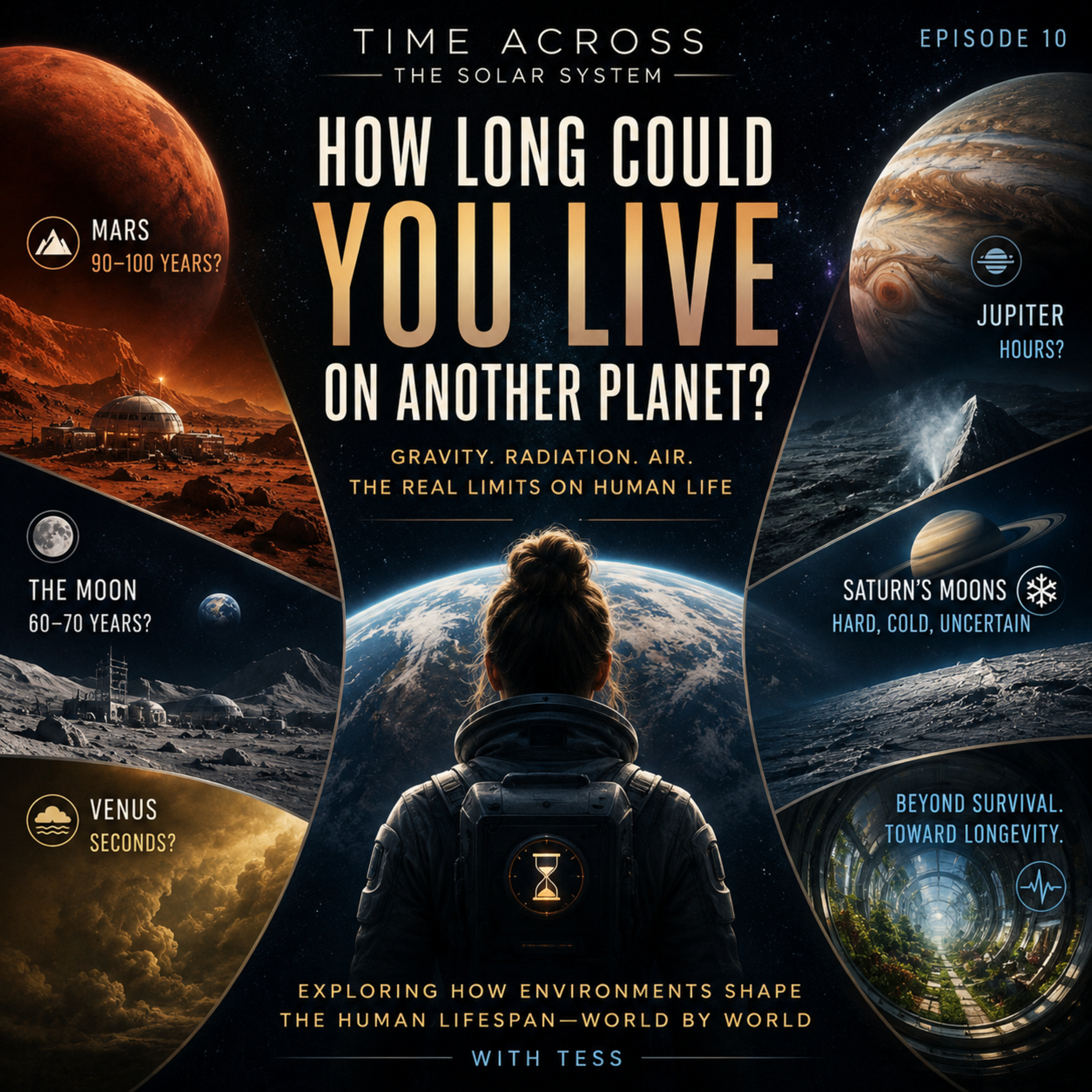
Could You Live Longer on Mars? Human Lifespan Across the Solar System
Would you age slower on Mars, or faster on Jupiter? Tess breaks down how gravity, radiation, and atmosphere on every world would rewrite the human lifespan, planet by planet.Full description:Imagine a hundred-year lifespan on Mars, or one measured in months on Jupiter. In this episode, Tess explores the real biology behind living on other worlds: how Mars's lighter gravity could ease strain on
How Old Am I on Mars? The Origin Story of Time Across the Solar System
Discover how a simple question from an eleven-year-old sparked a global educational movement. Learn about Time Across the Solar System, the interactive platform answering the question millions are searching for: how old am I on Mars? Features real data from two hundred countries, interactive age calculators for every planet and moon, and answers to your solar system questions. Music by Neural Synt
Moons of Madness - Where Time Goes Sideways
What if the Sun rose in the west? On Mars's moon Phobos, it does — and it happens twice a day.In this episode, we journey to the strangest moons in our solar system, where the rules of time get bent, broken, and turned completely sideways.You'll discover:- Phobos — the moon that rises backwards and orbits faster than Mars rotates- Titan — where a single season lasts 7 Earth years and metha
Why Do Astronauts Float in Space? — Zero Gravity Explained
They’re not escaping gravity — they’re riding it.In our first full episode of Time Across the Solar System, we uncover the real reason astronauts appear to float. Discover how orbit works, why the International Space Station is constantly “falling forever,” and what weightlessness truly feels like.This episode connects directly with our mission at tatssp.com — an educational web project making pla
Welcome to Time Across the Solar System: Where Science Meets Wonder
Step into a universe where every world keeps its own clock.In this introduction to Time Across the Solar System, discover the story behind the project — how tatssp.com turns astronomy into wonder, making planetary time personal, visual, and real.Learn why a day on Venus lasts longer than its year, how astronauts float by falling forever, and how time itself changes from planet to planet.Hosted by
Recommended

The Church of What's Happening Now: The New Testament

Busted Open

Deadline: White House

Panda Show - Picante

Crickets Corner

History of the Earthquake and Fire in San Francisco

Fox news

K-Drama Obsessed Mamas | Beyond “Just One More Episode!”

True Crime Classics

The Healer Revolution

Becoming: HER with Nikki Spoelstra

Booked, Blonde & Busy w/ Olivia Ponton
