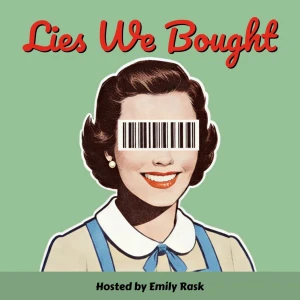
Lies We Bought
Lies We Bought is a podcast hosted by Emily Rask that investigates the false narratives and misconceptions people often accept without question. Each episode dissects a common 'lie' found in culture, business, or politics, and explores why it persists and what the truth really is. The show aims to help listeners think critically about the stories they've been told and make more informed decisions.
Episodes

As Seen on TV: The Infomercial Moved to TikTok Shop
In 1949, a man demonstrating a blender on Cleveland TV got more than 400 phone orders in one day, and As Seen on TV was born.
This episode of Lies We Bought follows the infomercial from that live demo to the Ginsu knife, Billy Mays, the Snuggie, and the FTC cases that finally caught up with the biggest claims. Then we follow the pitch to where it lives now. QVC filed for Chapter 11 bankruptcy in A

Laughter Is the Best Medicine: The Science, the Myth, the Markup
Is laughter really the best medicine? In 1964, Norman Cousins checked out of the hospital, moved into a hotel room with a projector and a stack of Marx Brothers films, and became the man who laughed himself well. His story is still repeated everywhere, minus one detail that was in the room the whole time.
In this episode, I follow the phrase from a biblical proverb about grief to a medieval surgeo

The Five Love Languages: The Dark Side of Love Advice
The Five Love Languages has sold millions of copies and shows up everywhere from first dates to therapists' offices, yet Gary Chapman built the framework from his own notes as a Baptist pastor counseling couples. This episode traces how the book became relationship gospel and what Focus on the Family has said about it.
It also looks at why critics warn that treating a struggling relationship as a

Smokey Bear: The Wartime Ad That Became a Government Icon
Smokey Bear has been telling America it's your fault since 1944. This episode traces the real story behind the mascot: a wartime scare on the California coast, an ad campaign built to control public behavior, and a real orphaned bear cub who nearly didn't survive the fire that gave him his name.
We dig into the Disney licensing deal for Bambi that almost didn't happen, the FDNY captain whose nickn

Made in USA: Only 11% of What You Buy Actually Is
The "Made in USA" label feels like a promise. Legally, it's a lot looser than you think, and the amount of stuff that can actually earn it has been shrinking for decades. This episode traces the label from an 1887 British shame tactic to a company that invented its own percentage, to Walmart's founder writing a memoir called "Made in America" while his own company helped build the overseas supply

Extended Warranty: The Fine Print Industry Built on Fear
Extended warranties aren't insurance. Legally, they can't even use the word. They're "service contracts," a separate category with none of the payout rules that protect you when real insurance is on the line, and that one distinction explains almost the entire industry.
This episode traces how a fringe product from the 1950s turned into the reason a TV or a refrigerator costs the same everywhere y

Guess What Day Is It?: The Line That Took Over Wednesdays
Every Wednesday, GEICO's camel asks what day it is. The original ad that made that question famous racked up more than 16 million views on YouTube and then disappeared, with no explanation ever given.
This episode debunks the corporate mythology built up around hump day, including a water-cooler legend at DuPont that's been misdated for years, and traces the phrase back through a 1959 dictionary c

Social Comparison: The Joneses Were Never Real
The phrase "keeping up with the Joneses" comes from a 1913 comic strip drawn by a cartoonist who nearly went broke trying to match his wealthy neighbors and the Joneses themselves never once appeared in it.
This episode covers where the phrase came from, how mid-century advertisers like Chevrolet used it directly in ad copy, how the same mechanism scaled into influencer marketing and social media,

The Salt Conspiracy: From Ancient Currency to the Himalayan Pink Marketing Trap
Morton Salt's slogan started as a promise about clumping, not a warning about bad luck, and somehow it became both.
This episode traces salt from ancient currency and empire-building to the umbrella girl on your kitchen shelf, then follows the same trick a hundred years forward into the pink Himalayan salt aisle.
📱 Follow along on:
Patreon: https://www.patreon.com/LiesWeBought/
Instagram: https:/

Expiration Dates: The Corporate Strategy Forcing You to Waste Money
Most of the dates on your food aren't required by any law and weren't checked by anyone. This episode follows the story from a persistent Al Capone myth about spoiled milk, through the shoppers who cracked grocery stores' secret shelf codes in the 1970s, to the one government study that found the whole dating system doesn't reliably measure freshness at all. Plus the single food category where an

An Apple a Day: How a Dying Industry Invented a Health Myth
An apple a day keeps the doctor away sounds like grandmother's wisdom, but it was a 1904 marketing rescue plan for an industry that had just lost its actual product: booze.
Lies We Bought traces the apple from Prohibition-era cider crop to manufactured health symbol, tests the slogan against the 2015 study that actually measured it, and asks why we needed a doctor's approval to eat fruit in the fi

War on Drugs: The Famous TV Ad That Lied to America
The fried-egg ad that defined the War on Drugs was built by a marketing firm, not a doctor, and the science behind it was thinner than the slogan.
Lies We Bought traces how a single 1987 commercial turned drug fear into federal policy, who kept the budget flowing for a decade, and why the campaign worked long after the data stopped backing it up. It's a story about advertising as propaganda, and a

Maxwell House: The Presidential Endorsement That Was Total Fiction
I grew up Mormon, which meant coffee was never allowed in my house, so it's a little ironic that this week's coffee myth isn't really about coffee at all, it's about five words Theodore Roosevelt almost certainly never said. By the 1930s, Maxwell House was telling everyone that Roosevelt coined "good to the last drop" over a cup of coffee at Nashville's Hermitage Hotel in 1907. There was just one

The Fake Chocolate Scandal: Hershey's, M&M's, and More
Advertising lies, branding history, marketing deception: Lies We Bought is a weekly deep dive into the hidden origins of the slogans and campaigns that shaped what you buy. This week, the chocolate industry. "Melts in your mouth, not in your hand" traces back to a WWII battlefield discovery and a secret deal that made M&M's and Hershey's family from day one.
Then, the current cocoa crisis, the

The Customer Is Always Right: Ex-Bartender Confession
"The customer is always right" wasn't a rule, it was consumer deception dressed up as a promise. In this episode, I go back to 1905 and the two department store men who invented the phrase to get you through their doors, then trace how it slowly stopped being a marketing promise and became something customers use against the workers who once benefited from it. Along the way: a call center study on

Cash for Clunkers: How America Paid to Crush 700,000 Cars
In the summer of 2009, the federal government paid Americans to destroy nearly 700,000 working cars, and the four-word slogan that sold it did more work than the three billion dollars behind it. Cash for Clunkers promised to save the auto industry, clean up the environment, and put money back in people's pockets all at once.
In this episode I trace where the name actually came from, how dealers we

Pizza Hut's Book It!: The Genius Marketing Trap Behind Childhood Reading
For forty years, Pizza Hut's Book It program gave kids a free personal pan pizza for reading. More than seventy million children went through it. This is the story of what that pizza was actually buying.
I trace Book It! from the 1984 education panic that opened the door, through the loss-leader economics that made giving away pizza profitable, to the developmental psychology that explains why a b

Listerine: How the "Always a Bridesmaid" Ad Invented a Fake Disease
Always a bridesmaid, never a bride. The phrase sounds like it has been around forever, but it traces back to a 1925 Listerine ad built around a fictional woman named Edna and a manufactured condition called halitosis. This week I follow the phrase back to its real origin, a 1917 British music hall comedy song, and then into the hands of Gerard Lambert, the mouthwash heir who found an obscure word

Seatbelt Laws: The Hidden Financial Motives Behind Car Safety
In 1993, North Carolina wrote four words on a sign and accidentally handed the federal government one of its most effective behavioral control tools in history. "Click It or Ticket" didn't try to convince you seatbelts were a good idea. It just changed the math.
In this episode, we follow the full story: the 1959 invention of the three-point seatbelt by Volvo engineer Nils Bohlin, the patent Volvo

"Beef. It’s What’s For Dinner": The Slogan That Sparked a Federal Lawsuit
You've had that slogan in your head for thirty years. "Beef. It's What's For Dinner." Someone built it. Someone paid for it. And the story of who, and why, is way stranger than the commercials ever let on.
In Episode 17, Emily traces how a mandatory dollar-per-head tax on every cattle sale in America built one of the most psychologically sophisticated ad campaigns in history, why small ranchers we

Vitamins & Supplements: Why They Don’t Need FDA Approval
People take supplements for energy, immunity, or because someone on TikTok said magnesium changed their life. The U.S. supplement industry is worth billions, yet many products reach store shelves without ever proving they actually work.
This episode of Lies We Bought explores the legal loopholes that reshaped supplement regulation, and how marketing turned everyday pills into expensive wellness ri

Firefighter Gear & Lululemon: The Same Poison Hiding in Our Clothes
PFAS, or "forever chemicals," have been hiding in plain sight for 80 years: in nonstick pans, fast food wrappers, stain-resistant furniture, and the turnout gear worn by first responders. Now they're under investigation in Lululemon clothing, and new research shows they may be slowing firefighters' cognitive function in real time.
Host Emily Rask takes this one personally. Her husband Travis is a

Wheaties: How Sports Marketing Invented a Healthy Illusion
For nearly a century, Wheaties convinced America that greatness could start with a bowl of cereal.
This week on Lies We Bought, I open the cereal box on how “The Breakfast of Champions” became one of the most successful identity-marketing campaigns created. From accidental kitchen discoveries and failing sales to celebrity athletes, psychological conditioning, and the rise of sports endorsements,

Controversy Sells | One-Minute What
P.T. Barnum knew people would pay to see something questionable before they would ignore it completely.
This One Minute What breaks down how controversy, curiosity, and the sunk cost fallacy work together to pull you in, and why once you have paid attention, your brain starts looking for ways to justify it.
Because they do not need you to like it. They just need you to look.

Nike's "Just Do It": The Dark Serial Killer Origin of a Global Slogan
In 1977, a man faced a firing squad in a Utah state prison and said three words. A decade later, an ad man changed one of them and handed them to the entire world.
In this episode I trace the full origin of the "Just Do It" campaign, from Phil Knight selling shoes out of a car trunk to the moment Dan Wieden pitched a line Knight famously called unnecessary. The emotional branding playbook, the Jor

THe Ogilvy Halo Effect | One-Minute What
David Ogilvy famously said, “The consumer is not a moron, she is your wife,” and that belief shaped how modern advertising earns trust and attention.
This One Minute What breaks down the halo effect and how brands use subtle signals like style, tone, and positioning to create a high class perception that makes people feel comfortable paying more.
Because once something looks premium, your brain st

Low-Fat Conspiracy: The 1994 Food Industry Scam That Made America Sick
Somewhere along the way, we decided fat was the problem, and built an entire way of eating around that idea.
This episode breaks down how that belief took hold, from early nutrition research to government policy to the food industry quietly reshaping what ended up on store shelves.
Because what looked like a simple health shift turned into something much bigger, and a lot more profitable, than any

Listerine, Halitosis, & The Fake Health Crisis | One-Minute What
Your "morning routine" isn't a health choice - it's a series of manufactured solutions.
In this episode of One-Minute What, we’re exposing Albert Lasker, the "Father of Modern Advertising" who realized that the easiest way to sell a product is to invent a problem first.Lasker didn't just meet consumer demand; he created shame. From turning floor cleaner into a cure for "Halitosis" to forcing orang

"Bigger is Better": The Secret History of the Corporate Supersize Strategy
You didn't want the Large fries.
In this episode of Lies We Bought, we unpack the "Bigger is Better" business model. We explore the psychological traps that make "more" feel like the only rational choice, from fast food menus to the SUV loophole.
Inside this episode:
The Origin of "Large": How David Wallerstein invented the large fry to boost margins.
The Decoy Effect: Why pricing tiers are desig

Rockefeller’s Dimes & The Death of Truth | One-Minute What
"Good" companies don't exist - only very good storytellers do.
In this episode of One-Minute What, we’re peeling back the curtain on the man who invented the modern "corporate soul" - Ivy Lee.
Before Lee, if a monopoly did something wrong, they hid. Lee taught them to do the opposite: flood the zone. By exploiting what psychologists call the "Availability Cascade," Lee proved that if you repeat a

Got Milk?: The Government Deprivation Strategy and the Great Cheese Caves
It’s 1993. You’re one trivia question away from $10,000, but your mouth is full of peanut butter and the milk carton is empty. Welcome to Lies We Bought. Today, Emily unpacks the "Got Milk?" campaign—the marketing "miracle" that saved a dying industry. But the story doesn't start with celebrities and white mustaches. It starts with "swill milk," wartime price supports, and a government that accide

McDonald’s CEO vs. Burger King CEO | One-Minute What
Can a single bite of a burger start a corporate war?
In this episode of One-Minute What, we’re breaking down the PR disaster currently taking over social media.
It all started when McDonald’s CEO Chris Kempczinski posted a video trying the new Big Arch Burger. Instead of a mouth-watering review, fans were left watching a "tentative, fearful bite" and cringing as he repeatedly referred to the food

Anti-Aging Culture: Why the Beauty Industry Wants Us Terrified of Growing Old
Why does aging feel loaded now when it didn’t used to?
In this episode of Lies We Bought, we trace how the beauty industry transformed getting older into something women were taught to manage, monitor, and correct. From early skincare diagnosis and salon culture to Botox, preventative treatments, and modern “longevity” language, this episode explores how fear became one of the most profitable tool

Cultural Brainworms | One-Minute What
Some ideas don’t spread because they’re true.
They spread because they’re repeated.
This One-Minute What looks at cultural brainworms and why they’re not accidental. How simple ideas, repeated often enough, start to feel like facts. Not because they’re proven, but because they’re familiar.
Brands don’t need to convince you. They just need to remind you. Again and again. Until belief feels obvious.

Astrology Marketing: How Brands Weaponize Your Zodiac Sign
Ever notice how “Mercury in Retrograde” is the only astronomical event that makes everyone panic?
Before you decide you’re just “off” today, this episode looks at how astrology became one of the most effective belief systems in modern marketing.
We trace astrology back more than 4,000 years to Babylonia, where tracking the stars wasn’t about personality traits or compatibility. It was a high-stake

Work-Life Balance | One-Minute What
Work-life balance isn’t a personal failure. It’s a system problem.
In this One-Minute What, we’re unpacking why burnout isn’t caused by bad boundaries, poor time management, or not trying hard enough. Research shows burnout comes from chronic workload, lack of control, unclear expectations, and workplace stress, not individual weakness.
So how did work-life balance become your responsibility inste

De Beers Diamonds: How a Marketing Monopoly Forced Us into Marriage Debt
Diamonds feel ancient. Inevitable. Like they’ve always been part of love.
They haven’t.
In this episode of Lies We Bought, we dig into the marketing history behind diamonds and how one of the most successful advertising campaigns of all time turned a plentiful gemstone into a symbol of forever.
We explore how De Beers controlled supply, reshaped social expectations, and tied diamonds to love, sacr

Rethinking “Treat Yourself” | One-Minute What
Does “treat yourself” actually work?
I love a good treat. Truly. But some fascinating research made me pause.
Studies show that while buying yourself something feels good in the moment, acts of kindness toward others tend to create deeper, longer-lasting happiness. Helping someone else does more for our well-being than another self-focused reward.
Marketing noticed this gap. For years, self-care h

Organic Food Cults: The Deceptive Marketing Behind Clean Eating
At some point, food quietly stopped being food.
A label on the package. A higher price. A feeling that one choice says something better about you than the other.
In this episode, I unpack how organic food became a moral signal rather than just a farming method. What started as early 20th-century fears around chemicals and industrialization evolved into a multi-billion-dollar industry built on puri
Is Multitasking a Scam? | One-Minute What
Welcome to my new bonus series, One-Minute What?
Where I talk about something for one minute that makes you stop and go… what?
Is multitasking actually productive, or does it just feel that way?
Multitasking didn’t become popular because it works. It became popular because it sounds productive. It fits perfectly into hustle culture. Do more. Faster. At the same time.
The problem is, multitasking

10,000 Steps: The Fake Pedometer Rule That Tricked the World
At some point, a daily walk quietly turned into a performance review.
A buzz on your wrist. A glowing ring. A number that decides whether today “counts.”
This episode unpacks how ten thousand steps became the world’s most accepted fitness goal, despite never being rooted in science. What began as a 1960s marketing idea evolved into a global wellness rule that now lives on smartwatches, corporate c

"Live Laugh Love": Inside the Subversive History of the Suburban Decor Trap
If you’re a millennial woman, you might want to sit down for this one.
This episode explores how “Live Laugh Love” became one of the most successful pieces of modern décor, not because it was profound, but because it was comforting.
What began as a reflective early-1900s essay quietly transformed into a cultural shorthand for optimism, warmth, and emotional safety, and eventually into a multibilli

Color Psychology: How Big Retail Uses Red Flags to Control Your Wallet
Do you know why certain colors make you feel calm, hungry, energized, or oddly loyal to a brand you have never questioned?
This episode explores how color became one of the most powerful psychological tools in marketing, shaping reactions long before we realize we are reacting at all.
Red creates urgency. Blue signals trust. Green implies health. Black and white suggest power and restraint. None o

Water Bottles & Hydration: How Big Beverage Sold Us a Lifestyle
How did drinking water become a moral achievement?
Hydration used to be a biological need. Somewhere along the way, it became a wellness routine, a personality trait, and a daily metric to prove you are doing life correctly.
This episode explores how water went from necessity to lifestyle. From the eight-glasses-a-day rule and wartime nutrition guidance, to bottled water brands selling purity, per

Breakfast Myths: How Corporate Ad Campaigns Built a Billion-Dollar Belief
“Breakfast is the most important meal of the day.”
That belief didn’t come from nutrition science. It came from marketing.
This episode explores how breakfast became a moral obligation, something we were taught we should eat to be a good, healthy person. Cereal companies, early wellness movements, and strategic public relations turned a meal into a cultural belief worth billions.
We start in the l

Trailer: The Marketing Myths and Corporate Lies That Shaped Us
They sold it. We bought it. Now we’re unpacking it.
“Breakfast is the most important meal of the day.”“Live. Laugh. Love.”“Ten thousand steps.”“Diamonds are forever.”
We grew up believing these lines were truth, but they were marketing.
Lies We Bought is a narrative storytelling and cultural analysis podcast that explores how billion-dollar campaigns, catchy slogans, and pop culture myths shaped t
Recommended

The Human-Animal Connection - Pet Life Radio Original

Infinite Health with Dr. Arasi Maran
The Daily
World News Tonight with David Muir
The Joe Rogan Experience

English Vocabulary Help
TED Talks Daily

Learn English B1 with Daily News | English Listening Practice

Talk About Talk - Executive & Leadership Communication Skills
English with Olivia | Slow Conversations & Vocabulary
Stand In The Circle
SLOW ENGLISH PODCAST (A1-A2) With Subtitles | Daily Videos | English With Us Podcast
