
The Hidden Economics of Remarkable Women (HERO)
A Foreign Policy series about women creating change through economic empowerment, hosted by Reena Ninan. This season focuses on girls, exploring the real economics of girlhood, hidden costs, and how girls could shake up the global economy. Episodes visit girls preventing child marriages in India, advocates who helped legalize abortion in Benin, LGBTQ+ activists in Kenya, and education innovators. It is a Foreign Policy production funded in part by the Bill & Melinda Gates Foundation.
Episodes

Building Economies That Keep Women Safe
At Foreign Policy’s Her Power summit, which took place during the UN General Assembly in New York, host Reena Ninan moderated two live conversations about how to build economies that keep women safe. The first is with Abigail Erikson, Chief of the UN Trust Fund to End Violence Against Women and Girls, and Dr. Valeria Esquivel, Senior Employment Policies and Gender Specialist at the International L

Online Gender-Based Violence
Nearly 60 percent of women and girls have experienced online gender-based violence. It’s a difficult problem to address because it involves governmental policy as well as private companies. How can tech platforms become accountable not only to this abuse, but also, for creating safer digital spaces?
In our final episode of this season, we learn about how technology is facilitating gender-ba

Unlikely Allies
In the fight to end gender-based violence, there’s a stark fact that’s hard to shy away from. Put simply, the majority of GBV perpetrators are men and boys, accounting for more than 90% in most estimates.
On today’s episode, we hear from a variety of perspectives about how to work with men and boys to end GBV. Host Reena Ninan speaks with Gary Barker, Founder, CEO, and President of Equimund
How to Prevent Gender-Based Violence
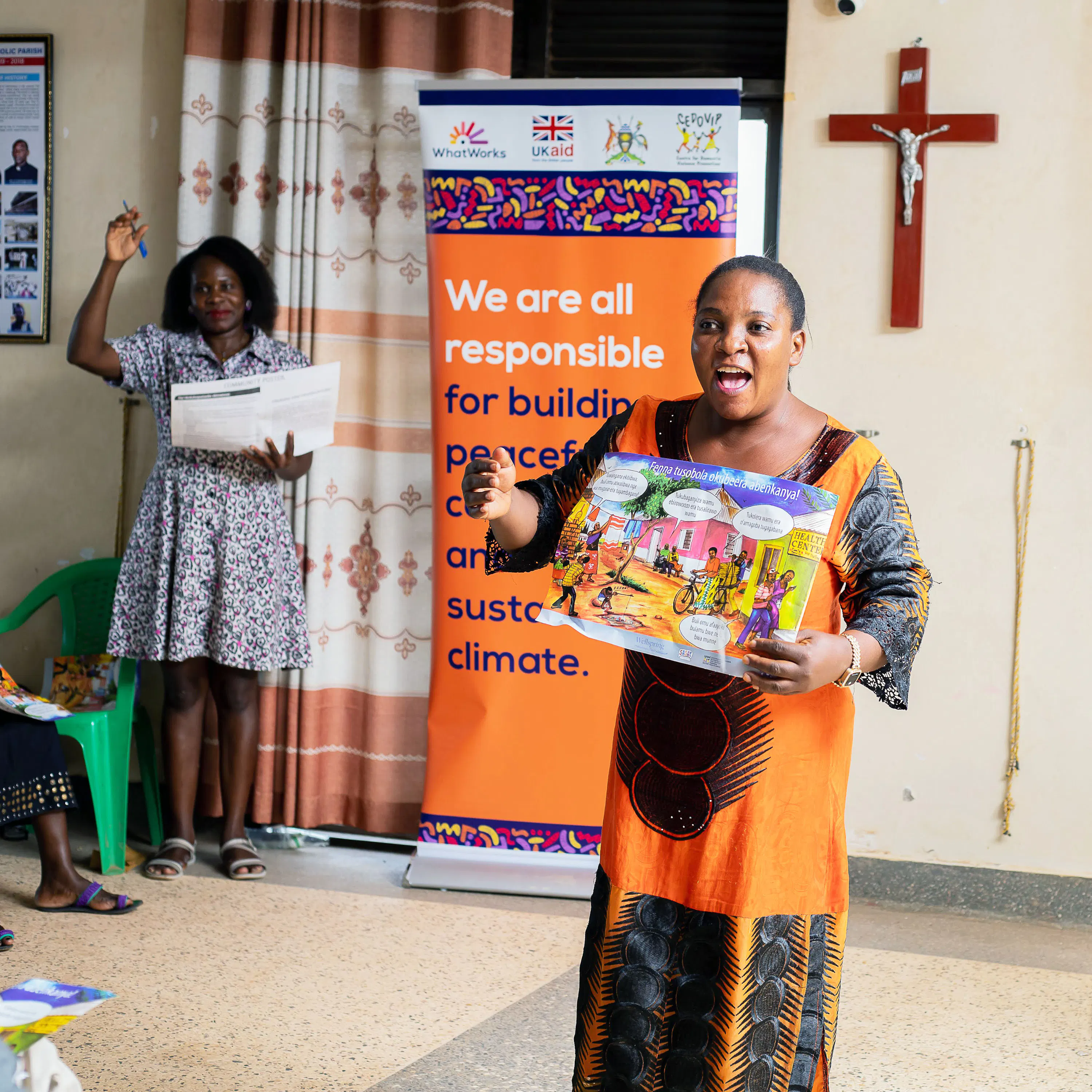
What works to prevent gender-based violence from occurring in the first place? In this episode, reporter Leah Kahunde Ndung’u profiles a leading community-based prevention model called SASA! from the nonprofit Raising Voices in Kampala, Uganda. She also examines the Ugandan government’s newly launched national policy to prevent gender-based violence.
Then, host Reena Ninan speaks with Avni Amin f

The Economics of Safety
In the media, gender-based violence is often considered a sexism or cultural problem. But what if it were viewed as an economic issue?
In the newest season of the Hidden Economics of Remarkable Women, we talk to thought leaders around the world about what works to reduce gender-based violence.
GBV not only affects nearly 1 in 3 women in their lifetime; It is also a huge drain on the
Coming Soon: What Could End Gender-Based Violence?
Gender-based violence affects nearly 1 in 3 women in their lifetime.
Beyond the trauma it causes, it is also a huge drain on the economy. UN Women estimates that GBV costs countries about $1.5 trillion per year, or approximately 2% of global GDP.
But greater financial security and autonomy can help protect women from violence.
In season 10 of the Hidden Economics of Remarkable
The Amazon and the Supply Chain
The Amazon is the world's biggest tropical rainforest,
spanning across nine countries in South America. It is a major source of biodiversity and plant life, containing around one tenth of the world’s known species and over a billion acres of dense forest.
But for decades now, this vital resource has been under threat. Nearly 20 percent of the Amazon forest has been lost or degraded. This is larg

Lake Uru Uru and the Potential of Nature-Based Solutions
Nature-based solutions decrease the effects of climate change by using nature to help nature. Mangrove forests helping to preserve shorelines or planting cover crops to rejuvenate the soil are strong examples. According to research from the Nature Conservancy, nature-based solutions can provide up to 37 percent of the carbon emissions reductions needed by 2030.
In this episode of the Hidden Econ

Lion Queens
When people discuss environmental solutions, they often mention its impact on our lives. This can include ensuring parts of the planet remain inhabitable in the face of extreme temperatures, maintaining biodiversity, and preventing the oxidation of our oceans. But there’s another case to be made: Investing in our planet makes sense economically.
Conservation can deliver high returns on investmen

The Future of the Climate Movement
We begin our newest season, all about women on the frontlines of the climate crisis, with Christiana Figueres. She served as the executive secretary of the UN Framework Convention on Climate Change. In 2015, Figueres led the process that secured the historic Paris Agreement on Climate Change, where 195 nations agreed to limit future global warming.
Currently, Christiana Figueres leads a nonprofi

Coming Soon: Season 9
In a special four-part series, we talk to women on the front lines of the climate crisis, including the Paris climate agreement’s chief negotiator, land and wildlife conservationists, and regenerative agriculture experts. The Hidden Economics of Remarkable Women is a podcast from Foreign Policy, supported this season by Daughters for Earth.
Learn more about your ad choices. Visit megaphone.fm/adch

You Might Like: Face-Off: The U.S. vs China
This week, we’re bringing you an episode from the award-winning podcast Face-Off: The U.S. vs China.
China’s leader, Mao Zedong famously said that “Women hold up half the sky.” But these days it doesn’t feel that way in China. Unfair marriage rules, difficulties getting a divorce, barriers to owning property and many more restrictions are challenging women to speak out, and act. On this episode,

FP’s Newest Podcast, The Threshold
The Threshold is a new seven-part series from Foreign Policy about the fight to end infectious diseases around the world. In this episode, the team investigates what it will take to end the HIV/AIDS epidemic – including Lenacapavir, a new twice-yearly HIV prevention shot. Similar to HERO, The Threshold is made possible in part through funding from the Gates Foundation. If you like this episode, fo
The Path Forward for Family Planning
Let’s face it: It’s been a challenging year for family planning and reproductive rights more broadly. What can we do from here?
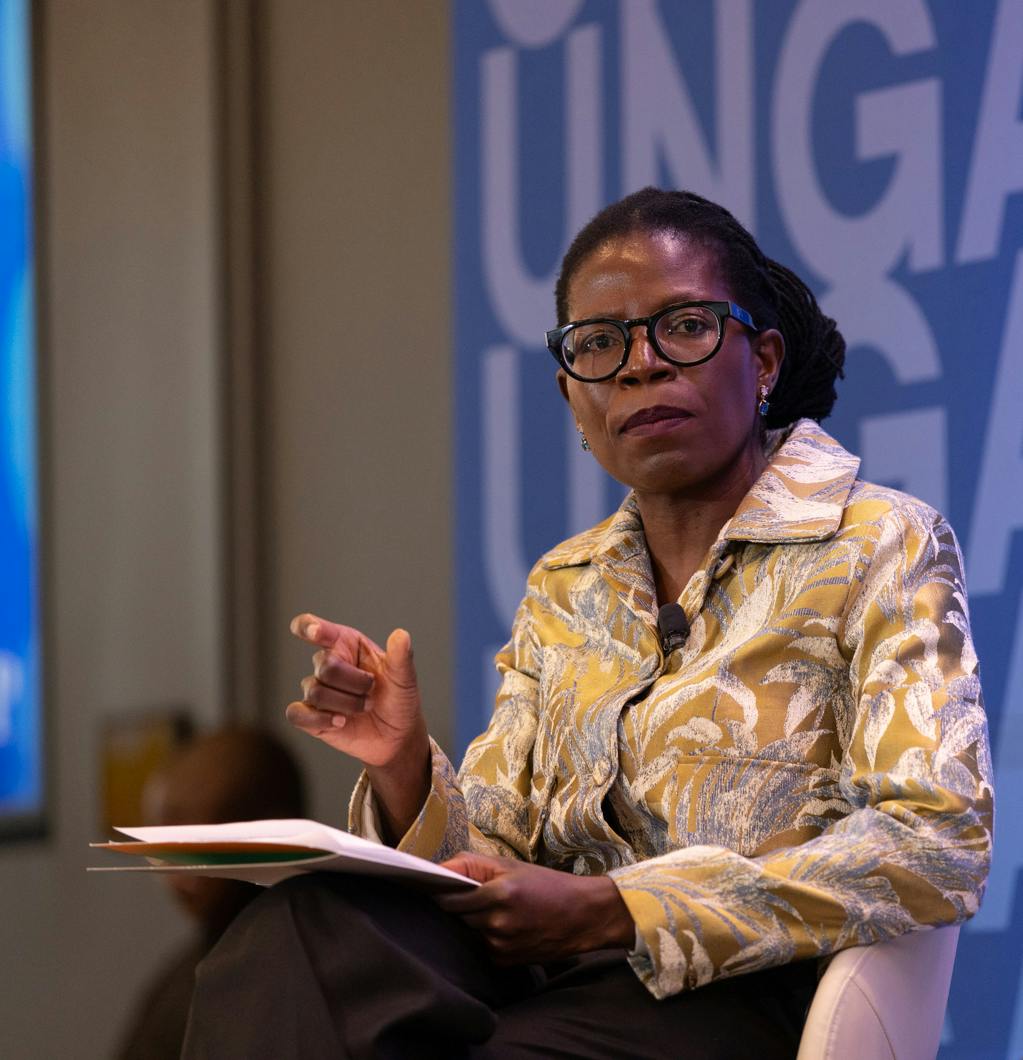
We were eager to catch up with family planning leaders at Foreign Policy’s Her Power Summit, which took place on the sidelines of the UN General Assembly. In a live panel discussion, host Reena Ninan spoke with Dr. Samukeliso Dube, Executive Director of FP2030 and a ret

The Hidden Economics of Menopause
In this special bonus episode, we explore a topic the show hasn’t covered before: menopause. We delve into what would need to change with healthcare and the workforce to better support women through menopause, as well as the economic factors that could enable those policies.
Host Reena Ninan speaks with Dr. Jessica Shepherd, gynecologist and author of the new book Generation M, Dr. Claus Runge,

You Might Like: What Could Go Right?
This week, we’re bringing you an episode of What Could Go Right from our friends at The Progress Network.
Each Wednesday on What Could Go Right, hosts Zachary Karabell and Emma Varvaloucas converse with diverse experts to have sharp, honest conversations about what’s going on in the world, even during difficult times. In this episode, they dive into the global health crisis that doesn’t get nea

You Might Like: Cramped
This week, we’re sharing another show you might like. Cramped is a podcast created and hosted by Kate Downey, “because having a microphone gets you more answers than having a uterus.”
In this episode, Kate talks to her mom about joining the Boston Women's Health Movement in the 1970s. Why was body literacy such a big part of feminism in the 70s, but when Kate became an active feminist in Boston i

You Might Like: The Most Important Question
While the show is on hiatus, we want to share a few podcasts on the HERO feed that we think you might like. We will release these episodes over the next month.
This first one is from a podcast called The Most Important Question from the Important, Not Important team. When HERO first launched, Important, Not Important featured one of our early episodes. It’s a good show, and we’ve been happy to r
Series Reflections: Reporters’ Roundtable
First, we need to share some news. This may be our last episode.
We are so grateful to the funding we have received for this podcast over the past four years. But our largest grant is ending soon. So for now, we are saying goodbye. We truly hope to be back in your feed someday.
To commemorate HERO, we are doing one last “follow-up” episode. This was an idea from you, our listeners. You suggested
Sabrina Habib Reflects on Kidogo’s Growth
The idea for today’s show came from you: our listeners. Many of you wanted to hear follow-up stories. You suggested talking to past interviewees and seeing what they are doing now. In particular, you were curious if the gender equality issues they were advocating for had advanced or backslid since we first reported on them.
Today, we are coming back to Sabrina Habib, who was on our very first epi
The Impact of USAID Cuts
Health and human services. Nutrition. Job programs. These are just a few of the sectors impacted by the United States Agency for International Development (USAID) cuts in Nigeria—one of the top 10 recipients of U.S. foreign aid. U.S. Secretary of State Marco Rubio recently announced the elimination of 83 percent of USAID programs.
On today’s episode, senior producer Laura Rosbrow-Telem talks to a

Bonus: Advocacy Advice from Preethi Herman
As a special bonus, we're sharing an interview host Reena Ninan recorded with Preethi Herman about how to launch a digital campaign that actually changes policy.
Herman led the Change.org Foundation, supporting 100 million people in campaigns worldwide. Currently, Herman is the CEO and co-founder of the Nguvu Collective, a women-led organization that has impacted more than 200 million lives.
**Not

Disrupting Aid: The Security and Economic Implications
The United States has long been the largest aid donor in the world, accounting for about 40 percent of humanitarian assistance globally last year, according to the United Nations. But that is quickly changing.
Most U.S. foreign aid is currently on hold. Thousands of projects are at risk of elimination. And nearly all staff from the U.S. Agency for International Development are on administrative l
The World Bank’s New Gender Strategy
On today’s episode of the Hidden Economics of Remarkable Women, the final in our season focusing on the World Bank/IMF meetings this fall, we dive deep into the World Bank’s newly launched gender strategy. We will hear from two leaders driving this vision forward, as they explain why the Bank decided to prioritize some new goals.
First, host Reena Ninan speaks with Hana Brixi, Global Director for
How Climate Change Impacts Gender
The number of people exposed to floods globally has surged by nearly 25 percent since 2000, with Africa experiencing the most dramatic increase. Floods this spring were especially brutal in East Africa, killing nearly 530 people and most heavily impacting Kenya.
On today’s episode of the Hidden Economics of Remarkable Women, we analyze the relationship between climate and gender equality. Host Ree
A Crucial Deadline for a Major Development Fund
As global public debt reaches historic highs, one of the key solutions is increasing the amount of funding for “concessional” loans—or ones with very good terms. That is where the World Bank’s International Development Association (IDA) comes in.
According to the World Bank, the IDA is the world’s largest source of development finance for countries most in need. It provides low-income countries wi
What the Debt Crisis in Kenya Reveals About International Lending
Thousands of Kenyans protested against a finance bill in June that would have increased taxes on many everyday items. This was proposed in part to help pay off loans from the International Monetary Fund (IMF) and World Bank, which account for more than 40 percent of the country’s foreign debt. But what is Kenya’s current fiscal climate? And how are these debts impacting gender equality?
On today’s
How Christine Lagarde Fights for Gender Equality
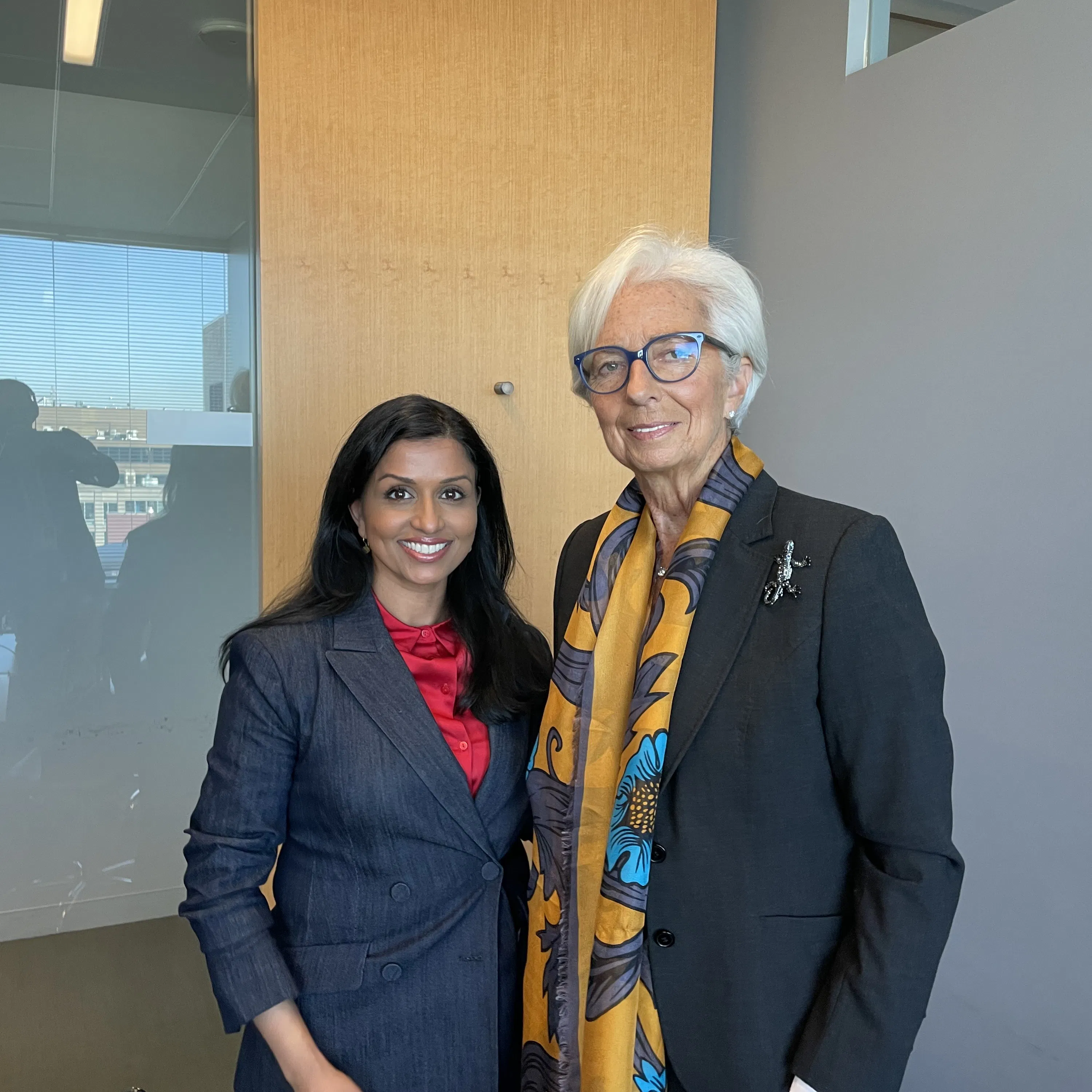
The Hidden Economics of Remarkable Women is back for a very special seventh season. If you’re a longtime listener, you’ll know our show generally focuses on women from the global majority, or the global south. But this time, we wanted to cover the banks and institutions shaping global funding—particularly as the world faces an unprecedented amount of governmental debt.
According to the Internation
Coming Soon: Season 7
With global public debt reaching historic highs, how are multilateral institutions approaching gender equality?
This season, launching November 19th, we talk to some of the biggest financial and development leaders about the long fight to support women and girls at the IMF/World Bank annual meetings.
Host Reena Ninan's interviews include:
Christine Lagarde, President of the European Central Bank
M
Bonus: U.N. Deputy Secretary-General Amina Mohammed & Her Power Summit
We’re ending this season with a special bonus episode recorded live from Foreign Policy’s Her Power Summit, which took place during the spring meetings of the World Bank and International Monetary Fund in Washington, D.C.
First, host Reena Ninan speaks to United Nations Deputy Secretary-General Amina Mohammed. Then you’ll hear a panel discussion on the role of data in advancing gender equality.
Le
When Girl Power Breaks Through
On today’s episode of the Hidden Economics of Remarkable Women, we are closing out our special season on girls with inspiring stories about girl power. First, we go to Peru. Reporter Jimena Ledgard interviews Wendy Sulca, a former child pop star who is finding a new voice as an advocate.
Then, host Reena Ninan speaks with Bogolo Kenewendo about how her childhood shaped her into the political leade
Pressing the Case for Girls' Education
Education is one of the most important enablers of girl power all over the world. And in a lot of ways, girls’ education has improved. The percentage of girls in school is on the rise globally compared to two decades ago. But there are still significant gaps, particularly in areas with high levels of conflict.
On today’s episode of the Hidden Economics of Remarkable Women, host Reena Ninan speaks
Fighting for LGBTQ Rights in Kenya
Homosexuality is illegal in Kenya, as it is in more than half of African countries. But public attitudes have begun to shift. According to Pew Research Center data from 2002, only 1 percent of Kenyan respondents said society should accept homosexuality. As of 2020, 14 percent believed homosexuality should be accepted.
On today’s episode of the Hidden Economics of Remarkable Women, we follow the ke
The Effort to Reduce Child Marriage in India
The battle against child marriage around the world seems to be gaining some traction. According to the latest UNICEF data, about 1 in 5 young women between the ages of 20 and 24 were married as children. This represents a 5 percent decrease from a decade ago.
The negative impact of child marriage is widely documented. Child brides suffer domestic violence more often, drop out of school in greater
How Access to Contraceptives and Safe Abortions Changes Lives and Economies
Family planning is one of the most economically important strategies for women and girls. Access to contraceptives can help women and girls get an education and participate in the workforce. Furthermore, it could reduce maternal deaths by as much as three-quarters, according to the United Nations Population Fund. But nearly 10 percent of women of childbearing age around the world have unmet contra
The Economics of Period Poverty
The Hidden Economics of Remarkable Women is back with an all-new season. This time, all our stories are about something that has been getting a lot of media attention lately: Girls. What do they really need to succeed right now? And how can we work with them to get there?
For this first episode, we focus on an often hidden aspect of girls’ economic lives that has a significant impact: period produ
Coming Soon: The Girls Season
Season 6 of "The Hidden Economics of Remarkable Women" (HER♀️) launches Tuesday, March 12th. This time, we are focusing all our stories on girls. What are the real economics of girlhood? What are the hidden costs? And how could girls actually shake up the global economy? We visit girls preventing child marriages in India, advocates who helped legalize abortion in Benin, LGBTQ+ activists in Kenya,
Can Kenya Keep Its Pledge to End Gender-Based Violence by 2026?
Kenyan president Uhuru Kenyatta pledged to end gender-based violence by 2026, soon before the end of his term in 2022. With two years left before 2026, is Kenya still on track to fulfill the promises made to Kenyan women?
On today’s episode of the Hidden Economics of Remarkable Women, we talk to women’s rights activists who have pressed the Kenyan government to uphold its pledge to end gender-bas
What It Will Take to End Yellow Fever Epidemics
Uganda’s health ministry has launched a campaign to end yellow fever epidemics in the country by 2026. According to the CDC, about 30,000 people die from yellow fever each year, with approximately 90% in Africa. Infants and the elderly are most at risk. So the impact of this disease is more heavily felt by women, who are most often burdened with caregiving.
On today’s episode of the Hidden Econom
What Works in Defeating Workplace Sexual Harassment
The level of press freedom in Kenya media outlets is among the highest in East Africa, according to the most recent World Press Freedom Index. And Reuters’ research claims that trust in the news grew by six percent last year in Kenya, right after an election.
However, there is still much work to be done when it comes to making newsrooms a safe place for Kenyan women. According to a survey from Wom
Pushing for Accountability in Nigeria's Tech Industry
Despite a global downturn for tech, 2022 was a record year for African startup funding. According to data from Partech Partners, Africa tech financing in 2022 was 4.5 times larger than it was four years prior. And Nigeria is one of the continent’s main tech hubs.
However, underneath this success story are less convenient truths – including widespread gender discrimination and financial impropriet
Nigeria's Bid for More Gender Diversity in Politics
Nigeria is increasingly important on the global stage. It is the sixth most populous country and has the biggest economy in Africa. It is also home to one of the world’s largest film industries and is a major oil exporter.
Despite these achievements, gender parity in its political leadership has declined. As of last year’s elections, women make up less than 4 percent of Nigeria’s parliament. Now,
Can Reality TV Get More Women into Political Office?
This season, host Reena Ninan and reporters across Africa will meet courageous women holding leaders accountable in various sectors, including healthcare, startups, and government. Specifically, we are looking at promises made about gender equality – and seeing if they have been delivered. For example, the government of Kenya pledged to end gender-based violence by 2026. And the ministry of health
Coming Soon: Season 5
Season 5 of "The Hidden Economics of Remarkable Women" (HER♀️) launches Tuesday, January 9th. This time, we are looking at promises made about gender equality – and seeing if they have been delivered. For example, the government of Kenya pledged to end gender-based violence by 2026. And the ministry of health in Uganda is trying to eradicate yellow fever. It is ambitious to make these kinds of ple
How Strengthening Women Strengthens Economies
Throughout this season, we’ve looked at how women are pushing back against legal, political, and cultural barriers to better themselves and their communities. And we’ve centered our conversations on the male allies who have made it their mission to fight gender inequities.
For this final episode of our season, we’re looking forward and talking to women in power. And not just any women in power –
Ending "Sex for Fish" in Kenya
Kenya passed a number of gender reforms after a new constitution passed in 2010. It’s one thing to get the laws passed. But it’s another to get them implemented, especially in male-dominated sectors like fishing.
On today’s episode of the Hidden Economics of Remarkable Women, we’re looking at how Kenya’s legal reforms have created new opportunities for women in the fishing industry, such as the F
The Challenging Economics of Women in Mining
Lynn Gitu is a program manager at the nonprofit IMPACT. They help decrease conflicts around natural resources in Africa and enable communities to benefit more from their local resources – rather than them getting stolen, for example, by armed militias. According to IMPACT research, Gitu says artisanal mining – or small-scale mining – accounts for about 90% of the minerals produced on the continent
How Men Are Trying to End Gender-Based Violence in South Africa
South Africa has the ignominious reputation of being the rape capital of the world and continues to battle an epidemic of gender-based violence. It is devastating for women and girls both physically and psychologically—but also economically. South Africa’s Mail & Guardian reports that the country lost about $2 billion in 2019 from the estimated costs of gender-based violence, including hospital bi
Do Gender Quotas Work?
Lesotho, a small, landlocked country located within South Africa, was ambitious about reaching gender parity at the turn of the century. Under the leadership of Prime Minister Pakalitha Mosisili in the 2000s and early 2010s, the country passed a number of gender equality reforms, addressing inequities in land ownership and marriage rights, among others.
Mosisili’s administration also imposed gen
Religious Leaders as Advocates for Female Success
This season, host Reena Ninan explores the importance of male allies in advancing women’s rights and economic freedoms. The topic came up at FP’s 2022 Her Power Summit. There, Hana Brixi, the global director of gender at the World Bank, shared an anecdote from research the World Bank had conducted in sub-Saharan Africa. It found one group to be particularly effective in changing men’s and boys’ at
Coming Soon: Season 4 on Male Allies
Season 4 of the Hidden Economics of Remarkable Women (HER♀️) launches Tuesday, June 20th. This time around, host Reena Ninan and reporters across Africa are focusing on one theme: the role of male allies. When are they effective? Why are they doing this work? And how do they influence men and boys? We visit religious leaders in Kenya, interview a former politician in Lesotho, and talk to male alli
Bonus Episode: Women's Financial Inclusion Davos Panel
One silver lining of the COVID-19 pandemic is many more women have bank accounts than before. Around 250 million women in the global south opened a financial account for the first time to receive government assistance, according to analysis by the Women’s World Banking’s 2021 Global Findex Database. Also for the first time, the gender gap in account ownership across developing economies fell. But
Developing Male Allies in the Democratic Republic of Congo
On today’s episode of HERO, the last show of the season, we look at how a Women for Women International program in the Democratic Republic of Congo worked with families to try to overcome longstanding cultural barriers to women owning land. We hear from a mother, father, and son who participated in this program. Also, Women for Women International’s country director in the DRC, Rachel Boketa, expl
Striving for Affordable Child Care in Bangladesh
One silver lining of the COVID-19 pandemic, and its resulting child care crisis, is that an increasing number of countries have passed legislation supporting the child care sector. These include Vietnam, Peru, Argentina, and Bangladesh.
On today’s episode of the Hidden Economics of Remarkable Women, we will hear about Bangladesh’s efforts to increase access to child care, particularly for working
Protecting Migrant Domestic Workers
Close to 20% of all domestic workers are migrant workers, according to the International Labor Organization. Most of these domestic workers are women and they are particularly common in Gulf countries like Saudi Arabia.
Kenya sends a lot of domestic workers to Gulf countries. More than half of the over 87,784 Kenyans employed in the Middle East since 2019 have been domestic workers.
But many wo
How Shea Nut Collectives Are Empowering African Women
A lot of shea butter, which can be found in moisturizers and chocolate, originates from West and East Africa. According to the Global Shea Alliance, shea exports from African countries have increased about 600 percent in the last 23 years.
Most shea nut collectors are rural women. So, this should be great news for them. But because of the way the shea nut supply chain operates, most women are at

How Nigerian women are changing social norms through the film industry
On today’s episode, we look at how Nigerian women are changing social norms through the film industry. First, reporter Yecenu Sasetu profiles the Girls Voices Initiative’s Girl Nation Academy and how it is increasing access to women looking to break into film. For deeper analysis host Reena Ninan then speaks to Ojoma Ochai, the Managing Partner of The Creative Economy Practice at CC Hub, which hel

The Hidden Economics of Female Genital Mutilation
According to the World Health Organization, more than 200 million girls and women alive today have experienced FGM, or female genital mutilation. That’s about 5 percent of women and girls around the globe. How can the world finally end this?
On today’s episode of the Hidden Economics of Remarkable Women – our first of Season 3 – reporter Eunice Maina explains how financial factors incentivize wo

Coming Soon: Season 3
Season 3 of the Hidden Economics of Remarkable Women (HER♀️) launches Tuesday, December 13th. This time around, host Reena Ninan partners with journalists around the world to cover underreported ways women are challenging the status quo. Topics this season include justice for domestic migrant workers in Gulf states, how to break down gender barriers in the film industry, and the financial factors

How Better Data Helped End Child Marriage in Indonesia
Indonesia has the eighth highest number of child marriages in the world. Beyond being a human rights issue, child marriage significantly increases the chance of domestic violence, dropping out of school, and poverty. Misiyah Misiyah, founder and director of feminist organization Institut KAPAL Perempuan, wanted to convince Indonesian President Joko Widodo to increase the legal marriage age from 16

Why Small Business Owners Have Such a Hard Time Getting Loans
According to the World Bank, small- and medium-sized enterprises (SMEs) comprise about 90% of the global economy. But these kinds of businesses – too big for microfinance and too small for commercial bank loans with favorable rates – face many hurdles to borrow money. On today’s episode of the Hidden Economics of Remarkable Women, we delve deeper into the “missing middle” credit gap and what can b

What Works in Microfinance
In its simplest definition, microfinance refers to small loans usually worth less than $1,000 for people with low incomes. Microfinance is a widely discussed idea in development circles, particularly surrounding women’s empowerment. But how effective is it?
On this episode of the Hidden Economics of Remarkable Women, we look at why microfinance has had mixed results and learn about the best ways t

The Battle for Women’s Property Rights in Kenya
Access to property is arguably one of the most important paths for women’s income security. But for many, there are not only economic barriers to owning property but also legal obstacles. For example, there are approximately 75 countries where women still do not have the same rights as men to inherit property.
On today’s episode of The Hidden Economics of Remarkable Women, we follow the story of

How a South African Woman’s Fight for Marital Rights Changed Her Country
On this week’s show, we look at how reforming marital rights could be the biggest first step toward gender equality. We found the idea for this show from the World Bank’s Women, Business, and the Law (WBL) project, which ranks 190 economies every year for how well their policies are for gender equality. According to the WBL, South Africa has made the third-most progress regarding gender equality o

What Melinda French Gates and Esther Duflo Think Women Need Right Now
Philanthropist Melinda French Gates and Nobel Prize economist Esther Duflo talk with host Reena Ninan about the best ways to empower women economically post-COVID-19 on the premiere episode of the Hidden Economics of Remarkable Women’s (HERO) second season. French Gates is the co-chair of the Bill & Melinda Gates Foundation, which supports this podcast. French Gates is also the founder of Pivotal

Coming Soon: Season 2
Season 2 of the Hidden Economics of Remarkable Women (HER♀️) launches Tuesday, March 8th – also International Women’s Day. This time around, host Reena Ninan talks to women around the world changing their communities, and countries, through financial empowerment. The Hidden Economics of Remarkable Women is a Foreign Policy podcast funded by the Bill & Melinda Gates Foundation. Hosted on Acast. See

A Special Announcement
Season 2 of the Hidden Economics of Remarkable Women is out soon! Host Reena Ninan shares more – including a potential gift for our listeners.
Learn more about your ad choices. Visit megaphone.fm/adchoices

The Women Setting the Gender Equality Agenda
When we considered what to do for this last episode of the Hidden Economics of Remarkable Women’s first season, it was hard to think of the right people to interview. Who could really comment on what women are facing in the entire world? Thankfully, we were able to connect with two of the most influential women in the world fighting for global gender equality. They reflect on some of the themes we

Boosting Dairy Could Empower Women, Decrease Violence in Nigeria
Violence between cow herders and farmers has killed more people in recent years in northeastern Nigeria than the Boko Haram insurgency, according to the International Crisis Group. One solution to this conflict is creating a better environment for dairy producers so cattle herders do not need to travel as far to get feed for their cows. This would impact not only the country’s security but also th

How Better Gender Data Is Uncovering Hidden Truths in Ethiopia
When we use the phrase “remarkable women” for this podcast, Letty Chiwara definitely fits the bill. She is the current U.N. Women Representative to Ethiopia, the Africa Union Commission, and the U.N. Economic Commission for Africa. Although these are broad titles, one major part of her work is helping others get better data on the lives of Ethiopian women, including their full financial contributi

Why Are There so Many Women Informal Workers in India?
According to the ILO, 81.6 percent of women’s employment in India is concentrated in the informal economy — this is work that’s not taxed, or under the table. On today’s episode of the Hidden Economics of Remarkable Women, we examine why India has one of the highest rates of women in the informal sector and what can be done to get them more rights, income, and support. Host Reena Ninan first speak

Saving More by Changing Gender Roles in Uganda
On today’s episode of the Hidden Economics of Remarkable Women, we’re headed to Uganda, where a group of women are saving money—and participating in a pilot program called “Household Dialogues” from the nonprofit CARE, where they’re attending a form of couples counseling. Host Reena Ninan speaks with Namara Eve, who participated in the Household Dialogues, and Julia Arnold, senior research directo

Creating Affordable, High-Quality Child Care -- Lessons from Kenya
As FP Analytics highlights in its new report, “Elevating Gender Equality in COVID-19 Economic Recovery, there’s a dire global child care shortage, which the pandemic only worsened. But increasing COVID-19 recovery plan investments in care work -- especially the child care sector -- would deliver greater and more sustainable stimulus than other measures, such as construction-oriented funding. Still
Coming Soon: The Hidden Economics of Remarkable Women (HERO)
Could empowering women in the workplace be the simplest way to boost the global economy moving forward? Host Reena Ninan talks to women around the world changing the status quo in surprising ways to improve their lives, their families, and ultimately, the world. The Hidden Economics of Remarkable Women (HER♀) is a Foreign Policy podcast supported by the Bill & Melinda Gates Foundation.
Learn more
Recommended

Learn English A2 with Daily News | Simple English Listening Practice

پلی لیست | PlayList

Conspiracy Files with Paige Carter

Bad Friends

Learn 50 English Phrases While You Sleep | Everyday English Phrases & Vocabulary

This Past Weekend w/ Theo Von

Dateline NBC

Back to the 80s Radio

Crime Stories with Nancy Grace

Bible Tea

این نقطه
TED Business
