NukeTalk
NukeTalk investigates nuclear weapons policy by centering the human impact of nuclear weapons. The podcast explores how nuclear weapons are not only a national security issue but also a human rights issue. It examines past and present nuclear policy and brings stories of those affected by nuclear weapons. Hosted by Ploughshares.
Episodes

The Nuclear Movie Club Awards & Conclusion
Sit back, relax, and say adieu! Today on the Nuclear Movie Club, we're wrapping this baby up. Scott and I conclude NukeTalk's Nuclear Movie Club season with some big picture musings on the season as a whole, the future of the nuclear movie canon, and we end with a rapid fire Nuclear Movie Club Awards segment. Now, NukeTalk is going on hiatus! Follow Ploughshares on Instagram and X @plough_shares t

The Day After (1983)
Sit back, relax, and brush up on your Reagan-era politics—today on the Nuclear Movie Club, we're talking about Nicholas Meyer's 1983 television movie, The Day After. On this episode, Scott and I discuss if The Day After is defining film of the nuclear film canon, the hopeful yet inconsistent tone of this disaster movie, and The Day After's legacy among an entire generation, including its impact on

Threads (1984)
Sit back, relax, and don't watch this movie after you've eaten—today on the Nuclear Movie Club, we're talking about Mick Jackson's 1984 television movie, Threads. On this episode, Scott and I discuss if Threads is the most "comprehensive" nuclear film, the movie's jarring and unflinching portrayal of a post-nuclear landscape, and the news that a British production studio plans to develop Threads i

Miracle Mile (1988)
Sit back, relax, and find love at the La Brea Tar Pits for Miracle Mile, a 1988 film written and, after being passed around Hollywood for a decade, also directed by Steve De Jarnatt. In this episode of the Nuclear Movie Club, NukeTalk cohosts Rebecka Green and Scott Strgacich discuss Miracle Mile's tumultuous pre-production history, the film's startling tonal shifts, whether a nuclear movie can—o

When the Wind Blows
Sit back, relax, and brew a pot of tea for When the Wind Blows, a 1986 animated film directed by Jimmy Murakami based on the graphic novel by Raymond Briggs. In this episode of the Nuclear Movie Club, NukeTalk producer Rebecka Green and Ploughshares Roger L. Hale Fellow Scott Strgacich discuss When the Wind Blow's domestic eeriness, the big punch a small-scale story can make, how the film's animat

Mission Impossible franchise
Sit back, relax, and run like Tom Cruise trying to prevent an evil AI entity from causing nuclear war, for the Mission Impossible franchise. Mission Impossible is an 8-movie run of action films starring Tom Cruise and spanning three decades, concluding with 2025's MI: Final Reckoning, which is the main focus of our conversation. In this episode of the Nuclear Movie Club, NukeTalk producer Rebecka
Dr. Strangelove
Sit back, relax, and pack snacks for the War Room for Dr. Strangelove or: How I Learned to Stop Worrying and Love the Bomb, Stanley Kubrick's 1964 political satire starring Peter Sellers (x3) and George C. Scott. After a brief New Years break, in this episode of the Nuclear Movie Club, NukeTalk producer Rebecka Green and Ploughshares Roger L. Hale Fellow Scott Strgacich discuss Dr. Strangelove's u
On the Beach (1959)
Sit back, relax, and hold your loved ones tight for On the Beach, Stanley Kramer's 1959 apocalyptic drama starring Gregory Peck, Ava Gardner, Fred Astaire, and Anthony Perkins. In this episode of the Nuclear Movie Club, NukeTalk producer Rebecka Green and Ploughshares Roger L. Hale Fellow Scott Strgacich discuss On the Beach's depiction of the end times, the creep of nuclear fallout, and whether o
Crimson Tide (1995)
Sit back, relax, and choose your second-in-command wisely for Crimson Tide, Tony Scott's 1995 military thriller starring Denzel Washington and Gene Hackman. In this episode of the Nuclear Movie Club, NukeTalk producer Rebecka Green and Ploughshares Roger L. Hale Fellow Scott Strgacich discuss Crimson Tide's submarine technicalities, the nuclear attitude of the mid-90s, and if the film's mutiny plo

WarGames (1983)
Sit back, relax, and join the Nuclear Movie Club for WarGames, John Badham's 1983 technothriller starring Matthew Broderick and Ally Sheedy—and perhaps better known as the movie that caused President Ronald Reagan *major anxiety* about U.S. cybersecurity. In this episode, NukeTalk producer Rebecka Green and Ploughshares Roger L Hale Fellow Scott Strgacich discuss WarGames's many (many!) themes, te
A House of Dynamite: An Interview with Screenwriter Noah Oppenheim
For the first episode of NukeTalk's new season, Nuclear Movie Club, we are joined by Noah Oppenheim, screenwriter of A House of Dynamite—a new Netflix film by Kathryn Bigelow—and former president of NBC News. The Nuclear Movie Club will cover 10 defining movies in the nuclear film canon that represent a breadth of plot, theme, tone, and cultural impact. What do these films get right, and wrong, a
The Nuclear Ballot: Inauguration Special Report
As we conclude our Nuclear Ballot season, we are wrapping up with an Inauguration Special Report. Our guest is Jon Wolfsthal, Director of Global Risk at the Federation of American Scientists (FAS), as we explore what comes next regarding nuclear policy, domestic policy, and foreign policy at large, now that Donald J. Trump is the President of the United States.
The Holiday Episode: Nuclear Winter
In our 2024 holiday episode, we’re joined by Jamie Kwong, a Fellow at the Carnegie Endowment for International Peace, to explore the fascinating connection between climate change and nuclear weapons. Grab your favorite holiday drink and listen in!
The Nuclear Ballot: Nukes & Votes
What's at stake in this election? With nukes on the line, experts share what’s on their minds just days before the election. How could this election reshape US nuclear policy? Find out with insights from Molly Hurley, Allen Hester, and Esther Im as they break down the nuclear issues that could shape the future. Tune in for a wrap-up of The Nuclear Ballot season!
The Nuclear Ballot: Strained Relations
This election isn’t just about votes—it’s about who controls the world’s most powerful weapons. In this season of NukeTalk, we will explore The Nuclear Ballot: How the U.S. Election Shapes Nuclear Policy. We bring you insights from top nuclear weapons experts on how this election can shape nuclear weapons policy in the future as stakes rise in this election cycle. In this episode, we’ll explore
The Nuclear Ballot: The Fallout Generations
This election isn’t just about votes—it’s about who controls the world’s most powerful weapons. In this season of NukeTalk, we will explore The Nuclear Ballot: How the U.S. Election Shapes Nuclear Policy. We bring you insights from top nuclear weapons experts on how this election can shape nuclear weapons policy in the future as stakes rise in this election cycle. In this episode, we delve into th
The Nuclear Ballot: Command & Control
There's more to this election cycle than who wins and who loses. It's also about who controls one of the world's largest nuclear arsenals. In this season of NukeTalk, we will explore The Nuclear Ballot: How the U.S. Election Shapes Nuclear Policy. We'll provide expert insights into how this election can affect nuclear weapons policy. As we explore the President's exclusive authority to launch nucl
Atomic Assembly: RECA
The Radiation Exposure Compensation Act (RECA) was created by the federal government to partially compensate Americans who developed certain diseases as a result of being exposed to radiation from nuclear weapons production. Advocates are working to save the program, which is expiring on June 7. Guests include Christen Commuso (Missouri Coalition for the Environment) and Sofia Guerra (Friends Comm
Atomic Assembly: Savannah River Site, South Carolina
The US government poured $8 billion dollars down the drain when politics and poor planning left its efforts to dispose of Cold War-era plutonium at the Savannah River Site a failure. Now, it wants to produce plutonium pits at the site. Guests include Tom Clements (Savannah River Site Watch) and Taylor Barnes (Field Reporter for Inkstick Media).
Atomic Assembly: Oak Ridge, Tennessee
It was the uranium enriched at the Y-12 plant in Oak Ridge, Tennessee that was used in Little Boy, the atomic bomb dropped on Hiroshima in August of 1945. Today, every single weapon in the US’ nuclear arsenal, all 5,000, has parts that were built or maintained at Y-12. Guests include Tanya Kardile (Oak Ridge Environmental Peace Alliance) and Emily Strasser (author of Half-life of a secret: Reckoni
Atomic Assembly: Amarillo, Texas
The Pantex Plant sits just 17 miles northeast of Amarillo, Texas. It's the only remaining assembly and disassembly plant for nuclear weapons in the United States. Guests include Barbara Kent (downwinder and advocate), Kaysie Kent (downwinder and advocate), and Lucie Genay (author of Under the Cap of Invisibility: The Pantex Nuclear Weapons Plant and the Texas Panhandle).

Atomic Assembly: Rocky Flats, Colorado
In 1989, a team of FBI agents raided and shut down the Rocky Flats Nuclear Weapons Plant after nearly 3 years of investigation into its environmental and waste practices. It was the first-ever raid of one government agency by another. Featured guests include Kristen Iversen (Author of Full Body Burden: Growing Up in the Nuclear Shadow of Rocky Flats), Jon Lipsky (Former FBI Special Agent who led t
Atomic Assembly: Hanford, Washington
Over 80 years ago, Hanford was miles and miles of open farmland. Now, it’s known as the most contaminated site in the Western Hemisphere. This episode features Steve Olson, author of the book Apocalypse Factory: Plutonium and the Making of the Atomic Age, and Britany Lindley, staff attorney at Hanford Challenge.
The Holiday Episode: Nuclear Weapons and Human Rights
The holiday season here! So is Human Rights Day. Listen to this special holiday episode about the intersections between justice, human rights, and nuclear weapons. Guests include Mary Dickson (Downwinder and Activist) and Lilly Adams (Union of Concerned Scientists).

In Conversation with Charles Oppenheimer
We're not quite done with Oppenheimer yet! In this bonus episode, Ploughshares Fund President Dr. Emma Belcher sits down with Charles Oppenheimer, grandson of J. Robert Oppenheimer. The two discuss how growing up in New Mexico, the site of the Trinity Test, and being an Oppenheimer shaped his views on nuclear weapons. They also discussed how the film helped organize and raise awareness of those wo
Pop Culture in the Atomic Age
In the years between Oppenheimer the man and Oppenheimer the movie, nuclear weapons have carved out a lasting place for themselves in popular culture. These depictions are not just plot points—they’re opportunities to educate and call for action. Guests include Alex Wellerstein (Nuclear Weapons Historian and Professor at the Stevens Institute of Technology) and John Pope (Chief Audience Officer o

Nagasaki: On the Other Side of Grief
It was only three days after the atomic bombing of Hiroshima that another atomic bomb was dropped on Nagasaki. In the years since, those impacted have been able to transform grief into a lasting legacy through their stories and art. Guests include Dr. Masao Tomonaga (Nagasaki Hibakusha and former Director of the Japanese Red Cross Nagasaki Atomic Hospital) and Ravi Garla (Strategic Communication
Hiroshima: The Story that Almost Wasn't
The Bomb. The Aftermath. The Cover-up. And everything after. Guests include Dr. Yuki Miyamoto (DePaul University and second generation Hiroshima Hibakusha) and Lesley M.M. Blume (journalist, historian, and author of Fallout: The Hiroshima Cover-up and the Reporter Who Revealed it to the World).
The Trinity Test: Sunny With a 100% Chance of Radiation
The US dropped the first atomic bomb on itself. And then they called it the Trinity Test. Guests include Tina Cordova (Tularosa Basin Downwinders Consortium), Mary Martinez White (Tularosa Basin Downwinders Consortium), and Dr. Joseph Shonka (Senior health physicist and nuclear engineer).
Fact, Fiction, Film
Does Oppenheimer have a post-credit scene? Yes, and you’re living it. Hosts Angela Kellett and Jacqueline Hsing review Christopher Nolan’s film Oppenheimer and discuss what’s fact, what’s fiction, and what’s missing from the narrative.

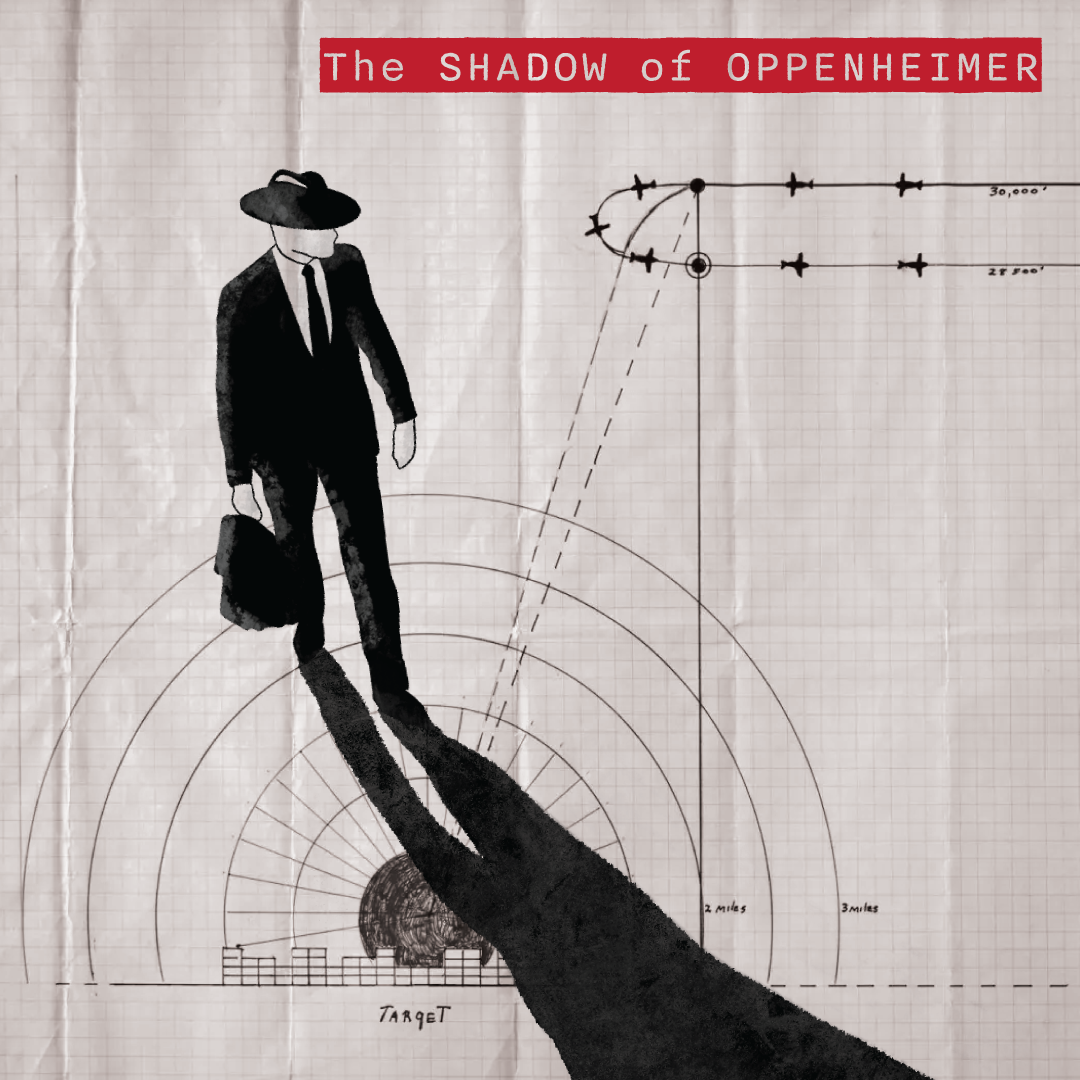
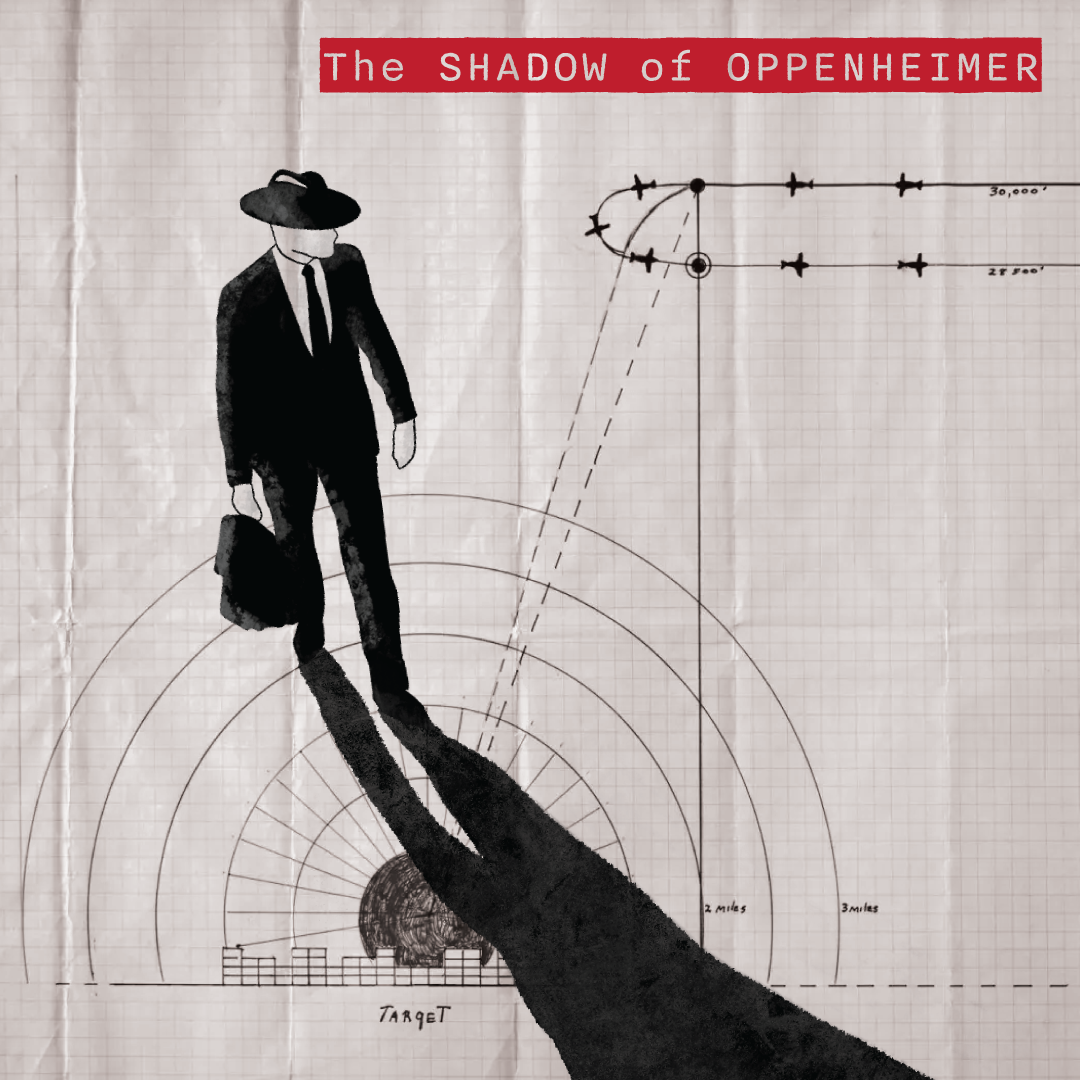
The Shadow of Oppenheimer
Christopher Nolan’s Oppenheimer is officially out, so it’s time to travel back to 1945 and examine who was left behind in the pursuit of a false sense of security. This story starts with one man: J. Robert Oppenheimer. But the people affected total in the millions. And the fallout of that decision continues to this day. Ploughshares Fund’s podcast is back for its second season titled “The Shado

How Many People Have to Die From Nuclear Weapons Until We Get It?
This week, Tina Cordova, co-founder of the Tularosa Basin Downwinder Consortium and sixth-generation native New Mexican, has the microphone in the final episode of this season. In this conversation with Ploughshares Fund President Emma Belcher, Tina Cordova discusses the financial damage that goes hand-in-hand with the physical and emotional toll that impacted communities experience, how these are

History Repeating Itself: Hanford Downwinders and Fukushima Daiichi Downwinders (Part Two)
Continue hearing the story of Hanford and Fukushima Daiichi downwinders with Trisha Thompson Pritikin and Dr. Yuki Miyamoto. In part two of this conversation, they discuss the generational health effects passed down from radiation exposure and the litigation process the Fukushima Daiichi downwinders are currently undergoing.
History Repeating Itself: Hanford Downwinders and Fukushima Daiichi Downwinders (Part One)
This week, Trisha Thompson Pritikin and Dr. Yuki Miyamoto have the microphone. In part one of this conversation, they discuss the parallels between the Hanford and the Fukushima Daiichi downwinders, and how radioactive iodine can impact the body. Trisha Thompson Pritikin is a Hanford Downwinder and author of the book The Hanford Plaintiffs. Dr. Yuki Miyamoto is a second generation Hiroshima Hibaku
Turning Words Into Action
This week, Jasmine Owens from the Physicians for Social Responsibility has the microphone. In past episodes, we’ve discussed how nuclear frontline communities are often indigenous or comprised mainly of people of color. Jasmine Owens goes beyond these conversations to answer the overarching question: how can the anti-nuclear community become more equitable?
Nuclear Weapons are the Ultimate Colonizers
This week, Mari Faines from Global Zero and Haleema Saadia, Lecturer at the National University of Modern Languages (NUML), have the microphone. It’s not often discussed how racism intersects with our security priorities and how more often than not they are set at the expense of people of color. And when it is, the focus gets stuck on individuals rather than the underlying systemic inequalities th
Holding the Government Accountable for its Nuclear Legacy
This episode, Lilly Adams, senior outreach coordinator at the Union of Concerned Scientists and co-founder of Nuclear Voices has the microphone. Lilly Adams is one of the many advocates who are bringing voices impacted by nuclear weapons to light and pushing for legislation to address these issues. In past episodes, we’ve talked about compensation for nuclear harm that are set to be expired if act
Marshall Islands: A Fourth of the Nation in Arkansas
This week, Benetick Kabua Maddison, Executive Director of Marshallese Educational Initiative, has the microphone. More than 15,000 Marshallese live in northwest Arkansas — the largest community of Marshallese people outside the Marshall Islands. Benetick Kabua Maddison discusses how the United States’ nuclear testing program in the Pacific resulted in this mass migration and why the Compact of Fre
Under the Clouds of Radiation
On this week’s episode, Mary Dickson, a radiation-exposed person harmed by nuclear testing, has the microphone. She discusses the lack of visibility that many downwinders face, the physical and mental toll caused by having to continuously advocate for oneself and others, and why the fight for justice is nowhere near over.

Climate Change isn’t a Distant Threat for the Marshall Islands
This week, the microphone is passed to Selina Leem, climate change activist and Marshall Islands native. From 1946-1958, the US detonated 67 atomic bombs on the Marshall Islands, resulting in disastrous health, environmental, and cultural consequences that the Marshallese people are still burdened with today. Leem shares her first-hand experience of growing up with the consequences of this nu

Taking Back the Narrative
This season on Press the Button, we’re handing the microphone to members of communities impacted by nuclear weapons so they can share their stories and their experiences the way they want to tell it. This episode features Shampa Biswas, Professor of Politics at Whitman College and a 2022 Ploughshares Fund Equity Rises grantee. She is working to transform nuclear studies by putting race, colon
Episode 200: Ukraine Special Report
February marked the one-year anniversary of Russia’s brutal and unjust invasion of Ukraine. In this special report, Tom Collina sits down with Rose Gottemoeller, former Deputy Secretary General of NATO, to talk about the New START Treaty and Russia’s move to suspend the treaty. Alex Hall also talks with Andrea Gittleman, the policy director at the Simon-Skjodt Center for the Prevention of Genoci
China Spy Balloon is (Mostly) Hot Air
In early February, the world watched as a Chinese “spy balloon” floated across the United States, sparking a furor that led President Biden to postpone a high-level US visit to Beijing. This week, Tom Collina talks with Sahil Shah, senior fellow and program manager at the Council on Strategic Risks. He discusses the balloon, the postponement of the US visit, and how this event affects Chinese t

The Legacy of Beatrice Fihn
After nine years as Executive Director of the International Campaign to Abolish Nuclear Weapons (ICAN), Beatrice Fihn is stepping down. She talks with Ploughshares President Emma Belcher to reflect on her time leading the organization, the Treaty on the Prohibition of Nuclear Weapons, and her hopes for the future. On Early Warning, Lauren Billet sits down with Tong Zhao, senior fellow at Carnegie’
90 Seconds to Midnight
The Bulletin of Atomic Scientists’ have set this year’s clock at 90 seconds to midnight — the closest to midnight it has ever been. Why is the clock so close to midnight and how do we come back from the brink? To answer these questions, Tom Collina talks with Dr. Rachel Bronson, President and CEO of the Bulletin of Atomic Scientists. On Early Warning, Angela Kellett sits down with Lilly Adams, sen
Two Years of Biden's Foreign Policy
We’re now halfway through the Biden Administration’s first term, so it’s time to take stock of the Administration’s national security and nuclear policies. Tom Collina sits down with Matt Duss, former foreign policy advisor to Senator Bernie Sanders and visiting scholar at the Carnegie Endowment for International Peace (CEIP). They discuss Biden’s foreign policy over the past two years. On Early W
Russia’s Long Game in the War
As the war in Ukraine spills from 2022 into 2023, Tom Collina sits down with Kimberly St. Julian-Varnon, PhD student from the University of Pennsylvania, to discuss ongoing developments. She talks about what’s happening in the war in Ukraine right now, what we could expect in the coming year, and how the crisis is turning into a long-term stand-off. On Early Warning, Lauren Billet talks to Marylia
North Korea's Nuclear New Year
To start off the new year, Tom Collina sits down with Ankit Panda, Stanton Senior Fellow in the Nuclear Policy Program at the Carnegie Endowment for International Peace and the author of Kim Jong Un and the Bomb: Survival and Deterrence in North Korea. He discusses Kim’s plans to increase the production of nuclear weapons and what kind of US diplomatic efforts we might see in response. On Early Wa
2022 Year in Review
…and that’s a wrap! Join co-hosts Tom Collina and Lauren Billet as they cover their favorite interviews and stories from the past year. And as an end of the year treat, enjoy a highlight reel that takes you through some of the biggest stories quote by quote.

Debating Deterrence
Since invading Ukraine, Russian President Vladmir Putin has relied on nuclear threats to deter Western intervention and signal his commitment to this war. Ploughshares Fund President Dr. Emma Belcher talks with Dr. Heather Williams, director of the Project on Nuclear Issues and a senior fellow in the International Security Program at the Center for Strategic and International Studies (CSIS). They

Press the Button LIVE: State Department’s Mallory Stewart
Revisit Press the Button LIVE: Nuclear Policy in Crisis with us — this time with Ploughshares Fund President Emma Belcher and Mallory Stewart, Assistant Secretary of State for the Bureau of Arms Control, Verification, and Compliance. Stewart discusses the Nuclear Posture Review, New START, China’s nuclear arsenal, and many other issues. On Early Warning, Angela Kellett speaks with Jessica Sleight,

Prisoner of Hope
Hear more from Ploughshares Fund’s annual policy conference, Press the Button LIVE: Nuclear Policy in Crisis! This week, listen to Ploughshares Fund Executive Director Elizabeth Warner talk with The Chair of the Elders and Former President of Ireland Mary Robinson. She discusses disarmament strategy, the Iran Nuclear Deal, and words of wisdom for the next generation of advocates.

Press the Button LIVE: IAEA Director General Rafael Grossi
Join us for a recap of Press the Button LIVE: Nuclear Policy in Crisis! Ploughshares Fund President Emma Belcher sits down with IAEA Director General Rafael Grossi to discuss a range of topics: safeguarding the Zaporizhzhia nuclear power plant in Ukraine, combating misinformation, and the complexity of reaffirming the Iran Nuclear Deal.

Can Arms Control be Saved?
The last remaining US-Russia arms control treaty, New START, is set to expire in 2026. This week, Tom Collina talks with Jessica Rogers, impact fellow at the Federation of American Scientists. She discusses the importance of New START, what happens if we fail to replace it, and how we can save arms control. On Early Warning, Alex Hall talks with John Carl Baker, Nuclear Field Coordinator and Senio

Who is the Enemy Now?
This week, Ploughshares Fund President Emma Belcher talks with Tom Wright, senior director for strategy at the National Security Council. He discusses the Biden Administration’s National Security Strategy, Ukraine’s impact on the strategy, and the strategy it outlines towards Russia and China On Early Warning, Tom Collina speaks with Monica Montgomery from Council for a Livable World. She discusse
Biden’s Nuclear Policy: The Good, The Bad, The Ugly
Big news: Biden’s long-awaited Nuclear Posture Review is finally out! This week, Tom Collina talks with Jessica Sleight and Jon Wolfsthal from Global Zero. They review Biden’s nuclear weapons policy, and discuss where it fell short and how it can be improved. On Early Warning, Angela Kellett sits down with Scott Roecker, Vice President of the Nuclear Material Security Program at the Nuclear Threat
China: Friend or Foe?
This week, Tom Collina speaks with Gregory Kulacki from the Union of Concerned Scientists on US-China relations. Topics include: China’s Party Congress, the effects of the war in Ukraine on US-China relations, and the new US National Security Strategy. On Early Warning, Lauren Billet talks with Donna Farvard, national organizing director at the National Iranian American Council (NIAC). She discuss
Misperceptions of “Tactical” Nukes
Amid Putin’s nuclear saber-rattling, what exactly makes a nuclear weapon “tactical” — and is that even the right word to use? This week, Tom Collina talks with Hans Kristensen, director of the Nuclear Information Project at the Federation of American Scientists. He corrects the many misperceptions of “tactical” nuclear weapons and discusses how Russia could use nuclear weapons in Ukraine. On Early
Cuban Missile Crisis and Nuclear Risk
Sixty years ago this month, the US and Soviet Union came close to the brink of nuclear war during a tense 13-day stand-off known as the Cuban Missile Crisis. So how did we get that close? How did we successfully de-escalate? Tom Collina discusses this historical event with Dr. Tom Vaughan, lecturer at Aberystwyth University and author of “Nuclear war: does it take luck or reasoning to avoid it? Le
NASA Hits Asteroid in Space
NASA hits a bullseye: this week, Tom Collina sits down with Dr. Laura Grego, senior scientist at the Union of Concerned Scientists. She discusses NASA’s recent (and successful) DART mission to hit an asteroid in space and the implications for nuclear policy. On Early Warning, Angela Kellett talks with Istra Fuhrmann and Alex Toma of The Peace and Security Funders Group. They join the podcast to di
Putin’s New Nuclear Threat
The war in Ukraine takes another left turn as Russian President Vladimir Putin makes more explicit nuclear threats: this week, Tom Collina sits down with Jon Wolfsthal, senior advisor at Global Zero and author of the sub-stack newsletter BoomBoomBoom. They discuss Putin’s nuclear threats, the fine line the Biden Administration has to walk, and how to avoid further escalation. On Early Warning, Ale
War in Ukraine: A Critical Moment
The war in Ukraine may be entering a decisive new phase. On this episode, Tom Collina speaks with Kimberly St. Julian-Varnon at the University of Pennsylvania to discuss Ukraine’s recent counter-offensive, how Russia might respond, and whether the tide of the war has turned. On Early Warning, Lauren Billet sits down with Barbara Slavin, director of the Future of Iran Initiative and a non-resident
Living Through a Nuclear False Alarm
On the Morning You Wake Part 2: Press the Button re-visits the new virtual reality experience exploring Hawai’i’s 2018 false nuclear alarm. This time, Tom Collina talks with Cynthia Lazaroff, founder and director of Women Transforming Our Nuclear Legacy, and Ray Acheson, director of Disarmament at the Women's International League for Peace and Freedom. On Early Warning, Alex Hall sits down with Co

IAEA at Zaporizhzhia
Take a look inside Ukraine’s Zaporizhzhia power plant: Tom Collina talks with Dr. Cindy Vestergaard, senior fellow and director of the Nuclear Safeguards program at the Stimpon Center. She discusses the UN Inspector’s visit to the Russia-controlled Zaporizhzhia power plant in Ukraine and why it matters. On Early Warning, Angela Kellett speaks with Dr. Angela Stent, a senior non-resident fellow at

Russia Walks Out of NPT RevCon
After four weeks, the NPT Review Conference concluded without consensus, with Russia blocking approval for the final document. Tom Collina sits down with Gaukhar Mukhatzhanova from the Vienna Center for Disarmament and Non-Proliferation to discuss what this setback to RevCon means for the future of the NPT and arms control. On Early Warning, Lauren Billet speaks with Dr. Alan Robock, climate scien
Trump’s Nuclear Secrets
In early August, the FBI searched Trump’s Mar-a-Lago home for classified documents, some of which may be related to nuclear weapons. So what kind of nuclear information could Trump have taken? Tom Collina sits down with Alex Wellerstein, author of Restricted Data: The History of Nuclear Secrecy in the United States. He discusses the FBI’s recent search, what nuclear information may be involved, an

The Issue of Nuclear Risk
Nuclear risk — what is it and how is it assessed? Ploughshares Fund President Dr. Emma Belcher discusses these questions with Dr. Patricia Lewis, director of the International Security program at Chatham House. On Early Warning, Lauren Billet is joined by Shannon Bugos, senior policy analyst at the Arms Control Association. She discusses Russia’s decision to suspend inspections under New Start and

Remembering Michael Krepon
On this week’s episode, we honor the late Stimson Center co-founder Michael Krepon with an archived interview, featuring Lorely Umayam and former Ploughshares Fund Program Director Michelle Dover. They discuss the evolution of the nuclear policy field and how the practitioners should respond in the face of challenges. On Early Warning, Alex Hall is joined by Dr. Luis Rodriguez, Stanton Nuclear Sec

On the Morning You Wake: Part I
In 2018, a false missile alert threw Hawaii into mass panic. Four years later, the lived experiences and voices of people on that day can be explored through the new immersive virtual reality documentary, On the Morning You Wake. Tom Collina sits down with Mike Brett, Emmy-award winning director and co-creator of On the Morning You Wake, to discuss the making of the documentary and its importance.
Reproductive Rights and Nuclear Weapons
What do the nuclear policy field and the reproductive justice movement have in common? Lauren Billet talks about this topic with Yasmeen Silva, organizer, activist, and national field manager at Population Connection. She also touches on the dynamics between gender & power and how these dynamics manifest within the nuclear policy field. On Early Warning, Tom Collina sits down with Alex Wellerstein

The Fistbump Seen ‘Round the World
The fistbump seen ‘round the world: Tom Collina discusses Biden’s recent trip to the Middle East with Trita Parsi, executive vice president at the Quincy Institute for Responsible Statecraft. Parsi covers the purpose of Biden’s trip and what it means for US diplomacy efforts. On Early Warning, Angela Kellett sits down with Dr. Cheryl Harrison, assistant professor in the Department of Oceanography
NATO Summit: Back to the Future
A shift in NATO strategy? Tom Collina sits down with Max Bergmann, director of the Europe Program at the Center for Strategic and International Studies. He recaps the recent NATO summit in Madrid, and discusses how the war in Ukraine will affect its strategy and the alliance’s relationship with the US. On Early Warning, Alex Hall talks with Sanam Vakil, Deputy Director of the Middle East and North

Chain Reaction: Fiona Hill
On this week’s episode, take a listen to Ploughshares Fund President Emma Belcher’s conversation with Fiona Hill, senior fellow at the Brookings Institution. Hill discusses the Russian invasion of Ukraine and Putin’s nuclear threats. On Early Warning, Lauren Billet talks with Emma Claire Foley, Senior Associate for Research & Policy at Global Zero. She discusses her new report on the real cost of
Chain Reaction: Action Now
On this week’s episode, take a listen to Tom Collina’s Action Now panel that aired at this year’s Chain Reaction gala. This panel features Jamal Abdi from NIAC, Istra Furhmann from FCNL, and Sara Haghdoosti from Win Without War. Topics include: the Iran nuclear deal, the Radiation Exposure Compensation Act, and the war in Ukraine. On Early Warning, Alex Hall talks to Alicia Sanders-Zakre, the poli
Can the Iran Deal be saved?
Can the Iran Deal be saved? Tom Collina is joined by Negar Mortazavi, Iranian-American journalist and host of the Iran podcast. She discusses the stalled negotiations to revive the Iran Deal and whether progress is possible. On Early Warning, Lauren Billet sits down with Hans Kristensen, associate senior fellow at SIPRI and the director of the nuclear information project at the Federation of Ameri

Lifelines
Nuclear policy work in the time of COVID: Ploughshares Fund President Dr. Emma Belcher sits down with Lovely Umayam, a nuclear nonproliferation expert, writer, and founder of Bombshelltoe Policy and Arts Collective, and Elisa Reverman, PhD candidate at Georgetown University and occasional illustrator. They discuss their project, Lifelines, a collection of personal reflections about the experiences
Putin's Nuclear Threats
On May 9, Russian President Vladimir Putin gave his annual victory day speech, with many looking to see if it would give any hints to his approach towards Ukraine. Emma Belcher sits down to discuss this speech with Tom Nichols, contributing writer at the Atlantic and author of its newsletter, “Peacefield”. He also discusses Putin’s nuclear threats and the lessons of the Ukraine conflict for nuclea
What is Biden’s Taiwan Policy?
A May 23rd press conference in Japan marks the third time President Biden has stated that he would defend Taiwan militarily, breaking long-standing US policy. While these statements have always been walked back by Biden’s staff, it begs the question: what really is Biden’s Taiwan policy? Tom Collina discusses this topic with James Lee, postdoctoral research associate at the University of Californi
NATO Expansion and the War in Ukraine
Finland and Sweden appear to be on their way to NATO membership, causing vocal opposition from Turkey and a more muted response from Russia. Tom Collina talks with Charles Kupchan, senior fellow at the Council for Foreign Relations and professor at Georgetown University. He discusses NATO expansion, the war in Ukraine, and what it all means for the future of diplomacy with Russia. On Early Warning

Biden's Iran Policy
Why hasn’t the US rejoined the Iran Deal? Ploughshares President Emma Belcher sits down with Peter Beinart, Professor at the City University of New York. He discusses his latest op-ed in the New York Times, where he criticizes the Biden Administration for its hesitancy to rejoin the Iran nuclear deal. On Early Warning, Lauren Billet talks with Melissa Hanham, an affiliate of the Stanford Center fo
Recommended

Crickets Corner

History of the Earthquake and Fire in San Francisco

Fox news

K-Drama Obsessed Mamas | Beyond “Just One More Episode!”

True Crime Classics

The Healer Revolution

Becoming: HER with Nikki Spoelstra

Booked, Blonde & Busy w/ Olivia Ponton

McKinsey on Consumer and Retail

megahired.com

Hard Knocks Podcast

Effective Weight Loss for Moms | High protein, Strength Training, Lose Weight, Meal Planning, Fat Loss, Healthy Habits
