Russian History Explained
A podcast dedicated to exploring Russia's vast history, from the early medieval Kievan Rus and the powerful Tsars to the dramatic Soviet era and modern milestones. Through engaging narratives and rich archival visuals, it brings key historical turning points to life, covering politics, culture, and epic conflicts. The show aims to help listeners understand the forces and figures that shaped the world's largest nation.
Episodes
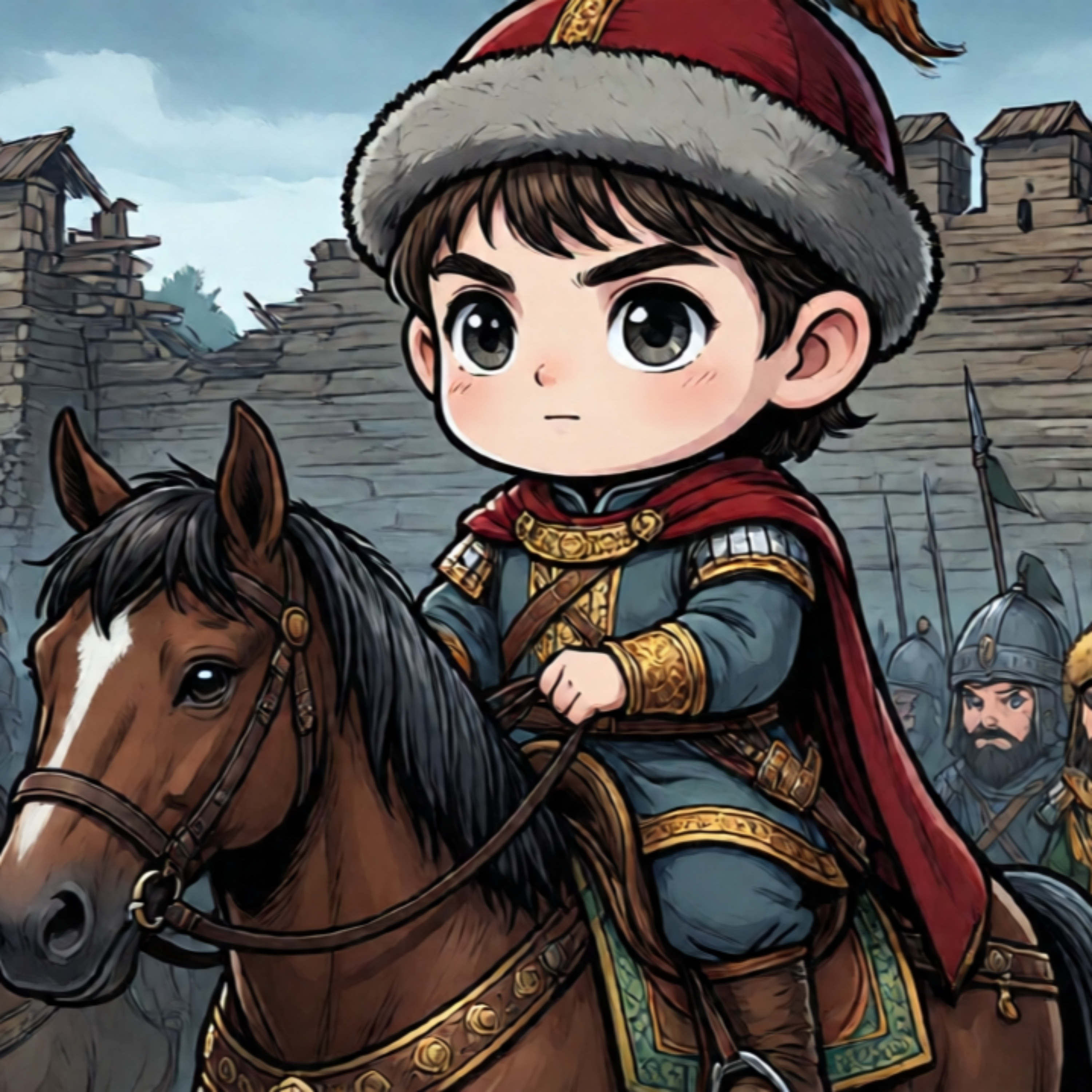
Why Russian High Society Spoke French for More Than a Century
French culture and language dominated imperial Russian high society for more than a century, shaping aristocratic salons, education, fashion, diplomacy, literature, architecture, and the daily identity of nobles in Saint Petersburg and Moscow. This Francophile world both refined and divided the empire before revolution. The episode remains central to Russian history, imperial memory, and debates o
Why the Romanov Tercentenary Became the Last Great Imperial Celebration
The Romanov Tercentenary of 1913 was a dazzling celebration of three hundred years of dynasty, yet beneath its pageantry lay hemophilia, Rasputin, political fragility, war anxiety, and an empire nearing collapse. Its splendor now reads like the twilight of imperial Russia before revolution. The episode remains central to Russian history, imperial memory, and debates over power today.This video fol
The 1905 Revolution: The First Storm Against Russia's Last Tsar
The 1905 Russian Revolution began with Bloody Sunday, when peaceful workers carrying icons and petitions marched toward the Winter Palace and were met by imperial gunfire across the snow of Saint Petersburg. The massacre broke the sacred image of the caring tsar and exposed autocracy. The episode remains central to Russian history, imperial memory, and debates over power today.This video follows i
Why Russia Lost to Japan and Triggered Revolution at Home
The Russo-Japanese War shattered the illusion of Russian imperial might, exposing military weakness, logistical overreach, racial arrogance, and political paralysis while pushing the Romanov Empire toward the Revolution of 1905. It proved that empire could fail far from home and collapse politically at home afterward. The episode remains central to Russian history, imperial memory, and debates ove
Why Nicholas II's Coronation Began With the Khodynka Tragedy
Nicholas II's coronation in 1896 was meant to proclaim sacred Romanov authority, but the Khodynka Field stampede killed more than a thousand people and cast a dark shadow over Russia's last tsar. The celebration became an omen of distance between ruler, bureaucracy, and ordinary people. The episode remains central to Russian history, imperial memory, and debates over power today.This video
Why Russia Built the Longest Railway in the World Across Siberia
The Trans-Siberian Railway connected European Russia to Siberia and the Pacific, turning an isolated empire of forests, rivers, permafrost, and penal routes into a transcontinental state with a modern steel artery. It was engineering, colonization, defense policy, migration, and economic ambition on rails. The episode remains central to Russian history, imperial memory, and debates over power toda
Why Alexander II Was Assassinated After Freeing Russia's Serfs
Alexander II freed Russia's serfs and launched the Great Reforms, yet he was assassinated in 1881 by revolutionaries who believed only violent terror could destroy the Romanov autocracy. His death froze a moment when reform and revolution collided on a Saint Petersburg canal. The episode remains central to Russian history, imperial memory, and debates over power today.This video follows the Em
Why Russia Sold Alaska to the United States for $7.2 Million
Russia sold Alaska to the United States in 1867 for 7.2 million dollars, ending the era of Russian America and giving Washington a vast Pacific and Arctic territory rich in resources and strategic possibilities. The deal grew from fur profits, colonial weakness, and global strategy after the Crimean War. The episode remains central to Russian history, imperial memory, and debates over power today.
Why the Tsar Liberator Freed Millions but Left Russia Unstable
The Emancipation Reform of 1861 ended Russian serfdom and freed more than twenty-three million private serfs, but its complicated land settlements, redemption payments, and village communes left deep tensions unresolved. It changed law and society without fully satisfying peasants, nobles, reformers, or radicals. The episode remains central to Russian history, imperial memory, and debates over pow
Why Nicholas I Built an Empire of Censorship, Police, and Military Discipline
Nicholas I turned Russia into the Gendarme of Europe after crushing the Decembrist Revolt, building a state defined by autocracy, censorship, political police, military discipline, and intervention against revolution abroad. His reign pursued order while deepening the pressures that later demanded reform after Crimea. The episode remains central to Russian history, imperial memory, and debates ove
Why the Decembrist Revolt Failed but Changed Russia Forever
The Decembrist Revolt of 1825 failed on Senate Square, but it permanently changed Russian politics by bringing demands for a constitution, civil rights, and the abolition of serfdom into open confrontation with autocracy. Its failure created martyrs, exiles, and a new political language for future Russian opposition. The episode remains central to Russian history, imperial memory, and debates over
Why Alexander I Defeated Napoleon but Remained Russia's Most Mysterious Tsar
Tsar Alexander I defeated Napoleon and helped restore Europe, yet his reign was haunted by guilt over his father's murder, unfulfilled reform dreams, spiritual searching, and the mystery surrounding his final years. His life blended Enlightenment hopes, autocratic hesitation, imperial triumph, and private doubt. The episode remains central to Russian history, imperial memory, and debates over
The Burning of Moscow: The Sacrifice That Trapped the French Army
The burning of Moscow in 1812 was the ultimate sacrifice of the Patriotic War, denying Napoleon shelter, supplies, political victory, and the symbolic triumph he expected after occupying Russia's ancient capital. In the ashes, Russia turned loss into strategy, memory, and resistance. The episode remains central to Russian history, imperial memory, and debates over power today.This video follow
How Russia Destroyed Napoleon's Grand Army in 1812
Russia defeated Napoleon's Grand Army in 1812 through strategic retreat, scorched earth, brutal distance, battlefield resistance, and the winter collapse of the largest invasion force Europe had ever seen. The campaign showed that avoiding Napoleon's trap could be more powerful than seeking glory in battle. The episode remains central to Russian history, imperial memory, and debates over p
Why Alexander Suvorov Never Lost a Single Battle
Alexander Suvorov became one of Russia's greatest commanders by winning more than sixty battles without a single defeat, transforming childhood frailty into iron discipline and leading soldiers with speed, realism, and relentless offensive spirit. His victories came from training, mobility, morale, fearless command, and soldier trust. The episode remains central to Russian history, imperial me
Why One Art Purchase Created Russia's Greatest Museum
The Hermitage Museum began as Catherine the Great's private gallery, created after a bold 1764 purchase of 317 paintings that announced Russia's arrival as a major power in European art and Enlightenment culture. A private retreat became an imperial statement of taste, wealth, legitimacy, and ambition. The episode remains central to Russian history, imperial memory, and debates over power
Why Catherine's Brilliant Ally Took Control of Russia's Academy
Princess Yekaterina Dashkova was one of the most brilliant women of the Russian Enlightenment, a teenage conspirator in Catherine the Great's coup and later the first woman to lead the Russian Academy of Sciences. Her life joined scholarship, ambition, court danger, and language reform in imperial Russia. The episode remains central to Russian history, imperial memory, and debates over power t
Why the Pugachev Rebellion Terrified Catherine the Great
The Pugachev Rebellion was the largest peasant uprising in imperial Russian history, led by Yemelyan Pugachev, a Don Cossack who claimed to be the returned Emperor Peter III and promised freedom to the oppressed. It exposed the explosive pressure beneath serfdom, frontier rule, and popular faith across Russia. The episode remains central to Russian history, imperial memory, and debates over power
Why Crimea Became the Crown Jewel of Catherine's Russian Empire
Catherine the Great's conquest of Crimea transformed Russia's southern frontier, broke Ottoman dominance over the Black Sea, and gave the empire strategic ports, naval bases, and fertile lands that reshaped Eurasian power. The campaign linked diplomacy, war, settlement, naval strategy, imperial mythology, religious tolerance, and Black Sea trade. The episode remains central to Russian hist
How Catherine the Great Seized Russia's Throne From Her Own Husband
Catherine the Great seized the Russian throne from her own husband, Peter III, after years of political isolation, careful alliance-building, and growing outrage over his pro-Prussian policies, contempt for Russian traditions, and alienation of the army and church. Her rise was a lesson in image, loyalty, and palace politics under pressure.This video follows Sophie of Anhalt-Zerbst's transform
Why Peter the Great Taxed Beards to Westernize Russia
Peter the Great's Beard Tax was not a strange joke but a deliberate weapon of Westernization, aimed at cutting away old Muscovite customs and forcing nobles, merchants, officials, and townspeople into a new European civic order. In Peter's Russia, even hair became a political battlefield from face to state office. The episode remains central to Russian history, imperial memory, and debates
Why the Russian Tsar Worked as an Apprentice Shipbuilder in Disguise
The Grand Embassy was Peter the Great's secret journey through Western Europe, where the Russian tsar traveled as Pyotr Mikhailov to learn shipbuilding, artillery, navigation, science, and state administration directly from foreign masters. It turned diplomacy into apprenticeship and made practical knowledge a tool of empire across Europe.This video follows the 1697 mission from Moscow through
How Saint Petersburg Rose From Swamps to Become Russia's Window to Europe
Saint Petersburg was built on freezing swamps, flood-prone islands, and brutal labor, yet Peter the Great turned the Neva delta into Russia's window to Europe and the imperial capital of a modernizing empire. The city embodied war strategy, engineering audacity, European taste, and autocratic will.This video follows the founding of the Peter and Paul Fortress on Zayachy Island, the Domik Petra
Why Sweden Lost the Baltic to Peter the Great's Russia
The Great Northern War transformed Russia from a Baltic outsider into a European great power by defeating the once-dominant Swedish Empire under Charles XII and securing Peter the Great's long-sought access to the sea. It was a struggle of reform, endurance, ambition, and the collapse of Swedish supremacy.This video follows the Russian disaster at Narva, Peter's ruthless military rebuildin
How Peter the Great Built the Russian Navy From Nothing
Peter the Great built the Russian Navy from almost nothing, turning a landlocked Muscovite state with only the frozen port of Arkhangelsk into a maritime empire able to fight Sweden, challenge the Ottomans, and reach the Baltic Sea. His naval revolution began with curiosity, carpentry, foreign teachers, and a small boat that changed Russian destiny.This video follows Peter's discovery of the E
Why Ancient Kiev Became the Shared Cradle of Russia, Ukraine, and Belarus
Kievan Rus was the shared medieval cradle of the East Slavic world, linking the Baltic and Black Sea routes while shaping the religious, legal, literary, and political foundations of Russia, Ukraine, and Belarus.This video follows Rurik, Oleg, Olga, Svyatoslav, Vladimir the Great, the baptism of Rus in 988, Yaroslav the Wise, Saint Sophia Cathedral, the Russkaya Pravda, the Kiev Pechersk Lavra, an
Before Peter the Great, How Did One Princess Bend Moscow to Her Will?
Sophia Alekseyevna broke the seclusion expected of Muscovite royal women and became the powerful regent of Russia before Peter the Great, ruling from the Kremlin during one of the most dangerous succession crises in Romanov history.This video follows her education under Simeon of Polotsk, the rivalry between the Miloslavsky and Naryshkin families, the Streltsy uprising of 1682, the double throne o
The Secret History of the Kremlin: From Wooden Fort to Russian State Symbol
The Moscow Kremlin is the most famous fortress in Russia, but its story began as a small fortified hill beside the Moskva River before becoming the political, spiritual, and military heart of Russian power.This video traces the Kremlin from Yuri Dolgoruky's wooden defenses and the Mongol destruction of Moscow to Dmitry Donskoy's white-stone fortress and Ivan III's red-brick reconstruct
Why the Great Fire of Moscow in 1547 Changed Russia Forever
The Great Fire of Moscow in 1547 was more than an urban disaster: it destroyed wooden districts, damaged the Kremlin, shattered royal authority, and pushed Ivan IV into a political and spiritual crisis at the beginning of his reign.This video explains how drought, timber construction, weak firefighting, resentment against the Glinsky clan, and rumors of sorcery turned the catastrophe into a violen
Why Andrei Rublev's Holy Trinity Icon Changed Russian Sacred Art Forever
Explore Andrei Rublev, the medieval Russian icon painter whose luminous sacred art transformed Orthodox faith into a visual language of mercy, harmony, and divine peace during an age of Mongol-Tatar domination, political fragmentation, and spiritual renewal across Rus.This video follows Rublev from the monastic world around Moscow and the influence of Saint Sergius of Radonezh to his work with The
How Russia Built Its Army From River Warriors to Imperial Soldiers
Russia's early military reforms transformed scattered warrior bands into a modern army capable of defeating Europe's strongest forces.This documentary follows Russian warfare from the Kievan Rus prince's retinue and town levies to the Mongol conquest, Moscow's service cavalry, gunpowder, artillery, and Ivan the Terrible's creation of the streltsy. We trace the siege of Kazan, t
Why Medieval Russian Life Was Ruled by Winter, Icons, and Serfdom
Daily life in medieval Russia was shaped by harsh winters, Orthodox faith, village communes, boyar households, and growing serfdom.This documentary explores the world of peasants, nobles, townspeople, and priests under the Russian tsars. We enter the peasant izba with its great stove and red corner, follow the agricultural year, and examine rye bread, fasting, banya rituals, homemade clothing, fol
Why Russia Built an Autocracy Unlike the Rest of Europe
Russian autocracy grew from conquest, Orthodox belief, service nobility, serfdom, and the need to govern a vast exposed land.This documentary traces the evolution of one-man rule from Kievan Rus and the veche assemblies to the Mongol conquest, the rise of Moscow, and Ivan III's destruction of Novgorod's independence. We examine the end of the Mongol yoke, the Third Rome idea, the service e
Why Stenka Razin's Cossack Rebellion Terrified the Russian Tsar
Stenka Razin's rebellion turned the Don Cossack frontier into a vast uprising against serfdom, officials, and noble power.This documentary follows Stepan Razin from the free world of the Don to his Caspian raids, his victory over a Persian fleet, and his transformation from raider into rebel in 1670. We trace the role of runaway peasants, poor Cossacks, the 1649 law code, Razin's letters p
Old Believers vs Nikon: The Schism That Russia Never Fully Healed
The Raskol split Russian Orthodoxy when Patriarch Nikon's reforms turned ritual into a matter of salvation and rebellion.This documentary follows Tsar Alexei, Patriarch Nikon, Avvakum, and the Old Believers through one of the deepest religious crises in Russian history. We explain why the sign of the cross, service books, processions, and spellings mattered so intensely in a society that saw M
How Michael Romanov Was Elected and a Dynasty Was Born
The Zemsky Sobor of 1613 chose Michael Romanov and ended the succession crisis that had nearly destroyed Russia.This documentary follows the aftermath of Moscow's liberation, when Russia still faced warlords, Cossacks, foreign claimants, and an empty throne. We examine why the assembly rejected Polish and Swedish princes, why powerful boyar candidates were too compromised, and why a young, unt
How a Merchant and a Prince Saved Moscow From Polish Occupation
Minin and Pozharsky led the national uprising that freed Moscow from Polish occupation during Russia's Time of Troubles.This documentary follows the desperate years after foreign soldiers entered the Kremlin and Russia seemed close to collapse. We trace Patriarch Hermogenes' calls for resistance, the failure of the First Militia, Kuzma Minin's appeal in Nizhny Novgorod, and the decisio
Why Russia Let an Impostor Walk Into Moscow as Tsar
False Dmitry turned rumor into a weapon, using the name of Ivan the Terrible's dead son to seize the Russian throne.This documentary follows the first False Dmitry, usually identified as Grigory Otrepyev, from his flight into Poland-Lithuania to his astonishing entry into Moscow in 1605. We trace his patrons among the Polish magnates, his promises to Catholic supporters, the backing of Cossack
Why the Death of One Child Threw Russia Into the Time of Troubles
The mysterious death of Dmitry of Uglich turned a child's tragedy into one of the most dangerous succession crises in Russian history.This documentary follows the events of May 15, 1591, when the youngest son of Ivan the Terrible died from a knife wound in a courtyard at Uglich. Was it an epileptic accident, as the official inquiry claimed, or murder arranged to clear Boris Godunov's path
Why Ivan the Terrible Built Russia's Most Feared Secret Police
Ivan the Terrible's Oprichnina was meant to protect the throne, but it became one of the most feared experiments in Russian history.This documentary follows Ivan IV from his troubled childhood and early reforms to the creation of the oprichniki, the black-clad riders who seized estates, hunted boyars, and spread terror in the Tsar's name. We examine the split between the Oprichnina and the
The Secret Origins of the Cossacks in Russian History
The Cossacks emerged from the frontier zones of Eastern Europe as free warriors, raiders, settlers, and border communities between empires. This episode gives clear history, careful context, vivid storytelling, and a grounded explanation of why these events still matter.This video explores the origins of Cossack groups along the Don, Dnieper, and steppe frontiers, where runaway peasants, adventure
How Ivan the Terrible Turned Moscow Into an Empire
Ivan the Terrible transformed the Grand Duchy of Moscow into the Russian Tsardom through conquest, coronation, reform, terror, and imperial ambition. This episode gives clear history, careful context, vivid storytelling, and a grounded explanation of why these events still matter today in Russian history deeply.This video follows Ivan IV from his troubled childhood to his coronation as the first t
Why the Battle of Kulikovo Became Russia's Legendary Victory
The Battle of Kulikovo became a landmark victory against the Golden Horde, showing that Russian princes could unite and defeat Mongol power in battle. This episode gives clear history, careful context, vivid storytelling, and a grounded explanation of why these events still matter.This video explains the crisis of 1380, when Dmitry Donskoy of Moscow confronted Mamai's forces on the Kulikovo Fi
How Ivan the Great Ended the Mongol Yoke
Ivan the Great ended the Mongol Yoke and transformed Moscow into the core of a powerful Russian state through patience, conquest, and diplomacy. This episode gives clear history, careful context, vivid storytelling, and a grounded explanation of why these events still matter.This video follows Ivan III's expansion of Muscovy, including the annexation of Novgorod, the weakening of rival princes
How Moscow Rose From a Tiny Outpost to Russia's Heart
Moscow rose from a small frontier outpost to the new Russian heart through geography, diplomacy, church support, Mongol politics, and patient expansion. This episode gives clear history, careful context, vivid storytelling, and a grounded explanation of why these events still matter.This video explains how the princes of Moscow used their location among forests and rivers, their relationship with
Why Alexander Nevsky Chose Diplomacy With the Mongols
Alexander Nevsky became a legendary Russian prince by defeating western crusaders while navigating the dangerous reality of Mongol domination. This episode gives clear history, careful context, vivid storytelling, and a grounded explanation of why these events still matter.This video examines his victories over the Swedes on the Neva and the Teutonic Knights at the Battle on the Ice, along with hi
Why Russian Princes Could Not Stop the Mongol Invasion
The Mongol Golden Horde conquered medieval Russian principalities through speed, siege warfare, terror, tribute, and the political fragmentation of Rus. This episode gives clear history, careful context, vivid storytelling, and a grounded explanation of why these events still matter today.This video follows the invasion of Batu Khan and Subutai, the destruction of Ryazan, Vladimir, and Kiev, and t
Why Yaroslav the Wise Made Kievan Rus a European Power
Yaroslav the Wise ruled during a golden age of Kievan Rus, strengthening law, culture, diplomacy, religion, and the prestige of ancient Kiev. This episode gives clear history, careful context, vivid storytelling, and a grounded explanation of why these events still matter.This video follows Yaroslav's rise after dynastic conflict and examines how he promoted the Russkaya Pravda legal code, bui
How Vladimir Christianized Kievan Rus
The Christianization of Kievan Rus under Vladimir changed Russian history by linking the ruling dynasty to Byzantine Christianity, literacy, and sacred monarchy. This episode gives clear history, careful context, vivid storytelling, and a grounded explanation of why these events still matter.This video explains why Prince Vladimir abandoned pagan cults and adopted Orthodox Christianity in 988, exa
Was Rurik the Viking the True Founder of Russia?
Viking Rurik is remembered as the founder of the first ruling dynasty of ancient Russia, but his story stands between legend, politics, and early medieval reality. This episode gives clear history, careful context, vivid storytelling, and a grounded explanation of why these events still matter.This video explores the Primary Chronicle, the arrival of the Varangians, the trade routes between the Ba