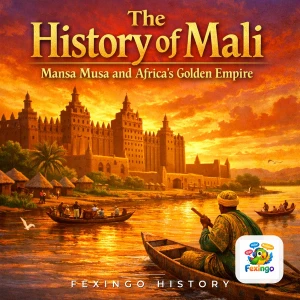
The History of Mali: Mansa Musa and Africa's Golden Empire — Fexingo History
This podcast explores the Mali Empire's history, from its founding under Sundiata Keita to its golden age under Mansa Musa. It covers the gold and salt trade routes, the spread of Islam, and intellectual centers like Timbuktu and Djenné. The show also examines oral traditions such as the Epic of Sundiata, the empire's decline, and contemporary debates on African historiography, guided by hosts Lucas and Luna.
Episodes

The Mali Empire's Legal Code: The Kouroukan Fouga
Long before the Magna Carta or the US Constitution, the Mali Empire codified human rights in the Kouroukan Fouga. This episode explores the Grand Assembly of 1222 at Gbara, where Sundiata Keita and twelve clan chiefs established a charter that abolished slavery, protected women, and guaranteed freedom of speech. We examine the specific clauses that governed social hierarchy, environmental stewards
Mansa Musa's Lost Architects: Al-Sahili and the Mud Masters
While Mansa Musa’s pilgrimage to Mecca is legendary for its gold, the true architectural revolution in Mali came from a man named Abu Ishaq al-Sahili. Often called El-Wangari by locals, this Andalusian poet and architect arrived in Niani around 1325 and introduced the Sudano-Sahelian style that defines West African mosques today. Lucas and Luna explore how al-Sahili convinced the Malian court to m
Mali's Blacksmith Kings: The Nyamakala Caste
Episode 261 explores the hidden architecture of Mali Empire society through the Nyamakala, the artisan caste that wielded power not through swords but through sacred knowledge. While previous episodes highlighted Mansa Musa’s gold and Sundiata’s military conquests, this episode reveals how blacksmiths, potters, and griots maintained social order and spiritual balance. We examine their unique legal
Mali's Iron Monopoly and the Nyamakala Caste
We often think of Mansa Musa’s wealth in terms of gold dust and desert caravans, but the Mali Empire’s true power rested on something heavier and more dangerous: iron. Before we can talk about the armies that conquered Gao or the trade routes that reached Granada, we have to look at the workshops of Koubia and the people who controlled the forge. This episode explores the Nyamakala, a caste tradit
Mali's Salt Mines and the Sahara Caravans
While Mansa Musa’s pilgrimage to Mecca is famous for its gold, the Mali Empire’s wealth was equally anchored by the control of salt mines in the Sahara. This episode explores the harsh reality of Taghaza, a desolate mining town where slaves extracted salt blocks that were often traded weight-for-weight with gold. We examine how the Bozo and Tuareg traders navigated these dangerous routes, the econ
Mansa Musa's Lost General: The Conquest of Gao
While Mansa Musa is famous for his pilgrimage to Mecca, his empire’s true strength lay in its military expansion across the Sahel. This episode explores the conquest of Gao by the Mandinka general Ture Berko and the complex relationship between the Mali Empire and the rising Songhai state. We examine how Mali used strategic alliances with local leaders like Farari to maintain control over the Nige
Mali Empire's Lost Forests: Mansa Musa's Green Legacy
We often think of the Mali Empire as a story of gold and trade, but its true power rested on something far less visible: the environment. In this episode, we explore how Sundiata Keita and his successors implemented some of the earliest known environmental laws in Africa, protecting the sacred groves and water sources that sustained millions. We look at the specific edicts that banned hunting in c
Mali Empire's Lost Monasteries: Timbuktu's Hidden Libraries
We explore the intellectual soul of the Mali Empire through its vast network of libraries and monastic schools, focusing on figures like Abd al-Rahman al-Sa'di and the preservation of Arabic manuscripts in Timbuktu. Lucas and Luna discuss how these institutions functioned as centers of legal, scientific, and theological study, often overlooked in favor of tales of gold. We examine the specific rol
Mali Empire's Iron Mines: The Wealth Behind Mansa Musa
We often hear about the gold that made Mansa Musa famous, but the Mali Empire’s true industrial backbone was iron. This episode explores how control of the iron ore deposits at Koubia transformed West African society, enabling superior agriculture and military technology. We trace the journey from raw ore to finished tools and weapons, examining the role of the Nyamakala caste and the technical in
Mali's River Guardians: The Bozo Pilots of the Niger
We often hear about Mansa Musa’s gold and Timbuktu’s scholars, but the Mali Empire’s true lifeline was the Niger River itself, and the people who navigated it. This episode shifts focus from the royal court to the waterways, exploring the vital role of the Bozo people as master pilots and traders. We look at how their deep knowledge of the river’s currents, floods, and seasonal changes allowed the
Mansa Musa's Architects: Al-Sahili and the Mud Masters
In this episode of The History of Mali, Lucas and Luna explore the architectural legacy of Mansa Musa’s reign, focusing on the controversial figure of Abu Ishaq al-Sahili. We examine how this Andalusian scholar-architect helped shape the Sudano-Sahelian style seen in Timbuktu and Djenné today. Through the lens of the Djinguereber Mosque and the Great Mosque of Djenné, we discuss the use of toron b
Sundiata Keita's Iron Will: The Lion King of Mali
Before Mansa Musa turned heads in Cairo, the Mali Empire was forged by Sundiata Keita, a ruler whose life blends history and epic legend. This episode explores the rise of the Mande leader after his family’s exile from Niani. We trace how he united the twelve kingdoms through diplomacy and the decisive Battle of Kirina around 1235 CE. You will hear about his legendary physical strength, his relian
The Mali Empire's Secret War with the Sahara
While Mansa Musa’s pilgrimage to Mecca and the construction of Timbuktu’s mosques have dominated our previous episodes, Episode 251 shifts focus to the invisible, deadly frontier that sustained Mali’s wealth: the salt trade routes of Taghaza. We explore how the empire controlled the extraction of salt blocks from this ghost town in the central Sahara, a resource so vital it was traded weight-for-w
Mali's Lost Queens: Power in the Shadow of Mansa Musa
While Mansa Musa’s pilgrimage to Mecca dominates the history books, the true engine of Mali’s imperial stability lay within the royal households of Niani. This episode explores the political influence of the Queen Mother and the royal consorts who managed the kingdom’s internal affairs while emirs campaigned on the frontiers. We examine how figures like Farimana and Sogolon Djata wielded soft powe
Mansa Musa's Lost General: The Conquest of Gao
While Mansa Musa’s pilgrimage to Mecca is legendary, the military campaign that secured his empire’s eastern flank remains shrouded in silence. This episode uncovers the story of Ture Berko, the Mandinka general who led the conquest of Gao in 1325. We explore how Mali expanded beyond the Niger bend into the Songhai heartland, displacing local rulers and integrating the vital salt mines of Taghaza.
The Mali Empire's Forgotten Plague: How Disease Shaped History
While Mansa Musa’s pilgrimage and the Kouroukan Fouga constitution dominate the narrative of the Mali Empire, a quieter, more devastating force was reshaping West Africa during this period. This episode explores how recurring epidemics of smallpox and yellow fever, carried along trade routes and exacerbated by climate shifts, disrupted the social fabric of Niani and Djenné. We examine the accounts
Mali's Silk Road: Trade, Textiles, and Timbuktu's Wealth
We often hear about Mali’s gold, but the empire’s true global reach lay in its textiles. This episode explores how Malian merchants turned raw cotton from the Sahel into luxury cloth that reached Cairo, Constantinople, and beyond. We trace the journey of the Jula traders who navigated the Niger River to transport these goods, and examine the economic policies that made Malian fabric a currency of
Mali's Royal Harem: Power, Politics, and the Queen Mother
While Mansa Musa’s pilgrimage to Mecca dominates popular memory of the Mali Empire, a different kind of power operated within the walls of Niani. This episode explores the political architecture of the Mande royal household, focusing on the role of the Queen Mother, or Farimana. We trace how these women managed vast estates, controlled grain reserves during famines, and served as crucial diplomati
The Mali Empire's Forgotten Women Warriors
While Mansa Musa’s gold and the Kouroukan Fouga charter dominate Mali history, the empire’s security relied on a different kind of power: the Jajere. These were not just royal guards but elite female warriors who served as the Mansa’s personal bodyguards and intelligence network. This episode explores the rise of these women from slave markets to imperial protectors, examining their role in the Ba
Mansa Musa's Lost Admiral: The Niger River Fleet
We often hear about Mansa Musa’s pilgrimage to Mecca, but we rarely discuss the naval power that underpinned his empire. In this episode, Lucas and Luna explore the Niger River fleet commanded by Bozo pilots and Mandinka officers. They examine how Mali used riverine warfare to control trade routes between Djenné and Timbuktu, projecting authority deep into the Sahel. We look at specific battles on
Mansa Musa's Lost Fleet and the Niger River
While Mansa Musa’s pilgrimage to Mecca often dominates the narrative of the Mali Empire, his true power lay in his mastery of the Niger River. This episode explores how the Malian state utilized a sophisticated riverine fleet, commanded by Bozo pilots and Mandinka admirals, to control trade routes between Timbuktu and Gao. We examine the logistical marvels of transporting gold from Bambuk and salt
Mali's River Trade: The Bozo Pilots of the Niger
While Mansa Musa’s pilgrimage often steals the spotlight, the Mali Empire’s true power lay in its mastery of the Niger River. This episode explores the vital role of the Bozo people, the skilled boatmen and fishers who served as the empire’s maritime logistics network. We examine how these riverine communities facilitated the movement of gold from Bambuk and salt from Taghaza, connecting inland ci
The Battle of Kobi: How Mali Held Its Ground
After Mansa Musa’s legendary pilgrimage drained the treasury and his successors struggled to maintain control, the Mali Empire faced a severe crisis of legitimacy. This episode explores the pivotal Battle of Kobi in 1390, where the last great Mansa, Suleiman, confronted a rebellious vassal state that threatened to fracture the empire from within. We examine how the Mandinka cavalry utilized the Ni
Mansa Musa's Architects: Al-Sahili and the Mud Masters
We often think of Mansa Musa’s hajj as a story about gold, but it was also a moment of architectural revolution. In this episode, we look at Abu Ishaq al-Sahili, the poet-architect from Granada who helped design Djinguereber Mosque in Timbuktu. We explore how Sudano-Sahelian style emerged from local materials and Islamic geometry, creating landmarks like the Great Mosque of Djenné. Lucas and Luna
The Mande Charter: Mali's Forgotten Human Rights Legacy
We often think of human rights as a modern invention, but in 1235, the leaders of the Mali Empire gathered at the Gbara council to draft the Kouroukan Fouga. This episode explores how Sundiata Keita and his allies codified protections for women, freedom of speech, and racial equality centuries before the UN Declaration. We examine the social hierarchy, the role of the Nyamakala artisans, and how t
Mansa Musa's Black Architects: The Lost Builders of Timbuktu
We often credit Mansa Musa with bringing wealth to Mali, but the real revolution was architectural. This episode explores how Abu Ishaq al-Sahili, a poet and scholar from Granada, arrived in Niani around 1325 and transformed West African building techniques. We trace his influence on the Djinguereber Mosque and the Great Mosque of Djenné, examining the debate over whether he introduced the mud-bri
Mansa Musa's Lost General: Ture Berko and the Conquest of Gao
While Mansa Musa’s pilgrimage to Mecca is legendary, his empire’s expansion into the Sahel relied on lesser-known figures like the general Ture Berko. This episode explores the military strategy behind Mali’s conquest of Gao in 1325, a pivotal moment that secured control over the Niger River trade routes. We examine how the farari system mobilized troops, the role of the Bozo people as navigators,
Mali's Mande Charter: The World's First Human Rights Constitution
Before the Magna Carta, before the US Constitution, and centuries after Sundiata Keita united the Mandinka clans, Mali established the Kouroukan Fouga. This episode moves past the well-trodden paths of Mansa Musa’s gold-spending hajj or the salt mines of Taghaza to explore the legal and social framework that held a vast, diverse empire together for two hundred years. We examine the Gbara, the grea
Mansa Musa's Tax Code and the Mali Empire Economy
We step inside the daily life of Timbuktu during Mansa Musa’s reign, moving beyond the grand narratives of gold and pilgrimage to examine the gritty reality of imperial administration. Through the eyes of the Arab traveler Ibn Battuta, we explore how a massive empire maintained order across vast distances, focusing on the role of the farba as both tax collector and secret police. We look at the sp
Mansa Musa's Bankrupt Empire: The Cairo Debt Crisis
In this episode, we explore the economic aftermath of Mansa Musa’s famous pilgrimage to Mecca in 1324. While his generosity made him legendary, it also triggered a decade-long depression across the Mediterranean by flooding markets with gold. We examine how this devaluation affected trade routes from Cairo to Baghdad and how subsequent Malian rulers like Mansa Sulayman struggled to restore fiscal
Mansa Musa's Lost Admiral: The Niger River Fleet
While Mansa Musa’s pilgrimage to Mecca dominates popular history, the Mali Empire’s true power rested on its mastery of the Niger River. This episode uncovers the story of Kankan Moussa’s naval campaigns and the Bozo pilots who navigated the empire’s lifeline. We explore how the Mandinka fleet secured trade routes from Djenné to Gao, turning waterways into highways of gold and salt. Lucas and Luna
The Great Mosque of Djenné: Mud, Masterpieces, and Mali
This episode moves away from the political maneuvering and military conquests of the Mali Empire to examine its most enduring architectural legacy: the great mosques of the Niger Inland Delta. We focus on Djenné, a city that became a beacon of Islamic scholarship and trade long before Mansa Musa’s pilgrimage. Lucas walks us through the unique construction methods of Sudano-Sahelian architecture, u
Mali's Royal Secret Police and Imperial Control
While Mansa Musa’s hajj and the Kouroukan Fouga constitution get much attention, the Mali Empire maintained its vast reach through a sophisticated network of internal security. This episode explores the farba, the royal spies and enforcers who reported directly to the Mansa, ensuring loyalty across provinces from Bambuk to Gao. We examine how these agents operated without public fanfare, using int
Mansa Musa's Forgotten Admiral: The Niger River Fleet
While Mansa Musa is famous for his pilgrimage to Mecca, the Mali Empire’s true power lay in its control of the Niger River. This episode explores the navy that protected trade routes from Bambuk and Bure gold mines to the markets of Djenné and Timbuktu. We look at how the empire organized its river fleet under the command of admirals who navigated treacherous rapids and seasonal floods. You will h
Mansa Musa's Forgotten General: The Conquest of Gao
While Mansa Musa is celebrated for his pilgrimage and architectural patronage, the Mali Empire’s dominance was secured through relentless military expansion under commanders like Ture Berko. This episode explores the strategic conquest of Gao in the early fourteenth century, a pivotal moment that extended Mali’s reach to Lake Chad and the Atlantic coast. We examine how the farari cavalry utilized
The Battle of Kirina: How Mali Rose from Ashes
In 1235, the West African landscape was fractured by war. The Sosso king Sumanguru Kante had conquered the crumbling Ghana Empire and terrorized the Mande people, ruling with a reputation for sorcery and cruelty. But in the village of Kangaba, a young man named Sundiata Keita was recovering from childhood paralysis, listening to the stories of his mother Sogolon and the griot Balla Fassé Kouyaté.
Mansa Musa's Tax Code and the Mali Empire Economy
While earlier episodes explored Mansa Musa’s lavish hajj, his architectural legacy in Timbuktu, and the oral histories preserved by griots, this episode turns to the bureaucratic engine that made the Mali Empire wealthy: its tax system. We examine how the Malian state extracted revenue from gold fields at Bure and Bambuk, managed salt trade routes through Taghaza, and regulated commerce in Djenné.
Mansa Musa's Bankrupt Empire: The Cairo Debt Crisis
While Mansa Musa’s pilgrimage to Mecca is famous for his gold spending, few discuss the devastating economic aftermath that followed. This episode explores how the sudden influx of unbacked currency in Cairo crashed the local economy, causing inflation that lasted for twelve years and destabilized trade routes across the Mediterranean. We examine the testimony of the Arab historian al-Umari, who r
Mali's Secret Police: The Farba and Imperial Control
While Mansa Musa’s pilgrimage to Mecca captured the world’s imagination, the true engine of the Mali Empire was its internal machinery of governance. This episode explores the farba, the imperial governors who served as the eyes and ears of the Mansa across thousands of miles. We look at how these officials maintained order in a vast, diverse empire that stretched from the Atlantic coast to the he
The Songhai Empire's Rise from Mali's Ashes
We left off with the golden age of the Mali Empire, but empires rarely stay static forever. This episode explores the quiet, centuries-long shift of power from the Niger bend to the Gao region, focusing on the Sosso and then the rise of the Songhai under Sunni Ali. We look at how the fall of Mali wasn't a sudden collapse but a gradual erosion of central authority, allowing regional warlords like S
The Dogon and Mali: Hidden History of the Bandiagara Cliffs
While Mansa Musa’s empire stretched across the Sahel, a distinct cultural tradition thrived in the Bandiagara Escarpment. This episode explores the Dogon people, their sophisticated astronomical knowledge, and the enduring myths surrounding the star Sirius. We examine how oral traditions preserved complex scientific concepts for centuries, challenging Western assumptions about African intellectual
Mansa Musa's Hajj: A Journey That Shaped an Empire
In this episode of Fexingo's History of Mali, we follow Mansa Musa on his legendary hajj to Mecca in 1324-1325 CE — a pilgrimage that became one of the most consequential journeys in African history. Hosts Lucas and Luna trace the route from Niani to Cairo, the glittering caravan that stunned the Islamic world, and the inflation his generosity triggered in Cairo's gold market. But they also look b
The Butchers of Timbuktu: A Day Inside Mansa Musa's City
In this episode, Lucas and Luna step off the caravan routes and into the bustling streets of 14th-century Timbuktu. They follow the city's butchers — the men and women who supplied meat to scholars, soldiers, and traders — and uncover the surprising social order that governed their work. Drawing on Ibn Battuta's vivid account of Mali's capital, the conversation reveals how butchers were organized
Mali's Great River Fleet: The Epic of the Niger
In this episode, Lucas and Luna explore the forgotten naval power of the Mali Empire—the great river fleet that patrolled the Niger River from Djenné to Timbuktu. Lucas recounts how Mansa Musa and his successors deployed hundreds of war canoes to control trade, project authority, and even suppress revolts along the river's banks. The episode digs into the construction of these massive vessels, the
The Griot's Charter: How Mali's Constitution Was Spoken
In Episode 219 of The History of Mali, Lucas and Luna explore the Kouroukan Fouga — the oral constitution proclaimed at the assembly of 1236, after Sundiata Keita's victory at the Battle of Kirina. This episode looks at how the charter was composed and recited by the jeliw (griot caste), what it actually says about governance, land rights, and the treatment of women, and how it survived for centur
Mansa Musa's Falcons: The Hunt That Bound an Empire
In the dry season, when the harmattan wind swept across the Sahel, the emperors of Mali rode out with falcons on their fists. This episode follows Mansa Musa and his court on a grand hunt — part sport, part diplomacy, part ritual — and uncovers how the chase knit together a vast, multilingual empire. We meet the falconers of the Mande world, the horn-blowers who signaled the kill, and the griots w
The Mande Charter: Laws That Shaped Mali's Empire
Sundiata Keita's victory at the Battle of Kirina in 1235 wasn't just a military triumph—it was the founding moment of the Mali Empire, sealed by a constitution known as the Kouroukan Fouga or Mande Charter. This episode unpacks the charter's eighteen articles, from the abolition of slavery to protections for women, children, and the environment, centuries before similar ideas took root in Europe.
The Salt Caravans of Mali: Taghaza's Forgotten Trade
Long before Mansa Musa's gold dazzled Cairo, another commodity built Mali's wealth: salt. In this episode, Lucas and Luna dig into the salt mines of Taghaza, the caravans that hauled white slabs across the Sahara, and the bitter irony that this precious mineral was literally used to build houses. They explore the grueling labor, the Tuareg middlemen, the silent trade that kept the source a secret,
The Iron Ladies of Mali: Female Power in the Empire
In this episode, Lucas and Luna explore the overlooked roles of women in the Mali Empire. From the legendary queen Kassi, who ruled alongside Mansa Musa, to the influential female jeliw who preserved the empire's history, and the everyday women who managed trade and agriculture, we uncover how gender shaped power in medieval West Africa. Drawing on the Kouroukan Fouga, the Mande Charter, and the a
The Griots of Mali: Keepers of the Empire's Memory
In this episode, Lucas and Luna explore the role of the jeliw, the griots of the Mali Empire, who served as oral historians, praise singers, and political advisors from the time of Sundiata Keita through the reign of Mansa Musa and beyond. They discuss how the jeliw preserved the epic of Sundiata, the Kouroukan Fouga, and the genealogies of noble families, using the kora and the balafon to accompa
The Horse Warriors of Mali: Cavalry and the Empire's Reach
In this episode, Lucas and Luna explore the crucial role of cavalry in the Mali Empire's expansion and control. From the elite farari horsemen who enforced the mansa's will to the logistics of maintaining thousands of horses in the Sahel, they uncover how mounted warfare shaped trade, tribute, and the empire's borders. Along the way, they discuss the legendary Battle of Kirina, the influence of th
The Mande Charter: Africa's Oldest Constitution
In this episode of The History of Mali, Lucas and Luna explore the Kouroukan Fouga, the oral constitution proclaimed by Sundiata Keita in 1236 that shaped the Mali Empire's governance, law, and social order. They trace its origins in the Mande oral tradition, its key provisions on justice, human rights, and environmental stewardship, and its enduring legacy in modern West African institutions like
The Qadi of Timbuktu: Mansa Musa's Chief Judge
In this episode, Lucas and Luna explore the critical role of the qadi, or chief judge, in Mansa Musa's Mali Empire, focusing on the influential figure of al-Qadi Ibrahim. They trace how Islamic legal principles were adapted to Mande customary law, how the qadi's court in Timbuktu became a hub of scholarship and dispute resolution, and how figures like Ibn Battuta encountered this system. The episo
Mansa Musa's Astronomers: Stars, Calendars, and the Sky
In this episode, Lucas and Luna turn their eyes to the heavens as they uncover the astronomical knowledge that thrived in the Mali Empire. From the mud-brick observatory of Sankore in Timbuktu to the practical stargazing of the Dyula traders navigating the Sahara, we explore how Mansa Musa's reign fostered a golden age of sky-watching. We meet the scholars who calculated prayer times and the phase
Mansa Musa's Islamic Court: Scholars, Poets, and Power
Two hundred years before Mansa Musa, the Mali Empire was already a vast, wealthy, and multilingual state. But the ruler who made the hajj to Cairo in 1324 turned Mali into a center of Islamic learning and diplomacy. This episode unpacks the religious and cultural world of Mansa Musa's court — the qadis, the scholars, the poets, and the architects who came from Granada, Fez, and Cairo to make Niani
Mansa Musa's Famine: Ghana's Drought and Mali's Harvest
In the 14th century, Mali's rulers confronted a crisis that no gold could buy: drought and famine. Mansa Musa had built an empire on gold, salt, and the Niger River's bounty—but when the rains failed, even the richest king on earth couldn't command the skies. This episode dives into Mali's encounter with famine, from the Great Drought of the 1300s to the legendary response of Mansa Musa's successo
Mansa Musa's Diplomacy: Mali's Ambassadors Abroad
Long before Mansa Musa's famous hajj, Mali's kings were already playing the long game of international politics. In this episode, Lucas and Luna explore the shadowy world of Mali's diplomatic envoys — the men who carried gold, ivory, and carefully chosen words across the Sahara to the courts of North Africa and beyond. How did a West African empire negotiate with the Marinid sultans of Morocco, th
Mansa Musa's Silent Trade: The Puzzling Gold Barter
In this episode of The History of Mali, Lucas and Luna explore the legendary silent trade of Wangara, the mysterious gold exchange that fascinated medieval geographers from al-Bakri to al-Idrisi. They piece together how Mande-speaking Dyula merchants, protected by Mansa Musa's empire, may have used a ritual of silence to swap gold for salt and other goods — or whether the whole story was a myth cr
Mansa Musa's Lost Gold Mine: The Legend of Wangara
In this episode of The History of Mali, Lucas and Luna explore the mystery of Wangara — the legendary gold-producing region that made Mansa Musa the richest man in history, yet remained so secretive that its location was a closely guarded mystery for centuries. They trace the clues left by Arab geographers like al-Bakri and al-Idrisi, the elusive Wangara traders, and the silent trade rituals that
Mansa Musa's Blind Builder: The Legend of al-Sahili
In this episode, Lucas and Luna explore the legend and reality of Abu Ishaq al-Sahili, the Andalusian poet-architect said to have built Djinguereber and other great structures in Mali. They trace his journey from Granada to Timbuktu, the historical record of his work, and the myths that grew around him. Discover how al-Sahili's legacy became intertwined with Mansa Musa's golden age, and what archa
Mansa Musa's Gbara: The Great Assembly That Governed Mali
When Mansa Musa returned from his legendary hajj in 1324, he brought more than gold—he brought a political vision. This episode of The History of Mali explores the Gbara, the great assembly of clans and warriors that shaped the empire's laws and leadership. Lucas and Luna unpack how the Kouroukan Fouga, the constitution attributed to Sundiata Keita, created a council where the farari military elit
Mansa Musa's Copper: Africa's Forgotten Currency
This episode explores Mansa Musa's copper trade, a vital part of the Mali Empire's economy. We look at the copper mines at Takedda, the trans-Saharan routes that carried copper south and gold north, and the crucial role of copper in West African art, currency, and daily life. We also touch on how copper symbolized wealth and power alongside gold, and how the empire's control of these resources sha
Mansa Musa's Pilgrimage: The Hajj That Changed History
In 1324, Mansa Musa of Mali set out on the hajj to Mecca, a journey that would become the most famous pilgrimage in medieval history. Along the way, he stopped in Cairo, where his lavish spending reportedly caused gold's value to plummet for over a decade. But the pilgrimage was far more than a display of wealth—it reshaped Mali's political and cultural connections, brought scholars and architects
Mali's Last Mansa: The Empire That Outlived Its King
In this milestone 200th episode, Lucas and Luna explore the twilight of the Mali Empire, focusing on the figure of Mansa Mahmud IV and the empire's final act. They revisit the Songhai conquest under Sonni Ali, the diplomatic missions to Portugal, and the shifting trans-Saharan trade. The conversation unpacks how Mali's institutions—the Gbara, the farari, the jeliw—held even as central authority cr
Mali's Empire Beneath the Waves: The Niger River in Flood
In Episode 199, Lucas and Luna dive beneath the surface of Mali's golden age to explore the river that made it all possible: the Niger. When the great flood came each year, it didn't just water crops—it shaped the entire empire. From the Bozo fishermen who read the river's moods to the ingenious flood-recession farming that fed cities like Djenné and Timbuktu, Lucas explains how the annual rising
Mansa Musa's Gold: The Metal That Shaped an Empire
In this episode of The History of Mali, Lucas and Luna explore the central role of gold in the Mali Empire, from the mines of Bambouk and Bure to the trans-Saharan trade routes that made Mansa Musa a legend. They discuss how gold was mined, taxed, and traded, and how its flow influenced politics, religion, and culture. The episode also looks at the famous Catalan Atlas map, the mithqal standard, a
Mansa Musa's Missing Gems: Diamond Mines and Trade Routes
In this episode of Fexingo History, Lucas and Luna explore the fascinating question of why the Mali Empire, famed for its gold, never established a significant diamond trade. They journey from the legendary diamond mines of West Africa to the bustling markets of Timbuktu and Djenné, examining the geological realities, trade networks, and cultural practices that kept diamonds out of the limelight.
Mansa Musa's Salt: The Riches Beneath the Sahara
In this episode of Fexingo History, Lucas and Luna dig into the gritty, glittering commerce that powered Mali's golden age: salt. Not gold dust, not ivory, but the humble block of salt that traders carried across the Sahara on camels, and that Mansa Musa's officials taxed and controlled. From the mines of Taghaza, where slaves carved salt slabs in brutal heat, to the market squares of Timbuktu and
The Jenne-Jeno Mystery: Mansa Musa's City Before the Empire
Before Mansa Musa's Mali, before the great mosques of Djenné and Timbuktu, there was Jenne-Jeno—a city that rose on the floodplains of the Niger River around 250 BCE. This episode digs into the archaeology and mystery of that ancient city, its mud-brick walls, and its role in the trans-Saharan trade that made later empires rich. We talk about Susan and Roderick McIntosh's excavations in the 1970s
The Kankoro-Sigui: Mansa Musa's Secret Police and the Grip of Mali's Empire
After the hajj and the gold, the Mali Empire ran on more than glitter. In this episode, Lucas and Luna explore the kankoro-sigui — the shadowy official who controlled the empire's intelligence network, internal spies, and the king's personal security. We trace how this office evolved from the early days of Sundiata Keita, through the reign of Mansa Musa, to its brutal peak under later mansas. Alon
The Water Lords: Mali's River Fleet and the Niger
In this episode, Lucas and Luna explore the vital role of the Niger River in the Mali Empire. They look at the Bozo and Somono peoples, the specialized riverine castes that manned Mali's fleets, and how control of the river allowed Mansa Musa and his successors to project power, move goods, and collect taxes. The episode touches on the legendary flotilla that accompanied Mansa Musa's hajj, the str
Mansa Musa's Enslaved People: Power, Labor, and the Trans-Saharan Trade
This episode zooms in on a dimension of Mansa Musa's Mali often left out of golden-empire stories: slavery. Lucas and Luna explore the legal and social place of enslaved people in Mande society, the role of the trans-Saharan slave trade in Mali's economy, and how Mansa Musa's own hajj included hundreds of enslaved attendants. They trace the origins of captives, the routes through Djenné and Takedd
The Jeliw: Griots Who Held Mali's Empire Together
This episode dives into the vital role of the jeliw—the griots of the Mande world—in the Mali Empire under Mansa Musa. Unlike mere praise-singers, the jeliw were living archives: they memorized the Kouroukan Fouga constitution, preserved genealogies, advised rulers as farba, and performed history through the kora. Lucas and Luna explore how Balla Fasséké, Sundiata's personal griot, set a precedent
Niani: Mansa Musa's Golden Capital
In this episode, Lucas and Luna explore Niani, the political heart of Mansa Musa's Mali Empire. Located on the Sankarani River, a tributary of the Niger, Niani was the seat of the mansa's court, where the great ruler received ambassadors, dispensed justice, and managed his vast domain. We discuss the royal palace with its domed audience chamber built by the architect al-Sahili, the role of the jel
The Mossi Raiders: How Mali's Cavalry Empire Faced Its Toughest Foe
Long before the Songhai took over, the Mali Empire faced a persistent threat from the south: the Mossi kingdoms. This episode dives into the Mossi's horse-borne warfare, their legendary founder Oubri, and their repeated raids on Mali's heartland—including an attack on Timbuktu itself. We explore how Mansa Sulayman and later mansas tried to contain these fierce cavalrymen, and how the Mossi pressur
Mansa Musa's Qadis: The Judges Who Ruled Mali's Empire
Under Mansa Musa, the Mali Empire developed a sophisticated judicial system that blended Islamic Maliki law with Mande customary traditions from the Kouroukan Fouga. Qadis in cities like Timbuktu and Djenné were trained at Sankore and wielded real power—deciding trade disputes among Dyula merchants, criminal cases, and even holding provincial governors accountable. This episode recounts the remark
The Farari: Mali's Elite Cavalry and Military Might
When we think of Mansa Musa's Mali, we picture gold, libraries, and mosques. But at the empire's heart stood its army, especially the farari—the elite cavalrymen who protected trade routes, enforced the Kouroukan Fouga, and conquered new lands. In this episode, Lucas and Luna explore the structure of the Mali military, from the kèlè-tigi (war chiefs) to the Bélé (royal bodyguards). They discuss th
Djenné: Mansa Musa's City of Merchants and Scholars
In this episode, we explore Djenné, the ancient city that rivaled Timbuktu as a center of trade and learning in the Mali Empire. Founded by Bozo fishermen on an island in the Niger River, Djenné grew into a bustling hub for gold from the Bambouk and Bure regions, salt from Taghaza, and a network of Dyula merchants. Under Mansa Musa, the city gained a grand mosque and attracted scholars like the au
Mansa Sulayman and Ibn Battuta: Inside Mali's Golden Court
In this episode of The History of Mali, we step beyond Mansa Musa's legendary pilgrimage to explore the quieter but no less fascinating reign of his brother and successor, Mansa Sulayman. Drawing on the firsthand account of the Moroccan traveler Ibn Battuta, who visited the Mali capital in 1352–1353, we reconstruct the elaborate court ceremonies, the flow of gold and salt, and the diplomatic tensi
Mansa Musa's Architect: Abu Ishaq al-Sahili and Mali's Golden Style
Mansa Musa's hajj is legendary, but the architect he brought back from Cairo reshaped the empire. Abu Ishaq al-Sahili built the Djinguereber mosque in Timbuktu, an audience chamber at Niani, and introduced baked brick construction to the Sahel. This episode explores al-Sahili's life, his works, and how his blend of North African and Sudano-Sahelian styles created a unique architectural identity fo
Recommended

Talk About Talk - Executive & Leadership Communication Skills

English with Olivia | Slow Conversations & Vocabulary

Stand In The Circle

SLOW ENGLISH PODCAST (A1-A2) With Subtitles | Daily Videos | English With Us Podcast

Learn English A2 with Daily News | Simple English Listening Practice

پلی لیست | PlayList

Conspiracy Files with Paige Carter

Bad Friends

Learn 50 English Phrases While You Sleep | Everyday English Phrases & Vocabulary

This Past Weekend w/ Theo Von

Dateline NBC

Back to the 80s Radio
