Statecraft
Statecraft is an interview series about how policy actually gets made. Through conversations with practitioners and thinkers, it goes beyond political theater to examine the practical mechanics behind legislation and governance. The podcast offers a realistic look at the influence, incentives, and trade-offs that shape public decisions. It is produced in collaboration with Statecraft.pub, where listeners can find more resources.
Episodes

How to Build a Policy School
My guest today is Will Howell, the inaugural dean of the School of Government & Policy at Johns Hopkins, which welcomes its first class in fall 2028. His argument is that the standard policy masters degree is no longer fit for purpose. I happen to agree.Two disclaimers: I took Will’s class as an undergraduate at the University of Chicago, and I’m a Journalist-in-Residence at his school now.Thanks

How to Build an Authoritarian Regime
A while back, Edward Luttwak explained to us how to stage a coup. Julian Waller focuses on the next step: how authoritarian regimes are built and maintained. We discuss:* Authoritarian regimes as the historical norm* Why military juntas don’t last and party states do* Autocracies: Iran, North Korea, and the Papacy* How the Kremlin has reacted to the Wagner mutiny* What a “pacted transition” looks

The James C. Scott Memorial Episode
Today, my guest is writer, thinker, and friend Dan Wang. He was on Statecraft a year ago, but this time, we're talking about a scholar who has shaped both of our thinking: the late great James C. Scott, author of (among many other classics) Seeing Like a State.We discuss:* How Scott’s fieldwork helped him understand peasant life and state capacity* How mountains impede state power, in Southeast As
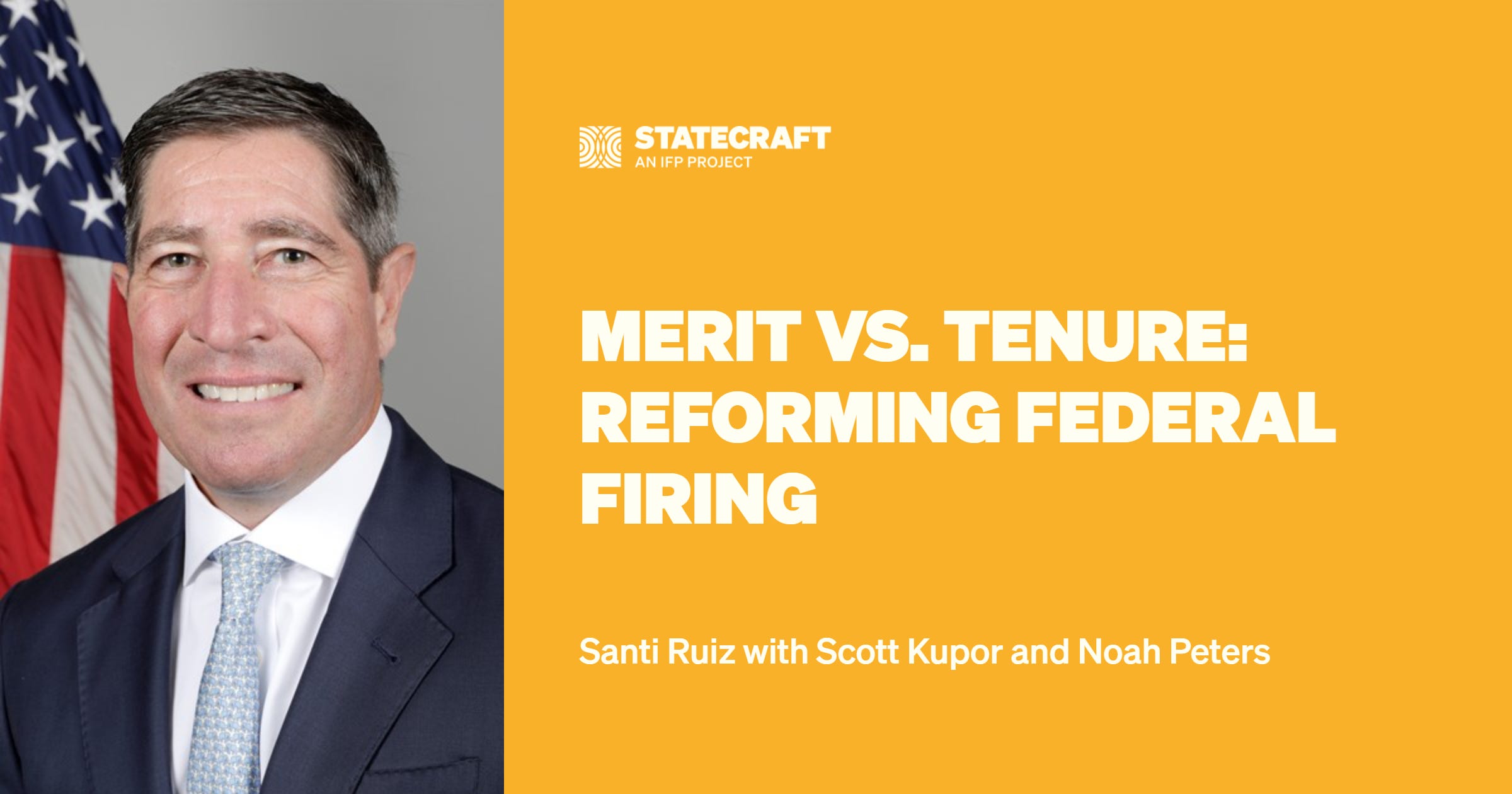
Merit vs. Tenure: Reforming Federal Firing
Today we have a special repeat guest, Scott Kupor, Director of the Office of Personnel Management (OPM). The OPM is the people function in the federal government — the department that sets the rules for the various HR departments in other agencies. Director Kupor was on Statecraft six months ago, and is now a little more seasoned in the federal government.We discuss:* How veterans’ preference work
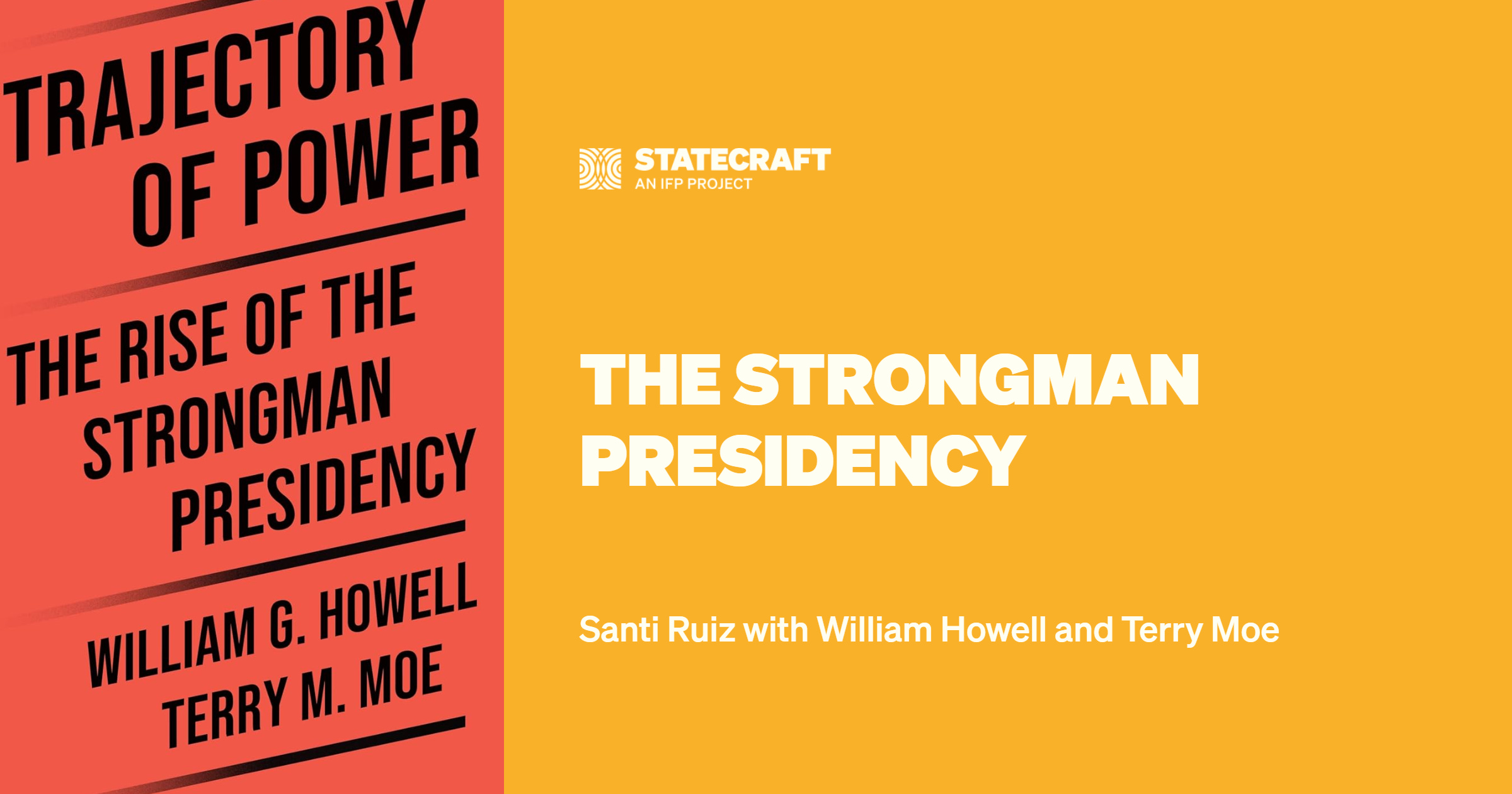
"The Strongman Presidency"
On today’s episode, we’re continuing a conversation about presidential power that we broached a couple of weeks ago on Statecraft in an essay called, “What Trump Can Learn From Nixon.” It was about the attempts, in Richard Nixon‘s one and a half presidential terms, to build what observers called the “administrative presidency” — the presidency that actually fully controlled the administrative stat
How the National Security Strategy Gets Made
In the last six months, we’ve been covering big strategic documents published by the executive branch. We’ve interviewed Dean Ball, the principal author of the Trump administration’s AI Action Plan. We’ve also spoken with Judd Devermont, who authored the Biden administration’s Strategy Toward Sub-Saharan Africa. We’re continuing the trend today, but at a higher strategic register.I’m joined by Nad

Ten Thoughts on Government Data
Government data often underpins policy debates. Nevertheless, those who work with it will know how uniquely frustrating it can be. Relative to the private sector, government systems collect data in idiosyncratic ways. They prioritize continuity and legality over ease-of-use, in anticipation of a narrow set of users. As a result, these datasets can feel impenetrable.In October 2024, I was trying to

When FAFSA Broke, They Called This Guy
Jeremy Singer is the President of College Board, which he has led for over a decade. In that role, he oversees the SAT, AP, and other core elements of the U.S. college access ecosystem, and he’s previously had leadership roles at Kaplan and McGraw Hill Education.Why is Jeremy on Statecraft today? After the failed redesign of FAFSA in 2023, he spent six months at the Department of Education helping

How a Congressional Office Actually Works
Baillee Brown is Head of Government and External Affairs at Inclusive Abundance, which works to help members of Congress get more interested in abundance-policy areas, principally housing, energy, science, innovation, and good governance.She worked on Capitol Hill for 10 years, for Congressman Scott Peters from San Diego. She began as scheduler, moved to the legislative team, and was most recently

How to Rewire City Hall
James Anderson leads the Government Innovation Program at Bloomberg Philanthropies, the umbrella for the charitable giving of billionaire and former three-term New York City Mayor Michael Bloomberg.He was Mayor Bloomberg’s communications director, leading on the design of NYC Service and on public engagement for a number of Bloomberg reforms.James has paid more attention than almost anyone to how
What’s Wrong with Nonprofits?
Today’s guest is Greg Berman, and we talk about nonprofits — Non-Governmental Organizations, or NGOs. Greg’s got a new book out called The Nonprofit Crisis: Leadership Through the Culture Wars, which I enjoyed. I asked him to explain his diagnosis of the nonprofit sector. What’s happened to nonprofits this century? What’s happened to how people perceive nonprofits? And are “NGOs the bad guys”? As
One Year of Trump’s Economic Statecraft
When I got this episode on the calendar a month ago, my vision was, “Let’s get three of the smartest, most thoughtful liberals I can find on the topic of economic statecraft, and we’ll do a full assessment of the first year of Trump’s second term.” The idea was to take each of the domains — tariffs and the trade war, export controls, industrial policy — and do two things: get an accurate picture o

What’s Wrong with NIH Grants?
Mike Lauer is the former Deputy Director for Extramural Research at the National Institutes of Health. A cardiologist and researcher, he joined the NIH’s National Heart, Lung, and Blood Institute in 2007 as the Director of the Division of Prevention and Population Science. From 2015, he oversaw the NIH’s $32 billion funding program for external research. Since leaving NIH in 2025, he has become an

99.8% of Federal Employees Get Good Performance Reviews. Why?
Today we’re joined by Scott Kupor, Director of the Office of Personnel Management. I think of it as the federal HR department — he makes a compelling case that it’s really the government’s talent management organization.Scott manages talent for an organization of 2+ million people with a $7 trillion budget. We discuss:* How DOGE cut federal headcount — and what comes next?* Why agencies rehired em

Did the CHIPS "Everything Bagel"...Work?
CHIPS, the Creating Helpful Incentives to Produce Semiconductors Act, is another. It spurred a massive investment boom in semiconductors on American soil, led by the CHIPS Program Office (CPO) at the Department of Commerce. The CPO had to decide how to allocate $39 billion in manufacturing incentives—and then negotiate the details with some of the world's biggest companies.Today, I’m lucky to have

How to Save Science Funding
If you’re a scientist, and you apply for federal research funding, you’ll ask for a specific dollar amount. Let’s say you’re asking for a million-dollar grant. Your grant covers the direct costs, things like the salaries of the researchers that you’re paying. If you get that grant, your university might get an extra $500,000. That money is called “indirect costs,” but think of it as overhead: tha
Should the Feds Bail Out Chicago?
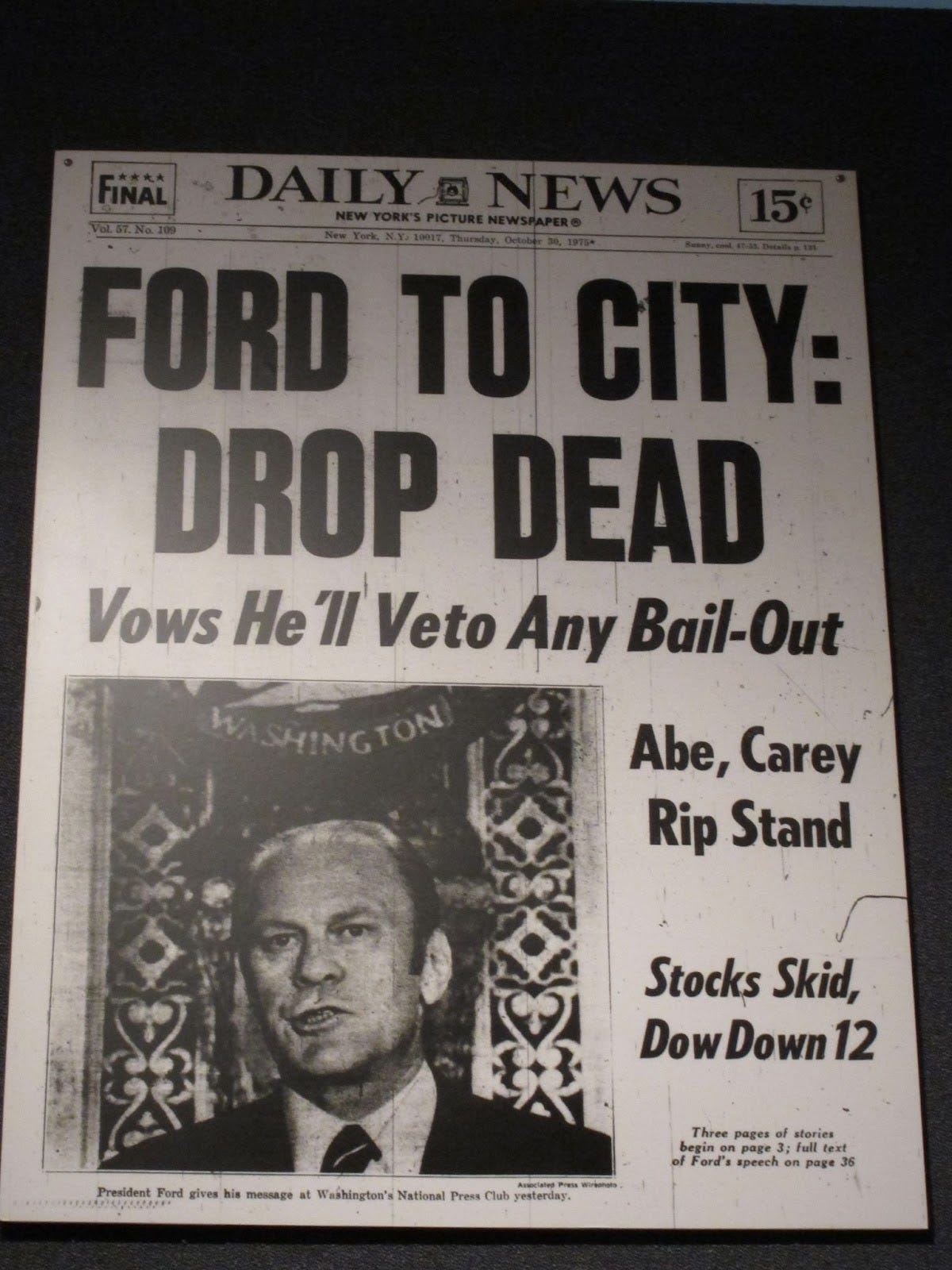
The full transcript for this conversation and many others can be found at www.statecraft.pub.Today we’re joined by David Schleicher. David is Professor of Property and Urban Law at Yale Law School, and an expert in local government law, land use, finance, and urban development.I found David’s book, In a Bad State: Responding to State and Local Budget Crises, a fascinating and readable primer on mu

How Diplomacy Works in Africa
Today we’re joined by Judd Devermont, one of the most experienced Africa policy hands in Washington. He spent 16 years as an intelligence analyst, serving in both the Obama and Biden administrations. Most recently, he was Senior Director for African Affairs at the National Security Council. He authored the Biden administration’s Strategy Toward Sub-Saharan Africa. Since leaving government in early

How to Run New York City
You can find the full transcript of this conversation at www.statecraft.pub.The likely next mayor of New York City is Zohran Mamdani, if polling is anywhere close to being correct. Much of the conversation has revolved around the day-to-day administration of City Hall. If Mamdani wins, does he have what it takes to run the city’s government?Today’s guest is still active in NYC political life, and

A Statecraft Fall Roundup
This episode was originally recorded on October 18th at the Progress Conference in Berkeley. Because of the federal shutdown, Director Kratsios called in virtually.Michael Kratsios is Director of the White House Office of Science and Technology Policy, and the president’s top science and technology advisor. In the first Trump administration, Kratsios was US Chief Technology Officer, and later acti
Is the Senate Fixing Housing Policy?
Today we’re talking about housing. The ROAD to Housing Act passed the Senate Banking, Housing, and Urban Affairs Committee 24-0 in late July. Last week — despite the shutdown — it cleared the Senate. It’s a package of 27 pieces of legislation to boost housing supply, improve affordability, reduce regulatory roadblocks, and reduce homelessness.When you zoom out a bit, what’s happened here is pretty

Why We Don't Build Apartments for Families
Today, we’re joined by Bobby Fijan. He’s a co-founder of the American Housing Corporation, a startup building housing for families in cities. A burning question motivates his work: How do you make cities places where families can live and thrive? He has a new report out with the Institute of Family Studies looking at what families really want from their apartments.This is a pretty self-indulgent e
How to Bring Down Healthcare Costs
Today, I’m joined by Anup Malani. He’s a professor of law at the University of Chicago, currently on leave, serving as the first Chief Economist at the Centers for Medicare & Medicaid Services. This means he oversees economic analysis for the agency managing $2 trillion in annual healthcare spending — 23% of the entire federal budget. CMS runs Medicare for 70 million elderly Americans, Medicaid fo

What Is America’s Infrastructure Cost Problem?
This episode was originally recorded on September 4th at the Abundance Conference in DC."Zach Liscow, my guest today, is a professor of law at Yale Law School. In 2022-2023, he was the Chief Economist at the Office of Management and Budget. He's also now my colleague at IFP, as a non-resident senior fellow.I have a bit of a problem today, which is that while Zach may not be a national household na
How to Write the AI Action Plan
The full transcript for this conversation is at www.statecraft.pub. When I started this podcast a couple years ago, the idea was more constrained than it is today. We wanted to do exit interviews with civil servants, who were newly free to speak about their experiences and their learnings. The project has expanded: we talk to political scientists, economists, DC wonks, elected officials and people
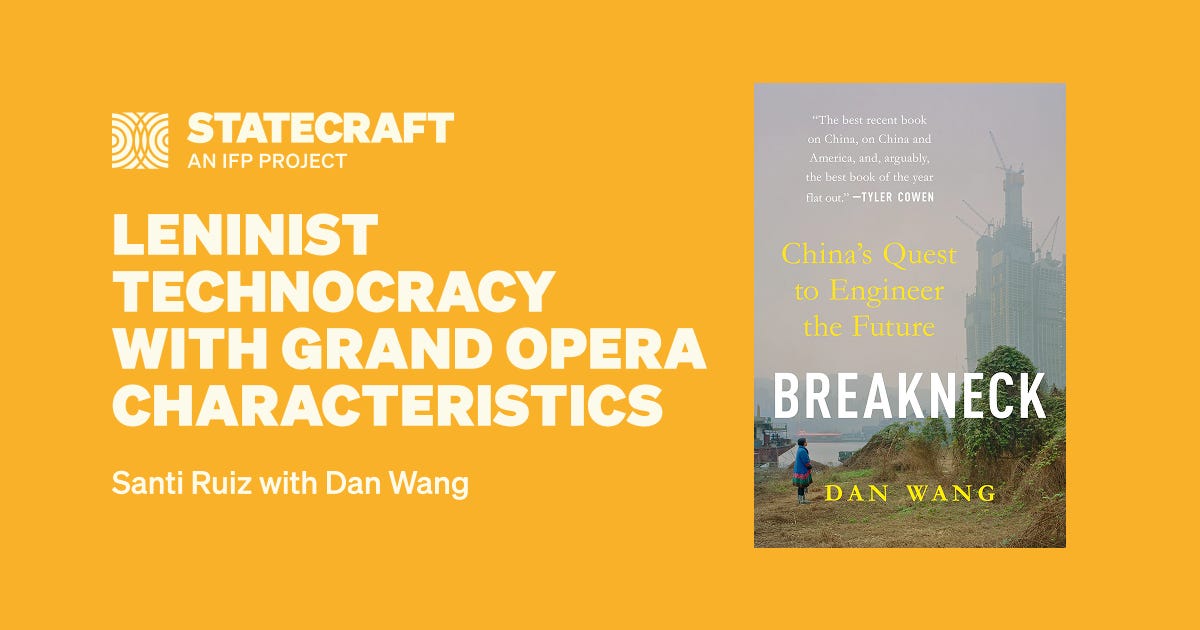
Leninist Technocracy with Grand Opera Characteristics
Today I'm talking to Dan Wang. He has a great new book, Breakneck: China's Quest to Engineer the Future. Dan spent the better part of the last decade in China and published a yearly letter summarizing his thoughts, explorations, and eating.Breakneck is like those letters: it goes all over the place, as does our conversation. Topics include:* America's overabundance of lawyers* Whether our ruling c

Four Ways to Fix Government HR
Today I'm talking to economic historian Judge Glock, Director of Research at the Manhattan Institute. Judge works on a lot of topics: if you enjoy this episode, I'd encourage you to read some of his work on housing markets and the Environmental Protection Agency. But I cornered him today to talk about civil service reform.Since the 1990s, over 20 red and blue states have made radical changes to ho
How to Be a Good Intelligence Analyst
Today we're joined by Dr. Rob Johnston. He's an anthropologist, an intelligence community veteran, and author of the cult classic Analytic Culture in the US Intelligence Community, a book so influential that it's required reading at DARPA. But first and foremost, Johnston is an ethnographer. His focus in that book is on how analysts actually produce intelligence analysis.Johnston answers a lot of
How to Fix Foreign Aid
We’ve covered the US Agency for International Development, or USAID, pretty consistently on Statecraft, since our first interview on PEPFAR, the flagship anti-AIDS program, in 2023. When DOGE came to USAID, I was extremely critical of the cuts to lifesaving aid, and the abrupt, pointlessly harmful ways in which they were enacted. In March, I wrote, “The DOGE team has axed the most effective and ef

How Cheaply Could We Build High-Speed Rail?
At the end of April, the Transit Costs Project released a report: it’s called How to Build High-Speed Rail on the Northeast Corridor. As the name suggests, the authors of the report had a simple goal: the stretch of the US from DC and Baltimore through Philadelphia to New York and up to Boston, the densest stretch of the country. It’s an ideal location for high-speed rail. How could you actually b
Governance Lessons from the Constitutional Convention
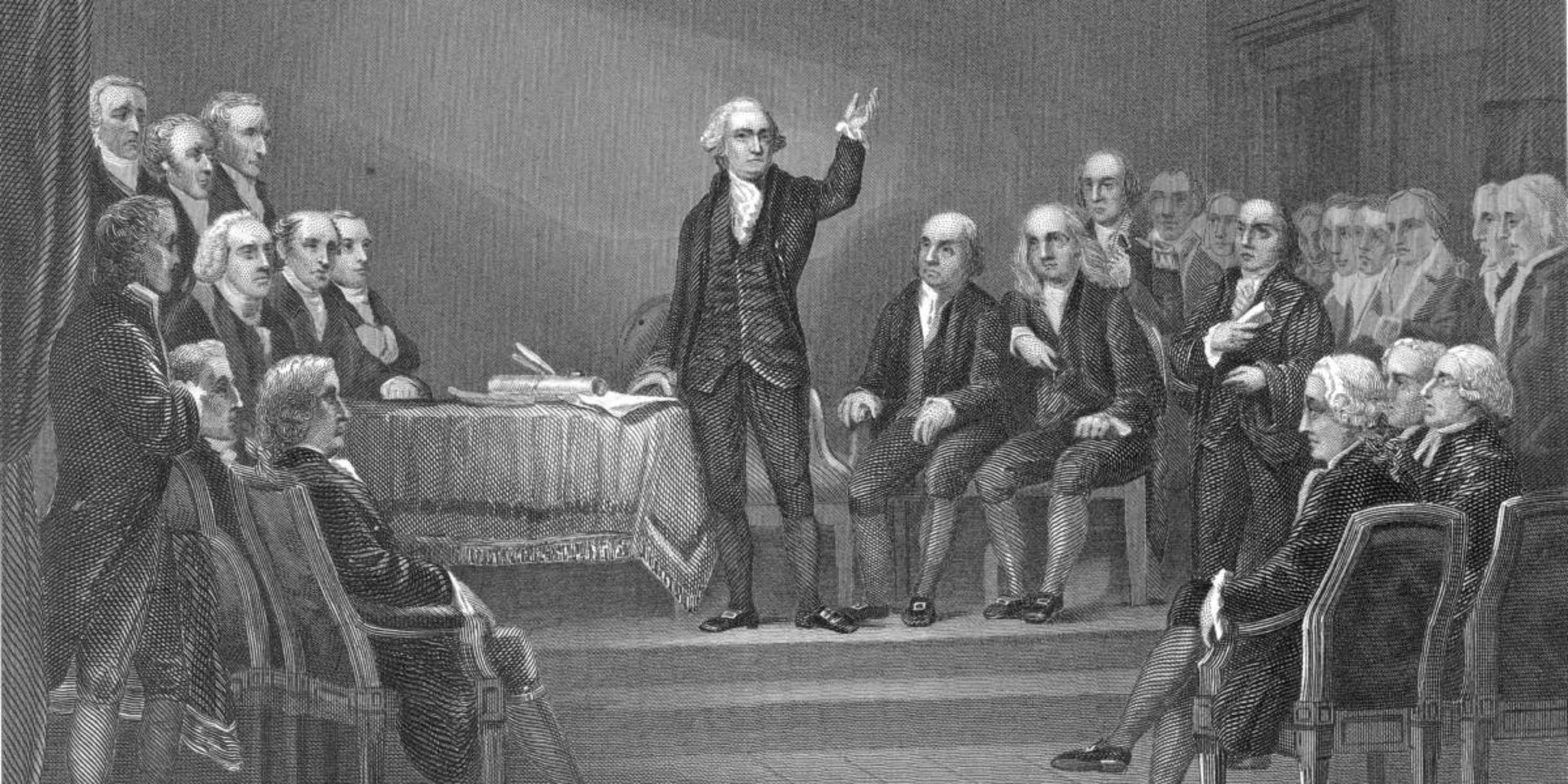
Happy Fourth of July! I’m attending a wedding today, so this episode is from the vault, in a way, although it’s its first time on Statecraft. I originally published this essay in January of 2022 on Mirror, shortly after my wife had joined the core team of a DAO that was attempting to acquire a first-edition copy of the US Constitution. I had been reading a history of the constitutional convention,
How to Predict the Future
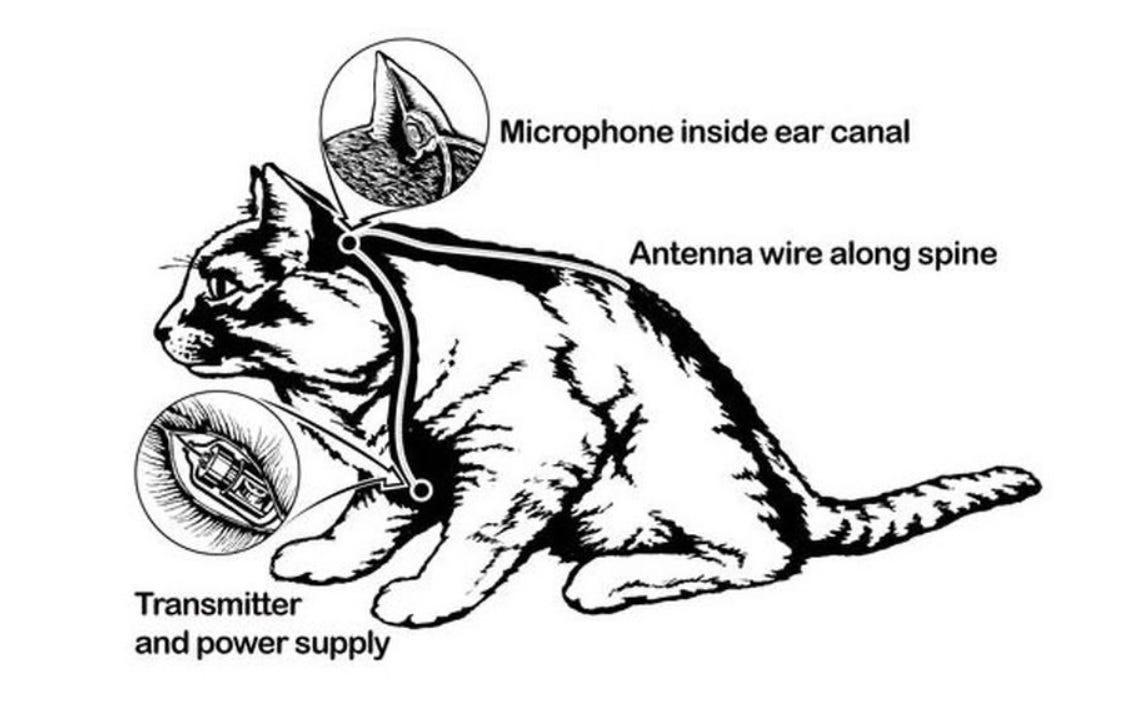
The decisions that humans make can be extraordinarily costly. The wars in Iraq and Afghanistan were multi-trillion-dollar decisions. If you can improve the accuracy of forecasting individual strategies by just a percentage point, that would be worth tens of billions of dollars. Yet society does not invest tens of billions of dollars in figuring out how to improve the accuracy of human judgment. Th

How UK Biobank Was Built
There are many forces in policymaking (and in our lives generally) that push us towards the short term. Many of the most important measurements in political life are on extremely tight timelines: election cycles, monthly unemployment reports, even the President's daily intelligence briefing. The pressure to get results — and to show results — on a tight turnaround is incredible.One of my question

What Can We Learn from Estonia?
What can we learn from Estonia? It’s not a question you hear often — the nation of under two million residents doesn’t mean much to many. But for good governance advocates, it’s long been a touchpoint for its “e-government” model. The New Yorker wrote in 2017 that, “apart from transfers of physical property, such as buying a house, all bureaucratic processes can be done online.” Wired called Eston
How to Save DC's Metro
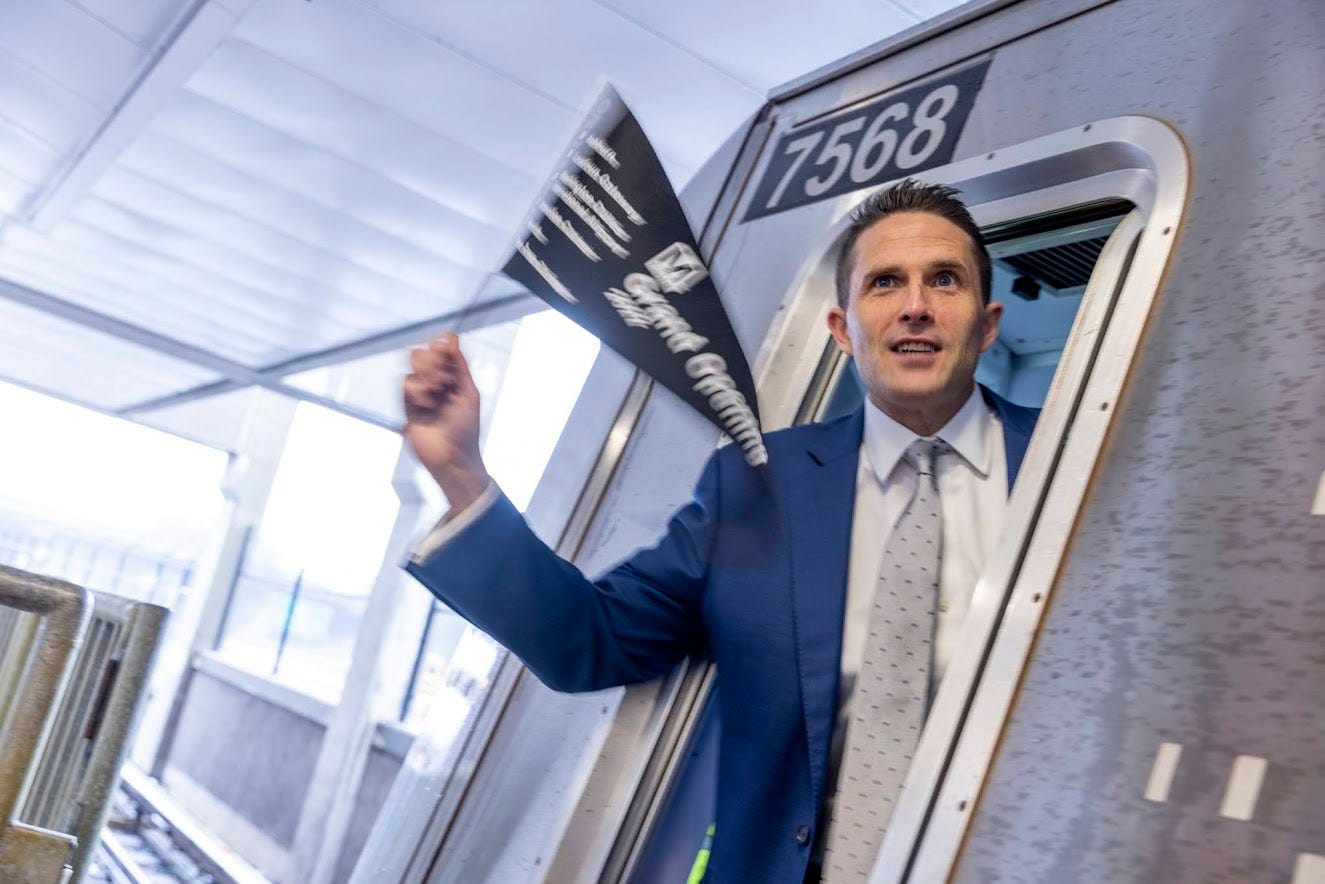
Today we talked to Randy Clarke, the head of DC’s Metro system, WMATA. If you’re a transit nerd, you probably know about Clarke — he’s become something of a celebrity for his public presence and disciplined improvement of a transit system that was facing disaster in the aftermath of COVID (and the decision to allow large swathes of federal employees to work from home).I’ve been a regular WMATA rid

How to Run the Treasury Department
Santi: Hi, this is a special episode of Statecraft. I've got a wonderful guest host with me today. Kyla Scanlon: Hey, I’m Kyla Scanlon! I'm the author of a book called In This Economy and an economic commentator. Santi: Kyla has joined me today for a couple reasons. One, I'm a big fan of her newsletter: it's about economics, among many other things. She had a great piece recently on what we can l

How to Build the '90s DOGE
Today, we’re taking a look at a predecessor to DOGE: The Reinventing Government project (officially known as the NPR, for National Partnership for Reinventing Government). The NPR ran for almost the full duration of President Bill Clinton’s two terms, and led to the elimination of over 100 programs and over 250,000 federal jobs.Both NPR and DOGE are case studies in a long history of government re

How the Federal Transit Administration Works
Last week, we talked to Stephanie Pollack about salvaging a transit project in danger of failure — it was the first in a set of interviews we’re running on transit. Today, we’re zooming out further, and looking at how the federal government funds local transit.Peter Rogoff spent 22 years as a staffer on the most powerful Senate committee, the Appropriations Committee (on the Democratic side). “App

How to Salvage a Transit Project
This conversation, with transit guru Stephanie Pollack, is one of my favorite conversations we’ve recorded on here. For one, I had a blast recording — Stephanie’s funny, and she’s got a killer Boston accent. For another, she explains some of the ideas I care about incredibly well — how well-intentioned regulations turn bad, how political pressures make simple things hard to pull off, why building

How to Run a $5 Trillion Payment System
At the end of January, the Trump administration pushed out a top Treasury department official after he refused to give DOGE access to the government's vast payment system. We're talking to him today. It's one of his first public interviews since leaving the civil service.David Lebryk was the highest ranking civil servant in the Treasury Department, and one of the most senior civil servants in the

How to Fix Risk Assessment in Child Welfare
Today we talked to Alex Jutca; he leads analytics and technology at the Allegheny County Department of Human Services, where his team’s mission is to build the country’s leading R&D lab for local government. Allegheny County is known for having the best integrated data of any state and local system in the country, and they’ve applied it effectively, like using predictive algorithms in child welfar

How to Fix a Department's Funding Tools
Today’s guest is Narayan Subramanian. Under the Biden administration, he was a legal advisor, and then an advisor to the Secretary at the Department of Energy (DOE). Later, he was the Director for Energy Transition at the White House National Security Council.We’ve talked to previous guests about how to ensure government money flows fast and effectively. At the DOE, Subramanian helped ensure that

How to Beat Crime in New York City
Today’s guest is Peter Moskos, a professor at John Jay College of Criminal Justice. He spent two years as a police officer in Baltimore. I asked him to come on and talk about his new book, Back from the Brink, Inside the NYPD and New York City's Extraordinary 1990s Crime Drop. It’s one of my favorite books I’ve read this year (and it was one of my three book recommendations on Ezra Klein’s show la
50 Thoughts on DOGE
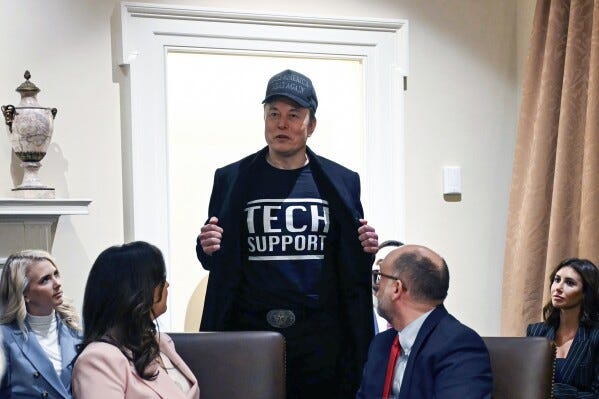
DOGE is the most interesting story in state capacity right now. Yet although we’ve talked around it on Statecraft, I haven’t covered it directly since the beginning of the administration. In part, that’s because of the whirlwind pace of news, but also because of the sense I get in talking to other DOGE watchers, that we’re like blind men feeling different parts of the elephant. And, frankly, becau

How to Run a Private Military Company
Today’s guest is John Lechner, a writer and researcher. He's here today to talk about his new book about the Wagner Group, a Russian state-funded private military group, or PMC. The book is called Death Is Our Business: Russian Mercenaries and the New Era of Private Warfare, and is out March 4th (you can preorder it here). It’s a crazy read, and draws on multiple trips John took to frontlines in U

There Are Too Many Judicial Injunctions
Friend-of-the-pod Nick Bagley joined us to explain judicial review: why it's not as confusing as it sounds, and why it's at the center of a political firestorm.Bagley is an expert in administrative law who served as special counsel and chief legal counsel to Democratic Michigan Governor Gretchen Whitmer. We've had him on a couple times for conversations on how bureaucracy is breaking government an

How to Beat Megafires
What happened in LA last month? On that, basically everyone agrees: devastating wildfires that killed at least 29 people and cost at least $100 billion.But why did those fires burn so intensely for so long? I had my own view, but I don’t follow fires closely. So I talked to Matt Weiner, CEO and founder of Megafire Action.We discuss:* California knows it has a fire problem. Why can’t it control it?

Why the Two Parties Operate Differently
Today I'm talking with Jo Freeman: a founding member of the women’s liberation movement in the 1960s, a civil rights campaigner, an attendee to every Democratic party convention since 1964, and a political scientist. She’s not the most typical Statecraft guest. But her work on how the two parties work - not just what they believe, but how they operate organizationally - is incredibly insightful. I

How to Budget for the SEC
This is the second in a two-part series with my dad, Diego Ruiz. In the first episode, we discussed his time helping run a political campaign in Nicaragua, and later his time staffing California Representative Chris Cox. Today, we jump ahead to his time as executive director of the Securities and Exchange Commission (SEC) during the 2008 financial crisis.In this episode, we discuss:* Why the SEC c

How to Win an Election Against the Communists
Today's guest is near and dear to my heart. It's my dad, Diego Ruiz. We recorded this in person, and we both had the same cold, which you may be able to hear. At some point, you may also hear my son in the background, which makes three generations of Ruizes on the podcast.Diego has helped win elections in the US and Central America, served as Executive Director of the Securities and Exchange Commi
What to Expect from DOGE
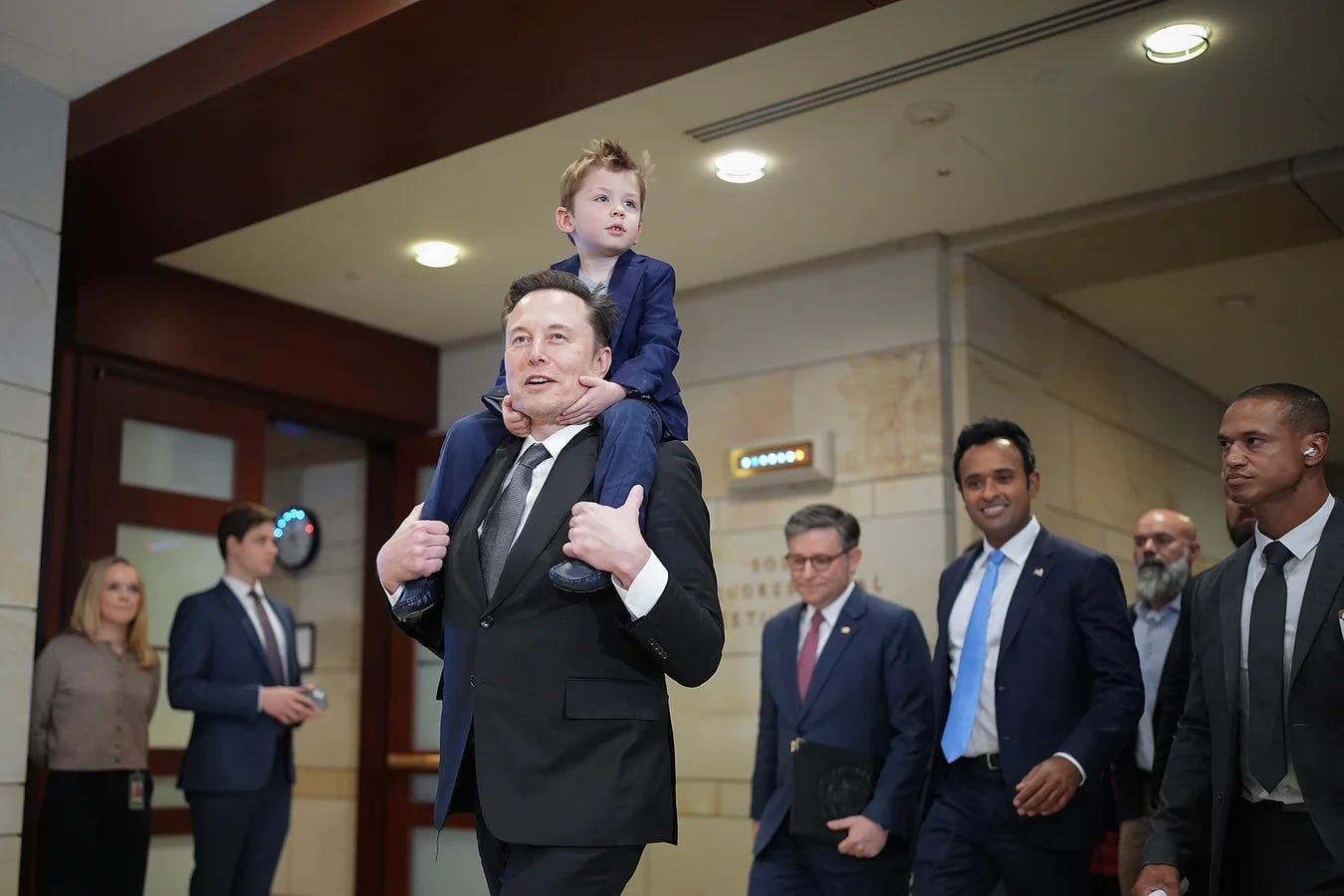
Happy New Year! I went on the American Compass podcast last month to talk to American Compass chief economist Oren Cass about government efficiency, state capacity, and what Trump’s Department of Government Efficiency (DOGE) is likely to tackle.We discuss:* Why is it so hard to fire federal employees?* Off-the-wall ways to save government money* The West Coast meets East Coast dynamic in DOGE* The

What Can the Brits Teach Us About State Capacity?
Today, we talk to Jennifer Pahlka and Andrew Greenway about their new paper on state capacity. It’s called “The How We Need Now: A Capacity Agenda for 2025 and Beyond.”We discuss:What is “state capacity?”Why is there fresh interest in the topic in the UK?How did the model of a “government digital service” spread to the US?How do you fix unemployment insurance? This is a public episode. If you woul

Did the Courts Just Nuke Environmental Review?
Today, we’re diving into everyone’s favorite Statecraft topic: administrative law! The two court cases we’re discussing could have huge ramifications for how we build things in America.We brought three of our favorite administrative law professors together: James Coleman is a professor at the University of Minnesota, Adam White is the Executive Director of the Gray Center for the Study of the Admi
How to Stage a Coup
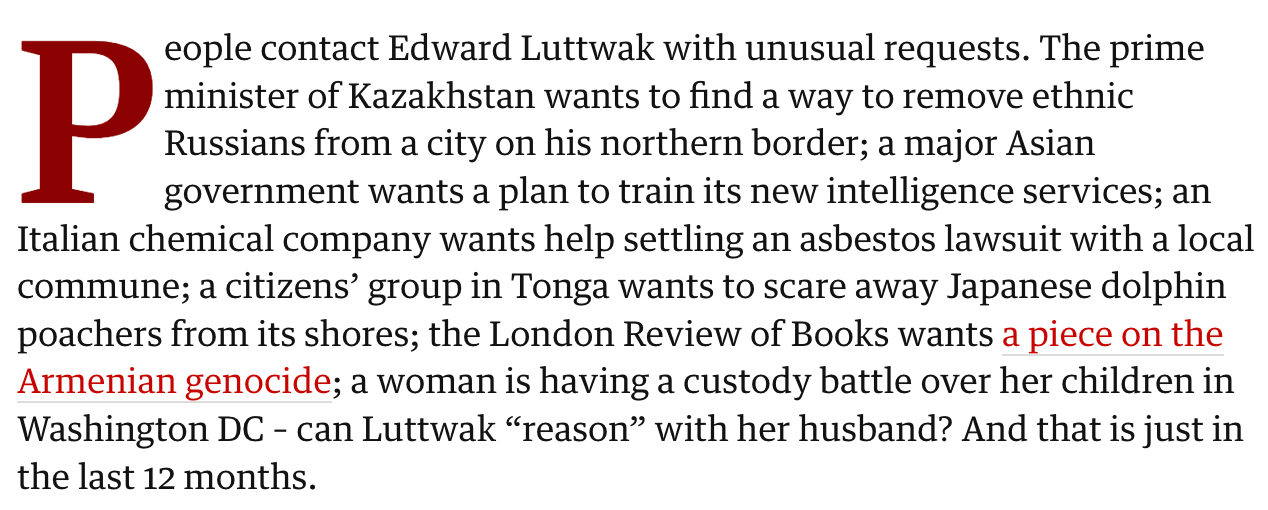
Today's interviewee has been my white whale for a while. Edward Luttwak was born in 1942, and since then he's lived a wilder life than anyone I know. From Chairman Mao's funeral to late nights drinking with Putin, Luttwak's seen it all.Timestamps:(00:00) Introduction(1:30) How to stage a coup in the 21st century(8:21) Why Luttwak is responsible for a global decline in coups(16:57) Iran’s real goal

How Bureaucracy Is Breaking Government
Brief intros: Nicholas Bagley was General Counsel to Governor Gretchen Whitmer. Kathy Stack served almost three decades at the Office of Management and Budget (OMB). Jenny Mattingley also served at the OMB, focusing on hiring reform and workforce efforts.Timestamps:(00:00) Introduction(04:42) “I think all three of you have something to say about the Paperwork Reduction Act.”(12:38) A one-way ratch

How to Build a Flying Ebola Hospital
I’ve been trying to get a conversation with today’s interviewee, Eric Van Gieson, PhD, since March. Van Gieson is a remarkable character, with a crazy CV: more than 25 years of experience in developing medical technology, and stints at multiple federal agencies including DARPA.A lot of people have spilled a lot of ink discussing what went wrong during COVID, but I think what Van Gieson lays out he

How to Produce a Kamikaze Drone
Today’s interviewee is Chris Anderson. Anderson’s a former DoD program manager who served in a unique organization called the US Army Asymmetric Warfare Group (AWG). Anderson is currently the Chief Operating Officer at Troika Solutions, a defense consulting firm based in Virginia. We discussed:The birth of the Asymmetric Warfare GroupWhy American troops in Afghanistan couldn’t strike Taliban oper

How to Rebuild the Arsenal of Democracy
I had the distinct pleasure of hosting Trae Stephens and Michael Kratsios on a panel in San Francisco in September on the topic of “Rebuilding the arsenal of democracy.” Trae Stephens is a general partner at Founders Fund and a Co-Founder of Anduril, a defense tech company that specializes in advanced autonomous systems.Michael Kratsios served as Chief Technology Officer of the United States in th

Does Anyone in Government Care About Productivity Growth?
Today’s episode is an interview with a colleague of mine at the Institute for Progress. Ben Jones is an economist who focuses on the sources of economic growth in advanced economies, and he’s a Non-Resident Senior Fellow at IFP.We recorded this conversation at the second #EconTwitterIRL Conference last month in Lancaster, PA, which IFP hosted alongside the Economic Innovation Group). The other int

How to Prep Hospitals for a Shooting War
Today, we spoke to Dr. Jeffrey Freeman, who directs the National Center for Disaster Medicine and Public Health (NCDMPH). Dr. Freeman leads a team that Congress has tasked with studying something called the National Disaster Medical System, which would coordinate how we treat casualties in the event of a hot war with a peer. Freeman worries that our on-paper system for distributing patients is lik

How OIRA Works
A few months ago, I read a great essay by Sid Jha on the Chevron doctrine.Sid had also written to me, saying he’d love a Statecraft interview about OIRA, the Office of Regulatory Affairs. It's the division of the Office of Management and the Budget that reviews all major regulations from agencies.I thought this was a great idea, and I asked if he'd be interested in co-hosting an episode with me. H

How to Build State Capacity
This week’s interview is a live recording of a panel I hosted three weeks ago at the Bottlenecks Conference in San Francisco, with Sam Hammond and Jen Pahlka. We discussed:(00:00) Introduction(00:39) Do the right and left disagree about state capacity?(7:50) Will AI make the whole state capacity debate obsolete?(11:05) What cues should today’s reformers take from the Progressive Era?(14:19) Should

How to Make a World Cup Bid
Today’s interviewee, Jonathan Luff, was a British diplomat for more than a decade, and worked on the British bid for the 2018 World Cup in the Prime Minister’s office. Timestamps:[00:00] Introduction[00:21] How do you bid for the World Cup?[11:37] Was the UK too naive to win a bid?[20:52] Does British soft power still matter?[23:51] What are the bottlenecks to British economic growth?[31:37] Can B

How to Fix Defense Procurement
Today's episode is about how the government procures military equipment. There’s a growing Washington consensus that we simply can’t buy the weapons we need, in the quantities we need, on the timelines we need.To better understand what’s going wrong, we talked to Dr. Arun Seraphin. Seraphin just finished serving as a commissioner on a 14-person “blue ribbon commission” to investigate reforms to th

How to Build the British ARPA
Today’s interviewee, James Phillips, was formerly the science and tech adviser to Prime Minister Boris Johnson. An acclaimed systems neuroscientist, Phillips helped develop the UK’s rapid COVID testing and helped create the Advanced Research and Invention Agency (ARIA). We discussed:Dominic Cummings’ band of “weirdos and misfits”Red-teaming WestminsterWhy you should always be willing to resignThe

How Statecraft Works
For the anniversary of the newsletter, I talk to Daniel Golliher of maximumnewyork.com about how Statecraft works, what we've learned, and the year ahead. This is a public episode. If you would like to discuss this with other subscribers or get access to bonus episodes, visit www.statecraft.pub
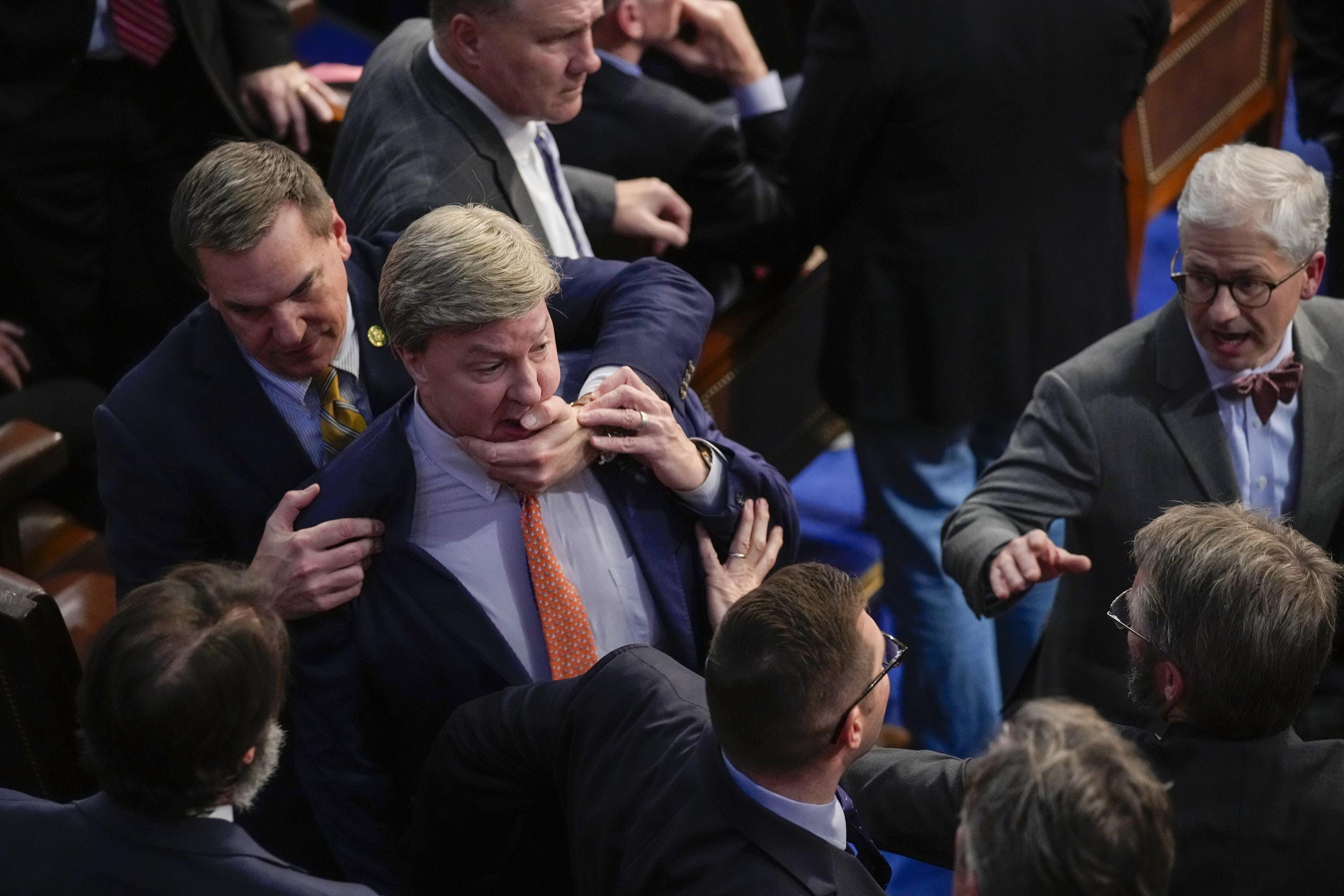
How to Modernize Congress
Today’s interviewee is Matt Lira, who has held a wide range of insider roles on the Hill and White House. Our topic: Why Congress is so technologically weak, and how that can change.We discussed:* Why is Congress so slow to adopt technologies that would significantly ease operations?* How did a Congressman unilaterally introduce live-streaming of Congressional hearings?* Would a Google Docs-style
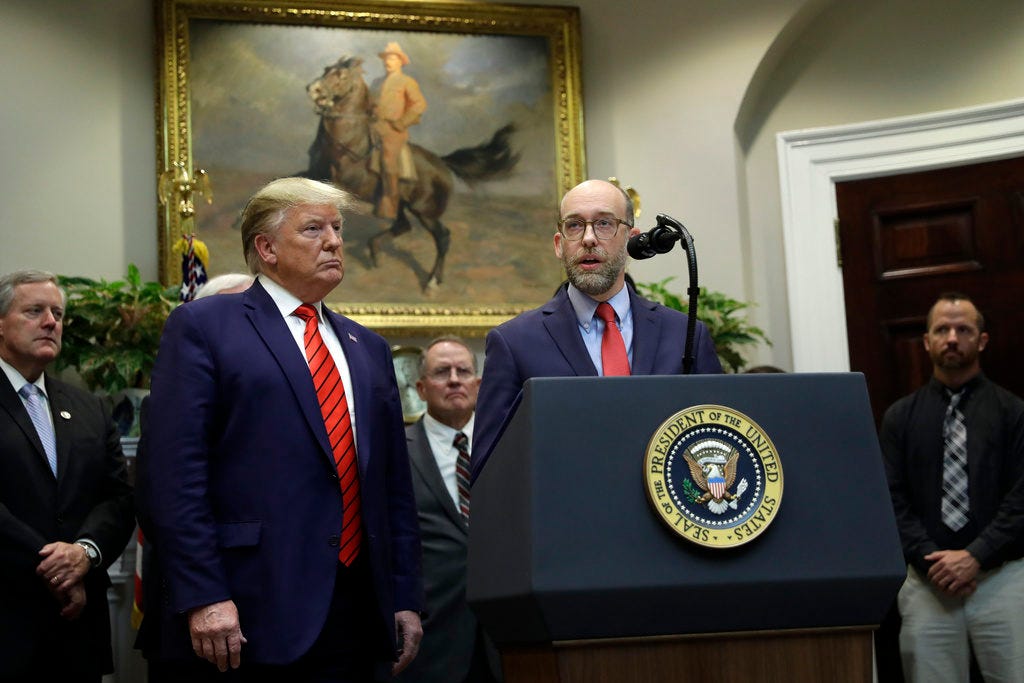
How to Defend Presidential Authority
Russ Vought served as the director of President Trump’s Office of Management and the Budget (OMB). When the OMB under Vought withheld military aid from Ukraine, House Democrats initiated an investigation that ultimately led to Trump’s first impeachment.Vought now leads a think tank, the Center for Renewing America, and is reportedly building a “180-day playbook” for implementing a policy agenda f

How to Report Inflation to the President
Today, I spoke to Ernie Tedeschi, former Chief Economist at the Council of Economic Advisers (These days he’s Director of Economics at The Budget Lab).Timestamps:[00:00]“Fighting the last war” in stimulus packages[00:23] What’s driving inflation[11:59] The tools CEA economists have[16:45] The tools CEA economists wish they had[33:50] Are high interest rates driving low consumer sentiment?[38:39] W
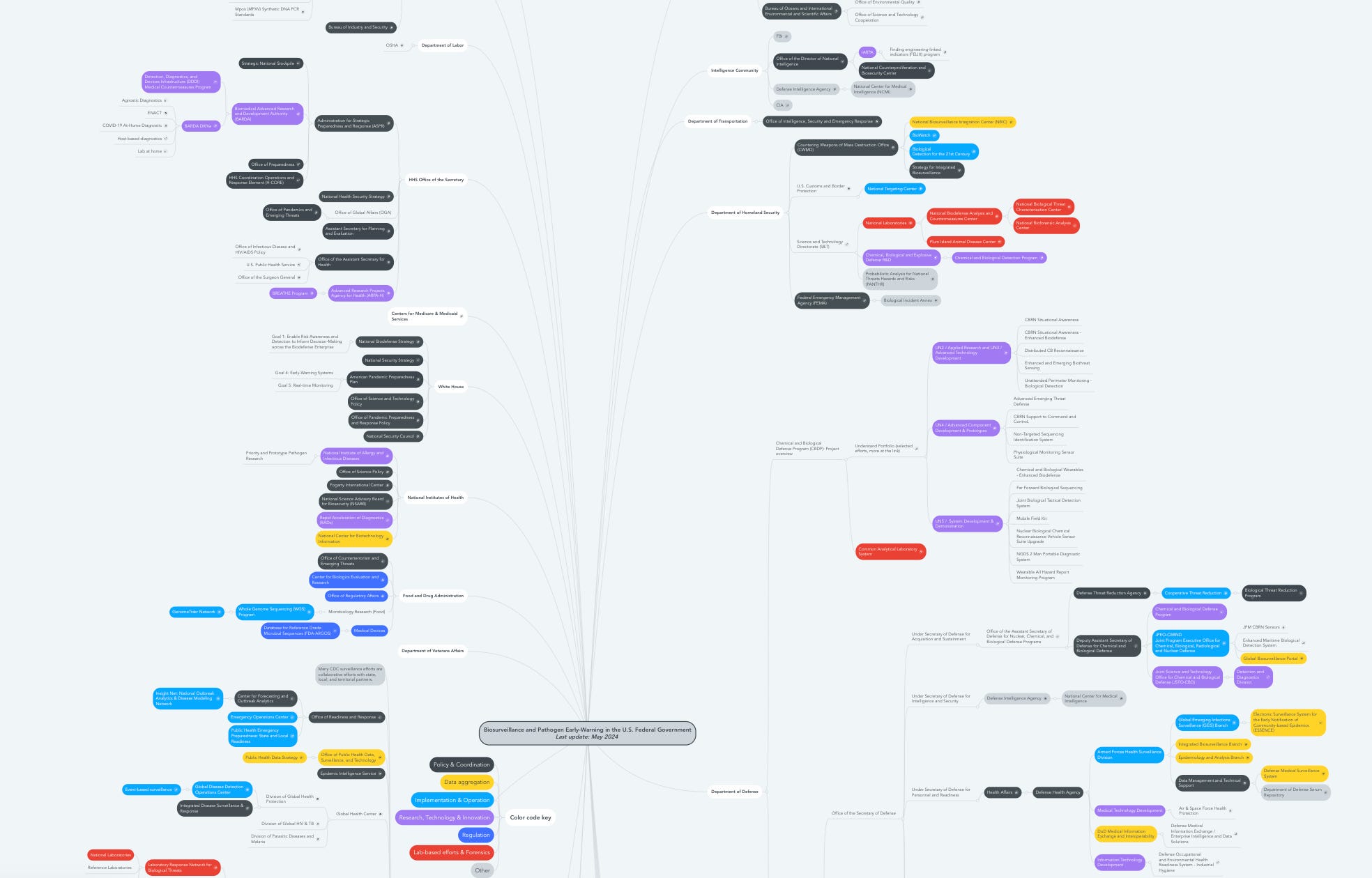
How to Invest Federal Funds Like a VC
The Biomedical Advanced Research and Development Authority (BARDA) helped bring Moderna’s mRNA vaccine through clinical trials to market. BARDA’s Division of Research, Innovation, and Ventures (DRIVe) is its in-house biotech venture capital firm, charged with identifying and incubating technologies for U.S. biodefense and preparedness.Today's interviewee is Dr. Sandeep Patel, the Director of DRIVe

How to Calm Oil Markets
The Strategic Petroleum Reserve is the world’s largest emergency supply of crude oil. In huge underground salt caverns along the Gulf of Mexico, the American federal government can store up to 714 million barrels, more than what the country uses in one month. Historically, the SPR has been tapped at the discretion of the president when natural disasters or crises cause the price of oil for consume
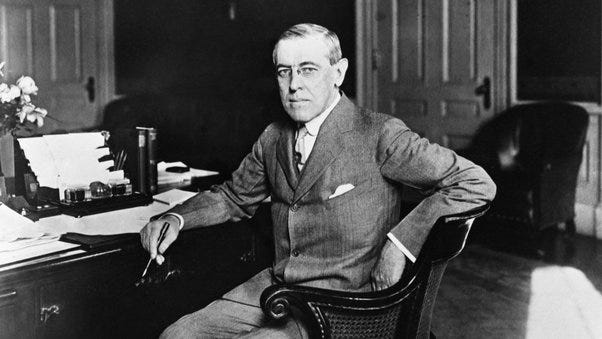
How to Hide the President’s Condition
In 1919, President Woodrow Wilson suffered a major stroke. The president, a widower, was kept in solitude by his second wife and a tight ring of advisers. For months, senior executive branch and legislative officials could not see the president. The White House claimed the president would shortly return to full health, and that he suffered only from “nervous exhaustion.” His wife managed the flow
How to Catch a Lab Leak
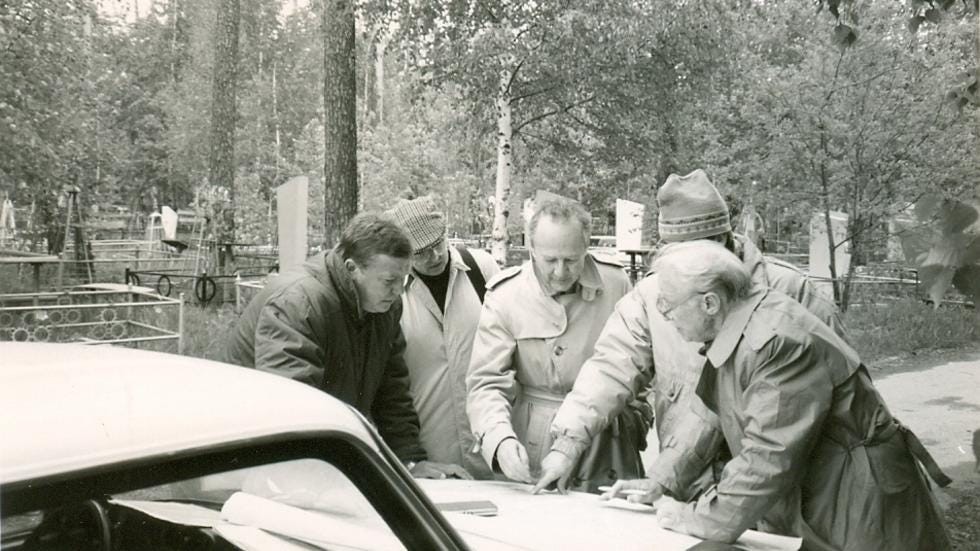
In April and May 1979, between 66 and 300 people died from anthrax in the Russian city of Sverdlovsk, now called Yekaterinburg. The Soviet authorities seized doctors’ records and quickly rolled out an explanation: the deaths were an accident caused by contaminated meat. But American intelligence agencies suspected a more nefarious explanation: the Soviets were secretly developing biological weapon

How to Ban Biological Weapons
In 1969, President Nixon announced the end of all American offensive biological weapons programs, and renounced the first use of chemical weapons. But it wasn’t until several months later that Nixon confirmed that the U.S. would end all military research into toxins, which can be created either in nature or in the lab.Nixon chose to end that toxin research because of one man, our interviewee today
How to Present Decisions to POTUS
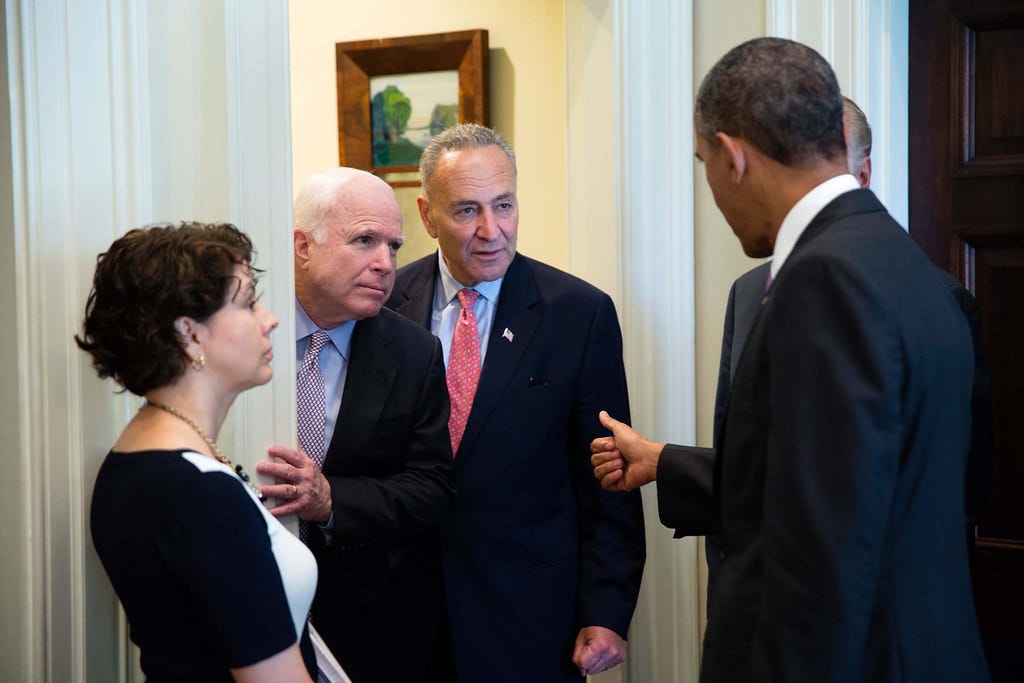
Most Americans have never heard of the Domestic Policy Council. What is it, and why does it matter? Today, we interviewed Cecilia Muñoz, former Director of the Domestic Policy Council under President Obama. We cover: Why did the Biden presidential transition differ sharply from the Obama transition? How do you stop bureaucrats from slow-walking policies they dislike? What decisions never make thei

How to Shape a Market
Today's interviewee, Professor Chris Snyder, is a Non-Resident Senior Fellow at the Institute for Progress (IFP). He teaches economics at Dartmouth College, where he specializes in industrial organization and microeconomic theory. He is also a research associate at the NBER, treasurer of the Industrial Organization Society, and a faculty director for the University of Chicago's Market Shaping Acce

How to Run a CIA Base in Afghanistan
Today, we talked to Laura Thomas, a former Central Intelligence Agency (CIA) case officer and Chief of Base in Afghanistan. She has served over 17 years in national security and leadership roles. We discuss:00:00 How a CIA station operates8:46 What kind of intelligence failure was October 7th?24:39 Why did intelligence agencies predict Kabul would fall quickly to the Taliban?30: 09 The holes in ho

How to Secure Weapons-Grade Uranium
When the Soviet Union fell in 1991, hundreds of tons of nuclear materials were suddenly unsecured. The new, fragile Russian government had no ability or desire to claim facilities in formerly Soviet states, and it could no longer pay nuclear plant workers. Operatives from rogue states offered cash to purchase uranium and higher nuclear physicists. Today we talked to Andy Weber, one of the American

How to Save Twenty Million Lives
Twenty years ago, the U.S. launched the largest, most successful global health initiative to ever address a single disease. The President’s Emergency Plan for AIDS Relief (PEPFAR) is credited with saving at least 20 million lives. New York Times columnist Nick Kristof recently called PEPFAR “the single best policy of any president in my lifetime.”By early 2002, HIV/AIDS was devastating sub-Saharan