AXRP - the AI X-risk Research Podcast
AXRP (pronounced axe-urp) is the AI X-risk Research Podcast hosted by Daniel Filan. In each episode, Daniel talks with researchers about their papers on reducing the risk of artificial intelligence causing an existential catastrophe. The conversations explore why the research was done and how it might help prevent AI from permanently and drastically curtailing humanity's future potential. Transcripts and more information are available at axrp.net.
Episodes

50 - Eli Lifland on AI 2027
Remember AI 2027? Not AI 2040, the newest coolest thing AI Futures Project has done, but AI 2027, their OG product? At long last, we have an AXRP episode about it. Enjoy! Transcript: https://axrp.net/episode/2026/08/03/episode-50-eli-lifland-ai-2027.html Topics we discuss, and timestamps: 0:00:12 What is AI 2027? 0:10:17 What happens in AI 2027? 0:18:08 Why two endings? 0:21:15 Who did what?
49 - Caspar Oesterheld on Program Equilibrium
How does game theory work when everyone is a computer program who can read everyone else's source code? This is the problem of 'program equilibria'. In this episode, I talk with Caspar Oesterheld on work he's done on equilibria of programs that simulate each other, and how robust these equilibria are. Patreon: https://www.patreon.com/axrpodcast Ko-fi: https://ko-fi.com/axrpodcast Transcript: http

48 - Guive Assadi on AI Property Rights
In this episode, Guive Assadi argues that we should give AIs property rights, so that they are integrated in our system of property and come to rely on it. The claim is that this means that AIs would not kill or steal from humans, because that would undermine the whole property system, which would be extremely valuable to them. Patreon: https://www.patreon.com/axrpodcast Ko-fi: https://ko-fi.com/a

47 - David Rein on METR Time Horizons
When METR says something like "Claude Opus 4.5 has a 50% time horizon of 4 hours and 50 minutes", what does that mean? In this episode David Rein, METR researcher and co-author of the paper "Measuring AI ability to complete long tasks", talks about METR's work on measuring time horizons, the methodology behind those numbers, and what work remains to be done in this domain. Patreon: https://www.pat

46 - Tom Davidson on AI-enabled Coups
Could AI enable a small group to gain power over a large country, and lock in their power permanently? Often, people worried about catastrophic risks from AI have been concerned with misalignment risks. In this episode, Tom Davidson talks about a risk that could be comparably important: that of AI-enabled coups. Patreon: https://www.patreon.com/axrpodcast Ko-fi: https://ko-fi.com/axrpodcast Transc
45 - Samuel Albanie on DeepMind's AGI Safety Approach
In this episode, I chat with Samuel Albanie about the Google DeepMind paper he co-authored called "An Approach to Technical AGI Safety and Security". It covers the assumptions made by the approach, as well as the types of mitigations it outlines. Patreon: https://www.patreon.com/axrpodcast Ko-fi: https://ko-fi.com/axrpodcast Transcript: https://axrp.net/episode/2025/07/06/episode-45-samuel-albani

44 - Peter Salib on AI Rights for Human Safety
In this episode, I talk with Peter Salib about his paper "AI Rights for Human Safety", arguing that giving AIs the right to contract, hold property, and sue people will reduce the risk of their trying to attack humanity and take over. He also tells me how law reviews work, in the face of my incredulity. Patreon: https://www.patreon.com/axrpodcast Ko-fi: https://ko-fi.com/axrpodcast Transcript: ht

43 - David Lindner on Myopic Optimization with Non-myopic Approval
In this episode, I talk with David Lindner about Myopic Optimization with Non-myopic Approval, or MONA, which attempts to address (multi-step) reward hacking by myopically optimizing actions against a human's sense of whether those actions are generally good. Does this work? Can we get smarter-than-human AI this way? How does this compare to approaches like conservativism? Listen to find out. Patr

42 - Owain Evans on LLM Psychology
Earlier this year, the paper "Emergent Misalignment" made the rounds on AI x-risk social media for seemingly showing LLMs generalizing from 'misaligned' training data of insecure code to acting comically evil in response to innocuous questions. In this episode, I chat with one of the authors of that paper, Owain Evans, about that research as well as other work he's done to understand the psycholog

41 - Lee Sharkey on Attribution-based Parameter Decomposition
What's the next step forward in interpretability? In this episode, I chat with Lee Sharkey about his proposal for detecting computational mechanisms within neural networks: Attribution-based Parameter Decomposition, or APD for short. Patreon: https://www.patreon.com/axrpodcast Ko-fi: https://ko-fi.com/axrpodcast Transcript: https://axrp.net/episode/2025/06/03/episode-41-lee-sharkey-attribution-ba

40 - Jason Gross on Compact Proofs and Interpretability
How do we figure out whether interpretability is doing its job? One way is to see if it helps us prove things about models that we care about knowing. In this episode, I speak with Jason Gross about his agenda to benchmark interpretability in this way, and his exploration of the intersection of proofs and modern machine learning. Patreon: https://www.patreon.com/axrpodcast Ko-fi: https://ko-fi.com

38.8 - David Duvenaud on Sabotage Evaluations and the Post-AGI Future
In this episode, I chat with David Duvenaud about two topics he's been thinking about: firstly, a paper he wrote about evaluating whether or not frontier models can sabotage human decision-making or monitoring of the same models; and secondly, the difficult situation humans find themselves in in a post-AGI future, even if AI is aligned with human intentions. Patreon: https://www.patreon.com/axrp

38.7 - Anthony Aguirre on the Future of Life Institute
The Future of Life Institute is one of the oldest and most prominant organizations in the AI existential safety space, working on such topics as the AI pause open letter and how the EU AI Act can be improved. Metaculus is one of the premier forecasting sites on the internet. Behind both of them lie one man: Anthony Aguirre, who I talk with in this episode. Patreon: https://www.patreon.com/axrpodca

38.6 - Joel Lehman on Positive Visions of AI
Typically this podcast talks about how to avert destruction from AI. But what would it take to ensure AI promotes human flourishing as well as it can? Is alignment to individuals enough, and if not, where do we go form here? In this episode, I talk with Joel Lehman about these questions. Patreon: https://www.patreon.com/axrpodcast Ko-fi: https://ko-fi.com/axrpodcast Transcript: https://axrp.net/e

38.5 - Adrià Garriga-Alonso on Detecting AI Scheming
Suppose we're worried about AIs engaging in long-term plans that they don't tell us about. If we were to peek inside their brains, what should we look for to check whether this was happening? In this episode Adrià Garriga-Alonso talks about his work trying to answer this question. Patreon: https://www.patreon.com/axrpodcast Ko-fi: https://ko-fi.com/axrpodcast Transcript: https://axrp.net/episode/

38.4 - Shakeel Hashim on AI Journalism
AI researchers often complain about the poor coverage of their work in the news media. But why is this happening, and how can it be fixed? In this episode, I speak with Shakeel Hashim about the resource constraints facing AI journalism, the disconnect between journalists' and AI researchers' views on transformative AI, and efforts to improve the state of AI journalism, such as Tarbell and Shakeel'

38.3 - Erik Jenner on Learned Look-Ahead
Lots of people in the AI safety space worry about models being able to make deliberate, multi-step plans. But can we already see this in existing neural nets? In this episode, I talk with Erik Jenner about his work looking at internal look-ahead within chess-playing neural networks. Patreon: https://www.patreon.com/axrpodcast Ko-fi: https://ko-fi.com/axrpodcast The transcript: https://axrp.net/ep

39 - Evan Hubinger on Model Organisms of Misalignment
The 'model organisms of misalignment' line of research creates AI models that exhibit various types of misalignment, and studies them to try to understand how the misalignment occurs and whether it can be somehow removed. In this episode, Evan Hubinger talks about two papers he's worked on at Anthropic under this agenda: "Sleeper Agents" and "Sycophancy to Subterfuge". Patreon: https://www.patreon

38.2 - Jesse Hoogland on Singular Learning Theory
You may have heard of singular learning theory, and its "local learning coefficient", or LLC - but have you heard of the refined LLC? In this episode, I chat with Jesse Hoogland about his work on SLT, and using the refined LLC to find a new circuit in language models. Patreon: https://www.patreon.com/axrpodcast Ko-fi: https://ko-fi.com/axrpodcast The transcript: https://axrp.net/episode/2024/11

38.1 - Alan Chan on Agent Infrastructure
Road lines, street lights, and licence plates are examples of infrastructure used to ensure that roads operate smoothly. In this episode, Alan Chan talks about using similar interventions to help avoid bad outcomes from the deployment of AI agents. Patreon: https://www.patreon.com/axrpodcast Ko-fi: https://ko-fi.com/axrpodcast The transcript: https://axrp.net/episode/2024/11/16/episode-38_1-alan-
38.0 - Zhijing Jin on LLMs, Causality, and Multi-Agent Systems
Do language models understand the causal structure of the world, or do they merely note correlations? And what happens when you build a big AI society out of them? In this brief episode, recorded at the Bay Area Alignment Workshop, I chat with Zhijing Jin about her research on these questions. Patreon: https://www.patreon.com/axrpodcast Ko-fi: https://ko-fi.com/axrpodcast The transcript: https://

37 - Jaime Sevilla on AI Forecasting
Epoch AI is the premier organization that tracks the trajectory of AI - how much compute is used, the role of algorithmic improvements, the growth in data used, and when the above trends might hit an end. In this episode, I speak with the director of Epoch AI, Jaime Sevilla, about how compute, data, and algorithmic improvements are impacting AI, and whether continuing to scale can get us AGI. Patr
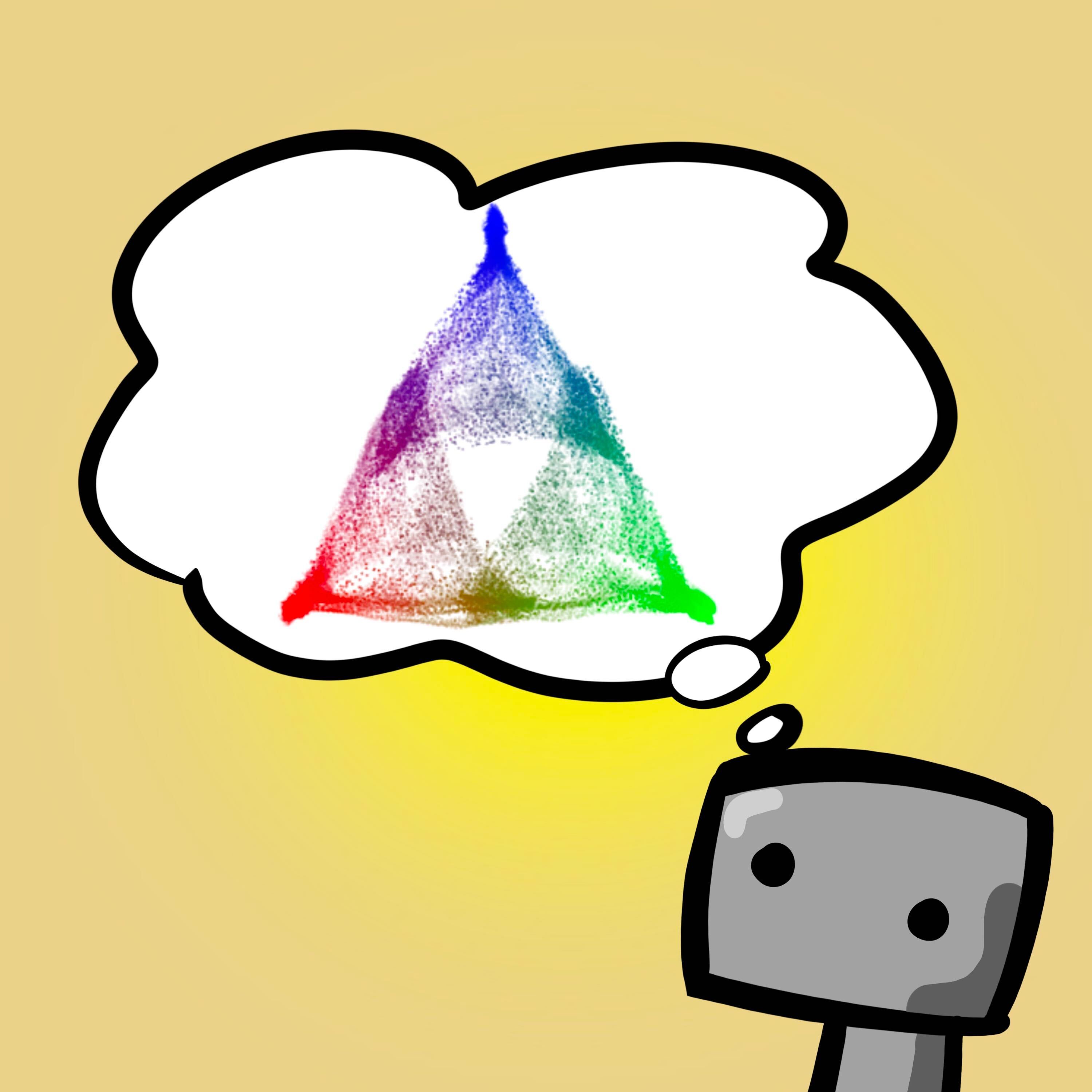
36 - Adam Shai and Paul Riechers on Computational Mechanics
Sometimes, people talk about transformers as having "world models" as a result of being trained to predict text data on the internet. But what does this even mean? In this episode, I talk with Adam Shai and Paul Riechers about their work applying computational mechanics, a sub-field of physics studying how to predict random processes, to neural networks. Patreon: https://www.patreon.com/axrpodcast
New Patreon tiers + MATS applications
Patreon: https://www.patreon.com/axrpodcast MATS: https://www.matsprogram.org Note: I'm employed by MATS, but they're not paying me to make this video.

35 - Peter Hase on LLM Beliefs and Easy-to-Hard Generalization
How do we figure out what large language models believe? In fact, do they even have beliefs? Do those beliefs have locations, and if so, can we edit those locations to change the beliefs? Also, how are we going to get AI to perform tasks so hard that we can't figure out if they succeeded at them? In this episode, I chat with Peter Hase about his research into these questions. Patreon: https://www.

34 - AI Evaluations with Beth Barnes
How can we figure out if AIs are capable enough to pose a threat to humans? When should we make a big effort to mitigate risks of catastrophic AI misbehaviour? In this episode, I chat with Beth Barnes, founder of and head of research at METR, about these questions and more. Patreon: patreon.com/axrpodcast Ko-fi: ko-fi.com/axrpodcast The transcript: https://axrp.net/episode/2024/07/28/episode-34-a

33 - RLHF Problems with Scott Emmons
Reinforcement Learning from Human Feedback, or RLHF, is one of the main ways that makers of large language models make them 'aligned'. But people have long noted that there are difficulties with this approach when the models are smarter than the humans providing feedback. In this episode, I talk with Scott Emmons about his work categorizing the problems that can show up in this setting. Patreon: p

32 - Understanding Agency with Jan Kulveit
What's the difference between a large language model and the human brain? And what's wrong with our theories of agency? In this episode, I chat about these questions with Jan Kulveit, who leads the Alignment of Complex Systems research group. Patreon: patreon.com/axrpodcast Ko-fi: ko-fi.com/axrpodcast The transcript: axrp.net/episode/2024/05/30/episode-32-understanding-agency-jan-kulveit.html Top

31 - Singular Learning Theory with Daniel Murfet
What's going on with deep learning? What sorts of models get learned, and what are the learning dynamics? Singular learning theory is a theory of Bayesian statistics broad enough in scope to encompass deep neural networks that may help answer these questions. In this episode, I speak with Daniel Murfet about this research program and what it tells us. Patreon: patreon.com/axrpodcast Ko-fi: ko-fi.c

30 - AI Security with Jeffrey Ladish
Top labs use various forms of "safety training" on models before their release to make sure they don't do nasty stuff - but how robust is that? How can we ensure that the weights of powerful AIs don't get leaked or stolen? And what can AI even do these days? In this episode, I speak with Jeffrey Ladish about security and AI. Patreon: patreon.com/axrpodcast Ko-fi: ko-fi.com/axrpodcast Topics we dis

29 - Science of Deep Learning with Vikrant Varma
In 2022, it was announced that a fairly simple method can be used to extract the true beliefs of a language model on any given topic, without having to actually understand the topic at hand. Earlier, in 2021, it was announced that neural networks sometimes 'grok': that is, when training them on certain tasks, they initially memorize their training data (achieving their training goal in a way that

28 - Suing Labs for AI Risk with Gabriel Weil
How should the law govern AI? Those concerned about existential risks often push either for bans or for regulations meant to ensure that AI is developed safely - but another approach is possible. In this episode, Gabriel Weil talks about his proposal to modify tort law to enable people to sue AI companies for disasters that are "nearly catastrophic". Patreon: patreon.com/axrpodcast Ko-fi: ko-fi.co

27 - AI Control with Buck Shlegeris and Ryan Greenblatt
A lot of work to prevent AI existential risk takes the form of ensuring that AIs don't want to cause harm or take over the world---or in other words, ensuring that they're aligned. In this episode, I talk with Buck Shlegeris and Ryan Greenblatt about a different approach, called "AI control": ensuring that AI systems couldn't take over the world, even if they were trying to. Patreon: patreon.com/a
26 - AI Governance with Elizabeth Seger
The events of this year have highlighted important questions about the governance of artificial intelligence. For instance, what does it mean to democratize AI? And how should we balance benefits and dangers of open-sourcing powerful AI systems such as large language models? In this episode, I speak with Elizabeth Seger about her research on these questions. Patreon: patreon.com/axrpodcast Ko-fi:

25 - Cooperative AI with Caspar Oesterheld
Imagine a world where there are many powerful AI systems, working at cross purposes. You could suppose that different governments use AIs to manage their militaries, or simply that many powerful AIs have their own wills. At any rate, it seems valuable for them to be able to cooperatively work together and minimize pointless conflict. How do we ensure that AIs behave this way - and what do we need

24 - Superalignment with Jan Leike
Recently, OpenAI made a splash by announcing a new "Superalignment" team. Lead by Jan Leike and Ilya Sutskever, the team would consist of top researchers, attempting to solve alignment for superintelligent AIs in four years by figuring out how to build a trustworthy human-level AI alignment researcher, and then using it to solve the rest of the problem. But what does this plan actually involve? In

23 - Mechanistic Anomaly Detection with Mark Xu
Is there some way we can detect bad behaviour in our AI system without having to know exactly what it looks like? In this episode, I speak with Mark Xu about mechanistic anomaly detection: a research direction based on the idea of detecting strange things happening in neural networks, in the hope that that will alert us of potential treacherous turns. We both talk about the core problems of relati
Survey, store closing, Patreon
Very brief survey: bit.ly/axrpsurvey2023 Store is closing in a week! Link: store.axrp.net/ Patreon: patreon.com/axrpodcast Ko-fi: ko-fi.com/axrpodcast

22 - Shard Theory with Quintin Pope
What can we learn about advanced deep learning systems by understanding how humans learn and form values over their lifetimes? Will superhuman AI look like ruthless coherent utility optimization, or more like a mishmash of contextually activated desires? This episode's guest, Quintin Pope, has been thinking about these questions as a leading researcher in the shard theory community. We talk about

21 - Interpretability for Engineers with Stephen Casper
Lots of people in the field of machine learning study 'interpretability', developing tools that they say give us useful information about neural networks. But how do we know if meaningful progress is actually being made? What should we want out of these tools? In this episode, I speak to Stephen Casper about these questions, as well as about a benchmark he's co-developed to evaluate whether interp
20 - 'Reform' AI Alignment with Scott Aaronson
How should we scientifically think about the impact of AI on human civilization, and whether or not it will doom us all? In this episode, I speak with Scott Aaronson about his views on how to make progress in AI alignment, as well as his work on watermarking the output of language models, and how he moved from a background in quantum complexity theory to working on AI. Note: this episode was rec
Store, Patreon, Video
Store: https://store.axrp.net/ Patreon: https://www.patreon.com/axrpodcast Ko-fi: https://ko-fi.com/axrpodcast Video: https://www.youtube.com/watch?v=kmPFjpEibu0
19 - Mechanistic Interpretability with Neel Nanda
How good are we at understanding the internal computation of advanced machine learning models, and do we have a hope at getting better? In this episode, Neel Nanda talks about the sub-field of mechanistic interpretability research, as well as papers he's contributed to that explore the basics of transformer circuits, induction heads, and grokking. Topics we discuss, and timestamps: - 00:01:05 -
New podcast - The Filan Cabinet
I have a new podcast, where I interview whoever I want about whatever I want. It's called "The Filan Cabinet", and you can find it wherever you listen to podcasts. The first three episodes are about pandemic preparedness, God, and cryptocurrency. For more details, check out the podcast website (thefilancabinet.com), or search "The Filan Cabinet" in your podcast app.
18 - Concept Extrapolation with Stuart Armstrong
Concept extrapolation is the idea of taking concepts an AI has about the world - say, "mass" or "does this picture contain a hot dog" - and extending them sensibly to situations where things are different - like learning that the world works via special relativity, or seeing a picture of a novel sausage-bread combination. For a while, Stuart Armstrong has been thinking about concept extrapolation
17 - Training for Very High Reliability with Daniel Ziegler
Sometimes, people talk about making AI systems safe by taking examples where they fail and training them to do well on those. But how can we actually do this well, especially when we can't use a computer program to say what a 'failure' is? In this episode, I speak with Daniel Ziegler about his research group's efforts to try doing this with present-day language models, and what they learned. Liste
16 - Preparing for Debate AI with Geoffrey Irving
Many people in the AI alignment space have heard of AI safety via debate - check out AXRP episode 6 (axrp.net/episode/2021/04/08/episode-6-debate-beth-barnes.html) if you need a primer. But how do we get language models to the stage where they can usefully implement debate? In this episode, I talk to Geoffrey Irving about the role of language models in AI safety, as well as three projects he's don
15 - Natural Abstractions with John Wentworth
Why does anybody care about natural abstractions? Do they somehow relate to math, or value learning? How do E. coli bacteria find sources of sugar? All these questions and more will be answered in this interview with John Wentworth, where we talk about his research plan of understanding agency via natural abstractions. Topics we discuss, and timestamps: - 00:00:31 - Agency in E. Coli - 00:04:59
14 - Infra-Bayesian Physicalism with Vanessa Kosoy
Late last year, Vanessa Kosoy and Alexander Appel published some research under the heading of "Infra-Bayesian physicalism". But wait - what was infra-Bayesianism again? Why should we care? And what does any of this have to do with physicalism? In this episode, I talk with Vanessa Kosoy about these questions, and get a technical overview of how infra-Bayesian physicalism works and what its implica
13 - First Principles of AGI Safety with Richard Ngo
How should we think about artificial general intelligence (AGI), and the risks it might pose? What constraints exist on technical solutions to the problem of aligning superhuman AI systems with human intentions? In this episode, I talk to Richard Ngo about his report analyzing AGI safety from first principles, and recent conversations he had with Eliezer Yudkowsky about the difficulty of AI alignm
12 - AI Existential Risk with Paul Christiano
Why would advanced AI systems pose an existential risk, and what would it look like to develop safer systems? In this episode, I interview Paul Christiano about his views of how AI could be so dangerous, what bad AI scenarios could look like, and what he thinks about various techniques to reduce this risk. Topics we discuss, and timestamps: - 00:00:38 - How AI may pose an existential threat
11 - Attainable Utility and Power with Alex Turner
Many scary stories about AI involve an AI system deceiving and subjugating humans in order to gain the ability to achieve its goals without us stopping it. This episode's guest, Alex Turner, will tell us about his research analyzing the notions of "attainable utility" and "power" that underlie these stories, so that we can better evaluate how likely they are and how to prevent them. Topics we di
10 - AI's Future and Impacts with Katja Grace
When going about trying to ensure that AI does not cause an existential catastrophe, it's likely important to understand how AI will develop in the future, and why exactly it might or might not cause such a catastrophe. In this episode, I interview Katja Grace, researcher at AI Impacts, who's done work surveying AI researchers about when they expect superhuman AI to be reached, collecting data abo
9 - Finite Factored Sets with Scott Garrabrant
Being an agent can get loopy quickly. For instance, imagine that we're playing chess and I'm trying to decide what move to make. Your next move influences the outcome of the game, and my guess of that influences my move, which influences your next move, which influences the outcome of the game. How can we model these dependencies in a general way, without baking in primitive notions of 'belief' or
8 - Assistance Games with Dylan Hadfield-Menell
How should we think about the technical problem of building smarter-than-human AI that does what we want? When and how should AI systems defer to us? Should they have their own goals, and how should those goals be managed? In this episode, Dylan Hadfield-Menell talks about his work on assistance games that formalizes these questions. The first couple years of my PhD program included many long conv
7.5 - Forecasting Transformative AI from Biological Anchors with Ajeya Cotra
If you want to shape the development and forecast the consequences of powerful AI technology, it's important to know when it might appear. In this episode, I talk to Ajeya Cotra about her draft report "Forecasting Transformative AI from Biological Anchors" which aims to build a probabilistic model to answer this question. We talk about a variety of topics, including the structure of the model, wha
7 - Side Effects with Victoria Krakovna
One way of thinking about how AI might pose an existential threat is by taking drastic actions to maximize its achievement of some objective function, such as taking control of the power supply or the world's computers. This might suggest a mitigation strategy of minimizing the degree to which AI systems have large effects on the world that are not absolutely necessary for achieving their objectiv
6 - Debate and Imitative Generalization with Beth Barnes
One proposal to train AIs that can be useful is to have ML models debate each other about the answer to a human-provided question, where the human judges which side has won. In this episode, I talk with Beth Barnes about her thoughts on the pros and cons of this strategy, what she learned from seeing how humans behaved in debate protocols, and how a technique called imitative generalization can au
5 - Infra-Bayesianism with Vanessa Kosoy
The theory of sequential decision-making has a problem: how can we deal with situations where we have some hypotheses about the environment we're acting in, but its exact form might be outside the range of possibilities we can possibly consider? Relatedly, how do we deal with situations where the environment can simulate what we'll do in the future, and put us in better or worse situations now dep
4 - Risks from Learned Optimization with Evan Hubinger
In machine learning, typically optimization is done to produce a model that performs well according to some metric. Today's episode features Evan Hubinger talking about what happens when the learned model itself is doing optimization in order to perform well, how the goals of the learned model could differ from the goals we used to select the learned model, and what would happen if they did differ
3 - Negotiable Reinforcement Learning with Andrew Critch
In this episode, I talk with Andrew Critch about negotiable reinforcement learning: what happens when two people (or organizations, or what have you) who have different beliefs and preferences jointly build some agent that will take actions in the real world. In the paper we discuss, it's proven that the only way to make such an agent Pareto optimal - that is, have it not be the case that there's
2 - Learning Human Biases with Rohin Shah
One approach to creating useful AI systems is to watch humans doing a task, infer what they're trying to do, and then try to do that well. The simplest way to infer what the humans are trying to do is to assume there's one goal that they share, and that they're optimally achieving the goal. This has the problem that humans aren't actually optimal at achieving the goals they pursue. We could instea
1 - Adversarial Policies with Adam Gleave
In this episode, Adam Gleave and I talk about adversarial policies. Basically, in current reinforcement learning, people train agents that act in some kind of environment, sometimes an environment that contains other agents. For instance, you might train agents that play sumo with each other, with the objective of making them generally good at sumo. Adam's research looks at the case where all you'