
Hidden Brain
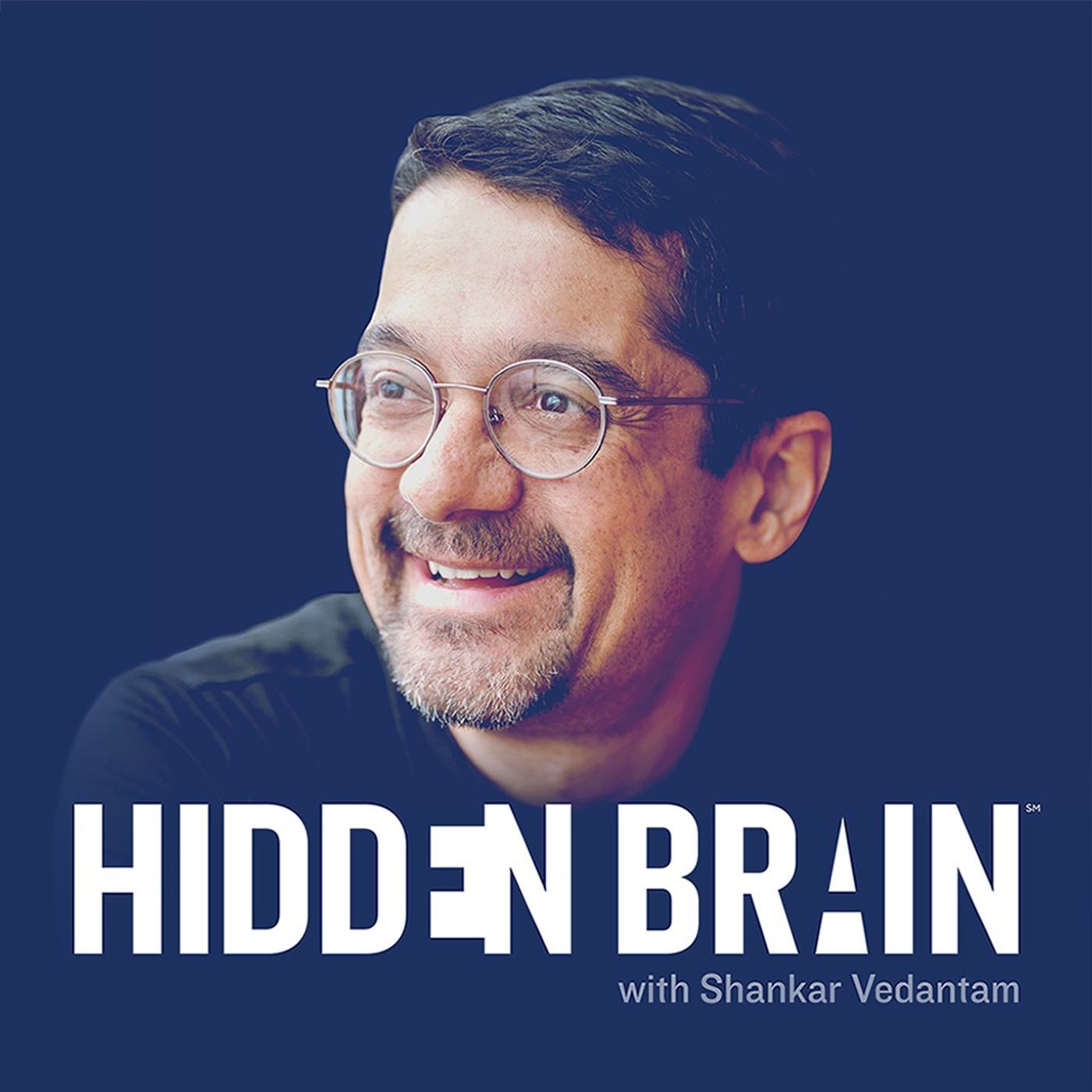
Hidden Brain explores the unconscious patterns that drive human behavior. Host Shankar Vedantam uses science and storytelling to answer questions about creativity, relationships, emotions, and decision-making. The show blends psychology, neuroscience, and social science to help listeners understand themselves and others. It is widely recognized as a leading science podcast in the United States.
Episodes
Why Am I Unhappy?
We often imagine that feelings of unhappiness come from outside us — in our circumstances or the difficult people in our lives. But what if the forces that erode our happiness come from within? Psychologist George Loewenstein joins us to explore why our minds nudge us toward the negative, even when we want to feel positive. He also offers ways to better understand these forces and lessen their pow
When Bad Things Happen to Good People
When historian Kate Bowler was diagnosed with Stage IV cancer, she became fascinated by the ways people try to impose order on events they can't control. She joins us to explore what it means to live fully when life offers no satisfying explanation for the tragedies we may face. Then, in the latest installment of "Your Questions Answered," psychologist Lisa Miller returns to answer listener questi
How to Make a Difference: Part 2
Think about the last time you had a discouraging thought. Maybe you told yourself, "This won't work. I'm not cut out for this." Did you take that thought as fact? Last week, we talked with psychologist Martin Seligman about why some people come to believe that their actions don’t matter. In the second part of our conversation, he explains how we can strengthen our sense of agency, learn to see new
How to Make a Difference: Part 1
Why do some people act on the possibilities before them, while others come to believe that nothing they do will make a difference? Psychologist Martin Seligman describes his groundbreaking research on learned helplessness, and explains how the stories we tell ourselves about setbacks can shape what we do next. We also explore how optimism can help us rediscover our ability to change things for the
Why Conversations Go Wrong
Do you ever struggle to communicate with your mom? Or feel like you and your spouse sometimes speak different languages? This week, we revisit a favorite conversation with linguist Deborah Tannen. She shows how our conversational styles can cause unintended conflicts, and what we can do to communicate more effectively with the people in our lives. Then, in an all-new installment of "Your Questions
Blowing Up Your Life
Have you ever had a flash of insight that hit you when you least expected it? How did it change your life? Psychologist Anthony Klotz studies the "jolts" that shake us out of our routines, and how these moments can help us make more intentional decisions about the people we want to become. Then, psychologist Ap Dijksterhuis returns to the show to answer your questions about a very specific kind of
The Things We Don't Say
From childhood, we're taught that honesty is the best policy. Yet in everyday life, we hedge, soften our words, and leave things unsaid. This week, we talk with psychologist Steven Pinker about why indirect speech is such a fundamental part of human relationships. How long can you stay focused on a task before your attention is drawn elsewhere? In our latest YouTube video, we explore what the sci
What Art Does For Your Brain
Think about the last time a piece of music stopped you in your tracks, or a novel kept you up late at night. Why do these experiences feel so powerful? Psychobiologist Daisy Fancourt says engagement with the arts can help to regulate our emotions, build resilience, and support long-term well-being. She joins us to talk about this research, and to share practical ways to bring more creativity into
How to Be A Better Partner
When we look at the people we love, how clearly do we really see them? This week, we talk with psychologist Edward Lemay about how our fears, desires, and insecurities can shape our perceptions of our partners — sometimes creating the very reality we expect. He explains how we can learn to see our partners in ways that create greater trust and connection. Then, Sonja Lyubomirsky answers your quest
How Feelings Make Us Smarter
Some people are remarkably good at reading the emotional temperature of a situation. They can pick up on what others are feeling, manage their own emotions, and respond skillfully. What's their secret? This week, we explore the science of emotional intelligence with psychologist Peter Salovey. Emotional intelligence is one of the most popular ideas in psychology. It's also a term that's widely mi
Making the Most of Your Mistakes
When you're learning, or trying new things, you're going to make mistakes. The trick is to try to fail in a way that gives you useful information. This week, we revisit a favorite conversation with researcher Amy Edmondson. She explains the difference between constructive failures and those we should try to avoid. Then, John Dinsmore answers listener questions about the psychology of debt, in our
You Are Not Ordinary
Stories about unlikely heroes have captivated people for thousands of years. This week, social scientist Ben Rogers explores why the "hero's journey" resonates so deeply, and how the stories we tell about our own lives can shape our sense of purpose. He explains why seeing ourselves as the protagonists of our own stories may help us face challenges with greater confidence. Then, on Your Questions
How to Combat Pain
Pain feels like a simple message from the body. If your elbow hurts, there must be something wrong with your elbow. If your back is painfully stiff, you need some work done on your back. But psychologist Rachel Zoffness says our minds play a much larger role in our experience of pain than many of us realize. This week, we look at what's really happening when we experience pain, and how a better un
Changing Our Mental Maps
As we move through the world, it's easy to imagine we're processing everything that happens around us and then deciding how to respond. But psychologist and neuroscientist Norman Farb says our brains actually navigate the world by coming up with mental maps. These maps act like an autopilot system, allowing us to navigate our lives more efficiently. But sometimes, they can lead us astray, leaving
Waking Up Your Spiritual Brain: Part 2
Last week, we talked with psychologist Lisa Miller about the science of spirituality. Today, we explore what those ideas can look like in everyday life. Miller explains why moments of connection, spiritual practices, and even periods of suffering can sometimes open the door to deeper meaning and growth. And on Your Questions Answered, behavioral scientist Dave Evans returns to respond to your comm
Waking Up Your Spiritual Brain: Part 1
Food, safety, and strong relationships are essential to our survival. Psychologist Lisa Miller says our brains also crave something else: transcendence. She suggests that spirituality is a universal human capacity, and that feeling connected to something larger than ourselves may be essential to a fulfilling life. If you enjoy listening to Hidden Brain, we think you'll enjoy watching it, too! Che
Stepping Out of the Shadows
Why does one bad experience have the power to overshadow an otherwise good day? Psychologist Alison Ledgerwood explores the negativity bias, the deeply human tendency to hold on to what went wrong and overlook what went right. She explains why our minds are drawn to losses and threats, and what it takes to rebalance our attention. Then, on Your Questions Answered, psychologist David Pizarro return
A Secret Source of Connection
We all have moments in our lives when we see someone who could use a helping hand. It could be a friend who recently went through a breakup, or an older person trying to load groceries into their car. We tell ourselves we should help, but then something stops us. This week, psychologist Amit Kumar helps us understand what keeps us from taking a moment to be kind, and how to overcome these barriers
Who Are You, Really?
You’re not the same person with your friends as you are with your co-workers or your kids. So who are you, really? This week, political scientist Eric Oliver explores why we often feel divided within ourselves, and how we can learn to live more peacefully with those contradictions. Then, psychologist Scott Barry Kaufman answers your questions on the science of intelligence. Should you worry about
Unleashing Your Creativity
For centuries, people have described creativity as something mysterious: a flash of insight, a whisper from the muse, a sudden idea that seems to arrive out of nowhere. Psychologist Ap Dijksterhuis explores the hidden mental processes that lead to these moments of inspiration, and why breakthroughs often emerge when the mind is at rest. Should you worry about your memory? For many of us, forgettin
The Past is Never Dead
How does the culture in which you live shape the life that you lead? We all know that culture affects the languages we speak and the foods we eat. But anthropologist Joseph Henrich says the impact of culture goes even further, reaching into our bodies and our minds. He takes us on a journey through time to show how human cultures create a "collective brain," and how that shared knowledge profoundl
The Empathy Gym
Some people are good at putting themselves in another person's shoes. Others may struggle to relate. But psychologist Jamil Zaki argues that empathy isn't a fixed trait. This week, we revisit a favorite episode about how to exercise our empathy muscles. Then, Leslie John answers listener questions about the benefits of opening up to others, in our latest installment of Your Questions Answered. Hid
The Cowboy Philosopher
In 2009, an old man died in a California nursing home. His obituary included not just his given name, but a long list of the pseudonyms he’d been known to use. In this classic 2019 episode, we trace the life of Riley Shepard, a hillbilly musician, writer, small-time con man and, perhaps, a genius. Then, on Your Questions Answered, psychologist Leslie John returns to answer your questions about whe
Radical Acceptance
Last week, we looked at the hidden beliefs that can leave us feeling stuck in life. This week, in the second part of our conversation with behavioral scientist Dave Evans, we talk about radical acceptance. Dave shares why accepting reality as it is can be so difficult — and why it's an essential first step in building a meaningful life. Then, in the latest installment of Your Questions Answered, p
Designing a Life that Matters
We tell ourselves that meaning comes from impact, passion, or finding the “one right path.” But these beliefs can leave us feeling stuck — even when our lives look perfectly fine on paper. Behavioral scientist Dave Evans describes a new approach, borrowed from design thinking, to help us build lives that feel more alive, flexible, and real. What makes brave people different from the rest of us? I
Do You Feel Loved?
What’s the difference between being loved and feeling loved? Psychologist Sonja Lyubomirsky joins us to discuss the distinction, and how we can create a stronger feeling of closeness in our relationships. Then, in our latest installment of Your Questions Answered, psychologist Greg Walton returns to answer listeners’ questions about negative thought spirals.As individuals and as a society, we ofte
How to Change the World
Does power truly flow from the barrel of a gun? Pop culture and conventional history often teach us that violence is the most effective way to produce change. But is that common assumption actually true? Political scientist Erica Chenoweth, who has studied more than 100 years of revolutions and insurrections, says the answer is counterintuitive. Then, Ranjay Gulati answers listener questions on ho
The Debt Trap
We like to think that good financial decisions come down to discipline and basic math. But the psychology of money turns out to be deeply complicated. Researcher John Dinsmore explains the hidden mental biases that shape how we think about spending, borrowing, and the future. We explore how these forces can steer us toward costly mistakes — and how to guard against them. Then, on Your Questions An
When It's Okay to Lie
Should you tell a harsh truth if it will only cause pain? Or is it sometimes kinder to keep someone in the dark? Psychologist Emma Levine explores the unwritten rules that guide when people feel it’s acceptable to lie — and what those choices reveal about trust, harm, and our deepest moral values. In our companion Hidden Brain+ episode, we explore ways to bridge the gap between the many lies we co
Group Think
How do the groups you identify with shape your sense of self? Do they influence the beer you buy? The way you vote? In this favorite episode from 2021, psychologist Jay Van Bavel explains how our group loyalties affect us more than we realize, and can even shape our basic senses of sight, taste and smell. Then, look out! There's a g-g-g-ghost! Psychologist Coltan Scrivner answers listener question
Rethinking Depression
We tend to see depression as an illness to eliminate, evidence that something has gone wrong in the brain. But what if low mood serves a purpose? Psychologist Jonathan Rottenberg examines the evolutionary roots of depression and reflects on his own painful experience with suicidal despair. He explores how depression can narrow our focus, and sometimes open the door to change. A note that this stor
Yuck! The Science of Disgust
Disgust is a strong emotion, one designed by evolution to protect us from danger and diseases. But disgust also spills into other areas of our lives, influencing our morals, our intuitions about right and wrong, even our politics. We talk with psychologist David Pizarro about how disgust is used to persuade and divide us, and why it remains such a potent force in public life today. Then, in our la
The Secret of Charisma
Charismatic leaders can inspire devotion and give people a powerful sense of meaning. They can also make us vulnerable. This week, we explore how figures across history have gained followers by offering clarity in moments of uncertainty — and why that clarity can come at a cost. Historian Molly Worthen explains how to recognize the spell of charisma, and why questioning it is essential to a health
Do You Feel Invisible?
What does it do to a person to feel overlooked? This week, psychologist Gordon Flett examines how the absence of “mattering” can fuel loneliness, depression, and even violence. He outlines how feeling valued serves as a psychological buffer, and how simple gestures can rebuild a sense of meaning in ourselves and others. Then, in the second half of the show, listeners share their thoughts on findin
Why You're Smarter Than You Think
From the time we're schoolchildren, we're ranked and sorted based on how smart we are. But what if our assumptions about intelligence limit our potential? This week, we revisit a favorite 2022 conversation with cognitive scientist Scott Barry Kaufman, who proposes a more expansive notion of what it means to be "smart." Then, in the latest installment of Your Questions Answered, psychologist James
Coming Clean
Last week, we talked with psychologist Leslie John about the costs of keeping secrets. Today, Leslie returns with a look at the psychological power of self-disclosure. She says the moments of oversharing that we often consider "TMI" can actually strengthen our relationships. Then, in the second half of the show, listeners share their thoughts and questions about the expectations we put on modern m
Keeping Secrets
We all carry secrets, from harmless omissions to life-changing truths. But secrecy isn’t neutral: hiding takes mental work and can harm our health and relationships. In this week’s show, and in our episode next week, psychologist Leslie John explores the costs of concealment — and how opening up can give us more mental space and deepen our connections. After you listen to today's episode, check ou
You 2.0: Trusting Your Doubt
We conclude our month-long You 2.0 series with a look at the hidden power of doubt — not as weakness or indecision, but as a tool that helps us make better choices and navigate an uncertain world. Researcher Bobby Parmar explores how doubt can sharpen judgment, and makes a case for why the ability to sit with uncertainty may be one of the most important skills of all. Then, in our latest installme
You 2.0: The Practice of Patience
Patience can sometimes feel like a lost art, particularly in a culture that prizes competition and the idea of "failing fast." But psychologist Sarah Schnitker says patience is a vital skill for success in both our personal and professional lives. We talk with Sarah about the difference between patience and passivity, and how to train ourselves to be more patient. Then, in our latest installment o
You 2.0: How to Get Out of a Rut
There are times in life when the challenges we face feel insurmountable. Authors succumb to writer’s block. Athletes and artists hit a plateau. People of a certain age fall into a midlife crisis. These are all different ways of saying: I’m stuck. This week, in a favorite conversation from 2023, psychologist Adam Alter shares his research on why we all get stuck at various points in our lives, and
You 2.0: Cultivating Courage
Why do some people act bravely in a crisis, while others flee or freeze up? Today, we bring you the second part of our You 2.0 series on the mental obstacles that can block us when we're charting a new path. Behavioral scientist Ranjay Gulati argues that courage is a choice, and that we can strengthen the reflexes that will help us to be brave when it matters most. Once you've listened to this ep
You 2.0: Stop Spiraling!
The start of a new year is a natural moment to set goals for ourselves. But doing so can also be a little daunting. Today, we kick off a series designed to help you understand and grapple with the mental obstacles that can keep you from charting a new path. We talk with psychologist Greg Walton, who studies how our minds get trapped in negative thought spirals — and how we can begin to break free.
The Reset Button
Many of us rush through our days, weeks, and lives, chasing goals and just trying to get everything done. But that can blind us to a very simple source of joy that’s all around us. This week, we revisit a favorite conversation with psychologist Dacher Keltner, who describes what happens when we stop to savor nature, art, or simply the moral courage of those around us. Then, in our segment "Your Q
The Path to Enough
This week, we bring you the second part of our 2023 conversation on the perils of too much pleasure. Psychiatrist Anna Lembke explains the neuroscience behind compulsive consumption. She also shares techniques she’s learned from her patients to overcome the lure of addictive substances and behaviors. Then, Anna responds to your questions and comments on everything from dopamine fasts to kids' use
The Paradox of Pleasure
All of us think we know what addiction looks like. It’s the compulsive consumption of drugs, alcohol, or nicotine. But psychiatrist Anna Lembke argues that our conception of addiction is far too narrow — and that a broader view might help us to understand why so many people are anxious and depressed. This week, we revisit a 2023 episode that remains of the most popular in the history of our show.
Murder Mystery
Why are so many of us drawn to horror, gore, and true crime? Why do we crane our necks to see the scene of a crash on the highway? Psychologist Coltan Scrivner says that our natural morbid curiosity serves a purpose. We talk with Coltan about our fascination with tales of murder and mayhem, and what this tendency reveals about our minds. In this episode, you'll learn: *Why there's often a surge of
Parents: Keep Out!
If you’re a parent or a teacher, you’ve probably wondered how to balance play and safety for the kids in your care. You don’t want to put children in danger, but you also don’t want to rob them of the joy of exploration. This week, we revisit a favorite conversation with psychologist Peter Gray. We'll talk about why independent play is so important to a child's development, and answer listeners' q
The Power of Family Stories
There’s a tradition around many Thanksgiving dinner tables that’s as consistent as pumpkin pie: the family stories that get told year after year. Sometimes these stories are funny; sometimes they make us roll our eyes. No matter how we feel about them, we rarely pause to consider how these stories shape who we are and how we view the world. This week, we revisit a favorite 2024 conversation about
Why Following Your Dreams Isn't Enough
Entrepreneurs typically have no shortage of passion, heart, and vision. But at Stanford University, Huggy Rao says there are other elements that may matter more when it comes to whether their projects succeed or fail. This week, we'll examine how this problem shapes not just individual lives, but organizations and businesses, and even public policy. Then, in the latest installment of "Your Questio
How Nature Heals Us
We've known intuitively for centuries that spending time in nature can give us a boost. But it’s only recently that scientists have begun to identify exactly what it is about the outdoors that has such a powerful effect on our mood and our minds. This week, psychologist Marc Berman explores how spending time in nature can actually undo some of the harmful effects of our modern lives. Do you have f
Reframing the Battle of Wills
It can be frustrating when people do things we don't want them to do. A friend cancels plans at the last minute. A child refuses to get dressed for school. Before long, our resentment builds, and we're tempted to issue more rules, reminders, and consequences. But the techniques we use to get people to alter their behavior are often strikingly ineffective. This week, psychologist Stuart Ablon expla
Love 2.0: How to Move On
For many of us, navigating the conclusion of a relationship is one of the hardest things we'll ever do. This week, we conclude our Love 2.0 series with psychologist Antonio Pascual-Leone, who shares the most common mistakes we make when it comes to splitting up, and techniques that can help us ease the pain. Then, our latest edition of Your Questions Answered. Cognitive scientist Phil Fernbach ret
Love 2.0: Reimagining Our Relationships
No one will deny that marriage is hard. In fact, there’s evidence it’s getting even harder. This week on the show, we revisit a favorite episode about the history of marriage and how it has evolved over time. We talk with historian Stephanie Coontz and psychologist Eli Finkel, and explore ways we can improve our love lives — including by asking less of our partners. Then, on Your Questions Answere
Love 2.0: How to Fix Your Marriage, Part 2
When things go wrong in our relationships, we often try to change the way our partners behave. But usually, trying to fix a person only makes things worse. Last week, we talked to psychologist James Cordova about why this tendency can be so damaging, and what to do instead. This week, we explore another difficult but effective way to strengthen our relationships. Then, on Your Questions Answered,
Love 2.0: How to Fix Your Marriage, Part 1
Many love stories end when the characters are still in the heady, euphoric early stages of a relationship. But what comes after that intoxicating first phase of love is over? Today, we kick off a new series on the challenges specific to long-term relationships. We'll talk with psychologist James Cordova about some of the common difficulties many couples face. We'll also look at a solution that sci
Passion vs. Paycheck
The idea of being driven by a calling goes back centuries. It was the language used to describe religious people who were called to the priesthood. Today, millions of people in secular professions yearn to be similarly galvanized by their work. This week, researcher Jennifer Tosti-Kharas explores the immense power — and the downsides — of finding a job that gives you purpose. Do you have follow-up
It's Not My Fault!
It's not easy for most of us to receive negative feedback. Even when the person delivering that feedback is constructive and reasonable, we often feel the urge to defend ourselves. This week, we look at the psychology of defensiveness with neuroscientist Emily Falk. We'll explore what causes so many of us to resist constructive criticism, and how we can get better at giving and receiving such feed
Winning the Battle Against Yourself
Many of us have been raised to believe that if we want to get something done, we just need to set our minds to it. Where there's a will, there's a way, right? Yet somehow we end up polishing off that pint of ice cream in the freezer, or spending more than our budget allows. It's almost as if we're not the ones in charge. This week, we talk with psychologist and neuroscientist Emily Falk about why
Escaping Perfectionism
Perfectionism is everyone’s favorite flaw. It’s easy to assume that our push to be perfect is what leads to academic, athletic, and professional success. But how do we distinguish between high standards and unrealistic expectations? This week, we bring you a favorite conversation with psychologist Thomas Curran. He says perfectionism has a dark side, and that there are much healthier ways to striv
The Trauma Script
When tragedy strikes, it’s natural to be devastated. But psychologist George Bonanno finds that many of us recover from life’s blows more quickly than we might expect. This week, we talk with Bonanno about his research and why it has changed how many scientists think about trauma and resilience. Do you have follow-up questions or comments after listening to this episode? If you’d be willing to sha
How Our Brains Learn
Have you ever fallen asleep in school or during a work meeting? Maybe you felt your eyes glaze over as your boss or a teacher droned on and on about a topic that had no relevance to you. What's missing from these classrooms and conference rooms is engagement: A state of being absorbed, alert, and eager to learn. This week, psychologist and neuroscientist Mary Helen Immordino-Yang explores why so m
The Best Years of Your Life
Aging isn’t just a biological process. Our outlooks and emotions also change as we age, often in ways that boost our well-being. This week, we revisit a favorite conversation with psychologist Laura Carstensen, who helps us unpack the science behind this surprising finding, and shares what all of us can learn from older people. Then, as part of our ongoing series "Your Questions Answered," we revi
Radical Kindness
Why do some people risk their own lives to help another person, or give away their fortunes for the benefit of strangers? This week, we talk with psychologist and neuroscientist Abigail Marsh, who studies the science of altruism. We'll explore what's known about the brains of people who perform acts of remarkable selflessness, and how the rest of us can learn to be more like them. Do you have foll
You 2.0: Change Your Story, Change Your Life
We all tell stories about ourselves, often without realizing we’re doing so. How we frame those stories can profoundly shape our lives. In our latest You 2.0 episode, we bring you a favorite conversation with psychologist Jonathan Adler. He shares how to tell our stories in ways that enhance our wellbeing. Then, Max Bazerman answers your questions about the science of negotiation. Do you have foll
You 2.0: The Wisdom of Stoicism
What does it mean to be stoic? Many of us assume it means you have a stiff upper lip, or that you suppress your emotions. That's what Massimo Pigliucci thought — until he started to peruse a book called Meditations. It was written nearly two thousand years ago by the Roman Emperor Marcus Aurelius. But Massimo, now a philosopher, says Meditations, and Stoic philosophy more broadly, offer wisdom tha
You 2.0: The Path to Contentment
Many of us believe that hard work and persistence are the key to achieving our goals. But is that true when it comes to the pursuit of happiness? This week, we revisit a conversation with psychologist Iris Mauss, who explains why happiness can seem more elusive the harder we chase it, and what we can do instead to build a lasting sense of contentment. Then, we bring you the latest edition of our s
You 2.0: The Passion Pill
You’ve probably heard the saying, “Do what you love, and you’ll never work a day in your life.” The idea is that pursuing your passion will feel invigorating — almost magical. But passions can easily wane over time. This week, behavioral scientist Jon Jachimowicz looks at how to keep our passions alive, and how to channel old passions into new pursuits.Do you have follow-up questions for Jon Jachi
You 2.0: What Is Your Life For?
What should you do with your life? There's no one-size-fits-all answer to that question. But there are scientifically-tested methods that can help you to feel more in harmony with yourself and the world. This week, and in a companion conversation for Hidden Brain+, researcher Victor Strecher explores the science of creating a life full of meaning. It's the kickoff to our annual You 2.0 series, whi
Win Hearts, Then Minds
There’s a saying that’s attributed to the Dalai Lama: in the practice of tolerance, one’s enemy is the best teacher. It’s a nice idea. But when people don’t share our values, it’s hard for us to tolerate theirs. This week, we bring you a favorite episode with sociologist Robb Willer. We discuss the common mistakes we make in trying to persuade others of our point of view — and how to break out of
Doing it the Hard Way
Learning to play a musical instrument is hard. So is trying to run a marathon, writing a term paper, and caring for a sick child. These things involve frustration, pain, and disappointment — yet we do them anyway. This week, in part two of our look at the allure of suffering, psychologist Michael Inzlicht explains what we get from doing things that are difficult, and why the things we think will m
Ouch! That Feels Great
We generally think of pain as something to be avoided. But psychologist Paul Bloom says that as much as we're wired to avoid suffering, we also seek it out. This week, we begin a two-part mini series about the curious pleasure we take in certain forms of pain.Hidden Brain is about to go on tour! Join Shankar in a city near you as he shares key insights from the first decade of the show. For more i
The Price of Revenge
Revenge often feels sweet, but what price do we pay for seeking it out? Researcher James Kimmel, Jr. proposes a radical theory: our desire for vengeance operates like an addiction in the brain. This week, how “revenge addiction” plays out in our everyday lives — and on a global scale. Hidden Brain is about to go on tour! Join us as Shankar shares seven key insights he's learned from the show over
Do I Know You? (A Hidden Brain-Revisionist History special on facial recognition)
Have you ever encountered someone who clearly knows you, but you have no idea who they are? This week, we feature a classic Hidden Brain episode about people on opposite ends of the facial recognition spectrum. Then, in the second part of the show, we bring you another perspective on facial recognition from the Revisionist History podcast. Host Malcolm Gladwell struggles with identifying faces, wh
How Much Do We Really Know?
You probably know someone who thinks they know more about something than they really do. But you could never be described that way . . . could you? This week, cognitive scientist Phil Fernbach explains the "illusion of knowledge" — the fact that we think we understand the world in much greater detail than we actually do. He'll explore why this happens, and how to close the gap between what we know
Forget About It!
Forgetting something — whether it's a colleague's name or where we put our keys — can be deeply frustrating. This week, psychologist Ciara Greene helps us explore the science of forgetting. We look at why our minds hold on to some memories for a lifetime, but discard others within seconds. And we grapple with a question many people ask themselves: Is my forgetfulness a sign that something is wrong
How to Harness Your Feelings
Do you feel like you control your emotions, or do your emotions control you? What scientists call "emotion regulation" turns out to be one of the most important life skills we can possess. It's essential in dealing with setbacks, in balancing risks and rewards, and in maintaining successful relationships. This week, psychologist Ethan Kross explores the growing and fascinating science of managing
Relationships 2.0: Keeping Love Alive
There's no magic potion that can make someone adore you. But there are things you can do to promote a deep and enduring connection — and even feelings of passion — between yourself and your partner. In the final chapter of our Relationships 2.0 series, psychologist Arthur Aron shares some techniques for falling and staying in love. In today's conversation, we explore:*The assumption that love fade
Relationships 2.0: Why Did You Do That?
As we go through life, we’re constantly trying to figure out what other people are thinking and feeling. Psychologist Liane Young says this ability to assess other people’s thoughts is an extraordinary feat of cognition. This week, in a favorite episode from our archives, we explore this mental superpower — and how it can lead us astray. In our conversation with Liane Young, we explore:*The uniqu
Relationships 2.0: The Power of Tiny Interactions
As you go about your day, you likely interact with family, friends and coworkers. These relationships can help you feel cared for and connected. But what if there’s a whole category of people in your life whose impact is overlooked? Today, in a favorite episode from our archives, psychologist Gillian Sandstrom reveals some simple ways to make your life a little more joyful and maybe even a little
Relationships 2.0: Become a Better Negotiator
When we head into a negotiation — whether we're asking for a raise or trying to get our spouse to do the dishes — our focus is usually on getting the other person to agree to our preferred outcome. What we don't focus on are our own biases and blind spots. Behavioral scientist Max Bazerman studies the theory and practice of negotiation, and he says that paying attention to these biases can help u
Recommended

English Vocabulary Help

TED Talks Daily

Learn English B1 with Daily News | English Listening Practice

Talk About Talk - Executive & Leadership Communication Skills

English with Olivia | Slow Conversations & Vocabulary

Stand In The Circle

SLOW ENGLISH PODCAST (A1-A2) With Subtitles | Daily Videos | English With Us Podcast

Learn English A2 with Daily News | Simple English Listening Practice

پلی لیست | PlayList

Conspiracy Files with Paige Carter

Bad Friends

Learn 50 English Phrases While You Sleep | Everyday English Phrases & Vocabulary
