When Life Gives You a Brain
When Life Gives You a Brain is a podcast hosted by neuroscientist Suzi Travis. It features weekly readings from her newsletter of the same name. Episodes explore topics at the intersection of neuroscience, consciousness, and artificial intelligence. The show is distributed via Substack.
Episodes
Is Seeing Really Believing?
We move through the world assuming our senses are in sync. Sight, sound, touch—they usually agree. But flip just one of them, and the whole system starts to wobble. That’s exactly what happens with prism goggles.This week, I revisit some classic experiments with inverting goggles. How does the brain adapt to conflicting signals? Does it rebuild an internal representation—or just adjust its predict
Looking for Meaning
We talk about meaning all the time — what things mean, what people mean, what life means. It feels obvious that meaning is something we have. Probably in the brain. Somewhere.Neuroscientists even talk that way. They say things like, “This part of the brain represents faces,” or “That spike means the person saw a dog.”But it’s not clear what “means” really means in this context.What is meaning? And
Does the Mind Need a Body?
Most of us take it for granted that our thoughts have meaning. You can think about a dog, a holiday, or the square root of 144 — and somehow, your brain just gets it. Cognitive science has long explained this by saying the brain uses internal representations: mental models that stand in for things in the world.But not everyone agrees. Some researchers say we’ve got it backwards — that meaning does
What Gives Brain Activity Meaning?
We might mistake a garden hose for a snake. There’s no snake — just a brain responding to the wrong thing in the wrong way. But somehow, we still say the our brain represents a snake. Even though there is no snake.That sounds straightforward, until you ask what “represent” really means — and how a lump of neurons can be about anything. This is a public episode. If you would like to discuss this w
Does your Brain Represent the Outside World?
When you see a dog, something happens in your brain. A pattern of activity fires, and somehow, that pattern feels like it means something. Cognitive scientists often say that your brain “represents” things — objects, ideas, emotions, and dogs. Representations is how we explain perception, memory, language, and thought.But not everyone agrees that this idea holds up. Some say the notion of represe
Could a Language Model Know What a Dog Is?
We tend to think words get their meaning from the world.You see a dog, you learn the word “dog,” and now the word points to the thing.But large language models don’t see dogs. Or anything at all.They’ve learned only from text — just patterns of words predicting other words.This week, I wrote about what that means for AI, language, and us.It’s a deep dive into the grounding problem — a philosophica
How to Talk to Aliens
Think about a sign. Or a symbol, an idea, a thought, a concept, or a representation. What kind of thing are you really thinking about?In 1972, NASA pinned a message to a spaceship, hoping one day an alien life form might find it and understand it. The plaque was full of symbols — diagrams, drawings, a raised human hand. Those symbols mean something to us. But only because we know they’re symbols —
Hello? Is There Anybody in There?
We’ve all been chatting with machines lately — ChatGPT, Gemini, Claude — and they sound impressively human.It’s easy to wonder: do they just seem to understand, or is there something real going on inside?Back in 1980, philosopher John Searle argued that no matter how good a machine’s answers are, something crucial is missing.His Chinese Room thought experiment challenges the idea that smart progra
If It Predicts, Is It Intelligent?
Brains predict. LLMs predict. But does that mean they’re doing the same thing? A short essay on functions, intelligence, and the trouble with words.We used to think intelligence was all about reasoning.Then we said it was biological.Now we’re told it’s maybe... prediction?That shift raises a big question:If both brains and language models predict, does that mean they’re doing the same thing?This e
How to Build a Brain
We know how to build things — houses, bridges, and bookshelves. And when we build, we follow instructions: blueprints and manuals.But living things don’t follow fixed instructions. They grow. And that might be a very different kind of thing. This essay is about what happens when we stop trying to build artificial brains — and we start trying to grow them. It’s about the difference between code tha

Does Consciousness Come Along for the Ride?
We like to think that if a system gets complex enough, consciousness just kicks in -- the lights turn on. It’s a neat idea — and it shows up everywhere, from neuroscience papers to AI hype.But the science isn’t nearly that simple.This essay asks: does consciousness really just come along for the ride when things get complicated? It looks at what the science actually says. If consciousness isn’t ab
Why is Complexity So Complex?
Complexity is all around us — in life, brains, weather, cities, economies... We know a brain is more complex than a rock, but good luck explaining why. Even scientists struggle to define it — we know it when we see it, but that’s about it. So what exactly makes something complex? This is a public episode. If you would like to discuss this with other subscribers or get access to bonus episodes, vis
Could Entropy Explain Consciousness?
What if your conscious experience depends on the direction of time? This week I get speculative. Entropy is why cream swirls into coffee and eggs break — but never the other way around. Could that same arrow of time help explain why you have thoughts, memories, and a sense of self? This is a public episode. If you would like to discuss this with other subscribers or get access to bonus episodes, v
Information Isn't Free. Even Demons Must Pay
Information isn't just an abstract concept—it has real, physical consequences. Physicists and engineers have long treated information in different ways: one as bits in a message, the other as something tied to the fundamental laws of nature.But Maxwell’s Demon, a thought experiment from the 19th century, revealed a strange connection between information and entropy, suggesting that processing info
A Short History of the Mind (and some of the Weird Things We've Thought About It)
The mind has puzzled thinkers for centuries—Descartes saw it as something separate from the body, while today, we tend to think of it as an information processor. Over time, our understanding has shifted, shaped by philosophy, psychology, and even breakthroughs in computing. But the question remains: is the mind just a biological machine crunching data, or is there something fundamental missing fr
Consciousness: Does the Matter Matter?
This week, I explore the puzzle of why we need special sciences when physics theoretically explains everything. I ask how different scientific disciplines like psychology and economics might discover things that can't be reduced to physics. I raise the controversial question of whether consciousness is more like money (functionally defined and multiply realisable) or more like jade (defined by wha
Coffee With a Shot of Qualia?
Two coffee tasters at Maxwell House suddenly hate the coffee they once loved. One says he's just become more sophisticated, while the other insists his taste buds must be broken -- even though they're drinking the exact same coffee they've had for years. Philosopher Daniel Dennett uses their predicament to challenge something we all take for granted: that we have special, direct access to our own
False Memories are Exactly What You Need
False memories are incredibly common, even for everyday experiences like driving. Scientists have found that not only can memories be easily manipulated, but our brains regularly reconstruct past events based on our current needs and circumstances. Here's the twist, though - what many consider a flaw in human memory might be a clever evolutionary feature that helps us adapt and learn without getti
Yes, We Can Delete Memories. But...
Memories aren't stored like files on a computer - they're constantly being rebuilt every time we remember them. Scientists have discovered ways to manipulate these reconstructions in mice, blocking memories from forming, erasing existing ones, and even creating artificial memories using light. But these techniques are still far from the kind of precise, selective memory manipulation we see in movi

Memory Is Your Brain Making Things Up
Our brains don't store memories like computers store files -- they recreate them every time we remember. When we recall something, different brain regions are involved in reconstructing the experience, combining sensory details, emotions, and context into what feels like a replay of the original event. But this means our memories aren't perfect copies -- they change slightly each time we recall th
Mary's Room: Has the Answer Been in Her Textbook All Along?
Mary's Room, a famous thought experiment, imagines a scientist who learns everything about colour while living in a black-and-white room but has never seen colour herself. For decades, philosophers have used this story to argue that science can't explain consciousness -- but what if science already knows exactly what would happen to Mary? Would Mary herself know that she could never see colour nor
How the Blind Use Echolocation to See
Some blind people can see using sound. They echolocate. When they do this, their visual cortex responds to sounds like it normally would for sight. Through stories of blind individuals who can ride bikes using sound and babies who learn to 'see' using specially designed glasses, this article takes us deep into questions about the nature of perception itself. What if seeing isn't really about havin
Sure, Nagel's Bat Paper is a Classic, But...
For 50 years, Thomas Nagel's "What Is It Like to Be a Bat?" has been a key paper in discussions of consciousness. But have we misunderstood its central message? This deep dive challenges common interpretations of Nagel's work. It explores whether he's really arguing about knowledge limits, mind-body dualism, and science's ability to explain consciousness. Rather than just another analysis of bats
What Is It Like to Be a Bat? 50 Years On
This week, we’re discussing one of the most famous papers in philosophy: Thomas Nagel’s 1974 classic, What Is It Like to Be a Bat?Given how influential Nagel’s bat paper has been in the philosophy of mind and the cognitive sciences, it’s worth taking some time to understand it. So, this article starts a mini three-part series on Nagel’s ideas about bats. In Part 1 (that’s this article), we’ll focu
The Phantom Pain Puzzle
Late one evening in July of 1797, a musket ball was fired through the air.Europe was ablaze with the French Revolutionary Wars, and the British Royal Navy was engaged in a daring raid on the Spanish island of Tenerife. Admiral Lord Horatio Nelson led the charge.As Nelson guided his men through the darkness, that fateful musket ball found its mark.It struck the Admiral’s right arm, shattering bone.
Why Do You Hurt?
Pain is a strange sensation unlike any other we experience.While most of our senses have a clear, specific stimulus they’re responding to, pain doesn’t play by those rules.Vision is all about light, picking up on a certain part of the electromagnetic spectrum. Hearing is all about sound waves.But pain? Pain doesn’t have a single special stimulus. It’s often a response to tissue damage or the threa
Disembodied Pain and the Limits of Armchair Philosophy
Go on… pinch yourself.Not too hard, but hard enough to make it hurt — a little.Philosopher Brie Gertler proposed a new thought experiment that asks us to do just that. And then ask — Could that pain you feel exist without your body?I suspect you may have a strong intuition as to whether such a scenario is possible or not.This article is part 3 of our series on the thought experiments in the philos
Ain't Got No Body: What 'Her' Reveals About Being Human
Remember the movie Her?The film follows Theodore, a regular guy, as he falls for Samantha, an incredibly human-like (or superhuman-like) AI who exists only as a voice in Theodore’s ear. The movie cleverly blends futuristic tech with philosophical questions about the nature of mind and consciousness. But more than that, it raises questions about what it means to have a genuine connection.This artic
Can We Have a Mind Without a Body?
Last week, we had some fun with philosophical zombies—hypothetical creatures that are physically identical to you but lack conscious experience. Essentially, p-zombies are a body without conscious experiences. And we asked whether such a thing might be possible.This week, we're going to (kind of) flip the question and ask: is it possible to have a mind without a body?The concept of a mind existing
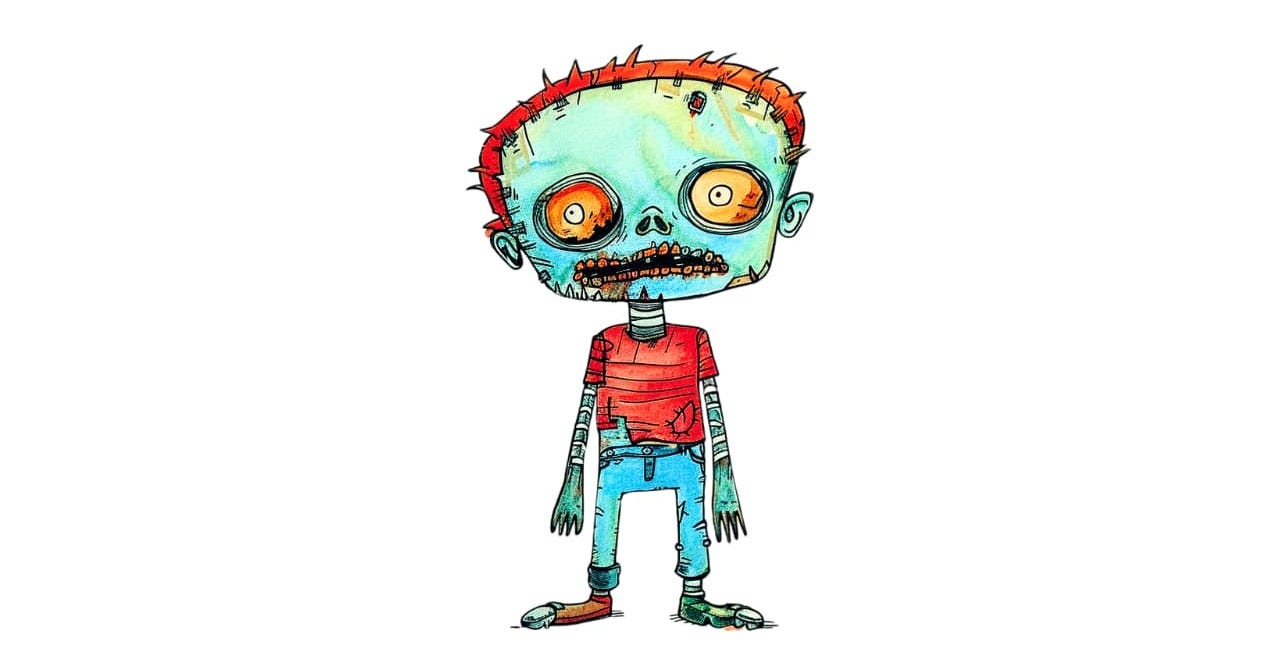
The P-Zombie Argument
Imagine a zombie.Not a flesh-eating monster that you might find in a Hollywood blockbuster (or the feature image of this article), but a philosophical zombie. A being just like you but with no conscious experience.These hypothetical entities are the subject of one of philosophy's most talked about thought experiments.The philosophical zombie argument is designed to challenge physicalism — the idea
The Mind of a Crow
Crows are surprisingly brainy birds. This week, I got curious about the fascinating world of crow intelligence. I wanted to explore just how smart these black-feathered birds really are and whether we can detect consciousness in crows. Are crows more than just clever mimics? Let's find out! This is a public episode. If you would like to discuss this with other subscribers or get access to bonus e

Is Everything We Imagine Possible?
Thought Experiments [Part 1]We humans love thinking about what is possible. We wonder about all sorts of things — is it possible to travel at the speed of light? Is it possible to create artificial intelligence that understands human emotions? What would the world look like if Hitler wasn't born or if the dinosaurs had never gone extinct? Is it possible for humans to live forever or to colonise ot
Ex Machina: What Would AI Think of Us?
Ex Machina raises fascinating philosophical questions about consciousness, humanity, and the ethics of artificial intelligence. At its core, the film is a modern take on the Turing test. But Ex Machina also raises questions about what it means to be human. This is a public episode. If you would like to discuss this with other subscribers or get access to bonus episodes, visit suzitravis.substack.c
The Science of Out-of-Body Experiences
Normally, we don't question whether our body belongs to us. Normally, we see ourselves as unified with our body, occupying the same space. But our sense of body isn't as fixed as we might think. People can experience out-of-body experiences, where their sense of self becomes detached from their sense of body. These experiences are often vivid and life-changing. And for many, the experience is evid
Non-Reductive Materialism: Can Physicalists Have Their Cake and Choose to Have It Too?
Physicalism [Part 7]. As a theory of consciousness, non-reductive materialism tries to give us everything -- our intuitive ideas about consciousness and a scientific explanation. But does it succeed? Can we have it all? This is a public episode. If you would like to discuss this with other subscribers or get access to bonus episodes, visit suzitravis.substack.com

How Science Thinks about Consciousness
Defining consciousness can be challenging. Attempts to pin it down often ignite heated debates that frequently end in stalemates. This week, I explore how science thinks about consciousness This is a public episode. If you would like to discuss this with other subscribers or get access to bonus episodes, visit suzitravis.substack.com
Does the Mind Exist? Understanding Eliminative Materialism
Physicalism [Part 6]. What if everything you think you know about your own mind is an illusion? Eliminative materialism makes this radical claim. They claim that all your beliefs, desires, thoughts, fears, sensations, and pains — don’t actually exist. A radical claim is putting it mildly. It seems absolutely absurd! But despite apparent absurdity, eliminative materialism remains a significant theo
The Unity of Consciousness and The Binding Problem
We perceive the world as a seemingly coherent unified stream of awareness. This apparent unity is so fundamental to our experience that we rarely question it. But there is a problem with this intuitive view. This is a public episode. If you would like to discuss this with other subscribers or get access to bonus episodes, visit suzitravis.substack.com
Will AI Ever Be Conscious?
The brain is a computer… or so they say. During my undergraduate studies, I often heard the mind explained as the “software” that runs on the “hardware” of the brain. But is this true? This is a public episode. If you would like to discuss this with other subscribers or get access to bonus episodes, visit suzitravis.substack.com
Functionalism: Why the Most Popular Consciousness Theory Might be Wrong
Physicalism [Part 5]. Functionalism is currently the most popular theory of consciousness. It's the idea that consciousness — all our thoughts, feelings, and beliefs are not defined by what they are made of but by what they do. This theory is also behind the idea that AI might be conscious (now or sometime in the future) because, given the right type of machine, it could replicate the functional s
Functionalism: The Mind is What the Brain Does.
Physicalism [Part 4]. This week, we’re exploring functionalism — currently the most popular theory in the philosophy of mind and in scientific fields that study consciousness — like cognitive neuroscience. But just because a theory is popular doesn’t make it true. So, let’s explore the merits of the functionalist’s claims. This is a public episode. If you would like to discuss this with other subs
The Mind of an Octopus
How intelligent are octopuses? And how many brains do they actually have? This week we are exploring the wonderful mind of the octopus. This is a public episode. If you would like to discuss this with other subscribers or get access to bonus episodes, visit suzitravis.substack.com
Identity Theory: the Mind is the Brain
Physicalism [Part 3]. This week, let’s examine reductive materialism (often called the identity theory). This is a public episode. If you would like to discuss this with other subscribers or get access to bonus episodes, visit suzitravis.substack.com
The Woman Who Was Hung, Survived, and Sparked the Birth of Cognitive Neuroscience
On a cold winter morning, the bustling courtyard in Oxford filled with townspeople. They had come for one reason — to watch a young woman be hanged for murdering her newborn child. The problem was she was led to the gallows for a crime she did not commit. This is a public episode. If you would like to discuss this with other subscribers or get access to bonus episodes, visit suzitravis.substack.co
The Code that Cures Blindness
This week we explore how scientists are using computer code and optogenetics to restore sight to the blind and improve computer vision. This is a public episode. If you would like to discuss this with other subscribers or get access to bonus episodes, visit suzitravis.substack.com
What Exists and What is Imagined?
Physicalism [Part 2]. Ready for a mind-bending trip into the levels of reality? Where does reality begin and end? ‘…would understanding all the atoms and their relative positions explain how we remember our first kiss or how the ocean smells after a storm? This is a public episode. If you would like to discuss this with other subscribers or get access to bonus episodes, visit suzitravis.substack.c
Brain Computer Interface: A Primer
Merging brains with machines! Will the 2020s see a boom in developing and using neurotechnologies like BCIs? New technologies, materials, computational power, and algorithms are making once-impossible things now possible. This is a public episode. If you would like to discuss this with other subscribers or get access to bonus episodes, visit suzitravis.substack.com
Physicalism: Are You Just a Brain?
Physicalism [Part 1]. Regular newsletter readers will be aware of my series on The Five Most Controversial Ideas in the Study of Consciousness. This article can be thought of as an extension of that series and the introduction to a new series on physicalism — the theory of consciousness accepted by almost all neuroscientists and most philosophers. This is a public episode. If you would like to dis
Do Animals Dream? Even Flies?
Do all animals dream? Why do we dream? What would it mean if files could dream? This week, we tackle some of the big questions about sleep and dreaming. This is a public episode. If you would like to discuss this with other subscribers or get access to bonus episodes, visit suzitravis.substack.com
![What is Information? The Ins and the Outs [Part 2]](https://substackcdn.com/feed/podcast/2198411/post/143856113/1f10a4fb0282179253b7fcc3730002db.jpg)
What is Information? The Ins and the Outs [Part 2]
In this article, we will explore information according to Giulio Tononi’s Integrated Information Theory (IIT) — a popular yet controversial theory of consciousness. You will notice both Information Theory and IIT use similar words when describing what they mean by information, but you will very quickly notice their conceptions of information are radically different. This is a public episode. If yo
![What is Information? The Ins and the Outs [Part 1]](https://substackcdn.com/feed/podcast/2198411/post/143856073/b77ab20396c26f58c4c032d9ad0380e1.jpg)
What is Information? The Ins and the Outs [Part 1]
Information is one of those words we feel we understand, but when we stop to ponder its meaning, it turns out to be a tricky concept to pin down. We say we are surrounded by it, inundated with it, and desperately seeking more of it. But what is information, really? This is a public episode. If you would like to discuss this with other subscribers or get access to bonus episodes, visit suzitravis.s
Panpsychism: Is Everything Conscious?
Five Controversial Ideas in Consciousness [Part 5]. This week, we continue our series on The Five Most Controversial Ideas in the Study of Consciousness with Panpsychism. Panpsychism has gained some popularity recently, but it remains one of the more provocative concepts in the philosophy of mind. Panpsychism: the idea that consciousness is a fundamental property of reality. This is a public episo
Are Fish More Self Aware than Dogs?
Do you think your dog is self-aware? Surprising research shows some fish species recognise themselves in a mirror, but dogs don’t. What does this tell us about what it means to be conscious? This is a public episode. If you would like to discuss this with other subscribers or get access to bonus episodes, visit suzitravis.substack.com
AI Will Not Kill Science
Are we headed for “a phase of scientific enquiry in which we produce more but understand less”? Concerns about AI’s effect on culture seem to be increasing. In this article, I explore how AI is being used in science and why AI will not kill science. This is a public episode. If you would like to discuss this with other subscribers or get access to bonus episodes, visit suzitravis.substack.com
Epiphenomenalism: Is Consciousness a By-Product?
Five Controversial Ideas in Consciousness [Part 4]. This week, we continue our series on The Five Most Controversial Ideas in the Study of Consciousness with Epiphenomenalism. Epiphenomenalism is not just a cool word to say; it’s also one of the most counterintuitive and provocative concepts in the philosophy of mind. This is a public episode. If you would like to discuss this with other subscribe

Can AI Generate New Ideas?
This week, I’ve been thinking about new ideas. Are novel ideas achievable? or are new ideas simply clever remixes of existing ideas? And can AI generate new ideas? This is a public episode. If you would like to discuss this with other subscribers or get access to bonus episodes, visit suzitravis.substack.com
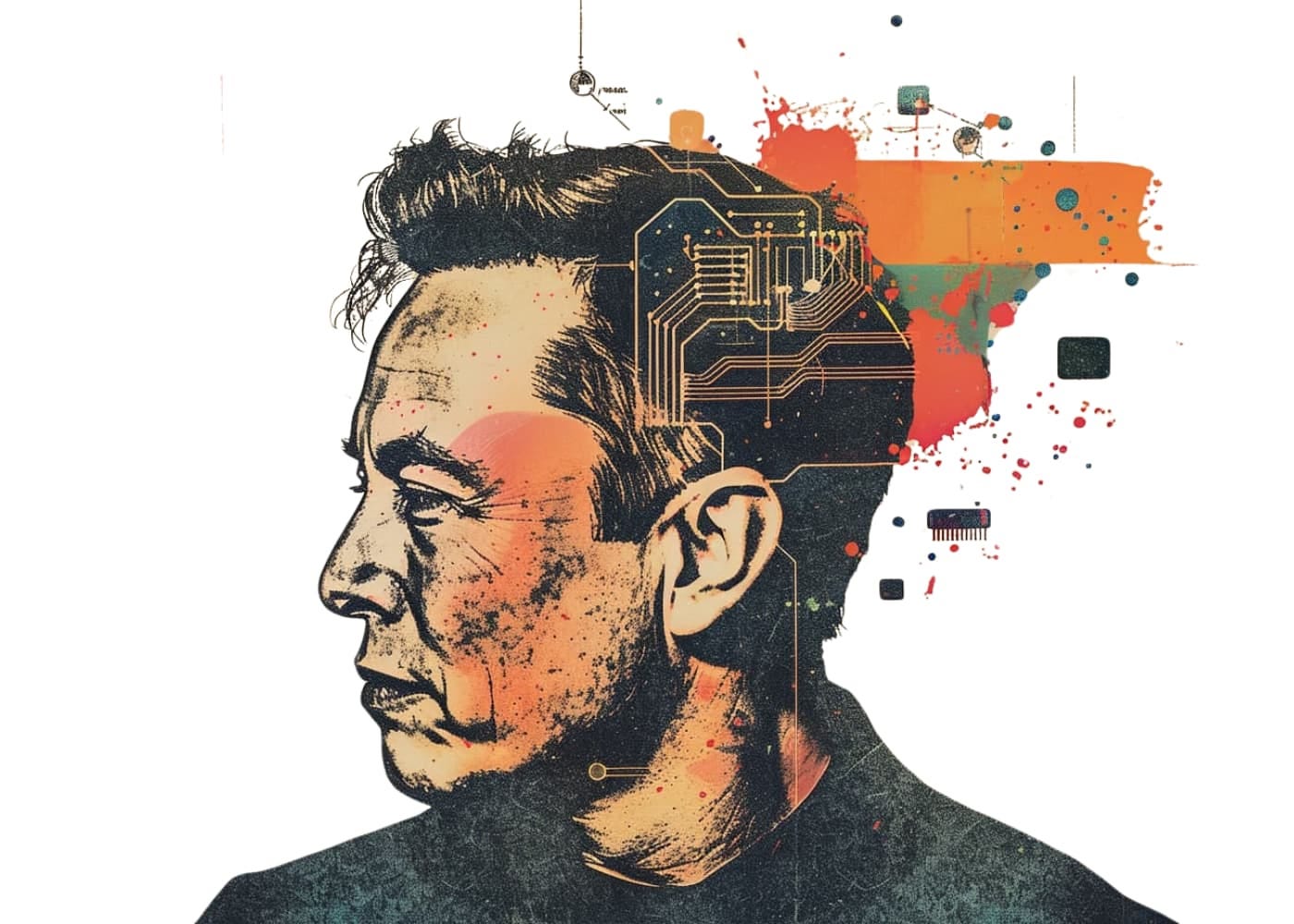
What Musk's Neuralink Will Actually Do
Elon Musk says Neuralink will merge human brains with artificial intelligence. How realistic are these ideas? Is this our future, or are Musk’s ideas just fantastical sci-fi imaginations? This is a public episode. If you would like to discuss this with other subscribers or get access to bonus episodes, visit suzitravis.substack.com

Solipsism -- It's Just You
Five Controversial Ideas in Consciousness [Part 3]. This week, we continue our series on the five most controversial ideas in the study of consciousness with solipsism. Solipsism comes in different flavours — in this article, I’ll focus on the most extreme version — metaphysical solipsism. This philosophical view is a radical one. It’s a belief that the only thing that exists is you. It’s just you

Do Neural Networks See the World Like Us?
Asking whether artificial neural networks are like brains is an interesting question, but, to me, the more interesting question is whether the differences between brains and artificial neural nets are the type of differences we should care about — are the differences the type of differences that make a difference? This is a public episode. If you would like to discuss this with other subscribers o
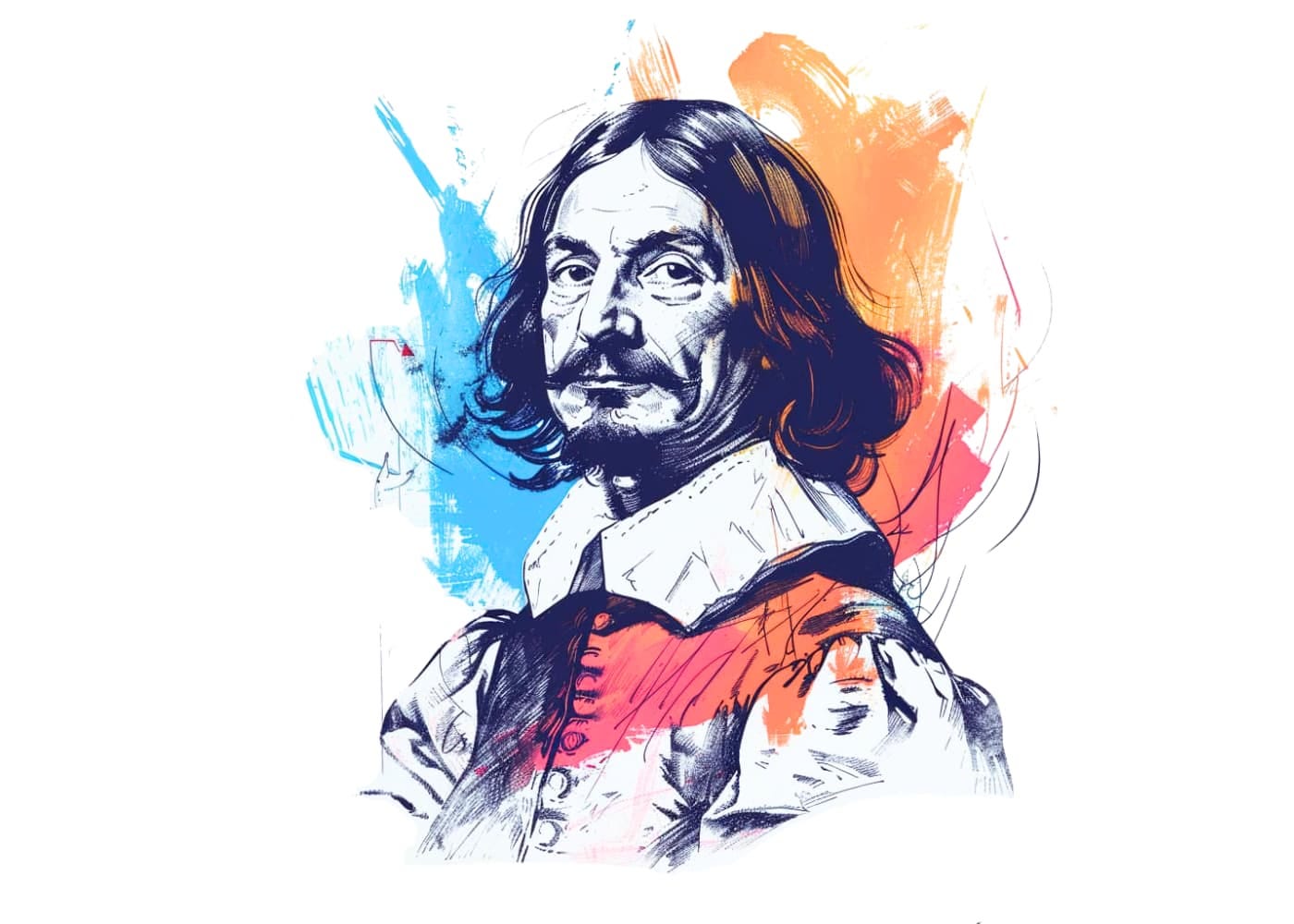
Substance Dualism and the Interaction Problem
Five Controversial Ideas in Consciousness [Part 2]. This week in When Life Gives You a Brain, we’re continuing our series on The Five Most Controversial Ideas in the Study of Consciousness with Part 2: Substance Dualism and the Interaction Problem. This is a public episode. If you would like to discuss this with other subscribers or get access to bonus episodes, visit suzitravis.substack.com
The Homunculus Fallacy and the Infinite Regress
Five Controversial Ideas in Consciousness [Part 1]. This week in When Life Gives You a Brain, we begin a short series dedicated to The Five Most Controversial Ideas in the Study of Consciousness. Welcome to Part 1, where we discuss the Homunculus Fallacy. This is a public episode. If you would like to discuss this with other subscribers or get access to bonus episodes, visit suzitravis.substack.co
Recommended

Stand In The Circle

SLOW ENGLISH PODCAST (A1-A2) With Subtitles | Daily Videos | English With Us Podcast

Learn English A2 with Daily News | Simple English Listening Practice

پلی لیست | PlayList

Conspiracy Files with Paige Carter

Bad Friends

Learn 50 English Phrases While You Sleep | Everyday English Phrases & Vocabulary

This Past Weekend w/ Theo Von

Dateline NBC

Back to the 80s Radio

Crime Stories with Nancy Grace

Bible Tea
