Foojay.io | Friends of OpenJDK and Java Programming
Foojay.io is a community podcast for Java and OpenJDK developers. It explores the JVM ecosystem, open-source tooling, and programming practices through conversations with Java professionals. Episodes share insights, news, and practical advice from across the global Java community. The show is aimed at developers who want to stay current with Java and related open-source technologies.
Episodes
We Left WordPress: CMS vs Static Sites, Hugo vs Jekyll vs Roq (#102)
Foojay.io quietly moved off WordPress and onto Hugo. No more CMS login, no database, no admin panel — just Markdown and AsciiDoc files, built and deployed straight from GitHub. So is a traditional CMS still the right way to run a content site in 2026, or has static tooling caught up?In this episode, Andy Damevin and Holly Cummins from the Red Hat Quarkus team join to talk through it. Andy created
Java 27 in Practice: Smaller Heaps, Smarter Defaults, and Valhalla on the Horizon (#101)
Episode 101 of the Foojay Podcast.JDK 27 arrives on 15 September 2026 without finalising a single new piece of language syntax. It is still worth the upgrade: object headers shrink from 64 bits to 32, which the JEP measures at 22% less heap and 8% less CPU on SPECjbb2015, and G1 becomes the default garbage collector on every machine. Both changes live inside the JVM, so an application you compiled
Foojay Podcast #100: Java Podcasters on Why They Started, What Broke, and What They Learned (#100)
Episode 100 of the Foojay Podcast. No grand plan. It just happened.To mark the milestone, Frank turned the microphone around and invited other podcasters: Adam Bien (airhacks.fm), Jennifer Reif (Breaktime Tech Talks), Kadi McKean and Steve Pool (10xInsights), and Oumaima Zerouali (JCast). Same questions for each: why did you start, what broke, and what did you learn?Along the way: why a no-prep po

Testing the Untestable: LLM Security for Java Developers with Tiberius (#99)
Your Java AI application is live in production. But have you tested whether it can be jailbroken, manipulated into revealing its system prompt, or tricked into printing content it should never output?In this episode, Iryna Dohndorf, Software Engineer at Karakun Group and creator of Tiberius, explains how to bring security testing to LLM-powered Java applications. We cover why traditional unit test
The End of JNI Pain: How WebAssembly Is Quietly Replacing Native Libraries in Java (#98)
WebAssembly is already running inside Java applications, but most developers just don't know it yet.In this episode, Andrea Peruffo walks us through how WebAssembly is becoming the modern, safe alternative to JNI. Run Rust, C, and other native libraries directly on the JVM, without the crash risks, per-platform packaging headaches, or the observability blackhole that JNI creates.From JRuby'
From Scripting Language to AI Powerhouse: How BoxLang Is Redefining JVM Development (#97)
BoxLang is a modern dynamic JVM language built for rapid application development. It's 100% Java-interoperable, compiles to JVM bytecode, and deployable anywhere from OS to AWS Lambda to Spring Boot. In this episode, we sit down with Luis Majano (CEO of Ortus Solutions and creator of BoxLang) and Cristobal Escobar (BoxLang community manager) to dig into the wave of innovation that has hit the
Run 35 AWS Services Locally FREE: Floci, Quarkus and GraalVM-Powered, LocalStack Alternative (#96)
What if you could run 35 AWS services locally in under 25 milliseconds, using just 13 megabytes of memory, with a single Docker command and no cloud bill? That's exactly what Floci does.In this episode, Frank Delporte talks with Hector Ventura, the creator of Floci, a free and open-source cloud emulator built with Quarkus and GraalVM native compilation. Hector walks us through why he built it

Is Your Java App Actually Secure, Or Does It Just Look That Way? (#95)
Is your Java application actually secure, or does it just look that way? In this episode of the Foojay Podcast, Frank is joined by Steve Poole and David Welch, both from HeroDevs, to dig deep into the state of Java security in 2025 and beyond.Steve introduces the concept of zombie dependencies: end-of-life libraries that appear safely dormant but are quietly accumulating vulnerabilities waiting to
More Than a Blog: How Foojay Connects, Sustains, and Evolves the Java Community (#94)
Foojay.io, the website for the Friends of OpenJDK, is turning six years old. To celebrate, Frank Delporte headed to JCON in Cologne, Germany, and sat down with twelve members of the Java community to talk about what Foojay means to them, what they learn from each other, and how the community is evolving.Foojay is more than a blog. It is a Mastodon server, a Slack community, the Disco API, a book o

Update Your JDK, Read More Code, and Talk to Your Users: Interviews From VoxxedDays Amsterdam (#93)
In this episode of the Foojay Podcast, we're bringing you something special: a full batch of hallway-track conversations recorded live at VoxxedDays Amsterdam.Fifteen guests, one conference, and one theme that kept coming back, whether we planned it or not: Java has grown up quietly, steadily, and in ways that still surprise people who haven't looked lately. We talked about migrating betwe
Java 26 Is Here: What's New, What's Gone, and Why It Matters in 2026 (#92)
Welcome to another episode of the Foojay Podcast! In this episode, we're talking about Java 26, released on March 17 in the year 26. Again, right on schedule with Java's six-month release cadence.Now, Java 26 is not a Long Term Support (LTS) release; that was Java 25. But don't let that fool you into thinking there's nothing interesting here. This release brings ten JDK Enhancement
25 Years of IntelliJ IDEA: The IDE That Grew Up With Java (#91)
In this Foojay Podcast, we're celebrating a major milestone in Java development history: 25 years of IntelliJ IDEA.Think about it: IntelliJ IDEA launched in 2000, and since then, it has become the go-to IDE for millions of Java developers worldwide. From its revolutionary code completion and refactoring tools to AI-powered features and the recent unified Community and Ultimate release, IntelliJ ha
From Java 21 to 25: The Features That Changed Everything (#90)
Every six months, we get a new version of Java. Java 26 is just around the corner and will be released soon. But most companies stick to LTS (Long-Term Support) versions, which are maintained and receive security updates for many more years. Versions 8, 11, 17, 21, and 25 are such LTS versions. Hopefully, most of your systems are already on the latest versions and you are not stuck on 8 or earlier

A look into Quarkus and Agentic Commerce with Holly Cummins and Michal Maléř (#89)
For this episode of the Foojay Podcast, we invited the author of three recent posts published on Foojay. And he brought a colleague to get even more expert knowledge in this podcast! We talk about Quarkus, how it is "cloud-native", how it compares to other frameworks, the advantages for developers and managers, etc. We also discussed nano businesses and how they can serve as a model for
From Code to Stage: Organizing Conferences and Finding Your Voice as a Speaker (#88)
What turns a nervous first-timer into a confident conference speaker? Let's find out.This the last Foojay Podcast of 2025 and also the last one with interviews recorded at the Devoxx and JFall conferences. Maybe you're already thinking about your goals for 2026: organizing a meetup, submitting your first conference talk, or taking a bigger role in the Java community. If that sounds like you, t
The Human Side of Development: Career Growth, Staying Healthy, and Why People Matter More Than AI (#87)
What if work-life balance is a myth, and the real secret is just... life?In this Foojay Podcast we're stepping away from pure code and diving into something equally important: how we live our lives as developers. Because let's be honest, being a great programmer isn't just about mastering Java or the latest framework. It's about managing your career, your health, your family, and f
Agents, MCP, and Graph Databases: Java Developers Navigate the AI Revolution (#86)
The AI revolution isn't replacing Java developers. No, it's forcing us to think harder.Welcome to another episode of the Foojay Podcast! Today, we're talking about AI and Java, how it's changing the way we work, what we need to watch out for, and why understanding what's really happening matters more than ever.I recorded interviews at Devoxx and JFall and spoke with people who
Code, Community, and Opportunity: Making Tech Accessible for Everyone (#85)
Episode 85 of the Foojay Podcast. All info, show notes, and links are available at https://foojay.io/today/category/podcast/.What if the future of Java depends on who we invite to learn it today?In this Foojay Podcast, we're diving into something that affects all of us in the Java community: How can we inspire the next generation of developers, and how do we make the developer world more inclusive
Developing Performant, Cost Efficient, and Eco-friendly Code (#84)
In this Foojay Podcast, we're exploring a critical topic that's becoming increasingly important in our industry: developing sustainable software that is both performant and environmentally friendly.At the Devoxx and JFall conferences, I had fascinating conversations about how we as Java developers can make a real impact on both our cloud costs and our carbon footprint. And it's interesting to lear
OpenJDK Evolutions plus Tips and Tricks (#83)
Welcome to another episode of the Foojay Podcast! Just like in the previous episode, I bring you conversations from two of Europe's premier Java conferences - Devoxx in Belgium and JFall in the Netherlands.At these conferences, I had the opportunity to speak with members of the Java community about topics ranging from the evolution of Java itself to mobile development, performance optimization, an
OpenJDK Projects (Leyden, Babylon, Panama) and TornadoVM (#82)
In this Foojay Podcast, we're diving deep into some of the most exciting developments happening within the OpenJDK and TornadoVM projects.At the Devoxx and JFall conferences, we spoke with several speakers and visitors about some of the major themes that are shaping the future of Java development. The first guest is Moritz Halbritter from the Spring Engineering team. He provides us with more insig
Maven 4 - The Future of Java Build Automation (#81)
Maven 4 is approaching its release, bringing many improvements to the build tool powering millions of Java projects.In this Foojay Podcast episode, we talk about Apache Maven 4, a significant milestone that has been years in the making. Maven has been the backbone of Java dependency management and build automation since the early 2000s; however, the road to version 4 has been a long and deliberate
AI4Devs Interviews - Part 2 (#80)
This is part 2 of the interviews recorded on September 19th, 2025, at the first AI4Devs Conference (https://amsterdam.ai4devs.io/) in Amsterdam. In Part 1, we explored many AI-related topics as libraries, security, infrastructure, use cases, and more. In this second part, we'll dive into data science, tools for better AI development, Java in the cloud, and get a behind-the-scenes look at how the c
AI4Devs Interviews - Part 1 (#79)
On September 19th, 2025, the first AI4Devs conference (https://amsterdam.ai4devs.io/) took place in Amsterdam. I grabbed my camera and microphone to talk with speakers and attendees about the revolution in AI-powered coding and application development. In this first part, we'll explore Spring libraries, security, infrastructure and scaling, real-world use cases, event streaming, JetBrains tools, a
Welcome to OpenJDK 25! (#78)
Episode 78 of the Foojay Podcast. All info, show notes, and links are available at https://foojay.io/today/category/podcast/.We're excited to present the first episode of the Foojay Podcast's fifth season, marking the release of OpenJDK 25!For the first time, an OpenJDK release is aligned with the year, and we can welcome release 25 in 2025. As usual in the release podcast, I have my regular guest
DevBcn Report, Part 2 – Spanish Knowledge Sharing (#77)
This is the first Foojay podcast in Spanish. It's also the shortest one and the final of season 4 ;-) Jonathan Vila "highjacked" the microphone from Geertjan Wielenga (See episode 76, https://foojay.io/today/foojay-podcast-76-devbcn-report-part-1-learn-from-the-community/) during the DevBcn conference in Barcelona and interviewed a few of the participants for this first Spanish-only edition of the
DevBcn Report, Part 1 – Learn from the Community (#76)
In early July, the DevBcn conference in Barcelona featured a diverse lineup of speakers, covering topics across multiple technology domains. Geertjan Wielenga took the camera and microphone with him to Spain. Together with Nacho Cougil and Jonathan Vila, two of the organizers, he spoke with many visitors about what they like most in Java, how AI influences their work, and what is important to them
JCON Report, Part 4 - Tips and Tricks for Java Devs (#75)
This is the final part of the JCON 2025 interviews with a lot of tips and tricks!In the three previous podcasts, we featured interviews from the JCON conference on "Being a better Java developer," "Evolutions in Java," and "How to use AI with Java." However, we talked to many more people during the conference, so this podcast focuses on tips and tricks. Let's learn from the many other experienced
JCON Report, Part 3 - AI, ChatGPT, LLM, ML, RAG, MCP, GenAI, and more! (#74)
Let's have an AI Bingo and talk about ChatGPT, LLM, ML, RAG, MCP, GenAI, and more!This is part 3 of the interviews recorded at the JCON conference in May. In the previous parts, you learned more about how to be a better Java developer and how Java has evolved and continues to evolve. Of course, Artificial Intelligence and large language models were hot topics at the conference.This episode collect
JCON Report, Part 2 – Evolutions in the Java Language and Runtime (#73)
In the second part of our JCON interviews, recorded at the conference in May, we focuses on general evolutions within the Java world and how they influence how we write code and develop applications. We take a look back at the history of Java, discuss new features in the latest release, how Java evolves with OpenJDK projects and JEPS, how Java is used in education, and much more...00:00 Introducti
JCON Report, Part 1 - Grow your career, public speaking, 30 years of Java, greener coding,... (#72)
On May 13th and 14th, Foojay attended the JCON conference in Köln, Germany, where we did over 30 live-stream interviews. In this episode, we present to you the first set of these interviews, in which we focus on celebrating 30 years of Java, how you can grow your career, become a public speaker and writer, make your code more green, a bit of AI (of course...), and how the connections between open-
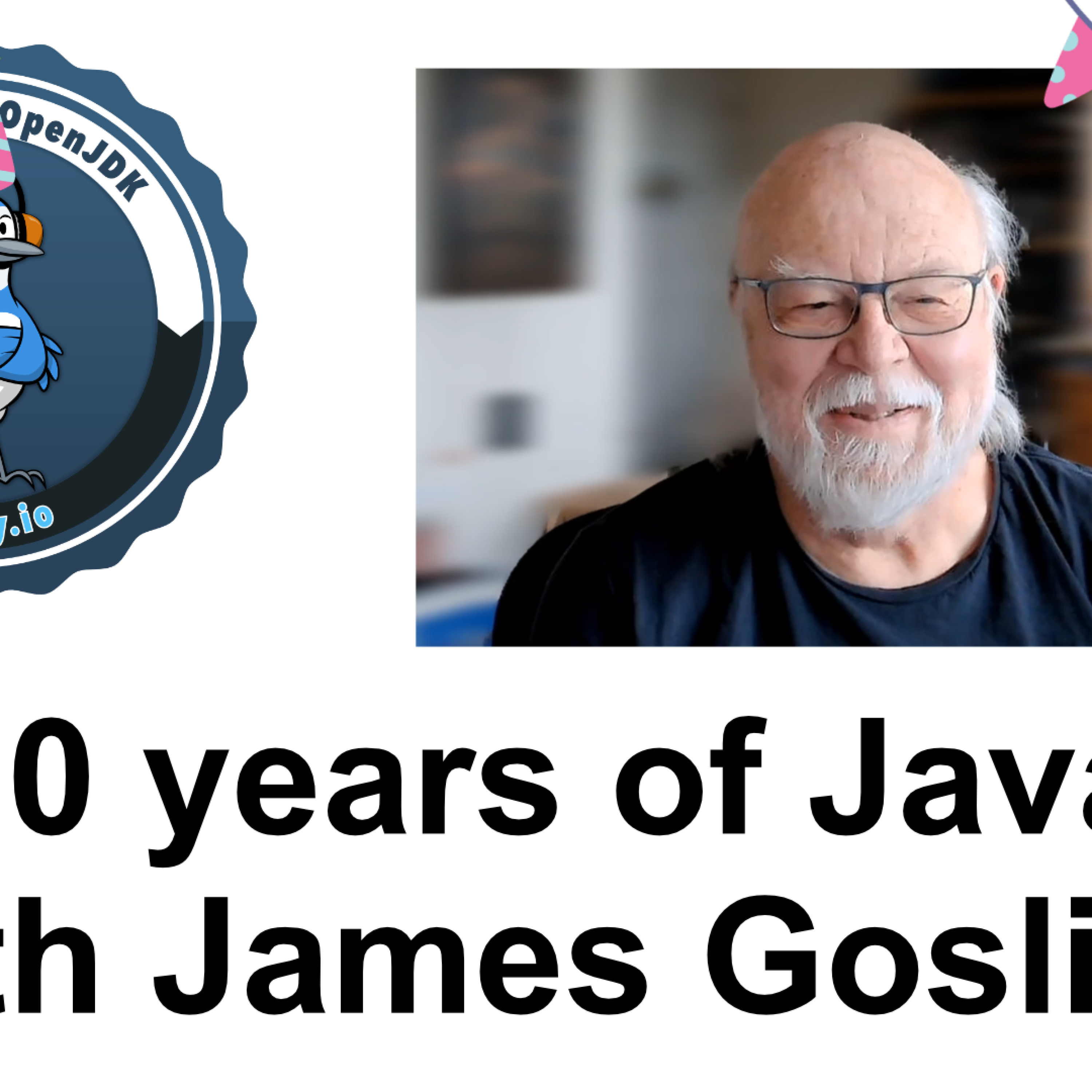
Celebrating 30 Years of Java with James Gosling (#71)
We are celebrating Java's 30th anniversary this May!This is a very special anniversary episode of the Foojay Podcast! As we approach May 23rd, marking exactly 30 years since Java's first beta release in 1995, we're honored to present our first-ever single-guest format. But we have a very special guest for you: James Gosling, the creator of Java! Join us for this exclusive conversation as we explor
Celebrating 5 Years of Foojay! (#70)
On April 25, 2020, Geertjan Wielenga published the first Foojay post. Yes, we are celebrating 5 years since the Friends Of OpenJDK website launch! Today, more than 1,600 posts are on the site, written by over 250 authors. And there is much more to discover within the Foojay world...In this podcast, we look at how Foojay started with founder Geertjan Wielenga. We'll also hear from Gerrit Grunwald a
All Things Java at VoxxedDays Amsterdam (#69)
On April 3rd, the first VoxxedDays event in Amsterdam took place. VoxxedDays are tech events organized by local community groups, with support from the Devoxx team. Geertjan Wielenga brought along a camera and microphone and spoke with many of the attendees.This is the first Foojay podcast ever to feature more than 20 guests! Geertjan asked the same two questions to many of conference visitors: “T
Welcome to OpenJDK (Java) 24 (#68)
We serve you a podcast about the new Java version every six months.Our regular guest, Simon Ritter, Deputy CTO of Azul, is known on social media as "speakjava." He is part of the OpenJDK vulnerability group, JCP executive committee, and expert group for the Java SE specification request so that he can share a lot of inside information with us. In this episode, we are joined by Hanno Embregts, a Ja
Writing a book. Does it make you rich and famous? (#67)
Let me share a personal story. I started experimenting with Java on a Raspberry Pi about five years ago and blogged a few articles about it. But the more I experimented, the more I wrote down, and eventually, I had written a book… I worked on it for six months in a row, every evening and a lot of weekends. But the moment I received the box with my author copies was an incredible feeling. Holding a
Let's Talk About Java Code! Diving into Foojay blog posts... (#66)
In this Foojay podcast, we dive into a few articles that were published recently and focus on code. Igor Kulakov of JetBrains gives us his insights into the tool he created to find duplicate content in documentation. Rijo Sam explains how you can generate real random values and how he created a train departure display. Maxillian Arruda explains in a very detailed post the different ways to constru
Boost Your Career in 2025! (#65)
With the first Foojay podcast of 2025, we want to help you to boost your career! By now, you've likely had your year-end performance review with your manager and set some goals to advance in the coming year. Are you ready to take your career growth into your own hands? I've invited three fantastic guests who are eager to share their experiences and help you elevate your professional journey.Guests
Interviews at JFall about opensource, OpenJDK evolutions, Project Loom, JVM,... (#64)
Let's wrap up this year with more interviews from the JFall conference. In this episode you'll learn more about Foojay, JVM internals and writing your own programming language, Project Loom and structured concurrency, learning at conferences, code reviews, creating desktop applications with Java, infrastructure as code, JUG Noord, and much more!Guests Geertjan Wielenga https://www.linkedin.
How do we keep our Java applications up to date and secure (#63)
Last month, I published a Foojay blog post about the risks in systems that are stuck on old or outdated Java versions and got a lot of feedback from developers. Most of them want to move on but get stuck on management decisions, outdated production environments, or one of the many other reasons that keep systems stuck on old Java versions and dependencies... Do you want to bring your system from J
Better Coding with AI: Friend or Enemy? (#62)
AI, LLMs, ChatGPT—these are just a few of the buzzwords of the massive revolution unfolding right now. These tools are reshaping how we work, but they come with a catch: while they help us work faster and smarter, we need to be careful about placing too much trust in them.I’ve spoken with several guests at the JFall conference in the Netherlands actively working with these tools to learn more abou
As a developer, how do we keep our body and mind healthy? (#61)
Foojay Podcast published in November 2024 All info, show notes, and links: https://foojay.io/today/category/podcast/ At Devoxx and JFall, we talked with Georgios Diamantopoulos, Lutske de Leeuw, Tom Cools, Jessica Siewert, and Rijo Sam about staying physically and mentally healthy as software developers. There are many topics to handle, like the impact of AI on how valuable we feel, how COVID-19
Proud Of Belgium: Devoxx, JobRunr, Timefold, OpenJDK Mobile, OpenJFX, Thymeleaf, htmx (#60)
Belgium might be tiny, but we have a strong Java Community! As I was doing interviews at Devoxx in October, I met several of these people, and we talked about their projects, how you can get involved in OpenJDK, and maybe even start a company out of it. This podcast will teach you more about Devoxx, VoxxedDays, Devoxx4Kids, JobRunr, Timefold, OpenJDK Mobile, OpenJFX, Thymelead, htmx, and more!Gues
DevRel Explained and How to Become a Conference Speaker (#59)
What do people who have Developer Relations as their job description do? And how do you become a conference speaker? You'll learn in this Foojay podcast! At Devoxx in Belgium, I got to talk to Josh Long, Baruch, Pratik Patel, and Roni Dover, who are on the stage because it's part of their job. They share many tips about being a DevRel and the plenty tasks involved in such a job. I also talked with
How Java Developers Can Secure Their Code (#58)
Three years after Log4Shell caused a significant security issue, we still struggle with insecure dependencies and injection problems. In this podcast, we'll discuss how developers can secure their code. I talked with three authors who posted a security and code quality post on Foojay.io.Guests Jonathan Vila https://www.linkedin.com/in/jonathanvila/ https://about.me/jonathan.v
Welcome to OpenJDK (Java) 23 (#57)
OpenJDK (Java) 23 is here! This version introduces three new features to the language and runtime, many bug fixes, small improvements, and a longer list of preview features. What are the most important facts about this release? Let's find out...GuestsSimon Ritterhttps://www.linkedin.com/in/siritter/ https://mastodon.social/@speakjavahttps://twitter.com/speakjava Artur Skowrońskihttps://www.linke
Vectors in Java Code, Database, and LLMs (#56)
In this Foojay podcast, we enter the world of mathematics by discussing Vectors and how they are crucial for AI and machine learning. As ChatGPT explains: "A Vector is a mathematical structure that holds numerical values. Vectors are fundamental to the field of Artificial Intelligence, as they allow mathematical operations to be performed efficiently and form the basis of many machine learning alg
Embedded Java, Part 2 (#55)
As a backend developer, you may not realize that Java was initially born on embedded devices like set-top boxes and gateways. We discussed this topic for the first time almost three years ago in Foojay Podcast #2 with James Gosling, Johan Vos, Erik Costlow, and Frank Delporte (https://foojay.io/today/foojay-podcast-2/).In this episode #55, we look into the history of the Java Micro Edition and how
Music and MIDI with Java and Kotlin (#54)
MIDI is a universal standard for communicating between musical instruments and computers. Within OpenJDK, there is a whole Java package dedicated to MIDI communication and data handling. Is it up to date? Are there better approaches now? And what can we do with music, Java, and Kotlin? Let's find out...GuestsAtsushi Enohttps://atsushieno.github.io/https://g0v.social/@atsushieno https://fedibird.co
JCON Report, Part 5 (#53): CQRS, JOOQ, GraphQL, API, Vaadin, OpenRewrite, ErrorProne, Gateways,...
This is the final part of the JCON interviews. Did I save the best for last? It's up to you to decide. In this episode, you'll hear Simon Martinelli, Nicolas Fränkel, Marcus Hellberg, Rick Ossendrijver, and Abdel Sghiouar. We talked about a bunch of topics, like evolving your APIs, GraphQL, Java versus Kotlin versus Rust, Vaadin, AI and ChatGPT, OpenRewrite, ErrorProne, Infrastructure, and a lot m
JCON Report, Part 4 (#52): Garbage Collectors, Test Containers, Flaky Tests, ToxiProxy, Virtual Threads
This is part 4 of the JCON interviews. In this episode, we have 5 new guests for you. We start with garbage collectors and Intelligence Cloud, a tool created by Azul to find out which of your code is actually used in production and which dependencies are known to have vulnerabilities. My colleague Gerrit Grunwald was at JCON to give a talk about these subjects. With Balkrishna Rawool we dove into
JCON Report, Part 3 (#51) - Persistence, Jakarta EE, GlassFish, Messaging via Telegram
This is part 3 of the JCON interviews. In this episode, Frank meets Otavio Santana, who recently wrote the book "Mastering the Java Virtual Machine." At JCON, he talked about the persistence layer and how you can evolve your career. You'll also learn more about Jakarta EE, GlassFish, and a PET project with messaging via Telegram. Content00:42 Otavio Santana: Book Author, Talks about the persistenc
JCON Report, Part 2 (#50) - Maven, Software Security, Code Quality
This is part 2 of the interviews we recorded at the JCON conference earlier this month in Germany. In this episode you get two main topics: Maven and Code Quality. In the first part, you'll hear Karl Heinz Marbaise and Steve Pool about the Maven project, the repository, Sonaytype and the security impact of dependencies. But next to security, we as developers are also responsible for the creation o
JCON Report, Part 1 (#49) - JUGs, Communities, Open Source, Generative AI, LangChain4j, Machine Learning
On Tuesday, May 14th, the Foojay Podcast went live at the JCON conference in Cologne, Germany, to talk with speakers and visitors about all things Java. We had so many amazing talks that we will combine them into several podcast episodes in the next weeks. This is part 1!00:26 Geertjan Wielenga: Founding father of Foojay.iohttps://www.linkedin.com/in/geertjanwielenga/01:18 Markus Kett: Organizer J
JUG Oberpfalz, JCON Conference, and JAVAPRO Magazine (#48)
Once a month, in the Foojay Podcast, we discuss the history of a Java User Group and the people behind it. In this episode, we are in Oberpfalz, Germany, for a particular reason. The organizers of the local JUG are the same people responsible for the JCON conference in Cologne in a few weeks. Let's learn more about the Java community in Germany. Guests Richard Fichtner https://www.linkedin.com/in/
Artificial Intelligence and Machine Learning with Java (#47)
About one and a half years ago, ChatGPT was launched. The way we search for information and develop software has changed a lot since then as the use of Artificial Intelligence suddenly became a lot easier. What can we expect in the near future, and how can we program AI ourselves with Java? Let's find out...
Guests
Lize Raes
https://www.linkedin.com/in/lize-raes-a8a34110/ https://twitter.
JUG World Tour: JUG Switzerland (#46)
In this podcast, once a month, we discuss the history of a Java User Group and the people behind it. In this episode, I'm leaving the European Union and stepping over the border of Switzerland, the country where the Red Cross was started, and many international institutions have their headquarters. Let's find out if there is also a big Java community...
Speakers
Patrick Baumgartner
http
Welcome to Java 22 (#45)
Last September, we got Java 21, a Long Term Support (LTS) version with eight new big features and seven incubator or preview features. Does Java 22 also bring that much innovation, or is it just a bug-fix release? And what needs to be done to get such a release published on time? Let's find out...
Speakers
Loïc Mathieu
https://www.linkedin.com/in/lo%C3%AFc-mathieu-475b144
https://www.l
JUG World Tour: Quarkus Club (#44)
Once a month in this podcast, we talk about the history of a Java User Group and the people behind it. We have a special group in this episode as we visit the virtual Quarkus Club. This initiative started less than a year ago and is already one of the biggest groups in the world dedicated to Quarkus.
Links
https://discord.com/invite/NUsVvZp7hshttps://www.youtube.com/@QuarkusClubhttps://github.co
Modern Java Testing (#43)
As a developer we all want to write bug free and high quality code. Writing tests is a crucial part to achieve this. Let’s explore the art of ensuring robust and bug-free code in the Java ecosystem. Whether you're a seasoned developer or just starting out, there’s a lot you can learn from the experts in this podcast about testing methodologies, tools, and best practices, empowering you to write re
JUG World Tour: Jozi-JUG and Cape Town Java Community (#42)
Once a month in this podcast, we talk about the history of a Java User Group and the people behind it. Today, we are traveling to Cape Town and Johannesburg to learn more about its Java communities.Java User GroupsJozi-JUGhttps://www.meetup.com/Jozi-JUG/ https://www.youtube.com/@JoziJUGhttps://twitter.com/jozijug Cape Town Java Communityhttps://www.meetup.com/Cape-Town-Java-Meetup/https://www.you
Web Development with Java (#41)
When starting to build a new website, you are facing a major challenge. Which framework should you use? Angular, React, Vue, Svelte? They are all based on JavaScript and can be the right choice depending on your needs. But do you really need one of these frameworks? Why would you not just stick to Java and use one of the many great libraries that are available for it? GuestsMartijn Dashorsthttps:/
Making Java Attractive for Beginners in Programming (#40)
“Public static void main string array” are the first words everyone sees when they start their first Java Hello World experiments. Some teachers explain them, while others say you will understand each word later. Is this a problem to attract more Java developers? And how can we make the Java language more attractive for newbies? Let’s ask some experts…
Guests
Elvira van der Venhttps://www.linkedi

JUG World Tour: Java Dominicana (#39)
Once a month in this podcast, we talk about the history of a Java User Group and the people behind it. Today, we are traveling to the Dominican Republic to learn more about the country and its Java community.GuestsBrayan Muñoz Vargas https://twitter.com/Brayanmnz_https://www.linkedin.com/in/brayanmnz/ Eudris Cabrera Rodriguezhttps://twitter.com/eudriscabrerahttps://www.linkedin.com/in/eudriscabrer
Java in the Cloud (#38)
Java was born in 1995, when the internet as we know it today, didn’t exist yet. Cloud servers, Docker, Kubernetes, distributed systems, scaling up and down,… These things are now part of our daily job, but Java wasn’t originally designed for it. In this episode, we want to learn if the recent evolutions in OpenJDK, and ongoing related projects, will make Java a full Cloud member.GuestsGrace Jansen
J-Fall Report, Part 4 (#37)
Check the previous Foojay Podcasts for the first three parts of our J-Fall report. That one-day conference in the Netherlands in November was packed with amazing sessions. In this episode, you’ll get the remaining interviews we made that day. And as they say, last but not least, again, we have some fascinating insights for you into Java and its evolutions.00:00 Introduction00:38 Maurice Naftalin:
J-Fall Report, Part 3 (#36)
In Episodes 33 and 34 of the Foojay Podcast, you got the first two parts of our JFall Report. But on that single-day conference, we had many more interesting interviews, so this is part 3! Later, we will talk about JOOQ, Desktop Applications, and Security. But first… Maven. It’s one of the most used tools in Java development, and we can learn a lot from different experts who joined me for an inter
JUG World Tour: Dublin JUG (#35)
Once a month in this podcast, we talk about the history of a Java User Group and the people behind it. Today, we are traveling to Dublin to learn more about its Java community.Linkshttps://dubjug.org/ https://www.linkedin.com/groups/8513472/https://www.facebook.com/groups/dubjug/ https://twitter.com/dubjug https://www.youtube.com/@dubjug/videos?view=0&sort=dd&shelf_id=0 Guest: Barry Alistairhttps:
J-Fall Report, Part 2 (#34)
On November 9th, we had several interviews with the speakers and guests at the J-Fall conference in the Netherlands. Last week, in episode 33 of the Foojay Podcast, you could hear discussions about the evolution of Java towards the cloud and sustainability. In this part, we will touch on various topics related to the developers' lives.00:00 Introduction00:45 Elien Callens and Tom Cools: Leaving a
J-Fall Report, Part 1 (#33)
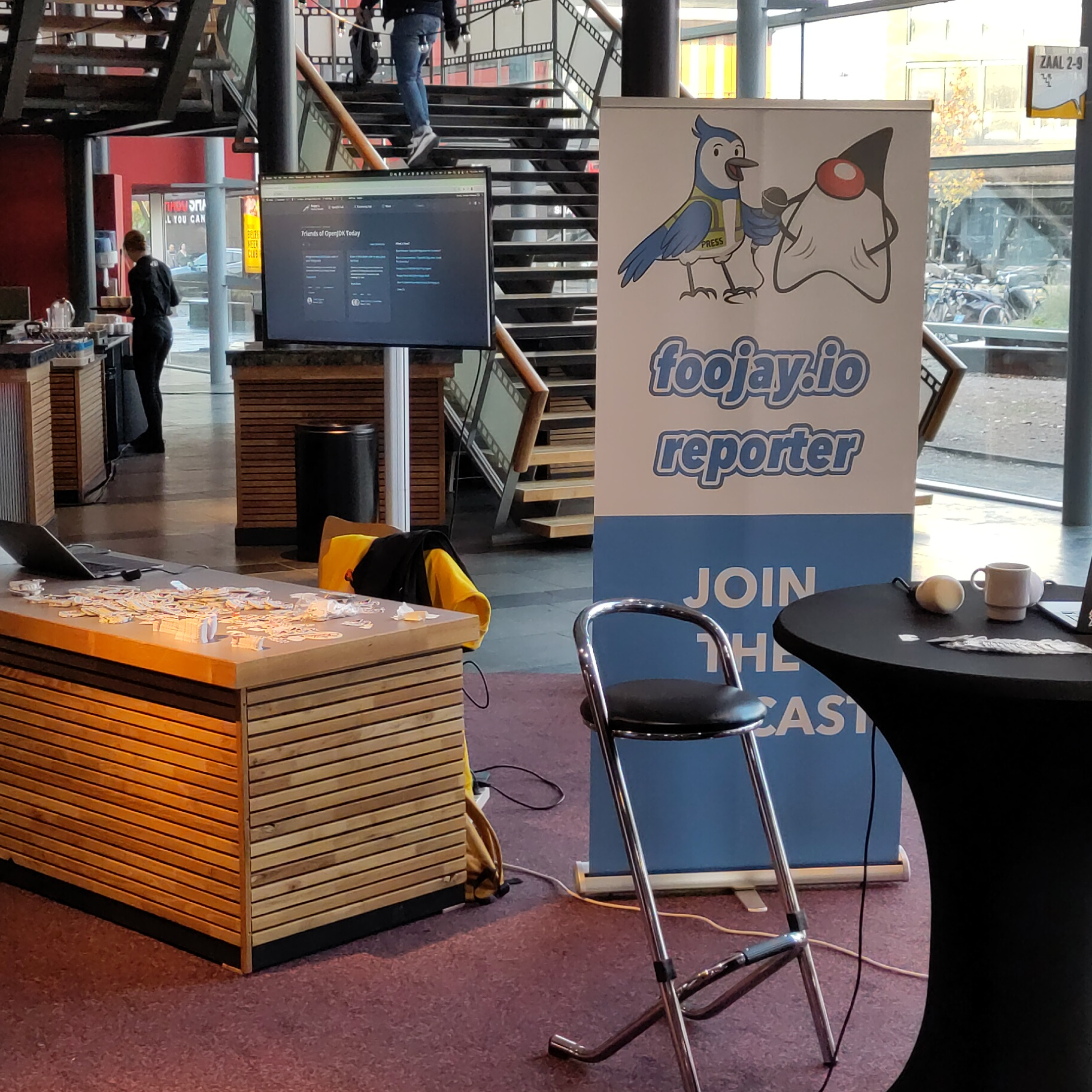
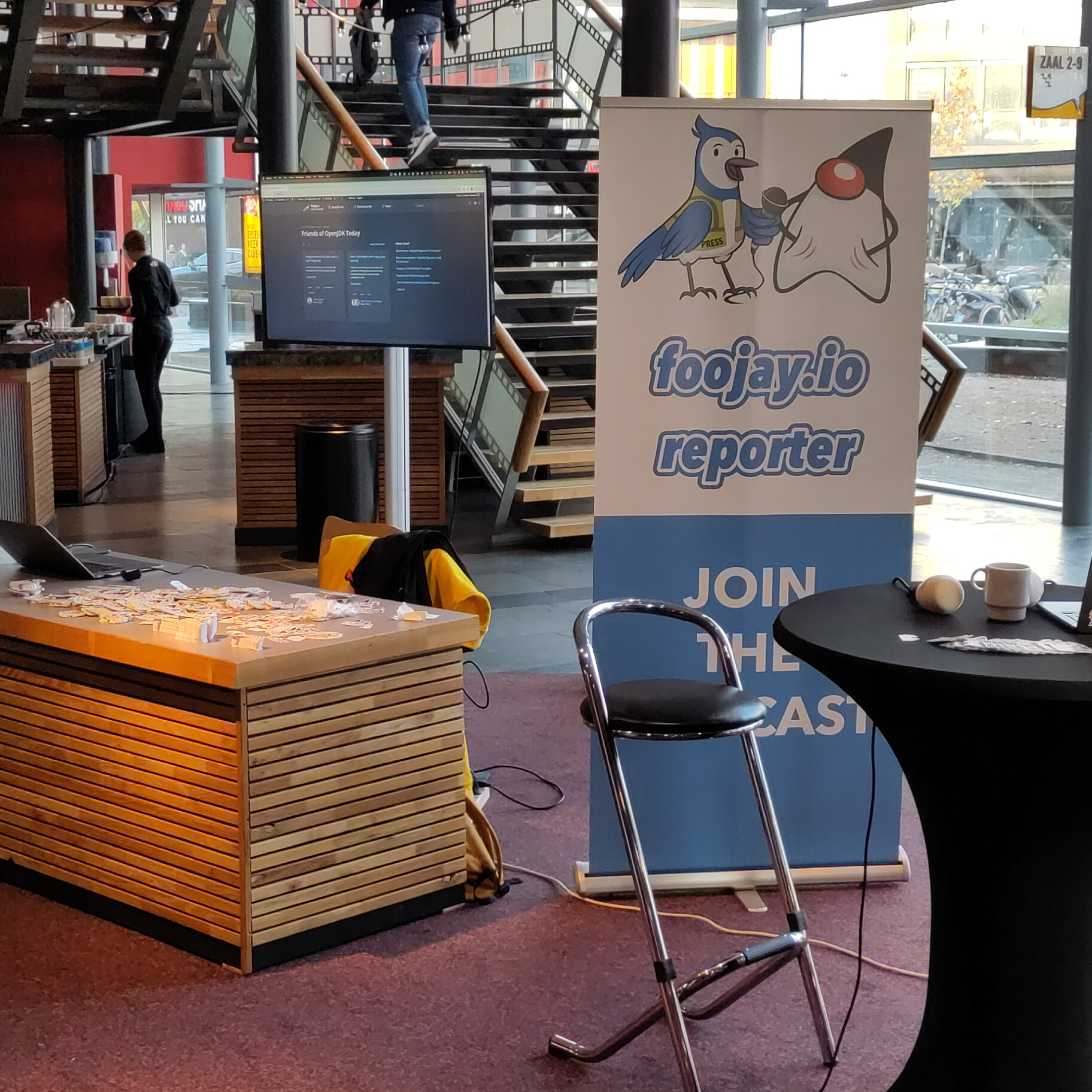
A few months ago, we asked the J-Fall organization team if a Foojay Broadcast Room would be a good idea. And they said yes, so suddenly we found ourselves in the middle of the entrance of the Pathé cinema in Ede in the Netherlands, with a camera and microphones. During the day, we had a lot of exciting talks. There are way too many to fit in one podcast, so in the following weeks, you will get dif
JUG World Tour: Philippines JUG (#32)
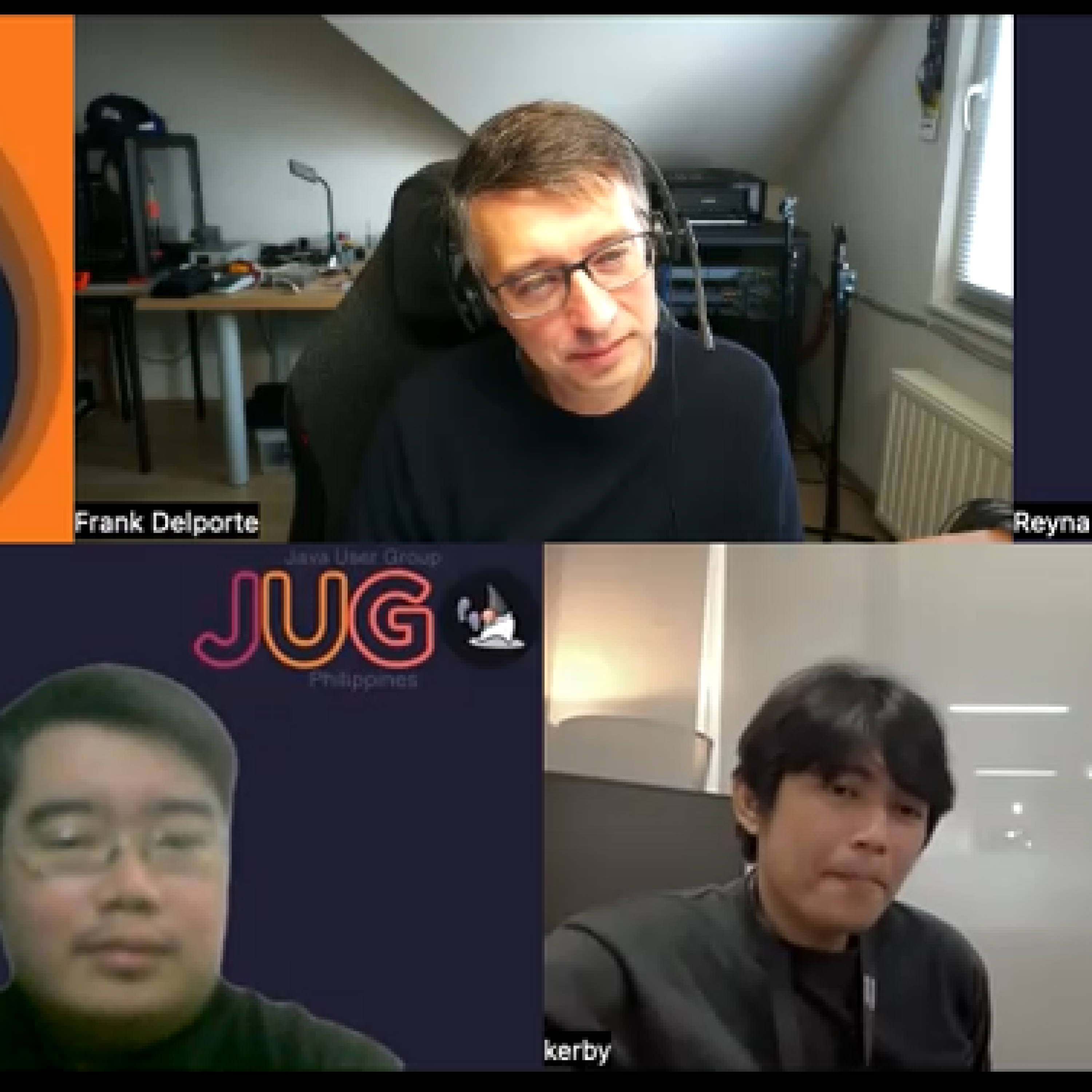
Once a month we talk about the history of a JUG and the people behind it. Today we travel to the Philippines. A new generation of developers has taken over the organization of the JUG. And in addition, they are also involved in the organization of the Softcon conference. Let's talk about the history and future of the Java community in the Philippines.GuestsTristan Mahinayhttps://twitter.com/ph_tan
Report of Devoxx '23 in Belgium (#31)
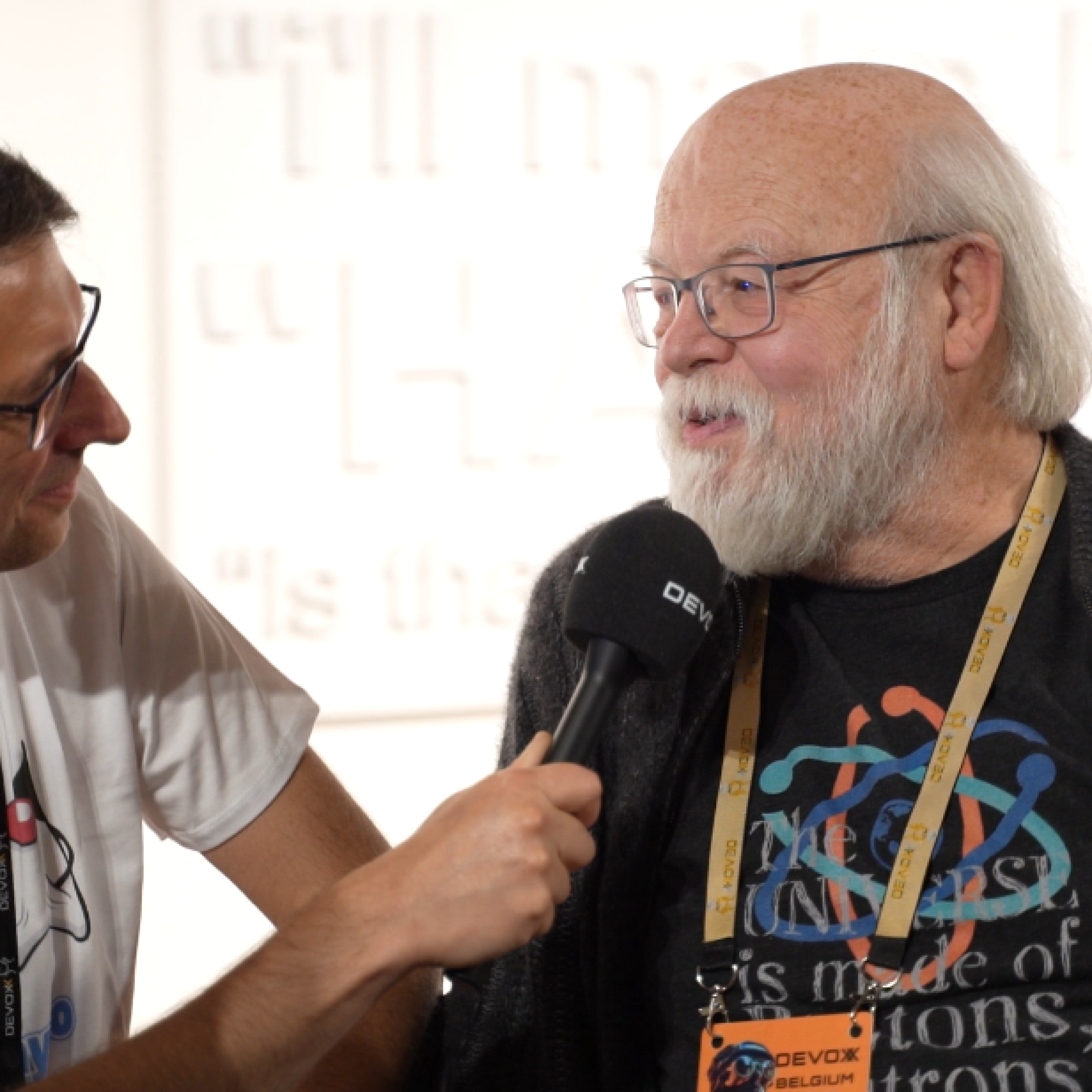
The first week of October, the 20th edition of Devoxx took place in Antwerp, Belgium. Over 3000 Java developers, speakers, and enthusiasts gathered to share their knowledge and learn from each other. I got the opportunity to walk around with a microphone and talk to visitors and speakers. Not all of them, as there were just too many people and too many exciting sessions happening simultaneously.Al
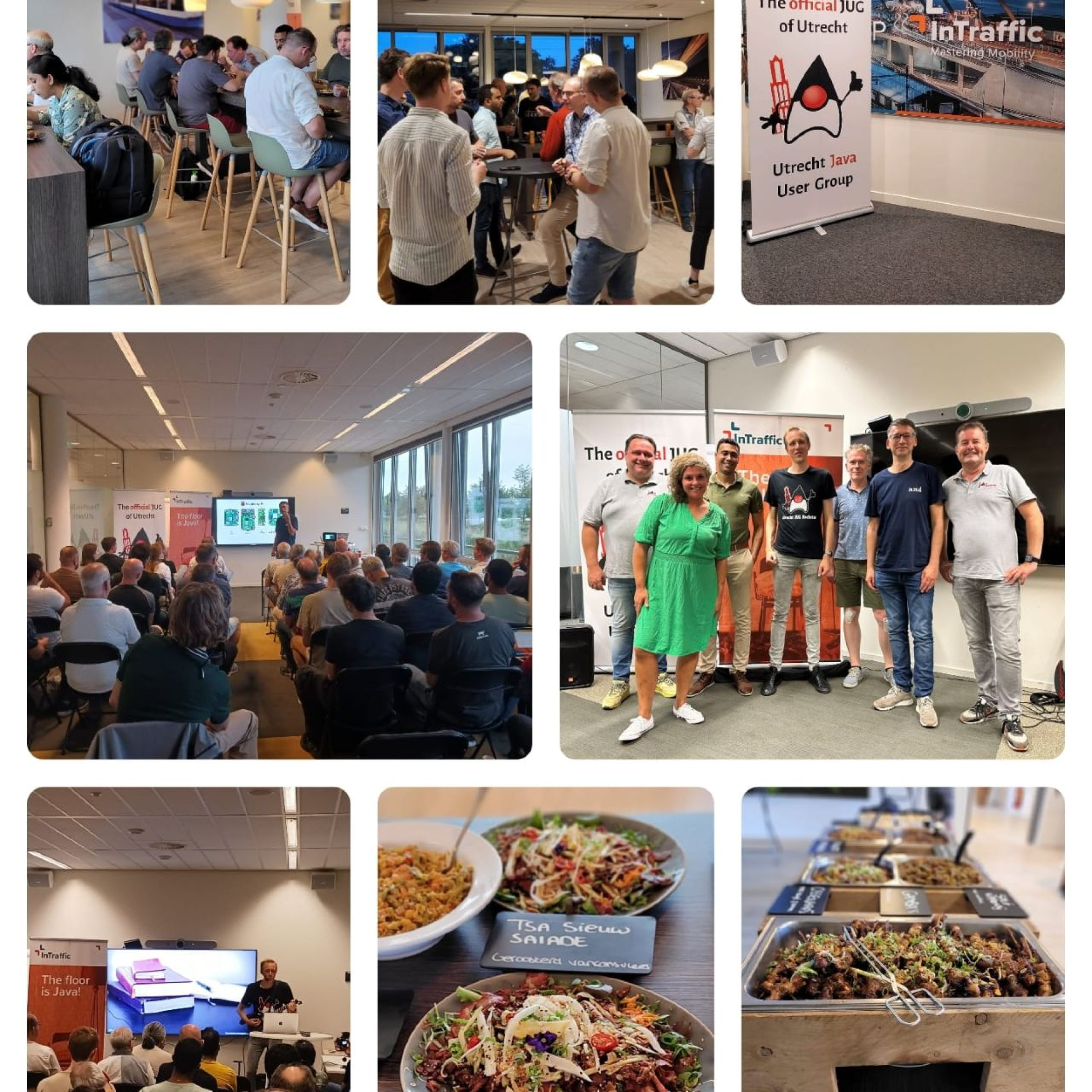
JUG World Tour: Utrecht JUG (#29)
On September 12th, I was invited to speak at the Utrecht JUG together with Hanno Embrechts. That was an ideal moment to grab my camera and microphones to interview the organisers and some of the guests. So this is a bit a special edition of the Foojay Podcast as it’s also available with video! An experiment that brought me great pleasure. I hope you like it too! So … let’s time travel and get back
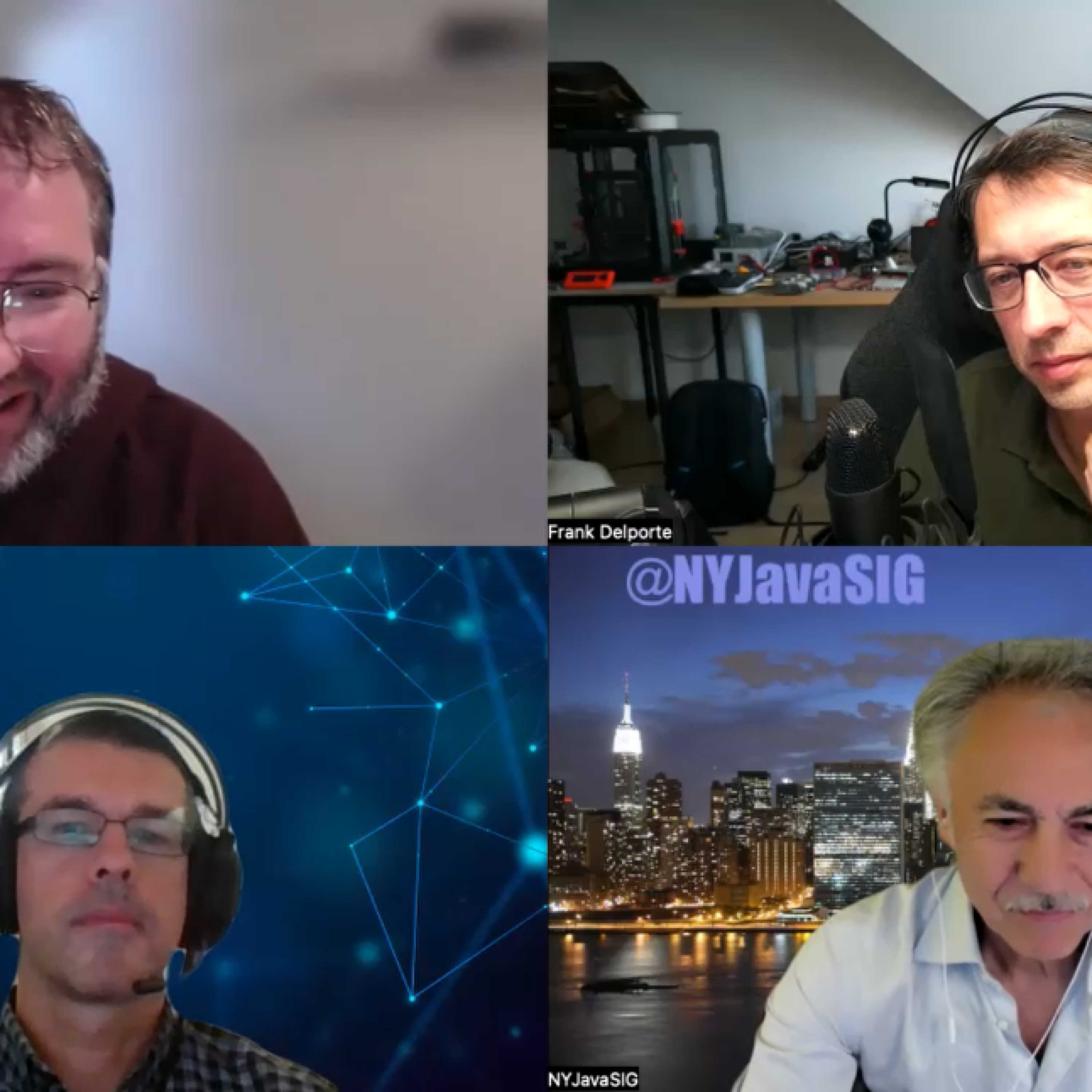
How will AI and ML Influence the Role of Developers? (#28)
Artificial Intelligence and ChatGPT are the talk of the town. Every conference has several talks about these technologies, and on Foojay, you can find multiple posts about it. In this podcast, we want to take a look at it from the Java point of view. How can we use AI in Java programs or our job as a developer?GuestsZoran Sevarachttps://www.linkedin.com/in/zoran-sevarac-phd-49a9a411/ https://fooja
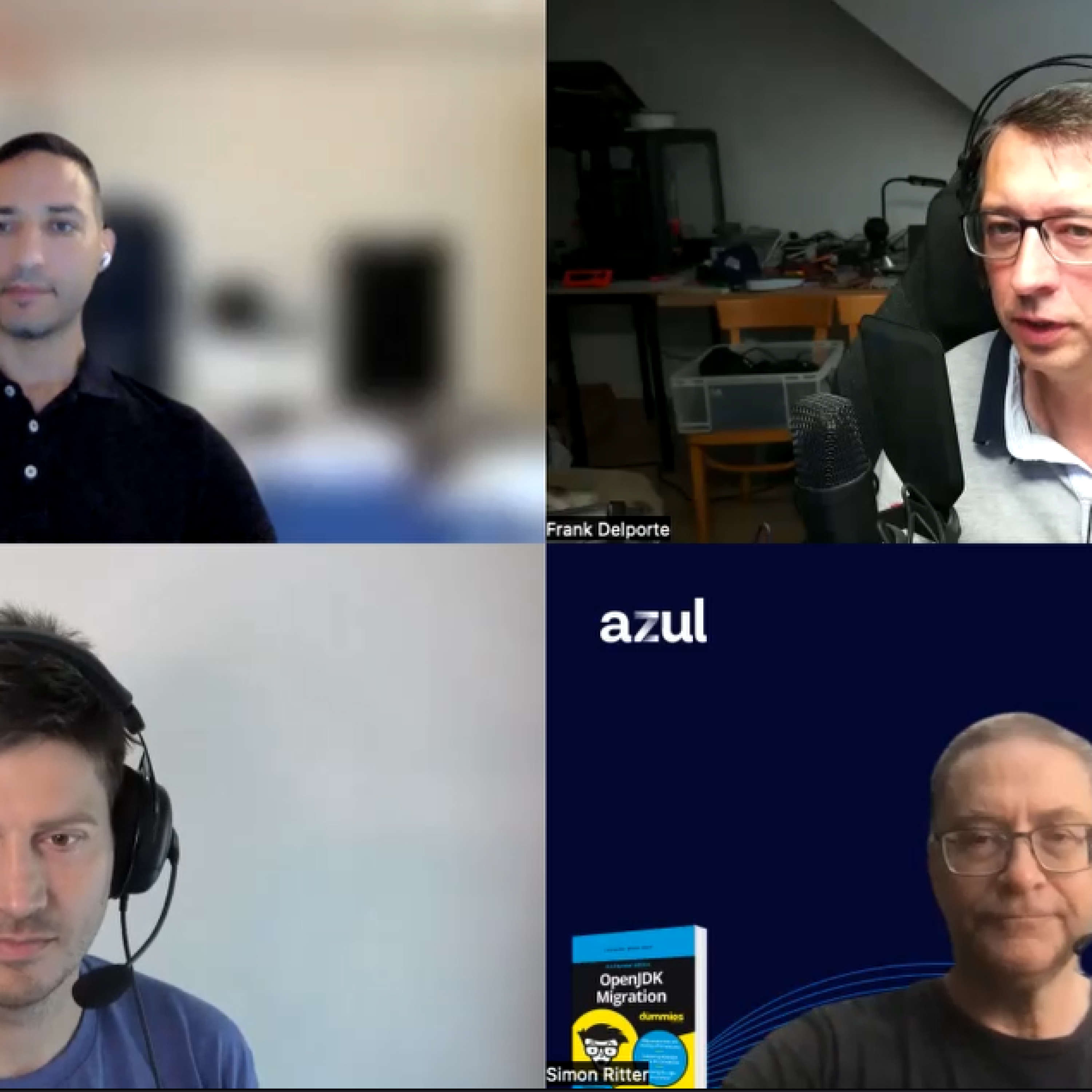
Java 21 Has Arrived! (#28)
Since 2018, we get a new version of Java every 6 months. And version 21, released this month, will be a long-term support version that can be used for many years. It also brings a lot of new features and improvements in both the language and the runtime. Actually, there are so many that we’ll probably not get all of them discussed in this podcast! Let’s see what our experts find the most important
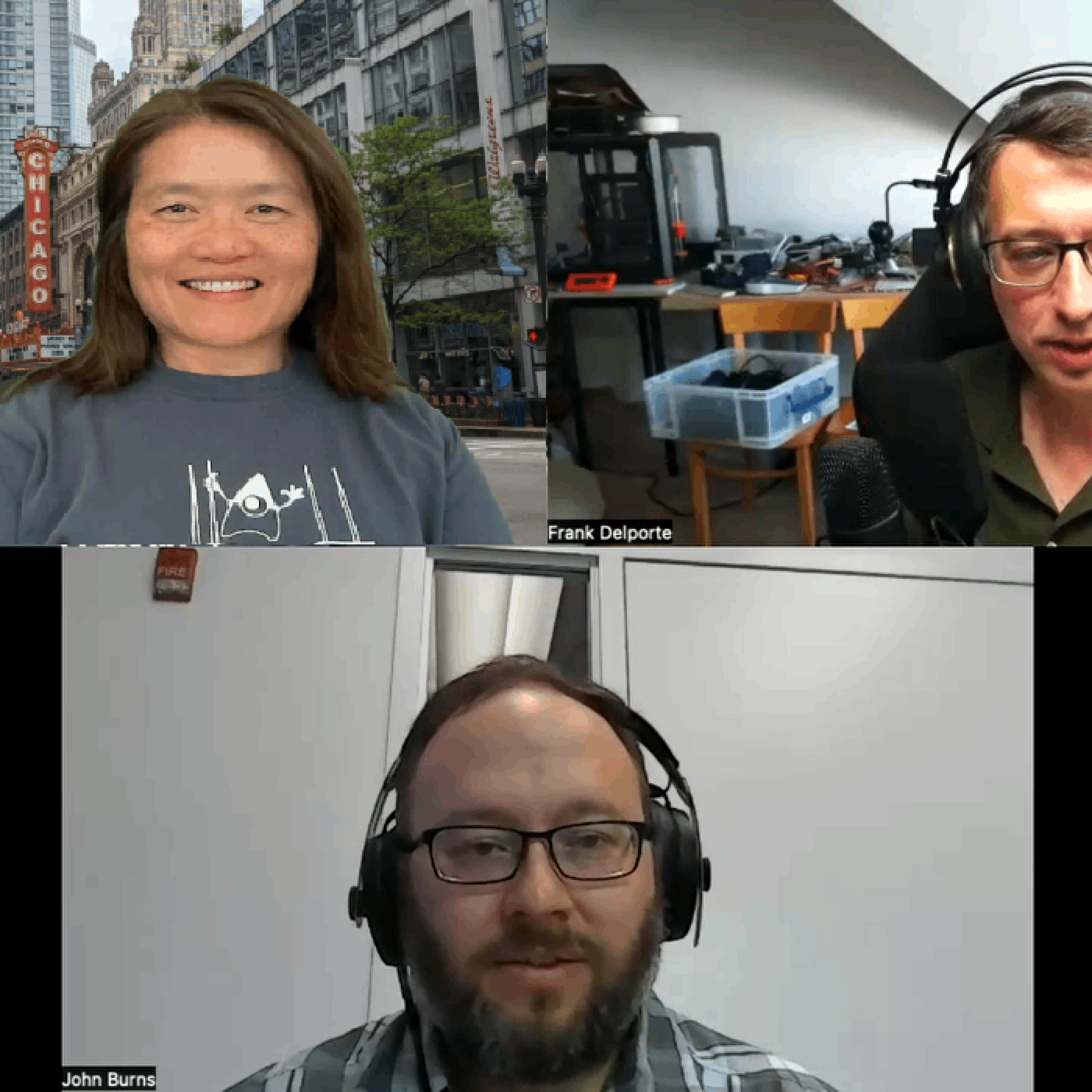
JUG World Tour: Chicago JUG and KUG (#27)
Since December last year, the Foojay podcast virtually visited a Java User Group monthly. This journey has already brought us to many places around the world. And this time, we are in Chicago to learn from the Java and Kotlin user groups.
Guests
Mary Grygleski
https://foojay.social/@mgrygles
https://twitter.com/mgrygles
John Burns
https://bigshoulders.city/@wakingrufus
https://twitter.com/waki
The Future of Source Control and CI/CD (#26)
As developers, we like to automate the boring parts of our job. This automation includes the source control system, build pipelines, and code analysis tools. In recent decades, we have seen evolutions from CVS to Subversion to Git. Is this the endpoint? Did we find the holy grail in version control? Or what evolutions are waiting for us? Let’s find out together with these fantastic guests…GuestsTr
Game Development with Java, JavaFX, and FXGL (#25)
Java and JavaFX are probably not the first options you consider if you want to create a game application. But the FXGL library allows you to do precisely that: create games that run on all platforms with the same codebase as we are used to with Java. And even without an extra library, the JavaFX Components and Canvas provide many animation and gaming possibilities. Let's learn from experts why Jav
JUG World Tour: BeJUG, BruJUG and how Devoxx was born as JavaPolis (#24)
The Foojay Java User Group World Tour has already brought us to a lot of different countries all over the world. But for this episode, the host decided to stay at home. The Belgium JUG (BeJUG) started in 1997 and was the birthplace of Devoxx, Devoxx4Kids, and VoxxedDays. And in our capital Brussels, we can join Brussels JUG (BruJUG), since 2010. So there’s a lot we can talk about to learn more abo
Java Performance and Profiling (#23)
How do you get the maximum performance out of your Java application? And how to use profiling to find the bottlenecks? Let's learn it in this podcast!Java profiling is a crucial technique for measuring and improving the performance of applications. It helps identify bottlenecks, memory leaks, and other application performance issues. There are various challenges with using Java profiling, and the












