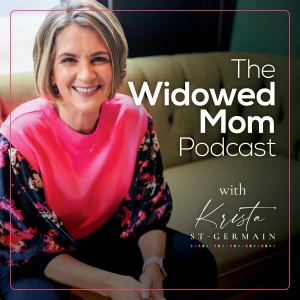
The Widowed Mom Podcast
The Widowed Mom Podcast provides practical, empowering strategies for widowed moms who want to love life again but worry their best days are behind them. Host Krista St-Germain, a certified life coach, widow, and mom, offers support beyond traditional therapy and grief groups. Episodes focus on moving through grief, overcoming emotional patterns, and handling the unique challenges of being a widowed mom. Listeners learn small, manageable steps and techniques to create a future they can look forward to. More information is available at coachingwithkrista.com.
Episodes

385. What to Do When Your Husband Dies and You Can't Think Straight
When your husband dies, you may expect grief to affect your emotions, but what happens when it also affects your ability to think? Maybe you're forgetting things, struggling to concentrate, or second-guessing decisions that used to feel easy. If that sounds familiar, I want you to know that you're not alone. In this episode, I'm talking about widow fog, why grief can impact your memory and concent
384. The 7 Most Asked Questions about Widows and Dating
Dating after your person dies can feel incredibly unfamiliar, especially if the last time you dated was decades ago. In this episode, I answer seven of the questions I hear most often about widows and dating, from how to know when you're ready to whether there is such a thing as dating too soon. Get full show notes, transcript, and more information here: https://www.coachingwithkrista.com/384
383. Making Big Decisions in Your First Year of Widowhood Without Rushing Yourself
Making big decisions in the first year of widowhood can feel especially overwhelming when grief has affected your concentration, confidence, and sense of certainty. In this episode, I’m challenging the common advice that widows should avoid all major decisions for a full year after their person dies. Sometimes waiting is helpful, and sometimes life requires you to decide sooner. Get full show no
382. Widows and Depression
If you're having thoughts about self-harm, please reach out to a qualified mental health professional. Call or text 988 to get in touch with the Suicide and Crisis Line. If you’ve ever wondered whether what you’re feeling is grief, depression, or both, this episode is for you. I’m breaking down why grief and depression can look so similar, including changes in sleep, appetite, energy, concentrati
381. The Widowhood Effect: Can You Die of a Broken Heart?
Can you really die of a broken heart? In this episode, I’m looking at the science behind that question, including the widowhood effect and the real medical condition known as broken heart syndrome, or Takotsubo cardiomyopathy Get full show notes, transcript, and more information here: https://www.coachingwithkrista.com/381 Follow me on Instagram: https://www.instagram.com/lifecoachkrista/Mentione
380. Anticipatory Grief: When You Started Grieving Before He Died
If you knew your person was going to die, you may have expected the loss to feel different because you had time to prepare. In this episode, I’m talking about anticipatory grief: the grief that can begin before a death fully occurs. We’ll look at the losses that happen during illness, decline, and caregiving, from changing roles and intimacy to the future you thought you would share. Get full show
379. Survivor’s Guilt as a Widow: Why You Feel It and How to Carry It
In this episode, I’m talking about survivor's guilt and why it can show up in widowhood, sometimes when you least expect it. You might wonder why you get to keep living, laughing, traveling, watching your kids grow, or creating a future when your person can’t. And sometimes, those thoughts get even louder when life starts feeling better.I’ll explain why guilt can create an illusion of control, how
378. Thriving 4 Years After Sudden Loss: An Interview with Widow, Anne Chillman
In this episode, I sit down with Anne Chillman, a widowed mom whose husband, Chili, died suddenly of a heart attack in 2022. Anne shares what the first years after sudden loss looked like for her and her two daughters, including the shock, the secondary losses, the pressure to hold everything together, and the challenge of making decisions without her partner. Get full show notes, transcript, and
Join The Thriving Widow Blueprint: Why Conventional Grief Advice Fails and What Actually Works
I have something brand new I want to invite you to. It’s a free live class called The Thriving Widow Blueprint: Why Conventional Grief Advice Fails and What Actually Works.If you’ve read the books, listened to the podcasts, tried therapy or a grief group, stayed busy, given it time, and you still feel stuck, this class is for you.So much of what we’ve been taught about grief is outdated or incompl
377. When Therapy and Grief Groups Aren't Enough: What Grief Coaching Adds
If therapy or a grief group has helped you but you still find yourself wondering, “Is this as good as it gets?” this episode is for you. This week, I’m talking about what grief coaching can add when you’ve told the story, understand your grief better, and are functioning again, but you still don’t feel like you’re really living. Get full show notes, transcript, and more information here: https://w
376. Navigating Grief, Perimenopause, and Menopause: An Interview with Jill Crotty
Can grief make perimenopause and menopause feel even harder to navigate? In this episode, I sit down with my friend and women's health nurse practitioner, Jill Crotty, to explore what happens when the emotional and physical effects of grief overlap with hormonal changes. If you've been wondering whether what you're experiencing is grief, perimenopause and menopause, or both, this conversation wil
375. Lessons I’ve Learned from 10 Years of Widowhood
As I mark 10 years since Hugo’s death, I'm reflecting on the biggest lessons widowhood has taught me and sharing the insights I wish someone had given me in those early days. My hope is that these lessons help you approach your own grief with more compassion and a little less self-judgment. Tune in this week to learn 10 lessons from a decade of widowhood, including how to stop fighting your emotio
374. What No One Warns You About Grief and Your Nervous System: An Interview with Heather Rosser
What do you do when grief doesn't just break your heart, but completely overwhelms your nervous system? In this episode, I sit down with Mom Goes On member Heather Rosser to talk about what happened after the death of her husband and how learning to regulate her nervous system became one of the biggest turning points in her healing. Get full show notes, transcript, and more information here: htt
373. What Actually Helps with Acute Grief: Part 2
What actually helps when you're in the middle of acute grief and every day feels impossible? In this episode, I continue my two-part series on acute grief by sharing 10 practical strategies that supported me and the thousands of widows I've coached. My goal isn't to help you avoid grief, but to make the early days feel a little less overwhelming and a little more manageable. Get full show notes,
372. What No One Tells You About Acute Grief: Part 1
What if some of the most frightening parts of acute grief are actually completely normal? In this episode, I begin a two-part series on acute grief by sharing ten things I wish someone had told me after my husband died. My goal isn't to make acute grief hurt less, but to help you stop wondering if you're grieving "wrong" when your mind and body respond in ways you never expected. Get full show not
371. What Is Widow Fire?
Have you heard the term widow fire and wondered what it actually means or whether something is wrong with you if you've experienced it? In this episode, I unpack one of the most misunderstood experiences in widowhood and explain why widow fire is far more common than many widows realize. Get full show notes, transcript, and more information here: https://www.coachingwithkrista.com/371 Follow me
370. Widows and Loneliness
What if loneliness isn't caused by being alone? In this episode, I explore one of the most common experiences in widowhood: loneliness. I share why loneliness can feel so overwhelming after losing a spouse, why you can feel lonely even in a room full of people, and how understanding what loneliness really is can completely change the way you respond to it. Get full show notes, transcript, and mor
369. Traumatic Loss: An Interview with Kaydee Castricone
How do you keep living after a traumatic loss changes everything in an instant?In this episode, I sit down with Mom Goes On member Kaydee Castricone, who shares the heartbreaking story of losing both her husband and daughter in a devastating car accident that also left her youngest son critically injured. Kaydee shares what helped her most, including somatic tools, coaching, community support, and
368. How to Cope with Intense Grief After Losing a Spouse
Have you ever wondered if your grief is too intense, lasting too long, or somehow a sign that you’re doing something wrong? In this episode, I talk about what it really means to cope with intense grief after losing a spouse and why so many widows unintentionally make grief harder by judging themselves for how they’re grieving. Get full show notes, transcript, and more information here: https://ww
367. Tapping, Writing, and Finding Beauty in Grief: An Interview with Judith Lysaker
What if tapping could help you stay present with grief without feeling completely overwhelmed by it? In this episode, I sit down with Mom Goes On member Judith Lysaker to talk about how tapping became an unexpected but powerful part of her grief journey after the sudden death of her husband, Paul. Join us this week as we discuss the early days of grief, the importance of community, and how writin
366. The Mental Load of Solo Parenting
Are you exhausted by the nonstop mental load of solo parenting after loss, even when you’re doing everything “right”? In this episode, I talk about the emotional, mental, and nervous system impact of solo parenting in widowhood and why so many widows feel overwhelmed in ways that rest alone doesn’t fix. Join me this week to hear how solo parenting after loss affects executive functioning, decisio
365. Dear Widow: Advice From a Grief Coach
In this episode, I share six powerful lessons I wish someone had told me after I became a widow and the guidance I now give widows as a grief coach. Tune in this week as I talk about the difference between consuming grief content and actually doing the work of healing. I explain why self-compassion matters, why getting the right support and tools is essential, and how widows often stay stuck waiti
364. Working with Your Nervous System in Grief: An interview with Deb Dana
What if understanding your nervous system in grief could completely change how you experience loss, healing, and emotional overwhelm? This week, I sit down with Deb Dana, a renowned clinician, author, and polyvagal expert, best known for translating Dr. Stephen Porges’ Polyvagal Theory into practical, accessible tools for clinicians and the public. Join us as we explore how grief impacts the nerv
363. Reframing Your Grief Story: A Widows Unfiltered Interview with Wendy Veazie
What if your grief could become part of an intentional, meaningful next chapter? In this powerful conversation, I sit down with my client Wendy Veazie as she shares her deeply personal journey after the sudden loss of her husband, Peter, and how she learned to reframe her grief story and navigate unimaginable pain without losing herself. In this episode, Wendy opens up about the shock of sudden l
362. Why Grief Isn’t Linear
Have you ever thought, “I was doing better, so why am I falling apart again?” In this episode, I want to reassure you that you are not back at the beginning, you are not failing, and you are not doing grief wrong. Grief was never meant to move in a straight line. Tune in this week to learn why grief isn’t linear, why the traditional idea of “stages” can make us judge ourselves, and why recurring
361. Does Grief Journaling Actually Help?
What if grief journaling - something everyone seems to recommend - might actually be keeping you stuck instead of helping you heal? In this episode, I challenge the idea that journaling is always beneficial, and explain why it sometimes leaves you feeling worse instead of better. Tune in to learn how to shift from unintentional journaling to purposeful grief journaling. I’ll show you how to questi
360. 5 Ways Widows Can Build Real Resilience
How do widows build real resilience? It's not about "getting over it" or putting on a brave face; resilience is a skill you can develop. Whether you’re in the early stages of grief or looking to strengthen your emotional toolkit, this episode provides actionable strategies to build resilience from the inside out. Tune in this week as I break down five key ways widows can build real resilience, and
359. How to Do EFT Tapping for Grief
What if you could calm overwhelming emotions in just a few minutes - anytime, anywhere?In this episode, I share one of the simplest and most powerful tools I use daily to help regulate emotions: EFT tapping. I’ll show you why it works, how it helps calm the nervous system, and why it can be especially powerful when you’re navigating grief, anxiety, or emotional overwhelm.Listen in this week to lea
358. Fear of Forgetting Your Person
What if the memories you hold most dear started to fade? Would that mean losing your person all over again? The fear of forgetting your person is something many widows quietly carry, and it can feel just as painful as the loss itself. In this episode, I share my own experience with the fear of forgetting your person - worrying about losing the sound of their voice, their quirks, and the tiny deta
357. Ready to Date Again? Try the Burned Haystack Dating Method with Jennie Young
Are you ready to date again but feeling overwhelmed by the process? In this episode, you’ll meet Jennie Young: the professor and rhetorician turning the dating world upside down with her Burned Haystack Dating Method. Jennie explains why this method works, offering clear steps on how to identify dangerous patterns and why blocking unwanted matches can help you find your ideal partner. Join us t
356. What Does a Grief Life Coach Actually Do?
What does a grief life coach actually do, and could it change how you experience grief? If you’ve ever wondered whether coaching is just listening, advice-giving, or something more, this episode pulls back the curtain. In this episode, I explain what grief life coaching really is (and what it isn’t). Grief isn’t a problem to fix. It’s a natural response to loss. As a grief life coach, my role is t
355. If You’re Avoiding Everyone Right Now, This Is for You
Have you noticed yourself avoiding everyone lately, wondering if something might be wrong? After the loss of your person, even simple social interactions can suddenly feel overwhelming. If invitations feel heavy, texts go unanswered, or you just want more time alone, you might worry that you're isolating too much or doing grief “wrong.” Join me this week as I dive into what it really means when y
354. Dating a Widow: What You Really Need to Know with Brad Judy
Dating a widow can be a complex yet rewarding journey, and it's often not what you expect. This week, I sit down with Brad Judy, the husband of Jamie Galyon, a longtime member of our Mom Goes On community. Brad shares his experience of dating a widow, navigating the unique challenges that come with grief, blending families, and the ongoing presence of a lost loved one. Join us on this episode as
353. First Year as a Widow: What You Weren't Told
I used to think grief was something you “get through,” but what I’ve learned, and what I share in this episode, is that the first year isn’t about hitting milestones. It’s about your nervous system adjusting to a new reality you never chose. In this episode, I break down what many widows aren’t told ahead of time: grief is deeply physical; your body reacts; decision-making gets harder; confidence
352. My Top 8 Books for Widows
Are you searching for the right books for widows, hoping one of them will finally show you how to “do grief” the right way? I remember desperately wanting a roadmap or something that would tell me how to get to the end of grief successfully. In this episode, I share my top eight books for widows that have shaped how I understand grief, resilience, and growth in the nearly ten years since Hugo die
351. Is It Selfish to Want to Move On?
Have you ever wondered if it’s selfish to want more for your life after your person dies? If the desire to date again, set boundaries, rest, or feel joy brings up guilt or heaviness, you are not alone. In this episode, I unpack the question so many widows quietly wrestle with: Is it selfish to want to move on? Tune in this week as I help you redefine what selfish really means, recognize interna
350. Why Grief Feels Like Brain Fog
Have you been wondering why you can’t think clearly, remember simple things, or focus the way you used to since your person died? If grief has left you feeling foggy, slow, or disconnected from your own brain, you’re not alone—and nothing has gone wrong. In this episode, I’m talking about grief brain, often called widow fog, and why brain fog is such a common experience after loss. This experience
349. How to Survive Your Wedding Anniversary as a Widow
Does the thought of your wedding anniversary send a wave of dread through your body? You’re not alone.For many widows, the anniversary of their wedding can feel even harder than the day their partner passed. But no matter what you’re feeling - dread, sadness, confusion - there are no rules for how to experience the day. Tune in this week as I guide you through the emotional landscape of your weddi
348. How to Regulate Your Nervous System After Losing a Partner
If life feels harder in your body since your person died, if you notice yourself feeling grumpy, exhausted, numb, or overwhelmed in ways that don't always make sense, you’re not imagining it. When your person dies, your nervous system loses something foundational that you may not have even realized you had. Suddenly, things that used to feel easy feel hard, everything feels out of whack, and we d
347. How Teens Grieve After Losing a Parent: A Conversation with Aubrey Galyon
What happens when a teenager loses a parent? In this episode, I sit down with Aubrey Galyon, daughter of longtime Mom Goes On member and coach Jamie Galyon, to hear her perspective on losing her dad when she was just nine years old. Aubrey's journey through grief led her to write a poetry book called Prevernal Winds, which captures her experience from diagnosis through the intensity of early grie
346. Am I Ready to Love Again? Four Myths Widows Believe About Dating
When you've lost your person, the question of whether you're ready to love again can stir up so many emotions all at once.In this episode, I explore this tender question that might be quietly lingering in your mind, whether you've said it out loud or not.Join me this week to discover why feeling sad about your person's death doesn't mean you're not ready for another relationship, and how wanting l
345. What If I Just Want to Be Single? An Interview with Thrive Solo Author Lucy Meggeson
What if being single isn't something to fix or change, but actually a valid life choice worth celebrating? Maybe you're feeling pressure from family and friends to start dating. Or perhaps you're wondering if it's even possible to truly thrive on your own. Here's what I know: the narrative that we need to be coupled to be happy is just that: a narrative. And it's one we can rewrite. This week, I’
344. The Best of The Widowed Mom Podcast
After 343 episodes of The Widowed Mom Podcast, my team and I decided to do something special for the holidays.We pulled together the moments that have resonated most deeply with my community: the insights that have helped thousands of widowed moms navigate their grief journey.This episode is a powerful reminder that grief doesn't follow a timeline, that post-traumatic growth is possible for ALL of
343. Music Therapy for Grief: An Interview with Tim Ringgold
Does grief feel like you're missing a limb? Like phantom pain that won't go away? When someone dies, we experience what's called a "social amputation." We literally lose a piece of ourselves, and our brain keeps searching for that missing connection. The good news? There's a powerful healing tool you already use every day - music.This week, I'm joined by board-certified music therapist Tim Ringgol
342. 5 Ideas for Creating New Traditions After Loss
Are the holidays feeling heavy this year? Maybe you're dreading the traditions that used to bring joy. Maybe you're wondering how to navigate celebrations that feel incomplete without your person. Here's what I want you to know: You're allowed to do things differently. Listen in this week as I share five ideas for creating new traditions after loss, not because we need to replace what we had, but
341. Parenting While Grieving
Do you find yourself feeling overwhelmed, angry, or deeply tired as you navigate solo parenting after loss?Maybe you judge yourself for those feelings. Maybe you worry that you're barely holding it together. Here's what I need you to hear: You are not doing it wrong. You are not failing. You are simply a human doing something that is incredibly hard.Listen in this week to hear five key insights ab
340. How to Talk to Your Children About Death
When it comes to talking to children about death, most of us freeze. We worry we'll say the wrong thing. We want to protect them from pain. We fear making it worse.The truth is, talking to children about death doesn't have to feel overwhelming. In this episode, I'm sharing a simple framework that you can return to again and again. Whether you're a new widow navigating this territory or someone sup
339. The Most Difficult Part About Being a Widow
Have you noticed how evenings and weekends hit differently as a widow? You're moving through your day, managing work, errands, maybe even feeling okay… then you get home, the house quiets down, and suddenly the loneliness gets louder. If you've been wondering whether that’s normal, the answer is yes. In fact, there are many difficult parts of widowhood that we don't talk about enough. So join me t
338. How to Have a Difficult Conversation: An Interview with Sara Fisk
Have you ever noticed how grief changes the conversations you want to have? Maybe it's with a family member who's disappointed you since your loss. Maybe it's with a friend whose surface-level check-ins no longer feel like enough. Or maybe it's with yourself - about what you really want now that everything has changed. This week, I sit down with my dear friend and coach Sara Fisk to talk about so
337. 5 Ways to Survive the Holidays as a Widow
Are you bracing yourself for the holidays?The holidays after loss can feel like navigating an emotional minefield. One minute you might laugh at a memory, the next you're crying over a Christmas card. And that exhausting voice in your head keeps saying you should be doing more, feeling different, or holding it all together better. Here's what I want you to know: You don't have to love the holidays
336. Grief During the Holidays
The holidays bring a unique kind of heaviness when you're navigating them without your person. Your brain searches for them in every familiar tradition, every decoration, every family gathering - and when it can't find them, it sends out waves of emotion that can feel overwhelming.I'm addressing why the holidays can stir up such intense emotions for widowed moms and why there's no right way to fee
335. 3 Things Widows Need to Get Unstuck
Do you ever feel like you're just going through the motions? Like you're functioning, but not really living?If you're nodding your head, you're not alone. In fact, this feeling is so common among widows that I've given it a name: the grief plateau. It’s that space where you're stable enough to function, but your future feels uncertain and life doesn't quite feel like you'd like it to. You might be
334. What to Say and What NOT to Say to a New Widow
Have you ever found yourself frozen, wanting to support someone who's grieving but afraid of saying the wrong thing?Most of us weren't taught how to show up for someone who's experienced a devastating loss. We want to help, but sometimes our well-intentioned words can accidentally cause more harm than good. Join me this week as I share practical guidance for anyone who wants to be a genuine source
333. That Thing You Can't Stop Thinking About: Ruminating in Widowhood
Have you been beating yourself up because you can't stop thinking about something?Maybe it’s the last conversation you had with your person, something someone said that felt hurtful, or a decision you're questioning. You tell yourself to move on, but the thought returns like a boomerang, taking up mental space you desperately need for other things. The frustration builds as you wonder why you can'
332. Intent vs. Impact in Widowhood
Have you ever had someone say, “You're so strong” or, “They're in a better place now” and felt... worse? These well-meaning comments, though intended to comfort, often leave us feeling misunderstood and alone in our grief journey.Sometimes the people who love us most can hurt us without meaning to. This disconnect between what someone intends and how their actions affect us shows up everywhere in
331. Grief and the Secondary Loss of Friendships
If you’re surprised by how some friendships have changed after losing your spouse, you’re not alone.When we lose our person, we often don't expect to also lose connections with friends who we thought would always be there. And many widows experience this unexpected secondary loss - the shifting or disappearing of friendships they thought would remain steady through their grief journey.Understandin
330. End Emotional Outsourcing with Bea Albina
Are you constantly putting everyone else's needs before your own, even in your grief? When we're grieving, it's tempting to try to "keep it together" for everyone else. But managing your grief for others' comfort comes at a deep cost to our own healing.This week, I’m joined by Bea Albina, a nurse practitioner turned master life coach, somatic expert, and author of a new book called End Emotional O
329. Why Waiting for Motivation Keeps You Stuck
Have you ever told yourself, “I'll do it when I feel motivated?”Maybe it's about going through your person's belongings. Maybe it's about getting back to exercise. Maybe it's about making those difficult financial decisions. Here's the truth: If you're waiting to feel motivated before taking action, you might be waiting a very long time.Tune in this week to learn the importance of understanding th
328. Widowhood and the ‘What-If’ Doom Spiral
Have you ever found yourself lying awake at night, with your thoughts spinning out of control? One worried thought leads to another, and before you know it, you're imagining worst-case scenarios that feel all too real.I call this the ‘what-if' doom spiral, and if you're experiencing it, you're not alone. Listen in this week to learn how to recognize the what-if doom spiral, and how to calm your ne
327. From Alone to Connected: 3 Ways Widows Can Ease Loneliness in Public
Standing in a crowded room after losing your spouse can feel like being invisible in plain sight. The laughter around you seems distant, the couples holding hands become all you notice, and somehow being surrounded by people makes the loneliness even sharper.Join me today to learn simple but powerful actions and mindset shifts that will help you move from feeling like an outsider to feeling genuin
326. Can Widows Change Their Happiness Set Point?
The human brain has a remarkable ability to adapt to both positive and negative life changes, eventually returning us to a baseline level of happiness. When your person dies, it can feel like your happiness baseline has been permanently lowered. Many widows worry they'll never experience the same level of joy or fulfillment they once knew. But here's what modern science tells us: your happiness is
325. The Healing Grief Spiral: A New Way to Understand Grief Integration
Grief doesn't follow a straight line. It spirals. When intense emotions resurface months or even years later, when you circle back to feelings you thought you'd already processed, it's not a sign of failure or regression.The Healing Grief Spiral is a framework I created that reflects how grief actually works: as an upward expansion cycle where we revisit three core steps over and over, each time f
324. The Power of Community in Widowhood: A Widows Unfiltered Interview with Jennifer Schroeder
Community isn't just about having people around you - it's about finding those who truly understand the weight of what you're carrying. When Jennifer Schroeder lost her husband Jerry after 40 years together, she discovered that the isolation of grief was almost as crushing as the loss itself.Join us this week as Jennifer shares how joining a community of widows transformed her relationship with gr
323. When Life After Loss Feels Hard
Life after loss can feel heavy. Not just in the early days of grief, but years later when you're managing moves, anniversaries, and unexpected challenges all at once.When your brain gets stuck in "everything is hard mode," it becomes a pattern-seeking machine that filters every experience through that lens. The to-do lists multiply, the emotions intensify, and suddenly you're living in what feels
322. Trusting Yourself as a Widow
Do you find yourself second-guessing every decision since your loss?When grief hits, the ground beneath your feet doesn't just shift - it disappears entirely. The person who helped you think through decisions, who was your emotional anchor and nervous system co-regulator, is gone. Now you're trying to navigate life with a brain on high alert and a body that's exhausted, wondering why every decisio
321. What No One Tells You About Feeling Stuck After Loss
Feeling stuck after loss looks different than most people imagine. You're functioning, checking off your to-do list, and everyone thinks you're doing well. They tell you how strong you are. But inside, you're watching your life happen from the outside, going through the motions without really feeling connected to any of it.This particular kind of stuckness happens when you're past the point of bar
320. The Invisible Ceiling After Loss
There’s an invisible ceiling above you, limiting what you believe is possible for your life after loss. You didn't put it there consciously, you probably can't even see it clearly, but you can feel its weight pressing down on everything you do. This quiet but powerful belief problem shapes your entire future without you even realizing it's there.After losing your person, you put one foot in front
319. When Your Grief Includes Anger
When Hugo died, people kept assuming I'd be furious at the driver who had meth and alcohol in his system. But the anger just wasn't there - it felt like a tragedy, not a betrayal. The emotions I carried were heavy with sadness and shock, but not the white-hot rage everyone expected.This time around, with my recent breakup and having to sell the house, I'm experiencing wave after wave of intense an
318. How Black-and-White Thinking Can Hijack Life After Loss
Black-and-white thinking shows up everywhere in grief - in the harsh judgments we make about ourselves, in the impossible standards we hold ourselves to, and in the rigid rules we create about how healing should look.It's that voice that says you're either doing grief "right" or you're failing completely, with no room for the messy middle ground where most of us actually live.In this week’s episod
317. The Pressure to Be Productive in Grief
In this episode, I'm addressing the productivity pressure that so many widows face - that nagging feeling that you should be doing more, moving faster, or getting back to normal. This isn't just about recognizing the pressure; it's about understanding how deeply our culture has tied our sense of worth to our output.Join me this week to discover how to identify when productivity pressure is affecti
316. Life After Loss: Grief Plateaus and Dirty Light Fixtures
While cleaning light fixtures in my home, I discovered layers of built-up dirt that had dimmed what were actually crystal-clear glass fixtures. For years, I had accepted the clouded appearance as normal, never questioning if something better lay beneath. This simple household revelation sparked a powerful metaphor for how we often settle into life after loss.I understand firsthand how we can unkno
315. When Gratitude Is a Grief Blocker
As I navigate intense emotions using my regular tapping practice, I've noticed a common pattern that many of us fall into during grief - attempting to smooth over difficult feelings with gratitude. While gratitude is undeniably powerful and beneficial, I've observed how it can sometimes become a way to bypass emotions that need to be felt and processed. Tune in this week to learn how you might be
314. 5 Signs You’re Ready to Love Life after Loss
Living a full and meaningful life after loss isn't about waiting until you feel completely ready - it's about recognizing the subtle signs that you're prepared to take those first steps forward.Many widowed moms find themselves in what I call a "grief plateau." If this is you, it's time to move beyond merely surviving to truly thriving. In this episode, I explore the five key signs that suggest yo
313. Can Widows Be Truly Happy Without Dating Again?
Is true happiness possible without pursuing another romantic relationship? This is a question many widows contemplate privately. In this episode, I break down what it means to build a steady, loving relationship with yourself and how to create genuine fulfillment as a widow. I discuss why rushing into dating from a place of discomfort can lead to settling for less than you deserve, and share pract
312. The Shock of Widowhood: A Widows Unfiltered Interview with Janet Lea
In this raw and unfiltered conversation, I sit down with my client Janet Lea who shares her experience of grief after losing her wife of 43 years. Janet's perspective is fresh—she's approaching the one-year mark since Mary Lou's passing—and her insights are both heartbreaking and illuminating.Join us this week as Janet lets us in on the realities of grief—from the unexpected ways it manifests phys
311. Am I Grieving the Right Way?
“Am I doing this wrong?” The question haunts so many of us on our grief journey. We look around at other widows, compare our progress to arbitrary timelines, and wonder if our unique experience somehow means we're failing at grief.In this episode, I tackle the common fear that there's a "right way" to grieve and explain where this anxiety actually comes from. Join me this week as I explore the pre
310. The Grieving Body: An Interview with Mary-Frances O’Connor
Have you ever wondered why grief feels so physical? Why your heart races, your sleep vanishes, and your body aches when you're mourning the loss of someone you love? In this illuminating episode, I welcome back renowned grief researcher Dr. Mary-Frances O’Connor to discuss her new book, The Grieving Body, which explores the profound physical impact of grief. Dr. O'Connor explains that grief isn't
309. Staying Busy to Avoid Grief
Are you filling every hour of your day since your partner died?Maybe well-meaning friends have advised you to “just stay busy” or “give it time” as if these are magical solutions to grief. While staying busy can provide temporary relief, it might actually be keeping you stuck in your grief journey without you even realizing it.Staying busy can feel like a way to maintain control when everything el
308. Suicide Loss and Healing: A Widows Unfiltered Interview with Jo Kleinsorge
What happens when the life you thought was perfect suddenly shatters?In this week's episode, I sit down with Jo Kleinsorge, who lost her high school sweetheart to suicide two years ago. Their life seemed picture-perfect on the surface - financially stable, healthy kids, world travelers, surrounded by great friends. But in an instant, everything changed.Get full show notes, transcript, and more inf
307. Why Do I Feel the Need to Control Everything?
Do you find yourself trying to control everything in your life since losing your person?If so, I want you to know that this is completely normal, especially after loss. Our need to control often comes from a deep desire to feel safe when our world has been turned upside down.But here's the truth: trying to control what we can't control is exhausting. It's like trying to hold onto sand - the tighte
Recommended

History of the Earthquake and Fire in San Francisco

Fox news

K-Drama Obsessed Mamas | Beyond “Just One More Episode!”

True Crime Classics

The Healer Revolution

Becoming: HER with Nikki Spoelstra

Booked, Blonde & Busy w/ Olivia Ponton

McKinsey on Consumer and Retail

megahired.com

Hard Knocks Podcast

Effective Weight Loss for Moms | High protein, Strength Training, Lose Weight, Meal Planning, Fat Loss, Healthy Habits

The Human-Animal Connection - Pet Life Radio Original
