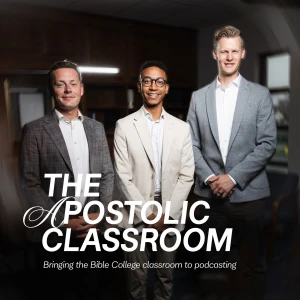
The Apostolic Classroom
The Apostolic Classroom is a podcast featuring long-form discussions on Christian learning, theology, and biblical studies. It follows a semester-based structure of 16 episodes, bringing Bible college classroom discussions to listeners in podcast form. The show also offers published materials designed to equip educators and students in the Christian classroom.
Episodes
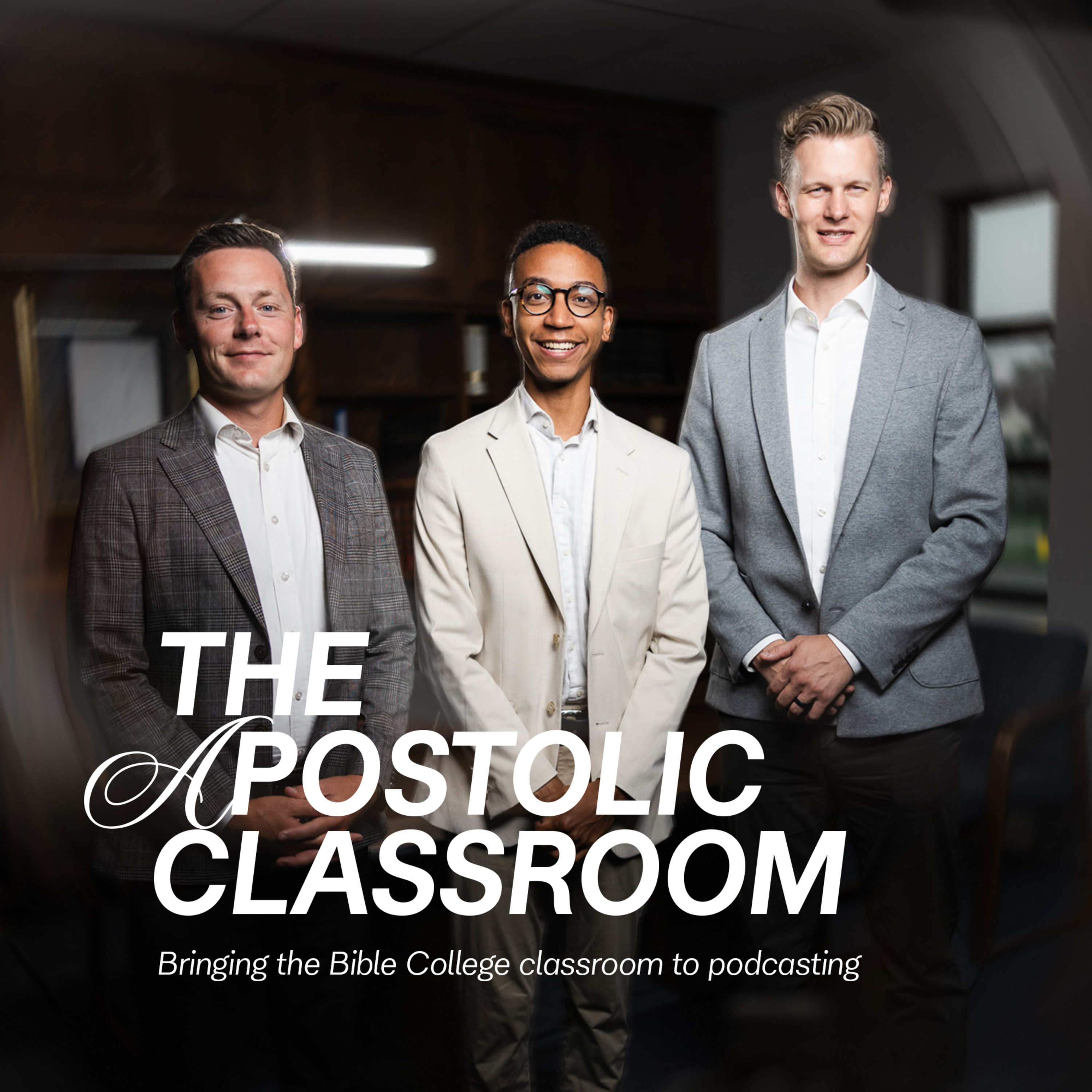
Do the Gospels Contradict Each Other? Harmonizing the Resurrection Accounts
In this episode of The Apostolic Classroom, Steven Gill and Andrew Herbst conclude their discussion on the historical case for the resurrection by addressing one of the most common objections raised against the New Testament: Do the Gospel accounts contradict one another?Drawing from the resurrection narratives in Matthew, Mark, Luke, and John, the hosts examine several of the alleged discrepancie
Can the Resurrection Be Proven? Examining the Historical Evidence
In this episode of The Apostolic Classroom, Steven Gill and Andrew Herbst arrive at the central claim of the Christian faith: the resurrection of Jesus Christ.Building on the previous discussion surrounding the historical existence of Jesus, the conversation turns to the event upon which Christianity ultimately stands or falls. Drawing from Scripture, early Christian testimony, ancient historical
Did Jesus Really Exist? The Historical Evidence for Christ
The apologetics journey eventually arrives at one unavoidable question: What do we actually know about Jesus?In this episode of The Apostolic Classroom, Steven Gill and Andrew Herbst begin a two-part discussion on the historical evidence for Jesus Christ. Drawing from the New Testament, ancient historians, archaeology, and the broader historical record, they examine why Jesus stands apart from eve
Biblical Archaeology and the Bible: Evidence, History, and Why It Still Matters (Bonus Episode)
In this bonus episode of The Apostolic Classroom, Steven Gill and Andrew Herbst turn to the field of biblical archaeology—examining how discoveries from the ancient world intersect with the claims of Scripture.Continuing the apologetics focus of Semester 2, the conversation explores a critical question: Is the Bible merely a collection of religious stories, or does it stand as real, verifiable his
It’s Time To Return To The KJV (Here’s Why)
In this episode of The Apostolic Classroom, Steven Gill and Andrew Herbst take on one of the most debated—and often misunderstood—topics in modern Christianity: Bible translations.Focusing on the King James Version, the conversation explores why the hosts continue to show strong confidence in its underlying manuscript tradition. Rather than appealing to preference or tradition alone, they examine
The Most Verified Book in History? Manuscripts, Myths, and the New Testament
In this episode of The Apostolic Classroom, Steven Gill and Andrew Herbst turn to one of the most important questions in Christian apologetics: Can we trust the New Testament we have today?Moving beyond surface-level objections, the conversation explores how ancient manuscripts are evaluated—examining the role of age, quantity, and consistency in determining textual reliability. The hosts compare
Does Church History Matter? Why Yesterday’s Debates Still Shape What We Believe Today (Bonus)
In this bonus episode of The Apostolic Classroom, Steven explores a foundational apologetics question: Why does church history matter for believers today? Drawing from his essay in God’s Kingship, he examines how many of the theological debates Christians face today are not new—but deeply rooted in the earliest centuries of the church.The conversation challenges the assumption of “inevitable progr
Did Paul Abandon Judaism? Reframing the Apostle Paul (Bonus Episode)
In this bonus episode of The Apostolic Classroom, Steven Gill takes listeners inside one of the essays from the upcoming book God’s Kingship, offering a deeper look at the life, background, and theology of the Apostle Paul.Drawing from both Scripture and historical scholarship, Steven explores a common claim found in modern biblical studies—that Christianity emerged in two stages: an early Jewish
Can We Trust The Bible We Have Today? Exploring The Trustworthiness of Scripture
In this episode of The Apostolic Classroom, Steven Gill, Jeremias Zuniga, and Andrew Herbst continue their discussion on one of the most important questions in Christian apologetics: how we can trust the Bible we have today.Building on the previous episode’s exploration of how the canon of Scripture was recognized, the conversation turns to the preservation, transmission, and reliability of the bi
The Canon of Scripture: How the Early Church Guarded the Bible
In this episode of The Apostolic Classroom, Steven and Andrew move from theology to history—examining how the early church understood, received, and defended the canon of Scripture.Was the Bible assembled centuries later by church councils? Were there competing “Christianities” with competing Bibles? Or was there a consistent apostolic core recognized from the beginning?Drawing from early sources
Who Decided What Books Belong in the Bible? Canon, Authority, and Preservation
In this episode of The Apostolic Classroom, Steven Gill and Andrew Herbst turn to one of the most foundational questions in Christian apologetics: Who decided what books belong in the Bible?Rather than beginning with church councils or popular internet theories, the discussion starts where it must—with theology. The hosts explore the meaning of “canon,” clarifying the difference between recognizin
Christianity and Science: Friends, Not Enemies
In this episode of The Apostolic Classroom, Steven Gill and Andrew Herbst tackle one of the most persistent questions in modern apologetics: Is Christianity compatible with science?Rather than rehearsing caricatures or surface-level talking points, the conversation reframes science as a method of inquiry—not a rival worldview—and explores how scientific discovery and Christian theology have histor
Has God Spoken? Revelation, Scripture, and Why the Bible Can Be Trusted
In this episode, Steven, Jeremias, and Andrew move from the existence of God to the issue of revelation—examining how and why God makes Himself known. Rather than assuming the authority of Scripture, the conversation explores the necessity of revelation for any meaningful Christian worldview and why the Bible stands at the center of the faith.The hosts distinguish between general and special revel
Season 2 Premiere: Why Apologetics Matters for the Modern Church
Semester 2 of The Apostolic Classroom begins with a new focus: apologetics.In this season premiere, Steven, Jeremias, and Andrew lay the foundation for why defending the Christian faith matters in the modern church. Rather than beginning with debates or objections, the conversation centers on the purpose, posture, and responsibility of apologetics in a skeptical age.The hosts discuss common misund
Celebrating Christ at Christmas | History, Scripture, and Christian Conviction
Christmas is one of the most widely celebrated holidays in the Christian world—but it’s also one of the most debated.In this special Christmas episode of The Apostolic Classroom, Steven Gill, Jeremias Zuniga, and Andrew Herbst take a thoughtful, biblical look at the question: Should Christians celebrate Christmas?The discussion explores the historical development of Christmas, common objections su
God’s Kingship: A New Book for Biblical Study — Pre-Orders Now Open
In this special launch episode of The Apostolic Classroom, Steven, Jeremias, and Andrew introduce God’s Kingship—the new companion volume developed alongside Semester 1 of the podcast.Over the course of the semester, the hosts committed to writing essays that would parallel and expand upon each week’s discussion, resulting in a collection of forty-two essays tracing God’s kingship from Genesis thr
Hermeneutics & the Godhead: How to Read the Bible Faithfully (Bonus Episode)
In this bonus episode of The Apostolic Classroom, Steven and Andrew explore one of the most foundational disciplines in all theological study: hermeneutics—the principles and processes of interpreting Scripture. Drawing from years of classroom experience at Indiana Bible College, they discuss why every believer already uses a hermeneutic (whether they realize it or not), how interpretation shapes
Bonus Episode: Using Biblical Languages Well — Tools, Caution, and Confidence in Scripture
In this bonus episode of The Apostolic Classroom, Andrew and Jeremias step aside from the main semester arc to discuss a topic that affects every serious student of Scripture: how to engage the biblical languages wisely and fruitfully. Whether someone has formal training in Hebrew and Greek or has only used tools like concordances and interlinears, this conversation helps listeners understand both
Trinitarian Proof Texts Revisited: Scripture, Context, and the Language of the Son
In this final episode of Semester 1, God’s Kingship, Steven, Jeremias, and Andrew revisit some of the most commonly cited “Trinitarian proof texts” and walk through how these passages have been understood across Scripture, history, and scholarship. Designed as a quick-reference guide, this discussion brings clarity to verses frequently raised in theological debates—particularly Genesis 1:26, the b
Father & Son Language in the New Testament: Sonship, Submission, and the Last Adam
In this episode of The Apostolic Classroom, Steven, Jeremias, and Andrew explore one of the most frequently misunderstood themes in the New Testament: the Father & Son language surrounding Jesus Christ. Rather than reading these passages through later philosophical frameworks, the hosts return to Scripture itself—tracing how the Gospels and Epistles use “Son of God,” “Son of Man,” and “Father”
Theophanies and the Godhead: Appearances, Misdefinitions, and the Revelation of One God
In this episode of The Apostolic Classroom, Steven, Jeremias, and Andrew tackle a topic often discussed—but rarely defined well: theophanies, the “appearances of God” in Scripture. The hosts explore how the term has been used throughout church history, why careless definitions can distort our understanding of the Godhead, and how modern Christians often read Trinitarian assumptions back into the O
The Ecumenical Councils and the Godhead: From Nicaea to Icons
In this episode of The Apostolic Classroom, Steven, Jeremias, and Andrew trace the development of early church councils—from the First Council of Nicaea in 325 to the Second Nicaea centuries later—and how they reshaped Christian doctrine and worship.The hosts examine how Constantine’s political ambitions intertwined with theological debates, leading to the formation of the Nicene Creed, the elevat
Early Departures: Justin Martyr, Tertullian, and the Shift from Scripture to Philosophy
In this episode of The Apostolic Classroom, Steven, Jeremias, and Andrew examine two of the most influential early church writers—Justin Martyr and Tertullian—and how their ideas marked a departure from the apostolic teaching of the Godhead.Beginning with Justin Martyr’s synthesis of Greek philosophy and Christian faith, the hosts trace how concepts like the “unmoved mover” and hierarchical divini
The Post–New Testament Church and the Godhead: Ignatius, Monarchians, and the Road to Nicaea
In this episode of The Apostolic Classroom, Steven, Jeremias, and Andrew step beyond the New Testament to explore how early church writers—from the first to the fourth century—understood and taught the Godhead. Focusing on figures like Ignatius, Noetus, Sabellius, and Tertullian, they trace the theological tensions that developed as the church moved toward the Council of Nicaea.Key topics include
Revelation and the Godhead: The Lamb, the Throne, and the End of All Things
In this episode, Steven, Jeremias, and Andrew turn to the Book of Revelation to conclude their semester-long study of the Godhead. Rather than chasing speculation or modern eschatological trends, they center the discussion on the opening declaration: the revelation of Jesus Christ.They explore Revelation’s deep dependence on the Old Testament—especially Daniel, Isaiah, and the prophets—and show ho
The General Epistles and the Godhead: Fellowship, Priesthood, and Faith That Works
In this episode of The Apostolic Classroom, Steven, Jeremias, and Andrew turn to the General Epistles—1 John, 1 Peter, and James—to explore how these letters reaffirm the revelation of the one true God revealed in Jesus Christ.From John’s defense of Christ’s identity against false teachings to Peter’s vision of a royal priesthood and James’s call for faith proven by works, the hosts trace a unifie
Bonus Q&A: Bibles We Use, Study Resources, and Evaluating Commentaries
In this bonus episode of The Apostolic Classroom, Steven, Jeremias, and Andrew step away from the main “God’s Kingship” series to answer questions from listeners. What Bibles do they carry and preach from? How should study Bibles and commentaries be used? And how can you evaluate whether a resource is trustworthy?The discussion ranges from personal Bible preferences (Skyler, Allen, Thompson Chain,
Hebrews and the Godhead: Priesthood, Kingship, and the Better Covenant
In this episode of The Apostolic Classroom, Steven, Jeremias, and Andrew turn to the book of Hebrews—a text that richly ties together the themes of kingship, priesthood, and covenant. Beginning with the debated question of Pauline authorship, they outline the case for Hebrews as a sermon rooted in Paul’s theology and anchored in Old Testament scripture.Key themes include Christ’s superiority over
Paul and His Epistles: The Law, the Godhead, and the New Creation
In this episode of The Apostolic Classroom, Steven, Jeremias, and Andrew turn to Paul—the apostle whose letters shape much of the church’s understanding of the Godhead. Beginning with his background as a Pharisee trained under Gamaliel and his dramatic conversion, they show how Paul’s grasp of the Old Testament saturates his writings.Key themes include Paul’s comparison of Adam and Christ in Roman
Acts and the Godhead: Pentecost, Kingship, and the Birth of the Church
In this episode of The Apostolic Classroom, Steven, Jeremias, and Andrew explore how the book of Acts continues the story of God’s kingship revealed in the Gospels. Beginning with Pentecost, they trace the fulfillment of Old Testament promises through the outpouring of the Spirit, the anointing of God’s people, and the birth of the church.Key themes include the connection between Sinai and Penteco
The Gospels and the Godhead: The Word Made Flesh, Sonship, and Kingship
In this episode, Steven, Jeremias, and Andrew continue Semester 1, God’s Kingship, by turning to the Gospels. The discussion begins with John 1:1 and the meaning of the Logos, exploring how Jesus is not “God the Son” but God revealed—the Word made flesh.The hosts examine how each Gospel frames Christ’s identity: Matthew’s genealogy and fulfillment of the Davidic Covenant, Mark’s proclamation of Je
The Prophets & the Promise of the King
This week on The Apostolic Classroom, we turn to the Prophets—examining how their sermons, visions, and writings reveal the coming of the true King. From Isaiah’s temple vision to the child born in chapter 9, we trace the continuity of God’s covenant and kingship through Scripture.We explore Isaiah’s prophecies, Ezekiel’s temple vision, and how the New Testament fulfills these themes in Jesus Chri
The Davidic Covenant: Kingship, Sonship, and the Promise of Forever
In this pivotal episode, Steven, Jeremias, and Andrew explore the Davidic Covenant and its foundational role in understanding the Godhead.Tracing kingship from Abraham to David, they examine why David is called a man after God’s own heart, the nature of biblical sonship, and how the covenant promise of an eternal throne lays the groundwork for the identity of Jesus Christ. Along the way, they addr
Exodus and God's Kingship: The LORD, Pharaoh, and False Gods
In this episode, Steven, Jeremias, and Andrew explore the kingship of God in the book of Exodus.They contrast Yahweh’s authority with ancient Near Eastern views of gods and kings—especially Egypt’s deification of Pharaoh. Key topics include the spiritual symbolism of the plagues, God’s judgment on Egypt’s gods, the significance of Moses’ name, and the progression of Israel from a people to a natio
Genesis and the Godhead: Foundations of Creation and Covenant
In this opening episode, Steven, Jeremias, and Andrew begin Semester 1, "God's Kingship," a 16-week exploration of the Godhead throughout scripture by examining the foundational texts of Genesis.Topics include God’s uniqueness as sole Creator, the contrast between biblical creation and ancient Near Eastern mythologies, the establishment of divine kingship, the nature of covenant, and
The Apostolic Classroom - Introduction
Welcome to The Apostolic Classroom. This podcast exists to provide a space for serious, Apostolic teaching and thoughtful engagement with scripture. In this introductory episode, we outline the purpose and structure of the program, introduce the panel, and explain our intent to approach doctrinal and theological topics through long-form discussion rooted in biblical studies.Our first series will s
Recommended

Booked, Blonde & Busy w/ Olivia Ponton

McKinsey on Consumer and Retail

megahired.com

Hard Knocks Podcast

Effective Weight Loss for Moms | High protein, Strength Training, Lose Weight, Meal Planning, Fat Loss, Healthy Habits

The Human-Animal Connection - Pet Life Radio Original

Infinite Health with Dr. Arasi Maran

The Daily

World News Tonight with David Muir

The Joe Rogan Experience

English Vocabulary Help

TED Talks Daily
