The History of Egypt Podcast
Ancient Egypt, from Creation to Cleopatra. This podcast tells the story of pharaonic Egypt 'in their own words.' Using archaeology, ancient texts, and up-to-date scholarship, we uncover the world of the Nile Valley and its people. Hosted on the Airwave Media Network.
Episodes

Egyptology Today (with Ask Historians Podcast)
In 2025 I did an interview with the AskHistorians podcast, a reddit-based show where specialists discuss history and major questions about their fields.
In this interview, we discuss the history of Egyptology, stories from ancient Egypt, the situation of the field today, and why Hollywood can't seem to make any stories about Egypt that don't involve Cleopatra.
Learn more about your ad

245: Revenge of the Seth (The 19th Dynasty Falls)
Siptah, Tausret, Setnakht. Between 1205--1202 BCE, the royal house of Ramesses II crumbled into illegitimacy. After Siptah, the queen Tausret declared herself pharaoh. Her reign leaves tantalising traces. But shortly after, a man named Set-Nakht ("Seth is Victorious") seized the throne and inaugurated the 20th Dynasty. Subsequently, he and his successors declared the late 19th Dynasty a period of

244: B(a)y Your Command
Siptah & Chancellor Bay. The last years of Dynasty 19 are murky, with hints of disorder and violence. At the centre of affairs, the courtier Bay directed policy and controlled access to King Siptah. Pharaoh himself was sickly, possibly disabled. The power-shift culminated in a rather dramatic break...
Music: Keith Zizza and Luke Chaos.
Logo image: Siptah, from his tomb KV47 (Davis 1908).
Biblio

243: Kingmakers & Criminals
Tausret, Siptah, Bay, and the case of Paneb. By 1210 BCE, the southern rebellion was dying down, but trouble was far from over. The courtier Bay appears on the scene, first as an agent of Sety II, then as a "kingmaker" in his own right. Tausret increases her power, becoming a regent figure (like Hatshepsut). The young ruler Siptah, physically enfeebled and of uncertain heritage, provides a veil of

242: The Year of Two Pharaohs (Sety II vs Amenmesse)
Between 1215 and 1211 BCE, Egypt was divided. A rebellion in the south, launched by Amen-messe "Born of Amun" disrupted the succession of Sety II, son of Merneptah. Records from this shadowy period hint at violence and corruption in Waset/Luxor, as the usurper took control and established a new regime. The impact of this conflict would have long-lasting ramifications for the 19th Dynasty...
Music

The Egyptian Crusade with Dr. Thomas Smith
From 1217 to 1221 CE, Egypt faced an invasion in the Delta. A bizarre tale of D-Day-esque beach landings, improvised nun-chucks, and the vengeance of Hapi ensued. Today's guest Dr. Thomas Smith explains the story and introduces his new book The Fifth Crusade: A History of the Epic Campaign to Conquer Egypt.
The Fifth Crusade (2026) available from Yale University Press and all good retailers.
Dr.

241: Annihilation of the Wicked
Merneptah's Nubian War, the Book of Caverns, and his Legacy. The later years of Merneptah's reign were eventful. Just as the Libu war wound down, another conflict started in Nubia. Shortly after, there may have been some disruptions or reshuffling in the government. We also get a new religious text known as the "Book of Caverns." Finally, we follow Merneptah's passing and his legacy.
Video lectur
240: Merneptah vs the Sea Peoples (and Odysseus, and the Hittites)
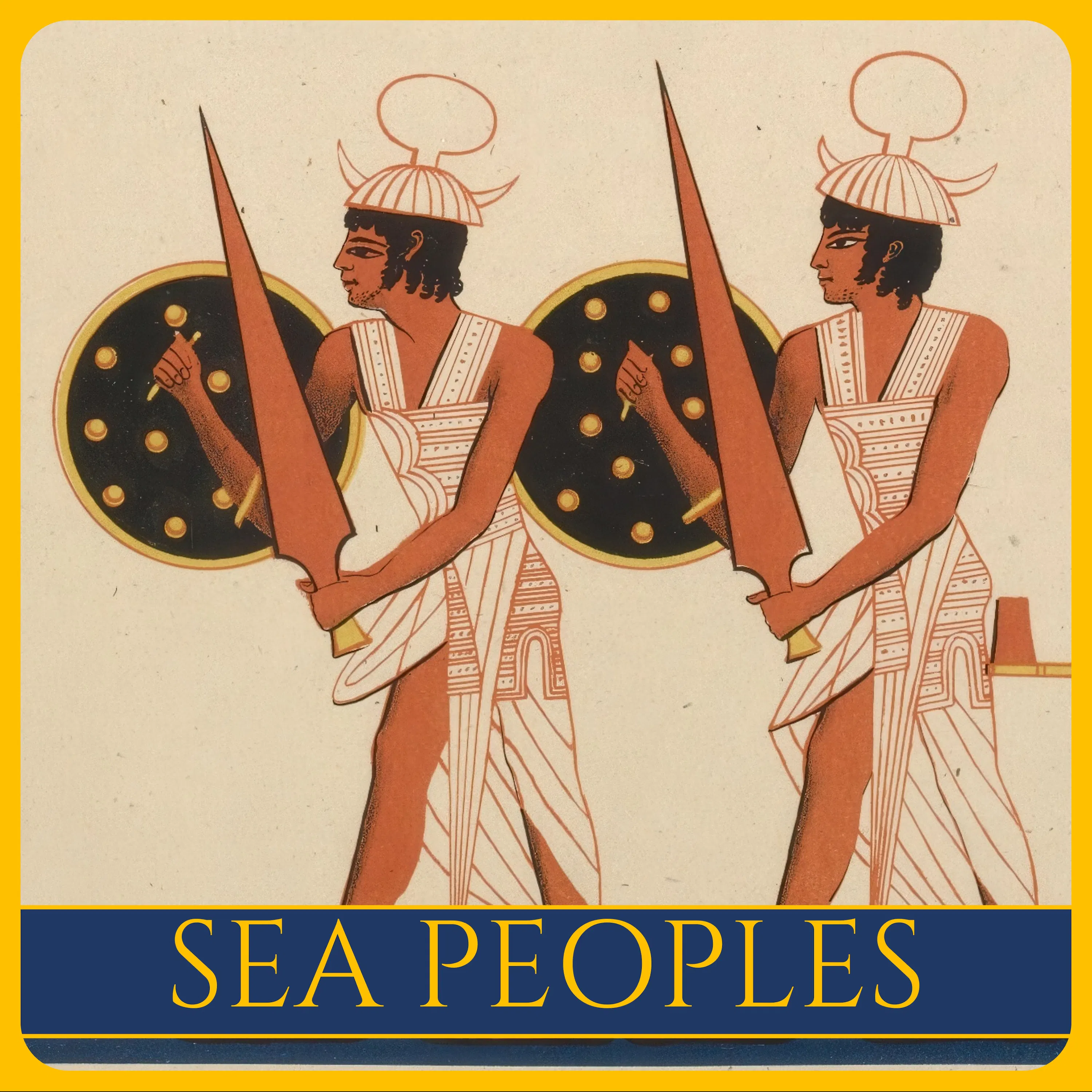
As the Libu war wound down, Merneptah's troops took captives and plundered the bodies of fallen warriors. Along the way, we also hear of "foreign peoples of the Sea," who were involved in these events. Merneptah mentions Sherden, Lukka, Tursha, Ekwesh, and Shekelesh. Who were these "Sea Peoples" and why were they coming to Egypt?
Music: Keith Zizza, Luke Chaos.
We're on YouTube! Ancient history

239: A Pyramid of Corpses
Merneptah vs the Libyans. In 1221 BCE, Egypt faced a crisis. Tribal coalitions from the west, and some "Peoples of the Sea" were marching on the Nile Valley. They came in their thousands, armed and ready to settle. Caught by surprise, King Merneptah and his warriors hastened to the defence...
Support the show and get early releases, ad-free episodes, bonus video content, and pictures/videos of an
238: Merneptah Seizes Canaan (feat. A Tribe Called Israel)
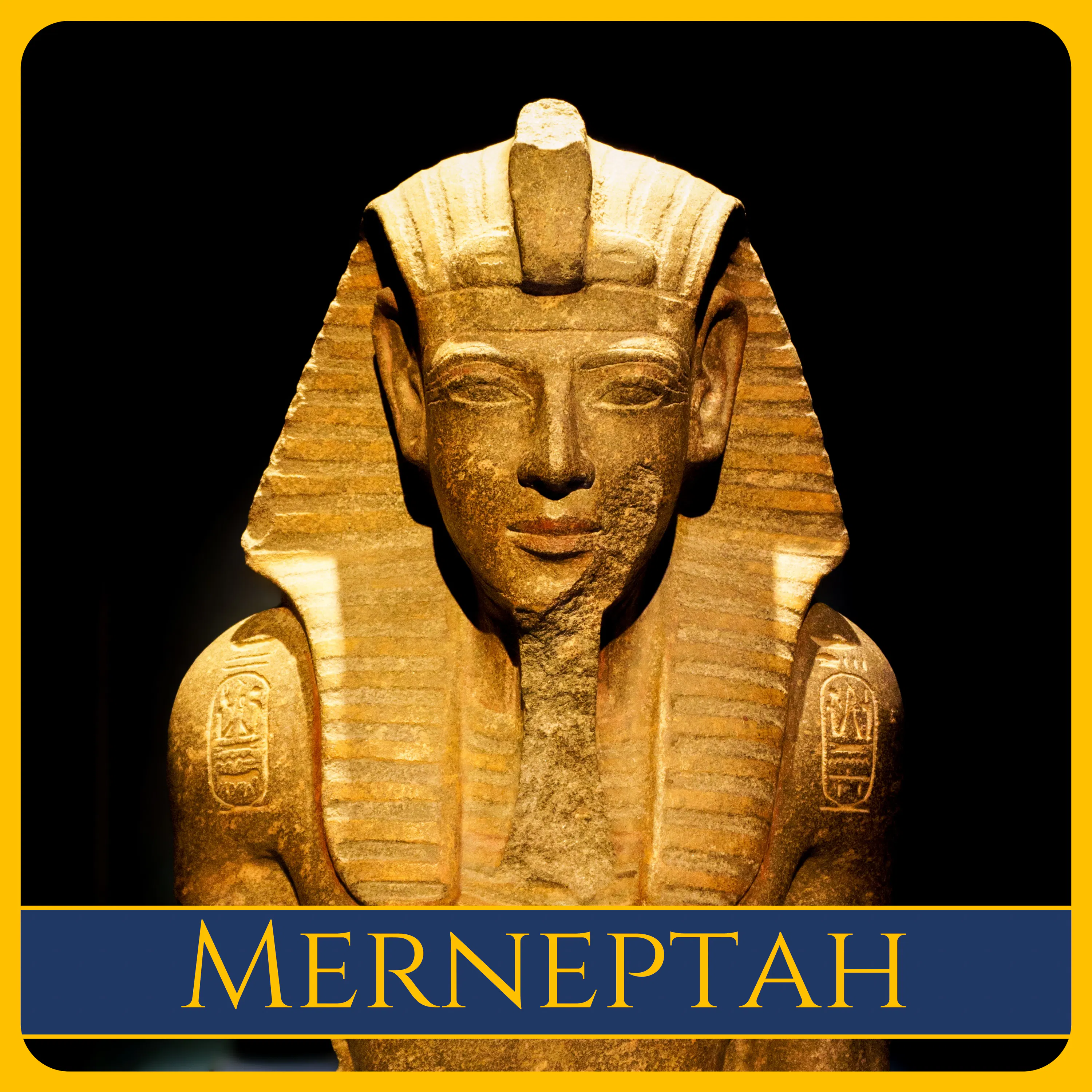
Merneptah started his reign aggressively, striking a belligerent tone in his royal names and launching an expedition to Canaan in the first few years. In the process, his troops captured Ashkelon, Gezer, and Yenoam, and dealt with a tribe called "Israel." Simultaneously, Merneptah achieved a great diplomatic coup when we brought Ugarit back into the Egyptian sphere.
Music by Keith Zizza & Luke Ch

Preserving Howard Carter & Tutankhamun (An Appeal from The Griffith Institute)
The Griffith Institute preserves thousands of documents, plate photographs, and records of Howard Carter's excavation in the tomb of Tutankhamun. But funding cuts are threatening their work to digitise and preserve this archive for future generations. Please consider supporting the Griffith Institute today
Donate at https://tutankhamun.griffith.ox.ac.uk/support-us
Explore the Tutankhamun Spatial
237: Drinking with Khonsu / The Dream Book
Ramessid Daily Life (Part 2). Why did a tomb-builder skip work for “drinking with Khonsu”? Why was Parahotep never invited to parties? And what did it mean if you dreamed about drinking wine? Records from Deir el-Medina, in the reign of Ramesses II, illuminate aspects of daily life and the concerns of ordinary folks.
In this episode, we explore the Absentee List (Ostracon EA 5634) and the Dream

Was Pharaoh literally a god? Listener Questions 1
Bonus episode. I took some listener questions in a livestream, and here they are. We cover topics like: Was pharaoh literally a god? How common was tattooing? Was there an ancient canal between the Nile and Red Sea? What are my recommended Egyptology books? And much more...
If you'd like to join future Q-and-A sessions you can find them at www.patreon.com/egyptpodcast. If you would like to submit

Ramesses Eternal with Prof. Peter Brand
Prof. Peter Brand joins us for one final conversation about Ramesses II: Egypt's "Ultimate Pharaoh."
If you haven't read it, I highly recommend Peter's book Ramesses II: Egypt’s Ultimate Pharaoh (2023). It covers everything I discussed, and much more, in exceptional detail.
Learn more about your ad choices. Visit megaphone.fm/adchoices

236: Legends of Ramesses "the Great"
How does Ramesses II stack up to his predecessors? Why did ancient writers connect him with the Trojan War? In this episode we explore tales of Ramesses, told in antiquity, and consider his legacy in the modern world.
Music: Keith Zizza and Luke Chaos.
Bibliography
Brand, P. (2010a). Reuse and Restoration. In W. Wendrich (Ed.), UCLA Encyclopedia of Egyptology. https://escholarship.org/uc/item/2
235: Ramesses the Great God
In 1226 BCE, his sixty-seventh year of rule, the long life of Ramesses II finally ended. We explore his final decades, the difficult life revealed by his mummy, his ascent to status of "living god," and the aftermath of his reign.
Music: Luke Chaos.
Support the History of Egypt at www.patreon.com/egyptpodcast
Select References:
Balout, L., Roubet, C., & Desroches-Noblecourt, C. (1985). La momi

234: Destroying Amarna / Splitting Heirs
Sometime in Ramesses II's reign, royal artisans dismantled the city of Akhet-Aten (Amarna). Carefully, methodically, they removed the talatat blocks and carted them away to the nearby town Hemenu (Hermopolis) for reuse in a temple. This demolition of the Horizon of Aten remains a matter of debate among scholars: why now, and what motivated it?
Meanwhile, Ramesses II has a problem. His sons keep d

233: Friendship in Dark Times (The Bronze Age Collapse Begins?)
Ramesses and Hattusili (Part 2). After the marriage to a Hittite princess in Year 34, Ramesses II had much to offer his northern family. A visit from the King of Hatti's son, seeking food supplies, may relate to repeated hunger crises in Syria and Hatti. Pharaoh's support brought the two kingdoms closer together, although we must wonder if the Bronze Age Collapse has now begun... Finally a text kn

The 100 Children of Ramesses II with Prof. Peter Brand
Ramesses is famous for fathering 100+ children. But what did all these princes and princesses do? Prof. Peter Brand joins us once more to explain the lives and roles of these children, how we know about them (or don't), what's up with those "Daughter Wives," and where all the 100+ children might be buried.
Also, I read the entire list of children (all 100+) in their known order, from the monument
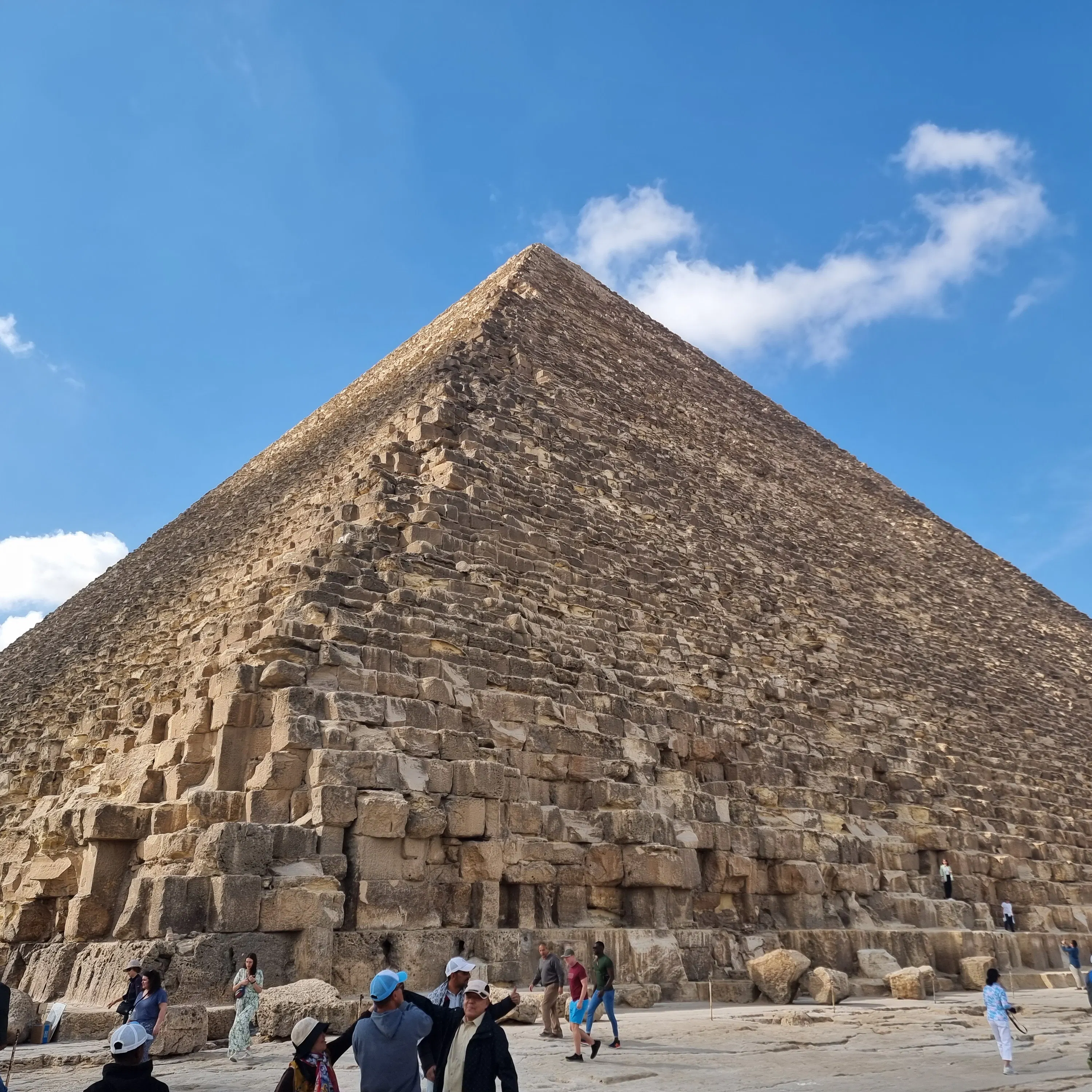
Come visit the Great Pyramid! Tour to Egypt 2027 January Announcement
It’s time, once again, to think about visiting Egypt. I just returned from a tour in March, taking a group through the Nile Valley, and we had a great time. Egypt is quite safe, and the sites are ready to receive you. If you’re in the mood for some antiquities, exploration, and time in the pharaonic past, consider joining me on my next tour.
Dates: 24 January - 01 February 2027.
Special out-of-h

232: Real Housewives of Per-Ramesses (feat. Prof. Peter Brand)
Hybrid episode (narrative & interivew). The Hittite Queen, Maat-Hor-Neferura, may have been surprised to find she wasn't the only King's Great Wife. In fact, Ramesses had already turned to other women to be his Queens. Notably, his eldest daughter Bint-Anat ("Daughter of Anat") became King's Great Wife, along with several of her younger siblings. Why did Ramesses "marry" his own offspring, and wha

231: The Hittite Queen of Egypt
Married before first sight. In regnal year 34 (1259 BCE) Ramesses welcomed a princess of Hatti. Sent by her father Hattusili and mother Puduhepa, the (anonymous) princess came to Egypt and took up the rank of King's Great Wife. Today, she is known by her Egyptian name, MAAT-HOR-NEFERURA "She Who Sees Horus, the Perfection of Ra." This enigmatic woman sits at the centre of a fascinating letter arch
Introducing Voices of Ancient Egypt with Dr. Melinda Nelson-Hurst
New Egyptology podcast! Voices of Ancient Egypt is "the podcast for people who don’t just want to learn about ancient Egypt, but want to understand it at a deeper, more meaningful level. With a blend of solo deep-dives and conversations with experts and everyday Egyptophiles, this podcast brings ancient Egyptian history, beliefs, and language to life — and shows you how learning hieroglyphs is pos

Khaemwaset Forever with Dr. Campbell Price
Campbell Price is Curator of Egypt & Sudan at Manchester Museum. Enthusiasts will know him from the books Ancient Egypt in 50 Discoveries and Golden Mummies of Egypt. Interpreting Identities from the Graeco-Roman Period. You may have seen or heard him on History Hit’s The Ancients, a variety of documentaries, and this podcast!
Today, Campbell joins the show once more to talk about KHA-EM-WASET.

230: Khaemwaset & the Book of Thoth
The prince Kha-em-Waset (lived c.1260 BCE) was a learned man, and an accomplished priest. Centuries after his death, storytellers remembered the prince as a sage and magician. They told tales of his adventures, including one where Khaemwaset stole a magical book, belonging to the great god Djehuty/Thoth. In a tale of gothic horror, the prince must wrangle with the consequences of his greed...
CON

229: The First Egyptologist? Khaemwaset & the Apis Bulls
In 1263 BCE, priests announced the death of the APIS BULL. Sacred to Ptah, the bull dwelled in the temple at Men-nefer (Memphis). Now, in year 30 of Ramesses II, the King's son KHA-EM-WASET would lead the funerary processions.
Shortly after, the prince inaugurated the first phase of a now famous monument. The Lesser Vaults of the SERAPEUM begin to take shape. The prince also starts a project for

228: Three Funerals & a Sed Festival
Loss and rejuvenation. Ramesses third decade in power was a time of death. The King's Great Wife Nefertari passed around year 25. Almost simultaneously, his mother Tuya, his second wife Iset-Nofret, and his eldest son Amun-her-khopeshef all passed to the west. We meet these figures, explore their tombs (including the amazing KV5), and trace their surprising legacies. Then, we recount the big event

227: The One Where Iset Poisons Ra
What is the true name of god? Once upon a time, Ra ruled the earth directly. But the great goddess Iset/Isis desired to know his private name, the one hidden from all outsiders. A name that, if known, would grant the knower magical power over the sun god. To gain the knowledge she desired, Iset concocted a daring plan...
The Story of Iset and the Secret Name of Ra
University College London. Isis
226: Nefertari's Tomb and Book of the Dead
The tomb of Queen Nefertari is one of the masterpieces of New Kingdom funerary monuments. The tomb is stunningly preserved, with an array of exquisite images, evocative texts (from the Book of the Dead), and traces of her burial goods. In this episode we explore the sepulchre, its decoration, and its conservation in the modern era.
Music: Ihab Mahna and Luke Chaos.
Learn more about your ad choice

225: Nefertari, Queen of Egypt
The rise and reign of Nefertari (Nefret-Iry, "She Has Become Beautiful"). A girl of unknown origins (but some tantalising possibilites) who would rise to the rank of King's Chief/Great Wife. Nefertari is world-famous, especially for her monuments. But the Queen herself is remarkably shadowy. We go in search of her tale...
Music: Ancient Lyric (intro) & Keith Zizza (outro).
Learn more about your a

Dinosaurs of Egypt (2026 Revised Edition)
In the Cretaceous Period (c.100 million years ago) Egypt and North Africa were radically different environments. With vast tidal flats and mangroves, and a shallow sea, the continent fostered numerous animal and plant species. Creatures like Paralititan (sauropods); the sprinting Deltadromeus; the infamous Spinosaurus; and the newcomer Tameryraptor. These have been preserved in the fossil record

The Grand Egyptian Museum is Open! Now what?
In this mini episode, I explain the history and significance of the new complex (why does Egypt need a billion-dollar museum?) and discuss what will happen to Cairo's other major institutions.
We also have an episode about the lesser-known "gems" of the GEM. See that and the video version of this episode at my YouTube channel: Dominic Perry Ancient Egypt https://www.youtube.com/@dominicperryae

Egyptology News: The GEM is Open (and New Discoveries)
The winter 2025/26 excavation season is underway, and lots of news is coming forth already. Let's explore the major finds!
Chapters:
The GEM is open 00:30.
Scans at Menkaura's pyramid: 04:12.
Discovery at Tanis: 07:31.
Alexandria ship: 08:49.
Amarna Plague? 10:39.
Thera Tempest? 12:41.
Karnak Re-Dated: 14:43.
New Temple Discovery: 16:05.
Sources:
Menkaura pyramid scans: https://ww

224: Ozymandias (or, Shadow of the Colossus)
Divine intermediaries. Ramesses II commissioned many statues, some of which are among the largest ever quarried. From the halls of the Grand Egyptian Museum, to the bedrock of Aswan, we follow the King's development of a remarkable project. Colossal statues of the king, bearing distinct names and even their own priests, provided Ramesses' subjects with new intercessors between their world and the

223: Ramesses & Hattusili Best Friends Forever
Egyptian-Hittite Diplomacy. In the aftermath of the Treaty, Ramesses II and Hattusili III got down to business establishing their brotherhood. From prospective summits in Canaan, to fabulous gift-exchanges by Nefertari and a prince, the Egyptian and Hittite courts negotiated their new bonds. Alas, things weren't always rosy, and the issue of Urhi-Teshub caused great friction between the two Kings.

Ramesses II War and Peace with Prof. Peter Brand
The ultimate pharaoh makes the ultimate agreement. In this interview, Prof. Peter Brand offers us his insights on the cultures of Egypt and Hatti around the time of the Year 21 Treaty. From the background details of diplomatic correspondence, to the larger context of empires at war, we deep-dive the history of this important treaty.
Learn more about Prof. Peter Brand's work at https://memphis.aca

222: Peace Sells... But Who's Buying? The Egyptian-Hittite Treaty
The Egyptian-Hittite Treaty. In regnal year 21 (c.1272 BCE), Ramesses II announced a treaty with Hattusili III. The two kings united in "peace and brotherhood, forever," and agreed to a raft of provisions regarding their territories, vassals, rules-of-succession, and more.
As the first (surviving) treaty between the two Great Powers, the year 21 agreement is a landmark in the history of diplomacy

221: Ramesses II Raiders of Syria
The later wars of Ramesses II (Years 8 to 15). Following Kadesh, Ramesses led or despatched further campaigns into Canaan and Syria. These battles are documented on his temple walls, preserving some details of the geopolitical situation. From the death of a rival, to the plundering of Syria's heartland, we go in search of these "lost campaigns."
Music: Ancient Lyric and Luke Chaos.
Logo image: R

220: Ramesses II Dead Sea to Galilee
Moves and counter-moves. In the aftermath of Kadesh, Muwattalli (King of Hatti) seems to consoldiated hold over Syria. Border territories like Amurru fell to Hittite influence. At home, Ramesses spent at least one year regrouping before launching his reponse. Soon, pharaonic armies were marching into northern Canaan (around Galilee) and east, into Moab (Mwibw). The pharaoh's imperial authority had

219: Abu Simbel, Ramesses' Great Temple
Holy mountain. Around 1286 BCE, builders started work at Abu Simbel. Sacred to a local form of Horus, this sandstone mountain would become one of the most famous monuments in the Nile Valley. It was called the “House of Ramesses, Beloved of Amun,” and provided a home for dozens of deities. Within, sunlight illuminated its sanctuary on certain days, and the King could honour himself in a “Temple of

218: Give Me Back My Donkey! and Other Tales
Daily Life in Ramessid Egypt (Part 1). Starting around 1300 BCE, the (surviving) corpus of written documents from Egypt begins to increase dramatically. It's not clear why, but papyrus and ostraca are far more abundant for this era than anything before. Thanks to these records, we get many glimpses of daily life and personal concerns, from the society of the time; and we can enjoy some Small Stori

217: The Art of Kadesh
Our final part of the Kadesh story is Ramesses' art. Wall carvings, on major temples, present the pharaohs' summary of Kadesh and the conflict. They include many fun details, including enemy combatants, and comparing some scenes with artefacts allows us to imagine aspects of the ancient battle.
Video version available on my YouTube channel https://www.youtube.com/@dominicperryae under "Live." Dir

Ancient Historical Fiction with Dr. Colleen Darnell
My guest today is Dr. Colleen Darnell, who will speak to us about New Kingdom literature (featuring rulers like Ramesses, Thutmose III, Seqenenra, and more). It’s a fun discussion, ranging from the calamitous death of Seqenenra Tao, to the triumphs of Thutmose III and Ramesses II, to the divine glamour of chariots, and how pharaohs became literary "heroes."
Dr. Colleen Darnell's website: https://
Kadesh, the 80's Rock Musical
Heavy Metal Hittites. This is a preview of my "rock musical" version of Kadesh. Full version available at patreon.com/c/egyptpodcast.
Song produced by Hermanubis (aka Luke Chaos https://chaosmusick.bandcamp.com/).
Learn more about your ad choices. Visit megaphone.fm/adchoices

216:The Kadesh Poem
The war of the words. Following his strategic defeat at Kadesh, Ramesses set about putting his version of the story into wide circulation. Today, art and texts of this conflict survive at the temples of Abu Simbel, Karnak, Luxor, Abydos, and the Ramesseum. Among those texts, we have the “Literary Record” or “Kadesh Poem.” A lengthy, dramatised version of the events, painting Ramesses as the great

Kadesh: What Was It Good For? with Prof. Peter Brand
Why is the Battle of Kadesh so famous, compared to other ancient conflicts? What can we take away from Ramesses' account in terms of "truth" vs "rhetoric." And what did it all up to, really? Prof. Peter Brand returns to discuss the battle in great detail, from the blow-by-blow moments to the larger strategic and political context. Along the way, we learn why Ramesses is like Rambo, and take a whim

215: Ramesses II Battlefield Surgery
Who won? In the aftermath of battle, Ramesses and Muwattalli withdrew from Kadesh. We discuss the short- and long-term fallout and consider the "score card" for the respective armies. Then, we spend time with the wounded soldiers, using the Edwin Smith Papyrus to understand diagnoses and treatments used by ancient Egyptian physicians (swnw). Finally, we explore a curious hypothesis, suggesting th

214: The Battle of Kadesh, Ramesses II vs the Hittites
In June of 1287 BCE (approximately), one of antiquity’s great conflicts unfolded in southern Syria. Meeting near Kadesh (Qidsha), the armies of Egypt and Hatti fought each other in a spectacular engagement. The events of that battle are recorded, somewhat grandiosely, by Ramesses II in temple art and extended hieroglyph narratives. With those as our foundation, we explore the most dramatic day in

213: Ramesses II Seven Nation Army
Ramesses, Muwattalli, and the Trojans(?). In June of 1287 BCE, the Great Kings of Hatti and Egypt were on the verge of a major confrontation. Ramesses, marching across Sinai and into Canaan, made careful preparations for his assault on Kadesh. Alas, even the best-planned campaign could not be hidden from a watchful enemy. In Hatti, Muwattalli II sent calls to his vassals, summoning them to fight.

212: Ramesses II The Arsenal of Pharaohcracy
Preparing for Kadesh. In 1287 BCE (late in his fifth regnal year) King Ramesses II departed Egypt on campaign. His target? The city of Kadesh / Qidsha in southern Syria. The Kadesh campaign is famous, as one of history’s “great battles.” Today, we “set the scene,” and explore the preparations for this war. We have a surprisingly detailed picture of this, thanks to inscriptions, art, and excavation

Kadesh: The 200 Year Enemy with Prof. Peter Brand
Leading up to the Battle of Kadesh (c.1287 BCE) betwen Ramesses II of Egypt and Muwatalli II of Hatti, we need to understand the background. Why was this city the epicentre of such a major conflict? How did the rulers of Kadesh (Kadeshians?) persistently frustrate pharaohs dating back two centuries to Thutmose III (c.1480 BCE). Today, Prof. Peter Brand (University of Memphis) gives us the details.

Ancient Egyptian Curse / Swear Words
We learn how to insult someone in ancient Egyptian, based on the surviving texts...
Learn more about your ad choices. Visit megaphone.fm/adchoices

Ramesses' Wild West with Prof. Steven Snape
Heart of Darkness at Zawiyet Umm el-Rakham. Far from the Nile Valley, on Egypt’s northern coastline, Ramessid soldiers and civilians constructed a significant fortress to control the maritime roads. This remote garrison faced off against Libyan tribes coming from the far west (e.g. the Meshwesh of Cyrenaica), traded with Mediterranean merchants, possibly dealt with marauding pirates and Sea People

Not Safe for Water (Did Pharaohs Do THAT in the Nile?)
Explicit content. There's a factoid floating around on the internet. It claims that, to ensure fertility and good harvest, pharaohs would ejaculate into the River Nile. Where did this idea originate? Which deities and myths were most closely associated with such concepts? In this mini episode, we explore the factoid and its potential origins.
Great gods of fertility and Creation:
Allen, J. P

Hapi Days (or, Ramesses in DeNile)
Hapi was Egypt. The life-giving waters of the annual flood (inundation) were his work; and thanks to these waters, Egypt flourished, its people were fed, the gods received their offerings, and the social order was maintained. From the New Kingdom, papyrus and ostraca record songs/poems to the river god, called "Praise (dua) of Hapi." From the days of Ramesses II, we also have elaborate proclamatio

Scent of a Mummy: Smells and Pleasure in ancient Egypt, with Dora Goldsmith
What did ancient Egyptians like to smell? Did they use any narcotics in their day to day lives? And what do mummified bodies smell like? Today, I'm pleased to welcome Dora Goldsmith to the podcast.
Dora Goldsmith is a PhD-candidate at the Freie Universitat in Berlin, Germany. Specialising in ancient smellscapes, Dora explores how the ancient Egyptians perceived and described the scent of their wo

211: Ramesses II The First Campaign of Victory
Ramesses II defends his borders. In the early years of his reign, Ramesses focussed on home defence. His army established new forts at remote locations along the western Delta and Mediterranean Coast (Marmarica). Traces of this work can be found at famous locations like el-Alamein, Mersa Matruh, and Zawiyet Umm el-Rakham, the latter of which has been the object of detailed excavation in recent dec

210: Ramesses II The Eyes of Ra, The House of Life
Ramesses goes back to school. Luxor Temple is a magnificent monument, in a city full of them. The sanctuary you visit today is, in large part, the work of Ramesses' early reign. New pylons, colossal statues, obelisks, and dedicatory texts provide the testament to the young pharaoh's work. Exploring these, we also get a surprising insight into temple archives and educational facilities, embodied in

209: Ramesses II vs the Sea Peoples
Delta raiders. Decades before their famous migrations, the "Sea Peoples" were already active and visible in the eastern Mediterranean; and Ramesses II had his own dealings with these groups. In year 2 of his reign, Ramesses II (Usir-Ma'at-Ra) dealt with a coastal raid by the Sherden, who came from the "islands in the midst" of the sea (which the Egyptians called the "Great Green"). The battle, and

208: Ramesses II The Oracle & The Sphinx
A death at Karnak, and a lion amongst men. In regnal year 1 (c.1292 BCE), Ramesses II was at Abdju / Abydos. While there, he appointed a new First Priest of Amun (Hem Netjer Tepy en Imen). He chose his candidate by consulting the deity directly, engaging in an oracle with Amun to choose the best option.
Shortly after, Ramesses departed Abdju and continued his northward journey. Eventually, he ca

207: Ramesses II Shadow of Two Fathers
Ramesses had a lot to plan for, in his first year of rule (c.1292 BCE). Staying in Waset / Luxor, the new pharaoh began building work on his tomb (KV7) and his memorial temple (The Ramesseum). Archaeological records testify to both of these projects. Then, the King immortalised his late father, the Osiris Sety I, in scenes of worship at Karnak. Finally, Ramesses left Waset, heading north; but he s

206: Ramesses II Usir-Ma'at-Ra
In the annals of Egyptian history there is no one quite like Ramesses II. He is arguably the most famous, or infamous, of Egypt’s pharaohs. His reign would be long (67 years!) and his influence would be incalculable. In this episode, Ramesses "appears" as King, following the death of his father (III Shemu 27). He chooses his royal names (Usir-Ma'at-Ra, Ramesses Beloved of Amun). He buries Sety, in
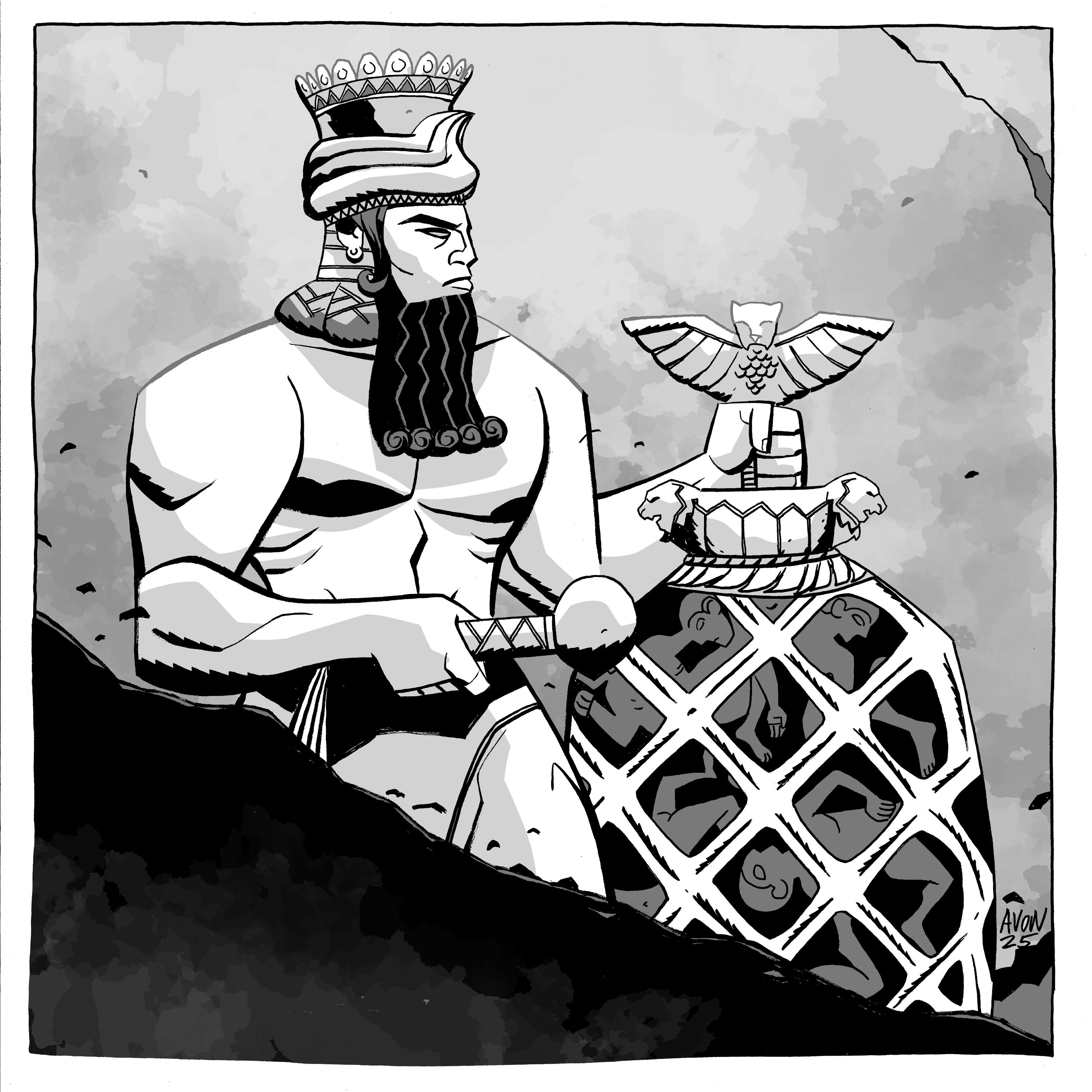
Introducing The Ancient World - Ages
Fellow podcaster Scott Chesworth, from The Ancient World has a new season. I’m excited to introduce “The Ancient World – Ages”, a series covering the Early Bronze Age Collapse (c. 2200 BC) and the remaking of Southwest Eurasia.
In this feed swap, you’ll hear episode A3 – The Kings of Kish. It covers the period c.2900 BCE and 2350 BCE, also known as the Early Dynastic Period in Sumer. A time of ki
Scan Technology Reveals Hidden Chambers at Giza?
Approach with caution. In March 2025, a group calling itself the “Khafre Research Project” posted visual information online about the pyramid of Khafra at Giza. The group claims that Synthetic Aperture Radar (or SAR) scans at Giza have revealed “structures” beneath the pyramids. Using digital modelling (and some AI), they suggest that Khafra’s pyramid and the Giza plateau hide many more chambers.

Egyptology News: Another Royal Tomb (at Abydos)!
News from the Field (2025) Part 2. The past excavation season has been extraordinarily productive. Beyond the new royal tomb of Thutmose II we also have a SECOND royal tomb, at Abydos! The Grand Egyptian Museum is finally opening in full. And archaeological teams throughout the land have uncovered wonderful things. We also remember some prominent scholars who passed away recently.
Chapter times
Thutmose III & Hatshepsut: The New Kingdom Defined with Prof. Aidan Dodson
The new royal tomb, and how two 18th Dynasty rulers defined the "New Kingdom" as we know it. Prof. Aidan Dodson is a dedicated and prolific scholar, whose research covers many facets of ancient Egyptian history (and even WW1 warships!) His latest book, Thutmose III & Hatshepsut: Pharaohs of Egypt - Their Lives and Afterlives looks at how these two monarchs, and their followers, defined many of the

Egyptology News: The Tomb of Thutmose II Discovered, with Dr. Chris Naunton
News from the Field 2025, Part 1. In February 2025, the breaking news was the discovery of a royal tomb. An archaeological mission working in Luxor are confident they have located the grave of King Thutmose II. The tomb itself was discovered in late 2022, and the team announced it publicly in 2023. I reported on that initial find in the news roundup for that year. Now, another season has pass
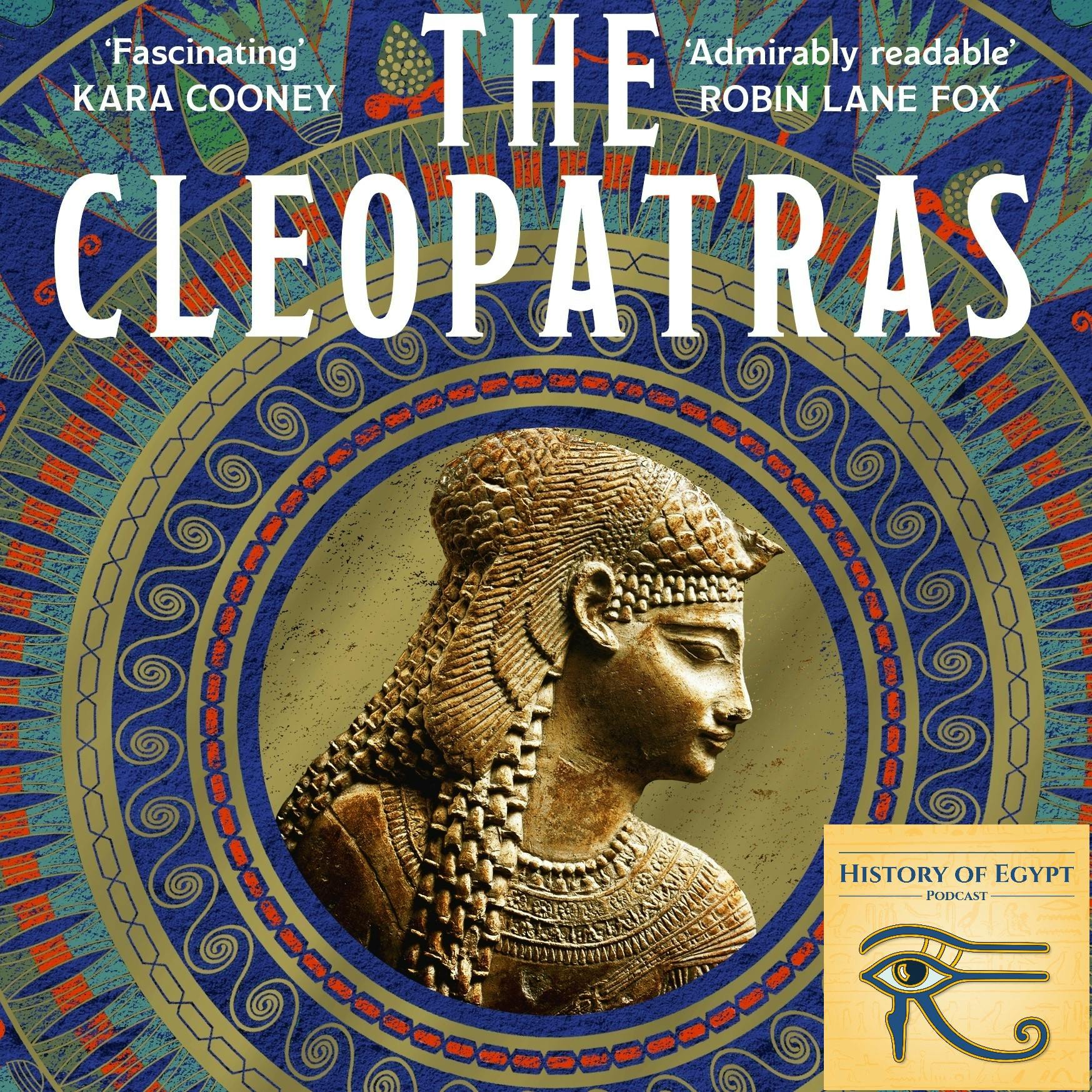
Cleopatra (All Seven of Them) with Prof. Lloyd Llewellyn-Jones
Recorded May 2024. A name more famous than its owners. The Cleopatras of Egypt (all seven of them) were remarkably influential women and rulers. Frequently taking up power and responsibilities far beyond their more famous husbands (the Ptolemies), the seven Cleopatras of Egypt (and even more in the wider Hellenistic world) are worthy of greater attention and respect. In this interview, Prof. Lloyd

Kara Cooney: Coffins of the Pharaohs
In 1881, a remarkable discovery took place in Luxor, Egypt. In the hills of Deir el-Bahari, a secret tomb held the reburied mummies of Egypt’s famous pharaohs. Figures like Sety I, Ramesses II, Thutmose III, and Amunhotep I lay in rest, in carefully hidden coffins. However, the caskets themselves hold many secrets, which today’s guest has spent years exploring.
VIDEO VERSION available on YouTube.

Sety's Borrowed Coffin with Dr. Peter Lacovara
The coffin of Sety I (now in the NMEC) was probably reworked from an earlier piece, during the reburials in DB320 (the royal cache). But how can we tell? Dr. Peter Lacovara explains.
Dr. Lacovara's website https://peterlacovara.com/
Video version available at Patreon www.patreon.com/egyptpodcast
Video version available on YouTube https://youtu.be/6e1fauj4qPA
Learn more about your ad choices. Vi
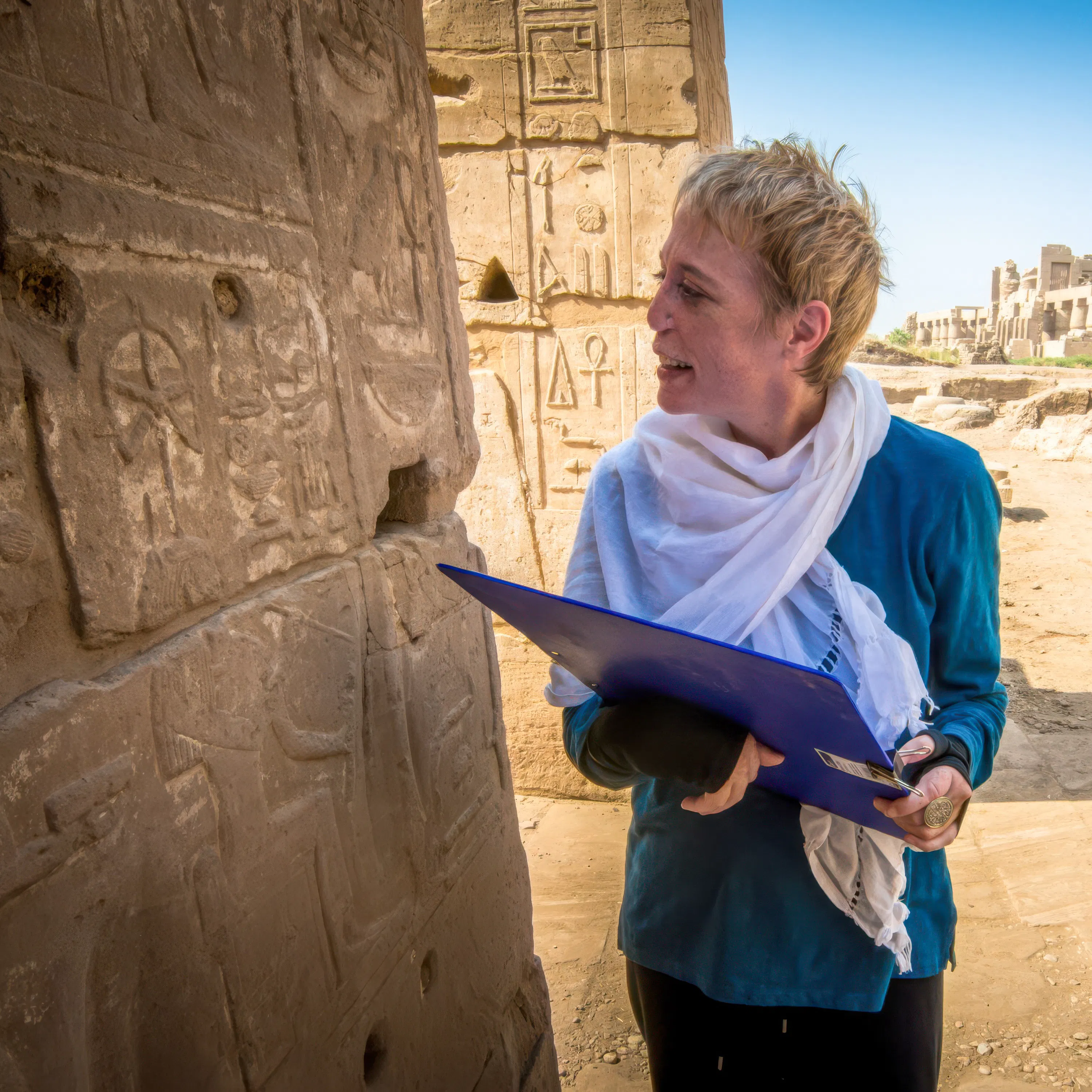
Ramessid Biographies with Prof. Elizabeth Frood
Elizabeth Frood is Associate Professor of Egyptology and Director of the Griffith Institute at the University of Oxford, UK. In a lively discussion, Dr. Frood shares her insights into ancient lives and how people living in the non-royal sphere approached their immortality. Statues, texts and graffiti show us the minds of these people and how they depicted their concerns, beliefs and ideas. It's a

205: Sety I The Finest Tomb
Sety’s royal burial. Valley of the Kings tomb 17 (KV17) came to light in October 1817. Discovered by a team of Egyptian workers, employed by Giovanni Belzoni, the tomb is the most beautiful, and one of the largest, in the entire Valley.
Learn more about KV17:
3D Tour by Mused: https://mused.com/tours/926/tomb-of-seti-i-valley-of-the-kings/
Theban Mapping Project https://thebanmappingproject.com
204: Sety's Last Journey
After a reign of approximately eleven years, the Horus Men-Ma’at-Ra (Sety I) passed to the west. He died in reasonably good health, and studies of his mummy reveal a tall, physically robust individual. So, what killed him? We explore these questions, and the history of his Memorial Temple, where the King’s body lay in state ready for burial…
Music by Bettina Joy de Guzman www.bettinajoydeguzman.c

203: Rise of a Vizier
Paser, servant of Sety I and Ramesses II (c.1300--1270 BCE). In the later years of his reign, King Sety promoted one of his servants to the highest political/government office. Paser, the Vizier, enters our story...
Website: www.egyptianhistorypodcast.com.
Support the show via Patreon www.patreon.com/egyptpodcast.
Make a one-time donation via PayPal payments.
Music and interludes by Keith Zizz

202: A Valley of the Queens & The Womb of Hathor
The Place of Beauties (Ta-Set-Neferu). In the reigns of Ramesses I and Sety I (c.1304—1292 BCE), the Valley of the Queens finally earned its moniker. Having been a burial ground for royal children and courtiers, the wadi south of Deir el-Medina now began to host ruling women. In the days of Sety I, the Queen Mother Sitra and the Queen Tuya both received new tomb constructions in this site. Their m
A Memory of Gods with Dr. Tamara Siuda
Understanding the deities requires us to move beyond inherited preconceptions and prejudices. Fortunately, there are many gods worthy of the effort. From the deified Sphinx Horemakhet, to the meme-lord Medjed, to the deified lover-boy Antinous, the pantheon is rich in variety and personalities. It is a subject that today’s guest, Dr. Tamara L. Siuda, has devoted a great deal of time. Her new book,

201: When Hathor Destroyed the World (The Book of the Sky Cow)
The Book of the Sky Cow. In the waning years of the 18th Dynasty (the reign of Tut’ankhamun) royal artisans began decorating tombs and funerary equipment with a new text. Sometimes known as “The Destruction of Mankind,” the book tells of a distant age, when Ra ruled on earth. But as the sun-god aged, a group of humans perceived his weakness, and plotted rebellion. Faced with an uprising, Ra marsha
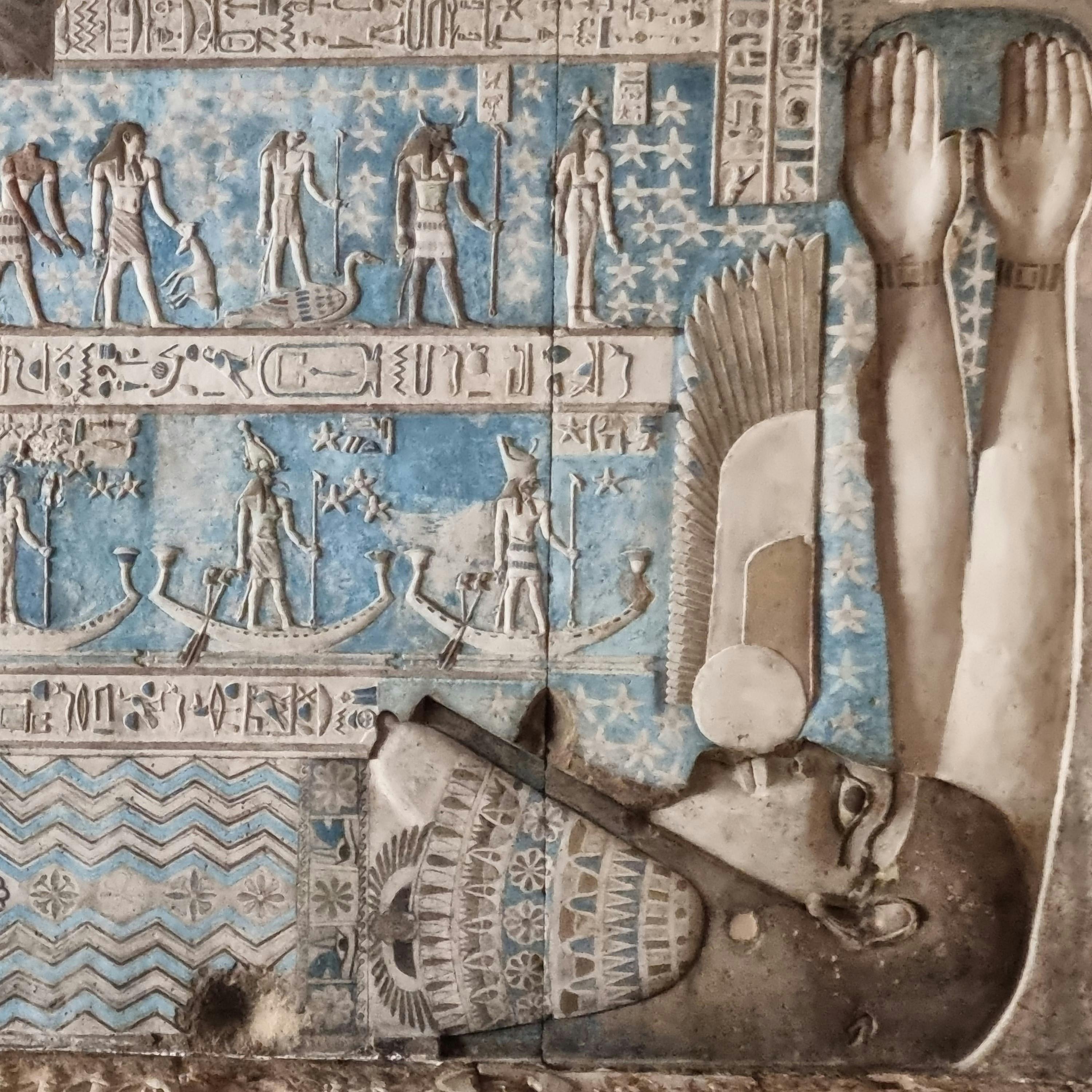
Dendera: Temple of Time with José M. Barrera
Hathor's temple at Dendera is one of the best in Egypt. Constructed in the late 1st Millennium BCE (but with roots stretching back to the Old Kingdom), Hathor’s house preserves amazing art, hieroglyphs, and secrets. It is a temple that today’s guest, José M. Barrera, devoted a great deal of energy to documenting. The result is a wonderful study of Hathor’s celestial realm…
See José's amazing phot

200: Deir el Medina - How to Make Your Own Tomb
Livestream recording. The tombs of Deir el-Medina are some of the most vibrant and beautiful in Waset (Thebes). How did they build them, which artists decorated them, and how did folk like Sennedjem pay for the construction and furnishing?
Video version available at https://www.patreon.com/posts/118922972
Website: www.egyptianhistorypodcast.com.
Support the show via Patreon www.patreon.com/egyp

199: The Winter War
Sety’s final campaign. In winter of year 8 (approx. December 1296 BCE), the King of Egypt Sety I received news: rebellion in the south. In a land called Irem, now in modern Sudan, locals were resisting Egypt’s monarch. Sety gathered an army of infantry and chariots and set off to war. The story is told by Egyptians participating in the event, and by monuments erected to commemorate it…
See the
Recommended

Take Back Your Health®

CBS Radio Mystery Theater | Old Time Radio

Solved Murders - True Crime Stories
紐約鳥|New York Aperture
The Swerve Podcast: Obscure Topics | Conspiracy Theories

The Bread and Banter Podcast
The Church of What's Happening Now: The New Testament

Busted Open

Deadline: White House

Panda Show - Picante

Crickets Corner

History of the Earthquake and Fire in San Francisco
