Secular Buddhism
Secular Buddhism explores Buddhist teachings and practices from a non-religious, practical perspective. Host Noah Rasheta discusses how to apply mindfulness, compassion, and wisdom to everyday life without adopting a specific faith. The podcast aims to help listeners become better versions of themselves, regardless of their existing beliefs.
Episodes
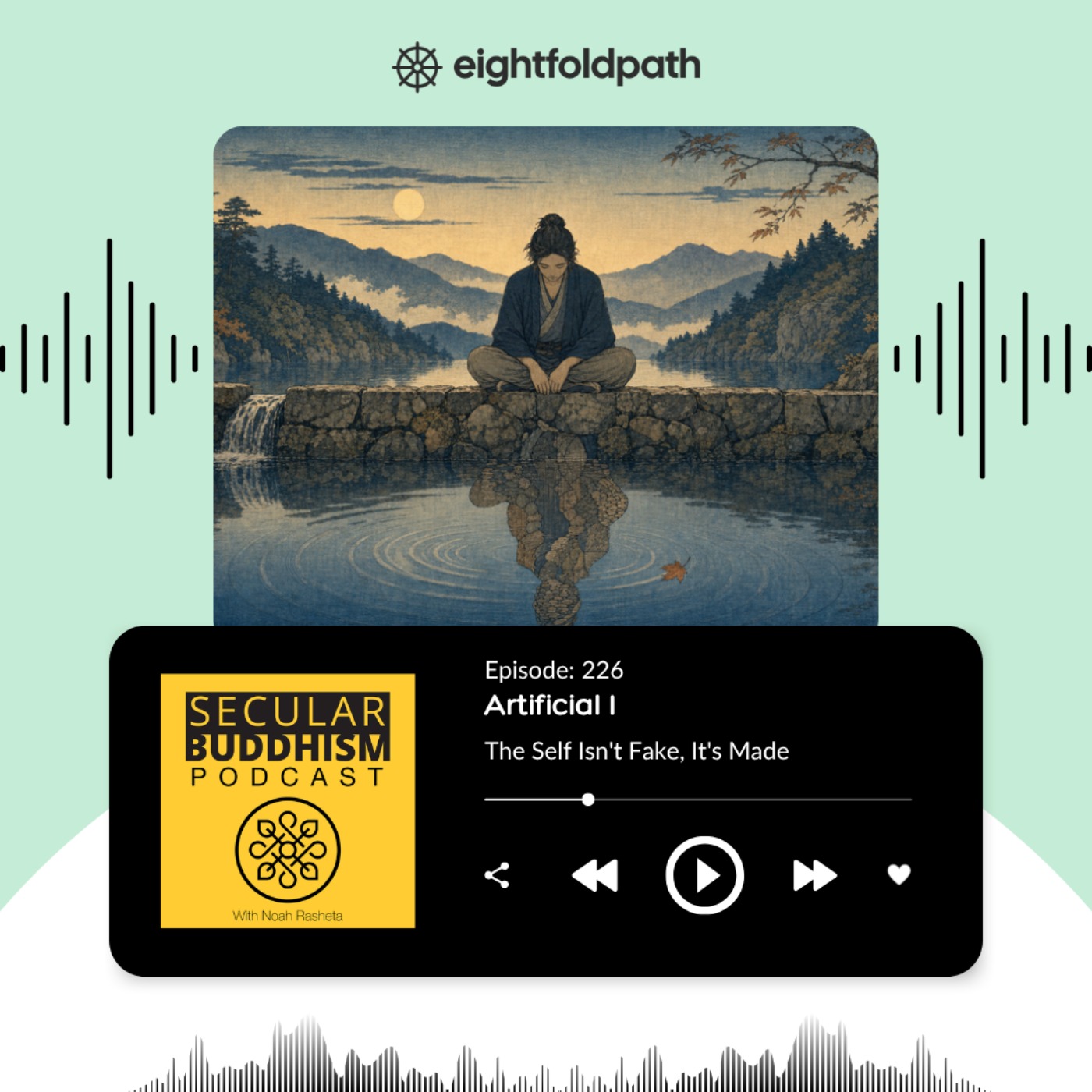
226 - Artificial I
In this episode, I explore the "artificial I" — the sense of self that feels so solid and obviously real, yet works a lot like the AI systems so many of us are worried about right now. Drawing on my work in data infrastructure, my studies in applied AI, and the Noah AI tool I built, I explain in plain terms how AI learns from training data and predicts the next word, and then show how ou
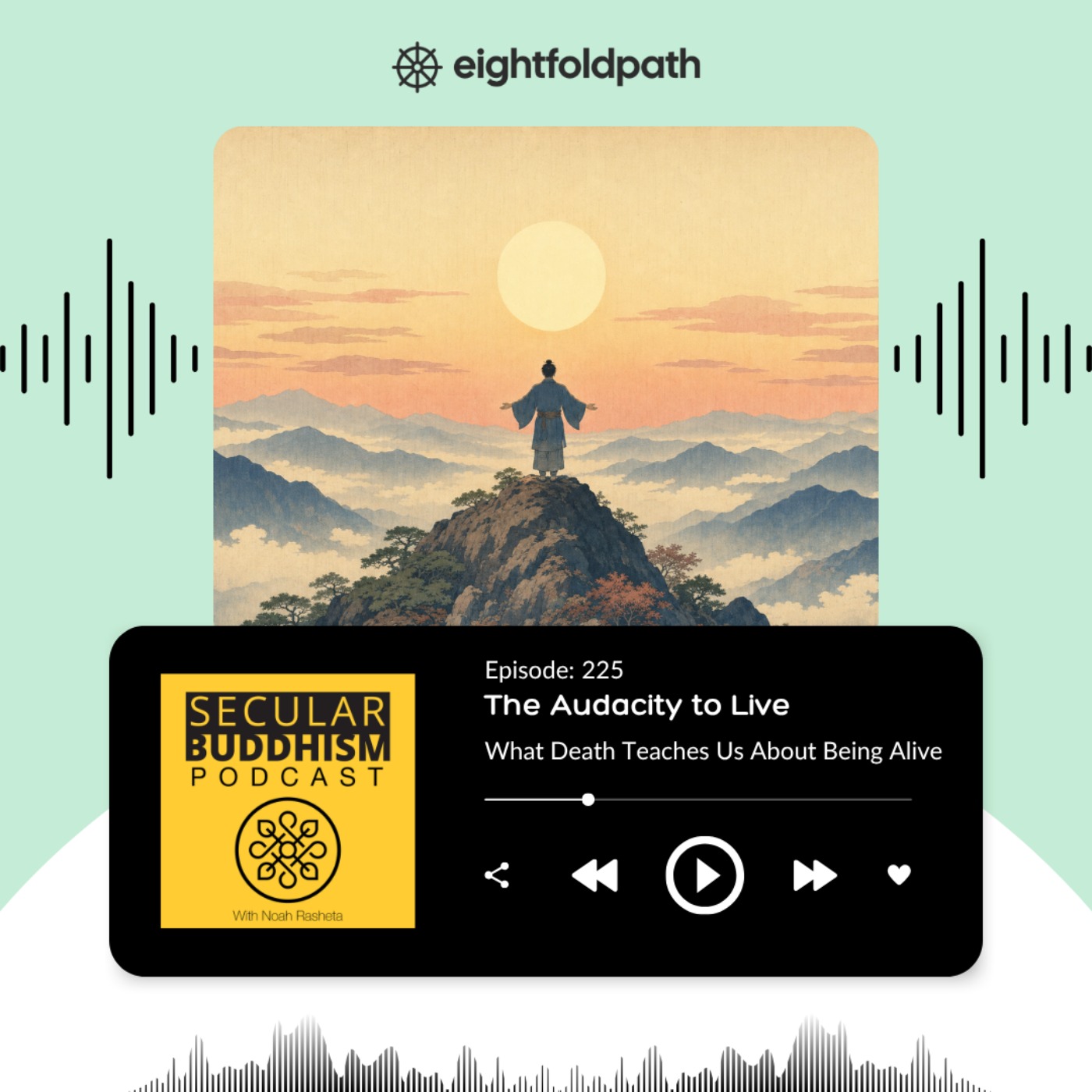
225 - The Audacity to Live
In this episode, I explore what death has to teach us about being fully alive, prompted by the recent death of mountaineer Nirmal "Nims" Purja in an avalanche in Pakistan. Starting with Richard Dawkins' reminder that "we are going to die, and that makes us the lucky ones," I reflect on why there is nothing ordinary about an ordinary life — and why so many of us still leave the winning lottery tick
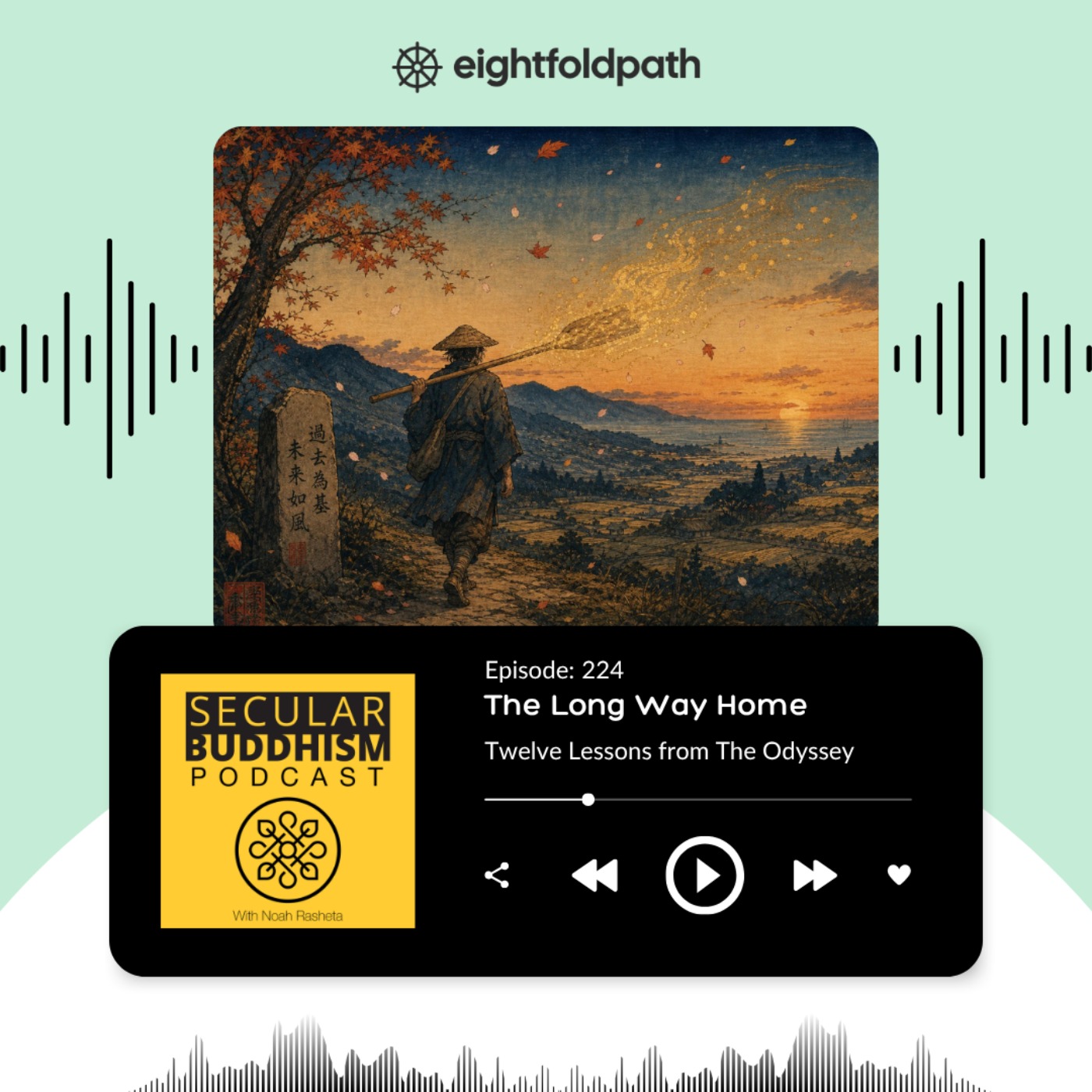
224 - The Long Way Home
In this episode, I explore the timeless wisdom found in Homer's The Odyssey through a secular Buddhist lens, drawing parallels between Odysseus's arduous journey home and our own human experiences. I highlight key lessons such as the danger of numbing ourselves with comfort, akin to the Lotus Eaters, and the peril of clinging to a fixed sense of self, as seen when Odysseus identifies himself after
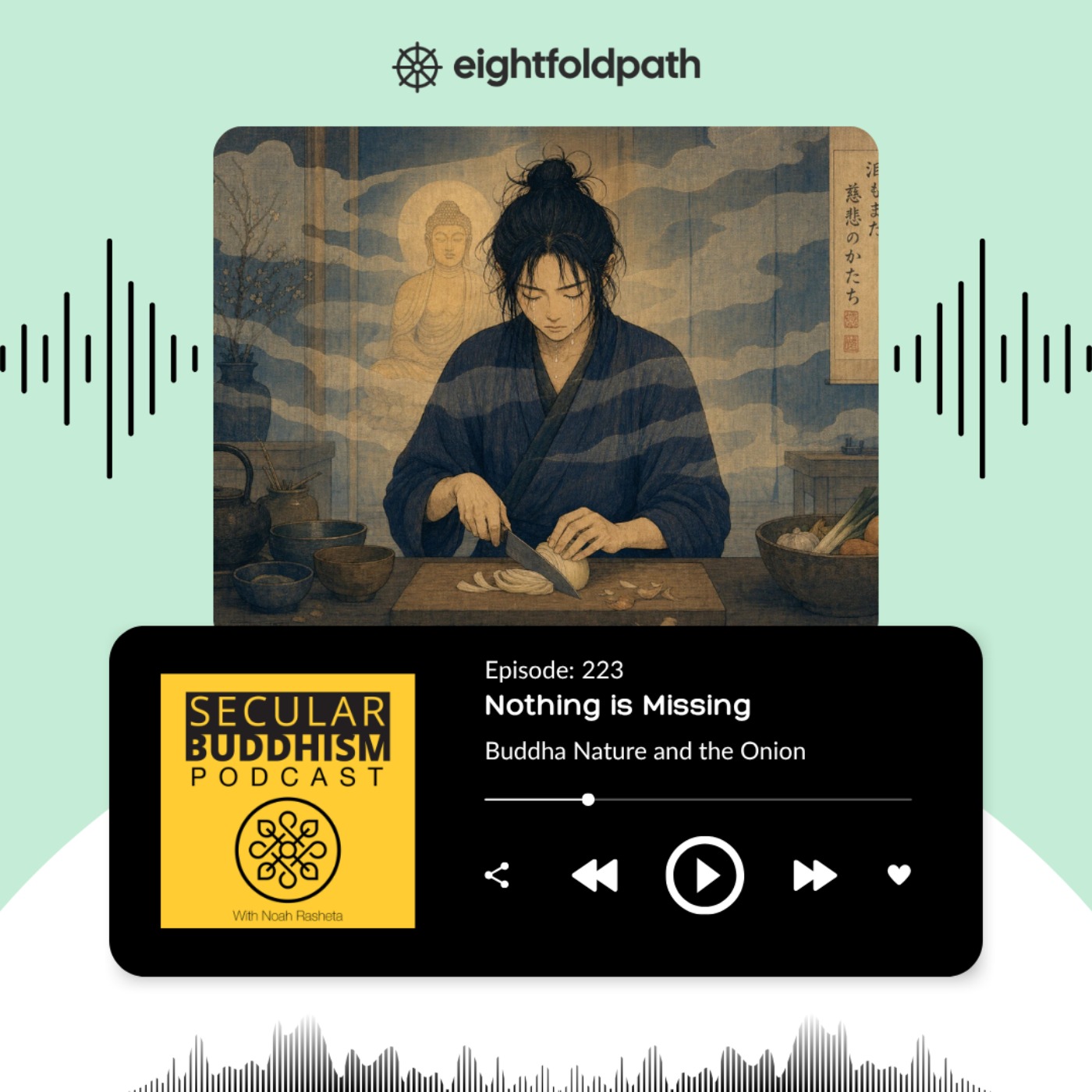
223 - Nothing is Missing
In this episode, I explore the concept of being "already whole" by examining two seemingly contradictory Buddhist stories: the Golden Buddha and peeling an onion. The Golden Buddha story suggests we are inherently valuable, covered by layers of conditioning, while the onion story, referencing non-self, indicates we are simply layers all the way down with no fixed core. I explain that both perspect
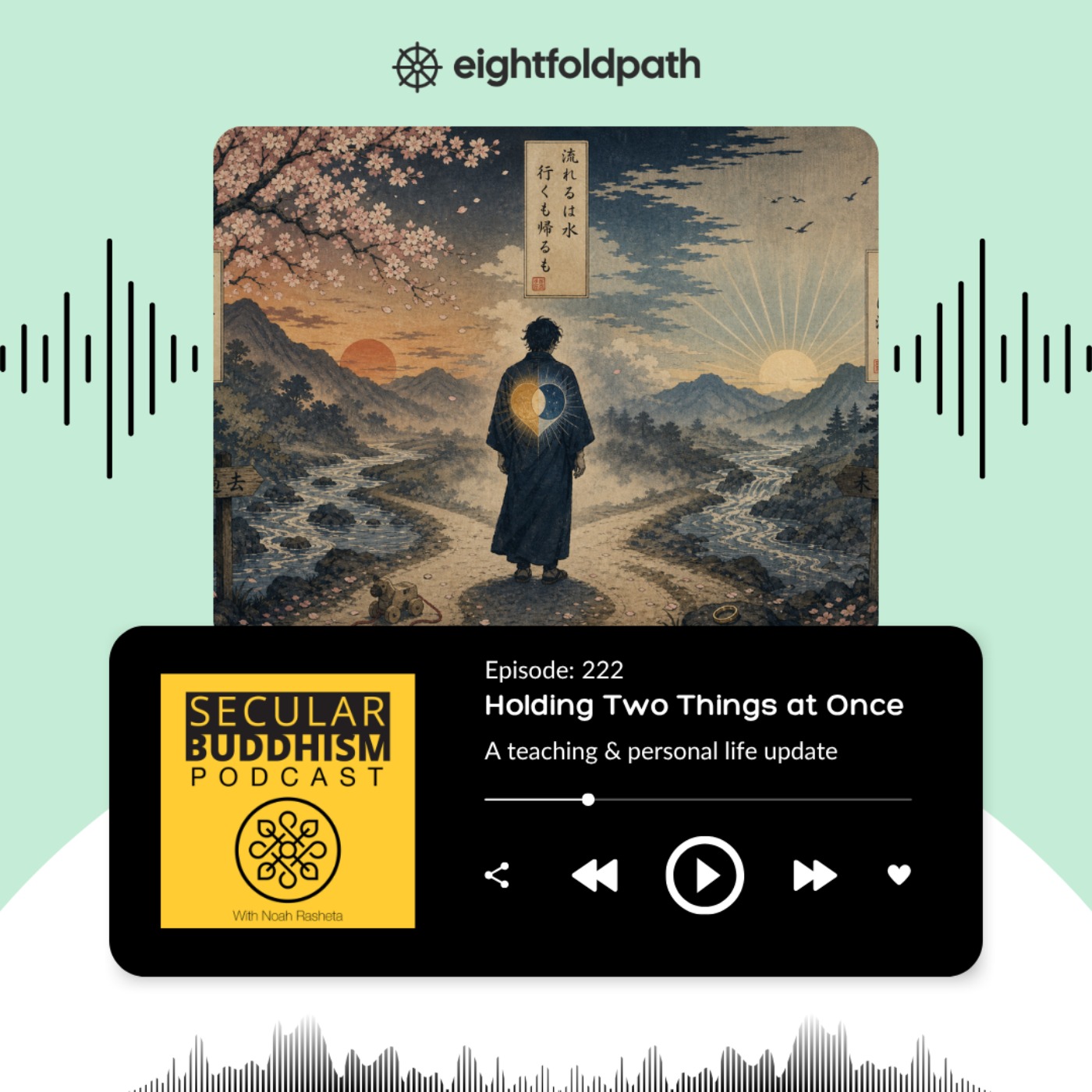
222 - Holding Two Things at Once
In this episode, I explore the concept of holding two things at once, a practice that has become central to my own experience, especially during a recent personal transition. I discuss how we're often conditioned to assign a single emotional label to any given moment, leading us to suppress or feel guilty about other valid feelings that arise simultaneously. The core teaching is that life, in its
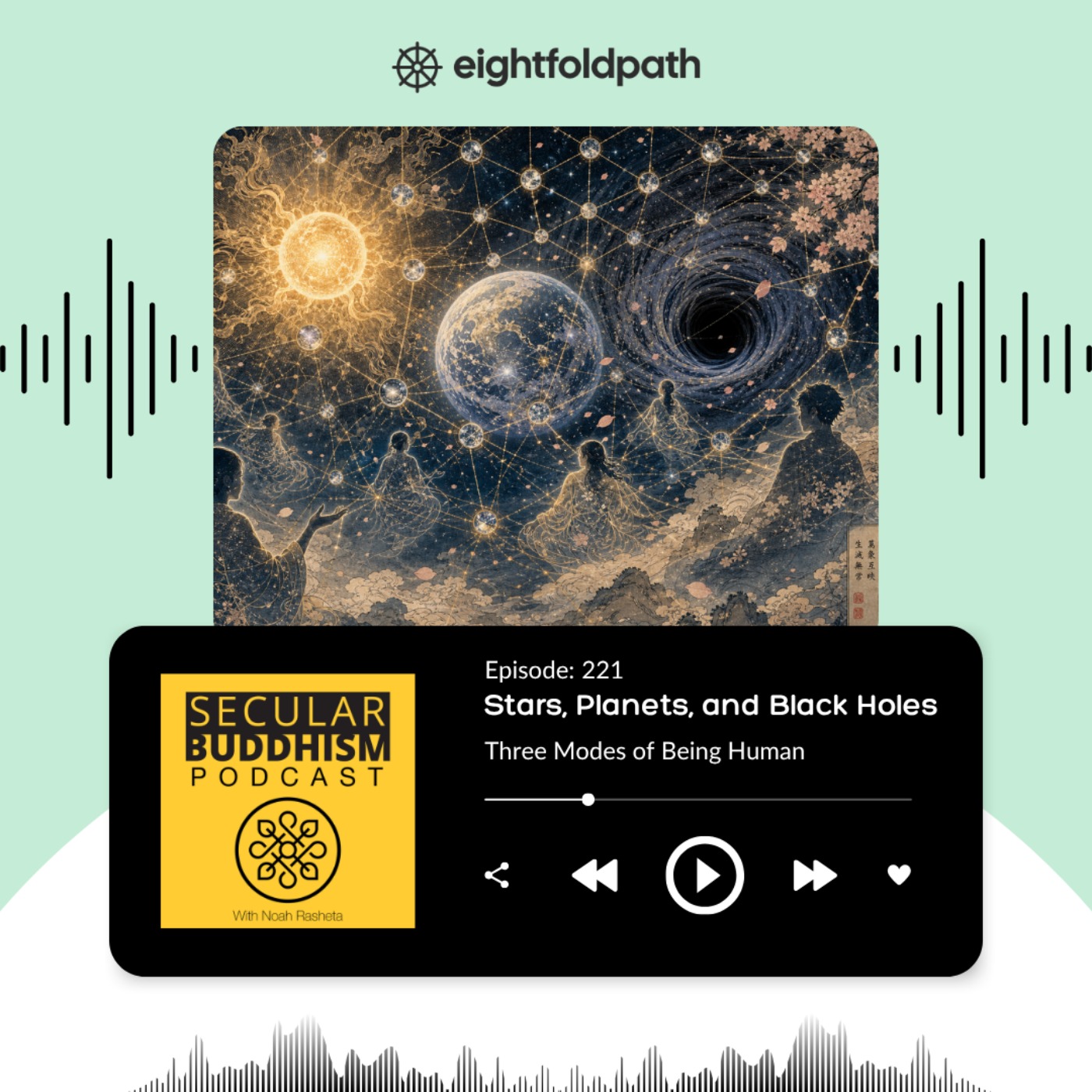
221 - Stars, Planets, and Black Holes
In this episode, I explore the cosmic metaphor of stars, planets, and black holes as three distinct ways humans experience the world. Drawing parallels from the Artemis II moon mission and the film Project Hail Mary, I discuss how these celestial bodies represent generating light (star mode), reflecting light (planet mode), and consuming light (black hole mode). Key insights include understanding
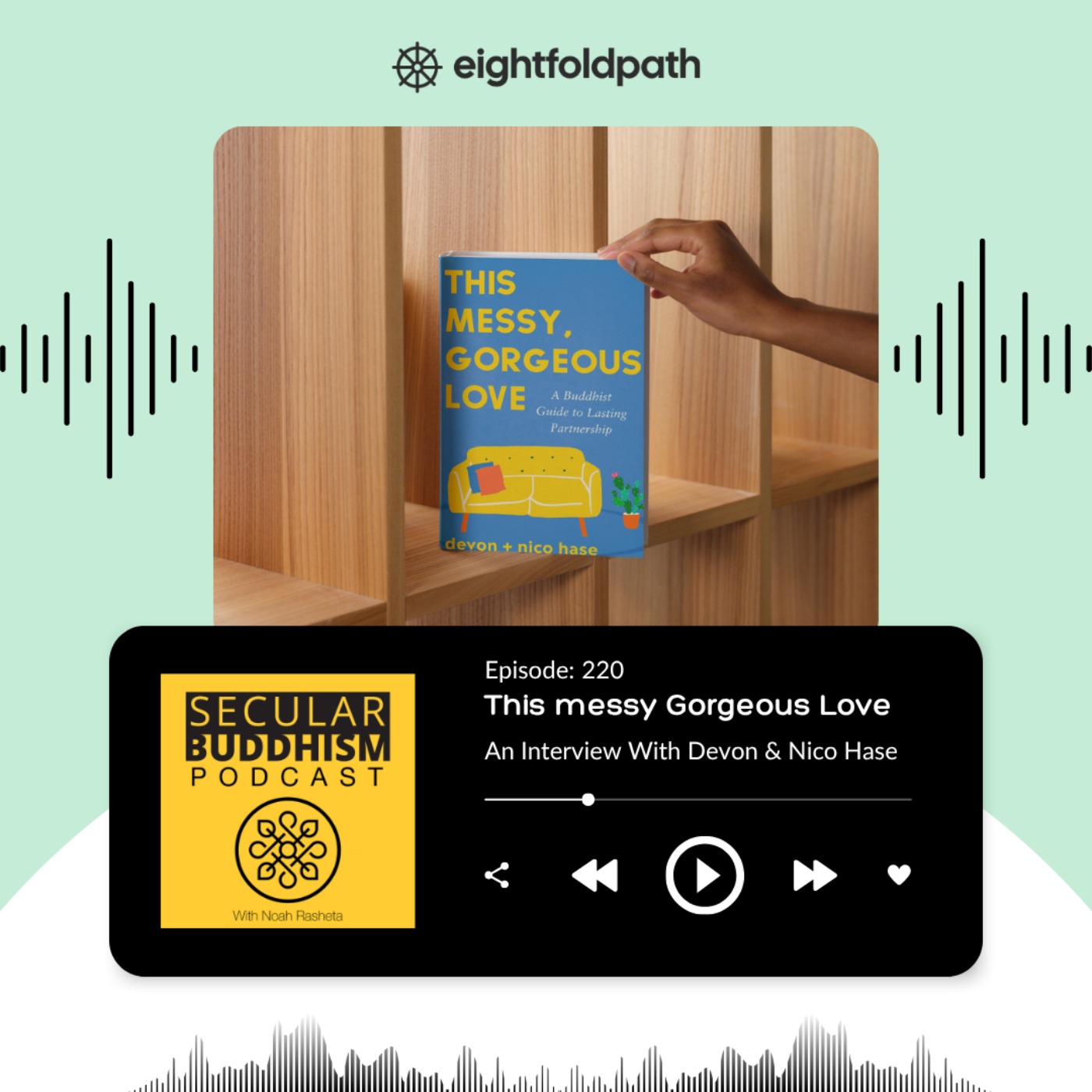
220 - This Messy Gorgeous Love
In this episode, I talk to Devon and Nico Hase about their book, This Messy, Gorgeous Love. We explore how the Buddhist concept of dukkha, or inherent unsatisfactoriness, applies to relationships, reframing difficulty not as a sign of failure but as a natural and even beautiful aspect of partnership. Key takeaways include understanding that relationships are inherently challenging, the importance
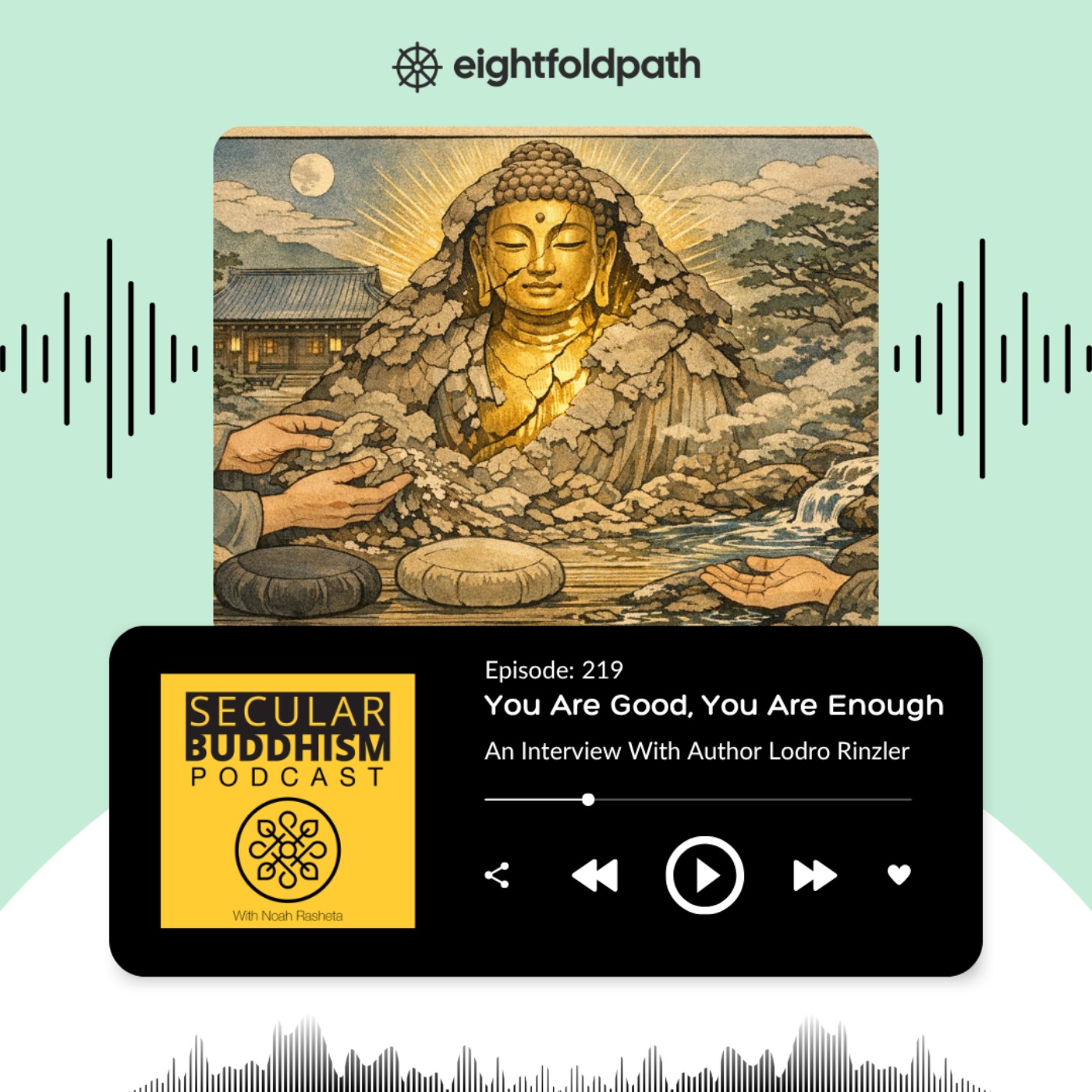
219 - You Are Good, You Are Enough
In this episode, I talk to Lodro Rinzler about his book, You Are Good, You Are Enough, which explores the Buddhist concept of basic goodness. We discuss how life's experiences can cover our inherent wholeness with "clay"—conditioning and societal messages—leading us to believe we are lacking. The core teaching is that we don't need to add anything to become whole; we need to peel away the layers t
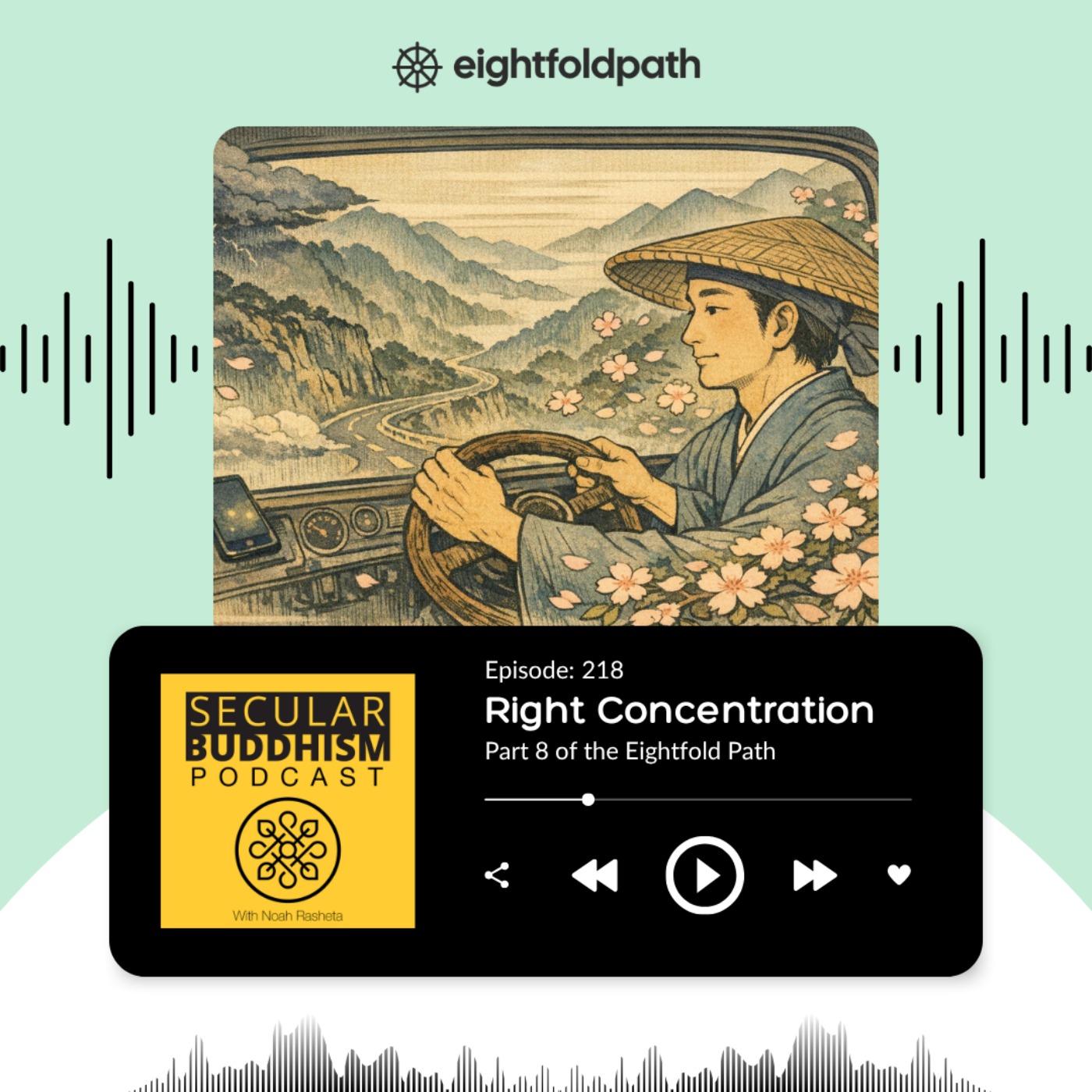
218 - Right Concentration
In this episode, I explore skillful concentration, the final aspect of the Eightfold Path, using a road trip analogy where concentration is like having steady hands on the wheel. I clarify that concentration is distinct from mindfulness, doesn't require hours of meditation, and is characterized by joy, not seriousness. I discuss the five hindrances—sensory desire, aversion, dullness, restlessness,
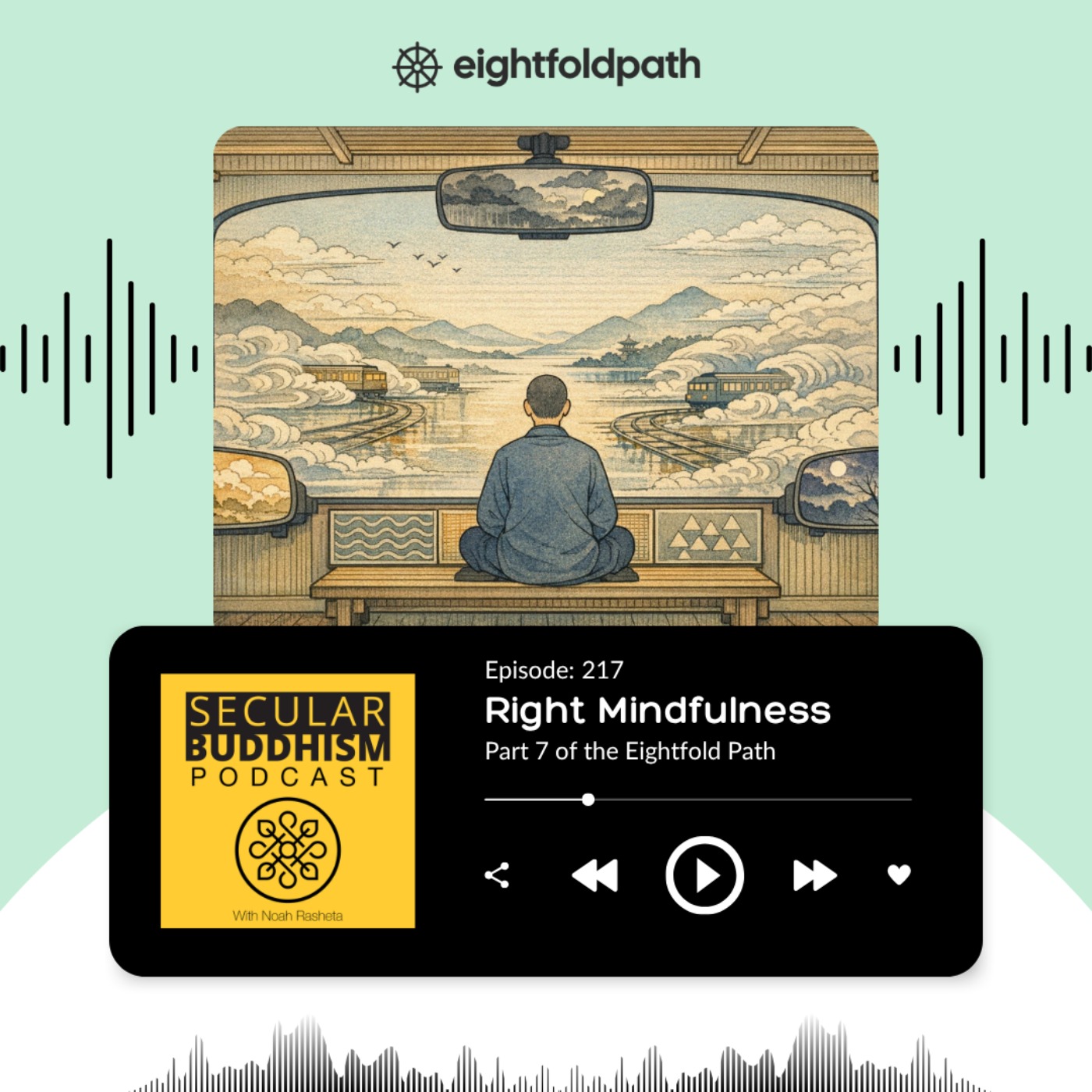
217 - Right Mindfulness
In this episode, I explore skillful mindfulness, the seventh aspect of the Eightfold Path, using analogies like a permanently attached camera and a train station to illustrate its core principles. I emphasize that mindfulness isn't about stopping thoughts but about developing the capacity to observe them without being swept away, akin to sitting on a bench and watching trains come and go. Key take
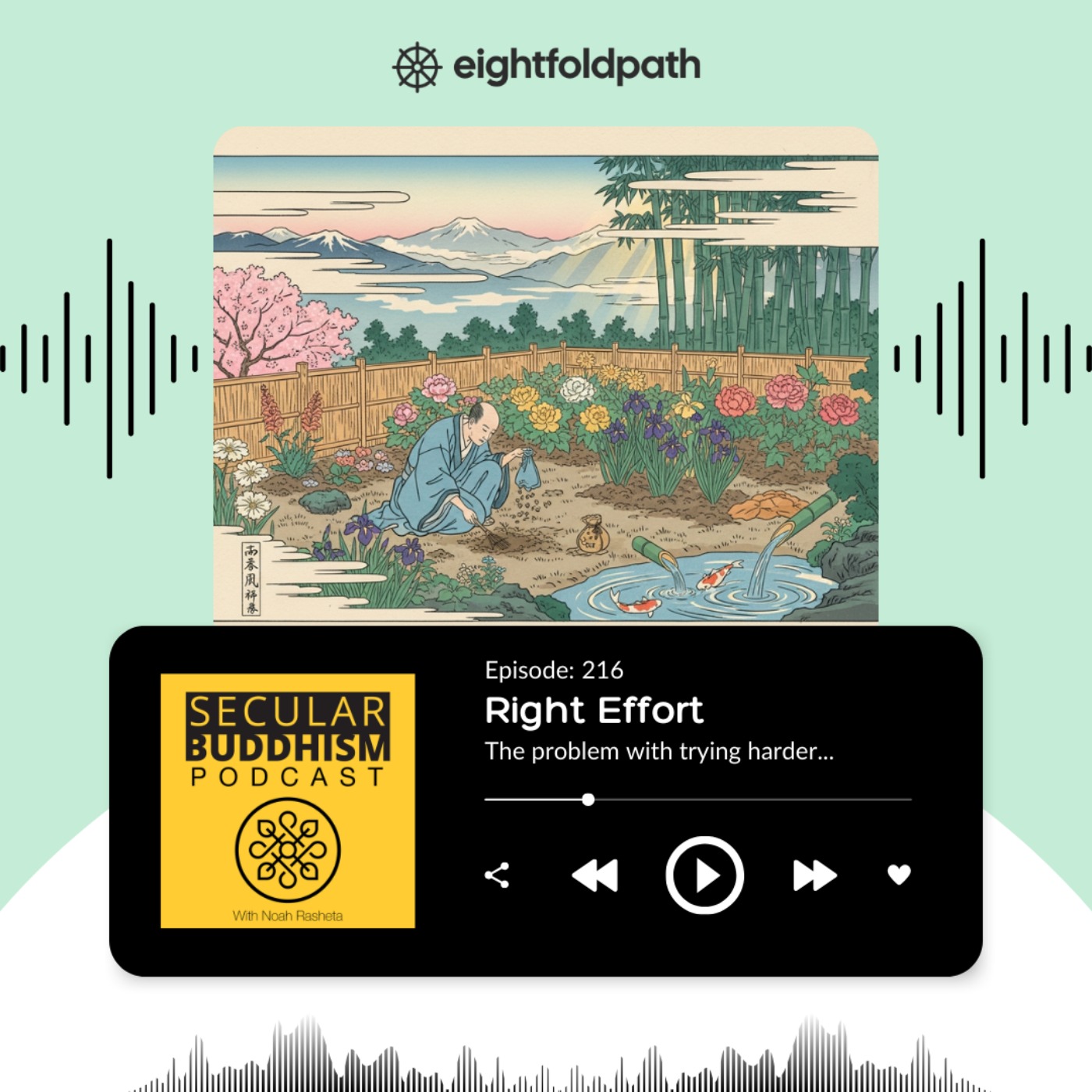
216 - Right Effort
In this episode, I explore the concept of skillful effort, also known as right effort, which is the sixth aspect of the Eightfold Path. I explain that skillful effort isn't about "trying harder" but rather about applying energy wisely, much like a gardener tends to their plants. This involves four key tasks: preventing unskillful states from arising, abandoning those that have already arisen, cult
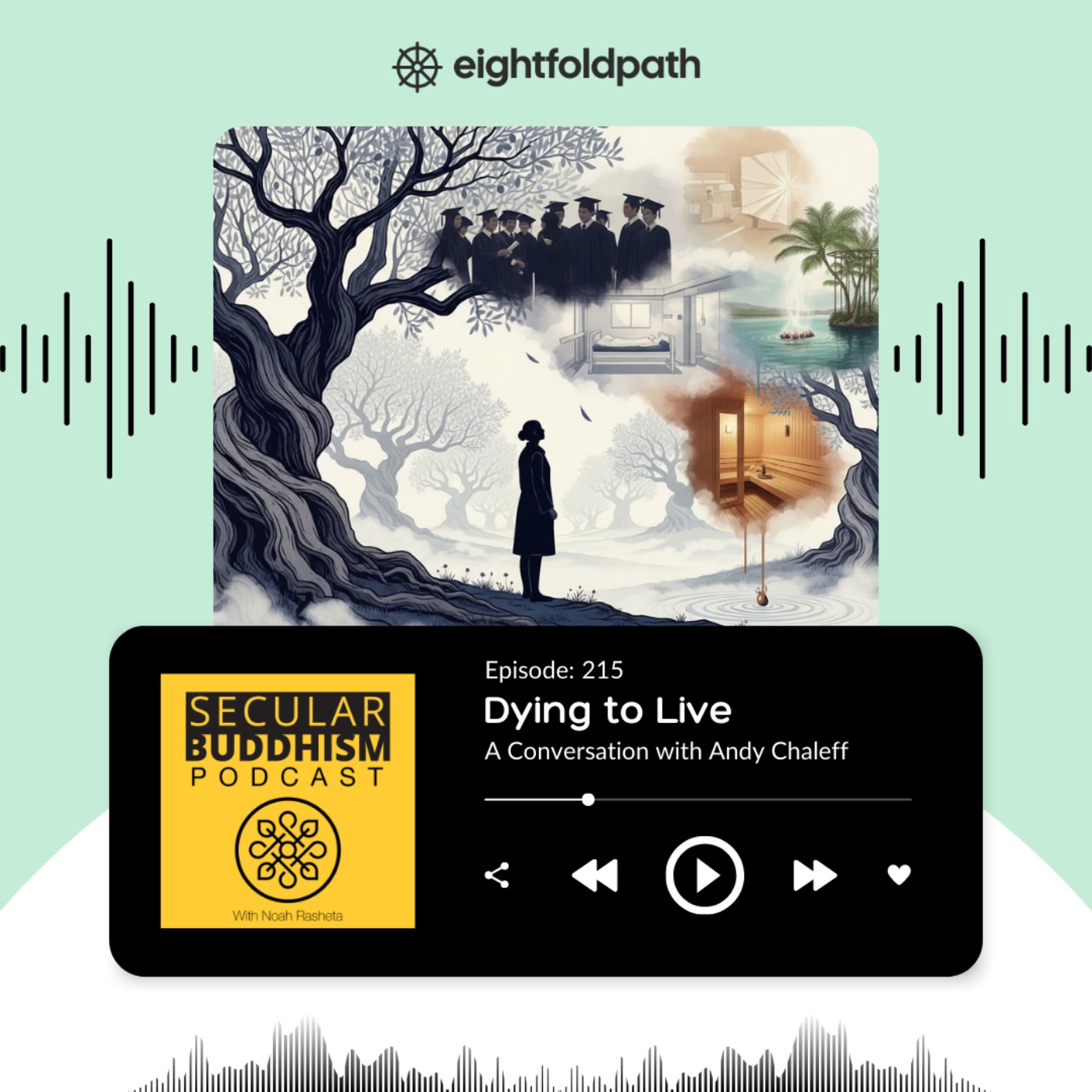
215 - Dying to Live
In this episode, I talk to Andy Chaleff about his book Dying to Live, which explores our societal discomfort with death and how confronting mortality can lead to a more meaningful life. We discuss the "3 AM panic" of existential dread, the concept of "little deaths" as moments of letting go of identity and attachment, and the importance of "sitting with the question" rather than seeking definitive
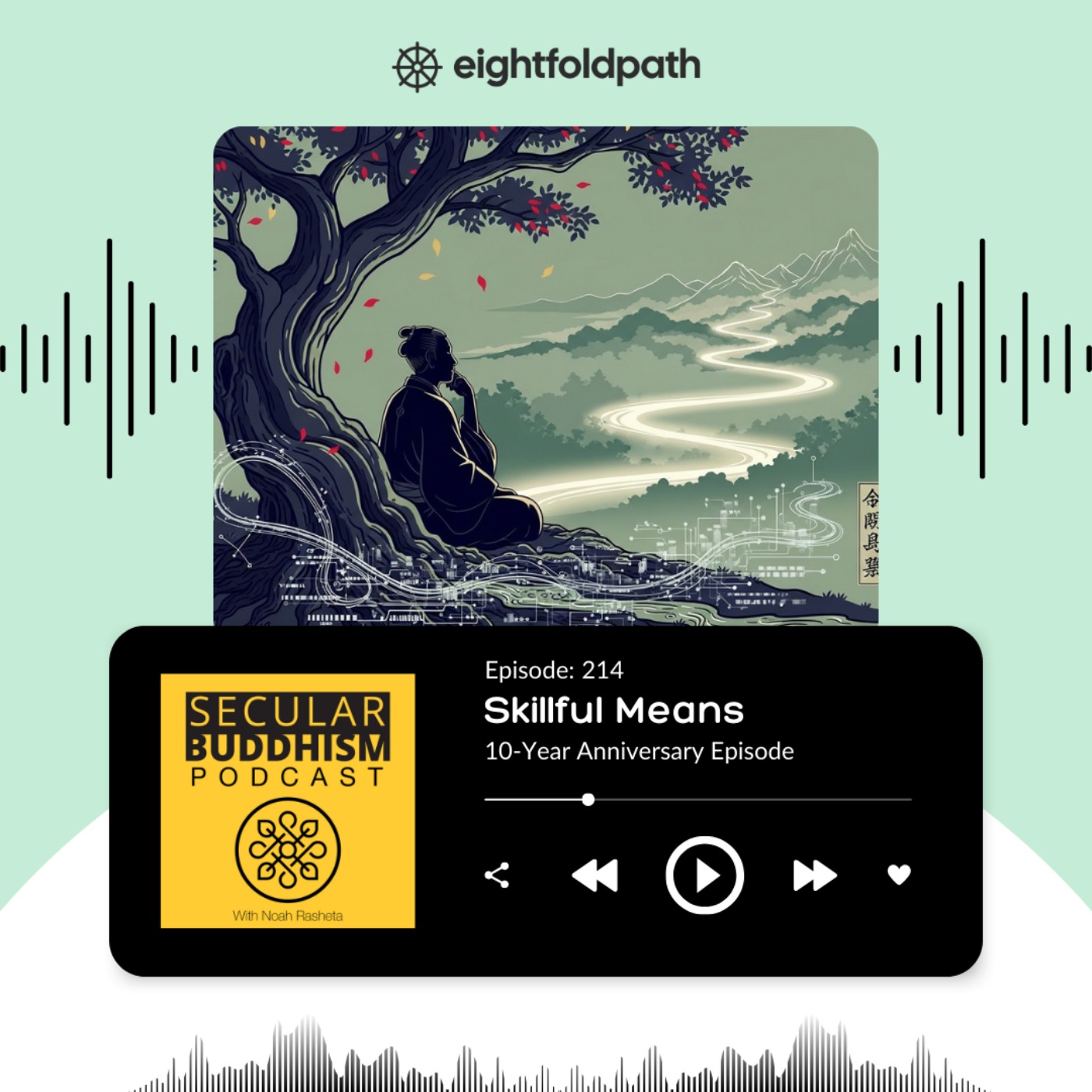
214 - Skillful Means (10-Year Anniversary Episode)
In this episode, I celebrate the 10-year anniversary of the Secular Buddhism podcast by announcing a new AI-powered website, EightfoldPath.com, which serves as a modern application of the Buddhist concept of skillful means. Skillful means, or upaya, is the idea that teachings should adapt to meet individuals where they are, using whatever tools or methods are most effective for reducing suffering
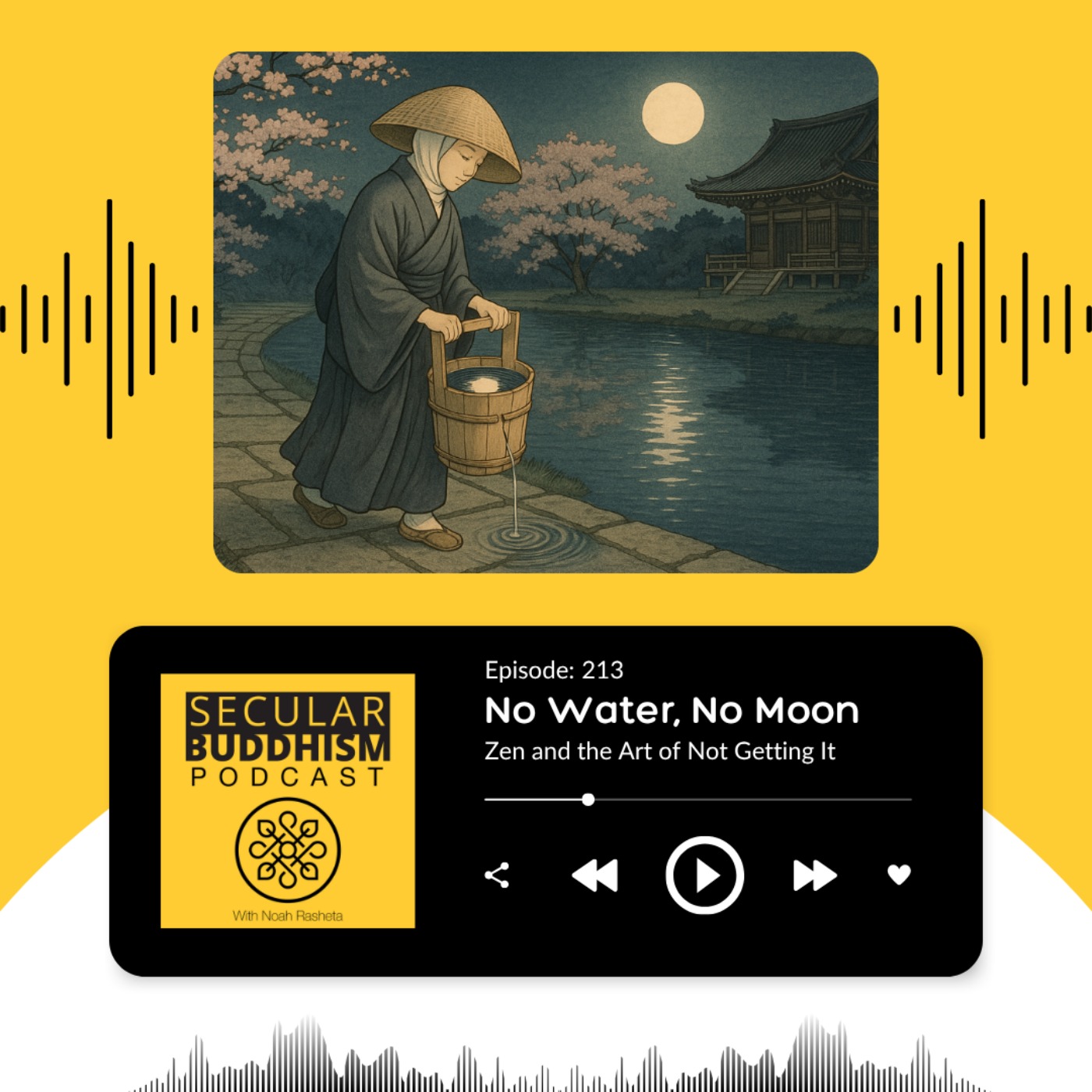
213 - No Water, No Moon
Why are we so uncomfortable with not knowing? We often race toward any answer, even a bad one, just to escape the anxiety of uncertainty. This episode explores the strange and profound world of Zen koans.Using the powerful story of the nun Chiyono and her breaking water pail ("No water, no moon"), Noah explains that koans are not intellectual puzzles to be "solved." Instead, they are a practice fo
212 - The War Within
In this episode, Noah reflects on the heaviness of living in a world filled with violence, hatred, and suffering. From school shootings to war and personal experiences of pain, he explores the Buddhist teaching of the three poisons: ignorance, greed, and hatred, and how they manifest both globally and within our own hearts.Through stories, analogies, and practical practices, Noah reminds us that p
211 - Right Livelihood
In this episode, Noah explores Right Livelihood, the next step on the Eightfold Path. More than just avoiding harmful professions, Right Livelihood invites us to reflect on how our work shapes who we are and how we show up in the world. Noah shares personal stories, analogies, and practical questions to consider, such as: Does my work align with my values? Does it cultivate compassion and presence
210 - Right Action
In this episode, we continue our journey through the Eightfold Path by exploring Right Action—the fourth step on the path to mindful living. Rather than a rigid set of moral rules, Right Action is about learning to engage with life skillfully, making choices that reduce unnecessary suffering for ourselves and others.Through the story of a paragliding mishap, we'll examine how our actions, whether
209 - Unbecoming Ourselves (with Heather Schenck)
In this special interview episode, I sit down with my friend and fellow traveler on the path, Heather Schenck. Many of you may recognize Heather from our online community—she’s been part of our Sangha since 2020. What began as a personal journey through suffering and self-inquiry has now culminated in the release of her first book, Unbecoming Ourselves.Heather shares the deeply personal story behi
208 - Right Speech
In this episode, we continue our journey through the Eightfold Path by exploring Right Speech. More than just speaking truthfully or avoiding gossip, Right Speech is a mindfulness practice—an invitation to reflect on how, why, and when we communicate. We look at the four types of unskillful speech—false, harsh, divisive, and idle chatter—and how becoming aware of them can transform our relationshi
207 - Be a Lamp Unto Yourself
In this episode of the Secular Buddhism podcast, I explore what it means to “be a lamp unto yourself.” Drawing from personal stories, including my time teaching paragliding, and Buddhist teachings on wisdom, I reflect on the journey from seeking external guidance to cultivating trust in your own inner knowing. What does it mean to become your own teacher? How can we balance learning from others wh
206 - Right Intention
In this episode, we continue our exploration of the Eightfold Path by diving into the second aspect of wisdom—Right Intention. We explore how intention functions like a compass, helping us navigate life with purpose and clarity. Rather than reacting habitually, Right Intention invites us to respond skillfully to whatever arises. We discuss the three core intentions highlighted in Buddhist teaching
205 - Right View
In this episode, I share the audio recording of a Dharma talk I gave during one of our Sunday Zoom calls. The topic is Right View, the first step on the Buddhist Eightfold Path. Inspired by the book Nexus by Yuval Noah Harari, I explore the nature of truth and how we relate to it in our everyday lives.I talk about three distinct types of truth—objective, subjective, and intersubjective—and how und
204 - Beyond Happiness
What is the difference between happiness and joy, and how can we experience greater contentment, even when life doesn’t go as planned? In this episode, I explore the Buddhist perspectives and modern insights that reveal happiness as a fleeting emotional state, while joy represents a deeper, more enduring form of well-being. Drawing inspiration from “The Book of Joy” by the Dalai Lama, “Happiness”
203 - The Art of Purposelessness
In this episode, I explore the Buddhist teaching of aimlessness, one of the Three Doors of Liberation, through personal reflection and the lens of my son’s journey into adulthood. What if life doesn’t need a fixed purpose to be meaningful? Drawing on insights from Buddhism, Alan Watts, and everyday life—including paragliding, parenting, and playing music—I consider what it means to live fully when
202 - Who's Driving the Car?
In this episode of the Secular Buddhism podcast, Noah explores the Buddhist teaching of no-self through the powerful metaphor of a car ride. Who—or what—is really in control as we navigate our lives? Drawing from the five aggregates and the Internal Family Systems model, Noah illustrates how our emotions and mental patterns often take the wheel, shaping our actions and experiences. But through min
201 - The Empty Boat
In this episode, I explore the parable of The Empty Boat and how it serves as a powerful metaphor for understanding the way we react to life’s inevitable bumps (especially those caused by others). Drawing from Taoist and Zen traditions, this story reminds us that much of our suffering arises not from what happens, but from the meaning we attach to it.We’ll look at what it means to take things pers
200 - The Music of Connection
In this episode of The Secular Buddhism Podcast, I reflect on an experience at a dance competition that led me to deeply consider connection, perception, and the way we assign meaning to our experiences. As I watched dancers perform to carefully chosen songs, I found myself drawn into the emotions conveyed in the lyrics—emotions that felt strikingly familiar, even though they were someone else’s w
199 - A Candle in the Darkness
In times of uncertainty and suffering, many of us find ourselves asking: What can I do? The weight of the world’s challenges—humanitarian crises, injustice, personal struggles—can feel overwhelming, leaving us wondering whether our efforts even make a difference.In this episode of the Secular Buddhism podcast, I’m sharing the audio from a recent Dharma talk on the Bodhisattva path—a way of engagin
198 - Between What Was and What Will Be
In this episode of the Secular Buddhism Podcast, Noah Rasheta explores the Tibetan Buddhist concept of bardos, traditionally understood as transitional states between life, death, and rebirth. Taking a secular approach, Noah reinterprets bardos as a framework for understanding all of life’s transitions, both big and small.Life is constantly shifting—between moments, relationships, jobs, emotions,
197 - A Meditator’s Guide to Buddhism
In this episode of the Secular Buddhism Podcast, I sit down with Cortland Dahl, author of A Meditator’s Guide to Buddhism, to explore how Buddhist teachings and meditation can help us navigate life’s challenges with awareness, compassion, and wisdom.Cortland shares insights from his book, which serves as an accessible guide for both beginners and seasoned meditators, and discusses themes such as t
196 - Enlightenment Is the Path, Not the Destination
In honor of Bodhi Day—commemorating the Buddha’s awakening—this episode challenges the conventional notion of enlightenment as a distant finish line. Instead, I explore how awakening emerges naturally in the everyday moments of our lives. Drawing on the Buddha’s story and reflecting on personal experiences, I'll discuss how to recognize the sacredness of ordinary life, embrace change with grace, a
195 - Letting Go: The Path to Freedom
In this episode of the Secular Buddhism podcast, Noah Rasheta explores the concept of letting go as a path to freedom and liberation. Using analogies like hanging onto a rope, carrying a backpack, and navigating monkey bars, Noah illustrates how our attachments to beliefs, roles, and identities can create unnecessary suffering. He offers practical advice for identifying and releasing the things th
194 - The Cup Is Already Broken: A Buddhist Approach to Gratitude
In this episode, I explore gratitude as a natural byproduct of awareness, interdependence, and impermanence. Through the lens of Buddhist teachings, including the metaphor of Indra’s net and the Zen story of “The Cup Is Already Broken,” I share how mindfulness reveals the interconnectedness of all things and inspires genuine gratitude.I discuss how gratitude isn’t something we’re commanded to feel
193 - 30 Life Lessons
In this episode, I distill 30 life lessons that have shaped my personal journey and that I’ve found most impactful after nearly a decade of hosting the Secular Buddhism Podcast. Drawing from the timeless wisdom of Buddhist teachings, these lessons serve as practical guides to living with more awareness, compassion, and resilience in everyday life. Join me as I share not only the core teachings but
192 - Embracing Uncertainty
In this episode, I explore the topic of uncertainty and how embracing life’s unpredictability can lead to greater peace and freedom. From everyday frustrations to life’s biggest challenges, groundlessness is a shared human experience. Drawing on stories, metaphors, and Buddhist teachings, I discuss how letting go of the need for control opens us to new possibilities and deeper wisdom. Tune in to l
191 - Uplift Kids: Guiding Parents on Emotions and Wisdom
In this episode, I interview the co-founders of Uplift Kids—Jon, Amanda, and Michelle—to explore how their curriculum helps parents teach emotional awareness and wisdom traditions to kids. We dive into practical tips for guiding kids through big emotions, the importance of mindfulness in parenting, and how ancient wisdom can be applied to modern family life. Whether you’re a parent looking for too
190 - No Mud, No Lotus
In this episode of the Secular Buddhism podcast, we explore the Buddhist perspective on suffering and how we can transform our relationship with it. We'll explore how changing our relationship with suffering can lead to personal growth, wisdom, and even unexpected joy. This episode offers listeners practical tools to apply Buddhist concepts in their daily lives, encouraging a curious and compassio
189 - The One You Feed
Welcome to a unique episode where I'm excited to share the audio of a thought-provoking conversation I recently had with Eric Zimmer, the esteemed host of "The One You Feed" podcast. In this compelling discussion, we delve into the ancient parable of the two wolves that reside within each of us, exploring the profound wisdom behind the teaching that the wolf you choose to nourish ultimately prevai
188 - Examining the Beliefs That Drive Us
In this introspective episode, Noah Rasheta shares personal updates about significant changes in his life over the past few months, including a career transition and a move to a new home. He explores the parallels between his new role in data infrastructure and the inner workings of the human mind, drawing insightful connections between hardware, software, and the beliefs that shape our experience
187 - The Unseen Teachers
In this episode, I reflect on my transformative journey from intense frustration to effortless flying, drawing parallels between the challenges of paragliding and the introspective path of personal growth. Sharing insights from my experience with learning to ridge soar, I connect these adventures to the Buddha's spiritual quest, underscoring the essence of self-reliance and the lessons adversity t
186 - Renunciation: Gaining Through Letting Go
This episode discusses how renunciation is not merely about giving up material or physical pleasures but about a deeper understanding and release of attachments that cause suffering. The episode invites listeners to consider the ways in which they might be clinging too tightly to certain aspects of their lives and how letting go can lead to greater liberation and joy. Through personal anecdotes, p
185 - Weathering the Storms Within
In this episode, I delve into the landscape of our emotions, drawing parallels between the ever-changing sky and our internal world. Journey with me as we explore the transient nature of emotions, taking cues from the wisdom of ancient Buddhist teachings and insights from modern psychology. Learn how emotional agility can serve as a beacon, guiding us through life's inevitable storms with grace, r
184 - Emotional Equanimity and Antifragility
In this episode of the Secular Buddhism Podcast, Noah delves into the concept of emotional equanimity, likening it to the tale of monk Sona who learned to maintain a balanced approach to life's challenges, akin to finely tuning a musical instrument. Drawing from the Mangala Sutta and Nassim Nicholas Taleb's "Anti-Fragile," the episode emphasizes the value of antifragility, where challenges can enh
183 - Six Words of Advice
Welcome back to the Secular Buddhism Podcast, a globally top-ranked Buddhist show. Today, best-selling author and host Noah Rasheta delves into the topic of Tilopa's Six Words of Advice. Tilopa's 'Six Words of Advice' provide meditation guidance for people of all levels, including both beginners and experienced meditators. Despite their apparent simplicity, these six instructions hold deep meaning
182 - Unraveling Suffering: The Four Noble Truths Explained
Prepare to step onto a path of transformation and liberation as we unravel the most fundamental teachings of Buddhism - the Four Noble Truths. I'll break down each of these foundational truths, venturing into the realm of life's inherent suffering, understanding its root cause, and most significantly, the very possibility of liberation from this suffering by letting go of craving and attachment.Th
181 - Redefining Kindness
In the practice of self-kindness, we often overlook a profound truth: our relationship with ourselves sets the tone for our relationship with others.Explore more at eightfoldpath.com: full transcripts, guided meditations, courses, and Noah AI, an AI you can chat with about any episode or teaching. Hosted on Acast. See acast.com/privacy for more information.
180 - Meditation: The Pause Button for Habitual Reactivity
In this episode, I delve deeper into how meditation acts as a massive pause button for the cycle of habitual reactivity. I'll explore beliefs, thoughts, emotions, feelings, actions, and consequences, discussing how they influence our lives and the lives of others. We'll look at how we can cultivate skillful habits through meditation or mindfulness. By taking a pause from our habitual ways of livin
179 - Notice Your Thoughts
"All experience is preceded by mind"; that is to say, our mind determines whether or not we suffer. Knowing that we can't escape the consequences of our actions and that actions originate with thoughts, this episode will explore how and why we should practice noticing our thoughts.Explore more at eightfoldpath.com: full transcripts, guided meditations, courses, and Noah AI, an AI you can chat
178 - The Four Investigations
This is episode #178. The topic I have in mind for today is the teaching of "The Four Investigations." This is a teaching that comes from the Yogachara school of Buddhism. According to Yogachara teachings, the key to understanding reality is to understand the mind. There are four investigations we can explore that are intended to help us to have a correct view or understanding of reality.Explore m
177 - 10,000 Heroes Podcast Interview
In this episode, I'll share the audio from an interview I did on the 10,000 heroes podcast. You can find the episode here: https://pod.link/1565667158/episode/f438b75d2dfc86e40c526270a4cd4975Are you interested in trekking with me to Everest Base Camp? Learn more at mindfultrekking.com Explore more at eightfoldpath.com: full transcripts, guided meditations, courses, and Noah AI, an AI you can chat
176 - Working with our Propensities
In this first episode of 2023, I will talk about propensities and our relationship to our propensities.Explore more at eightfoldpath.com: full transcripts, guided meditations, courses, and Noah AI, an AI you can chat with about any episode or teaching. Hosted on Acast. See acast.com/privacy for more information.
175 - The Two Truths
What are the two truths?There is the Truth of how things really are, and the truth of how things seem to be. These are sometimes referred to as Absolute truth and Relative truth. Relative truths are always dependent on HOW we perceive them.Explore more at eightfoldpath.com: full transcripts, guided meditations, courses, and Noah AI, an AI you can chat with about any episode or teaching. Hosted on
174 - Be Whatever You Already Are
A deep sense of unsatisfactoriness arises anytime we want to be other than how we are. It takes skillful effort to BE WHATEVER WE ALREADY ARE. In this episode, I will share my thoughts on the process of befriending our thoughts, emotions, feelings, and ultimately ourselves. "No one to be""Nothing to do""Nowhere to go"Some of the Buddhist concepts/topics shared in this episode:EmptinessSignlessness
173 - The Causes Of Unsatisfactoriness
Unsatisfactoriness exists and it has a cause. What is the cause of unsatisfactoriness? In this episode, I will talk about craving and the role it plays in how we feel about life.Explore more at eightfoldpath.com: full transcripts, guided meditations, courses, and Noah AI, an AI you can chat with about any episode or teaching. Hosted on Acast. See acast.com/privacy for more information.
172 - Practicing Acceptance
Psychological acceptance is "the active embracing of subjective experience, particularly distressing experiences." In this episode, I will discuss practicing acceptance and using the OODA loop as decision-making tools to help us act more skillfully during difficult or stressful times.Explore more at eightfoldpath.com: full transcripts, guided meditations, courses, and Noah AI, an AI you can chat w
171 - How To Feel Whole And Complete
Something whole is comprised of ALL its undiminished parts or elements. We are a combination of our body and mind (hardware and software). The key to feeling whole is to understand and embrace all of the parts that make us who we are.Explore more at eightfoldpath.com: full transcripts, guided meditations, courses, and Noah AI, an AI you can chat with about any episode or teaching. Hosted on Acast.
170 - The Five Remembrances
The 5 remembrances are wake-up calls that help us to see more clearly, the nature of reality. They are wake-up calls that help us to live more intentionally and skillfully.Explore more at eightfoldpath.com: full transcripts, guided meditations, courses, and Noah AI, an AI you can chat with about any episode or teaching. Hosted on Acast. See acast.com/privacy for more information.
169 - 84000 Gates
In this episode, I will share my thoughts about the 84,000 gates and the notion of Emptiness. In the last 2 episodes, I shared my thoughts around Signlessness and Aimlessness and now I will share my thoughts around Emptiness.Explore more at eightfoldpath.com: full transcripts, guided meditations, courses, and Noah AI, an AI you can chat with about any episode or teaching. Hosted on Acast. See acas
168 - Signlessness
The three doors of liberation refer to Formlessless, Signlessness, and Aimlessness. In this episode, I will talk about signlessness and what this teaching means to me and how we can practice signlessness in our day-to-day lives.Explore more at eightfoldpath.com: full transcripts, guided meditations, courses, and Noah AI, an AI you can chat with about any episode or teaching. Hosted on Acast. See a
167 - Aimlessness
The three doors of liberation refer to Formlessless, Signlessness, and Aimlessness. In this episode, I will talk about Aimlessness and what this teaching means to me.Explore more at eightfoldpath.com: full transcripts, guided meditations, courses, and Noah AI, an AI you can chat with about any episode or teaching. Hosted on Acast. See acast.com/privacy for more information.
166 - Welcoming The Unwanted
Craving for and attachment to feelings is what leads to suffering; on the flip side of that, awareness and understanding of our feelings can lead to Enlightenment. In this episode, I will share my thoughts around the Buddhist concept of feelings tones / Vedana.Explore more at eightfoldpath.com: full transcripts, guided meditations, courses, and Noah AI, an AI you can chat with about any episode or
165 - Unlearning
"A student of Buddhism tries to unlearn something every day." What does it mean to "unlearn"? In this episode, I will share my thoughts around the notion of learning and unlearning in the context of practicing Buddhism.Explore more at eightfoldpath.com: full transcripts, guided meditations, courses, and Noah AI, an AI you can chat with about any episode or teaching. Hosted on Acast. See acast.com/
164 - Thrown Out Of The Nest
One of the final teachings the Buddha gave, had to do with becoming an island unto yourself. In a way, he was telling his followers that it was time to leave the nest and to take refuge in themselves. In this episode, I will share my thoughts on this teaching.Explore more at eightfoldpath.com: full transcripts, guided meditations, courses, and Noah AI, an AI you can chat with about any episode or
163 - Sticks And Stones
In this episode, I will talk about the story of Sundari, an ascetic who was killed in an attempt to frame Sidhartha and bring dishonor to him and his followers. How the Buddha handled this ordeal sheds light on the Buddhist approach to words and accusations.Explore more at eightfoldpath.com: full transcripts, guided meditations, courses, and Noah AI, an AI you can chat with about any episode or te
162 - The Games We Play
The games we play...some thoughts about Right View. Thich Nhat Hanh says: "Our happiness and the happiness of those around us depend on our degree of Right View. Touching reality deeply -- knowing what is going on inside and outside of ourselves -- is the way to liberate ourselves from the suffering that is caused by wrong perceptions. Right View is not an ideology, a system, or even a path. It is
161 - The Backwards Law
The backwards law proposes that the more we chase after something, the more difficult it becomes to catch it and the more disappointed we feel. In other words, the harder we try, the less likely we are to succeed.Explore more at eightfoldpath.com: full transcripts, guided meditations, courses, and Noah AI, an AI you can chat with about any episode or teaching. Hosted on Acast. See acast.com/privac
160 - Gratitude And Patience
In a culture that tends to feel gratitude for only the pleasant things in our life, the Buddhist approach is to feel gratitude for all things, even the unpleasant ones. Gratitude develops patience and patience is an antidote to the poison of greed.Explore more at eightfoldpath.com: full transcripts, guided meditations, courses, and Noah AI, an AI you can chat with about any episode or teaching. Ho
159 - When Things Fall Apart
The nature of reality is that things come together and things fall apart and then things come together and things fall apart and that cycle goes on and on. Instead of running from the difficulties and the pain, the Buddhist approach is to move toward the painful situations and become intimate with them.Explore more at eightfoldpath.com: full transcripts, guided meditations, courses, and Noah AI, a
158 - I See You Mara
Mara is "the personification of the forces antagonistic to enlightenment." Mara wants to be feared. We tend to run from the things that we fear, but what happens when we stop running and we look at Mara and say "I see you, Mara!"In this episode, I will share my thoughts about the interaction between the Buddha and Mara.Explore more at eightfoldpath.com: full transcripts, guided meditations, course
157 - This Is Because That Is
Dependent Origination is a Buddhist notion that is common among all schools of Buddhism. It's the doctrine that states that all phenomena arise in dependence upon other phenomena. In other words, "this is because that is and this is not because that is not". In this episode, I will share my thoughts about how this concept can be beneficial in our day-to-day lives.Explore more at eightfoldpath.com:
156 - Circle Of Skills
Within any given discipline, we all have a circle of skills. In order to grow the circle of skills, we need to do things that are just outside the circle and once we master a new skill, that circle grows. The key to safely growing the circle is to go slowly and not attempt skills that are too far outside the current circle we have. I believe this is also the case with how we can approach Mindfulne
155 - The First Meditation
In this episode, I will talk about "The First Meditation" a story about an experience that Siddhartha (the Buddha) had when he was 9 years old. I believe this experience shaped his understanding of the importance of experiential vs intellectual understanding and I believe there are some good lessons to be learned by us as we hear this story.Explore more at eightfoldpath.com: full transcripts, guid
154 - Taking The Long View
It can be easy to get caught up "in the thick of thin things" when our perspective is too narrow or zoomed in. When we take the long view, we learn to zoom out and see things from a different perspective. In this podcast episode, I will talk about taking the long view and also discuss the parable of the lute and the analogy of tuning the strings of an instrument.Explore more at eightfoldpath.com:
153 - The Beauty Of Not Knowing
Zen Master Seung Sahn said "I do not teach Buddhism. I only teach don't know." The beauty of not knowing arises when we understand that reality is unknowable as a complete picture. First, because it's always changing, and second, we are limited in our perspective in terms of space and time.Explore more at eightfoldpath.com: full transcripts, guided meditations, courses, and Noah AI, an AI you can
152 - A Liberated State Of Mind
Liberation is not a destination we strive to reach, it's a state of mind that is available to us right here and right now. When we fully understand the reality of emptiness, signlessness, and aimlessness, we become liberated from the type of thinking that has us trapped in the prison of our own mind.Explore more at eightfoldpath.com: full transcripts, guided meditations, courses, and Noah AI, an A
151 - Observation and Action
Observation in Buddhist practice is an active thing, it's not passive and it's not a form of resignation. The skilled observer, observes precisely in order to be able to act more skillfully.Explore more at eightfoldpath.com: full transcripts, guided meditations, courses, and Noah AI, an AI you can chat with about any episode or teaching. Hosted on Acast. See acast.com/privacy for more information.
150 - Buddha Nature
In this podcast episode, I share my thoughts about "Buddha nature" and what it means to me. I also share the story of the little rock in my backyard that had a Buddha painted on the rock. When the paint started to fade, I was able to see the buddha nature of that rock.Explore more at eightfoldpath.com: full transcripts, guided meditations, courses, and Noah AI, an AI you can chat with about any ep
149 - Firsts And Lasts
Every moment that arises is simultaneously the first time and last time that moment exists. I used to value moments based on their pleasantness or unpleasantness but now I see the beauty of the uniqueness of each moment. In this episode, I will be vulnerable and share my thoughts as I process the recent loss of a loved one.Explore more at eightfoldpath.com: full transcripts, guided meditations, co
148 - The Dance Of Life
I love thinking about life as a great song, with high notes and low notes and quiet pauses in between each note. I like to think of my relationship to this song as the dance of life. In this episode, I will share my thoughts about going through life as if it were a dance instead of a fight.Explore more at eightfoldpath.com: full transcripts, guided meditations, courses, and Noah AI, an AI you can
147 - Dharma Cat
Life has a funny way of teaching us lessons even amidst circumstances or events that we don't particularly find to be pleasant. In this episode, I will share the story of how we ended up with a 3-legged cat as a pet.Explore more at eightfoldpath.com: full transcripts, guided meditations, courses, and Noah AI, an AI you can chat with about any episode or teaching. Hosted on Acast. See acast.com/pri
Recommended

The Joe Rogan Experience

TED Talks Daily

Learn English B1 with Daily News | English Listening Practice

Talk About Talk - Executive & Leadership Communication Skills
English with Olivia | Slow Conversations & Vocabulary

Stand In The Circle

SLOW ENGLISH PODCAST (A1-A2) With Subtitles | Daily Videos | English With Us Podcast

Learn English A2 with Daily News | Simple English Listening Practice

پلی لیست | PlayList

Conspiracy Files with Paige Carter

Bad Friends

Learn 50 English Phrases While You Sleep | Everyday English Phrases & Vocabulary
