Complex Systems with Patrick McKenzie (patio11)
We live in a world where our civilization and daily lives depend upon institutions, infrastructure, and technological substrates that are complicated but not unknowable. Join Patrick McKenzie (patio11) as he discusses how decisions, technology, culture, and incentives shape our finance, technology, government, and more, with the people who built (and build) those Complex Systems.
Episodes
The $900 million wire that wasn't final
Patrick McKenzie (patio11) reads his 2022 Bits about Money essay "Finality does not exist in payments." It argues that how final a payment is depends on the rails, the parties, and the governing law, not on the payment method alone. He explains why the reversibility of credit cards is what made internet commerce possible. He also covers the "hold harmless," the brief phone call between op
Why banks pay you to use their credit cards
Patrick McKenzie (patio11) reads his Bits about Money essay on how credit cards make money. The prompt was a listener who wondered how a card can include free travel insurance for someone who never carries a balance. He covers the four ways a card earns revenue (net interest, interchange, fees and marketing contributions), and explains why rewards competition makes some customers in the m
Stranded? Who pays when air travel breaks
Patrick McKenzie (patio11) got stranded overnight after a backhoe severed a single fiber optic cable, knocking out air traffic control across much of the eastern US. His airline declined to pay for the hotel. In this episode, he walks through who actually owes you what when air travel breaks: federal refund rules, the airlines' "controllable delay" commitments, credit card trip delay cove
Forced vacations are a fraud control
Patrick McKenzie (patio11) reads his Bits About Money essay "Financial systems take a holiday" (originally published February 2024), prompted by a conversation with a prior guest about how even exchanging calendars between financial institutions is hard. He explains why banks run at something closer to "five twos" of uptime than Google's five nines, using Japanese banks' idiosyncratic, co
Everyone wants to be your wallet
Patrick McKenzie (patio11) reads his Bits About Money essay on the business of wallets, with new commentary, prompted by paying his barber $100 over Venmo and wondering why PayPal so badly wants to be in the middle of that transaction. He walks through the economics that make wallets irresistible to anyone already moving money for users: funds enter the ecosystem at card interchange rates
How AI detection actually works, with Pangram’s Max Spero
Patrick McKenzie (patio11) is joined by Max Spero, co-founder and CEO of Pangram Labs, which builds models that identify AI-generated text and images. Max goes under the hood to explain how AI detection actually works. They also discuss the institutions that quietly assumed writing was expensive: credit bureaus that negotiated the right to shred templated dispute letters, grant committees
Two banks can't agree on fourth-grade math | Alex Elliott
Patrick McKenzie (@patio11) is joined by Alex Elliott (@alexpotato), who has spent his career in SRE and operations roles at financial firms ranging from ten-person fintechs to global investment banks, to discuss what the back office actually does all day. They cover the life cycle of a trade: execution, clearing, settlement, and the constant reconciliation between counterparties who don'
LLMs and the economics of Evil, Inc., with Manish Goregaokar
Patrick McKenzie (patio11) is joined by Manish Goregaokar, a senior software engineer and member of the Rust security response team, to discuss what LLMs do to the cost side of running a sophisticated con. They walk through a scam built for programmers: a plausible company, a few rounds of interviews, and an NDA signed via "sign in with email" that quietly hands an attacker the identity a
The economics of putting germicidal light in every room, with Misha Gurevich and Vivian Belenky of Aerolamp
In this episode, Patrick McKenzie (patio11) is joined by Misha Gurevich, CEO of Aerolamp, and Vivian Belenky, its chief scientist and a researcher at Columbia, to discuss why UVC, a wavelength of light that inactivates airborne pathogens but is absorbed harmlessly by the dead outer layer of human skin, remains almost entirely undeployed. They explain the physics and safety case for 222 na
Cheap cognition, supercharged surveillance, and AI risks, with Garrison Lovely
Patrick McKenzie (patio11) is joined by Garrison Lovely, journalist and author of Obsolete: The AI Industry's Trillion-Dollar Race to Replace Us and How to Stop It, to map the three-sided debate over AI risk and why the arguments keep talking past each other. They then turn to what cheap cognition does to surveillance that already exists: FinCEN receives roughly 4 million suspicious activ
What you're actually getting paid in, with Leila Clark
In this episode, Patrick McKenzie (patio11) is joined by Leila Clark, founder of Stardrift and formerly a software engineer at Jane Street, to discuss her essay "What Are You Getting Paid In?" They cover how a Jane Street manager staffed the firm's least lucrative corner by paying people in culture, why Ken Griffin is worth roughly fifty Taylor Swifts, and how a longtime Google product m
What LLMs can and can't do for writers, with Clara Collier of Asterisk Magazine
Patrick McKenzie is joined by returning guest Clara Collier, editor-in-chief of Asterisk Magazine, to discuss how working writers and reporters actually use LLMs. Patrick walks through the machinery behind his recent SPLC reporting, including "parallel construction" with LLMs: when sources can't go on the record, models can surface public confirmation of the same facts in unguarded podcas
YouTube economics now, with Justin Kuiper
In this episode of Complex Systems, Patrick McKenzie (patio11) is joined by Justin Kuiper, a longtime writer for MatPat's Game Theory family of channels and now creator of Proof Positive, to discuss the microeconomics of YouTube. They break down how creators actually get paid — from $3–$20 CPMs and the leaky funnel where a million views yields perhaps 50,000 actual ad views, to sponsor re
The structural footprint of a bank run
Patrick McKenzie (patio11) reads his 2023 essay "Deposit Franchises as Natural Hedges," written seven weeks into that year's banking crisis, making the case that deposit franchises are a natural hedge against interest rate risk (one regional banks were quietly encouraged to sell off by loading up on agency MBS). He walks through why "sweat and smiles" deposits were assumed to be sticky en
Forty ways to pay for coffee in Japan
Patrick McKenzie (patio11) reads his 2021 essay "Payments in Japan," tracing how Japanese consumers navigate a landscape with dozens of competing payment methods at once: credit cards, electronic money, QR-code super apps, convenience-store cash vouchers, and bank transfers. Along the way he covers the JFTC's campaign to force credit card networks to disclose interchange rates, how Rakute

The factory behind your home loan
Patrick McKenzie reads from his 2022 Bits About Money essay on mortgages, making the case that a mortgage is best understood as a manufactured product, not a simple loan between a bank and a customer. He walks through the assembly line behind every home loan, the loan officer and back-office staff who build the 700-page document. Then he traces the supply chain it gets sold into, where GS
How brokerage transfers actually work
Patrick McKenzie reads from his 2024 Bits About Money essay on ACATS, the Automated Customer Account Transfer Service that governs how Americans move investment accounts between brokerages, then updates it with regulatory developments (and industry infighting) from early 2026. The essay covers why a system underpinning trillions of dollars in assets was deliberately designed to skip verif
Wrong numbers and why they survive, with Aaron Brown
Patrick McKenzie (patio11) is joined by Aaron Brown, author of Wrong Number, to examine why institutions that produce bad statistics face so few consequences for doing so. They trace the pattern from Aaron's 1975 summer job, where two credentialed experts confidently produced opposite conclusions about whether American tractors ran on diesel or gasoline, through decades of case studies in
Defendant, Censor, Politico, Spy
The improbable but true story of how non-profits operating a private intelligence agency to combat terrorism decided to interfere with campaign infrastructure in a U.S. election.This piece includes original public interest reporting, following on the previous episode on how the Southern Poverty Law Center became financial infrastructure. If you have previously read Bits about Money's repo
How the SPLC became financial infrastructure
Patrick McKenzie reads from his latest Bits About Money essay, walking through why bank fraud charges are a prosecutor's favorite tool, how the Bank Secrecy Act's surveillance regime is designed to force criminals into impossible tradeoffs, and why lying to a bank is one of the easiest crimes to prove. He then applies that framework to the April 2026 DOJ indictment of the Southern Poverty
The honey badger of payments
Patrick McKenzie (patio11) reads his classic Bits about Money essay on how checks shaped the entire American payments infrastructure, from the origins of ACH to why a standard US bank account is, technically, a credit product. He then examines what happened when DOGE tried, via Executive Order 14247, to eliminate federal paper check disbursements by September 2025. The carve-outs Treasury
Cash received is not revenue earned
Patrick McKenzie (patio11) reads his classic Bits about Money essay explaining why revenue recognition in software is more complicated than most engineers, founders, and financial reporters think. The essay covers the accounting rules behind SaaS subscriptions, the deferred revenue problem that surprised him when he sold his own companies, and the surprisingly intricate standards governin
Your bank balance isn’t in the bank, and other alchemy
Patrick McKenzie (patio11) reads his classic Bits About Money essay on why your bank deposit is not what you think it is. He explains the capital stack that makes deposits appear riskless while funding genuinely risky businesses, and why the "no questions asked" property of money took the United States roughly a hundred years to engineer.Patrick updates the essay with commentary on SVB's
Payroll, pins, and punch cards
In this episode of Complex Systems, Patrick McKenzie riffs on why public sector payroll modernization is even more likely to fail than the typical public software procurement project. He then goes into a wider discussion about payroll providers and their role as software, payment rails, and a sink for an enduring controversy in political economy. We want robust state capacity and hate inc
Delve into compliance theatre
Patrick McKenzie (patio11) explains how compliance regimes designed to be viral brought many more firms into the scope of frameworks like SOC 2. This created a market demand for compliance-on-the-cheap by companies like Delve. Delve has been accused in an anonymous bit of investigative journalism as engaging in Potemkin compliance.Patrick contrasts what real audits look like with what Del
Understanding consumer debt collections: the underbelly of finance
Patrick McKenzie (patio11) reads his classic Bits about Money essay explaining why the debt collection industry earns its “river of effluvia” metaphor. From the accounting standards that force banks to "charge off" delinquent accounts to the large CSV files that constitute the only proof of a debt's existence, he explores how the system prioritizes accounting finality over legal and factu
Inference engineering and the real-world deployment of LLMs, with Philip Kiely
Patrick McKenzie (patio11) and Philip Kiely, early employee at Baseten, discuss the inference stack: the critical layer of software and hardware that sits between a model’s weights and a user’s prompt. They cover inference engineering, how intermediate layers are evolving over a technical stack that is changing every six months, and how sophisticated organizations are actually consuming L
Secrets designed to be divulged and other payment oddities
Patrick McKenzie (patio11) deconstructs the "original sin" of payments: building a global financial substrate on shared secrets that were distributed promiscuously to function. He examines the multi-decade game of Whack-a-Mole played by the industry to balance the "optimal amount of fraud" against the catastrophic conversion hit of high-friction security. From the physical failure of term
Understanding government procurement, with Luke Farrell
Patrick McKenzie (patio11) and Luke Farrell examine the structural "technical imagination" gap that prevents the US government from delivering high-fidelity digital services. They discuss why states routinely pay full price 29 times for the same buggy codebase, why failure is the default outcome, and why rooms full of government administrators cannot muster the expertise to say a two line
APIs of evil: studying fraud as infrastructure
Patrick McKenzie (patio11) reads an essay about "industrial-scale" fraud and why it should be treated as a professional business process rather than a series of isolated accidents. He explains how fraudsters leverage specialized supply chains—shared CPAs, incorporation agents, and "least attentive" banks—to loot public funds. Patrick argues that the government’s "pay-and-chase" model is f
Why check cashing businesses exist
Patrick McKenzie (patio11) reads an essay about the business of check cashing, a misunderstood industry. He explains why cashing a check is actually a "new credit extension" where the bank bets on both the writer and the payee, and why profit-maximizing institutions often decline to bank individuals who represent even a "material risk" of a single bounced check. From the manual "rituals"
Claude Code makes several thousand dollars in 30 minutes, with Patrick McKenzie
Patrick McKenzie (patio11) walks through a coding session with Claude Code to demonstrate what the fuss is about. The business problem: recovering failed subscription payments that required coordinating APIs across Stripe, Ghost, and email providers, and the surprising experience of watching Claude read documentation, resolve dependency conflicts, and make sensible security choices. The e
We should stop burning pharma trials’ lab notes, with Ruxandra Teslo
Patrick McKenzie (patio11) is joined by Ruxandra Teslo to discuss why drug development keeps getting more expensive despite revolutionary new treatment modalities from GLP-1 agonists to gene therapies. They discuss Eroom’s Law (Moore’s Law in reverse) and Ruxandra's Common Technical Document Project, which aims to build the "Stack Overflow of clinical development" by making regulatory sub
Your support rep is also trapped in this call, with Des Traynor of Intercom
Patrick McKenzie (patio11) sits down with Intercom co-founder Des Traynor to examine customer support through the lens of Conway's Law, Goodhart's Law, and several decades of accumulated organizational scar tissue. They discuss how AI agents are democratizing white-glove service, why modern LLMs have retrained user expectations around “chatbots” very quickly, and the surprisingly liberati
The magic spell that makes banks give you your money back
Patrick McKenzie (@patio11) reads his latest Bits about Money essay explaining why he “loves Regulation E more than any rational person does.” He explains how Reg E created a privately-administered legal system processing over 100 million complaints annually—dwarfing the formal U.S. court system—and why banks are now trying to avoid these obligations for Zelle's nine figure fraud problem.
2025 in review, with Sammy Cottrell
Our annual year-in-review episode covers some recurring themes from 2025 and some behind-the-curtains discussion of running a podcast. Patrick McKenzie (patio11) sits down with producer Sammy Cottrell to discuss the most popular episodes of the year, the impact of AI coding tools, the challenges of video podcasting, Sammy's role as a "fixer" finding guests, and much more.–Full transcript
Gift cards and the fraud supply chain
For this week's holiday-inspired Complex Systems, Patrick reads his essay from Bits about Money on the gift card paradox: a legitimate payments rail, yet also a primary vector for fraud that leaves victims without recourse.–Full transcript available here: www.complexsystemspodcast.com/gift-cards-and-the-fraud-supply-chain/–Sponsors: Givewell & Framer Support proven charities that deli
Understanding perpetual futures
In this episode, Patrick McKenzie (patio11) walks through how perpetual futures work, from funding rates to liquidations to the surprise of automatic deleveraging. Perps are the dominant trading mechanism in crypto (6-8X larger than spot volume) and exist primarily to let exchanges and market makers run casinos more capital-efficiently. He explains why this intellectually interesting inno

The economics of discovery, with Ben Reinhardt
In this episode, Patrick McKenzie (patio11) is joined by Ben Reinhardt, founder of Speculative Technologies, to examine how science gets funded in the United States and why the current system leaves much to be desired. They dissect the outdated taxonomy of basic, applied, and development research, categories encoded into law that fail to capture how actual breakthrough science happens.–Fu

Understanding equity at tech companies, with Billy Gallagher of Prospect
Why do billions of dollars of stock trade hands based on napkin math and vibes? Billy Gallagher, CEO of Prospect and former Rippling employee, joins Patrick McKenzie (patio11) to walk through the information asymmetry that costs less-sophisticated employees massive amounts of money. From understanding when to early exercise options to navigating 83B elections and tender offers, they discu

The $4,000 insurance policy designed to never pay out
Patrick McKenzie (patio11) reads his essay on title insurance, a service designed to never be performed with a "laughably low" 5% loss ratio compared to 50-80% for almost all types of insurance. The typical American moves every seven to eight years, paying a $500 annual tax for basically no good or service. This is due to a quirk about how America records real estate ownership: it mostly

How deposit insurance actually works
Patrick McKenzie (patio11) reads his Bits about Money essay on deposit insurance, explaining this critical financial infrastructure, with some thoughts on its performance during 2023. He covers what deposit insurance actually covers (and critically, what it doesn't), how fintech users often misunderstand their exposure to counterparty risk, and the anatomy of bank failures. This is infras

Home improvement lending with fewer bankers and more computers
In this episode, Patrick McKenzie reads his essay about the financial infrastructure that makes buying windows painless. When a window installer can originate, underwrite, and fund a $25,000 loan in 15 minutes before leaving your house, it's because four parties—window companies, facilitating platforms, specialized banks, and capital providers—have built a system that actually works. Patr

Talking to the Bank of England about systemic risk and systems engineering
Patrick McKenzie (@patio11) shares his remarks to the Bank of England on critical vulnerabilities in financial infrastructure. Drawing from the July 2024 CrowdStrike outage which brought down teller systems at major US banks, Patrick discusses how regulatory guidance inadvertently created dangerous software monocultures. He also examines the stablecoin market, its impressive growth, and t

Narrative, mastery, and character bleed in games, with Ricki Heicklen
Patrick McKenzie (patio11) is joined again by Ricki Heicklen to discuss Metagame 2025, a conference where 250 attendees were divided into Purple and Orange teams competing for territories across campus. Patrick built a complete roguelike RPG in 25 days using LLMs, discovering that providing minimal world-building context transformed generic fantasy outputs into emotionally resonant storyt

Bits and bricks: Oliver Habryka on LessWrong, LightHaven, and community infrastructure
Patrick McKenzie (patio11) is joined by Oliver Habryka, who runs Lightcone Infrastructure—the organization behind both the LessWrong forum and the Lighthaven conference venue in Berkeley. They explore how LessWrong became one of the most intellectually consequential forums on the internet, the surprising challenges of running a hotel with fractal geometry, and why Berkeley's building regu

Building institutions that bend towards truth, with Clara Collier of Asterisk Magazine
Patrick McKenzie is joined by Clara Collier, editor and publisher of Asterisk Magazine, to discuss how we create institutions that bend towards truth. Clara explains why she launched a quarterly print magazine in the Internet age. She traces how 19th century German universities invented the modern infrastructure for rewarding knowledge production and training researchers at scale, and whe

How blogging went legit, with Substack CEO Chris Best
Patrick McKenzie is joined by Chris Best, CEO of Substack, to discuss how the platform created new economic infrastructure for independent media. They explore Substack's evolution from a simple newsletter tool to a full media network, the revenue guarantee program that attracted prominent writers, and the company's principled stance on press freedom during the "cancel culture" years. Chri

Prestige media, new media, and the US government, with Kelsey Piper
Patrick McKenzie is joined again by Kelsey Piper, who has co-founded "The Argument" to revive principled liberal discourse after witnessing how coordinated social media campaigns replaced substantive disagreement in newsrooms. Their conversation traces this institutional breakdown from media to government, examining how DOGE's spreadsheet-driven governance nearly destroyed PEPFAR, America

AI alignment, with Emmett Shear
Patrick McKenzie (patio11) is joined by Emmett Shear, co-founder of Twitch, former interim CEO of OpenAI, who now runs Softmax AI alignment. Emmett argues that current AI safety approaches focused on "systems of control" are fundamentally flawed and proposes "organic alignment" instead—where AI systems develop genuine care for their local communities rather than following rigid rules. –Fu

Building software that survives contact with reality, with Will Wilson
Patrick McKenzie (patio11) is joined by Will Wilson, CEO of Antithesis, to discuss the evolution of software testing from traditional approaches to cutting-edge deterministic simulation. Will explains how his team built technology that creates "time machines" for distributed systems, enabling developers to find and debug complex failures that would be nearly impossible to reproduce in tra

Defense, drones, and military procurement, with Bean of Naval Gazing
Patrick McKenzie (patio11) is joined by Bean, a pseudonymous defense industry expert, to explore the intellectual crossovers between military and civilian domains. The conversation reveals how the defense industry's fundamental constraint of having only one customer (a monopsony) creates entirely different incentives than tech, leading to conservatism and 30-50 year product lifecycles. Be

AI and the great developer speed-up, with Joel Becker of METR
This week on Complex Systems, Patrick McKenzie (patio11) is joined by Joel Becker from METR. They discuss groundbreaking research on AI coding assistants.Joel et al’s randomized controlled trial of 16 expert developers working on major open source projects revealed a counterintuitive finding: despite predictions of 24-40% speed improvements, developers actually took 19% longer to complete

How banks actually work (and don't work)
In this solo episode, Patrick McKenzie reads his classic essay "Seeing Like a Bank," exploring why financial institutions often appear to have no memory of previous customer interactions despite being excellent at tracking money itself. He breaks down the complex web of legacy systems, tiered support structures, and regulatory constraints that create Kafka-esque experiences for bank custo

Building software in Japan, with Jim Weisser
Patrick McKenzie (patio11) is joined by Jim Weisser, a serial entrepreneur and founder of SignTime, for an in-depth exploration of Japan's software market and startup ecosystem. They discuss the unique challenges of building software in a culture that prizes stability over rapid iteration, the dominance of systems integrators, and how Japan's economic stagnation shaped its relationship wi

Startup investing in Tokyo, with Coral Capital’s James Riney
Patrick McKenzie (patio11) is joined by James Riney, partner at Coral Capital, to explore Japan's transformation from a $700 million startup ecosystem to today's $5-10 billion market. They discuss the cultural and structural factors that initially limited venture activity in Japan. The conversation covers unique aspects of building startups in Japan, from the quirks of being a foreign pro

How AI reshapes the craft of software engineering, with Yoav Tzfati
Patrick McKenzie is joined by AI researcher Yoav Tzfati to discuss “vibe coding” - using LLMs to delegate software engineering work to AI models. Yoav runs a bootcamp teaching programming novices to build full-stack web applications using AI, without them ever looking at code. Patrick and Yoav discuss the fundamental shift in software engineering, where humans increasingly act as product
Stacking the odds: Cate Hall on agency and outlier success
Patrick McKenzie (patio11) is joined by Cate Hall, CEO of Astera Institute and author of a forthcoming book on agency, to explore how individuals can systematically develop higher agency in their lives. They discuss the selection effects that draw agentic people to fields like poker and startups, the importance of being comfortable with ignorance and feedback, and practical strategies lik
Think like a trader, with Ricki Heicklen
Patrick McKenzie (patio11) is joined again by Ricki Heicklen to discuss the evolution of her trading education business, Arbor, one year after their first conversation. They dive deep into the pedagogy of trading, exploring how simulated markets teach concepts like adverse selection, team dynamics, and risk management through hands-on experience. Ricki shares war stories from the bootcamp
Achieving results in the physical world, with Adam Jarvis of “Public Service”
Patrick McKenzie is joined by Adam Jarvis, author of the Public Service substack and a New Zealand civil engineer and public sector veteran. They discuss how political capital constraints, funding misalignment across government levels, and accumulated regulatory "scar tissue" make infrastructure projects extraordinarily difficult. The conversation reveals why replacing a water pipe now co
The AI infrastructure stack with Jennifer Li, a16z
In this episode, Patrick McKenzie (@patio11) is joined by Jennifer Li, a general partner at a16z investing in enterprise, infrastructure and AI. Jennifer breaks down how AI workloads are creating new demands on everything from inference pipelines to observability systems, explaining why we're seeing a bifurcation between language models and diffusion models at the infrastructure level. Th
Getting better at LLMs, with Zvi Mowshowitz
In this episode, Patrick McKenzie (patio11) recorded with Zvi Mowshowitz (TheZvi) live at the LessOnline conference. They explore practical strategies for getting better results from large language models. Zvi explains how to customize AI behavior through thoughtful system prompts, while Patrick shares techniques for using LLMs as writing partners and research assistants. They discuss the
Machine learning meets malware, with Caleb Fenton
Patrick McKenzie (patio11) discusses software reversing and AI's transformative impact on cybersecurity with Caleb Fenton, co-founder of Delphos Labs. They explore how LLMs are revolutionizing the traditionally tedious work of analyzing compiled binaries, the nation-state cyber warfare landscape, and how AI is shifting security from reactive to proactive defense. They cover the technical
How to negotiate your salary package
In this episode, Patrick McKenzie (patio11) revisits his widely-shared negotiation essay, which he notes may be the most impactful thing he's done in his career aside from VaccinateCA. The essay covers the psychology and tactics of salary negotiation, emphasizing that engineers have turned being bad at negotiation into a "perverse badge of virtue" and that the financial stakes are enormou
The capitalist's guide to podcasting, with Ross Rheingans-Yoo
In this episode, Patrick McKenzie (patio11) and returning guest Ross Rheingans-Yoo discuss the strategic advantages of starting a podcast, particularly for professionals seeking to build trust, expand their networks, and support fundraising efforts. They explore the nuts and bolts of podcast production models, recording logistics, transcript creation, and how to make the experience fricti
Killing viruses with light, with Jacob Swett
In this episode, Patrick McKenzie (patio11) is joined by Jacob Swett of Blueprint Biosecurity to discuss far UVC technology - a specialized wavelength of UV light that kills airborne pathogens while remaining safe for humans. Jacob explains how widespread deployment of this technology in schools, hospitals, and public spaces could dramatically reduce respiratory diseases and prevent futur
Life insurance and your money, with Zac Townsend
In this episode, Patrick McKenzie (patio11) is joined by Zac Townsend, a serial founder and CEO of Meanwhile, a fully regulated life insurance company operating in Bitcoin. They explore the differences between life and property insurance, explain why term life is essential financial protection everyone should consider, and dive into the tax benefits that shape the industry. Zac shares ins
Fixing government technology, with Mikey Dickerson
In this episode, Patrick McKenzie (@patio11) is joined by Mikey Dickerson to discuss the complex realities behind government software projects. Mikey shares insights from leading the healthcare.gov rescue effort and founding the United States Digital Service, explaining how procurement processes create requirements through committee decision-making without market-based feedback loops. The
Understanding and wielding power in local government, with Daniel Golliher
In this episode, Patrick McKenzie (@patio11) is joined by Daniel Golliher, founder of Maximum New York, to discuss the opaque mechanics of political power and how everyday people can effectively engage with government systems. They explore the stark gap between formal political science degrees and how politics actually works, practical tactics for influencing policy (like optimizing the p
The AI energy bottleneck, with Tim Fist
In this episode, Patrick McKenzie (@patio11) is joined by Tim Fist, Director of Emerging Technologies at the Institute for Progress, to discuss how energy constraints could bottleneck AI development. They explore how AI training clusters will soon require gigawatts of power—equivalent to multiple nuclear plants—with projections showing a single cluster needing 5 gigawatts by 2030. Tim exp
Taking stablecoins seriously, with Haseeb Qureshi
In this episode, Patrick McKenzie (@patio11) is joined by Haseeb Qureshi, a managing partner at Dragonfly, a crypto-focused VC fund. They discuss the evolution of stablecoins, three key use cases, and their impact on international finance. Haseeb explains how stablecoins have grown beyond their initial association with crypto trading and illicit activities to serve legitimate economic fun
The past, present, and future of AI, with Stripe
Patrick McKenzie (patio11) is joined by Emily Sands, Head of Information at Stripe, to discuss how they leverage AI to process over $1.4 trillion annually, while navigating the complex web of merchants, banks, and payment rails that facilitate online commerce. Patrick and Emily cover how Stripe’s layered stack of AI combats sophisticated card testing attacks, recovers billions in once-los
No, poor people aren’t funding your credit card rewards
In this episode, Patrick McKenzie (patio11) challenges a recent Atlantic article claiming that low-income cardholders subsidize credit card rewards through high interest payments. Drawing from his Bits About Money essay Anatomy of a credit card rewards program, Patrick explains that rewards are primarily funded by interchange fees paid by merchants, not by interest charges.To the extent t
Points, profits, and packed planes, with Gary Leff
Patrick McKenzie (patio11) is joined by Gary Leff, the author of "View from the Wing", to discuss the economic systems behind airlines and loyalty programs. They discuss how airlines manage to stay profitable despite razor-thin margins, the economics of frequent flyer programs, and why these programs often generate more value than the airlines themselves. The conversation explores why man
Tax the dirt, with Lars Doucet & Greg Miller
Patrick McKenzie (patio11) is joined by Lars Doucet and Greg Miller, co-founders who have just launched the Center for Land Economics, to discuss improving property taxation in the US. They explore how shifting taxes from buildings to land could transform development patterns, why California's property tax caps coincide with its housing crisis, and how the fundamental trade-off between as
A tale of two Americas in one $50K cash withdrawal
Patrick McKenzie (patio11) explains the standard procedure for large withdrawals in bank branches, with particular focus on the viral story published in The Cut about a woman who withdrew $50,000 cash from a bank and handed it to scammers. Certain minor details in the article set off a year-long investigation where he identified the exact physical location of the bank branch in question,
AI, data centers, and power economics, with Azeem Azhar
Patrick McKenzie (patio11) is joined by Azeem Azhar, writer of the Exponential View newsletter, to discuss the massive data center buildout powering AI and its implications for our energy infrastructure. The conversation covers the physical limitations of modern datacenters, the challenges of electricity generation, the societal ripples from historical largescale infrastructure investment
You can’t retract the facts
In this episode, Patrick McKenzie (@patio11) responds to a recent request by a crypto unicorn founder / bank CEO to retract his essay Debanking (and debunking?). Come for the note about editorial standards and independence, stay for the diss track. –Full transcript available here: https://www.complexsystemspodcast.com/editorial-standards-and-independence/–Sponsors: Safebase | CheckReady
Stablecoins and shenanigans, with Zeke Faux
In this episode, Patrick McKenzie (@patio11) is joined by Zeke Faux, investigative reporter at Bloomberg and author of Number Go Up, to discuss stablecoins and crypto fraud. They dive into Tether's controversial history, the senate’s emerging GENIUS act, and how crypto enables various types of financial crime. The conversation explores how Tether went from a “quilted collection of red fla
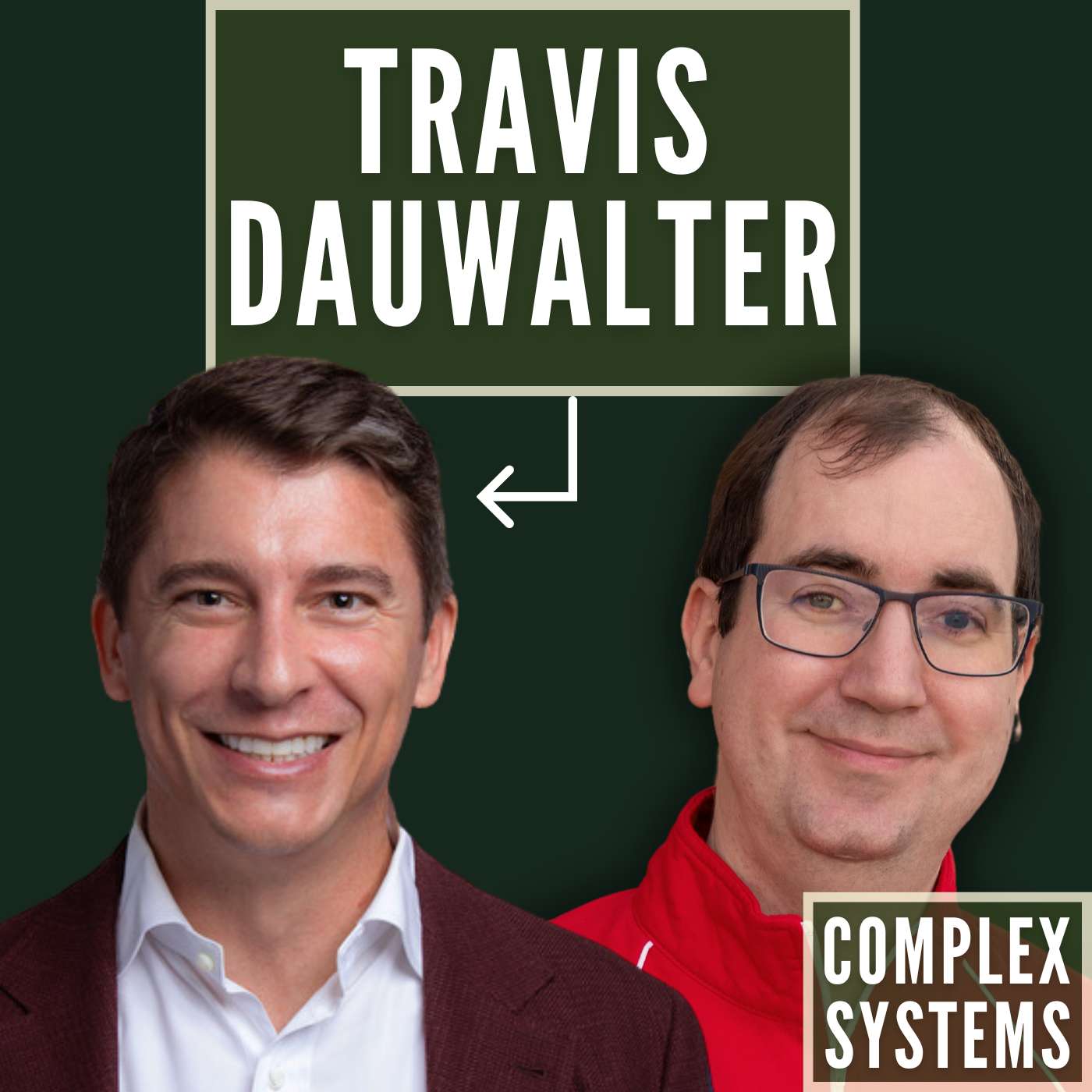
Power plays: grid economics and engineering, with Travis Dauwalter
Patrick McKenzie (@patio11) is joined by Travis Dauwalter, energy enthusiast (and PhD), to explain the systems we often take for granted behind the US electrical grid. The conversation covers how the grid maintains perfect supply-demand balance in real-time, the challenges of integrating renewable energy sources, and why America actually has three separate interconnected grids. Patrick an
Recommended
Dark Night Tales with Brian King

Fantasy Flex

زن بودن

Medicine with Meaning

Yours Truly Johnny Dollar Collection

Take Back Your Health®

CBS Radio Mystery Theater | Old Time Radio

Solved Murders - True Crime Stories
紐約鳥|New York Aperture
The Swerve Podcast: Obscure Topics | Conspiracy Theories

The Bread and Banter Podcast
The Church of What's Happening Now: The New Testament
