Meta Tech Podcast
Brought to you by Meta, this podcast highlights the technical work of Meta engineers. Host Pascal Hartig interviews developers about topics ranging from low-level frameworks to end-user features. The podcast also covers Meta's involvement in the open source community and conference circuit.
Episodes

88: No Way Out - Engineering Message History Only You Can Read
How do you add end-to-end encryption to a messenger that people have already been using for years, without taking away the message history they expect to be there? Emma Connor works on the team behind Labyrinth, Messenger's encrypted storage protocol. We get into where the encryption keys actually live, which turns out to be nowhere near Meta, and why a six-digit PIN is far harder to attack than s

BONUS: Send Us Your Questions About Engineering at Meta
Pascal is going on Recharge for August so there will be no regular interview episode. However, we want to hear your questions for our mailbag episode. Send them to us on Instagram (https://www.instagram.com/metatechpod) or Threads (https://www.threads.com/@metatechpod) or via good old email to techpodcast@meta.com.

87: Everything is Power: Battery Life Engineering for AI Glasses
What changes for you as a developer when the device moves from your pocket to your face? The battery shrinks by an order of magnitude, the thermal budget is whatever won't make your nose uncomfortable, and your mental model of "one process, one device" goes out the window. Rey and Dmitrii talk us through their custom power monitors, how they've extended Perfetto to give a coherent trace across a m

86: A Hard Cell: Engineering Ultra-Narrow Batteries for AI Glasses
Your smart glasses run all day on a battery narrower than your pinky finger and building it required reinventing how batteries are made. In this episode, Pascal talks to Karthik and Myuran, the engineers behind Meta's steel can battery technology, to explore why traditional pouch cells couldn't cut it for the ultra-slim temple arms of AI glasses like Meta Ray-Bans and the Oakley Vanguards. Tune in
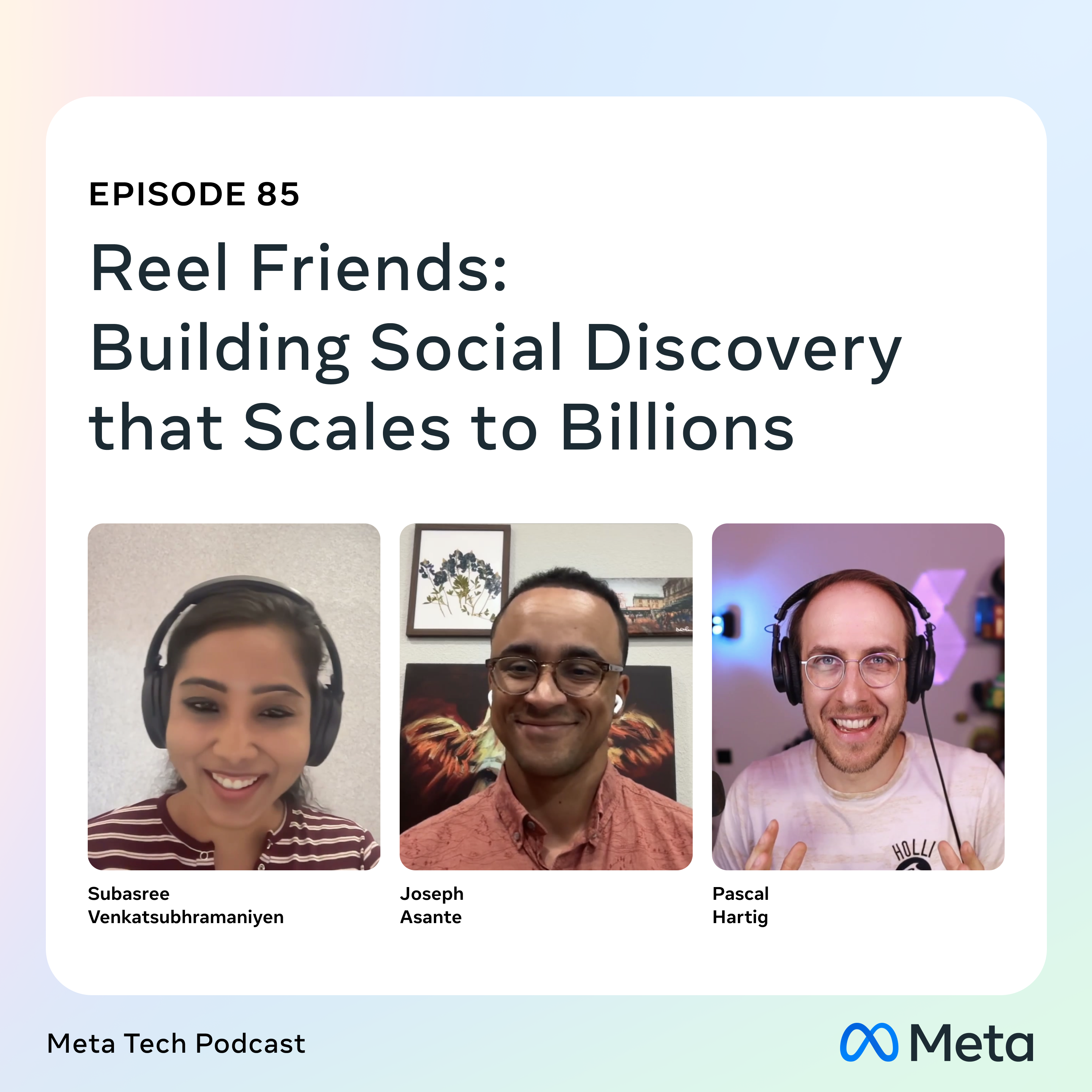
85: Reel Friends: Building Social Discovery that Scales to Billions
You've probably spotted those little circles of your friends' faces popping up on Facebook Reels. They look simple enough, but building them was a proper engineering challenge. In this episode, Pascal chats to Joseph and Subasree about Friend Bubbles, a feature that surfaces which of your close friends have been watching and reacting to the same Reels as you. We get into the details of how prefetc

84: Trust But Canary: Configuration Safety at Scale
Have you ever wondered how Meta makes config rollouts safe at scale? In this episode, Pascal sits down with Ishwari and Joe to discuss Meta's approach for propagating changes across services in seconds and discuss why speed increases the need for strong safeguards. Catch the episode to discover canarying and progressive rollouts, the health checks and monitoring signals used to catch regressions e

83: Patch Me If You Can: AI Codemods for Secure-by-Default Android Apps
At Meta, even seemingly simple engineering tasks—like updating an API—become monumental undertakings when you're dealing with millions of lines of code and thousands of engineers, especially if the changes are security-related. In today's episode, Pascal talks to Alex and Tanu about the challenges and learnings from the journey of making Meta's mobile frameworks more secure at a scale few companie
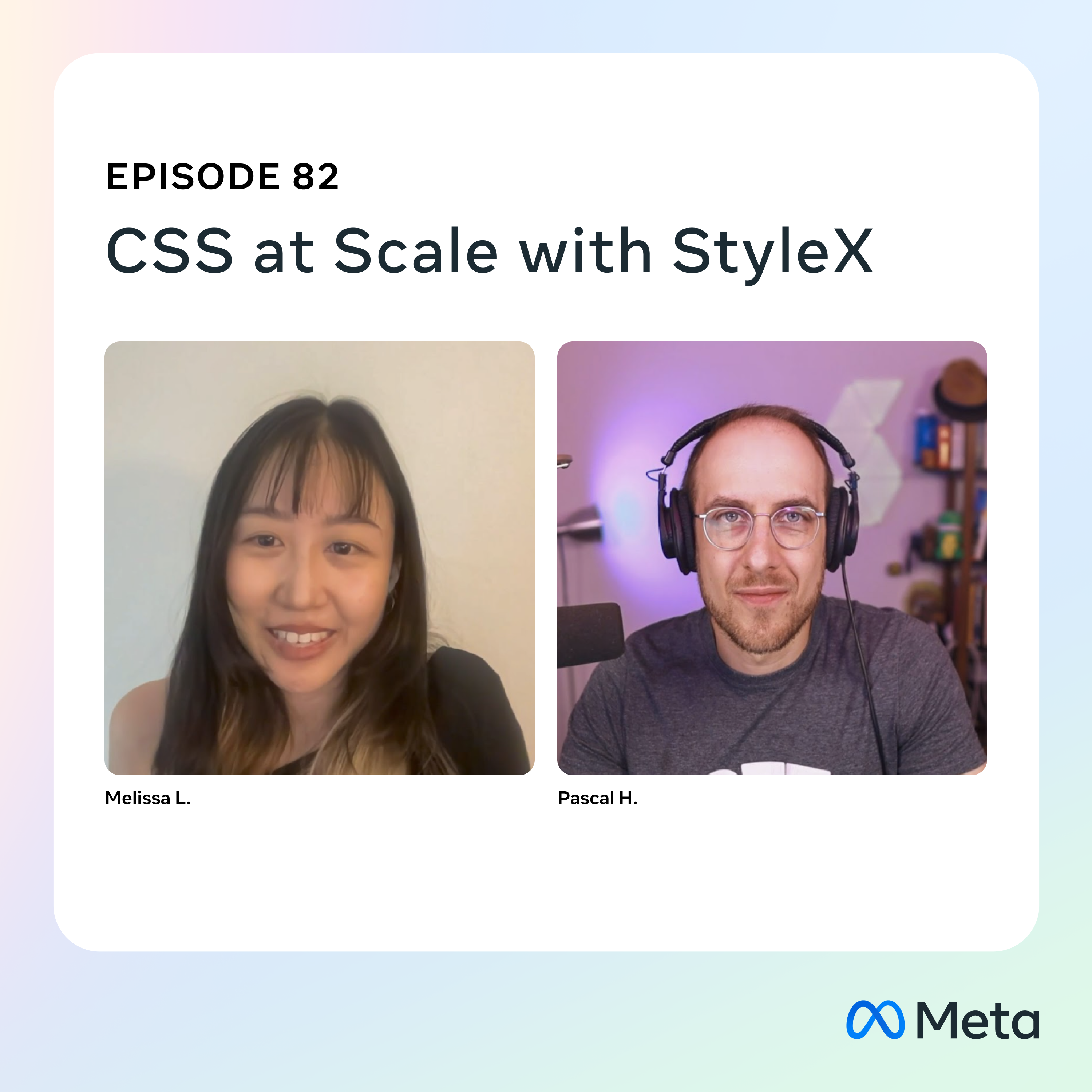
82: CSS at Scale with StyleX
It's not just Not Invented Here Syndrome. Some technologies like CSS simply don't scale if you're building some of the largest websites on the planet with thousands of engineers committing to the same code base every day. StyleX is Meta's open-source solution for CSS at scale and allows atomic styling of components while deduplicating definitions for bundle size and exposing a delightfully simple
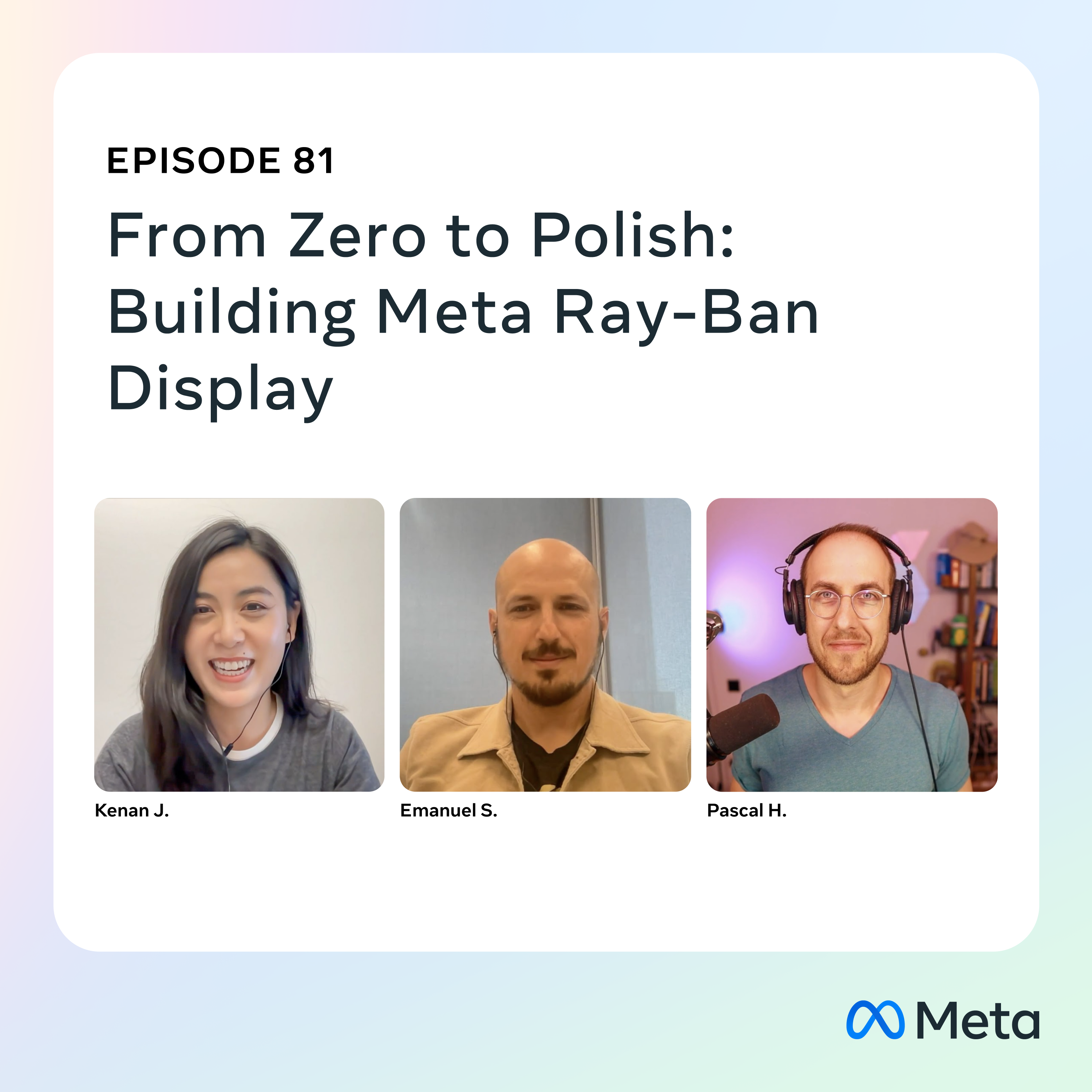
81: From Zero to Polish: Building Meta Ray-Ban Display
You've likely heard of Meta Ray-Ban Display by now — but what's it actually like to work on it? In this episode, Pascal talks to Kenan and Emanuel about the exciting features of Meta's First-Gen Display Glasses and Neural Wristband, the engineering and product challenges they encountered during development, and their vision for future generations of these devices. Got feedback? Send it to us on T
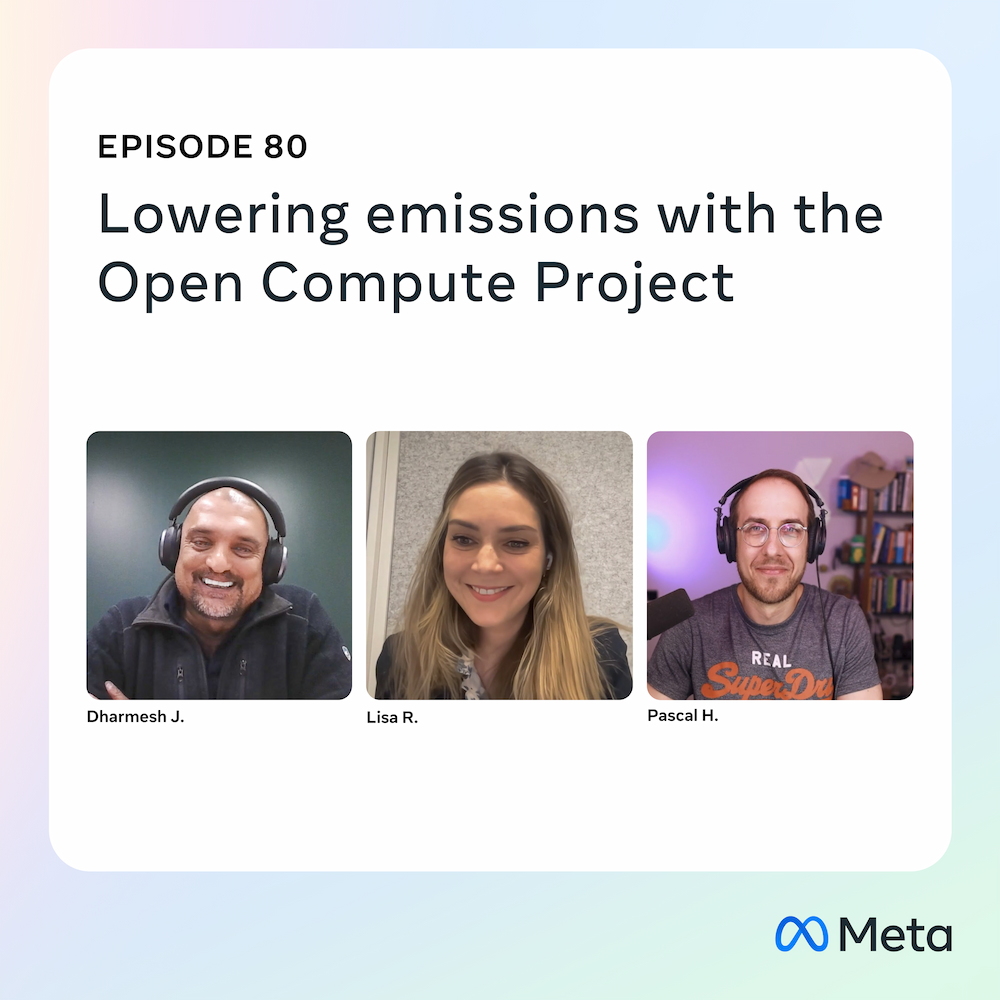
80: Lowering emissions with the Open Compute Project
In this episode, Pascal talks to Dharmesh J. (DJ) and Lisa about the vision for the open, scalable future of networking hardware for AI and to break down Meta's big announcements from the 2025 Open Compute Project (OCP) Summit. We dive into the OCP ecosystem, explore how AI is used to enhance our carbon modeling, and share our progress toward achieving Net Zero emissions across all scopes by 2030.
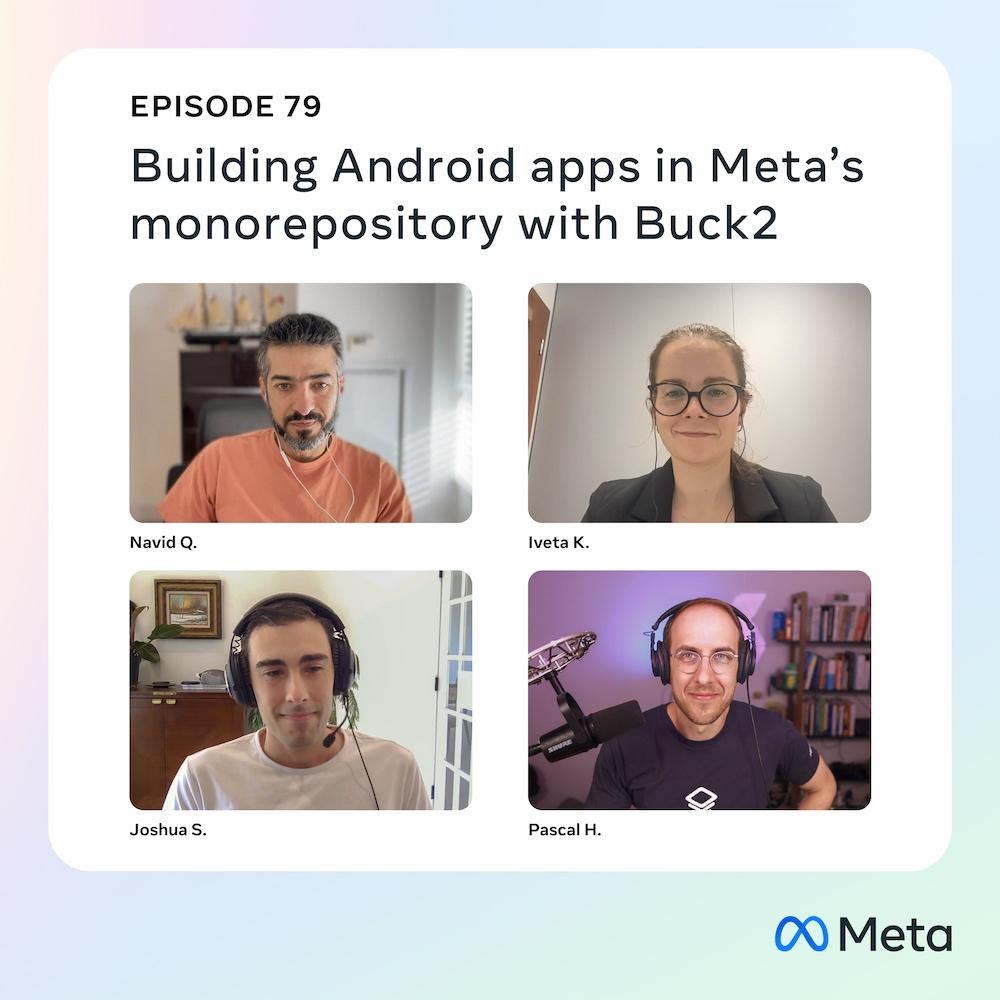
79: Building Android apps in Meta's monorepository with Buck2
How do you keep Android build times under control when your codebase spans tens of thousands of modules and millions of lines of Kotlin? In this episode, Pascal talks with Iveta, Navid, and Joshua from Meta's Android Developer Experience team about the technical strategies that help Meta's engineers stay productive at scale. We discuss approaches like source-only ABIs and incremental compilation –
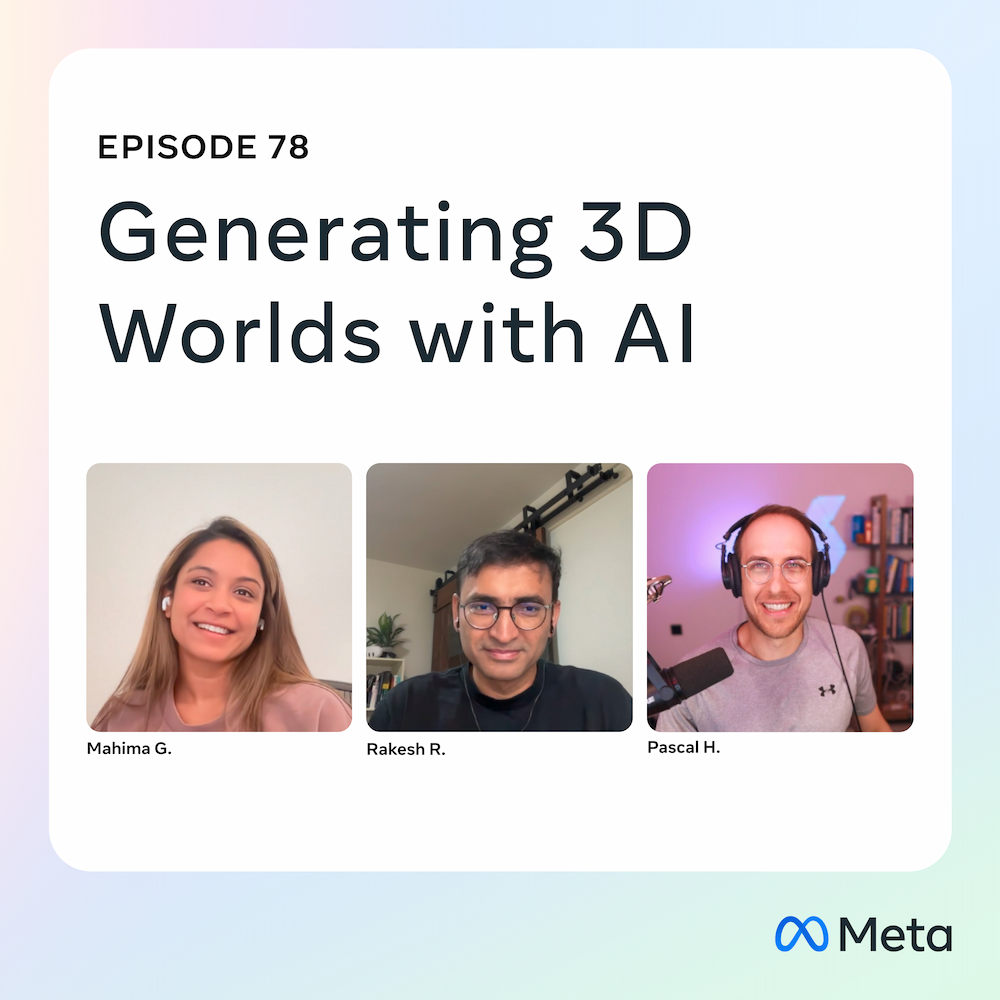
78: Generating 3D Worlds with AI
Creating 3D assets can be daunting, but does it have to be? Mahima and Rakesh are on a quest to democratize 3D content creation with AssetGen, a foundation model for 3D. They discuss the challenges of training such a model given the scarcity of available data and how large language models have unlocked key solutions. As if that weren't enough, they're also tackling the ambitious goal of generating
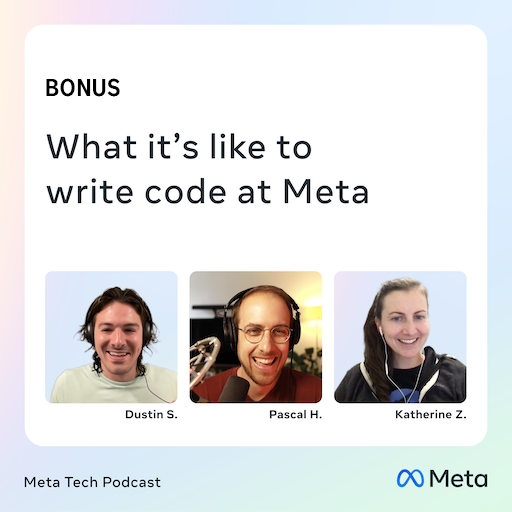
ARCHIVE: What it's like to write code at Meta
To not leave you without an episode for August, Pascal brings you an episode from the Archive. Back in August 2023 for Episode 55, Pascal spoke with Katherine and returning guest Dustin, two software engineers at Meta about how to ship code at Meta. Why do we have a monorepo? Why and how do we do pre-commit code review? What does our CI infrastructure look like? Get the answers to these questions

77: How to build a generic neuromotor interface
Join Pascal as he explores the groundbreaking world of generic neuromotor interfaces with Jesse, Lauren, and Sean. Discover how these technologies enable control of devices with just a flick of the wrist or even a simple intention to move. We'll discuss the role of AI in eliminating the need for personalised training, the differences between non-invasive interfaces and their predecessors, and the

76: From C to Rust on Mobile
What happens when decades-old C code, powering billions of daily messages, starts to slow down innovation? In this episode, we talk to Meta engineers Elaine and Buping, who are in the midst of a bold, incremental rewrite of one of our core messaging libraries—in Rust. Neither came into the project as Rust experts, but both saw a chance to improve not just performance, but developer experience acro

75: Open-sourcing Pyrefly - A faster Python type checker written in Rust
Pyrefly is a faster, open-source Python type checker written in Rust, succeeding Pyre. But what prompted the rewrite and what besides the language choice ended up making it faster? Host Pascal talks to Maggie, Rebecca and returning guest Neil about the unexpected complexities of building an incremental type checker that scales to mono repositories in episode 75. Got feedback? Send it to us on Thre
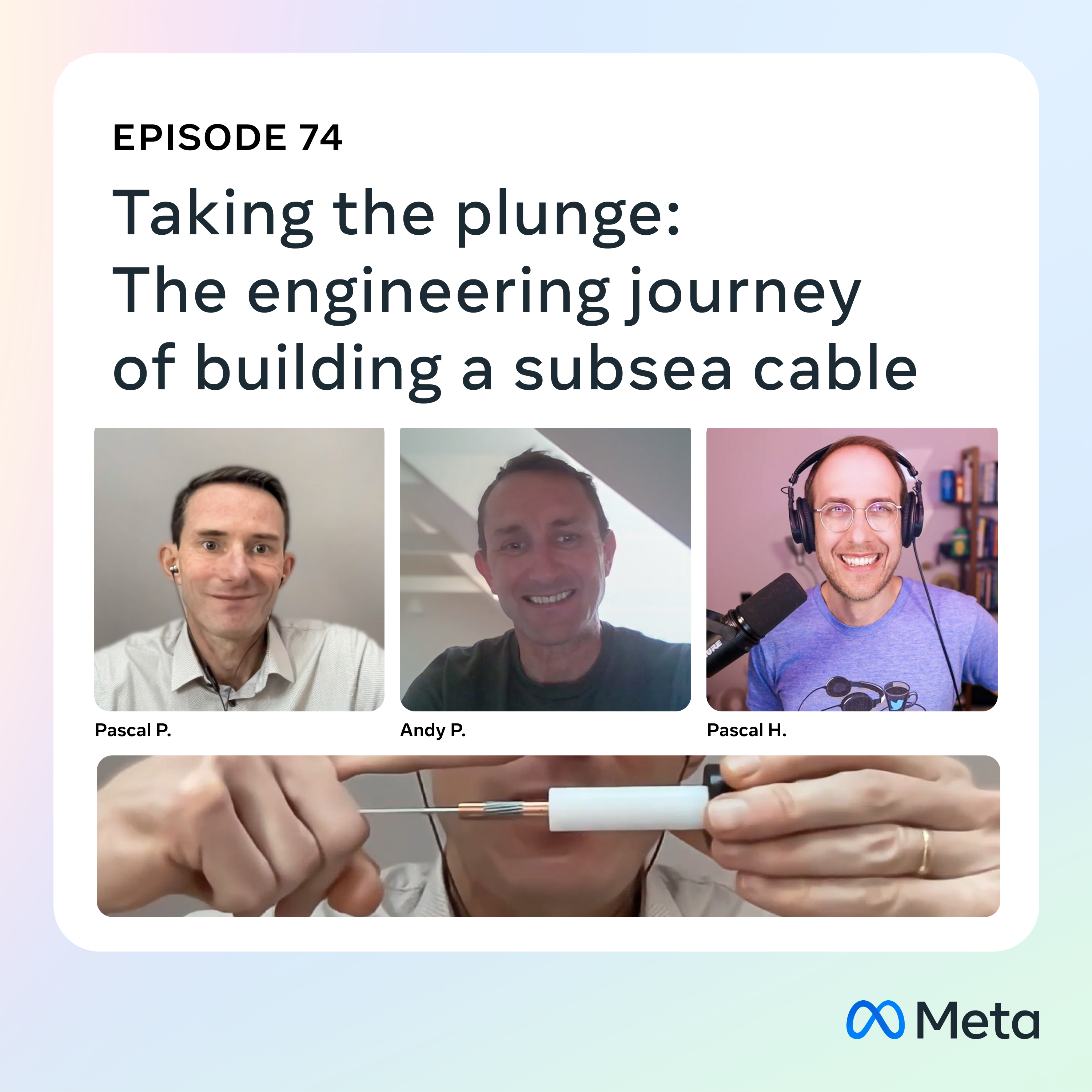
74: Taking the plunge - The engineering journey of building a Subsea Cable
To ensure that everyone has access to resilient, high-speed and low-latency connections to Meta services, no matter where in the world they are, Meta makes large-scale investments into subsea cable infrastructure. The recently announced Project Water worth will, Once complete, reach five major continents and span over 50,000 km (longer than the Earth's circumference), making it the world's longest

73: Mobile GraphQL at Meta in 2025
Join Pascal and Sabrina on the latest Meta Tech Podcast episode as they discuss the evolution and future of GraphQL. From client-side consistency to innovative APIs, learn how GraphQL is making developers' lives easier and enhancing user experiences. Discover surprising insights into the challenges of building a mobile GraphQL platform and how it's transforming product development at Meta. Got fe
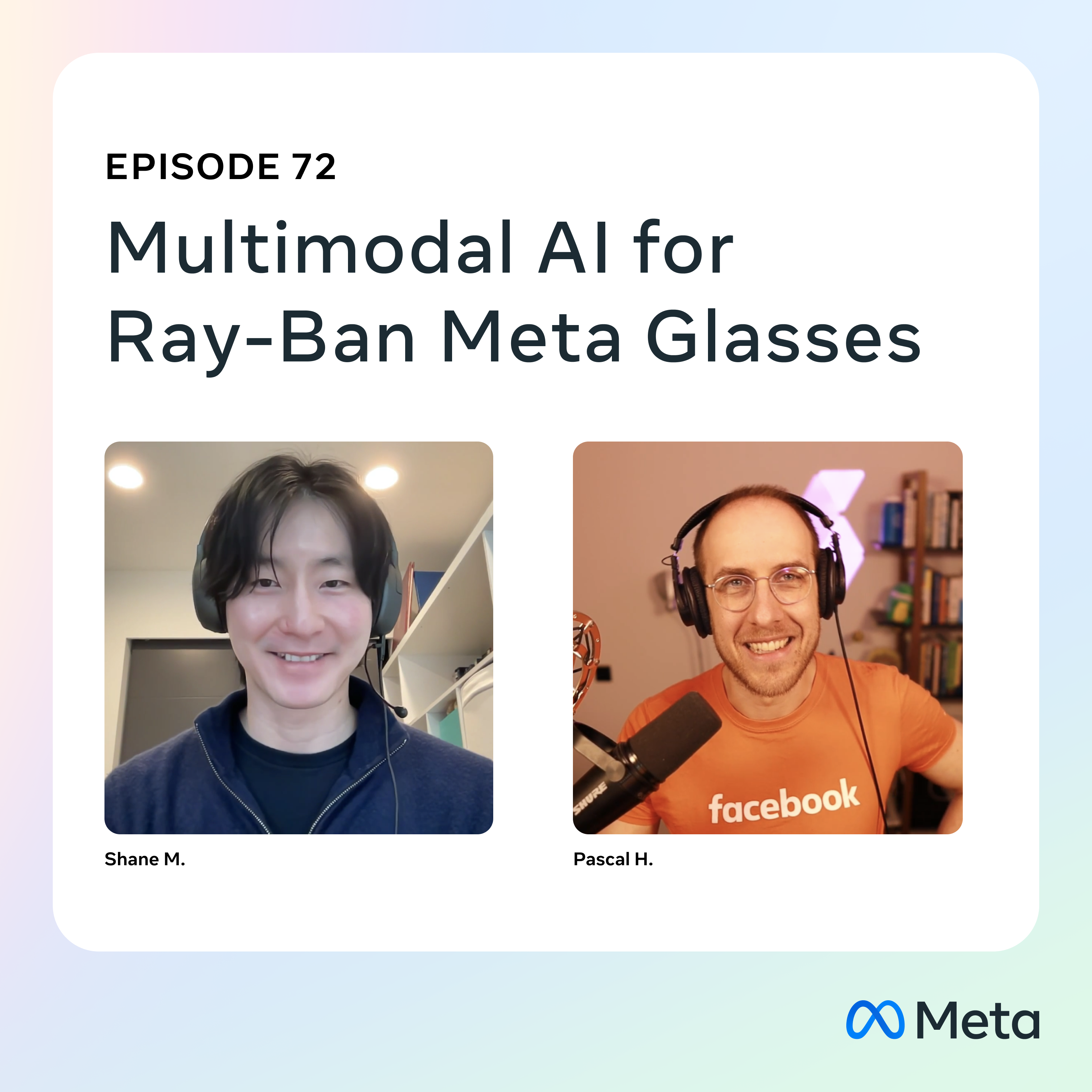
72: Multimodal AI for Ray-Ban Meta glasses
In this episode of the Meta Tech Podcast, host Pascal sits down with Shane, a research scientist at Meta, to explore the cutting-edge research behind Ray-Ban Meta glasses. Shane shares insights from his seven-year journey at Meta, where he focuses on computer vision and multimodal AI within the Wearables AI organization. Tune in to learn how Shane's team is pioneering foundational models for Ray-B

71: Translating Java to Kotlin at Scale
How do you translate roughly ten million lines of Java code to Kotlin? Clicking in your the IDE gets pretty repetitive after a while and doesn't work if you have custom APIs and requirements for null safety. Eve and Jocelyn, two software engineers on the Mobile Infra Codebases Team have taken on this challenge and talk host Pascal through the unexpected difficulties when embarking on the journey t

70: Jetpack Compose at Meta
Introducing a new Android UI Framework like Jetpack Compose into an existing app is easy right? Import some AARs and code away. But what if your app has specific performance goals to meet, has existing design components, integrations with navigation and logging frameworks? That is where Summer and her team come in who handle large-scale migrations for Instagram. They aim to provide developers with

69: To type or not to type — measuring productivity impact with DAT
Do types actually make you more productive or is it just more typing for you to do on the keyboard? That's just one of the questions we managed to answer at least on a small scale with Diff Authoring Time or DAT, here at Meta. Want to know how we leverage metrics to run experiments on productivity in our internal codebase? Tune in to episode 69. Got feedback? Send it to us on Threads (https://thre

68: How to Build a Mixed Reality Headset
How do you build your own mixed reality headset from sketch to scale? That's exactly what Alfred Jones, VP of hardware engineering at Meta Reality Labs, discussed with host Pascal. From choosing the right display technology, battery, thermal budget and of course hitting the right price point. How he manages to not fall victim to choice paralysis and so much more in episode 68. Got feedback? Send i

67: Measuring Developer Productivity with Diff Authoring Time
At Meta, engineers are our biggest asset which is why we have an entire org tasked with making them as productive as possible. But how do you know if your projects for improving developer experience are actually successful? For any other product, you would run an A/B test but that requires metrics and how do you measure developer productivity? Sarita and Moritz have been working on exactly that wi

66: Inside Bento - Serverless Jupyter Notebooks at Meta
Bento is Meta's internal distribution of Jupyter Notebooks, an open-source web-based computing platform. Host Pascal is joined by Steve who worked with his team on building many features on top of Jupyter, including scheduled notebooks, sharing with colleagues and running notebooks without a remote server component by leveraging Webassembly in the browser. Got feedback? Send it to us on Threads (h

65: Getting Ready for Post-Quantum Cryptography
We don't know when but at some point in the future we will face what researchers call a "Quantum Apocalypse". This is when quantum computers will be able to break many of our existing encryption algorithms. To keep Meta'a users safe even from attacks that don't even exist today, Sheran and Rafael are working on post-quantum-ready encryption. Tune in to learn about the various challenges and trade

64: Caddy - Building the next generation of CAD software for Mixed Reality
After sitting in one too many Zoom meetings looking at flat images of 3D models, mechanical engineers Ed, Jason, Fan, and Raghavan decided that they could do better, taught themselves how to code and started to build Caddy - a CAD app for mixed reality. Tune in to episode 64 to hear their story. Got feedback? Send it to us on Threads (https://threads.net/@metatechpod), Twitter (https://twitter.com

63: The key to a happy Rust/C++ relationship
Aida was part of one of the first Rust teams here at Meta. One of the biggest challenges was interacting with the large amount of existing C++. With the release of cxx, safe interop between C++ and even async Rust has become a lot easier. Got feedback? Send it to us on Threads (https://threads.net/@metatechpod), Twitter (https://twitter.com/metatechpod), Instagram (https://instagram.com/metatechpo

62: Building Threads for Web
The basic version of Threads for web was built in just under three months by two engineers, mirroring the nimble engineering practices we talked about on this podcast before when it came to launching Threads for Android and iOS. In this episode, Pascal is joined by Ally and Kevin, two engineers on the Threads Web team. They talk about how shared infrastructure with other Meta web properties allows

61: Image Quality Improvements at Scale
Every day, trillions of image download requests are made from Meta's family of apps. Zuzanna works on the Media Platform Team that owns the entire flow from serving images from the CDN to displaying the pixels on your phone. One of the project she and her team recently worked on was rolling out HDR images to Instagram and Threads and in this episode's interview, Zuzanna tells show host Pascal how

60: Simplified Executable Deployment with DotSlash
Distributing binaries and toolchains to developers is a pain but DotSlash makes it a breeze. Instead of committing large, platform-specific executables to your repository, DotSlash combines a fast Rust program with a JSON manifest prefixed with a #! to transparently fetch and execute the binary you need. Tune in to our interview with Andres and Michael to learn more. Got feedback? Send it to us on

59: Meta ❤️ Python 3.12
For the second time in just a few months, we are talking Python on the Meta Tech Podcast. Python 3.12 features a whole range of new features, many of which were contributed by Meta. Carl and Itamar join Pascal to talk about their contributions to the latest release, including new hooks that allow for custom JITs like Cinder, Immortal Objects, improvements to the type system, faster comprehensions

58: Advancing GenAI at Meta
For this last episode of 2024, Pascal talks with Devi, an AI research director at Meta. They talk about the history of AI at Meta, some of the basic terms, how Meta's approach to developing and using AI differs notably from other companies and what the future has in store. Got feedback? Send it to us on Threads (https://threads.net/@metatechpod), Twitter (https://twitter.com/metatechpod), Instagra

ARCHIVE: From Facebook Home to Instagram Stories
We're jumping into our time machine and going back to 2018 for an interview with Will B. about the various twists and turns that led to the creation of Instagram Stories. We will be back with a fresh interview next month. Got feedback? Send it to us on Threads (https://threads.net/@metatechpod), Twitter (https://twitter.com/metatechpod), Instagram (https://instagram.com/metatechpod) and don't forg
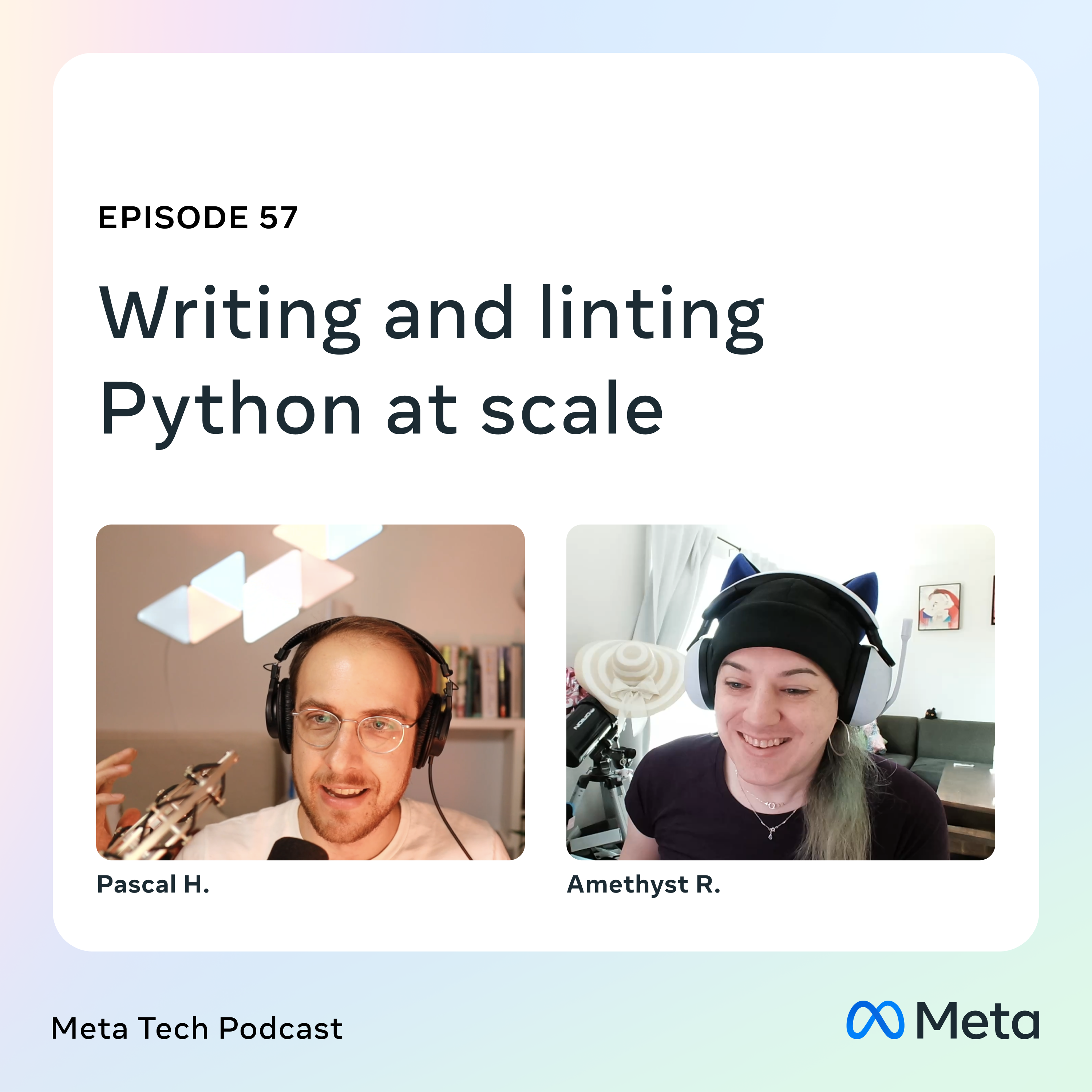
57: Writing and linting Python at scale
Python at Meta is huge. Not only does it famously power Instagram's backend, but it underpins our configuration systems, much of our AI work and many services. Amethyst joins Pascal for this episode of the Meta Tech Podcast to talk about how the Python Foundation Team works to improve the developer experience of everyone working with Python at Meta and Fixit 2, the freshly open-sourced linter fram
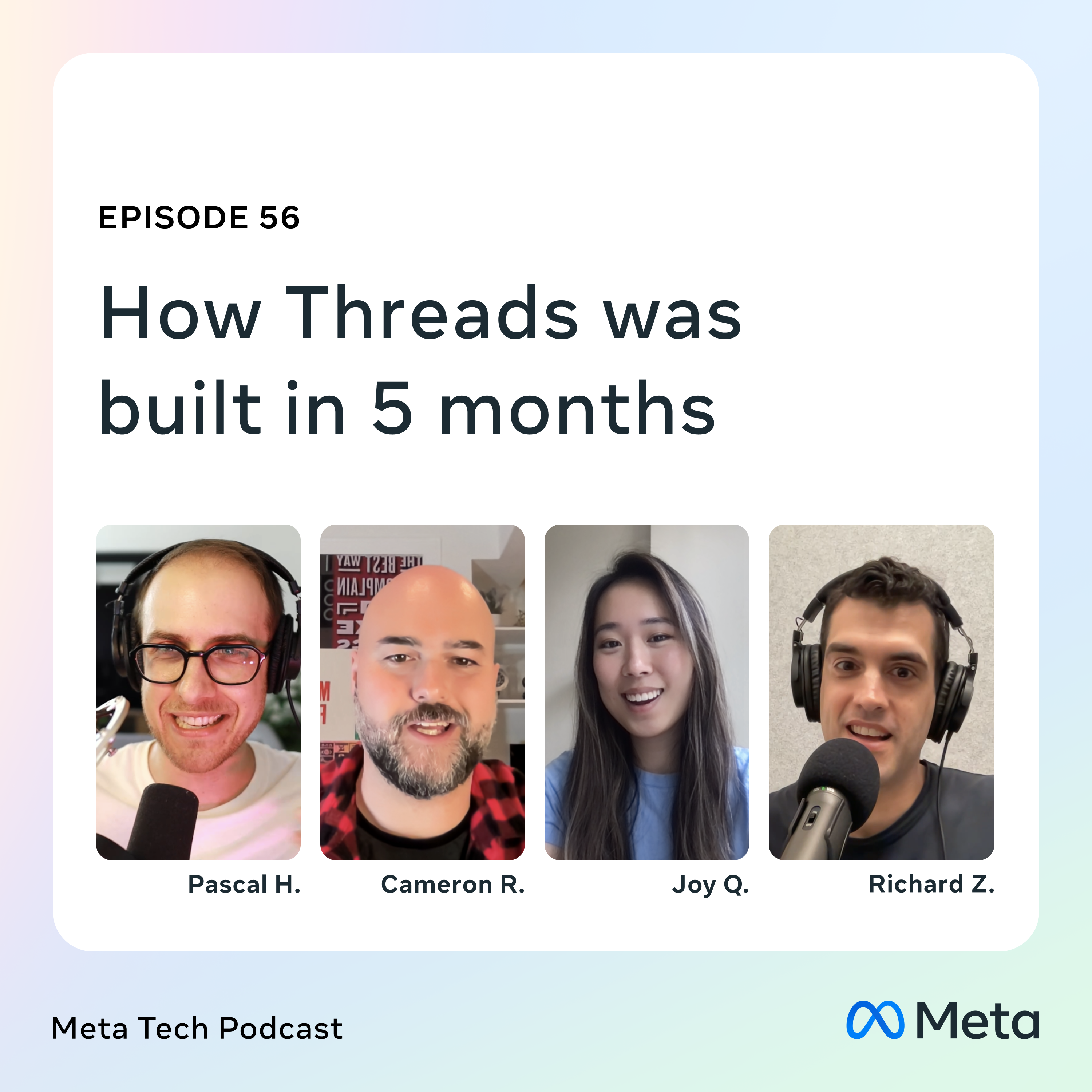
56: How Threads was built in 5 months
Threads went from idea to 100M users in just about five months. This would not have been possible without building on top of Meta's existing systems and infrastructure. Join Pascal as he speaks with Joy, Cameron and Richard, three engineers from the Threads team who worked on backend, iOS and Android, respectively to learn about the challenges they faced along the way. Got feedback? Send it to us

55: What it's like to ship code at Meta
For episode 55, Pascal speaks with Katherine and returning guest Dustin, two software engineers at Meta about how to ship code at Meta. Why do we have a monorepo? Why and how do we do pre-commit code review? What does our CI infrastructure look like? Get the answers to these questions and many more in this episode of the Meta Tech Podcast. Got feedback? Send it to us on Threads (https://threads.ne

54: Building Key Transparency at WhatsApp
In April, WhatsApp announced the launch of a new cryptographic security feature to automatically verify a secured connection based on key transparency. Key transparency helps strengthen the guarantee that end-to-end encryption provides to private, personal messaging applications in a transparent manner available to all. Rolling out a feature like this to WhatsApp's user base is not a small feat an
53: Offensive security at Meta's Red Team X
Red Team X is a security team at Meta that is responsible for finding and exploiting vulnerabilities in third-party products that could impact Meta's own security. The team acts as a hybrid between a traditional red team, which focuses on probing their own organisation's systems and products for vulnerabilities, and an elite bug-hunting group. The team was founded by Vlad I. in 2020 when the pande
52: The success story behind PyTorch
PyTorch is now one of the most popular machine learning frameworks out there but that was not a foregone conclusion when it was released in 2016. Our host Pascal is joined by Suraj, a developer advocate here at Meta, to dissect the history of PyTorch and look at the factors that contributed to its success. That includes understanding your target audience, maintaining backwards compatibility, foste
51: Buck2 - a large-scale build system
For episode 51, Pascal speaks with Neil and Marie, two of the engineers behind Buck2, our open source, large scale build system. Thousands of developers at Meta are already using Buck2 and performing millions of builds per day that on average complete in half the time of Buck1 builds. Marie and Neil discuss the design choices that make Buck2 so much faster and the various challenges they faced in
50: De-identified authentication at scale
If you hear privacy and your first thought is laborious processes and access management, this interview may be just as mind-expanding for you as it was for our host Pascal. He is joined by Alex and Haozhi who talk about the Anonymous Credential Service (ACS), a highly available multitenant service that allows clients to authenticate in a de-identified manner. They discuss the cryptographic primiti

49: Kotlin DevX at Instagram
Lisa works on the Dev Craft team at Instagram that embarked on a journey to bring Kotlin to the Instagram for Android code base a little over three years ago. Now, nearly half of the large codebase is migrated and over 80% of newly committed code is in Kotlin. Tune in to hear what the unique challenges of bringing a new language to an existing app are and what it means for build speed, IDE experie

48: A 94% reduction for basic video compute time on Instagram
Ryan and his team found a quick way of reducing the compute resources spent on encoding videos for Instagram by 94%, but that was actually the easy part. Tune in to learn what the fix was and how you roll out changes that can affect the user experience of billions of users. Got feedback? Send it to us on Twitter (https://twitter.com/metatechpod), Instagram (https://instagram.com/metatechpod) and d
47: Sapling - A scalable, user-friendly source control system
Confused by the syntax of git's rebase command? Overwhelmed with branch management? Check out Meta's new git-compatible source control management system Sapling. Durham and Michael, two of the architects behind the recent open-source release, join Pascal on the podcast to discuss their plans for the project, how it was possible to extract one small part of Meta's large SCM codebase and what the di
46: Cross-Platform Video Calling with RSYS
It's the most wonderful time of the year: The time to talk about calling libraries that power most of our audio and video calls across Meta's app. Alice, Ishan and Hani join Pascal to talk about how they replaced the different calling solutions with a library that's extensible by the teams that choose to adopt it. But with great power comes great responsibility, so how does their team balance the
45: Syncing GitHub to Monorepo with Jon
Back from a short hiatus, Pascal is joined by Jon to talk about the infrastructure that allows commit to sync between Meta's monorepo and GitHub. While ShipIt has been around for a while, allowing commits from the internal repository to sync out to GitHub, Diff Train is its younger brother to allow the inverse. This makes it possible for open-source-first projects like PyTorch to develop on GitHub
BONUS: Comparing Company Cultures with Jay
Ever wondered how the culture of big companies like Meta, Microsoft and Amazon differ? Jay comes with a fairly unique perspective as he has now worked at all three of them. In his discussion with Pascal, he shares his views on the trade-offs that a company value like "Move Fast" brings along and how companies assign different weights to the value of making mistakes. Got feedback? Send it to us on
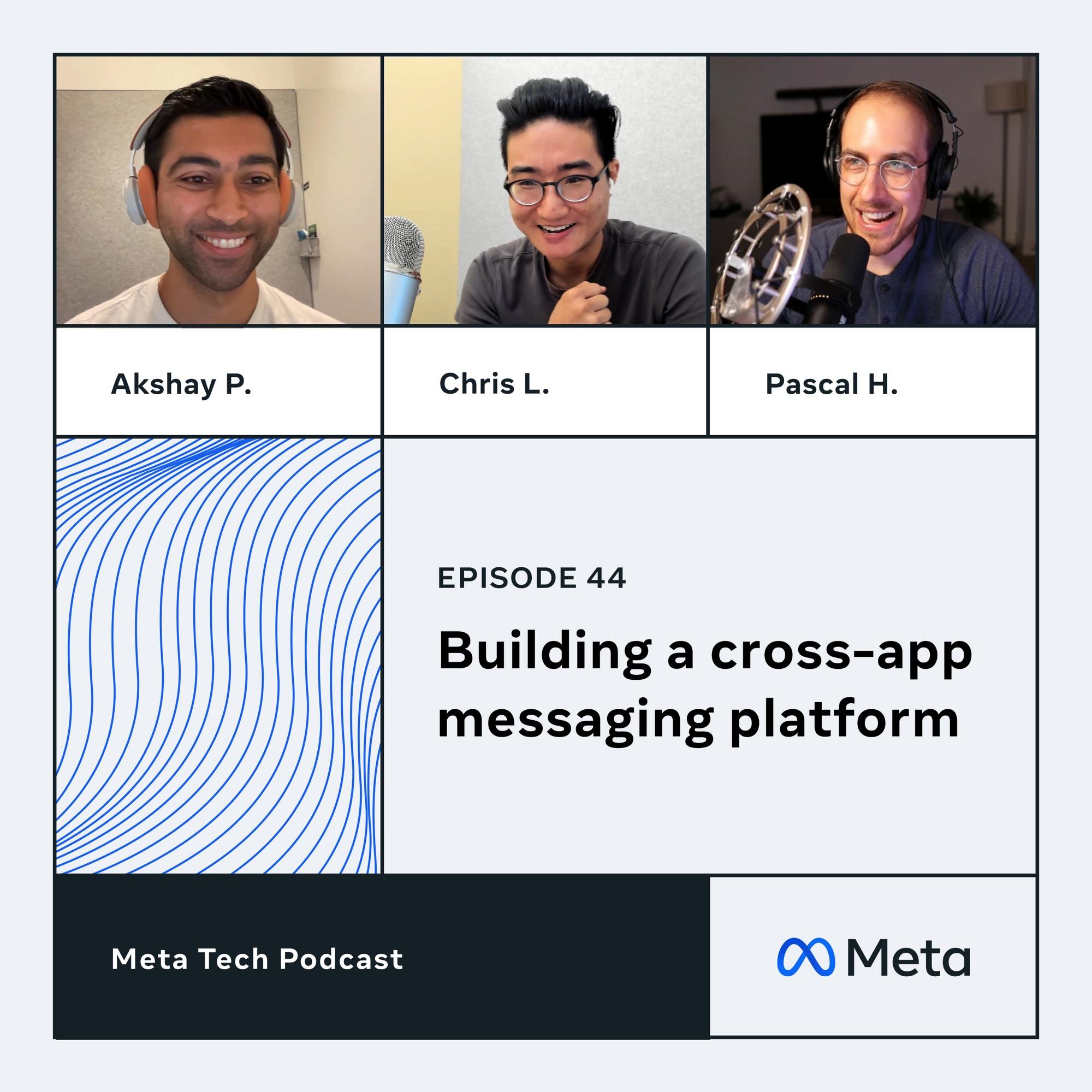
44: Building a Cross-App Messaging Platform
msys is the technology that underpins most of the messaging products Meta offers. What started as a small library in C wrapping sqlite is now used by many teams across the company and is now trying to address the developer experiences challenges that arise from the initial focus on speed and size above all else. Tune in to Pascal's interview to learn how Akshay and Chris are tackling this and othe
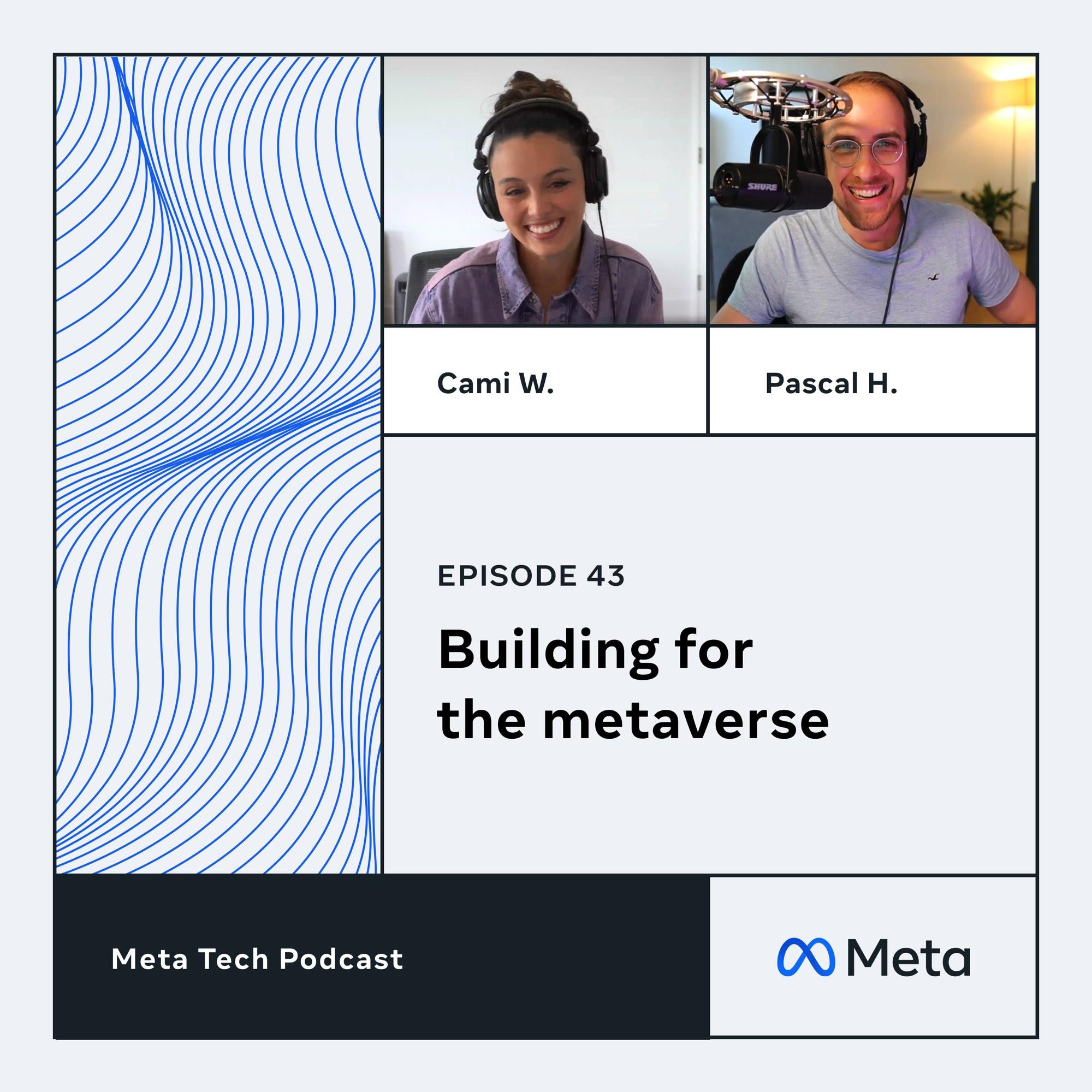
43: Building for the metaverse with Cami
Cami returns to the Meta Tech Podcast, with now having 18 months of AR/VR experience under her belt. Cami is excited to share what developers can now do on the Quest platform. In this episode, Pascal and Cami discuss new SDKs for motion controls, voice and spatial objects; and for creators without programming experience - there's Horizon Worlds. Cami, as a Developer Advocate, shares her expertise

42: Building People-Centric Apps with Maria
The approach we take to building the Facebook app is based around three adjectives: trustworthy, people-centric and unified. In this episode, Pascal talks with Maria who is a director of engineering for product architecture and product excellence. They discuss what it means for a culture that is known for being driven by metrics to become more people-centric. What are examples of metrics that are
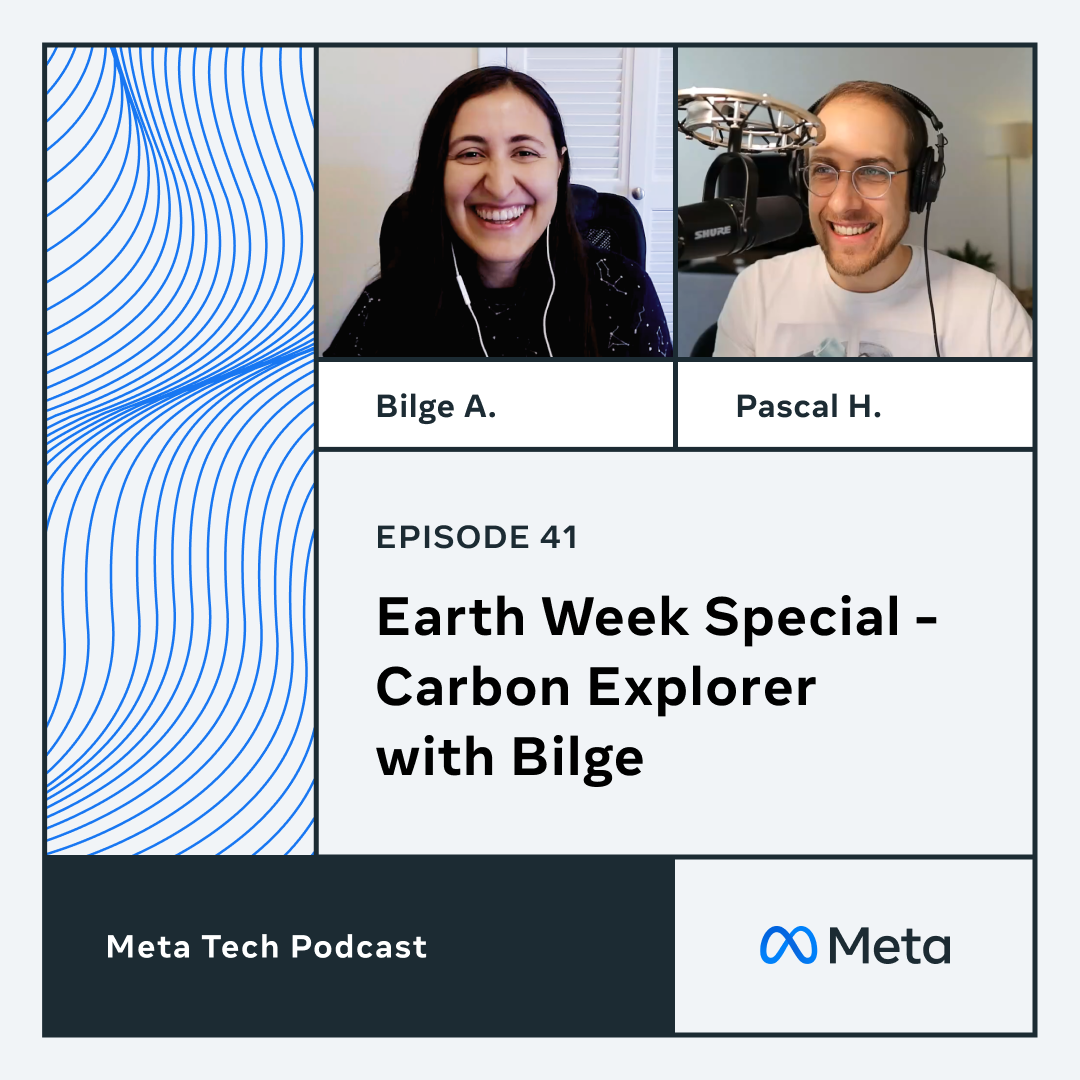
41: Earth Week Special - Carbon Explorer with Bilge
For our second special for Earth Week, we are talking to Bilge who works as a research scientist at Meta AI. Her open-source project Carbon Explorer evaluates solutions to make data centres operate on 24/7 renewable energy. Why this is easier said than done and how engineers can help within their day-to-day work to reduce their carbon footprint are among the many things Pascal and Bilge discuss in
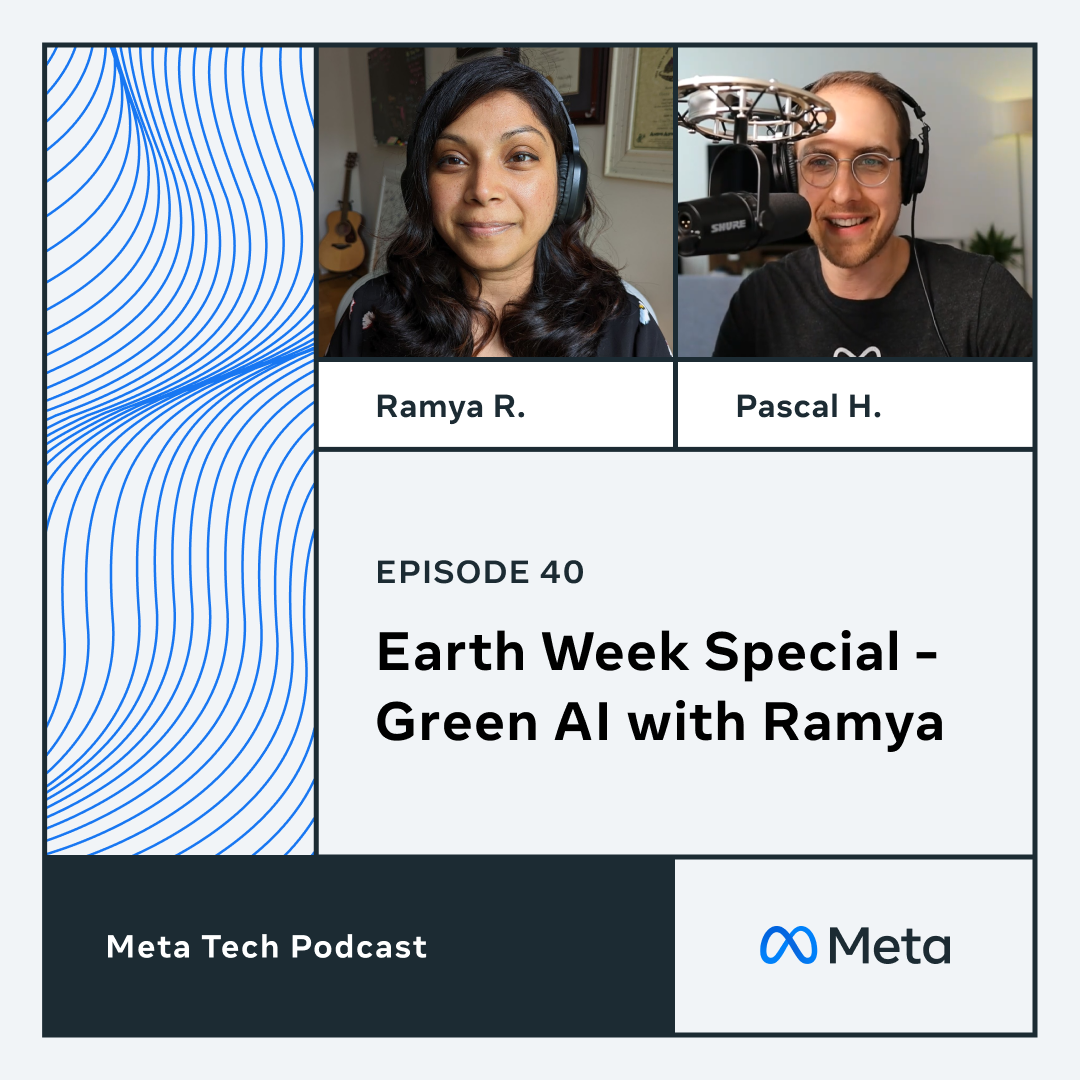
40: Earth Week Special - Green AI with Ramya
The most recent IPCC report has reiterated that the climate crisis is an all hands on deck situation. We all need to think about the impact our actions have on the planet that provides our life support system. Ramya is a TPM on the Meta AI team and analyses the impact AI has, as it grows superlinearly, on energy use and carbon emissions. Her recent work on Green AI identifies ways for reducing tha

39: White Labeling Messenger for iOS with Amy
When Amy joined the Workplace team nearly seven years ago (back then still under the name Facebook for Work), it became clear that it would require a messaging service. While there were already a few options available, none of them was designed to be plugged into a new app. That's when Amy and her team decided to take on white labeling Messenger for iOS to turn it into what would become Workplace
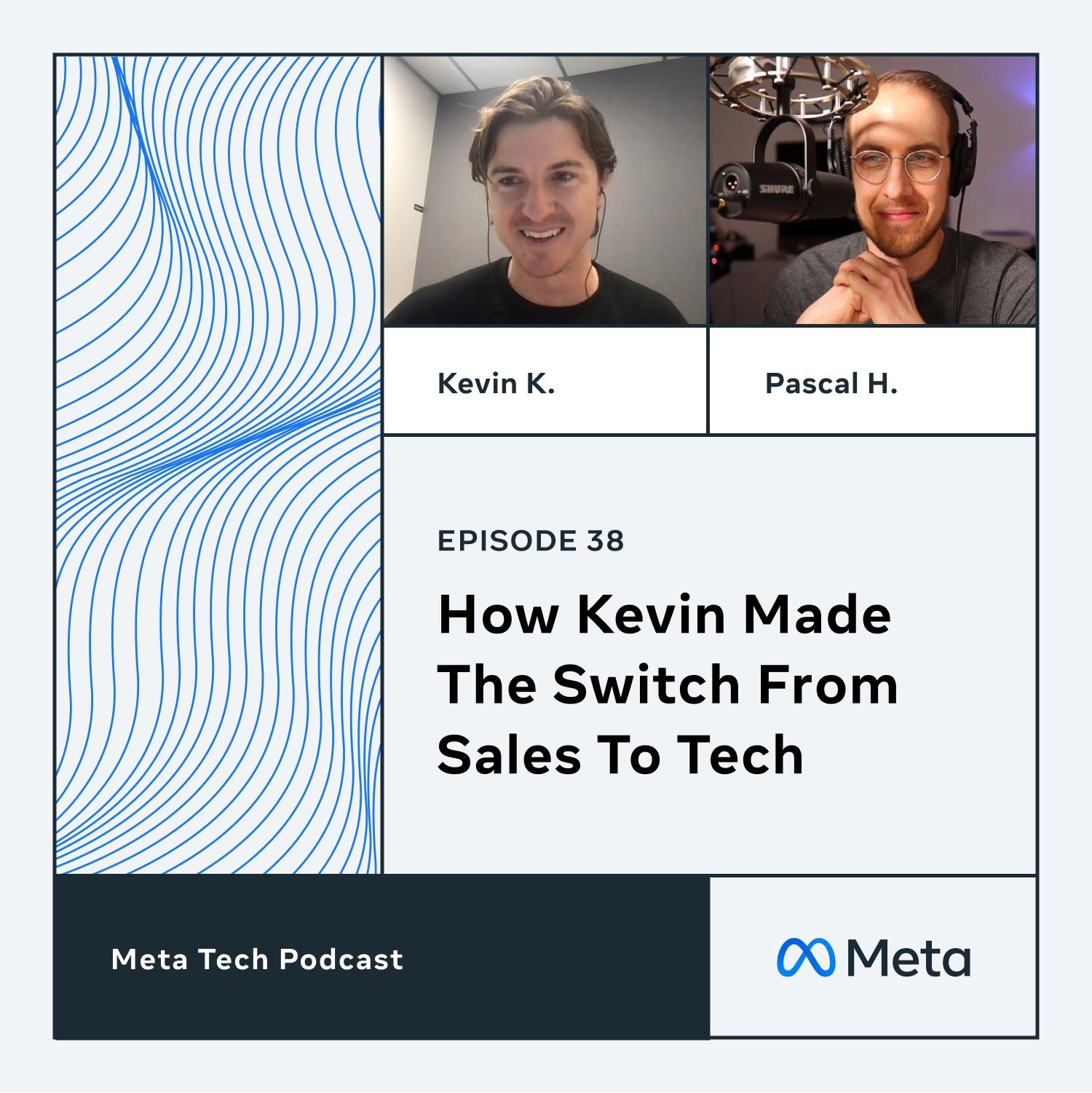
38: From Sales to Tech - How Kevin Made The Switch
Kevin has had an unusual career path that led him to an engineering role at Meta. He first joined the company in a sales role before he moved into a more product-focused position. Working closely with engineers, Kevin decides to pursue a career in software development himself. Instead of dropping out of his job to get formal education in the space, he takes online courses and within less than a ye
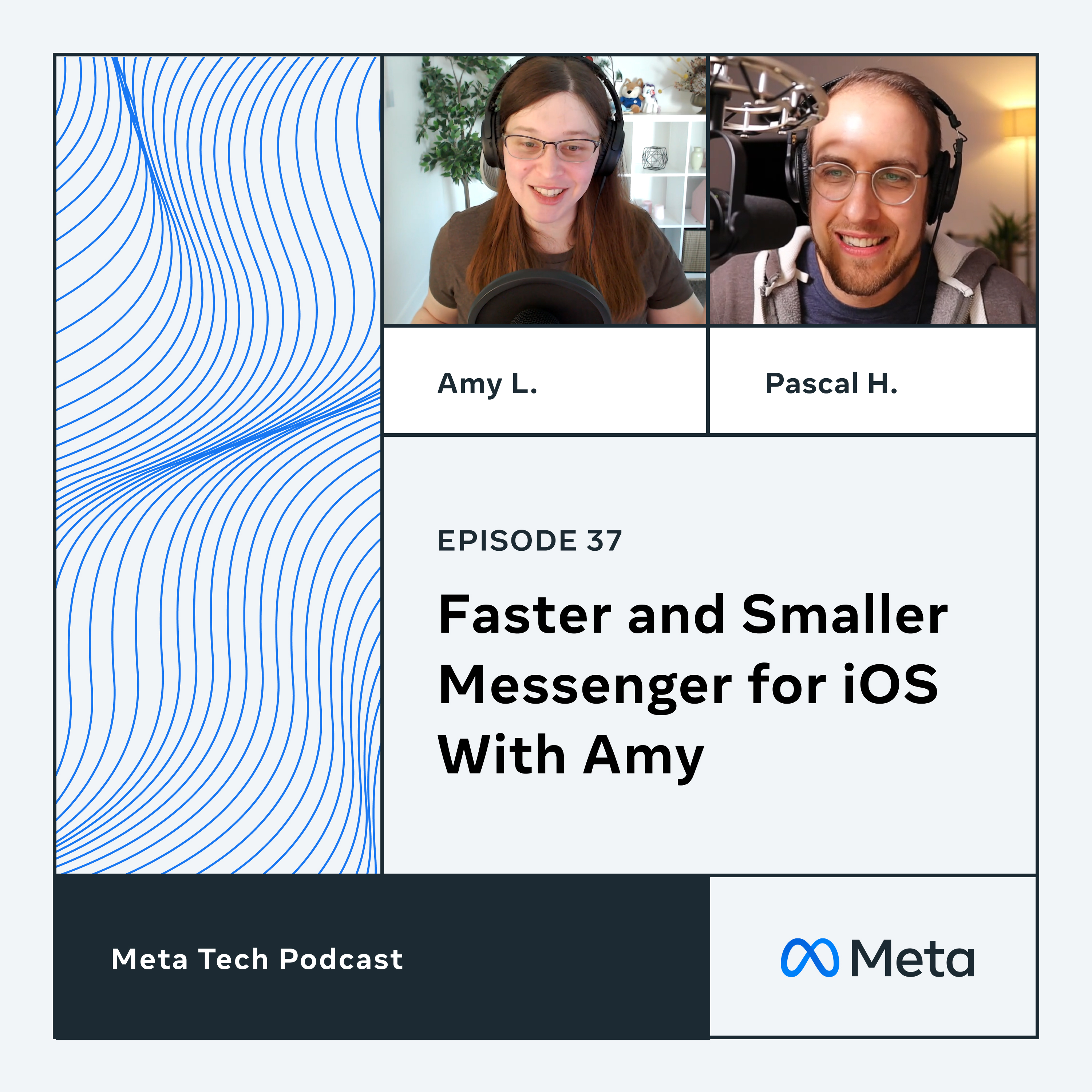
37: Faster and Smaller Messenger for iOS With Amy
New year, new us! Inside Facebook Mobile is now the Meta Tech Podcast but Pascal will continue to bring you stories about mobile development and many other topics. For this episode's interview, we're tackling one of the few remaining big apps we never had a guest from: Messenger. Amy worked on Messenger for 3 years before recently moving on to Reality Apps to work on AR. Amy discusses with Pasc

36: Developer Experience with Chandrika
Keeping engineers effective is not a small task when you work at Meta's scale. Many of the tools you take for granted simply break or become unbearably slow. Chandrika's team looks after developer experience at Meta and takes a holistic approach that spans the editing experience (IDEs, editors), builds, continuous integration and even custom calendar tooling. Her team ensures that as new platforms

35: Facebook App Health with Jon
Did you know that you can "rage shake" your phone to create a bug report in most Meta apps? If you did, have you ever wondered what happened after you hit submit? In this episode's interview, Pascal talks to Jon about App Health and how his team ensures that despite thousands of engineers shipping code every day, the apps remain reliable and fast. Got feedback? Send us an email to mobilepodcasts@f
34: Open Source Developer Advocacy with Cami
Cami is a developer advocate for Open Source and Facebook Reality Labs (FRL), our AR/VR organisation. In this episode's interview Cami and our host Pascal discuss how developer advocacy is approached at Facebook, how to build developer empathy, and tackle the eternal question of why it's worth investing in Open Source. If you've ever wanted to dip your toes into VR development, stick around for th
33: Switching Teams at FB with Sash
Facebook has a unique recruitment model. Instead of being assigned to one team, you first end up in Bootcamp, where you learn how the company functions and our tools and frameworks work. Then you get to look for teams, work with them and decide which one to join. Because the team selection is decoupled from hiring, switching teams is easy. In this episode, we're talking to Sash who has been taking
32: Measuring UI Quality with Sara, Aaron and Patrik
For the third and final episode focusing on UI quality, Pascal is joined by Sara, Patrik and Aaron to discuss how design reviews happen at Facebook. Instead of looking at static screenshots alongside the code, reviews now include a dynamic representation of the view hierarchy that not only allows for inspection of properties but also directly highlights violations of Facebook's design standards fo

31: Intentional Architecture with Yuan and Dustin
"What's Facebook's mobile architecture?" is a question we hear often. Instead of top-down MVC, MVW or MVVM, Facebook delegates the responsibility of choosing the right architectural patterns down to the engineers working on products. This episode's guests Yuan and Dustin pick up where Fabio left us in episode 28 and explain how the Product Foundation org builds abstractions that give engineers aut
30: Linting for Design Quality with Elle
We are continuing our focus on UI Quality from last episode and are diving deep into design linters. Elle and her team work on Facebook-internal Figma plugins that provide guidance on aspects like colours and usability of user interfaces. In the interview, Elle and Pascal discuss how the plugin leverages Facebook's web architecture to roll out changes quickly and how a shared REST API allows for r
29: Design Systems with Sriram
To improve consistency across our family of apps, engineers have built a large number of reusable components. But how do designers communicate to engineers which component to use? How do you keep the look consistent across our various frameworks? How do you make sure that documentation stays up-to-date? The way we always do: by building tools. Sriram from the Design Systems Engineering team talks
28: Modularising iOS Apps with Fabio
Fabio joins Pascal to go deep into a listener question: How does Facebook modularise iOS applications? After discussing the state of the iOS build systems and package managers out in the wild, they turn to Buck, Facebook's monorepo build system, and how it helps developers to define clear module boundaries. One of the problems when a new module is only one new folder away are dependency graphs whi
27: Using Data for Better Android Notifications with Garima
Garima joins Rachel (@rachelnabors) and Pascal (@passy) to discuss the challenges of building custom layouts for notifications in a fragmented Android ecosystem. They discuss how sampled data helps to ensure that our billions of daily active people get the best possible experience and users on older phones aren't left behind. If you ever wondered what the "useful" and "not useful" buttons on Faceb
26: Kotlin Redux with Thomas
Rachel (@rachelnabors) and Pascal (@passy) are back for another interview about Android infrastructure at FB. Thomas joins them to share how the internal Kotlin adoption has progressed since the last time we checked in with Sergey on the topic. In the deeply technical discussion, the three discuss how ABI generation speeds up builds, which Kotlin language features still need to be used with cautio

25: Instagram Reels with Kevin and Martin
For another socially distant interview, Pascal and Rachel are joined by Martin and Kevin who work on Instagram Reels, which had its global launch just a few weeks ago. They lift the veil on country tests, what makes stitching videos seamlessly together so hard on Android and iOS and share their thoughts on the short-form video space in general. You will also learn why doing the simple thing first
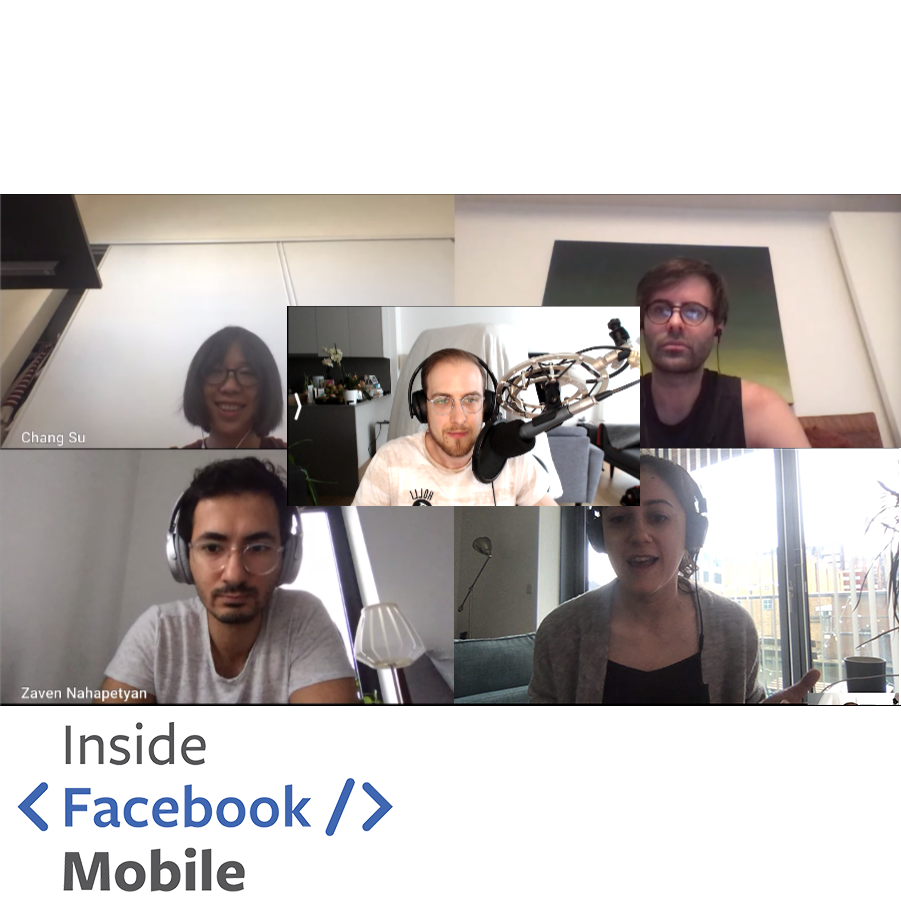
24: COVID-19 Hub with Chang, Jarman and Zaven
Inside Facebook Mobile is back for a special interview with the team behind the Facebook COVID-19 Info Centre. Chang, Jarman and Zaven share their experiences of building and shipping a global product like this over the course of just a few weeks. We discuss how the early architectural decisions enabled the seamless collaboration with tens of teams that were all working remotely. Before we get t
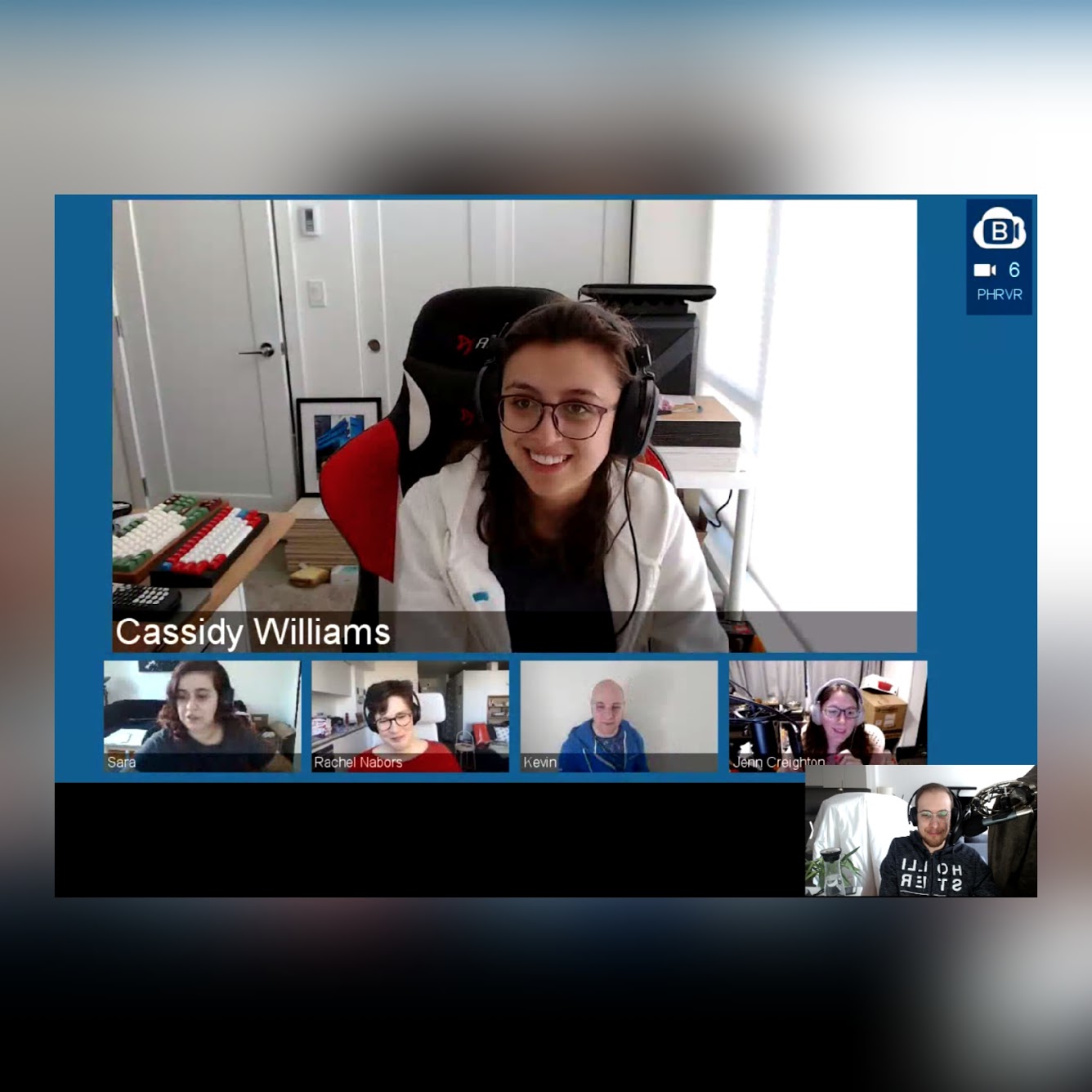
23: Organising the Women of React Remote Conf
With large-scale public events seeming rather distant right now, the concept of virtual conferences is an exciting way to stay in touch with people and learn new things. Pascal is joined by the organising team of the Women of React conference, where women take the virtual stage, but everyone is welcome to attend and participate. Cassidy, Sara, Kevin, Jenn and our very own Rachel share how they cam

Update: No Interview Episode for March
Unfortunately due to the current global pandemic, we don't have an interview for you, but stay tuned and subscribe to the feed for some remote interviews in the near future. Do follow @passy, @rachelnabors, and @insidefbmobile for updates.

22: Scaling WhatsApp with Silky
For the first time, Rachel and Pascal are joined by a guest from WhatsApp. Silky walks the two through a staggering array of optimisations WhatsApp deploy to make sure that text, media and documents arrive quickly, reliably and safely on the other end. They discuss going from five to six nines of reliability for Facebook's distributed blob store, POPs, FNAs, and fighting abuse on an end-to-end enc
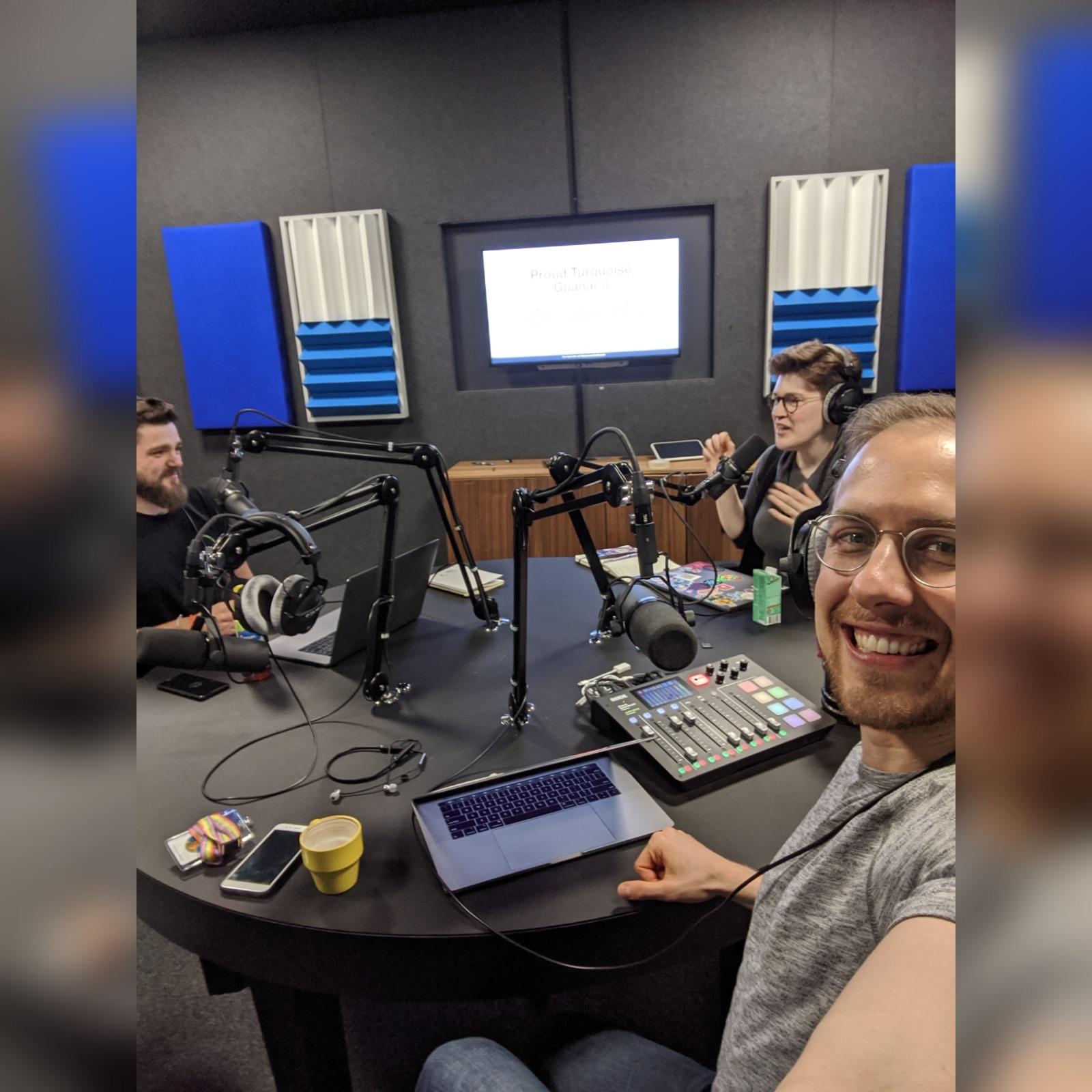
21: Kotlin at Facebook with Sergey
Pascal is joined by Rachel in the co-host chair for this first episode of the new decade. The two interview Sergey from the Android UI Frameworks team to discuss the long-awaited rollout of Kotlin within Facebook. Sergey himself is currently working on a new set of APIs for building UI components in Kotlin. With Rachel's background in React and React Native, they explore some of the inspirations a

20: droidcon London 2019, Part II
For the last episode of the decade, Pascal is joined by Inside Facebook Mobile royalty Emil, who shares what he has been up to since his last appearance on the podcast and how Facebook Open Source is still part of his day-to-day work. Then we head over to Droidcon UK 2019 again, where Pascal interviews Aziz from the Android Native UI Frameworks team about benchmarking UI components, followed by a

19: droidcon London 2019, Part I
Pascal went mobile again and brought the mics to this year's droidcon Android conference in London. He interviewed the record-breaking six speakers Facebook had this year and discussed some topics with them. This episode kicks off with Sergey, who presented a deep-dive into the current state of cross-platform coroutine libraries for Kotlin, comparing Reaktive and kotlinx.coroutines Flow in their u
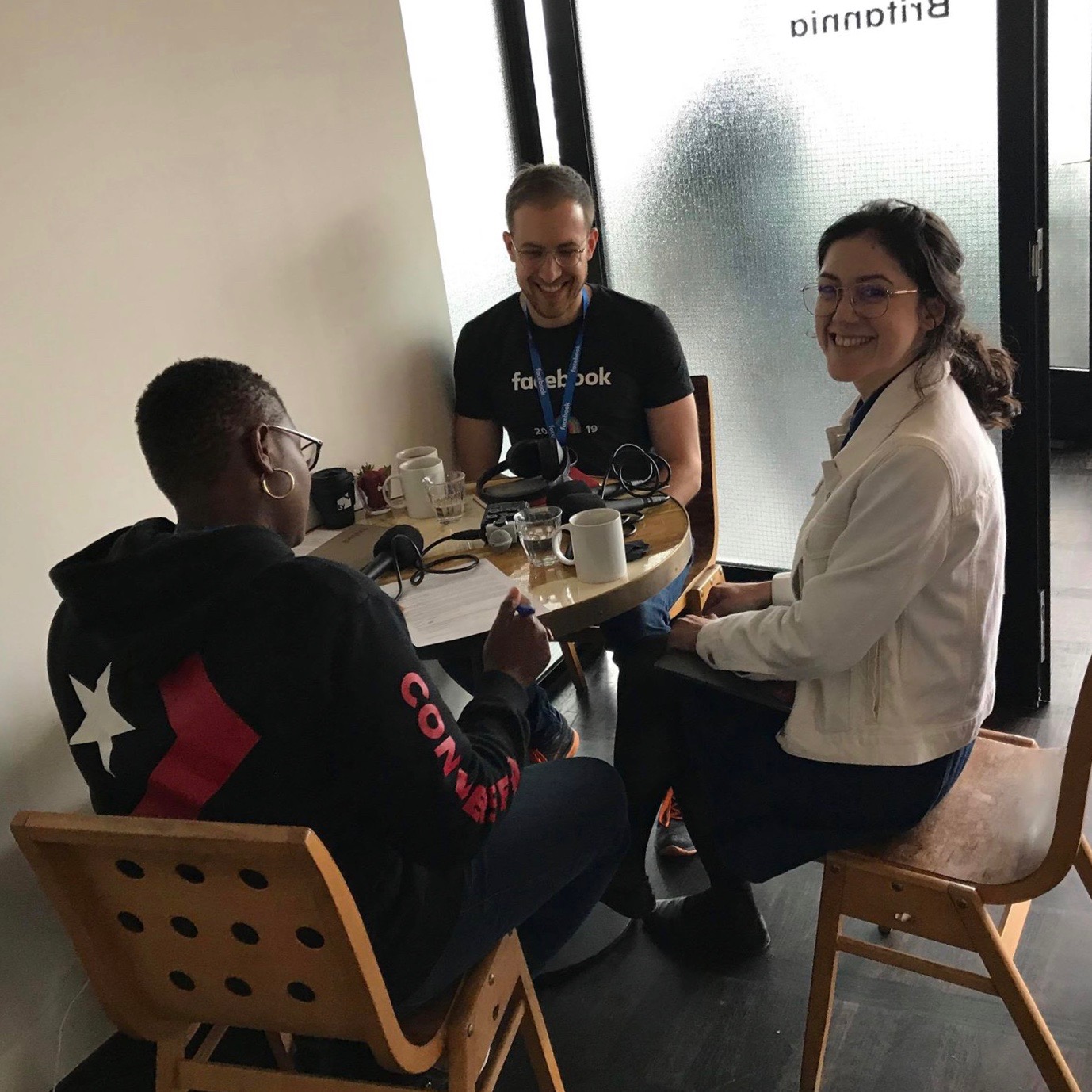
18: Outside Facebook Mobile at the London Mobile Forum 2019
Once a year, Facebook invites developers from various companies to a cosy place somewhere in East London to talk for a day about scaling challenges on mobile. This year, Mihaela and Pascal join the fun and talk to a bunch of the attendees, which are for the first time not (all) Facebook employees. Tune in to learn how Deliveroo are moving from Java to Kotlin, the BBC is using their app to find a m

17: Hermes JS Engine Development with Marc
Every time we get to talk about an open-source project on our podcast, we couldn't be happier. This episode we have Marc to talk about Hermes, an open-source JavaScript engine, optimised for running React Native apps on Android. You can listen to Marc explain why it was necessary to build a JavaScript engine to support the needs of a particular framework and get a glimpse of the architecture and t
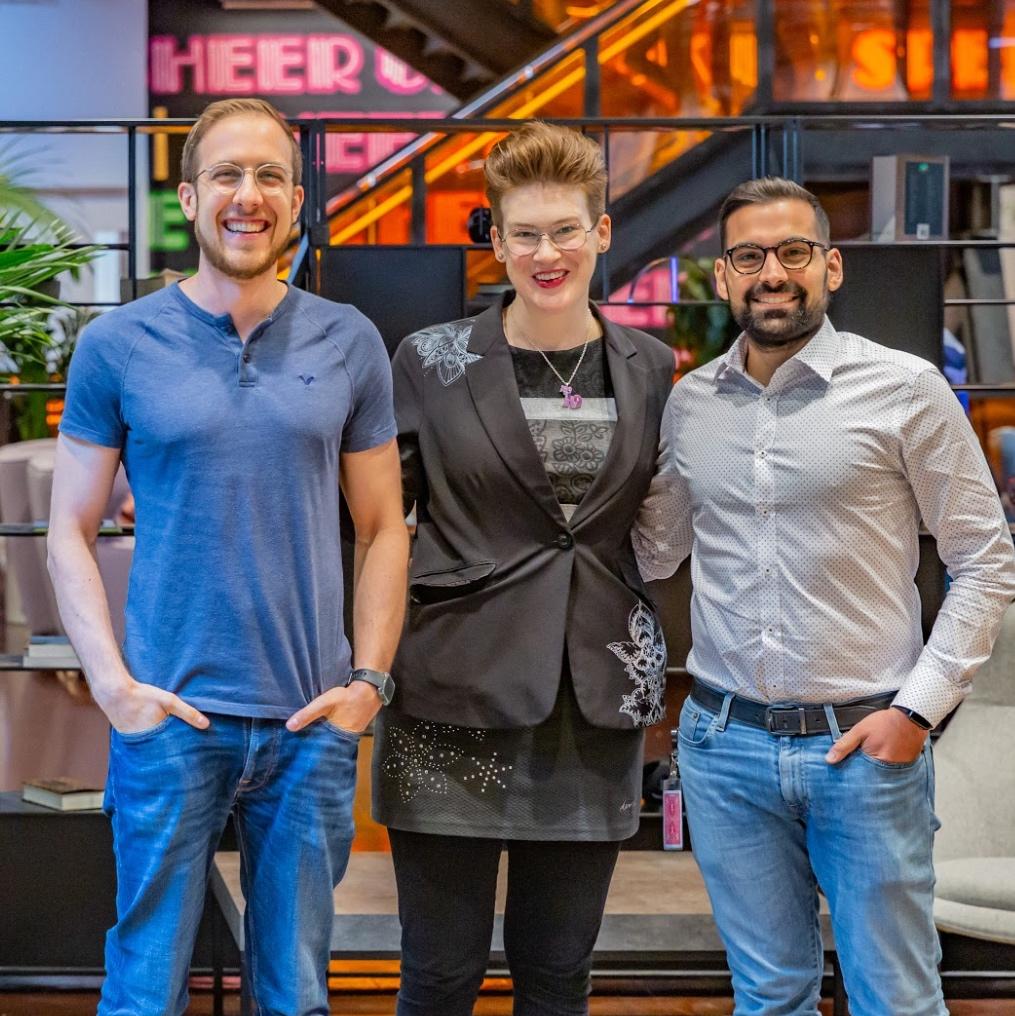
16: React Native Developer Advocacy and Documentation Engineering with Rachel
Join us for this episode where Pascal and Fabio interview one of Facebook's new joiners: Rachel is a developer advocate on the React Core team in London. React is one of the biggest open source UI frameworks in the world, a reputation kept sustainable especially thanks to the amazing work the React Core team puts into the educational material available to the community. Rachel shares her journey f
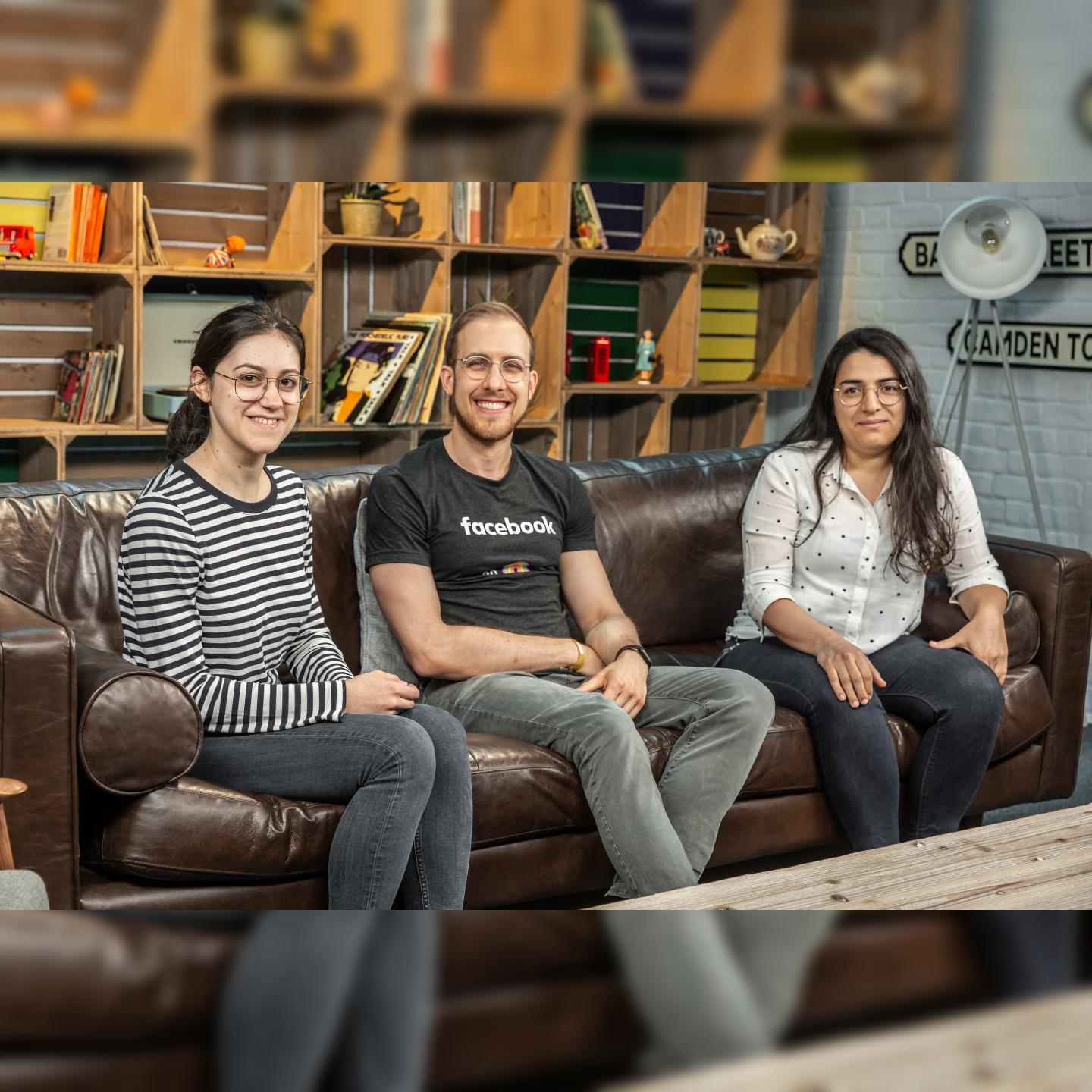
15: Infer Static Analysis for Mobile Apps with Ezgi
Episode 15 features a topic that might sound familiar to you if you've listened to previous editions of Inside Facebook Mobile. It's a project that provides such value to developers that it keeps coming up in discussions with engineers working in many different areas at Facebook. Ezgi has a long-awaited converstion with Mihaela and Pascal about Infer, an open-source static analysis tool with suppo
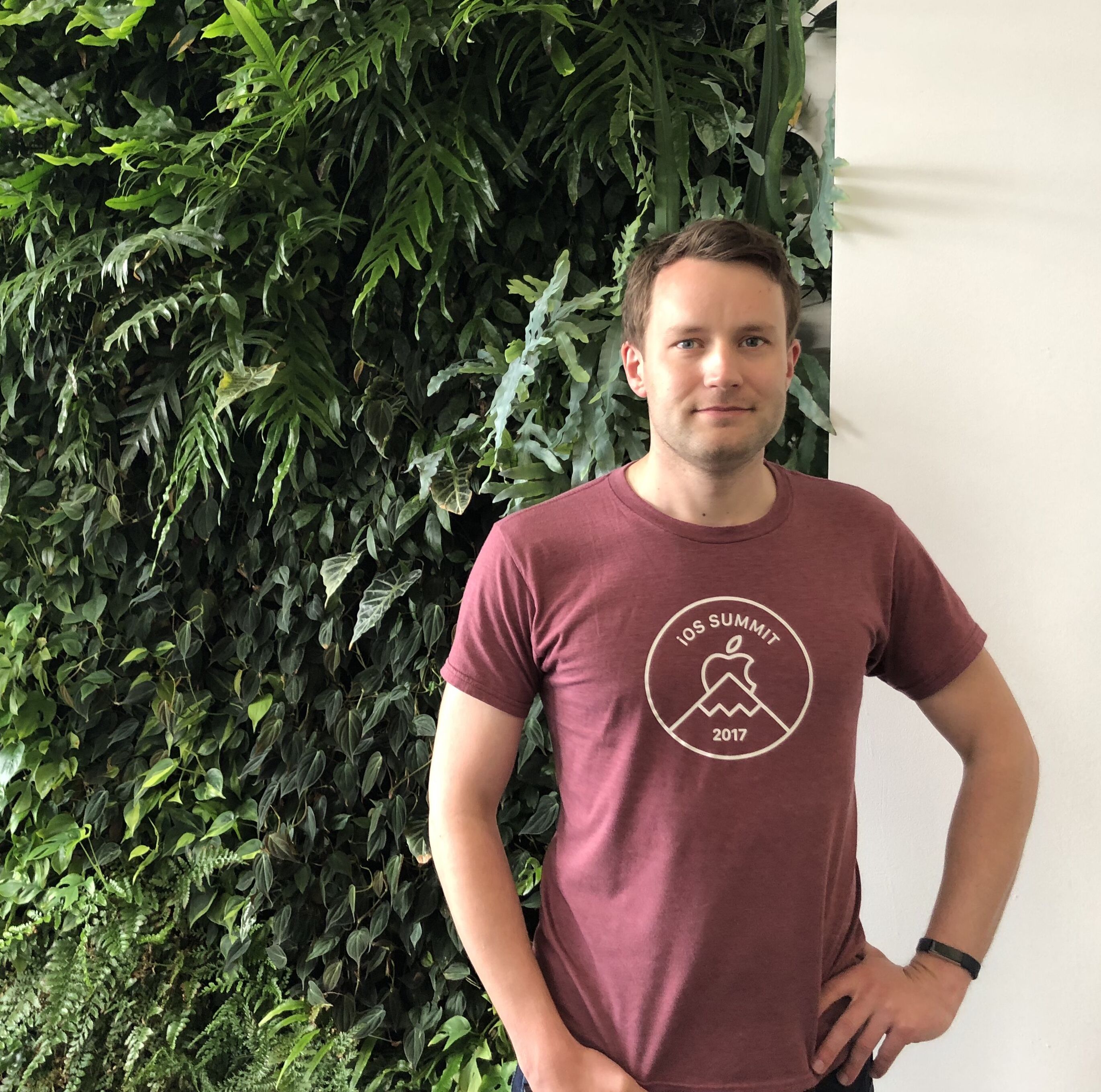
14: Facebook iOS UI Infrastructure with Adam
Episode 14 introduces Adam, the first dedicated iOS developer that Mihaela and Pascal have hosted on the podcast. Adam created ComponentKit, an iOS open-source framework inspired by React, and he joins this episode to tell the story of how the framework was built and adopted. Adam shares some insight on API design considerations, how to build frameworks around scalability and correctness and what
Recommended
Dark Night Tales with Brian King

Fantasy Flex

زن بودن

Medicine with Meaning

Yours Truly Johnny Dollar Collection

Take Back Your Health®

CBS Radio Mystery Theater | Old Time Radio

Solved Murders - True Crime Stories
紐約鳥|New York Aperture
The Swerve Podcast: Obscure Topics | Conspiracy Theories

The Bread and Banter Podcast

The Church of What's Happening Now: The New Testament
