
Try This
"Try This" from The Washington Post is a series of audio courses designed to jump-start the parts of life where we can all use a few pointers — with pithy, snackable solutions you can easily use. Host Cristina Quinn brings exactly the right amount of motivation with her endearing enthusiasm and the curiosity to learn along with you. Each course is a quick and practical guide that provides new perspectives on the kinds of hurdles we all share. If you’ve been searching for the right place to start, Try This.
Episodes

I want to give back! How do I afford it?
Donating money can induce anxiety if you’re not sure how to afford it or feel pressured into doing so by the people around you. Host Cristina Quinn talks to Washington Post personal finance columnist Michelle Singletary about how to give back, whether it’s through money or time. Singletary reminds us that there’s always a way to give. She explains how to think through where you want to give,

Anyone can be an altruist
What’s really going on inside the brain of an altruist? Why do altruists care so much more for a stranger who needs help? Why are they so willing to give away a kidney?In this episode, host Cristina Quinn explores what it means to be an altruist with Abigail Marsh, a professor of psychology and neuroscience at Georgetown University. Together, they break down how altruists view their own actions an

Got 5 minutes? Take a breather with me.
Now that we’ve learned that chronic stress ages the brain, let’s put what we learned into practice. Join “Try This” host Cristina Quinn as she leads a 5-minute box breathing exercise.For more on ways to reduce your risk of dementia, check out some of The Post’s reporting:How to calm your mind with breathing, according to scienceHow to use your voice to reduce your stress and feel calmer5-minute br
Breathe: Reducing stress can help your brain
When we’re in constant stress, our brains become less resilient. Chronic stress can lead to inflammation of the brain — increasing our risk of cognitive decline. Breathing exercises hold a lot of power for calming the body and brain. Host Cristina Quinn talks to Washington Post Brain Matters columnist Richard Sima, as well as neuroscientist and psychiatrist Helen Lavretsky from UCLA, about st
Simple lifestyle changes to reduce your risk of dementia
As we age, we can develop a higher risk for dementia and Alzheimer’s disease. It may even run in our families for some of us. But hope is not lost: About half of dementia cases are potentially preventable. Host Cristina Quinn walks us through the U.S. POINTER study led by Laura Baker, professor of gerontology and geriatrics at Wake Forest School of Medicine. This study is considered the large
The Ever-Changing Brain: Adapting, Aging, and Cognitive Health
Your brain does a lot of work. It’s processing and adapting to changing environments and routines throughout our lives.In this episode, host Cristina Quinn talks with The Washington Post’s “Brain Matters” columnist, Richard Sima, about our aging brains, what a healthy one looks like, and why we don’t necessarily have to worry about forgetting where we put our keys. For more on brain health an

Strength Training – Get stronger to live longer
Just the thought of going to the gym or lifting a dumbbell can feel intimidating. Good news — you don’t need either of these to strength-train! In this episode of “Try This,” host Cristina Quinn chats with Washington Post health columnist Gretchen Reynolds about what strength training is and how to do it anywhere – and no matter your fitness level. Gretchen shares why building and maintaining
How to find your personal style
If you look at social media these days, there’s any number of fashion influencers and brands telling you what clothes to buy and how to wear them. In this episode of “Try This,” host Cristina Quinn gets real with The Washington Post’s fashion critic, Rachel Tashjian, and Style Memo newsletter writer Shane O’Neill about moving beyond trends and finding the outfits that match your identity – in

Smarter, cheaper, happier travel
From unpredictable flight prices to record-breaking heat waves and ever-changing rules about passports and Real IDs, travel today is more complicated than ever.This week on “Try This,” host Cristina Quinn sits down with Washington Post travel reporter Natalie Compton, who shares her best tips for navigating it all without losing your patience (or your luggage).Natalie breaks down exactly when and

Gut Check: Our new “Try This” newsletter
The “Try This” podcast has a new companion – the “Try This: Gut Check" newsletter. It’s a five-part newsletter series that breaks down what science actually says about how to support gut health without stress, supplements, or confusing trends.In the newsletter, host Cristina Quinn explores questions like: What’s the deal with probiotics? Do fermented foods really help? How do you actually eat more

Simple tips to build and maintain a healthy gut
Gut health advice can be overwhelming. But science suggests that supporting the gut doesn’t have to be complicated. In this episode, Trisha Pasricha and Karen Corbin break down what research says about how to care for the gut in everyday life.They explain how to make gut-friendly choices at the grocery store, what to consider before taking a daily probiotic, and why it’s possible to support gut he

Listen to your gut
What you eat changes your gut, and your gut affects your metabolism. Host Cristina Quinn talks to researcher Karen Corbin about how your gut and metabolism work together to process certain foods, all while managing your body’s energy. Karen Corbin, a nutrition and metabolism researcher at AdventHealth Translational Research Institute, walks us through her latest research on how our gut and me

What exactly is the gut microbiome?
What’s really going on inside your gut, and why should you care? In this episode, host Cristina Quinn explores the inner workings of the gut microbiome with Trisha Pasricha, a gastroenterologist and instructor at Harvard Medical School. Together, they break down what the microbiome is, where it lives, and how it influences everything from digestion to disease.Pasricha explains how the gut microbio
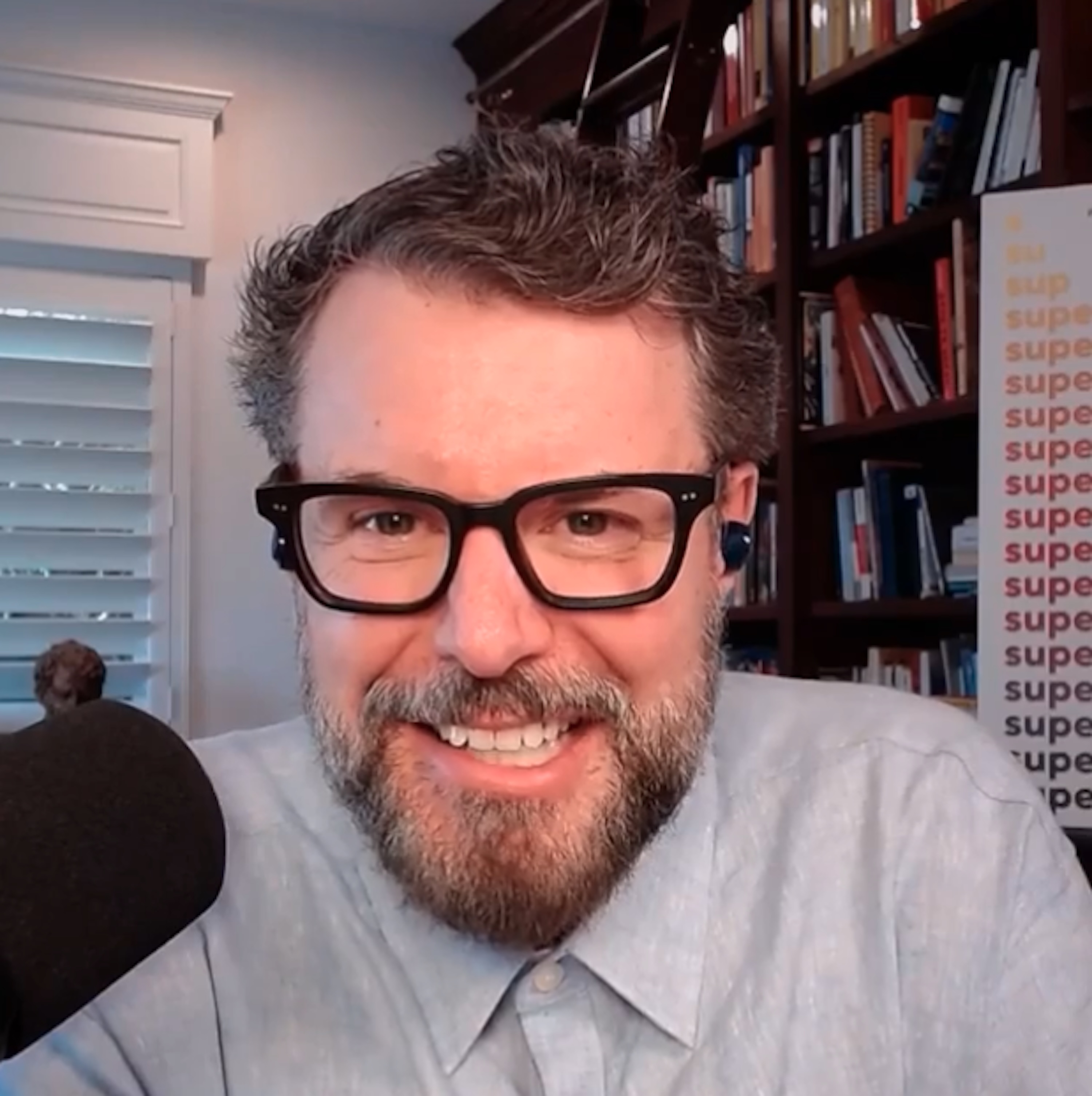
Become someone everyone wants to talk to
Want to be a better conversationalist, listener, and all-around great company? In this special episode, host Cristina Quinn talks with Pulitzer-Prize-winning journalist and author Charles Duhigg ("Supercommunicators" and "The Power of Habit") about the science of effective communication.Duhigg breaks down why some conversations feel effortless while others leave us frustrated — and how simple

Limits that last
It’s not only about digital boundaries. Washington Post tech columnist Geoffrey Fowler, in conversation with host Cristina Quinn, shares insights on physical and social boundaries we need to put in place to reclaim our focus. He offers tips like setting expectations at work and designating screen-free hours with family. And addiction psychiatrist Anna Lembke reminds us why breaking free from digit

Let’s set some boundaries
If you're ready to take back control of your attention, here’s where to start. Host Cristina Quinn chats with Washington Post tech columnist Geoffrey Fowler about self-binding — creating intentional boundaries with your devices to reduce distractions and reclaim your focus.Geoffrey shares his own experiments and practical strategies, such as reorganizing a home screen and resetting algorithms. The

How to reset your brain’s reward system
Many of us are caught in a loop of instant gratification, driven by the brain’s reward system. In this episode, host Cristina Quinn talks with psychiatrist and addiction expert Anna Lembke about how to break free from compulsive digital habits and reset our dopamine levels.Anna explains how our brains become desensitized to pleasure over time, making us crave more and more stimulation. The good ne

This is your brain on dopamine
Ever wonder why you can’t stop scrolling, even when you know you should? It probably comes down to dopamine, a key neurotransmitter that drives pleasure and motivation. In this episode, host Cristina Quinn talks to psychiatrist Anna Lembke, author of “Dopamine Nation,” about the neuroscience behind digital addiction.Anna explains how our devices keep us hooked by triggering dopamine surges — and w

Why doing good feels great
In the third and final episode of our three-part course on cultivating joy, host Cristina Quinn dives into the connection between spreading kindness and experiencing happiness. Steven Petrow, author of “The Joy You Make,” shares compelling research on the “helper’s high” and how you can bring joy to others and yourself — whether it’s through volunteering, helping a neighbor or even sharing a simpl

Get lost. And play a little.
In this second class in our course on finding joy, host Cristina Quinn explores practical exercises to help you embrace joy in everyday life. Steven Petrow, author of “The Joy You Make” and a contributing columnist for The Post, shares how things like wandering without a destination and rediscovering play can open the door to more joy, even during life’s toughest moments.Steven helps you learn how

Some happiness is predetermined. The rest is up to you.
Happiness, it turns out, comes down to a science — even though what makes each of us happy can vary pretty widely. Host Cristina Quinn talks to happiness scientist Emiliana Simon-Thomas, science director at UC-Berkeley's Greater Good Science Center, about exactly what makes us happy and how much of our sense of joy is within our control. Drawing from the science of happiness, Emiliana explains tha

Should we change the way we elect presidents? Can we?
The electoral college has served as the system to elect U.S. presidents since the earliest days of the country. And while it has evolved over the years, Americans still use this complex representative system to choose their country’s leaders. The system, however, is not without its flaws — and many have pushed for alternatives over the years. In the third class about how the electoral college work

How we ended up with the electoral college system
In the second class in our series about how the electoral college works, host Cristina Quinn talks to historian Alex Keyssar of the Harvard Kennedy School about the compromises that drove the Founding Fathers to land on a complex, winner-takes-all system rather than a straightforward popular vote. Keyssar walks listeners through the evolution of our voting system in the years following the ra

How the electoral college works
Remembering all the complex details of how the electoral college works is not exactly easy. And just when you’ve mastered how it all adds up, you probably won’t need to think about it again for another four years — hardly a formula for cementing something in your brain. “Try This” host Cristina Quinn is here to help. The first class in our three-part series on the electoral college explains h

Post Reports: How to make sense of political polls
The team behind “Try This” is dedicated to helping listeners learn new things, in ways that feel doable. So we're sharing a recent “Post Reports” episode about how polling works. On this episode of The Washington Post’s daily news podcast, “Post Reports,” Martine Powers speaks with The Post’s deputy polling director, Emily Guskin. Emily explains how a poll comes to be, details what to look for whe

From ‘I want to be’ to ... ‘I am’
Humans have a tendency to interpret information and experiences in ways that support our existing beliefs. Host Cristina Quinn returns to clinical psychologist Natalie Dattilo-Ryan to understand how you can change long-held beliefs by using confirmation bias in your favor. Datillo-Ryan explains how to identify a belief about the type of person you want to be and then figure out steps you can take

Let your beliefs do the work
Affirmations help buffer stress and can make you emotionally and mentally stronger. Host Cristina Quinn talks to clinical psychologist Natalie Dattilo-Ryan about what kinds of affirmations are most effective. She lays out an exercise to help get you started with identifying the right kinds of statements to shore up your sense of self. Next, Cristina dives into research on affirmations and stress l

The kitchen sink
In the last class in our course on how to enjoy cooking more, we bring you everything and the kitchen sink. From reliable shortcuts and suggestions for the most essential pantry staples, this class has all the scraps and tasty morsels that could have been left on the cutting-room floor but are too good to miss. For more on the relationship between food, cooking and mental health, read Mary Be

Nourishing your inner cook
In the third class in our course on how to enjoy cooking more, we focus on reframing the way we think about the task. Food writer and finalist on “Food Network Star,” Mary Beth Albright, offers advice on how to understand cooking as less of an item on your to-do list and more of an act for you that can nourish your well-being in ways that are worth recognizing. Mary Beth lays out ways that the pro

Mastering the meals you can count on
In the second class of our course about ways to enjoy the daily task of preparing meals, we make the case for revisiting what you know. Washington Post food and dining editor Joe Yonan, along with recipes editor Becky Krystal and food writer Aaron Hutcherson, explain how building a repertoire can be a useful way to take the drudgery out of cooking, put it on a bit of autopilot and build up your ki

Your kitchen personality is more obvious than you think
In the first class in our course on how to enjoy cooking more, host Cristina Quinn teams up with the Washington Post food team to uncover tips for identifying your kitchen personality. Food and dining editor Joe Yonan, food writer and recipe developer Aaron Hutcherson and recipes editor Becky Krystal identify how to apply personality characteristics — like a tendency to tinker or an adherence to r

When to call it quits
In the third and final class of our course on how to make the most of your friendships, we offer guidance for what to do when things go wrong. Making friendships work requires adjusting expectations, having difficult conversations and sometimes deciding when parting ways is for the best. This class unpacks practical tips for doing each of these things, with guidance from Washington Post advice col

Why it pays to get out of your comfort zone
In Class 2 of our course on friendship, you’ll learn how to get out of your comfort zone when it comes to fostering new friendships and resuscitating old ones. Cristina talks to Washington Post advice columnist Carolyn Hax about doable ways to make real-life connections at a time when technology makes that seem hard. Friendship expert Danielle Bayard Jackson makes the case that spending time with

Are you socially fit?
In the first class of our course on making the most of your friendships, host Cristina Quinn learns what it means to be socially fit — and why it’s never too late to start getting those reps in. Cristina talks to Bob Waldinger, director of the Harvard Study of Adult Development — the longest longitudinal study on human happiness — about why friendships matter for our health and what we can do to a

The melatonin factor
In the fifth and final class of our course on how to get better sleep, we focus on melatonin. Researchers found that melatonin use in the United States more than quintupled between 1999 and 2018. You might know someone who swears by melatonin or maybe you yourself do. But does it work? What do we know about how effective melatonin supplements are, and what does it mean for helping you get better s

Sleep is a ball of pizza dough
In class 4 of our course on how to get better sleep, Cristina and sleep expert Lisa Strauss explore the concept of sleep drive. Counterintuitively, sometimes you need to increase your need for sleep, even if you’re exhausted already. Lisa Strauss explains a technique called sleep compression, where you limit your sleep opportunity to a more sustainable quantity – and you just might find the sweet

What to do if you’re up in the middle of the night
In class 3 of our course about how to get better sleep, we dig in on a moment most of us are familiar with – waking up in the middle of the night and not being able to fall back asleep. Sometimes our default setting is to keep thinking our endless thoughts, but, it turns out, what we really need is a distraction. And you want to make sure to find the right kind of distraction – one that requires l

Go ahead. Think about the thing that’s keeping you up.
Lying awake at night, ruminating over stuff that bothers you is not fun. But it’s normal! We’ve all done it and it can get in the way of the rest you need. In class 2 of our course on how to sleep better, Cristina walks us through how trying to suppress your difficult feelings from popping up at night might be counterproductive. Sleep expert Lisa Strauss explains a technique for identifying and ch

Stop trying to fall asleep
In this first class of our course on how to get better sleep, host Cristina Quinn outlines why trying to get yourself to sleep can sometimes be a barrier to getting rest. But if we shouldn't will ourselves to sleep, what should we do instead? Cristina talks to an expert with a clear plan for how to tackle anxiety at bedtime by taking some tangible steps during the day. If you’d like additiona
Introducing “Try This”
Meet The Washington Post’s Cristina Quinn, who is always game to try something new. She is your guide in “Try This” — a new series of audio courses from The Post that will provide quick, fresh and practical approaches to tackling the kind of hurdles we all face: how to sleep better, get the most out of our relationships, get out of our own way and more. Follow “Try This” now so you catch the first
Recommended

Dark Night Tales with Brian King

Fantasy Flex

زن بودن

Medicine with Meaning

Yours Truly Johnny Dollar Collection
Take Back Your Health®

CBS Radio Mystery Theater | Old Time Radio

Solved Murders - True Crime Stories

紐約鳥|New York Aperture

The Swerve Podcast: Obscure Topics | Conspiracy Theories

The Bread and Banter Podcast

The Church of What's Happening Now: The New Testament
