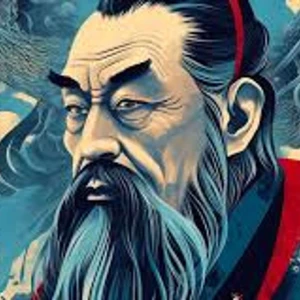
This Is The Way: Chinese Philosophy Podcast
This Is The Way is a podcast on Chinese philosophy, exploring philosophical themes by reflecting on significant Chinese texts and through interviews with scholars of Chinese thought. It aims to offer discussions that are informative and accessible to a broad audience.
Episodes
Episode 39: Mohist Consequentialism
The ancient Mohists are often said to be the world's first consequentialists -- the first on record to propose that we should consistently live by an ethical standard that asks us to bring about as much good as possible for the world. In this episode, we put Mohist consequentialism under a microscope. On the Mohist view, the best action is always the one that maximizes benefit and minimizes h
Episode 38: Xunzi on Human Nature and Human Artifice
Xunzi is famous for the claim that “human nature is bad.” But what does he mean by this, and if goodness does not come naturally to us, where does it come from?In this episode, we discuss Xunzi’s distinction between nature (xing 性) and deliberate effort (wei 偽), his disagreement with Mencius, and his view that moral goodness must be "learned" and "worked at." We also ask how sh
Episode 37: Confucius as Ritual Prodigy
In this episode, we are joined by Mark Csikszentmihalyi, Professor of East Asian Languages and Cultures and Eliaser Chair of International Studies at the University of California, Berkeley, and a leading scholar of early Chinese thought. Our conversation draws on his new book, Confucius: A New Tradition (Reaktion Books, 2026), and its striking portrayal of Confucius as a “ritual prodigy.” Through
Episode 36: Zhuangzi's happy fish debate
In this episode, we take up one of the most puzzling and fascinating passages in the Zhuangzi: the “Happy Fish” debate between Zhuangzi and Huizi. Can Zhuangzi really know that the fish are happy if he is not a fish? Along the way, we explore skepticism, language, animal minds, and the ordinary but surprisingly sophisticated ways we recognize joy in other living things.Want to skip to the episode&
Episode 35: Confucius on Moral Examples
Confucian philosophers often suggest that having good and bad examples plays a critical role in moral education and motivation. How do good examples figure into our ethical education, and how do bad examples help us discover vices or shortcomings in our selves? In this episode, we discuss this wide-ranging issue in connection with the Analects of Confucius, beginning with Confucius's famous r
Episode 34: Deference and Autonomy in Confucian Ethics
Many of us value autonomy in decision-making: we want to make our own choices and think for ourselves. But we also know that in many areas of life, it is well advised to have greater faith in people who know more than we do, in experts such as doctors, scientists, plumbers, chess coaches, teachers, and maybe even philosophers.In this episode of This Is the Way, we explore moral autonomy and moral
Episode 33: Carrots, Sticks, and Rituals
What's the best way to fight corruption: harsh laws and fear of punishment or rituals and moral transformation? In this episode we discuss a deep disagreement that takes its inspiration from the political philosophies of the Confucian philosopher Xunzi and the Legalist philosopher Han Feizi. We are also happily joined by Professor Daniel Bell of the University of Hong Kong, one of the world&a
Episode 32: Music Has in It neither Grief nor Joy
When you hear sad music and feel some sadness in response, is that because the music has successfully carried the sadness of the musician to you as the listener? Or is it better to say that the sadness is in you, released by the music but not "carried" by it? In this show (our second with a live audience), we discuss the music theory of the third-century philosopher Ji Kang 嵆康 (223–262 C
Episode 31: The Great Music Debate -- Mohists vs. Classical Confucians
Is music an extravagance in a world of scarcity or a necessary expression of our humanity? We explore Mozi’s consequentialist condemnation of elaborate musical performances and Xunzi’s argument that music, proper guided, plays a critical role in taming unruly emotions and building social bonds. Beneath the disagreement lies a profound clash over basic human goods, how emotion should be shaped, and
Episode 30: Confucianism and Reverential Reading
In this episode, we explore Zhu Xi’s striking account of how to read philosophical and other important texts with what he calls “reverential attention.” Blending close reading with reflections on learning, character, and distraction in modern life, we discuss how Zhu Xi tries to make reading simultaneously transformative and objective. The discussion raises a fascinating puzzle at the heart of Zhu
Episode 29: Shen Dao on Law
Early in Chinese history, a number of political thinkers developed sophisticated arguments for relying on consistent application of laws rather than the personal discretion of political authorities to govern the state. In this episode, we explore the arguments of one of the early pioneers of this way of thinking, Shen Dao 慎到 (c. 350-275 BCE). We are joined by a leading expert on Shen Dao and Chi
Episode 28: Mencius Against Mohist Impartialism
In this episode, we continue our exploration of Mohist impartial caring (jian'ai 兼愛) by examining two of Mencius’s most influential objections: (1) the “Without a Father” Argument (Mencius 3B9) and (2) the “Two Roots” Argument (Mencius 3A5).Along the way, we take up some important questions: Should moral values be impartial even between family members and total strangers? Is radical impartial
Episode 27: Mohism—Two Arguments for Impartial Caring
This episode examines the Mohist doctrine of impartial caring (jian'ai) via two arguments in the Mozi -- the Caretaker Argument and the Filial Piety Argument. We examine the arguments' logical structure, psychological plausibility, and practical applicability. We also discuss the importance of reciprocity, and competing interpretations of "impartial caring," from the less deman
Episode 26: The White Horse Dialogue: Language, Logic, and Categories in Early China
According to a speaker in a famous historical dialogue, "A white horse is not a horse." In this episode, we’re joined by Dr. Lisa Indraccolo (Associate Professor, Tallinn University) to unpack one of the most intriguing discourses in early Chinese philosophy—the White Horse Dialogue from the Gongsun Longzi. Together, we explore what this paradoxical statement reveals about language, logi
Episode 25: Daoist Utopia
In this episode, we delve into Chapter 80 of the Daodejing, one of the most vivid portraits of Daoist social ideals. We unpack its vision of a “simple agrarian utopia,” where people live in small communities, ignore labor-saving tools, and resist the endless chase for more. Along the way, we discuss political minimalism, technological restraint, contentment in daily life, and radical localism, ask
Episode 24: Robber Zhi—Honor Among Thieves?
With a big assist from our guest, Stephen C. Walker, we discuss a highly unusual philosophical dialogue in classical Chinese literature, the "Robber Zhi Dialogue" (from the Miscellaneous Chapters of the Zhuangzi). This shocking story shows Confucius attempting to convince the story's anti-hero (Robber Zhi) to give up his vicious ways. By the end of the story, Confucius emerges as th
Episode 23: Confucianism on the Assessment of Character
In this episode, Justin and Richard discuss how historical Confucian philosophers have proposed to recognize people of good moral character (virtue). How, exactly, did they think that we could tell the real virtues apart from the phony ones? And what did the historical Confucians think about the use of written examination essays to "test" for virtue? Many thanks to The Hong Kong Ethics L
Episode 22: The Good Life in the Analects
What sort of vision of the good life does Confucius recommend? In this episode, we explore one of the most intriguing passages in the Analects (11.26), where Confucius asks four disciples about their deepest aspirations. Three students offer increasingly modest political goals—from Zilu's grand vision of governing a besieged state to Zihua's humble wish to serve as a minor functionary in
Episode 21: Xunzi’s Way—Discovered or Invented?
This episode is our first on the classical Confucian philosopher Xunzi 荀子 (3rd century BCE), who was famous for arguing that human nature is bad and for casting doubt on the more supernatural or superstitious justifications for traditional Confucian rituals, among many other things. Since this is the first episode on an important philosopher, we spend some time in part I discussing his "big p
Episode 20: Confucianism vs. Buddhism (first "live show")
One influential justification for becoming Buddhist is to end suffering, starting (it seems) with the Buddhist practitioner's own suffering. Does this indicate that Buddhist practitioners are selfish? After Buddhism became popular in China, many Confucians argued that Buddhism puts personal salvation before ethics, and is thus selfish in that respect. Some Confucians also objected to the part
Episode 19: Zhu Xi on the Unity of the Virtues
Today's topic is really about two things. First, it's about the claim that many instantiations of one virtue necessarily come packaged with other virtues. For example, you can't have great humaneness or benevolence in your charitable giving to other people unless you also show a certain amount of ritual respect to them. Second, it's about the view that one virtue in particular
Episode 18: Neo-Confucian Metaphysics
Much of the technical philosophy of Confucianism was developed by sophisticated thinkers that came well after the time of Confucius, starting in the Song dynasty. This episode is our first devoted to the foremost of these "Neo-Confucians," Zhu Xi 朱熹 (1130-1200 CE). To help us with this introduction, we are joined by special guest Stephen C. Angle, one of the leading scholars of Neo-Confu
Episode 17: The Mohist State of Nature Argument
In this episode, we delve into the Mozi’s "state of nature argument," a vision of human life before political order and an explanation of how humans left that state. The Mohists were history’s first consequentialists and an important and influential classical school of thought. Were they right about the foundations of political society and government? Join us as we examine the Mohists&ap
Episode 16: Zhuangzi on Uselessness
In this episode, we talk about the theme of uselessness in the Zhuangzi, one of the great foundational texts of philosophical Daoism. What exactly determines whether something is useful or useless? Is usefulness largely or fundamentally a matter of perspective? Does the text's apparent recommendation that we be "useless" (in some sense) entail some sort of realism or objectivism abo
Episode 15: Ritual in the Analects
It is indisputable that ritual is at the heart of Confucianism—buy why? In this episode we examine Analects 3.17 in which Confucius seems keen to defend a ritual sacrifice of a lamb which his student regards as excessive. We discuss this passage in light of Richard Wollheim's paper, "The Sheep and the Ceremony" which offers a deep and illuminating exploration of this passage and the
Episode 14: Women in the Analects
In the received version of the Analects, it’s quite apparent that all of Confucius’s disciples were men. So one might wonder: is this an ethics built just for men? Today we are happy to be joined by Professor Erin Cline, Tagliabue Professor at Georgetown University, to discuss this timely issue, focusing on a controversial passage that features the only woman cited by name in the Analects, Nanzi 南
Episode 13: Family Before State
Confucianism is well known for prioritizing familial responsibilities and love over other competing demands such as public interest or duties to the state. In this episode we explore two of the best known passages from early Confucianism that some modern scholars believe makes Confucianism morally problematic. The first passage we discuss is the "Upright Gong" passage, Analects 13.18, wh
Episode 12: Play
Play seems to constitute an important part of a flourishing human life. Most of us experience play through things like simple childhood games of hide-and-go-seek or more intellectual activities like chess or go. What these experiences of play have in common is that they are circumscribed in various ways by the times, places, and circumstances established by the boundaries and rules of those games.
Episode 11: Nonaction
The concept of wu-wei, often translated as nonaction or effortless action is central to classical Chinese philosophy. But what exactly is the idea and what are its practical implications? What puzzles does it raise regarding the nature of human actions, purpose, and intention? We examine these questions by focusing on some central passages from the Daodejing. Many thanks to The Hong Kong Ethics La
Episode 10: Mencius on Moral Development
How do we become good? What is the process by which we acquire the virtues? We examine these question by focusing on some key concepts in Mencius's account of moral development such as reflection and extension. This discussion also centers on Mengzi 1A7 and the famous "king and the ox" passage that has been the subject of much conversation and debate.We are honored and delighted to
Episode 9: Moral Sprouts
What is the nature and source of morality? Are human beings naturally inclined toward moral goodness? The early Confucian thinker Mencius (Mengzi) believed that human beings by nature possessed certain moral sprouts that could be nurtured and developed into robust virtues. In this episode we explore Mencius's account of these moral sprouts, examining both philosophical and psychological justi
Episode 8: The Golden Rule
Across different religious and moral traditions we often find some version of the Golden Rule. In this episode we explore the Golden Rule as formulated in the Analects and explore questions such as how fundamental it is to the Confucian ethical framework, how it is supposed to work in actual practice, and how it connects with issues about self-centeredness. We also examine how it might apply diffe
Episode 7: The Butcher
Certain allegories and myths offer profound philosophical insights. In the West, Plato's Allegory of the Cave occupies a key role in the history of philosophy with its marvelous representation of the quest for knowledge and the distinction between illusion and reality. In the East, Zhuangzi's story of the butcher, "Cook Ding" has for over two millennia served as one of the most
Episode 6: Partiality and Justice
It seems clear that special relationships give rise to strong attachments and responsibilities that are at the heart of human lives. But it also seems that considerations of justice can require us to give equal consideration to a stranger. What do we do when there is a conflict between considerations of partiality and impartiality? In this episode we explore these questions with a special guest, P
Episode 5: Cultivation and the Autobiography of Confucius
In this episode we discuss Confucius's autobiography as found in Analects 2.4, one of the most famous passages in the Analects and a rich resource for reflection on the process of moral self-cultivation. Among the many topics we explore: what Confucius meant by being "free of doubts" and "understanding Heaven's Mandate," and the relationship between practicing and un
Episode 4: Persuasion
In this episode we discuss the topic of persuasion by exploring a dialogue between Confucius and his disciple Yan Hui in Chapter Four of the Zhuangzi. Among the questions we explore are: (1) Is persuading someone who disagrees with you even possible? (2) Under what conditions might someone be persuaded to a different viewpoint? (3) What is the concept of "fasting of the mind" as presente
Episode 3: Oneness
In this episode we explore the fascinating topic of Oneness with our guest Philip J. Ivanhoe, a distinguished scholar and translator of East Asian philosophy. Join the discussion of episode 3 here!We thank Lena Li (LI La 李拉 ) for her expert editing and sound engineering. We also thank the blog Warp, Weft & Way for hosting the discussion for this episode.Co-hosts:Richard Kim's websiteJusti
Episode 2: Shame
In this episode we interview Dr. Jing Iris Hu (HU Jing 胡婧), an associate professor at Concordia University in Canada. The central concept we explore is shame as represented in Confucian texts. Dr. Hu offers a nuanced defense of the value of Confucian shame and what it may play in our ethical lives. Please check out Dr. Hu's article, "Shame, Vulnerability, and Change" (Journal of the
Episode 1: Detachment
In this episode we introduce ourselves and explore the concept of detachment, focusing especially on the Zhuangzi (Chuang Tzu 莊子), a classical Chinese text.Want to continue the discussion? Need links to some of the sources mentioned? Go to the support page for this episode on Warp, Weft, and Way.We thank Lena Li (LI La 李拉 ) for her expert editing and sound engineering. We also thank the blog Warp,
Recommended
Conspiracy Files with Paige Carter

Bad Friends

Learn 50 English Phrases While You Sleep | Everyday English Phrases & Vocabulary
This Past Weekend w/ Theo Von

Dateline NBC

Back to the 80s Radio

Crime Stories with Nancy Grace

Bible Tea

این نقطه
TED Business
Dark Night Tales with Brian King

Fantasy Flex
