AMSEcast
Produced from the American Museum of Science and Energy, AMSEcast invites guests from the world of science, literature, and technology to share unique perspectives from the realm of the highly trained and curiously minded.
Episodes

Discussing The Beasts of the East: AMSEcast with Andrew Moore
On this episode of AMSEcast, podcast host and Oak Ridge Discovery Foundation executive director Alan Lowe sits down with environmental writer Andrew Moore to discuss his book, The Beasts of the East: The Fall and Rise of America's Eastern Wilderness.

AMSEcast with Jean-Luc Palayer at NOW 2026
AMSEcast host and ORDF Executive Director Alan Lowe interviews notable figures in the science world at the ETEC NOW conference in Knoxville, TN! Learn about what exciting things are coming in the world of science, engineering, and industry! This episode features Jean-Luc Palayer.

AMSEcast with Jason Hatfield at NOW 2026
AMSEcast host and ORDF Executive Director Alan Lowe interviews notable figures in the science world at the ETEC NOW conference in Knoxville, TN! Learn about what exciting things are coming in the world of science, engineering, and industry! This episode features Jason Hatfield.

AMSEcast with Deniece Thomas at NOW 2026
AMSEcast host and ORDF Executive Director Alan Lowe interviews notable figures in the science world at the ETEC NOW conference in Knoxville, TN! Learn about what exciting things are coming in the world of science, engineering, and industry! This episode features Deniece Thomas.

AMSEcast with Chuck Hope at NOW 2026
AMSEcast host and ORDF Executive Director Alan Lowe interviews notable figures in the science world at the ETEC NOW conference in Knoxville, TN! Learn about what exciting things are coming in the world of science, engineering, and industry! This episode features Chuck Hope.

Discussing Dinner With King Tut: AMSEcast with Sam Kean
On this episode of AMSEcast, host and Oak Ridge Discovery Foundation executive director Alan Lowe sits down with author Sam Kean to discuss his Dinner With King Tut, a literary recreation of the sounds, tastes, smells, and other senses of history's most rich historical locations through an especially exciting first-person lens.

AMSEcast with Chuck Fleischmann at NOW 2026
AMSEcast host and ORDF Executive Director Alan Lowe interviews notable figures in the science world at the ETEC NOW conference in Knoxville, TN! Learn about what exciting things are coming in the world of science, engineering, and industry! This episode features Chuck Fleischmann.

AMSEcast with Brandon Williams at NOW 2026
AMSEcast host and ORDF Executive Director Alan Lowe interviews notable figures in the science world at the ETEC NOW conference in Knoxville, TN! Learn about what exciting things are coming in the world of science, engineering, and industry! This episode features Brandon Williams.

AMSEcast with Ben Jordan at NOW 2026
AMSEcast host and ORDF Executive Director Alan Lowe interviews notable figures in the science world at the ETEC NOW conference in Knoxville, TN! Learn about what exciting things are coming in the world of science, engineering, and industry! This episode features Ben Jordan.

How Chemistry Shapes Us and Our World: AMSEcast with Dame Ijeoma Uchegbu
On this episode of AMSEcast, host and executive director of the American Museum of Science and Energy Alan Lowe sits with Dame Ijeoma Uchegbu to discuss her new book "Chain Reaction" and how it involves every single one of us, even you! Get a fascinating glimpse at her life leading up to what has become a fruitful career of research, science, and passion on this week's episode of AMSEcast.

The Story Of Rapa Nui: AMSEcast with Mike Pitts
On this episode of AMSEcast, host and American Museum of Science and Energy executive director Alan Lowe sits down with Mike Pitts to discuss the history of Rapa Nui, commonly referred to as Easter Island. Although not everything can be discerned about the story of this complex and history-rich island, much of the picture can be painted!

How Life Works: AMSEcast with Philip Ball
On this episode of AMSEcast, host and American Museum of Science and Energy executive director Alan Lowe discusses the science of life with Philip Ball, taking an in-depth dive into Ball's newest book, How Life Works: A User's Guide to the New Biology.

The History of Trademark: AMSEcast with Jason Clark
On this episode of AMSEcast, host and American Museum of Science and Energy executive director Alan Lowe sits down with Jason Clark of the USPTO to discuss the history and the relevance of trademarks, patents, and copyrights for inventions in America to celebrate America's big 250th birthday!

Discussing The Warhead: AMSEcast with Jeffrey Stern
On this episode of AMSEcast, host and American Museum of Science and Energy Executive Director Alan Lowe sits down with award-winning journalist Jeffrey Stern to discuss his widely successful book, "The Warhead: The Quest to Build the Perfect Weapon in the Age of Modern Warfare."

Creating The Nuclear Navy: AMSEcast with Paul Cantonwine
On this episode of AMSEcast, host and American Museum of Science and Energy executive director Alan Lowe sits to chat with Paul Cantonwine, author of "The Never-Ending Challenge of Engineering: Admiral H.G. Rickover in His Own Words" to discuss the creation of the nuclear navy through the eyes of H.G. Rickover, and what his mentality might be like in today's ever-changing world.

The Science of Presidency: AMSEcast with Andrew Busch
On this episode of AMSEcast, host and AMSE executive director Alan Lowe discusses the science of a presidency with Andrew Busch, the associate director and professor at the Institute of American Civics at the University of Tennessee, Knoxville. The episode goes in depth to analyze the behaviors of not only the American political system, but also its presidents, and how they have operated throughou

The Nuclear Navy: AMSEcast with Lawrence Townsend
On this episode of AMSEcast, host Alan Lowe sat down with Lawrence Townsend to discuss the past, present, and future of America's nuclear navy, including what our advancements in technology throughout the country might mean going forward.

Less Weapons, More Energy: AMSEcast With Charles Oppenheimer
On this episode of AMSEcast, host Alan Lowe welcomes Charles Oppenheimer, entrepreneur and grandson of J. Robert Oppenheimer, for a wide-ranging conversation on nuclear energy, global security, and the legacy of one of the 20th century's most influential scientists. Oppenheimer discusses the mission of the Oppenheimer Project, a nonprofit dedicated to advancing his grandfather's values through inc

AMSEcast Geoff deBeauclair
AMSEcast launches a new series exploring America's nuclear navy and Oak Ridge's vital role in its history and future. From helping shape the legacy of Admiral Hyman G. Rickover to supplying nuclear fuel for today's fleet, Oak Ridge has long stood at the center of U.S. naval nuclear power. As the American Museum of Science and Energy prepares a new exhibit at the Wilcox K-25 Interpretive Center, th

AMSEcast with guest Michelle Shocklee
Author Michelle Shocklee discusses her novel The Women of Oak Ridge and the personal, historical, and emotional paths that led her to the story of the Secret City during the Manhattan Project. Growing up near Los Alamos and coming from a World War II family shaped her long-standing connection to the era, but a chance encounter with a reader ultimately sparked her discovery of Oak Ridge. Shocklee d
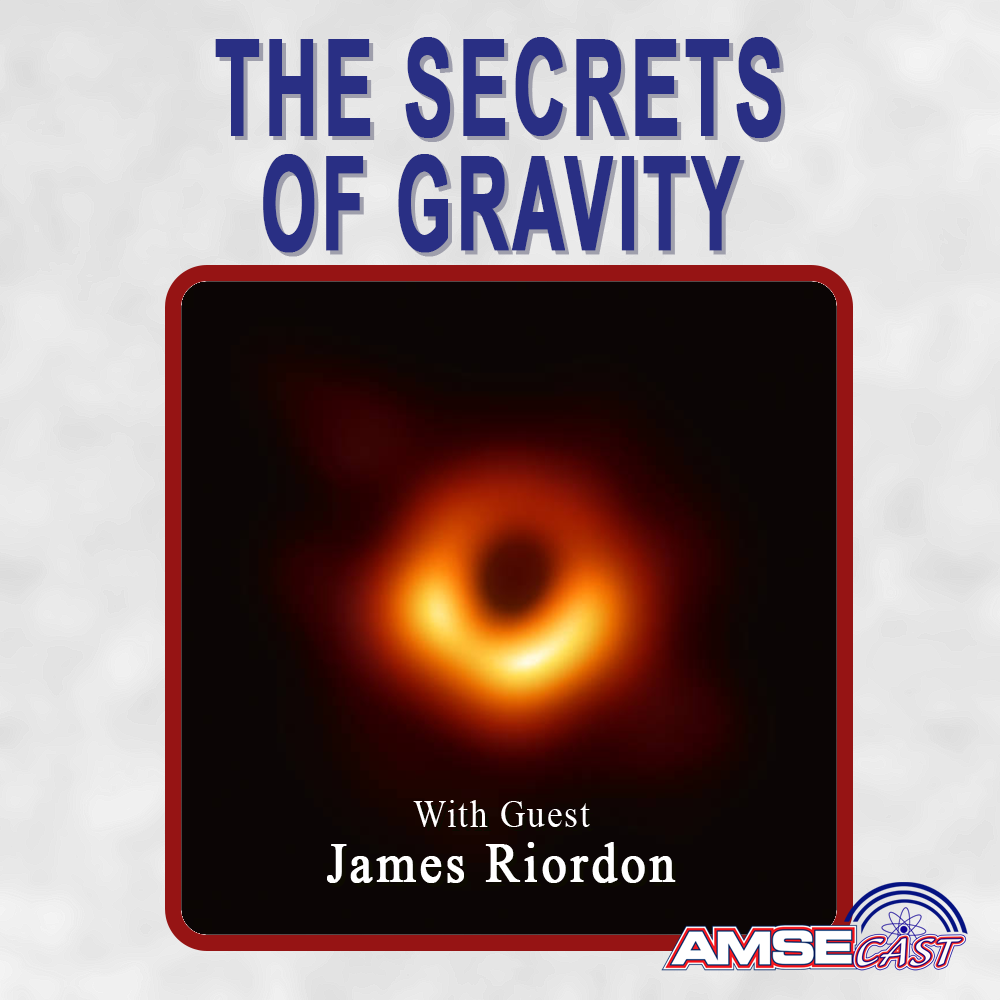
The Secrets of Gravity: AMSEcast with James Riordon
In this episode of AMSEcast, host Alan Lowe welcomes back science journalist and NASA senior science writer James Riordon to discuss his new book Crush: Close Encounters With Gravity. Riordon explores the fascinating science of gravity, from Isaac Newton's groundbreaking laws to Albert Einstein's revolutionary theory of general relativity. The conversation dives into how gravity shapes everything

AMSEcast with guest Dr. Sam Schrell
In this episode of AMSECast, Dr. Samantha Schrell explores the fascinating and often mysterious world of actinides—rare, radioactive elements with powerful applications in medicine, energy, space exploration, and national security. She explains what makes actinides unique, why they are difficult to study, and how elements like californium play a critical role in starting nuclear reactors and power

AMSEcast with guest Vasyl Dunets
This episode explores how science education becomes an act of resilience, hope, and nation-building in Ukraine. From the creation of the country's first national science museum to mobile science labs traveling near the front lines, the Junior Academy of Sciences of Ukraine demonstrates how curiosity can endure even amid war. The guest traces a personal journey from law and political science into s

AMSEcast with guest Dr. Ahmed El-Mokadem
In this wide-ranging conversation, Ahmed El-Mokadem explores the deep ideas behind mathematics' most mysterious numbers, revealing how concepts like zero, infinity, irrational numbers, and imaginary numbers challenge both logic and philosophy. He traces how constants such as π, e, the golden ratio, and the Feigenbaum constants appear universally across nature, physics, biology, and technology—sugg
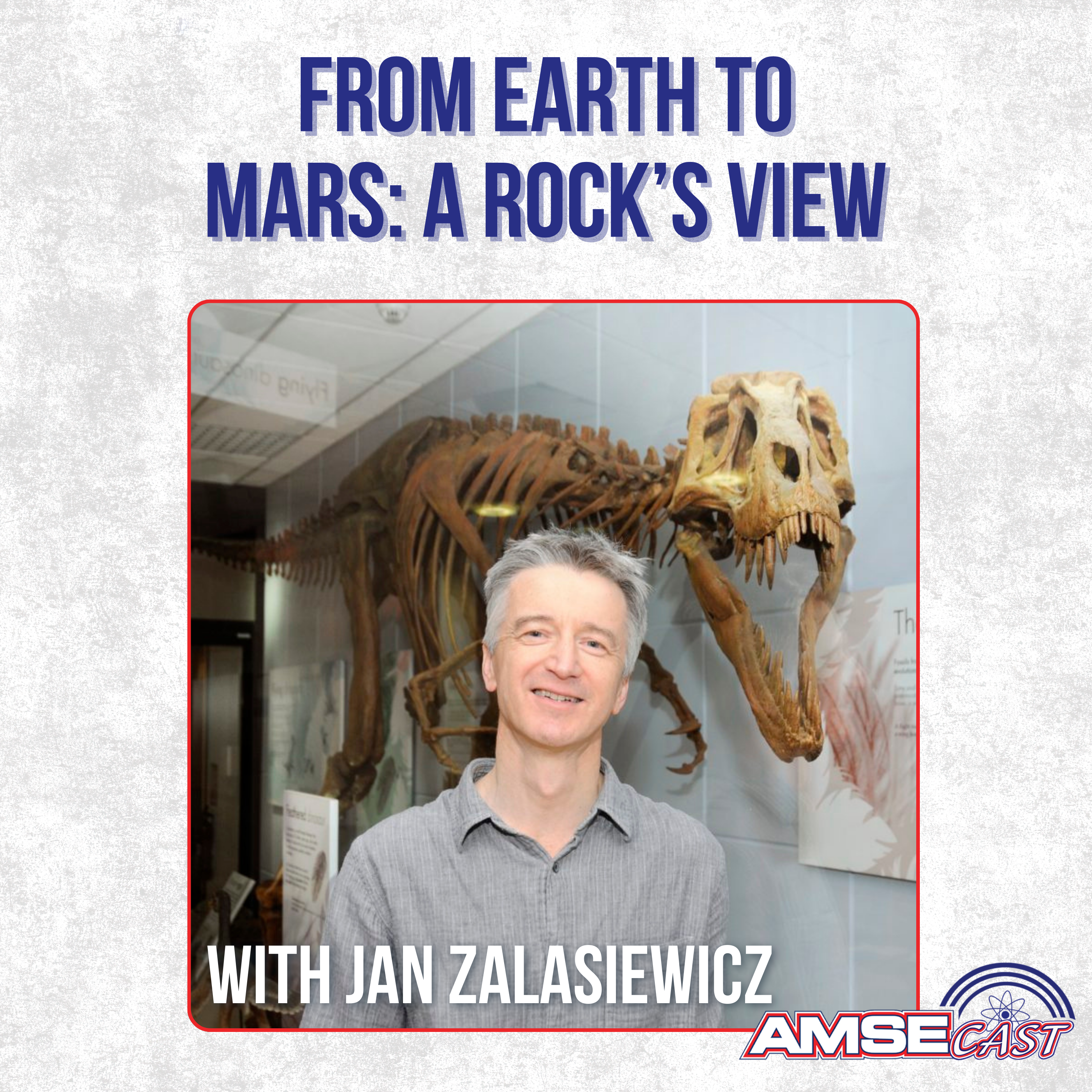
From Earth to Mars: A Rock's View with Jan Zalasiewicz
From Oak Ridge, Tennessee, AMSEcast host Alan Lowe sits down with geologist and paleontologist Dr. Jan Zalasiewicz, chair of the Anthropocene Working Group and author of How to Read a Rock. Their conversation explores how rocks and minerals form and what they reveal about Earth's history, from the rock cycle and earthquakes to ancient climates recorded in stone. Jan explains how life, human activi
AMSE Science Report with Alan Chodos and James Riordon
What if I told you that, no matter where you are or what you are doing, about 100 trillion neutrinos are passing through your body every second? Well, you might first respond, as I did, by asking what is a neutrino, and then wondering why we seem to have no awareness at all of their presence. I mean, if were one or two particles, sure, you might miss them, but 100 trillion every second? I need
AMSE Science Report with Robert Hettich
Robert Hettich who serves as the Corporate Fellow and Leader of the Bioanalytical Mass Spectrometry Group of the Biosciences Division at Oak Ridge National Lab, and as a Joint Faculty Member in the Microbiology Department at the University of Tennessee. Bob is an internationally recognized leader in the field of microbiomes. Now, you might have heard of microbiomes especially in regard to the b
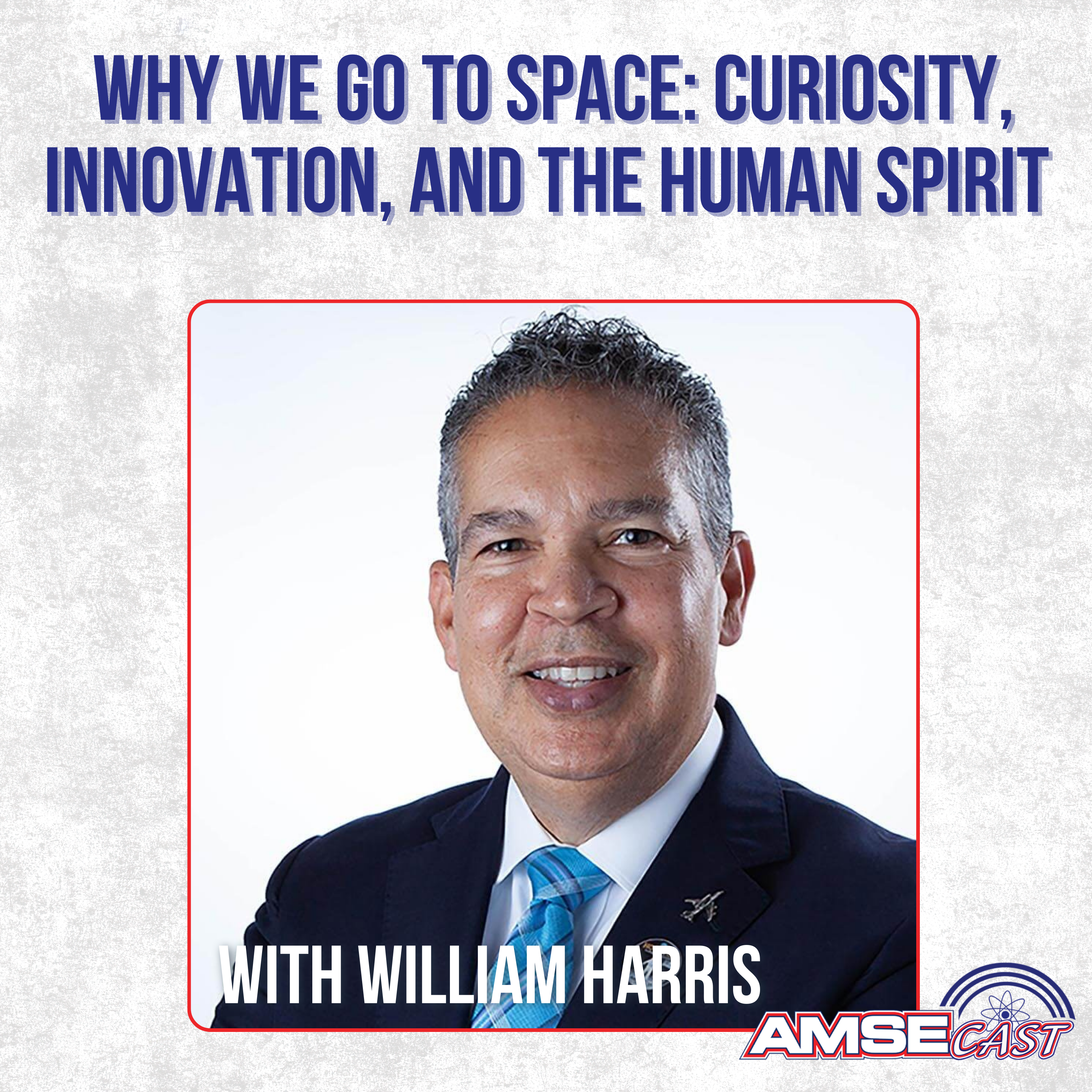
Why We Go to Space: Curiosity, Innovation, and the Human Spirit with William Harris
In this episode of AMSEcast, host Alan Lowe sits down with William Harris, President and CEO of Space Center Houston, to explore the past, present, and future of human space exploration and what it means for American innovation. As the official visitor center for NASA's Johnson Space Center, Space Center Houston serves as the public gateway to human spaceflight. William shares how the center uses
AMSEcast with guests Alan Chodos and James Riordon
Ghost Particle explores the neutrino, one of the most abundant yet elusive particles in the universe, tracing its journey from a theoretical fix to puzzling nuclear reactions to a cornerstone of modern physics. The book explains how neutrinos helped preserve fundamental laws like conservation of energy and reveals how decades of ingenious experiments finally confirmed their existence. The authors
How to Kill an Asteroid
Around 66 million years ago, an asteroid that was perhaps 9 miles wide struck the Earth, an impact that led to the extinction of the dinosaurs. What if an asteroid that large or even larger was headed toward Earth today? We've seen this scenario in books and in movies like Armageddon, but I wanted to get some expert input, so I spoke on our podcast, AMSEcast, with Robin Andrews, about his book
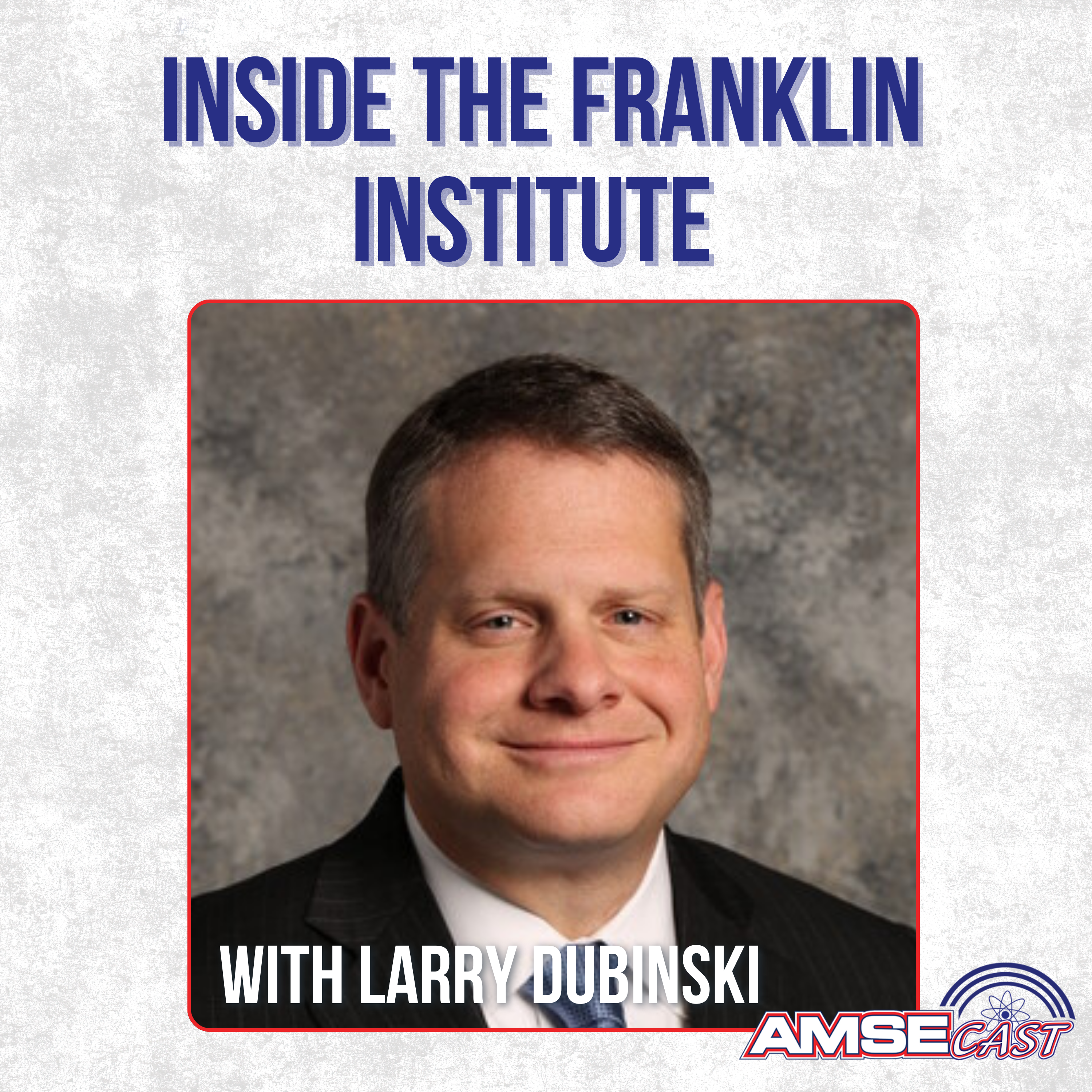
Inside The Franklin Institute with Larry Dubinski
Alan Lowe interviews Larry Dubinski, President and CEO of The Franklin Institute, as part of a series celebrating 250 years of American innovation. He joins AMSEcast to discuss the institute's 1824 origins, its mission to inspire curiosity in science and technology, and its deep ties to Benjamin Franklin's legacy. He highlights major exhibits, including the National Memorial, the Hamilton Collecti
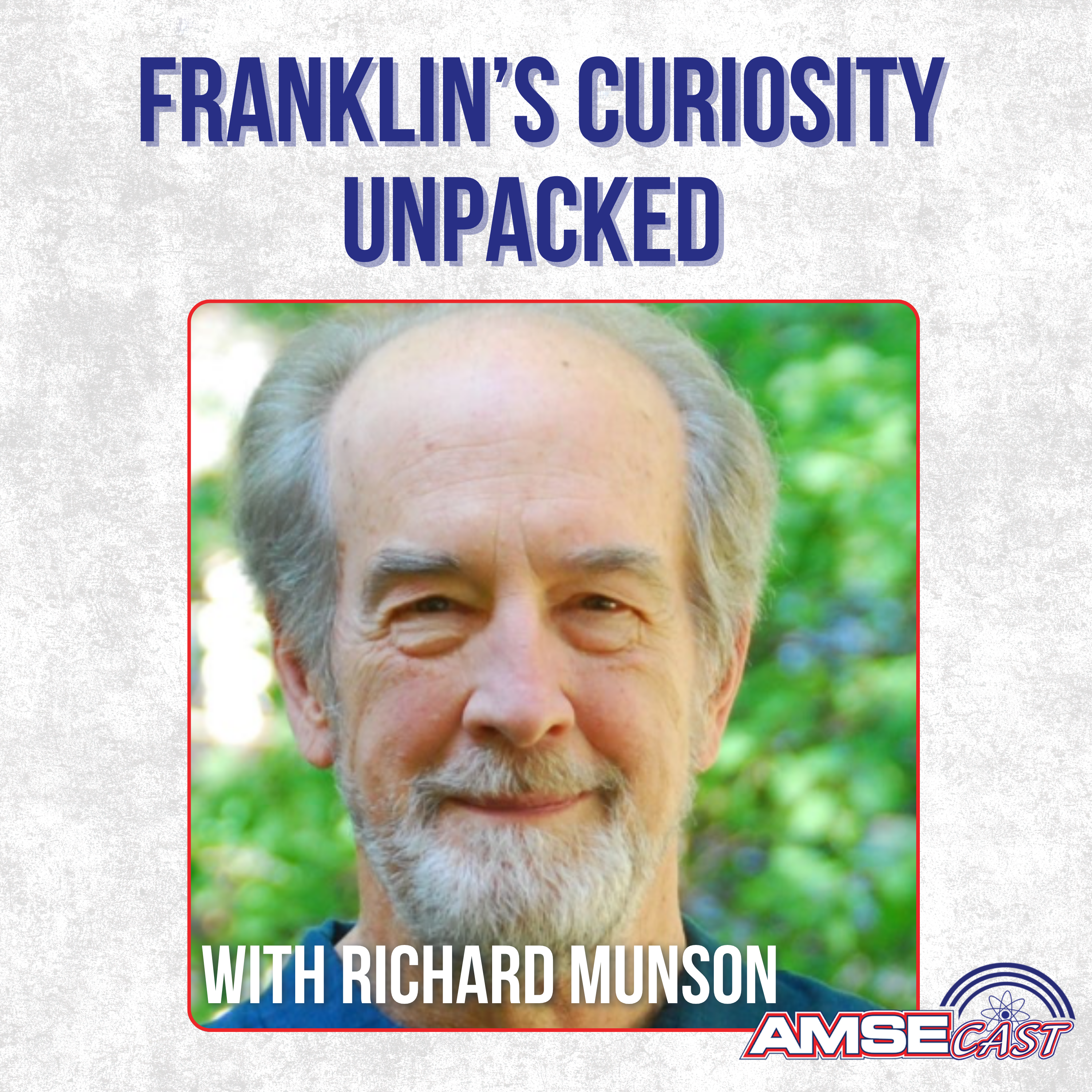
Franklin's Curiosity Unpacked with Richard Munson
Alan Lowe talks with Richard Munson about his book Ingenious: A Biography of Benjamin Franklin, Scientist. Munson's book aims to highlight Franklin's often overlooked scientific achievements. He describes Franklin's rise from a penniless runaway to a successful printer whose curiosity fueled his scientific breakthroughs. Franklin's experiments helped define core electrical concepts and led to inve

AMSE Science Report Sudip Parikh
A discussion of American innovation and leadership with Sudip Parikh.

AMSE Science Report with Simon Cordrey
Author Simon Cordrey discusses the early days of the railroad and how that changed America.

AMSE Science Report with Jay Feldman
Author Jay Feldman and Alan Lowe, Director of the AMSE Foundation discuss his book, When the Mississippi Ran Backwards.

Planetary Defense 101 with Dr. Robin Andrews
Alan Lowe is joined in this episode of AMSEcast by Dr. Robin Andrews, volcanologist, science journalist, and author of How to Kill an Asteroid. Dr. Andrews explores how modern planetary defense blends cutting-edge detection networks, such as NASA's NEO Surveyor, with active deflection efforts like the DART mission, which successfully shifted an asteroid's orbit. He also delves into theoretical app
AMSE Science Report with Author Michele Gelfand
Michele J. Gelfand is the John H. Scully Professor of Cross-Cultural Management Professor of Organizational Behavior and Psychology at Stanford Graduate School of Business. Her book, RULE MAKERS, RULE BREAKERS: How Tight and Loose Cultures Wire Our World takes readers on a journey through a variety of human cultures, exploring unique a multi-faceted glimpse into the world around
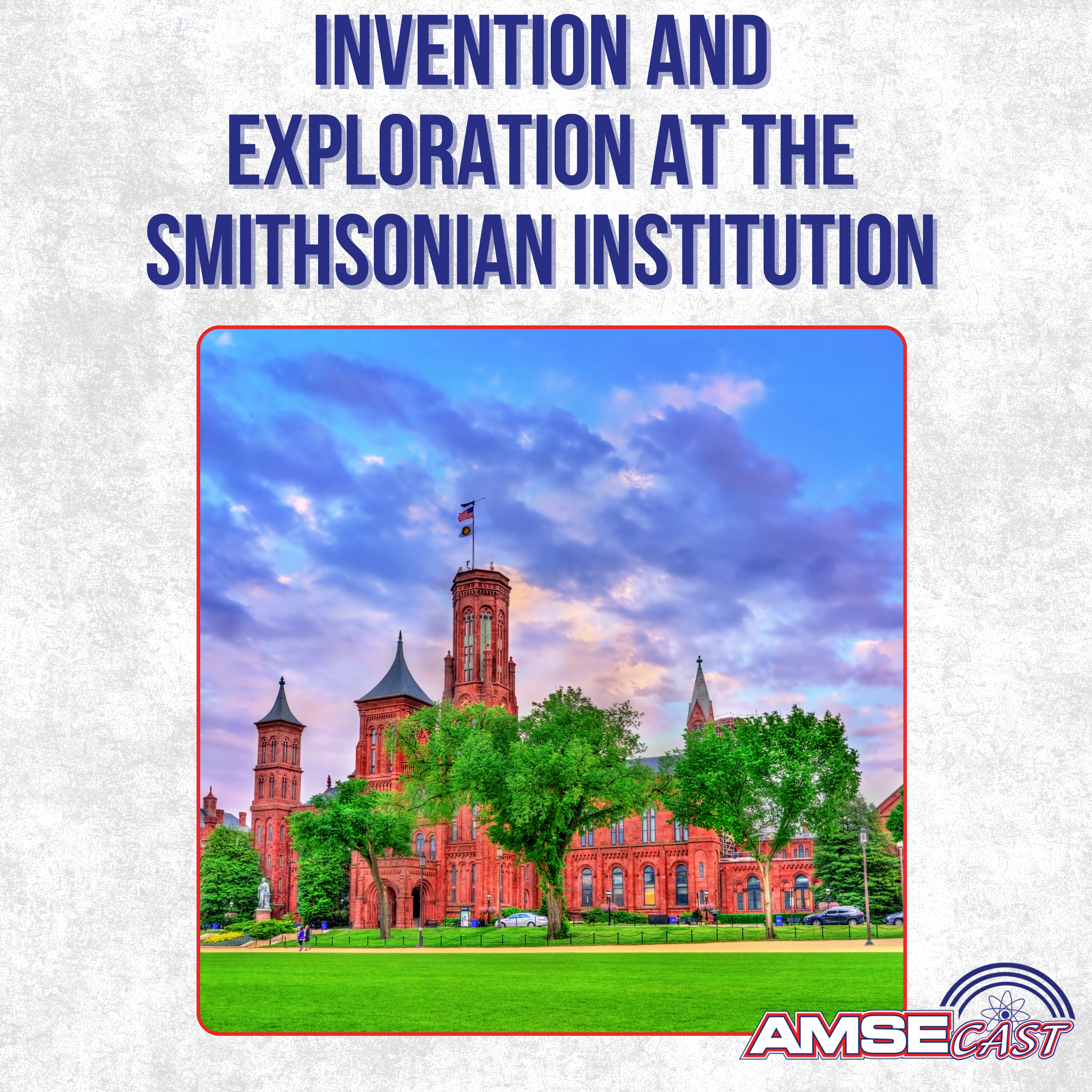
Invention and Exploration at the Smithsonian Institution
Host Alan Lowe continues AMSEcast's exploration of 250 years of American innovation with Smithsonian experts Harold Wallace Jr., Dr. Eric Hintz, and Tim Pula. Together, they trace invention from Benjamin Franklin's experiments to modern breakthroughs, highlighting the Smithsonian's exhibitions, collections, and hands-on learning at Spark!Lab. The discussion spans collaboration with the Library of
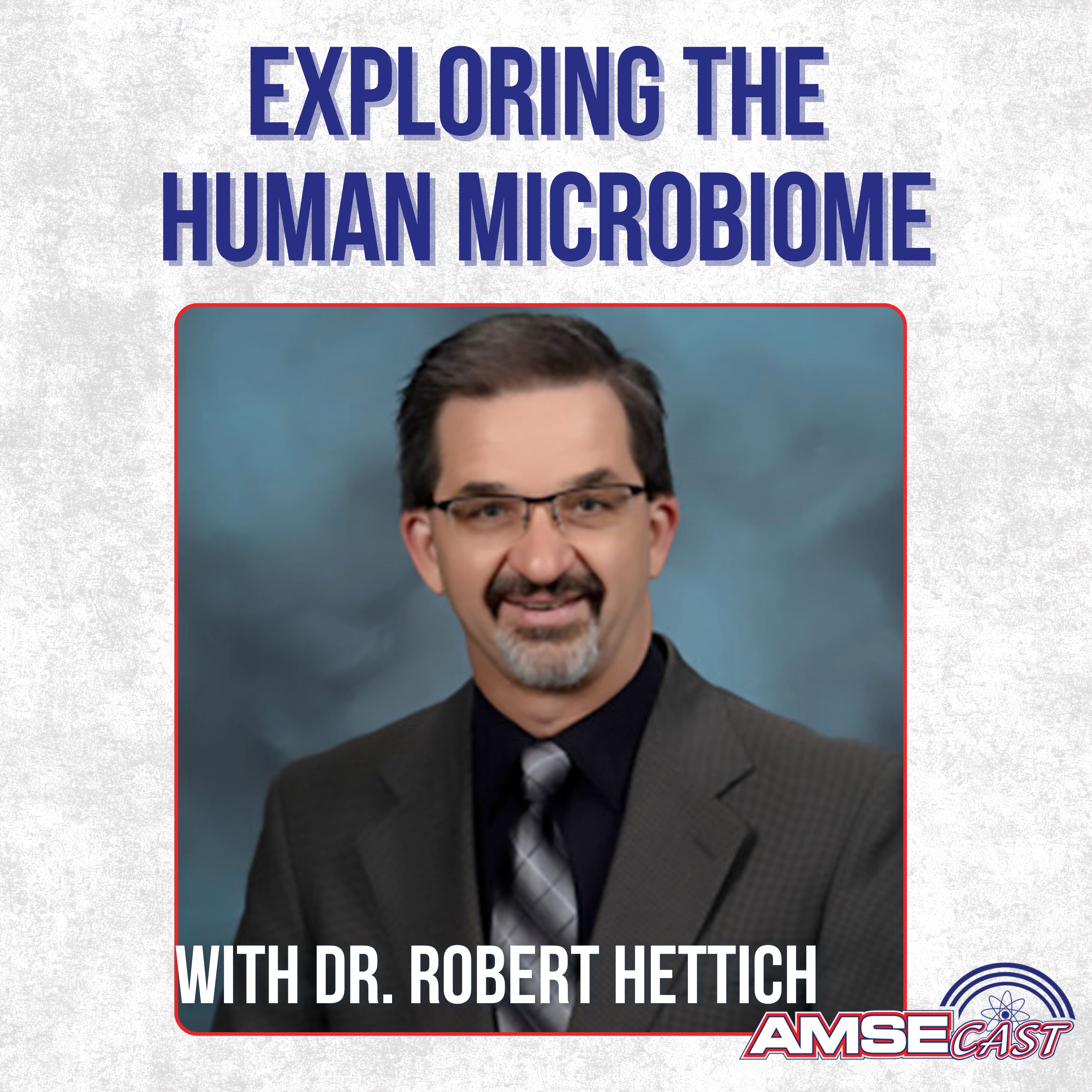
Exploring the Human Microbiome with Dr. Bob Hettich
Dr. Robert Hettich is a pioneer in bioanalytical mass spectrometry. In this episode of AMSEcast, he describes how microbiomes form, vary across the body, and influence digestion, immunity, and overall health. Dr. Hettich also explains metaproteomics, the study of microbial proteins, to reveal how microbes function beyond their genes as well as their applications from human health to environmental
One Woman's Personal Journey Through Sexism in Science author on AMSE Science Report
Dr. Colwell shares her insight on the progression of women in science through the years. Framed by her own experiences we learn about her incredible work.
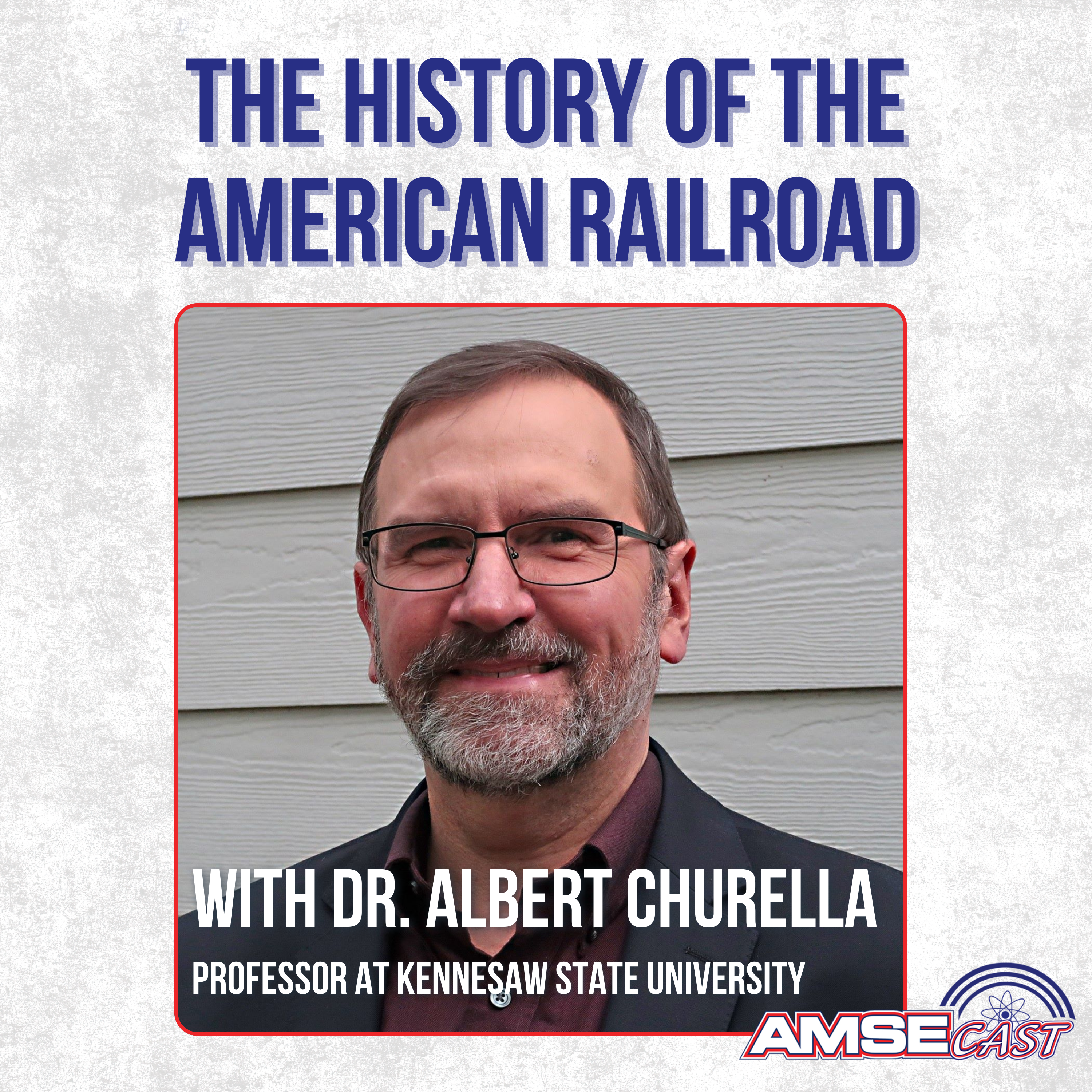
The History of the American Railroad with Albert Churella
Railroads have shaped America's growth, technology, and daily life for nearly two centuries. In this episode of AMSEcast, Alan talks with Dr. Albert Churella of Kennesaw State University about how innovations such as the automatic knuckle coupler, Westinghouse's air brake, and the move from steam to diesel transformed safety and efficiency. Dr. Churella explains how signaling, centralized traffic
AMSE Science Report with Marc Wortman
AMSE Science Report with Richard Ellis
Author Richard Ellis speaks about his latest book The Quest for the Cosmic Dawn. A breakdown of the earliest moments of our celestial cosmic soup.
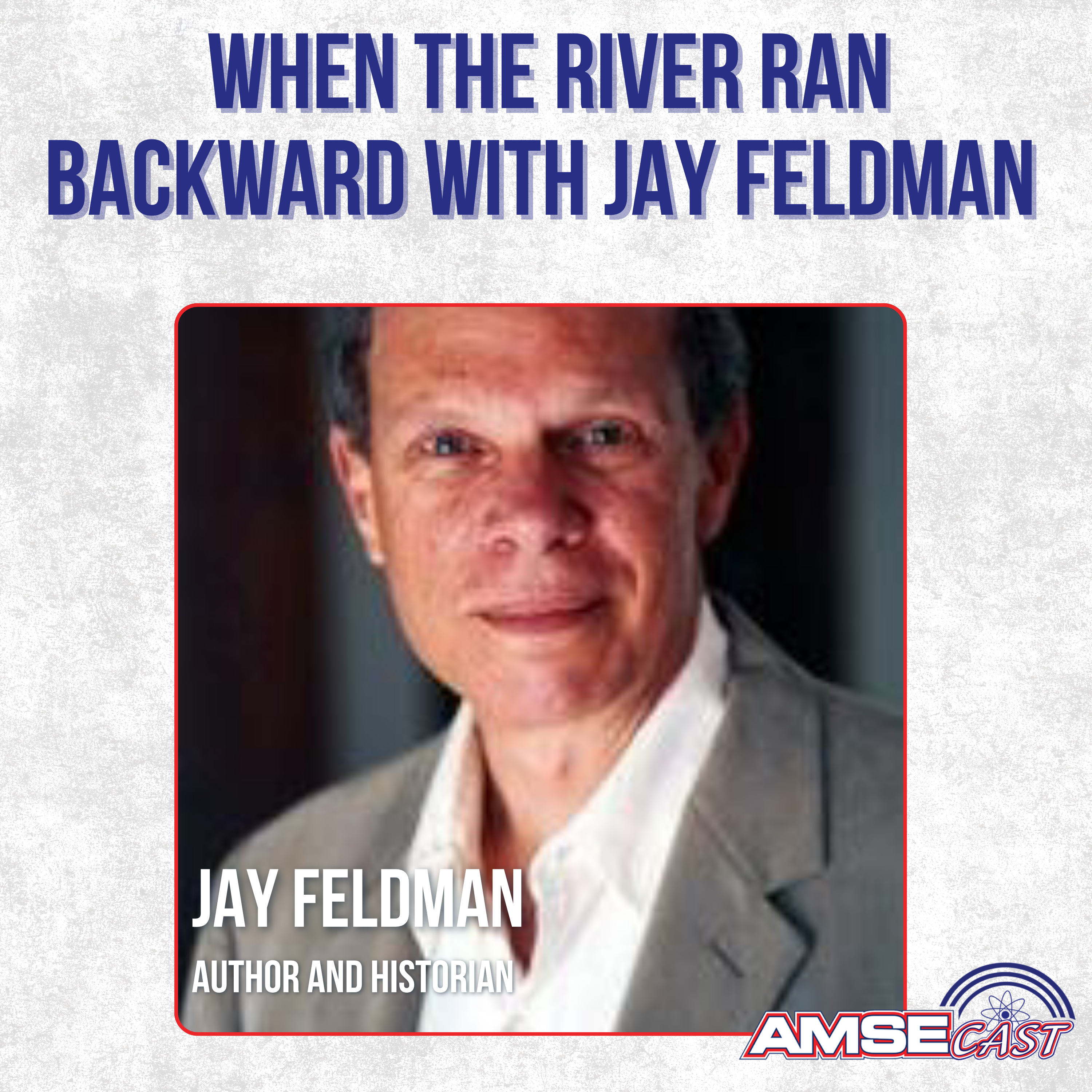
When the River Ran Backward with Jay Feldman
Author and historian Jay Feldman joins host Alan Lowe to discuss When the Mississippi Ran Backwards, his gripping account of the 1811–1812 New Madrid earthquakes. Alan and Feldman explore the quakes' massive impact, including over 2,000 tremors felt across 1.5 million square miles, and the deep historical context behind them. He explains the ancient origins of the Reelfoot Rift, Tecumseh's eerie q
AMSEcast with guest Norm Augustine
In this episode, Mr. Lowe interviews Mr. Augustine. They discuss a variety of fascinating roles that Mr. Augustine has served in over the course of his career. At Princeton he was advised to consider geological engineering but would go on to change his major to aeronautical engineering as he was advised by a peer "that is where the future was." The range of topics they discuss include American com
AMSE Science Report with guest Jack Kelly
In this excerpt from our podcast, AMSEcast, Jack Kelly, author of Gunpowder: Alchemy, Bombards, and Pyrotechnics: The History of the Explosive that Changed the World. Discusses one of the most innovative and compounds ever manufactured.
STEM of History with Dr. Todd Braje
Dr. Todd Braje, the Executive Director of the University of Oregon Museum of Natural and Cultural History, discusses his book, Understanding Imperiled Earth. He shows how analyzing data from many disciplines, such as archaeology and history, can help address some of the environmental challenges we face today.
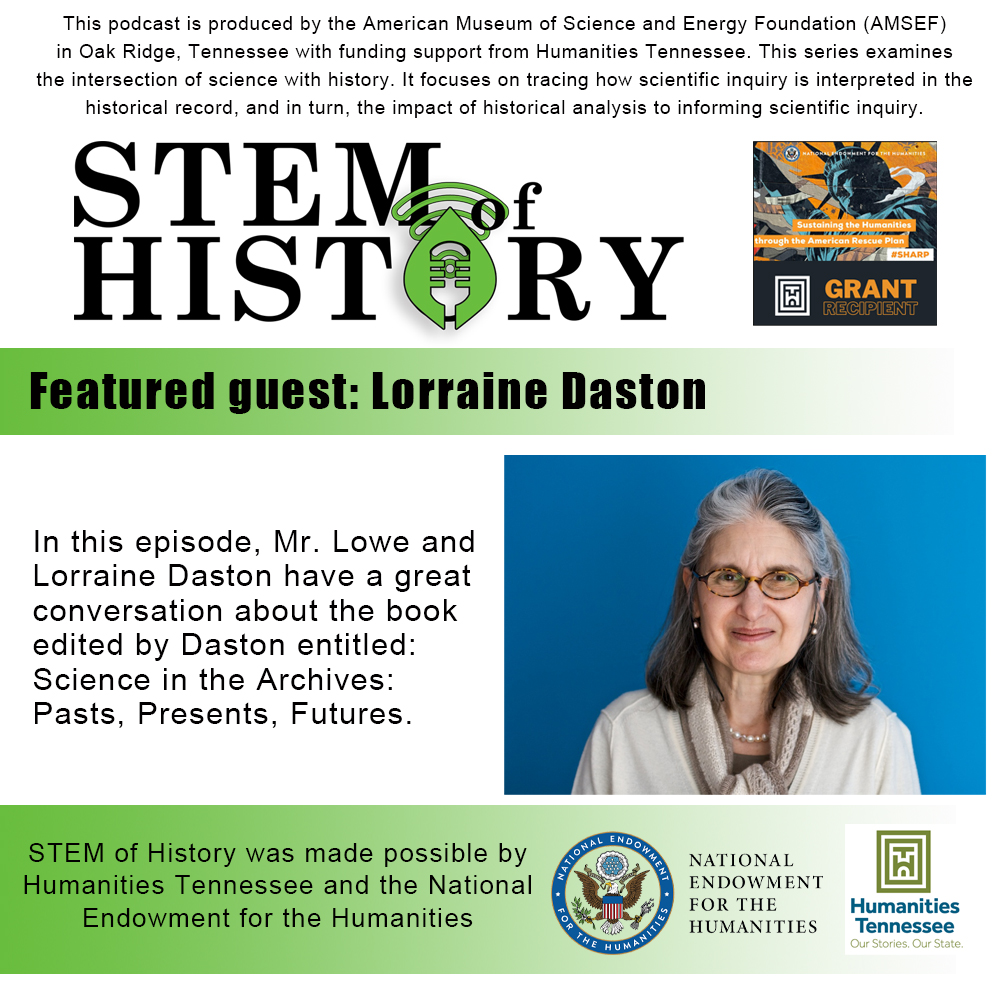
STEM of History The Science of Archives
We have a great conversation with Lorraine Daston editor of Science in the Archives: Pasts, Presents, Futures.
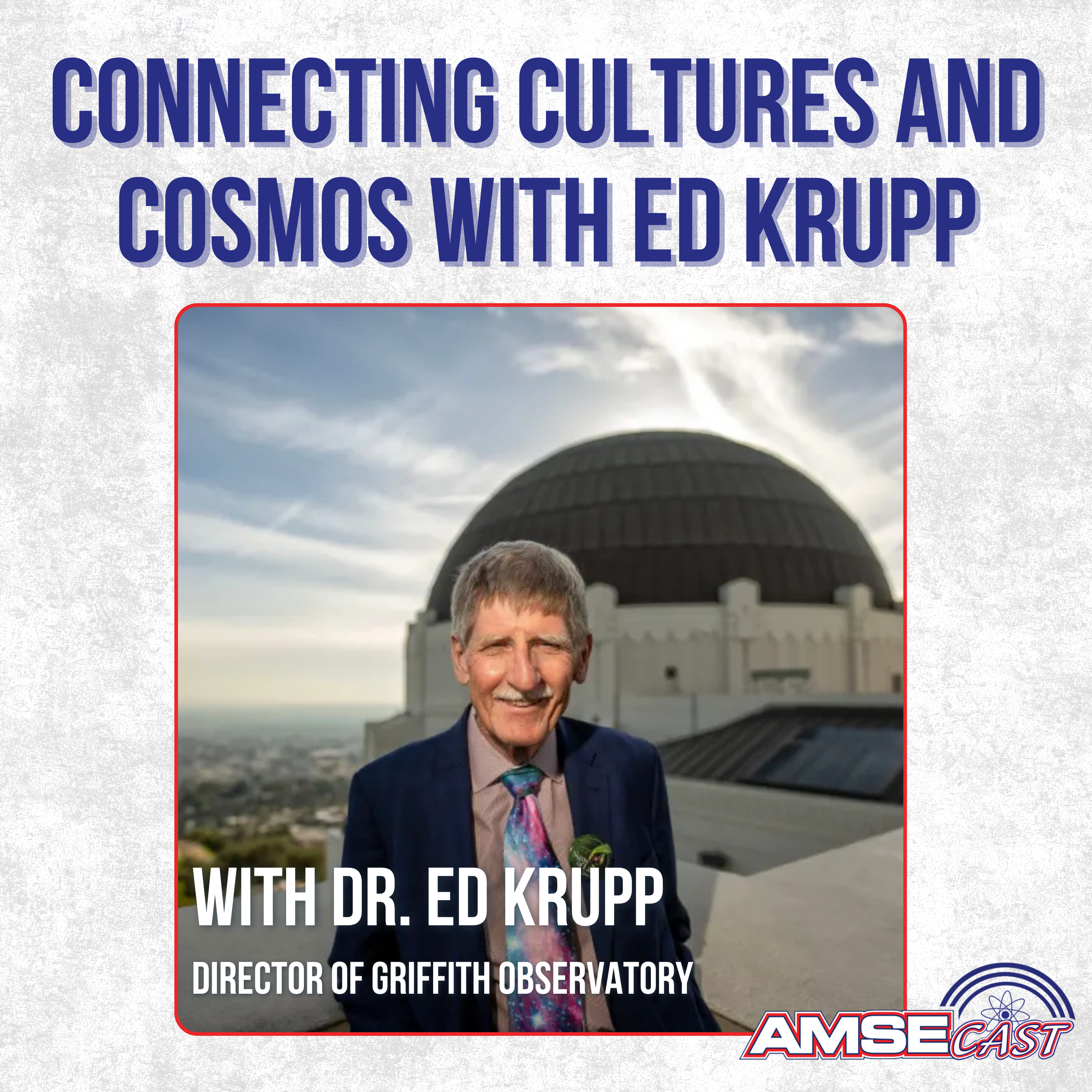
Connecting Cultures and Cosmos with Ed Krupp
Dr. E.C. "Ed" Krupp joins Alan on this episode of AMSEcast to discuss the Griffith Observatory and his role as its longtime director. Now in its 90th year, the observatory remains a hub for public astronomy, drawing over 1.6 million visitors annually. Ed shares its educational mission, including a fifth-grade program and immersive exhibits like "Water is Life." He also discusses archaeoastronomy,
The keys to innovation
Highlights of conversations about innovation from AMSEcast. The Podcast of the American Museum of Science and Energy.
AMSE Science Report: Walter Borneman recently spoke to us about his book, MacArthur at War: World War II in the Pacific
Noted historian Walter Borneman recently spoke to us about his book, MacArthur at War: World War II in the Pacific. Few characters loom as large in that war than Douglas MacArthur, and Walt's book gives a terrific look at how this enigmatic man helped lead our nation to victory over the Japanese. After his narrow escape from the Philippines as the Japanese invaded, MacArthur set up his headquarter
AMSE Science Report Al Romig
On this episode, being recorded at the National Academy of Sciences Building in Washington, DC, I'm very honored to be joined by Dr. Alton D. Romig, Jr. Al has had a truly exceptional career, full of more awards than I can list today. Most recently, for example, the 2024 IEEE McClure Citation of Honor for engineering leadership, and more positions than I can include today, but they've included le
Kathleen Carlucci, the Director of the Thomas Edison Center talks history
We always celebrate at our museums the rich history of American innovation, but we're putting a special spotlight on that history as we approach the nation's semiquincentennial in 2026. To help us with that, we spoke on our podcast, AMSEcast, with Kathleen Carlucci, the Director of the Thomas Edison Center at Menlo Park. Thanks to his host of revolutionary innovations and inventions, Thomas Edison
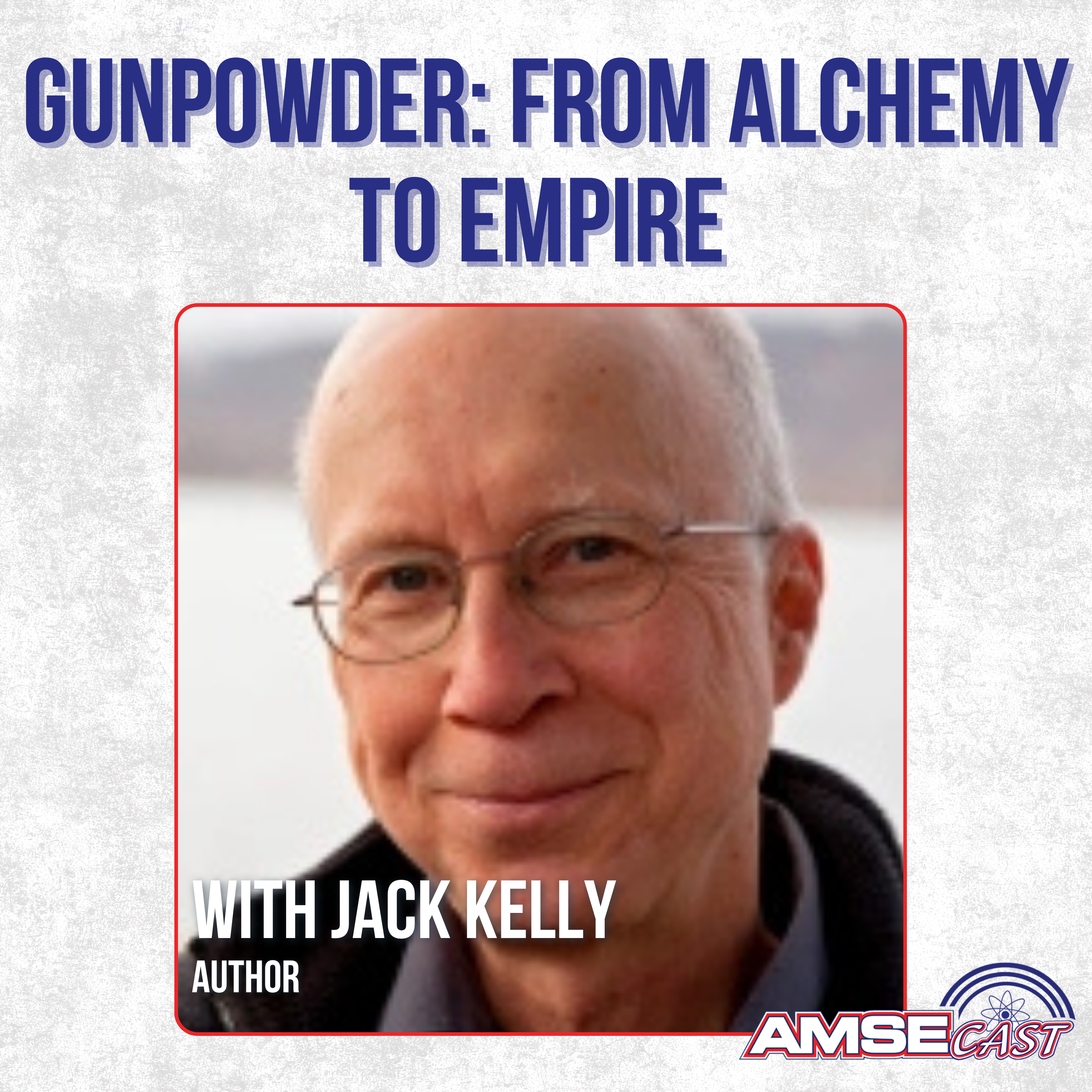
Gunpowder: From Alchemy to Empire with Jack Kelly
Jack Kelly joins Alan on this episode of AMSEcast to talk about his book Gunpowder: Alchemy, Bombards, and Pyrotechnics. They discuss gunpowder's accidental invention in 10th-century China and its explosive mix of saltpeter, charcoal, and sulfur. Kelly explains how gunpowder shaped science and warfare, fueling revolutions in physics, ending the era of castles, and powering colonial empires. Though
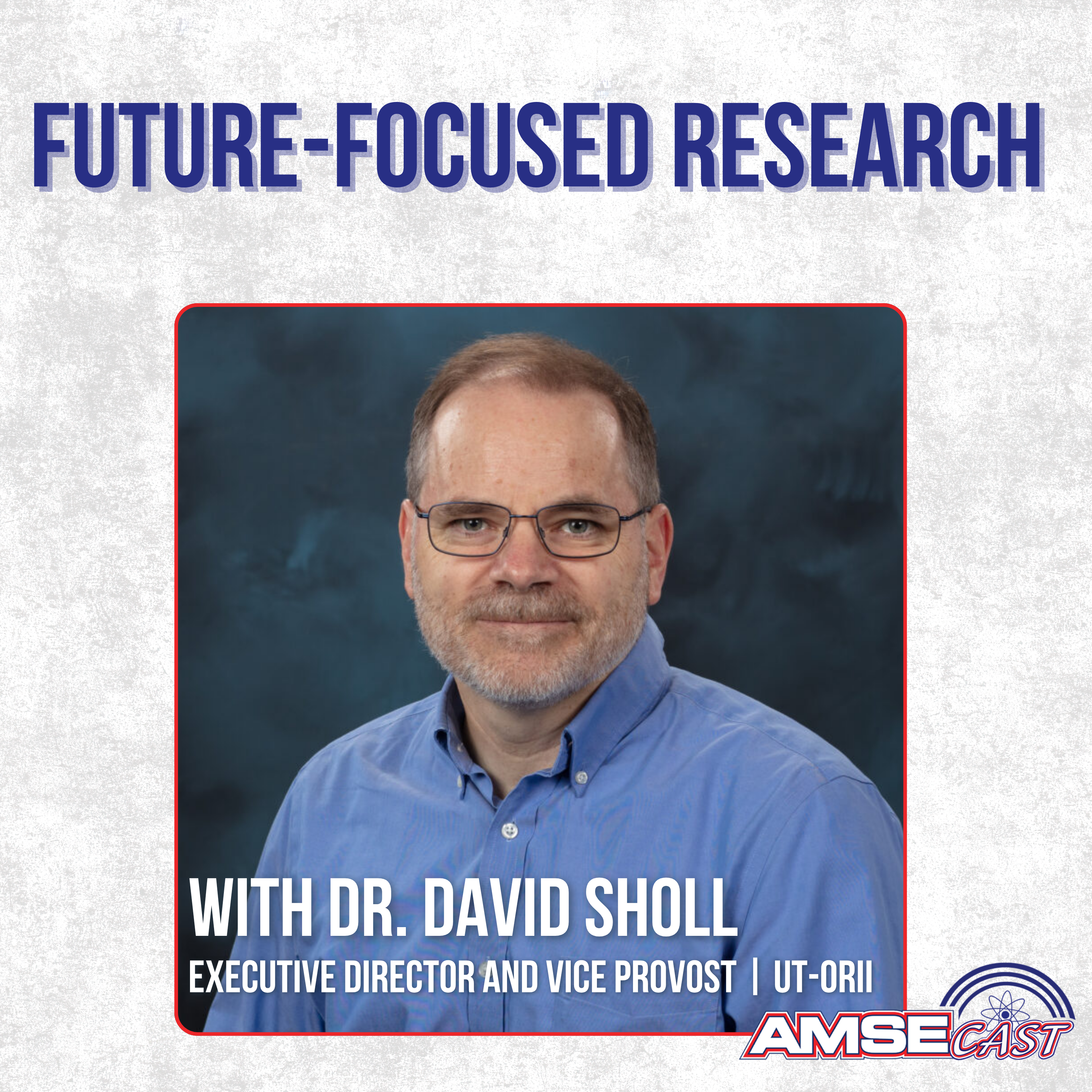
Future-Focused Research with Dr. David Sholl

Tracks Across America with Simon Cordery
Alan Lowe speaks with Dr. Simon Cordery about the transformative role of railroads in American history. From the Baltimore and Ohio Railroad in 1828 to a national network by 1916, Cordery details how rail shaped commerce, industry, and infrastructure. He also explores regulation, from early oversight efforts to the 1980 Staggers Act, which revitalized the struggling industry. The conversation touc

General MacArthur's War Path with Walter Borneman
Alan talks with historian Walter Borneman about his book MacArthur at War: World War II in the Pacific. They examine General Douglas MacArthur's early career, his leadership in the Philippines, and his strategic command from Australia. Borneman discusses MacArthur's evolving coordination with the Navy, his key role in island-hopping operations, and his push to reclaim the Philippines. They also ex

AMSEcast with guest Tom Zoellner
Given the centrality of uranium to the story of the Manhattan Project, the creation of Oak Ridge, and the ongoing nuclear renaissance, I thought it would be good to learn more about that element, so I spoke on our podcast, AMSEcast, with Tom Zoellner about his fascinating book, Uranium: War, Energy, and the Rock that Shaped the World. I started by asking why uranium is so unique and so suited to c

Inside the National Air and Space Museum with Margaret Weitekamp
Alan Lowe speaks with Dr. Margaret Weitekamp of the Smithsonian's National Air and Space Museum about its transformation ahead of America's 250th anniversary. They explore how new exhibits, immersive storytelling, and iconic artifacts like the Wright Flyer, Space Shuttle Discovery, and Neil Armstrong's spacesuit bring aviation and space history to life. Weitekamp discusses the museum's role as bot

Inside the Invention Factory with Kathleen Carlucci
Kathleen Carlucci, director of the Thomas Edison Center at Menlo Park, joins AMSEcast to discuss Edison's lasting impact on American innovation. From his early love of telegraphy to his system-wide inventions in sound, light, and film, Edison redefined how ideas were developed and assembled skilled teams in the world's first "invention factory." Carlucci highlights his resilience, collaborative sp

A Library of Treasures in American History with Josh Levy
Dr. Josh Levy is a historian of science and technology at the Library of Congress. In this episode of AMSEcast, he highlights key figures and artifacts from all across America's innovation history. From Samuel Morse's early telegraph designs to George Washington Carver's advocacy for sustainable farming, Levy reveals stories of invention and resilience. He also discusses aviation pioneer Lt. Thoma
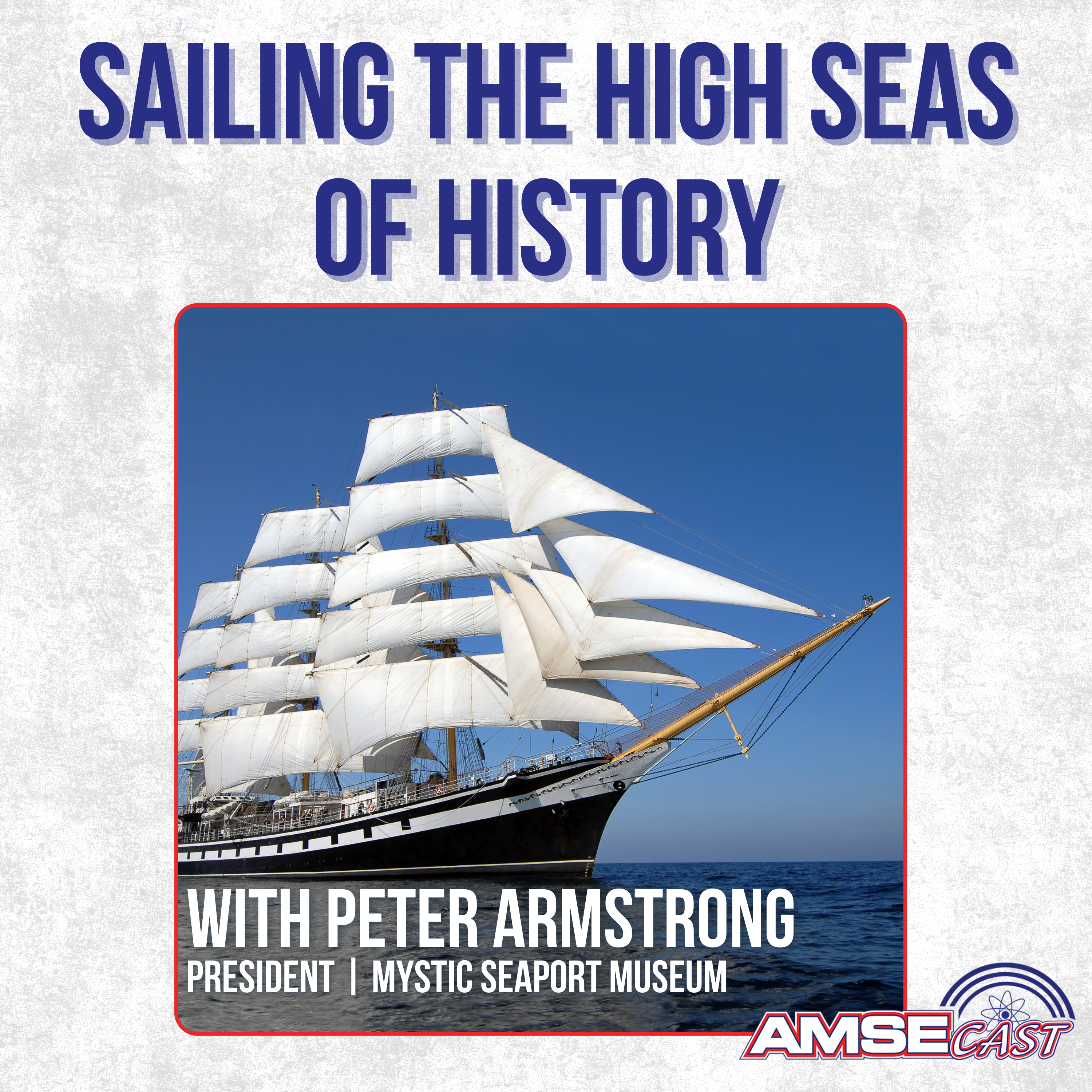
Sailing the High Seas of History with Peter Armstrong
Alan is joined by Peter Armstrong, president of Mystic Seaport Museum, to continue our celebration of 250 years of American innovation. Peter reflects on his 25 years in museum leadership and shares insights into Mystic's long shipbuilding history. The museum, the largest maritime museum in the U.S., features historic vessels like the Charles W. Morgan, clipper ships, and a converted diesel-electr
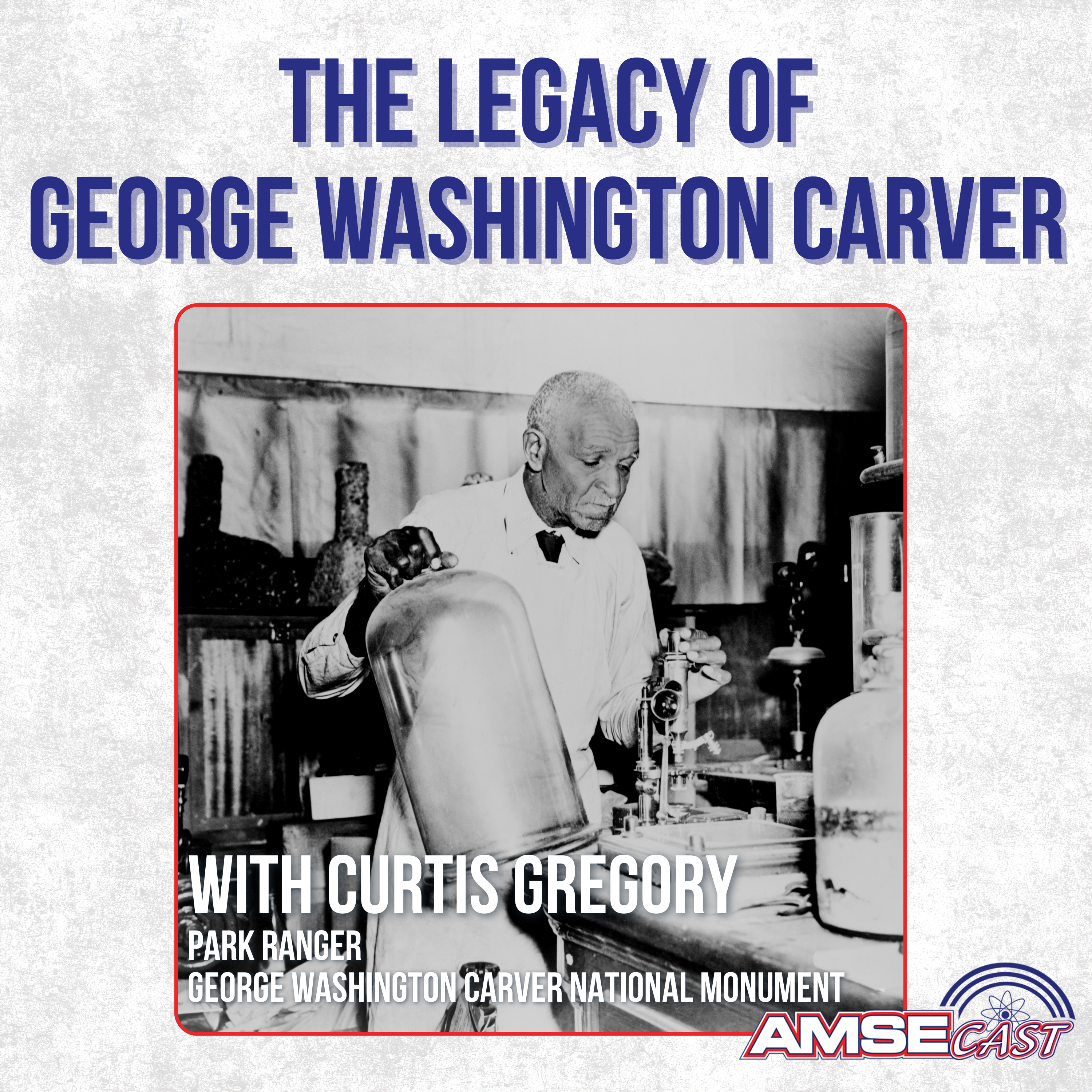
The Legacy of George Washington Carver with Curtis Gregory
AMSEcast continues celebrating 250 years of American innovation with Curtis Gregory. A park ranger at the George Washington Carver National Monument, Curtis sits down with Alan to share Carver's inspiring journey from enslavement to becoming a pioneering scientist and educator who transformed Southern agriculture. Known for promoting peanuts and sweet potatoes as sustainable crops, Carver created
Engineering a Nation with Guru Madhavan
Alan speaks with Dr. Guru Madhavan at the National Academy of Sciences in Washington, DC, as we continue our series marking 250 years of American innovation. Guru, a leader at the National Academy of Engineering, explores the Academy's Civil War origins, its lasting role in advising the U.S. government, and its influence on everything from compass design to pandemic response. He discusses how inno

The History of Spies with Andrew Hammond
AMSEcast celebrates 250 years of American innovation with Dr. Andrew Hammond, historian and curator at the International Spy Museum. Hammond explores the evolution of intelligence and espionage, from trial-and-error codebreaking by pioneers like the Friedmans to today's cutting-edge technology. He highlights cryptographic breakthroughs, spy tools, and covert communication methods like one-time pad
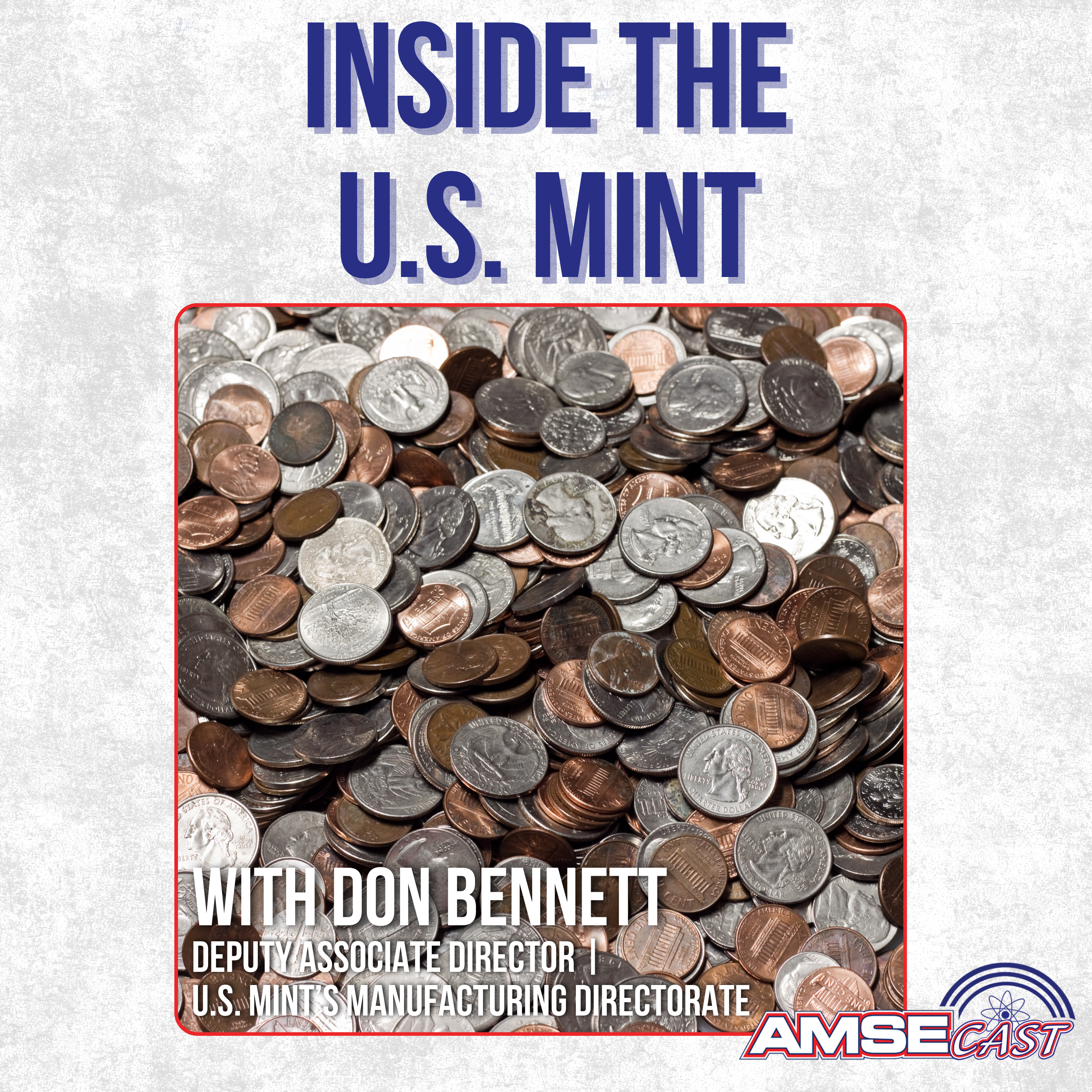
Inside the U.S. Mint with Don Bennett
We continue to celebrate 250 years of American innovation with Don Bennett, Deputy Associate Director of the U.S. Mint's Manufacturing Directorate. He joins Alan on this episode of AMSEcast to talk about the Mint's history, operations, and cutting-edge advancements. With facilities in Philadelphia, Denver, West Point, and San Francisco, the Mint produces coins using robotics, high-speed presses, a

The Presidents and Science
What you didn't know about the Presidents and the scientific process is on exhibit at AMSE.

AMSE Science Report with Mark Miodownik
Welcome to the AMSE Science Report. Today we speak with Mark Miodownik about his terrific book, It's a Gas: The Magnificent and Elusive Elements that Expand Our World. A fascinating conversation began by asking a very basic question – what is a gas?

Marie Curie's Legacy with Dava Sobel
Award-winning science writer Dava Sobel returns to AMSEcast to discuss her latest book, The Elements of Marie Curie. She and host Alan explore Curie's groundbreaking research, her struggles against societal barriers, and her enduring impact on science and women in STEM. From her discovery of polonium and radium to mentoring future pioneers like Ellen Gleditsch and Marguerite Perey, Curie's legacy

Innovation & Policy with Sudip Parikh
With support from the Institute of Museum and Library Services, AMSEcast is celebrating 250 years of American innovation with expert interviews. CEO of the American Association for the Advancement of Science and executive publisher of Science, Dr. Sudip Parikh joins Alan on this episode to explore the forces shaping scientific progress. He highlights interdisciplinary collaboration, the impact of

Taking Risks and Innovating Along the Way with Al Romig
Executive Officer of the National Academy of Engineering, Dr. Al Romig joins this special edition of AMSEcast, recorded at the National Academy of Sciences Building in Washington. Dr. Romig has led a distinguished career including leadership roles at Sandia National Lab, Lockheed Martin's Skunk Works, and now as Executive Officer of the National Academy of Engineering. He and Alan discuss key inno

The World of Uranium with Tom Zoellner
Tom Zoellner, award-winning writer and Chapman University professor, joins AMSEcast to discuss his book Uranium: War, Energy and the Rock that Shaped the World. He and Alan discuss the discovery of uranium, its radioactive nature, and its historical impact. Once dismissed as worthless by miners, uranium became vital to energy and warfare. The U.S. uranium rush peaked in the 1950s but has since dec

Exhibiting the Best of the Smithsonian with Jennifer Collins and Nicole Webster
Alan takes a trip to the Smithsonian National Museum of Natural History to speak with Nicole Webster, the Manager of School and Teacher Programs, and Jennifer Collins, Learning Experience Manager for Exhibits and Initiatives. Broadcasting from the museum itself, the discussion revolves around its fascinating history, impressive collections, and impactful educational initiatives. With over 4 millio

Materials and All Matters of Science with Mark Miodownik
Materials scientist and BBC presenter Dr. Mark Miodownik joins AMSEcast to discuss his latest book, It's a Gas. He explores the hidden world of gases, from steam's role in electricity production to methane's surprising history. The conversation spans George Washington's scientific curiosity, oxygen's life-saving importance, and the chemistry of scent. Mark also unpacks the science of hot air and h
AMSE Science Report with guest Keith Houston
Keith Houston, author of the book, Empire of the Sum: The Rise and Reign of the Pocket Calculator joined us to recently to speak on our podcast AMSEcast. We talked about counting and ciphering from the earliest days of humanity up to the momentous creation of those wonderful pocket devices in the 1970's. One of the historic models we spoke about was the TI 81 that became a worldwide sensation for

AMSE Science Report with guest Saul David
Part of our mission at the AMSE Foundation is to tell the story of the Manhattan Project and to do that, we must discuss the horrible conflict that led to that massive effort to build the atomic bomb. With that in mind, I spoke on our podcast, AMSEcast, with Saul David, author of Crucible of Hell: The Heroism and Tragedy of Okinawa, 1945. Saul explains, Okinawa, for many reasons, was seen as a nat

Nuclear Safety Innovation with Ashley Stowe
Dr. Ashley Stowe is the director of the Oak Ridge Enhanced Technology and Training Center (ORETTC) at Y-12 National Security Complex, and he joins AMSEcast to discuss his career and the mission of Y-12. With a PhD in chemistry and an MBA, Dr. Stowe leads efforts to support nuclear deterrence, fuel the nuclear navy, and advance global security. Opened in 2023, ORETTC trains first responders using c

AMSE Science Report with Katie McKissick
Katie McKissick, author of the book DNA is You: The Marvelous Science Behind Your One-Of-A-Kind-Ness is our guest on this episode of The AMSE Science Report. Our wide ranging conversation looks at the mechanisms of DNA and how it shapes our lives.

Building the Empire of the Sum with Keith Houston
Keith Houston is the author of Empire of the Sum: The Rise and Reign of the Pocket Calculator. He joins Alan on this episode of AMSEcast to discuss the history of calculating. From the ancient Lebombo bone to mechanical calculators, Keith covers the evolution of calculating tools. This includes modern milestones like John Napier's logarithms, the HP-35 scientific calculator, and the TI-81's impact

AMSEcast Conversations: Climate Change Science from Eisenhower to Bush
Alan Lowe, Executive Director of the American Museum of Science and Energy, launches AMSEcast Conversations with a compelling discussion on Jay Hakes' book, The Presidents and the Planet: Climate Change Science from Eisenhower to Bush. The panel, featuring Hakes alongside energy experts David McCollum and Charles Sims, traces the origins of modern climate science to the 1950s work of Roger Revelle
Recommended

Crickets Corner
History of the Earthquake and Fire in San Francisco

Fox news

K-Drama Obsessed Mamas | Beyond “Just One More Episode!”

True Crime Classics

The Healer Revolution

Becoming: HER with Nikki Spoelstra
Booked, Blonde & Busy w/ Olivia Ponton

McKinsey on Consumer and Retail

megahired.com

Hard Knocks Podcast
Effective Weight Loss for Moms | High protein, Strength Training, Lose Weight, Meal Planning, Fat Loss, Healthy Habits
