Home
Podcasts
The Principles of War - Lessons from Military History on Strategy, Tactics, Doctrine and Leadership.
The Principles of War - Lessons from Military History on Strategy, Tactics, Doctrine and Leadership.
This podcast offers professional military education in 30-minute sessions, studying historic battles through current doctrine to extract lessons on strategy, tactics, combined arms, and military leadership. Designed for unit PME programs, it provides insights from great battles without the need for after-action reviews.
Episodes

154 - Guadalcanal's Battle of the Gifu - Cannabalism in the jungle
The US Army's 132nd Infantry Regiment walked into one of the strongest Japanese defensive positions of the Guadalcanal campaign — and didn't know it until they'd already lost their battalion commander. This episode traces the Americal Division's assault on the Gifu, a horseshoe of 45–50 log bunkers at Mount Austen that artillery couldn't crack and terrain made impossible to flank. Key learnings: •

153 - Guadalcanal - Battle of Mount Austen - Hyakutake vs Patch, intelligence failures, sabotage raids and crippling casualties.
Major General Patch had a simple plan: send the fresh 132nd Infantry Regiment to clear a company of sick Japanese from Mount Austen before the January offensive. Intelligence estimated perhaps 100 defenders. The actual Japanese force was far larger, dug into complex terrain with observation over Henderson Field, and Hyakutake had deliberately positioned them to draw American combat power away from

152 - National Guard vs Imperial Japanese Army on Guardalcanal - Lessons Learnt for employing green troops at 5th Matanikau
The US 182nd Infantry Regiment crossed the Matanikau on 18 November 1942 and within 48 hours all three companies of 1st Battalion had broken under Japanese mortar and flanking fire. This episode examines how green National Guard troops faltered in their combat debut, why a four-hour artillery delay negated the prep fires, and what the six-week Point Cruz stalemate reveals about the cost of transit

151 - How Sea Control doomed the 17th Army to Starvation on Guadalcanal: The failure of the Tokyo Express
The Naval Battle of Guadalcanal cost the US Navy two rear admirals and six warships — yet it stopped 11 Japanese transports carrying 10,000 troops and the supplies needed to take Henderson Field. We discuss the critical 12–15 November 1942 engagements where Rear Admiral Daniel Callaghan's cruisers intercepted a battleship bombardment force, and Willis Lee's radar-directed gunnery from USS Washingt

150 - What new tactics did Carlson's Raiders use to hunt Shoji's Regiment during the Long Patrol on Guadalcanal?
Colonel Shoji landed 1,500 Japanese troops east of Henderson Field — and the Americans needed three battalions and a week of manoeuvre to trap just 450 of them at Gavaga Creek. This episode unpacks the Koli Point "Rat Race," the pursuit by Carlson's Raiders, and the fire team tactics that would reshape Marine infantry doctrine for decades. Dave Holland is an ex-Marine and was posted to Guadalcanal

How do you defend an island nation when 40% of your trade flows through contested waters?
Forty percent of Australian trade flows through the South China Sea — and if conflict erupts near Taiwan, that route becomes uninsurable overnight. Maritime strategist Mark Bailey argues that Western continentalism has left island nations dangerously unprepared for the Indo-Pacific's return to its ancient strategic shape, where China and India once again compete for influence over Southeast Asia.

Strategic Context for Australia's WW2 mobilisation
Australia spent 20 years preparing for a war most politicians refused to discuss publicly — and that systematic industrial strategy may be the nation's greatest governance success story. Dr. Mark Bailey traces how bipartisan policy from 1919 built the secondary industry that would have annihilated Japanese forces had they landed at Port Stephens in 1942, while Major General Jason Blake connects th

Australia's Road to War - 1936 to 1941 - Dr Peter Layton
Australia built a coherent defence industrial strategy in the 1920s and 30s that actually worked when tested by total war — yet we've forgotten most of what made it succeed. This seminar recording pairs Dr Peter Layton's analysis of the interwar Munitions Supply Board with Major General Jason Blake's discussion of current Army modernisation. This is a special seminar presentation in conjunction wi

149 - Why did the Marines stop 1,000 yards short of victory at 4th Matanikau - Guadalcanal
After the defeat at Henderson Field, Japanese 17th Army headquarters remained confident — fresh divisions and hundreds of aircraft were promised within weeks. But Vandegrift had no intention of letting them regroup. This episode traces the Fourth Battle of the Matanikau and the emergency pivot to Koli Point, revealing how interior lines and improving logistics let the Marines mount the largest US

148 - The Battle of Henderson Field - Guadalcanal 1942
This episode is the 14th episode in our Guadalcanal series. We look at the Battle of Henderson Field, which is the decisive terrain for the campaign. Had the airfield been lost, it is likely that the US would not have been able to hold Guadalcanal. We discuss: How do you defend critical terrain against a numerically superior force?How should defensive positions exploit terrain to maximize effect

147 - The Japanese tank attack in the Battle of Henderson Field - Guadalcanal
This episode looks at the Sumiyoshi's tank attack across the Matanikau - an attempt to draw defenders away from the perimeter of Henderson Field. We also discuss why Muryama coundn;t synchronise his forces and the dysfunction within the Japanese Headquarters. We look at - What are the consequences of relieving a subordinate commander on the eve of battle? (And what role did Tsuji play in Kaw

146 - Halsey's question for Vandegrift about Henderson Field's defence that influenced Pacific Strategy.
This episode looks at the defensive and offensive planning undertaken by the IJA and the USMC. It also looks closely at Vandegrift's meeting with Halsey and the outcome of the meeting. This is a pivotal moment in the campaign. Halsey has taken over from Ghormley and he prepares to back Vandegrift with everything the Navy has to help defend Guadalcanal. How does intelligence fusion enable a co

145 - 973 rounds in 83 minutes. The Battleship Bombardment of Henderson Field
This episode looks at the IJN and IJA combined planning for the assault on Henderson's Field, including the naval gunfire from the Kongo and Haruna under Rear Admiral Kurita where 973 14-inch rounds were fired in 83 minutes. We also discuss the development of the Maruyama Trail for the approach march of the 2nd Sendai Division. This episode discusses: What happens when commanders visualise terr

144 - Situational Awareness and the fight for Guadalcanal's Key Terrain - 3rd Battle of the Matanikau
USMC 1st Marine Division vs the IJA 2nd (Sendai) Division in the fight to control the Matanikau River. The 3rd Battle of the Matanikau Part II - This is the tenth episode of our Guadalcanal series with historian and author Dave Holland. This episode discusses: 1st Marine Division Combined Arms integration at the Third Battle of the Matanikau? How did the loss of the Matanikau River crossing have

143 - Inside the Japanese OODA loop on Guadalcanal - Vandegrift and 3rd Matanikau
Maruyama vs Vandegrift in the fight to control the Matanikau River. The 3rd Battle of the Matanikau Part I - This is the ninth episode of our Guadalcanal series with historian and author Dave Holland. This episode discusses: How did the Japanese plan to exploit the Second Battle of the Matanikau to set up their October 1942 offensive to retake Guadalcanal? Why was the Matanikau River "key terrain

Puller, Munro, and Monssen - the daring resuce of 1/7 Marines - 2nd Battle of the Matanikau Part II
2nd Matanikau - Guadalcanal and Pullers rescue of the 1/7th Marines. The 2nd Battle of the Matanikau Part II - This is the eighth episode of our Guadalcanal series with historian and author Dave Holland. This episode discusses: What was the plan for 27 September, and why was it inherently risky? How did a breakdown in command-and-control affect the Marines' river-crossing plan at the Matanikau Riv

141 - Chesty Puller, 1/7 Marines and 2nd Matanikau, Guadalcanal
The 2nd Battle of the Matanikau - This is the seventh episode of our Guadalcanal series with historian and author Dave Holland. This episodes discusses: How did the arrival of the 7th Marines transform Vandegrift's Guadalcanal strategy from survival to aggressive "active defence"? What was Japan's Operation Ka, and how was it meant to crush the Marines and recapture Henderson Field in one d
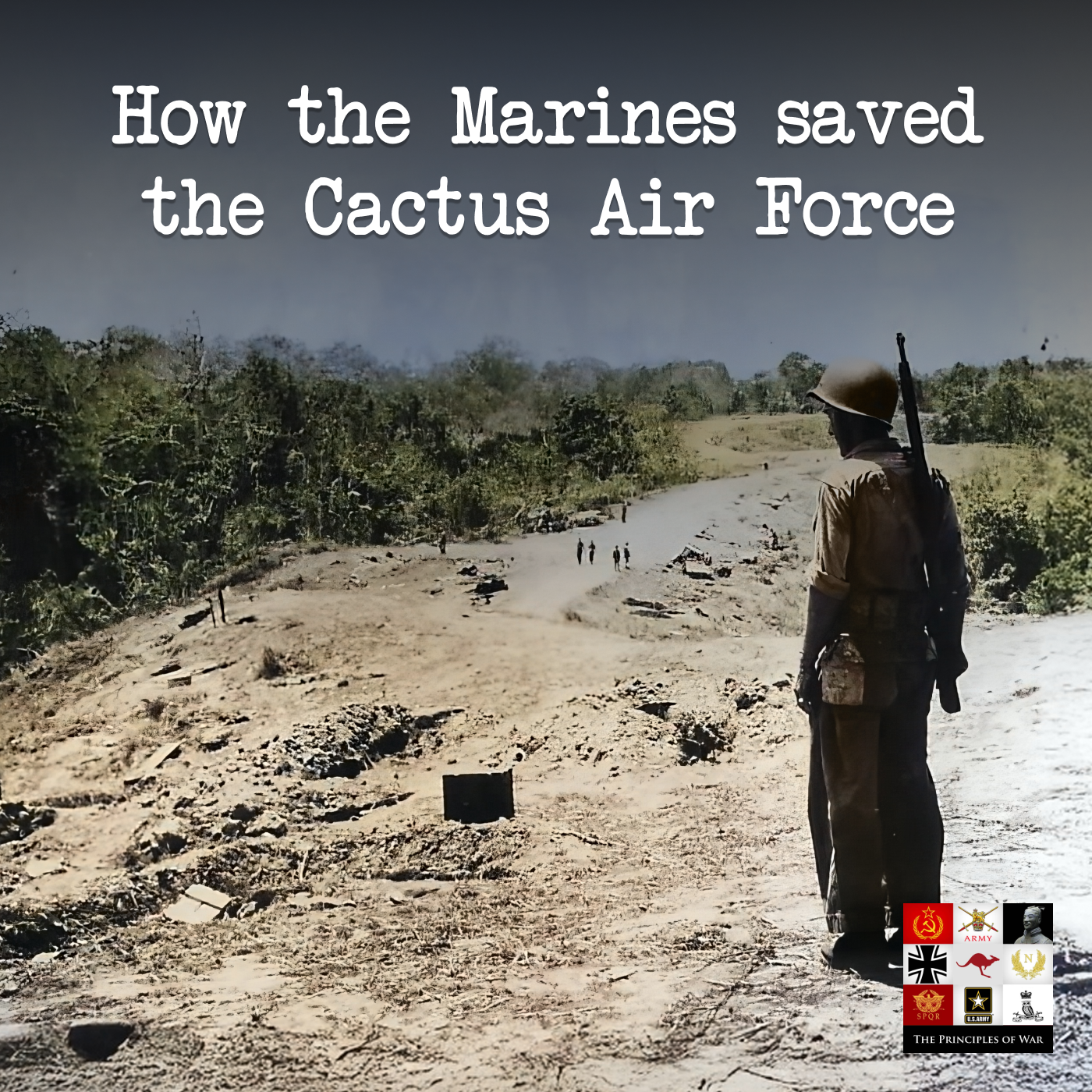
140 - Battle of Edson's Ridge: How the Marines saved the Cactus Air Force
This is the sixth episode of our Guadalcanal series with historian and author Dave Holland. This episodes discusses: How close did Japanese forces come to capturing Henderson Field in September 1942? Why was Edson's Ridge the key terrain for defending Guadalcanal's airfield? How did pre-registered artillery fire shape the outcome on Edson's Ridge? What command decisions did Edson make when
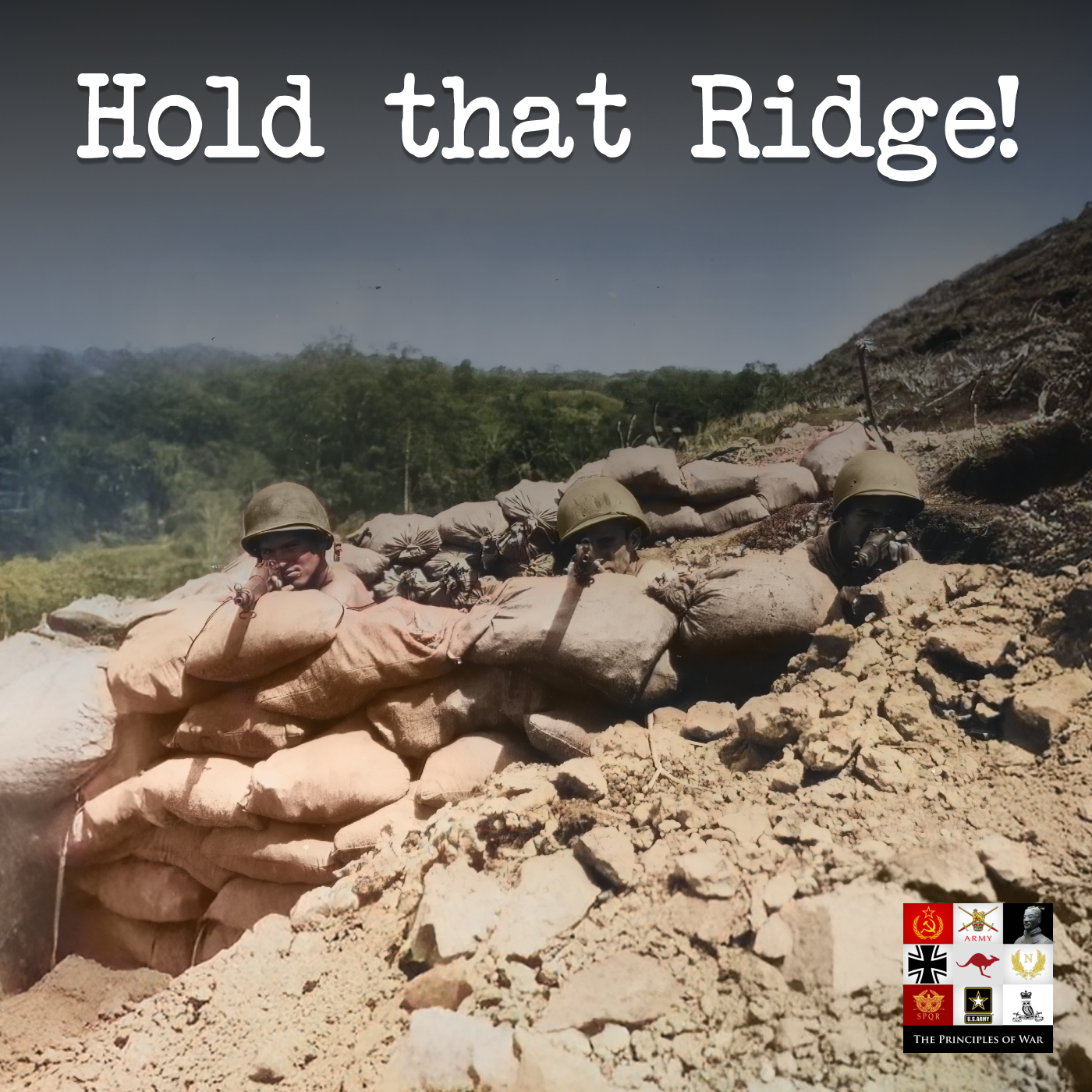
139 - Guadalcanal - Edson and the defence of Bloody Ridge
This is the fifth episode of our Guadalcanal series with historian and author Dave Holland. This episodes discusses: Why was Henderson Field the single piece of decisive terrain on Guadalcanal? How did Edson know the main Japanese attack would come over the ridge, not the beach? What went wrong in Kawaguchi's three-pronged night attack on the Marine perimeter? How did fragile Guadalcanal lo
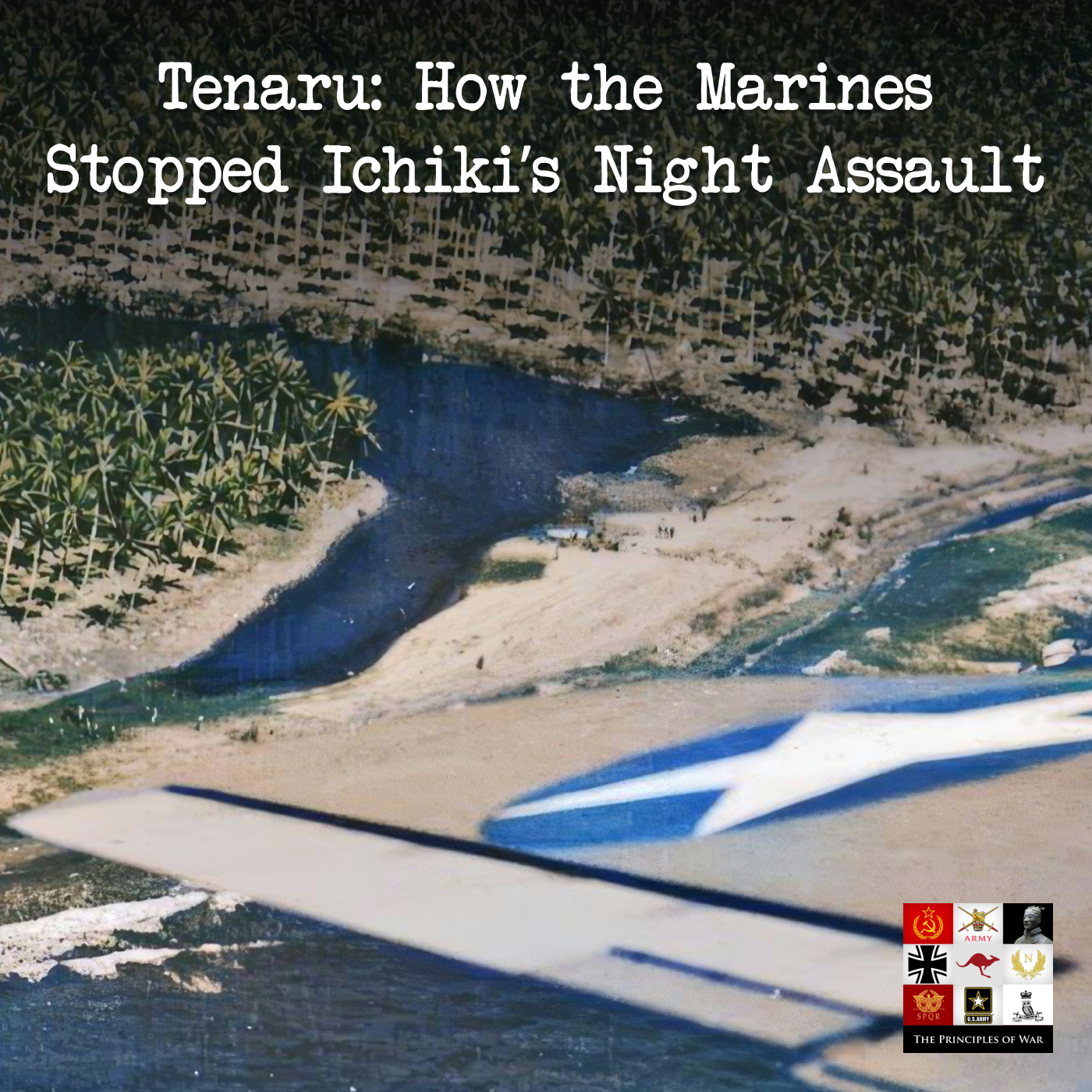
138 - Guadalcanal - Battle of the Tenaru: How the Marines stopped Ichiki's night assault on the Alligator Creek
This is the fourth episode of our Guadalcanal series with historian and author Dave Holland. This episodes discusses: How did the Marines employ the 37 mm gun firing canister at Alligator Creek? Why did Colonel Ichiki attack without heavy weapons— trading firepower for speed and what was the cost? What are the myths about scout Jacob Vouza? How did barbed wire obstacles and coconut-log bunkers e
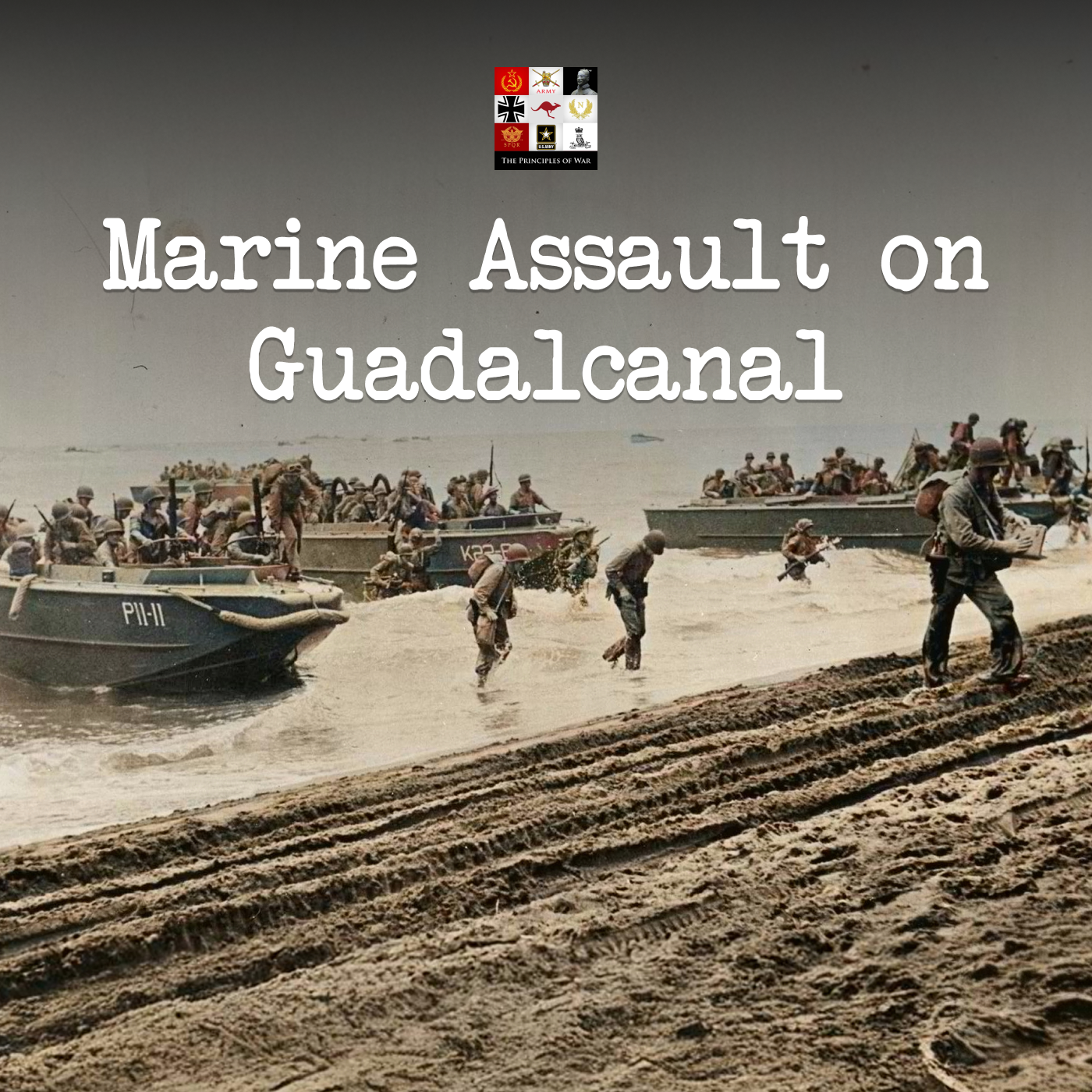
137 - The Marines' Assault on Guadalcanal
This is the third episode of our Guadalcanal series with historian and author Dave Holland. This episodes discusses: How the Marines seized conducted the landing and seized Guadalcanal's decisive terrain. Red Beach landing bypasses IJA fortifications at Lunga Point. Vandegrift prioritizes tight perimeter, airfield defense. Carriers withdraw; logistics halved, myths debunked. Japanese forces surpri
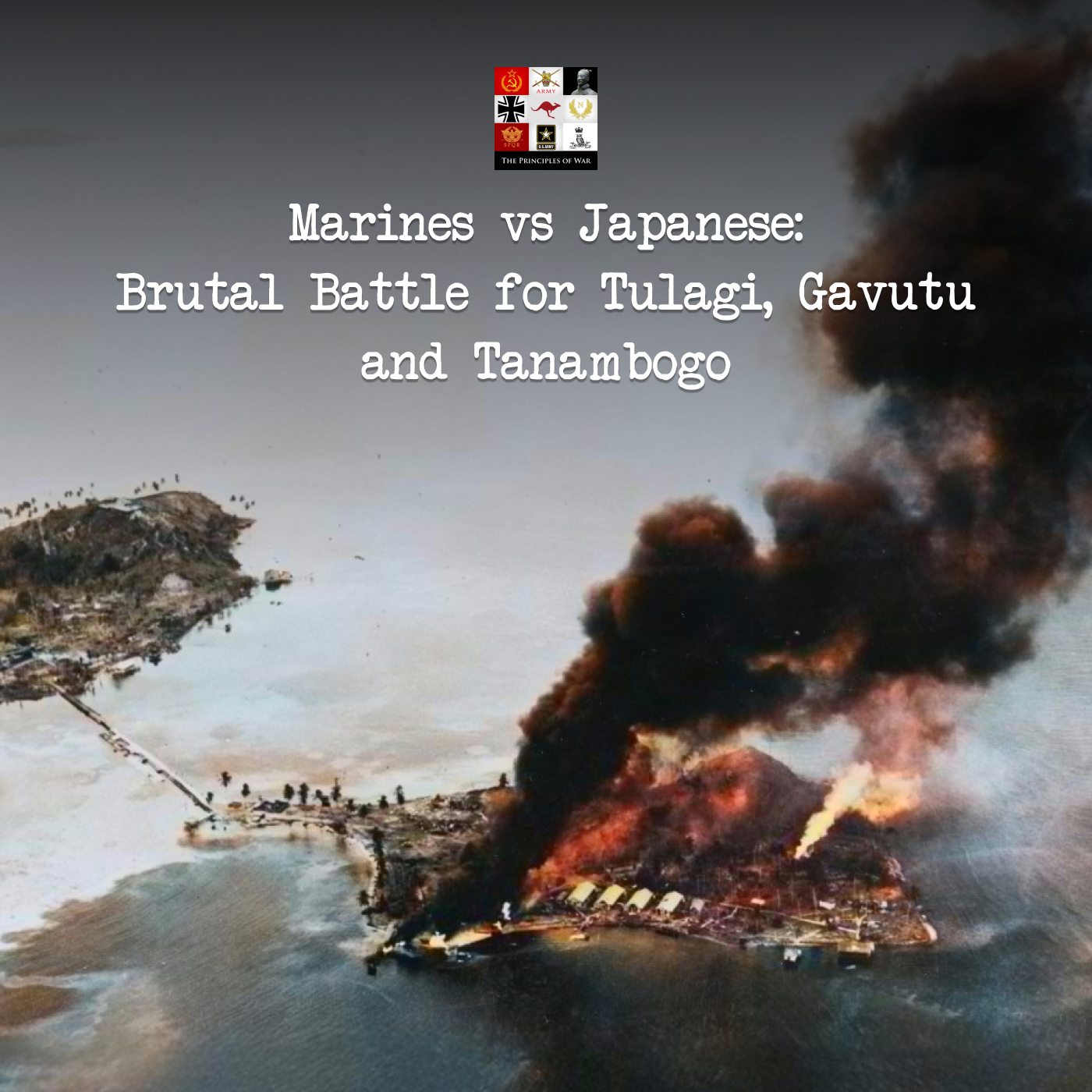
136 - Marines vs Japanese: Brutal Battles for Tulagi, Gavutu and Tanambogo
This is the second episode of our Guadalcanal series with historian and author Dave Holland. Shoestring invasion planning Koro rehearsals fiasco Risking the aircraft carriers vs time to unload the convoy Crutchley's covering cruisers Rupertus leads Tulagi Blue Beach landing Fighting at "the Cut" Improvised cave tactics Gavutu–Tanambogo battles Tanks combat Dave is an ex-Marine and was posted to Gu
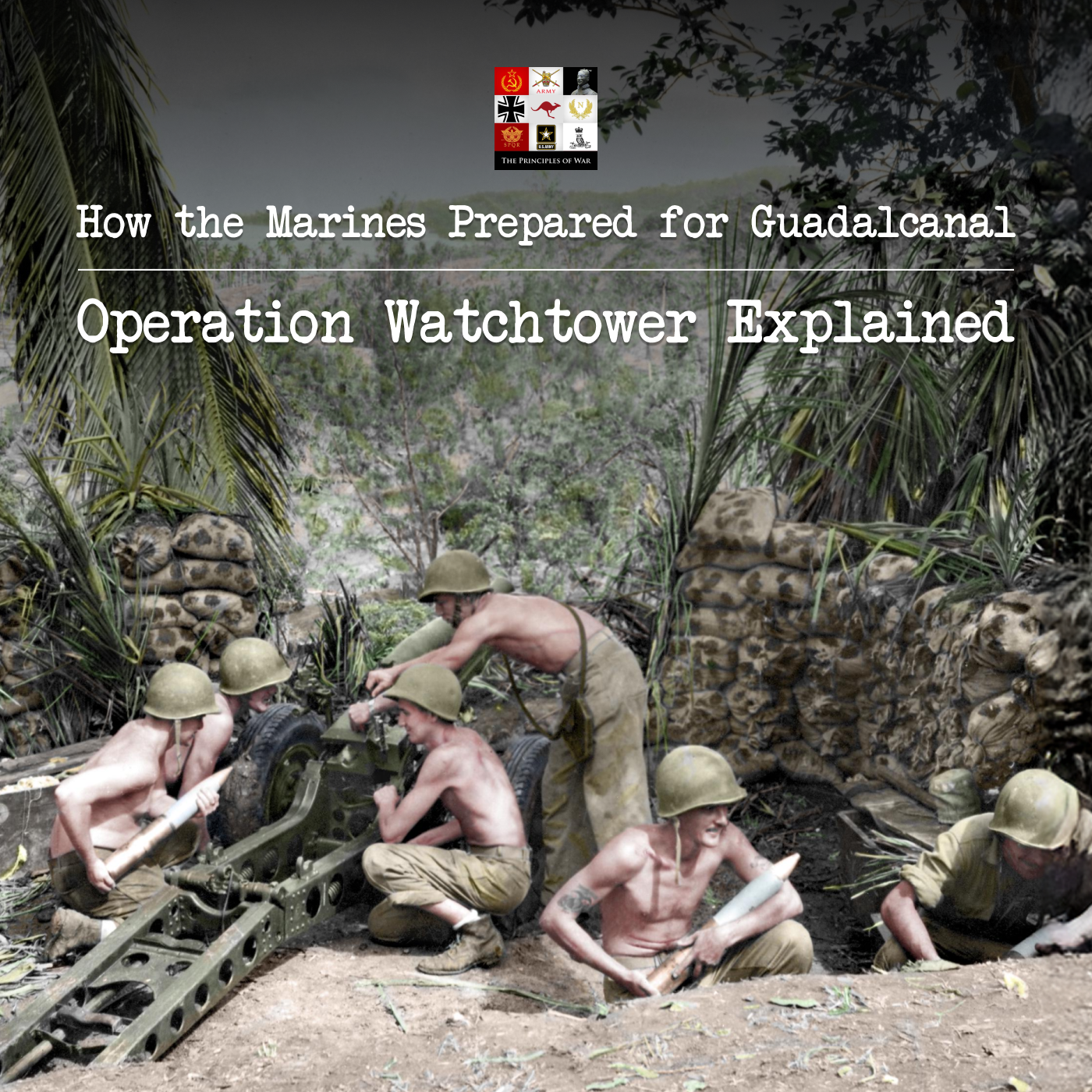
135 - How the Marines Prepared for Guadalcanal | Operation Watchtower Explained
This is the first in a major series of podcasts looking at the Battles of Guadalcanal. This is an interview with Dave Holland. This episode looks at: Guadalcanal's strategic significance Terrain and Climate of Guadalcanal Development of Marine Amphibious Doctrine Combat experience within the 1st Marine Division Strength and structure of a Marine Division US intelligence preparation before the
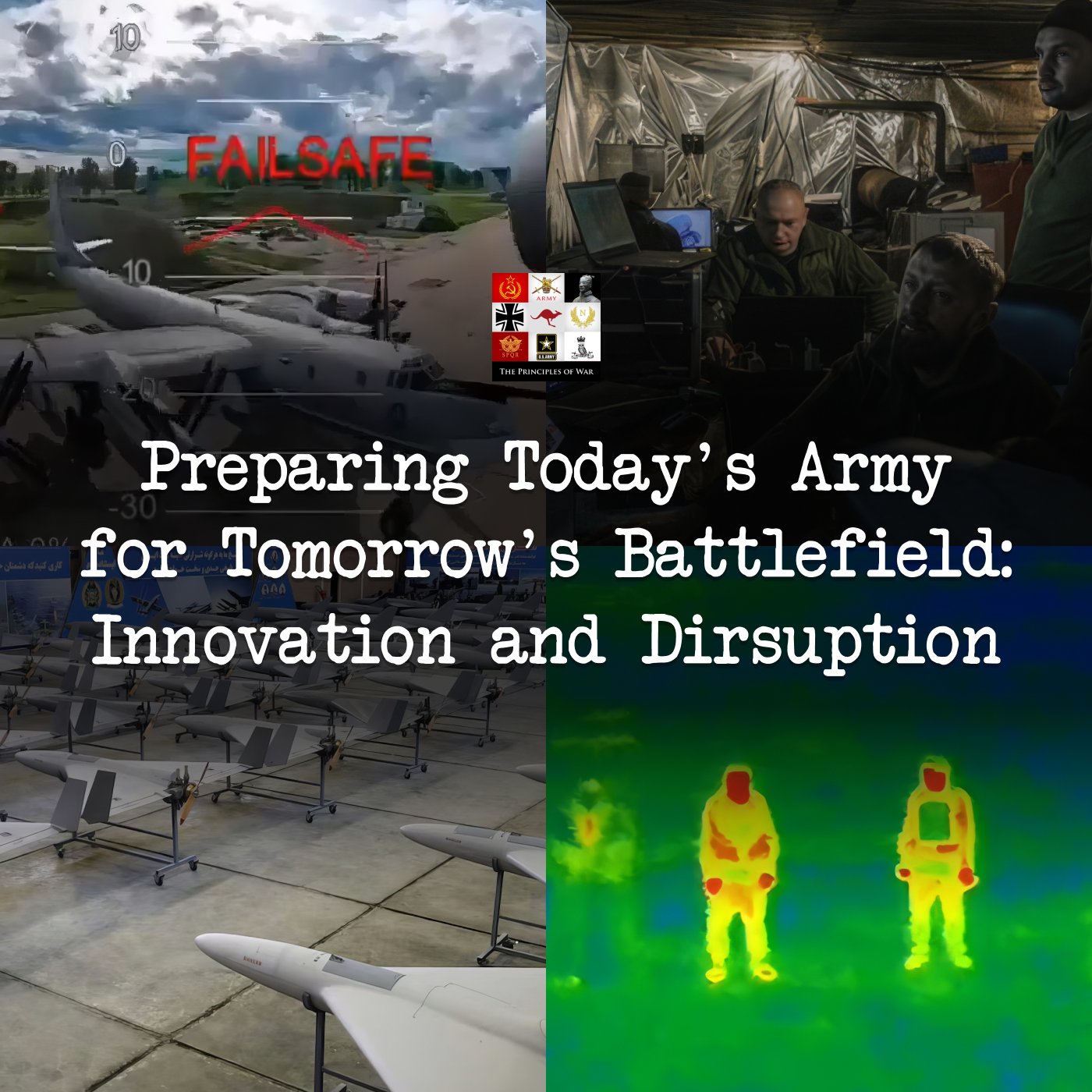
134 - Preparing Today's Armies for Tomorrow's Wars: Battlefield Innovation and Disruption
This is the final episode of three in our series from our interview with Retired Colonel John Antal discussing his research into contemporary combat and how technology is changing the modern battlefield. John makes a series of great points during the interview: Modern War Is Fought in a Transparent Battlespace Visibility through drones, sensors, and AI means traditional massing of forces is no
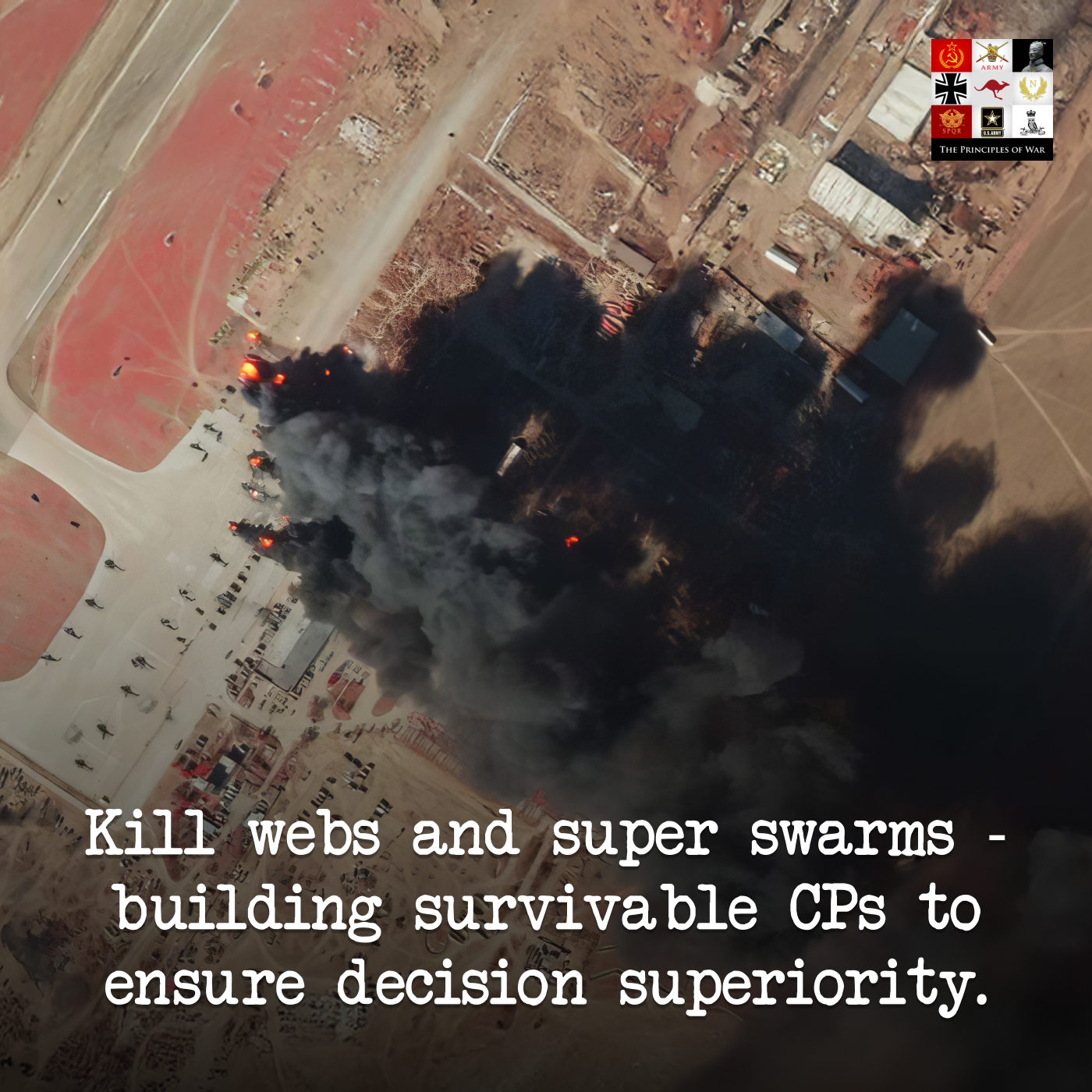
133 - Kill webs and super swarms - building survivable CPs for decision superiority
This is the second episode of our interview with Retired Colonel John Antal discussing his research into contemporary combat and how technology is changing the modern battlefield. We discuss the lessons learnt from 2nd Nagorno-Karabakh, Ukraine and recent Israeli battles and how technology is changing the modern battlefield. Check out the show notes for all of the information that we cover in t
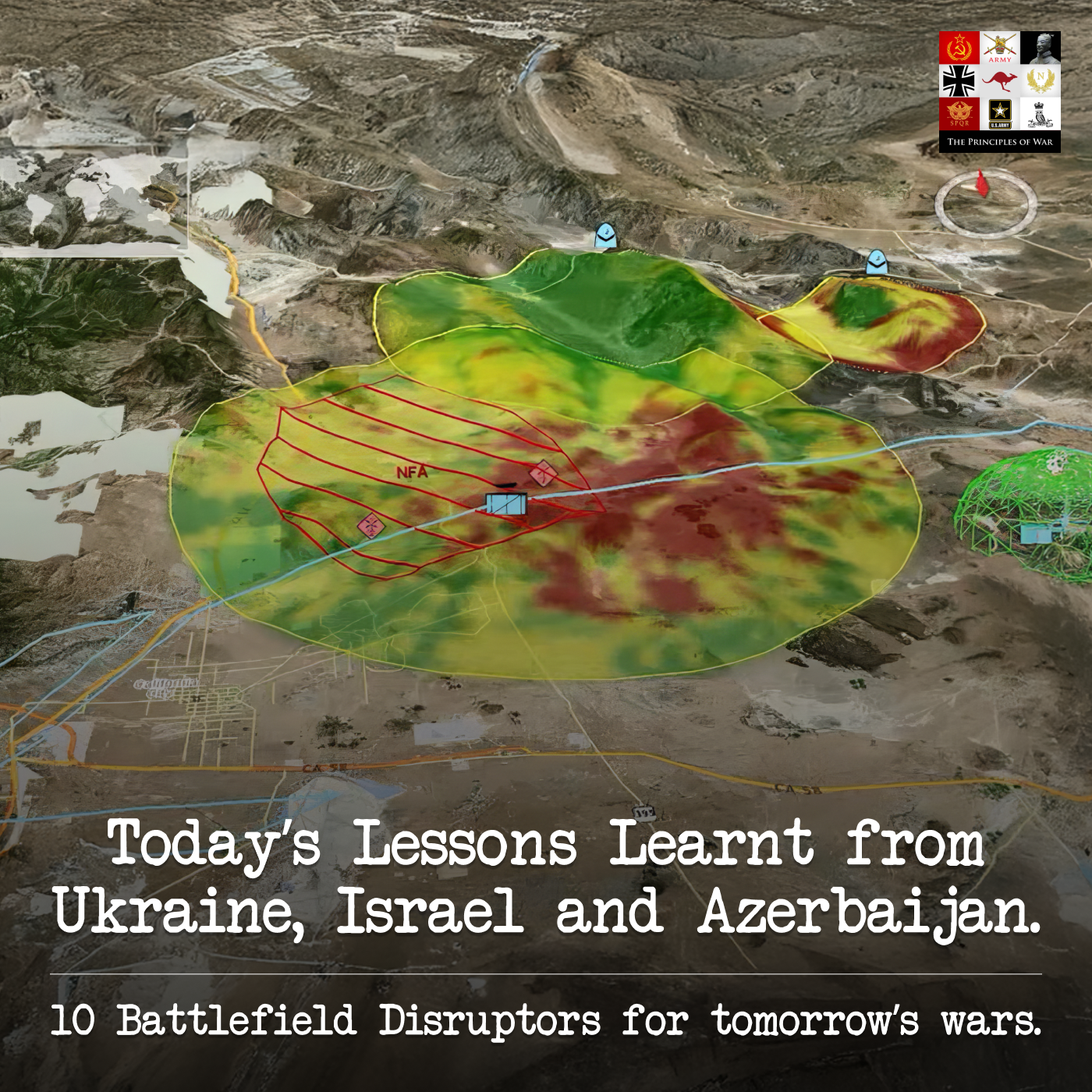
132 - Ten Battlefield Disruptors for Tomorrow's Wars
How is the modern battlefield changing? What role is technology like Artificial Intelligence, drones, precision strike and electronic warfare changing command and control, ISR and combined arms? This is the first of 3 episodes with retired Colonel John Antal, who has studied 2nd Nagorno-Karabakh, recent Israeli battles and the war in Ukraine. Check out the show notes for all of the information th
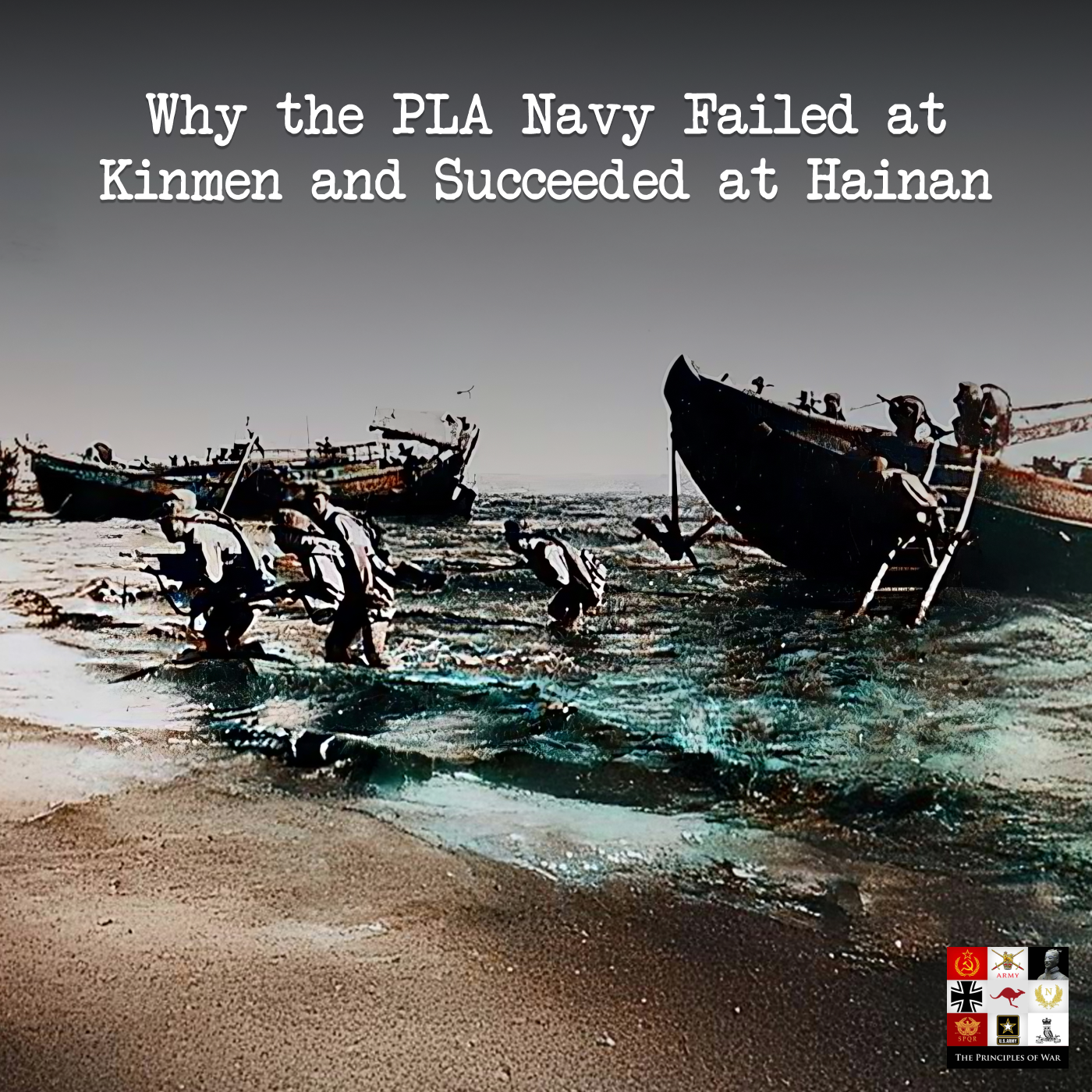
131 - Amphibious Ambitions and Island Defeats - How Kinman and Hainan shaped China's Navy
This is the second of a two-part series looking at the origin story of the PLA Navy. This episode looks at the crucial Kinmen and Hainan Islands campaigns. This is an interview with Dr Toshi Yoshihara, an expert in the history of China's Navy. How was each campaign planned and executed? What were the results for the Chinese Navy? What did the PLA Navy learn from these campaigns? How have these ea
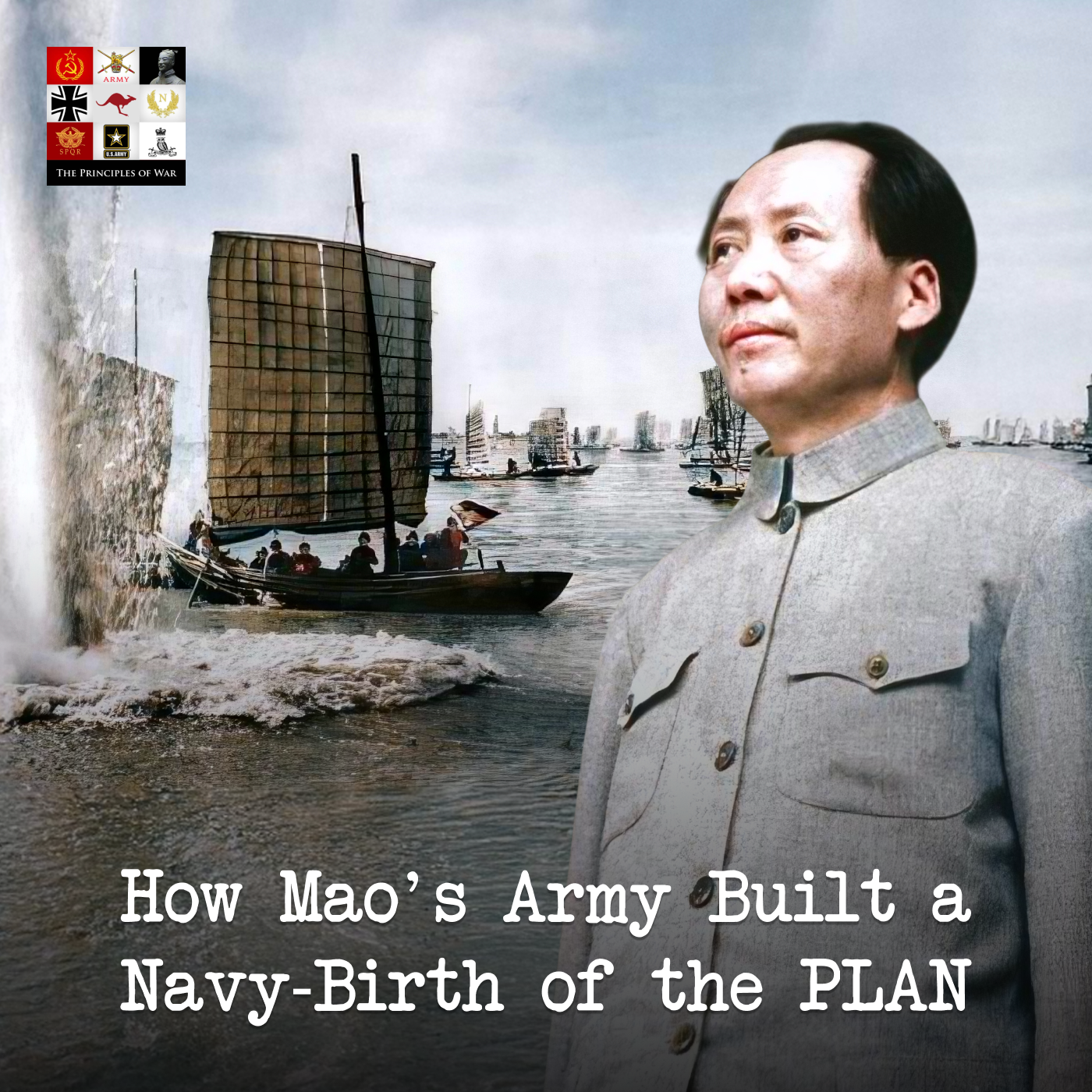
130 - From River Crossings to Amphibious Operations - How the PLA Built a Navy from scratch and learned littoral manoeuvre
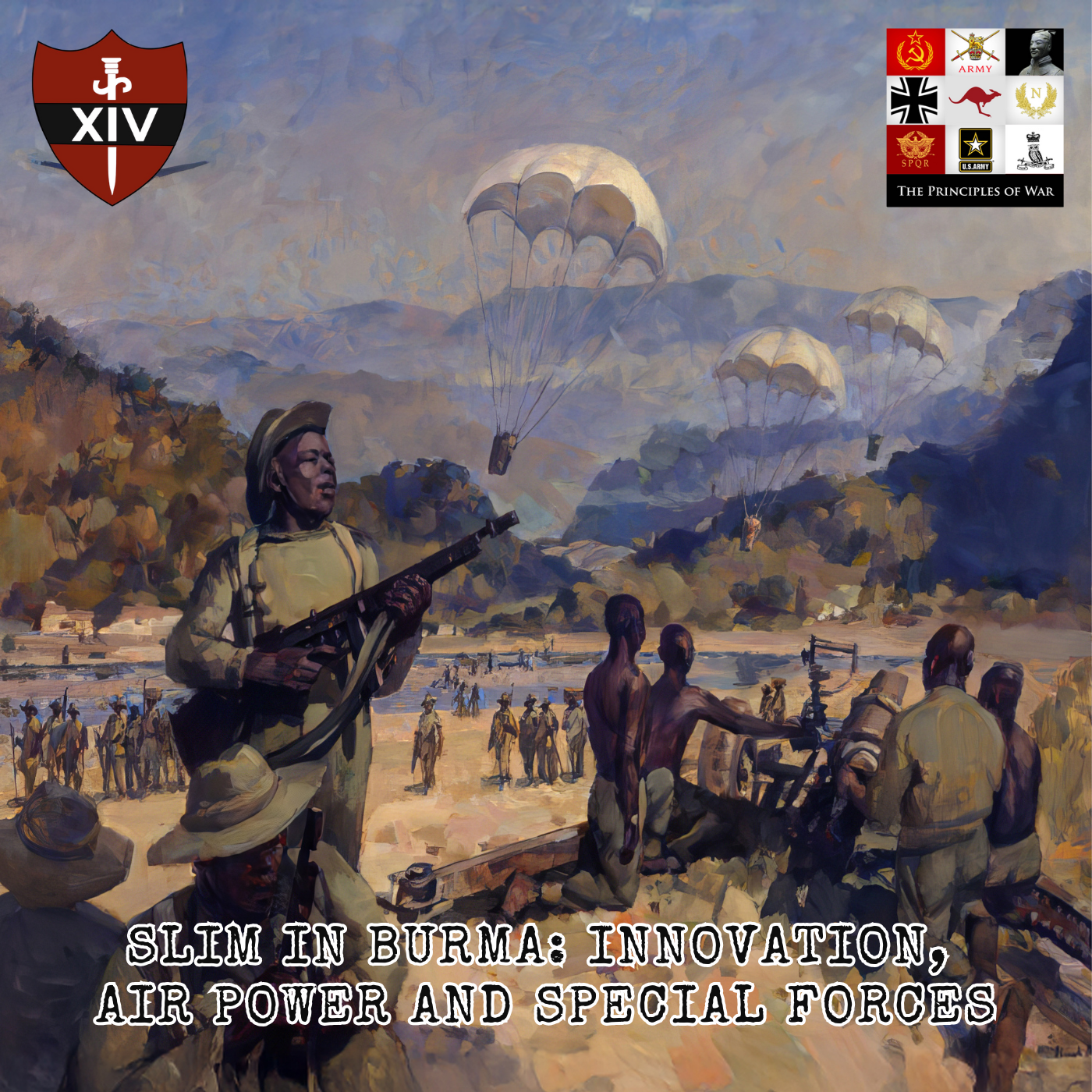
129 - Slim in Burma - Innovation, Air Power and Special Forces
How did Field Marshall Slim innovate in the Burma Campaign? This is a look at military innovation through necessity that developed key capabilities for the 14th Army to defeat the Japanese forces in the Burma theatre. We discuss: Slim's innovation overcame critical resource shortages in Burma. Developed aerial resupply, air evacuation, and improvised naval logistics. Used teakwood barges to

128 - Rebuilding an Army: Morale, Leadership, Training and Mission Command in the 14th Army with Slim
How did Slim rebuild the 14th Army after it's 1,000 mile withdrawal from Burma? We look at how lessons were learnt and doctrine was developed to forge an Army capable of taking on the Japanese. We discuss the important question - what makes an Army officer a good trainer of soldiers. This interview is the second part of a 3 part series with Dr Robert Lyman, the expert on the Burma Campaign an

127 - The General who wouldn't quit: Slim and the longest retreat
The withdrawal from Burma was almost 1,000 miles in 100 days and yet Slim, as commander of Burma Corps, maintained his optimism throughout the operation. We look at Slim's early career and background to study his optimism and resilience in the face of an overwhelmingly poor tactical situation. This interview is the first part of a 3 part series with Dr Robert Lyman, the expert on the Burma Campa
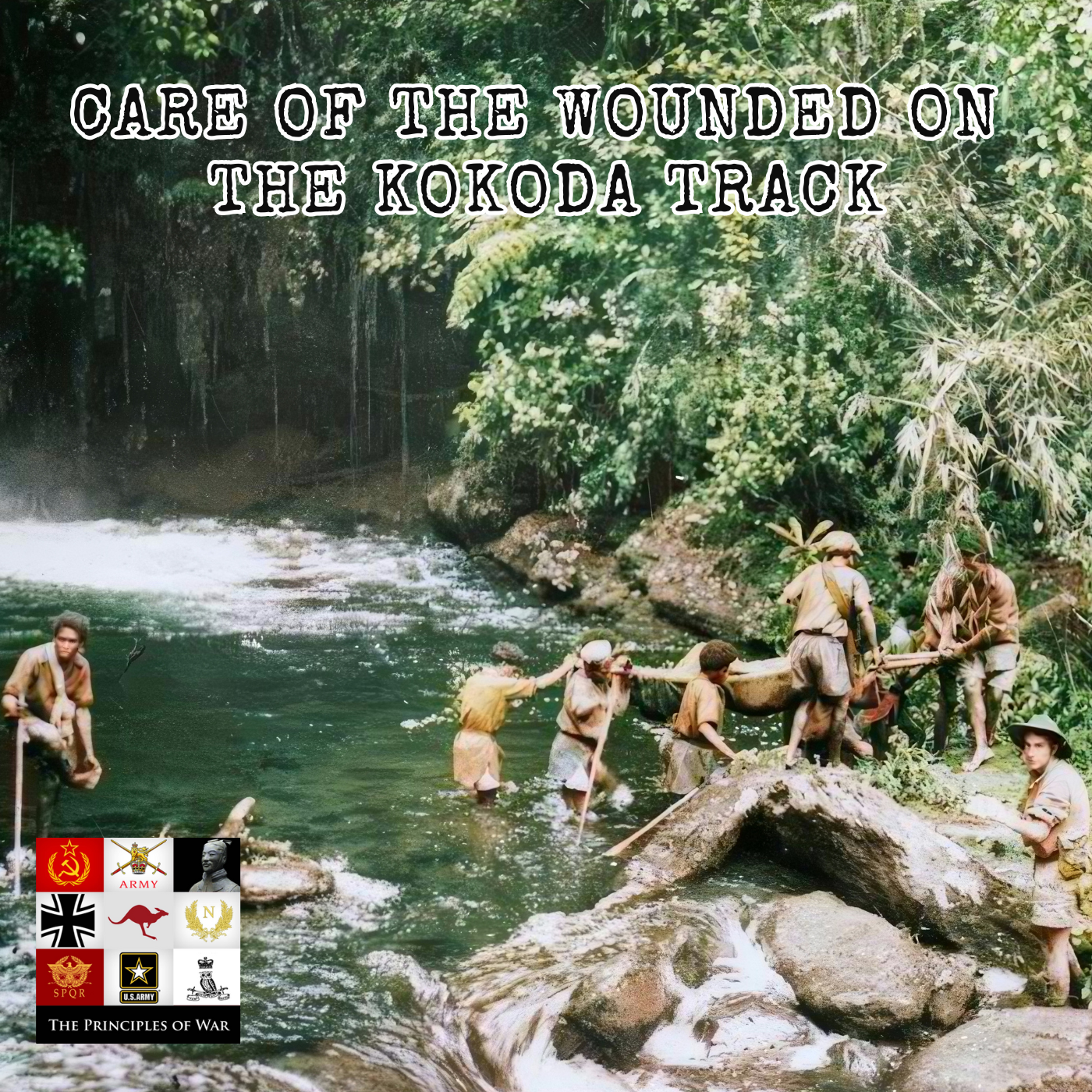
126 - Care of the wounded on the Kokoda Track
This episode looks at the care of the wounded on the Kokoda Track. What level of care did sick and wounded soldiers receive? Why was the medical planning still being conducted whilst the Battle of Isurava was in progress? What was the issue with medical logistics and how were casualties to be casevaced from the battlefield? We listen to the story of CAPT Stan Bissett as he describes how his brothe
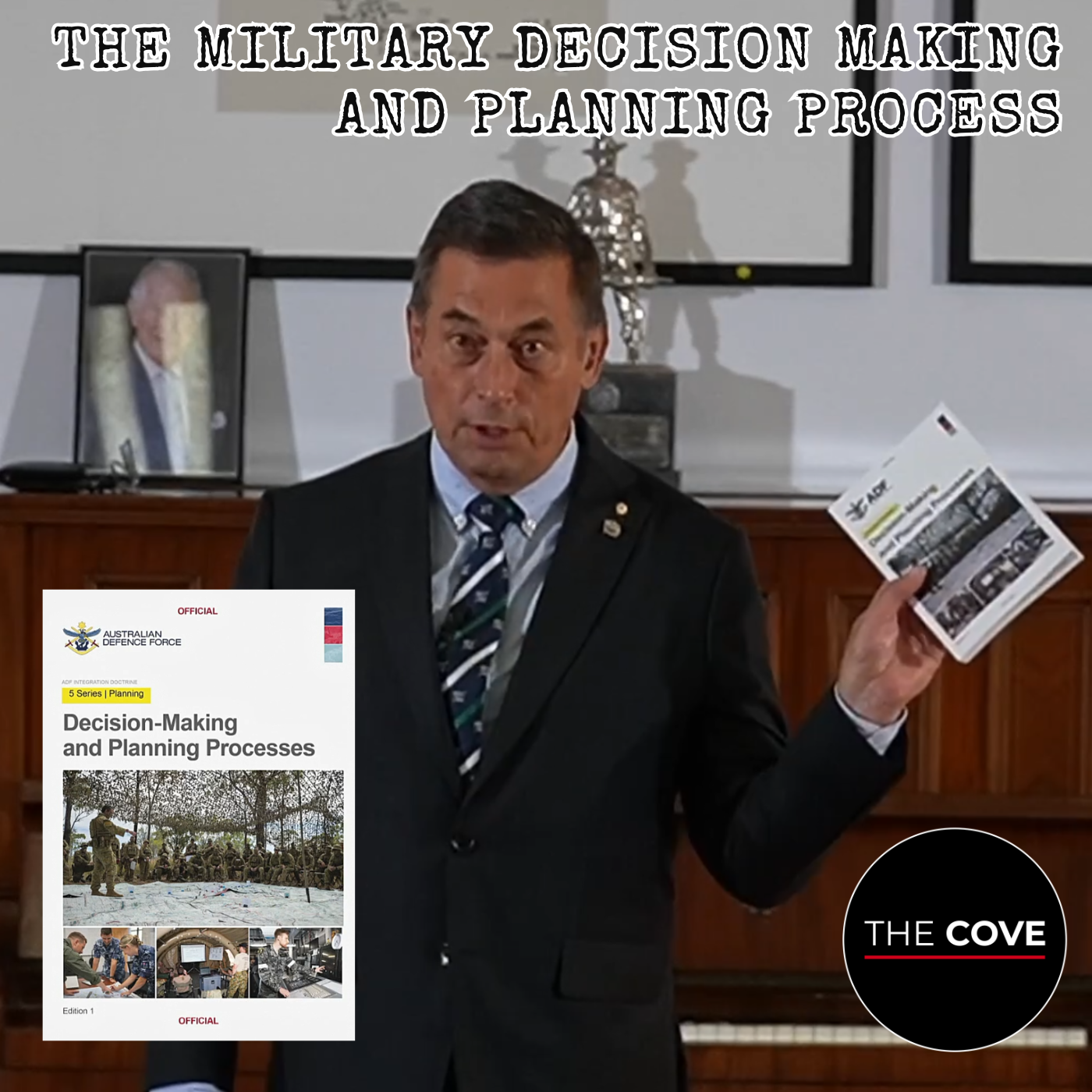
The Military Decision Making and Planning Process
This episode is a cross-post from The Cove Podcast. This is a recording of MAJGEN Mick Krause, AM - the author the new ADF-I-5 doctrine - Decision Making and Planning Processes. He presented a PME session at Holdsworthy Barracks to discuss the new doctrine. ADF-I-5 Decision Making and Planning Processes replaces the Joint JMAP (Joint Military Appreciation Process) doctrine along with the Army LW
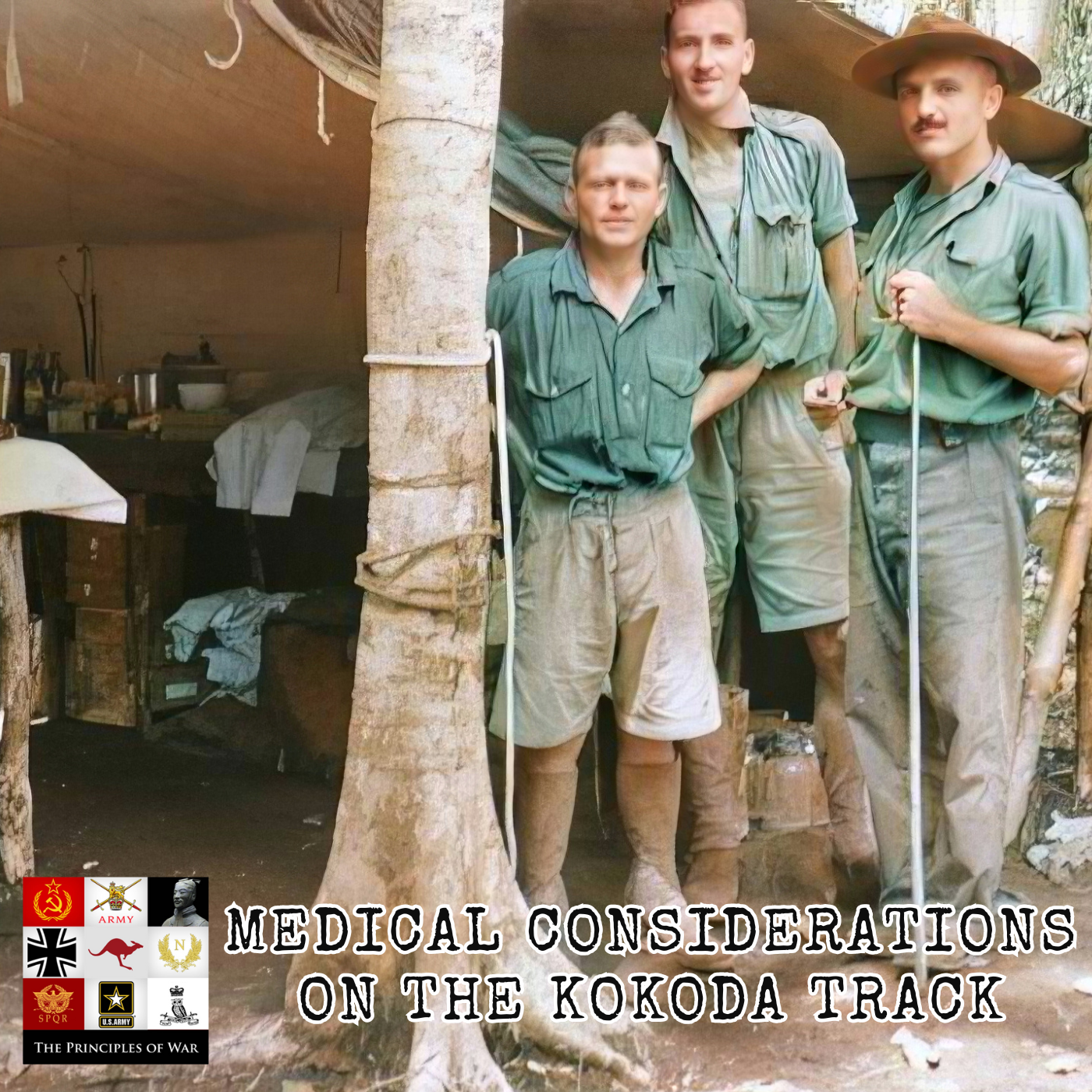
125 - Medical considerations on the Kokoda Track
What medical treatment was avaiable for the soldiers fighting on the Kokoda Track. How were ill and injured soldiers cared for and what were the difficulties in providing surgical and medical care in the austere conditions of the Jungles of Kokoda? This episode continues our Kokoda Campaign Podcast series. Check out the show notes for the podcast for all of the information that we cover in thi

124 - Leadership lessons from the Jungles of Vietnam with Gary McKay
This episode is the second of a two part interview with retired LTCOL Gary McKay, who was a Platoon Commander in Vietnam, in D Coy, 4 RAR. He fought in Op Ivanhoe at the battle of Nui Le, where he was wounded. For his awarded the Military Cross for his performance during the battle. He was later the Commanding Officer of 8/9 RAR between 1988 and 1990. This episode continues our Kokoda Campaign

123 - Jungle Combat in Vietnam with Gary McKay
This episode is the first of a two part interview with retired LTCOL Gary McKay, who was a Platoon Commander in Vietnam, in D Coy, 4 RAR. He fought in Op Ivanhoe at the battle of Nui Le, where he was wounded. For his awarded the Military Cross for his performance during the battle. He was later the Commanding Officer of 8/9 RAR between 1988 and 1990. This episode continues our Kokoda Campaign P

122 - Japanese Lessons Learnt for Jungle Warfare
This episode continues our Kokoda Campaign Podcast series. This episode is Part 5 of our interview with Dr with Dr Adrian Threlfall, an expert in how the Australian Army learned to learn about combat in the jungles of Malaya, Singapore, Papua, New Guinea, and many other islands to the north of Australia. This episode looks at the introduction of the Jungle Scales Division into the Australian Army,

121 - The Jungle Warfare Training Centre, Canungra
This episode continues our Kokoda Campaign Podcast series. This episode is Part 4 of our interview with Dr with Dr Adrian Threlfall, an expert in how the Australian Army learned to learn about combat in the jungles of Malaya, Singapore, Papua, New Guinea, and many other islands to the north of Australia. This episode discusses the development of the Jungle Warfare Training Centre, Canungra, the ro

120 - Preparing for Combat in the Jungle
This episode continues our Kokoda Campaign Podcast series. This episode looks at Jungle Warfare Doctrine Development, with Dr Adrian Threlfall, an expert in how the Australian Army learned to learn about combat in the jungles of Malaya, Singapore, Papua, New Guinea, and many other islands to the north of Australia. We look at how the soldiers prepared for combat in the Jungle against the Imperia

119 - Learning to learn: Jungle Warfare
This episode continues our Kokoda Campaign Podcast series. This episode looks at Jungle Warfare Doctrine Development, with Dr Adrian Threlfall, an expert in how the Australian Army learned to learn about combat in the jungles of Malaya, Singapore, Papua, New Guinea, and many other islands to the north of Australia. We discuss how the Australian Army learnt to learn, starting to collate the lessons
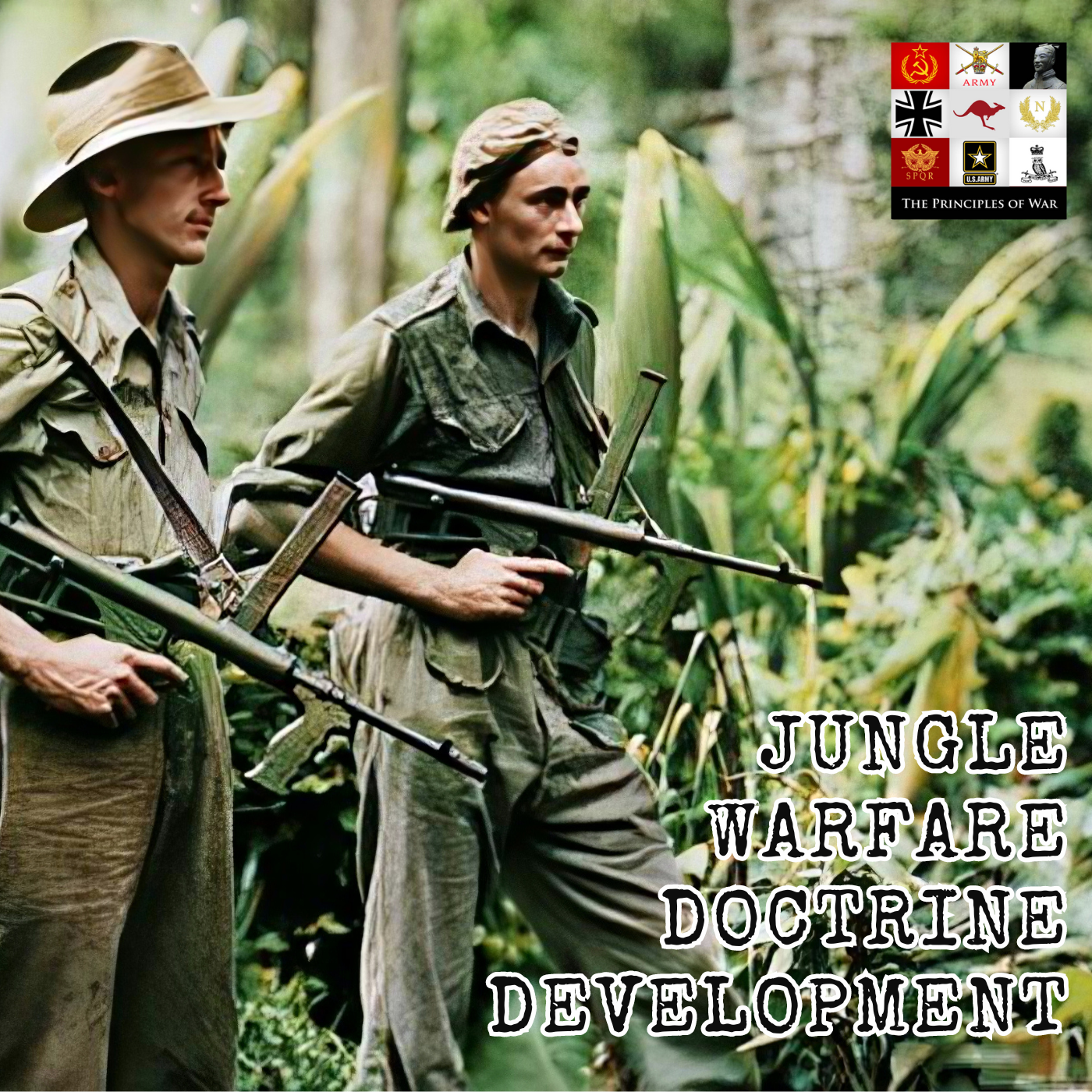
118 - Jungle Warfare Doctrine Development in the Australian Army
We return to the fetid jungles of New Guinea and our Kokoda Campaign Podcast series, looking at the 53rd Battalion and it's combat performance at Isurava. This episode is the start of a series looking at Jungle Warfare Doctrine Development, with Dr Adrian Threlfall, an expert in how the Australian Army learned to learn about combat in the jungles of Malaya, Singapore, Papua, New Guinea, and many o

117 - Lessons learnt from Drone combat in Ukraine
This special episode is an interview with Sam Bendett from the Center for a New American Security and is an expert on UAS Combat between Ukraine and Russia. This interview covers the lessons learnt so far in the rapidly evolving UAS combat. We discuss how drone combat has evolved from the point of view of the Russian and Ukrainian forces, how it is impacting manouvre on the battlefield and ho
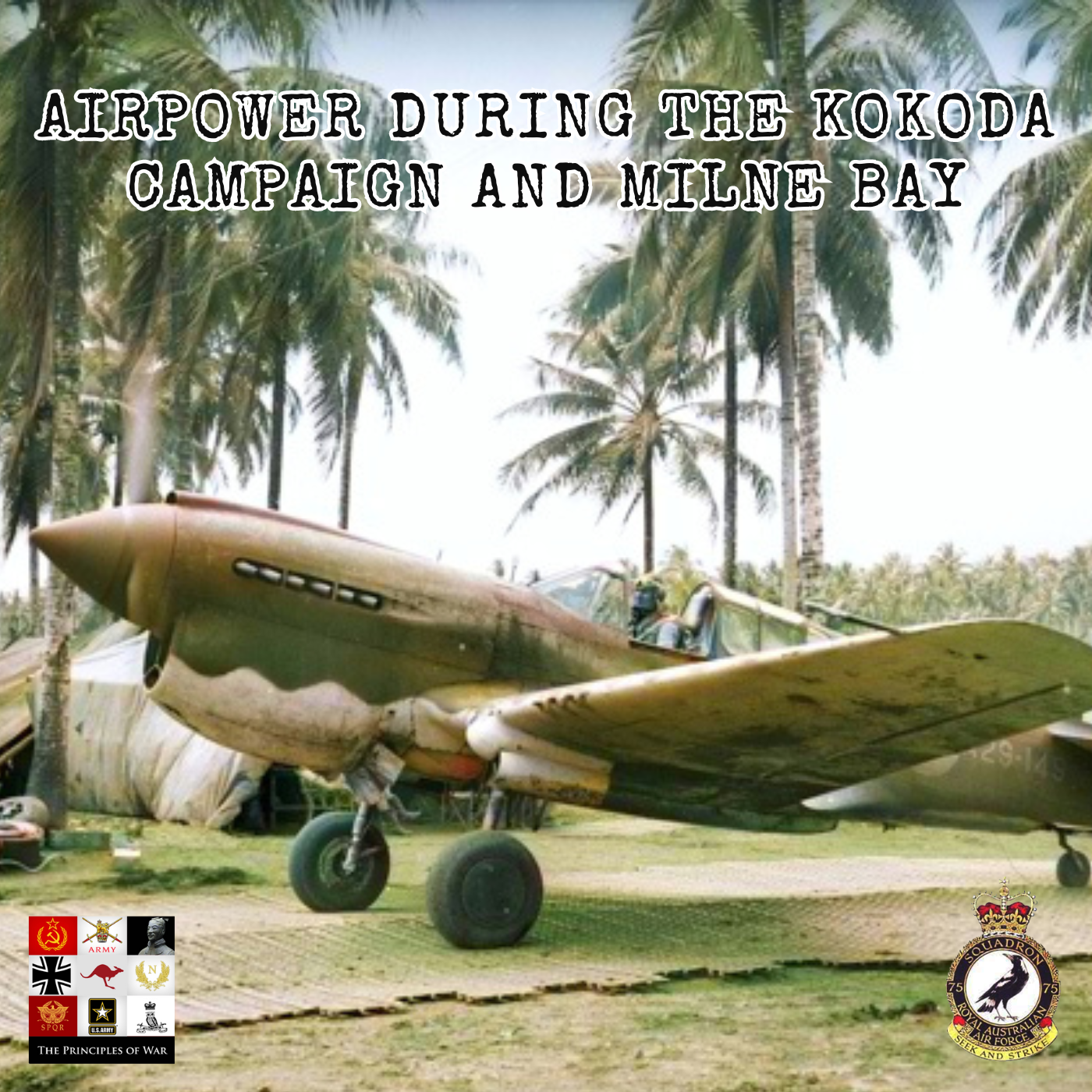
116 - Air Power during the Kokoda and Milne Bay Campaigns.
How did air power influence the Kokoda Campaign? We review the employment of air power and compare it with the Milne Bay operation, where Air Power's effect was described as 'decisive' by both MAJGEN Clowes and LTGEN Rowell. The episode picks up the story with the elevation of Les Jackson to CO of No 75 Squadron after the death of his brother, John. We discuss the importance of training pilots f
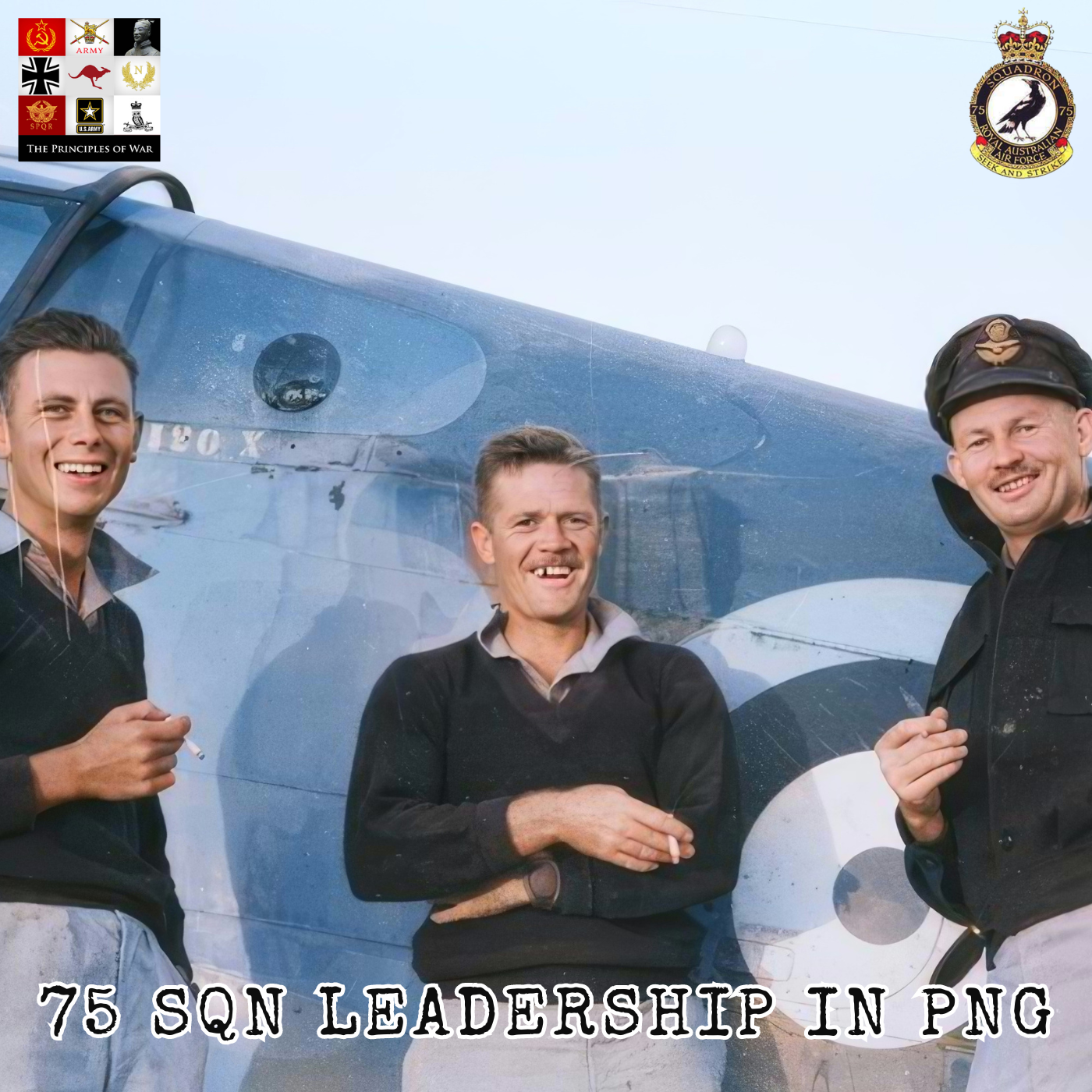
115 - No. 75 Squadron Leadership at Port Moresby
What was RAAF Leadership like in No. 75 Squadron at Port Moresby. We look at the career and Leadership of Squadron Leader John Jackson, a great RAAF pilot who lead from the front. We look at the tactics that he developed to fight the more agile Japanese Zeroes and what was it that caused him to ignore his own tactics on the day that he was shot down and killed. This is Part 17 of our series look

114 - P40Es vs Zeroes - 75 Squadron and their 44 days at Port Moresby
How did the P-40E compare against the Japanese Zero? We look at how Australia was prepared for the war in the air over Port Moresby. How well were the pilots prepared and how well was the squadron bought up to operational standard? This is Part 16 of our series looking at the Kokoda Campaign, focusing on the combat performance of battalions on the Kokoda Track and how the militia were prepare

113 - 75 Squadron and the Kokoda Campaign
It was 900 days from the declaration of war against Germany in 1939 to the bombing of Darwin. When Darwin was bombed, there were no RAAF fighters to defend, and it was three weeks before Darwin was had fighter coverage (and they were US fighters). We look at how the RAAF was prepared for war, prepared for war for Japan and prepared to defend Australia. This is Part 15 of our series looking at th
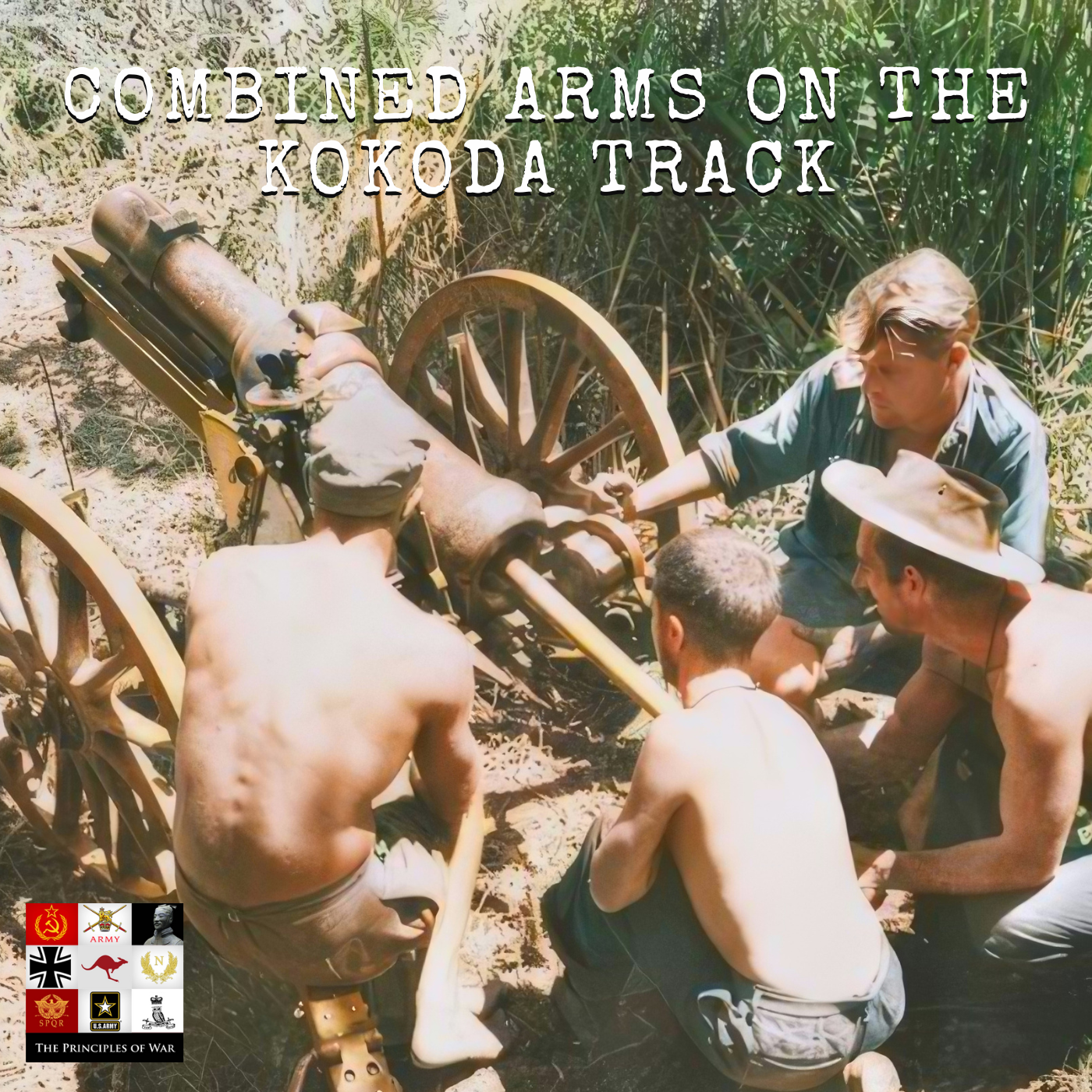
112 - Combined Arms on the Kokoda Track
This is Part 14 of our series looking at the Kokoda Campaign, focusing on the combat performance of battalions on the Kokoda Track and how the militia were prepared for combat at the tactical, operational and strategic level. This episode looks at how the Australians and the Japanese generated combined arms on the Kokoda Track. Check out the show notes for the podcast for all of the information

111 - Friendly Fire on the Kokoda Track
This is Part 13 of our series looking at the Kokoda Campaign, focusing on the combat performance of the 53rd Battalion and how the militia were prepared for combat at the tactical, operational and strategic level. This episode looks at the tragic friendly fire incident that occured during the Battle of Isurava, where the 2/14th C Company attacked into the Battalion Headquarters. What were the fac

110 - The JIPOE / IPB for the Kokoda Track
This is Part 12 of our series looking at the Kokoda Campaign, focusing on the combat performance of the 53rd Battalion and how the militia were prepared for combat at the tactical, operational and strategic level. The Kokoda Campaign for the Japanese is a manifestation of the effects of the manourvrist approach. We then discuss MAJGEN Basil Morris - at the time he took over command of the 8th Mili
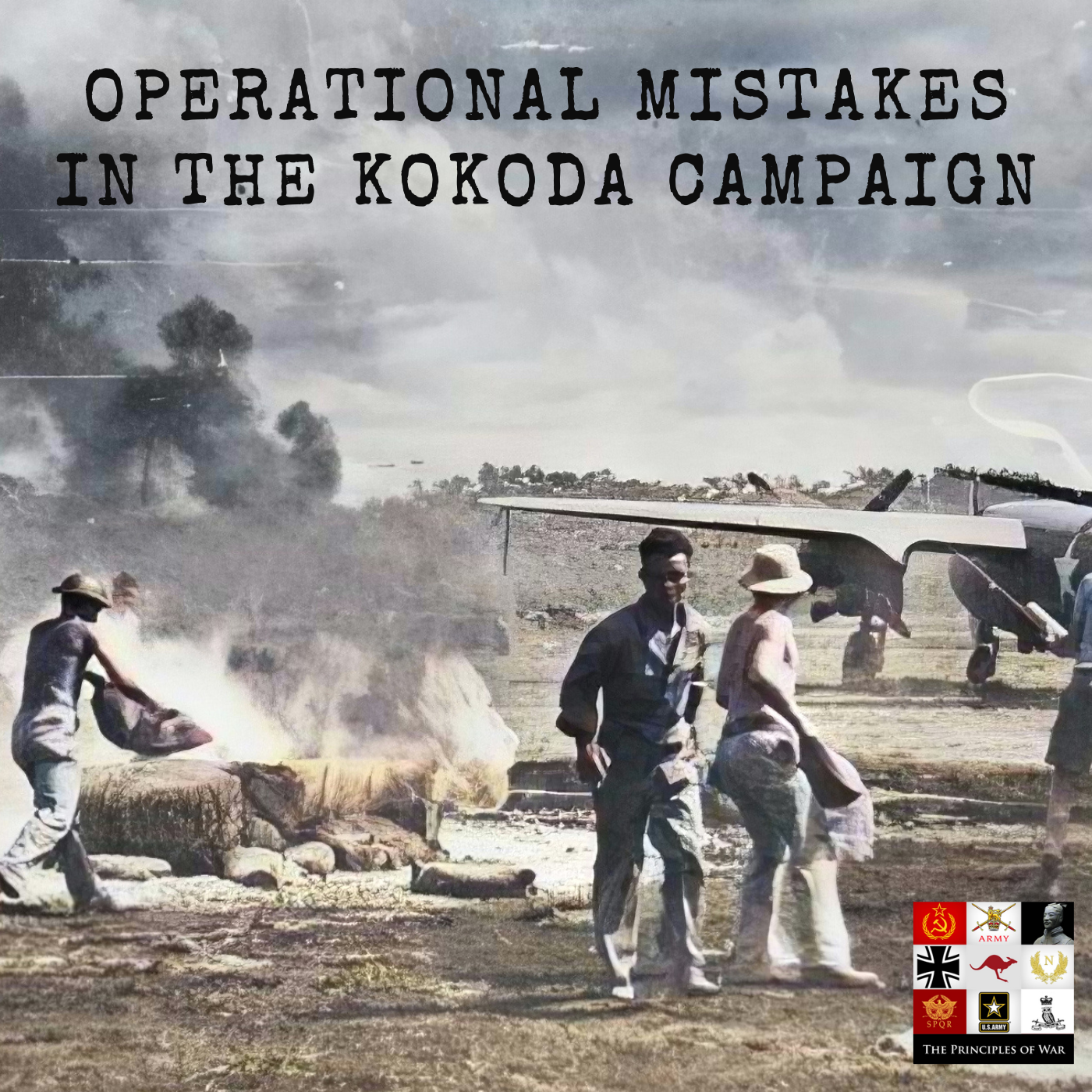
109 - Operational mistakes in the Kokoda Campaign
This is Part 11 of our series looking at the Kokoda Campaign, focusing on the combat performance of the 53rd Battalion and how the militia were prepared for combat at the tactical, operational and strategic level. This episode commences our assessment of the operational level, but before we start, we will look at the psychiatric cost of training and fighting in the jungle. David Woolley has done

108 - The Competition for Superior Doctrine
This is the third episode in a three part interview with Dr Robert Lyman about 'Victory to Defeat: The British Army 1918-40', a book he co-wrote with Lord Dannatt, who served as the Chief of the General Staff from 2006 to 2009. This episode looks at how lessons are learnt from victories and defeats and the difficulties in developing doctrine when not in combat. We discuss the lessons from logi

107 - British Combined Arms doctrine in the inter war period
This is the second in a three part interview with Dr Robert Lyman about 'Victory to Defeat: The British Army 1918-40', a book he co-wrote with Lord Dannatt, who served as the Chief of the General Staff from 2006 to 2009. This episode looks at how the lessons learnt in the victories of 1918 with Combined Arms were forgotten in the interwar period. Robert discusses the impact of the desire to avoid

106 - Combined Arms Doctrine Development in the First World War
This is the first in a three part interview with Dr Robert Lyman about 'Victory to Defeat: The British Army 1918-40', a book he cowrote with Lord Dannatt, who served as the Chief of the General Staff from 2006 to 2009. This episode looks at the doctrine development that occurred in the First World War as the British Army developed it's skills in Combined Arms, culminating in the ability to fight a
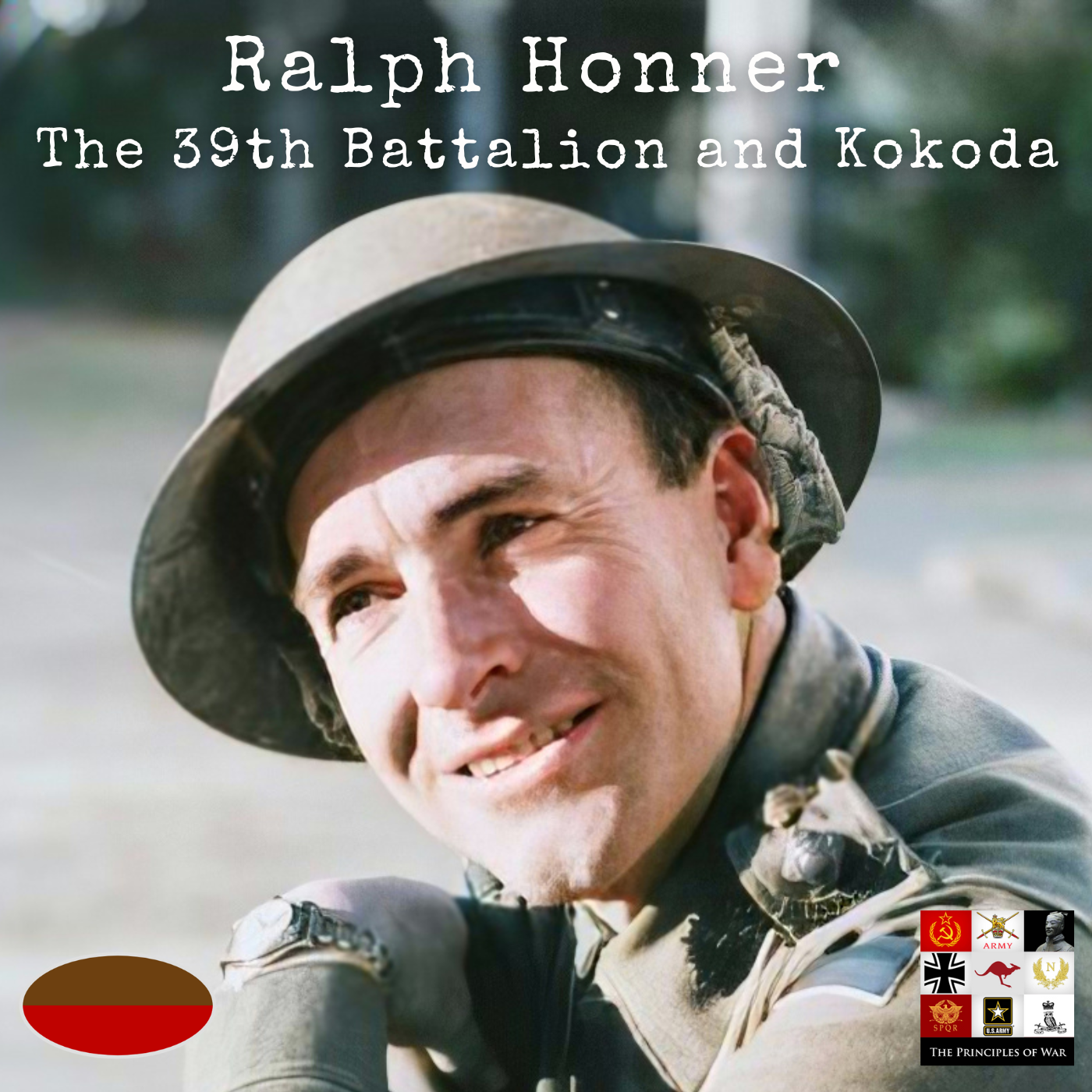
105 - Ralph Honner, the 39th Battalion and Kokoda
This is Part 10 of our series looking at the Kokoda Campaign, looking at the combat performance of the 39th Battalion. The 39th Battalion was one of Australia's best Battalions. Formed in Victoria, it's story is similar to that of the 53rd Battalion- but with some key differences. We look at those differences with Dr David Cameron, an expert on the Battles of the Kokoda campaign. Have a listed D

104 - The 39th Battalion on the Kokoda Track
This is Part 9 of our series looking at the Kokoda Campaign, looking at the combat performance of the 39th Battalion. This episode discusses the formation of the 39th Battalion, it's preparation for combat and how it performed on the Kokoda Trail. The 39th Battalion is one of the Australian Army's most famous Battalion, a militia battalion that bore the brunt of the Japanese attacks down the Koko

103 - Principles of Training for War
This is Part 8 of our series looking at the Kokoda Campaign, Battle of Isurava, the 53rd Battalion, how they fought and how they were prepared to fight. This episode looks at the Principles of Training and how they were(n't) applied by New Guinea Force. We compare it with the preparation of the 6th Division in preparation for it's first battle at Bardia. Bardia illustrates what right looks like
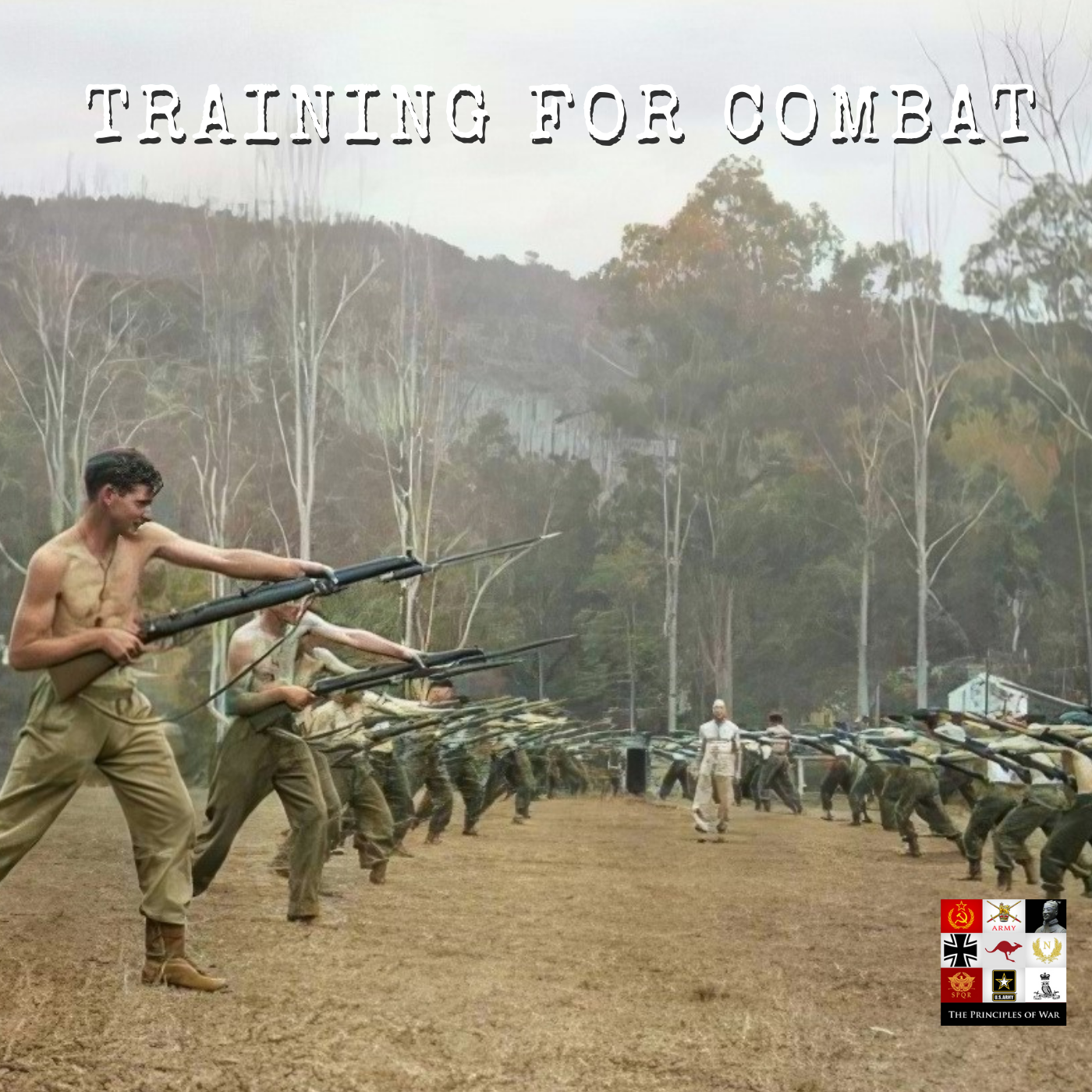
102 - Training a Battalion for War
This is Part 7 of our series looking at the Battle of Isurava, the 53rd Battalion, how they fought and how they were prepared to fight. This episode looks at the arrival of both the 39th and 53rd Battalions to Port Moresby, the conditions that they encountered and how that impacted their preparation for combat. What was a day in the life of the soldiers like? How well were the soldiers trained? W

100 - The fall of Isurava
This is the fifth episode in our Kokoda Track series looking at the performance of the 53rd Battalion. The 53rd, a militia Battalion, had some incredibly brave men. Virtually untrained, poorly equipped, with inexperienced leaders, they fought a battle-hardened enemy in some of the worst terrain in the world. This episode looks at the fall of Isurava. Japanese troops in increasing numbers, with inc

101 - Mobilisation Mistakes with the Mice of Moresby
This is the sixth episode in our Kokoda Track series looking at the performance of the 53rd Battalion. The 53rd, a militia Battalion, had some incredibly brave men. Virtually untrained, poorly equipped and with inexperienced leaders, they fought a battle-hardened enemy in some of the worst terrain in the world. This episode looks at the mistakes in mobilisation that we made that sowed the seeds

99 - The Death of a CO
This is the fourth episode in our Kokoda Track series looking at the performance of the 53rd Battalion. The 53rd, a militia Battalion, had some incredibly brave men. Virtually untrained, poorly equipped, with inexperienced leaders, they fought a battle hardened enemy in some of the worst terrain in the world. This episode looks at the events on the 27th of August, 1942. We discuss how the CO,

98 - Creating the doctrinal and cultural changes for effective Mission Command with Jim Storr
This is part 2 of our interview with Dr Jim Storr, the author of Something Rotten: Land Command in the 21st Century. We discuss the correct size for a Headquarters. We discuss the selection and training of officers within the Wehrmacht. How do we affect cultural and doctrinal change within Armies to support the effective use of Mission Command? Jim Storr was an infantry officer in the British Arm

97 - Time and the importance of timeliness in orders with Jim Storr
This episode is with Dr Jim Storr, the author of Something Rotten. Preparing a set of orders is a core function of a Headquarters. Why have today's procedures changed from the what was done in WW2, what have we learnt and are modern HQs fit for purpose? We discuss the form and functioning of Headquarters, looking at people, processes, products and purpose, comparing WW2 doctrine with what is ha

96 - The 53rd Battalion at Isurava during the Kokoda Campaign
This is the third episode in our Kokoda Track series looking at the performance of the 53rd Battalion. The 53rd, a militia Battalion, had some incredibly brave men. Virtually untrained, poorly equipped, with inexperienced leaders, they fought a battle hardened enemy in some of the worst terrain in the world. This episode continues to story of the 53rd Battalion as they start patrolling the jun

95 - A militia Battalion on the Kokoda Trail
This is the second episode in our Kokoda Track series looking at the performance of the 53rd Battalion. The 53rd, a militia Battalion, had some incredibly brave men. Virtually untrained, poorly equipped, with inexperienced leaders, they fought a battle hardened enemy in some of the worst terrain in the world. This episodes looks at just 4 weeks in the history of the Battalion, from when the sta
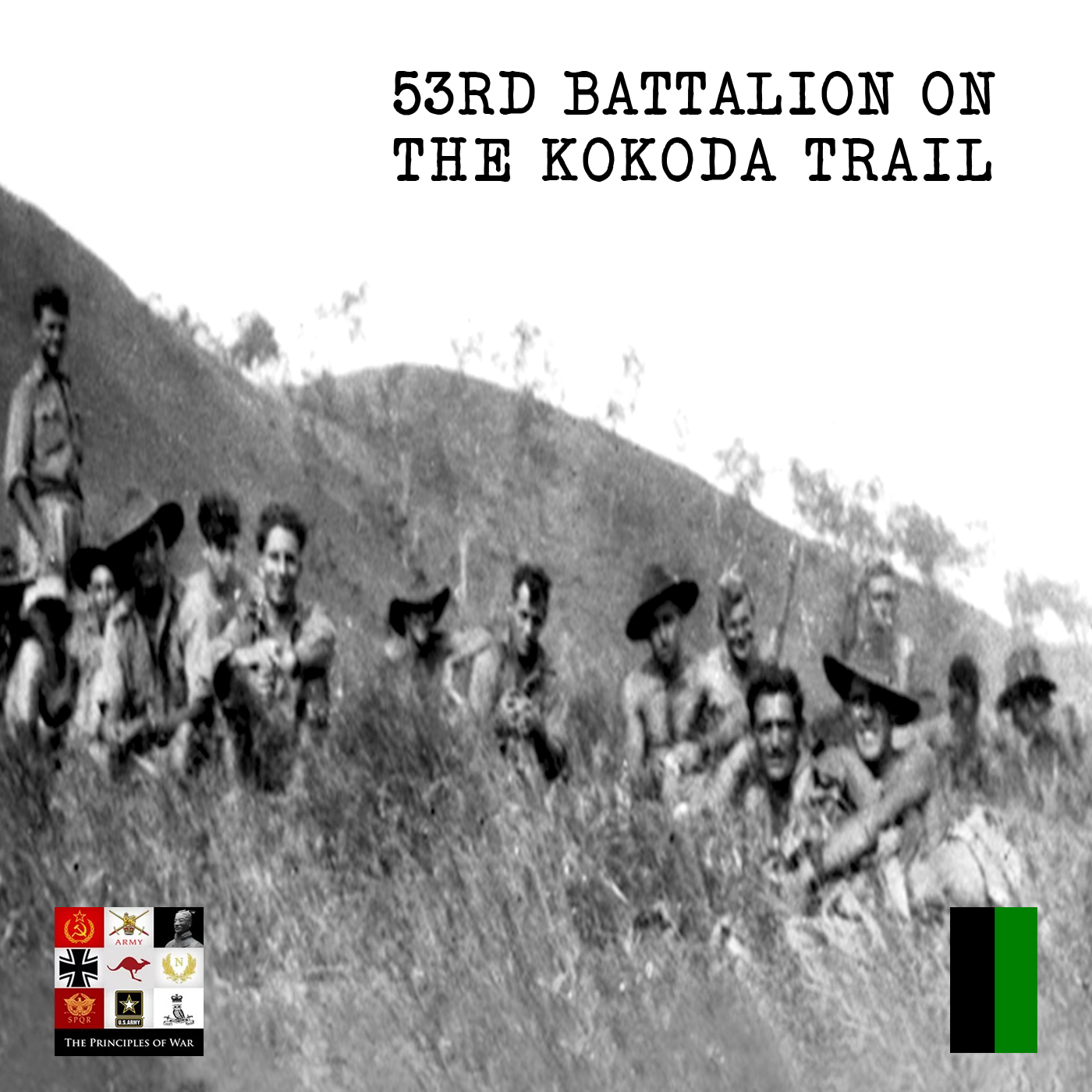
94 - The 53rd Battalion on the Kokoda Trail
This episodes starts a new series looking at the Kokoda Track at the tactical, operational and strategic levels. This series will look for lessons from the experience of the 53rd Battalion. The 53rd is a sister Battalion to the 49th and the excellent 39th Battalions. There is a marked difference between the 39th and 53rd. Despite incredible bravery, the 53rd struggled to achieve some of that t
93 - Chinese Deception Planning on the Yalu River, 1950
This episodes looks at PLA doctrine in 1950 and how it was used to surprise the UN forces on the Yalu River as well as looking at how deception is employed in contemporary PLA doctrine. Check out the show notes for the podcast for all of the information that we cover in this episode as well as the images and other details that didn't make it into the podcast.
92 - Deception and self deception on the Yalu River - 1950
Stunning intelligence failures, rigidity of mind and excellent Chinese tactical camouflage led to a stunning reversal of fortunes for the UN forces in late 1950 on the Yalu River? What deception measures did the Chinese use? How did MacArthur contribute to the surprise? A fascinating look at Chinese military deception and American intelligence failings. Check out the show notes for the podcast
91 - Principles for Employment of Artillery at 2nd Alamein
This episode looks at the the principles of employment for artillery 2nd Alamein and is part of our Battles of Alamein series. We discuss Why the German artillery performed so poorly. How Montgomery's use of artillery replicated the principles of war today; and How integration was achieved with the manvoeuvre plan Check out the show notes for the podcast for all of the information that we cove
90 - Counter Battery Fires at 2nd El Alamein
This episode looks at the Counter Battery battle at 2nd Alamein and is part of our Battles of Alamein series. Ramsay and Kirkman denied Axis Artillery the ability to interfere with the commencement of Op Lightfoot. How did they do it and what role did the 4th Survey (Durham) Regiment play, along with the Desert Air Force and Engineers in constructing a process to find and neutralise Axis Artille
89 - Artillery at 2nd El Alamein
This episode looks at the development of artillery doctrine leading up to 2nd Battle of El Alamein. 2nd Alamein was the apogee of Australian Artillery in the Second World War and we will look at the role that BRIG Ramsay from 9th Div Arty built a team and capability to support the 9th Div and MAJ GEN Morshead. The lessons learnt from Ex Bumper - the largest exercise ever conducted by the British
88 - The Role of Artillery at 2nd Alamein
We look at the roles of Artillery, including how it integrated with all of the Forces within 8th Army. 2nd Alamein is the apogee of Australian Artillery in the Second World War and we will look at the role that BRIG Ramsay from 9th Div Arty built a team and capability to support the 9th Div and MAJ GEN Morshead. We will look at: Field Artillery Medium and Heavy Artillery Anti Aircraft Artillery S

87 - Julian Corbett and British Maritime and Grand Strategy with Professor Andrew Lambert
This episode is an interview with Professor Andrew Lambert about Sir Julian Corbett, the premier maritime strategist in the 20th century. We discuss Corbett, Maritime and Grand Strategy, Churchill and the Dardenelles Campaign. We also look at his contribution to PME. If you would like to know more about the impact the Corbett had in Maritime and Grand Strategy, please read Professor's Lambert's ex
86 - Lessons learnt from the 2nd Battle of El Alamein
This is the 6th episode in our El Alamein series. This episode looks at the conduct of the 2nd Battle of El Alamein, the impact that it had on the Second World War and the lessons learnt. This episode looks only at Operation Lightfoot, and examines the battle predominantly from the viewpoint of the 9th Australian Division and the critical role that they played in the fighting. Check out the show
85 - Monty fights to buy time for the 8th Army at Alam Halfa
This is our 5th episode of our 2nd Battle of El Alamein series. This episode looks at Rommel's attack at Alam Halfa just 17 days after Monty took command. Why did Rommel attack? How did Monty prepare for the attack? How did the Battle go? What lessons were learnt? Check out the show notes for the podcast for all of the information that we cover in this episode as well as the images and other
84 - Montgomery, Fighting Power and turning morale around in the 8th Army
This is our 4th episode of our 2nd Battle of El Alamein series. This episode looks at when LT GEN B L Montgomery took command of 8th Army. He didn't like what he saw, so using the concept of Fighting Power, we look at the changes that he took to get the Army ready to take on the Desert Fox. Check out the show notes for the podcast for all of the information that we cover in this episode as well
83 - Op Bertram - Operational Deception at 2nd El Alamein
This is part of a 2 part military deception miniseries looking at why Rommel placed his Divisions where he did and how his mobility was limited by deception. We look at Op Bertram, the Operational Deception plan for 2nd El Alamein and provide a checklist for deception planners. Check out the show notes for the podcast for all of the information that we cover in this episode as well as the images
82 - Military Deception at the Strategic, Operational and Tactical level - examples from the 2nd Battle of El Alamein
This is part of a 2 part military deception miniseries looking at why Rommel placed his Divisions where he did and how his mobility was limited by deception. We review doctrine on Surprise and Security. Deception is often a critical partner to Surprise, but without Security, your deception measures are unlikely to be effective. We look at the large contribution to the battle (and the war) made by
81 - The 2nd Battle of El Alamein
This episode looks at the lead up to the 2nd Battle of El Alamein, including the Gazala Gallop, the 'Flap' and Ash Wednesday in Cairo. This episode is part of our series looking at decisive artillery battles in the history of Australia and is part of our 150 years of Australian Army commemoration. Check out the show notes for the podcast for all of the information that we cover in this episode a
80 - The Fireplan for the Battle of Vimy Ridge
This is a special miniseries on Vimy Ridge to celebrate 150 years of Permanent Artillery since the formation of A and B Batteries, Royal Canadian Artillery. This episode discusses the 4 phases of the artillery support and discusses how it set the conditions for the infantries successful assault of Vimy Ridge. Check out the show notes for the podcast for all of the information that we cover in t
79 - The development of Canadian Artillery technology leading up to Vimy Ridge
This is a special miniseries on Vimy Ridge to celebrate 150 years of Permanent Artillery since the formation of A and B Batteries, Royal Canadian Artillery. This episode looks at Flash Spotting, the work of Andrew McNaughton and the role of the CBSO. We look at the development of the 'dark art' of artillery and in particular Counter Battery fires. Check out the show notes for the podcast for al