
Then & Now: Philosophy, History & Politics
The Then & Now podcast provides audio versions of YouTube videos covering philosophy, history, and politics. It explores ideas and events through a critical lens, aiming to make complex topics accessible. The show is hosted on Acast.
Episodes
How to Make a Fascist: Part 4
Hosted on Acast. See acast.com/privacy for more information.
How to Make a Fascist: Part 3
Hosted on Acast. See acast.com/privacy for more information.
How to Make a Fascist: Part 2
Hosted on Acast. See acast.com/privacy for more information.
How to Make a Fascist: Part 1
Hosted on Acast. See acast.com/privacy for more information.
Dreams Beyond the Algorithm
Hosted on Acast. See acast.com/privacy for more information.
Burnout: The Hustle Century
Hosted on Acast. See acast.com/privacy for more information.
The End of the End of History
Is it the end of the end of history? Or is it really still just the end? Wait until the end to find out if this is the end of the end. We look at why history matters more than ever and how we can wield it like a weapon. Hosted on Acast. See acast.com/privacy for more information.
How the Deep State really works
We explore progressively deeper levels of the deep state, asking - how does the system always seem to get what it wants? Who is really pulling the stings? Hosted on Acast. See acast.com/privacy for more information.
Populism: A Complete Guide
Hosted on Acast. See acast.com/privacy for more information.
10 Steps to Becoming AI Proof
Hosted on Acast. See acast.com/privacy for more information.
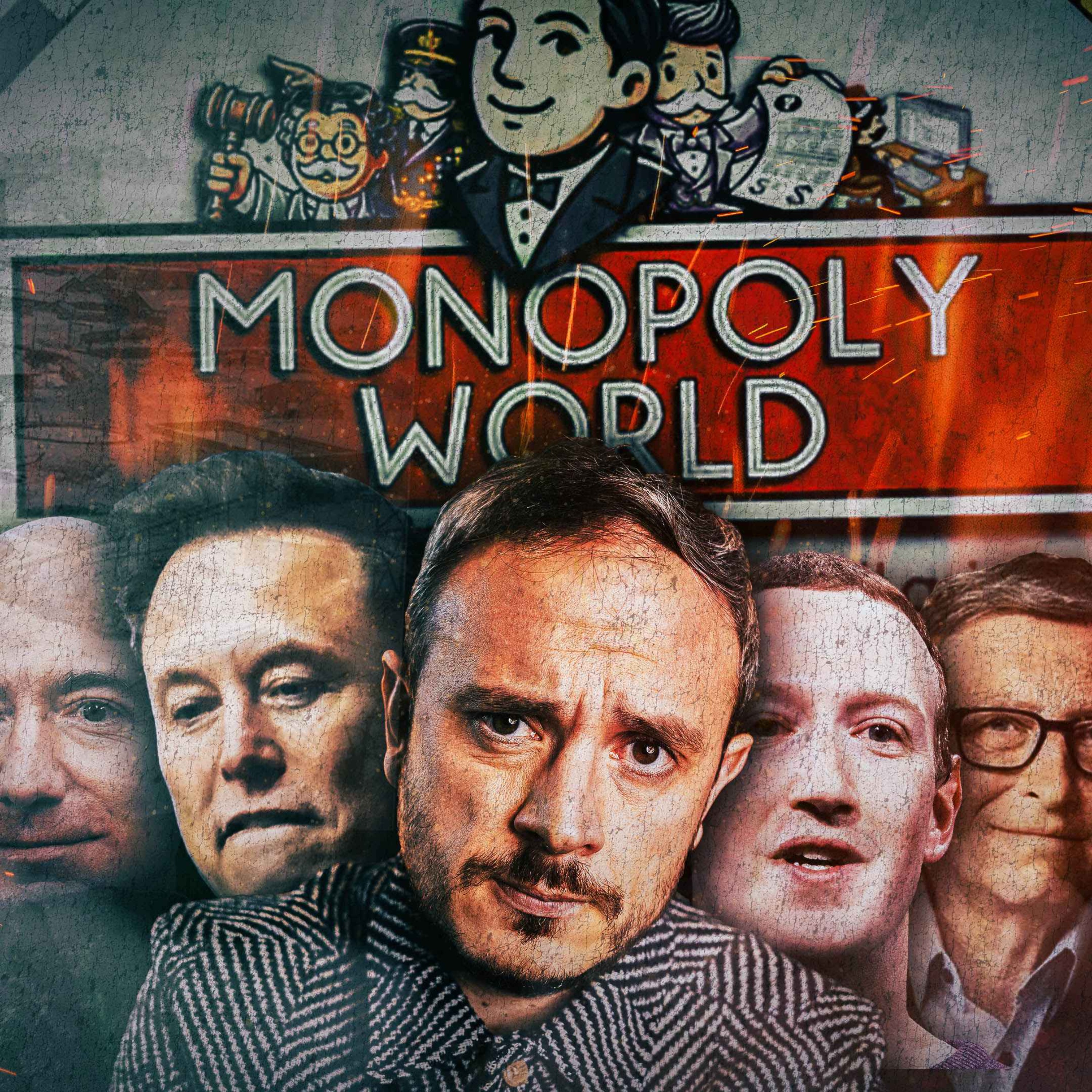
Monopoly World: Oligarchy & Authoritarianism
Hosted on Acast. See acast.com/privacy for more information.
Capitalism: In-Depth
Hosted on Acast. See acast.com/privacy for more information.

Marx: A Complete Guide to Capitalism
Hosted on Acast. See acast.com/privacy for more information.
The Rise and Fall of the Mainstream Media
Hosted on Acast. See acast.com/privacy for more information.
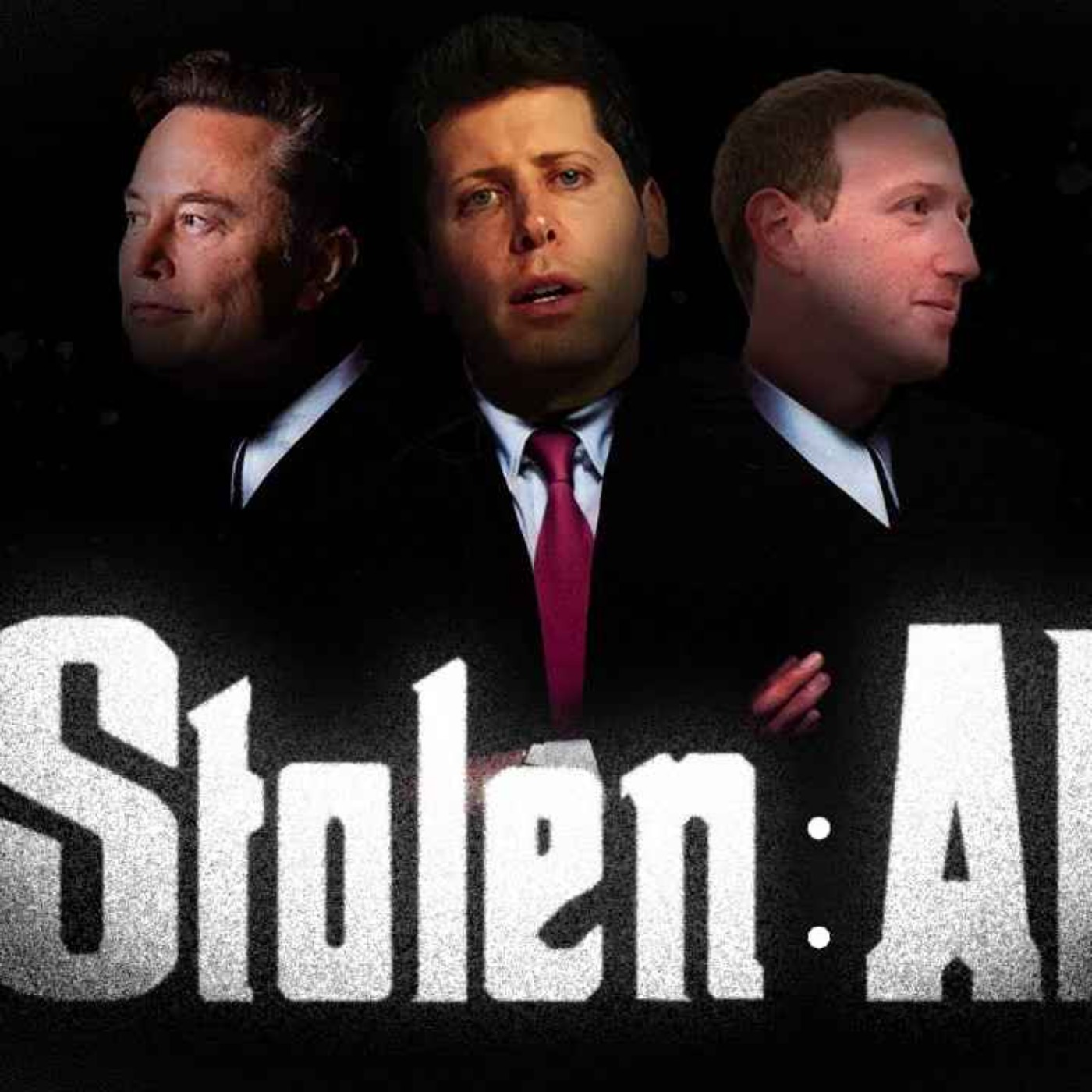
How AI was Stolen
Hosted on Acast. See acast.com/privacy for more information.
The Real Harm of Social Media
Hosted on Acast. See acast.com/privacy for more information.
The Origins of the Israel/Palestine Conflict
Hosted on Acast. See acast.com/privacy for more information.
Does History Progress?
Hosted on Acast. See acast.com/privacy for more information.
Can History Decline?
►Then & Now is FAN-FUNDED! Support me on Patreon and pledge as little as $1 per video: ► http://patreon.com/user?u=3517018Or send me a one-off tip of any amount and help me make more videos:► https://www.paypal.com/cgi-bin/webscr?cmd=_s-xclick&hosted_button_id=JJ76W4CZ2A8J2►Facebook: http://fb.me/thethenandnow►Instagram: https://www.instagram.com/thethenandnow/►Twitter: https://twitter.com
Hegel: A Complete Guide to History
Hosted on Acast. See acast.com/privacy for more information.
How Socrates Beat Addictions
Hosted on Acast. See acast.com/privacy for more information.
The Roots of Modern Democracy
Hosted on Acast. See acast.com/privacy for more information.
Why Culture Wars Matter
Hosted on Acast. See acast.com/privacy for more information.
What Red Pill Philosophy Gets Wrong
Hosted on Acast. See acast.com/privacy for more information.
Being Outside Changes How You Think
Hosted on Acast. See acast.com/privacy for more information.
Stoicism's Major Flaw
I look at the current trend of Stoicism through the lens of Ryan Holiday's Daily Stoic, and more broadly through the Ancient Stoic philosophers, and ask, is it really a useful guide to life today? Hosted on Acast. See acast.com/privacy for more information.
How New Addictions Are Destroying Us
Selected Bibliography:Anna Lembke, Dopamine NationAdam Alter, Irresistible: The Rise of Addictive TechnologyDavid Courtwright, Age of AddictionMorse, S. (2012). Legal Regulation of Addictive Substances and Addiction. Retrieved from https://repository.upenn.edu/neuroeth... Shoshana Zuboff, The Age of Surveillance Capitalism Mark Andrejevic, Automated MediaBrian McCullough, How The Internet Happened
How Big Tech is Ruining Your Attention
Some Sources:Jenny Odell, How to Do Nothing: Resisting the Attention EconomyJames Williams, Stand Out of Our Light: Freedom and Resistance in the Attention EconomyTim Wu, The Attention Merchants: The Epic Scramble to Get Inside Our HeadsAdam Alter, Irresistible: The Rise of Addictive TechnologyShoshana Zuboff, The Age of Surveillance Capitalism Mark Andrejevic, Automated MediaBrian McCullough, How
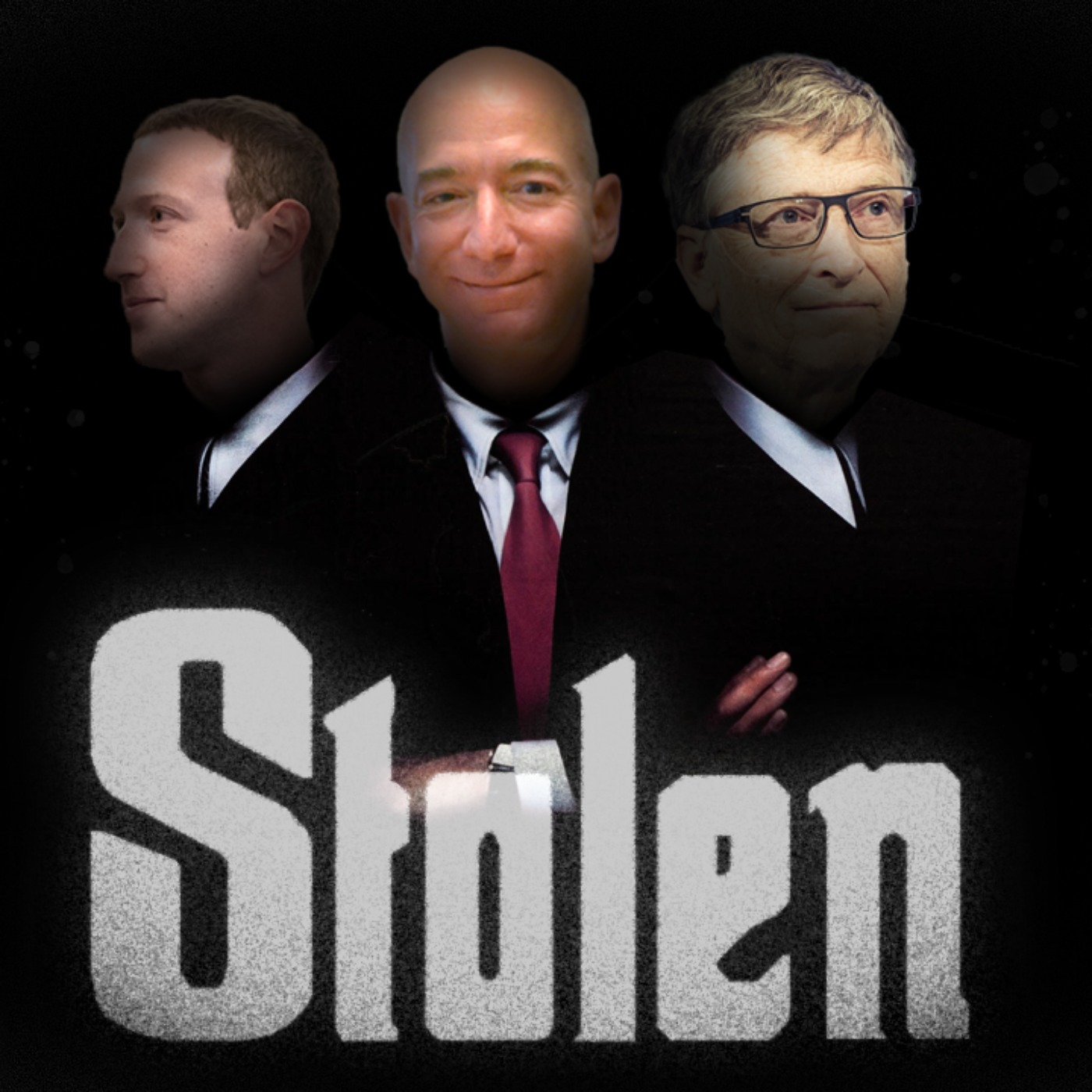
How the Internet Was Stolen
I look at the history of the internet, from ARPANET & NSFNET, through privatization, to Tim-Berners Lee, Yahoo, Netscape, Google, eBay, and Facebook, examining Microsoft's antitrust court case and their battle against Open Source and Free Software, Bill Gate's Open Letter to Hobbyists and the leaked Halloween Documents. Then we take a look at the emergence of Surveillance Capitalism, and how p
Why Our Idea of History is a Poison
Hosted on Acast. See acast.com/privacy for more information.
The First Critics of Modern Life
A look at the first critics of modern life during the 18th and 19th centuries; those who worried about factories, pollution, capitalism, and modernity. Hosted on Acast. See acast.com/privacy for more information.
Why German History is Different
Hosted on Acast. See acast.com/privacy for more information.
Kant: A Complete Guide to Reason
A look at the philosophy of Immanuel Kant, exploring why his ideas matter, and the context they arose from. It looks at the Critique of Pure Reason and the Groundwork of the Metaphysics of morals, explaining concepts like transcendental idealism and the Categorical Imperative. Born in 1724, he wanted to make us a truly scientific species – he wanted to bring together reason – how we think - and ex
What the Evidence on Immigration Says
What the Evidence on Immigration Says by Then & Now Hosted on Acast. See acast.com/privacy for more information.
Tucker Carlson's Paranoid Mind
I look at Tucker Carlson's conspiracy theory-riddled mind, where it comes from, and why he does it. I draw from Richard Hofstadter's 1964 The Paranoid Style in American Politics, review Carlson's book, Ship of Fools, and look at his Fox News show, the Fedsurrection, Patriot Purge, and the Great Replacement.Then & Now is FAN-FUNDED! Support me on Patreon and pledge as little as $1 per video: http:/
How Fox News Changed The World
A dive into the long history of television news in America to understand what the conditions were that made Fox News’s emergence possible. We look at what Fox’s underlying social, cultural, and philosophical toolkit and formula looks like. What it’s predecessors were (TVN, Roger Ailes’ consultancy, Nixon’s adverts), Reagan’s rolling back of FCC regulation and the fairness doctrine, the stories tha
Our Consumer Society
I explore our consumer society, looking at the history, philosophy, psychology, and sociology of what consumerism really means. Is it a useful concept? Where did it appear from? Are there alternatives? How is the desire that drives consumption manufactured? Are we shallow? Is there any possibility of ethical consumption? To help answer some of these questions I draw from thinkers including Jean Ba
Free Will Is Political
Free Will – Our Freedom to choose for ourselves – is at the heart of our sense of being human. How we think about free will effects everything from responsibility and criminal justice to laziness and poverty to seemingly ordinary choices like what I’ll have for dinner. Free Will is of course the power to select from options, for ourselves, unencumbered, unrestrained, uncaused – to be the author of
Putin's Sense Of Russian History
A long view on the sense of Russian history that Vladimir Putin has inherited and draws from culturally. Looking at the roots of Russian anti-westernism, its response to Europe during the Enlightenment and Peter and Catherine the Great's modernizing projects. From Rousseau and the influence of the Romanitics through to Dostoevsky, Carl Schmitt's influence, and Ivan Illyin today.Then & Now is FAN-F
How The Atom Bomb Changed How We Think
Nuclear Weapons changed us. One author said we have a ‘nuclear consciousness’ If so, how specifically did it develop? What shapes did it take? I’ll look at some surprising consequences of the discovery of Nuclear power, how it changed our ideas about fear and irrationalism, about world government and philosophy, how it changed literature and cinema and comics, religion, science, and our idea of pr
MrBeast: Capitalism & Philanthropy
A look at the darker side of MrBeast’s philanthropy and the wider philanthrocapitalist model it's a part of. Looking specifically at #teamseas and a partnership with Jennie-O, I attempt to untangle how corporations and conglomerates like Coca-Cola, chemical and oil companies, and big meat monopolies all have a vested interest in financing certain ‘philanthropic’ projects while side-lining others.
Thinking About Changing The World
Let's think difference.Then & Now is FAN-FUNDED! Support me on Patreon and pledge as little as $1 per video: http://patreon.com/user?u=3517018 Hosted on Acast. See acast.com/privacy for more information.
Our 'Age Of Anger'
Anger, rage, fury: it seems like everywhere we look right now, we see rising temperatures, smoldering resentment, blood boiling, floods of emotion. From Trump to Brexit, Hindu Nationalism to Black Lives Matter, from Hollywood me too to Pandemic Protestors, ISIS to white nationalists, Ukraine to Fox News, to my ongoing conflict with my unreasonably slow computer, it seems, as the historian Pankaj
How Robotics Will Control You
Robotics, automation, and the information age are going in a strange direction. We look at extended selves, farming drones, Tesla sensors, Facebook and Twitter feeds, Amazon, Tinder, and Deleuze and Guattari's bodies without organs.Then & Now is FAN-FUNDED! Support me on Patreon and pledge as little as $1 per video: http://patreon.com/user?u=3517018 Hosted on Acast. See acast.com/privacy for more
Spinoza A Complete Guide To Life
If you’ve ever wanted a complete scientific roadmap for how to live, a modern philosophy to go by, a lens through which to understand a complex world, a foundation, the 17th century Dutch philosopher Baruch Spinoza is as good as you'll find. He asked questions like: why are we so dogmatic? What makes us irrational? Why do we live as slaves to our emotions and others opinions.He was one of the fir
Why The Internet Hasn't Fixed Democracy
Why Hasn't the Internet Fixed Democracy? How can we fix it? I use the latest 'drama' with Ethan Klein, Joe Rogan, Tom Pool, Vaush etc to see if we can find out...Then & Now is FAN-FUNDED! Support me on Patreon and pledge as little as $1 per video: http://patreon.com/user?u=3517018 Hosted on Acast. See acast.com/privacy for more information.
How The Nature Nurture Debate Is Changing
The nature-nurture debates inform almost every area of human life – from biology and botany to economics, literature, and history.To simplify, thinkers on the nature side have, in varying ways, argued that at least parts of your body and mind are behind an impenetrable skin, cannot be gotten to by upbringing, education, politics, or culture. Imagine a one-way street. For example, you have an innat
The BIG Problem With The Metaverse
What does 'meta' really mean? What can we make of Facebook's change to 'Meta'? Jean-Francois Lyotard wrote about the decline of metanarratives in 1979's 'The Postmodern Condition: A Report on Knowledge'. Can we learn anything about Zuckerberg's aspirations from this classic postmodern text?Lyotard was prescient. He noticed in the 70s that quote ‘the miniaturization and commercialization of machine
The Surprising Philosophy Of Dirt
Mary Douglas wrote that:‘There is no such thing as absolute dirt; it exists in the eye of the beholder. Dirt offends against order. Eliminating it is not a negative movement, but a positive effort to organize the environment. In chasing dirt, in papering, decorating, tidying, we are not governed by anxiety to escape disease, but are positively re-ordering our environment, making it conform to an i
Would You Have Been A Nazi?
There were several reasons lynch mobs in Jim Crow America and soldiers and police officers in Nazi Germany were motivated to kill African-Americans and Jews. Historical forces like a sense of victimhood – both having lost wars – cultural forces and propaganda that depicted the victims stereotypically as inferior, greedy, or a threat, and economic forces – ‘the frustration of basic needs’ as social
The Psychology Of Racism In Jim Crow America
Between 1889 and 1930 there were around 3,700 known lynchings in the US. The perpetrators ranged from single people to small mobs to huge crowds of 15,000. The reasons given were broad. While most were accused of murder of rape, many were lynched for simply being rude, for arguing, for taking the wrong job or having the wrong beliefs.Like during Holocaust, as I explored in a previous video, these
Scientific Racism and Immigration: A History
Liberalism – the assumptions of which many of us live under – prioritises individual freedom – of thought, of expression, of movement. But at the same time we think of migration – which is free movement – as abnormal. We even mythologise a sedentary past – of villages, farmers, peasants, ‘tied to the land’, living and dying in the place where they’re from.Yet in the 17th century, around 65% left
What The Sea Can Teach Us About Ourselves
Why We're Drawn to the Sea: A philosophical enquiry that looks at the sea as a cultural, literary, biological, evolutionary, and philosophical concept. The sea has long been a source of inspiration for some of our greatest thinkers – a great unknown to be explored, a passage to be used to transport goods, a place of relaxation, a dwelling place of monsters, a provider of sustenance. But could the
Is Wokeism a Civil Religion?
Is Wokeism Civil Religion? A response to Carefree Wandering's take of Wokeism as civil religion + German-style guilt-pride. I look at Robert Bellah's article 'Civil Religion in America' and take a look at free-speech, dogmatism, cancel culture, and more.Then & Now is FAN-FUNDED! Support me on Patreon and pledge as little as $1 per video: http://patreon.com/user?u=3517018 Hosted on Acast. See acast
What Makes Us Postmodern?
What makes us postmodern? Do we live in a psychological condition of postmodernity? Is postmodernism everywhere? The sociologist Anthony Giddens described living in the modern world as being ‘more like being aboard a careering juggernaut rather than being in a carefully controlled and well-driven motor car.’ Through the work of Zygmunt Bauman and his 'Postmodernity and its Discontents' I look at c
Wokeism
Wokeism? What is it? Is it a force for good, for bad? Is it political correctness gone mad? Is it really everywhere? Or is it a red-herring? A New MccArthyism? Puritanical? Cancel Culture? Dogmatic?This idea of being woke – of wokeism – appeared seemingly out of nowhere. Does it have a history? What’s going on under the surface? When you strip away the noise.We’ll look at the history of the term,
The Invention Of Individual Responsibility
Humans love to fix things, to find the cause of a problem, to probe, tinker, and mend. We ask, in many different ways, Why does this happen? What’s the root cause? What’s the origin? What or who is at fault? What or who is responsible? But there are three subjects that have intertwined with the topic of responsibly more than others.The idea of responsibility has many forms both historically and c
Is Equality Natural?
Is Equality Natural? Do We Have a Natural Impulse Towards Equality? This is a philosophical tour of how philosophers have answered the equality question, and how hunter-gatherers, tribesman, and homo sapiens for 95% of their history, have been egalitarian. Based on Christopher Boehm's book, Heirarchy in the Forest: The Evolution of Egalitarian Behaviour, I look at the !Kung, The Semai, The Utku, N
What Makes Us Modern
What makes you modern? We know that modernity means technology, industry, cities. But is there a modern attitude? A modern psychology?What sets apart from pre-moderns? Can we even imagine what a traditional attitude might feel like?Traditional life was circular. We were tied to the land day after day, month after month – the idea of improvement, or of relationships with a wider world, were largely
Why Jordan Peterson is Wrong About Ideology
Jordan Peterson is famously critical of ideology. He has a particular distain for Marxism, Stalinism, Nazism, Postmodernism, Feminism, in fact, any ism. Instead, he argues, that the individual is sovereign, ideology should be renounced, and that, quote, ‘If we each live properly, we will collectively flourish.’Rule VI of Beyond Order: 12 More Rules for Life is 'Abandon Ideology'.Drawing on the Rus
Jordan Peterson Critique: Philosophy & Responsibility
Through 12 Rules for Life and Beyond Order, I examine Jordan Peterson’s philosophy of responsibility. First, I try to understand what Peterson says about individual responsibility. Second, I take a look at the philosophy of free will and responsibility. I look at determinism, psychology, and history to begin to draw a between what we’re responsible for and what we’re not. Ultimately, I argue that
Baby Boomers VS Millennials: A History of the Coming Revolution
This is a tale of three revolutions. Revolutions past – twin revolutions that served as lessons. The second was a counter-revolution, a result of not learning those lessons. And the third, well it begins in 2030, but stirrings of it are already being felt.I look at the causes of revolutions and state crises in the past, looking specifically at the English Civil War and the French Revolution, to ar
5 Useful Things I’ve Learned from the Existentialists
Philosophy is often too abstract, but the Existentialists are known for being (a bit) more practical occasionally. Here are 5 useful things we can learn from the Existentialists and existentialism, specifically Soren Kierkegaard, Fyodor Dostoevsky, Friedrich Nietzsche, Martin Heidegger, Jean-Paul Sartre, and Albert Camus.They are:Laugh at yourself (looking at Dostoevsky’s Notes from Underground an
Being Us: Communities, Organisations, & Politics of Authenticity
The pursuit of an authentic self is often compared with the desire for uniqueness, of individuality, of creative freedom. But does this mean, as some have argued, that ‘authenticity’ itself is an individualistic, egotistical, narcissistic, and self-absorbed concept? After all, ‘be yourself', to thine own self be true, and ‘follow your heart’ all conjure up the idea of stepping away from the crowd,
Being You: The History and Philosophy of Authenticity
Who are we? How do we find out? What is it to find our authentic selves? What can we learn from the history and philosophy of authenticity?Today, supposedly, we’re free. Free, to do what makes us happy, to be anything we strive to be, to choose our own paths. We even feel free from parts of ourselves – that our emotions are something separate from us, that there’s a real us beneath them, a supra-i
Kierkegaard: An Introduction
The 19th century Danish philosopher Soren Kierkegaard is best known for giving us the concept of a leap of faith. He was a deeply religious thinker, but his ideas have as much relevance for secular lives as Christian ones. He was the grandfather of existentialism, a purveyor of authenticity, and of discovering, amid conflicting beliefs and the demand to conform to the rules of society, who you rea
Steven Pinker & Human Nature: Nasty or Nice?
In The Better Angels of Our Nature, Steven Pinker argues that human violence has declined across history. One part of this argument is that life in a state of nature – before civilization – was solitary, poor, nasty, brutish, and short. Amongst other things, Pinker argues that hunter-gatherers, tribal societies, were – and are - much more violent than later more civilized societies. Both Pinker an
Thomas Hobbes: Leviathan
An introduction to Thomas Hobbes’ Leviathan. Hobbes looms over all of us as the preeminent defender of the modern state and sovereign authority. Nuanced and original, he is probably the most influential figure in modern political philosophy who, and could be described as the father of both modern liberalism and modern conservatism.Hobbes’ originality was his belief that political theory could be d
Zygmunt Bauman: Moral Relativism & The Holocaust
What can the Holocaust teach us about morality and ethics? Does the Holocaust pose a challenge for moral relativism? Zygmunt Bauman argues yes. In Modernity and the Holocaust, Bauman argues that the Holocaust proves that societal rules, norms and standards cannot be the only source of morality. Perpetrators often argued in court that they were only following the law of their country. How can we ju
How We Become Genocidal: The Holocaust
What drives ordinary everyday people to become mass killers? What are the psychological mechanisms and cultural factors that lead to genocide? What were the causes of the Holocaust? Can we theorize a psychology of genocide? A theory of genocide?The Holocaust was not perpetrated solely by a few sadistic psychopaths but by tens of thousands of everyday Germans, Poles, Frenchmen, Austrians, Slovakian
Inviting the Tigers to Tea: Demagogues in America
Winston Churchill once said that ‘Dictators ride to and fro upon tigers from which they dare not dismount. And the tigers are getting hungry.’ In the wake of what happened in Washington last week, I think this metaphor illustrates something deeper about the relationship between demagogues and their followers. Who are the tigers and why are they hungry? Riots - the voice of the unheard - clearly si
Foucault: Criticisms & Method
How can we untangle Madness & Civilization and think clearly about what Foucault is saying, both in the book, and by extension in later works?Looking at some criticisms of him are a good way to try to pin down exactly what’s going on with his method and view of the world, so let’s start there.In 1987 Lawrence Stone, for example, criticized Foucault as being ‘unconcerned with historical detail of t
Foucault: Madness & Civilization (History of Madness)
Michel Foucault’s History of Madness (abridged in English as Madness and Civilization) was a revolutionary exploration of how our interpretations and experience of madness have changed over time, and how they’re not quite as ‘rational’ – or even more ‘rational – than they first appear. Everyone who was worked on the history of psychiatry since has worked in Foucault’s shadow. He looked at history
Heidegger & Descartes: Being-in-the-world, Care, Anxiety & Existentialism
What did Descartes know for certain? That he is a thinking thing, a cogito. But what does it mean to think? Descartes lists a few modes of thinking: Doubting, affirming, denying, understanding.Heidegger embarks upon a similar project to Descartes. What, he asks, is the fundamental nature of our experience? Of our existence? Heidegger agrees with Descartes. If we want to live life well we need to b
Descartes' Error: Antonio Damasio's Somatic Marker Hypothesis
Descartes’ Error is a 1994 book by the neuroscientist Antonio Damasio which outlines the somatic marker hypothesis, a theory about how the mind and body not only interact, but are indissociable. Damasio argues that those feelings provide what he calls ‘somatic markers’ for the mind that aid decision making. They point us in the right (or wrong) direction.The rationalist or Cartesian view – what Da
Descartes Introduction: Meditations
This is an introduction to Rene Descartes' Meditations. Descartes - born in 1596 - is often considered the father of modern philosophy. He was a radical innovator, completely sweeping away the old and inaugurating a new method – simple, pure, clear, individual thought. He claimed he read very little, and most of his work was in the sciences. When a man asked to see his library he pointed to a half
Francis Bacon: Introduction to Induction & the Scientific Method
An introduction to the philosophy of Francis Bacon, the father of empiricism. Bacon was born in London in 1561. He was an establishment figure born into one of the most powerful families in Britain. He as a member of the house of commons and the house of lords for 37 years, a lawyer, Attorney General, and a member of the Privy Council, the group who advises the monarch. He died of pneumonia after
Francis Bacon: A Critique
What did Bacon give us? Induction, the scientific method, experimentation, his was a theory of epistemology – a theory about knowledge.He said that knowledge about the world comes from the senses and should be carefully and systematically collected to make use of instrumentally.Ok, so there are two lines of criticism I’d like to discuss today. First, the idols – the idea that knowledge is distorte
Empires of Modernity: The East India Company and the Anarchy
Modernity is many things. Urbanization, industrialization, technologization. At its simplest, it’s a project of supposed improvement, science, and progress. As a project, then, modernity seeks to expand itself. If improvements can be made, they should be made.Exploration was at the heart of the modern expansionist drive that began in earnest in the 17th century. But why then? Why not before? What
Great Barrington Declaration: Science and Politics
How do we deal with coronavirus? I look at the 'Great Barrington Declaration' - a group of scientists against lockdowns - and the history of how science is always political.The Declaration has been signed by over 20,000 medical practitioners and scientists, including Professor Sunetra Gupta from Oxford.There are some problems, though. First, anyone can sign the form – a look through the signatures
Recommended

Medicine with Meaning

Yours Truly Johnny Dollar Collection

Take Back Your Health®
CBS Radio Mystery Theater | Old Time Radio
Solved Murders - True Crime Stories
紐約鳥|New York Aperture
The Swerve Podcast: Obscure Topics | Conspiracy Theories

The Bread and Banter Podcast
The Church of What's Happening Now: The New Testament
Busted Open

Deadline: White House

Panda Show - Picante
