Pulse Check with Archer Nursing
Pulse Check with Archer Nursing is a podcast that brings nursing topics to life with high-yield information, challenge questions, and real-life cases. Each episode helps listeners master must-know nursing subjects for the NCLEX and clinical practice in about 15 minutes. The show aims to make complicated nursing topics easy and fun to learn.
Episodes
EP 122 Cystic Fibrosis Explained: Symptoms, Treatments & NCLEX® Priorities
Cystic fibrosis is more than a respiratory disorder! 🫁In this episode of Pulse Check with Archer Nursing, Dr. Morgan Taylor breaks down cystic fibrosis (CF), from the genetics behind thick, sticky mucus to the nursing interventions you need to know for exams and clinical practice.🩺 In this episode, you'll learn:How cystic fibrosis affects the lungs, pancreas, and digestive systemKey symptoms,
EP 121 - Afib vs. Aflutter I How to Tell the Difference + NCLEX® Tips
AFib or A-flutter? They can look similar, but knowing the key differences can help you recognize what’s happening fast.In this episode of Pulse Check with Archer Nursing, Dr. Morgan Taylor breaks down atrial fibrillation vs. atrial flutter, including what to look for on an ECG, why pulse rates can differ, stable vs. unstable AFib, treatment priorities, and the major complication you need to know f
EP 120 - Prioritization I NCLEX Prioritization Made Simple: 4 Tools to Know Who to See First
Every answer looks right. So what do you do first?In this episode of Pulse Check with Archer Nursing, Dr. Morgan Taylor is joined by the Archer nurse educator team (Rachel, Jennifer Bonner, Shelley Kendik, and Tiffany Palino) to break down prioritization for the NCLEX and real-life nursing practice. Together they walk through four frameworks and work through real exam-style scenarios as a panel.Wh
EP 119 - ABG Interpretation I How to Read ABGs in 15 Minutes (NCLEX Made Simple)
Struggling to make sense of arterial blood gases? In this episode of Pulse Check with Archer Nursing, Dr. Morgan Taylor breaks ABG interpretation down into three simple questions you can ask every single time.You'll learn:The normal values you actually need to memorize (pH, CO2, bicarb)How to spot the "party pooper" causing the imbalanceRespiratory vs metabolic, made simpleHow to tel
EP 118 - Nursing School Prep Guide - What To Do Before Day One
Starting nursing school or heading into a new semester? 🎓🩺 Let’s make sure you’re ready for what’s coming.In this bonus episode of Pulse Check with Archer Nursing, Morgan is joined by Rachel, Shelly, and Jennifer from the Archer Nursing team to share the nursing school advice they wish they had from day one.We’re talking:📚 How to organize your semester🗓️ Planning and time management🩺 What you actu
EP 117 Hyperkalemia vs. Hypokalemia: What You NEED to Know for the NCLEX
Potassium questions can get tricky fast, especially when the heart is involved.In this episode of Pulse Check with Archer Nursing, Dr. Morgan Taylor breaks down hyperkalemia vs. hypokalemia, including the key signs to recognize, ECG changes to watch for, common causes, treatment priorities, and the NCLEX safety rules you don’t want to miss.Plus, work through a practice question and learn how to de
EP 116 - Pneumothorax I NCLEX Study
A patient has absent breath sounds on one side, dropping oxygen levels, hypotension, and tracheal deviation. What do you do first?In this episode of Pulse Check with Archer Nursing, Dr. Morgan Taylor breaks down pneumothorax and tension pneumothorax in a way that’s easy to visualize, remember, and apply on the NCLEX.You’ll learn what happens when air enters the pleural space, the key assessment fi
EP 116 - Pneumothorax I NCLEX Study
A patient has absent breath sounds on one side, dropping oxygen levels, hypotension, and tracheal deviation. What do you do first?In this episode of Pulse Check with Archer Nursing, Dr. Morgan Taylor breaks down pneumothorax and tension pneumothorax in a way that’s easy to visualize, remember, and apply on the NCLEX.You’ll learn what happens when air enters the pleural space, the key assessment fi
EP 115 - Pulmonary Embolism I NCLEX Study
A pulmonary embolism can become life-threatening fast — but would you recognize the signs and know what to do first?In this episode of Pulse Check with Archer Nursing, Dr. Morgan Taylor breaks down pulmonary embolisms (PEs) in a way that actually sticks. Learn why a PE causes a V/Q mismatch, the classic signs to watch for, Virchow’s triad, and how to prioritize nursing interventions when every sec
EP 114 - Necrotizing enterocolitis I Pulse Check with Archer Nursing
Necrotizing enterocolitis (NEC) can progress quickly, making early recognition and intervention essential for NICU nurses.In this episode of Pulse Check with Archer Nursing, Dr. Morgan Taylor is joined by Archer Review Chief Medical Officer and neonatologist Dr. Steve DeMayo to walk through a realistic NEC case and break down exactly what future nurses need to know.You’ll learn:* The pathophysiolo
EP 113 –How to advocate for yourself as a nurse
In this episode of Pulse Check with Archer Nursing, host Dr. Morgan Taylor sits down with Hiva Kaz, Director of Advanced Practice, to unpack what advocacy really means for nurses—and why it all starts with self-advocacy.Advocacy can feel overwhelming, especially when it gets tangled up with politics and policy. But before you can advocate for the profession, you have to be able to advocate for you
EP 112 - Postpartum Hemorrhage I NCLEX Prep
Postpartum hemorrhage (PPH) is one of the most urgent maternal emergencies every nursing student needs to recognize. In this episode of Pulse Check with Archer Nursing, Dr. Morgan Taylor breaks down the pathophysiology behind postpartum hemorrhage, the most common causes, and the priority nursing interventions you need to know for the NCLEX and clinical practice. Through a real-life clinical story
EP 111 –Neuroleptic malignant syndrome
What should a nurse do when a client taking haloperidol suddenly develops a high fever, severe muscle rigidity, confusion, and profuse sweating?In this episode of Pulse Check with Archer Nursing, Dr. Morgan Taylor breaks down neuroleptic malignant syndrome, a rare but life-threatening reaction associated with antipsychotic medications.Learn how to recognize:• High fever and lead-pipe muscle rigidi
EP 110 Stevens-Johnson syndrome (SJS)
A painful rash after starting a new medication should never be ignored.In this episode of Pulse Check with Archer Nursing, Dr. Morgan Taylor explains how to recognize Stevens-Johnson Syndrome, why it is a medical emergency, and which nursing action takes priority.Test your knowledge with the practice question, then learn the clinical clues that can help you identify this life-threatening reaction.
EP 109: Nursing Isn't One Job, It’s a Hundred
Nursing careers do not always follow a straight path, and that is completely okay.In this episode of Pulse Check with Archer Nursing, Dr. Morgan Taylor sits down with Lauren, founder and CEO of Scrub Life Notes, to discuss her journey from ICU nurse to family nurse practitioner to nursing educator and entrepreneur.They explore how bedside nursing builds valuable skills in leadership, communication

EP 108 – Rheumatoid arthritis vs. Osteoarthritis
RA vs. OA: Can you tell the difference? 🦴This week on Pulse Check, we're breaking down Rheumatoid Arthritis vs. Osteoarthritis — the anatomy, the causes, the hallmark signs, and how treatment differs for each. From morning stiffness clues to classic joint deformities, we'll help you nail this comparison for clinicals, NCLEX, and beyond.🩺 What you'll learn:The anatomy of a healthy joint
EP 107 –Serotonin Syndrome
In this episode of Pulse Check with Archer Nursing, Dr. Morgan Taylor breaks down serotonin syndrome in a clear, NCLEX-focused way. You’ll learn how too much serotonin affects the body, which medications can increase risk, and what symptoms nurses should recognize quickly, including fever, tachycardia, tremors, hyperreflexia, and agitation.Morgan walks through a case study involving an SSRI and tr
EP 106 – Neonatal abstinence syndrome
In this episode, Dr. Morgan Taylor breaks down neonatal abstinence syndrome, including why withdrawal happens after birth, what symptoms nurses should watch for, and why low-stimulation care, swaddling, small frequent feeds, skin protection, and parent education are so important.You’ll also walk through a practice question and learn why the priority nursing action is to swaddle the newborn and red

Ep 105 Placenta Previa vs. Placental Abruption
Third-trimester bleeding can point to very different clinical pictures, and in this episode, we’re breaking down two major causes: placenta previa and placental abruption.Dr. Morgan Taylor explains how to tell the difference between painless, bright red bleeding with a soft uterus in placenta previa and painful, dark red bleeding with a rigid “board-like” uterus and fetal distress in placental abr
EP 104 – My First Year as a Nurse: What I Wish I Knew
Your first year as a nurse is challenging, emotional, and full of learning — but you are not alone.In this episode of Pulse Check with Archer Nursing, Morgan is joined by Tiffany to talk honestly about what it’s like to be a new grad nurse. They share what they wish they knew during their first year, including why it’s okay not to know everything, how to use your resources, why asking questions ma
EP 103 – Types of Anemia
Anemia is all about impaired oxygen delivery — but not every type of anemia looks the same.In this episode of Pulse Check with Archer Nursing, Dr. Morgan Taylor breaks down the major anemia “buckets”: decreased red blood cell production, increased red blood cell destruction, and blood loss. You’ll learn how to recognize key clinical clues for iron deficiency anemia, vitamin B12 deficiency/pernicio
EP 102 – Adrenal Crisis
Adrenal crisis is a life-threatening emergency that nurses need to recognize fast.In this episode of Pulse Check with Archer Nursing, Dr. Morgan Taylor breaks down the adrenal glands, cortisol, aldosterone, and what happens when the body cannot mount an effective stress response. You’ll learn why adrenal crisis can cause hypotension, hypoglycemia, hyponatremia, and hyperkalemia — and how those fin
EP 101 Guillain-Barré Syndrome
Guillain-Barré Syndrome is a high-priority nursing topic because symptoms can progress quickly — especially when respiratory muscles become involved.In this episode of Pulse Check with Archer Nursing, Dr. Morgan Taylor breaks down Guillain-Barré Syndrome in a simple, memorable way. You’ll learn how the immune system attacks the myelin sheath, why symptoms often present as symmetric ascending weakn
EP 100 – Test Taking Strategies for NCLEX Day
Feeling overwhelmed by NCLEX questions? You’re not alone—but the right strategy can change everything.In this episode of Pulse Check with Archer Nursing, Dr. Morgan is joined by testing expert Dr. Jennifer Bonner to break down exactly how to approach NCLEX questions with confidence.Whether you’re second-guessing your answers or struggling with SATA questions, this episode gives you practical, easy
EP 99 – Spinal Cord Injuries: What Every Nursing Student Needs to Know
Spinal cord injuries can feel overwhelming—but not after this episode.In Pulse Check with Archer Nursing, Dr. Morgan breaks down spinal cord injuries (SCI) in a way that actually makes sense—connecting anatomy, pathophysiology, and real-life nursing priorities so you know exactly what to do on exam day and in practice.Starting with a high-yield NCLEX-style question, we walk through:✔️ The anatomy
EP 98 Graduation Is Coming. Are You Ready for the NCLEX?
Graduation is right around the corner—but how do you really know if you’re ready for the NCLEX?In this episode of Pulse Check with Archer Nursing, Dr. Morgan breaks down exactly what “ready” actually means—and it’s not just about finishing nursing school. From thinking like a nurse to managing test anxiety, we’re giving you a clear, data-driven roadmap to walk into your exam with confidence.You’ll
EP 97 – Heart blocks
Heart blocks do not have to be confusing.In this episode of Pulse Check with Archer Nursing, we take a challenging topic and make it finally click. From understanding how the heart’s electrical system works to recognizing Wenckebach, Mobitz II, and complete heart block, we simplify it step by step.You will follow a real patient scenario that shows how quickly a condition can change from stable to
Episode 96: How to Pick Your NCLEX Prep
Choosing the right NCLEX® prep can feel overwhelming. There are countless programs, question banks, and study plans all claiming to be the best. In this episode, we break it all down so you can make a confident, informed decision that fits your learning style, schedule, and goals. We walk you through what really matters when selecting NCLEX® prep, including how to evaluate question banks, the impo
EP 95 - Delirium vs. Dementia
In this episode, Dr. Morgan Taylor breaks down a clinically important comparison in nurses need to know: delirium vs. dementia. These can look similar at first glance, but they are fundamentally different in cause, timeline, and urgency. Understanding that difference is critical—not just for NCLEX success, but for real patient safety. This episode reinforces a critical clinical mindset: a sudden c
EP 94 - Mastering Computer Adaptive Testing
In this episode, Dr. Morgan Taylor is joined by Director of Nursing Rachel Taylor to break down one of the most misunderstood parts of NCLEX prep: computer adaptive testing (CAT). If CAT exams feel confusing, unpredictable, or downright intimidating—you’re not alone. This episode walks you through exactly how CAT works, how to approach it, and how to train for it so nothing about test day feels un
EP 93 - Blood Transfusion Reactions
What happens inside the body when a blood transfusion goes wrong — and what should a nurse do about it? In this episode, Dr. Morgan Taylor breaks down everything you need to know about transfusion reactions, from the microscopic science to real-world clinical decision-making. We walk through a real clinical case with a 62-year-old patient receiving packed red blood cells after a GI bleed, and foll
EP 92 - Pheochromocytoma
In this episode of Pulse Check with Archer Nursing, Dr. Morgan Taylor tackles pheochromocytoma—a rare but high-yield endocrine disorder that shows up frequently on nursing exams and can cause life-threatening hypertensive crises if not managed correctly. You’ll start with an NCLEX-style scenario involving a patient preparing for adrenalectomy, then walk through the adrenal gland anatomy and the ph
EP 91 - What to do to Get Ready for Clinicals
This special episode steps away from pathophysiology and dives into something every nursing student feels: clinical anxiety. If you’ve ever spiraled the night before clinical wondering what you’ll be asked, who your preceptor will be, or what you might mess up—this episode is for you. We're breaking preparation down into four practical, realistic buckets so you can walk into clinical feeling g
EP 90 - Meningitis
In this episode, Dr. Morgan Taylor breaks down meningitis—a high-risk, high-priority emergency you absolutely need to recognize quickly on exams and in clinical practice. You’ll start with a classic NCLEX-style scenario: a college student with sudden severe headache, fever, stiff neck, and photophobia. From there, Dr. Taylor walks you through the anatomy of the meninges (dura, arachnoid, pia), wha
EP 89 - Aortic Dissection
In this episode, Dr. Morgan Taylor breaks down aortic dissection - one of the most time-sensitive, high-stakes emergencies you’ll see on exams and in real life. You’ll start with an NCLEX-style practice question featuring the classic red flags, then walk through exactly what’s happening inside the aorta and why a single tear can turn into a life-threatening emergency in minutes. If you’re studying
EP 88 - Should You Apply to NP School? What to Consider First!
In this episode, Dr. Morgan Taylor sits down with experienced family nurse practitioner, Hiva Kolodrubetz, to have an honest discussion about the nurse practitioner role—what it really looks like, who it’s right for, and how to know if (and when) you’re ready to take that step.Together, they unpack the growing pressure many nurses feel to “just go to NP school,” why that mindset can be risky, and
EP 87 - Gestational Diabetes
In this episode of Pulse Check with Archer Nursing, Dr. Morgan Taylor breaks down gestational diabetes in a super clear, test-ready way—starting with what the placenta does to metabolism and ending with the newborn complications nurses watch for after delivery. Dr. Taylor is joined by Dr. Jennifer Bonner, CNM, who walks through a high-stakes real-world scenario and shares practical counseling poin
EP 86 - Pericarditis
In this episode, Dr. Morgan Taylor breaks down pericarditis from the ground up—starting with the anatomy of the pericardium and walking through how inflammation can escalate into the life-threatening complication of cardiac tamponade. You’ll follow a real bedside scenario, learn how to recognize classic pericarditis findings versus true red flags, and connect the pathophysiology directly to what y
EP 85 - Stroke
In this episode of Pulse Check with Archer Nursing, Dr. Morgan Taylor, DNP, CPNP, CCRN breaks down strokes in a clear, test-ready way—starting with the two major types (ischemic vs hemorrhagic) and why identifying which one is happening changes everything about treatment and nursing priorities. You’ll walk through a realistic ED scenario, learn why “last known well” drives the entire plan of care,
EP 84 - New Year, New Semester: Reset Your Nursing School Routine for Success
This episode shifts gears to focus on you: your routines, your energy, and how to start a new semester without repeating what didn’t work last time. Dr. Morgan Taylor, DNP, CPNP, CCRN walks you through a simple, realistic reset to help you feel more grounded, organized, and supported as the semester begins. Instead of chasing motivation or trying to become a “new you” overnight, this episode focus
EP 83 - Intussusception
In this episode of Pulse Check with Archer Nursing, Dr. Morgan Taylor, DNP, CPNP, CCRN breaks down intussusception, a pediatric gastrointestinal emergency where one segment of the bowel telescopes into another, cutting off blood flow and causing rapid deterioration if not treated quickly. We walk through the classic presentation you’re expected to recognize on exams and in real life—and connect th

EP 82 - Abruptio Placentae
In this episode, Dr. Morgan Taylor, DNP, CPNP, CCRN breaks down placental abruption, a high-stakes obstetric emergency that requires rapid recognition and immediate action. We walk through exactly what happens when the placenta prematurely separates from the uterine wall—and why this scenario puts both mom and baby at serious risk. Using a realistic ED to labor & delivery scenario, this episod
EP 81 - Jaundice
In this episode, Dr. Morgan Taylor, DNP, CPNP, CCRN breaks down newborn jaundice, one of the most common (and often misunderstood) conditions you’ll see in mother–baby, pediatrics, and on exams. We walk through why newborns turn yellow, how bilirubin is produced and cleared, and—most importantly—how to recognize when jaundice crosses the line from normal physiology to a true emergency. Using a rea
EP 80 - Superior Vena Cava Syndrome
In this episode, Dr. Morgan Taylor, DNP, CPNP, CCRN breaks down superior vena cava (SVC) syndrome, a true oncologic emergency that nurses must recognize and act on quickly. Using clear anatomy, memorable analogies, and a high-yield case study, this episode walks through why SVC syndrome happens, what it looks like at the bedside, and how to prioritize nursing interventions when the airway is at ri
EP 79 - What to Do Over Winter Break (to Actually Recharge)
In this special episode, Dr. Morgan Taylor, DNP, CPNP, CCRN shifts the focus from pathophysiology and case studies to something nursing students rarely pause to examine: their own nervous system. Instead of diving into shock, sepsis, or cardiac rhythms, Morgan walks you through how to approach winter break with intention—by giving yourself permission to rest, decompress, and reset without guilt. W

EP 78 - Multiple Sclerosis
In this episode, Dr. Morgan Taylor, DNP, CPNP, CCRN breaks down multiple sclerosis by zooming in on the nervous system’s “electrical wiring” and what happens when the immune system attacks the myelin coating that keeps signals fast, smooth, and efficient. Through clear analogies and a real case study, you’ll understand why symptoms vary so widely, how relapses and remissions develop, and why heat
EP 77 - Osteoporosis
In this episode, Dr. Morgan Taylor, DNP, CPNP, CCRN breaks down osteoporosis by starting at the source—how healthy bones remodel themselves through the balance of osteoblasts and osteoclasts, and what happens when that balance shifts. You’ll walk through the hormonal players (estrogen, PTH, calcitonin, and vitamin D), why post-menopausal clients are highest risk, and how bone density loss leads to
EP 76 - Graves Disease
In this episode, Dr. Morgan Taylor, DNP, CPNP, CCRN breaks down Graves disease, the most common cause of hyperthyroidism, in a way that actually makes sense. In under 15 minutes, you’ll walk through the HPT axis, how autoantibodies hijack the thyroid, why TSH is low when T3 and T4 are high, and how that all translates into classic symptoms like weight loss, heat intolerance, tremors, anxiety, tach
EP 75 - Prepping for Finals Week...What Actually Works?
In this special episode, Dr. Morgan Taylor, DNP, CPNP, CCRN, breaks down her proven, go-to strategy for preparing for finals—tools she used through her BSN, DNP, certification exams, and NP boards. If finals are coming fast (and let’s be honest—they always do), this episode gives you a practical roadmap to study effectively without burning out. Dr. Taylor shares the exact three-part system she tea
EP 74 - Myocardial Infarction
In this high-yield episode, Dr. Morgan Taylor, DNP, CPNP, CCRN, breaks down one of the most time-sensitive emergencies in nursing: myocardial infarction. From the moment that coronary artery becomes blocked, the clock starts ticking—and understanding what happens next can literally save a life. In just 15 minutes, you’ll learn the pathophysiology behind an MI, the classic signs to look for, and th
EP 73 - Melanoma
In today’s episode, Dr. Morgan Taylor, DNP, CPNP, CCRN, breaks down one of the most high-stakes dermatology topics you’ll see in practice and on the NCLEX®—melanoma. If you listened to our last episode on basal cell carcinoma, this is the perfect follow-up. We’ll build from the basics and walk through how to recognize melanoma early, why it’s so dangerous, and what nurses must know to intervene qu
EP 72 - Basal Cell Carcinoma
In this episode, Dr. Morgan Taylor breaks down basal cell carcinoma, the most common—but least aggressive—form of skin cancer. You’ll learn why early detection matters, how to identify classic signs, and the key teaching points for patient education and prevention. Basal cell carcinoma may be slow and steady, but it’s not harmless. Catching it early—and teaching patients to protect their skin—can
EP 71 - Burns
In this episode, Dr. Morgan Taylor breaks down a high-yield emergency topic: burns. What starts as a skin injury can quickly become a full-body crisis, and understanding the cascade behind it can make all the difference for your patients and your exam scores. You’ll learn how to recognize the systemic chain reaction that follows capillary damage, prioritize lifesaving interventions, and calculate
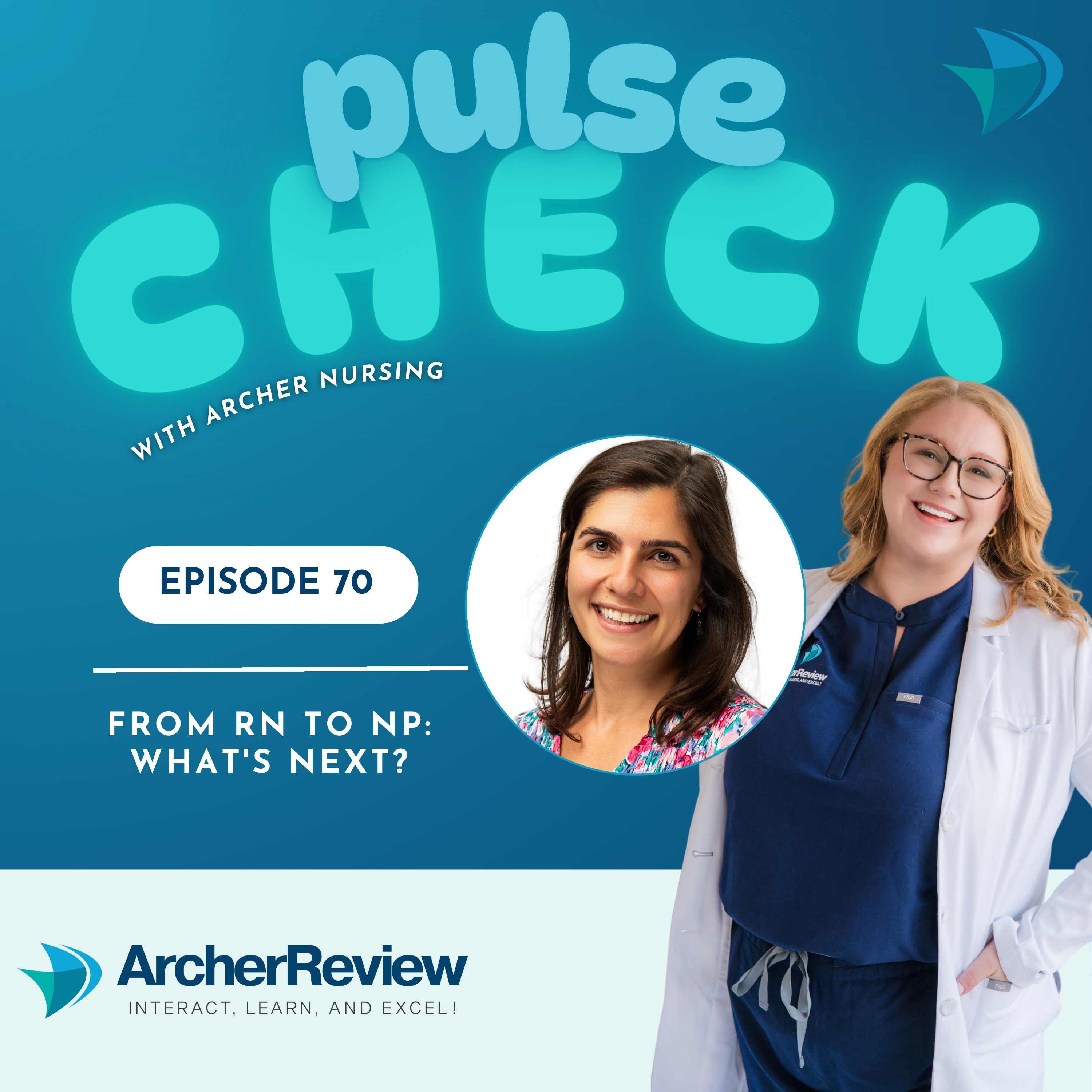
EP 70 - From RN to NP: What's Next?
Thinking about NP school—or already mapping your next move? In this bonus chat, Dr. Morgan Taylor sits down with Hiva Kolodrobetz, FNP (12+ years in nursing; 10 as an NP across primary care and multiple specialties) to unpack the real RN→NP journey—what works, what’s hard, and how to choose your track with confidence. This episode is perfect for RNs who are considering NP school in the near future
EP 69 - Hemophilia
In this episode, Dr. Morgan Taylor breaks down Hemophilia A—an X-linked recessive factor VIII deficiency that turns routine bumps into prolonged bleeds. You’ll learn how to spot classic signs (think hemarthrosis and mucosal bleeding), interpret the coag labs that clinch the diagnosis, and know the first-line nursing actions that keep kids safe. This episode is perfect for: Nursing students and NCL
EP 68 - Reye Syndrome
In this episode, Dr. Morgan Taylor unpacks Reye syndrome—a rare but life-threatening condition that every nurse must recognize. You’ll learn why giving aspirin to children recovering from viral illnesses can lead to devastating effects on the liver and brain, and how to act fast when early warning signs appear. Who should watch: Nursing students, pediatric nurses, and NCLEX preppers who want to co
EP 67 - Kawasaki Disease
In this episode, Dr. Morgan Taylor breaks down Kawasaki Disease — a high-yield pediatric condition every nurse should recognize early. From fever and rash to the risk of coronary artery aneurysms, Morgan simplifies how systemic inflammation turns into a cardiac emergency and how nurses play a critical role in preventing long-term complications. Who should watch: Nursing students and pediatric nurs
EP 66 - HELLP Syndrome
Today, Dr. Morgan Taylor demystifies HELLP syndrome—a severe variant of preeclampsia. You’ll learn the meaning behind H-E-L-L-P, the classic symptoms/labs, immediate nursing priorities, and why delivery is the only definitive treatment. Who should watch: Nursing students, new grad nurses, and L&D/ED nurses who need a clear framework to spot HELLP early and prioritize actions that protect mom a

EP 65 - Preeclampsia
In this episode, Dr. Morgan Taylor breaks down preeclampsia, one of the most high-yield and potentially dangerous pregnancy complications nurses must know. You’ll learn how abnormal placental development leads to vasospasm, leaky vessels, and multi-system damage — and how to recognize early warning signs before the condition escalates. Who should watch: Nursing students, new grads, and OB nurses p
EP 64 - Coarctation of the Aorta
In this episode, Dr. Morgan Taylor breaks down coarctation of the aorta—a congenital heart defect where the body’s main highway for blood flow suddenly narrows. You’ll learn how to recognize this “traffic jam” in circulation, what it looks like at the bedside, and how nurses assess and monitor it from infancy through childhood. Who should watch: Nursing students and new grads studying pediatric c
EP 63 - Patent Ductus Arteriosus (PDA)
In this episode, Dr. Morgan Taylor dives into one of the most common congenital heart defects seen in newborns — Patent Ductus Arteriosus (PDA). You’ll learn how this fetal “shortcut” between the aorta and pulmonary artery should close after birth, what happens when it doesn’t, and the hallmark signs every nurse should recognize at the bedside. Who should watch: Nursing students, new grads on NICU
EP 62 - Leukemia
In this episode, Dr. Morgan Taylor breaks down leukemia—a core NCLEX topic that every nursing student should understand. You’ll learn what happens when the bone marrow goes rogue, how to spot key clinical signs, and what to do when a fever strikes in an immunocompromised client. What You’ll Learn Leukemia basics: Bone marrow produces immature “blast” cells that crowd out healthy blood cells Key fi
EP 61 - Lymphoma
In this episode, Dr. Morgan Taylor simplifies one of the more intimidating oncology topics—lymphoma. You’ll learn the essentials for the NCLEX and clinical practice: how to spot key symptoms, understand staging, and recognize life-threatening complications like tumor lysis syndrome. What You’ll Learn: Lymphoma basics: Cancer of the lymphatic system—how rogue lymphocytes form painless swollen node
EP 60 - Deep Vein Thrombosis (DVT)
In this episode, Dr. Morgan Taylor breaks down deep vein thrombosis (DVT)—what it is, why it matters, and how nurses can recognize subtle signs before it becomes a life-threatening pulmonary embolism (PE). From anatomy review to Virchow’s triad and a bedside story of a post-op client, you’ll walk away with a clear picture of what to do when you suspect a clot. What you'll learn:Key signs: ache
EP 59 - Mid-Semester Check-In: How to Turn Things Around
Mid-Semester Reset: How to Refocus and Finish Strong! In this special episode, Dr. Morgan Taylor steps away from patho and pharm to tackle something just as important—how to reset when nursing school feels overwhelming. With advice from Archer Review educators, you’ll get practical tools and motivational strategies to push through the toughest stretch of the semester. What You’ll Learn Why mid-sem
EP 58 - Croup
In this episode, Dr. Morgan Taylor unpacks croup—what causes that unforgettable barking cough, why symptoms flare at night, and how nurses can recognize when supportive care is enough and when it’s time for emergent treatment. What You’ll Learn Croup = viral upper airway swelling (larynx, trachea, bronchi) → narrowed airway & noisy breathing Classic signs: barking seal-like cough, inspiratory
EP 57 - Bronchiolitis/RSV
In this episode, Dr. Morgan Taylor breaks down bronchiolitis—what RSV does to tiny airways and how we support infants through the worst days safely. What You’ll Learn Bronchiolitis = inflammation + mucus plugging of the bronchioles → airflow obstruction & air-trapping RSV is the most common cause (think late fall → early spring) Classic signs: wheezing, retractions, nasal flaring, belly breath
EP 56 - Asthma
In this episode, Dr. Morgan Taylor demystifies asthma—what’s happening in the airways, how to treat an acute attack, and how to prevent the next one. What You’ll Learn Airway triad: bronchoconstriction + mucosal edema + mucus → wheeze & air trapping Common triggers (exercise, allergens, cold air, illness) & why asthma is reversible High-risk signs in kids: retractions, tripod positioning,
EP 55 - Crohn’s Disease vs. Ulcerative Colitis
In this episode, Dr. Morgan Taylor breaks down the two major forms of inflammatory bowel disease—Crohn’s and ulcerative colitis—and shows you how to quickly tell them apart. What You’ll Learn Crohn’s disease: mouth → anus, skip lesions, transmural inflammation Key complications: strictures, fistulas, abscesses, bowel obstruction Ulcerative colitis: colon only, continuous inflammation, mucosal/subm
EP 54 - Urinary Tract Infection (UTI)
In this episode, Dr. Morgan Taylor reviews urinary tract infections (UTIs)—one of the most common but high-stakes topics for nurses.What You’ll Learn:UTI basics: lower (cystitis) vs. upper (pyelonephritis)Most common cause: E. coliKey symptoms: dysuria, frequency, urgency, suprapubic painPyelonephritis signs: fever, chills, CVA tenderness, N/VRisk factors: sexual activity, douching, catheters, inc
EP 53 - Cerebral Palsy
In this episode, Dr. Morgan Taylor breaks down cerebral palsy (CP)—a high-yield condition you’ll see on exams and in practice—and makes it simple in under 15 minutes. What You’ll Learn:How CP can cause permanent, non-progressive brain injury Causes: prenatal (infection, stroke), perinatal (asphyxia, trauma), postnatal (kernicterus, meningitis) Key signs: abnormal reflexes, hypertonia/hypotonia, po
EP 52 - Wilms Tumor
In this episode, Dr. Morgan Taylor takes a deep dive into Wilms tumor (nephroblastoma)—a childhood kidney cancer with a distinctive clinical profile. In under 15 minutes, you’ll connect anatomy, pathophysiology, and bedside nursing care so this high-yield topic finally sticks.What you'll learn:What a Wilms tumor is and the age group it most often affectsHow tumor growth in the kidney triggers exce
EP 51 - Ventricular Septal Defect (VSD)
In part two of our congenital heart defects mini-series, Dr. Morgan Taylor, DNP, CPNP, CCRN, breaks down ventricular septal defects (VSDs)—what they are, why they cause increased pulmonary blood flow, and how they show up at the bedside.We compare VSDs to ASDs, walk through a classic 2-week-old case that progresses to heart failure, and map the nurse’s priorities from stabilization to post-closure
EP 50 - How to Stay Organized in Nursing School
Feeling the nursing school semester ramp up? In this practical, positive episode, Dr. Morgan Taylor sits down with Dr. Jennifer Bonner to turn “I’m overwhelmed” into “I’ve got a plan.” You’ll get systems you can use today! We cover: The first steps to getting organized Managing the chaos: clinicals, exams, assignments—what to prioritize and when Small habits that lower stress fast Building your vi
EP 49 - Atrial Septal Defect (ASD)
An atrial septal defect may look subtle on the surface—but the physiology is busy in the heart. In this high-yield episode, Dr. Morgan Taylor, DNP, CPNP, CCRN, makes a complex congenital heart disorder easy to understand. We’ll cover: A practice “Select All That Apply”question on expected ASD findings The two-story house analogy (atria upstairs, ventricles downstairs) and why blood shunts left → r
EP 48 - Pyloric Stenosis
Pyloric stenosis is a classic pediatric condition nurses need to recognize quickly. In this episode, Dr. Morgan Taylor, DNP, CPNP, CCRN, breaks down how this “jammed door” between the stomach and small intestine leads to projectile vomiting, dehydration, and weight loss in infants. We’ll cover: A practice question on hallmark signs of pyloric stenosis The “doorway” analogy to understand what’s hap
EP 47 - Pneumonia
Pneumonia can look different depending on its cause, but the end result is the same—fluid-filled alveoli that can’t exchange oxygen effectively. In this episode, Dr. Morgan Taylor, DNP, CPNP, CCRN, simplifies pneumonia into its three main types—bacterial, viral, and fungal—and explains what nurses need to watch for at the bedside. We’ll cover: A practice question on Pseudomonas pneumonia and care
EP 46 - Cardiomyopathy
Cardiomyopathy may sound like a big, intimidating word, but understanding it can make all the difference in caring for clients with heart failure. In this episode, Dr. Morgan Taylor, DNP, CPNP, CCRN, breaks down the three main types of cardiomyopathy—dilated, hypertrophic, and restrictive - so you’ll never confuse them again. We’ll cover: A high-yield NCLEX-style practice question The “balloon” an
EP 45 - Ulcers: Gastric vs. Duodenal
Peptic ulcers can cause big complications—and the key to mastering them is knowing the differences. In this episode, Dr. Morgan Taylor, DNP, CPNP, CCRN, walks you through the causes, symptoms, and treatments of gastric and duodenal ulcers. We’ll cover: The role of H. pylori and NSAIDs in ulcer formation Symptom differences: why gastric ulcers hurt after meals and duodenal ulcers hurt when the stom
EP 44 - Hyperthyroidism
Hyperthyroidism is like having your body’s gas pedal jammed to the floor—and when it escalates into a thyroid storm, it can become a life-threatening emergency in minutes. In this episode, Dr. Morgan Taylor, DNP, CPNP, CCRN, breaks down the pathophysiology of hyperthyroidism, how it differs from hypothyroidism, and the critical steps nurses must take when a client tips into thyroid storm. Through
Recommended

Take Back Your Health®

CBS Radio Mystery Theater | Old Time Radio

Solved Murders - True Crime Stories

紐約鳥|New York Aperture

The Swerve Podcast: Obscure Topics | Conspiracy Theories

The Bread and Banter Podcast

The Church of What's Happening Now: The New Testament

Busted Open

Deadline: White House

Panda Show - Picante

Crickets Corner

History of the Earthquake and Fire in San Francisco
