
Stuck Not Broken
Stuck Not Broken is a podcast that teaches the Polyvagal Theory and applies it to trauma recovery. Host Justin Sunseri, a licensed marriage and family therapist, explains the science of connection in an accessible way. He created the Polyvagal Trauma Relief System and authored 'Trauma & The Polyvagal Paradigm'.
Episodes

Stuck Not Broken: What It Means & Why it's Good to be Stuck
Stuck and broken are two very different problems, and which one you believe you are changes everything about what comes next. This is the title chapter. You’ll hear why every one of us is running on the same biological hardware no matter how different our lives look, what it means to call your trauma a stuck state rather than a defect, and why the stuck point you’re in right now is the hopeful par

Why You Stay Stuck in Trauma, Part 2: Cognitive Adaptations
You already know what Bill does. This episode is about what's underneath it: the stories he tells himself, the things he keeps quiet, and the beliefs he never chose. You'll learn what a cognitive adaptation is, how the same mental habit sounds completely different depending on the state you're in, why humans isolate and keep secrets when animals don't, and how the beliefs handed to you can block t

Why You Stay Stuck in Trauma, Part 1: Behavioral Adaptations
Wild animals live with danger every day and don't get traumatized. So why do you stay stuck? In this episode, you'll meet Bill, a father, husband, and business owner who can't see what's driving him. You'll also learn the two ways we keep ourselves stuck without noticing: we ignore the body's self-regulation impulses, and we reach for behaviors that let us avoid feeling what's actually there. Part

Co-Regulation, Explained: Polyvagal Theory
Your nervous system doesn't just calm down on its own — more often than you realize, it borrows the calm from somebody else. This episode covers co-regulation: the specific cues your body sends and reads without you ever thinking about it, eye contact, tone of voice, the tilt of a head, what it means if you don't have a self-regulated person in every part of your life, and what actually happened,

Self-Regulation, Explained: Polyvagal Theory
Sometimes the most useful information in the therapy room isn't in what someone says; it's in their hands. This episode breaks down self-regulation on a nervous system level: the two main ways we do it, top-down (thoughts) and bottom-up (body), why top-down tricks work in the moment but don't solve anything on their own, and a session with a client whose hands were saying something her voice wasn'

The Vagal Brake, Explained: Polyvagal Theory
You can't just decide to calm down, but you can strengthen the thing that makes calming down possible. The vagal brake isn't a body part, it's the influence of your safety state on your heart, and it's what lets you move between mobility and stillness without dropping into full defense. Here's what it actually is, how to start strengthening it even if "feeling safe" is a foreign concept, and the t

What is Trauma? The Two Paths: Polyvagal Theory
Trauma isn't the event. It's what happens afterward, when your nervous system gets stuck defending against something that's already over. This episode breaks down the two distinct paths that lead there: one from a single overwhelming moment, the other from years of disrupted connection, and what separates someone with one specific trigger from someone who's never had access to safety at all.👉 New
Why Being "Too Nice" Can Be a Survival Strategy
Not every survival strategy looks like fighting back or running away. Sometimes it looks like befriending the person who's hurting you.This episode covers the last two mixed states: appease (safety plus flight/fight plus shutdown — all three primary states at once) and fawn (flight/fight plus shutdown, but without safety). What separates a hostage using social skills to stay alive from someone dis

Why Can't You Just Sit Still and Relax?
Sitting still should be the easiest thing in the world, right? But for a lot of people, it's maybe the hardest.This episode moves into the third mixed state: stillness and intimacy — safety plus shutdown, immobility without fear. What actually makes it safe to sit still, use the restroom, or fall asleep at night. Why meditation, yoga, and even bedtime can feel dangerous for someone who lives in fl

The Play State: Polyvagal Theory
Wrestling with your kids. Trash-talking during a pickup game. Screaming through a game of tag. On paper, those look like danger cues, so why do they feel so good? Play is what happens when your safety state and your fight-or-flight mobility switch on at the same time. Here's what's actually happening in your nervous system when you play, why the game changes the moment it moves from the living roo

The Freeze Response, Explained: Polyvagal Theory
Freeze is not the same as shutdown, even though people use the words like they mean the same thing. Shutdown is a limp collapse. Freeze is tense: all the energy to run or fight, with a body that can't move. It's the gas and the brake at the same time, and it's underneath panic, phobias, and that flash of rage that comes out of nowhere. Here's what's actually happening in a freeze, how to come out

The Shutdown State: Dorsal Vagal Collapse
Sometimes the body's answer to too much isn't panic, it's the opposite: going quiet, going numb, wanting to disappear. That's shutdown, the bottom of the Polyvagal ladder, and it's where a lot of what gets called depression actually lives. Here's what it feels like from the inside, why your body would ever reach for it, and the slow, gentle way back up. No pushing through, no forcing it.👉 New here

The Fight or Flight State: Polyvagal Theory
Anxiety and anger can feel like opposites, but they are two sides of the same state. Fight or flight is your sympathetic nervous system mobilizing to protect you: flight shows up as anxiety and worry, fight as anger and irritability. This one is about what that state feels like, what it looks like in a person's face, breath, and voice, and why a system built for short bursts can leave you feeling

The Safety State: The Top of the Polyvagal Ladder
Safety is the state where life feels workable. Not perfect, just manageable. It's the top of the ladder and the place we're all reaching for, so this episode is about what it actually feels like in your body, what it looks like on someone's face and in their voice, and what it really takes to get there. You'll also meet Courtney, whose story we follow throughout the states from here.👉 New here? Fi
Functional Freeze: Why You're On Edge but Also Distant
You're getting things done. Answering texts, making dinner, showing up. But underneath it you feel wired and flat at the same time, like you're watching your own life through a foot of glass. That's functional freeze: your gas and your brake pressed at once, and "functional" just means you're still getting through the day while it runs. In this episode I break down what freeze actually is, how it'
Story Follows State: Why Your Thoughts Aren't Random
Ever notice your thoughts get meaner when you feel bad, and softer when you feel good? That's not a coincidence, and it's not a flaw in you. "Story follows state" means the story in your head comes out of the state your body is in, not the other way around. Once you catch it happening in real time, a dark story starts to lose its grip.👉 New here? Find your stuck state, and your starting place: htt

Neuroception for Beginners: Polyvagal Theory
Ever notice your thoughts get meaner when you feel bad, and softer when you feel good? That's not a coincidence, and it's not a flaw in you. "Story follows state" means the story in your head comes out of the state your body is in, not the other way around.👉 New here? Find your stuck state, and your starting place: https://www.stucknotbroken.com/stuckOr go straight to what's best for you:👉Start fr
Deb Dana's Polyvagal Ladder
You can't just decide to calm down, sorry to say. The Polyvagal Ladder is a simple metaphor for how your nervous system moves: safety at the top, fight-or-flight in the middle, shutdown at the bottom, one rung at a time. Once you can see which rung you're on, a lot of the reactions you've beaten yourself up over start to make sense, and stop feeling like proof that something's wrong with you.the P
The Autonomic Nervous System, and the Polyvagal Theory (Explained Simply)
You don't decide to beat your heart, take your next breath, or digest your lunch. Something else runs all of that, every second, without checking in with you. That's your autonomic nervous system. This episode breaks down what Polyvagal Theory is in plain language and how it questions the old "sympathetic vs. parasympathetic" idea.👉 New here? Find your stuck state, and your starting place: https:/

Challenging Your Paradigm: The Shift in Thinking Before the Science
"That's bulls***." That was my honest first reaction, back in 2018, to the work I now build my entire career around.In this episode of the Stuck Not Broken audiobook, I invite you to challenge your paradigm:How I came to Polyvagal Theory, and nearly dismissed itWhat a paradigm is, and why you need a new one before the science can landThe urge most of us feel to skip ahead to the fix, and why there

What's My Story? Where Your Unstucking Begins
What if the stories you tell yourself about your worth, your past, and how you got here aren't the whole truth, and you're still the one holding the pen?This is Episode 1 of the Stuck Not Broken audiobook: Book 1 - Trauma & the Polyvagal Paradigm. We start by questioning the stories you have about yourself and open the possibility of a new one.👉 New here? Find your stuck state, and your starti

Season 2: Full Audiobook - Trauma & the Polyvagal Paradigm
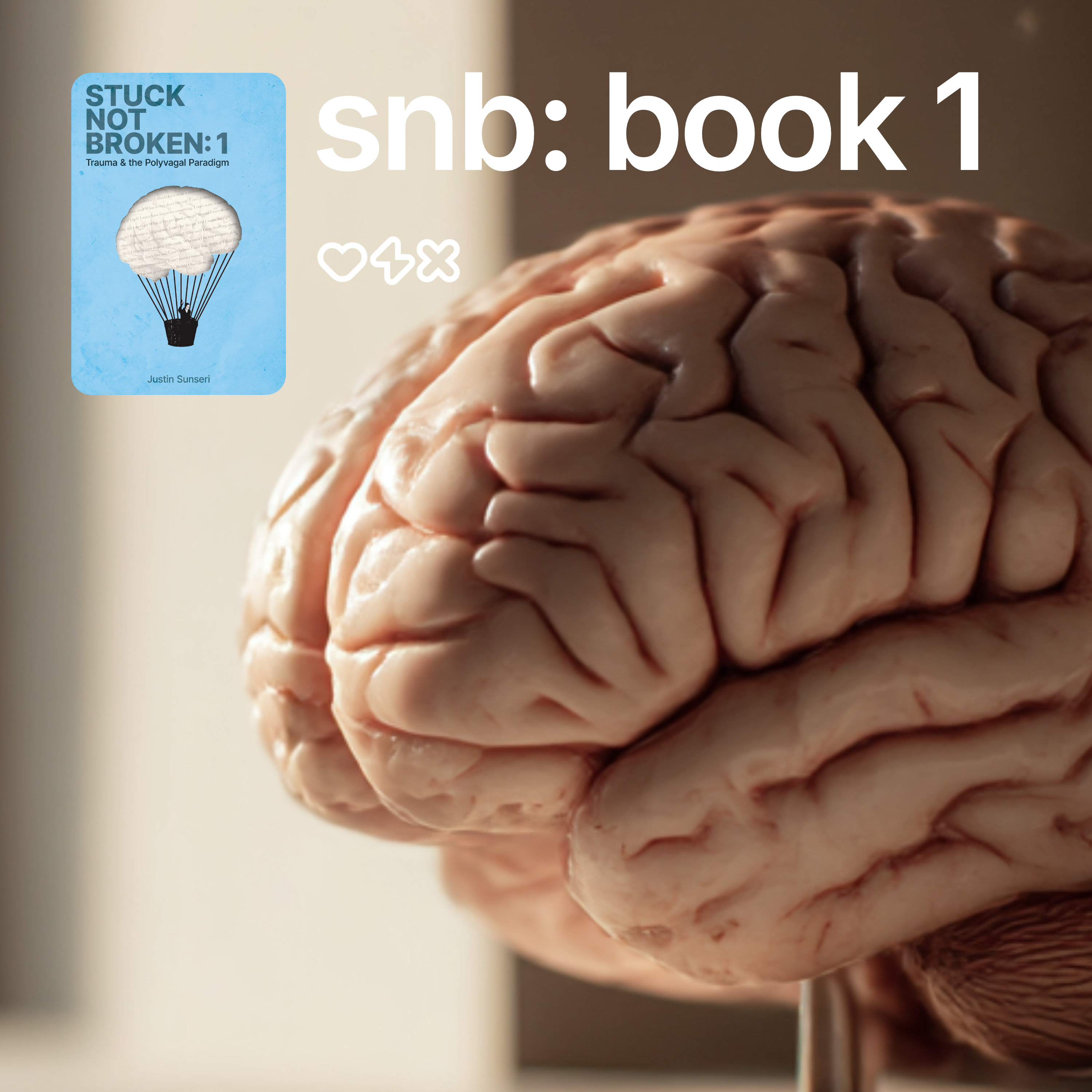
After seven years and nearly 300 episodes, I'm trying something I don't think anyone else is doing: giving you all of my Polyvagal Theory knowledge, directly. And free.Season 2 of the Stuck Not Broken podcast is different from the regular show. It's the full audiobook of my first book, Stuck Not Broken: Book 1 - Trauma & the Polyvagal Paradigm, read chapter by chapter, right here in the feed.
What Is a "Gentle Rebel"? A Conversation on Creativity and Sensitivity with Andy Mort
What does it mean to be a "gentle rebel" — and how does creativity fit in? In this episode, I talk with Andy Mort of The Haven community about rebellion as openness rather than aggression, why highly sensitive people often need space and safety to access their creative voice, and how creativity is less about the finished product and more about the ongoing process of becoming yourself. We get into
You're Meditating Wrong (Here's How)
If you've ever sat down to meditate and felt like you were failing at it, this episode is for you. In this special episode, I read a section from my new book, Stuck Not Broken Book Three, on why most people are meditating wrong — and what to do instead. We'll get into:What meditation actually is through a nervous system lensWhy "clearing your mind" misses the point entirelyHow rejecting the presen
Stoicism & Your Nervous System: How to Practice Amor Fati (Loving Your Fate) with Erick Cloward
In this episode, Justin Sunseri sits down with Erick Cloward, host of the Stoic Coffee Break podcast, for a deep dive into the Stoic practice of Amor Fati, or "loving your fate." Learn how to connect ancient Stoic wisdom with modern nervous system science. Erick and Justin discuss how to use principles from Stoicism and Polyvagal Theory to practice self-regulation, manage anxiety, and build emotio
The Polyvagal Bandwagon Is Dying (And I Love It)
The Polyvagal Theory has transformed how we understand the nervous system—but somewhere along the way, it became a wellness industry bandwagon. In this episode, I'm breaking down how a legitimate scientific framework got diluted into oversimplified soundbites, and why that matters for your actual healing.📱 Ready to practice self-regulation? Try the Stuck Not Broken app for free - https://www.stuck
You Can't Love Someone Out of Shutdown: the Partner's Guide to Love & Self-Regulation
When your partner is in shutdown, you're not just watching it happen—you're in it too. This episode is for the partners who feel like they're losing their person, who don't understand what's happening, and who wonder if they're making it worse. In this episode, I break down:What shutdown actually looks like (and why it's not a choice)What you CAN'T control (and why that matters)4 concrete ways to
Does EMDR Actually Work? (What the Research Says)
EMDR is everywhere — but do you know what's actually helpful? Or if it is at all?EMDR (Eye Movement Desensitization and Reprocessing) has become one of the most talked-about trauma treatments around. But most people — and, honestly, many therapists — reduce it to one image: a finger waving in someone's face. That shorthand is costing people clarity about what's actually working.In this episode, Ju
No, the Polyvagal Theory is NOT Dead: Here's What Critics (and Influencers) Aren't Understanding.
A paper co-authored by 39 scientists called the Polyvagal Theory "untenable" — and now psychology influencers are announcing the Theory is "dead." But is it?I'm Justin Sunseri, therapist and member of the Polyvagal Institute's Editorial Board. That means I review work for Polyvagal Theory accuracy. So let me actually look at the claims.In this episode, I break down Paul Grossman's paper "Why the P
Five Common Self-Help Habits That Accidentally Keep Your Nervous System Sensitized and Stuck
Is your self-help routine actually making things worse?The self-help industry has one answer for everything: do more. More habits, more discipline, more effort. But for a nervous system that's already overwhelmed — stuck in sympathetic flight/fight, freeze overdrive, or dorsal shutdown — more doing can mean more frustration, more overwhelm, and more defeat.In this episode, I break down 5 common se
Building Emotional Capacity Before Processing Past Traumas
Stop forcing yourself to relive the most painful moments of your life before your body is ready to handle them.Traditional therapy often skips the most critical step — building the physiological capacity to actually process what comes up. Justin Sunseri breaks down why flooding your system with past trauma makes things worse, and what to do instead.📱 Ready to practice self-regulation? Try the Stuc
Why Meditation May Not Work Well for People in Freeze
Justin Sunseri dives deep into the paradox of meditation and anxiety. If you've ever felt that meditation or breathing exercises make you more anxious, you're not alone—and you're definitely not broken. Justin explains how your nervous system might be signaling for a different approach, especially for those who experience freeze dominance.🌸 What You'll Learn:Why freeze types often need movement in
Is Your Diagnosis Part of the Problem? Healing the Nervous System vs. Managing a Disorder
Does a mental health diagnosis explain why you are suffering, or does it just give your suffering a name?In this episode, I challenge the traditional way we look at mental health labels. While a diagnosis (like depression, anxiety, or ADHD) can be a helpful shorthand for professionals, it often becomes a trap for the person receiving it—convincing them they are "broken" rather than adapting to the
Steadying the Waters: How Your Nervous System Affects Your Stoic Practice
What if I told you that your ability to practice Stoicism isn't just about willpower or mindset—but about the actual physiological state of your nervous system? In this episode, I dive deep into a profound quote from Epictetus that perfectly illustrates how our autonomic nervous system affects our capacity to respond wisely to life's challenges.Using the metaphor of water, light, and appearances,
Sockless Mindfulness: A Parenting Lesson from My 10-Year-Old
There's more to me than Polyvagal Theory—I'm also a dad. And sometimes the best lessons come from the most unexpected places... like watching my son walk barefoot in sandals through a cold, rainy parking lot.In this reflective episode, I share a simple family moment that reminded me: mindfulness looks different for everyone. When my son told me he loves feeling "the air flowing between his toes,"
"I Don't Think About It Anymore" — Why That Doesn't Mean You're Over It
"That was a long time ago. I don't think it affects me anymore."Have you ever said this about something from your past? In this deeply personal episode, Justin shares his own recent experience of discovering how past trauma still lives in the body—even when we're not thinking about it.After a major spinal surgery in 1997, Justin thought he'd moved on. But when new back issues required x-rays nearl
Hit It Back: A Lesson in Playfulness & Seizing the Moment
A balloon floated down from the hotel ceiling. My son said, "Hit it back."I was sitting on a bench, quietly processing—reflecting on a loud, joyful Italian family reunion the night before, thinking about my upbringing, the conversations with my brothers, how my wife and I are raising our own kids. I wanted to stay in that quiet space.But then a wave of irritation hit me. And in that fraction of a
What to do When Your Partner Cycles Between Shutdown and Fight
When your spouse is dysregulated, shut down, or lashing out in anger—what's really happening? And more importantly, what can YOU do about it?In this episode, I break down:✓ The biological difference between being technically safe and *feeling* safe✓ Why your partner may not identify you as a safety cue (even if you're trying)✓ The "Polyvagal Ladder"—how shutdown → anger → safety actually works✓ Wh
AI Therapists Are Coming in 2026 And I'm Not Sure That's Good
Two years ago, I said AI couldn't replace therapists. I was wrong—about the technology, anyway. In late 2025, AI can now see you, hear your voice, and remember everything you say. But just because it can doesn't mean it should. In this episode, I'm exploring what's actually possible, who AI might actually help, and the uncomfortable questions we're not asking yet. This one might upset you. Good.📱
Announcing the Self-Regulation Coach AI App
Have you ever wished for a daily guide on your nervous system regulation journey? One that offers structure without being overwhelming, and personalized support without the need for intensive coaching?In this special announcement episode, Justin introduces a project he's been working on for months: the Self-Regulation Coach. Discover the "middle path" to getting unstuck—a tool designed for those w
Pendulation: Why Some Regulate Naturally & Some Don't
Is nervous system regulation a natural skill or a conscious effort? In this episode, we delve into the skill of pendulation—the mindful shift between safety and defense—and explore why it appears effortless for some but feels impossible for others.Discover the "carnival game" analogy for understanding your nervous system's capacity, learn how natural pendulation occurs in processes like grieving,
Why You Feel Drained After Therapy (and How to Fix it)
Have you ever left a therapy session feeling completely wiped out, as if you've run a marathon you didn't train for? It's a common experience, but it isn't the goal of effective therapy. That feeling of depletion is a critical signal from your body that you've been pushed beyond your nervous system's capacity.In this episode, we explore a body-centric, Polyvagal-informed approach to therapy that b
The Way You Understand & Manage Emotions is WRONG (Here's What To Do Instead)
Justin Sunseri challenges the widely accepted (and often ineffective) ways we understand and manage our emotions. He makes a bold claim: the common wisdom you've been taught about your feelings is likely wrong. Drawing from client conversations and his expertise as a therapist and coach, Justin reveals the two core problems with traditional emotional management and the five common avoidance tactic
Polyvagal Approach to Shame and Anger & How to Not Use Pendulation
Unlock a deeper understanding of shame, anger, and the polyvagal theory in this episode! Justin Sunseri answers a listener’s question about navigating difficult emotions, pendulation, and the importance of safety in healing. Whether you’re a therapist, student, or someone seeking personal growth, this conversation offers practical insights and guidance.⏰ CHAPTERS:00:00 Introduction and Question fr
Safety First: Why Prescribed "Trauma Exercises" Can Backfire
A viewer asked about TRE exercises that seemed to help with anxiety but left them feeling numb and disconnected. In this episode, I break down what might have gone wrong and why I take a fundamentally different approach to nervous system healing.🔑 Key Topics Covered:• Why prescribed movement exercises can backfire• The difference between fight-or-flight, freeze, and shutdown states• Why safety mus
Self-Regulation & Mindful Breathing: What if it Was Easier?
Feeling overwhelmed by complex breathing techniques and counting methods? In this episode, I share why your body already knows how to breathe—and why trusting that natural process might be more effective than any prescribed breathing "hack."🎯 What You'll Learn:• Why I don't recommend counting breaths during self-regulation• How to use ONE intentional breath as a re-anchoring tool• The difference b
3 Strategies to Reduce Overhwhelm and Get Stuff Done
Feeling overwhelmed by your to-do list? I share three practical strategies to reduce overwhelm and finally get things done. Learn how to find safety, soften your defensive state, and take small, almost effortless steps forward. This episode is a replay of a free webinar from the Unstucking Academy. Discover actionable tips to improve your daily life and reach your goals without feeling stressed. T
the Polyvagal Guide to Boundaries: Why You Need Both Safety AND Fight Activation
Learn how the Polyvagal Theory helps explain healthy boundaries through a combination of safety and sympathetic activation.Episode Introduction and Context — 0:00Understanding Ventral Vagal Safety State — 0:34Balancing Safety and Sympathetic Activation — 1:16Proactive Practice for Boundary Setting — 3:29Compassionate Boundary Enforcement — 5:16Realistic Expectations and Self-Connection — 7:20Concl
What Everyone Gets Wrong About Fawn vs Appease (even the Polyvagal Theory)
What’s the real difference between “fawn” and “appease”? Therapist Justice Sunseri breaks down these trauma responses, how they relate to Polyvagal Theory, and what it means for recovery. Download the free Polyvagal One Pagers in the description for more resources!00:00 – Episode intro00:51 – Understanding Fawn and Appeasement02:11 – Behavioral Adaptations in Severe Situations03:23 – Appeasement a
Stop Trying to Change Your Polyvagal State. Do This Instead for True Self Regulation...
Discover why trying to force a change in your polyvagal state might be holding you back from true self-regulation. In this episode, therapist and coach Justin Sunseri challenges the common advice around prescriptive breathing techniques and invites you to connect with your body’s natural rhythms instead. Through insights from a live Q&A, learn how mindful awareness and listening to your body c
Finding Safety: Janie's Journey from Freeze to Connection
Feeling stuck in old patterns or chronic anxiety? In this episode, you'll hear Janie's inspiring story of moving from a lifelong freeze state to genuine connection and safety. Discover how she overcame emotional numbness, built meaningful relationships, and found practical ways to feel more at ease in her own body. You'll learn:⌲ Real-life strategies for getting "unstuck" and building safety in yo
Rebuilding After a Breakup: Facing Anxiety and Finding Safety
A listener shares his struggles with anxiety and attachment issues following a recent breakup. At age 17, Chuck's relationship triggered intense anxiety due to his anxious attachment style, leading to a highly stressful experience. After the relationship ended, Chuck faces persistent anxiety symptoms, fatigue, dizziness, extreme overthinking, and more. Justin discusses the possible states of defen
Breaking Free: How Small Changes Transformed Eva's Shutdown into Connection
Eva shares her powerful recovery from a Polyvagal shutdown state. She discusses her experiences, valuable insights, and practical tips that have helped her rebuild her sense of safety and connection. Focusing on the polyvagal theory, this episode highlights the importance of small, actionable steps and community support in the path to healing. Join us to discover how Eva went from feeling numb and
Easily Notice Neuroceptions: Polyvagal Theory for Daily Life tip 4
What is neuroception, and what do you do with it? This fourth installment in a five-part series focuses on comprehending and applying neuroception in daily life. Discover practical tips for recognizing the body's subconscious detection of safety, danger, or life-threatening situations before you're consciously aware. Discover the significance of proactive sensory inputs and cultivate nonjudgmental
Safe and Sound Book Review: Should You Buy It?
Justin Sunseri reviews 'Safe and Sound' by Steven Porges and Karen Onderko. The book delves into the Safe and Sound Protocol (SSP), offering 13 real-life case studies and insights from Porges, the creator of Polyvagal Theory. Justin breaks down who the book is for, its content, and his thoughts on its genuine attempt to provide hope and comprehensive information about SSP. If you're curious about
254. From Sound to Safety: Understanding the Safe & Sound Protocol with Dr. Porges and Karen Onderko
💜Join the Unstucking Academy. $39/month, cancel anytime - https://www.stucknotbroken.com/unstuckingacademyJustin Sunseri delves into the Safe and Sound Protocol (SSP) with Dr. Stephen Porges, the originator of the Polyvagal Theory, and Karen Onderko, co-author of the new book "Safe and Sound." Discover how SSP, a unique therapy using specifically filtered music, can help alleviate anxiety, depress
How to Validate and Normalize Yourself: Polyvagal Theory for Everyday Life Tip 3 (251)
In this episode of 'Stuck Not Broken,' therapist and coach Justin Sunseri provides practical guidance on applying Polyvagal Theory to everyday life through validation and normalization techniques. Learn to bring compassion to your stuck defensive states through acknowledging and understanding your emotions and thoughts. Justin walks you through simple practices to help you live more calmly and con
250. Easily Increase Safety through Passive Cues: Polyvagal Theory for Everyday Life Tip 2
Justin dives into the second tip of understanding your polyvagal state - increasing passive safety cues via your environment. Learn how to better understand and implement passive safety cues in your home to enhance your sense of safety and relaxation. Discover practical, easy steps to create a Passive Safety Environment, focusing on scent, lighting, and physical space.00:00 Intro to episode 25001:
249. Easily Identify Your Autonomic State: Polyvagal Theory for Everyday Life (tip 1 of 5)
Understand and identify your polyvagal primary and mixed states. This episode covers connection, escape, aggression, collapse, play, motivation, stillness, intimacy, freeze, and appeasement and fawn states. Start identifying your states today.00:00 Intro: Apply your Polyvagal Knowledge02:27 Do you feel like connecting?04:30 Do you feel like escaping or aggressing?05:56 Do you feel like collapsing?
Stuck in Shutdown A Guide to Recognizing and Helping Loved Ones
Justin Sunseri explains the concept of dorsal vagal shutdown, a state of immobilization and resource conservation in the face of life threats. He outlines how this shutdown affects emotions, thoughts, behaviors, and connections with others, making it difficult for individuals to function normally. Justin provides insights on recognizing shutdown in loved ones, emphasizing the importance of compass
How Shutdown can Become Freeze & What to do About it
Justin Sunseri discusses transitioning from a prolonged state of shutdown to experiencing freeze. He explains the differences between shutdown and freeze through the lens of polyvagal theory, and provides insights into the healing process. Justin discusses the importance of building a safety state and how to mindfully connect with different states of defense. He also introduces his new course 'Sti
Anxiety: Do you need to know the cause?
Justin Sunseri tackles a common belief among his clients—the necessity of identifying the root cause of anxiety, anger, or depression to address these feelings. Justin reads and responds to a community member's query about 'safety anchors' and their effectiveness when the source of anxiety is unknown. He explains that while knowing the trigger can be helpful, it is not essential for alleviating an
Optimize Productivity and Creativity with the Nervous System: Connect, Mobilize, Restore
In this episode of Stuck Not Broken, therapist and coach Justin Sunseri explores how understanding and embracing the different states of your nervous system can dramatically enhance your productivity, creativity, and overall well-being. Justin delves into the Polyvagal Theory, explaining the primary and mixed states of safety, mobility, and shutdown, and offers practical tips for accessing and uti
Wisdom & Encouragement to Help Your Shutdown: Real People Share
This episode provides a platform for survey participants to offer encouragement, personal insights, and advice to those also experiencing shutdown. The shared experiences discuss common themes such as shame, isolation, the body's autonomic responses, and ways to work compassionately through shutdown states. The episode also highlights the importance of small steps, self-compassion, and human conne
Crying and the Polyvagal Theory: Release, Panic, and Rage
Therapist and Coach Justin Sunseri explores how crying fits into the Polyvagal Theory. He shares insights from a private community meetup about crying as a self-regulatory process, emphasizing that it's not a Polyvagal state but a behavior to help climb the Polyvagal ladder. Justin discusses the different flavors of freeze, such as rage and panic, and provides practical advice on practicing safety
4 Mental Wellness Options: Self Care, Coping, Building Safety, and Getting Unstuck
You're likely trying many things to feel mentally and emotionally better, but are they all effective? Learn to put your efforts into 4 different buckets to understand what is effective and what isn't.📱 Ready to practice self-regulation? Try the Stuck Not Broken app for free - https://www.stucknotbroken.com/app?src=podcast🌸 Not sure which stuck state you're in? Recognize where you're at and join th
Beneath Your Emotions: the Polyvagal Theory & the Body's Experiences
Let's examine two unasked questions: “What do I feel?” and “How do I know I feel that way?” These questions lie at the heart of understanding our Polyvagal states and how they influence our emotions and physical sensations. By exploring the connection between mind and body, you can learn how to tune into your inner experiences with mindfulness and self-compassion.Chapters:02:00 Identifying Your Em
A Real Story of Self-Regulating out of Dorsal Vagal Shutdown: Macy's "Dancing"
Justin Sunseri shares an inspiring story from Macy to demonstrate effective self-regulation out of the Polyvagal state of shutdown. He explores Macy's experiences of navigating through states of immobilization—shutdown, freeze, and stillness—using music and movement to manage sympathetic activation. Justin also discusses why unexpected memories may pop into consciousness when practicing self-regul
Frustrated with Dorsal Vagal Shutdown? Here's Why and What to Do.
Are you transitioning from a shutdown state to sympathetic mobilization? I address the common emotions of frustration, irritation, and anger as positive indicators of moving up the Polyvagal ladder.01:32 Teagan's Journey: From Shutdown to Stillness02:03 The Importance of Permitting Defensive States03:29 Imagery and Irritation: Teagan's Experience04:39 The Role of Fight Activation in Self-Regulatio
Real People Share Their Dorsal Vagal Shutdown Support Sources (SNB 238)
What supports do real people in shutdown find the most helpful? And how many supports do they try? This is part 4 of the Shutdown Experiences Survey results.🔸Total Access Membership of trauma recovery courses and community - https://www.justinlmft.com/totalaccess🔸SNB: Book 1 - https://www.justinlmft.com/snb1🔸Learn the Polyvagal Theory simply and for free - https://www.justinlmft.com/polyvagalintro
Can YOU validate her Polyvagal state, emotions, sensations, impulses, and cognitions?
Let's practice validating! Can you validate the sensations, emotions, impulses, cognitions, and Polyvagal state in this story?00:00 Introduction to Validation00:07 Understanding Validation01:01 Domains of Validation01:45 Introducing the SSIEC Tool03:18 Story of Maria04:23 Analyzing Emotions and Cognitions06:31 Exploring Sensations and Impulses09:27 Polyvagal State Analysis15:20 Conclusion and Reso
Understanding and Validating Dorsal Vagal Shutdown
Join therapist and coach Justin Sunseri as he delves into emotional validation and its role in self-regulation. Learn the first lesson from his course, Shutdown to Stillness, which focuses on compassionately validating and acknowledging your emotions as a critical step towards inner peace and self-regulation. Validation can lead to normalization and even permitting your emotions to be.00:00 Introd
Polyvagal Freeze, Obsessions, Scattered Thinking, & Other Cognitions
Why do you get obsessive, ruminating, or scattered thinking? Justin Sunseri answers this question through the lens of the Polyvagal Theory. He explains freeze and then describes how that results in cognitive shifts.📱 Ready to practice self-regulation? Try the Stuck Not Broken app for free - https://www.stucknotbroken.com/app?src=podcast🌸 Not sure which stuck state you're in? Recognize where you're
Breaking the Cycle: How to Access Safety When You're Always in Defense (SNB 234)
Therapist and coach Justin Sunseri addresses a YouTube comment regarding persistent hyperarousal and difficulty accessing a state of ventral vagal safety. Justin discusses various perspectives and advice from members of his private community, highlighting the importance of small steps, connections with others, and mindful practices. The episode emphasizes the necessity of both internal and externa
Thaw the Freeze Trauma Response: a Polyvagal-Informed Approach
Learn what the Freeze trauma response is, the dangers of addressing it head-on, and how to start coming out of it.📱 Ready to practice self-regulation? Try the Stuck Not Broken app for free - https://www.stucknotbroken.com/app?src=podcast🌸 Not sure which stuck state you're in? Recognize where you're at and join the free community here - https://www.stucknotbroken.com/stuck?utm_source=podcast&ut
No, Allowing Dorsal Vagal Shutdown Doesn't Reinforce It (Unless...)
Join therapist and coach Justin Sunseri as he addresses a key question from his private community about transitioning from dorsal vagal shutdown to sympathetic flight fight activation. In this episode of 'Stuck Not Broken,' Justin delves into the Polyvagal Theory, explaining how to safely navigate these states without reinforcing a shutdown pattern. He also provides insights into his upcoming book
Can ANYBODY self-regulate and recover from trauma?
Justin Sunseri addresses whether everyone can recover from trauma by accessing their Polyvagal safety state. He explains the nuances, emphasizing the importance of context, co-regulation, and healthy attachments.0:00 Can Anybody Self-Regulate and Recover from Trauma?01:43 Introduction to Safety Anchors and UDS02:08 Exploring the Concept of Safety Anchors03:53 The Role of Co-Regulation in Safety04:
Self-Regulation: Should you challenge your safety state?
I answer questions about self-regulation and our safety state - should we challenge the capacity of our distress tolerance? Will this help strengthen our vagal brake?📱 Ready to practice self-regulation? Try the Stuck Not Broken app for free - https://www.stucknotbroken.com/app?src=podcast🌸 Not sure which stuck state you're in? Recognize where you're at and join the free community here - https://ww
Dorsal Vagal Shutdown Daily Life: Real People Share Real Experiences
Justin Sunseri continues his exploration of the Shutdown Experiences Survey, this time discussing the results of how dorsal vagal shutdown affects people on a daily basis. How effective do people feel they are coping? How do they alter their daily lives?📱 Ready to practice self-regulation? Try the Stuck Not Broken app for free - https://www.stucknotbroken.com/app?src=podcast🌸 Not sure which stuck
Finding Polyvagal Safety When "Neurodiverse"
Justin Sunseri addresses a question about neurodivergence, safety, and connection. What does safety look like for someone who is "neurodivergent"?🔸Total Access Membership of trauma recovery courses and community - https://www.justinlmft.com/totalaccess🔸Free ebook, "Trauma & the Polyvagal Paradigm" when you sign up for my email list - https://www.justinlmft.com/books🔸Learn the Polyvagal Theory
Recommended

TED Business

Dark Night Tales with Brian King

Fantasy Flex

زن بودن

Medicine with Meaning

Yours Truly Johnny Dollar Collection

Take Back Your Health®

CBS Radio Mystery Theater | Old Time Radio

Solved Murders - True Crime Stories

紐約鳥|New York Aperture

The Swerve Podcast: Obscure Topics | Conspiracy Theories

The Bread and Banter Podcast
