Trumanitarian
If you are passionate about all things humanitarian and you are looking for new answers, you will enjoy listening to Trumanitarian's smart, honest conversations.
Episodes

118. Useful fiction?
How does the humanitarian system decide who gets help, and who doesn't? Lars Peter Nissen talks with Damian Lilly and Mike Pearson, authors of the new HPG report How to Reform the Humanitarian Programme Cycle, and ACAPS senior analyst Olivia Singer. Together they look at the system that assesses needs, plans responses and raises money every year.After years of funding cuts and "hyper-prioritisatio
117. Less of the Same
In this episode of Trumanitarian, host Lars Peter Nissen speaks with Sophie Tolstrup, Head of Policy and Climate at Ground Truth Solutions (GTS), about their 2025 report, Whose Priorities Count?. The conversation explores the disconnect between the formal humanitarian system and the communities it serves, the rise of mutual aid, and the urgent need to reimagine aid in a "messier" world.Key Takeawa
116. Naive
When the main oncology hospital in Kharkiv was bombed, patients started dying — not from the bombs, but from losing access to their chemotherapy. Ross Skobronski, a Spanish-Ukrainian mathematician who had come to Kharkiv to visit family just one month before the full-scale invasion, watched and waited for someone to respond. No one did. So he did it himself.Today, Mission Kharkiv serves more than
115. The Agency of Others
This episode is a recording from the Start Network’s Assembly, which took place in October 2025. Lars Peter Nissen was invited to moderate a panel exploring what leadership looks like when success is contingent on the agency of others — when you cannot exercise direct control but must inspire, build rapport, and create the conditions for a group of individuals to deliver results.Rather than drawin
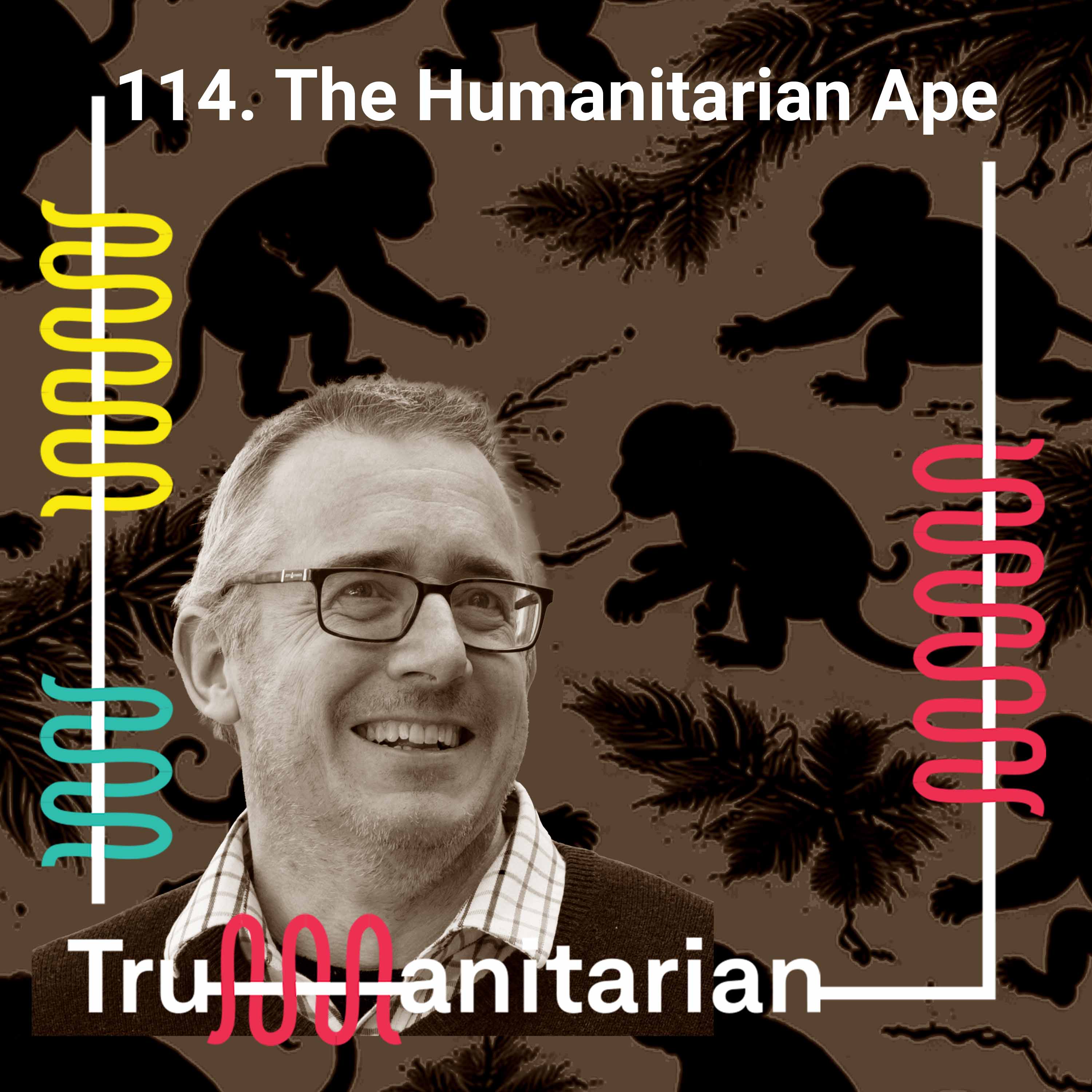
114. The Humanitarian Ape
This weeks guest is Gareth Owen OBE — Former Humanitarian Director at Save the Children UK (2007-2024). Gareth spent over three decades in the humanitarian sector, beginning his career in Somalia in 1993. He co-founded the START Network and served as Chair of the Humanitarian Leadership Academy. Awarded an OBE in 2013 for services to emergency crisis response abroad and holds an honorary doctorate

113. The Fear Factor
As 2025 draws to a close, Trumanitarian host Lars Peter Nissen invites Meg Sattler, Adelina Kamal, and Thomas Byrnes to the Trumanitarian studio to reckon with a year that seems to have defied comprehension.The numbers tell one story: humanitarian funding has collapsed to 2016 levels, projected below $22.7 billion. This isn't a funding cycle dip but the structural unwinding of the post-Cold War pe

112. Mathemagician
Wigdan Seedahmed joins host Lars Peter Nissen for a conversation that drifts between code and Sudanese music, and into the quiet art of translating magic into data - without letting magic slip.Wigdan is not on autopilot. In a sector often dominated by compliance and performative intellect, she carries a rare kind of mind - one that doesn’t just react or repackage, but thinks. Her intelligence is q

111. Cash Gods
What is the role of cash distributions in the humanitarian reset? That is the question that Cate Turton, the Director of the Cash Learning Partnership (CALP) Network), Yolande Wright, the VP for Partnerships at GiveDirectly and Alessandro Bini the Director of the Somali Cash Consortium discuss with Lars Peter Nissen in this weeks episode.The conversation focuses on the current state and future pot

110. Philanthropy 2.0
What happens when a philanthropist shows up differently? In this episode, Maya Ghosh Bichara joins host Lars Peter Nissen to reflect on what it means to fund, partner, and build trust with integrity.Maya isn’t running a billion-dollar foundation - she gives small but catalytic grants, drawing on her experience from the Chan Zuckerberg Initiative to reimagine what money can do.They explore trust-ba

109. Decolini…what?
In this special crossover episode, Lars Peter Nissen (Trumanitarian) and Carla Vitantonio (Living Decoloniality) sit down in Doha to explore the deep fault lines in humanitarian work — and why they’ve both turned to podcasting as a space for honest conversation.Carla unpacks the concept of decoloniality — the lingering structures, mindsets, and behaviors that survive long after formal colonialism

108. Elephant in the room
In this episode of Trumanitarian, recorded on the sidelines of the Center for Humanitarian Leadership Conference in Doha, host Lars Peter Nissen sits down with two sector heavyweights: Sofía Sprechmann, former Secretary General of CARE International, and Amitabh Behar, Executive Director of Oxfam International. Together, they confront some of the humanitarian sector’s most uncomfortable truths.The

107. 319
On December 8, Syria saw a major turning point: the fall of the Assad regime and the emergence of a new government. For the White Helmets, this moment opened the door to expand operations from 800 to over 4,600 communities—nationwide.In this episode, the White Helmet’s Chief of Programs, Ahmed Ekzayez, shares how the group has evolved from frontline rescue to tackling climate change, protecting hu

106. Get out of the way
The Emergency Response Rooms in Sudan have, over the past couple of years, become the backbone of humanitarian action in Sudan. As community-based informal organizations, the ERRs provide mutual aid to more than 2 million people in Sudan.In this week's episode Hajooj Kuka and Justin Corbett discuss the work of the ERRs with co-hosts Mabala Nyalugwe and Lars Peter Nissen.

105. Pivot
We are at a pivotal moment for the humanitarian sector. The freeze of US foreign aid, the dismantling of USAID and aid cuts from a number of the major donors has sent shockwaves through the system.But how do we move forward and strike the balance between ensuring continuity of lifesaving humanitarian assistance while addressing serious and well-known issues with the existing humanitarian system –

104. Tough Enough?
Happy international women’s day ! When women connect across generations and experiences, heart to heart, incredible things happen.In this special episode, Maeva Fages joins Rigmor Tholstrup for a heartfelt conversation about humanitarianism, yoga and resilience. Maeva, a humanitarian health specialist, yoga teacher, and Senior Country Manager for Afghanistan and Syria, shares experiences on leadin

103. Techplomacy
The ethos of 'move fast and break things' doesn't work for humanitarians. If we break things, we break people. But technology is changing the nature of conflict. International Humanitarian Law cannot evolve to meet these challenges without input from the private tech actors shaping the battlefield. This week's guest, Philippe Stoll, Senior Techplomacy Delegate at the ICRC, works to connect humanit

102. Shaken not Stirred
In this episode, Tamam Aloudat and Richard Blewett join Lars Peter Nissen to ask the hard questions: What’s worth saving? What needs to go? Who gets to decide? ...And are we the right guys to discuss this?Tammam argues that tinkering with the system isn’t enough - we need a “non-reformist reform,” a radical reimagining of what humanitarianism even is. Richard reflects on decades of failing attempt

101. Secret Sauce
Humanitarian tech initiatives fail when they start with a "shiny object" rather than a defined problem. Solutions are imposed rather than developed based on actual needs. A ‘graveyard of bad tech’ is expanding. Should humanitarians just admit they’re bad with technology? During the International Red Cross Movement Conference in Geneva in October 2024, Host Lars Peter Nissen found a quiet corner t

100. The Big Chill
Over the past week, the 90-day freeze of US foreign assistance has sent a shockwave through the humanitarian and development communities.If you ask this weeks guests on Trumanitarian the crisis will not be over in three months - Harpinder Collacott, Michael Barnett, and Meg Sattler come to the conclusion that the consequences of the aid freeze will last for years. The real question is: as the old

99. Wiser
Dr. Rola Hallam - a doctor, humanitarian, and Syrian advocate - joins host Lars Peter Nissen for a personal conversation on the resilience of humanity amidst chaos. Against the backdrop of Syria’s profound suffering and the fall of the Assad regime, Dr. Rola shares her journey of healing, hope, and service.She dismantles the idea of the untouchable hero humanitarian, laying bare the fragility and

98. Twelve-stepping Chaos
What happens when you mix cyber warfare, climate collapse, and humanitarian action with a dash of whiskey? You get Emerson Tan - a man who started as a hacker, turned humanitarian, and now designs fintech for the apocalypse.Dive into chaos: how disasters, misinformation, and the climate crisis are forcing us to rethink everything from technology to social systems. Emerson explains why the differen

97. Humanitarianism 2.0
In an early episode this year, Dr. Hugo Slim warned that he would challenge the most fundamental humanitarian principle: humanity. This week, he does just that. As a Senior Research Fellow at Oxford and a policy advisor specializing in the ethics of war and humanitarian aid, Hugo brings a unique philosophical lens to the conversation, drawing on his doctorate in theology.In this conversation, host

96. Bureaucracy Engagement
This episode discusses 'community engagement': recent wins, as well as the continued struggle to move beyond tokenism to achieve meaningful change – and whether 'bureaucracy engagement' might better reflect the complexities of the engagement.In this episode, Kristin Vestrheim (Moderator), Eminenur Çınar (Board Member), and Yakzan Shishakly (Board Member) discuss their network – the Interagency Com

95. A Night on Earth
In his 2021 book, Night on Earth, Davide Rodongo, professor of international history and politics at the Geneva Graduate Institute, writes about humanitarian action during the 20th century interwar period. “What they aimed to do was delusional”, he told Lars Peter. “The reality is they did a few little good things in a few places…And they aimed to civilize the entire Near East.”According to Davide

94. Members Only
The Humanitarian Club - members only!Is the humanitarian sector run by an elite network that controls the vast majority of resources and power within the sector, a closed circle that excludes outsiders? This week Trumanitarian welcomes Michael N. Barnett, Professor of international affairs and a leading scholar on humanitarianism. In one of his pieces ‘The Humanitarian Club’ (we love it), Barnett

93. Reenchantment
Simon Western, founder of the Eco-Leadership Institute, joins host Lars Peter Nissen, to explore how to bring some soul into the humanitarian space as they know it. And how the “helpless helping” tendency currently plagues it. Simon draws on his experience from psychiatric nursing to corporate leadership, and explains how his eco-leadership model - rooted in ecosystemic thinking and mutualism - co

92. The Alchemist
Neil Smyth, the founder of tech startup, Alkemio, challenges the dominance of major digital platforms. Alkemio seeks to create safe spaces for collaboration, offering an open-source platform that serves societal interests, rather than shareholders. It is based on a steward ownership model which puts purpose before profit and ensures that control remains with the mission of the platform rather than

91. Spaced Out
What does NASA have to do with humanitarianism?Strap in as host Lars Peter Nissen takes off with Rhiannan Price and Laura Guzman from NASA Lifelines to explore the groundbreaking intersection of satellite technology and humanitarian action. Can the very data that orbits our planet revolutionize how we respond to crises and save lives? This episode explores how Lifelines dismantles the barriers bet

90. Edge Case Wisdom
David Galbraith and Trumanitarian's host Lars Peter Nissen's parenting skills declined the moment they met and tuned their attention from their kids' soccer practice to geeky tech conversations. David is the founder of a number of startups and claims he knows nothing about the humanitarian sector. He is, however, well-versed in how technology has transformed the world and this makes for a truly in

89. Gandalf
In the third and final episode on ACAPS' participation in the AI for Changemakers Bootcamp Ali, Yevhen and Lars Peter are joined by Konrad Pabianczyk who ran the Bootcamp for Tech to the Rescue (TTTR).The Bootcamp is over and ACAPS has been matched with a tech company in order to develop an AI that can strengthen forecasting of crises.

Best of: Rock the Boat
Welcome to a candid convo from March 2024 exploring the complexities of being independent. Lars Peter Nissen hosts Meg Sattler, Ed Schenkenberg, and Adelina Kamal in the studio. When can you truly claim to be independent and what does it really mean when you’re submerged into a world full of political shenanigans and blurred ethical lines?Listen in as the guests struggle to find the right balance

Best of: Humaniwoke
In this 2020 episode, Mabala Nyaluwge, a Research Designer at the British Red Cross, joins her father, host Lars Peter Nissen, for a heart to heart conversation on racism and colonialism in aid. Following global outcry at George Floyd's murder, Mabala and Lars Peter explore whether the humanitarian space is free from colonial legacy.Mabala speaks about how the aid sector, while well-intentioned, o

Best of: Mercy Triumphs
In this episode from Summer 2023, Stephen “Steve” Webster, a veteran of UN Disaster Assessment and Coordination and IFRC’s Field Assessment and Coordination Team, discusses the essential qualities of effective disaster managers. He emphasizes the power of mutual aid and love-driven leadership and reveals what he says is the single most important quality for elevating the human condition.Reflecting

Best of: A Grander Bargain
Meg Sattler sits down with Beth Eagleston and Kate Sutton, the co-founders of the Humanitarian Advisory Group (HAG), a Melbourne based social enterprise that seeks to use research to challenge the status quo of humanitarian aid. It’s a discussion steeped in reflection; Who owns the knowledge? What does it mean to listen, trust and truly aim to make difference?The privilege of knowledge meets the u

Best of: Can of Worms
Hugo Slim is one of the best known and most interesting thinkers in the humanitarian space. He works at Univeristy of Oxford on the ethics and practice of humanitarian action and currently focus on answering the question “What is Climate Humanitarianism?” In this conversation with Lars Peter Nissen, Hugo discusses how we should define and prioritise humanitarian needs. The two paper

88. Data Deification
Clionadh Raleigh is not only an accomplished academic, she is also founder of ACLED - delivering the most comprehensive and timely datasets on armed conflict, registering over 300,000 events annually.Tune in and hear why Clionadh couldn’t care much about AI and why it triggers Lars Peter - who spent the past five weeks in Bob-the-AI-Builder mode (check episodes 84 and 87). You will also hear why C

87. No IDEO
In the second episode on ACAPS' participation in the Tech to the Rescue AI Bootcamp for Changemakers (aka from ACAPS to AICAPS) Chiara, Ali and Lars Peter discuss the progress made over the past couple of weeks. Since the first episode focus has been on using design methods to come up with a clearer approach to AI. This part of the bootcamp has been facilitated by the legendary design company IDEO

86. Channeling Cassandra
Cassandra was the Trojan priestess described in Homer's Iliad condemned to have prophecies that are never believed.Dennis King, a veteran analyst with over 30 years of experience in the Humanitarian Information Unit of the US State Department, USAID, and OCHA, is in a sense a modern day Cassandra. Together with host Lars Peter Nissen, they unravel the transformation of information management in th

85. Youth Innovation Lab
Goma Karki is on a mission to bridge the gap between science and public policy. At the Youth Innovation Lab in Nepal, she mobilises passionate youth to work in municipalities, tackling climate change by closing technical and knowledge gaps and promoting data-driven decision-making. Learn about the challenges and successes of integrating young leaders into local systems and the importance of local

84. The Pimply Teenager
In this first episode of the mini-series on ACAPS' journey in the Tech to the Rescue AI bootcamp, Chiara Rizza, Ali Arbia and Lars Peter Nissen discuss what to do with AI. It is early days in the bootcamp and Ali and Lars Peter are quite confused, but Chiara seems to know what she is doing so everything will be OK.

83. Academic Cowboy
The hero humanitarian is dead. And Joël Glasman is glad. In his new book “Humanitarian Humanities”, Glasman advocates for a more reflective and empirically informed approach to humanitarian action, emphasizing the importance of social sciences, local ties and contextual knowledge in the field. Listen in to Joël discussing his findings, callling for a shift from the heroic era of humanitarianism to

82 Cognitive Dissonance
Kuldeep Bandhu Ayral, co-lead of BRAC's Social Innovation Lab wants humanitarian innovators to hurry, slowly, to reap the benefits of co-designing interventions with end users.He and host Lars Peter Nissen discuss the journey and impact of the BRAC, one of the world's largest NGOs originating from the Global South, and the design-based thinking of its Social Innovation Lab. They examine the limits

81. The Struggle
Meet Sean Lowrie and Christina Bennett – the dynamic former and current CEOs of the START Network, which unites over 90 different-sized NGOs globally for local-led humanitarian action.With host Lars Peter Nissen, they explore how Sean and Christina's leadership styles influence growth and the transition from a startup to a larger organisation. They debate whether creation of a change organisation

80. Civilians!
Nick Parker and Paul Taylor from REACT has shown up in their civilian outfits to discuss how they’ve repurposed from military careers to humanitarian action. REACT leverages discipline, structure, and skills of volunteering veterans and civilians to respond rapidly to crises. In the second part of the conversation, Nick, Paul and host Lars Peter Nissen discuss their experience from Afghanista

79. Three Socks
Colin Rogers is the CEO of MapAction. MapAction is a lean, mean, mapping machine that turns complex data into clear, actionable maps to support frontline workers and decision-makers during crises. With about 100 volunteers, some of whom have been with the organisation for two decades, MapAction shows a unique, geeky charm. They work closely with partners like the UNDAC to alleviate the pressure on

Best of: Clear the Forest
The challenges of the humanitarian sector have been identified over and over again but some problems seem to be unsolvable. In this first episode Marc DuBois and Lars Peter Nissen discuss whether there is a need to disrupt the sector and how to "clear the forest" so new solutions can be grown.This episode was first published in September 2020.

78. Broccoli Brownies
EqualReach connects displaced individuals on the move to tech gigs. In this conversation with host Lars Peter Nissen, the founder Giselle Gonzales uncovers the invisible barriers for that prevent skilled individuals on the move from working and accessing freelance opportunities. And how Equal Reach is breaking them down one project at a time.Just like hiding your kid’s broccoli in a brownie, Gisel

77. Rock the Boat
Welcome to a candid convo exploring the complexities of being independent. Lars Peter Nissen hosts Meg Sattler, Ed Schenkenberg, and Adelina Kamal in the studio. When can you truly claim to be independent and what does it really mean when you’re submerged into a world full of political shenanigans and blurred ethical lines?Listen in as the guests struggle to find the right balance between standing

76. The Technophobe
This conversation between host, Lars Peter Nissen and Pierrick Devidal, Senior Policy Adviser at the Law, Policy and Humanitarian Diplomacy Division at ICRC debates on whether the sector’s excitement about AI is a progressive step or a dangerous diversion.We discuss ethical considerations and the potential for tech to overshadow fundamental humanitarian principles. How do we distinguish meaningful

75. FOMO
In this thought-provoking episode, host Lars Peter Nissen and guest Sarah Spencer, Consultant specialized in AI explore the complex relationship between AI and humanitarian aid. They discuss the critical issues of transparency in AI-driven decision-making, the management of digital identities of aid recipients, and the ethical aspects of using AI to find ‘legitimate’ targets in conflict zones.The

74. Africa is a Country
William Shoki is the Chief Editor of Africa is a Country. In this conversation with Lars Peter Nissen he discusses the western media's narratives of Africa and the political impact of such.A key point of the discussion is South Africa's groundbreaking case filed against Israel to the ICC. William reflects how it relates to South African history and stance of doing the right thing over economi

73. Poetic Unity
Discover how Poetic Unity is transforming norms with healing and powerful poetry. Poetic Unity addresses mental health, community cohesion, and challenges traditional societal expectations of masculinity. Join us as we dive into a refreshing conversation about the potential for creativity and vulnerability to revolutionize humanitarian work and leadership.Don't miss your opportunity to dream into

72. Can of Worms
Hugo Slim is one of the best known and most interesting thinkers in the humanitarian space. He works at Univeristy of Oxford on the ethics and practice of humanitarian action and currently focus on answering the question “What is Climate Humanitarianism?” In this conversation with Lars Peter Nissen, Hugo discusses how we should define and prioritise humanitarian needs. The two paper

71. Swipe Right
Tech to the rescue (TTTR) is based on the simple idea, that the tech sector, just like most law firms, should do pro-bono work. So they have built a platform where non-profits and tech companies can be matched - a Tinder platform for social impact, where non-profits and tech companies can swipe right.In this frank conversations TTTR CEO Jacek Siadkowski and Trumanitarian host Lars P

70. Edgy Diplomacy
Sarah Boukhary works with the Centre for Humanitarian Dialogue on the peace process in Yemen. Yemen is not only one of the most severe humanitarian crises in the world, it is also at the very bottom of statistics on gender equality. So what is it like to be a woman, speaking up for peace, in the midst of a very male dominated world? How do we decolonize the aid sector, what's the problem with traf

69. Stuck?
This episode is a recording of the closing panel of the Humanitarian Xchange (Hx) conference which took place in London on 20 February 2024. The panel participants are: Harpinder Athwal Collacott, CEO of Mercy Corps Europe, Francis Iwa, Co-founder and Executive Director of CAFOMI, Jacek Siadkowski, CEO of Tech to the Rescue (TTTR) and Andrew Jackson, professor of Global and Imperial History, Unive

68. Someone Else’s Problem Part 2
This is the second episode of two on the issue of Housing, Land and Property (HLP) in a humanitarian context. The Episodes are co-hosted by: Alexandre Corriveau-Bourque, Co-Founder of Verent Solutions. and Trumanitarian's usual host Lars Peter Nissen.This weeks guests are:For Puerto Rico: Dr. Ana Christina Gomez Perez, a professor at the School of Law at the University of Puerto Ric

67. Somebody Else’s Problem Part 1
This is the first of two episodes on the issue of Housing, Land and Property (HLP) in a humanitarian context. The Episodes are co-hosted by: Alexandre Corriveau-Bourque, Co-Founder of Verent Solutions. and Trumanitarians usual host Lars Peter Nissen.The guests in Part 1 are: Irantzu Serra Lasa, the Senior Director for Disaster Risk Reduction and Response from Habitat for Humanity In

66. The Midwife
Jeremy Konyndyk is the President of Refugees International. In this conversation with Lars Peter Nissen he discusses how we can reform the humanitarian sector and how far we have come.

65. Hugeness
Brendan Lawson is a Lecturer in Media and Communication at Loughborough University. In this conversation with Lars Peter Nissen he discusses his recent book: The Life of a Number - Measurement, Meaning and the Media. The conversation also covers the article by Ten Things We Know about Humanitarian Numbers which was published in Journal of Humanitar

64. The Percolator
Humanitarian Xchange is a new conference organised by the Humanitarian Leadership Academy (HLA). In this conversation Dominic Courage from HLA and Francis Iwa from the Ugandan NGO Care and Assistance For Forced Migrants (CAFOMI) discuss Hx with Lars Peter Nissen.

63. Spelunking
Raphael Gorgeu, Senior Research Associate at the Geneva based think tank HERE-Geneva, has spent the past couple of years looking at how change unfolds in the humanitarian sector.In this episode Raphael presents his approach and discuss his findings with Lars Peter Nissen.You can find Raphael’s report here.

62. Mercy Triumphs
Stephen Webster is one of the architects behind first response mechanisms such as the United Nations Disaster Assessment and Coordination (UNDAC) team and the IFRCs Field Assessment and Coordination Team (FACT).In this conversation with Lars Peter Nissen he shares his experience from close to 40 years of disaster management and comes to the conclusion that in the end mercy triumphs!

61. Small Fish…
This weeks episode is the recording of a panel discussion on Ukrainian organiations access to international funding. The discussion was held on 14 March 2023 with the title: Small fish in a big pond: Ukrainian organisations’ (lack of) access to international funding. The panel is a co-production by HERE Geneva and Trumanitairan.Val Hambye-Verbrugghen from HERE-Geneva moderated the discussion betwe

60. Loop
Accountability to crisis affected populations is high on the humanitarian policy agenda. Alex Ross, Avianto Amri and Robert Wambu work with a new accountability project called Talk to Loop. In this conversation with Lars Peter Nissen they explain how their tech platform improves the way the humanitarian sector works with feed back mechanisms and accountability, the disruptive potential of the proj

59. On purpose
Can the humanitarian sector be fit for todays challenges without revisiting its purpose? And are the humanitarian principles an obstacle for this important conversation to take place? These are two of the central issues that Paul Skinner and Lars Peter Nissen discuss in this episode.Paul is the founder of the Agency of the Future, which helps clients drive purpose-led change and better mobilise st

58. Purpose and Power
In the fourth episode of the Ukraine series Yuliia and Lars Peter take stock of the discussions so far and agree that the two main themes emerging from the conversations are around purpose - the role that humanitarian action plays in Ukraine - and Power - the relationship between and relative power of the national and international actors. To explore these issues, and to round off the series they

57. Pivot
In episode three Yuliia and Lars Peter explore the relationship between civil society and government in Ukraine and asks the question: How does a vibrant civil society, which in normal time advocate and challenge the government, pivot to adapt its role when war breaks out? The hosts speak to Yuliya Sporych, CEO of the national Ukrainian NGO Divchata and with Oleksandr Riabtsev, Head of Demining in

56. Like Magic
The first Russian invasion in 2014 led to a nation-wide grassroots mobilization of Ukrainians to support military effort and provide humanitarian aid. The 2022 invasion propelled these efforts to new heights and mobilized overwelming levels of international support for humanitarian action.In the second episode on Ukraine Yuliia Chykolba and Lars Peter Nissen explore how the organic, agile and

55. Principled?
In this first episode out of four on humanitarian action in Ukraine the hosts Yuliia Chykolba and Lars Peter Nissen explore what the humanitarian principles mean in Ukraine today. They agree that the principles of humanity and impartiality are the foundations of humanitarian action but have different position on neutrality. Yuliia argues that the principle is outdated and does not work in Ukraine.

54. Out of Control
Paula Gil Baizan, Meg Sattler and Lars Peter Nissen struggle to make sense out of the humanitarian chaos of 2022 and try to figure out how 2023 might be different.

Best of: A Humanitarian Irritant
Dominic Naish has worked for various humanitarian agencies as a contextual analysts. The contexts were different, the organisations were different, but he always had the feeling of being more of an irritant than a help to the people he worked for. In the end he decided to leave the humanitarian sector. He has described his experience in a blogpost “Not a priority” for the Humanitarian Practice Net
Best Of: Needology
In this episode Lars Peter Nissen - a practitioner - gets stuck into a discussion surrounding the use of data in humanitarian aid with Joël Glasman, an academic. Joel is a historian and author of the book Humanitarianism and the Quantification of Human Needs: Minimal Humanity. Joel poses a strong and uncomfortable argument in his book, and in the conversation; humanitarian statistics is flawe

53. Shiny Things
This weeks episode is a recording of a keynote given by Benjamin Lang and Lars Peter Nissen at CartONGs GeOnG conference in Chambery on 24 October, 2022. The debate is moderated by Sandra Sudhoff, the technical director of CartONG.You can watch the entire opening ceremony on CartONGs YouTube Channel: https://www.youtube.com/watch?v=QteGAp8gD7Y

52. Stepping Stones
Siri Melchior Tellier had a long and varied career in international development cooperation, humanitarian action and teaching. She passed away in October 2022 and this conversation with Lars Peter Nissen was recorded in August 2020 during the Pandemic.It is a conversation about public health, data, standards, trust, learning and failing and having the courage to make yourself part of the mess and

51. Panopticon
Gareth Owen is the humanitarian Director of Save the Children UK. In this conversation with Lars Peter Nissen he discusses the trade-offs between quality and scale, between his humanitarian heart and his humanitarian realist.The fundamental question posed by the conversation is whether you “Can you change the master’s house with the master’s tools?” Gareth is in his own words “an establishment guy

50. Outside
Themrise Khan and Mabala Nyaluwge both work in the aid industry Themrise for more than 30 years in South Asia and Mabala for seven years in East Africa. Together with Lars Peter Nissen they explore the state of aid, the change that is needed and whether it is possible to achieve this change from inside the system, or whether it has to be done from the outside

49. Honest Competition
Raj Kumar is the co-founder, President and Editor-in-Chief at Devex, the media platform for the global development community to discuss international development and humanitarian action. Together with Trumanitarian host Lars Peter Nissen he explores the current state of play in the development and humanitarian industries.Raj brings a fresh perspective to the conversations engulfing the humanitaria

48. Dancer on the Hill
The recent decisions regarding changes to cash coordination are ground breaking and they not not come out of nowhere.In this week episode Paula Gil Baizan explores how change happens together with Isabelle Pelly, Juliet Lang and Sophie Tholstrup. All of the guests played a key role in brining about the change in cash coordination, and together they explore the challenges associated with makin

47. Evaluation Kung Fu
Evaluations are an essential part of human sharing accountability. And working with a good evaluator is a fantastic opportunity for learning and improving. However, often evaluations turned into painful confrontational accountability exercises, that leaves nobody satisfied and changes nothing. This week's guest on communitarian is Michael Patton who together with Lars Peter Nissen discusses what e
Recommended
Dark Night Tales with Brian King

Fantasy Flex

زن بودن

Medicine with Meaning

Yours Truly Johnny Dollar Collection

Take Back Your Health®

CBS Radio Mystery Theater | Old Time Radio

Solved Murders - True Crime Stories
紐約鳥|New York Aperture
The Swerve Podcast: Obscure Topics | Conspiracy Theories

The Bread and Banter Podcast

The Church of What's Happening Now: The New Testament
