
Mises Institute
The Mises Institute, founded in 1982, is an educational institution dedicated to advancing Austrian economics, freedom, and peace in the classical-liberal tradition. The website provides thousands of free books, hours of audio and video, and rare journals, biographies, and bibliographies of great economists. This podcast likely features lectures and discussions from the institute's resources.
Episodes
Do Institutions Matter? Taking Another Look at the Claims of Daron Acemoglu
Nobel Prize winner Daron Acemoglu writes that western colonialism of African countries has permanently fixed their institutional direction. This ignores what we know about the history of these nations.
Original article: https://mises.org/mises-wire/do-institutions-matter-taking-another-look-claims-daron-acemoglu
You Are the Collateral, Forty-Three Cents on the Dollar
Keynesians claim that government debt is no problem because “we owe it to ourselves,” as though owners of US debt don’t care if they are repaid or not. Taxpayers, who actually will pay the debt, are left out of the equation.
Original article: https://mises.org/mises-wire/you-are-collateral-forty-three-cents-dollar
China’s Economic Miracle Has Run Out of Road
The temptation to think of China as an economic juggernaut needs a reality check. While China’s government-dominated economy has many impressive building projects, there are underlying malinvestments that the government continues to subsidize, leading to future problems.
Original article: https://mises.org/mises-wire/chinas-economic-miracle-has-run-out-road
The Tragic Path of New Keynesianism
Robert Hall and Michael Woodford certainly deserve the Nobel memorial prize. Their work has had a substantial impact, yet significance is not soundness.
Original article: https://mises.org/mises-wire/tragic-path-new-keynesianism
Natural Law Principles in the Conservative Tradition
A conservatism that does not recognize the efficacy of natural law is no conservatism at all.
Original article: https://mises.org/mises-wire/natural-law-principles-conservative-tradition
Don’t Blame Interest Rates for Falling Home Sales
Mortgage rates are at historically normal levels. They are not “too high.” On the other hand, home prices are too high after years of subsidy from artificially low rates and government intervention. The answer to the stagnating market is to cut prices.
Be sure to follow the Loot and Lobby podcast at Mises.org/LL
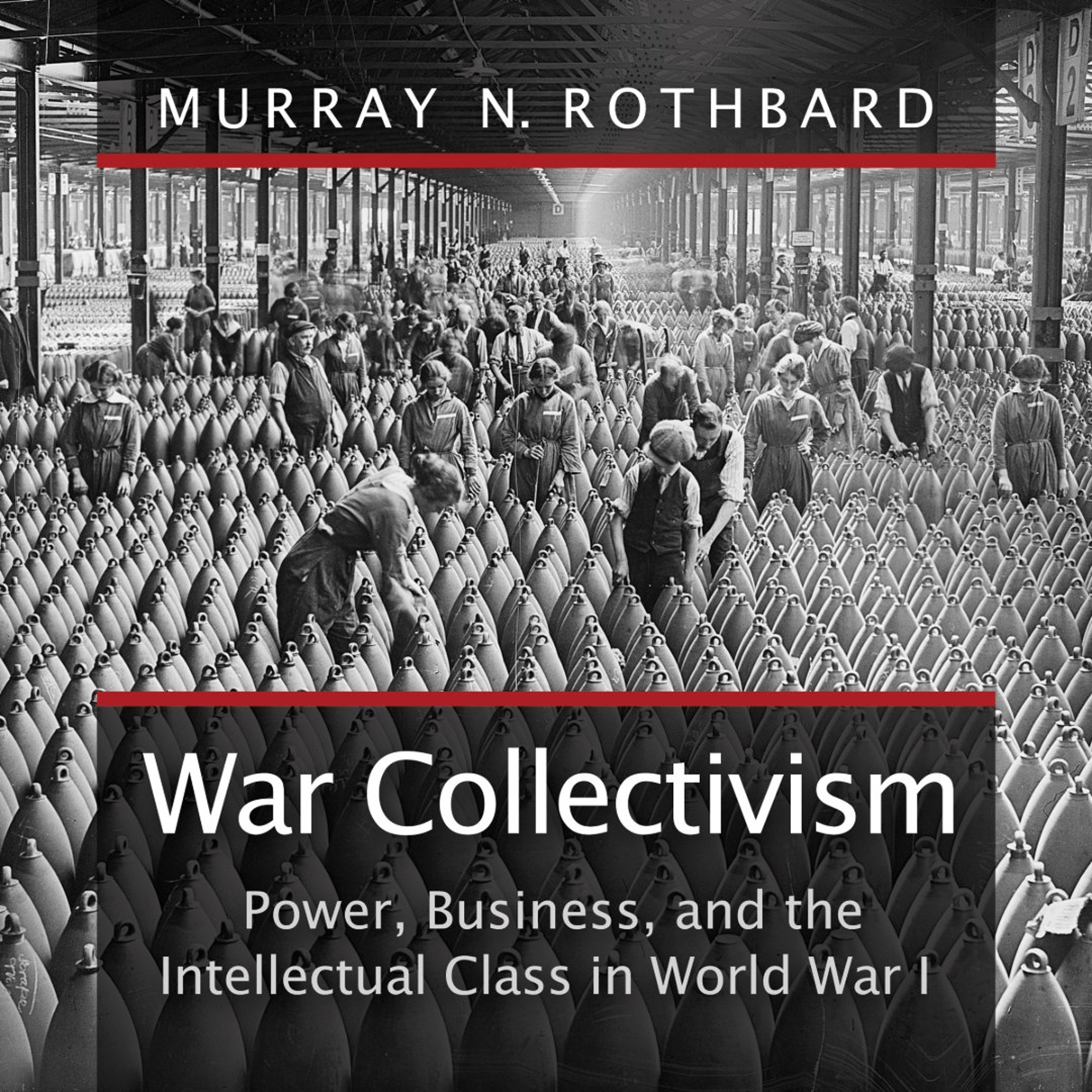
World War I as Fulfillment: Power and the Intellectuals
Against historians who treated the war as the death of progressive reform, Rothbard argues it was the culmination progressives had wanted all along. He traces the movement’s postmillennial pietist roots—a Protestantism bent on stamping out sin through the State—into wartime prohibition and the anti-vice crusades around the army camps, then through the New Republic collectivists who welcomed the wa
War Collectivism in World War I
Rothbard’s account of the war economy as a cartel run by the men it regulated. He traces the Council of National Defense and the War Industries Board, whose committees were staffed by the executives of the industries they governed; price-fixing set to guarantee a “fair profit” to high-cost producers and windfalls to everyone below them; railroads nationalized under a Railroad Administration run by
Whistling Past the Graveyard
Despite the real damage the Trump administration is doing to the economy, its cheerleaders in the Cabinet continue to insist all is well. This is beyond wishful thinking.
Original article: https://mises.org/mises-wire/whistling-past-graveyard
Violent Populism
Mark Thornton examines the rise of political violence in America, drawing on Robert Pape’s Our Own Worst Enemies and its warning that political violence has become increasingly normalized on both the left and right. Mark argues that the deeper cause is not simply “fractured legitimacy,” but the long breakdown of America’s original limited-government consensus, accelerated by Progressive Era ideolo
How Social Security Really Works
The only way to fund Social Security is with current tax dollars, inflicted on current workers and families. There is no pot of money somewhere that current retirees “paid into.”
Be sure to follow the Loot and Lobby podcast at Mises.org/LL
Home Sales: “High” Interest Rates Are Not the Problem. High Prices Are.
There is a simple way for housing markets to adjust to the new realities of higher interest rates. Prices need to come down. That’s how markets are supposed to work.
Original article: https://mises.org/mises-wire/home-sales-high-interest-rates-are-not-problem-high-prices-are

America’s Socialist Real Estate “Market”
Ryan McMaken welcomes Mises Institute Senior Fellow Alex Pollock, a longtime expert on real estate finance, for a discussion on how Fannie Mae, Freddie Mac, and the Federal Reserve have created a socialist housing market in America. But it’s socialism for the rich, and the system has made housing much more expensive for ordinary people.
Be sure to follow Radio Rothbard at https://Mises.org/Radio
The Invisible Heroes of Our Tradition
We often remember the thinkers who defended liberty when its prospects looked bleak, and for good reason. But we should also remember the people who supported them and made their work possible without knowing what would follow.
Read the article here: https://mises.org/mises-wire/invisible-heroes-our-tradition
2026 is the Year of Rothbard—Murray’s 100th birthday—and we’re celebrating by giving aw
Repeal the Jones Act
Contrary to propaganda from unions and the maritime industry, the Jones Act creates hardships and is helping to drag down the US economy. The only proper outcome is to repeal it immediately.
Original article: https://mises.org/mises-wire/repeal-jones-act
Still the State’s Greatest Enemy
Lew Rockwell revisits Justin Raimondo’s great biography of Murray Rothbard.
Original article: https://mises.org/mises-wire/still-states-greatest-enemy
Equality Before the Law Does Not Mean Equality of Subjective Feelings
For more than a century, the Supreme Court has tried to interpret equality before the law in different and conflicting ways. While the law can divide people, it cannot be the source of bringing them together.
Original article: https://mises.org/mises-wire/equality-law-does-not-mean-equality-subjective-feelings
Libertarian Realism as Foreign Policy
“Libertarian Realism” in foreign policy is based upon the interests of those who actually make policy decisions, as opposed to discussing abstract ideals of a false “national interest.”
Original article: https://mises.org/mises-wire/libertarian-realism-foreign-policy
The Future of the Military Draft
European politicians keep pushing for conscription and more recruits. Ryan McMaken and Zachary Yost discuss how the French Revolution gave us modern military conscription, and why governments have long wanted forced military service.
Be sure to follow Radio Rothbard at https://Mises.org/RadioRothbard
Radio Rothbard mugs are available at the Mises Store. Get yours at https://Mises.org/RothMug
P
Government Should Liquidate Itself
Government agents claim they are protecting us from enemies, foreign and domestic. If that is the case, then the best thing these agents can do would be to liquidate the government itself.
Original article: https://mises.org/mises-wire/government-should-liquidate-itself
Social Security Is Just a Transfer Payment from Workers to Retirees
There is no “trust fund” or contract. Social security is nothing more than a scheme to take money from current wage earners and hand it over to others. It is functionally a welfare program.
Original article: https://mises.org/mises-wire/social-security-just-transfer-payment-workers-retirees
Why Our “Populist Moment” Keeps Failing
Populists have spent the past decade rebelling against a political system they correctly recognize as rigged. But they keep focusing on its surface-level symptoms while ignoring the institution at its center.
Read the article here: https://mises.org/mises-wire/why-our-populist-moment-keeps-failing
2026 is the Year of Rothbard—Murray’s 100th birthday—and we’re celebrating by giving away free copi
Why Does Anyone Still Take Socialism Seriously?
Socialism’s failures are well-known, but true believers abound that insist that this time we can make it work. The question is why anyone still believes in it at all.
Original article: https://mises.org/mises-wire/why-does-anyone-still-take-socialism-seriously
Market Coiling
Mark Thornton examines whether the precious metals market is coiling after last year’s push, this year’s correction, and months of volatility driven by war news, Fed policy, the dollar, and CPI concerns. He lays out six factors shaping the market: refining bottlenecks, metals flowing east, stacker psychology, sluggish mining stocks, the limited effect of rate hikes, and the Fed’s continued accommo
Conservatives: Was Ronald Reagan a Coward and Traitor?
If we’ve been at war with Iran for 47 years, Ronald Reagan was a coward and a traitor. To be consistent, mainstream national conservatives using such language about Iran ought to condemn one of their heroes; otherwise, they don’t believe their own rhetoric.
Original article: https://mises.org/mises-wire/conservatives-was-ronald-reagan-coward-and-traitor
Modern Monarchy Is State Privilege, Not Private Property
Norway’s new monarch may prove to be an effective leader, but we are reminded that his hereditary privilege is being financially supported by involuntary taxes.
Original article: https://mises.org/mises-wire/modern-monarchy-state-privilege-not-private-property
The Continuing Relevance of Rothbard’s Foreign Policy
While he was living, Murray Rothbard saw issues of war and peace as being fundamental to a free society. Nothing has changed since he made that declaration.
Original article: https://mises.org/mises-wire/continuing-relevance-rothbards-foreign-policy
Every Man a Slave? Huey Long as a Model for the Wrong Kind of Populism
J. D. Vance raised a few eyebrows invoking Huey Long as a populist. The problem is that the populist from people like Long and Bernie Sanders is that it is based on confiscation and destruction of wealth and property. Murray Rothbard proposed a real populism.
Original article: https://mises.org/mises-wire/every-man-slave-huey-long-model-wrong-kind-populism
The 1787 Constitution as Counterrevolution: America’s Thermidorian Reaction
One of the most important and aspects of Murray Rothbard’s work on the American Revolution is his framing of the Constitutional Convention as a counterrevolution against the radicalism of the 1770s.
Original article: https://mises.org/mises-wire/1787-constitution-counterrevolution-americas-thermidorian-reaction
How Conflicting Interpretations of Dred Scott Undermine State Sovereignty
The 1857 Dred Scott case remains one of the most controversial Supreme Court decision in US History. However, overlooked is the fact that it elevated federal sovereignty above sovereignty of the states.
Original article: https://mises.org/mises-wire/how-conflicting-interpretations-dred-scott-undermine-state-sovereignty
Your Kids Are Already Communists, and College Will Make It Worse
Dr. Mark Thornton argues that America’s schools and universities have spent 150 years quietly instilling a collectivist ideology, and that the real problem isn’t declining test scores but a progressive worldview baked in from kindergarten up. Drawing on Bastiat, Mises, and South Carolina history, he shows how to fight it from the bottom up.
Recorded in Greenville, South Carolina, on September 12,
Don’t Bite the Hand: Why Public Schools Can’t Afford to Teach Economics
Tate Fegley argues that government schools fail to teach sound economics not necessarily out of malice, but because they have no incentive to teach the very ideas that would undermine them. Drawing on Hayek, Mises, and Rothbard, he examines competition, teacher pay, and bureaucracy to explain why.
Recorded in Greenville, South Carolina, on September 12, 2026.
Special thanks to Bryan Lee Briggs
What They Don’t Teach You in Government Schools
Dr. Jonathan Newman exposes the economic myths taught in government schools and shows what students are never told about markets, socialism, and the debates that shaped economics—making the case that the missing history of economic thought is what matters most.
Recorded in Greenville, South Carolina, on September 12, 2026.
Special thanks to Bryan Lee Briggs for sponsoring this event.
AI and the Future of the University
Dr. Peter Klein asks whether AI will finally disrupt higher education, and argues it won’t, because the university’s resistance to change isn’t about technology but about ownership, funding, and regulation. The real fix isn’t smarter machines but private alternatives that can actually be tested by a market.
Recorded in Greenville, South Carolina, on September 12, 2026.
Special thanks to Bryan L
Four Secrets the Public Schools Keep from You
Dr. Paul Cwik walks through four “secrets” the public schools would rather you didn’t know—and makes the case for full educational freedom.
Recorded in Greenville, South Carolina, on September 12, 2026.
Special thanks to Bryan Lee Briggs for sponsoring this event.
Debt, War, and the Tangled Web
Mark Thornton opens with Sir Walter Scott’s famous “tangled web” line, using John Law’s Mississippi Bubble and Richard Cantillon’s response to frame today’s financial disorder: national debt, a bond bear market, dollar manipulation, trade war, stock-market fragility, and overseas conflicts.
Download An Essay on Economic Theory by Richard Cantillon, available for free in PDF, ePub, and as an audi

Why the Fed Had to Raise the Interest Rate
The Fed wants to keep interest rates low so the government can borrow on the cheap. But bond markets are driving up interest rates as inflation isn’t going away.
Be sure to follow Radio Rothbard at https://Mises.org/RadioRothbard
Radio Rothbard mugs are available at the Mises Store. Get yours at https://Mises.org/RothMug
PROMO CODE: RothPod for 20% off
Wildfires and Collectivism: Why They Are Related
As state control over forests and brushlands continues apace both in Spain and the US, the dangers of wildfires grow worse. Environmentalists, naturally, blame capitalism.
Original article: https://mises.org/mises-wire/wildfires-and-collectivism-why-they-are-related
Prosperity Will Return Only When Entrepreneurs Are Free to Act on Economic Uncertainty
Our economic future desperately depends upon entrepreneurs being free to act. Unfortunately, our ruling classes seem to prefer economic chaos.
Original article: https://mises.org/mises-wire/prosperity-will-return-only-when-entrepreneurs-are-free-act-economic-uncertainty
Has Libertarianism Suffered a Strange Death?
On this episode of Power and Market, Ryan, Connor, and Tho discuss a recent article from Daniel McCarthy that both criticizes the irrelevance of libertarianism and laments its influence on modern America.
Mainstream Economics: Money as Medium of Exchange, Unit of Account, and Store of Value
Mainstream economics does a disservice when students are taught that money is a medium of exchange, a store of value, and a unit of account without explaining why and how money came to function in those categories.
Original article: https://mises.org/mises-wire/mainstream-economics-money-medium-exchange-unit-account-and-store-value
The Politics of Faking Success
Trump showed how effective it can be to simply declare success and let supporters believe it. Other politicians are taking notes, even as the problems they all pretend to have addressed continue to grow.
Read the article here: https://mises.org/mises-wire/politics-faking-success
2026 is the Year of Rothbard—Murray’s 100th birthday—and we’re celebrating by giving away free copies of Economic Depr
California’s New Tire Rule will Result in Higher Costs and More Highway Deaths
The California Energy Commission is mandating that starting in 2029, California drivers must purchase environmentally approved tires that are less safe than current tires. The results are predictable: higher costs for drivers and more fatal accidents.
Original article: https://mises.org/mises-wire/californias-new-tire-rule-will-result-higher-costs-and-more-highway-deaths
Covid Was a Praxeological Test. Too Many Libertarians Failed.
No, covid was not the exception to the rule that liberty comes first. Just because the CDC insisted we give up our freedom for what turned out to be a false security did not justify the government’s heavy-handed approach, something that libertarians should have understood all along.
Original article: https://mises.org/mises-wire/covid-was-praxeological-test-too-many-libertarians-failed
How War Propaganda Justifies Conscription into Unjust Wars
The drive for military conscription has always depended upon the use of propaganda, since governments cannot make an honest and genuine case for the wars they start.
Original article: https://mises.org/mises-wire/how-war-propaganda-justifies-conscription-unjust-wars
Government by Consent of the Governed — Later On
We are told that Americans live under a state that claims “consent of the governed,” but when does the government seek our consent for anything?
Original article: https://mises.org/mises-wire/government-consent-governed-later
Will AI Bonds Doom Humanity?
Mark Thornton opens with a recap of inflation, commodity prices, interest rates, and stagnant real wages before turning to “bubble bonds”: the explosion of borrowing by AI hyperscalers to finance data centers, chips, and infrastructure with assets whose useful lives may be far shorter than the bonds issued to fund them. Mark connects the AI boom to the Austrian business cycle, comparing it to earl
The Real AI Threat
On this episode of Power and Market, Ryan, Connor, and Tho discuss what appears to be a coordinated call to regulate AI. Is this a benevolent plea to save humanity, or a thinly veiled attempt to establish a cartel?
Celebrate Murray Rothbard’s 100th birthday with a free copy of Economic Depressions: Their Cause and Cure, our September giveaway. Get yours at https://Mises.org/PMPodFree
9/11 and the Idealized “War on Terror”
Twenty-five years after 9/11, many seek to rehabilitate the War on Terror by appealing to the horror of 9/11, the right to respond, and the ideal of fighting terrorism. Many now demand that we judge an idealized “War on Terror” by its intentions rather than the war that actually occurred.
Original article: https://mises.org/mises-wire/911-and-idealized-war-terror
Why the AI CEOs Really Want to Be Regulated
The top AI CEOs aren’t acting like they genuinely believe their technology will soon cause human extinction. But they are acting like the successful cartelizers of history, who recognized that state power is the best way to protect market dominance.
Read the article here: https://mises.org/mises-wire/why-ai-ceos-really-want-be-regulated
2026 is the Year of Rothbard—Murray’s 100th birthday—and we
Slavery Was Not the Difference: How Legal Innovations Made America a Superpower While Brazil Stagnated
Both Brazil and the US had slavery in the 1800s, but the US economy flourished while Brazil’s languished. If slavery was the engine for US economic growth, as leftists claim, then why didn’t Brazil’s economy match that of the US?
Original article: https://mises.org/mises-wire/slavery-was-not-difference-how-legal-innovations-made-america-superpower-while-brazil-stagnated
Price Inflation Has Been above the Two-Percent Target for 65 Months in a Row
The latest reminder of the Federal Reserve’s record of failure, which now extends longer than five years, comes with the most recent inflation measure.
Original article: https://mises.org/mises-wire/price-inflation-has-been-above-two-percent-target-65-months-row
Congress Tries to Replace Anarcho-Tyranny in College Sports with Its Own Brand of Tyranny
In the name of “saving” college sports, Congress steps well past its bounds to micromanage the NCAA.
Original article: https://mises.org/mises-wire/congress-tries-replace-anarcho-tyranny-college-sports-its-own-brand-tyranny
Conclusion
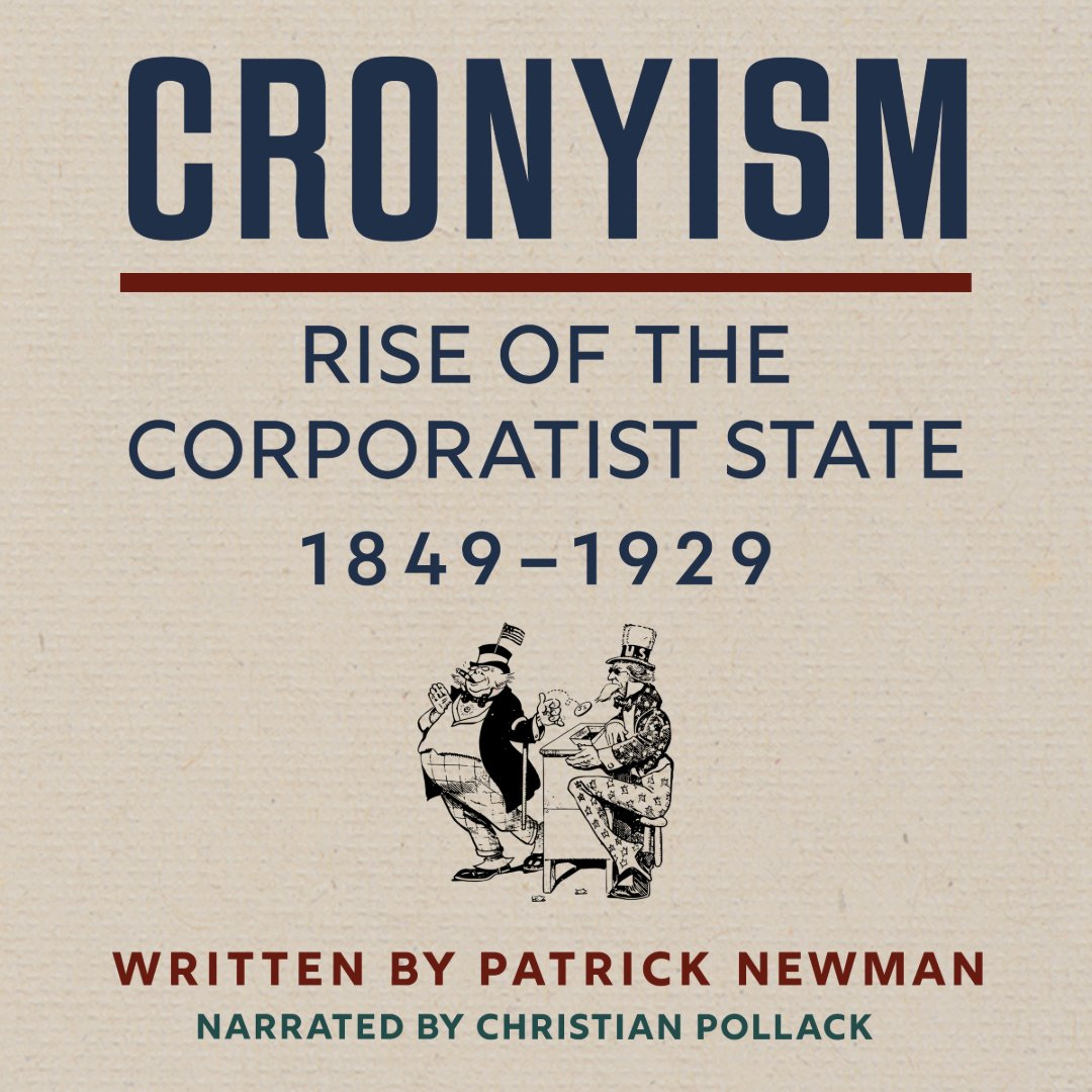
By the close of the 1920s, business elites led by Wall Street had secured government enforcement of their cartels across banking, industry, transportation, and health—always advocated in the name of the public interest, always intended to serve private ones. The party that lost was the broader public belonging to no interest group; the growth of 1849 to 1929 came from free-market forces, which the
Chapter 6. Wall Street’s Central Bank
By the new century the power elite was Morgan, Kuhn Loeb, Baker’s First National, and Stillman’s National City, yet New York’s share of central reserve city deposits was slipping as Chicago and St. Louis gained. Patrick Newman covers Jekyll Island, the National Citizens’ League organized as a front to manufacture grass-roots support, and the pivot once Congress refused the Aldrich plan: if the cen
Introduction
Patrick Newman defines cronyism as government intervention that benefits special interests at the expense of the public interest, and argues the corporatist state was built in stages over eight decades rather than arriving at once. He explains why his earlier “Liberty versus Power” framework stops applying after 1849: parties no longer divided over liberty and favoritism, only over which special i
Chapter 8. Capturing the Regulations
The Federal Trade Commission’s first chairman institutionalized “advance advice” and uniform cost accounting, letting businessmen define what counted as unfair competition and making it harder to sell below a given margin. Patrick Newman then tracks the reversal as Wilson appointed opponents of big business, and the recapture under Harding and Coolidge, when the commission enforced cartel agreemen
Chapter 7. A Trade Commission for Industry
After the merger wave of 1898 and 1899, big business wanted relief from antitrust suits and protection from price-cutting. Patrick Newman shows the Morgan concerns working to neutralize an unexpectedly hostile Theodore Roosevelt and securing preferential treatment, then the years of lobbying for a trade commission that would restrain competition under the banner of promoting it.
Chapter 10. Purifying the Competition
Three campaigns waged in the name of public health. Patrick Newman covers the Beef Trust turning federal meat inspection into taxpayer-subsidized cartelization, the pure-food coalition in which sugar producers, straight-whiskey distillers, and a cream-of-tartar baking powder maker each sought to handicap a cheaper rival, and the American Medical Association’s drive to restrict the supply of doctor
Chapter 9. Fighting Over Railroad Regulation
Barred from rate associations after 1897, the railroads formed communities of interest by buying their competitors’ stock—cartels in a disguised form. Patrick Newman details the reversal of the 1910s, when the ICC shifted to delivering cronyism to shippers and unions and regulation caught the lines in a cost-price squeeze, followed by wartime federalization under McAdoo and the 1920s overhaul that
Chapter 5. Wall Street’s National Banks
Patrick Newman traces the National Banking System from Salmon P. Chase’s wartime bond sales and initially hostile relations with New York financiers through the pyramid of bankers’ balances that concentrated reserves on Wall Street. He follows J. P. Morgan and George Baker’s First National Bank, the defense of monopolistic restraints after the Panic of 1873, and the silver fight that fractured the
Chapter 11. Wall Street’s World Reserve Currency
The Great War wrecked European finance and opened the door for the dollar to displace the pound. Patrick Newman follows Thomas Lamont and Paul Warburg’s ambitions for an imperial banking system, the Federal Reserve’s first inflationary boom and bust in the Depression of 1920 to 1921, and the 1920s high tide of the “Money Lords,” when Benjamin Strong’s easy money reshaped monetary systems across Eu
Chapter 3. Cartelizing the Railroads
Competition among the trunk lines meant lower rates and better service, so the railroads tried pools to stop it—and the pools kept collapsing, because without government coercion some member always defected with a secret rebate. Patrick Newman shows how the Interstate Commerce Commission supplied the enforcement common law would not, with commissioners reading their mandate in the railroads’ favor
Foreword
Thomas Sargent places Patrick Newman in a tradition of American historians—Charles Beard, Forrest McDonald, Richard Hofstadter, and Murray Rothbard—who compress data and look for patterns in how the state is designed and managed. He draws the dividing line between those who read bad policy as unintended error correctable by better administration and those who see a government constituted with exce
Chapter 2. Railroading the Nation
A transcontinental railroad was unprofitable on market terms—“1800 miles of railroad through an uninhabited country”—but attractive once Congress supplied land and subsidies. Patrick Newman follows the four Sacramento merchants who saw the opportunity and the Republicans who justified it as a wartime necessity, then the reversal of the 1870s, when the subsidized lines moved from the Great Barbecue
Chapter 1. The Republican Ascendancy
Patrick Newman shows how liberty-minded reformers, once holding the levers of power, were pulled toward favoritism of their own—beginning with Jefferson, who could not refuse five hundred million acres. He traces the 1850s scramble over land grants, bailouts, and transcontinental subsidies, the slavery-extension fight that stalled the parceling of the spoils, and the Panic of 1857, which turned th
Chapter 4. The Failure to Monopolize
Beginning with the Morrill Tariff of 1861, Patrick Newman documents protection sought and monopoly repeatedly denied. Market competition kept defeating attempts to corner markets—real GDP rose 184 percent between 1870 and 1890 while retail prices fell 30 percent and real wages rose—driving established firms back to Washington for higher tariffs, the Billion Dollar Congress, and an antitrust law de
Acknowledgements
Patrick Newman describes this volume as the second act in a three-act play, the bridge connecting the country’s founding to the modern America of the present generation.
He thanks Hunter Lewis for underwriting publication costs, the Mises Institute and the reviewers who read the manuscript.
The Crony Capitalists Who Financed the Bolshevik Revolution
Lenin wrote that the capitalists would provide the rope by which they would hang themselves. That certainly seems to be the case with the Bolshevik Revolution of 1917, which received strong financial help from the center of crony capitalism itself: Wall Street.
Original article: https://mises.org/mises-wire/crony-capitalists-who-financed-bolshevik-revolution
The AI "Threat" is Replacing Covid and "Global Warming"
Get ready to hear a lot about how we need government regulation to ensure that only state-approved, expensive, crony “capitalist” firms are allowed to develop AI.
Original article: https://mises.org/mises-wire/ai-threat-replacing-covid-and-global-warming
Understanding Entrepreneurship Has Major Implications for Economic Analysis
By ignoring the entrepreneur, mainstream economists are also removing a vital part of economics theory. It is like designing a car and leaving out the engine.
Original article: https://mises.org/mises-wire/understanding-entrepreneurship-has-major-implications-economic-analysis
Times Change, Principles Don’t
What followed 9/11 was 25 years of systematic destruction of American liberties, and the final destruction of the Bill of Rights, all in the name of “safety” and “patriotism.”
Original article: https://mises.org/mises-wire/times-change-principles-dont
Foreign Policy Gnosticism: The Appeal to the Black Box of “Our Leaders Know More”
Ignorance is treated as a reason to trust the state rather than a reason to withhold judgment about its exercise of coercion. To assume that the state’s unknown information is correct and justifying is therefore to err on the side of violence.
Original article: https://mises.org/mises-wire/foreign-policy-gnosticism-appeal-black-box-our-leaders-know-more
Whistling Past the Graveyard
Mark Thornton follows up on last week’s episode by arguing that the Trump administration, Chairman Warsh, and Secretary Bessent are using short-term maneuvers to hide long-term economic and geopolitical problems. He focuses on Bessent’s “Operation Economic Outcast,” the failure to isolate Iran, weakening foreign demand for US bonds, the breakdown of the petrodollar order, and the growing risks cre
Breaking Bessent
On this episode of Power & Market, Ryan, Connor, and Tho talk about new highs in bond yields, why that matters, and whether or not a new round of $5,000 Trump bucks will solve America’s affordability crisis.
Celebrate Murray Rothbard’s 100th birthday with a free copy of Economic Depressions: Their Cause and Cure, our September giveaway. Get yours at https://Mises.org/PMPodFree
College Sports, LSU, and Judge Shopping: Anarcho-Tyranny Continues
The drama continues in college sports—not on the field, but in the courtrooms—thanks to judges applying antitrust law that does not permit the NCAA to be able to enforce its own rules.
Original article: https://mises.org/mises-wire/college-sports-lsu-and-judge-shopping-anarcho-tyranny-continues
The Real Elites vs. The Ruling Elites
Those who become “elites” through the initiation of violence, and through the looting of others, have always been frauds and imposters.
Original article: https://mises.org/mises-wire/real-elites-vs-ruling-elites
Market Theater, Gold, and the AI Bubble
Mark Thornton opens by tracing the Soros-linked circle of Scott Bessent, Stanley Druckenmiller, and Kevin Warsh, arguing that Treasury and Fed officials are using currency moves, bond buybacks, and market-signaling games to hold the system together through Election Day. He connects Bessent’s yen and Treasury interventions, Warsh’s Jackson Hole remarks, gold and silver volatility, and the broader e
Flock is Down in Florida, Protests are Up in Spain, and Oil is Pumping in Venezuela
On this episode of Power & Market, Ryan, Connor, and Tho hit on a variety of topics, including meaningful rollbacks of Flock in the south, a look at immigration protests in Spain, and Washington’s new corporate oil deals in Venezuela.
MMT and the Price Controls That Never Happened
Without established exchange-ratios between a currency and goods, a fiat-token cannot meaningfully serve as a unit of account because it has no referent. The only way a state could meaningfully ground such a fiat-token by political decree would be through comprehensive price controls.
Original article: https://mises.org/mises-wire/mmt-and-price-controls-never-happened
Recommended
Yours Truly Johnny Dollar Collection

Take Back Your Health®
CBS Radio Mystery Theater | Old Time Radio
Solved Murders - True Crime Stories

紐約鳥|New York Aperture
The Swerve Podcast: Obscure Topics | Conspiracy Theories

The Bread and Banter Podcast
The Church of What's Happening Now: The New Testament
Busted Open

Deadline: White House

Panda Show - Picante

Crickets Corner
