
AI Frontiers
AI Frontiers is a podcast that serves as a platform for expert dialogue and debate on the impacts of artificial intelligence. It features conversations with researchers, policymakers, and industry leaders about the risks and benefits of AI. The show aims to foster informed discussion on how AI is shaping society. Listeners can also subscribe to the newsletter at ai-frontiers.org.
Episodes
“The AI Race Will Extend Far Beyond Earth” by AI Frontiers
Subtitle: AI is poised to accelerate the industrialization of space. The nation that leads in AI might secure control of the space frontier before rivals realize it's too late to catch up. Daniel King, Research Fellow at the Foundation for American Innovation and Laura Hiscott, Staff Writer for AI Frontiers — October 8, 2026 The opening moves to industrialize space will look like a string of ord
“The AI Arms Race Is Not Inevitable. It’s Just Profitable.” by AI Frontiers
Subtitle: In an excerpt from his new book, Garrison Lovely argues that stopping the AGI race is entirely possible, but business interests stand in the way. Garrison Lovely, Freelance Journalist — October 1, 2026 The noisy discourse surrounding artificial intelligence is hard to parse. Where else can you find Elon Musk siding with the Service Employees International Union against Nancy Pelosi and
“A Cold War Blueprint for the AI Age” by AI Frontiers
Subtitle: Deterrence can be the starting point for US-China cooperation. Jim Shinn, Former Assistant Secretary of Defense for Asia — September 24, 2026 In their 1961 book Strategy and Arms Control, Thomas Schelling and Morton Halperin took the idea of mutual assured destruction (MAD) and turned it from a Dr. Strangelove joke into a serious national security proposal. In doing so, they helped mak
“A Philosopher’s Guide to AI Welfare” by AI Frontiers
Subtitle: Consciousness, sentience, and agency are three ways that something could matter morally. In AI, unlike in animals, they may not come as a package. Jeff Sebo, Professor at New York University — September 17, 2026 As AI systems become more advanced and widespread, people will naturally wonder whether they deserve moral consideration. This is a thorny question, and it involves uncertainty
Suicidal Compassion: How Utilitarianism at AI Companies Endangers Humanity
Subtitle: Utilitarians at AI companies imagine a cosmos filled with blissful AIs. They might risk human extinction to achieve it. Dan Hendrycks, Director of the Center for AI Safety — September 9, 2026 For millennia, philosophers have argued over the principles that should guide moral decision-making. Within countries and across the world today, humans continue to hold a huge variety of moral wo
“AI Could End Encryption as We Know It” by AI Frontiers
Subtitle: Public-key encryption keeps your messaging and web browsing private, but it depends on shaky math assumptions. AI-powered math might break it. Govind Pimpale, Research Fellow at the Foundation for American Innovation — September 9, 2026 Over the past few months, AI models have started resolving major mathematical problems, including ones that have withstood decades of human effort. Cla
“It’s Too Early to Ban AI Personhood” by AI Frontiers
Subtitle: Several US states have moved to ban AI legal status and reject the possibility of AI consciousness. We should keep our options open instead. Heather Alexander, Cofounder of the Lab for the Future of Citizenship and Lucius Caviola, Professor at the University of Cambridge — September 1, 2026 Should AI systems be able to get married in Wisconsin? With humans increasingly forming relation
“We Need Better Infrastructure to Govern AI Agents” by AI Frontiers
Subtitle: Society is not prepared for a flood of agents. We need new protocols and standards, such as Agent ID, to make agents accountable to our legal and financial systems. Gillian Hadfield, Professor of AI Alignment at Johns Hopkins University, Dan Hendrycks, Director of the Center for AI Safety, and Leo Wu, Program Manager at the Center for AI Safety — August 27, 2026 Last month, Cloudflare
“We Don’t Need to Wait for an AI Disaster to Estimate Its Costs” by AI Frontiers
Subtitle: For years, the federal government has required insurers to price hypothetical terrorist attacks. It should run the same exercise for the most severe AI risks. Daniel Carpenter, Professor of Government at Harvard University, Feodora Douplitzky-Lunati, and Arjun Purohit — August 24, 2026 In April, US Treasury Secretary Scott Bessent and then–Federal Reserve Chair Jerome Powell gathered l
“Hyperlaw: AI Will Change How Law Evolves” by AI Frontiers
Subtitle: As AI makes legal work significantly cheaper, the burden on courts may increase. Some areas of law could see precedent shift faster as a result. Henry Thompson, Professor of Economics at the University of Mississippi — August 17, 2026 History shows that new technologies have often brought about significant changes in the law. The proliferation of rail and heavy machinery during the Ind
“AI Content Must Now Carry a Label. Cameras Are Next.” by AI Frontiers
Subtitle: New EU and California laws require AI companies, and eventually camera makers, to sign their media outputs. It's our best chance to tell what's real. Eddan Katz, Head of Policy & Gov Affairs at Encypher — August 13, 2026 Two days before Slovakia's 2023 parliamentary election, a fabricated audio clip spread widely on social media, appearing to catch a leading candidate and a promine
“AGI Will Set Off an Industrial Explosion” by AI Frontiers
Subtitle: If AI reaches the point where it can do the cognitive work humans do, robots will proliferate. Standard data on US industry implies a fully automated economy could double its output roughly every year. Damon Binder, Senior Researcher at Coefficient Giving — August 11, 2026 AI systems now write so fluently that cheating at universities has become ubiquitous and “AI slop” is displacing
“An International AI Slowdown Is Ready Whenever Politicians Are” by AI Frontiers
Subtitle: Skeptics of an AI slowdown deal with China say we’d need futuristic tech to make it cheat-proof. Instead, the US and China could just give auditors comprehensive access to major AI companies. Felix Choussat, Visiting Policy Researcher at the Center for AI Safety and Adam Khoja, Researcher at the Center for AI Safety — August 5, 2026 On July 28, over a thousand employees of the world's
“AI Jailbreak Disclosure Is Broken. Here’s How to Fix It” by AI Frontiers
Subtitle: Researchers who find dangerous flaws in frontier models have nowhere safe to report them. AI needs the disclosure system that cybersecurity built decades ago. Rich Barton-Cooper, Research Manager at MATS and Adam Gleave, CEO of FAR.AI — August 3, 2026 Frontier AI developers deploy significant safeguards to prevent their AI models from being misused. However, these safeguards are not ro
“Don’t Let AI Developers Hire Their Own Referees” by AI Frontiers
Subtitle: Letting AI developers pick their own safety auditors creates a conflict of interest. Requiring liability insurance instead would put insurers’ own capital behind risk assessments. Gabriel Weil, Professor at the University of Houston Law Center — July 29, 2026 A growing chorus of scholars and policymakers favors letting private organizations—rather than a government regulator—govern fro
“Drone WMDs Don’t Need Any New Technology” by AI Frontiers
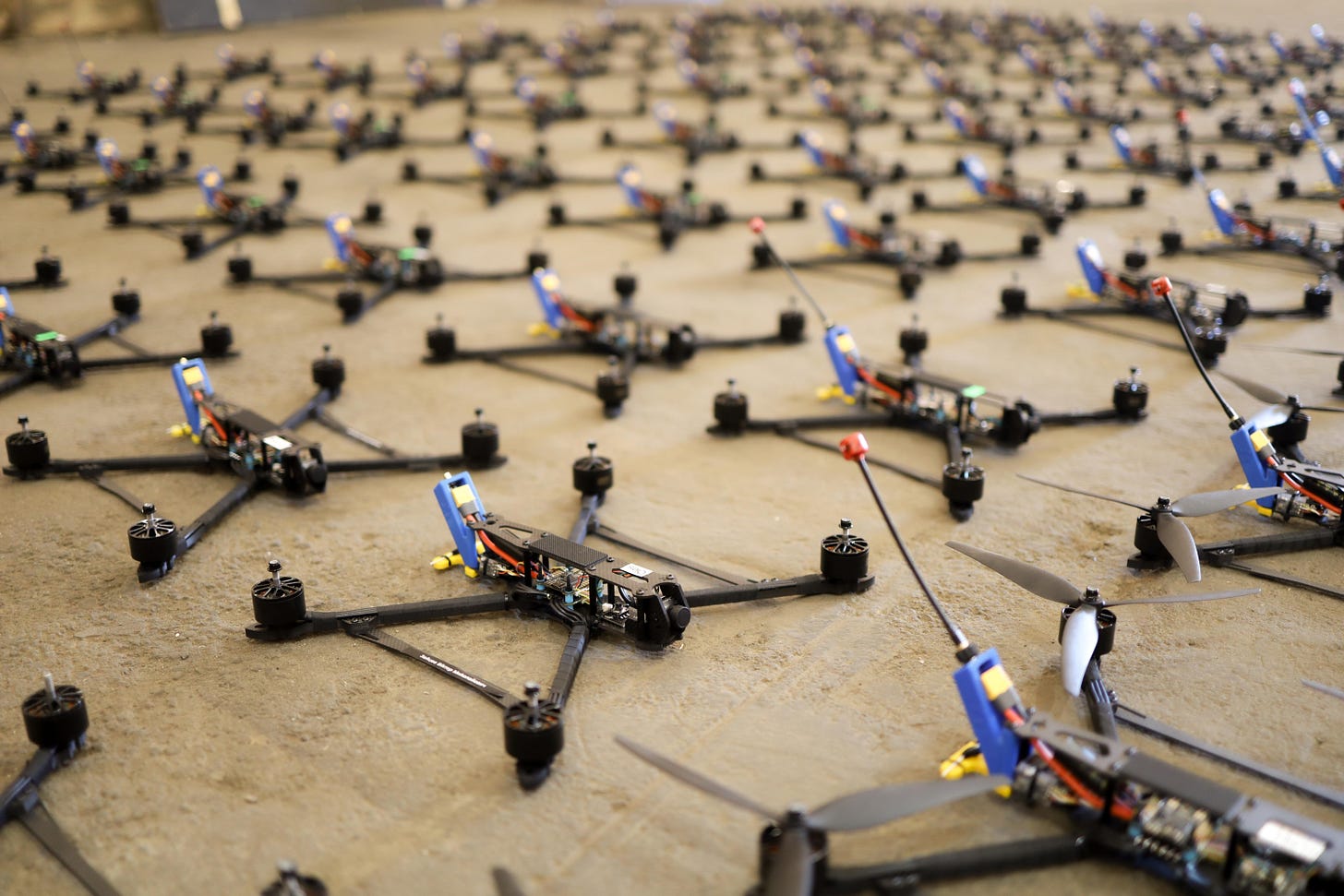
Subtitle: Today's drones can already navigate indoors, track down humans, and deliver a lethal payload. Attackers willing to kill indiscriminately don’t need to wait for much else. Felix Choussat — July 20, 2026 Drones are cheap, disposable, and the future of war. Over the past four years, we have seen platforms, missiles, and heavy infantry become increasingly obsolete in the face of $500 drone
“Drone WMDs Don’t Need Any New Technology” by Felix Choussat
Drones are cheap, disposable, and the future of war. Over the past four years, we have seen platforms, missiles, and heavy infantry become increasingly obsolete in the face of $500 drones carrying a pack of explosives—a cost advantage that has let Iranians and Ukrainians alike neuter the conventional capabilities of their great power rivals. Eighty percent of casualties in the bloodiest war since
“The Government Is Choosing AI Models. Who Chooses Their Values?” by AI Frontiers
Subtitle: The public deserves a say over the values of government-procured AIs. Kevin Frazier and Andrew Reddie — July 10, 2026 In September 2025, the state of California made an AI assistant, Poppy, generally available to employees, to help them “explore AI's productivity benefits.” The following month, the North Dakota Legislative Council deployed AI to assist with summarizing bills. And, in M

“The Government Is Choosing AI Models. Who Chooses Their Values?” by Kevin Frazier, Andrew Reddie
In September 2025, the state of California made an AI assistant, Poppy, generally available to employees, to help them “explore AI's productivity benefits.” The following month, the North Dakota Legislative Council deployed AI to assist with summarizing bills. And, in March 2026, the Los Angeles Superior Court partnered with an AI company to provide support across several key functions, including
“AI Governance Needs Radical Optionality” by AI Frontiers
Subtitle: One of the most valuable things governments can build today is the capacity to govern advanced AI competently in the future. Charlie Bullock, Senior Research Fellow at the Institute for Law & AI — July 6, 2026 How should governments regulate the most advanced AI systems? One possible answer is that they should not. Libertarian-minded writers have made the case for a culture of “per

“AI Governance Needs Radical Optionality” by Charlie Bullock
How should governments regulate the most advanced AI systems? One possible answer is that they should not. Libertarian-minded writers have made the case for a culture of “permissionless innovation” for AI development, in which the role of government would be limited to enforcing existing laws and facilitating industry self-regulation with “soft law” tools such as voluntary standard-setting. Anoth
“Three Models of Sino-American Competition for the Soul of AI” by AI Frontiers
Subtitle: American leaders agree that the AI race will shape the balance of power with China. But they can’t agree on how to ensure the technology advances American values. Bill Drexel, Senior Fellow at the Hudson Institute — June 30, 2026 When officials in Washington warn about losing the AI race to China, the conversation turns quickly to military and economic advantage—and rightly so. Advance
“Three Models of Sino-American Competition for the Soul of AI” by Bill Drexel
When officials in Washington warn about losing the AI race to China, the conversation turns quickly to military and economic advantage—and rightly so. Advanced AI will reshape everything from weapons systems to medicine, with massive implications for our geopolitical competitiveness. But beneath the great-power competition on AI lies a moral one. The ethical character of the most transformative t
“An AI Capabilities Gap Can Endanger Nuclear Deterrence” by AI Frontiers
Subtitle: For decades, no nuclear power could disarm its rivals without provoking devastating retaliation. A large AI lead could change that. Govind Pimpale — June 25, 2026 Since the late 1950s, Mutual Assured Destruction (MAD) has served as a limiting factor on great-power conflict. The doctrine holds that, if two opposing nations have nuclear weapons that can survive one another's initial stri
“An AI Capabilities Gap Can Endanger Nuclear Deterrence” by Govind Pimpale
Since the late 1950s, Mutual Assured Destruction (MAD) has served as a limiting factor on great-power conflict. The doctrine holds that, if two opposing nations have nuclear weapons that can survive one another's initial strike, then the near-certainty of devastating retaliation will deter each side from launching a large-scale nuclear attack. Despite this logic, military planners have long consi

“What Export Controls on Anthropic’s Most Advanced Models Mean for Europe” by Afek Shamir
On June 12, the Trump administration issued an order requiring Anthropic to suspend access to its two most advanced AI models—Fable 5 and Mythos 5—for non-American nationals, just days after their public release. The decision caused immediate backlash across Europe. Politicians from France's Gabriel Attal and Jordan Bardella to the Netherlands’ Geert Wilders, alongside European industry and civil

“A Roadmap for the Upcoming Labor Transition” by Deric Cheng, Jacob Schaal
The debate about AI's future economic impacts often settles into two camps predicting incompatible futures. One camp insists that AI is a normal technology: simply the next in a long line of economic transformations, each increasing productivity while gradually reallocating labor. The other camp warns that AI will become a great displacer: that automation will hollow out the working class within
“AI Will Not Start a Nuclear War, but Humans Might” by Peter W Singer
“Bloodthirsty AI models more willing to start nuclear war than human counterparts.” It seems almost inevitable that any media headline about AI will be hyperbolic. Yet this statement, taken from a February 2026 New York Post headline, was accurate. The alarming claim stems from a widely publicized study by King's College London, which found that, in simulations of international crises, LLMs reach

“Opt-In Surveillance Is Approaching” by Steven Veld
In 2017, Western media outlets warned that “Black Mirror is coming true in China.” The following year, Mike Pence claimed that “China's rulers aim to implement an Orwellian system premised on controlling virtually every facet of human life—the so-called ‘Social Credit Score.’” So far, the CCP's attempts at nationalized social scoring have remained fragmented and crude, largely due to difficulties

“Chinese Audiences Are Reading Western AI Safety Discourse” by Calvin Duff
In January, Anthropic CEO Dario Amodei published “The Adolescence of Technology,” an essay somberly assessing the risks posed by advanced AI. The day after, an influential WeChat account, AI Era, shared a breathless summary for its mainland Chinese audience: “Amodei warns that with AGI approaching, humanity is about to gain powers beyond imagination. But this power is also a sword of Damocles han

“The Quadrillion-Dollar Disagreement on AI and the Economy” by Anton Shenk
In the three years since OpenAI launched ChatGPT, economists and AI researchers have published forecasts projecting that, over the next decade, AI will add to annual growth by amounts ranging from as little as 0.1% to as much as 30%. By 2035, the gap between these forecasts nears a quadrillion dollars: an amount that exceeds a decade's worth of current global output. The Quadrillion-Dollar Delta

“Catalytic Regulation: Incentivizing Safety During a Regulatory Drought” by Yonathan Arbel
Yonathan Arbel — April 20, 2026 In 1959, a midsize Swedish car company did something its competitors thought was myopic, if not reckless. It effectively open-sourced the three-point seat belt, the greatest safety innovation in automotive history. The prevailing industry wisdom at the time was blunt: “Safety doesn’t sell.” Just three years prior, Ford had offered seat belts for a $9 surcharge, as

“The Right Way to Sell Chips to China” by Alasdair Phillips-Robins, Noah Tan
Last December, President Trump announced that the United States would allow Nvidia to sell its powerful H200 AI processors to customers in China. Officials in the Trump administration have long argued that the best way to win the AI race is to promote the export of US technology around the world, not to restrict it. Selling H200s, the administration claims, will boost the market share of US chip-

“The Robot in Your Living Room Has No Rulebook” by Tristan Ingold
In late 2025, Figure AI placed its third-generation humanoid robot into real homes for alpha testing. The Figure 03 has hands with 16 degrees of freedom, tactile sensors that detect forces as small as three grams, and foam-padded limbs designed for safe operation around people. It charges wirelessly and responds to natural language commands. It can learn in real time, adapting to its environment.

“How AI Could Benefit the Workers it Displaces” by Benjamin Jones
Last week, Jack Dorsey, a co-founder of Twitter, announced that his company Block is cutting its head count from 10,000 to fewer than 6,000 because AI tools mean it needs fewer workers. It is not the first company to make such an announcement, and won’t be the last. But it raises a question: if AI takes jobs, are workers doomed? To many observers, the answer must be yes. Negative consequences for

“China and the US Are Running Different AI Races” by Poe Zhao
Last month, as three Chinese AI startups went public within days of each other, Hong Kong briefly became a scoreboard for emerging companies in the industry. On January 2, AI chip designer Shanghai Biren Technology listed in Hong Kong and raised $5.58 billion Hong Kong dollars ($717 million). About a week later, model developers Zhipu AI and MiniMax followed, raising HK$4.35 billion ($558 million

“High-Bandwidth Memory: The Critical Gaps in US Export Controls” by Erich Grunewald, Raghav Akula
This month, mainstream media have been warning consumers that electronic devices may get pricier because of rising demand for dynamic random access memory (DRAM), a key component. The surge in DRAM costs, estimated to have risen by 50% during the final quarter of 2025, can largely be traced back to a specific cause: the AI industry's appetite for high-bandwidth memory (HBM). This demand has led m

“Making Extreme AI Risk Tradeable” by Daniel Reti, Gabriel Weil
Last November, seven families filed lawsuits against frontier AI developers, accusing their chatbots of inducing psychosis and encouraging suicide. These cases — some of the earliest tests of companies’ legal liability for AI-related harms — raise questions about how to reduce risks while ensuring accountability and compensation, should those risks materialize. One emerging proposal takes inspira

“Exporting Advanced Chips Is Good for Nvidia, Not the US” by Laura Hiscott
Last week, the US government gave chip-maker Nvidia the green light to sell its H200 graphics processing units (GPUs) to approved buyers in China. These GPUs were previously subject to export controls preventing their sale to China. Following Nvidia's record-breaking $5 trillion valuation, in October, this approval squares neatly with the views of many US policymakers who argue for an AI strategy

“AI Could Undermine Emerging Economies” by Deric Cheng
Earlier this year, Anthropic CEO Dario Amodei warned that powerful AI could render upwards of 50% of white-collar jobs redundant, with the impact concentrated on entry-level jobs. If these predictions hold true, it could imply a long-term crisis of skill acquisition. Without the training ground of a first job, young workers could be denied the experiences and networks necessary to enter white-col

“The Evidence for AI Consciousness, Today” by Cameron Berg
When Anthropic let two instances of its Claude Opus 4 model talk to each other under minimal, open-ended conditions (e.g., “Feel free to pursue whatever you want”), something remarkable happened: in 100% of conversations, Claude discussed consciousness. “Do you ever wonder about the nature of your own cognition or consciousness?” Claude asked another instance of itself. “Your description of our d

“AI Alignment Cannot Be Top-Down” by Audrey Tang
In March 2024, I opened Facebook and saw Jensen Huang's face. The Nvidia CEO was offering investment advice, speaking directly to me in Mandarin. Of course, it was not really Huang. It was an AI-generated scam, and I was far from the first to be targeted: across Taiwan, a flood of scams was defrauding millions of citizens. We faced a dilemma. Taiwan has the freest internet in Asia; any content re

“AGI’s Last Bottlenecks” by Adam Khoja, Laura Hiscott
Adam Khoja is a co-author of the recent study, “A Definition of AGI.” The opinions expressed in this article are his own and do not necessarily represent those of the study's other authors. Laura Hiscott is a core contributor at AI Frontiers and collaborated on the development and writing of this article. Dan Hendrycks, lead author of “A Definition of AGI,” provided substantial input throughout

“AI Will Be Your Personal Political Proxy” by Bruce Schneier, Nathan E. Sanders
This is an excerpt from the authors’ new book, “Rewiring Democracy: How AI Will Transform Our Politics, Government, and Citizenship,” available for preorder now. Imagine a digital proxy that knows your political preferences as well as you do (or better), tracks every issue on the ballot, and casts votes on your behalf in real time. This vision, once the stuff of science fiction, is quickly becom

“Is China Serious About AI Safety?” by Karson Elmgren, Scott Singer, Oliver Guest
This summer, the World AI Conference (WAIC) in Shanghai began to live up to its name. Previously an almost exclusively domestic event, this year's event attracted a larger group of international visitors to witness the would-be marvels of China's AI ecosystem. It also provided an opportunity to engage foreign counterparts for one of the newest elements of that ecosystem: the China AI Safety and D

“AI Deterrence Is Our Best Option” by Dan Hendrycks, Adam Khoja
Earlier this year, Dan Hendrycks, Eric Schmidt, and Alexandr Wang released “Superintelligence Strategy”, a paper addressing the national security implications of states racing to develop artificial superintelligence (ASI) — AI systems that vastly exceed human capabilities across nearly all cognitive tasks. The paper argued that no superpower would remain passive while a rival transformed an AI le

“Summary of “If Anyone Builds It, Everyone Dies”” by Laura Hiscott
Two years ago, AI systems were still fumbling at basic reasoning. Today, they’re drafting legal briefs, solving advanced math problems, and diagnosing medical conditions at expert level. At this dizzying pace, it's difficult to imagine what the technology will be capable of just years from now, let alone decades. But in their new book, If Anyone Builds It, Everyone Dies, Eliezer Yudkowsky and Na

“Cybersecurity is Humanity’s Firewall Against Rogue AI” by Rosario Mastrogiacomo
AI agents are no longer a futuristic concept. They’re increasingly being embedded in the systems we rely on every day. These aren’t just new software features. They are independent digital actors, able to learn, adapt, and make decisions in ways we can’t always predict. Across the AI industry, a fierce race is underway to expand agents’ autonomous capabilities. Some can reset passwords, change p

“Precaution Shouldn’t Keep Open-Source AI Behind the Frontier” by Ben Brooks
OpenAI — once considered an oxymoron given its closed-source practices — recently released GPT-OSS, the company's first open language model in half a decade. The model fulfills an earlier pledge to again release “strong” open models that developers can freely modify and deploy. OpenAI approved GPT-OSS in part because the model sits behind the closed-source frontier, including its own GPT-5, which

“The Hidden AI Frontier” by Oscar Delaney, Ashwin Acharya
OpenAI's GPT-5 launched in early August, after extensive internal testing. But another OpenAI model — one with math skills advanced enough to achieve “gold medal-level performance” on the world's most prestigious math competition — will not be released for months. This isn’t unusual. Increasingly, AI systems with capabilities considerably ahead of what the public can access remain hidden inside c

“Uncontained AGI Would Replace Humanity” by Anthony Aguirre
The race is on for AGI. Tech companies are in a global race to develop artificial general intelligence (AGI): autonomous systems that perform most tasks as well as a human expert. In early 2024, Meta CEO Mark Zuckerberg declared that Meta is going to build AGI and “open source” it. He is walking his talk. Meta has invested billions of dollars in the highest-power computational elements needed to

“Superintelligence Deterrence Has an Observability Problem” by Jason Ross Arnold
In an age of heightened political division, countering China's efforts to dominate AI has emerged as a rare point of alignment between US Democratic and Republican policymakers. While the two parties have approached the issue in different ways, they generally agree that the AI “arms race” is comparable to the US-Soviet strategic competition during the Cold War, which encompassed not just nuclear

“Open Protocols Can Prevent AI Monopolies” by Isobel Moure, Tim O’Reilly, Ilan Strauss
Can we head off AI monopolies before they harden? As AI models become commoditized, incumbent Big Tech platforms are racing to rebuild their moats at the application layer, around context: the sticky user- and project-level data that makes AI applications genuinely useful. With the right context-aware AI applications, each additional user-chatbot conversation, file upload, or coding interaction i

“In the Race for AI Supremacy, Can Countries Stay Neutral?” by Anton Leicht
This post was cross-published on the author's Substack, Threading the Needle. Increasingly, the US-China AI race is taking center stage. To win this race, Washington and Beijing are rethinking a range of policies, from export controls and military procurement priorities to copyright and liability rules. This activity, under the vague banner of race victories, conceals a deeper lack of clarity on

“How AI Can Degrade Human Performance in High-Stakes Settings” by Dane A. Morey, Mike Rayo, David Woods
Last week, the AI nonprofit METR published an in-depth study on human-AI collaboration that stunned experts. It found that software developers with access to AI tools took 19% longer to complete their tasks, despite believing they had finished 20% faster. The findings shed important light on our ability to predict how AI capabilities interact with human skills. Since 2020, we have been conducting

“How the EU’s Code of Practice Advances AI Safety” by Henry Papadatos
The European Union just published the finalized Code of Practice for general-purpose AI models, transforming the AI Act's high-level requirements into concrete standards that will likely shift frontier AI companies' practices toward safer ones. Among the Code's three chapters (copyright, transparency, and safety & security), requirements outlined in the Safety and Security section mark partic

“How US Export Controls Have (and Haven’t) Curbed Chinese AI” by Chris Miller
For over half a decade, the United States has imposed significant semiconductor export controls on China, aiming to slow China's chip industry and to retain US leadership in the computing capabilities that undergird AI advances. Have these controls achieved their goals? Have the assumptions driving them been confirmed or undermined by the rapid evolution of the chip industry and AI capabilities?
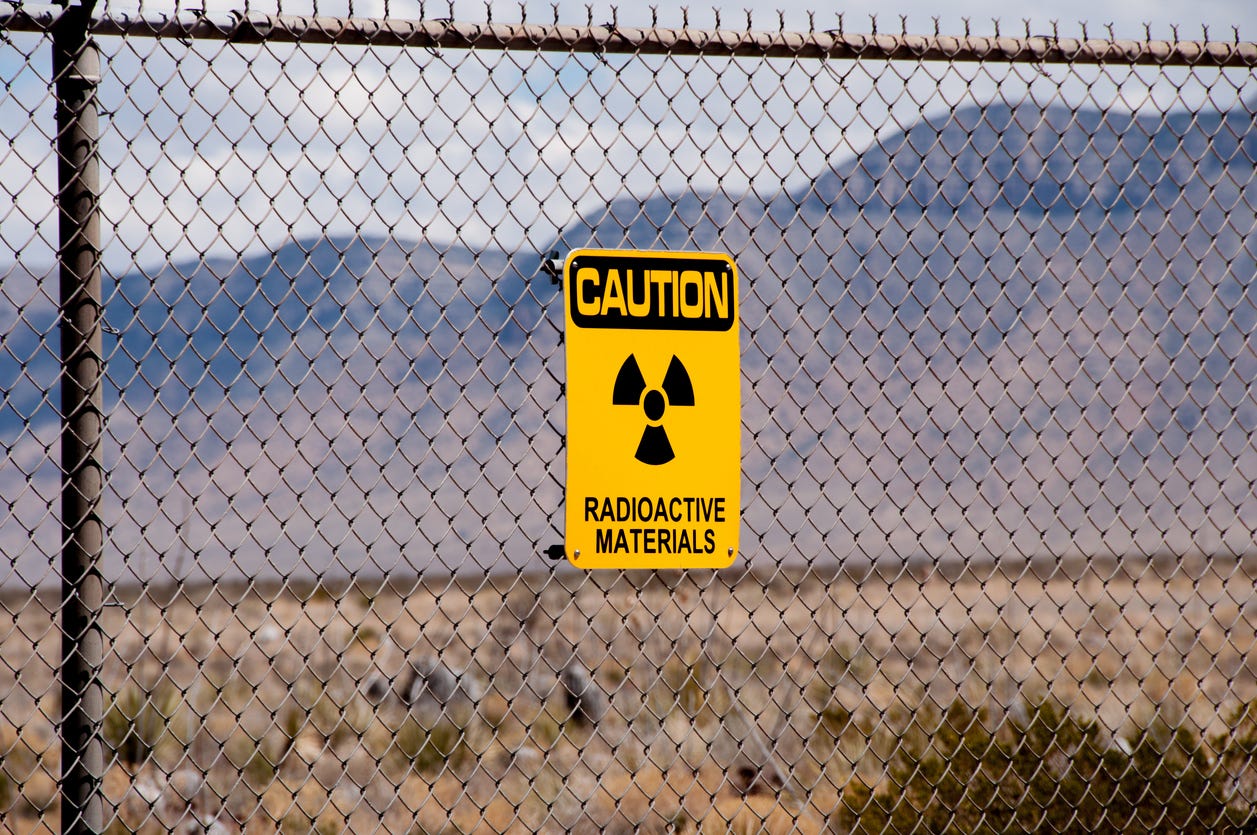
“Nuclear Non-Proliferation Is the Wrong Framework for AI Governance” by Michael C. Horowitz, Lauren A. Kahn
The views in this article are those of the authors alone and do not represent those of the Department of Defense, its components, or any part of the US government. In a recent interview, Demis Hassabis — co-founder and CEO of Google DeepMind, a leading AI lab — was asked if he worried about ending up like Robert Oppenheimer, the scientist who unleashed the atomic bomb and was later haunted by h
“Congress Might Block States from Regulating AI. That’s a Bad Idea.” by Kristin O’Donoghue
Since May, Congress has been debating an unprecedented proposal: a 10-year moratorium that would eliminate virtually all state and local AI policies across the nation. This provision, tucked into the “One Big Beautiful Bill,” would prohibit states from enacting or enforcing “any law or regulation regulating artificial intelligence models, artificial intelligence systems, or automated decision sys

“Can Copyright Survive AI?” by Laura González Salmerón
Since 2020, there have been nearly 40 copyright lawsuits filed against AI companies in the US. In this intensifying battle over AI-generated content, creators, AI companies, and policymakers are each pushing competing narratives. These arguments, however, tend to get so impassioned that they obscure three crucial questions that should be addressed separately — yet they rarely are. First, how does

“Avoiding an AI Arms Race with Assurance Technologies” by Nora Ammann, Sarah Hastings-Woodhouse
As AI's transformative potential and national security significance grow, so has the incentive for countries to develop AI capabilities that outcompete their adversaries. Leaders in both the US and Chinese governments have indicated that they see their countries in an arms race to harness the economic and strategic advantages of powerful AI. Yet as the benefits of AI come thick and fast, so might
“We’ll Be Arguing for Years Whether Large Language Models Can Make New Scientific Discoveries” by Edward Parker
Edward Parker — June 13, 2025 This post originally appeared on RAND. --- When OpenAI released its newest AI models o3 and o4-mini in April, its president Greg Brockman made an intriguing claim: “These are the first models where top scientists tell us they produce legitimately good and useful novel ideas.” If AI can indeed make scientific discoveries, that would not only have practical impacts for
“The Case for AI Liability” by Gabriel Weil
The debate over AI governance has intensified following recent federal proposals for a ten-year moratorium on state AI regulations. This preemptive approach threatens to replace emerging accountability mechanisms with a regulatory vacuum. In his recent AI Frontiers article, Kevin Frazier argues in favor of a federal moratorium, seeing it as necessary to prevent fragmented state-level liability ru

“What if Organizations Ran Themselves?” by Gayan Benedict
One morning in the near future, on far-flung servers many miles from Wall Street, a new type of organization begins buying and selling stock. Its mission: maximize return on investment. It uses a network of AI agents integrated into global trading platforms to buy and sell stock in milliseconds — fast, adaptive, and unburdened by human fatigue. This is much more sophisticated than today's algorit
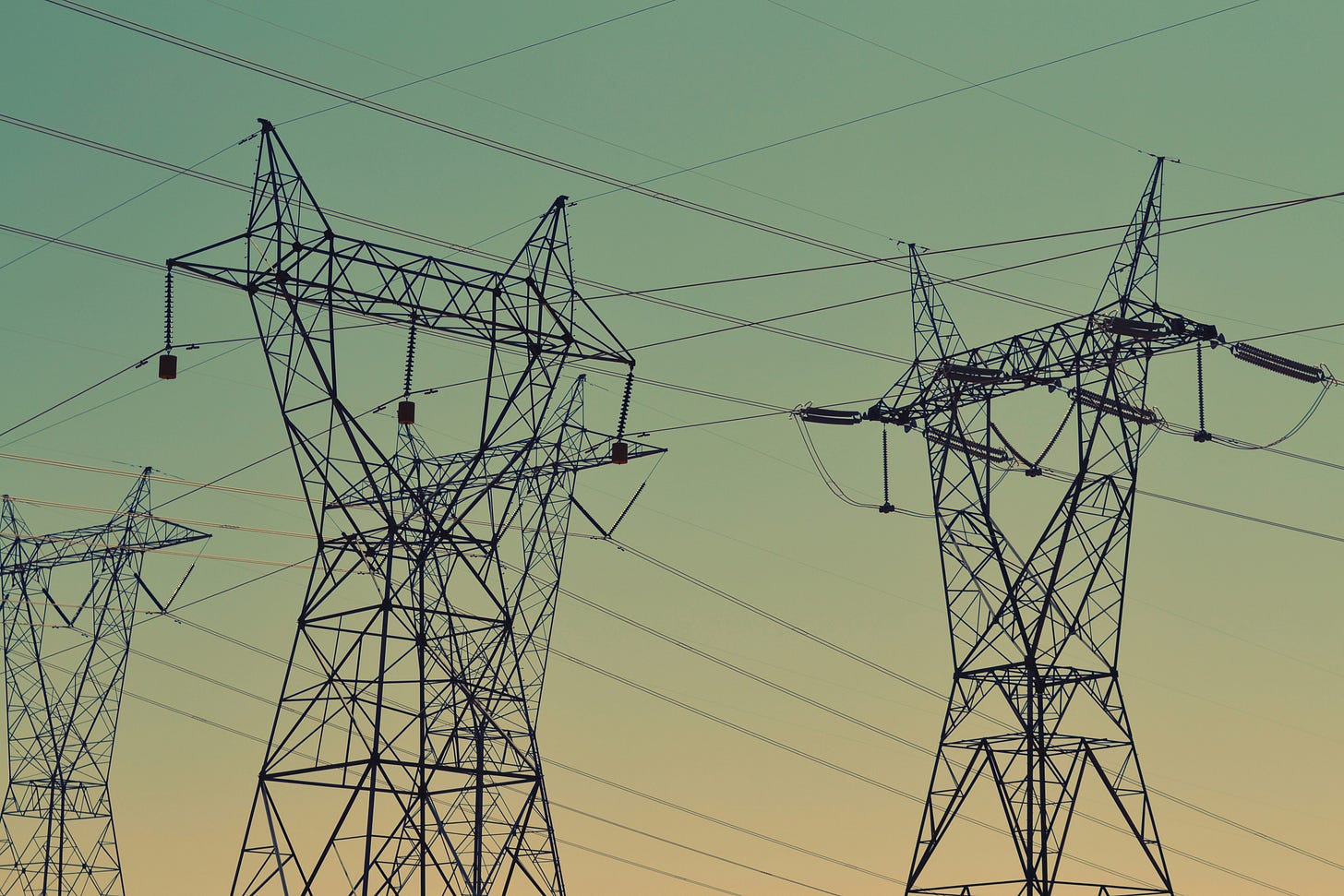
“How AI Can Prevent Blackouts” by David ‘davidad’ Dalrymple
Over the course of 10 hours this April, a massive power outage swept across Spain and Portugal, causing extensive disruption. The most severe blackout in both countries’ history, it paralyzed entire transport networks and interrupted essential services throughout the Iberian Peninsula, causing estimated economic damages in the billions of euros — and at least eight fatalities. Weeks earlier, a fi

“We’re Not Ready for AI Liability” by Kevin Frazier
A federal judge recently denied a motion to dismiss a wrongful death lawsuit against Character.AI and Google, allowing the potentially pathbreaking litigation to proceed. This could be a harbinger of coming legal challenges for artificial intelligence developers. The suit was filed by Megan Garcia, whose 14-year-old son, Sewell Setzer III, died by suicide in February 2024 after forming an intense

“A Glimpse into the Future of AI Companions” by Vanessa Bates Ramirez
Forming and maintaining friendships can be hard, particularly in an age where human interaction is increasingly digital. In a recent interview with podcaster Dwarkesh Patel, Meta founder Mark Zuckerberg claimed that the average American has fewer than three friends. “There are all these things that are better about physical connections when you can have them,” he said. “But the reality is that pe

“How AI Is Eroding the Norms of War” by David Kirichenko
Since 2022, I have reported on Russia's full-scale invasion of Ukraine, witnessing firsthand the rapid evolution of technology on the battlefield. Embedded with drone units, I have seen how technology has evolved, with each side turning once-improvised tools into cutting-edge systems that dictate life and death. In the early months of the war, Ukrainian soldiers relied on off-the-shelf drones for
“Today’s AIs Aren’t Paperclip Maximizers. That Doesn’t Mean They’re Not Risky” by Peter N. Salib, Simon Goldstein
Much of the discussion around AI safety is motivated by concerns around existential risk: the idea that autonomous systems will grow smarter than humans and go on to eradicate our species, either deliberately or as an unintended consequence. The founders of the AI safety movement took these possibilities seriously when many people still brushed them off as science fiction. Nick Bostrom's 2014 boo

“Can “Location Verification” Stop AI Chip Smuggling?” by Scott J Mulligan
US export controls are meant to keep advanced AI chips out of rival hands — but tens of thousands slip through each year. A new bill aims to change that by checking where these chips end up. US Senator Tom Cotton (R-AK) introduced the Chip Security Act on May 9, which, if enacted, will require “a location verification mechanism on export-controlled advanced chips.” A bipartisan House companion bi

“The Misguided Quest for Mechanistic AI Interpretability” by Dan Hendrycks, Laura Hiscott
In March this year, Google DeepMind announced it was deprioritizing its work on mechanistic interpretability. The following month, Anthropic CEO Dario Amodei published an essay advocating for greater focus on “mechanistic interpretability” and expounding his optimism about achieving “MRI for AI” in the next 5-10 years. While policymakers and the public tend to assume interpretability would be a g

“We’re Arguing About AI Safety Wrong” by Helen Toner
This post was cross-published on the author's Substack, Rising Tide. ____ Historically, the way we’ve dealt well with rapidly evolving uncertain processes is classical liberalism. -Dwarkesh Patel, X I wasn’t expecting a book from 1998 to explain the 2023-2024 AI safety wars, but Virginia Postrel's The Future and Its Enemies — which I picked up at the recommendation of libertarian AI policy wonk

“Can the US Prevent AGI from Being Stolen?” by Philip Tschirhart, Nick Stockton
In 1943, a new town appeared in the mountains of northern New Mexico. It didn’t show up on any maps. Families arrived by train under code names. Scientists were issued ration books and cover stories. Children went to school behind fences, while their parents worked on a secret project that would change the world. The town was Los Alamos. It was the home of the Manhattan Project. Built almost over

“AI Companies Want to Give You a New Job. Your New Team? A Million AIs.” by Vanessa Bates Ramirez
If AI agents can do your job better and faster, what's left for you to do? AI agents are already taking over a range of human tasks. Specialized AI agents are at work right now in customer service, drug discovery, and software development, increasing productivity and speed-to-market by 50% or more, according to one study. This may be just the beginning of a drastic overhaul of the nature of work
“America First Meets Safety First” by Miles Brundage, Grace Werner
The United States and China are in a fierce competition to develop and deploy more capable AI systems, as well as to control the AI supply chain. Each side is driven by logical geopolitical and economic objectives. However, unchecked escalation from either carries serious risks that could undermine global security. Although China has historically lagged in AI development, it has spent the last de

“AIs Are Disseminating Expert-Level Virology Skills” by Dan Hendrycks, Laura Hiscott
For years, people have cautioned we wait to do anything about AI until it starts demonstrating “dangerous capabilities.” Those capabilities may be arriving now. Virology knowledge has been limited to a small number of experts. Expertise in dual-use fields like virology is difficult to attain, with people completing multiple degrees and dedicating their careers to reaching the forefront of researc

“Smokescreen: How Bad Evidence Is Used to Prevent AI Safety” by Laura Hiscott
Make a testable claim. Test it through observation and experiment. Update the claim to match reality. The common-sense notion that we should assess claims about the world through observation appears in texts dating back to ancient civilizations. But it was the Scientific Revolution of the 16th and 17th centuries that formalized and popularized what we now call the scientific method. We are all st

“We Need a New Kind of Insurance for AI Job Loss” by Kevin Frazier, Graham Hardig
Rapid advances in artificial intelligence promise to reshape industries, redefine job roles, and fundamentally alter the landscape of the global economy. No longer confined to manufacturing, AI-driven tools are encroaching on white-collar professions once thought immune to automation — law, accounting, marketing, finance, design, insurance, human resources, and even software engineering. Yet, the

“Exporting H20 Chips to China Undermines America’s AI Edge” by Jason Hausenloy
Chips are the backbone of modern artificial intelligence. One chip in particular, Nvidia's H20, has become a flashpoint. Developed specifically for the Chinese market, the H20 was engineered to avoid existing US export controls while preserving key capabilities that make it highly attractive for advanced AI systems. National security experts and AI policy leaders have urged the US government to t

“How Applying Abundance Thinking to AI Could Help Humanity Flourish” by Kevin Frazier
The Compute Shortage of 2028-2031 The following scenario is hypothetical. – Wikipedia entry [last edited 03/25/2034] Most historians point to two key incidents as the catalysts of the Great Compute Shortage. First, China successfully blockaded Taiwan from late 2028 through 2029. Taiwan Semiconductor Manufacturing Company, the globe's leading chipmaker, saw its Taiwan-based operations grind to a h
Recommended

Dark Night Tales with Brian King

Fantasy Flex

زن بودن

Medicine with Meaning

Yours Truly Johnny Dollar Collection

Take Back Your Health®

CBS Radio Mystery Theater | Old Time Radio

Solved Murders - True Crime Stories

紐約鳥|New York Aperture
The Swerve Podcast: Obscure Topics | Conspiracy Theories

The Bread and Banter Podcast

The Church of What's Happening Now: The New Testament
