
ArchitectureTalk
Architecture Talk is a podcast hosted by Vikram Prakash, Professor of Architecture at the University of Washington in Seattle. Each episode is structured around an engaging conversation that explores issues in contemporary architecture and architectural thinking. The show examines topics ranging from design practice to broader cultural and theoretical concerns in the field.
Episodes
161. Pierre Jeanneret and the Chandigarh Vernacular with Manu Sobti
Today, we are joined by Manu Sobti who is a senior lecturer at the University of Brisbane in Australia. We talk to Sobti today about his research on Pierre Jeanneret and Aditya Prakash, what he found, and the role of these two people in the making of modern India and modern architecture

160. Modernism's Magic Hat with Ijlal Muzzafar
Today, we are joined by Ijlal Muzzafar who is a professor at RISD and author of Modernism's Magic Hat: Architecture and the Illusion of Development without Capital. The book is M's thesis on how modernists in the post-war era invoked and worked with the concept of development to produce a re-imaging of development as a process of self-actualization without real sizeable investment of capital.
159. Devising Theater with Jeffrey Fracé
Today, we are joined by Jeffrey Fracé who is the chair of acting at the University of Washington. Fracé discusses his background of the arts through Shakespeare, improvisational theater, the different modalities of theater, and the difference between producing theater and producing architecture.

158. Jean Louis Cohen and the Transurbanism of the Modern City
"Architecture and culture operate in a porous manner through the construction of ideas…Trotsky reading Henry George, who had an impact on Frank Lloyd Wright in the U.S. which then bounced back into Russia in the 1930s… so I'm interested in the worldwide circulation of ideas, and their patterns and themes of discourse. " Jean Louis Cohen We are bringing back our conversation with Jean Louis Cohen,
157. Life is a River, A Conversation with 2018 Pritzker Prize Winner BV Doshi
At age 90, Balkrishna Vithaldas (B.V.) Doshi's journey in architecture has spanned 70 years, starting from Indian independence in 1947, to the vicissitudes of postmodernism and globalization. Doshi's voice is a touchstone in global and Indian modernism. Conversation topics include his reflection on life and creativity, his 'favorite' projects, the legacy of Nehruvian modernization, and architectu

156. Modernism, Utopia, and Living the Catastrophe with Anthony Vidler
As we kick off our new season on ArchitectureTalk, we are bringing back our conversation with Anthony Vidler: Modernism, Utopia, and Living the Catastrophe. Anthony Vidler (1941-October 19, 2023) was an architectural historian, role model, and friend who will be missed dearly.

155. Homelessness is a Housing Problem with Gregg Colburn
Today we are joined by Gregg Colburn who co-wrote "Homelessness is a Housing Problem". Colburn also shares with us his findings about causes of homelessness, his views on the situation, and some solutions that could remove the problem.

154. Alternative Futures with SB Divya
Today we are joined by SB Divya who wrote the science fiction novel Meru and helps us think about potential futures on Earth. Meru as we discuss in this episode is a future in which tech is developed based on imaginations of current technology and science and possibilities unknown but conceivable.

153. Decolonizing Archives with Martien de Vletter
Today we are joined by Martien de Vletter who is the associate director of the Canadian Centre for Architecture (CCA) and gathers archival material dedicated to rethinking, remembering, and preserving architectural thoughts and memories. Vletter also talks about decolonizing the archive and transforming it into something more diverse, inclusive, and multifaceted.

152. Songs of Protest and Sorrow and Connecting Civilizations with Sumangala Damodaran
Today we are joined by Sumangala Damodaran who teaches in the Gender, Women and Sexuality Studies at the University of Washington, trained economist, dedicated her life to documenting and being a part of leftist oppositional protest movements. Today, Damodaran discusses her protest songs, her songs of sorrow, her singing, the research she has done to connect civilizations, and the diverse impact
151. Soft Data and Common Wares with Afroditi Psarra and Audrey Desjardins
Today we are joined by Afroditi Psarra and Audrey Desjardins who talk about building alternative technologies that respond to and critique the world of data, and their project "Soft Data and Common Wares".

150. Before and After Our Wars with Eliyahu Keller
Today we are joined by Eliyahu Keller who shares with us the relationship between war, war technology, architectural thinking, the climate crisis, the post-COVID era, and the crisis of imagination.

149. Architecture as the Rearrangement of Relationships with Neelkanth Chhaya
To kick off the new year, today we are joined by Neelkanth Chhaya who is a professor in India. Chhaya discusses forms and contingence of south Asian aesthetic theory, he is an open-minded and inquisitor thinker, and examines the ideas and interests and cross-references them.

148. The Promise. Architect B.V. Doshi with Jan Schmidt-Garre
This week, we are joined by Jan Schmidt-Garre, who directed the film The Promise. Architect B.V. Doshi which was shown at the ADFF (Architecture Design Film Festival). This film took place in the last few years of his life and highlighted his philosophies and outlook on architecture and design.

147. Moby Dick and Modernism with Ayad Rahmani
Today we are joined with Ayad Rahmani who teaches architecture at Washington State University. Rahmani's love for literature and architecture leads us to today's conversation about Moby Dick and architecture.

146. Modernism, Utopia, and Living Catastrophe with Anthony Vidler
As we kick off our new season on ArchitectureTalk, we are bringing back our conversation with Anthony Vidler: Modernism, Utopia, and Living Catastrophe. Anthony Vidler (1941-October 19, 2023) was an architectural historian, role model, and friend who will be missed dearly.

145. The Cyberfeminism Index with Mindy Seu
This week we are joined by Mindy Seu who published The Cyberfeminism Index electronically and physically. What we focus on is how the index is gathered, organized, and shared and how it could be applicable in the built environment.

144. Towards a Post-Punk Gothic Architecture with Phillip Thurtle
This week we are joined by Phillip Thurtle, who is the director of the Comparitive History of Ideas (CHID) program at the University of Washington Seattle. Thurtle talks to us about the gothic, what it is and what it means to him and what he researches.

143. Robotic Architecture with Mahesh Daas

142. Phantom Hands with Deepak Srinath
This week, we are joined by the founder and CEO of Phantom Hands Deepak Srinath. Phantom Hands creates chairs and other various furniture pieces, and also brings attention to Indian craft worldwide.

141. The Faada-Adda Conversations with Mariam Issoufou Kamara (Part III): Future Faada Adda with AbdouMaliq Simone
This week, we are joined again with Mariam Issoufou Kamara and AbdouMaliq Simone, where we talk about the "Faada" and "Adda" as hangout spaces, and go in depth of what future Faada and Adda spaces would look like with urban inhabitation.

140. Biking Through American Freedom with Benedikt Hartl
This week, we are joined again with Benedikt Hartl. Hartl and his girlfriend recently biked from Seattle to La Jolla, and shares his experience as a European traveling through the West Coast as well as the architectural impacts he observed.

139. Planetary and the Climate Crisis with James Graham
This week, we are joined by James Graham who is currently an assistant professor at CCA, and used to be faculty at Columbia University and handled publications there. His work heavily revolves around the planetary and climate crisis.

138. Fronts: Military Urbanism and the Developing World with Ersela Kripa and Stephen Mueller
This week, we are joined by Ersela Kripa and Stephen Mueller, who are both principals at AGENCY. Kripa and Mueller recently published their book Fronts: Military Urbanism and the Developing World, which starts our conversation and dives into immigration, migration, and questions the climate change emergency.
137. Bawa's Garden with Clara Kraft Isono
This week, we are joined by Clara Kraft Isono, who directed the architecture film Bawa's Garden. Isono is an architect, film maker, and educator in the UK and is currently focused on film making. In this discussion, Isono talks about what film making is, as well as what an architecture film is and what it should be.

136. Architecture after Architecture with Jeremy Till
This week, we are joined by Professor Jeremy Till, who talks about his work with the research collective MOULD and their project Architecture after Architecture which interrogates the constitutive entanglement between architecture and modernism. With modernism responsible for the climate emergency, we will have to re-think what architecture is in fundamental terms, and Till discusses architecture

135. The Faada-Adda Conversations with Mariam Issoufou Kamara (Part II): Future Hériter
This week we are once again joined by Mariam Issoufou Kamara for the Faada-Adda Conversations Part II: Future Hériter. In this conversation, Kamara talks about breaking free from the boundaries of the cardinal directions and getting into new ways of being.

134. Architecture and Design Film Festival with Kyle Bergman
This week we are joined by Kyle Bergman, who is the CEO of the Architecture and Design Film Festival. Bergman shares with us his thoughts about the connections between film, architecture, and design, and more.
133. Arch Talk on Architecture Talk with Junichi Satoh
This week we are joined by Junichi Satoh, who is current faculty in the Department of Architecture at the University of Washington. Junichi shares with us how he has incorporated architectural thinking in diverse and constructive ways throughout his life, and how it has gotten him to where he is today.
132. Digital Stockholm Syndrome in the Post-Ontological Age with Mark Jarzombek
This week, we are joined again by Mark Jarzombek to discuss the data society on contemporary architecture, as well as his book Digital Stockholm Syndrome in the Post-Ontological Age.

131. Pre-crastinating Art with Aaron Bourget
This week, we had the opportunity to talk to Aaron Bourget who is a film maker of hundreds of short films. Bourget's process of creativity? Pre-crastination, use whatever you have at hand, and push whatever you have into the world week by week.

130. The Faada-Adda Conversations with Mariam Issoufou Kamara (Part I)
This week, Nigerien architect Mariam Issoufou Kamara joins us in a stimulating discussion about reimagining architecture and epistemologies that come from West Africa. Kamara also touches on how African, South Asian, and other non-European can help us think out of modernity.

129. Comparing Connections in the Ethosphere with Ambrose Gillick (Part II)
This week, we are joined once again with Ambrose Gillick for Part II of Comparting Connections in the Ethosphere. In this episode, Gillick shares his thoughts on the connections of his two interests in sacred architecture and the modalities and politics of design and the city influence that connects to architecture trends.

128. Comparing Connections in the Ethosphere with Ambrose Gillick (Part I)
Kicking off our new season of ArchitectureTalk, we engage in a conversation with Ambrose Gillick. Gillick shares his interest and findings in participatory and community-led architecture through a collaborative project with self-organising women's- co-op in Dakar, Senegal, and theory of sacred space in medieval church architecture.

127. The Architecture of Art with Hiroshi Okamoto
We're back with a conversation with Principal Architect at OLI Architecture, Hiroshi Okamoto. In this conversation we discuss his time working with I.M. Pei, the design of the Mu Xin Art Museum dedicated to the celebrated Chinese painter, scholar, poet and writer, and designing spaces for the work of American sculpture artist Richard Serra.

126. Moving Beyond the Post-Colonial and the Mythological West with Martino Stierli
This week, we talk with Martino Stierli, MOMA's Philip Johnson Chief Curator of Architecture and Design, about MOMA's current exhibition entitled The Project of Independence: Architectures of Decolonization in South Asia, 1947–1985.

125. Architecture in the Symbolic Realm: Troubling the Remaking of New Delhi's Central Vista with Aneesha Dharwadker
This week, we talk with Aneesha Dharwadker, assistant professor in architecture and landscape architecture at the University of Illinois at Urbana-Champaign and author of the recently published article Dystopia's Ghost. In this episode, we revisit the remaking of New Delhi's Central Vista project, its design, politics, and history.

124. Architecture and the Photographic Eye with Randhir Singh
This week, we talk with Randhir Singh about his life as an architectural photographer, which he pursues, not just as an art, but as a way of architectural thinking itself. From the art and craft of the making of a photograph, to the final presentation in MOMA, Randhir Singh walks us through his methods and philosophy on the art of architectural photography.

123. A Fieldguide to Sub-Saharan African Architecture with Adil Dalbai and Livingstone Mukasa
How does the idea of a "Nation" come through in architectural language? Is there such a thing as a Nigerian architecture, for example? Are there national identifications visible in architectural makeup? On the other hand, how does architecture transcend borders? What is the status of Modernism in architecture in these various places? This week, we dive into these larger questions as we dissect th

122. Reyner Banham Revisited with Richard Williams
This week we sit down with Prof. Richard Williams of the Edinburgh College of Art to discuss his recently published book Reyner Banham Revisited

121. Part 2: The Living Links between Indian Modernism and Indian Tradition with William J.R. Curtis
Once again, we travel back in time with architectural historian and theorist William J.R. Curtis for Part two of this conversation. We pick up right where we left off, rumbling through the dusty roads of India with William on his way to meet Balkrishna Doshi, the living link between the force that is Corbusian Modernism in India and deep, deep Indian tradition.

120. Part 1: Mental Landscapes and the Architectural Archipelagos of Indian Modernism with William J.R. Curtis
This week, we travel back in time with architectural historian and theorist William J.R. Curtis and his reading of the narrative of Indian Modernism. Part one of a two part series, Curtis and Prakash focus today's conversation on the life and work of Aditya Prakash, the nature and production of Modernism in India, and Curtis' own engagement with Indian Modernism.

119. Oracular Visions and the Fungal Futures with Mark Jarzombek
The modernist legacy has helped proliferate the current environmental crisis on a global scale. In architecture, what is to be done to address this civilizational problem? Could oracular visions be a way to rethink how we practice and teach architecture? Join us for this week's conversation with Mark Jarzombek, professor at MIT and co-director of the Office of [Un]certainty Research.

118. OCL Rerelease: On the Relevance of the Midcentury Modern Moment in India
In anticipation of the next installment of the One Continuous Line webinar series on Globalization and the Modernist City (being held online on December 13, 2021) this episode is a re-release of the previous panel discussion. This episode features guests Mark Jarzombek, Anthony Vidler, Partha Mitter, and Sunil Khilnani who discuss the relevance of Indian Modernism in terms of its various contemp

117. Chandigarh:Possibility in Engaging the Unknown in the Incomplete with Remi Papillault
This week, we sit down with Remi Papillault to discuss the topic of his new book, and the subject of his ongoing interests: the development of Chandigarh and Le Corbusier's hand in its shaping.
116. The Politics of Acoustic Space and Sonic Montage with Joseph Clarke
This week, we sit down with Joseph Clarke to discuss his new book Echo's Chamber: Architecture and the Idea of Acoustic Space. The discussion looks at the convergence of politics, acoustics, and the metamorphosis of acoustic spatial thinking from Wagner to Le Corbusier and beyond.

115. An American Architect in India with David Stein
This week, the subject turns back to legacy. We have a conversation with the son of Joseph Allen Stein who was an American-born architect, designing fabulous buildings across India during the Nehruvian period in the 50s, 60s, 70s, and 80s. David Stein takes us through his life growing up in India and what his understanding was of his father's life and career.

114. Nightrise and the Nocturnal Landscape with Mohamad Nahleh
What is an architecture of the Nightrise? How might we spatialize the unseeable, or "freeze" the shadows of a conjuration? This week, we have a fascinating discussion with Mohamad Nahleh, a recent MIT graduate, about his recent personal research and graduate thesis on the night in Jabal 'Amil in the southern reaches of Lebanon.

113. Architecture as a Site of Thinking with Mark Dorrian
How might we think about architectural education differently in a post-pandemic world? What are the intersections between Covid and Climate Change? How does seeing architecture as a site of thinking impact education today? This week, we sit down with Mark Dorrian to take a deep dive into the material, political, cultural and educational realities surrounding the ongoing pandemic.

112. Connectedness, Eroticism, and the Flâneur with David Turnbull
Join us this week for a far-ranging and fascinating conversation with David Turnbull, architect, thinker and educator.
111. Jean Louis Cohen and the Transurbanism of the Modern City
Discussing his work on the transurban, Jean Louis Cohen takes us on a tour of the history of ideas that have shaped, formed, and deformed the various cities that stitch together the seams of the world. This conversation continues the ongoing conversation centering the impact of Modernism on architecture and contemporary culture in the world today.

110. The Life and Times of Cyrus and Ruth Jhabvala with Firoza Jhabvala
This week, we sit down with Firoza Jhabvala, musician and daughter of Cyrus and Ruth Jhabvala. We talk about growing up with two creative parents, the trans-disciplinarity of Cyrus' Jhabvala's architecture practice, parallels with Vikram's own father, Aditya Prakash, and the politics of colonial and post-colonial India.
109. Textile Capitalism and Architectural Patronage with Dan Williamson
This week, we continue interrogating the modern nationalist project in India, its legacy and implications for thinking the present with Dan Williamson, professor and scholar of Mid-century Ahmedabad. We learn why and how Amedabad, a city in Western India, came to be home to some of the best and most amazing advances in Indian Modernism.
108. The Idea of India with Sunil Khilnani
How do ideas travel across the world? How do ideas change? Why do they change? This week, we contemplate these questions in the mid-century context of the emerging Indian nation-state in the 1950s into the contemporary cultural climate we see today. Sunil Khilnani is professor of politics and history at Ashoka University and author of the book The Idea of India.

107. OCL Part 2: Modernism and the Skeptic Turn with Mark Jarzombek, Anthony Vidler, Partha Mitter, and Sunil Khilnani
In part two of our two-part series One Continuous Line, we sit down with Mark Jarzombek, Anthony Vidler, Partha Mitter, and Sunil Khilnani to discuss the relevance of Indian Modernism in terms of its various contemporary postcolonial contexts.

106. OCL Part 1: Indian Modernism and the Anxiety of Western Influence with Mark Jarzombek, Anthony Vidler, Partha Mitter, and Sunil Khilnani
In part one of our two-part series One Continuous Line, we sit down with Mark Jarzombek, Anthony Vidler, Partha Mitter, and Sunil Khilnani to discuss the relevance of Indian Modernism in terms of its various contemporary postcolonial contexts.

105. Revisiting the Modern and the Global, a reissue and crossover episode with Anthony Vidler and Mark Jarzombek
This week, we revisit two past episodes as a preamble to the forthcoming panel discussion "One Continuous Line: is Indian MidCentury Modernism still relevant today?" In this crossover episode we discuss the project of Utopia and its colonial situatedness, modernity and its critiques, and the ways in which global thinking (dis)connects with deconstruction.

104. One Continuous Line with Vikram Prakash
This week, we turn the mic back on Vikram Prakash to discuss his newly published book One Continuous Line: Art, Architecture and Urbanism of Aditya Prakash. The conversation picks up the thread of the book, mapping out and analyzing the life and multi modal work of Vikram's father, Aditya Prakash, in Mid Century Modern India.

103. Navigating the Skins of the Earth with Raoul Bunschoten
How might we navigate and negotiate the skins of the Earth in the face of climate change? What can Byzantine architecture and Plato's Khôra teach us about urban living in the 21st Century? What is the role of the architect in current cultural production? This week, we have a fascinating conversation with Raoul Bunschoten, Professor of Sustainable Urban Planning and Urban Design at the TU Berlin, a

102. Memories and Legacies of Richard Neutra with Raymond Neutra
What was it like to grow up in the Neutra household? What memories of Richard Neutra's early and practicing life live on in his children? This episode explores the idea of legacy and memory with Raymond Neutra, youngest child of famous Mid-Century Modern Architect Richard Neutra.

101. On Anant Raje and Creative Legacy with Shubhra Raje
Today we talk to Shubhra Raje, Academic and Architect…and also the daughter of Anant Raje, faculty member of CEPT in Ahmedabad and an architect who worked closely with Louis Kahn on the IIM project. Today, we focus the conversation on Shubhra's relationship with her father, how he has influenced her life and how this relationship has been formative in her own architectural and creative identit

100. Fragments of Utopia in Farangestan with Vahid Vahdat
This week's episode invites you to look back to the 19th century with four Persian travelers making their way through a modernized Europe. In their travel diaries, we see Europe from an Occidentalist gaze, which charges these Western spaces with eroticism, magic, and wonder. What can we learn about Persian utopia from these "farangi," or foreign, narratives? Join us, for this discussion with Vahi

99. Unfolding Moods and the Romance of the Monsoon with Dipti Khera
How do moods and cultural objects work in the construction of history, politics, place? In this episode, Dipti Khera joins us to discuss her newly published book The Place of Many Moods: Udaipur's Painted Lands and India's Eighteenth Century, which deconstructs the affects of the painted letters traditions of Northwest India on the construction of place.

98. Colonial Memory, Climate Change, and the role of the Greenhouse in the Colonial Project with Luis Berríos-Negrón
We are experiencing rapidly rising global temperatures making it increasingly difficult for Earth to remain habitable. Yet, the dominant power structure of the free-market economy is not really reacting. Enter the greenhouse as the future of life in a changed climate…or is it simply a perpetuation of what got us here in the first place? Listen as Luis Berríos-Negrón traces the lineage of the gre

97. Reissue of AITC: The Medicalization of Space with Michael Murphy of MASS Design Group
What can architecture do in the time of a pandemic? What is an architecture of medical necessity? This week, we talk with Michael Murphy of MASS Design Group to discuss architecture in the time of COVID-19.

96. Re-Issue On Wetness, Ecology, and Rethinking Habitation with Anuradha Mathur and Dilip da Cunha
This week we look back at our miniseries Architecture in the Time of Coronavirus with architects and educators Anuradha Mathur and Dilip Da Cunha. In this re-issue, the discussion touches on Mathur and Da Cunha's concept of wetness - a re-writing of what it means to live in relationship to water - and what it means for architecture and ecological thinking in the time of Coronavirus.

95. Part II of Demolition of Kahn's IIM Dormitories with Sarosh Anklesaria, Shubhra Raje, and Riyaz Tayyibji
This week, we continue our conversation with Sarosh Anklesaria, Shubhra Raje, and Riyaz Tayyibji about the recent developments at the Indian Institute of Management Ahmedabad (IIM) where controversial deliberations have led to the decision to demolish a large swath of dormitories on its campus designed by Louis Kahn, architect. While this decision has been temporarily halted, it has generated
94. Demolition of Kahn's IIM Dormitories with Sarosh Anklesaria, Shubhra Raje, and Riyaz Tayyibji
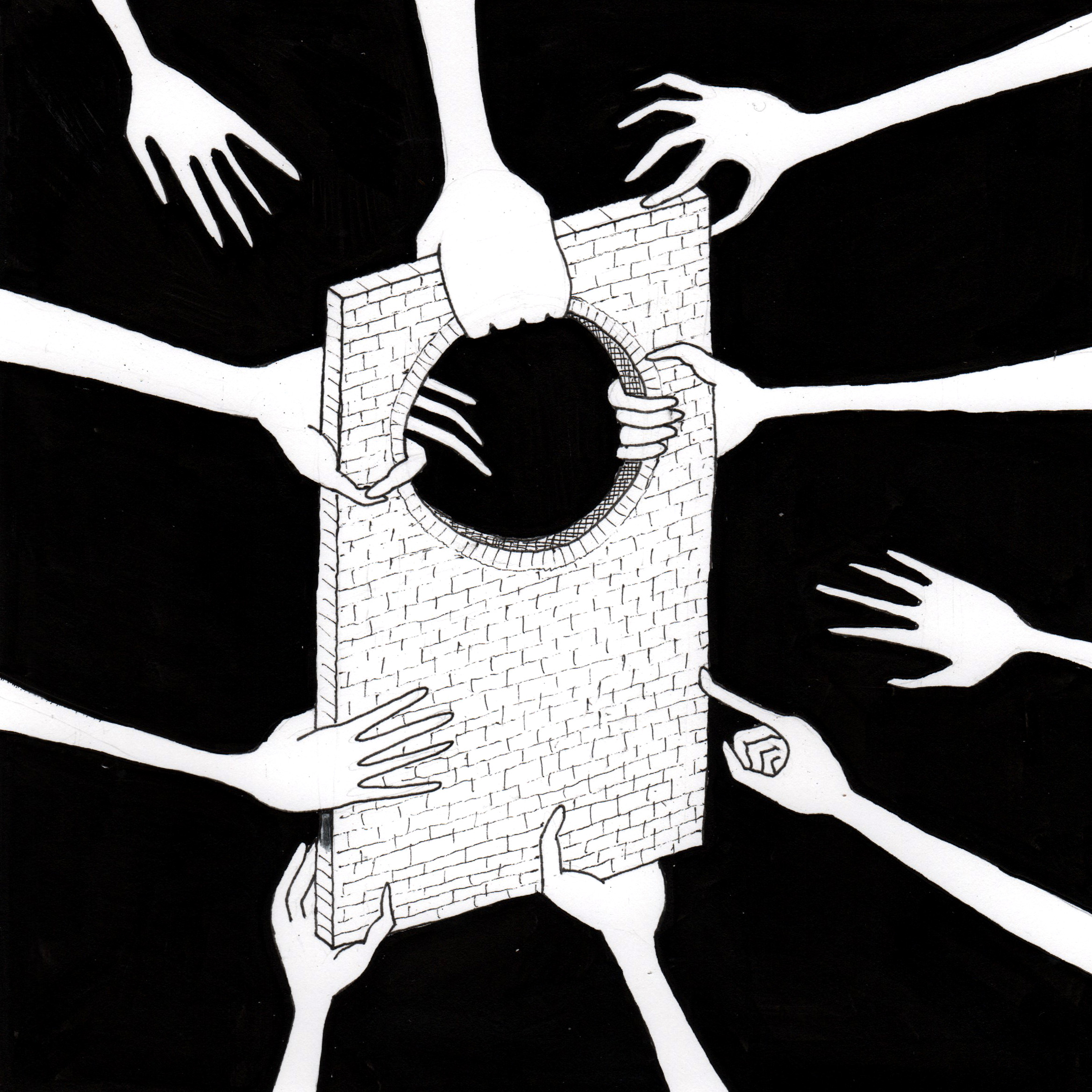
The basic issue is: what is the value of collective/cultural memory? What happens when we privilege certain memories over others? This week, Sarosh Anklesaria, Shubhra Raje, Riyaz Tayyibji and Vikram Prakash converse about recent developments at the Indian Institute of Management Ahmedabad (IIM) where controversial deliberations have led to the decision to demolish a large swath of dormitories on
93. Demolition of Kahn's IIM Dormitories with Prem Chandavarkar
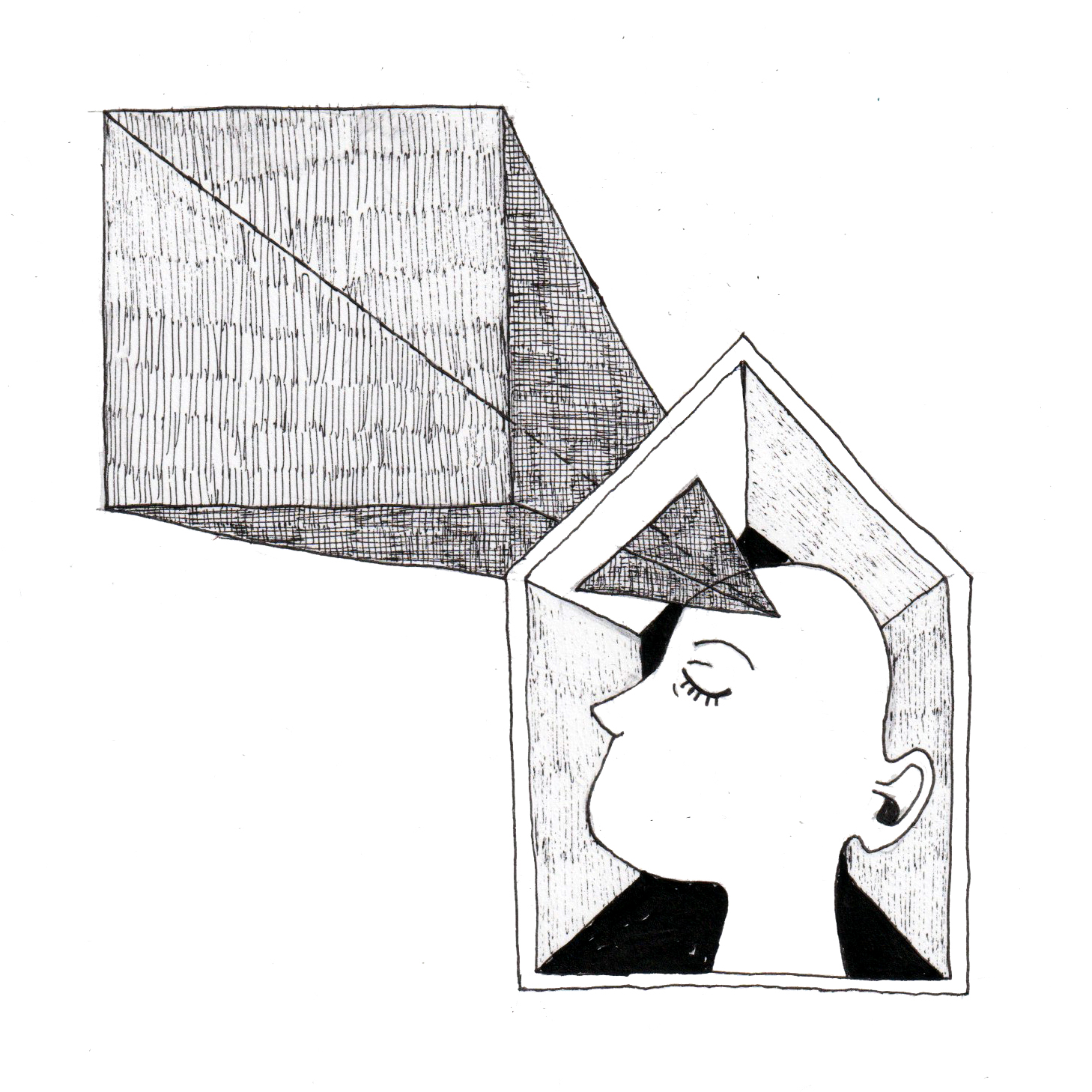
The basic issue is: what do we recognize as heritage? What is worth remembering? And who decides? This week, Prem Chandavarkar and Vikram Prakash converse about recent developments at the Indian Institute of Management Ahmedabad (IIM) where controversial deliberations have led to the decision to demolish a large swath of dormitories on its campus designed by Louis Kahn.

92. A look back at 2020 with the Office of (Un)Certainty Research
This week, Architecture Talk sits down with the Office of (Un)Certainty Research to find out who they are, where they are, and where they are going. Find out what it's all about!

91. Posthuman Humanism, Spirituality, and the Impressions of Childhood with Michael Benedikt
This week, we sit down with Michael Benedikt, the 2004 ACSA Distinguished Professor at the University of Texas at Austin School of Architecture. In this fascinating and meandering conversation, Vikram and Michael discuss the impressions of childhood on our adult life, inter-subjectivities and the force-relations of things, spirituality in architecture, and posthuman humanism.

90. Recollecting the past and present with Franz Ziegler
This week, we sit down with Architect, Urban Planner, and long-time friend Franz Ziegler to exchange thoughts on Holland and global architecture, drawing with the hand, and to reminisce on mutual experiences in India.

89. Storytelling with the Shapes of Time with Amir Sheikh
What's in a placename? What are the geneologies and lineages of the land we live on? As mapmaker and transdisciplinary scholar, Amir Sheikh reveals that there are many intersecting and sedimented narratives of place and placenames, in part, tell these stories. Join us as we talk with him about his work with the Waterlines project and storytelling with the shapes of time.

88. The Dialectics of the Ramayana and the City of Changing Shape with Arshia Sattar
How might literature help inform the way we talk, think, and design the city? How differently would we build it? This week, scholar and translator Arshia Sattar brings her immense knowledge of the Hindu Epic The Ramayana to talk about ethics, morality, sensuality, and space and how we might imagine a city of changing shape.

87. Architectural Pedagogy Then and Now with Neelkanth Chhaya
This week, we gain new perspectives on architectural pedagogy today in the time of Zoom University and Coronavirus as we speak with long-time educator and architectural practitioner Neelkanth Chhaya. Fresh off the success of a fully online studio titled Poche, Neelkanth reflects on studio culture and pedagogy today and in the past.

86. Peter Mohlmam, The Window Witch
From the catwalk to the department store, there are many modalities of showcasing high fashion. In the realm of window displays, how do you draw people in? For Peter Mohlmam, it's all about seduction. This week, we dive into the wickedly beguiling world of the Window Witch - where fashion design and architecture meet and design is life.

85. In Flux with Alona Nitzan-Shiftan
"1970s Israel was a period of taking things that were constructed and making them into things that are taken for granted, that become 2nd nature, that you don't question." This week, we are joined by Alona Nitzan-Shiftan, head of the Arenson Built Heritage Research Center in Haifa, Israel. This conversation looks at the question and problem of modernism and its relation to the formation of the na

84. Teaching Architecture under the Regime of Zoom with Nandan Balsavar
What happens when your home becomes your laboratory for architectural learning and speculation? According to Nandan Balsavar, Zoom enables his students to incorporate the oral histories from generations of family members into regular lessons. This week, we'll be discussing architectural pedagogy, culturally inherited forms of knowledge, and teaching under the regime of Zoom with educator and arc

83. AITC: In conversation with Anjali Mangalgiri
This week we end our miniseries Architecture in the Time of Coronavirus with Grounded founder and Principal Architect Anjali Mangalgiri. The discussion touches on motherhood, architectural thinking, sustainability, and Anjali's memories that led her to pursue architecture.

82. AITC: Resiliency, Adaptibility, and Architecture in a Recessive Economy wity Rachel Minnery and Patrick MacLeamy
This week we continue our ongoing miniseries Architecture in the Time of Coronavirus with two distinct discussions. The first conversation, with Rachel Minnery, AIA, asks what does it mean to plan in the face of unknowable risk? The second, with Patrick MacLeamy, former CEO of HOK, discusses the history and culture of HOK, the future of design firms in a changing world, and firm strategies during
Recommended

English with Olivia | Slow Conversations & Vocabulary
Stand In The Circle

SLOW ENGLISH PODCAST (A1-A2) With Subtitles | Daily Videos | English With Us Podcast

Learn English A2 with Daily News | Simple English Listening Practice

پلی لیست | PlayList

Conspiracy Files with Paige Carter

Bad Friends

Learn 50 English Phrases While You Sleep | Everyday English Phrases & Vocabulary
This Past Weekend w/ Theo Von

Dateline NBC

Back to the 80s Radio

Crime Stories with Nancy Grace
