
Learn Burmese from Natural Talk
Learn Burmese from Natural Talk is a language learning podcast hosted by Kenneth Wong, a Burmese language instructor, author, and translator. Designed for intermediate and advanced learners, each episode features natural conversations with guest speakers on a specific topic, followed by explanations of keywords and phrases. The series also includes Bite-Size Burmese episodes that explore quirky expressions and Vocabulary Booster episodes that introduce basic vocabulary related to a theme. Listeners can find supplementary materials on the accompanying blog, burmeselessons.blogspot.com.
Episodes

On Tone Shifting in Burmese Pronunciation
If you pronounce Burmese words exactly the way they're written, you might not sound like a native speaker at all. That's because Burmese speakers tend to voice many suffixes, particles, auxiliary verbs, and compound words differently from how they're spelled.For example, the affirmative verb suffix တယ် (tae) is always written the same way. But the verb "စားတယ် (to eat)" is

Vocabulary Booster: Emotion-Related Words
Nervous? Excited? Happy? Sad? In this episode, my regular cohost Su, a Chaing Mai-based Burmese language teacher, and I introduce you to a series of commonly used emotion-related words. You might notice many of them are derived from the root word စိတ် (the mind) or ဝမ်း (womb, belly), as if your emotions stem from your head or your belly. Even though ချမ်းသာတယ် and ဆင်းရဲတယ် mean "to be prosp

Vocabulary Booster: Physical Appearance
Hello Burmese learners! In this episode, my regular guest Su from Burmese Chatter Talk and I introduce you to a list of basic words and phrases to describe physical appearance, from body types and skin tones to hair and height. We discuss the Burmese word "to be fat," which few people like to hear, and the alternatives that are much more diplomatic. We also discuss tricky words that are

Vocabulary Booster: Weather-Related Words
Following our debut Vocabulary Booster episode introducing you to flavor-related words, my cohost Su, a Chiang Mai-based Burmese teacher, and I now introduce you to commonly used weather-related verbs and expressions, along with a handful of time-related phrases such as "today, yesterday, and tomorrow." (Image licensed from Shutterstock. Music: "Sunshine Dreams" by Kaazoom, Pi

Vocabulary Booster: Flavor-Related Words
In collaboration with Su, a Chiang Mai-based Burmese language teacher, I am launching a new series of mini-episodes called Vocabulary Boosters, as part of the Learn Burmese from Natural Talk podcast. Long-form conversations, like the past episodes on the Burmese teashop culture and common insults, target intermediate and advanced learners. They're meant to replicate authentic conversations a

On Love and Life According to Forrest Gump
"Life's like a box of chocolate; you never know what you're gonna get," says Forrest Gump, the title character played by Tom Hanks in the 1994 film. In Burmese, the saying roughly translates to "ဘဝဆိုတာ ချောကလက်ဘူးလေးလိုပါပဲ။ ဘာပါလဲဆိုတာ ဘယ်သူမှ မသိကြပါဘူး။" In this episode, my cohost Su, a Burmese language teacher from Chiang Mai, and I discuss Forrest Gump's at

Bite-Size Burmese: On the Poet Min Thu Wun's Ode to a Tree Stump
"Pyimma Ngote Toe (ပျဉ်းမငုတ်တို)" by Min Thu Wun (1909 to 2004), written in the four-syllable rhyme scheme typical of classic Burmese poetry, is an ode to a tree stump, the surviving fragment of a pyimma tree standing on a mound. The common name for this specimen in English is Queen's Crape Myrtle or Queen's Flower, giving off the unavoidable stench of colonialism. The origina

Bite-Size Burmese: Twitchy Eyebrow, Itchy Heart
Twitchy eyebrow? Itchy sole? According to Burmese superstition, twitching eyebrows may be an omen of good fortune or financial ruin, depending the exact spot of the twitch, also on who you ask. And an itch in the sole might be a sign of imminent travel. မျက်ခုံးလှုပ်တယ် (the eyebrow twitches) and ခြေဖဝါးယားတယ် (the sole itches) are also expressions people might use to convey worry and anxiety or w

On Christmas Festivities
In San Francisco, the city I now call home, the large Christmas tree in downtown Union Square has officially been turned on to usher in the holiday season. In Chiang Mai, Thailand, home to my guests for this episode, regular night markets have turned into Christmas markets. For this special year-end episode, I invited Su and Zue, two Chiang Mai-based Burmese teachers, to talk about Christmas, from
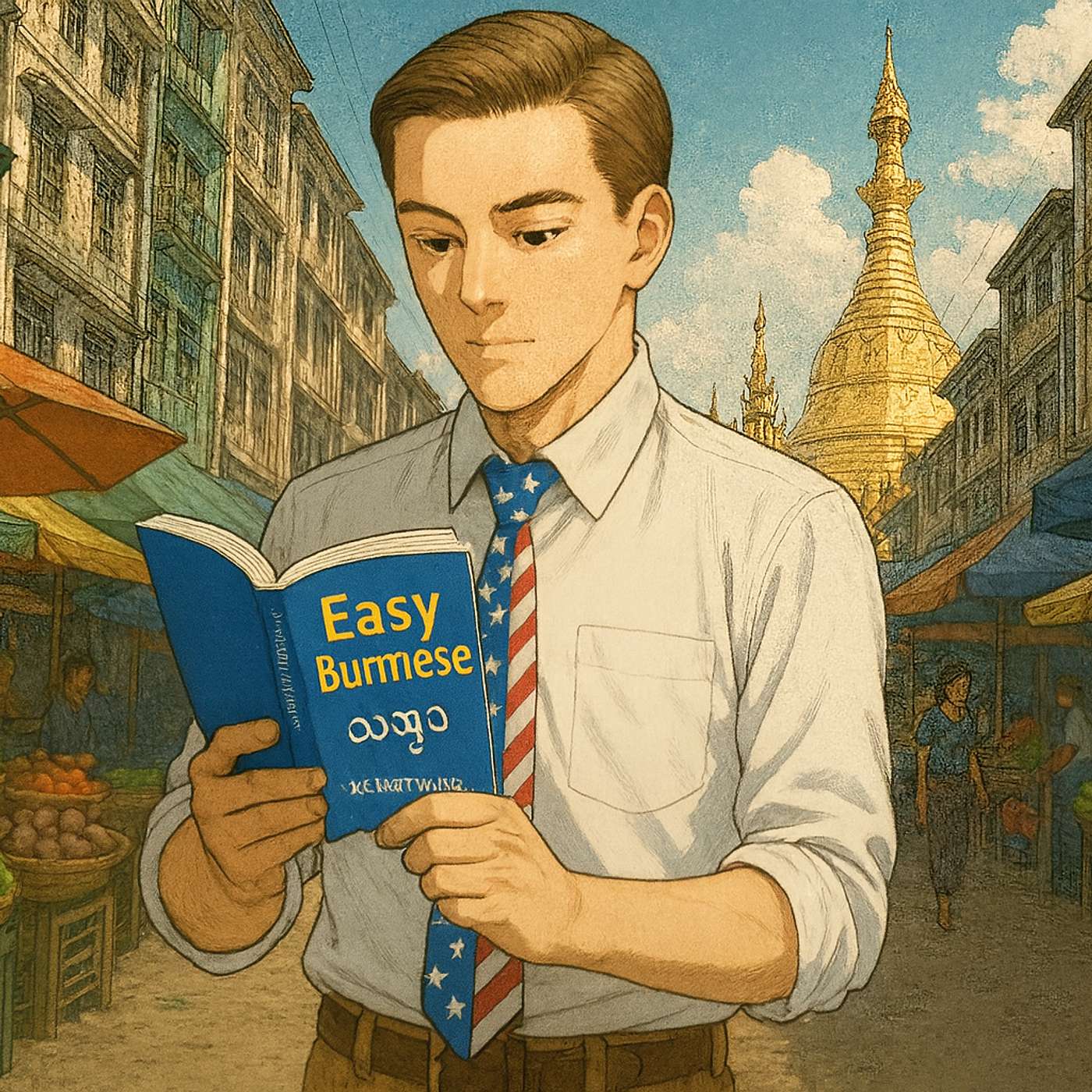
On Diplomacy and Language
Imagine this. You’re a diplomat, and in the middle of an embassy cocktail party, you suddenly switch language and speak to your counterpart from the host country in his or her mother tongue, with the kind of fluency that only comes from years of dedicated learning. With that display of earnest interest in the host country's culture, you’re bound to impress those in attendance. Who knows? The

Bite-Size Burmese: Choking on Happiness, Flattened by Sadness
Many Burmese words describing how you feel—happy, sad, depressed, and so on—are constructed with the root words ဝမ်း for "belly" or "womb," and စိတ် for "the mind." The phrase ဝမ်းသာတယ် "to be glad, to be happy" literally translates to "the belly is pleasant, favorable." The opposite phrase ဝမ်းနည်းတယ် "to be sad or unhappy" is "the

On Burmese Poetry
My first introduction to Burmese poetry was through the children’s nursery rhymes and classic verses scattered throughout the government-prescribed school textbooks. These were usually in the traditional four-syllable rhyme scheme, called လေးလုံးစပ် (lay lone zat), often depicting the charm of pastoral life or the longing of royal courtiers. Later, I’d come across rhymeless or freeform modern poet

On Animal Farm, Part II
Orwell’s masterpiece, Animal Farm, was inspired by the power struggle in post-revolution Russia, where a one-party authoritarian rule slowly began to take shape under the guise of Communism. The book outlines the playbook of many dictators, past and present, from the way they use propaganda and false nationalism to sway mass opinion to the way they accuse dissidents and critics of treason to silen

On Animal Farm, Part I
Orwell’s allegorical novel Animal Farm shows how a revolution could lead to the rise of opportunists, power struggles, infighting, fake news, and ultimately a new breed of authoritarians. Even though Orwell was looking at the rise of Joseph Stalin in post-revolution Russia as the model for his animal farm, we would later see the same sequence of events in Communist Cuba, Chairman Mao’s China, and

Bite-Size Burmese: Let's Talk About "You" and "I"
In English, when you’re talking about yourself, your choice of pronoun is a solitary “I.” Not so in Burmese. There’s a variety of ways to refer to yourself, based on your gender, profession, age, and your relationship towards the other person. And the same is true of ways to refer to the person you’re speaking to. You can refer to him or her by name, a kinship term, or an honorific associated with

On Dowry
As singles with no marital experience, my cohost Su and I are under-qualified to discuss this episode's theme: dowry. In Burmese context, it usually means what the groom and his family offer to the bride’s parents as gifts when asking for the girl’s hand in marriage. The so-called gifts could be cows for ploughing, a plot of farm to live on, a new bed, furniture for the newly weds' room,

On Burmese Slangs, from Being Broke to Having a Crush
If you’re going out to lunch with a Burmese friend who says he’s running low on water (ရေခမ်းနေတယ်), be prepared to pay for the meal. That means he’s broke. On the other hand, if you’re running low on water yourself, but he is overflowing, so to speak (ရေလျှံနေတယ်), you can probably ask him to pay for the meal. In English, if you need some type of permit or approval from a government office or an

Bite-Size Burmese: Drink a Cigarette, Strike a Photo, Dream a Dream
Would you ever drink a cigarette or a cigar? In English, you wouldn't, but in Burmese, you must. To describe smoking a cigarette or cigar, you must use the verb သောက်တယ် , the same verb for drinking coffee, tea, or Coca Cola. It may seem counterintuitive to use the verb to describe consuming liquid for smoking, but that's the correct form: ဆေးလိပ်သောက်တယ် , quite literally, to drink a ci

On Thingyan and Thaan Jaat
Mid-April is when Burmese people celebrate the end of the old year and the beginning of another one with a water festival, similar to the people of Thailand and several other neighboring countries.In modern times, young people driving around in open pickup trucks and shooting water through high-pressure tubes and cannons is the standard practice, but in the old days, people dipped laurel leaves in

On Chinese New Year
You might have noticed that, in Chinatown, red lanterns are going up, and lion dancers and dragon dancers are coming out, ready to parade the street. Mid-February is usually Chinese New Year, so both the Chinese community in Yangon, and the Chinese diaspora around the world are decked out in red dresses and new outfits, ready to welcome the new year. In this episode, my cohost Su, a Chiang Mai-bas

Bite-Size Burmese: Straddling Two Boats at Once
If a politician speaks ambiguously without committing to one side or the other on an issue, you might call it political doublespeak in English, and accuse him or her of being wishy-washy. In Burmese, you might say he or she is "straddling the sides of two boats," လှေနံနှစ်ဖက်နင်းတယ် or လှေနံနှစ်ဖက်ခွတယ်. On the other other hand, if you can resolve a conflict by satisfying the two opposin

On Culture Shock
In the 1980s, when I was growing up in Rangoon under Ne Win's Socialist Government, I remember how foreigners were shocked by, among other things, local people chewing betel quid and spitting out splashes of red betel juice all over the sidewalks. Today, if you come from a place like Japan, where nobody expects you to tip, you’re in for a shock when visiting the U.S., where tipping is expecte

On the Benefits and Risks of Social Media
Some homegrown businesses and neighborhood restaurants flourish in Burma, thanks for the power of viral posts and social media. But fake news of levitating monks and strange omens also spread online, like wildfire. While not exactly fake news, inaccurate news and old news also tend to resurface from time to time, stirring up racial tension or raising false hopes. In this episode of Learn Burmese f

Bite-Size Burmese: Will You Drink the Bitter Rainwater?
Given a choice, would you rather drink the Kool-Aid, or the bitter rainwater (မိုးခါးရေ)? The phrase “to drink the Kool-Aid,” meaning to embrace an irrational, foolish, or dangerous popular ideology, is associated with the tragic episode involving the American cult leader Jim Jones. The Burmese equivelent is "to drink the bitter rainwater" (မိုးခါးရေသောက်တယ်), stemming from the folktale

On Tazaungdaing Festival and the Night of Mischief
Why are the robes woven on full-moon night of တန်ဆောင်မုန်း , the 8th month in the Burmese lunar calendar, called, မသိုးသင်္ကန်း , literally, unspoiled robes? What is the legend of the origin of the practice called ပံ့သကူ to leave out items that others can take away? And what kind of mischiefs or troubles are you allowed to cause on the night called ကျီးမနိုးပွဲ , the carnival of the sleeping crow

On Burmese Ghosts, Witches, and Sorcerers
Do you know the legend of မဖဲဝါ Ma Phe Wah, the graveyard guardian spirit in disheveled hair, dressed in a yellow outfit? And do you know the origin of the Burmese word စုန်း for witches? How about the two different branches of sorcery, အထက်လမ်း and အောက်လမ်း, quite literally the high path and the low path? If you don’t, grab your wicked candies, your pumpkin spiced latte, and join me and my cohos

On Thadingyut (or) Festival of Light
In Myanmar or Burma, October is the month of Thadingyut, the festival of light. For the children, it's a rare excuse to play with fireworks, sparkles, and even firecrackers. For young people and couples, it’s a chance to take a stroll along the bright-lit streets and the festival market, to sample the crispy fritters and grilled meat in the food stalls, and to buy handmade crafts and toys, li

Bite-Size Burmese: The Brother from Another Belly
Do you have a brother or sister from another belly? Most of you probably do. The Burmese term အကိုတစ်ဝမ်းကွဲ or ညီမတစ်ဝမ်းကွဲ , literally brother or sister from another belly, refers to the son or daughter of your uncle or aunt -- in other words, your first cousin. In English, you wouldn't refer to such relatives as your "brother" or "sister," but many Burmese often call t

On Pop Song Lyrics
In a song about timid lovebirds too shy to confess their feelings for each other, the lyrics says "မျက်လုံးချင်းစကားပြောနေပြီ (Their eyes are speaking to each other)." In the song "ရတနာသူ (Jeweled Lover)," the lyrics compares the girl's bodyparts to precious gemstones, ending with "အသည်းနှလုံးကိုကျောက်စိမ်းနဲ့မွမ်းမံခြယ် (her heart should be adorned with jade),"

On Superstition
In the western culture, people often shrink from number 13. Noone wants to go out on Friday the 13th, and some businesses go so far as to skip the 13th floor's button in their elevators. In Burmese culture, people love number nine. When looking for a new place, many would look for a house address divisible by nine. And if they’re about to go on a sea journey, they summon the nat or deity know

On Chin People and Their Customs
For the most part, people associate Burma, or Myanmar, with pagodas and Buddhist monks, but in reality, the country is much more diverse. Its multi-faith population comprises Christians, Hindus, and Muslim communities in addition to the majority Buddhist Burmans. The population's ethnic makeup also includes Shan, Karen, Kachin, Kayah, Mon, and Chin peoples, among others. In this episode, spec

Bite-Size Burmese: Why is the Garuda Cooking Salt?
What do you do when you’re in a pinch, out of options, and desperate? In English, you might make a Last-Ditch Effort. If you’re a football player, you might throw a Hail Mary Pass. But in Burmese, you might do what the mythical bird Garuda did: cook salt. To understand the Burmese expression အကြံကုန် ဂဠုန်ဆားချက် (when the Garuda runs out of ideas, it cooks salt), you need to know the legend abou

On Work-Related Words and Phrases
The phrase လက်ဖက်ရည်ဖိုး literally translates to "cost of tea" or "tea money," but in workplaces, especially in government offices known for corruption, it takes on a different meaning. လက်ဖက်ရည်ဖိုးတောင်းတယ် or "to ask for tea money," is "to demand a bribe"; and လက်ဖက်ရည်ဖိုးပေးတယ် or "to offer tea money" is "to offer a bribe." Just like

Bite-Size Burmese: Oh, the Humanity!
Humane, inhumane, humanitarian, humanize, humanist, subhuman—there are examples of English words derived from the root word Human . In Burmese, if you want to publicize something, you have to do it so that "men would know and monks would hear (လူသိရှင်ကြား)." If you have lost your influence, you'd become someone who "men don't respect and dogs don't fear" (လူမလေး

On Airport-Related Words and Phrases
To talk about modern-day travel means to talk about air travel primarily. In this episode, my cohost Mol Mol from BLAY (Burmese Language Academy of Yangon) and I teach you all the terms and phrases associated with airport, from custom officers and immigration officers to flight attendants and x-ray machines. We can’t help you avoid excess luggage fees or make your inflight meal taste better, but w

Bite-Size Burmese: A Word on Words to Describe How People Speak
If you can butter up someone into doing something in English, you can also “စကားချိုသွေး” or "sweettalk" someone in Burmese. In English, you might describe someone as “a foul mouth”; in Burmese it takes the verb form: “ပါးစပ်ကြမ်းတယ်” or his or her “mouth is foul." If you need to fish for information, you might “စကားချူ” or “siphon words." Some people might siphon more than wor

On the Word Mingalah for Auspiciousness
You have probably heard the Burmese phrase မင်္ဂလာပါ Mingalah bah--typically used by hotel receptions and restaurant staff to greet you. Derived from Pali, the word roughly means to be auspicious, to have good omen, and to have good tidings -- a general word of positivity. But do you know that you can also spawn other compound words with it, like an auspicious new year, a blessed birthday, an ausp

Bite-Size Burmese: Show Me Your Face and I'll Tell You How You're Feeling
In Burmese, the face is a great way to express your helplessness, pride, shame, or outrage--figuratively. When you’re feeling awkward, you might say, your face is burning (မျက်နှာပူတယ်). When you’re feeling insecure, your face is small (မျက်နှာငယ်တယ်). And when you favor someone, you give them face time (မျက်နှာပေးတယ် or မျက်နှာသာပေးတယ်). By the same token, if you get special treatment, people beg

On Burmese Folk Tales and Bedtime Stories
What is your favorite bedtime story? Cinderella? Snow White? For Burmese kids, most likely it’s a story associated with a proverb, like Maung Po and the Tiger, or one of the jatakas, a retelling of the Buddha’s past lives that brought him to enlightenment. In this episode, I speak to A Zun Mo, the coauthor of Burmese Stories for Language Learners, published by Tuttle. Want to know why people pray

On Mon Language and Culture
The Mons, an ethnic group with its own distinct language and culture, exist in both Burma and Thailand. The Mon script is considered a source of the current Burmese script. The conventional view is Bagan’s conquest of the Mons in 1057 reshaped the character of Bagan, the first Burmese empire, as a Buddhist kingdom. Mon also happens to be the mother tongue of my cohost Mol Mol from BLAY (Burmese La

Bite-Size Burmese: Gone to Live in the Village of the Spirits
Gone to live in the village of the sacred spirits (နတ်ရွာစံတယ်), flown away (ပျံလွန်တော်မူတယ်), has taken up residence in Nirvana (ပရိနိဗ္ဗာန်စံတယ် ) ... They all mean "to die," but depending on the type of person involved, some terms may be appropriate, others may not be. Then there are also monosyllabic terms you might use to describe death disdainfully or sarcastically, the Burmese eq

How is Burmese Different From, and Similar to, English?
Is Burmese difficult to learn--in particular, for English speakers? What’s the difference between Burmese and English grammar and sentence structures? And how do Burmese tones affect Burmese learners? How does the Burmese expression ရေးတော့အမှန် ဖတ်တော့ အသံ sum up a hurdle Burmese learners must face? To discuss these, I invited Professor Justin Watkins, who specializes in Burmese and Linguistics.

Bite-Size Burmese: Between Heaven and Earth
In Shakespeare’s Hamlet, the prince of Denmark told his trusted friend Horatio, "There are more things in Heaven and Earth than are dreamt of in your philosophy." In this episode, I introduce you to Burmese phrases that stemmed from the word မိုး (sky, heaven) and မြေ (ground, earth). You might say "someone is on cloud nine" in English. We say in Burmese "he or she can nei

On Reading Burmese Books
For today’s episode, I invited a special guest – the mesmerizing voice behind the podcast စာဖတ်ပြမယ် or “I’ll read you stories.” The podcaster Win Ei regularly uploads recorded audio clips of Burmese short stories and essays to entertain us weekly with her voice. For many Burmese booklovers, her voice is what they hear before going to bed. In this episode, she discusses why and how she became addi

On Burmese Donation Rituals and Terms
What might inspire someone in Burma to donate? The reasons can range from celebrating a birthday or remembering a loved one who has passed away to supporting a monastery or nunnery. A rite of passage, such as a young man becoming a novice monk or a young woman getting her ears pierced, could also prompt a community to hold a general feast, where everyone is welcome. For Burmese language learners,

Bite-Size Burmese: Plain Janes and Hidden Talents Under the Leaves
Where are your hidden talents hiding? If you’re speaking Burmese, they might be hiding under the leaves. The Burmese expression for someone with a hidden talent is ရွက်ပုန်းသီး -- meaning "a fruit hidden under the leaves." And someone you might call a Plain Jane in English is ရွက်ကြမ်းရေကျို or "tea brewed with plain leaves" in Burmese. Someone who can adapt to any situation, b

Burmese Insults: The Good, the Bad, and the Ugly
My students -- not all, but the rowdy and curious ones -- often ask me, how do you curse in Burmese? What is the Burmese version of the F-word or the C-word? Since this is supposed to be a G-rate podcast, I won’t be going anywhere near those. But there are well-worn insults, acceptable forms of name calling for the deserving ones. The terms range from wishing someone a horrible death to calling so

What's in a Burmese Name? Destiny, for a Start.
The peculiar nature of traditional Burmese names is, they usually do not have last names or family names. Instead, they’re chosen based on the day of the week a person is born. In other words, when you hear someone’s full name, you can often tell which day of the week he or she was born on.Not only that, in Burmese astrology, the weekday of your birth also determines your spiritual animal, compati

Bite-Size Burmese: Chinese Shutters, British Drinks, and Gurkha Fruits
When are Venetian blinds not Venetian? In Burmese language, they become Chinese shutters (တရုတ်ကပ်). (Variations of the design are also known as Louvre window or Jalousie window.) The spiky chayote, called Buddha's palm in Chinese (佛手瓜) due to its shape, is called Gurkha fruit (ဂေါ်ရခါးသီး) in Burmese. Cement, even when locally made with Burmese dirt, is still called British dirt (ဘိလပ်မြေ).

Bite-Size Burmese: On Four-Letter Words
Balderdash, baby talk, pillow talk, a clumsy act, a half-ass job, or a cuddly pet? Chances are, there's a four-letter, four-syllable word to describe it. They give your speech a certain meter and rhythm and make you sound musical. But many of them also sound quite similar. For language learners, the challenge is not to mix them up and use the wrong one. In this episode, I introduce you to a h

On Ghostly Encounters in Burma
In this special Halloween episode, my cohost Mol Mol from the Burmese Language Academy of Yangon (BLAY) and I delve into things that go bump in the night. We share stories of haunted trees, school corridors, and college dormitories. And we trade spine-chilling, goosebump-inducing urban legends. Do you know how to tell a ghost story in Burmese? If not, listen to our talk and pick up some words. And

Bite-Size Burmese: Green-Branch Breakup, Green Death, and Green-Faced Folks
In English, green is the color of jealousy, but in Burmese romance, a green-branch split (သစ်စိမ်းချိုး ချိုးတယ်) is a cruel, hurtful breakup. If a cold shoulder is the precursor to a breakup, in Burmese, the sign is a green-wind blowing (လေစိမ်းတွေတိုက်နေတယ်). Strangers and unfamiliar faces are green men (လူစိမ်း) and green faces (မျက်နှာစိမ်း). Sushi and tuna tartar could be described as green-f

On Burmese Proverbs and Maxims
In English, to talk about making the best use of time and circumstances, you’d say, make hay while the sun shines. But in Burmese, it’s to weave while the moon shines. To do things in the wrong order is to put the cart before the horse in English. In Burmese, it’s to put the plough before the ox. If someone is thinking too far ahead, you might say, don’t count your chicken before they hatch. In Bu

Bite-Size Burmese: Droplets of Destiny and Romance Written on the Forehead
Destiny comes in many shapes and forms, but in Burmese, figuratively speaking, it comes as water droplets, or ရေစက်။ People became friends, neighbors, or lovers because they share some droplets of fate (ရေစက်ဆုံလို့၊ ရေစက်ရှိလို့), as a result of some acts of merit they had done in past lives. By the same token, when the supply of fate or merit runs out (ရေစက်ကုန်ပြီ), it's time to part ways,

On Pagoda Fairs and Fortunetellers
What might you expect to find at a Burmese pagoda fair? What kind of food, souvenirs, and attractions would you likely encounter? Aside from cotton candy stands, Ferris wheel rides, and souvenir shops with paper tigers and paper demons, the fair might also give you a chance to have your fortune read by a fortuneteller. There may also be gambling going on, where you can bet on different animals on

Bite-Size Burmese: Keep Your Butterfly Safe
If your conscience or your courage were an insect, what might it be? In Burmese imagination, it’s a butterfly. There are some Burmese expressions where the delicate creature represents your conscience, confidence, courage, or life. Do you have a clear conscience or a troubled conscience? Are you a timid, faint-hearted soul? Are you scared out of your wits? In this Bite-Size Burmese lesson, I'

On Burmese Movies, from the Black-and-White Era to the Age of Surround Sound
In this episode, my cohost Mol Mol from BLAY (Burmese language academy of Yangon) and I discuss the movie-going experiences in our own times. In my boyhood in the 80s, movie theaters in Yangon were weather-beaten colonial buildings, with only a few offering air condition -- a luxury confined to the embassies and high-end hotels. On the other hand, Mol Mol grew up with multiplex theaters in megamal

Bite-Size Burmese: Don't Show Up Without a Musical Prelude
Theatrical performances, dance drama, and shows are such an integral part of Burmese culture that quite a number of everyday expressions can be traced back to them. In this episode, I'll introduce you to two such sayings: ဆိုင်းမဆင့် ဗုံမဆင့် (to show up without a musical prelude)မီးစင်ကြည့်ကတယ် (to dance wherever the spotlight falls)The first one has to do with the theatrical practice of syn

On Travel in Burma, Prophetic Verses, and Cursed Trees
In this episode, my cohost Mol Mol and I discuss the joy of travel. Mol Mol has just returned from a trip to Tarchileik, a city in the Shan State bordering the notorious Golden Triangle region. While I have not been back in Burma recently, I still have fond memories of my last pilgrimage to the temple-dotted ancient city of Bagan. Mol Mol recounts the taste of a local delicacy--grilled fish wrappe

Bite-Size Burmese: The Shadows of Social Intercourse
Hello!My cohost Mol Mol is on vacation this week. Rest assured, when she returns, we will resume our Learn Burmese from Natural Talk series, but in this episode, I'll give you a bite-size lesson.This is the first of what will become a series of mini lessons sandwiched between our regular talks. I’ll call it Bite-Size Burmese. It’s intended for intermediate and advanced Burmese learners, so I’

On Dance, Drama, and Comedians
Anyeint, Zat, Pwe: these are terms associated with classical music, dance, and drama, sometimes performed in respected public halls but more often in open spaces and fields, under makeshift tents and on temporary stages lit with torches or dangling lightbulbs. What kind of instruments can you expect to hear in these performances? What is the role of the comedians dressed in large gaung baungs, or

On Ethnic Cuisine and Memorable Meals
Time to talk about food!From Ramen bowls that rival the best in Tokyo to Kayah sausages stuffed with spiced minced meat, Burma’s big cities and small towns offer a rich variety of dishes to tickle your fancy and palate. In this episode, my cohost Mol Mol from Burmese Language Academy of Yangon (BLAY) and I discuss fritters from the roadside stalls, homemade dishes that stir up childhood memories,

What is Your New Year Resolution?
Happy new year, Burmese learners!In this episode, Mol Mol from Burmese Language Academy of Yangon (BLAY) and I share our new year resolutions. Mol Mol is determined to expand her social circle, to make new friends, and to go scuba diving—something she’s always wanted to do. For the past two years, I’ve had to cancel my trips to Yangon and Kyoto because of COVID-related travel hassles, so I’m feeli

Teashop Culture in Burma
Welcome to another episode of Learn Burmese from Natural Talk!In Burmese teashops, have you ever listened closely to how regular customers order tea, and how the waiters and waitresses relay these orders to the kitchen? What do people mean when they ask for cho pawt, pawt kya, pawt seint, kyauk badaung or see lone tea? What type of people tend to frequent curbside teashops, set up under leafy tres

On Dating and Courtship
Hello everyone!In this episode, my cohost Mol Mol from BLAY (Burmese Language Academy of Yangon) and I discuss the dating and courtship rituals in Burma. How does a man express his romantic interest? What are the protocols for serenading a girl? How might a girl reveal to a suitor that she, too, is interested? How have technology and social media changed some of these customs? What are the typical

On Witches, Wizzard, and Nats
Hello everyone!It’s my pleasure to bring you the debut episode of a new podcast series for intermediate Burmese learners. My cohost is Mol Mol (မိုမို), a teacher from the Burmese Language Academy of Yangon, also known as BLAY. Our goal here is not to offer formal instructions and practice drills, but rather, to expose you to how people talk in real life. Natural conversations are not always gramm
Recommended

K-Drama Obsessed Mamas | Beyond “Just One More Episode!”

True Crime Classics

The Healer Revolution

Becoming: HER with Nikki Spoelstra
Booked, Blonde & Busy w/ Olivia Ponton

McKinsey on Consumer and Retail

megahired.com

Hard Knocks Podcast

Effective Weight Loss for Moms | High protein, Strength Training, Lose Weight, Meal Planning, Fat Loss, Healthy Habits

The Human-Animal Connection - Pet Life Radio Original

Infinite Health with Dr. Arasi Maran

The Daily
