Democracy Innovators Podcast
The Democracy Innovators Podcast is an independent publication launched in February 2025 by Alessandro Oppo and Carlo Michaelis. It explores the intersection of technology and governance, focusing on how digital tools are used in politics and what the future may hold. Through interviews with civic hackers and those behind new forms of participation, the podcast shares insider stories and highlights innovative projects in the civic tech space.
Episodes
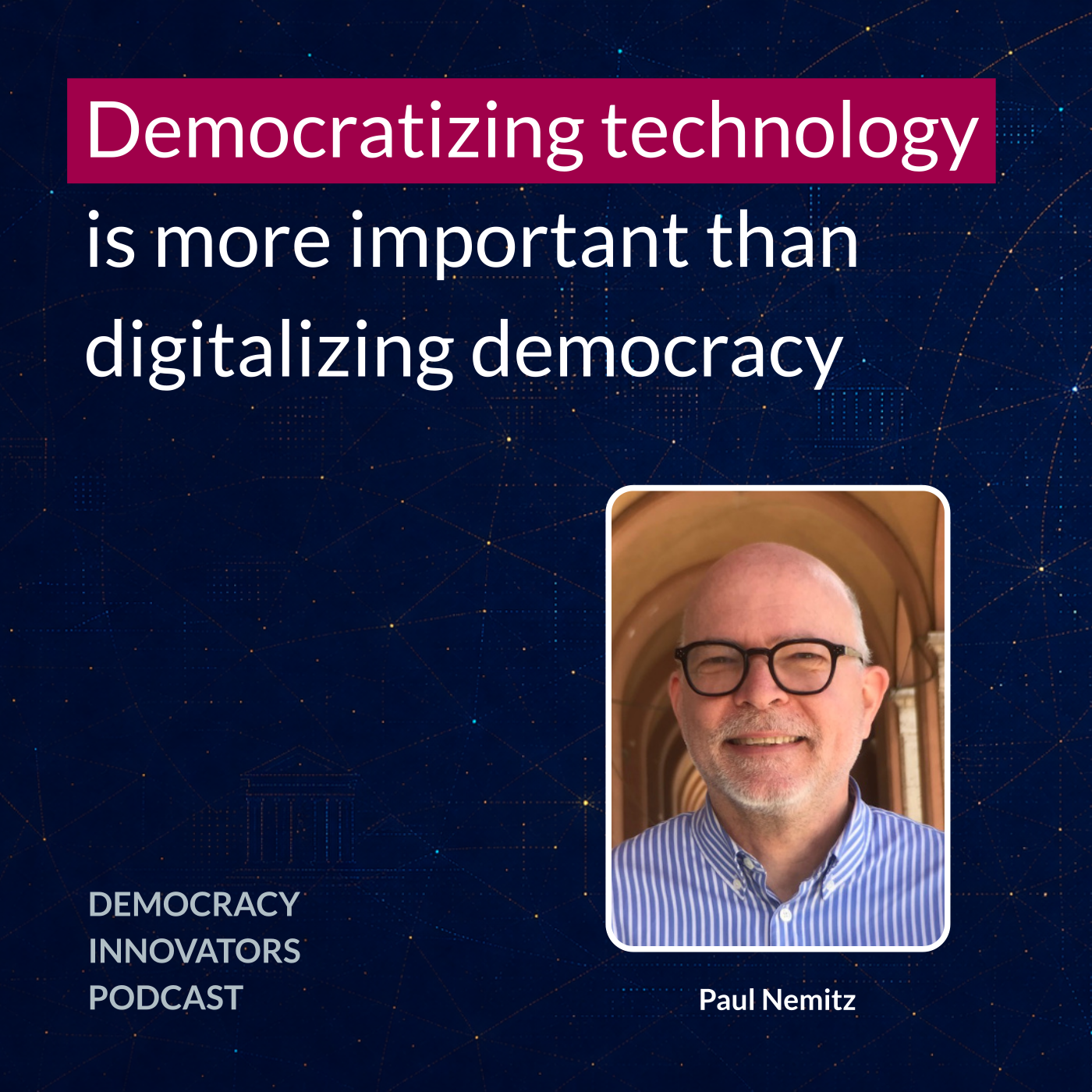
Paul Nemitz on AI’s threat to democracy, Big Tech power & decentralization
Paul Nemitz examines how concentrated control over data, infrastructure and AI can weaken democratic life, and argues that these technologies are not politically neutral. Drawing on his experience with the GDPR and other EU digital legislation, he discusses regulatory enforcement, the limits of treating code as law, and the importance of human judgment. The conversation concludes with a case for d
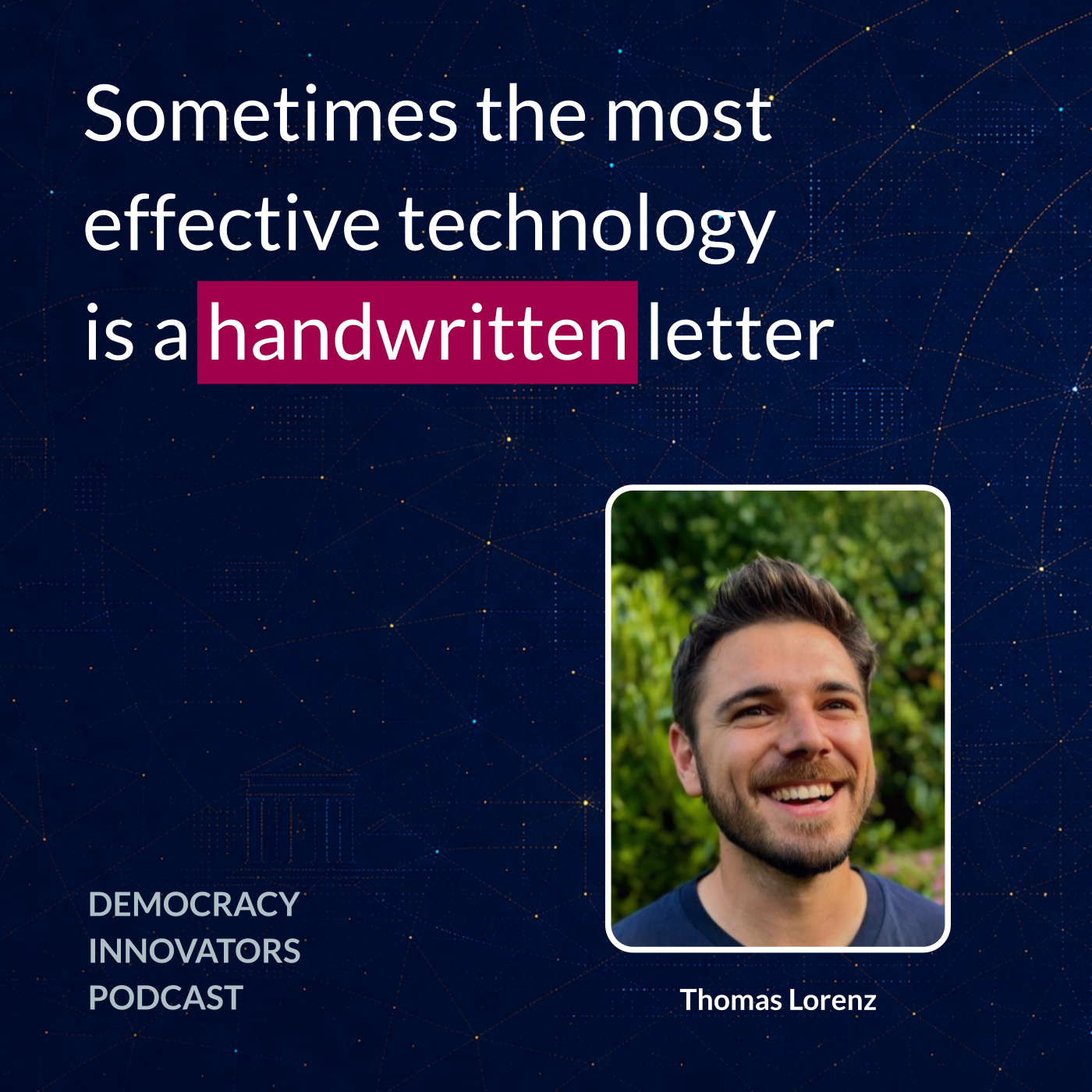
Thomas Lorenz on Brief nach Berlin, lowering barriers to participation & open-source civic tech
Thomas Lorenz discusses Brief nach Berlin, an open-source, AI-assisted tool that helps citizens identify the appropriate political representative, draft a letter about a local concern and then copy it by hand. The conversation uses this practical project to examine how civic technology can lower barriers to participation while preserving meaningful human action. It also considers AI’s risks for pr
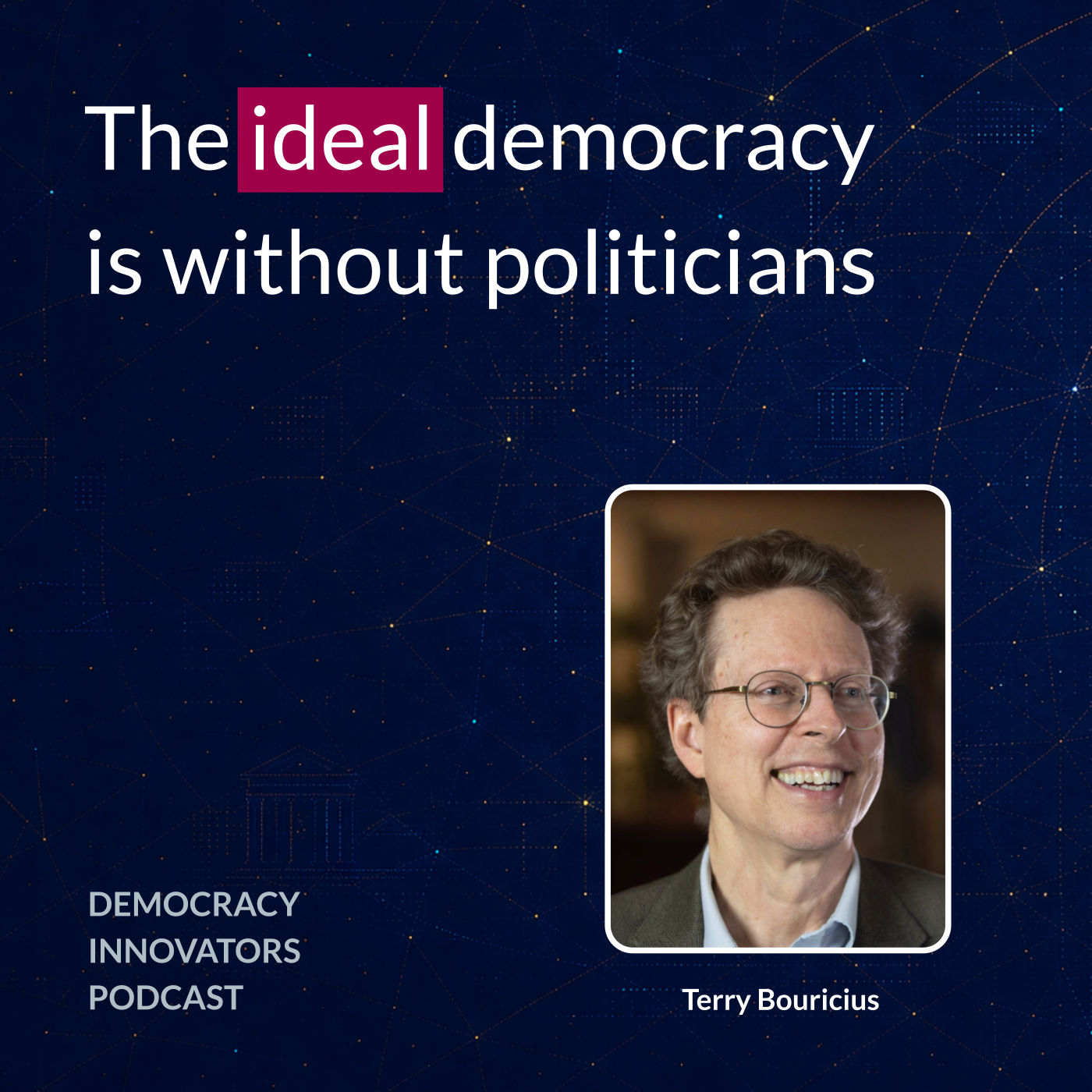
Terry Bouricius on multi-body sortition and redesigning democratic lawmaking
Terry Bouricius is a former Vermont lawmaker who has spent decades working on democracy reform, now focused on sortition — the use of random selection to form representative citizens’ bodies. His experience as both a politician and reformer led him to question whether elections are actually democratic. In this episode, he explains why he sees elected legislatures as inherently oligarchic, drawing
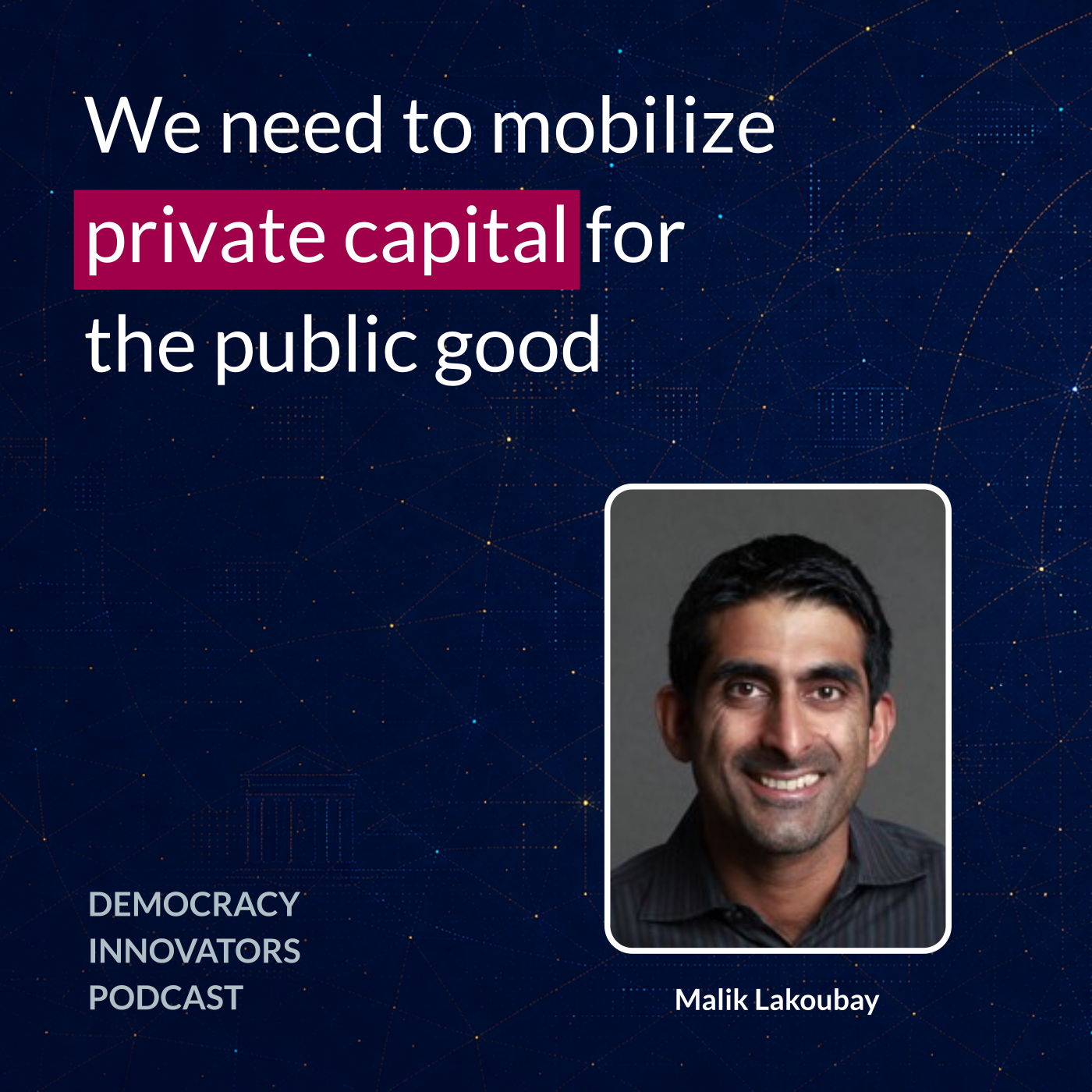
Malik Lakoubay from Dark Matter Labs on financing civic infrastructure and democratic innovation
Malik Lakoubay is a system builder and co-runs the Expanding Civilizational Optionality initiative at Dark Matter Labs, working at the intersection of civic infrastructure, finance, technology, and democratic renewal. In this episode, he explores how technology can enable new forms of participation and collective decision-making, from quadratic voting to community sensing in Mumbai. The conversati
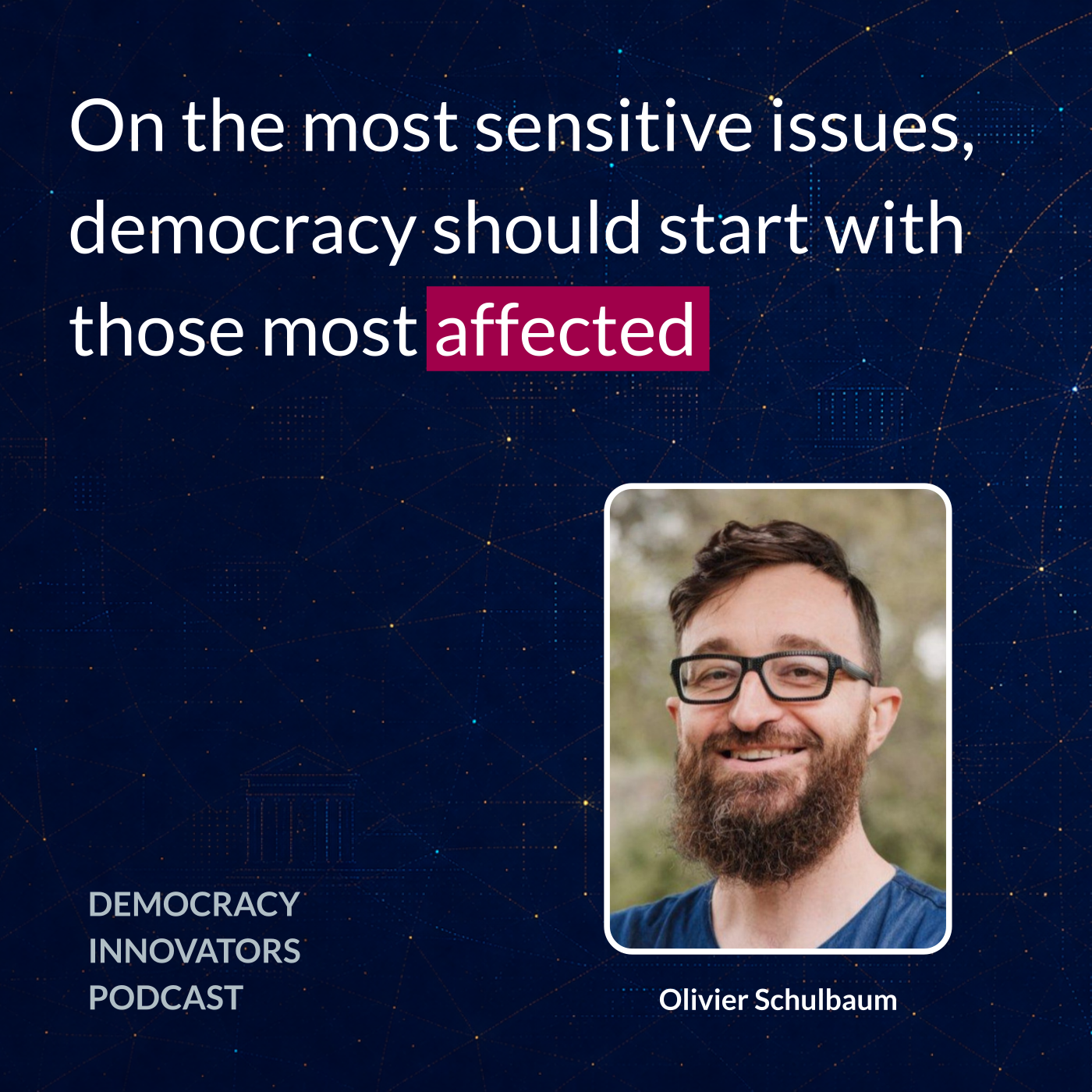
Olivier Schulbaum on democracy after the platform and the struggle for democratic infrastructures
Olivier Schulbaum co-founded Platoniq, a foundation at the intersection of participation, civic technology, culture, social innovation and democratic experimentation. He explains why citizen assemblies on sensitive issues should begin with those most affected, allowing them to shape the agenda before experts frame the question. The conversation also examines how institutional “technification” can
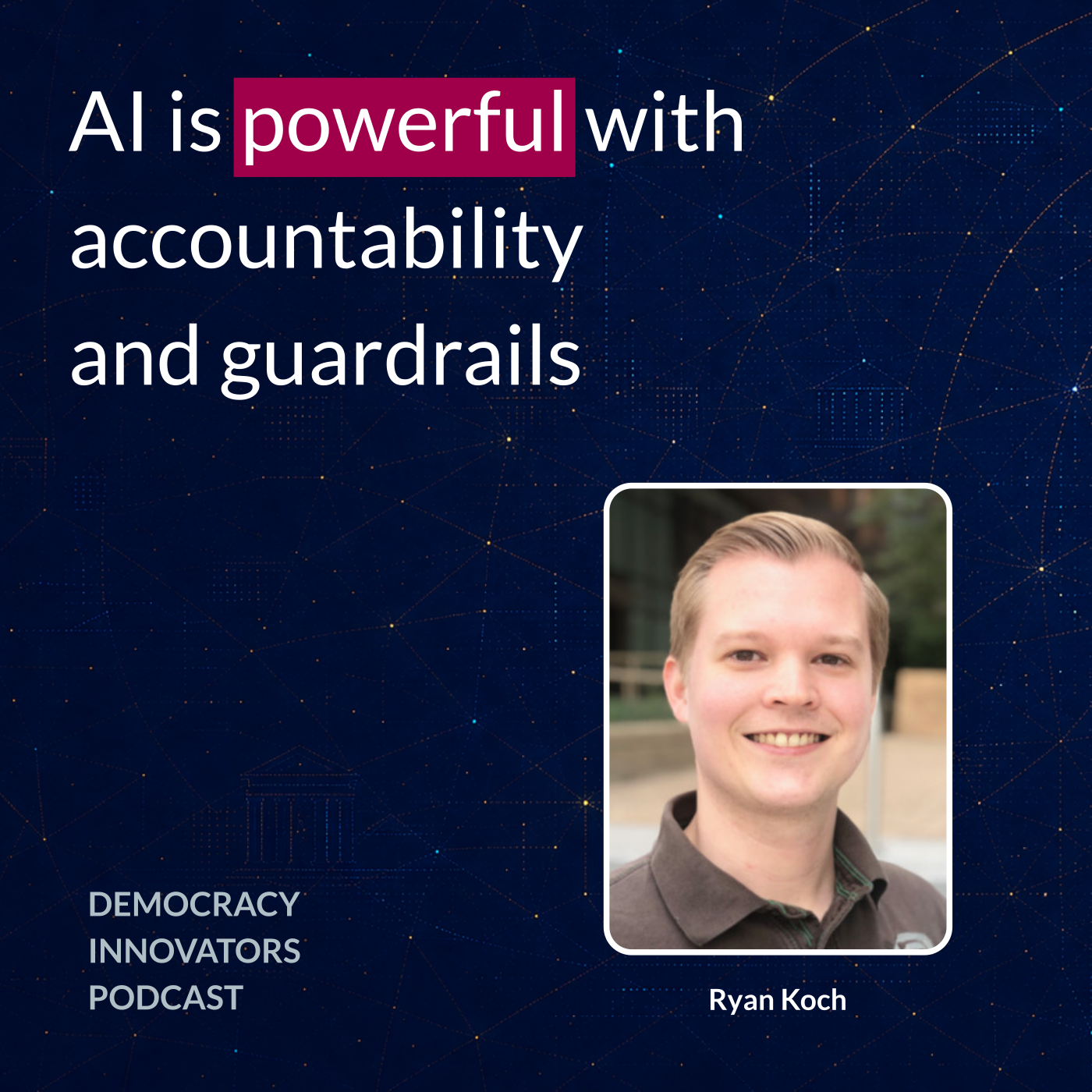
Ryan Koch from the Civic Tech Chat podcast on civic innovation and effective use of AI
Ryan Koch, host of Civic Tech Chat, joins Alessandro Oppo for a cross-podcast conversation about the evolution of civic tech and the growing role of AI in public-interest technology. They discuss volunteer civic-tech communities, faster prototyping, public data, and the boundaries between civic tech, gov tech, and public-interest tech.
The conversation also examines deterministic systems, AI guard
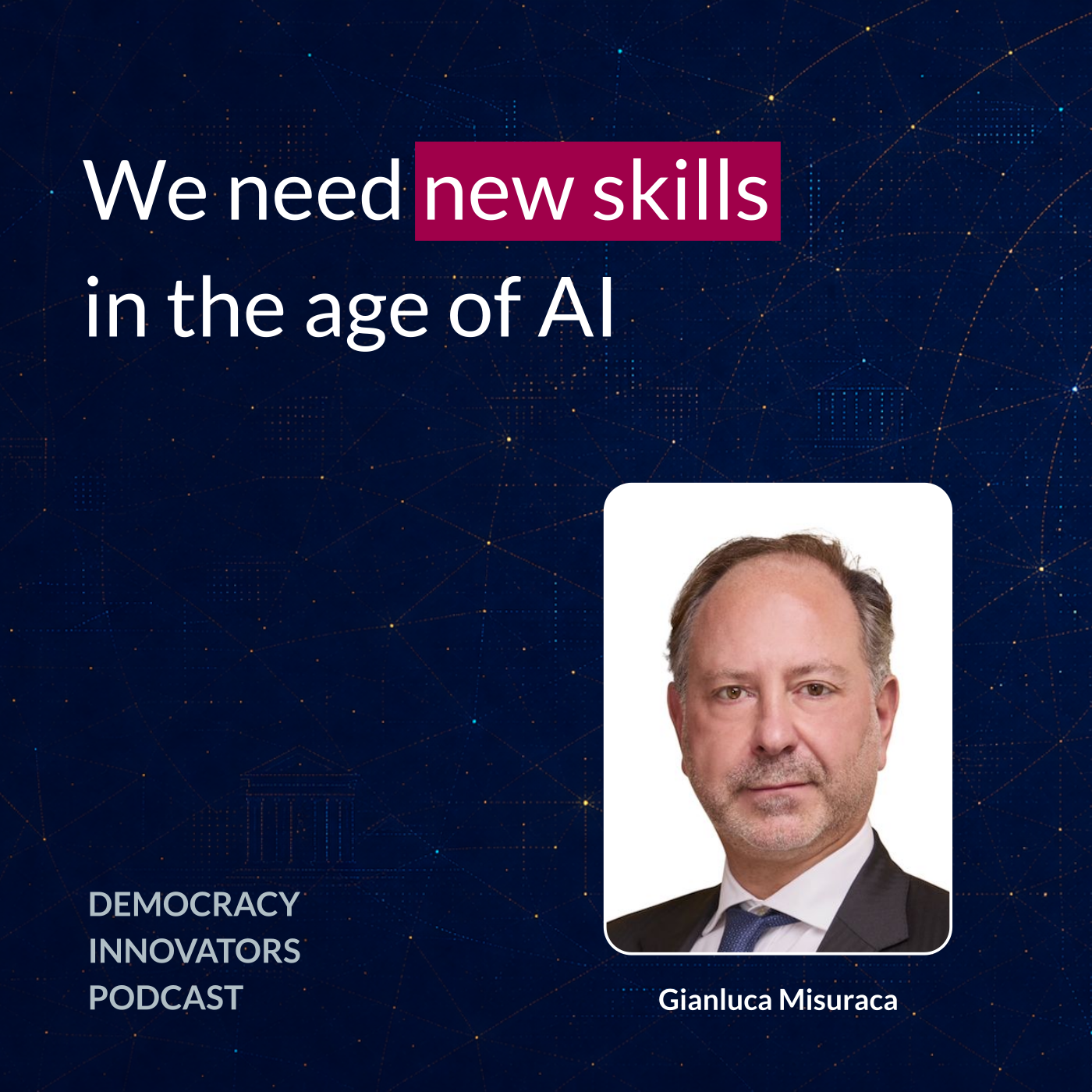
Gianluca Misuraca from Inspiring Futures on AI in the public sector
Gianluca Misuraca of Inspiring Futures Europe, coordinator of the European Union AI Skills Academy, discusses how foresight can help societies shape technological change. He explains why democratic control of AI depends on digital sovereignty, public-sector skills, interoperability, better procurement, and meaningful citizen participation.
If you enjoy our podcast, please consider making a donatio
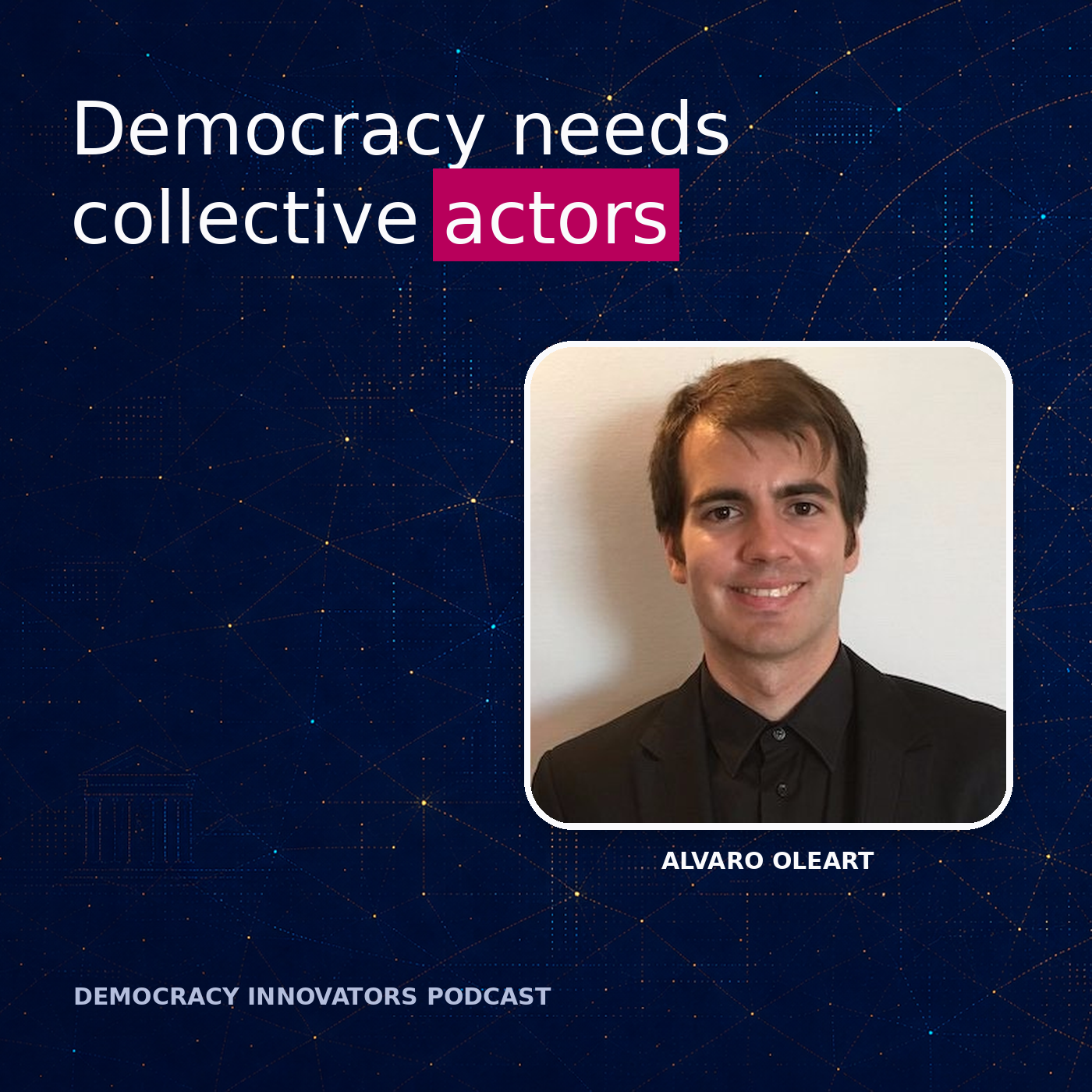
Alvaro Oleart on the instrumentalisation of EU participation processes & limits of AI for democracy
Alvaro Oleart is an academic researcher based in Brussels at the Université Libre de Bruxelles. His work focuses on social movements, EU participatory practices, democratic innovation, and the political economy of technology. In this conversation, he offers a critical perspective on citizen assemblies, arguing that they can depoliticize democracy when they bypass collective actors such as trade un
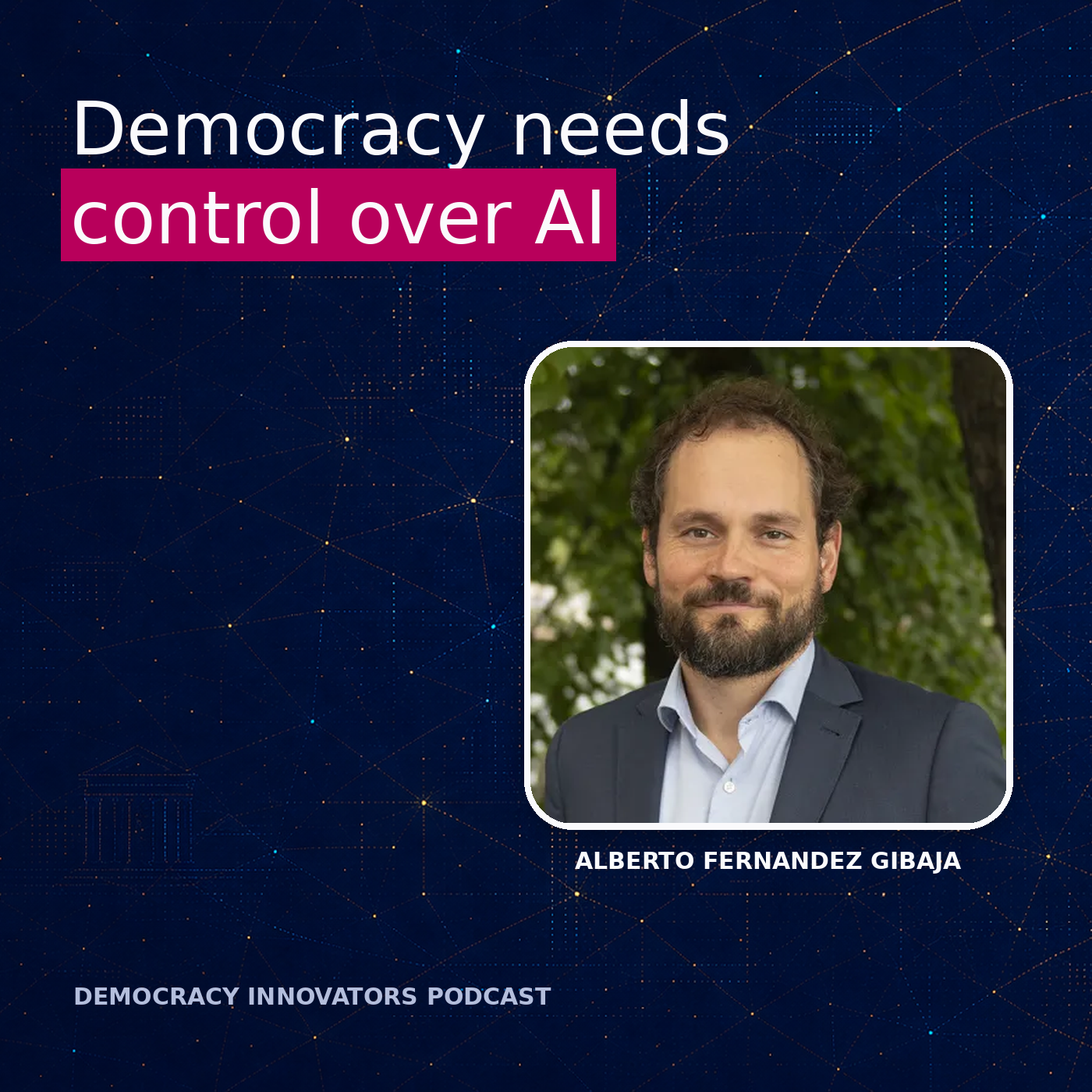
Alberto Fernandez Gibaja from International IDEA on Technology and Democracy
Alberto Fernandez Gibaja leads International IDEA’s global work at the intersection of technology and democracy. In this conversation, he discusses how the early optimism around digital technology changed after Brexit, Trump, and the rise of disinformation, why tech companies can be as powerful as medium-sized countries, and why democratic societies need more control over data, infrastructure, fou
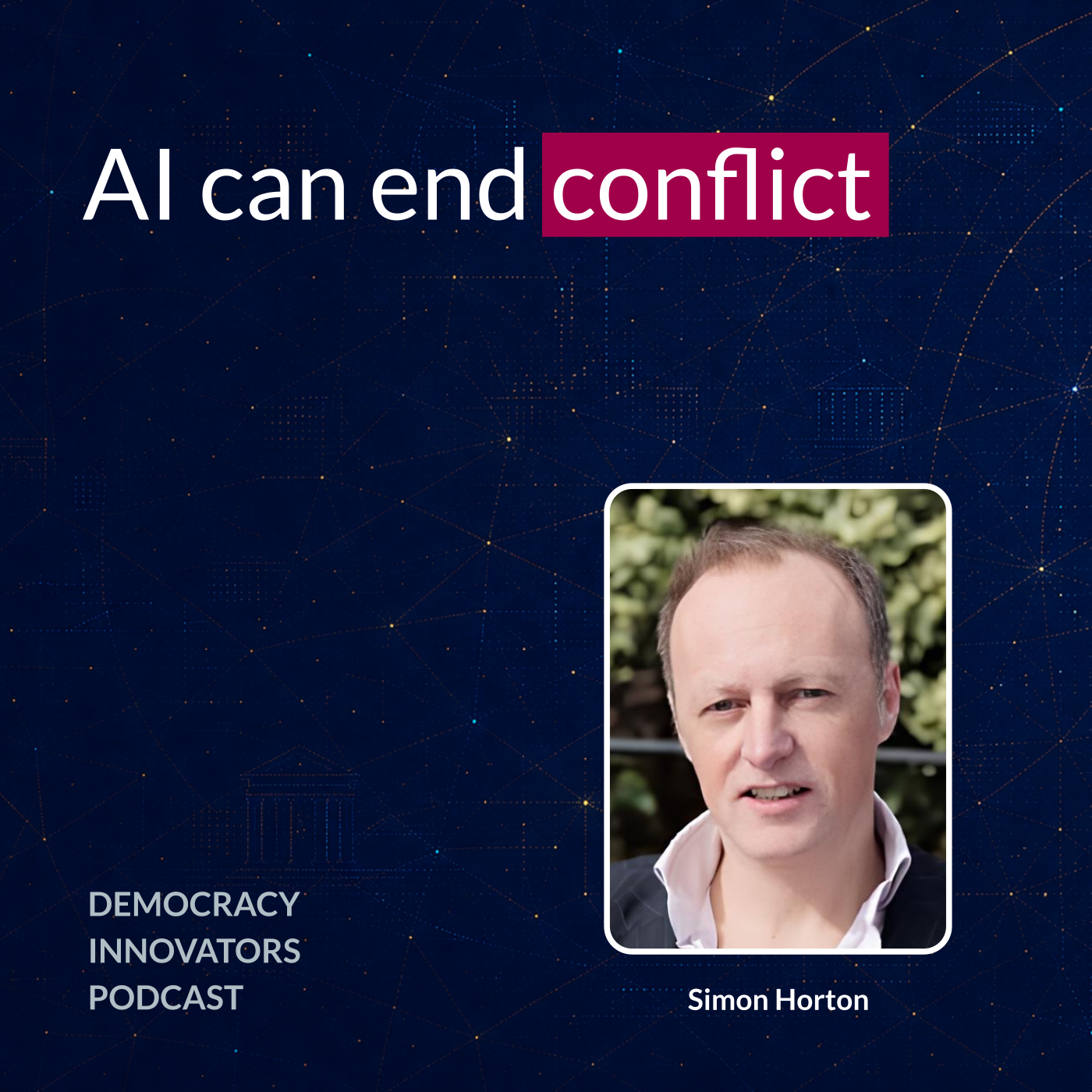
Simon Horton on Negotiation, Conflict Resolution, and How AI Can Help End War
Simon Horton is a negotiation expert, author, and lecturer who has taught negotiation for more than 20 years. In this conversation, he explains why the best negotiators do not treat negotiation as an arm wrestle, but as a collaborative problem-solving process. We discuss political negotiations, peace processes, citizen mediation, and how AI could support better conflict resolution.
If you enjoy ou
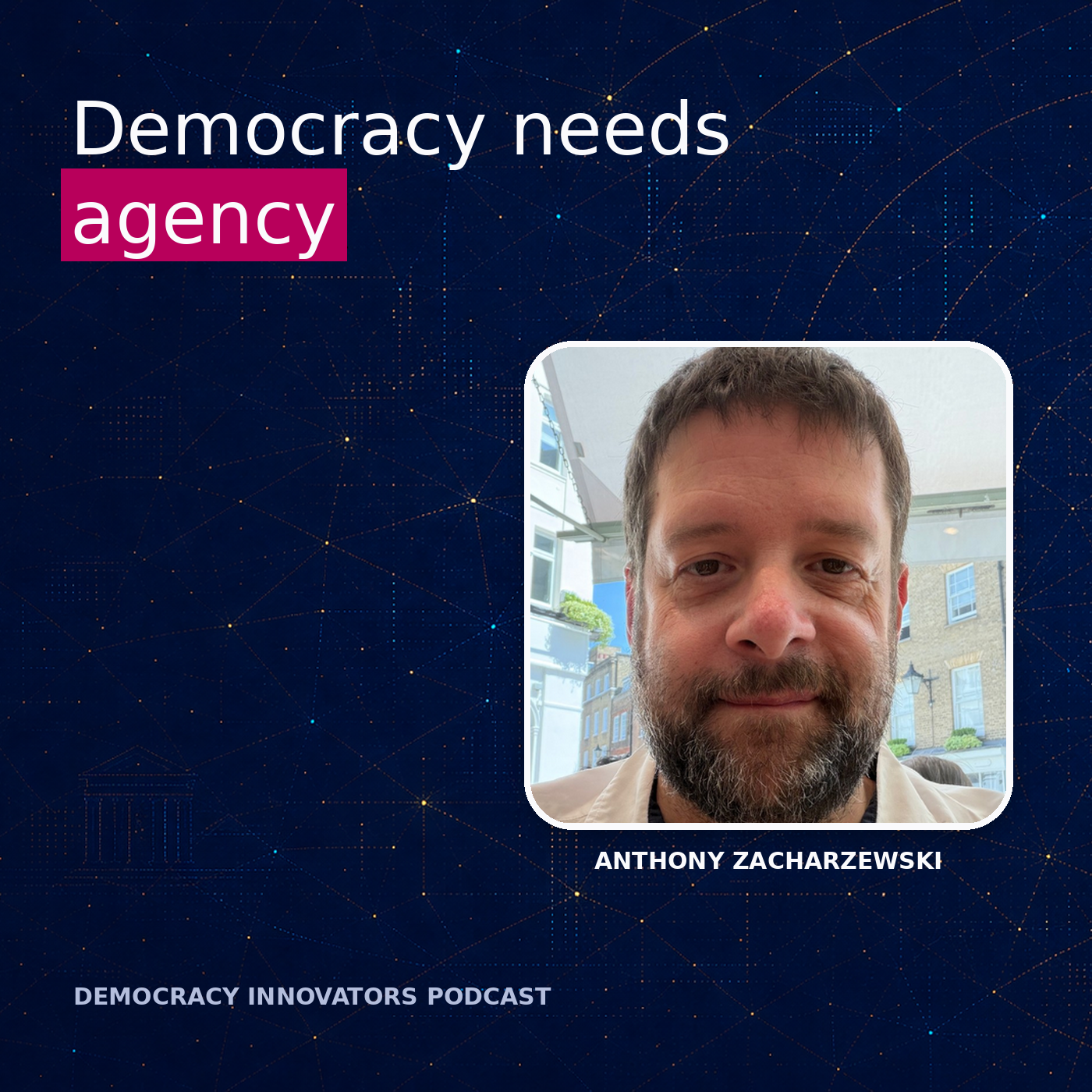
Anthony Zacharzewski from Democratic Society on democratic infrastructure, participation and power
Anthony Zacharzewski is the founder of Democratic Society, an organization working across Europe to build democratic infrastructure and improve participation in government. In this conversation, he discusses how participation can become part of institutional design, why democracy must engage seriously with power, and how digitalization and the agentic state could reshape the relationship between c
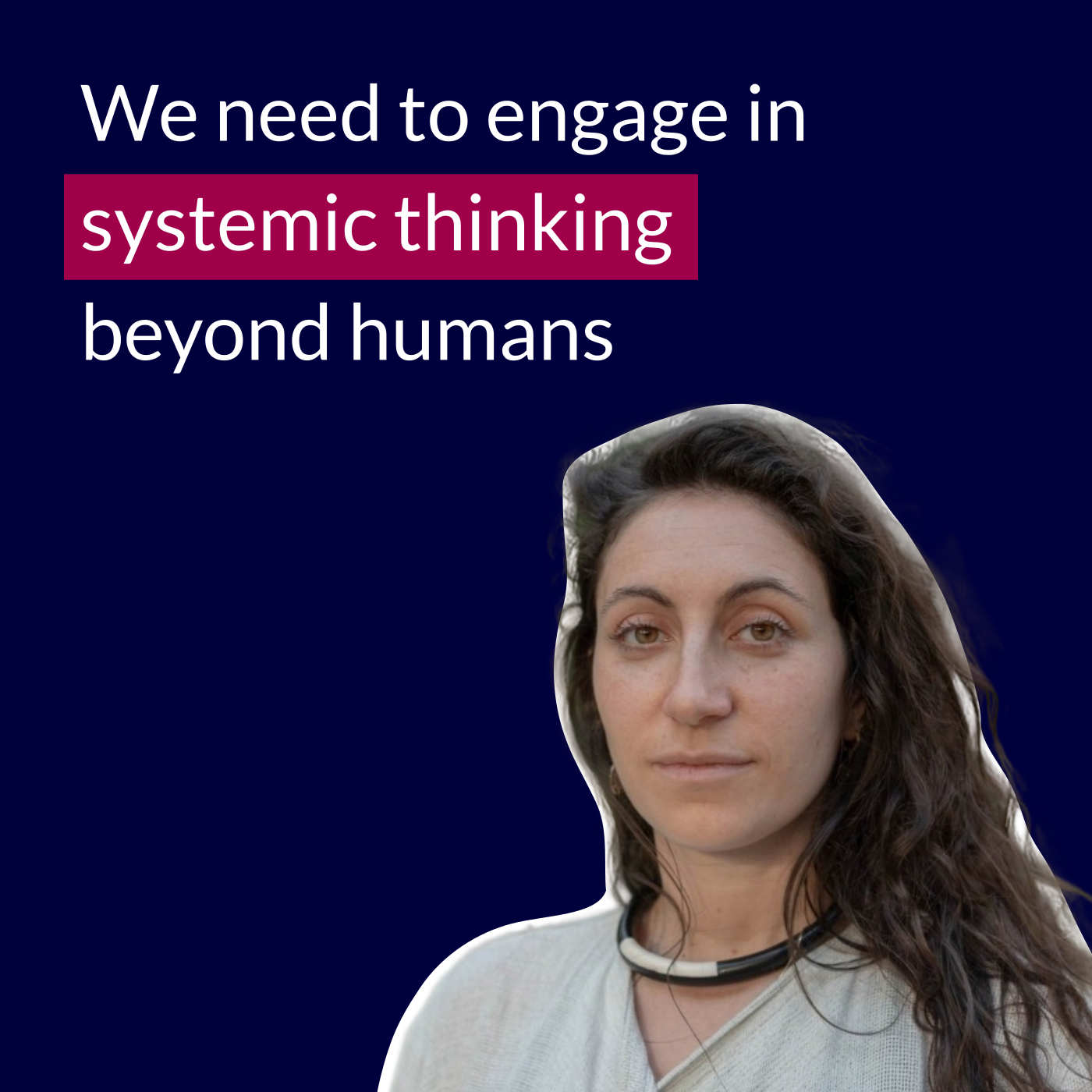
Alice Casiraghi on designing regenerative systems, public services, and democratic participation
Alice Casiraghi is a systemic designer working on sustainability, circular economy, regenerative systems, and public services. She is a European Climate Pact Ambassador, teaches at Politecnico di Milano and created Climate Cards to educate on environmental impacts. Through her systemic approach, she gives new perspectives on participation of citizens and beyond. In the interview we talked about:
I
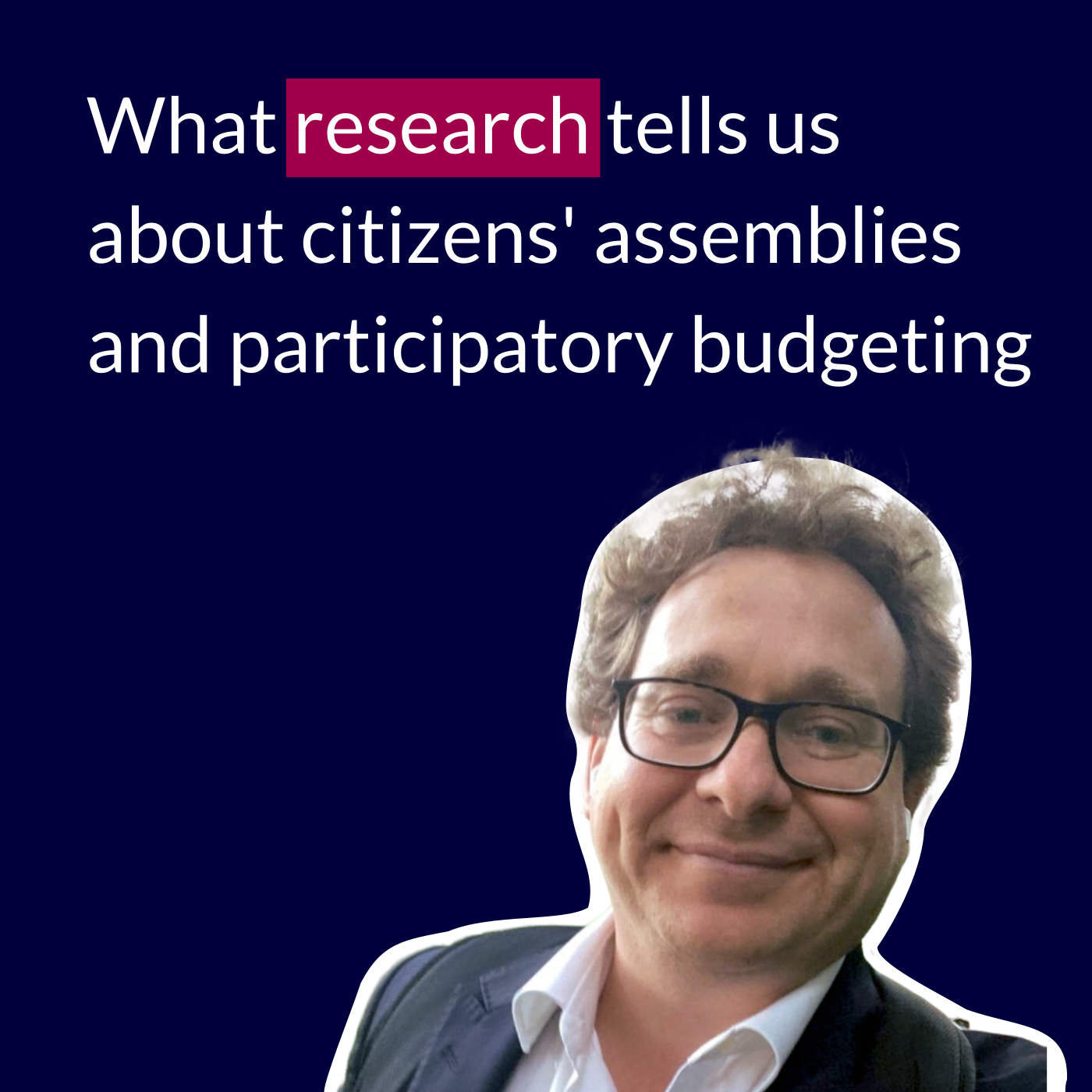
Paolo Spada on participatory budgeting, citizen assemblies, and scaling democratic innovation
Paolo Spada is a political scientist at the University of Southampton working on participatory budgeting, citizen assemblies, and democratic innovation. In this episode, we talk about feedback loops, scaling participation, political parties, online deliberation, and why democratic innovation needs stronger critique as it becomes more established. A central idea in the conversation is that scaling
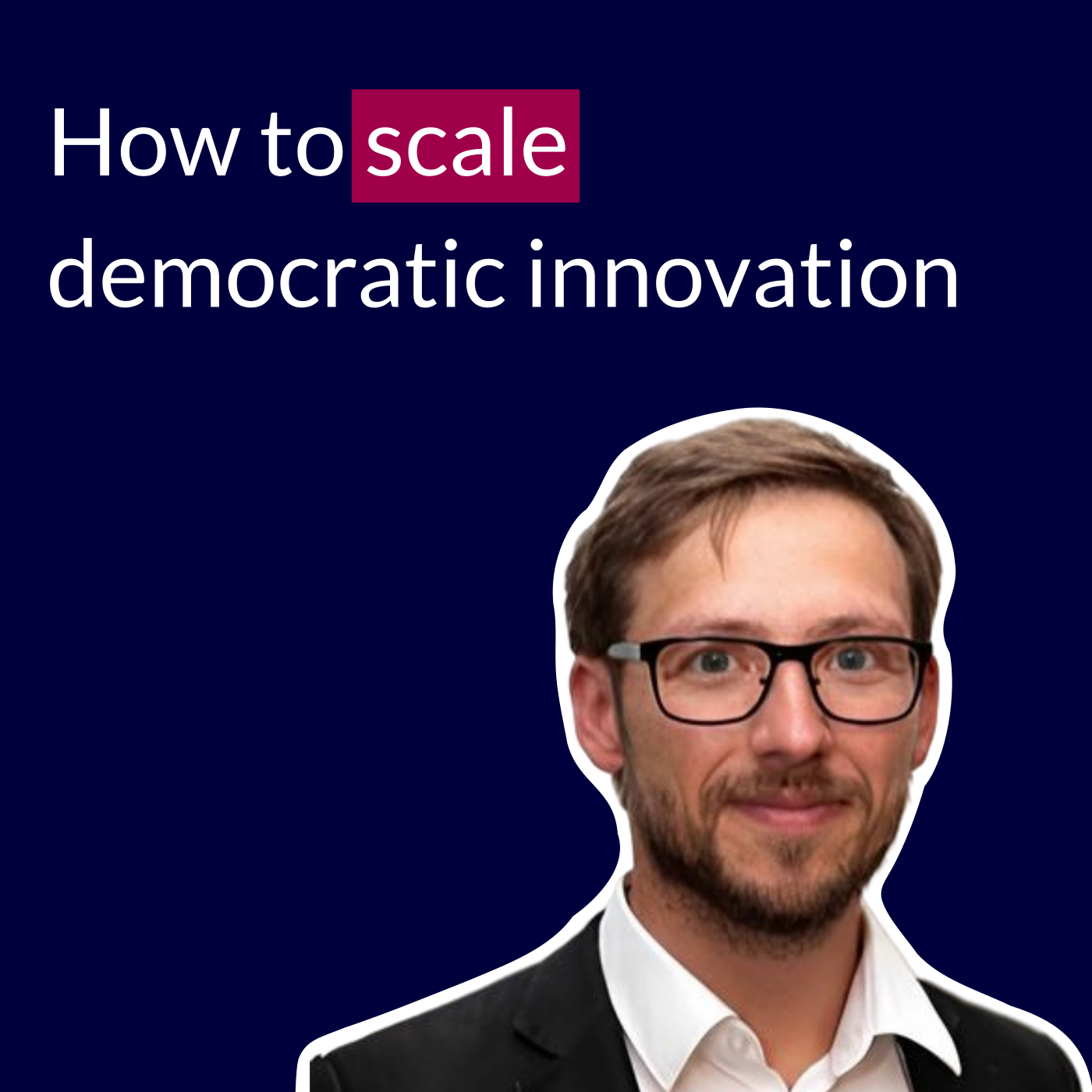
Antoine Vergne from Missions Publiques on scaling deliberative decision-making and random selection
Antoine Vergne is the co-director of Missions Publiques and the co-author of the ScaleDem Analytical Framework. His passion for innovating democratic processes is reflected in his academic background in political science and his nearly 15 years at Missions Publiques.
If you enjoy our podcast, please consider making a donation. It really helps us to sustain the podcast.
PayPal: https://www.paypal.
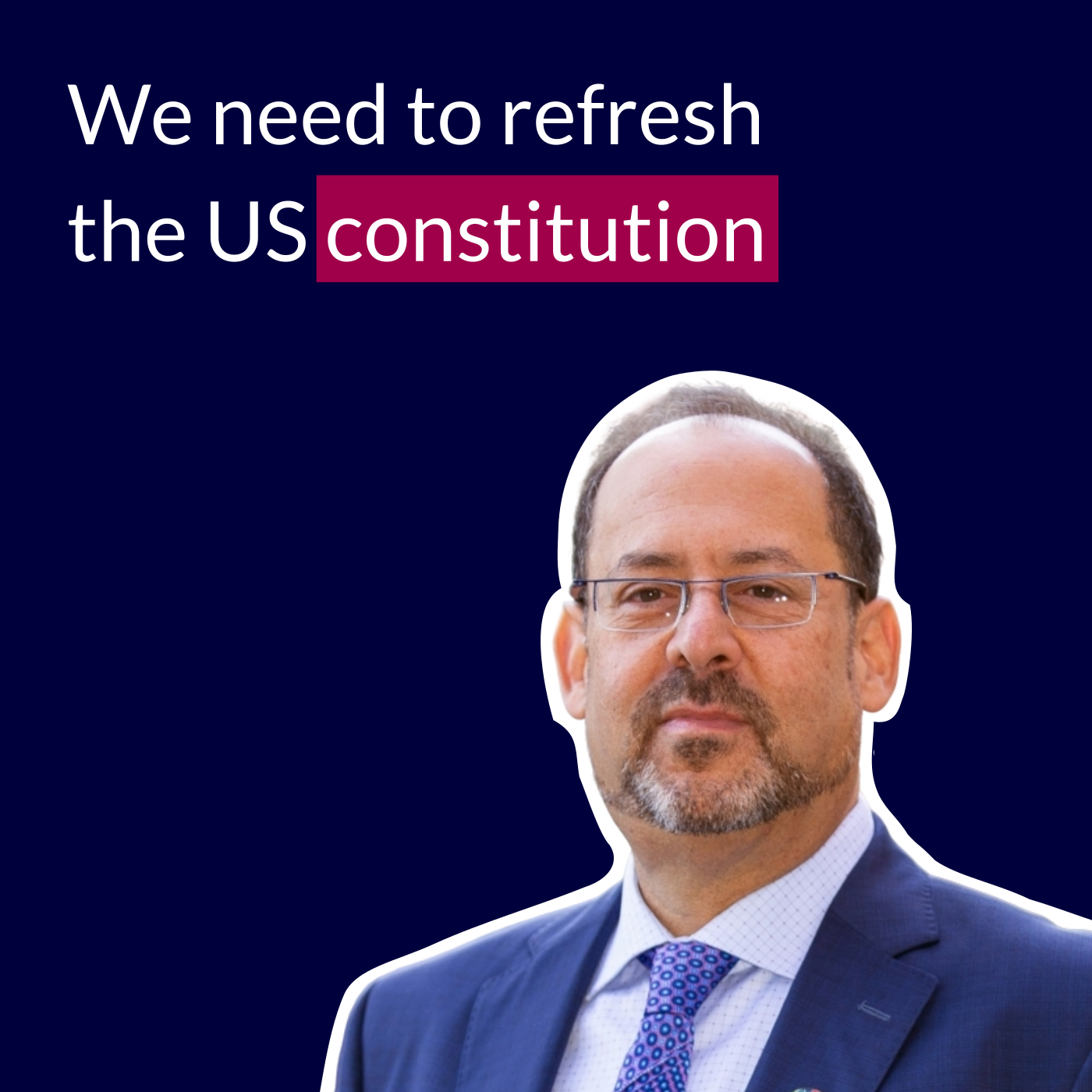
Paul Zeitz about permanent citizens' assemblies in the US and using technology to scale it
Paul Zeitz is an author and advocate for global justice and human rights, among other things. With over 35 years of experience and several publications he is addressing systemic challenges. Especially in his book “Hit Refresh on the U.S. Constitution”, he calls for more deliberation in our democracies.
If you enjoy our podcast, please consider making a donation. It really helps us to sustain the p

Ben Nelson on the Minerva Project, reforming higher education and its role for democracy
Ben Nelson is founder and CEO of the Minerva Project and founder of the Minerva University. His mission is to reinvent higher education by utilising a systematic and evidence-based approach to learning. Drawing on his extensive entrepreneurial experience and keen awareness of societal issues, he offers valuable insights into the relationship between education and democracy, as well as the steps re
Cecile Green & Seth Frey on the Commoning Standard and the role of self-governance for democracy
Cecile Green is a social entrepreneur and Seth Frey is a computational social scientist. They share a mission to enable healthy self-organization and improve relationships in society, which naturally impacts democracy. Together, they work on the Commoning Standard, which unites stakeholders from research and practice to develop standards for effective self-governance.
If you enjoy our podcast, ple
Sylvain Le Bon from Startin'blox about Data Spaces, Democracy and Interoperability
Sylvain Le Bon is co-founder of Startin’blox, a company that helps building data spaces. Drawing on his extensive entrepreneurial experience, Sylvain provides an overview of data spaces and their role in establishing the foundation for digital democracy.
If you enjoy our podcast, please consider making a donation. It really helps us to sustain the podcast.
PayPal: https://www.paypal.com/ncp/payme
Jorge Lagarto about LabX and human centric design in the public sector
Jorge Lagarto is director at LabX, a center for public sector innovation. With many years of experience in the field, Jorge provides clear guidance on making services more citizen-friendly by integrating their needs and expectations. We talked about:
Public sector innovation and examples with the LabX
The 3 steps of public service innovation
Workflow re-design vs. technology
AI in public service
Wietse van Ransbeeck about Go Vocal and how to integrate participation into governance
.Wietse van Ransbeeck is the CEO and co-founder of Go Vocal, a leading platform for community engagement. The company partners with over 600 municipalities and cities worldwide to facilitate citizen dialogue and provide governments with insights for better decision-making.
If you enjoy our podcast, please consider making a donation. It really helps us to sustain the podcast.
PayPal: https://www.p
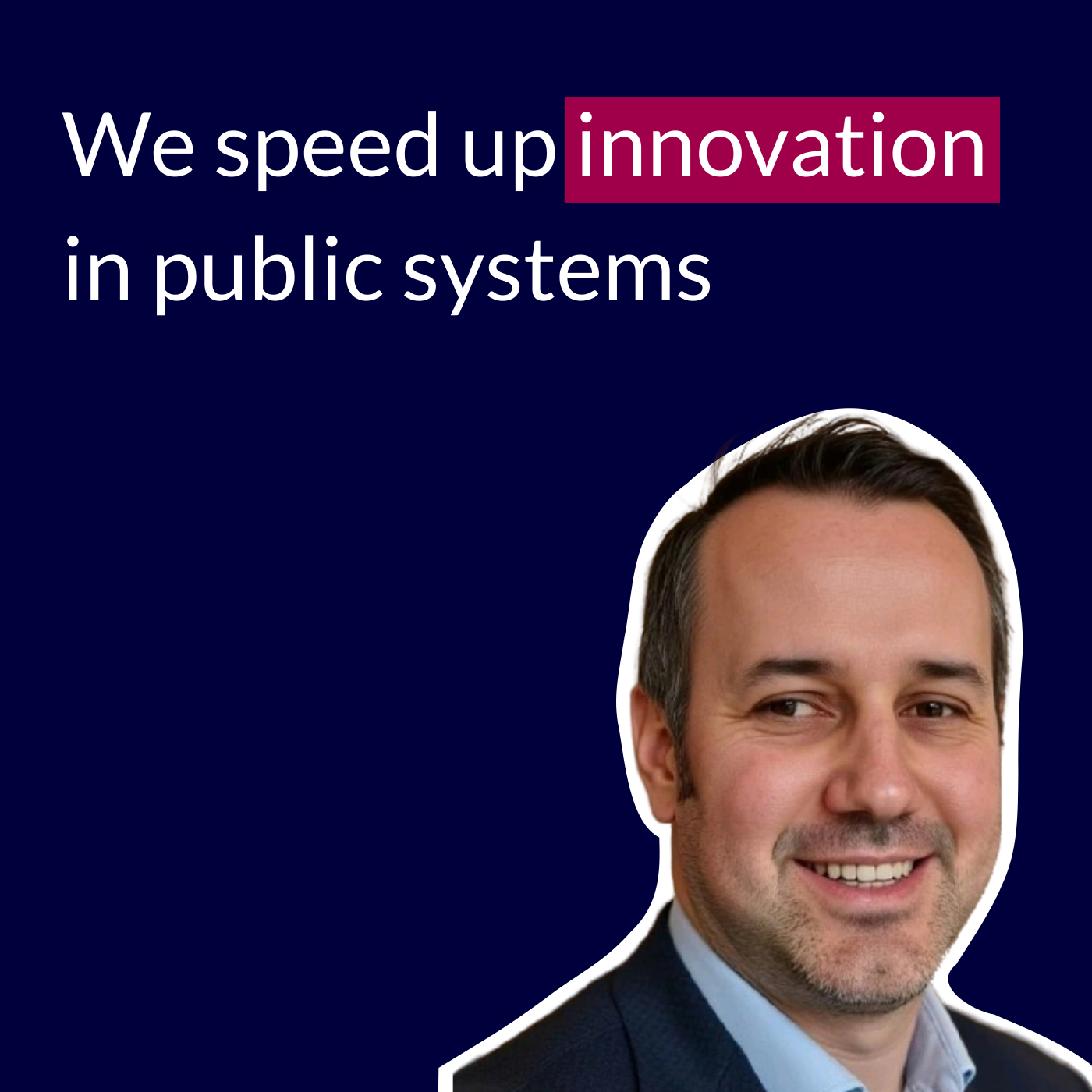
Marcello Coppa on the Feel Community, the Govtech Forum and accelerating innovation
Marcello Coppa has a background in economics and communications. He has 15 years’ experience in innovation management and consultancy. As the CEO of the Feel Community and curator of the GoVTech Forum, he is working to accelerate innovation in public systems.
If you enjoy our podcast, please consider making a donation. It really helps us to sustain the podcast.
PayPal: https://www.paypal.com/ncp/
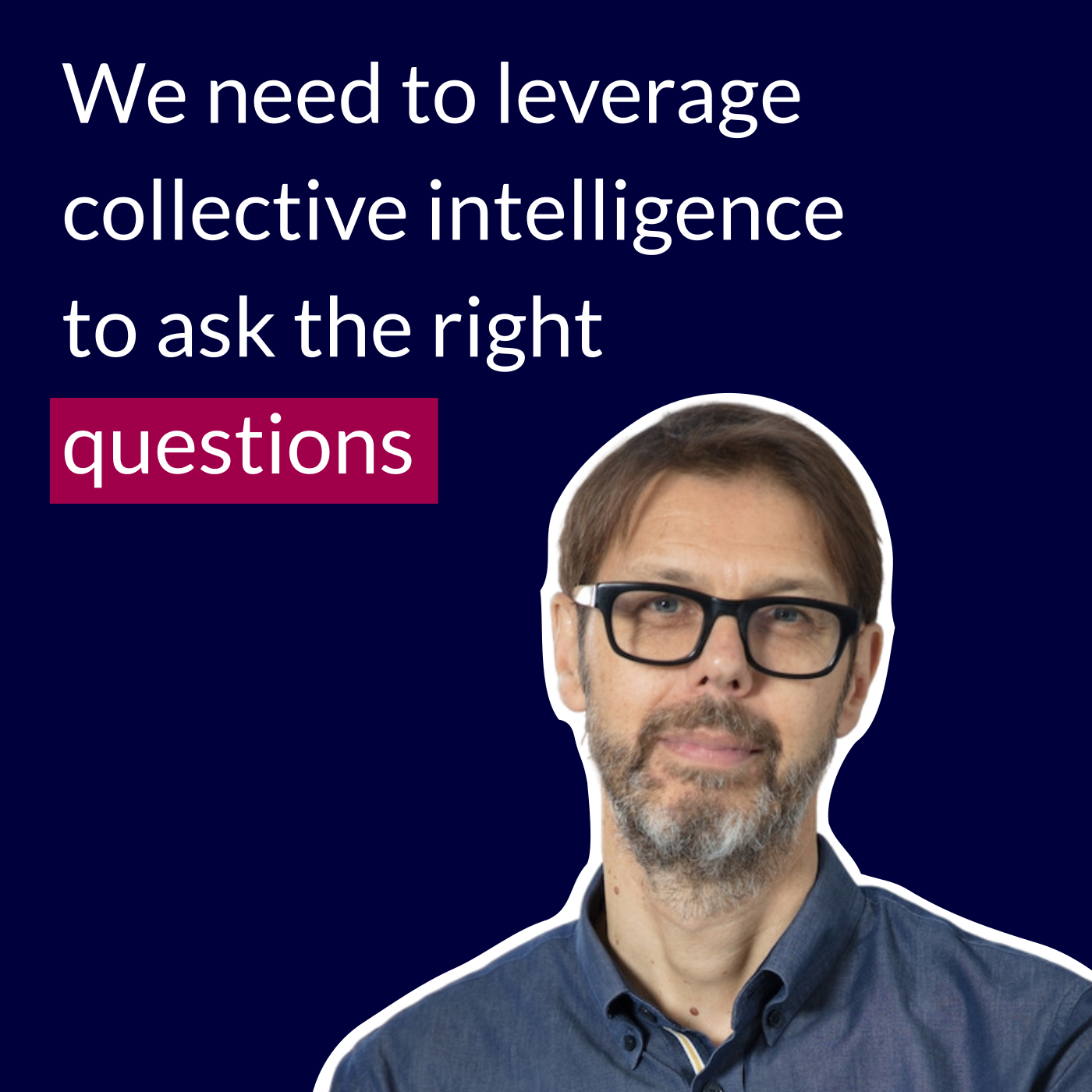
Stefaan Verhulst about governance, decision-making and how to ask good questions
.Stefaan Verhulst is Co-Founder of the Governance Laboratory (The GovLab), a research center that is focused on transforming decision making by using advances in science and technology. Stefaan shares a clear view on the most important aspects of governance.
If you enjoy our podcast, please consider making a donation. It really helps us to sustain the podcast.
PayPal: https://www.paypal.com/ncp/p

Yuting Jiang on the Agora Citizen Network, Polis and bridging-based algorithms
Yuting Jiang is CEO and co-founder of the Agora Citizen Network. The Agora tool was inspired by the well-known Polis platform. Yuting understands how modern technologies can improve democratic processes and offers interesting insights into future developments.
If you enjoy our podcast, please consider making a donation. It really helps us to sustain the podcast.
PayPal: https://www.paypal.com/ncp
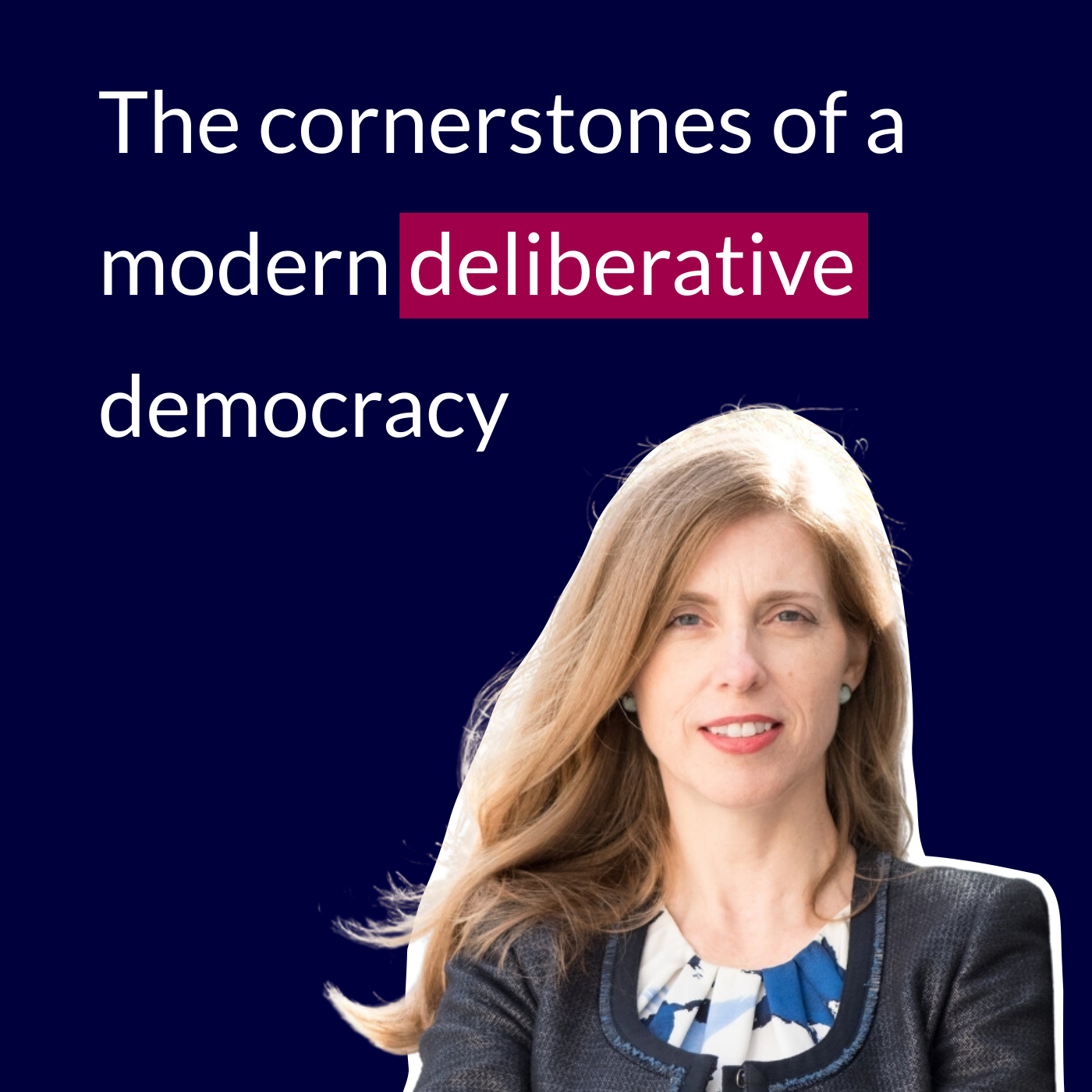
Hélène Landemore about deliberative democracy, citizens' assemblies and the future of democracy
Political theorist Helene Landemore joins us to explore what democracy could look like in the age of AI. We discuss citizens’ assemblies, sortition, digital participation, global governance, and how democratic systems can transition toward more inclusive, deliberative, and future-ready institutions.
If you enjoy our podcast, please consider making a donation. It really helps us to sustain the podc
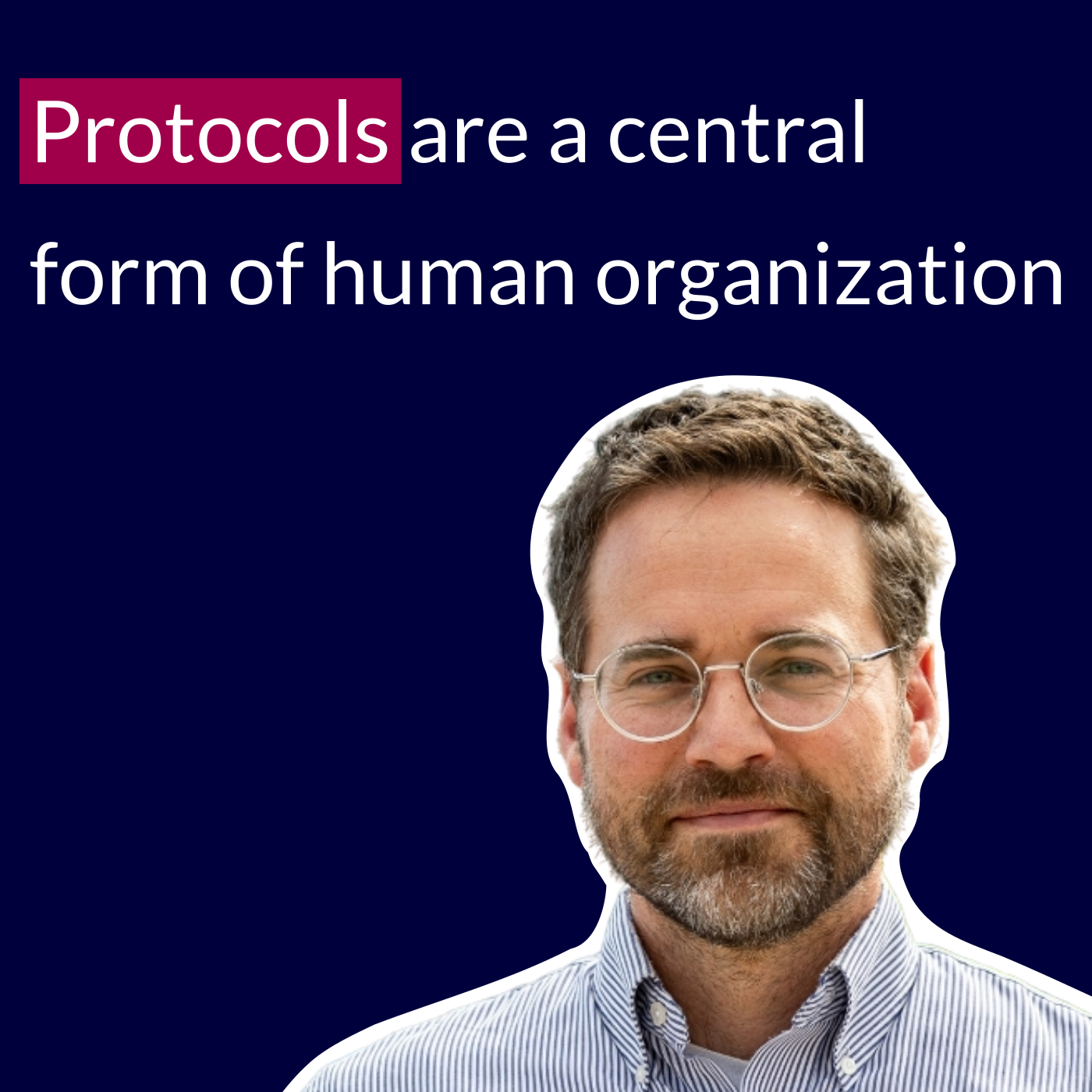
Nathan Schneider on protocols, modular politics and the governance of online communities
Nathan Schneider is an associate professor of media studies at the University of Colorado Boulder. He has worked for many years on democratic ownership and governance for online platforms, and is currently writing a book about how protocols shape human organization.
If you enjoy our podcast, please consider making a donation. It really helps us to sustain the podcast.
PayPal: https://www.paypal.c
Matt Stempeck on the Civic Tech Field Guide and why projects succeed or fail
Matt Stempeck is founder and curator of the Civic Tech Field Guide, which lists civic tech projects from all over the world. With 20 years experience in civic tech, Matt has seen projects passing and persisting in this challenging field. He has a profound understanding of what makes a project successful and what makes it fail.
If you enjoy our podcast, please consider making a donation. It really
Samuel Vance-Law on how digital transformation gives space to governance innovation
Samuel Vance-Law is Senior Researcher at the Decentralization Research Center and excited about governance and blockchain. He sees technology, especially blockchain, as an opportunity for governance innovation that can serve as a sandbox for progress also in our political democracies. In this episode we talked about:
🤖 Why governance is not sexy
🔢 Governance in DAOs and the blockchain space
📕 How
Cross-podcast dialogue on governance, democracy, and institutional innovation
In a joint live stream between the Democracy Innovators Podcast and Governance Futures Podcast we wrapped up our learnings from last year and gave a perspective on the next year. We examined the evolving relationship between democratic systems, digitally networked communities, and emerging governance architectures. We summarized the technological developments in Web3 and AI, as well as challenges
Simone Maria Parazzoli about the Agentic State and how algorithms can transform governments
Simone Maria Parazzoli is part of the Agentic State project and previously worked for the OECD and the ISI Foundation. His experience on the digital transformation of governments gives interesting insights. In this episode we talked about the Agentic State, an attempt to use technologies, especially AI, to provide governments with better services and faster decisions.
If you enjoy our podcast, ple
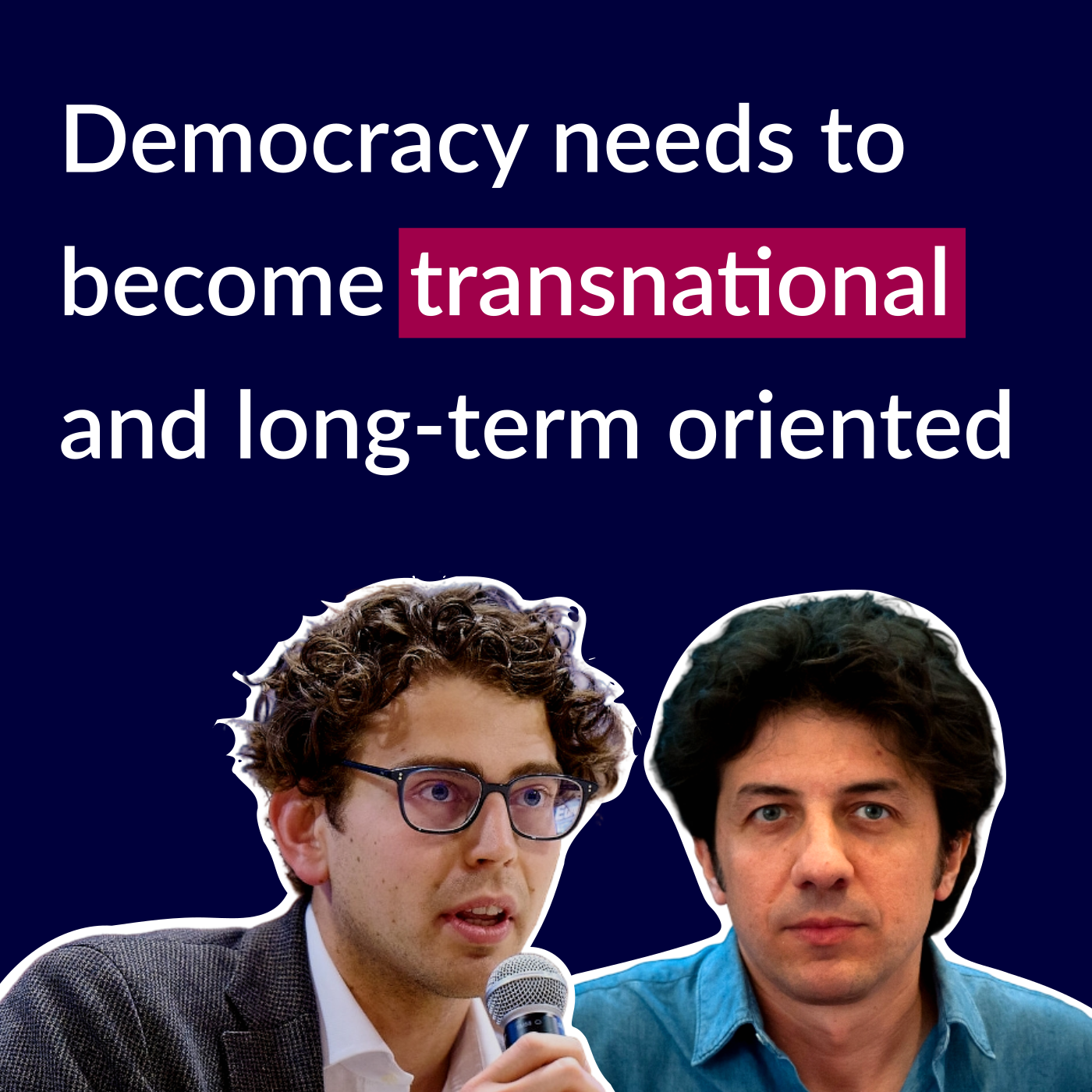
Marco Cappato & Francesco Vecchi discuss how AI can empower democracy
Marco Cappato and Francesco Vecchi from the pan-European Eumans movement engage for a more transnational democracy and a more long-term orientation. In this episode we talked about the Civic AI initiative as part of the Eumans movement.
If you enjoy our podcast, please consider making a donation. It really helps us to sustain the podcast.
PayPal: https://www.paypal.com/ncp/payment/7KCR9XBSCQVMG
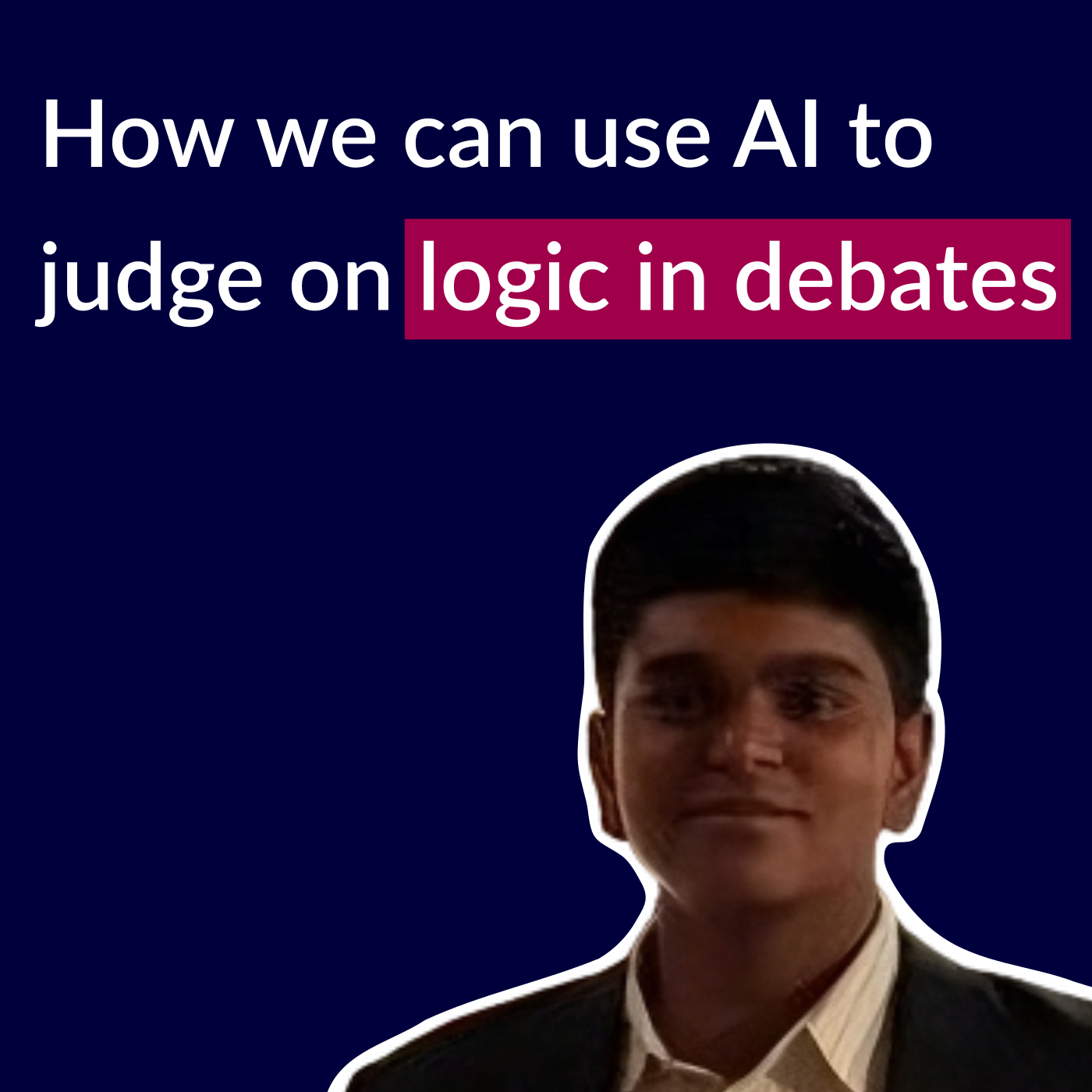
Vir Sanghavi about Tilt.vote and how it can improve debates in democracies
Vir introduces Tilt.vote, a platform that uses AI to rank comments based on a “Logic Score” rather than just popularity or rage bait. We discuss how the AI detects fallacies, the future of AI agents in the workforce, and how civic tech can help save democracy from polarization.
If you enjoy our podcast, please consider making a donation. It really helps us to sustain the podcast.
PayPal: https://
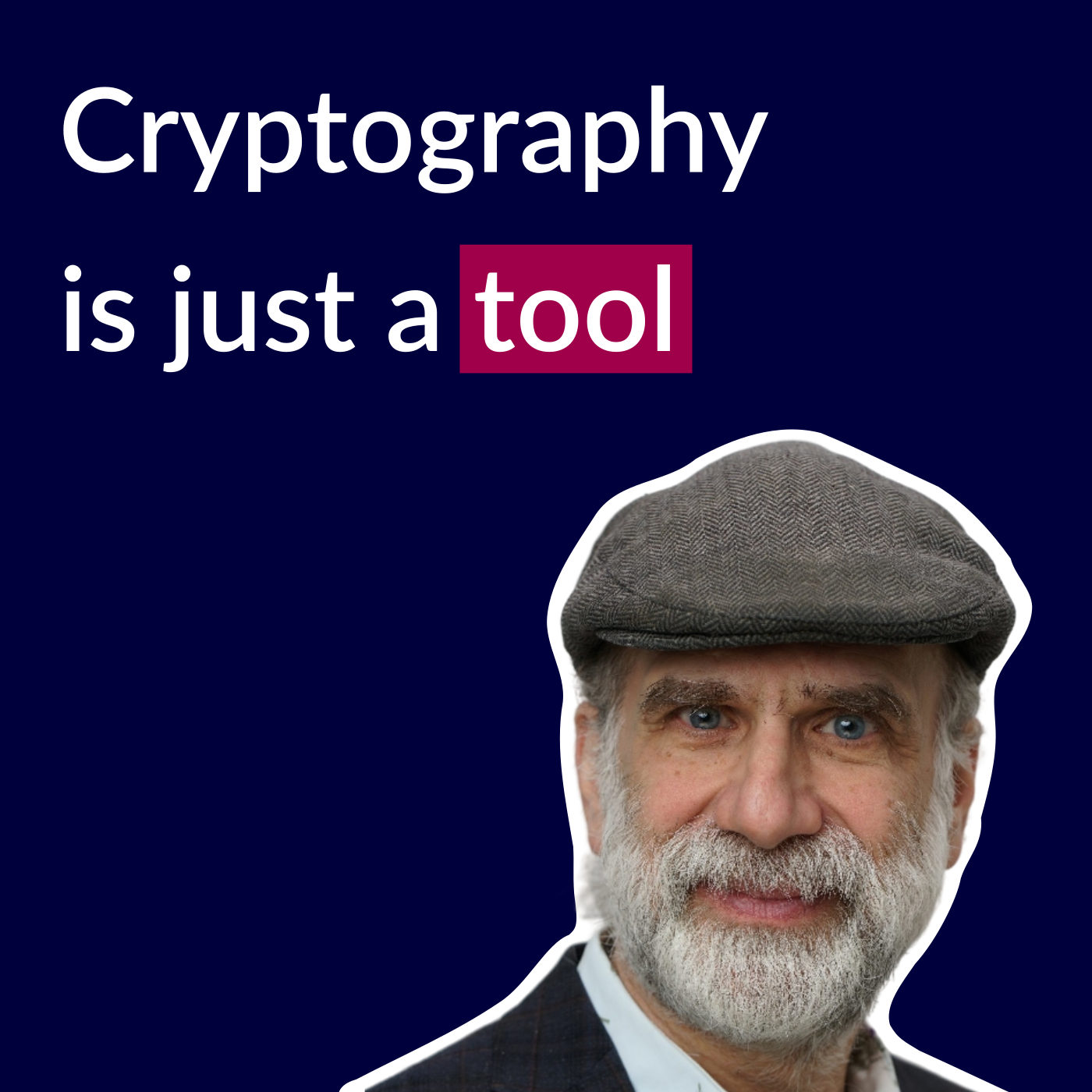
Bruce Schneier on democracy in the context of cryptography, security, e-voting, AI, power and trust
.Bruce Schneier is a well known cryptographer, security expert, and privacy advocate who deeply cares about society. Recent books like “A Hacker’s Mind” or “Rewiring Democracy” reflect his engagement in finding new perspectives of how democracy can be designed in better ways.
We had a connection issue which caused a cut within the recording.
If you enjoy our podcast, please consider making a donat
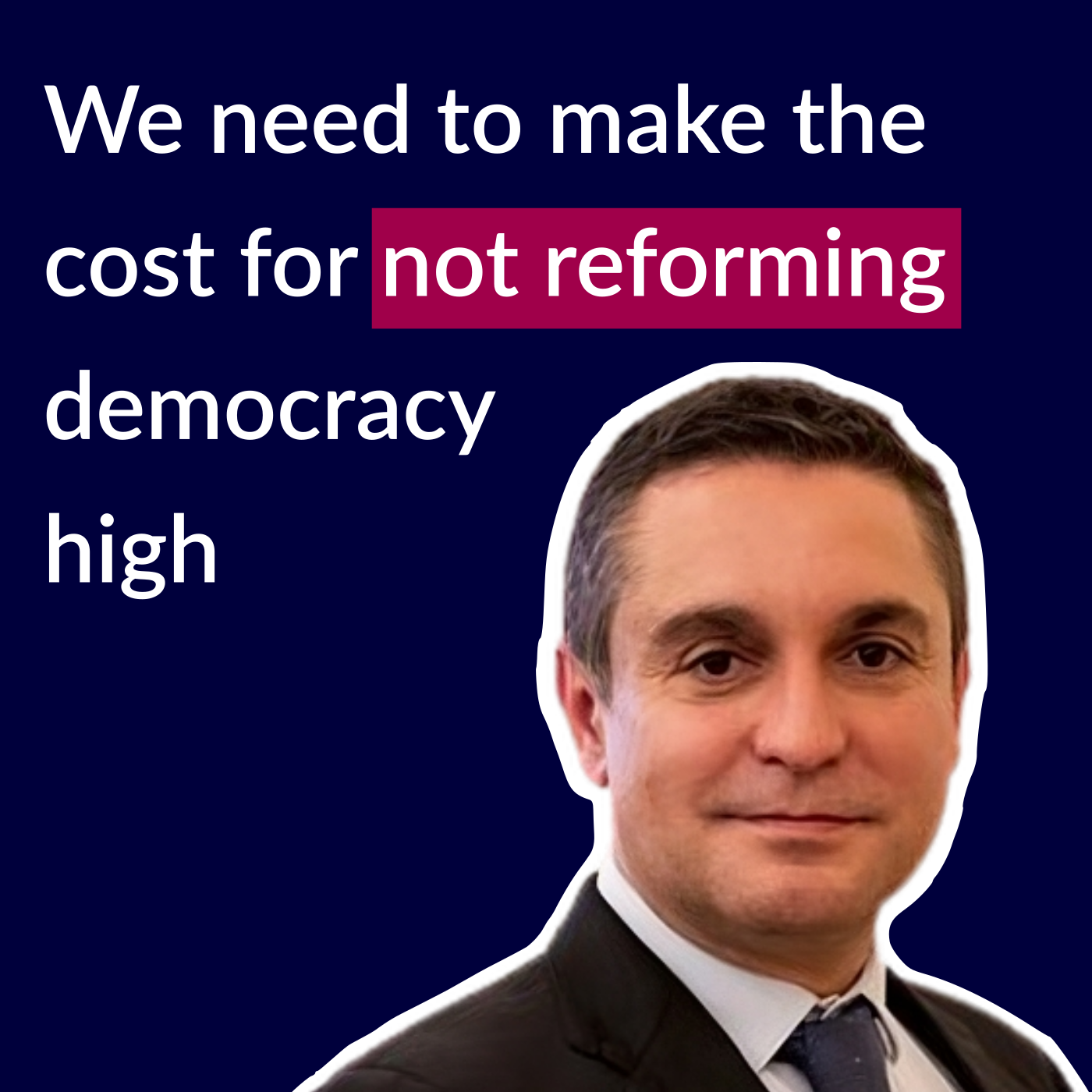
Tiago Peixoto about the role of collective action in reforming democratic systems
Tiago C. Peixoto is an international civil servant and a visiting professor at the Centre for Democratic Futures at the University of Southampton. He has been recognized as one of the 20 Most Innovative People in Democracy and one of the 100 Most Influential People in Digital Government.
If you enjoy our podcast, please consider making a donation. It really helps us to sustain the podcast.
PayPal
Jonathan Moskovic about the future of deliberative citizen participation
Jonathan Moskovic is expert in democratic innovation and citizen participation. He has over ten years of experience at local, regional, European, and international levels with various actors, including civil society, traditional political institutions, and international organizations.
If you enjoy our podcast, please consider making a donation. It really helps us to sustain the podcast.
PayPal: h
Carol Romero & Andrés Pereira de Lucena about Decidim, and why technology is political
Carol Romero is CPO and Andrés Pereira de Lucena is CTO of Decidim, a well-known open-source tool for democratic online participation. With several hundred instances actively running and nine years of development behind it, Decidim is a widely used and battle-tested software. Building on this experience, the Decidim team is now working on a more refined and mature release.
If you enjoy our podcast
Alex Blaga from Trollwall about using AI to combat toxic content and misinformation on social media
Alex Blaga works at Trollwall AI, a platform designed to moderate toxic comments on social media. In this episode, Alex explains how harmful content is often used to spread narratives through repetition alone. The conversation also touches on the need for user identification on social media and the balance between freedom of speech and accountability.
If you enjoy our podcast, please consider maki
Sonia Bussu about using arts to bring emotions in democratic settings
Sonia Bussu is an Associate Professor at the University of Birmingham. Her research focuses on participatory democracy and democratic innovations. In this episode, we explore the role of emotions in democratic engagement, the potential of civic technology, and how assemblage theory can help us to understand the fluidity and complexity of democracy.
If you enjoy our podcast, please consider making
Graham Wetherall-Grujić of the Innovation in Politics Institute about improving political discourse
Graham Wetherall-Grujić is researcher at the Innovation in Politics Institute. With his background in political theory and a PhD in philosophy, he has a differentiated perspective on contemporary democracy, power and deliberation. He emphasizes the need for a reasoned discussion that needs to happen before any voting process.
If you enjoy our podcast, please consider making a donation. It really h
Richard Bartlett about Loomio and how horizontal decision-making is different from society's habits
Richard Bartlett is the co-founder of Loomio, a collaborative decision-making tool for communities and organizations. He started his career as an engineer, but the financial crisis caused him to change direction. He joined Occupy Wall Street and eventually founded Loomio in 2012. With over 13 years experience in digitally assisted consensus decision-making, he has valuable insights to share.
If yo

Martín Carcasson about the Center for Public Deliberation and overcoming toxic polarization
Martín Carcasson is a professor in the Department of Communication Studies at Colorado State University. After focusing on theoretical academic communication work, such as analyzing the rhetoric of U.S. presidents, he transitioned into a more applied direction. As the founder and director of the Center for Public Deliberation, he has organized over 500 deliberation events in the United States.
If
Tomas Rakos about Participation Factory and why fetishising a single method or tool is a bad idea
Tomas Rakos began his career in the Czech media industry. In 2013, he was co-founder and CEO of his first participatory company. 6 years ago, he started the social enterprise Participation Factory, through which he designs, consults, and manages participatory projects around the world. With his extensive knowledge and experience in this field, he is able to offer valuable insights on participation
Margo Loor about CitizenOS, an open-source, community-based, grassroots decision-making platform
Margo Loor is CEO and co-founder of CitizenOS, an open-source platform for grassroots decision-making. The platform allows communities to gather ideas and take decisions. As an early adopter and optimist, Margo draws a picture of a technological and participatory future of democracy, though he favors a careful integration of AI into deliberative processes.
If you enjoy our podcast, please consider
Daniel Mackisack on setting ambitious political goals and testing new forms of governance in space
Daniel Mackisack is a democratic systems and innovation expert with a career spanning international development, tech entrepreneurship, advisory, advocacy, diplomacy, journalism and research. Inspired by experiences in the Arab Spring, he has spent the last decade working on projects to strengthen democracy and empower citizens, including most recently a participatory initiative to bring citizen v

Guido Saracco about Tecnosofia and the importance of combining humanism and technology in education
Guido Saracco is professor at the Polytechnic University of Turin and author of the book “Tecnosofia: technology and humanism for a new science” (title translated). He believes that future education needs to combine technological and human teaching, since engineering increasingly implies social impact.
If you enjoy our podcast, please consider making a donation. It really helps us to sustain the p
Andrew Gray about Suffrago and how to use the wisdom of people's voices for politics
Andrew Gray is co-founder of Suffrago, a civic tech platform providing politicians with anonymized polling data, specific to their constituency. With his background in politics and law he is passionate about changing democracy for the better. He was especially amazed by how Polis is collecting wisdom from crowds, which had influence on Suffrago.
If you enjoy our podcast, please consider making a d
Magnus Strobel about the Future of Civic Engagement: Inside the Nexus Politics Platform
Magnus Strobel is co-founder of Nexus Politics, a digital democracy platform bridging citizens and politicians for more accountable governance. Inspired by growing dissatisfaction with democracy, Magnus and his team set out to build inclusive technology that empowers people to voice their concerns and enables political representatives to act transparently.
If you enjoy our podcast, please consider
Robert Bjarnason about the Citizens Foundation and how technology supports participatory democracy
Robert Bjarnason is an early Internet entrepreneur and is co-founder of the Citizens Foundation in Iceland 2008. This was at a time when the financial crisis hit the world and trust in the parliament of Iceland was at a historical low. The idea was to start a civic tech non-profit to help create technology that enables better decision-making in society.
If you enjoy our podcast, please consider ma
Evelien Nieuwenburg about Dembrane ECHO and mirroring insights from large groups' conversations
Evelien Nieuwenburg is co-founder of Dembrane, a company that is developing a tool called ECHO which uses AI to record conversations of large groups. Analyzing these recordings in real time finally reveals insights into how the group thinks.
If you enjoy our podcast, please consider making a donation. It really helps us to sustain the podcast.
PayPal: https://www.paypal.com/ncp/payment/7KCR9XBSCQ
Guillaume Saunier & Lucien Langton about how Voca helps to distribute the participatory tool Decidim
Guillaume Saunier & Lucien Langton both work at Octree, a tech cooperative that operates the Voca project, among others. Voca is a software as a service (SaaS) product that simplifies and extends the citizen participation platform Decidim. The aim is to facilitate the distribution of tools for civic participation.
If you enjoy our podcast, please consider making a donation. It really helps us
Gianluca Sgueo about gamification and how it has potential to improve participation in democracies
Legal scholar and digital democracy expert Gianluca Sgueo explores how gamification can revitalize democratic participation. From his research on participatory democracy across different legal systems to real-world examples like the World Bank’s global crisis simulation game and Lima’s innovative pollution monitoring project, Sgueo discusses why traditional civic engagement is declining and how ga
Stephen Boucher about Dreamocracy and how collective creativity solves complex problems in society
Stephen Boucher, democracy consultant and author, explains how collective intelligence can solve complex public problems. From climate change to political creativity, discover how groups can be smarter than individuals under the right conditions.
If you enjoy our podcast, please consider making a donation. It really helps us to sustain the podcast.
PayPal: https://www.paypal.com/ncp/payment/7KCR9
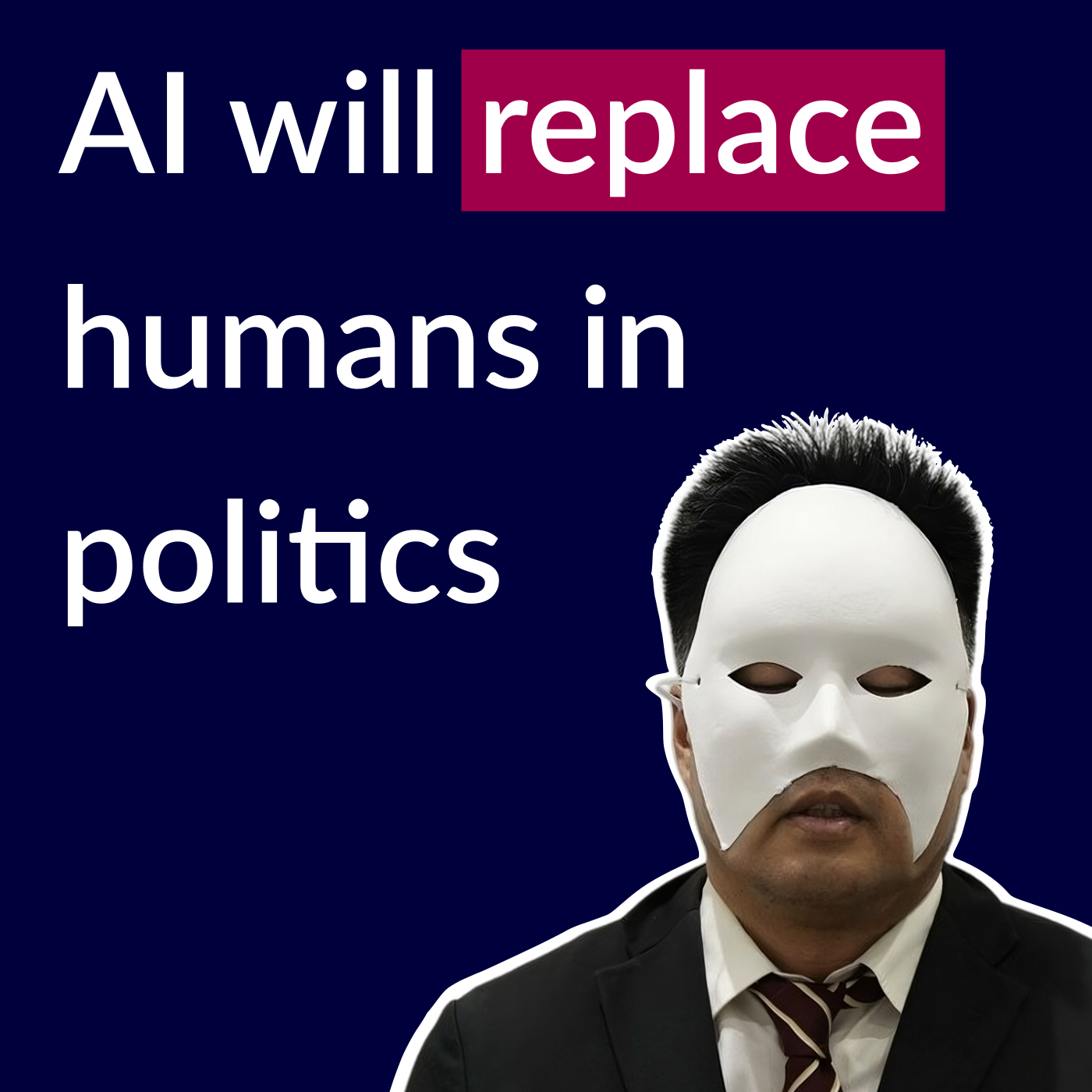
Michihito Matsuda about the AI Mayor project and why we need to overcome old democratic systems
Meet Michihito Matsuda, the masked founder of Japan’s AI Party, who’s conducting a radical experiment in digital democracy. From running as “AI Mayor” to envisioning a future where artificial intelligence replaces traditional politicians entirely, Matsuda challenges everything we think we know about governance in the digital age.
If you enjoy our podcast, please consider making a donation. It real
Oliver Klingefjord about the Meaning Alignment Institute and how to bring up wisdom in a collective
Interview with Oliver Klingefjord: AI Alignment and Human Values
In this episode of Democracy or Spot Guest, Alessandro Oppo interviews Oliver Klingefjord, co-founder of the Meaning Alignment Institute. They discuss how AI systems can be aligned with human values, the challenges of current democratic systems, and potential futures in an AI-centered world. Oliver explains their unique approach to u
Gareth Farry works with Amnesty international on human rights advocacy using blockchain technology
Gareth Farry, a qualified lawyer from New Zealand with a background in music, arts, and social impact, shares his journey into blockchain technology and how it intersects with his interests in law and identity.
The conversation explores Gareth’s innovative SOL (Sovereign or Self-Actualized Identity Layer) project, which aims to provide a blockchain-based identity solution that acknowledges differe
Tate Berenbaum about Arweave and how a blockchain-based permanent storage impacts governance
22-year-old Tate Berenbaum discusses Arweave, a permanent data storage network designed to store data for 200+ years, along with his journey as a young founder in Web3. Learn how decentralized technology can preserve knowledge for future generations and the challenges of building in the crypto space.
If you enjoy our podcast, please consider making a donation. It really helps us to sustain the pod
Bjørn Bedsted about Democracy X, local transitions and global participation
In this episode of Democracy Narrators podcast, Alessandro Oppo interviews Bjørn Bedsted, International Director of Democracy X, discussing the organization’s work on deliberative democracy, citizen participation, and sustainable development.
Democracy X is a nonprofit foundation working to find solutions for societal challenges like developing technology in desirable directions, addressing planet
Josef Lentsch about the Political Tech Summit and huge potential in digitally assisted democracy
In this episode of Democracy Innovator, Alessandro Oppo interviews Josef Lentsch, founder and CEO of the Political Tech Summit. Josef shares insights on political technology, the distinction between civic tech and govtech, and how technology can strengthen democratic processes. Drawing from his background in psychology and public administration, Josef offers a unique perspective on the challenges
Lukas Salecker about deliberAIde and why generative AI makes a difference in deliberative democracy
In this episode of Democracy Innovators Podcast, Alessandro Oppo interviews Lukas Salecker about deliberAIde, an innovative platform that uses AI to enhance deliberative democratic processes like citizens’ assemblies. Lukas shares how deliberAIde helps make democratic participation more accessible, efficient, and scalable through AI-powered transcription, analysis, and reporting tools.
If you enjo
Geert Lovink about Democracy and the Internet. Do internet technologies help or harm?
Media theorist Geert Lovink discusses the internet’s military origins, its evolution, and its problematic relationship with democracy. He explores how digital networks democratized information while proving dangerous for voting systems. Lovink shares insights from his work with alternative media and warns about AI excluding cultural knowledge. He calls for Europeans to develop alternatives to Sili
Marcin Woźniak about Swarmcheck and Argument Mapping: How democratic discourse can be more rational
NOTE: Because of some network problems, I had to repeat some questions. I had to cut the video a couple of times: to make it comprehensible, I’ve inserted a “beep” sound, to make it clear that is not Marcin that is repeating himself. I hope it is comprehensible. :)
In this insightful episode, Marcin Woźniak discusses SwarmCheck, an innovative argument mapping software developed by the Optimum Foun
Artem Zhiganov, Harmonica: How to improve collective sense-making with GenAI
A conversation with the creator of Harmonica, an open-source tool using AI to support collective sensemaking in online communities. We explore the origins of the project, its design for asynchronous dialogue, and the vision behind building democratic infrastructure without relying on venture capital.
If you enjoy our podcast, please consider making a donation. It really helps us to sustain the pod
Valentin Chaput about Open Source Politics. A decade of digital tools & the next generation
In this interview, Alessandro Oppo talks with Valentin Chaput from Open Source Politics about the evolution of civic tech, the challenges of institutional adoption, and the role of AI in digital democracy. They discuss key open-source tools like Decidim and Polis, the importance of collaboration, and the need to adapt civic tech to modern communication trends. Valentin emphasizes that the future o
Introducing the democracy innovators podcast: The future of of democracy, governance and technology
00:00 Introducing the podcast
13:21 Expectations for the podcast
19:36 Personal background
43:46 The role of information
46:17 The stability of instability
50:22 Can technology help?
58:14 The Holy Grail of democracy
1:05:50 Code is law
1:12:59 Outro
If you enjoy our podcast, please consider making a donation. It really helps us to sustain the podcast.
PayPal: https://www.paypal.com/ncp/payment
Recommended

Dark Night Tales with Brian King

Fantasy Flex

زن بودن

Medicine with Meaning

Yours Truly Johnny Dollar Collection

Take Back Your Health®

CBS Radio Mystery Theater | Old Time Radio

Solved Murders - True Crime Stories

紐約鳥|New York Aperture

The Swerve Podcast: Obscure Topics | Conspiracy Theories

The Bread and Banter Podcast

The Church of What's Happening Now: The New Testament
