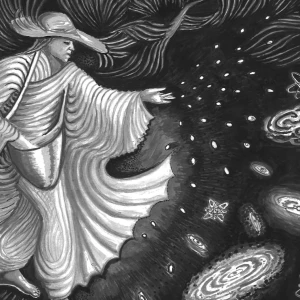
The Quest: Vision in an Age of Crisis. Jungian Psychotherapy
The Quest: Vision in an Age of Crisis is a podcast about Jungian psychotherapy, exploring the evolving crises of the 21st century and the search for vision in our times. Season One focuses on the Jungian approach to healing, while Season Two is dedicated to the theme of vision in an age of crisis. The podcast also offers a third season in Spanish, titled 'La Psicología Junguiana y la Crisis de Nuestro Tiempo'.
Episodes
S2 Ep125 Hubris and Nemesis Part 4. Civilisations
Hubris and Nemesis are explored at a civilisational level. Examples are given from Greek, Roman and Egyptian history. Our current iteration is Business Civilisation, a framework which covers the globe and all its countries, no matter what their ideology or religion. The episode ends with one of its central contradictions — for all civilisations are moved by contradictions. How is it that we are in
S2 Ep 124. Hubris and Nemesis. Part 3, Lenin, Trotsky, Mao, Mussolini, Hitler, Franco
The extreme right and left wing unite at their extremes in totalitarianism and a god complex. The battle between autocracies and democracies continues like some externalized projection of an internal split in the human psyche; as if the ancient archetypes of good and evil, light and dark, creation and destruction, hubris and nemesis are fighting out a cosmic battle on an earthly and human plane.
I
S2 Ep123. Hubris and Nemesis. Part 2. Napoleon Bonaparte
From 1789 onward, French history became a breathtaking cycle of hubris and nemesis. Nowhere was this more striking than in the rise and fall of Napoleon Bonaparte. Rising rapidly through the revolutionary ranks to govern and pacify France, he ultimately crowned himself Emperor and crushed coalition after coalition in legendary battles.
By 1812, his self-belief was god-like, his army worshipped him
S2 Ep 122 Hubris and Nemesis. Part 1. "Remember that you are only a man."
"Remember that you are only a man."
From the victory chariots of Ancient Rome to the underground bunkers of Berlin, absolute power has a habit of shattering a leader's connection to reality. But is hubris simply arrogance—or is it a clinical condition?
In this episode:
• The Anatomy of a Dictator: How Ian Kershaw’s "working towards the Führer" thesis explains the collective surrender of a civilize
S2 Ep 121. The conditions for the rise of Hitler and Nazism
What were the social, political, and psychological conditions for the rise of Nazism and the emergence of Adolph Hitler, a misfit, so as to have total control of one of most powerful industrial states in the world and to lead it to destruction? What is it in such a disturbed psyche – a borderline malignant narcissist - that is capable of leading a country, almost a civilization, to the apocalypse?
S2 Ep120. The Archetypes. Part 17. Nazism and the apocalypse
The National Socialist movement functioned not only as a political party and military machine but also as a "dark religion" that sought to possess the German psyche. Its apocalyptic vision was rooted in the esoteric mysticism. When the promised victory failed, the regime’s narcissistic core pivoted to a final, nihilistic sacrifice. Hitler’s Nero Decree and the ritualistic suicides in the Führerb
S2 Ep119. the Archetypes. Part 16. Apocalyptic traditions - The Americas, Siberia, Celts, the Wasteland of Arthurian legends
This episode covers the apocalyptic traditions of some of the indigenous peoples of the Americas, Siberia, and also the Celts, including their influence on medieval Christianity and even modern poetry. It finishes with more information on the two comets approaching earth vision this month, the best times for viewing, and some further reflections upon their significance.
The view of the comets:
Co
S2 Ep118. The Archetypes. Part 15. Apocalyptic traditions - India, Indigenous Australia, Africa, and Indonesia
We continue our world tour of the apocalyptic traditions briefly describing those of India, Indigenous Australia, Africa, and Indonesia. We finish the episode mentioning two incoming comets due to arrive within earth vision in April of this year, 2026. We contemplate the creative and destructive powers of these cosmic messengers.
S2 Ep117. The Archetypes. Part 14. Apocalyptic traditions - Islam, Norse, Egyptian, Aztec, Maya, Inca, China, and Japan
This episode and the following are a tour of some of the world’s apocalyptic traditions outside of the Judaic, Gnostic, Christian, and Millenarian which have been explored already. This episode includes those of Islam, Norse, Egypt, Aztec, Maya, Inca, China, and Japan. By this means we can appreciate one of the features of the archetype – its widespread occurrence across the world’s civilizations.
S2 Ep116. The Archetypes. Part 13. The dark God and the apocalypse. An exploration of Jung's Answer to Job. Part B
The last five chapters of Answer to Job clearly show that Jung believed that the shadow in our psyche and the technological means at our disposal leave us in a most precarious apocalyptic situation ....
“For the dark God has slipped the atom bomb and chemical weapons into his [humanity’s] hands and given him the power to empty out the apocalyptic vials of wrath on his fellow creatures.”
Jung was b
S2 Ep115. The Archetypes. Part 12. The dark God and the apocalypse: an exploration of Jung's Answer to Job. Part A
The book Answer to Job was the one work Jung said he would never change. In it he “psychoanalyses” Yahweh, challenges the Christian God, insists that God, across our evolution, has been entering into humanity as a unconscious complex of opposites requiring integration through the human psyche. This is the purpose of human consciousness and this book was Jung’s bible. Like the Christian bible it en
S2 Ep114. The Archetypes. Part 11. The Gnostic apocalypse and visionaries of our own times
This episode explores the Gnostic worldview, flourishing in the first centuries of the Common Era, which offers one of religious history's most radical apocalyptic visions. It is founded on a profoundly dualistic understanding of reality: the material cosmos is a prison, and humanity is a tragic hybrid—a divine spark of light trapped in corrupt flesh and matter. The influences of Gnostic thought
S2 Ep113. The Archetypes. Part 10. The millenarian movements of the Middle Ages
The apocalypse isn't just an ancient myth, but an archetype, a pattern that still shapes our world. The same emotional and psychological forces that drove medieval peasants to embark on doomed crusades or to whip themselves in public, are the very forces driving political movements today. The archetypal forces that drove these millenarian movements are very much present in the politics of the We
S2 Ep112. The Archetypes. Part 9. The Book of Revelation and its impact across millennia
The Christian apocalyptic tradition is explored, focusing on the prophecies and warnings of the Gospels and the Book of Revelation. These texts contain a dramatic narrative of cataclysmic events: the end days, the Second Coming, the Rapture, the chosen few, the final judgment, Armageddon, the defeat of Satan, and the reign of Christ’s kingdom. This tradition has provided a reference point for West
S2 Ep111. The Archetypes. Part 8. The archetype of the apocalypse
The deepest archetypes are symbolic narratives, like dreams, that reveal the nature of the psyche itself—its origins, for instance, or even its potential ending. The Book of Genesis serves as an example of the former, while this episode explores the latter—the theme of the apocalypse—through various writings in the Jewish tradition, including the Books of Daniel, Ezekiel, Zechariah, Isaiah, and En
S2 Ep110. Archetypes. Part 7. The archetype of the Self
The archetype of the Self is Jung's answer to the crisis of civilization in our age. In a world grappling with the relativism and indeterminacy of post-modernism, where grand narratives have collapsed and meaning seems fluid, with a host of other modern philosophical ailments that breed anxiety and nihilism, the Self offers an inner, inherent source of meaning and direction. It suggests that beyon
S2 Ep109. The Archetypes. Part 6. Earliest archetypes of humanity and contemporary significance
The earliest archetypal images with an implicit mythological narrative are presented: The Venus of Laussel – the earliest great mother archetype with an age of around 24,000 years; and the Fallen Shaman in the Paleolithic Cave of Lascaux at 16,000 years ago. The former is feminine-coded (nurture, nature, reproduction, love) and the latter is male-coded (gnosis or higher knowledge obtained through
S2 Ep108. The Archetypes. Part 5. The fallen shaman and the wounded bison
An account of a healing séance ceremony from a Siberian tribe opens the episode. Evidence of the shamans on the cave walls is given especially for the French caves of Lascaux, Trois Fréres, Gabillou, and Chauvet. The images in the “shaft” at the end of the Lascaux cave are highly enigmatic but a mythological interpretation is hinted at as it is one of the earliest archetypal representations of hum
S2 Ep107. The Archetypes. Part 4. Shamanism, the Great Mother, burial rites, cave paintings
The Upper Paleolithic, that is the period dated from around 50-11 thousand years ago, reflects a period of cultural, behavioral and technological change that distinguishes modern humans from earlier homo species.
Four examples of the earliest archetypal images, beliefs, and practices are given and for which we have hard evidence taking us back many tens of thousands years deep into the last ice a
S2 Ep106. The Archetypes. Part 3. The earliest archetypal images of humanity
This episode explores:
The first archetypal images of humanity for which we have evidence.
The areas of the world where this evidence is found: South Africa, Indonesia, India, Australia, the Americas, Siberia. We leave the famous cave paintings of France and Spain until next episode.
The dates of the cave painting and rock art that have survived and recently been discovered. These stretch back int
S2 Ep 105. The Archetypes. Part 2. Archetypal Psychology. An interview with Laurence Hillman
The ten archetypes underlying the book "Archetypes at Work" have an astrological basis in the ten heavenly bodies (including sun and moon) in our solar system - each with their archetypal nature and their influence upon human character and destiny ... "the planets are around us and in us".
Dr Laurence Hillman explains how at birth a unique blueprint forms the basis of human character and this is l
S2 Ep104. The Archetypes. Part 1. Archetypes at Work. An interview with Richard Olivier
Join Alan Mulhern as he interviews Richard Olivier, founder of Olivier Mythodrama and co-author with Laurence Hillman of Archetypes at Work (2019).
Exploring how archetypes—rooted in mythology and Shakespearean drama—can revolutionize leadership, organizational culture, and personal growth.
Key highlights include:
The Power of Shakespearean Drama: Uncover how mythological and archetypal elemen
S2 Ep103. Transhumanism Part 7. The Faustian pact is sealed
This is the final episode of this miniseries on Transhumanism and Artificial Intelligence. Many authors, filmakers and the like point to the great dangers of Artifical Intelligence - to no avail. Warnings of great danger are no deterrence for the advance of technology. Fascinated by wealth and infatuated with power, we complete the Faustian bargain that was struck at the beginning of Business Ci
S2 Ep102. Transhumanism Part 6. From the Luciferian to the Satanic
The archetypal roots of Transhumanism are explored. The Book of Genesis presents this in symbolic and mythical form: humans are caught in a dilemma between staying in the garden of unconsciousness or making a bid for freedom from nature and the unconscious though the awakening of self awareness and pursuit of knowledge. In doing this we become aware of death and are destined to attempt to overcome
S2 Ep101. Transhumanism. Part 5. Artificial Intelligence take-off
We examine a very recent international report on AI safety. In the face of possibly the most powerful, disruptive, and existentially threatening technological revolution in our history. Regulation is notably absent. We stumble into the unknown.
S2 Ep100. Transhumanism. Part 4. AI: The demon in the tomb
This episode considers the speed, extent, and dangers of the AI technological revolution. The dreams of radical transhumanism depend on this transformation. I use 2 sources, both highly recommended reading:
1. Megathreats (2022) by Nouriel Roubini especially ch8.
2. The Coming Wave (2023 ) by Mustafa Suleyman.
The episode ends with a warning dream of mine about AI …
An expedition of Western
S2 Ep99. Transhumanism. Part 3. AI is poised to take over human nature
I review the history of the relationship of technology and human consciousness and explore the implications of the division of the brain into a right and left hemisphere. AI is not only going to take over most jobs in the economy, it will take over our consciousness and we are surrendering it willingly. At root, having been convinced of the idea we have no soul and that we are simply code, we ar
S2 Ep98. Transhumanism. Part 2. Replacement of human nature
Transhumanism believes in a transition of Homo sapiens into a trans-human and even post-biological state made possible by accelerating technological progress, for example Artificial General Intelligence. The recent emergence of Large Language Models (LLMs) not only push the boundaries of AI but may also play their part in the Transhumanist enterprise. In reply to the question what are the dangers
S2 Ep97. Transhumanism. Part 1. Enhancement of human nature
A mini series on Transhumanism
Transhumanism divides into moderate Transhumanism which believes in an enhanced human condition, and radical Transhumanism which envisages a profound alteration of our bodies and minds, even to the extent of abandoning our biological inheritance and becoming a designed new species. Both visions envisage accelerating technological change. But humans are not in charge
S2 Ep96. The Origins of Evil Part 3. The destructiveness in the human psyche.
What is the origin of the destructiveness in humans towards the world of nature?
We examine firstly the consequences, values and paradigms of Business Civilization such as removal from nature, hyper-technological rationalism, intense consumerism, over-emphasis on science and calculation, exaggerated individualism and so on. These become more intensified in the contemporary period with huge destru
S2 Ep95. The Ecological Catastrophe. Part 9. Climate tipping point reached. Red alert.
This is the final episode in this miniseries. It covers the following points.
1. A tipping point has been reached in the climate crisis past the 1.5 degree centigrade threshold and the planet is now in a stage of unpredictable runaway effects.
2. Climate defiance is in the ascendant and there is crisis, confusion, and perhaps despair in the Green ranks. The Green agenda will, however, make a come-
S2 Ep94. The Ecological Catastrophe Part 8.The green climate agenda is in reverse.
The green climate agenda is going backwards. Fifteen examples from across the world are given. Preparing for survival on a degraded planet should be a policy with the status of a national emergency. Practical policy responses are put forward for rising seas levels.
S2 Ep93.The Ecological Catastrophe. Part 7. Psychiatric diagnosis of business civilization.
The climate crisis and the ecological catastrophe are an existential threat to Homo sapiens especially when combined with other crises of the 21st century. This is of immense evolutionary and even metaphysical significance. As our species gained in technological power the exploitation of nature became more extensive and under business civilization this has become a world wide phenomenon.
The compe
S2 Ep92. The Ecological Catastrophe. Part 6. Too little, too late.
The COP commitments are critically scrutinised. Even if all its pledges were kept concerning GHG emissions, the tripling of renewable capacity, and energy efficiency improvements - and that is a tall order - the world is heading for a 10% increase in emissions by 2030, instead of the 43% reduction required to keep global warming under the 1.5 degree threshold.
Following further research post Co
S2 Ep91. The Ecological Catastrophe. Part 5. Cop 28 shows a world unable to avoid climate catastrophe
This episode gives a review of Cop 28 which confirms the view that despite strenuous efforts of the United Nations, the IPCC, and many other institutes and organizations the world is politically and economically unwilling or unable to avoid climate catastrophe in the decades to come. Mankind’s economic short term interests triumph over reason and common sense. To prepare for a severely degraded w
S2 Ep90. The Ecological Catastrophe. Part 4. Prepare for survival in a degraded world
This is the fourth episode in this miniseries on the ecological catastrophe of our age.
The GHG emissions targets are not being reached on time.
We need to prepare for survival in a degraded world.
There needs to be a spiritual vision to give us insight into the climate and other crises of our age.
S2 Ep89.The Ecological Catastrophe. Part 3. The wider elements of the ecological crisis aside from climate
This episode identifies the other elements of the ecological crisis aside from climate:
Biodiversity loss
Chemical pollution into land, air, rivers, and oceans
Particle pollution of the atmosphere
Deforestation and land use
Freshwater scarcity
The phosphorous and nitrogen cycle
# The episode continued by identifying Business Civilization as the immediate source of the contemporary ecological d
S2 Ep89. The Ecological Catastrophe. Part 3 - to be published October 1st 2023
There are now some changes to the structure and timing of these podcasts.
Firstly, the Spanish language podcasts, which have explored the life and work of Carl Jung, have now ended. For the forseeable future there will only be the English speaking podcasts.
Secondly, I am moving the podcast release dates generally to the first of the month - an easier date to remember rather than the mid-month tim
S3 Ep37. Últimas visiones y pensamiento de Carl Jung. Spanish Language.
Este es el episodio final de nuestra serie de podcasts sobre la vida y obra de Carl Jung. Este ha sido un proyecto conjunto entre el Instituto Venezolano de Psicología Analítica (representado por María Leonor de Planchart y Beatrice Rojas) y el Quest (representado por Alan Mulhern).
Terminamos, como deberíamos. con las propias visiones y pensamientos de Jung al final de su vida, tal como se cuenta
S2 Ep88. The Ecological Catastrophe. Part 2. Climate change - one of the most powerful influences in human history.
Life has always been dependent on and deeply interlinked with climate. The earth passes through great cycles of glacial and warming conditions with enormous consequences for the promotion or restriction and even extinction of life. Hominins, our ancestors, adapted to changing habitats and climatic environments. The genus Homo, of which Homo sapiens is but one species among others, had an even grea
S2 Ep87. The Ecological Catastrophe. Part 1. The rise in Green House Gas emissions and the impact on global warming
This is the start of a mini-series on the ecological catastrophe of the anthropocene. In the first episode the emphasis is on climate but subsequent ones will explore other components of this crisis, for example the great destruction of bio-diversity, otherwise known as the sixth extinction event.
The current ecological emergency is undeniable. But current policies to deal with it are inadequate.
S3 Ep36. El símbolo de Cristo - interpretación de Jung
“La descristianización de nuestro mundo, el desarrollo luciferino de la ciencia y la tecnología, y la espantosa destrucción material y moral que dejó la Segunda Guerra Mundial han sido comparados más de una vez con los acontecimientos escatológicos narrados en el Nuevo Testamento.
Cristo es este mito viviente de nuestra cultura. Es nuestro héroe cultural que encarna el mito del hombre primordial d
S2 Ep86. The Light of Higher Consciousness
Human nature is the integrated but at the same time conflicting combination of six parts of our development: animal inheritance, emotional structure, conscious ego intelligence, the unconscious, higher consciousness, and what Jungians call the Self. These have evolved over millions of years and many of them are a unity of conflicting parts. Despite their conflict there is also a transformational i
S3 Ep35. Jung y El Libro Tibetano de Los Muertos
El Libro Tibetano De Los Muertos describe las experiencias de la conciencia en el intervalo entre la muerte y el renacimiento y se divide en tres bardos:
El Chikhai Bardo - "el momento de la muerte" que tiene la experiencia de la "luz clara de la realidad".
El Chonyid Bardo - "la experiencia de la realidad" que presenta la experiencia de las ilusiones cósmicas.
El Sidpa Bardo o "bardo del renacimi
S2 Ep85. Origins of Evil. Part 2
Since mankind began to think morally the question of the origin of evil was a continual problem. We examine some examples. We begin with the Ancient Egyptians and the Judaic tradition. Special focus is on the myth of Osiris and Seth on the one hand and Cain and Abel on the other. The contribution of envy and malevolence to conflict and evil is noted.
S3 Ep34 Elementos básicos de la enseñanza budista y la metafísica tibetana. Spanish Language Series
Estamos encantados de continuar con los podcasts del Quest. Antes de continuar con la experiencia de Jung con la metafísica tibetana será útil cubrir algunos elementos básicos de la enseñanza budista, ya que el budismo es el fundamento de la espiritualidad tibetana.
“Si podemos reconocer las apariencias del bardo dharmata como la energía de sabiduría de nuestra propia mente, no hay diferencia entr
S2 Ep84. Origins of Evil. Part 1
This is the first in a miniseries on the origins of evil. Creative and destructive forces exist as universal principles and underpin life on earth as well as the consciousness of humanity. The essence of evil in the psyche is the destruction of the good. This is the "satanic", which is malevolently opposed to the life-giving and creative. A distinction is made to the "luciferian" which is a mov
S2 Ep83. Tibetan Buddhism. Light in the Darkness.
The famous painting of the Tibetan wheel of life is in the grip of the Lord of Death. At its centre are two concentric circles: the outer shows the ascending and descending paths with souls in the death and rebirth cycle; the inner shows three animals, a pig, a snake, and a rooster which symbolise forces within human nature that perpetuate this cycle and are responsible for the suffering in life.
S3 Ep33. Jung y El Libro Tibetano de la Gran Liberación. Spanish Language Series
Este episodio continúa una miniserie sobre las observaciones de Jung sobre textos orientales y explora sus comentarios sobre El Libro tibetano de la Gran Liberación, desconocido para Occidente hasta su primera publicación en 1954. El próximo episodio examinará sus comentarios sobre el Libro tibetano de los muertos.
Al igual que otros de sus comentarios, como los del I Ching y El Secreto de la Flor
S2 Ep82. Jung and the Tibetan Book of the Great Liberation
This episode continues a miniseries on Jung’s observations on oriental texts exploring his comments on The Tibetan Book of the Great Liberation unknown to the West until its first publication in 1954. The next episode will examine his comments on the Tibetan Book of the Dead.
Like other of his commentaries, such as those of the I Ching and the Secret of the Golden Flower, Jung is here aiming at a
S2 Ep81. The Turning of the Year
No matter what the crises of the collective the individual has the opportunity of realising the inner light that lies in us all. This episode explores the Taoist text The Secret of the Golden Flower which describes in an extraordinary manner how to access this light through the meditation process.
The episode ends with a beautiful song The Turning of the Year by Mark Dunn of The Bringers of Change
S2 Ep80. Answer to Job. Part 8. Appraisal.
In this last episode of this miniseries I give Jung’s main argument and its pros and cons.
My feelings about the difficulties of the work are as follows:
Firstly, relevance. How much can it offer the modern world?
Secondly, isolationism - its removal from the other analytic disciplines.
Thirdly, certain inconsistencies which may confuse the reader.
Fourthly, contradiction - whether the archetype
S3 Ep32. Respuesta a Job Parte 9. Relevancia al mundo moderno. Spanish language series
Este es el episodio final de la miniserie sobre la Respuesta a Job de Carl Jung. Aqui presento un resumen de su argumento y doy dos ejemplos de la relevancia para el mundo moderno. En primer lugar, su temor de un apocalipsis moderno. Sin embargo, el vio la posibilidad de un proceso de individuación al traer esto a la conciencia. En segundo lugar, la relación de este texto con la práctica actual
S2 Ep79. Answer to Job. Part 7. Questions and Responses.
The penultimate episode in this miniseries on Jung's Answer to Job asks the following questions of this text:
Q. Why is there no "real" history, sociology, or political science in the Answer to Job and indeed in Jung’s work in general?
Q. Are there other interpretations of the Answer to Job.
Q. How unusual is Jung’s interpretation?
Q. Does Jung speak of God in different ways?
Q. Does the theory o
S3 Ep31. Respuesta a Job. Parte 8. Valoración crítica. Spanish language series
Este es el penúltimo episodio de esta miniserie. Examinamos las dificultades y fortalezas del Respuesta a Job.
Las dificultades incluyen:
Su relevancia; su alejamiento de las demás disciplinas analíticas; ciertas inconsistencias que pueden confundir al lector; una contradicción - si el arquetipo del Self es la totalidad o un arquetipo específico; la dificultad inherente del texto.
Algunas de sus f
S2 Ep78 Answer to Job. Part 6. God wants to create humanity ... but not quite
A resume is given of the episodes so far. Responses to the following questions are given:
Q. Is God separate from us?
Q. How can God be a personality as he mostly appears to be in the bible?
Q. If the dualism of good and evil is contained in God then what is the point of the individuation process in human beings?
Q. How can God be the archetype of the Self?
Q. Jung speaks of the God in different w
S3 Ep30. Respuesta a Job Parte 7. ¿Hay una explicación en la historia judaica y cristiana para la literatura apocalíptica? Spanish language series.
En este episodio queremos responder a las siguientes preguntas
¿Por qué no hay historia 'real', sociología o ciencia política en el libro?
¿Qué explicación histórica podría ofrecerse para la literatura apocalíptica?
¿Por qué la interpretación de Jung es atípica?
Como la teoría de la evolución cambia todos los estudios bíblicos, incluido la Respuesta a Job.
¿Cómo puede Dios ser la totalidad y al mi
S2 Ep77. Jung’s Answer to Job. Part 5. The Contemporary Apocalypse.
In this episode we arrive at the last part of the Answer to Job, chapters 15-20. Three of Jung’s arguments stand out.
1. The actual dangers of an apocalypse in our own time.
2. The importance of a uniting symbol such as that of a child-hero or the Virgin Mary that is an attempt to heal the opposites and their terrible danger to humanity.
3. Reflections on the nature of God.
S2 Ep76. Answer to Job. Part 4. The Dark Side of the Creator
This episode covers chapters 11-14 of Answer to Job. Jung argues that the emergence of Christianity was an attempt to create a totally good God subsequent to the injury done to Job (i.e. mankind) by Yahweh. He focuses on the weakest part of the Christian argument, that which most reveals the dark side of god which cannot be repressed despite the best efforts of Christianity. This is the subject of
S3 Ep29. Jung y la Respuesta a Job. Parte 6. ¿Un Verdadero Apocalipsis? Spanish language series
Jung presenta el último libro de la biblia donde los cristianos presentan a su Dios con todas sus contradicciones. Detalla los eventos del Apocalipsis enfatizando el lado oscuro de Dios. Pero lo que perseguía a Jung era la posibilidad de un apocalipsis real. Jung pasó del Libro de Job al Apocalipsis y ahora avanza rápidamente a su propia época. Insinúa que la humanidad está pasando por un proceso
S2 Ep75. Jung’s Answer to Job. Part 3. The Drama between Mankind and God.
Answer to Job has 20 chapters that formed a complex unity in Jung’s mind. This episode will summarize the first 10 of these. Themes include:
Jung is indignant at the injustice done to Job. The unconscious creator needs conscious humanity so as to develop but, at the same time it opposes this. The incarnation of God into man through Christ is a world-shaking transformation or objectification of God
S3 Ep28. Jung y la Respuesta a Job. Parte 5. Dios quiere entrar la humanidad. Spanish language series.
Jung había vivido las guerras del siglo XX y fue testigo del inmenso impacto de Hitler en las civilizaciónes alemana y europea. Se dio cuenta muy claramente, que con la realidad de la bomba nuclear, la humanidad ahora tenía los medios para la autodestrucción. Para él este era un escenario apocalíptico, el lado oscuro de Dios expresado a través de la psique humana. En última instancia, Dios no es
S2 Ep74. Jung’s Answer to Job. Part 2. Jung’s Different Voices.
Jung felt that God called on him personally to realise and experience God’s own dark side. And this was the only way that he could experience relief and grace – God’s blessing.
The inspiration for writing the book was as if he was composing the work of a Bach or Handel.
There are a number of different voices that Jung adopts. He switches between them in a spontaneous intuitive manner in the flow
S2 Ep73. Exploration of Jung’s Answer to Job. Part 1. The Background.
This is the start of miniseries within the Spiritual Crisis of our Time in which I examine Jung’s Answer to Job, one of his most enigmatic and fascinating books, written in 1952 and which was clearly of enormous personal importance to him.
This episode:
# explores Jung’s own psychology, especially in his childhood, as a background to this work.
# presents Jung’s account of his religious and theolo
S3 Ep27. Jung y la Respuesta a Job. Parte 4. El lado oscuro de Dios. Spanish language series.
Dios quiere entrar en la humanidad pero este es un proceso contradictorio porque trae consigo su lado oscuro a pesar de todos los esfuerzos de la humanidad por limpiar su imagen y convertirlo en el dios de la justicia y el amor.
Jung da más evidencia de un dios iracundo y destructivo de las visiones apocalípticas de Ezequiel, Daniel y Enoc del Antiguo Testamento, y el Libro de Revelaciones, el ul
S2 Ep72. Banishment from Eden and Emergence of Consciousness. The Spiritual Crisis of our Time. Part 15
This episode explores the Book of Genesis, in particular the story of Adam and Eve: their existence in the Garden, the temptation to eat the apple from the Tree of Knowledge, and their banishment. It is interpreted as the movement into consciousness which inevitably is also into an awareness of death. A Gnostic and Jungian interpretation of this foundational myth of Western civilization is given.
S3 Ep26. Jung y la Respuesta a Job. Parte 3. El drama entre Dios y la humanidad. Spanish language series
En el ultimo episodio presentamos la experiencia de Jung en su juventud con el inconsciente, que más tarde lo predispuso a identificarse tan profundamente con Job. Experimentó el “otro lado de la psique”, el lado oscuro de Dios. Esto fue como un trauma infligido por Dios pero también fue la fuente de su gracia.
En este episodio cubrimos los primeros 10 capítulos de Respuesta a Job que incluye:
Pr
S2 Ep71. The Fall from the Garden of Eden. Spiritual Crisis of our Time Part 14
This episode examines the Book of Genesis, the great Judaic creation myth which has been also been fundamental to Christianity. In particular the famous account of the fall and banishment of Adam and Eve from the Garden of Eden is presented. The Tree of Knowledge and the eating of apple is the movement into consciousness; the banishment from the garden is the expulsion from the primal unity (natur
S2 Ep70. The Transition from the Great Mother to the Patriarchy. The Spiritual Crisis of our Time. Part 13.
Having looked at the benevolent and terrible aspects of the Great Mother, and located this duality in the history of our consciousness, I now wish to explore the transition from the Great Mother to the Patriarchy, understood symbolically and mythologically.
Three to six thousand years ago patriarchal religions replaced Great Mother worship. The masculine became opposed to nature, the realm of the
S3 Ep25. Jung y la Respuesta a Job. Parte 2. Las diferentes voces de Jung. Spanish language series
En opinión de Jung, Yahvé, a pesar de toda su superioridad, no es consciente de los opuestos en sí mismo, pero Job sí lo es. Yahvé está obligado a cambiar y desarrollarse como resultado de su confrontación con Job. Así, Dios o el inconsciente necesitan de la conciencia para realizarse. Esto le da a la conciencia humana una inmensa importancia en el gran esquema de las cosas. En Respuesta a Job, Ju
S2 Ep69. The Terrible Great Mother. The Spiritual Crisis of our Time. Part 12
Nature, besides being benevolent, is also death-threatening and can appear malevolent. Survival demands aggression. Destructiveness and selfishness are vital parts of our animal and therefore human psyche. Our savagery is infamous. Thus, we have the opposites of nature, the good and the terrible, within ourselves. These opposites in our experience of nature, the two faces of the Great Mother, the
S3 Ep24. Jung y la Respuesta a Job. Parte 1. El trasfondo. Spanish language series.
En este episodio vamos a:
# Explorar la propia psicología de Jung, especialmente en su infancia, como trasfondo del texto Respuesta a Job.
# Presentar el relato de Jung sobre sus luchas religiosas e incluso teológicas en su juventud.
# Dar un breve relato de la historia de Job como se presenta en la biblia.
# Presentar la pregunta planteada por esta historia bíblica que Jung sintió que tenía que r
S2 Ep68. Immersion in Nature and the Great Mother. Spiritual Crisis of our Time. Part 11.
This episode presents the early stage of the human psyche as it is immersed in nature and the realm of the Great Mother. The themes of fertility and power, applicable to all life forms, saturate the history of humanity, most evidently in this period stretching roughly from 40,000 years ago up to birth of modern civilizations.
S2 Ep67. Human Nature: the HIgher Self. Part B. Spiritual Crisis of our Time. Part 10
This episode explores the emergence of the Higher Self within the evolution of the hominid species. For example, evidence of care of the sick and dying in the our hominid ancestors over half a million years ago; burial of the dead with symbolic objects over 100 thousand years ago; cave paintings, sculpted earth goddesses and the like from 30 thousand years ago. It is hypothesised that the higher s
S3 Ep23 Jung y Alquimia Parte 3. El proceso de transformación. Spanish Language Podcast
Seis procesos involucrados en la Gran Obra Alquímica - descrito por Anne Baring. Ellos son:
Primero. El rescate del espíritu perdido escondido en la naturaleza y en nosotros mismos.
Segundo. El proceso de transformación que implica este rescate.
Tercero. La muerte de la vieja conciencia simbolizada por el Viejo Rey y la Reina.
Cuarto. La formación de la nueva conciencia simbolizada por el Joven Re
S2 Ep66. What is Human Nature? Part A. The Spiritual Crisis of our Times. Part 9
The first four components of our evolved human nature are outlined. These are:
Animal inheritance which is not just our aggressive and sexual impulses (the id) but the inherited reservoir of evolved genetic intelligence.
Emotional structure: as life evolved instincts evolved into emotion. As the primate brain expanded a far greater and more differentiated emotional structure developed.
Ego conscio
S3 Ep22. Jung y Alquimia Parte 2. Alquimia, Alma, Individuación. Spanish language.
Dos poderosas corrientes de alquimia provinieron del antiguo Egipto y Babilonia por un lado y de Persa y la España islámica por el otro. Estos se unieron en el florecimiento de la alquimia en la Europa de la Edad Media. Después de la iluminación científica, la alquimia prácticamente desapareció. Carl Jung jugó un papel importante en el re descubrimiento de la alquimia. Fue llamado a este trabajo p
S2 Ep65. The Spiritual Crisis of our Times. Part 8. The Cosmos is a Mighty Womb
While the precursors of our consciousness lie in our animal and hominid evolutionary past its origins are in the intelligence of life itself and beyond that in the intelligence of the cosmos. This viewpoint requires a paradigm shift away from a dead and mechanistic universe in which the emergence of life and consciousness are accidents. The alternative vision is that the cosmos is intelligence or
S3 Ep21. Jung y Alquimia Part 1. El Transfondo. Spanish Language podcast.
¨Las experiencias de los alquimistas eran mis experiencias y su mundo era mi mundo. Este fue, por supuesto, un descubrimiento trascendental: me había topado con la contraparte histórica de mi psicología del inconsciente. La posibilidad de una comparación con la alquimia, y la cadena intelectual ininterrumpida de regreso al gnosticismo, dieron sustancia a mi psicología. Cuando examiné detenidamente
S2 Ep64. The Spiritual Crisis of our Times. Part 7. Creation Myths and Science.
The astronomer’s lens, peering out to the creation of our universe, is human consciousness, like a mirror to its deep centre, forever examining its origins, birth, and even the pre-conditions of its existence. But ultimate knowledge forever vanishes beyond our scope. In the moment of dating the universe we realise there must be others preceding it; that the cosmos must be infinite and eternal as G
Recommended
Dark Night Tales with Brian King

Fantasy Flex

زن بودن

Medicine with Meaning

Yours Truly Johnny Dollar Collection

Take Back Your Health®

CBS Radio Mystery Theater | Old Time Radio

Solved Murders - True Crime Stories
紐約鳥|New York Aperture
The Swerve Podcast: Obscure Topics | Conspiracy Theories

The Bread and Banter Podcast
The Church of What's Happening Now: The New Testament
