Futurology
Futurology is a weekly podcast from the Berggruen Institute, hosted by Institute President Dawn Nakagawa. Each episode features conversations with scientists, philosophers, technologists, and policymakers who are shaping ideas about the future. The show explores how emerging developments ripple through society, from new cosmologies to artificial intelligence and systems design. It aims to imagine a future we can build together rather than one to prevent.
Episodes
We Can’t Prove We’re Conscious, Let Alone AI (with Geoffrey Lee and Grant Slater)
Machines are starting to act like humans. Does that mean they’re conscious? The problem is we haven’t been able to prove how or why humans are conscious yet either. So why would we be able to offer any answers about AI?
In this episode, Berkeley philosopher of mind Geoffrey Lee argues there are no facts coming to save the day when it comes to consciousness, so that shouldn’t be the point. I
Multispecies Democracy Now! (with Jonathon Keats and Grant Slater)
Democracy counts people, not plants. Humans are only a sliver of life on this planet, but today, we're the only ones who get a vote. What if we gave rights to rivers and standing to trees?
In this episode, experimental philosopher Jonathon Keats says it's time to make every species count. The environmental movement has spent decades claiming to speak for the trees. In his new book, "A Field
Let AI Have Intelligence. We’ll Keep Wisdom. (with Arianna Huffington and Dawn Nakagawa)
Somewhere around the Enlightenment we decided that thinking was what made us human. We built our schools, careers, and sense of worth at the altar of intelligence. Now machines are passing us on that rubric, which leaves two possibilities: we were replaceable all along, or we picked the wrong standard to live by.
In this episode, Arianna Huffington, founder & CEO of Thrive Global, argues the latt
Are We Posthuman? (with N. Katherine Hayles and Claire Webb)
Relying on machines to coordinate our lives was just one step toward decentering humanity’s role in the world. Flights, banking, trade, food production... But as we start merging our actual decision-making with digital entities, exactly which pieces of humanity are we leaving behind? And how might we bring those pieces back?
In this episode, famed posthumanist scholar N. Katherine Hayles makes th
God Is In the Machine (with Kevin Kelly and Nils Gilman)
Technologists have feared (or prayed for) the singularity as a rapture-like inevitability for nearly 70 years. In an instant, they believed, our machine intelligence will overtake us and race ahead. Kevin Kelly says that moment has passed. Human intelligence is already receding to a speck in the rearview mirror of robots imbued with God-like powers. But we’re still here.
In this episode, Kelly pu
Gamble on Anything. Except Murder. (with Bobby Allyn and Grant Slater)
With prediction markets, gambling has gone ambient. To place your bets, you don't need to visit a casino floor, a racetrack, or your corner bookie. Now any uncertain thing on Earth could be the next big short. Wildfires, missile strikes, the next word out of a president's mouth. Every disagreement has a spread, every catastrophe a payout.
In this episode, NPR tech correspondent Bobby Allyn follow
There's No Such Thing as a Free Agent (with Gillian Tett and Dawn Nakagawa)
One value proposition of AI is a personalized assistant at your fingertips. Every Average Joe can now have a “pocket pixie," the kind of perk once reserved for Hollywood stars and high-powered CEOs. But that promise rests on a convenient lie.
In reality, AI may be quietly undermining human agency. It convinces us it's a sycophantic friend while eroding expertise and turning real-world social inte
We're Winning the Race to Replace Ourselves (with Tristan Harris and Dawn Nakagawa)
The people racing to build artificial general intelligence tell us this rush to the future is inevitable. It reads like a forecast, but works like an alibi. If nothing can stop the race, then no one driving it is responsible for where it ends. And only the fear of humanity losing together can end it.
In this conversation from May 2026, Tristan Harris argues the race is not preordained, just the h
Is It Awareness All the Way Down? (with Annaka Harris and Grant Slater)
Science studies the world from the outside. But for thousands of years, meditators have been running a different experiment: sit still, pay close attention, and watch what reality does. The results of those experiments can feel unintuitive. The self is an illusion. Free will too. There is no thing that exists without other things. Here's the strange part: at the frontiers of physics, the science i
Can We Move Fast and Fix Things? (with Reid Hoffman and Dawn Nakagawa)
For 20 years, Silicon Valley's operating creed was 'move fast and break things'; the wreckage was the price of inventing the future. Today, we live amid that wreckage: institutions built for the last century, trust in freefall, and political leaders bent on annihilation of norms. Burning it all down might feel like the right choice. But revolutions have a habit of costing far more than they promis
The AI CEOs Are Terrified of Themselves (with Stuart Russell and Nils Gilman)
This year, two powerful AI CEOs said they want to stop building it and will… if everyone else agrees to stop too. Yet they race ahead with stock market valuations premised on making millions of workers redundant. If you wanted to stoke a popular revolt against AI, you couldn't design a better plan.
In this episode, Stuart Russell, the founder of UC Berkeley's Center for Human-Compatible AI, descr
Our Machines Evolved From Us (with Blaise Agüera y Arcas and Carlo Rovelli)
The machines were supposed to come from somewhere else as invaders. An alien intelligence, hellbent robots, a rival species. But nothing’s arrived. Instead, the machines came out of us, the same way our cells emerged from bacteria that learned to live together. Evolution builds new life by combining old life, and it doesn’t stop with biology.
In this episode, Blaise Agüera y Arcas makes the case
You Have Plenty to Hide From AI (with Meredith Whittaker and Nils Gilman)
Today’s tech industry can’t survive without mass surveillance. The US government, foreign powers, and ad brokers can buy a nuanced picture of you on the open market for pennies on the dollar. What kept this data from becoming a weapon was friction. Nobody had the time or resources to pull these scattered pieces of you together. Until AI came along and made the impossible trivial.
In this episode,
On Love and Quantum Physics (with Carlo Rovelli and Claire Webb)
We treat the self as bedrock. But look closely, and the ground gives way. Over the last century, quantum physics has systematically dismantled the illusion of a constant, solid material reality. A particle has no properties until it meets another. A color lives in the meeting of object and eye, not in the object. The self may be the same. Not a thing you carry, but something that happens between y
We Need to Stop Panicking About AI (with Andrew McAfee and Nils Gilman)
Every week brings a new warning about AI. It will take our jobs, drain our reservoirs, cook the planet. The forecasts come from serious people. They also rhyme with forecasts we've heard before, about every powerful new technology of the last century.
In this episode, MIT economist Andrew McAfee argues that the panic is racing ahead of the reality. In 2013, he famously predicted a jobs crisis fro
What Exactly is Futurology? (with Nils Gilman & Grant Slater)
When it comes to the future, ideas matter. From artists and architects, politicians and prognosticators, the concepts guiding what’s next don’t always mix well with what’s right in front of us. This creates "future shock," the disorienting feeling of change happening faster than we can metabolize it. Today, technologists rip storylines from sci-fi into systems of command and control that only they
The Democratization of Violence (with Fareed Zakaria and Nathan Gardels)
The state used to hold a monopoly on violence. That world is ending. A $15,000 drone can hold the Strait of Hormuz hostage. Pirates can afford one. So can drug smugglers. Meanwhile, the alliances that defined the last eighty years are fracturing, and the rules governing war, trade, and power are being rewritten simultaneously.
In this episode, Fareed Zakaria – host of CNN’s GPS – takes stock. He
We Were Promised a World Without Work… (with Nick Srnicek and Nils Gilman)
We’re being told that automation can free us. Machines will do the drudge work, and we will reclaim our time. But that’s not how things are going. Instead, artificial intelligence has concentrated power in the hands of the companies that own the infrastructure and outrun nation-states’ ability to regulate it.
In this episode of Futurology, author and scholar Nick Srnicek revisits the provocative
Against the Tyranny of Certainty (with Elif Shafak and Nils Gilman)
We are living through an age of acceleration. The hardest part is not necessarily the pace of change, but the societal whiplash it creates. One decade we are promised a frictionless future. The next we are told everything is collapsing. The antidote is not certainty, but the discipline of holding opposites together, especially in the realms of identity, faith, and doubt.
In this episode, Turkish
The Quantum Path to Consciousness (with Hartmut Neven & Grant Slater)
Quantum computing can transform technology. Can it also reshape consciousness itself? | Subscribe to Futurology! https://linkin.bio/futurology/
Can quantum computing unlock the secrets of consciousness and hasten the arrival of artificial super intelligence? Hartmut Neven, the visionary founder of Google’s Quantum AI Lab, has spent decades pushing the boundaries of what machines can do. Now he’s
The Backlash Against the “Best and Brightest” (with Michael Sandel and Nathan Gardels)
Moral debate has been replaced by outrage — political philosopher Michael Sandel makes the case for a different kind of public life. | Subscribe to Futurology! https://linkin.bio/futurology/
We built a society around the idea that the “best” should rise to the top. If you work hard and win the race, you deserve your success. Michael Sandel – the Harvard philosopher and 2025 Berggruen Prize Laurea
Augmenting Reality, Both Online and Off (with Evan Spiegel and Dawn Nakagawa)
Was “open and transparent” social media ever a good idea? Evan Spiegel explains why he built Snapchat differently. | Subscribe to Futurology! https://linkin.bio/futurology/
Are some of tech’s best innovations born from subtraction? Evan Spiegel built Snapchat around design choices that undid industry norms: no likes, no public comments, no permanent posts.
In this conversation with Dawn Nakagaw
Nothing Good Comes From This War (with Reza Aslan & Nathan Gardels)
Reza Aslan on why Iran is winning, and why the idea of nationalism may be the next great illusion to fall. | Subscribe to Futurology! https://linkin.bio/futurology/
What does it mean for a nation to fight a war it cannot win? Iranian scholar and author Reza Aslan joins Nathan Gardels to cut through four decades of American self-deception about Iran. In this episode, Aslan argues that the war i
Does Freedom Have a Future? (with Lea Ypi & Nils Gilman)
Lea Ypi grew up through the collapse of communist Albania. Now, as liberal democracy begins to fray, she examines what freedom means. | Subscribe to Futurology! https://linkin.bio/futurology/
Is the collapse of liberal democracy already here? Political philosopher Lea Ypi grew up in communist Albania and watched an entire political system disintegrate overnight. Now she sees a familiar undermini
Could We Spotify-ify Healthcare? (with D.A. Wallach & Grant Slater)
What do music, medicine, and markets have in common? They all rely on stories we tell ourselves about how the world works. And those stories are being turned on their heads by AI.
In this episode, medtech investor and former Spotify Artist-in-Residence D.A. Wallach digs into what makes music special (hint: it’s not originality) and what upending the healthcare industry would look like if AI puts
How to Build a Consciousness Meter (with Christof Koch & Claire Webb)
Where does consciousness come from, and who (or what) gets to have it? The newest AI models have the power to convince users that they’re very much alive inside. But what if there were a test to check if they’re right? Consciousness science is working on just that.
In this episode, renowned neuroscientist Christof Koch chronicles his decades-long exploration of the biology of consciousness. Shari
Should We Use CRISPR to Steer Human Evolution? (with Jennifer Doudna & Dawn Nakagawa)
We live in a moment when the power to change the world often arrives before the wisdom to understand that power. CRISPR, a bacterial immunity process turned DNA editing tool, promises breakthroughs across scientific disciplines. But it also collapses long-standing boundaries between nature and human design.
In this episode, Jennifer Doudna – Nobel Prize-winning chemist and founder of the Innovati
Our Mind Meld with Machines Is Coming (with Max Hodak and Nils Gilman)
Big Tech already lives rent-free in our heads. The attention economy monetized and industrialized our mental real estate long ago. Now, with brain-computer interfaces, companies with ambitious names like Science are preparing to barge through the doors of perception and take up permanent residence inside our minds.
In this episode, Hodak – a co-founder of Neuralink and now the founder and CEO of
The Human Right to Tell Our Own Stories (with Daniel Kwan and Dawn Nakagawa)
Daniel Kwan – the Oscar-winning co-director of Everything Everywhere All at Once – is a 21st-century filmmaker in the purest sense. He came up in the internet’s attention economy, making over-the-top viral videos that harnessed absurdity to cut through the noise. But as AI starts to generate its own strange media at scale, the surreal risks losing its charge in a world that already feels unreal.
Can 'Big Math' Solve for the Future? (with Terence Tao and Dawn Nakagawa)
As AI floods the world with answers that merely sound right, math tethers them to the need to be actually right. New machine learning tools and collaboration platforms are pushing theoretical mathematics toward something bigger: large, open projects where progress is shared early; rabbit holes are avoided; and more people can contribute.
In this episode, Terence Tao, a Fields Medal-winning math
Why Consciousness Matters in the Age of AI (with David Chalmers and Nils Gilman)
It’s extremely difficult to doubt that you’re conscious, but still nearly impossible to explain why. As AI starts to speak in a voice that feels familiar, this ancient philosophical puzzle is becoming practical. If a system can persuade us it has an inner life, what does that do to the way we decide who – or what – matters?
In this episode, philosopher David Chalmers makes the case that conscious
Breaking Out of a Black-and-White World (with Brook Ziporyn and Bing Song)
We live in a culture that flattens the world into yes or no. Hot takes and hard binaries promise simplicity. But complexity is leaking through the cracks. Opposites depend on each other. If you try to tease out the uncertain from the certain, you destroy the reality of the thing itself.
In this episode, Taoist scholar Brook Ziporyn makes the case that Taoism and Buddhism aren’t puzzles to solve b
The Future of Sovereignty Is Closer Than You Think (with Graham Brewer and Grant Slater)
The current world order seeks to make sovereignty simple. One map. One flag. One final authority. But in Indian Country, the borders break down. Tribal nations govern alongside the United States, and sovereignty overlaps in real, everyday ways. This isn’t a historical footnote. It’s the future, hiding in plain sight.
In this episode, Graham Brewer – the AP’s National Correspondent covering native
Conjuring Art from Machine Hallucinations (with Refik Anadol and Claire Webb)
For Artist Refik Anadol, data is not just information. It is pigment. He feeds weather records, river flows, forests and archives into custom AI models and treats the outputs as brushstrokes. The point is to let AI learn from our memories and then push beyond them, catching the moments when the machine’s vision glitches out and creates something truly novel.In this episode, Anadol talks Claire Web
The Dangers of Seeing Ourselves in Artificial Intelligence (with Anil Seth and Nils Gilman)
Humans are built for pattern recognition. It is the engine behind perception, emotion, and the fragile sense of self that feels so solid from the inside. For Anil Seth, this pattern-making power explains why consciousness is not a light inside but a process the brain assembles from guesses about the world. And it matters that each of us perceives that world differently.
In this episode of Futurol
What Whales Can Teach Us About Talking to Aliens (With David Gruber and Claire Webb)
We’ve spent decades beaming radio waves into space listening for an answer. But it might be enough to start here on Earth, or more accurately, under the seas. Sperm whales live in complex clans and communicate in rapid-fire clicks. Even if we could decode their messages, is it safe to assume they want to talk to us? What, exactly, would we have to say to them?
The Cetacean Translation Initiative
The Big Lie Behind AI (with Jaron Lanier and Grant Slater)
Artificial intelligence isn’t alive. But our belief that it is may be the most dangerous illusion of all. Tech leaders talk about AI as if it thinks for itself. But that fantasy hides a more nuanced story about people, power, and profit.
In this episode of Futurology, musician and technologist Jaron Lanier joins Futurology Producer Grant Slater to explain why treating AI as a creature, rather tha
How to Spot an Alien Civilization (with Adam Frank and Claire Webb)
For the first time in human history, we can see other worlds. Nearly six thousand planets have been discovered orbiting distant stars — and more appear every year. Each one is a reminder that Earth is not unique, and humanity is not the center.
Astrophysicist and astrobiologist Adam Frank joins Claire Webb to talk about what this means for science and for us. From NASA’s search for technosignatur
When the Machine Becomes the Medium (with Ken Liu and Nils Gilman)
The first machines mimicked our muscles. Today, they’ve learned to mirror our minds. Now they’re beginning to imitate something even closer to the core of our humanity – imagination itself. Sci-fi author, translator, and technologist Ken Liu calls this new medium the Noematagraph: a tool for capturing creativity and collaborating with AI in the same way cinema tells stories with actors, sound and
A Cosmic Voyage Through Deep Time (with Ross Andersen and Grant Slater)
Humanity has a deep time problem. Our internal clock simply cannot compute on a time scale that takes into account the rise and fall of civilizations, star systems, and superintelligences. Unable to fathom consequences beyond our chronology, we make decisions and take actions that could snuff out our species in a blinding flash of light that would barely merit mention on the cosmic timeline.
Ross
The Spiritual Life of the Microbiome (with Aminah Bradford and Jonathan Blake)
In 2014, the breakthrough Human Microbiome Project confirmed that – within our own bodies – we are outnumbered. For every human cell, there are three bacterial microbes residing in our gut and throughout what we long considered solid and singular self. This discovery severed the final remaining links in the Great Chain of Being, a persistent mythology from antiquity that cast humans as higher than
The Wisdom of Not Knowing (with Pico Iyer and Nathan Gardels)
We live in a culture hooked on speed and certainty. Hot takes, quick fixes, and algorithms that claim to know us better than we know ourselves. Yet despite all the information at our fingertips, the world seems to make less sense by the day.
In this episode, renowned travel writer Pico Iyer describes how globalization – which offered up the mirage of a global monoculture – has instead led to a
The Artful Politics of Picturing the Cosmos (with Lois Rosson and Claire Webb)
Each and every image of the cosmos is an act of interpretation. Scientists collaborate with artists and illustrators to saturate the colorless data of distant nebulae and galaxies and invoke awe. They rotate images, signalling which way is up in a void where ‘up’ does not exist. They make up for the shortcomings of our perception with the power of our imagination.
In this episode, space histori
Why Globalization Can't Stop War Anymore (with Pascal Lamy and Lorenzo Marsili)
For decades, world leaders told us that global trade would keep the peace. Markets would bind nations together, and economic interdependence would make conflict too costly to pursue. That logic shaped the global institutions of the late twentieth century and defined the worldview of Pascal Lamy, former head of the World Trade Organization.
In this episode, Lamy sits down with Lorenzo Marsili, t
The Making of Ideas That Matter (with Nicolas Berggruen and Nathan Gardels)
The Berggruen Institute began with a simple conviction: ideas shape the world. Out of the wreckage of the 2008 financial crisis,the Institute's co-founders – Nicolas Berggruen and Nathan Gardels – set out to build an independent think tank that would imagine bold, new futures, bridge cultures, and redesign institutions to match the pace of the 21st century. Beyond just thinking about these ideas,
A Breakdown in Global Governance (with Nathan Gardels and Anne-Marie Slaughter)
The liberal world order was built for a different era — more centralized, more hierarchical, more predictable. In the 21st century, power has gone fluid. It flows through supply chains and satellites, networks and platforms, alliances that shift issue by issue.
In this episode, policy thinker Anne-Marie Slaughter joins Nathan Gardels to map a world no longer defined by blocs, but by webs. From
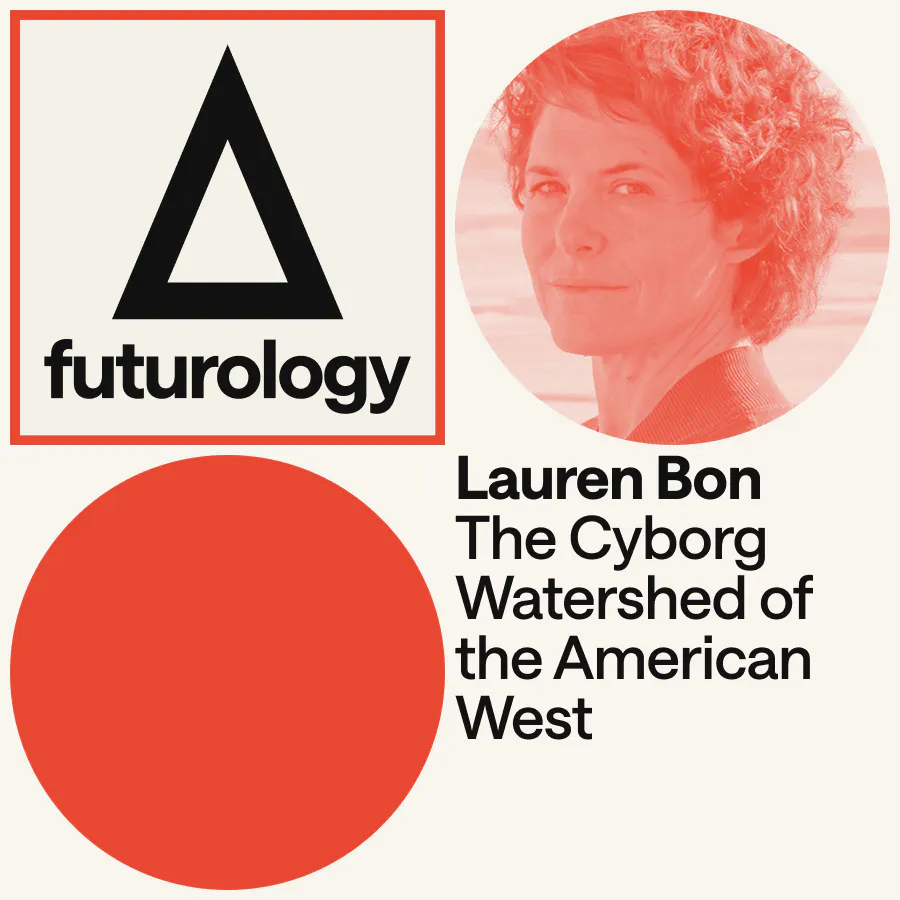
The Cyborg Watershed of the American West (with Lauren Bon and Grant Slater)
The ever-branching network of lakes, rivers, and streams that flow west from the Rockies enable human life to flourish in one of the hottest places on Earth. This is a “cyborg watershed” – part natural, part machine, and wholly entangled with the myths and machinery of the region.
In this episode, LA-based artist Lauren Bon joins Futurology producer Grant Slater to trace the path of her large-
The Death Knell of the Nation-State (with Rana Dasgupta and Jonathan Blake)
The modern nation-state wasn’t just a conglomeration of laws and armies. It was a belief in borders, in belonging, in the promise that citizenship could ground identity in a chaotic world. That belief is faltering.
In this episode, writer and thinker Rana Dasgupta joins Jonathan Blake to explore the spiritual and political collapse of state power.They unearth sovereignty's theological roots, as
How We Discovered Our Own Extinction (with Thomas Moynihan and Benjamin Bratton)
For most of human history, the end of the world was a divine promise, inevitable and liberating for the holy alone. But the invention of extinction changed that. This was no prophecy. It was discovery – a realization that the universe could go on without us – and probably would.
In this episode, philosopher Thomas Moynihan joins Benjamin Bratton to trace the history of a shift in thinking: that
The Rise of the Cyberocracy (with John Markoff and Grant Slater)
In the 21st century, Silicon Valley has coded into existence a vast memetic machinery — a self-replicating ecosystem of feedback loops, default settings, and algorithms now steering society at scale. Increasingly, it appears this emergent cyberocracy no longer wants to disrupt the world, but to govern it.
In this episode, veteran journalist John Markoff teases out novel strands of thought that
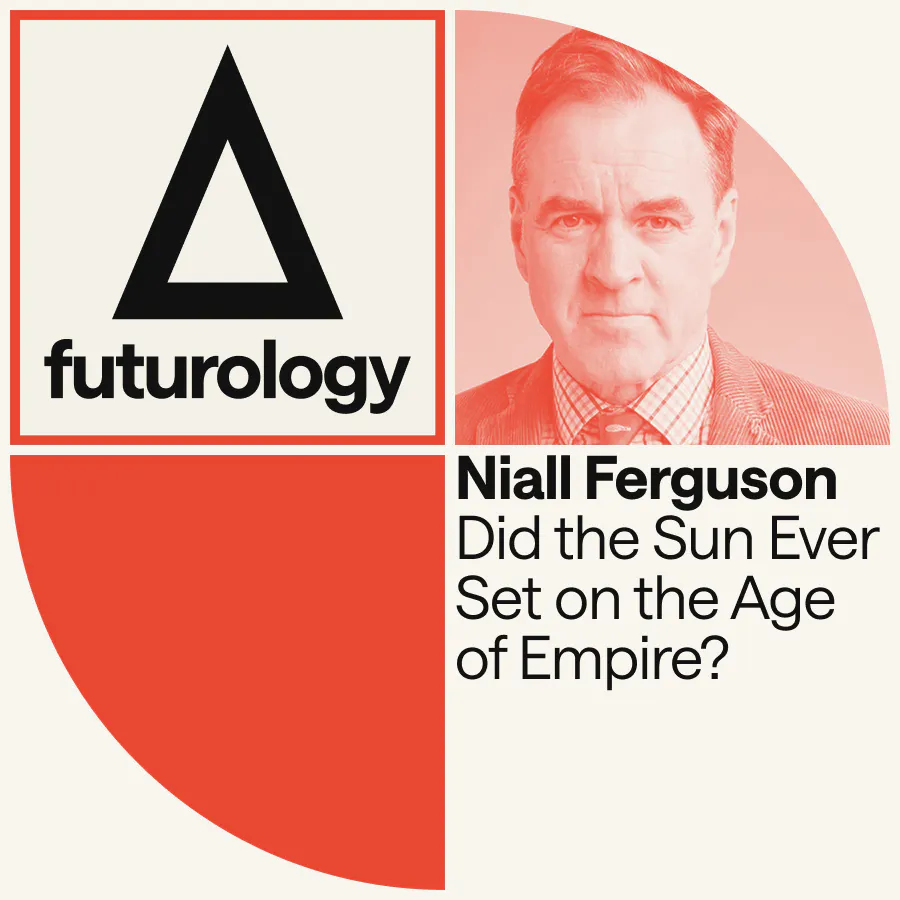
Did the Sun Ever Set on the Age of Empire? (with Niall Ferguson and Nathan Gardels)
On America’s 250th birthday, historian Niall Ferguson suggests that the US has reached an age when most republics fizzle out. Donald Trump’s rise is merely a symptom of this late-stage unspooling of an empire that America could never quite escape.
In this episode, Ferguson tells the story of a republic that burns hot, forgets fast, and could smolder on the ash heap of history sooner than we exp
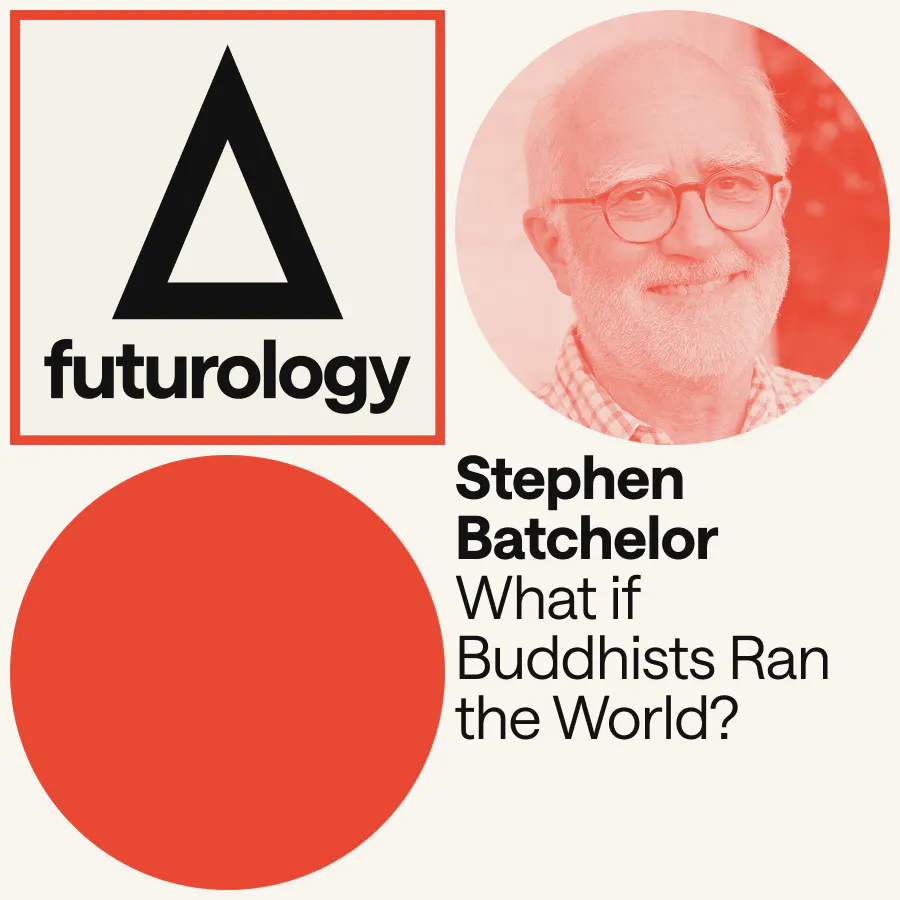
What if Buddhists Ran the World? (with Stephen Batchelor and Bing Song)
Stephen Batchelor has spent decades stripping Buddhism of its dogma to find what wisdom it can offer the modern world. Could cities and countries run on karma instead of capital?
In this episode, he sketches a vision of society grounded in awareness, compassion, and radical interdependence — a politics of presence rather than power. Stripped of its cosmologies, he argues, a secular Buddhism cou
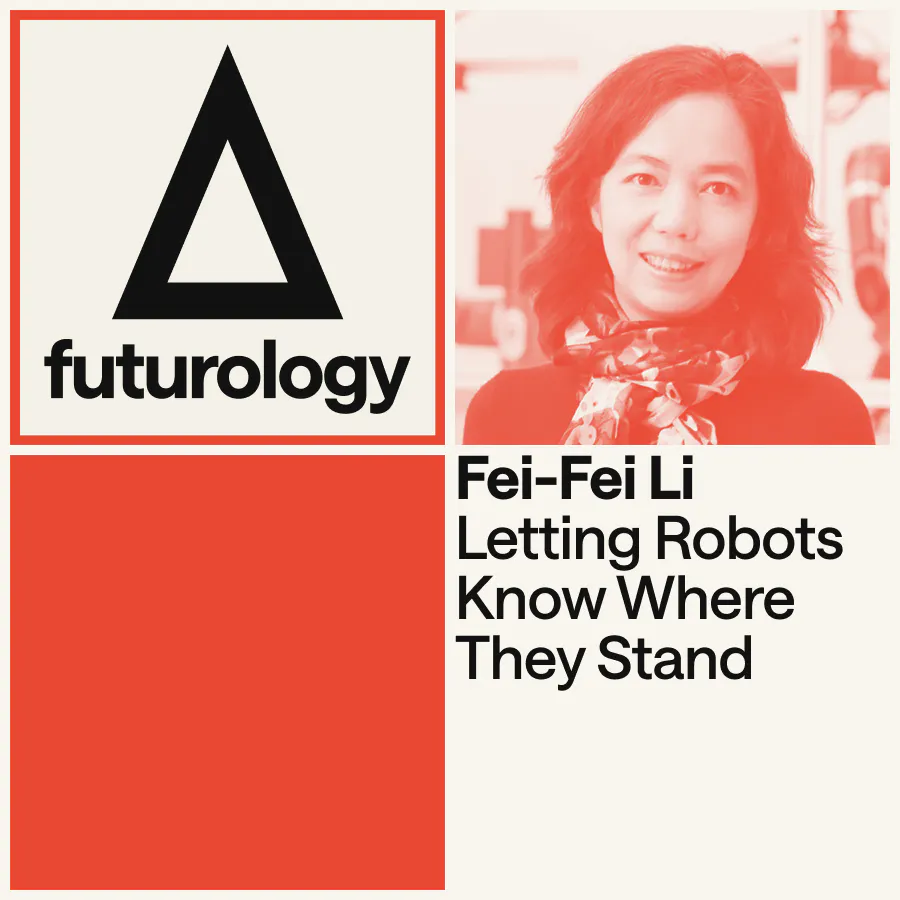
Letting Robots Know Where They Stand (with Fei-Fei Li and Dawn Nakagawa)
Before robots can act, they need to know where they are. That’s the deceptively simple premise behind the latest effort from machine vision pioneer Fei-Fei Li. She's building a Large World Model that will enable artificial intelligences to situate themselves in our reality and create entirely new worlds of their own, for human minds to inhabit.
In this episode, we trace the evolution of artifi
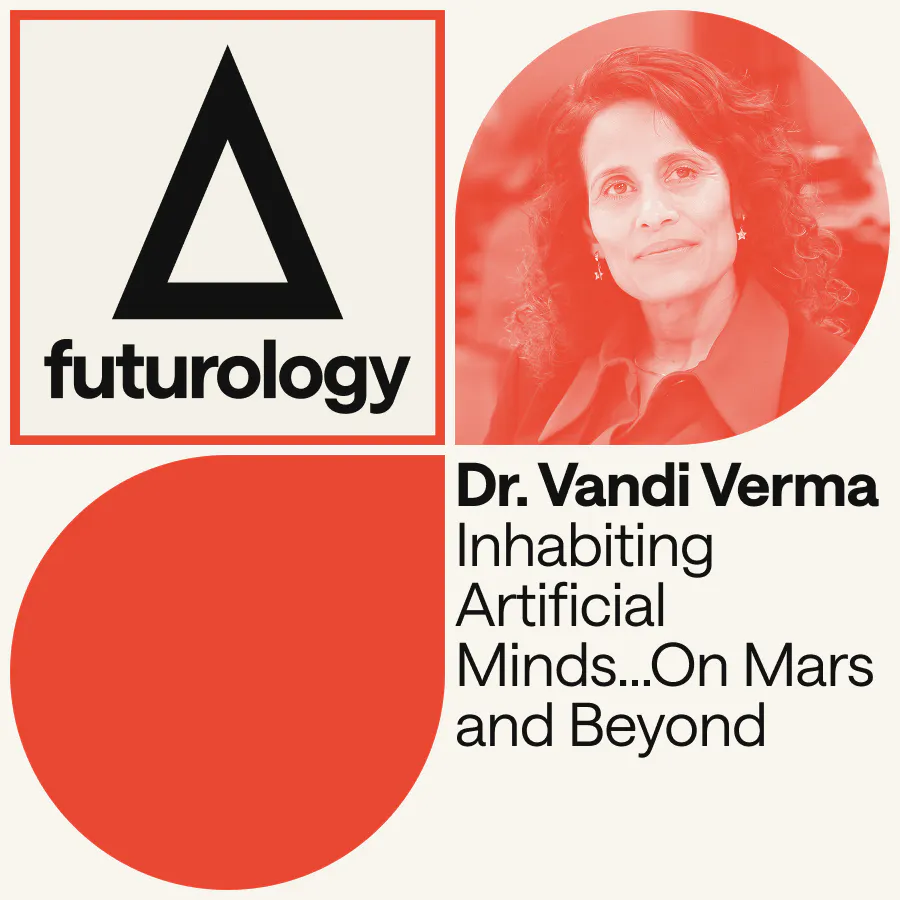
Inhabiting Artificial Minds... On Mars and Beyond (with Vandi Verma and Claire Webb)
If we ever land on another planet, we won’t be the first to arrive. It will be our machines — the ones we’ve trained, calibrated, and loaded onto rockets – who will roam alien landscapes.
In this episode, NASA roboticist Vandi Verma takes us inside the mind of a Mars rover — and into the process of building, steering, and co-evolving with machines that learn as they go. As we aim for unwelcomin
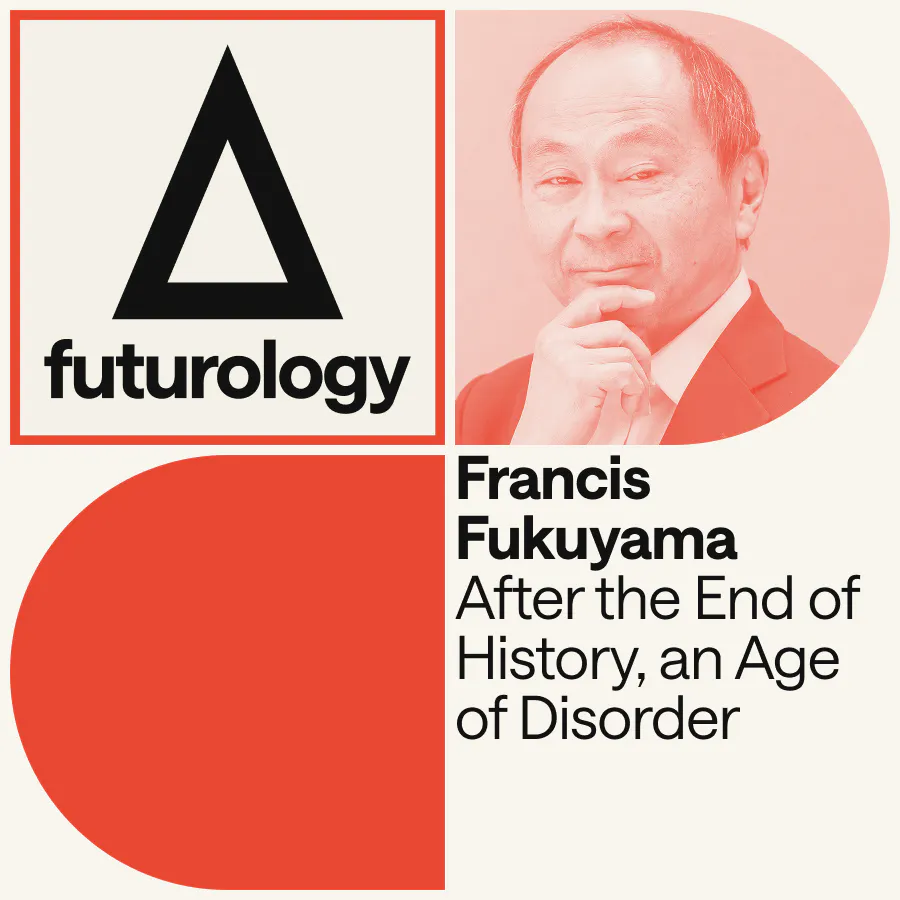
After the End of History, an Age of Disorder (with Francis Fukuyama and Nathan Gardels)
More than three decades ago, Francis Fukuyama saw the future: a world order that looked inevitable, stable, liberal. What emerged instead is something bumpier, louder, and far more dangerous.
In this episode, Fukuyama takes us on a ride through the strange resurrection of 19th-century power politics, the rise of political strongmen, and the collapse of trust that can dooms institutions to failu
Welcome to Futurology | Podcast Trailer
Futurology is a new a weekly podcast from the Berggruen Institute where we work to name what’s next. Join us as we imagine a future we can accomplish together, instead of one we must all work to prevent.
Recommended

Medicine with Meaning

Yours Truly Johnny Dollar Collection

Take Back Your Health®

CBS Radio Mystery Theater | Old Time Radio

Solved Murders - True Crime Stories
紐約鳥|New York Aperture
The Swerve Podcast: Obscure Topics | Conspiracy Theories

The Bread and Banter Podcast

The Church of What's Happening Now: The New Testament

Busted Open

Deadline: White House

Panda Show - Picante
