
Justified Posteriors
Justified Posteriors is a podcast that explores the economics of artificial intelligence and innovation. Hosts Seth Benzell and Andrey Fradkin discuss academic papers and essays at the intersection of economics and technology. Each episode examines how AI and other technological advances affect markets, productivity, and society. The show is tied to the Substack publication empiricrafting and offers a research-driven perspective on current economic questions.
Episodes

The Economics of a Global AI Treaty and Recursive Self-Improvement (w/ Epoch and Stanford's Philip Trammell)
This week we’re joined by Phil Trammell, economist at Stanford and senior researcher at Epoch AI, and co-author (with Chad Jones) of the “When GDP Misleads” paper we covered earlier. Phil is one of the most original thinkers on the economics of AI, and he brought his priors to an unusual assignment: a science-fiction scenario.We read the AI 2040 “Plan A” essay: a future in which the US and China a

Harvard Dean David Deming on AI and the Future of Harvard
This week, we’re joined by David Deming, top labor economist, blogger at the Forked Lightning Substack, and — since 2025 — Undergraduate Dean of Harvard College, to ask how the value of social skills will change in the age of thinking and talking machines. We start with his QJE paper “The Growing Importance of Social Skills in the Labor Market,” which models social skills as a factor that reduces

Daron Acemoglu on pro-worker AI and vibes based capital
We’re honored to host Daron Acemoglu, Institute Professor at MIT and 2024 Nobel laureate. Daron has spent a decade arguing that AI should be built to make human expertise more valuable rather than to replace it, most recently in “Building Pro-Worker AI” with David Autor and Simon Johnson, and in a Nature essay on why we should stop talking about AGI. He also has a new book out, What Happened to Li
Martin Beraja on AI-tocracy, the Benefits of Unclear Property Rights, and the Massive Potential of AI to Optimize Firms
This week, we’re joined by Martin Beraja of UC Berkeley Haas, one of the most prolific macroeconomists working on AI. We start with his newest paper “Growth at the Resource Frontier” — with Noam Yuchtman — which argues that NYT v. OpenAI is just the latest instance of a very old pattern — innovators appropriate resources nobody had bothered to assign property rights to (oil, the electromagnetic sp
Does GDP Growth Mislead Us About Quality of Life?
In this episode, we discuss “When GDP Misleads: Inferring Living Standards from the Value of a Statistical Life”, written by Stanford/Anthropic economist Chad Jones and Stanford/Epoch economist Philip Trammell. The word “AI” never appears in it, yet every argument about whether AI will show up in the statistics runs through the question of whether the statistics were ever measuring the right thing
Is AI Replacing Programmers or Boosting Them?
Justified Posteriors reads “Writing Code vs. Shipping Code” by Mert Demirer, Leon Musolff, and Liyuan YangIn this week’s episode of Justified Posteriors, we update our beliefs with evidence from an ambitious new paper estimating the impact of AI on software production productivity. Demirer (friend of the show), Musolff, and Yang combine public GitHub records for over 100,000 developers with confi
No AI Jobs Apocalypse (Yet) - and a Debt Problem (Now) | Martha Gimbel (Yale Budget Lab)
This week we’re joined by Martha Gimbel, executive director and co-founder of The Budget Lab at Yale. Martha has worked just about everywhere economic policy gets made — the Joint Economic Committee, the Obama and Biden Councils of Economic Advisers, and Indeed’s Hiring Lab — and she’s now one of the clearest voices on what the data does (and doesn’t yet) say about AI and the labor market.We start

Litigating the Pope's AI Encyclical with the Lawyers of Scaling Laws Pod
In this episode of Justified Posteriors, we host Alan Rozenshtein and Kevin Frazier — the law-professor duo behind Lawfare’s Scaling Laws — to take two of the most-discussed AI policy documents of the spring and subject them to an inquisition. Our disputors are probably not what Pope Leo anticipated: two lawyers, two economists, and probably 3/4ths Jewish. Talk about a crossover episode!First up i

Ioana Marinescu on Insuring Workers for AI, Monopsony, and Philosophy
This week we’re joined by Ioana Marinescu, labor economist at the University of Pennsylvania’s School of Social Policy & Practice, former Principal Economist at the U.S. Department of Justice Antitrust Division, and a member of Anthropic’s Economic Advisory Board. Ioana is one of the people who put labor-market monopsony on the antitrust map, and she’s now thinking hard about what the social safet

Kevin Bryan on Bottlenecks, AI in China, and What Economists Should Actually Be Working On
This week we to with Kevin Bryan, Associate Professor of Strategy at the University of Toronto’s Rotman School, author of the legendary economics blog A Fine Theorem, co-founder of the ed-tech startup All Day TA, and the man behind one of the most-discussed Twitter/X feeds in econ, @Afinetheorem.Kevin recently published a multi-book review of the economics of AI in the Journal of Economic Literatu

Seb Krier on AGI, the Coasean Singularity, and EDM
Seb Krier on AGI, Scaffolding, and Coasean Bargaining at ScaleIn this episode of Justified Posteriors, we welcome Seb Krier — policy lead for AGI at Google DeepMind and excellent Twitter poster. Speaking in his personal capacity, Seb walks us through his understanding of AGI, why AI alignment has gone better than expected, the potential and limitations of a world where agents constantly barter on

Avi Goldfarb on Prediction Machines, O-Ring Tasks, and How AI is Reshaping Economics
This week, we’re joined by Avi Goldfarb, one of the leading economists of artificial intelligence and co-author of Prediction Machines. Avi has been thinking seriously about AI economics long before the ChatGPT shock, so we asked him what he thinks the earlier framework got right, what it missed, and how economists should update their beliefs now.The conversation starts with Avi’s seminal book, Pr

The classic model that shows why AI exposure could increase wages
Get full access to Justified Posteriors at empiricrafting.substack.com/subscribeThis week, instead of reviewing a recent paper on AI, we go back to a 1993 classic: Michael Kremer’s “The O-Ring Theory of Economic Development.” It’s one of those papers that feels larger than its formal model. The setup is extremely simple: production consists of many tasks, and output depends on all of them going ri

The Most Important Philosophical Treatise of the 21st Century?
This week, instead of reviewing an economics paper, we reviewed a work of philosophy—perhaps the most important one of this young millennium so far. Anthropic published its new constitution for Claude in January 2026, and we read the whole thing so you don’t have to. Sometimes it reads like the US Constitution, laying out the basic law, sometimes like the Federalist Papers discussing itself. In pa

Alex Imas - Demand Collapse, Bargaining with Machines, and Behavioral AI Economics
University of Chicago behavioral economist Alex Imas joins us for a conversation on AI, economic growth, behavioral economics, and the future of science. We discuss whether AI could ever lead to negative growth, why simple “automation means abundance” stories may miss important welfare effects, and how behavioral economics changes the way we think about satiation, meaning, and human preferences in

The Economics of Book Slop
In this episode, Seth and Andrey break down AI and the Quantity and Quality of Creative Products: Have LLMs Boosted Creation of Valuable Books? by Imke Reimers and Joel Waldfogel, presented at the NBER Digital Economics and AI conference. Imke and Joel are a great team of digitization researchers, with particular expertise in Amazon book sales data.The paper uses Amazon data to ask whether AI has

Noah Smith on Blogging, AI Economics, and Elite Overproduction
We sit down with prominent blogger and economist Noah Smith to dig into the disconnect between AI hype and current macroeconomic reality. The central puzzle: if a “god machine” driving 20% annual GDP growth is truly imminent, why aren’t real interest rates skyrocketing as people borrow against a much wealthier future? Noah’s take is that markets are pricing in significant growth, but not civilizat
Basil Halperin: Leading Indicators for TAI, Conditions for the Singularity, and Tax Policy at the End of History
In this week’s episode of Justified Posteriors, we interview TAI expert and friend of the show Basil Halperin of the University of Virginia. There Basil is doing some of the most fascinating work on the economics of TAI with Anton Korinek and other leading researchers. The first section of our conversation covers Basil’s early career, including jobs at Uber and AQI, how he got interested in AI as

Can an AI Interview You Better Than a Human?
We discuss “Voice in AI Firms: A Natural Field Experiment on Automated Job Interviews” by Brian Jabarian and Luca Henkel. The paper examines a randomized experiment with call center job applicants in the Philippines who were assigned to either AI-conducted voice interviews, human interviews, or given a choice between the two.Key Findings:* AI interviews led to higher job offer rates and proportion

Anecdotes from AI Supercharged Science
Anecdotes of AI Supercharged Science: Justified Posteriors reads “Early Science Acceleration Experiments with GPT-5”In this episode, Seth and Andrey break down OpenAI’s report, Early Science Acceleration Experiments with GPT-5. The paper is organized as a series of anecdotes about how top scientists used an early version of GPT-5 in their scientific investigations. The coauthors of the papers try

Ben Golub: AI Referees, Social Learning, and Virtual Currencies
In this episode, we sit down with Ben Golub, economist at Northwestern University, to talk about what happens when AI meets academic research, social learning, and network theory.We start with Ben’s startup Refine, an AI-powered technical referee for academic papers. From there, the conversation ranges widely: how scholars should think about tooling, why “slop” is now cheap, how eigenvalues explai
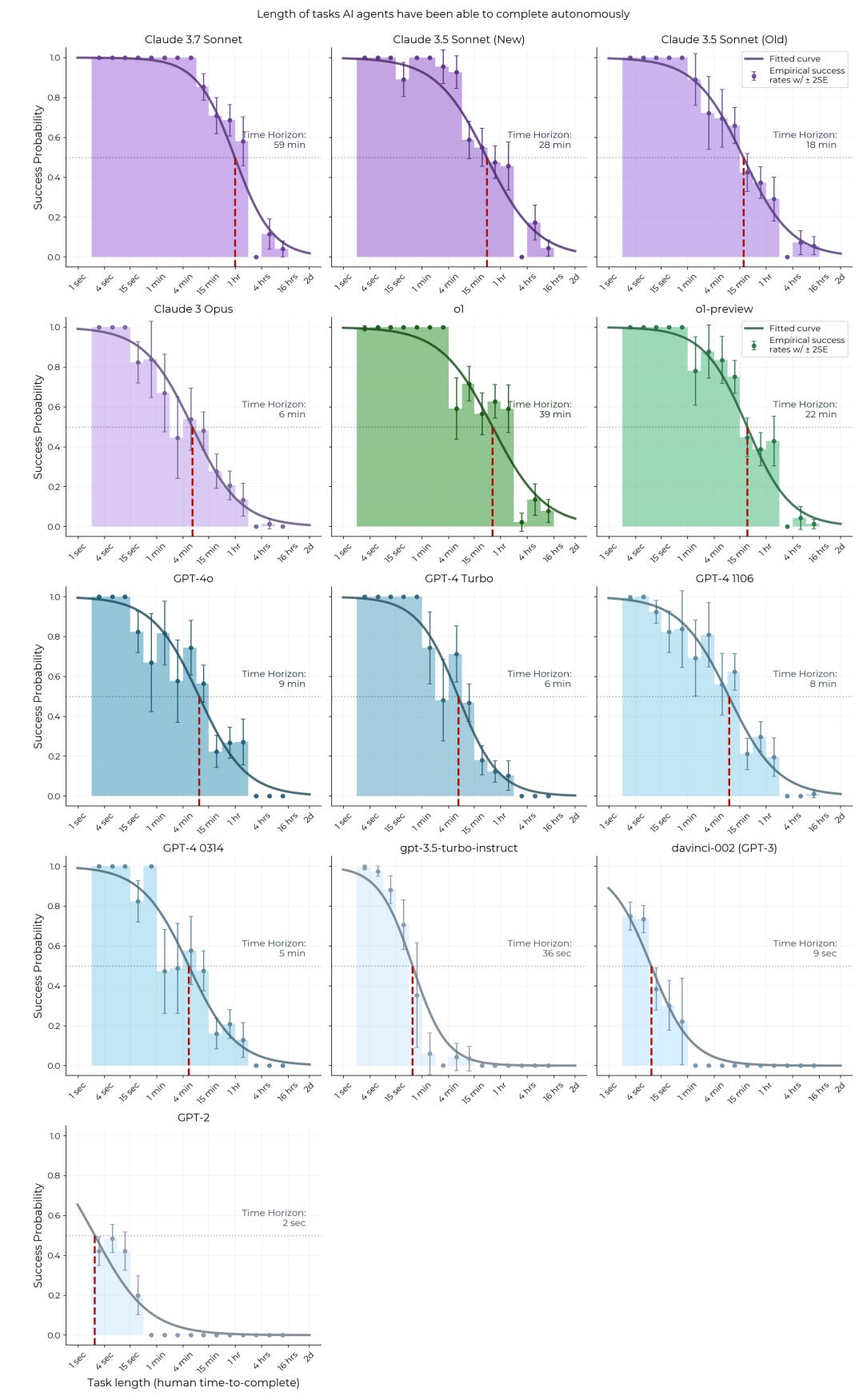
Are We There Yet? Evaluating METR’s Eval of AI’s Ability to Complete Tasks of Different Lengths
Seth and Andrey are back to evaluating an AI evaluation, this time discussing METR’s paper “Measuring AI Ability to Complete Long Tasks.” The paper’s central claim is that the “effective horizon” of AI agents—the length of tasks they can complete autonomously—is doubling every 7 months. Extrapolate that, and AI handles month-long projects by decade’s end. They discuss the data and the assumptions

Epistemic Apocalypse and Prediction Markets (Bo Cowgill Pt. 2)
We continue our conversation with Columbia professor Bo Cowgill. We start with a detour through Roman Jakobson’s six functions of language (plus two bonus functions Seth insists on adding: performative and incantatory). Can LLMs handle the referential? The expressive? The poetic? What about magic?The conversation gets properly technical as we dig into Crawford-Sobel cheap talk models, the collapse

Does AI Cheapen Talk? (Bo Cowgill Pt. 1)
In this episode, we brought on our friend Bo Cowgill, to dissect his forthcoming Management Science paper, Does AI Cheapen Talk? The core question is one economists have been circling since Spence drew a line on the blackboard: What happens when a technology makes costly signals cheap? If GenAI allows anyone to produce polished pitches, résumés, and cover letters, what happens to screening, hiring
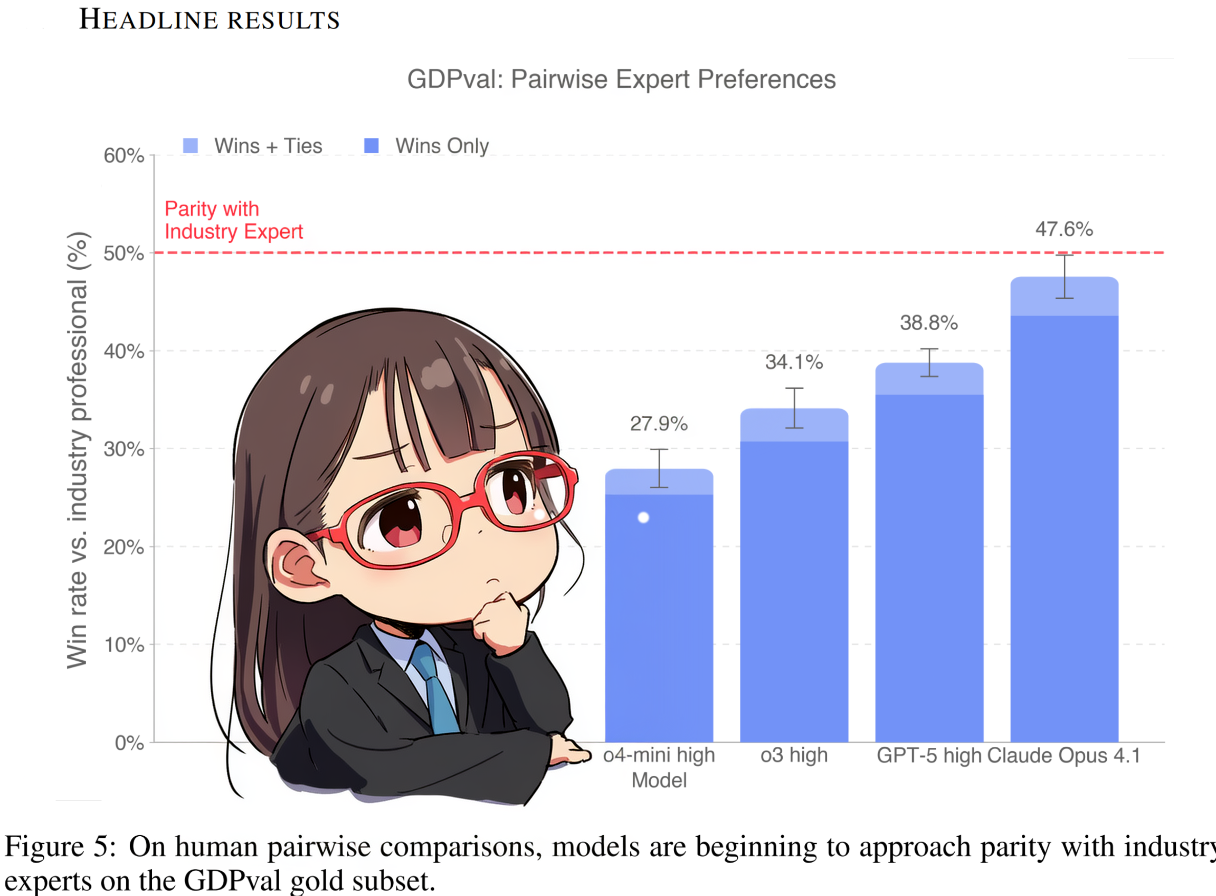
Evaluating GDPVal, OpenAI's Eval for Economic Value
In this episode of Justified Posteriors podcast, Seth and Andrey discuss “GDPVal” a new set of AI evaluations, really a novel approach to AI evaluation, from OpenAI. The metric is debuted in a new OpenAI paper, “GDP Val: Evaluating AI Model Performance on Real-World, Economically Valuable Tasks.” We discuss this “bottom-up” approach to the possible economic impact of AI (which evaluates hundreds o

Will Super-Intelligence's Opportunity Costs Save Human Labor?
In this episode, Seth Benzell and Andrey Fradkin read “We Won’t Be Missed: Work and Growth in the AGI World” by Pascual Restrepo (Yale) to understand what how AGI will change work in the long run. A common metaphor for the post AGI economy is to compare AGIs to humans and men to ants. Will the AGI want to keep the humans around? Some argue that they would — there’s the possibility of useful exchan

Can political science contribute to the AI discourse?
Economists generally see AI as a production technology, or input into production. But maybe AI is actually more impactful as unlocking a new way of organizing society. Finish this story: * The printing press unlocked the Enlightenment — along with both liberal democracy and France’s Reign of Terror* Communism is primitive socialism plus electricity* The radio was an essential prerequisite for fasc

Should AI Read Without Permission?
Many of today’s thinkers and journalists worry that AI models are eating their lunch: hoovering up these authors’ best ideas and giving them away for free or nearly free. Beyond fairness, there is a worry that these authors will stop producing valuable content if they can’t be compensated for their work. On the other hand, making lots of data freely accessible makes AI models better, potentially

EMERGENCY POD: Is AI already causing youth unemployment?
In our first ever EMERGENCY PODCAST, co-host Seth Benzell is summoned out of paternity leave by Andrey Fradkin to discuss the AI automation paper that’s making headlines around the world. The paper is Canaries in the Coal Mine? Six Facts about the Recent Employment Effects of Artificial Intelligence by Erik Brynjolfsson, Bharat Chandar, and Ruyu Chen. The paper is being heralded as the first evide
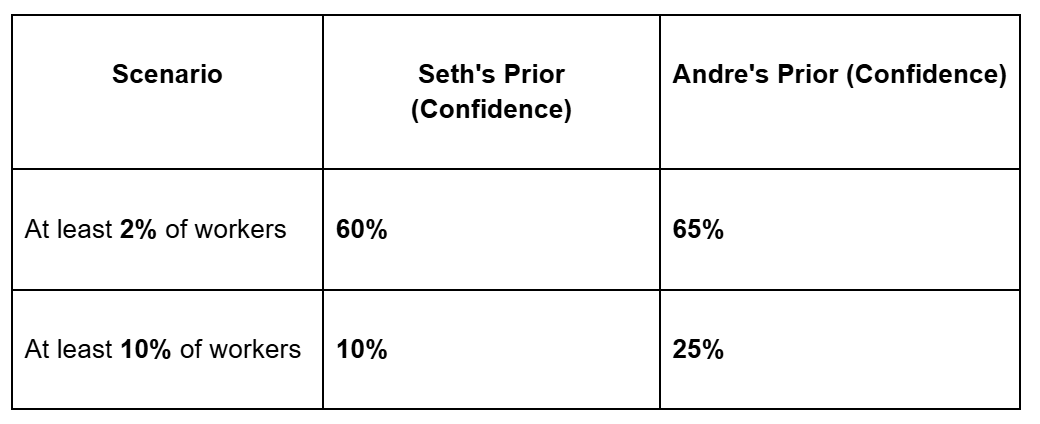
AI and its labor market effects in the knowledge economy
In this episode, we discuss a new theoretical framework for understanding how AI integrates into the economy. We read the paper Artificial Intelligence and the Knowledge Economy (Ide & Talamas, JPE), and debate whether AI will function as a worker, a manager, or an expert. Read on to learn more about the model, our thoughts, timestamp, and at the end, you can spoil yourself on Andrey and Seth’s pr

One LLM to rule them all?
In this special episode of the Justified Posteriors Podcast, hosts Seth Benzell and Andrey Fradkin dive into the competitive dynamics of large language models (LLMs). Using Andrey’s working paper, Demand for LLMs: Descriptive Evidence on Substitution, Market Expansion, and Multihoming, they explore how quickly new models gain market share, why some cannibalize predecessors while others expand the

What can we learn from AI exposure measures?
In a Justified Posteriors first, hosts Seth Benzell and Andrey Fradkin sit down with economist Daniel Rock, assistant professor at Wharton and AI2050 Schmidt Science Fellow, to unpack his groundbreaking research on generative AI, productivity, exposure scores, and the future of work. Through a wide-ranging and insightful conversation, the trio examines how exposure to AI reshapes job tasks and why

A Resource Curse for AI?
In this episode of Justified Posteriors, we tackle the provocative essay “The Intelligence Curse” by Luke Drago and Rudolf Laine. What if AI is less like a productivity booster and more like oil in a failed state? Drawing from economics, political theory, and dystopian sci-fi, we explore the analogy between AI-driven automation and the classic resource curse.* [00:03:30] Introducing The Intelligen

Robots for the retired?
In this episode of Justified Posteriors, we examine the paper "Demographics and Automation" by economists Daron Acemoglu and Pascual Restrepo. The central hypothesis of this paper is that aging societies, facing a scarcity of middle-aged labor for physical production tasks, are more likely to invest in industrial automation.Going in, we were split. One of us thought the idea made basic economic se

When Humans and Machines Don't Say What They Think
Andrey and Seth examine two papers exploring how both humans and AI systems don't always say what they think. They discuss Luca Braghieri's study on political correctness among UC San Diego students, which finds surprisingly small differences (0.1-0.2 standard deviations) between what students report privately versus publicly on hot-button issues. We then pivot to Anthropic's research showing that

Scaling Laws Meet Persuasion
In this episode, we tackle the thorny question of AI persuasion with a fresh study: "Scaling Language Model Size Yields Diminishing Returns for Single-Message Political Persuasion." The headline? Bigger AI models plateau in their persuasive power around the 70B parameter mark—think LLaMA 2 70B or Qwen-1.5 72B.As you can imagine, this had us diving deep into what this means for AI safety concerns a

Techno-prophets try macroeconomics: are they hallucinating?
In this episode, we tackle a brand new paper from the folks at Epoch AI called the "GATE model" (Growth and AI Transition Endogenous model). It makes some bold claims. The headline grabber? Their default scenario projects a whopping 23% global GDP growth in 2027! As you can imagine, that had us both (especially Andrey) practically falling out of our chairs. Before diving into GATE, Andrey shared a

Did Meta's Algorithms Swing the 2020 Election?
We hear it constantly: social media algorithms are driving polarization, feeding us echo chambers, and maybe even swinging elections. But what does the evidence actually say? In the darkest version of this narrative, social media platform owners are shadow king-makers and puppet masters who can select the winner of close election by selectively promoting narratives. Amorally, they disregard the he

Claude Just Refereed the Anthropic Economic Index
In this episode of Justified Posteriors, we dive into the paper "Which Economic Tasks Are Performed with AI: Evidence from Millions of Claude Conversations." We analyze Anthropic's effort to categorize how people use their Claude AI assistant across different economic tasks and occupations, examining both the methodology and implications with a critical eye.We came into this discussion expecting c

How much should we invest in AI safety?
In this episode, we tackle one of the most pressing questions of our technological age: how much risk of human extinction should we accept in exchange for unprecedented economic growth from AI?The podcast explores research by Stanford economist Chad Jones, who models scenarios where AI might deliver a staggering 10% annual GDP growth but carry a small probability of triggering an existential catas

Can AI make better decisions than an ER doctor?
Dive into the intersection of economics and healthcare with our latest podcast episode. How much can AI systems enhance high-stakes medical decision-making? In this episode, we explore the implications of a research paper titled “Diagnosing Physician Error: A Machine Learning Approach to Low Value Health Care” by Sendhil Mullainathan and Ziad Obermeyer.The paper argues that physicians often make p

If the Robots Are Coming, Why Aren't Interest Rates Higher?
In this episode, we tackle an intriguing question inspired by a recent working paper: If artificial general intelligence (AGI) is imminent, why are real interest rates so low?The discussion centers on the provocative paper, "Transformative AI, Existential Risk, and Real Interest Rates", authored by Trevor Chow, Basil Halperin, and Jay Zachary Maslisch. This research argues that today's historicall
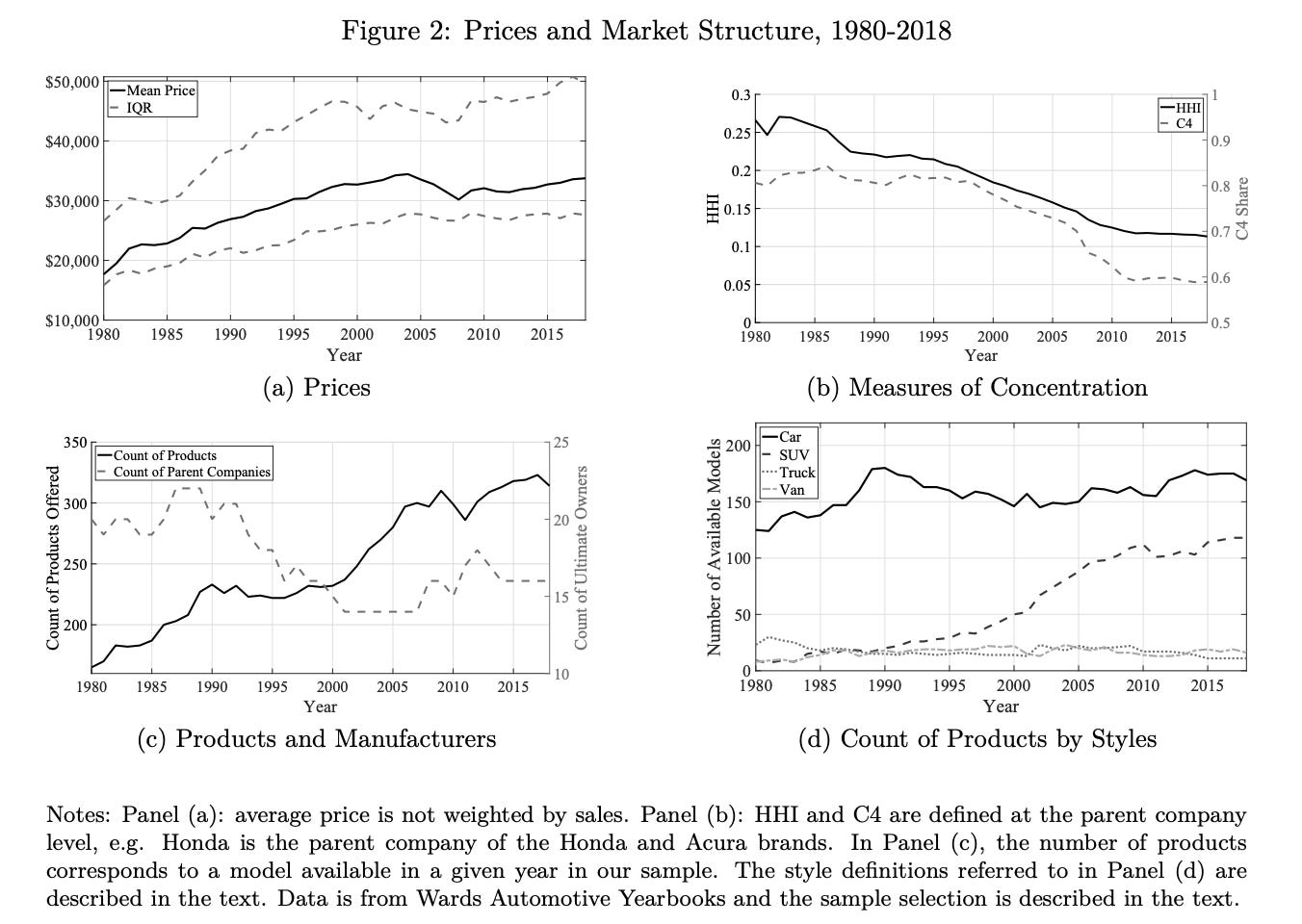
High Prices, Higher Welfare? The Auto Industry as a Case Study
Does the U.S. auto industry prioritize consumers or corporate profits? In this episode of Justified Posteriors, hosts Seth Benzell and Andrey Fradkin explore the evidence behind this question through the lens of the research paper “The Evolution of Market Power and the U.S. Automobile Industry” by Paul Grieco, Charles Murry, and Ali Yurukoglu.Join them as they unpack trends in car prices, market c

Scaling Laws in AI
Does scaling alone hold the key to transformative AI?In this episode of Justified Posteriors, we dive into the topic of scaling laws in artificial intelligence (AI), discussing a set of paradigmatic papers.We discuss the idea that as more compute, data, and parameters are added to machine learning models, their performance improves predictably. Referencing several pivotal papers, including early w

Is Social Media a Trap?
Are we trapped by the social media we love? In this episode of the “Justified Posteriors” podcast, hosts Seth Benzell and Andrey Fradkin discuss a research paper examining the social and economic impacts of TikTok and Instagram usage among college students. The paper, authored by Leonardo Bursztyn, Benjamin Handel, Rafael Jimenez, and Christopher Roth, suggests that these platforms may create a “c

Beyond Task Replacement
In this episode, we discuss Artificial Intelligence Technologies and Aggregate Growth Prospects by Timothy Bresnahan.* We contrast Tim Bresnahan's paper on AI's impact on economic growth, with Daron Acemoglu's task-replacement focused approach from the previous episode.* Bresnahan argues that AI's main economic benefits will come through:* Reorganizing organizations and tasks* Capital deepening (i

The Simple Macroeconomics of AI
Will AI's impact be as modest as predicted, or could it exceed expectations in reshaping economic productivity? In this episode, hosts Seth Benzell and Andrey Fradkin discuss the paper “The Simple Macroeconomics of AI” by Daron Acemoglu, an economist and an institute professor at MIT.Additional notes from friend of the podcast Daniel Rock of Wharton, coauthor of “GPTs are GPTs: An Early Look at th

Situational Awareness
How close are we to AGI, and what might its impact be on the global stage? In this episode, hosts Seth Benzell and Andrey Fradkin tackle the high-stakes world of artificial intelligence, focusing on the transformative potential of Artificial General Intelligence (AGI). The conversation is based on Leopold Aschenbrenner’s essay 'Situational Awareness', which argues that AI's development follows a p
Recommended

The Swerve Podcast: Obscure Topics | Conspiracy Theories

The Bread and Banter Podcast

The Church of What's Happening Now: The New Testament

Busted Open

Deadline: White House

Crickets Corner

History of the Earthquake and Fire in San Francisco

Fox news

K-Drama Obsessed Mamas | Beyond “Just One More Episode!”

True Crime Classics

The Healer Revolution

Becoming: HER with Nikki Spoelstra
