People Managing People
The People Managing People podcast equips forward-thinking leaders to thrive in the AI era. It focuses on reshaping teams, systems, and strategy without losing what makes work human. Hosted by David Rice, each episode brings real-world insights from innovators, executives, and people leaders. Topics include AI in practice, people-first leadership, performance systems, and workplace culture.
Episodes

The Human-AI Handoff Is More Complicated Than Companies Think
Most enterprise AI strategies start with the same question: What can we automate? It's a reasonable question if your ambition is to make the existing workplace run faster. It's a much less useful one if you're trying to build something better.In this episode, David Rice speaks with Paula Goldman, Chief Ethical and Humane Use Officer at Salesforce, about why human-AI collaboration de

How Do You Prove AI ROI When The Return Is Only 1%?
Most companies are still figuring out what an AI agent should actually do. JLL has moved well past that question. With agents operating across facilities management, brand communications, and corporate functions, the company is learning that the hardest problems aren’t necessarily technical—they’re about proving value, building trust, and making sure AI solves an actual business problem instead of

Is AI Making Your Employees Worse At Thinking?
Recorded live at the AI4 conference in Las Vegas, this conversation puts David Rice and Dr. Lilian Ajayi Ore—AI lead faculty and lecturer in strategic communication at Columbia University and co-author of The Power of the Learning Mindset—in the middle of one of the biggest questions surrounding workplace AI: Are companies gaining efficiency while quietly weakening their people’s ability to think?

Are Leaders Trading Future Capability For Short-Term AI Efficiency?
AI may be changing the work, but the bigger risk is what happens when organizations optimize so aggressively for today’s efficiency that they stop building tomorrow’s capability.Recorded live at the AI4 conference in Las Vegas, host David Rice sits down with Dr. Jana Brown, Chief Human Resources Officer at eHealth, to unpack the long-term consequences of shrinking entry-level pipelines, why HR nee

How Do You Automate Recognition Without Making It Feel Automated?
AI in HR has a credibility problem: the technology is getting better at spotting patterns, summarizing data, and automating work, but none of that guarantees a better employee experience. In this conversation, Motivosity Chief Product Officer Jesse Dowdle and VP of Engineering Dano Gillette make the case for “appreciation intelligence”—using AI to remove administrative friction without automating

What Happens When Employees Stop Speaking Up
When people stay quiet at work, organizations lose more than participation. They lose ideas, warnings, customer insight, process improvements, and market intelligence that never make it into the room. Seema Bhansali calls this the silence tax—the hidden cost companies pay when their environments make self-censorship the safer option.In this episode, Seema joins David Rice to unpack why “speak up”

Why AI Transformation Starts With Organizational Clarity
AI transformation has a funny way of becoming an organizational X-ray. The companies getting real value from it aren’t necessarily the ones buying the most tools or burning the most tokens. They’re the ones that understand what they’re trying to accomplish, what excellence looks like, and which problems are actually worth solving.In this episode of People Managing People, David Rice speaks with Za

How to Turn Employee Engagement Into a Business Case
HR has been told for years to “speak the language of the business,” usually as code for proving it deserves to be in the room. But Dr. Shindale Seale makes a stronger case: this isn’t about self-defense. It’s about leadership. If disengagement, poor management, weak culture, and badly handled transformation all carry measurable financial costs, HR needs to connect the human consequences to the num

HR Has the Skills to Lead the AI Era—But Will It?
There are two ways the AI transformation of work can go. We can hand the keys to the efficiency obsessives and spend the next decade trying to engineer the humanity out of organizations. Or HR can recognize that understanding motivation, organizational design, and how people actually experience work is suddenly a strategic advantage—and start acting like it.Jessica Zwaan, VP of People Strategy and

What AI Surveillance Can’t Tell You About Your Employees
Nobody sets out to build a workforce surveillance system. It usually arrives dressed up as optimization, productivity, wellness, or efficiency. But as AI makes it possible to monitor everything from keystrokes and mouse movements to emotions and physical behavior, the line between legitimate measurement and invasive surveillance gets harder to ignore.In this episode, I speak with Lynn Parramore, D

Why The EU Pay Transparency Directive Is More Than A Compliance Exercise
The EU Pay Transparency Directive isn’t just another reporting requirement. As pay reporting expert Tom Heys puts it, it’s closer to the UK gender pay gap regime “on steroids”—combining organization-wide reporting with individual employee rights, restrictions on recruitment practices, and requirements to group jobs of equal value and explain the pay differences within them.The bigger issue is what

Why AI Isn’t Delivering The Productivity Gains We Expected
AI spending continues to hit record highs, yet most organizations are still struggling to translate that investment into better work. In this conversation, David Rice sits down with Ofir Bloch of WalkMe to unpack the findings from the State of Digital Adoption 2026 report and explore why the problem isn't model capability—it's everything surrounding it.From the massive disconnect between

The New Leadership Test: What Makes Someone AI-Native?
AI is quickly becoming the new test of executive credibility—but there's a growing gap between leaders who use AI and leaders who've fundamentally rebuilt how they work around it. In this episode, David Rice sits down with JC Christian, President of executive search firm Christian & Timbers, to explore why "AI-enabled" is no longer enough and what it actually means to be AI

Why Traditional AI Risk Frameworks Are Breaking Down
AI adoption isn't slowing down—and neither are the risks. The challenge isn't that organizations don't know AI can create problems. It's that employees are already using it in ways leaders can't fully anticipate, while governance models built for yesterday's technology struggle to keep pace.In this episode, David Rice sits down with AI ethics expert and The Ethical Ni

The Team Habit That Separates High Performers From Everyone Else
AI isn't creating high-performing teams—it’s exposing the difference between teams that already know how to work well together and those that don’t. In this episode, David Rice sits down with social psychologist and Superteams author Ron Friedman to unpack new research on what separates the top 8% of teams from everyone else. The conversation challenges the assumption that AI is a universal p

Why AI Usage Reports Don’t Mean Much
AI transformation doesn't fail because the technology isn't good enough. It fails because organizations try to layer it on top of cultures that were already struggling with trust, learning, experimentation, and leadership. In this conversation, David Rice sits down with Meagan Bond, Founder and CEO of The Human Method, to unpack why psychological readiness—not technical readiness—is the

Your Best Candidate Might Have The Worst Resume
Resumes still matter—but not for the reasons we think. In a world where AI can polish anyone’s experience into a compelling narrative, the traditional hiring signals many organizations have relied on are losing their value. Heather Krueger, Chief People Officer at Engine, joins David Rice to explore what comes next when a polished resume becomes proof of tool usage rather than proof of talent.Thei

AI Is Forcing Everyone To Become Their Own Economy
AI isn’t arriving as a gradual workplace evolution—it’s arriving as a societal shift that many leaders are still struggling to describe honestly. In this conversation, David Rice sits down with Leap Academy founder and CEO Ilana Golan to explore what happens when skills expire in one to two years, organizations expect dramatically higher productivity, and career stability becomes the exception rat

Why Making Employees Work The Same Way Backfires
David Kolbe argues that most organizations are only measuring two-thirds of what drives performance. We assess what people know (skills) and how they tend to behave (personality), but often ignore how they instinctively take action. That missing piece—what Kolbe calls conation—shapes how people gather information, solve problems, make decisions, and navigate uncertainty.In this conversation, David

AI Is Rewarding The Loudest Employees
Most reward systems were built for a world where speed, volume, and visible output were reliable signals of performance. But AI now produces all three at scale. That leaves organizations facing an uncomfortable question: if AI can generate more output than ever, what exactly are you rewarding?In this episode, David Rice sits down with Anju Choudhary, Chief People Officer at Xoxoday, to explore why

Your Employees Stop Thinking The Moment They Feel Unsafe
What if the leadership skills we've spent decades rewarding are no longer the ones that matter most?In this conversation, mediator, peacemaker, and author Douglas Noll argues that AI is making critical thinking, emotional intelligence, and human connection more valuable—not less. As technology takes over more analytical work, leaders who can regulate trust, create psychological safety, and ke

AI Saved Oyster’s HR Team 400+ Hours a Year — Here’s How
AI promises efficiency, but the real question is what teams do with the time they get back. In this conversation from Transform in Las Vegas, Oyster’s Erin Goodey joins David Rice to unpack how global HR teams are balancing automation with human connection—especially when managing distributed workforces across countries, compliance requirements, and sensitive employee situations.Erin shares how Oy

Is Leadership Experience Becoming a Liability?
Most leaders think they’re navigating another wave of disruption. Sara Loncka argues we’re in something far more unsettling: discontinuity. The old assumptions don’t just need tweaking—they’ve stopped working altogether. Past experience, the thing leaders have spent entire careers building confidence around, is suddenly less reliable as a guide for the future. And that’s creating a strange kind of

Fewer Jobs, Higher Pay: The AI Compensation Paradox
Kyle Holm has spent 25 years advising companies on compensation, and right now he’s watching the logic of corporate hierarchy break in real time. Not because executives suddenly discovered organizational theory, but because AI is collapsing the distance between capability and influence. The old model—slow progression through management layers, credential accumulation, carefully staged promotions—i

Community Is the New Buzzword—But We’re Doing It Wrong
Most companies say they’re building community. What they often mean is: they launched a Slack channel no one reads, hosted an event with a neon sign and a DJ, watched people post about it on Instagram, and called the whole thing a success. Meanwhile, the people in the room never actually connected.In this episode, David sits down with Jessie Jacob, Culture First Community Manager at Culture Amp, t

AI Is Making People Decisions Worse—Here’s Why
AI is speeding up people decisions at exactly the moment those decisions require more care, more context, and frankly, more humility. In this episode, Matt Poepsel from The Predictive Index joins David Rice at Transform to unpack the growing gap between what AI can do and what organizations actually understand about the people data they’re feeding into it. Because while everyone is obsessed with a

Only 10% of Leaders Use AI—So Who’s Teaching Everyone Else?
Only 10% of senior leaders admit to using AI. Which raises an awkward question: if leadership isn’t really using the tools, who exactly is teaching everyone else how to work with them? Increasingly, the answer is peers. In this conversation from Transform, David Rice sits down with returning guest Kamaria Scott to unpack why AI adoption is becoming less of a top-down transformation initiative and

The “Mirror Test” Every Leader Needs Before Adopting AI
Most leaders are making AI decisions in the dark—restructuring roles, cutting headcount, and chasing use cases without understanding how work actually gets done. Not the org chart version. The real, messy, task-level reality. And that’s a problem, because when you don’t understand what creates value, automation becomes guesswork dressed up as strategy.Victoria Pelletier joins the show to challenge

How Great Leaders Prioritize in a World Where Everything Feels Urgent
Everything is urgent—until it isn’t. When every ticket is a fire, teams don’t move faster; they burn out. In this episode, Barbara Nicholas (CEO at Polly) borrows a lesson from search and rescue: urgency only matters when it actually changes outcomes. Most white-collar work isn’t life or death, but we’ve built cultures that pretend it is—and people are paying for it in cognitive overload and const

The AI “Sandwich”: Why HR Teams Are Caught in the Middle
AI in HR is finally moving out of the pitch deck and into the messy reality of day-to-day operations. In this conversation, Tim Fisher sits down with Josh Rod from HiBob to unpack what’s actually changing—and what’s still just noise. The headline? Most organizations aren’t chasing some agentic, fully automated future. They’re trying to make today’s workflows less painful, faster, and marginally mo

AI Is Like Fast Food for Your Brain
You don’t need to be using AI constantly to be hooked on it—you just need to feel relief when you do. That’s the uncomfortable premise at the heart of this conversation with psychologist and conflict expert Dr. David Zierk. AI doesn’t just give you answers; it removes uncertainty. And in doing so, it quietly rewires how you think, learn, and connect.What starts as convenience can quickly become de

When Your Expertise Stops Being Yours
AI is supposed to free people up for “higher-value work.” Fine. But what, exactly, is that work? In this episode, David Rice talks with cyberpsychology researcher and psychotherapist Dr. Rachel Wood about the part of AI adoption most organizations keep skimming past: the human cost of automating too much, too quickly, without a real philosophy for what should remain deeply, stubbornly human.Their

What Great Leaders Do Differently Under Extreme Pressure
Leaders love to frame AI transformation as a technology problem. It’s cleaner that way—tools, roadmaps, implementation plans. But what Anouk Brack lays out here is less flattering and far more consequential: this is a biological stress test, and most leadership teams are quietly failing it.Under constant uncertainty and pressure, your nervous system defaults to survival mode. That means the very c

Corporate Retail Therapy: Why More AI Tools Won’t Help
Your leadership team doesn’t have a strategy problem—it has an execution problem disguised as one. The offsite went great, the vision is crisp, and the slides look expensive. But somewhere between “bold initiative” and “Tuesday morning,” nobody translated strategy into what people should actually do. That gap? That’s where most organizations quietly stall.Tom Healy argues that L&D is the missi

AI Can Make a Good Job Feel Too Small
When turnover is low, leadership loves to call it stability. Jay Caldwell makes the more uncomfortable point: sometimes it is just fear with better optics. In this conversation, he and David unpack why “quiet staying” can become a serious organizational liability in an AI era—especially when people are still hitting goals, still showing up, and still slowly draining the place of experimentation, r

Why Expertise Is Becoming Cheap—and What Leaders Must Build Instead
If your organization looks successful on paper but feels strangely tense in practice, there’s a good chance fear—not excellence—is quietly running the show. In this episode, David Rice talks with Brave Together author Chris Deaver about how fear disguises itself in high-performing workplaces: polished presentations, perfect metrics, and meetings where nobody laughs—and nobody challenges anything e

Why Every Org Should Be Investing in Predictive AI
Businesses are pouring millions into generative AI—chatbots, copilots, “agents”—while quietly ignoring the other half of the AI stack that’s been delivering measurable value for decades. Predictive AI doesn’t write poetry. It predicts who’s going to churn, which transaction is fraud, and which customer is worth contacting. It calculates probabilities and helps you act on them at scale. Not glamoro

Why Mindset Beats Skill in AI Transformation
You were told AI would clear your calendar. Instead, you’re answering 800 chats a day and wondering what, exactly, you accomplished. Productivity is up. So is the volume. You 10x your output and somehow inherit 10x the work. Welcome to the hamster wheel.In this episode, Eliza Jackson, COO at ButcherBox, and I unpack the real transformation behind AI at work. It’s not about learning a new tool. It’
Why AI Power Users Will Outpace Everyone Else
Most employees are using about 1% of what AI can actually do. Not because they’re lazy. Not because they lack access. But because no one has shown them how to think with it. Meanwhile, somewhere in Silicon Valley, a 23-year-old is running a startup like they’ve got 28 PhDs sitting beside them—for a penny a minute. That gap isn’t theoretical. It’s operational. And it’s widening by the hour.In this

What We’re Getting Wrong About AI and Productivity
So yeah—your dashboards look great. Your team’s shipping faster, summarizing more, “getting leverage” with AI… and all the while you might be quietly trading away the one asset you can’t buy back on a subscription plan: human judgment.In this episode, I’m joined by Dr. Vivienne Ming—neuroscientist, entrepreneur, and an “AI realist” who has zero patience for utopian hype or Skynet fan fiction. Vivi
Designing for Readiness, Not Just Efficiency, in an AI-Augmented World
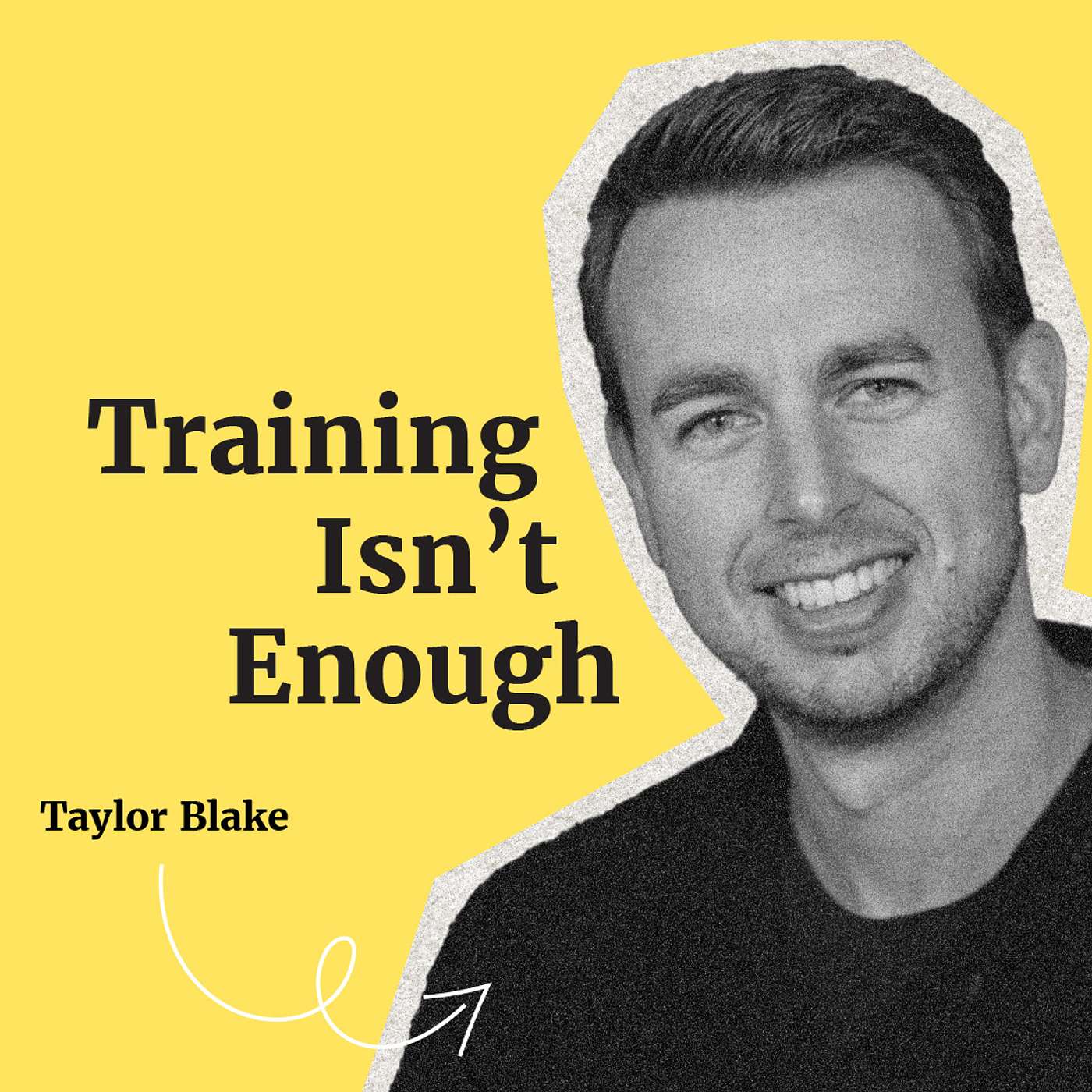
AI didn’t replace your job—it replaced your value proposition. In this episode, we sit down with Taylor Blake, SVP of AI Labs at Degreed, to talk about the uncomfortable truth facing L&D teams: if your job is framed as delivering content, unblocking employees, or feeding answers in the flow of work, AI is already doing it better, faster, and without your calendar invite.But where AI stops shor

From Tools to Agents: Preparing for the Next Phase of AI at Work
Most business leaders are still talking about AI as if it’s just another “productivity upgrade.” Meanwhile, the world building the future — massive data centers, AGI R&D, and winner‑take‑all investment — is sprinting ahead without guardrails, ethics, or broad societal input. In this conversation, researcher Christopher DiCarlo pushes executives to confront a reality most aren’t prepared for: A

From Curiosity to Confidence: A Practical Framework for AI Adoption
AI is everywhere—and yet, in most organizations, it’s nowhere. People are intrigued, but unsure. Leaders evangelize, but workflows stay the same. Curiosity, it turns out, is not a strategy. In this episode, we’re joined by Justin Angsuwat, Chief People Officer at Culture Amp, to unpack how they flipped the script. In just six weeks, they moved nearly 80% of their workforce from passively curious t

Why HR Gets Stuck on AI—and What It Takes to Lead the Transformation
For the past 18–24 months, HR teams have been asked a blunt question: What are you doing with AI? The response has often been activity without strategy — policies, guardrails, governance frameworks — busy work that signals compliance rather than creates value. Dr. Dieter Veldsman joins David to diagnose this pattern of urgency → paralysis → compliance, explain why it’s holding HR back, and show ho

The Real Work Now Is Managing Energy, Not Productivity
If you’ve noticed that effort stopped being a differentiator, this episode will explain exactly what shifted — and what actually drives value in modern work. Lena Thompson, a leadership consultant with a systems analysis background, argues that the era where hustle and logic alone produced breakthroughs is over. AI can outpace us on sheer processing — but it cannot manage emotional energy, and tha

Why Your AI Strategy Needs HR From Day Zero
If your organization still views HR as the compliance cops standing by to squash complaints about an AI mandate, this episode is going to upend that thinking. David sits down with Tim Fisher—Head of AI at Black & White Zebra and longtime observer of organizational behavior—to dissect the real challenge of AI adoption in business. What he’s learned from being an “HR outsider” is simple but stag

How Microcultures and Mental Fitness Are Redefining People Strategy
You can count system uptime down to six decimal places and predict when a machine will fail — but when it comes to your employees, you’re flying blind. You track turnover, burnout rates, engagement scores — but those are all lagging indicators, the wreckage after the crash. You’ve no real idea what’s happening beneath the surface: who’s sliding into despair, clutching exhaustion, or on the edge of

Building Confidence and Imagination in the Age of AI
Most leaders are waiting for a perfect AI strategy. Meanwhile, their teams are already experimenting — just not out in the open. Charlene Li joins me to talk about the real blockers to AI adoption inside organizations, and it’s not the tech. It’s fear, control, and a lack of imagination.We unpack why chasing ROI misses the point, how cultural mindsets shape our fears, and what it really takes to b

The Hidden Costs of Poor AI Adoption (And Who Should Fix It)
Your AI tools aren’t failing because the technology is bad — they’re failing because your organisation wasn’t ready. The real issue isn’t the model. It’s the mismatch between how machines operate and how humans work. And the result? Millions sunk into tools that don’t get used, don’t earn trust, or quietly increase complexity instead of reducing it.In this conversation with David Swanagon, founder

How to Prepare Your Workforce to Lead and Collaborate with AI
If you’re looking for a quick how‑to on rolling out AI in your org and actually seeing adoption—not just flashy pilots—you’ll want to stick with today’s episode. Glen Cathey joins us to get real about what it takes to move from “hey, we launched a chatbot” to a workforce that defaults to AI, and why most companies trip themselves up at the starting line.We peel back the usual “let’s train everyone

AI, Trust, and the Future of Leadership: What We’re Getting Wrong
We’re at a tipping point. The promise of AI to amplify human judgment and creativity is here—but too many organizations are instead using it as a surveillance tool, and in doing so, they’re sending a message: “We don’t trust you.” Amy Centers walks us through what’s really at stake when leaders outsource tough decisions to algorithms, when productivity becomes presence, when brain‑states and nervo

What AI Will — and Won’t — Replace in People Analytics
AI won’t replace 90% of what a strong people analytics team delivers. But what exactly is in that 90%—and how long will it stay out of reach? Roxanne Laczo (Head of People Analytics at Cloudflare), Cole Napper (VP of Research, Innovation & Talent Insights at Lightcast), and Noelle London (Founder and CEO of Illoominus) join David for a grounded roundtable on what AI can and can’t do in HR toda

Surveillance, Burnout, and Pickup Lines? The Realities of AI in the Workplace
We’ve reached the point where “AI in HR” isn’t just a buzzword—it’s a mandate. But with every vendor promising a smarter, faster, more predictive future, it’s getting harder to tell the difference between innovation and smoke and mirrors. In this episode, Alana Fallis and I go deep on how to navigate the noise: What should you actually invest in? How do you build real AI readiness, not just compli

AI Readiness Starts with Documentation: Lessons from Remote Work
If you’re out there being told to slap AI tools onto everything and call it “digital transformation,” this episode is your reality check. I sat down with Darren Murph—yes, the remote‑work oracle behind GitLab’s all‑remote strategy—to pull back the curtain on what needs to exist before you ever type “chatbot” or “LLM integration” into your roadmap.We dug into why good documentation isn’t optional a

How Agentic AI Is Changing Onboarding, Mentorship, and Retention
AI isn’t just generating insights anymore—it’s acting on them. In this episode, I talk with Francisco Marin, CEO of Cognitive Talent Solutions, and Dan George, the company’s Chief Experience Officer, about how agentic AI is changing the game for HR. These aren’t your standard dashboards—they’re autonomous systems that detect workforce patterns in real time and proactively intervene, from mentoring

The ROI of AI: How to Build an AI-Augmented Organization
We’re in an era where everyone’s talking about AI, but few are actually getting value from it. In this episode, futurist and author Ravin Jesuthasan joins host David Rice to unpack why the ROI of AI is still so elusive — and why most organizations are looking at it backwards.Ravin argues that the problem isn’t technological; it’s human. Companies are rushing to deploy tools before they rethink the

What AI Fluency Actually Looks Like—and How to Get There
Generative AI has crossed the threshold from novelty to necessity—but most organizations still haven’t caught up. In this episode, I talk with Kenneth Corrêa, global AI educator and author of Cognitive Organizations: Leveraging the Full Power of Generative AI and Intelligent Agents, about what it actually means to be AI fluent. Kenneth breaks down how leaders can move from scattered experimentatio

Why Financial Wellness Programs Fail—and How to Fix Them
Why is financial wellness such a universally agreed-upon priority yet so painfully hard to deliver in practice? In this episode, I sit down with Jason Lee—founder of DailyPay, Salt Labs, and now Chief of Chime Enterprise—to break down why employees don’t engage with financial programs, why saving feels like the world’s most boring habit, and what it takes to design benefits that people actually us

Equipping Teams to Use AI Without Losing Purpose
Most people don't burn out because they're working too hard—they burn out because they’re performing at a pace they were never built to sustain, chasing goals that don’t align with who they are. Matt Granados joins David Rice to unpack why the language we use around productivity—high performance, hustle, passion—is misleading at best, and actively harmful at worst.They get into the mecha

How AI Is Reshaping Leadership (and Why Agility Matters More Than Ever)
In a world where AI is eating the routine work and career ladders look more like Escher paintings, what does leadership agility really mean? In this episode, I sit down with David Jones, CEO and Partner at Mercer Assessments, to explore how leaders can ground themselves in productivity, positivity, people, and purpose while rethinking the broken systems we’ve inherited.We dig into why organization

Building Hybrid Teams That Work — Lessons Leaders Need Before Adding AI
We’ve all heard the pitch: “Hybrid work is the future.” But dig beneath the slogans and you’ll find wildly different realities—some thriving, others quietly imploding. In this episode, I sit down with Lynette Caruso, a PhD candidate at Australian National University, to unpack her field research across public and private sectors on what makes hybrid work succeed—or fail.From the power of casual co

How Nextdoor’s Head of People is Protecting Workplace Mental Health While Adopting AI
We’ve spent the last few years talking about mental health at work like it’s always a crisis—trauma, burnout, damage done. Bryan Power, Head of People at Nextdoor, thinks that framing actually makes the conversation harder. Instead, what if we positioned mental health as something everyone can access, not just people in distress? In this episode, we cut through the jargon and look at resilience, p

AI Risks in HR: Bias, Leadership Buy-In, and Employee Trust
What happens when an executive quietly outsources performance reviews to ChatGPT? Or when your C-suite is loudly preaching about AI adoption while refusing to touch the tools themselves? In this episode, I sit down with Talk HR to Me columnist and Head of People at Quantum Metric, Alana Fallis, to tackle real listener questions in a live advice-column format.We dig into the messy realities of AI i

From Layoffs to Loyalty: Building Alumni Networks That Work
Layoffs are often treated like a dirty secret—a rushed, impersonal process designed to move people out the door with as little friction as possible. But the way you offboard employees says just as much about your company culture as the way you welcome them in. In this episode, I sit down with Jena Dunay, founder of Recruit the Employer and host of Culture Uncovered, to talk about how organizations

Beyond Corporate Astrology: The Science and Strategy of Personality Assessments in Hiring
If you’ve ever sat through a personality test during hiring and thought, “This feels a bit like corporate astrology”—you’re not wrong. In this episode, I talk with Jason Hreha, Founder & CEO of Persona, about why so many workplace assessments are built on outdated theories and questionable science, and how to separate the gimmicks from the tools that actually help you hire better. We dig into

Redefining Engagement in a Post-Trust Era
The word “engagement” gets thrown around a lot—but what does it really mean in today’s workplace? In this candid, first-half conversation with Kamaria Scott, industrial-organizational psychologist and founder of Enetic, we take a hard look at how the definition of engagement has drifted, how the psychological contract between employees and employers has frayed, and why trust is harder to come by i

No Secrets, No Surprises: Inside a Firm with 15 Years of Open Books
Most leaders assume that transparency around pay and finances will sow discord or fuel envy. Mel Price is living proof that the opposite is possible. As co-founder and CEO of Work Program Architects, she’s spent the last 15 years running a firm with full salary and financial transparency—by design, not by accident. The result? A company where people understand how money moves, why decisions are ma

How AI Can Help HR Speak CFO: Turning Data into Strategy
HR leaders say they want a seat at the table—but too often, they show up without speaking the language. In this episode, David talks with Julie Mahfouz Rezvani, Managing Director of The Orion Group, about the critical gap between HR's people expertise and the commercial acumen needed to drive real business impact. Julie brings clarity to the misunderstood concept of "HR as a cost center,

Is Your Mission Real or Just Branding? How to Tell (and What to Do About It)
What happens when your mission statement no longer fits the company you're building? For Chase Warrington, Head of Operations at Doist, that question wasn’t rhetorical—it was a radical prompt that reshaped their culture. In this candid, live conversation recorded from the lawn of a remote work conference in Austin, Chase and David Rice unpack how purpose gets defined, tested, and redefined in

Why Connection in Remote Teams Must Be Designed, Not Accidental (And How to Do It)
We’ve heard all the usual suspects when it comes to remote engagement—Slack check-ins, virtual happy hours, maybe an annual engagement survey if we’re lucky. But what if the problem isn’t the tools, but the assumptions? In this episode, David Rice sits down with Dr. Adora Ikwuemesi, whose recent qualitative study of remote workers in Nigeria reveals a much deeper, more nuanced picture of what trul

From Values to Behaviors: How to Build a Culture of Candor
Candor is easy to value and hard to operationalize. It takes more than writing "feedback" on a poster and hoping people magically feel safe being honest. In this episode, I talk to Valentina Gissin, Chief People Officer at Garner Health, about how her team institutionalizes candor and turns culture into lived behavior—not empty slogans.We dig into radical practices like publishing peer a

The New Manager Playbook: How to Lead with Clarity and Confidence
Most new managers aren't failing because they're bad at the job. They're failing because no one ever told them what the job actually is.In this episode, David talks with Lia Garvin, author of The New Manager Playbook, about the real barriers keeping new managers from delivering results. It's not a lack of ambition or intelligence. It's a complete absence of clear expectati

From Government to Growth: Lessons in HR Leadership Across Sectors
Transitioning from the public sector to private HR isn't just a career move—it's a full-on culture shock. In this episode, Kimberly Williams, VP of People, Culture & Compliance at Walker Advertising, joins David to unpack her journey from federal HR to private enterprise, sharing hard-won lessons, surprising similarities, and the real stakes of navigating both worlds.From managing bu

The Tech Talent Shift: Navigating AI, DEI, and Next-Gen Workforce Demands
What do tech hiring, Olympic figure skating, and the shifting tides of global work culture have in common? According to Ann Kuss, CEO of Outstaff Your Team, more than you'd think. In this episode, Ann joins David Rice to dissect the rapidly evolving landscape of tech talent: who's winning, who's losing, and why so many companies are still playing yesterday's game with today&apo

Offsites Are the New Office: How to Drive Connection and Alignment in a Distributed World
Jared Kleinert, founder and CEO of Offsite, shares insights on the growing importance of team retreats in today’s distributed work environment. As remote and hybrid models become the norm, retreats have evolved from perks to essential strategies for keeping teams connected, aligned, and engaged.Jared emphasizes that planning intentional offsites is crucial for retaining talent and fostering a stro

Authenticity or Bust: Why Performative Values Don't Work Anymore
Kelly Meerbott, CEO of YOU: Loud and Clear, dives into the growing disconnect between the C-suite and everyday employees, exposing how middle managers become "human shock absorbers" caught between corporate pressures and workforce realities. She calls out performative leadership and urges executives to prioritize coherence over charisma, advocating for leaders who genuinely embody their

How Tone-Deaf Leadership Is Undermining Hybrid Work (And What to Do About It)
Many leaders still cling to outdated management styles focused on visible productivity rather than actual outcomes, despite a dramatic shift toward distributed teams. Brian Elliott, CEO of Work Forward, explains how the rise of hybrid work and AI tools highlights the need for outcomes-based management, rather than "productivity theater."Brian also points out that return-to-office mandate

AI at Work: Why Businesses Need a New Playbook
Steve Cadigan, a talent advisor and former CHRO of LinkedIn, joins us to discuss the challenges and opportunities of integrating AI into today’s workplace. We explore how the AI revolution stands apart from past technological shifts due to its unpredictability and ongoing development, leaving even its creators both excited and uncertain about its future.We also dive into the key question: How is y

Why Middle Managers Struggle—And How to Set Them Up for Success
The shift from managing individual contributors to overseeing other managers is one of the toughest transitions in leadership. Chris Williams, former Microsoft HR VP, explores why this change is so challenging and how organizations can better support these key leaders.Chris dives into the unique struggles faced by second-level managers, including finding mentorship and translating vague strategic

Is HR a Job in Politics?
Workplaces have become battlegrounds for political ideologies, with DEI initiatives at the center of controversy. In this episode, host David Rice speaks with Enrique Rubio, founder of Hacking HR, about the dangers of political polarization in organizations and why leaders must take a stand.Enrique challenges listeners to move beyond acronyms and see DEI for what it truly represents—fair treatment
Recommended

Yours Truly Johnny Dollar Collection

Take Back Your Health®

CBS Radio Mystery Theater | Old Time Radio
Solved Murders - True Crime Stories
紐約鳥|New York Aperture
The Swerve Podcast: Obscure Topics | Conspiracy Theories

The Bread and Banter Podcast
The Church of What's Happening Now: The New Testament
Busted Open

Deadline: White House

Crickets Corner

History of the Earthquake and Fire in San Francisco
