
CrashCourse
CrashCourse is an educational series that makes high-quality learning material available to everyone for free. Each week it publishes videos drawn from its many courses, covering subjects that range from the humanities to the sciences. The Crash Course team has produced more than 60 courses in total. It has also partnered with Arizona State University to release additional courses on the Study Hall channel. The project is funded through Patreon and shares updates across Instagram, Bluesky, TikTok and Facebook.
Episodes

The Election of 1860 and the Road to Disunion: Crash Course US History #18
In which John Green teaches you about the election of 1860. As you may remember from last week, things were not great at this time in US history. The tensions between the North and South were rising, ultimately due to the single issue of slavery. The North wanted to abolish slavery, and the South wanted to continue with it. It seemed like a war was inevitable, and it turns out that it was. But fir

Retrosynthesis and Liquid-Liquid Extraction: Crash Course Organic Chemistry #34
As we construct more complex organic molecules, it can start to feel like decrypting a complex code. Organic synthesis takes simple starting materials, and turns them into complex structures, and reverse engineering can help us figure out the steps in between. In this episode of Crash Course Organic Chemistry, we’ll practice multistep synthesis problems, learn about how we can use retro synthesis

Animal Behavior: Why This Toad Is Bad at Jumping: Crash Course Biology #49
Why do animals do what they do? It’s a huge question, and in this episode, we’ll learn how scientists break it down. We’ll talk about the proximate and ultimate studies they use to understand animal behavior, and some of what they’ve learned along the way — including how much decision-making other animals are really doing.Introduction: Animal Behavior 00:00Proximate Level 02:01Ultimate Level 03:06

Capitalism, Communism, and Political Economies: Crash Course Geography #38
Just like many great duos throughout history, Bulgaria and Germany have a fascinating (though uneven) relationship. In today’s episode, we’re going to take a closer look at the impact of politics on economies as we trace this history of Bulgaria and Germany following World War II, and examine the ways capitalism, and communism, impacted their economic strength today. SOURCESGeneralGetis, Bjelland,
Energy and Chemistry: Crash Course Chemistry #17
Grumpy Professor Hank admits to being wrong about how everything is chemicals. But he now wants you to listen as he blows your mind with a new sweeping statement: everything (yes, really everything this time) is energy. What?! This week, Hank takes us on a quick tour of how thermodynamics is applied in chemistry using his toy trebuchet as an example because he is a proud nerd. Pssst... we made fl

Bodies in Art: Crash Course Art History #11
In this episode of Crash Course Art History, we’ll hold a mirror to our bodies…in art, anyway. We’ll learn what portraits and self-portraits can tell us about the people they represent and about artists who’ve used bodies to critique their societies.Introduction: We All Have Bodies 00:00Portraits & Self-Portraits 00:56European Art & the Nude Figure 04:10"Becoming an Image" 07:18"Olympia" 08:46Revi

War and Expansion: Crash Course US History #17
In which John Green teaches you about the Mexican-American War in the late 1840s and the expansion of the United States into the western end of North America. In this episode of Crash Course, US territory finally reaches from the Atlantic coast to the Pacific Ocean. After Oregon was secured from the UK and the southwest was ceded by Mexico, that is. Famous Americans abound in this episode, includi

Biology and You: The Dr. Sammy Show: Crash Course Biology #50
Biology connects all of life—all of YOUR life. In the final episode of Crash Course Biology, Dr. Sammy is taking your questions. No matter how big, small, or personal, biology is in them all! He’ll show us how biology can help us solve problems and understand everyday life. Introduction: Biology and You 00:00Stress Response 01:27Ecological Niches 3:15Water Solvency 4:34Unity of Life 6:16Biology as

How Presidents Govern: Crash Course Government and Politics #14
This week Craig Benzine talks about how the President gets things done. Filling the role of the Executive Branch is a pretty big job - much too big for just one person. It's so big that the President employs an entire federal bureaucracy! Today, we’re just going to focus on those closest to the President, like the Vice President, the Cabinet, and the Executive Office of the President. We’ll figure

Passing Gases: Effusion, Diffusion, and the Velocity of a Gas - Crash Course Chemistry #16
We have learned over the past few weeks that gases have real-life constraints on how they move here in the non-ideal world. As with most things in chemistry (and also in life), how a gas moves is more complex than it seems at first. In this episode, Hank describes what it means when we talk about the velocity of a gas - to understand gas velocity, we have to know what factors affect it, and how. H

What’s Keeping the Stars Apart | Crash Course Pods: The Universe #7
In this episode, Katie Mack and John Green discuss the wonder keeping the stars apart... dark energy.Head to https://policygenius.com/crashcourse to get your free life insurance quotes and see how much you could save.This show is a production of Complexly. If you want to help keep Crash Course free for everyone, forever, you can join our community on Patreon at http://www.patreon.com/crashcourse
The Bicameral Congress: Crash Course Government and Politics #2
In which Craig Benzine teaches you about the United States Congress, why it's bicameral, and what bicameral means. Craig tells you what the Senate and House of Representatives are for, talks about some of the histories of the institutions, and reveals to you just how you can become a representative. It's not that easy. But an eagle gets punched, so there's that.Produced in collaboration with PBS D

Crash Course Outtakes
In which John Green teaches you that things don't always go as planned on the Crash Course set. Here we have outtakes from our Crash Course in Literature and some of the early US History episodes. Warning: there is some censored profanity in this video. It's pretty mild, you can probably handle it. Crash Course is on Patreon! You can support us directly by signing up at http://www.patreon.com/cras

Origins of Color (Trade and Exchange): Crash Course Art History #12
How can the color “red” be a global commodity? How can the way a statue stands be a sign of cultural exchange? In this episode of Crash Course Art History, we’ll explore how trade networks have moved both materials and ideas — and how art reflects a multi-directional flow of influences.Introduction: Bugs & Red Dye 00:00The Silk Road 01:10The Crusades 04:15The Conquistadors 07:42Review & Credits 09

Partial Pressures and Vapor Pressure: Crash Course Chemistry #15
This week we continue to spend quality time with gases, more deeply investigating some principles regarding pressure - including John Dalton's Law of Partial Pressures, vapor pressure - and demonstrating the method for collecting gas over water. Pssst... we made flashcards to help you review the content in this episode! Find them on the free Crash Course App! Download it here for Apple Devices: h
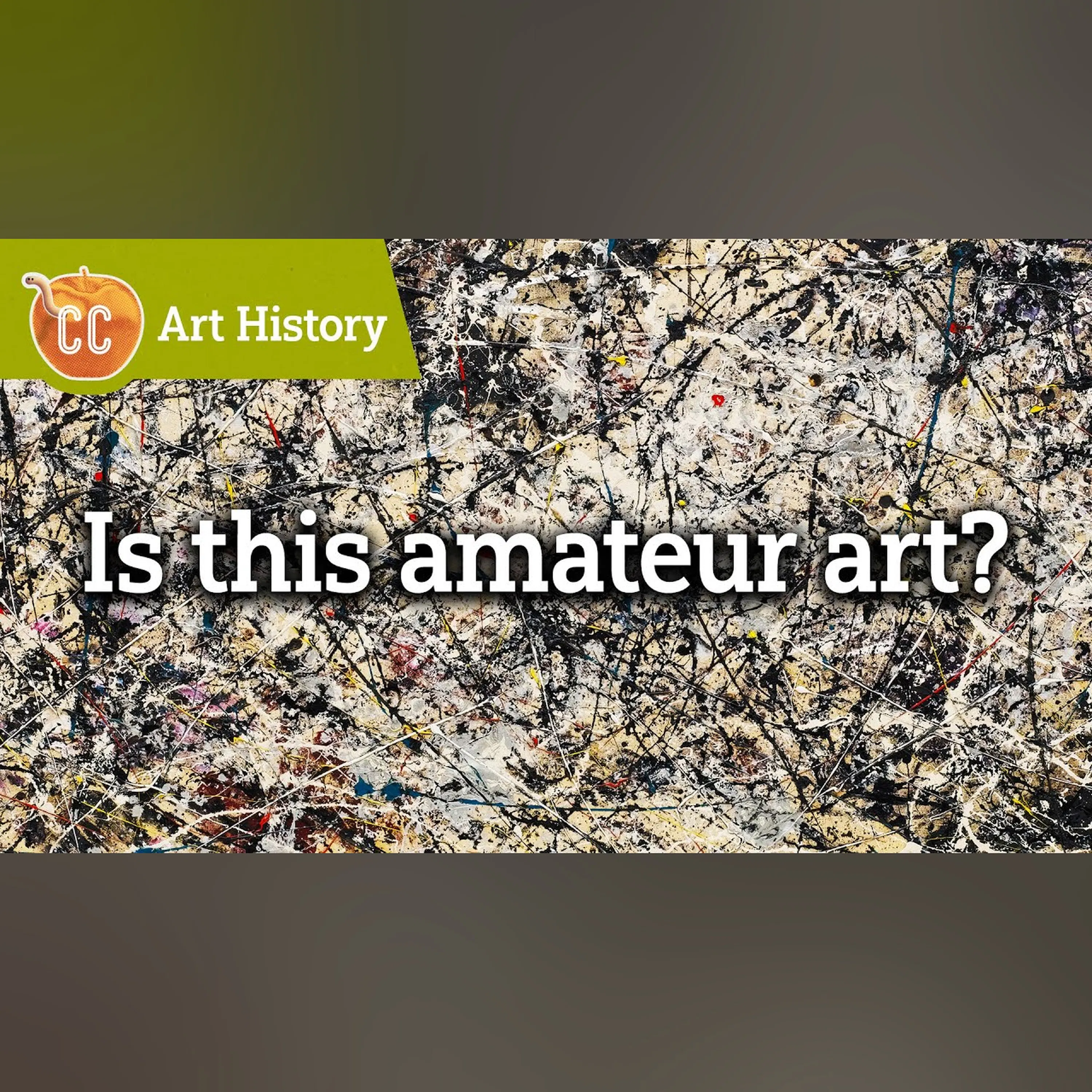
Who Gets to Be a "Real" Artist? (Amateur and Outsider Art): Crash Course Art History #13
For centuries, “official” art spaces have shaped whose work gets taken seriously. But there are no required qualifications for making art! In this episode of Crash Course Art History, we’ll explore amateurs and outsiders. We’ll learn how the line separating who’s in and who’s out has shifted over time — and how influences have drifted across it.Introduction: What Is an Amateur? 00:00The Origins of

The Underground Railroad: Crash Course Black American History #15
Escape was one of the many ways that enslaved people resisted their captivity in the system of American slavery. The Underground Railroad was not literally a railroad. It was a network of people, routes, and safe houses that helped people escape from slavery in the south to freedom in the north. Today we'll talk about the origins of the Underground Railroad, the systems that helped people escape,
Women in the 19th Century: Crash Course US History #16
In which John Green finally gets around to talking about some women's history. In the 19th Century, the United States was changing rapidly, as we noted in the recent Market Revolution and Reform Movements episodes. Things were also in a state of flux for women. The reform movements, which were in large part driven by women, gave these self-same women the idea that they could work on their own beha
How Are We All Part of Ending Outbreaks? Crash Course Outbreak Science #15
Over the course of this series, we've seen that outbreak science is actually MANY sciences, including biology, epidemiology, sociology, and even economics! Because outbreak science is an interdisciplinary field, everyone has a role to play in ending outbreaks, including you! In this final episode of Crash Course Outbreak Science, we'll take a look at how different fields come together to prepare f

Life In Our Universe | Crash Course Pods: The Universe #8
In this episode, Katie Mack and John Green discuss why life was able to happen. Head to https://policygenius.com/crashcourse to get your free life insurance quotes and see how much you could save.This show is a production of Complexly. If you want to help keep Crash Course free for everyone, forever, you can join our community on Patreon at http://www.patreon.com/crashcourse Chapters0:00 Introduc

Real Gases: Crash Course Chemistry #14
Hank bursts our ideal gas law bubble, er, balloon, and brings us back to reality, explaining how the constants in the gas law aren't all that constant; how the ideal gas law we've spent the past two weeks with has to be corrected for volume because atoms and molecules take up space and for pressure because they're attracted to each other; that Einstein was behind a lot more of what we know today t

What's the Difference Between Art and Design?
What counts as design? What counts as art? And how did this debate start? In this episode of Crash Course Art History, we’ll trace the history of privileging some materials and techniques over others. We’ll explore how street fashion, dinner plates, and a swan candelabrum blur boundaries that were never clear-cut to begin with.Crash Course Art History #14Introduction: "The Dinner Party" 00:00A Tim

19th Century Reforms: Crash Course US History #15
In which John Green teaches you about various reform movements in the 19th century United States. From Utopian societies to the Second Great Awakening to the Abolition movement, American society was undergoing great changes in the first half of the 19th century. Attempts at idealized societies popped up (and universally failed) at Utopia, OH, New Harmony, IN, Modern Times, NY, and many other place

Mars: Crash Course Astronomy #15
The fourth planet from the sun and the outermost of the terrestrial planets, Mars has long been a popular spot for missions and imagination. Phil walks you through the planet's topography, core, and features. We'll take a look back at Mars's past and makes predictions for its future, including the possibilities for human life.Check out the Crash Course Astronomy solar system poster here: http://st

How a Banana Sold for $150,000 : Modern Art
Our cultural perspectives shape how we perceive art, including who we see as contributing to its most important movements. In this episode of Crash Course Art History, we’ll get to the truth behind the creation of modernism and bust the myth of its European beginning. We’ll show how modernism was a truly global movement, in which far-flung artists responded to a rapidly changing world. Crash Cours
Ideal Gas Problems: Crash Course Chemistry #13
We don't live in a perfect world, and neither do gases - it would be great if their particles always fulfilled the assumptions of the ideal gas law, and we could use PV=nRT to get the right answer every time. Unfortunately, the ideal gas law (like our culture) has unrealistic expectations when it comes to size and attraction: it assumes that particles do not have size at all and that they never at
Cycles in the Sky: Crash Course Astronomy #3
This week we build on our naked eye observations from last week and take a look at the cyclical phenomena that we can see at work in the universe.Check out the Crash Course Astronomy solar system poster here: http://store.dftba.com/products/crashcourse-astronomy-poster--Chapters:Introduction 00:00Cycles in the Sky 0:42The Zodiac 2:10Planetary Movement 2:59The Earth's Axis 3:36Precession 6:09Things

Age of Jackson: Crash Course US History #14
In which John Green teaches you about the presidency of Andrew Jackson So how did a president with astoundingly bad fiscal policies end up on the $20 bill? That's a question we can't answer, but we can tell you how Jackson got to be president, and how he changed the country when he got the job. Jackson's election was more democratic than any previous presidential election. More people were able to

Why Is Everyone So Mad About Public Art?
From giant rock sculptures to Confederate statues, there’s something about public art that cranks up the temperature of debate. In this episode of Crash Course Art History, we’ll learn about public art’s diversity of media, how it shapes collective identity, and why it seems to cause such intense controversy.Crash Course Art History #16Introduction: Confederate Monuments 00:00What is Public Art? 1

Groundwater and the Israeli-Palestinian Conflict: Crash Course Geography #25
The Arab-Israeli Conflict, which is the ongoing political tensions and military conflicts between Arab nations and Israel, is one of the longest and most complex disputes in the world. Today, we're going to focus on more recent events, and look specifically at the role groundwater plays in preventing a pathway to peace between Israelis and Palestinians. Groundwater makes up the largest portion of

The Ideal Gas Law: Crash Course Chemistry #12
Gases are everywhere, and this is good news and bad news for chemists. The good news: when they are behaving themselves, it's extremely easy to describe their behavior theoretically, experimentally, and mathematically. The bad news is they almost never behave themselves. In this episode of Crash Course Chemistry, Hank tells how the work of some amazing thinkers combined to produce the Ideal Gas

Graffiti, Street Art and Murals: What We Learn from Public Art
Independent public art like graffiti and street art often gets a bad rap, thanks to its legal classification as vandalism. But these art forms have much to offer as a means for people to speak truth to power and take ownership of community spaces. In this episode of Crash Course Art History, we’ll explore the various ways artists have used illicit public art to express themselves.Crash Course Art

Slavery - Crash Course US History #13
In which John Green teaches you about America's "peculiar institution," slavery. I wouldn't really call it peculiar. I'd lean more toward a horrifying and depressing institution, but nobody asked me. John will talk about what life was like for an enslaved person in the 19th century United States, and how enslaved people resisted oppression, to the degree that was possible. We'll hear about cotton
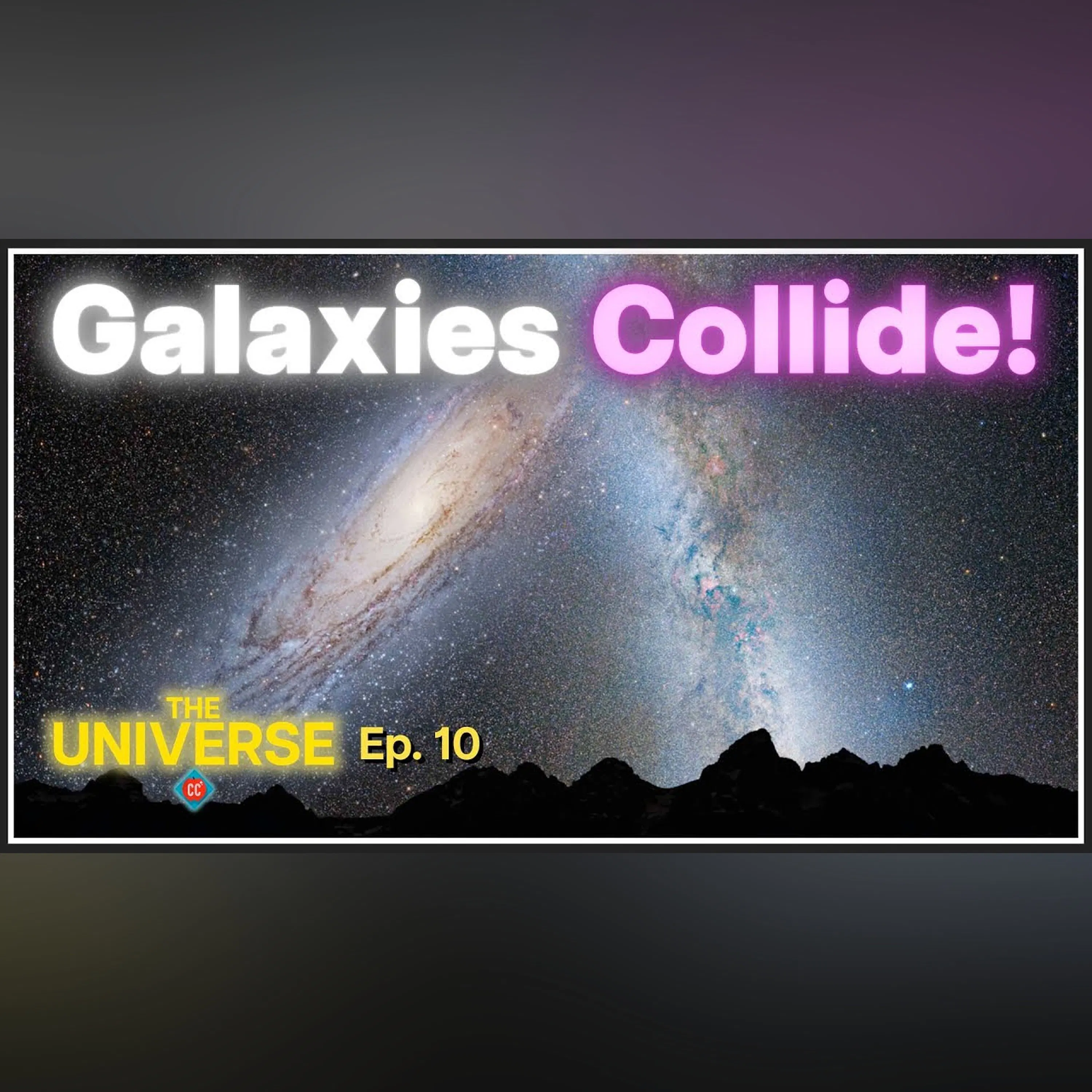
The Future | Crash Course Pods: The Universe #10
In this episode, Dr. Katie Mack gives John Green an idea of what to expect for the future of our universe. Head to https://policygenius.com/crashcourse to get your free life insurance quotes and see how much you could save.***Support us for $5/month on Patreon to keep Crash Course free for everyone forever! https://www.patreon.com/crashcourseOr support us directly: https://complexly.com/supportJoi
How to Speak Chemistrian: Crash Course Chemistry #11
Learning to talk about chemistry can be like learning a foreign language, but Hank is here to help with some straightforward and simple rules to help you learn to speak Chemistrian like a native. Pssst... we made flashcards to help you review the content in this episode! Find them on the free Crash Course App! Download it here for Apple Devices: https://apple.co/3d4eyZoDownload it here for Android
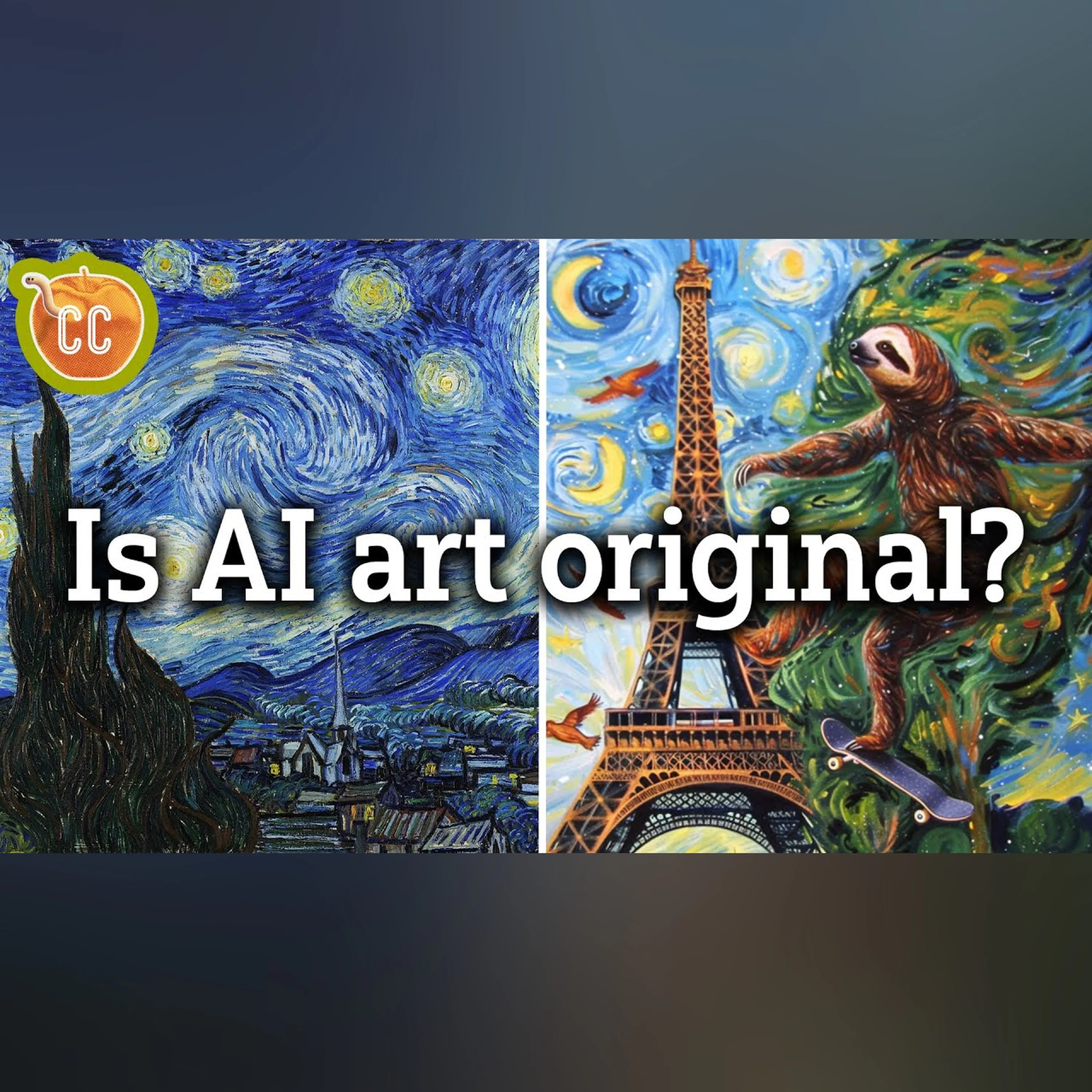
Is AI-Generated Art Original? (Authenticity and Originality)
What’s the line between inspiration and flat-out appropriation? In this episode of Crash Course Art History, we grapple with questions about artistic originality and authenticity that have plagued the art world for hundreds of years. In today’s world of AI-generated art, it’s only getting more complicated. You will see a few AI-generated images in this video as part of our effort to dive directly

Copyright Basics: Crash Course Intellectual Property #2
This week, Stan Muller teaches you the basics of copyright in the United States. Copyright law is territorial, so we're going to cover the system we know the most about, and that's the US. Stan will talk about what kind of ideas can be copyrighted, who can get a copyright, and what protections the copyright grants. We'll also talk about the always contentious and seemingly ever-growing term of cop

The Market Revolution: Crash Course US History #12
In which John Green teaches you about the Market Revolution. In the first half of the 19th century, the way people lived and worked in the United States changed drastically. At play was the classic (if anything in a 30-year-old nation can be called classic) American struggle between the Jeffersonian ideal of individuals sustaining themselves on small farms vs. the Hamiltonian vision of an economy

The Diels-Alder and Other Pericyclic Reactions: Crash Course Organic Chemistry #42
Going out in the sun can work wonders for your mood, but unfortunately too much UV exposure can do serious damage to your DNA. This damage occurs through a type of organic reaction called a pericyclic reaction. In this episode of Crash Course Organic Chemistry, we’ll explore pericyclic reactions to see how the sun can both give us life, and hurt us, and also look at other important pericyclic reac

Crash Course Religions Preview
Welcome to Crash Course Religions! Over the next 24 episodes, John Green will explore the history and culture of religions and how they offer frameworks for making sense of our lives — while being incredibly slippery things to pin down. We’ll discover how we define, debate, and contest what religion means, whether we’re personally religious or not. Episode 1 premieres on September 10, 2024.This co

Redox Reactions: Crash Course Chemistry #10
All the magic that we know is in the transfer of electrons. Reduction (gaining electrons) and oxidation (the loss of electrons) combine to form Redox chemistry, which contains the majority of chemical reactions. As electrons jump from atom to atom, they carry energy with them, and that transfer of energy is what makes all life on Earth possible. Watch this video in Spanish on our Crash Course en E

Why Is Art So Expensive?
What makes a painting worth millions of dollars? In this episode of Crash Course Art History, we’re looking at the history behind today’s art industry and how we determine an artwork’s financial value. We’ll also learn how the big business of buying and selling art runs on imperialism, and how people in the art world are fighting back. Crash Course Art History: Episode #19Introduction: Million-Dol

The War of 1812 - Crash Course US History #11
In which John Green teaches you about the War of 1812. The War of 1812 was fought between the United States and its former colonial overlord England. It started in, you guessed it 1812. The war lasted until 1815, and it resolved very little. John will take you through the causes of the war, tell you a little bit about the fighting itself, and get into just why the US Army couldn't manage to make a

What Even IS a Religion?: Crash Course Religions #1
When is yoga religious, and when is it… not religious enough? In this episode of Crash Course Religions, we’ll find out why these frameworks we call “religions” are so hard to define, and why our definitions have real-life consequences.Introduction: Is Yoga a Religion? 00:00What Are Religions? 01:32The History of "Religion" 05:48Impacts of the "Religion" Label 08:46Review & Credits 10:11Sources: h

Crash Course Outbreak Science Preview
Welcome to Crash Course Outbreak Science! What do pathogens actually do to us that makes us sick? Why do societies respond to outbreaks of infectious diseases the way they do? How can we stop the next outbreak? These are the kinds of questions we'll ask ourselves and answer as best we can over the next 15 episodes of this series. Join us and Dr. Pardis Sabeti as we look at outbreaks from the micro

Precipitation Reactions: Crash Course Chemistry #9
A lot of ionic compounds dissolve in water, dissociating into individual ions. But when two ions find each other and form an insoluble compound, they suddenly fall out of the solution in what's called a precipitation reaction. In this episode of Crash Course Chemistry, we learn about precipitation, precipitates, anions, cations, and how to describe and discuss ionic reactions.Watch this video in S

Thomas Jefferson and His Democracy: Crash Course US History #10
In which John Green teaches you about founding father and third president of the United States, Thomas Jefferson. Jefferson is a somewhat controversial figure in American history, largely because he, like pretty much all humans, was a big bundle of contradictions. Jefferson was a slave-owner who couldn't decide if he liked slavery. He advocated for small government but expanded federal power more
Does Defacing Art = Activism?
Art is the perfect tool for activists to get across their message and make people pay attention. In this episode of Crash Course Art History, we’ll learn about the centuries-long practice of iconoclasm, how art intersects with protest movements, and what happens to artists when the authorities aren’t thrilled by their acts of resistance.Introduction: Gran Fury & ACT-UP 00:00Performance Art 01:08Ja

Does Defacing Art = Activism?
Art is the perfect tool for activists to get across their message and make people pay attention. In this episode of Crash Course Art History, we’ll learn about the centuries-long practice of iconoclasm, how art intersects with protest movements, and what happens to artists when the authorities aren’t thrilled by their acts of resistance.Introduction: Gran Fury & ACT-UP 00:00Performance Art 01:08Ja

Acid-Base Reactions in Solution: Crash Course Chemistry #8
Last week, Hank talked about how stuff mixes together in solutions. Today, and for the next few weeks, he will talk about the actual reactions happening in those solutions - atoms reorganizing themselves to create whole new substances in the processes that make our world the one we know and love. This week, we focus on acids and bases and their proton-exchanging ways. Watch this video in Spanish
How Many Religions Are There?: Crash Course Religions #2
When we think of world religions, we often think of the Big Five: Judaism, Christianity, Islam, Hinduism, and Buddhism. But why do we think of those? In this episode of Crash Course Religions, we’ll learn why “world religions” is a category constructed by human choices—and why that matters for the communities that are left out.Introduction: "Coexist" 00:00The "Big Five" 00:53Colonialism & Religion
Taste and Smell: Crash Course Anatomy and Physiology #16
Hank resists the urge to devour a slice of pizza so that he can walk you through the way we experience our major special senses. It all boils down to one thing: sensory cells translate chemical, electromagnetic, and mechanical stimuli into action potentials that our nervous system can make sense of. Today we're focusing on smell (olfaction) and taste (gustation), which are chemical senses that cal

Where US Politics Came From: Crash Course US History #9
In which John Green teaches you where American politicians come from. In the beginning, soon after the US constitution was adopted, politics were pretty non-existent. George Washington was elected president with no opposition, everything was new and exciting, and everyone just got along. For several months. Then the contentious debate about the nature of the United States began, and it continues t

The Importance of Preserving, Restoring, and Conserving Art
Art tells the story of humanity across societies and cultures, but keeping that art around for future generations can be a monumental task. In this episode of Crash Course Art History, we’ll learn how art historians preserve, restore, and conserve art that tells the story of who we are and who we want to be. Introduction: "The Last Supper" 00:00Preservation 00:53Restoration 02:27"Ecce Homo" 04:03C

Crash Course Out-Takes Chemistry #1
Sometimes words can be hard to say. Crash Course is on Patreon! You can support us directly by signing up at http://www.patreon.com/crashcourseWant to find Crash Course elsewhere on the internet?Facebook - http://www.facebook.com/YouTubeCrashCourseTwitter - http://www.twitter.com/TheCrashCourseInstagram - https://www.instagram.com/thecrashcourse/CC Kids: http://www.youtube.com/crashcoursekids
Lear

What's the Difference Between Cults and Religion?: Crash Course Religions #3
What is a cult? How are cults different from religions? And why do many religious scholars say we shouldn’t even use that label? In this episode of Crash Course Religions, we’ll learn why the line between cults and religions is much fuzzier than it seems.Introduction: Is This a Cult? 00:00From Cult to Religion 00:36Brainwashing 03:03Qualities of Cults 04:04Ditching the "Cult" Label 05:40Harms of t

Water and Solutions - for Dirty Laundry: Crash Course Chemistry #7
Dihydrogen monoxide (better known as water) is the key to nearly everything. It falls from the sky, makes up 60% of our bodies, and just about every chemical process related to life takes place with it or in it. Without it, none of the chemical reactions that keep us alive would happen - none of the reactions that sustain any life form on earth would happen - and the majority of inorganic chemical

The Dred Scott Decision: Crash Course Black American History #16
In this video, we'll learn about the US Supreme Court decision in Scott vs Sanford, handed down in 1857. The case ultimately rejected the idea that Black people could be citizens of the United States, and this helped entrench the institution of slavery, denied a host of rights to a huge number of people (both enslaved and free), and increased the tensions between abolitionists and enslavers.Clint'

What is the Future of Art?
How do smartphones and 3-D models change how we experience art? And even history itself? In this episode of Crash Course Art History, we’ll learn how technology is shifting the ways we think about art’s past, present, and future. Crash Course Art History: Episode #22Introduction: Trendy "Museums" 00:00The Mosul Lion & Digital Karnak 00:55"Migration Series" 03:42Social Media & Art 05:43The Future o

Conflict in Israel and Palestine through 2015: Crash Course World History #223
*This video was published in 2015 and therefore does not reflect recent historical events, nor context about the ongoing conflict between Israel and Palestine.*In which John Green teaches you about the conflict in Israel and Palestine. This conflict is often cast as a long-term beef going back thousands of years, rooted in a clash between religions. Well, that's not quite true. What is true is tha
The Tuskegee Experiment: Crash Course Black American History #29
From 1932 to 1972, the United States Public Health Service and the Centers for Disease Control and Prevention operated an extremely unethical medical experiment on the effects of outcomes of untreated syphilis. Hundreds of poor Black men from Macon County, Alabama were enrolled in the study, and treatment for syphilis was withheld from them. Even after antibiotics became available that could cure

Tissues, Part 3 - Connective Tissues: Crash Course Anatomy and Physiology #4
On today's episode of Crash Course Anatomy & Physiology, Hank continues our exploration of tissues, with an introduction to your connective tissues.Pssst... we made flashcards to help you review the content in this episode! Find them on the free Crash Course App! Download it here for Apple Devices: https://apple.co/3d4eyZoDownload it here for Android Devices: https://bit.ly/2SrDulJChapters:Introdu

The Constitution, the Articles, and Federalism: Crash Course US History #8
In which John Green teaches you about the United States Constitution. During and after the American Revolutionary War, the government of the new country operated under the Articles of Confederation. While these Articles got the young nation through its war with England, they weren't of much use when it came to running a country. So, the founding fathers decided to try their hand at nation-building

Zora Neale Hurston: Crash Course Black American History #30
The Harlem Renaissance produced many remarkable artists, writers, and thinkers. Today we'll talk about one of the most interesting minds of the time, Zora Neale Hurston. Hurston was an anthropologist by training and spent much of her career studying and documenting the lives of Black people in the southern US. She later went on to write several remarkable novels, including Their Eyes Were Watching

Congressional Delegation: Crash Course Government and Politics #13
In which Craig Benzine teaches you about delegation and informal powers. What are all these federal agencies about? Well, the President has a lot of stuff to do as the chief executive, and as much as Americans like to talk about personal responsibility, the President can't really do all this stuff alone. Because it's a huge job! Same deal with Congress. So, they delegate authority. This is where a

What’s the Difference Between Religion and Magic? | Crash Course Religions #4
The word “magic” has dubious, demonic connotations. But is there really a difference between magic and religion? In this episode of Crash Course Religions, we’ll explore the history of magical practices and discover how modern-day witches, brujas, and Hoodoo practitioners are reclaiming the label.Introduction: Religion or Magic? 00:00What is Magic? 00:49Western Ideas of Magic 02:27Hurston & Hoodoo

Stoichiometry - Chemistry for Massive Creatures: Crash Course Chemistry #6
Chemists need stoichiometry to make the scale of chemistry more understandable - Hank is here to explain why and to teach us how to use it. Watch this video in Spanish on our Crash Course en Español channel: https://youtu.be/dZoMgEhNKKgPssst... we made flashcards to help you review the content in this episode! Find them on the free Crash Course App! Download it here for Apple Devices: https://appl

The Infinite Stories of Hinduism: Crash Course Religions #5
What does it mean to be Hindu? In this episode of Crash Course Religions, we’ll learn about the surprising history of the term “Hindu,” what the word “karma” really means, and how this vast, sprawling tradition contains more than one version of a story.Introduction: Hindu Celebrations 00:00Hindu Creation Stories 00:37Where Does "Hindu" Come From? 01:31Hindu Storytelling 02:38The Hindu Pantheon 04:

Who Won the American Revolution?: Crash Course US History #7
In which John Green teaches you about the American Revolution. And the Revolutionary War. I know we've labored the point here, but they weren't the same thing. In any case, John will teach you about the major battles of the war, and discuss the strategies on both sides. Everyone is familiar with how this war played out for the Founding Fathers; they got to become the Founding Fathers. But what did

Life, the Universe, and the Buddha: Crash Course Religions #6
Getting stuck in a video game can be frustrating—especially when that game is the cycle of suffering. In this episode of Crash Course Religions, we’ll explore the ways Buddhists try to leave that suffering behind and reach enlightenment, using the teachings of the Buddha, the three jewels, the four noble truths, and the eightfold path.Introduction: Game Over 00:00Buddhist Beliefs 00:38The Buddha 0

The Electron: Crash Course Chemistry #5
Hank brings us the story of the electron and describes how reality is a kind of music, discussing electron shells and orbitals, electron configurations, ionization and electron affinities, and how all these things can be understood via the periodic table. Watch this video in Spanish on our Crash Course en Español channel! https://youtu.be/N5apS0tE67cPssst... we made flashcards to help you review t

Introduction: Crash Course U.S. Government and Politics
In which Craig Benzine introduces a brand new Crash Course about U.S. Government and Politics! This course will provide you with an overview of how the government of the United States is supposed to function, and we'll get into how it actually does function. The two aren't always the same thing. We'll be learning about the branches of government, politics, elections, political parties, pizza parti
What Is Outbreak Science? Crash Course Outbreak Science #1
Infectious disease has affected the human species for as long as we’ve existed, but in that time we’ve come a long way in understanding what they are and how they spread. In this episode of Crash Course Outbreak Science, we’ll introduce some of the core concepts that will help us throughout this series as we discover the effects of infectious disease, from the microscopic, to the societal level.Th

Can a River Be A Person? | Indigenous Traditions: Crash Course Religions #7
What does it mean for a river to be a person? An ancestor, even? In this episode of Crash Course Religions, we’ll learn how Indigenous religious traditions’ emphasis on place, kinship, and diverse spirits challenge the dominant assumptions of the Western worldview. Introduction: The Whanganui River 00:00Indigenous Religion? 00:55Indigenous Beliefs 03:27Kinship 05:18The Importance of Place 06:24Law

Taxes and Smuggling - Prelude to Revolution: Crash Course US History #6
In which John Green teaches you about the roots of the American Revolution. The Revolution did not start on July 4, 1776. The Revolutionary War didn't start on July 4 either. (as you remember, I'm sure, the Revolution and the Revolutionary War are not the same thing) The shooting started on April 19, 1775, at Lexington and/or Concord, MA. Or the shooting started with the Boston Massacre on March 5

What Does it Mean to Be Jewish: Crash Course Religions #8
What does it mean to be Jewish? Is it being part of a religion, a people, a culture, a nation? All of the above? In this episode of Crash Course Religions, we’ll uncover how Jewish identity has been shaped by centuries of debate and deliberation.Introduction: Shabbat Toothbrushes 00:00The Many Versions of Judaism 01:01The Written Torah 03:49Zionism 05:51The Oral Torah & the Talmud 07:00Branches of

The Periodic Table: Crash Course Chemistry #4
Hank gives us a tour of the most important table ever, including the life story of the obsessive man who championed it, Dmitri Mendeleev. The periodic table of elements is a concise, information-dense catalog of all of the different sorts of atoms in the universe, and it has a wealth of information to tell us if we can learn to read it.Watch this video in Spanish on our Crash Course en Español ch

Crash Course Political Theory Preview
Welcome to Crash Course Political Theory! Over the next 13 episodes, Ellie Anderson will introduce you to the perspectives of political thinkers past and present, and explore how political theories apply to the most burning questions of our time. We’ll compare arguments, trace the origins of contemporary theories, and develop the skills to discuss, disagree, and decide what we want society to be.S

Enols and Enolates - Reactivity, Halogenation, and Alkylation: Crash Course Organic Chemistry #43
You may know that cows produce methane, which is a big concern when it comes to global heating, but did you know that organic chemistry provides a potential solution to this problem? Feeding cows small amounts of red seaweed can greatly reduce methane emissions, in part due to organic chemicals called enols! In this episode of Crash Course Organic Chemistry, we’ll learn all about enols and enolate
Venus: Crash Course Astronomy #14
Venus is a gorgeous naked-eye planet, hanging like a diamond in the twilight -- but its beauty is best looked at from afar. Even though Mercury is closer to the sun, Venus is the hottest planet in the solar system, due to a runaway greenhouse effect, and has the most volcanic activity in the solar system. Its north and south poles were flipped, causing it to rotate backward and making for very str
Recommended

Dark Night Tales with Brian King

Fantasy Flex

زن بودن

Medicine with Meaning

Yours Truly Johnny Dollar Collection

Take Back Your Health®

CBS Radio Mystery Theater | Old Time Radio

Solved Murders - True Crime Stories

紐約鳥|New York Aperture

The Swerve Podcast: Obscure Topics | Conspiracy Theories

The Bread and Banter Podcast

The Church of What's Happening Now: The New Testament
