
Please Discuss ...
Please Discuss ... is a podcast from the Brookings Podcast Network in which scholars from the Brookings Institution come together to talk through major issues of the day. Each episode features discussions grounded in facts, research, and a search for what is true, rather than opinion or spin. Topics span domestic and foreign policy, economics, governance, and society. The show has also run themed miniseries, including a three-part series on U.S. midterm elections.
Episodes
The shifting map of the 2026 midterm elections
In the debut episode of Please Discuss, Brookings scholar E.J. Dionne moderates a conversation about how changes to voting could have consequences for the 2026 midterm election landscape. Brookings scholars Elaine Kamarck, Elena Patel, and Scott Anderson examine mid-decade redistricting battles, court rulings over mail-in ballots, and the legal challenges testing both election administrators and v
Announcing "Please Discuss …," conversations rooted in research and a search for what's true
From the Brookings Podcast Network, Please Discuss ... is a new show that brings together the sharpest minds at Brookings and their guests to have discussions rooted in facts, research, and a search for what's true. On each episode, scholars unpack the defining issues of our time. Stay tuned in October for a three-part miniseries focused on the U.S. midterm elections. Subscribe wherever you get y

Financing Africa's economic growth
In this episode, Brahima Sangafowa Coulibaly, senior fellow and director of the Africa Growth Initiative at Brookings, and Lemma Senbet, William E. Mayer chair professor of finance at the University of Maryland, explain why national debts in sub-Saharan Africa have risen in recent years, the challenges of sustainably financing economic development, and the role of multilateral development banks in

The roots of America's divided politics
In this episode, Brookings Vice President Darrell West and Senior Fellow Camille Busette discuss themes from West's new book, "Divided Politics, Divided Nation: Hyperconflict in the Trump era," including the economic, geographic, racial, and technological factors that have exacerbated U.S. political polarization to its current breaking point, and what's needed to build a healthier democracy. West

Russia's challenge to the West
In this episode, Angela Stent and Keir Giles, authors of "Putin's World: Russia Against the West and with the Rest" and "Moscow Rules: What Drives Russia to Confront the West" examine the history of Russia's national identity and how the U.S. fundamentally misunderstands Russia's view of itself in conflict with the West. Full show notes: https://brook.gs/2Jsi99B Hosted by Adrianna Pita. With thank

Preventing violent extremism in fragile states
The Task Force on Extremism in Fragile States recently released its recommendations, calling for a new strategy to prevent violent extremism from developing in fragile states. Brookings Senior Fellow George Ingram and President of the U.S. Institute of Peace Nancy Lindborg explain why the U.S. needs to change its priorities from defeating terrorists militarily and focus on addressing the economic,

Realizing the value of black neighborhoods
In this episode, David M. Rubenstein Fellows Andre Perry and Jenny Schuetz examine past policies and current attitudes that have devalued homes and business in majority-black neighborhoods and the opportunities to be gained by building on the assets in majority-black places. Full show notes: https://brook.gs/2IRBHnQ Hosted by Adrianna Pita. With thanks to audio producer Gaston Reboredo, Chris McK

Advancing women's leadership around the world
In this episode, former Australian Prime Minister Julia Gillard, founder of the Global Institute for Women's Leadership and distinguished fellow with the Center for Universal Education (CUE), and CUE Fellow Christina Kwauk discuss the current state of gender equality in leadership roles, the pipeline from quality education for girls to increased opportunities for women in leadership, and the expan

Priorities for climate change action after COP 24
In this episode, Todd Stern, senior fellow and former special envoy for climate change in the Obama administration, and David Victor, co-chair of the Cross-Brookings Initiative on Energy and Climate, discuss the key issues at stake at the COP 24 negotiations in Poland, the absence of U.S. federal leadership on climate, and the state of U.S.-China cooperation on climate and energy priorities. Show

Recommendations for US policy toward Gaza
In between spikes of violence, the people of the Gaza Strip live in a state of perpetual crisis—a man-made humanitarian disaster of severe urban crowding, staggering unemployment, and a dire scarcity of basic services, including electricity, water, and sewage treatment. In this episode, CNAS Middle East Security Program Director Ilan Goldenberg, Brookings Center for Middle East Peace Director Nata

The promise of community colleges as pathways to high-quality jobs
Brookings Fellows Martha Ross and Elizabeth Mann Levesque discuss the important role that community colleges play in putting young adults on a pathway to higher-quality jobs and other strategies for improving economic outcomes for youth from lower-income and disadvantaged backgrounds. Full show notes available here: https://brook.gs/2Dm3AQn Hosted by Adrianna Pita. With thanks to audio producer G

What's next for Israel and the Palestinians 25 years after Oslo?
In a conversation with Natan Sachs, fellow and director of the Center on Middle East Policy, Distinguished Fellow Salam Fayyad, former prime minister and finance minister of the Palestinian Authority, and Visiting Fellow Jeffrey Feltman, former U.N. under-secretary-general for political affairs, assistant secretary of state for Near Eastern affairs, and career foreign service officer throughout th

Why racial inequality and regional economic inequality can't be separated
In this episode, Bradley Hardy, associate professor in the Department of Public Administration and Policy at American University and nonresident senior fellow in Economic Studies at Brookings, and Frederick Wherry, professor of sociology at Princeton University, explain how some economic policies have disproportionate impacts on black communities, and how that has to be understood to design better

How India and China are reshaping their neighborhood
In this episode, Dhruva Jaishankar, fellow in Foreign Policy at Brookings India, and Rush Doshi, post-doctoral fellow in Foreign Policy at Brookings, discuss the balance of power across the Indo-Pacific as China's influence grows and India seeks to increase economic connectivity and strengthen security relationships. Full show notes available here: https://brook.gs/2OVQP25 Hosted by Adrianna Pita

Americans stuck on the sidelines
In this episode, Isabel Sawhill, Brookings senior fellow and author of "The Forgotten Americans: An Economic Agenda for a Divided Nation," and Andrew Yarrow, senior fellow at the Progressive Policy Institute and author of "Man Out: Men on The Sidelines of American Life" look at two different groups of Americans forgotten by policymakers or sidelined from the U.S. economy and society. Sawhill and

Is anyone winning the US-China trade war?
In this episode, Brookings experts David Dollar, senior fellow with the John L. Thornton China Center, and Joseph Parilla, fellow in the Metropolitan Policy Program, examine what effect the trade war has had on the U.S. and Chinese economies–and workers–so far. They explain why trade wars don't actually reduce the trade deficit, which other countries might benefit, and what the prospects are for r

How Africa's historic free trade agreement will change the continent
In this episode, Nonresident Fellow Witney Schneidman and David M. Rubinstein Fellow Landry Signé discuss how Africa's Continental Free Trade Agreement will transform trade across the continent, accelerate industrialization and economic development, and what it means for future commercial relations with the U.S., EU, and other trading partners. Full show notes available here: https://brook.gs/2ODy
Trump and the crumbling of the US-led world order
In this episode, Robert Kagan, author of the forthcoming "The Jungle Grows Back: America and Our Imperiled World," and Thomas Wright, author of "All Measure Short of War: The Contest for the 21st Century and the Future of American Power," discuss with guest host Will Moreland how the success of the post-World War II international order left it vulnerable to internal complacency and external pressu
What the Supreme Court's Janus decision means for unions and workers
In this episode of Intersections, Vanessa Williamson and Elizabeth Mann Levesque review the Supreme Court's ruling on Janus v. AFSCME, which bars public-sector unions from collecting "fair share" or "agency" fees from non-union members to offset collective bargaining costs. Levesque and Williamson put the Janus case in the context of "right-to-work" legislation, the decline of private-sector union

How to make infrastructure work for people
In this episode, Brookings Fellow Adie Tomer, CityLab's Tanvi Misra, and Route Fifty's Mitch Herckis revisit the themes of Infrastructure Week with an examination of historical patterns of urban and suburban planning that separated communities and discuss infrastructure as system for stitching communities together and creating access to opportunity. Show notes: https://www.brookings.edu/podcast-e

The politics of reconstruction in Syria
In this episode, Tamara Cofman Wittes, senior fellow with the Center for Middle East Policy at Brookings, and Steven Heydemann, nonresident senior fellow at Brookings and Janet Wright Ketcham '53 Chair of Middle East Studies at Smith College, break down the difficult questions of how and when external actors should engage in reconstruction efforts in Syria without legitimizing the repressive regim

How should schools measure student success?
In this episode, Lauren Bauer, post-doctoral fellow in Economic Studies and the Hamilton Project at Brookings, and Anne Wicks, director of education reform at the George W. Bush Institute, explain how states are developing new measures of school quality and student success as required under the Every Student Succeeds Act. Bauer and Wicks also detail how using two specific measures - chronic absent

What the U.S. withdrawal means for the future of the Iran deal
On May 8, President Trump announced that the United States will reimpose sanctions on Iran, withdrawing the country from the Joint Comprehensive Plan of Action (JCPOA). In this episode of Intersections, Suzanne Maloney, senior fellow and deputy director of Foreign Policy, and Robert Einhorn, senior fellow in the Arms Control and Non-Proliferation Initiative, explain what this means for the continu

Transforming public spaces with learning landscapes
When children as young as two and three years old are already facing significant gaps in their exposure to words, numbers, and spatial understanding, urban planners and child psychologists are developing ways to transform community spaces - from bus stops to supermarkets - into opportunities to augment children's education through playful learning. In this episode, Kathy Hirsh-Pasek, Stanley and D

China, the U.S., and Africa's transforming trade environment
Witney Schneidman and Yun Sun examine the shape of U.S. and Chinese trade and investment in Africa, Africa's growing regional economic power, and how both China and the U.S. weigh in on political as well as economic development in African countries. Full show notes available here: https://brook.gs/2v3TL7h Hosted by Adrianna Pita. With thanks to audio producer Gaston Reboredo, Chris McKenna, Bren

The U.S., China, and India balancing act in the Indo-Pacific
In this episode, Tanvi Madan, fellow and director of the India Project, guest-hosted a conversation between Distinguished Fellow Shivshankar Menon and Nonresident Fellow Joshua White on how China's deepening economic investments across South and Southeast Asia and India's own expanding presence are affecting the regional balance of economic and political cooperation and competition. Full show not

Raising wages and strengthening economic progress for American workers
In this episode, Jay Shambaugh and Jared Bernstein discuss the decades-long trend of real wage stagnation and policy solutions for increasing productivity, strengthening wage growth, and ensuring that national economic growth is reflected in the living standards of all American workers. Full show notes available here: https://www.brookings.edu/podcast-episode/raising-wages-and-strengthening-econom

The women working to improve girls' education
For International Women's Day, we're showcasing the work of the Echidna Global Scholars – leaders from NGOs and academia who work to improve learning opportunities and outcomes for girls in the developing world. In this episode, Dasmine Kennedy, Armene Modi, Maria Cristina Osorio, and Damaris Parsitau talk about empowering some of the most marginalized girls in Jamaica, India, Mexico, and Kenya, a

The changing identity of America's middle class
In this episode, Camille Busette, senior fellow and director of the Race, Prosperity and Inclusion Initiative at Brookings, and Richard Reeves, senior fellow and co-director of the Center on Children and Families at Brookings, discuss the changing racial demographics of the U.S. middle class, political and cultural assumptions about the middle class, and what effect the increasing racial pluralism

America's "lost Einsteins": The importance of exposing children to innovation
In this episode, Stanford Professor Raj Chetty explains his new research that examines who becomes an inventor in America and who gets left behind, and discusses with Brookings expert Richard Reeves how innovation isn't a zero-sum game, and how inequality stifles American innovation. Full show notes: https://www.brookings.edu/podcast-episode/americas-lost-einsteins-the-importance-of-exposing-child
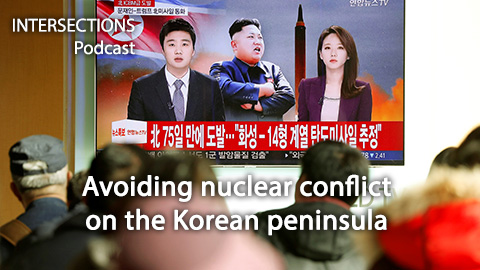
Avoiding nuclear conflict on the Korean peninsula
Bruce Jones, Jung Pak, and Ryan Hass discuss Kim Jong-un's strategic goals and the dynamics of the U.S., China, and South Korea in trying to denuclearize North Korea. Full show notes available here: https://www.brookings.edu/podcast-episode/avoiding-nuclear-conflict-on-the-korean-peninsula Hosted by Adrianna Pita. Intersections is part of the Brookings Podcast Network.

An Israeli Knesset member's perspective on activism and politics
For the last Intersections episode of the year, we're releasing a short conversation with Stav Shaffir, the youngest female member of Israel's Knesset, and Brookings Senior Fellow Tamara Wittes, held between sessions at the 2017 Saban Forum. Full show notes: https://www.brookings.edu/podcast-episode/an-israeli-knesset-members-perspective-on-activism-and-politics Hosted by Adrianna Pita. Send quest
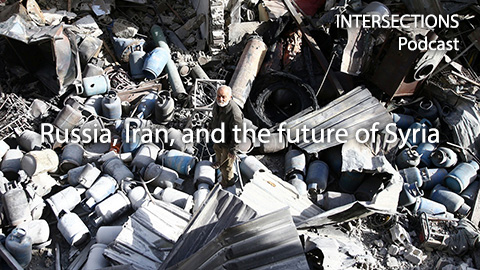
Russia, Iran, and the Future of Syria
Itamar Rabinovich and Amos Harel discuss the state of the civil war in Syria, Iran's growing presence and what that means for Israel, and the changing relationship between the Assad regime and Russia. Full show notes available here: http://brook.gs/2zRPguj Intersections is part of the Brookings Podcast Network.

Africa's expanding middle class
In this episode of Intersections, Haroon Bhorat, nonresident senior fellow with the Africa Growth Initiative, and Homi Kharas, interim vice president and director of the Global Economy and Development Program, discuss how the global trend of a rising middle class has played out in sub-Saharan Africa, whether a strong manufacturing sector is required for middle-class expansion, and the difference b
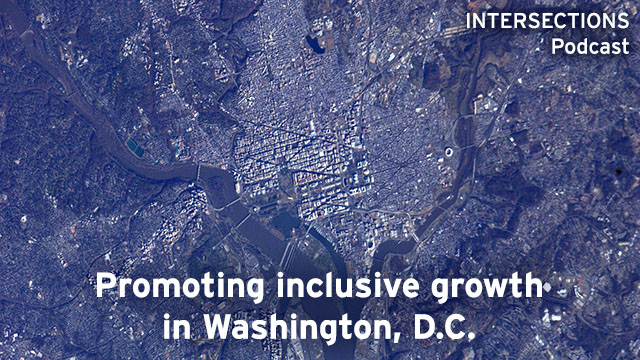
Promoting inclusive economic growth in Washington, D.C.
In this episode of Intersections, Amy Liu, vice president and director of the Metropolitan Policy Program at Brookings, and Jason Miller, nonresident senior fellow at Brookings and CEO of the Greater Washington Partnership, discuss the economic dynamics of the Washington, D.C. metro area, including the importance of regional cooperation, intentionality in building a long-term growth strategy, and
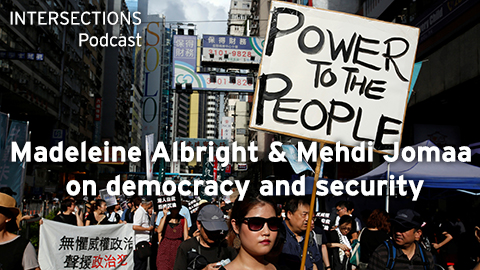
Madeleine Albright and Mehdi Jomaa on democracy and security
In this episode of Intersections, Brookings Senior Fellow Ted Piccone talks with former Secretary of State Madeleine Albright and former Prime Minister of Tunisia Mehdi Jomaa about the importance of liberal democracy in strengthening international security, and why states should encourage democratic participation among their people as a means to achieve greater domestic security. Full show notes
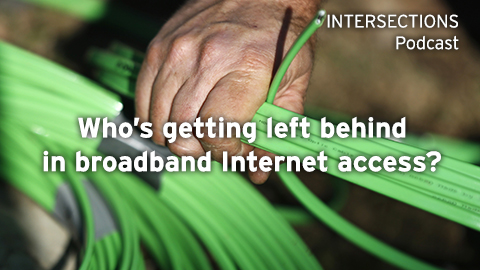
Who's getting left behind in broadband internet access?
In this episode, Brookings experts Adie Tomer and Elizabeth Kneebone discuss the findings from their new report, "Signs of Digital Distress: Mapping broadband availability and subscription in American neighborhoods," which examines the neighborhoods lacking in broadband infrastructure, and which ones have the infrastructure, but can't get connected. Full show notes available here: http://brook.gs/
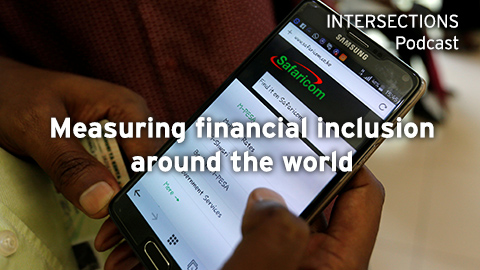
Measuring financial inclusion around the world
Darrell West, vice president and director of Governance Studies, and Camille Busette, senior fellow and director of the Race, Prosperity, and Inclusion Initiative, discussed the findings of the latest Brookings Financial and Digital Inclusion Project report, which measures how well individuals and families can access quality, affordable financial services in 26 countries around the world. Full sh
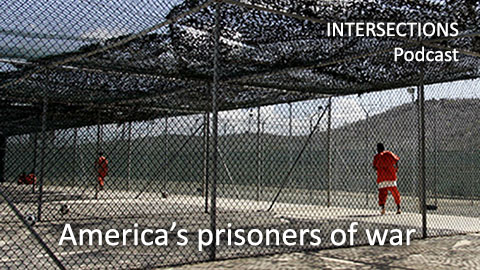
America's prisoners of war: Changing U.S. norms on torture
"Men who take up arms against one another in public war do not cease on this account to be moral beings, responsible to one another and to God." - Instructions for the Government of Armies of the United States in the Field, Francis Lieber, 1863 This episode of Intersections features a discussion with Elizabeth Grimm Arsenault, author of "How the Gloves Came Off: Lawyers, Policy Makers, and Norms i

Summer vacation - Fall preview
While Intersections is on summer vacation, don't forget to tune into 5 on 45 and the Brookings Cafeteria, or catch up on some older episodes you might have missed. Thanks as always to Gaston Reboredo and Vanessa Sauter. Intersections will return on August 23.

Renewable energy and the path to a low-carbon energy future
David Victor, co-chair of the Energy Security and Climate Initiative at Brookings and professor of international relations at the University of California, San Diego, and Christopher Clack, CEO of Vibrant Clean Energy, discuss the complexities of adopting sources of renewable energy, why the U.S. grid presents a unique challenge, and the political and economic challenges facing the pursuit of zero

Why taxes in Kansas matter
William Gale and Vanessa Williamson discuss what can be learned from state-level experiments in taxation in Kansas and California, Americans' feelings about paying their taxes, and the empirical evidence versus ideology on how tax policy affects economic growth. Full show notes available here: http://brook.gs/2vcjAx6 Take 2 minutes to tell us what you think about Intersections and the rest of th

Professionalism in politics: The paradox of populism
In this episode of Intersections, Benjamin Wittes and Jonathan Rauch, senior fellows in Governance Studies, address the importance of political institutions in relation to direct democratic participation and discuss their new report, "More professionalism, less populism: How voting makes us stupid, and what to do about it." Subscribe to Intersections here or on Apple Podcasts, and send feedbac

The 1967 War, the rise of Saudi Arabia, and modern energy politics
During the 50th anniversary of the 1967 war between Israel and its Arab neighbors, Brookings experts Bruce Riedel and Samantha Gross detail the consequences of that struggle for Saudi Arabia and the Gulf states and the lasting reverberations for energy and geopolitical relations in the region today. Full show notes are available here: http://brook.gs/2sTkIV2 Subscribe to Brookings podcasts here or
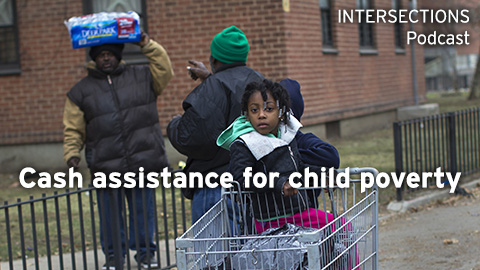
Cash assistance for child poverty
In this episode of Intersections, guest interviewer Ron Haskins, co-director of the Brookings Center on Children and Families, discusses changes in the social safety net and the role of cash assistance in meeting the needs of families with children with Luke Shaefer of the University of Michigan and Chris Wimer from Columbia University. Shaefer and Wimer present details from their upcoming papers

Macron's election and the European project
Visiting Fellow Philippe Le Corre and Robert Bosch Senior Fellow Constanze Stelzenmüller with the Center on the U.S. and Europe at Brookings discuss Emmanuel Macron's victory in France's presidential election, upcoming elections in the UK and Germany, and the need to reboot the European project. Full show notes available here: http://brook.gs/2q3Cjvg Subscribe to Brookings podcasts here or on

Carbon pricing: Harnessing market efficiency in pursuit of clean energy
Adele Morris, senior fellow and policy director for Climate and Energy Economics, and David Victor, co-chair of the Energy Security and Climate Initiative, discuss how putting a price on carbon emissions is one of the most effective measures by which the United States and the international community can encourage global climate reform. Full show notes are available here: http://brook.gs/2pec8jl
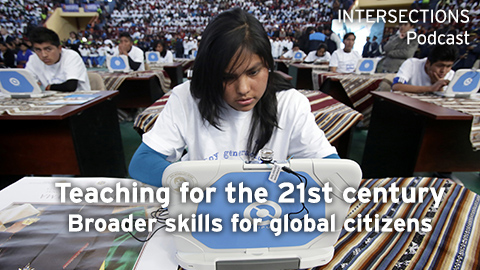
Teaching for the 21st century: Broader skills for global citizens
Guest interviewer Esther Care, senior fellow in the Center for Universal Education, discusses with Ramya Vivekanandan, program specialist at the UNESCO Asia-Pacific Regional Bureau for Education, and Sean Slade, director of outreach at the Association for Supervision and Curriculum Development, how to transform education around the world to face the changing social, economic, and technological dem
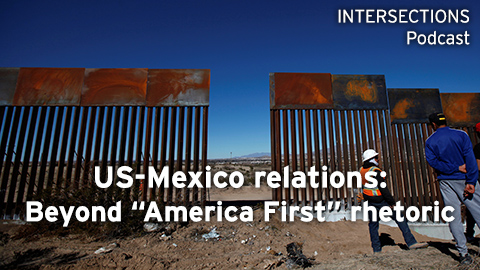
U.S.-Mexico relations: Beyond "America first" rhetoric
Dany Bahar, fellow in Global Economy and Development, and Vanda Felbab-Brown, senior fellow in the Center for 21st Century Security and Intelligence, discuss how U.S.-Mexico relations have been affected by the Trump administration, misconceptions about NAFTA, immigration, and crime, and why taking an "America first" approach won't help U.S. consumers. Full show notes available here: http://brook.g

Scaling to sustainability: Meeting the challenge of the Sustainable Development Goals
Jenny Perlman Robinson, fellow with the Center for Universal Education, and John McArthur, senior fellow in the Global Economy and Development program, address progress toward meeting the UN Sustainable Development Goals and explain how scaling up local development efforts enables the learning, data collection, and information sharing that make further progress possible. Full show notes available

Charter schools and federal power: What's next for education policy?
Elizabeth Mann and Jon Valant, both fellows in the Brown Center on Education Policy, lay out the status of federal versus state powers in education, explain how charter schools work and how they perform, and provide insight as to what the future of education policy might look like in the new administration. Full show notes available here: http://brook.gs/2lq20Aw Subscribe to Brookings podcasts he
Net neutrality, the FCC, and the digital divide
Nicol Turner-Lee, a fellow in Governance Studies and the Center for Technology Innovation, and Evan Swarztrauber, the communications director at TechFreedom, explain the role of the FCC and Congress in protecting consumers and incentivizing internet providers for a digital ecosystem that is both accessible and competitive. Full show notes are available here: http://brook.gs/2lMr6Ku Subscribe to B

Introducing "5 on 45": A new podcast from the Brookings Podcast Network
Want a daily bite of analysis from Brookings experts on what's happening with the Trump administration? Subscribe to 5 on 45 through your favorite podcast app for a quick hit of commentary on the day's news. And don't forget to follow @policypodcasts on Twitter for more updates.
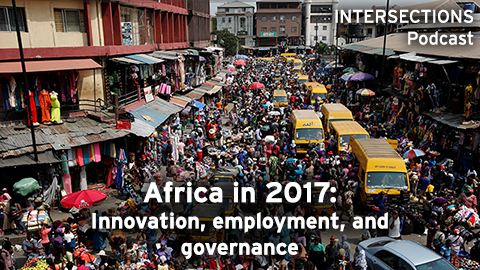
Africa in 2017: Innovation, employment, and governance
Amadou Sy, senior fellow and director of the Africa Growth Initiative, and Witney Schneidman, nonresident senior fellow at Brookings and senior international advisor for Africa at Covington & Burling LLP, examine the top priorities for Africa in 2017 set forth by the Africa Growth Initiative's annual Foresight Report. Full show notes available here: http://brook.gs/2jUHiIS With thanks to audio pro
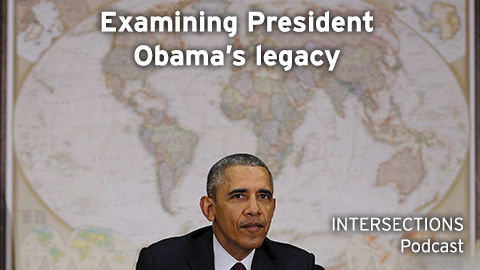
Examining President Obama's legacy
In this episode of Intersections, Molly Reynolds, a fellow with Governance Studies, and Thomas Wright, a fellow and director of the Project on International Order and Strategy, talk about President Obama's successes and failures in public policy, and what legacy he leaves behind. With thanks to audio producer Gaston Reboredo and producer Vanessa Sauter, and also thanks for additional support fro

Energy and climate policy under the Trump administration
Brookings experts Bruce Jones and David Victor forecast the future of U.S. energy and climate policies under the Trump administration, the role of state-level actors and energy markets, and what happens if the U.S. walks away from the Paris agreement. With thanks to audio producer Gaston Reboredo, Vanessa Sauter, Fred Dews, and Richard Fawal. Full show notes are available here: http://brook.gs/2j

U.S. politics and the Middle East: Polarization and regional stability
Shibley Telhami, the Anwar Sadat chair for peace and development at the University of Maryland and nonresident senior fellow at Brookings, discusses with Sarah Yerkes the increasing polarization of American views toward Israel and Palestine and the future of U.S. policy in the broader Middle East. With thanks to audio producer Gaston Reboredo, Vanessa Sauter, Basseem Maleki, Fred Dews, and Richard
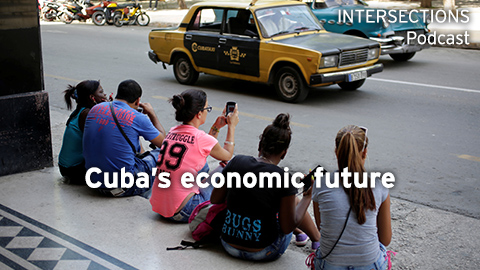
Cuba's economic future
Richard Feinberg, nonresident senior fellow with the Brookings Latin America Initiative, and Ted Piccone, senior fellow in the Latin America Initiative, discuss the passing of Fidel Castro, U.S.-Cuba relations under a Trump presidency, and how tourism can be the driver of a new Cuban economy. Full show notes available here: http://brook.gs/2gKXKw4 Thanks to audio producer Gaston Reboredo, Vanessa
Priorities for the Trump administration: Mayors speak on trade, immigration, and economic opportunity
Amy Liu, vice president and director of the Metropolitan Policy Program at Brookings, talks with the former mayors of Philadelphia and Mesa, Arizona, Michael Nutter and Scott Smith, now both nonresident senior fellows at Brookings, about what motivated voters in their former constituencies and how a Trump presidency will affect issues of trade, immigration, and economic opportunity. Full show note
Urban governance in the 21st century: Innovating solutions
Kemal Derviş, vice president and director of the Global Economy and Development program, and Bruce Katz, inaugural Centennial Scholar, examine the multidisciplinary, adaptive approach cities take to tackling public policy challenges, and other lessons for governance in the 21st century. With thanks to audio producer Gaston Reboredo, Vanessa Sauter, Basseem Maleki, Fred Dews, and Richard Fawal. Ful

How should the next president counter violent extremism?
As part of the Brookings Election 2016 project, the Brookings Podcast Network brings you a special edition episode in which Indira Lakshmanan, Washington columnist for the Boston Globe and contributor to Politico, moderates a conversation with Robert McKenzie, visiting fellow in the Project on U.S. Relations with the Islamic World, and Darrell West, vice president and director of Governance Studie
Noncognitive skills in education: What we know and why they matter
Diane Schanzenbach, senior fellow in Economic Studies and director of The Hamilton Project, and Grover "Russ" Whitehurst, senior fellow with the Center on Children and Families, discuss the importance of soft skills and the best policies and practices for teaching noncognitive skills to children. With thanks to audio producer Gaston Reboredo, Vanessa Sauter, Basseem Maleki, Fred Dews, and Richard

Economic mobility and racial inequities: How the next president can revive the American dream
As part of the Brookings Election 2016 project, the Brookings Podcast Network brings you a special edition episode in which Indira Lakshmanan, Washington columnist for the Boston Globe and contributor to Politico, moderates a conversation with Isabel Sawhill, senior fellow in Economic Studies, Richard Reeves, senior fellow in Economic Studies and co-director of the Center on Children and Families,
India on the international stage
Guest interviewer Tanvi Madan, fellow and director of the India Project in Foreign Policy, Ambassador Shivshankar Menon, distinguished fellow in Foreign Policy, and Dhruva Jaishankar, fellow in Foreign Policy at Brookings India, examine India's foreign policy, particularly toward the U.S. and China, as well as its counter-terrorism approach in the wake of a cross-border attack on an Indian militar
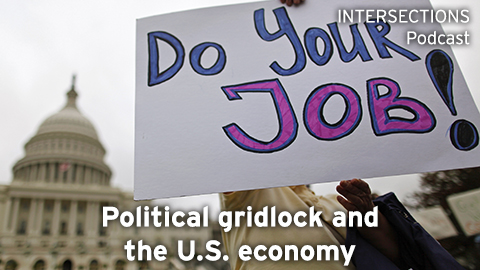
Political gridlock and the U.S. economy
Alice Rivlin, senior fellow in Economic Studies and the Center for Health Policy, and William Galston, senior fellow in Governance Studies, discuss the importance of bipartisanship in the United States and how current party divisions are detrimental to the economy. With thanks to audio producer Gaston Reboredo, Vanessa Sauter, Basseem Maleki, Fred Dews, and Richard Fawal. Full show notes available
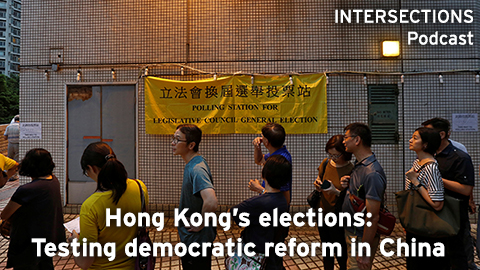
Hong Kong's elections: Testing democratic reform in China
In this episode of "Intersections," Richard Bush, senior fellow in Foreign Policy and the John L. Thornton China Center and director of the Center for East Asia Policy Studies (CEAP), and Cheng Li, senior fellow in Foreign Policy and director of the John L. Thornton China Center, discuss the recent elections in Hong Kong, the independence movement, and China's one country, two systems governance p
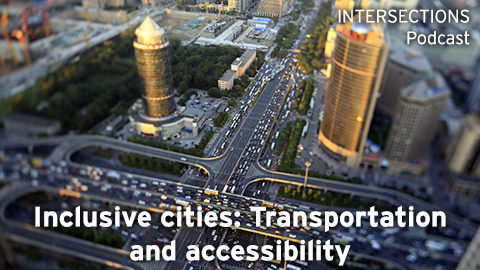
Inclusive cities: Transportation and accessibility
Adie Tomer, fellow in the Metropolitan Policy Program, and Jeff Gutman, senior fellow in Global Economy and Development, discuss how to transform transportation policy with a focus on accessibility and how cities around the world are grappling with improving infrastructure and increasing access for people of all incomes. Full show notes: https://www.brookings.edu/podcast-episode/inclusive-cities-

Democracy in Turkey: Before and after the coup
In this episode of "Intersections," Kemal Kirişci, TÜSİAD senior fellow and director of the Center on the United States and Europe's Turkey Project, and Ted Piccone, senior fellow in the Project on International Order and Strategy in the Foreign Policy program, examine Turkey's history of democracy and military coups, its relationship with the Middle East and the European Union, and the Gülenist m

Venezuela in Crisis
In this episode of "Intersections," Harold Trinkunas, senior fellow and director of the Latin America Initiative, and Dany Bahar, fellow in Global Economy and Development, discuss Venezuela's political and economic crisis, and how it is the result not just of dropping oil prices, but of years of economic mismanagement. For our full show notes, go to: http://www.brookings.edu/podcasts/2016/07/ve

Civil wars and U.S. engagement the Middle East
"At the end of the day, we need to remember that Daesh is more a product of the civil wars than it is a cause of them. And the way that we're behaving is we're treating it as the cause. And the problem is that in places like Syria, in Iraq, potentially in Libya, we are mounting these military campaigns to destroy Daesh and we're not doing anything about the underlying civil wars. And the real da

College education and student debt: Evaluating the investment
"…A lot of the conversation around college education is that tuition is increasing very rapidly, debt is increasing very rapidly and what does that mean for everyone? If we take a bigger step back we want to reframe the discussion around higher education as the potential investment available to people in our economy to help them be more productive in the labor market and to help them have better f
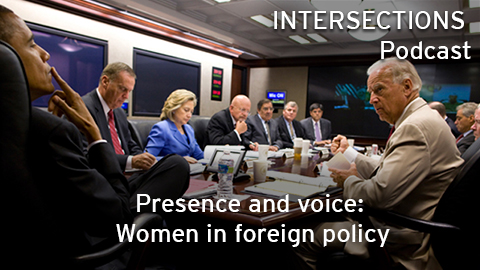
Presence and voice: Women in foreign policy
"When I go to meetings today, I see more women, and I see many more younger women coming into the field. But what's really struck me, as I've been thinking about this issue of women in foreign policy in the last couple years, is the difference between presence and voice. There are many more women working in foreign policy today, but you don't see the same proportion of women prominent in foreign
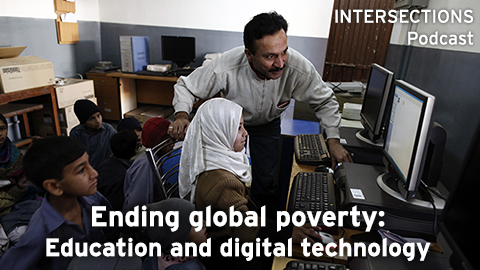
Ending global poverty: Education and digital technology
"If we think about the progress of getting people out of extreme poverty, it is really impressive. But it is actually a much slower trend then what we have seen in the spread of digital technology. The speed with which mobile phone ownership has spread around the world, access to bank accounts, biometric identification cards, people getting online – these trends are happening even faster. We are s

Keeping the U.S. Fiscal Ship afloat
"We set out to make this game because we think that the national debt is an important issue that budget experts talk about all the time but it is very hard for the general public to really understand, so we thought to do it in a way that is more entertaining and more fun." — Louise Sheiner "One of the goals of the game is to give people a big picture in their mind, so when some person runs for pre
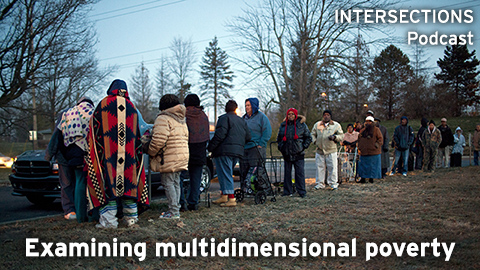
Examining multidimensional poverty
"People think poverty as a
measure of income, but as a lived experience for what it means to
be poor, it tends to involve a lot of other things as well. We have
taken some other dimensions such as low education, lack of health
insurance, being in an unemployed household, and being in an area
with concentrated poverty, where 1 in 5 of your neighbors in below
the poverty line. One of the interesting

The rise of the right: Right-wing populism in the U.S. and Europe
“I locate the common roots of the rise of right-wing populism in globalization and technological change. You have a lot of people in Europe and the United States displaced, in the sense that they had decent standards of living and could count on that happening for their children...but that is in danger now” -- E.J. Dionne, Jr.
“In my own country, Germany, the increasing amount of aggression and

Confronting the issues: The presidential election
“We have to tackle a lot of problems to get Americans the jobs and standard of living that they want to get,” Elaine Kamarck says. In this inaugural episode of our new podcast series, “Intersections,” join scholars Elaine Kamarck, director of the Center for Effective Public Management and Michael O’ Hanlon, co-director of Center for 21st Century Security and Intelligence as they sit down to discus

Intersections: A new podcast from The Brookings Institution
Economic recovery. Elections. Terrorism. Global poverty. Trade. Policy issues are complex and multi-faceted. Want more than the 30-second sound bite? Tune in to Intersections, a new podcast from the Brookings Institution, where two experts delve into the varying angles of the complicated issues facing our nation and the world. Subscribe now and be the first to hear new episodes. Intersections is
Recommended

Medicine with Meaning

Yours Truly Johnny Dollar Collection

Take Back Your Health®

CBS Radio Mystery Theater | Old Time Radio

Solved Murders - True Crime Stories

紐約鳥|New York Aperture

The Swerve Podcast: Obscure Topics | Conspiracy Theories

The Bread and Banter Podcast

The Church of What's Happening Now: The New Testament

Busted Open

Deadline: White House

Crickets Corner
