
American History Tellers
American History Tellers takes you to the events, times, and people that shaped the United States, from the Cold War and Prohibition to the Gold Rush and Space Race. Hosted by Lindsay Graham (not the Senator), the podcast explores how history affected individuals, families, and continues to impact listeners today. Produced by Wondery, the network behind American Scandal and Tides of History.
Episodes
Ellis Island | Alien Enemies | 3
In the immediate aftermath of America’s entry into World War I, federal agents began rounding up hundreds of German nationals and detaining them at Ellis Island, designating them as “alien enemies.” After the war, anti-immigrant sentiment intensified as eugenic theories of racial hierarchy gained popularity. By the 1920s, Americans were willing to accept sweeping changes to the nation’s i

Listen Now: Audible True Crime – Ghost Story
Audible True Crime is a dedicated podcast feed where we bring you the best podcasts in true crime, with episodes dropping every single week. Just in time for spooky season, we’re releasing a show called Ghost Story, a series about a hidden family secret, unexplainable events and jaw-dropping coincidences. Tristan Redman doesn’t believe in ghosts. But weird things happened in his
Ellis Island | The Human Tide | 2
In 1901, President Theodore Roosevelt vowed to crack down on the corruption and mistreatment that plagued Ellis Island. He appointed William Williams as the new Commissioner of Immigration and tasked him with cleaning up the Immigration Service. But Williams’ strict interpretations of federal immigration law drew criticism from German American and Jewish community leaders. As immigration
Ellis Island | Yearning to Breathe Free | 1
In the 19th century, economic turmoil, political unrest, and religious persecution drove record numbers of Europeans to American shores — making New York City the busiest port of entry. But new immigrants faced a dizzying array of conmen and thieves eager to prey on their confusion. In 1892, the U.S. government reined in the chaos by establishing a federal immigration depot on Ellis Islan

Listen Now: My Mom’s Murder
Lauren Malloy was a baby when her mother, Lori, was murdered in East Providence, Rhode Island. For thirty years, no one told her. Everyone said Lori died of natural causes. Then a stranger sent Lauren a message — and the lie collapsed. Now Lauren is investigating her own mother’s murder. She’s recorded hundreds of hours of interviews with law enforcement, family, childhood friends, and pe
FAN FAVORITE: Stonewall | Pride | 4
After a late-night police raid on the Stonewall Inn in June 1969, the LGBTQ community fought back in the streets of Greenwich Village. Suddenly, the LGBTQ rights movement found itself catapulted onto the national stage. But questions of how radical an approach to take would pit young activists against the pioneers of the 1950s and 1960s. Even with the formation of new organizat
FAN FAVORITE: Stonewall | Why Don't You Do Something? | 3
Resistance at restaurants in San Francisco and Philadelphia showcased the building tension as trans activists challenged long-standing policies of discrimination. But leading gay rights groups continued to stress a calm, non-confrontational approach to reform.That all changed in the early morning hours of June 28, 1969, when police raided the Stonewall Inn. For police, it was just an
FAN FAVORITE: Stonewall | Turbulence | 2
As the 1960s dawned, LGBTQ activists began to voice frustration with the gradual approach to civil rights advocated by groups like the Mattachine Society. If LGBTQ people wanted to make real progress, they concluded, they would need to take direct action — starting with tactics shared with the Black civil rights movement. Through protests and sit-ins in places like New York, Washingt
FAN FAVORITE: Stonewall | Evolutionary, Not Revolutionary | 1
In the summer of 1969, a police raid on the Stonewall Inn sparked a riot on the streets of Greenwich Village. The protest marked a turning point in the gay rights movement. But the famed resistance in New York capped a movement that had been building for nearly two decades in America, as LGBTQ people mobilized to fight widespread and pervasive discrimination.In the years following World W
Frontier Legends | Buffalo Bill Cody | 6
Few people are more closely associated with the Western Frontier than William F. “Buffalo Bill” Cody. Born in 1846, Cody came of age during the era of Westward expansion. As a young man, he began scouting for the 5th Cavalry and eventually built a reputation as a skilled frontiersman. He later took his exploits to the stage and then created Buffalo Bill’s Wild West arena show, which carri
Frontier Legends | Annie Oakley | 5
As a young girl in Ohio, Annie Oakley learned to hunt game to keep her impoverished family fed. By the time she was a teenager she’d grown skilled enough to easily beat a traveling sharpshooter named Frank Butler in a public shooting match – and win his heart in the process. The two soon married, and in 1885 Oakley joined Buffalo Bill's Wild West show, becoming an international sensation
Frontier Legends | Butch Cassidy | 4
In 1894, a young Utah ranch hand named Robert LeRoy Parker – already going by the alias "Butch Cassidy" – was convicted of horse theft and sent to a Wyoming penitentiary. It was a minor crime that set the course for a much larger criminal career. After his release, he went on to earn a fearsome reputation as the mastermind of a gang of outlaws known as the Wild Bunch, before he and his pa
Frontier Legends | Bass Reeves | 3
In 1875, Bass Reeves became one of the first Black men to serve as a deputy U.S. marshal in the West. Reeves had been born into slavery, but after a violent confrontation with his owner, he fled to Indian Territory, in present-day Oklahoma. There, for three decades he used his knowledge of Indian languages and his expert marksmanship to hunt down murderers, horse thieves, and bootleggers
Frontier Legends | Wild Bill Hickok | 2
In 1865, James Butler Hickok, an Army scout and itinerant gambler better known as “Wild Bill,” shot a man dead in the town square of Springfield, Missouri. The gunfight became known as the first recorded quick draw duel, and Hickok became famous overnight. He parlayed his newfound fame into a job as a deputy U.S. marshal, and before long he was one of the most recognizable lawmen on the f
Frontier Legends | Davy Crockett | 1
In 1821, a little-known backwoods hunter named David Crockett won a seat in the Tennessee legislature, despite having little formal education and virtually no political experience beyond his gift for spinning a good story. It marked an unlikely turning point for a man who would become a symbol of the American frontier, which was then rapidly expanding as settlers pushed into land long inh
American Revolution | The Revolution Continues | 7
Today George Washington is remembered as the quintessential “Founding Father,” but his path to becoming an American hero was far from certain. Throughout the Revolution, Washington and countless others—including women, free and enslaved Black people, and Indigenous nations—had to make difficult choices about where their loyalties lay and what kind of future they hoped to secure. To help u
American Revolution | The Sacred Fire of Liberty | 6
After six long years of war, the Continental Army was exhausted, and Congress had run out of money. George Washington feared that without a decisive victory, the cause of independence would be lost.But there was fresh cause for hope in the summer of 1781, as a massive French fleet sailed for the Chesapeake Bay. French and American commanders devised a plan to trap the British Army on a pe
American Revolution | A Devil of a Whipping | 5
In the aftermath of America’s victory at Saratoga, France entered the Revolutionary War, transforming the colonial rebellion into a global conflict. British officials decided that the path to victory lay in the South. As the fighting shifted to the Carolinas, a brutal civil war erupted, pitting families and neighbors against one another in cycles of violence and retribution.By 1779, the P
American Revolution | Saratoga | 4
In 1777, as Americans sought the support of France, Benjamin Franklin struggled to convince officials in Paris to form a military alliance with the new United States. Meanwhile, British General John Burgoyne planned a grand strategy to crush the rebellion by conquering the Hudson River Valley. That summer, his troops fought the Continental Army in a battle that would turn the tide of the
American Revolution | The Times That Try Men's Souls | 3
In July 1776, the British Royal Navy began landing a massive armada in New York Harbor, setting up the biggest battle of the Revolutionary War. In response, General George Washington faced the daunting challenge of preparing his motley army to defend New York and keep the colonists’ hopes alive.In the months that followed, faith in the cause of independence began to waver, and the Contine
American Revolution | Tis' Time to Part | 2
In the aftermath of the Battles of Lexington and Concord, colonial militiamen converged on Boston to confront the veteran British Army. But over the next six months, newly appointed commander-in-chief George Washington struggled to transform a patchwork of amateur militias into a unified national army.As the conflict wore on, Americans debated whether to escalate the fight and take the un
American Revolution | Liberty or Death | 1
In 1765, King George III and his ministers in the British Parliament sparked outrage in the American Colonies when they announced they were issuing the Stamp Act, the first direct tax on the Colonies. American critics decried the “taxation without representation,” and Boston radicals staged protests, boycotts, and attacks on tax collectors.After a decade of growing tension over taxes, rep
Edison vs. Tesla | The Business of Discovery | 4
Thomas Edison is one of the most celebrated inventors in American history, having helped transform a world lit by candles and gas lamps into one powered by electricity. Over his lifetime he was granted more than a thousand patents, and pioneered the very idea of organized innovation at his ground-breaking research and development laboratories. But the story of how he did it is complicated
Edison vs. Tesla | Triumph of Illumination | 3
By 1888, the race to power America's cities had become a battle between the rival visions of Thomas Edison and Nikola Tesla. But when the powerful industrialist George Westinghouse threw his weight behind Tesla and his AC system, what had been a personal falling out became something far larger – a war over the future of electricity itself. Their bitter fight spilled into courtrooms, ignit
Edison vs. Tesla | Work of the World | 2
In the spring of 1884, a little-known Serbian immigrant named Nikola Tesla arrived in America with little more than a letter of introduction to the most famous inventor in the world – Thomas Edison. Tesla went to work for Edison, impressing his new employer with his intelligence and work ethic. But the two men were too different, too stubborn, and too convinced of their own vision to coex
Edison vs. Tesla | Prometheus’ Fire | 1
In the 1870s, the age of artificial light was still in its infancy. Gas lamps cast a dim glow on city streets, and early arc lights were just beginning to appear in a handful of public spaces. But reliable, practical light for homes and businesses remained out of reach for most people. Then, in 1878, America’s most famous inventor, Thomas Edison, witnessed a demonstration of a novel elect
The 1900 Galveston Hurricane | After the Storm | 4
The devastation of the 1900 Galveston hurricane left thousands dead and a city in ruins — but it also set in motion a remarkable story of recovery and reinvention. As survivors buried their dead and relief poured in, city leaders adopted an entirely new form of government to steer the rebuilding effort. In this episode, Lindsay is joined by historian Dr. Patricia Bixel, who shares ho
The 1900 Galveston Hurricane | City of Doom | 3
On September 9, 1900, the residents of Galveston, Texas woke up to find their island in ruins. Entire neighborhoods had vanished overnight. Telegraph, telephone, and electrical lines were destroyed, as were the four bridges connecting Galveston to the mainland. Bloodied men, women, and children stumbled through the streets. And thousands of corpses were strewn amongst the wreckage, victim
The 1900 Galveston Hurricane | Night of Terrors | 2
As a catastrophic hurricane approached Galveston, Texas on the morning of September 8, 1900, residents continued to go about their daily lives, with little warning of what was to come. Children played in the surf at the beach, and workers clocked in for their shifts downtown. But when the full strength of the storm hit, water from the Gulf of Mexico flooded the streets of the island city,
The 1900 Galveston Hurricane | An Absurd Delusion | 1
At the turn of the 20th century, a booming cotton trade had made the Gulf Coast city of Galveston, Texas an economic powerhouse. Located just a few feet above sea level on a narrow barrier island, it was prone to flooding. But in a time before sophisticated weather forecasting, residents failed to grasp the danger lurking in their midst.In early September 1900, as a tropical storm gathere
Fan Favorite: Great American Authors | Harper Lee: Mockingbird | 6
In 1949, aspiring writer Nelle Harper Lee moved from her home in small-town Alabama to New York City. She was following in the footsteps of her childhood friend, author Truman Capote. Within a few years she had penned a novel of her own, and called it To Kill a Mockingbird.To Kill a Mockingbird catapulted Harper Lee to the heights of literary fame. But just as she found success, she withd
Fan Favorite: Great American Authors | James Baldwin: The Exile | 5
Born into poverty in Harlem in 1924, James Baldwin rose to become a celebrated novelist, essayist, playwright, and poet, and a leading voice in the Civil Rights movement of the 1960s. In his debut novel, Go Tell It on the Mountain, and in his essay collections, Notes of a Native Son and The Fire Next Time, Baldwin wrote eloquently and provocatively about race, religion, sexuality, politic
Fan Favorite: Great American Authors | John Steinbeck: The Observer | 4
Growing up in the Salinas Valley of Northern California, John Steinbeck dreamed of becoming a professional writer. In his youth he took on odd jobs and worked amongst ranch hands and migrant workers, who would inspire some of his greatest work, including The Grapes of Wrath. Published in 1939, the book captured the struggles of everyday Americans during the Great Depression, and Steinbeck
Fan Favorite: Great American Authors | Mark Twain: Voice of a Nation | 3
In the late 1850s, a young man named Samuel Clemens started out piloting steamboats on the Mississippi River. Within a few years, he embarked on a writing career, adopting the pen name that became famous: Mark Twain. Armed with a wry sense of humor and a natural flair for storytelling, Twain gained wide acclaim for his short stories, travel sketches, and novels.In 1885, he published The A
Fan Favorite: Great American Authors | Louisa May Alcott: The Breadwinner | 2
In 1840, eight-year-old Louisa May Alcott moved to the small town of Concord, Massachusetts with her family. There, she spent her days wandering through the woods, putting on plays with her sisters, and learning from famed writers and philosophers such as Henry David Thoreau and Ralph Waldo Emerson.For years, Alcott struggled to achieve success as a writer. Then in 1868, she drew inspirat
Fan Favorite: Great American Authors | Edgar Allan Poe: Master of Macabre | 1
In February 1826, 17-year-old Edgar Allan Poe was a promising student at the University of Virginia. But within a few months, gambling debts forced him to abandon his studies. It was just one of many setbacks Poe endured in a life marked by financial struggle, alcoholism, and personal tragedy.But Poe launched a remarkable career in writing, helping to establish American literature with a
St. Valentines Day Massacre: Closing In On Capone | 3
In the aftermath of the St. Valentine’s Day Massacre, authorities faced mounting pressure to clean up Chicago and take down the violent mobsters who overran the city – most notoriously, Al Capone. The federal government took on the challenge, pursuing Capone relentlessly. In the end, Capone did go down – not for murder, but for tax evasion. And since Capone’s conviction in the 1930s, this
St. Valentines Day Massacre | Public Enemy No. 1 | 2
On Valentine’s Day 1929, seven men were gunned down in a Chicago garage in an attack that stunned the nation. Photographs of the bloody scene appeared on front pages across the country, and the public reacted with horror. Even in Chicago—a city hardened by daily gang violence—the message was clear: this was different.City officials were under intense pressure to respond, and suspicion qui
St. Valentines Day Massacre | The Land of Bilk and Money | 1
In 1920, a young Al Capone arrived in Chicago looking for a fresh start, and his timing couldn’t have been better. That same year, Prohibition outlawed the manufacture and sale of alcohol, turning America’s thirst into a criminal gold rush. Chicago quickly became the epicenter of bootlegging, and Capone was determined to seize the moment and make himself rich beyond imagination. But the c
Conquering Polio | There Is No Patent | 4
In the early 1950s, Jonas Salk and Albert Sabin were in a race to develop a vaccine against polio. While Salk’s killed-virus vaccine was the first to be distributed, Sabin continued working to perfect his own approach. In the end, Sabin’s oral polio vaccine—made from a weakened live virus—proved easier to administer and was ultimately distributed far more widely, though his name never ach
Conquering Polio | The Cutter Fiasco | 3
In April 1954, a group of first graders lined up in the gymnasium of an elementary school in McLean, Virginia for the start of the Salk polio vaccine trials. In an era before widespread federal government involvement in public health, the National Institute of Infantile Paralysis executed an unprecedented experiment involving nearly 2 million children and tens of thousands of doctors, nur
Conquering Polio | Beyond the Microscope | 2
By the late 1940s, the National Institute of Infantile Paralysis had raised millions of dollars to pay for patient care and laboratory research. But polio cases were reaching record levels, and scientists were no closer to a cure. Frustrated by the slow progress, Basil O’Connor resolved to recruit fresh talent to the cause. He soon found what he was looking for in a young and energetic re
The Ice King | Indian Summer | 4
After two turbulent decades in the ice trade, Frederic Tudor had finally made it. Expanding into the American South had paid off, with cities like New Orleans delivering steady profit. But Tudor’s insatiable appetite for risk kept pushing him to bet everything – again and again – even as losses mounted and disaster loomed.As he entered his 50s, Tudor seemed ready to slow down. But when he
Conquering Polio | The March of Dimes | 1
In the summer of 1921, 39-year-old Franklin Delano Roosevelt was on vacation with his family when he developed a fever, muscle aches, and chills. Pain spread to his legs, and soon, he was paralyzed from the waist down. Doctors diagnosed him with polio, which was fast becoming America’s most dreaded infectious disease.Every summer, polio struck without warning, causing swimming pools and m
The Ice King | Slippery Business | 3
By 1816, Frederic Tudor had spent a decade shipping New England ice to Cuba—with little to show for it. Setbacks and vanished profits nearly ruined him, and a gamble on shipping tropical fruit had left him barely solvent. Then a chance conversation sparked a bold new idea: expand the ice trade into the American South. Tudor rushed to South Carolina, only to clash with state officials
The Ice King | Frozen Assets | 2
In 1806, Frederic Tudor set out to build a fortune by shipping ice from his family’s pond near Boston to the tropical Caribbean—an audacious idea no one believed in. But turning frozen water into profit proved far harder than he imagined. By 1809, an embargo had halted his shipments, his debts had mounted, and Tudor himself landed in jail. Still, he refused to abandon the dream that every
The Ice King | No Joke | 1
In 1801, a young Boston merchant named Frederic Tudor made a life-changing visit to Cuba. There he had a wildly ambitious idea: he would ship New England ice to the sweltering Caribbean, where no one had ever seen frozen water – let alone tasted a cold drink or ice cream. Lacking experience and money, Tudor was mocked by seasoned ship captains who called his plan foolish. Still, by 1
The Mayflower | The Thanksgiving Myth | 5
In 1620 the Pilgrims arrived in a land already shaped by centuries of Native history. For the people who lived there, the Wampanoag, it was Patuxet—a place with its own stories, its own politics, and, as the Pilgrims soon learned, a complicated history of encounters with Europeans.In this episode Lindsay is joined by David Silverman, professor of history at George Washington University an
History Daily: The Assassination of Sergei Kirov
December 1, 1934. Leningrad mayor Sergei Kirov is assassinated by a lone gunman, giving Soviet Premier Joseph Stalin the justification to purge the Communist Party of his rivals.You can listen ad-free in the Wondery or Amazon Music app. Or for all that and more, go to IntoHistory.comHistory Daily is a co-production of Airship and Noiser.Go to HistoryDaily.com for more history, daily.See P
The Mayflower | Cutthroats | 4
In May 1622, the Pilgrims were still reeling from Squanto’s betrayal when a ship appeared in Plymouth Harbor, carrying an advance party for a rival English colony. Governor William Bradford reluctantly agreed to host the men while they searched for a site to settle. But the newcomers strained Plymouth’s limited food supplies, pushing the hungry colony to the brink of starvation. As the ne
History Daily: Darwin’s Origin of Species
November 24, 1859. Charles Darwin sparks a scientific revolution by introducing the theory of evolution in his book On the Origin of Species.You can listen ad-free in the Wondery or Amazon Music app. Or for all that and more, go to IntoHistory.comHistory Daily is a co-production of Airship and Noiser.Go to HistoryDaily.com for more history, daily.See Privacy Policy at https://art19.com/pr
The Mayflower | The First Thanksgiving | 3
"The winter of 1620-21 took a deadly toll on Plymouth Colony. The Pilgrims had only just begun to construct their homes when illness began spreading through the settlement. Their flimsy shelters offered little protection from the freezing weather. As dysentery, pneumonia, and scurvy ravaged the colony, only a handful were left to build the settlement, care for the sick, and bury the dead.
The Mayflower | A Sea of Troubles | 2
"In the fall of 1620, the Mayflower embarked on a 3,000-mile journey across the Atlantic Ocean. Over the next nine weeks, its passengers and crew battled fierce storms and rampant illness. They had left England dangerously late in the season, and provisions ran low. In the ship’s cramped cabins, the Puritan Separatists shared close quarters with a group known as “Strangers” who did not sh
The Mayflower | Saints and Strangers | 1
In the early 1600s, an orphaned teenager named William Bradford joined a clandestine congregation of passionate Puritan worshipers in the village of Scrooby, England. Every Sunday, he met in secret with the radical group known as Separatists, who believed that the Church of England was corrupt, and that the only way forward was to break with it entirely. But defiance of the Church of Engl
Shootout at the O.K. Corral | Vendetta | 4
In the aftermath of the deadly shootout at the OK Corral, the residents of Tombstone are sharply divided over whether to indict the Earp brothers and Doc Holliday. As the town teeters on the edge of all-out war, Wyatt Earp decides to take justice into his own hands leading to a vengeful ""Vendetta Ride"" that puts Wyatt on the wrong side of the law.Be the first to know about Wondery’s new
Shootout at the O.K. Corral | Thirty Seconds | 3
Tensions boil over in Tombstone, Arizona as the Earp brothers confront the Clanton and McLaury outlaw gang, resulting in a 30-second shootout that leaves several dead. With the town divided over the Earps' actions, the brothers face an onslaught of assassination attempts as they try to maintain order in the lawless frontier town.Be the first to know about Wondery’s newest podcasts, curate
Shootout at the O.K. Corral | Law and Disorder | 2
After several months of anxiety, the tensions in Tombstone finally explode into violence as Ike Clanton and his friends provoke the Earp brothers and Doc Holliday into a deadly showdown.Be the first to know about Wondery’s newest podcasts, curated recommendations, and more! Sign up now at https://wondery.fm/wonderynewsletterListen to American History Tellers on the Wondery App or wherever
Shootout at the O.K. Corral | The Road to Tombstone | 1
In the 1880s the booming silver mining town of Tombstone, Arizona was home to one of the most famous gunfights in American history. Wyatt Earp, Doc Holliday, and Wyatt's brothers try to bring law and order to a small town, but they clash with a gang of outlaw cowboys, leading a legendary final showdown: the Shootout at the OK Corral.Be the first to know about Wondery’s newest podcasts, cu
Daring Prison Escapes | Escape from Libby Prison | 5
In early 1864, a group of Union prisoners made a daring escape from Libby Prison in Richmond, Virginia - the capital of the Confederacy. Known for its sadistic guards and horrific conditions, Union Officers at Libby suffered from hunger, lice, and the freezing cold. In this episode, Lindsay is joined by historian Dr. Robert P. Watson, author of Escape!: The Story of the Confederacy’s Infa
Daring Prison Escapes | Nazis in the Arizona Desert | 4
During World War II, the United States housed hundreds of thousands of enemy soldiers who had been captured as prisoners of war. Camp Papago Park, located in Phoenix, was built to hold captured German U-boat crew members, some of the most well-trained and ardent members of the German military. Authorities hoped that the harsh Arizona desert would deter any escape attempts, but they undere
Daring Prison Escapes | Escape from Leavenworth | 3
In 1909, a young convicted train robber named Frank Grigware began a life sentence at the United States Penitentiary in Leavenworth, Kansas. Leavenworth was the nation’s first federal penitentiary, touted as a state-of-the-art facility. But in the early 20th century, its prisoners endured bleak conditions, rigid routines, and harsh punishments.In the spring of 1910, Grigware and five fell
Daring Prison Escapes | Fleeing the Rock | 2
Located amid the treacherous waters of the San Francisco Bay, Alcatraz Federal Penitentiary was designed to hold the most-wanted prisoners in America, and developed a reputation as an unbreakable fortress. But from the moment Frank Lee Morris set foot on the island in 1962, he was determined to break free. Together, with three other conspirators, he hatched a cunning plan that would becom
Daring Prison Escapes | Bastille of the Confederacy | 1
In February 1864, more than 100 Union Army officers broke out of Libby Prison, an infamous Confederate prisoner of war compound in Richmond, Virginia. It was the largest prison break of the Civil War. Libby held more than 1,000 Union officers who were crammed into the former tobacco warehouse. They faced rampant illness, meager rations, and constant abuse from sadistic guards.As condition
FAN FAVORITE: California Gold Rush | Digging Deeper | 4
In the early 1850s, as people continued to flood West, California’s booming cities experienced rapid growth, but also turmoil. Fires regularly swept through hastily erected towns, and battles broke out between lawless miners and new, civic-minded residents who wanted to clean up the burgeoning cities. Meanwhile, women arriving in male-dominated gold country found rare opportunities to thr
FAN FAVORITE: California Gold Rush | Battlelines | 3
For white settlers, the Gold Rush offered a chance for fortune, but for California’s Native inhabitants, the sudden hunger for gold spelled disaster. As the numbers of miners grew, they forced Native people off their ancestral lands, often starving or slaughtering them in the process. As California became a state, informal policies that discriminated against indigenous Californians became
FAN FAVORITE: The Insurrection of Aaron Burr | Treason on Trial | 4
In the summer of 1807, Richmond, Virginia hosted the most sensational trial in the young nation’s history. At stake was the life of Aaron Burr, who stood accused of plotting an armed insurrection against the United States. The battle over Burr’s guilt or innocence pitted President Thomas Jefferson, who wanted to see his former vice president convicted of treason, against Supreme Co
FAN FAVORITE: California Gold Rush | The Forty Niners | 2
In early 1849, thousands of gold-hungry Americans began pouring into California from the eastern United States. But most of the so-called 49ers were wildly unprepared for the perilous journey west. Once they reached California, they found unexpected obstacles and fierce competition in the gold mines. For many, their dreamed-of riches rarely materialized. And even for those who did hit pay
FAN FAVORITE: The Insurrection of Aaron Burr | The Severance of the Union | 3
In August 1806, Aaron Burr began the final preparations for his mysterious expedition to the western frontier. As he traveled, rumors that he was plotting a dangerous conspiracy followed in his wake.Newspapers reported that Burr was planning to invade Mexico and start a secessionist rebellion in New Orleans. As evidence mounted, a dogged federal prosecutor resolved to bring Burr into cour
FAN FAVORITE: California Gold Rush | The First Strike | 1
After the discovery of gold at Sutter’s Mill in 1848, hundreds of thousands of prospectors poured into California, hoping to strike it rich. In the early days, rather than coming from within the U.S., most miners arrived from places like China, Hawaii, Chile, and Australia. But when President James K. Polk confirmed that newspaper reports of vast gold fields were true, it would kick the G
FAN FAVORITE: The Insurrection of Aaron Burr | Gathering Forces | 2
In the summer of 1804, Vice President Aaron Burr was wanted for the murder of Alexander Hamilton. The fatal duel made him a political pariah and the target of widespread public outcry.But as Burr’s Vice Presidency came to an end, he refused to slink into the shadows. Vowing to rise again, he decided to seek his fortunes in the West. Soon, he would journey to the newly acquired Louisiana T
FAN FAVORITE: The Insurrection of Aaron Burr | An Affair of Honor | 1
In July 1804, Aaron Burr faced political rival Alexander Hamilton on the cliffs of Weehawken, New Jersey, in a legendary duel that would change Burr’s life forever. As a young man, Burr had distinguished himself as a patriot, lawyer and politician. But as his political star rose, he made many enemies. He challenged Thomas Jefferson, in the tumultuous Election of 1800, but his greates
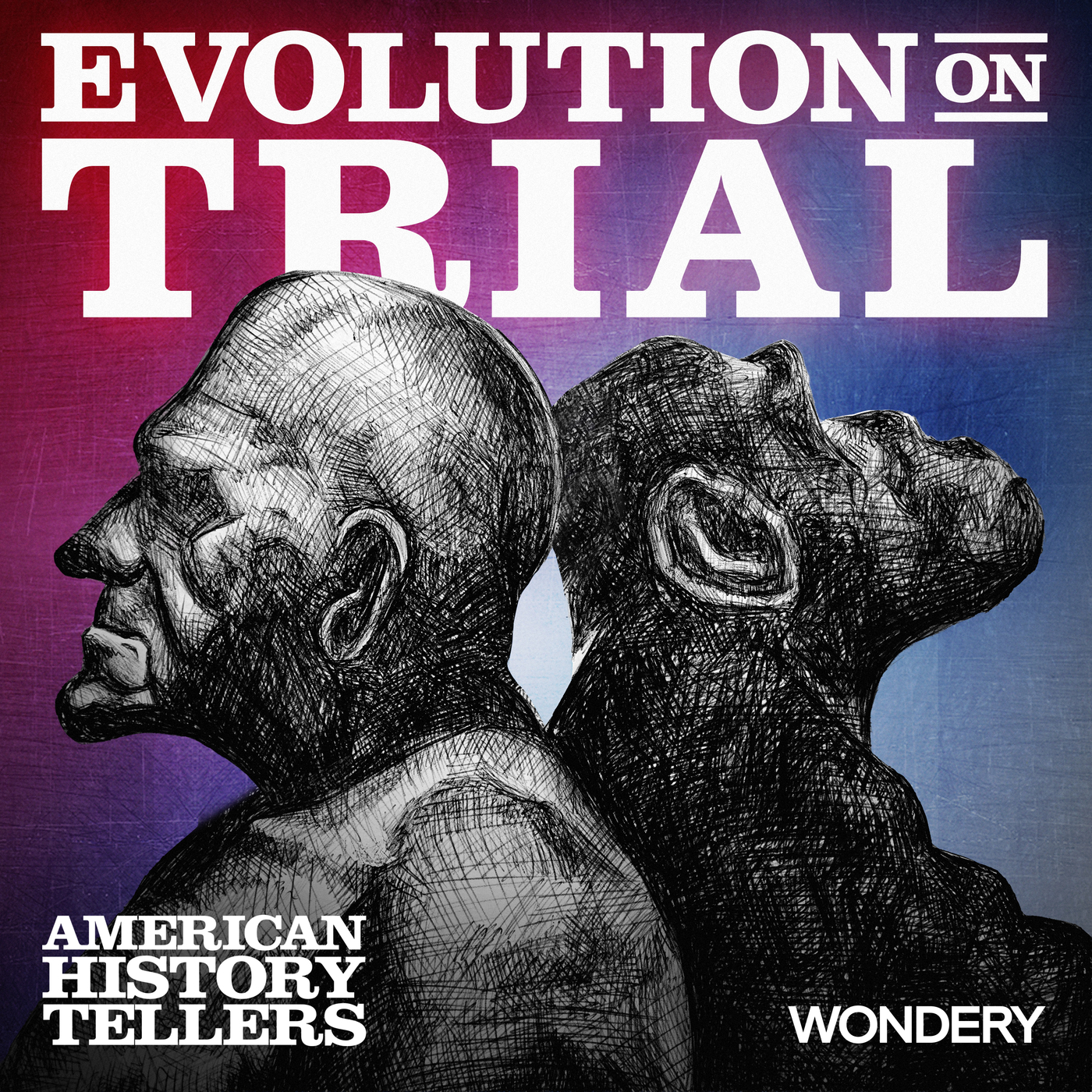
Evolution on Trial | Live and Let Live | 4
The Scopes ""Monkey"" Trial was set against the backdrop of the roaring twenties, a time of both cultural upheaval and deep social tensions. While ostensibly about science versus religion, the trial became a proxy for larger conflicts over academic freedom, individual rights, and the very nature of American democracy. And the trial's impact extended far beyond its verdict, influencing deb
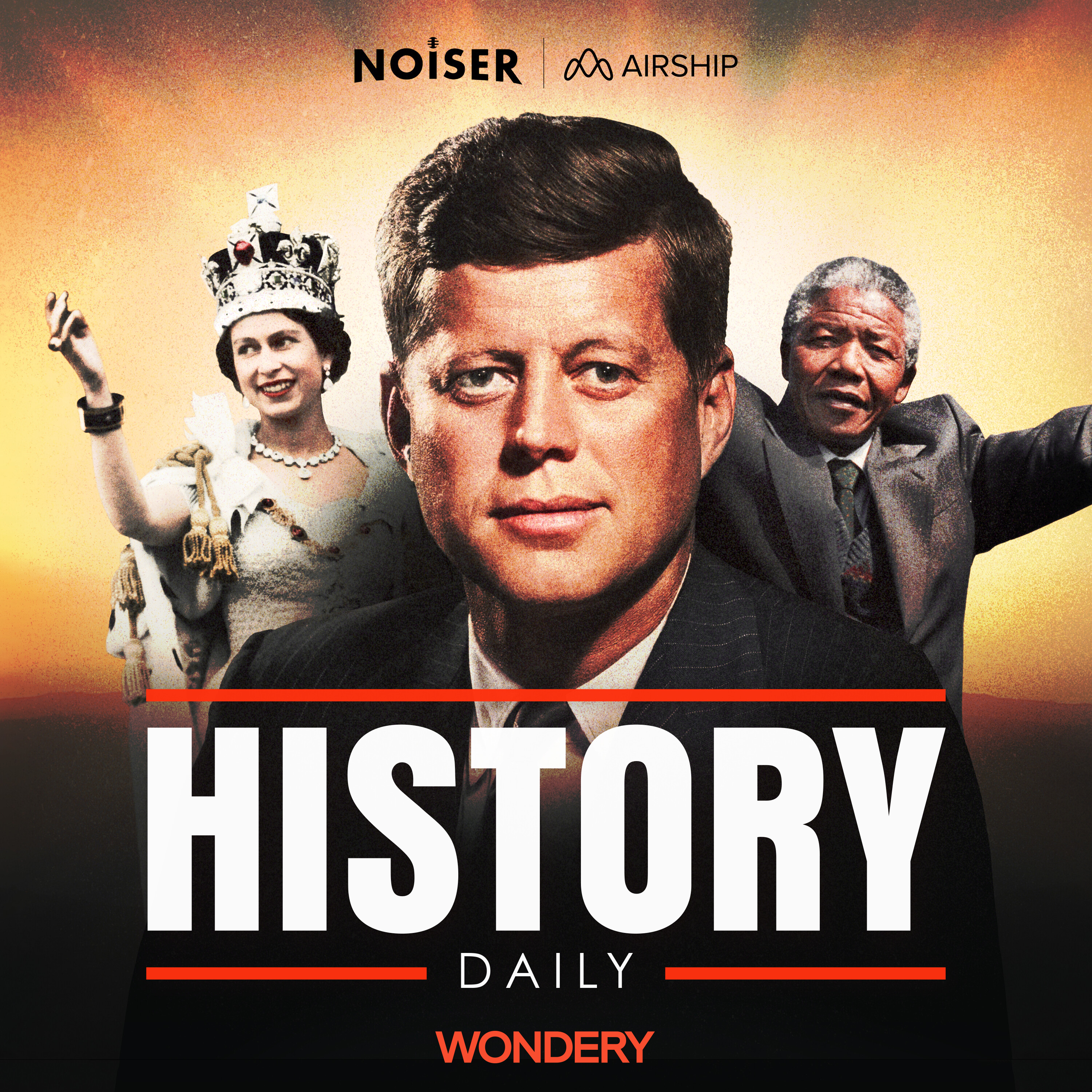
History Daily: Henry VIII’s Fifth Wedding
July 28, 1540. King Henry VIII of England marries his fifth wife, Catherine Howard, 32 years his junior.You can listen ad-free in the Wondery or Amazon Music app. Or for all that and more, go to IntoHistory.comHistory Daily is a co-production of Airship and Noiser.Go to HistoryDaily.com for more history, daily.See Privacy Policy at https://art19.com/privacy and California Privacy Notice a
Evolution on Trial | Duel to the Death | 3
On July 20, 1925, the trial of John Scopes continued in the stifling heat of the overcrowded county courthouse in Dayton, Tennessee. Tempers flared as the defense and prosecution sparred over the question of admitting testimony from scientific experts.The heat became too much to bear, and the judge announced that he was moving the trial outside. Some 3,000 spectators and reporters gathere
Evolution on Trial | Monkeytown | 2
On the sweltering morning of July 10, 1925, 200 newspaper reporters, newsreel film producers, and radio broadcasters flooded the county courthouse in Dayton, Tennessee. Hot dog vendors, preachers, and trained chimpanzees jammed the streets. The sleepy hamlet had transformed into a national spectacle almost overnight. The nation’s media had come to Dayton for the start of the trial of
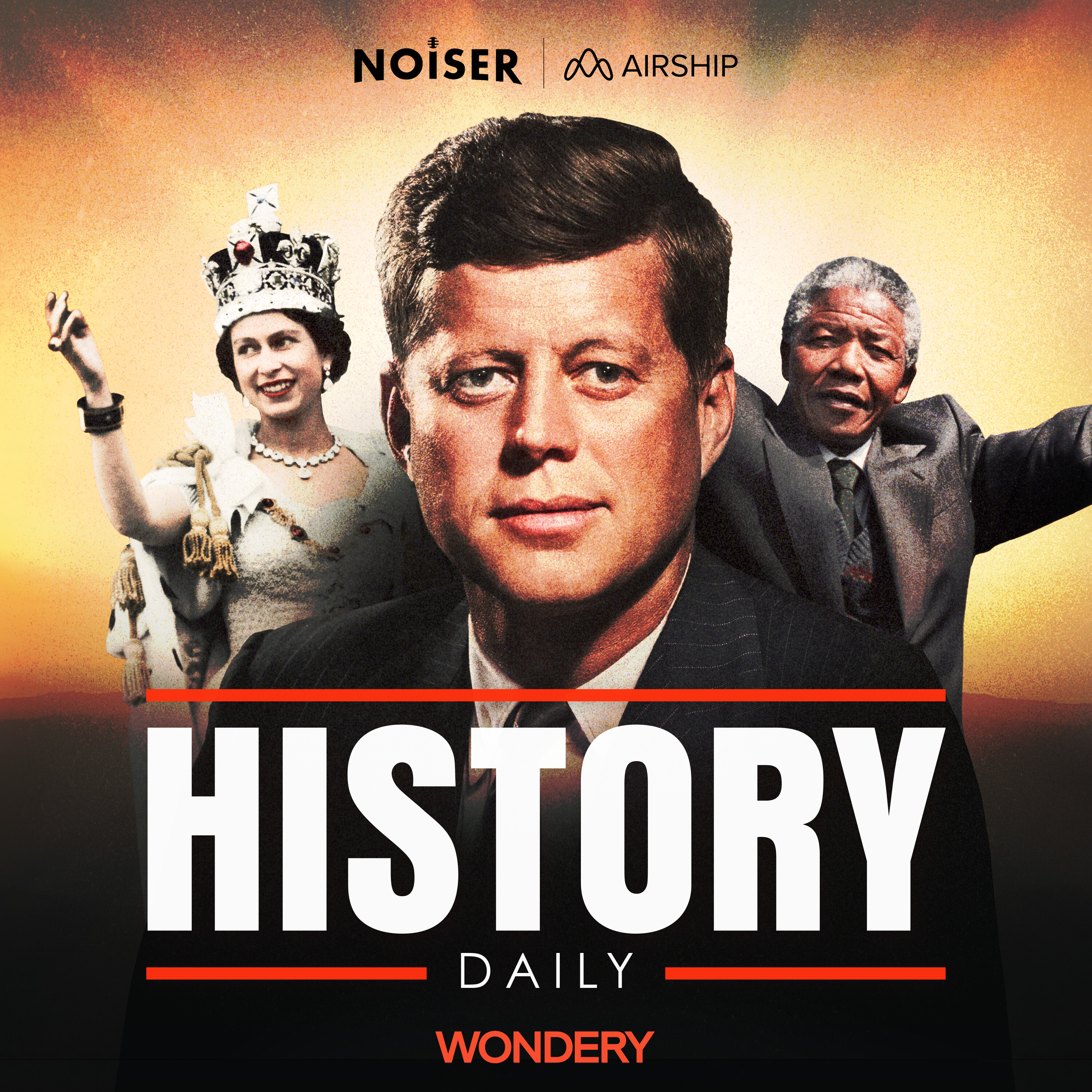
History Daily: The Lincoln Hospital Takeover
July 14, 1970. A group of Puerto Rican activists stage an occupation demanding better health care at the Lincoln Hospital in South Bronx, New York City.You can listen ad-free in the Wondery or Amazon Music app. Or for all that and more, go to IntoHistory.comHistory Daily is a co-production of Airship and Noiser.Go to HistoryDaily.com for more history, daily.See Privacy Policy at https://a
Evolution on Trial | A Clash of Giants | 1
In 1925, the famous politician and presidential contender William Jennings Bryan returned to the limelight to lead a new crusade against the teaching of evolution. With Bryan’s support, Tennessee became the first state to ban the teaching of evolution in public schools.The American Civil Liberties Union resolved to challenge the anti-evolution law in court, and the small town of Dayton, T
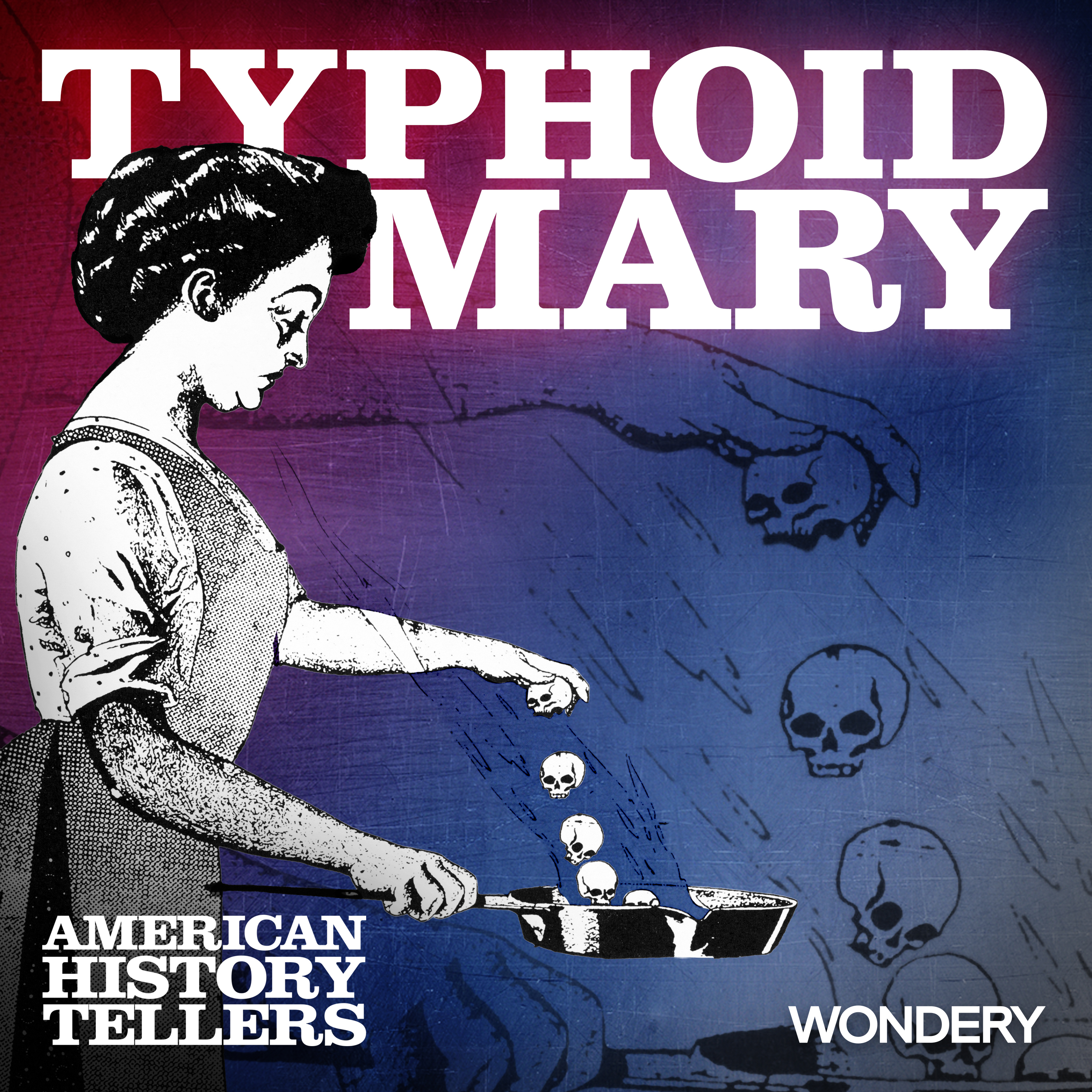
Typhoid Mary | Cook, Carrier, Captive | 3
In 1906, a New York health department investigation into an outbreak of typhoid fever led to the discovery that a cook, Mary Mallon, was an unsuspecting ""healthy carrier"" of the deadly bacteria. This discovery forever altered Mallon’s life, thrusting her into a national spotlight as the infamous ""Typhoid Mary.""In this episode, Lindsay is joined by Dr. Seema Yasmin, clinical assistant
Typhoid Mary | Destroying Angel | 2
After spending two years in forced isolation on a remote island in the East River, Mary Mallon fought back, insisting that she posed no danger to the public and city officials had overstepped their authority in keeping her against her will. She finally managed to secure her freedom after pledging to leave the profession of cooking for good in order to keep the public safe.But over the nex
Typhoid Mary | An Invisible Menace | 1
In the fall of 1906, a mysterious outbreak of typhoid fever struck a wealthy New York family vacationing in Oyster Bay, Long Island. Suspicion soon fell on the family's Irish cook, who had vanished after the first cases emerged. Desperately hoping to prevent another outbreak of typhoid, city health officials began a frustrating hunt for the woman, Mary Mallon – soon labeled in the press a
Recommended

McKinsey on Consumer and Retail

megahired.com

Hard Knocks Podcast

Effective Weight Loss for Moms | High protein, Strength Training, Lose Weight, Meal Planning, Fat Loss, Healthy Habits

The Human-Animal Connection - Pet Life Radio Original

Infinite Health with Dr. Arasi Maran

The Daily

World News Tonight with David Muir
The Joe Rogan Experience

English Vocabulary Help

TED Talks Daily

Learn English B1 with Daily News | English Listening Practice
