The Photo Ethics Podcast
This podcast explores the ethics of photography, featuring interviews with accomplished photographers about how they handle ethical challenges in their work. Topics include consent, dignity, power, responsibility, impact, and collaboration. Hosted by Savannah Dodd, founder of the Photography Ethics Centre.
Episodes
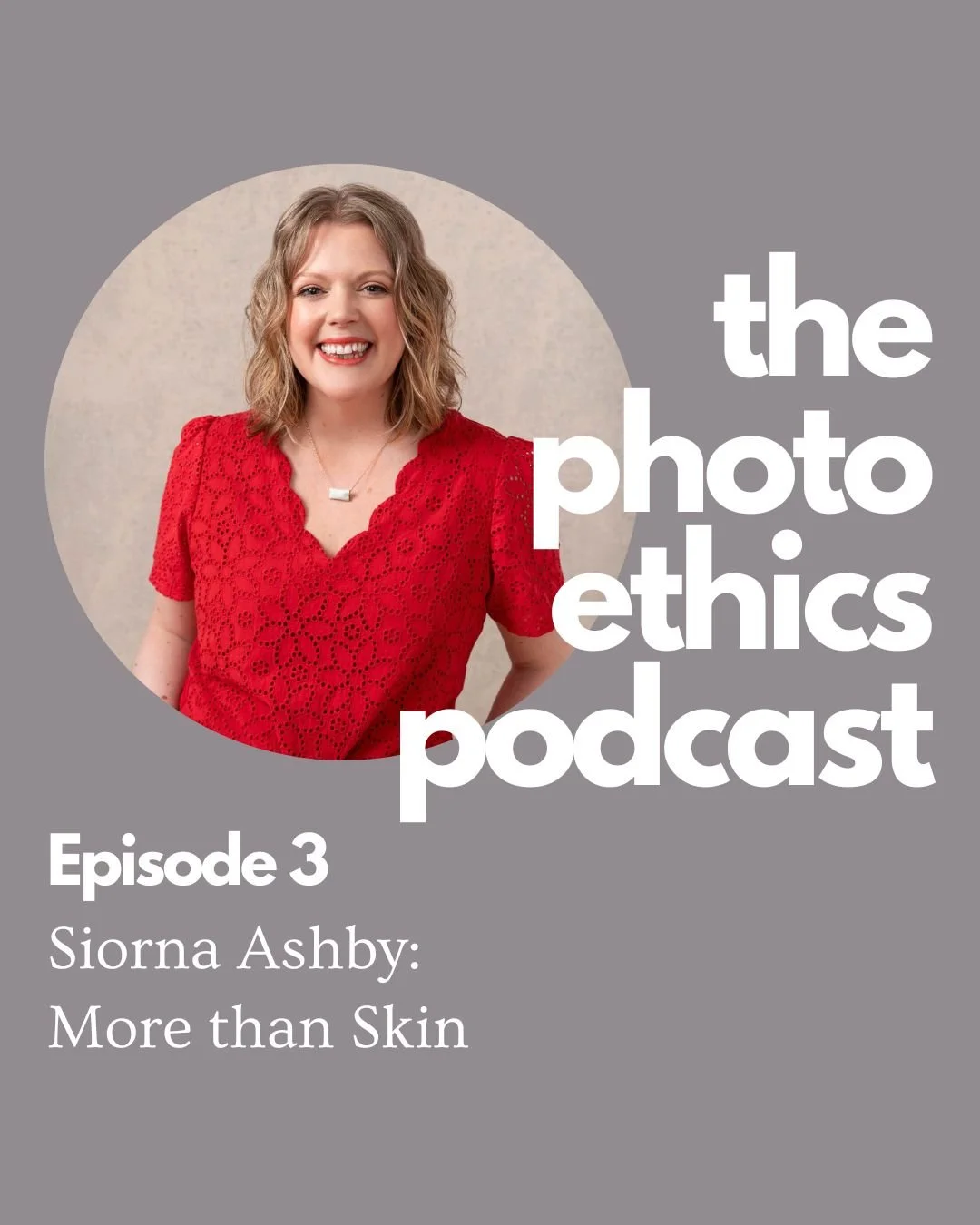
Siorna Ashby: More than Skin
In this episode, we talk with Siorna Ashby about ethics in boudoir and nude portrait photography. Siorna discusses her collaborative, consent-led approach to photographing the body, exploring how clients actively shape the images they create together through what she describes as “self-authoriship”. She reflects on navigating vulnerability, power dynamics, and body image, explaining how trust is b
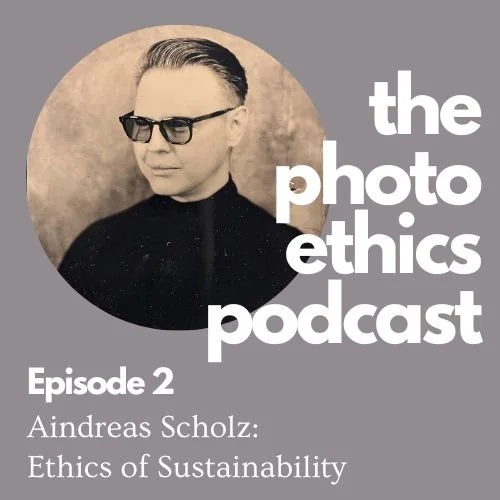
Aindreas Scholz: Ethics of Sustainability
In this episode, we talk with Aindreas Scholtz about sustainability, materiality, and the future of photographic practice. Aindreas discusses how his camera-less photographic work, drawing on historical processes such as cyanotype and anthotype*, has shaped his research. He reflects on photography as a material practice, exploring the ethical implications of the resources and environments entangle
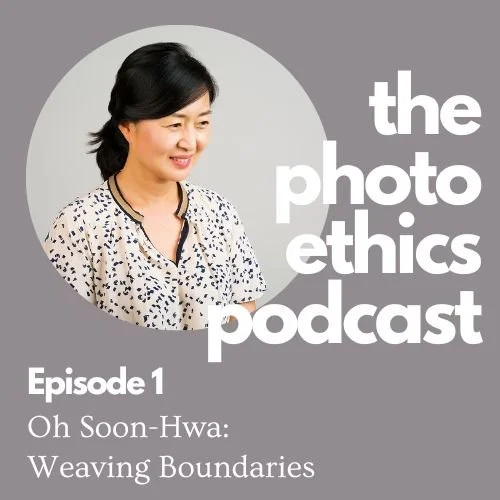
Oh Soon-Hwa: Weaving Boundaries
In this episode we talk with Oh Soon-Hwa about long-term documentary practice, research, and ethical responsibility. Soon-Hwa reflects on her personal experience of migration and its influence on her photographic work, discussing the importance of curiosity, sustained engagement, and research when working with communities. She explores the ethical challenges of photographing private lives, balanci
Trailer: Season 7
For season 7, we are bringing you a mini edition of the podcast to focus on our biennial Photography Ethics Symposium. Back in June, the 2026 symposium was hosted at Queen’s University Belfast and produced in partnership with the academic journal, Photographies, with funding from the ESRC. This event brought together photographers, curators, archivists and researchers to critically consider the me

Tanya Habjouqa: On reevaluation and responsibility
In this episode, we talk with Tanya Habjouqa about reevaluation and responsibility. Tanya shares how her Circassian background motivates her work as she feels the diasporic community’s story was never told. She reflects on how the process of printmaking has allowed her to forge a deeper physical connection with her art which can be healing. Tanya explains the countless ethical considerations

Tiffany Fairey: On visualising peace
In this episode, we talk with Tiffany Fairey about visualising peace. Tiffany warns of the dangers of binaries and hierarchies in terms of the different forms of photography as it negates the importance of different perspectives. She highlights the complexity of the politics of visibility and the ethical considerations required when marginalised groups become visible through photography. Tiffany a

Kimbra Audrey Lo: On healing
In this episode, we talk with Kimbra Audrey about healing. Kimbra shares how her self-portraiture practice is a way to reclaim power over her image and body after years of modelling. She discusses documenting her breast cancer journey through photography as well as the current issues with breast cancer representation in terms of race, gender and age. Kimbra challenges the phrase taking a photo as

Jesse Alexander: On creative sustainability
In this episode, we talk with Jesse Alexander about creative sustainability. Jesse discusses the nuances of rurality and place making as well as the urban bias present in landscape photography. He also explains how idealised images of agriculture are disconnected from their polluting impact. Jesse shares his ethical approach which focuses on the general messaging of his work and lowering his own c

Heather Agyepong: On embodiment and the self
In this episode, we talk with Heather Agyepong about embodiment and the self. She explains what reimagination means in her practice when representing black women in history ethically. Heather also explores the gatekeeping present in art and how this drives her to make her work visceral in order to transcend linguistic accessibility. She reflects on her decision to focus on self-portraits after wit

Nana Kofi Acquah: On the complexity of consent
In this episode, we talk with Nana Kofi Acquah about the complexity of consent. Nana speaks of the importance of prioritising understanding in order to photograph complex stories authentically. He also discusses how the coronavirus pandemic illuminated the lack of empathy present in the photographing of illness in Africa. Nana highlights how images of poverty and opulence are often juxtapose

Alice Cazenave: On the toxicity of photography
In this episode, we talk with Alice Cazenave about the toxicity of photography. She examines photography and colonialism on a material level in terms of land ownership, extraction and contamination. Alice discusses how the use of plants allowed her to explore the different narratives that emerged from the same place. She provides insight into the plant-based photo-chemistries* that develop her ana

Hernease Davis: On empathy in the darkroom
In this episode, we talk with Hernease Davis about empathy in the darkroom. Hearnease opens up about her use of photography to process, heal and take care of herself. The complexities of exhibiting work relating to vulnerable issues is explored as well as the topic of protection. Hernease discusses empathy in relation to trauma and the place of empathy in art history. The metaphor of walking in so

Jai Lennard: On opportunity versus access
In this episode, we talk with Jai Lennard about opportunity versus access. Jai discusses how part of his ethical considerations include deciding if he is the right person to tell a story. Additionally, his founding of Color Positive was part of his drive to diversify the stories which are told by aiding young black artists. Jai outlines how his mentoring role at Color Positive puts him in a

Lauren Walsh: On conflict photography
In this episode, we talk with Lauren Walsh about conflict photography. Lauren first discusses her career trajectory, explaining her shift from English literature to photojournalism due to her sustained interest in storytelling and ethical issues. She explores who consent forms are designed to protect and stresses the need for ethical considerations in relation to photojournalists’ mental wel

Santiago Lyon: On trusting what we see
In this episode, we talk with Santiago Lyon about trusting what we see. Discussing his own work with the Content Authenticity Initiative, he stresses the need for provenance information to be available to consumers. Santiago highlights the importance of clarifying the differences between photojournalism and stock photography as they entail differing ethical considerations. He also explores t

Aida Muluneh: On authenticity
In this episode we will talk with Aida Muluneh about authenticity. Aida discusses the use of festivals to manage perceptions of Africa and to globally share different imaginings of Africa through the continent’s own visual language. She stresses the need for a global discourse surrounding ethically photographing the Global South, which is rooted in awareness and respect for the country being repre

Bonus: Eight Lessons from The Photo Ethics Podcast
Each year since 2020, the Photography Ethics Centre has interviewed 12 photographers, asking them: “What does photography ethics mean to you?” After four years and 48 interviews, we have distilled eight key lessons that we have learned about what it means to be an ethical photographer. These lessons - ranging from the language we use to the intentions we have - can help photographers, filmmakers,

Melanie King: On leaning into collaboration
In this episode, we talk with Melanie King about leaning into collaboration. She talks about her transition from research-informed practice to practice-informed research. She also explores the collaborative nature of sustainable photography and how she has built her own network within the community of researchers and practitioners. Throughout, she comments on her journey of becoming a sustainable

Mohammad Alnobani: On reducing bias in imagery
In this episode, we talk with Mohammad Alnobani on reducing bias in imagery. He discusses his experiences founding an Arab stock imagery website and how his role has allowed him to better understand photographers’ concerns. He also explores AI tools like image generation, describing how he has tried to maintain his own ethics through the use of these tools. What does photography ethics mean to Moh

Daniel Etter: On truth and fiction
In this episode, we talk with Daniel Etter about truth and fiction. He discusses the differences between observation in photojournalism as opposed to the element of creation present in filmmaking. He discusses the rise of AI image-making and the associated risks. Finally, he describes how problems within photography are often representative of systemic problems requiring societal change on a wider

Mohamed Mahdy: On embedding ethics
In this episode, we talk with Mohamed Mahdy on embedding ethics. He talks about using your own senses to discover the stories around you, rather than venturing out of your own community. He also explores his quest for authenticity in his work and how multi-modal works can help achieve such authenticity. Finally, he discusses street photography and the ethical reflections it invites.What does photo

Alicia Bruce: On collaboration and advocacy
In this episode, we talk with Alicia Bruce on collaboration and advocacy. She explores how a collaborative approach to photography can avoid misrepresentations and can counter typical media narratives. She also discusses her involvement in campaign-based photography and the empowerment that can come as a result of telling hidden stories in an ethically-aligned way. What does photography ethics mea

Aryan Musleh: Storytelling on social media
In this episode, we talk with Aryan Musleh on storytelling on social media. He discusses the challenges of representing communities that are misrepresented or forgotten in the media, focusing on the political barriers that can hinder the efforts of photographers. As a curator, he explores the ethical complexity of ensuring that photographs he posts are used responsibly and represented accurately t

Nicole Tung: On navigating ethical dilemmas
In this episode, we talk with Nicole Tung on navigating ethical dilemmas. She explores the responsibility a photographer has beyond taking a photo, discussing the investment she displays in the impact of her images. She examines the question of when to intervene as a photojournalist in a conflict zone, before talking about how the industry can better support freelancers doing this dangerous work.

Zula Rabikowska: On working with communities
In this episode, we talk with Zula Rabikowska on working with communities. She talks about the care and research she invests in projects involving vulnerable communities, before exploring the additional layers of care required when photographing her own family. She examines the complexity of her own multi-national identity and how it shines through in her work. Finally, she talks about her positio
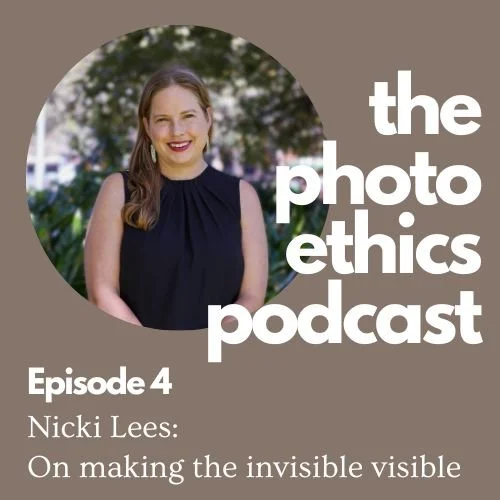
Nicki Lees: On making the invisible visible
In this episode, we talk with Anastasia Taylor-Lind about being slow, kind, and gentle. She shares her experiences of telling delicate stories about people struggling with trauma, and she describes how she works to include their input in order to craft more authentic photographs. She goes on to talk about the differences between her roles as a photojournalist and poet, and how she decides which me

Raymond Thompson Jr.: On speculation
In this episode, we talk with Raymond Thompson on speculation. He talks about how his portfolio represents the many different disciplines and approaches that inform his work. He discusses his role as a photographer in understanding himself within history, and the challenges of working with archives that are often incomplete. Raymond formulates his idea of speculation in photography, as a way of f

Pia Johnson: On performing identity
In this episode, we talk with Pia Johnson on performing identity. She explores how her formal education in other artforms, like textiles, is present in her photographic practice. She discusses how photographing herself can be freeing, and she also acknowledges the challenges that come with it. She ends by discussing the ethical dilemmas and requisite care that come with working with family archive
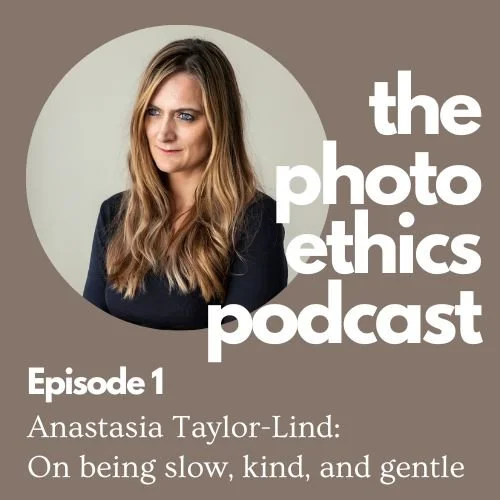
Anastasia Taylor-Lind: On being slow, kind, and gentle
In this episode, we talk with Anastasia Taylor-Lind about being slow, kind, and gentle. She shares her experiences of telling delicate stories about people struggling with trauma, and she describes how she works to include their input in order to craft more authentic photographs. She goes on to talk about the differences between her roles as a photojournalist and poet, and how she decides which me
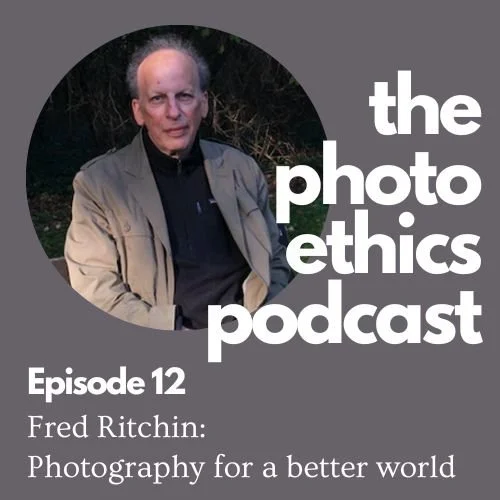
Fred Ritchin: Photography for a better world
In this episode, we talk with Fred Ritchin about photography for a better world. Fred offers a thoughtful reflection on image-making practices and their evolutions over the fifty years that he has been involved in the photography industry. He speaks about the power of images, and how this power relates to the importance of contextualisation and transparency about the image-making process. Finally,
Brent Lewis: On becoming the story
In this episode, we talk with Brent Lewis about becoming the story. He describes the importance of not becoming the story by incentivising people to participate in being photographed, but he also explains that we are, ultimately, part of the stories that we tell with the camera. Brent spends some time debunking some other “J School” ideas that can sometimes perpetuate unhelpful myths about photoj
Margaret Mitchell: On connection and sincerity
In this episode, we talk with Margaret Mitchell about connection and sincerity. She describes some of the projects she has undertaken which look at the experiences of homelessness and of end of life care. She explains how she gained her understanding of ethics and representation through photographing her own family members. Finally, Margaret offers a description of what she believes that true coll
Shaminder Dulai: On troublemaking
In this episode we talk with Shaminder Dulai about troublemaking. He describes how he navigates ethical considerations, both as a photo editor and as a photojournalist. He defines the difference between a “picture taker” and a “picture maker,” he discusses media literacy, and he describes the responsibilities that come with image making. Shaminder advocates for a kind of “troublemaking” by speakin
Photovoice Worldwide: On expanding the frame
In this episode we talk with Stephanie Lloyd and Erica Belli from Photovoice Worldwide about expanding the frame. They each explain how their distinct career trajectories led them to photovoice, and they describe why they find this research method valuable. They explore the ethical challenges that come with photovoice, and they also talk about the ethical challenges that photovoice aims to solve.W
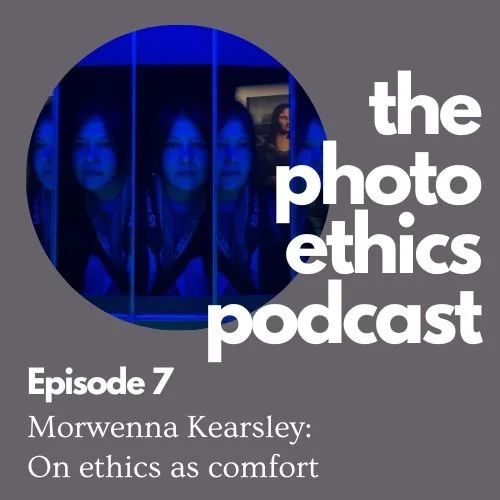
Morwenna Kearsley: On ethics as comfort
In this episode we talk with Morwenna Kearsley about ethics as comfort. She describes both her personal projects and her projects working with participants, focusing on ownership and control over the images that are produced. She discusses her choice to focus on making portraits of objects instead of making portraits of people, and she shares the ethical responsibilities she feels as a photographe
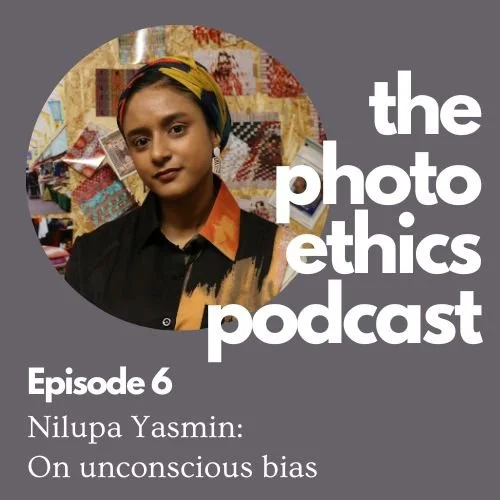
Nilupa Yasmin: On unconscious bias
In this episode we talk with Nilupa Yasmin about unconscious bias. Nilupa describes the conversations that have shaped her thinking around unconscious bias, accessibility, and representation. She explains why she makes work, how weaving has become an integral part of her practice, and how craft can be a form of activism. She goes on to discuss her approach to participatory work with communities, a
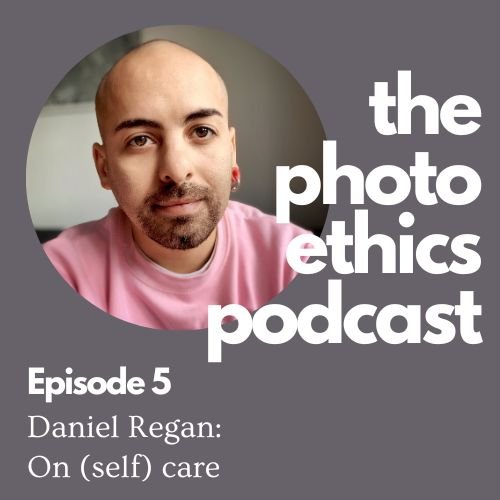
Daniel Regan: On (self) care
In this episode we talk with Daniel Regan about (self) care. Daniel discusses how he approaches collaborative work with others and personal work about his own lived experience. He describes how he works with participants in collaborative projects to ensure that they are comfortable sharing their work, and how he makes decisions about sharing personal work about himself. Daniel explains that caring
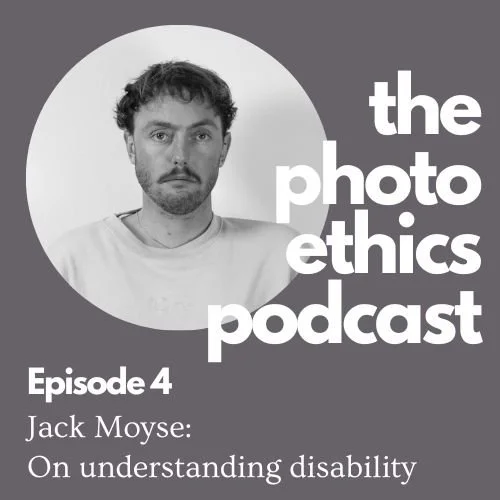
Jack Moyse: On understanding disability
In this episode we talk with Jack Moyse about understanding disability. Jack describes the therapeutic benefits that he has found through photographic self-portraiture and the ways that he has integrated performance art into his practice. He discusses ableism, both within the photography industry and in wider society, and articulates the impacts that he hopes to have through his work.What does pho
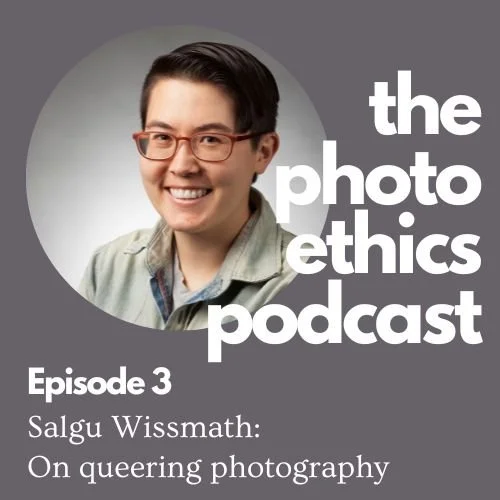
Salgu Wissmath: On queering photography
In this episode we talk with Salgu Wissmath about queering photography. They describe how there are certain expectations about ethics that are specific to different genres, and they explain how their work tries to push back on some of these expectations in order to promote change in the industry. They highlight the importance of ethical transparency, especially when taking an ethical approach that
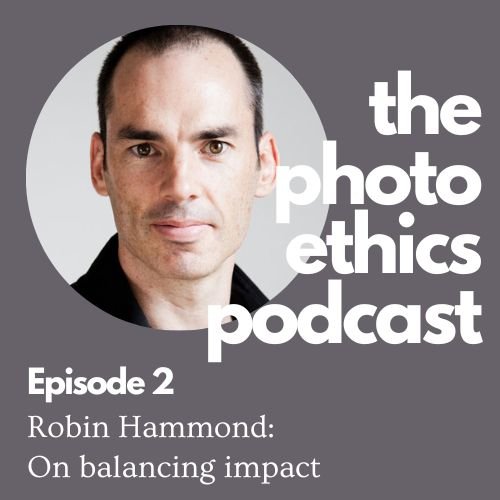
Robin Hammond: On balancing impact
In this episode we talk with Robin Hammond about balancing impact. He explains how ideas of impact fuelled his motivation for starting Witness Change, an organisation dedicated to advancing human rights through visual storytelling. Robin describes some of the difficult ethical decisions he made as a photographer, and he emphasises the importance of talking with local people and people with experie
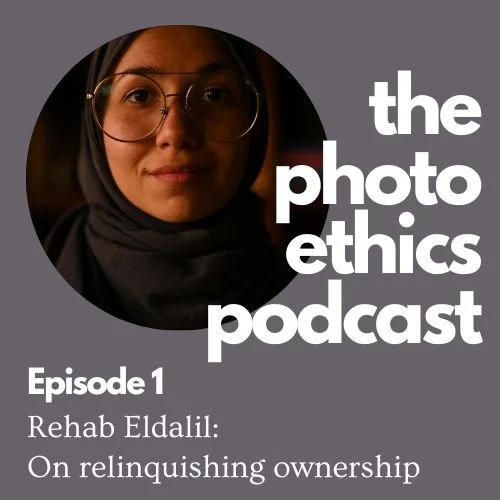
Rehab Eldalil: On relinquishing ownership
In this episode we talk with Rehab Eldalil about relinquishing ownership. She describes different ways that she has used collaboration in her projects, and she unpacks what this means for the ownership of the work. She distinguishes between relinquishing ownership and abdicating responsibility, asserting the responsibilities that she has to the protagonists that she works with.What does photograph
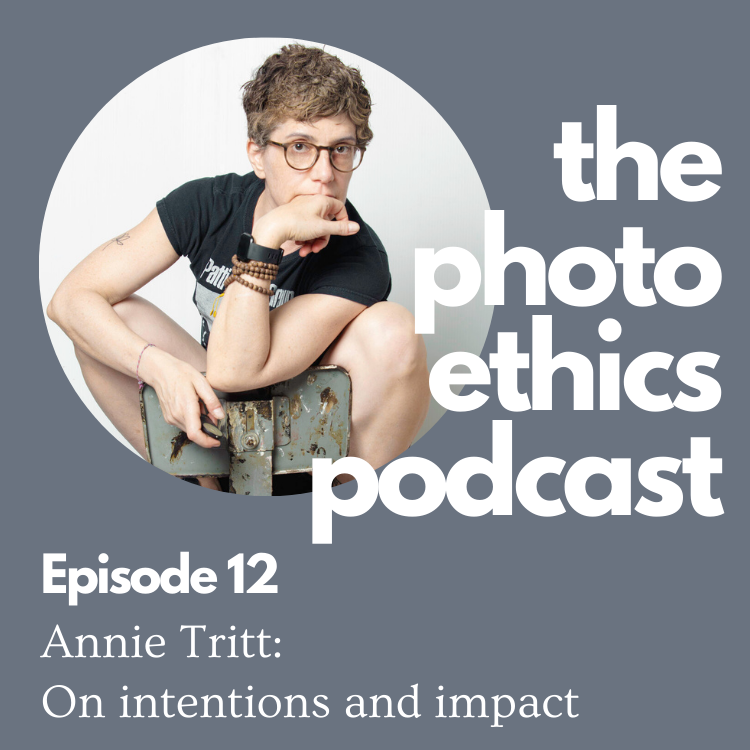
Annie Tritt: On intentions and impact
In this episode we talk with Annie Tritt about intentions and impact. Annie explains their personal journey with photography ethics as a young photographer starting out in their career. They explore their initial misunderstanding that closeness to an individual gives you the right to photograph them, and the responsibility photographers have to the people they photograph. Annie describes being ask

Fati Abubakar: On changing the narrative
In this episode, we talk with Fati Abubakar about changing the narrative. Fati explains her motivations for countering misrepresentation and creating new narratives. She explores the ethical issues that can arise when photographers fly in to a country without a deep awareness of cultural nuances and the resulting repercussions. Fati describes her connection to the people she photographs and how i
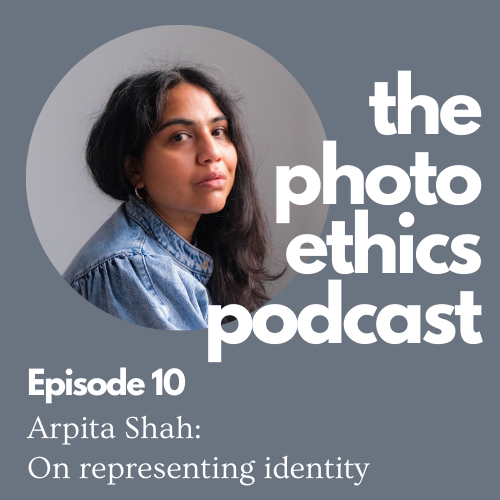
Arpita Shah: On representing identity
In this episode, we talk with Arpita Shah about representing identity. Arpita talks about the process of working with participants on their own representation and how the photographer and participant may see the same photograph differently. She discusses her experience photographing her ill grandmother, the ethical considerations that involved, and the importance of transparency and dialogue with
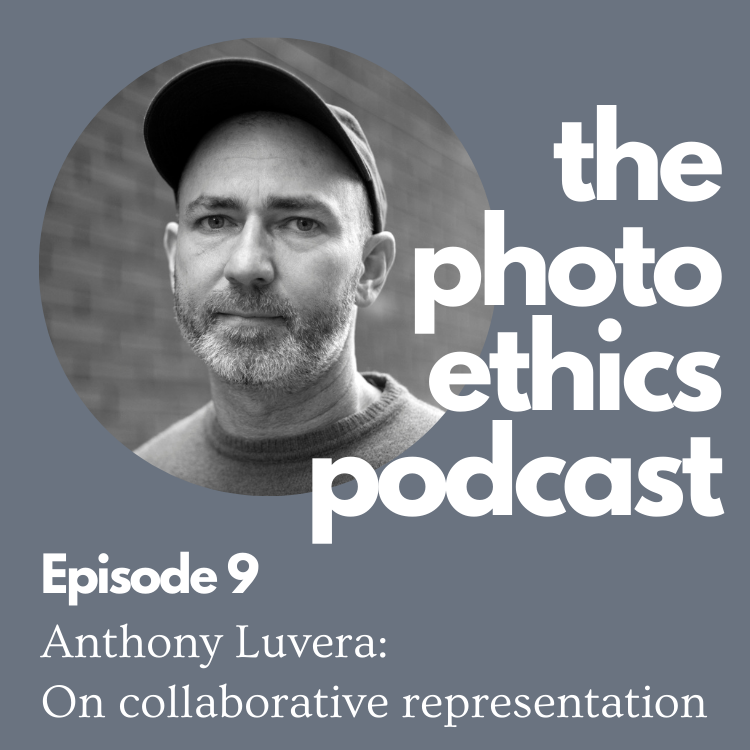
Anthony Luvera: On collaborative representation
In this episode, we talk with Anthony Luvera about collaborative representation. He provides an insight into his approach to collaborative work, what collaboration means to him, and the interplay between collaboration and representation. Anthony explores his early roots in collaborative photography and how they led him to the socially-engaged work he does today. In particular, he describes his wor
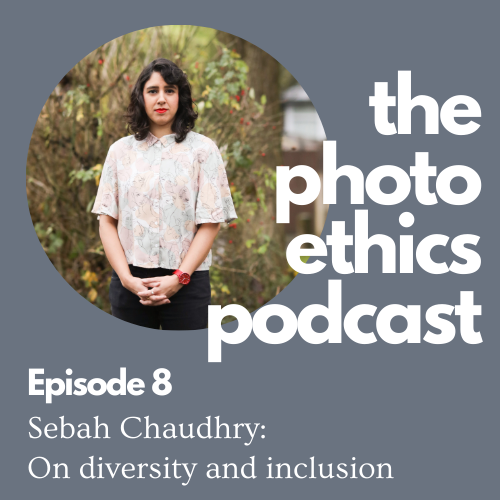
Sebah Chaudhry: On diversity and inclusion
In this episode, we talk with Sebah Chaudhry about diversity and inclusion. Sebah emphasises the need for diversity across organisations and educational institutions, and the impact this can have. She explains the importance of mentorship in order to help photographers understand their worth, and the problematic ways in which organisations can take advantage of photographers of colour. Discussing
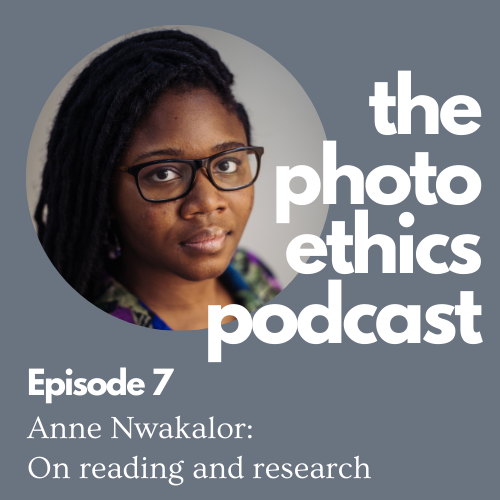
Anne Nwakalor: On reading and research
In this episode, we talk with Anne Nwakalor about reading and research. Anne discusses what motivated her to start No! Wahala, a magazine dedicated to showing work by African creatives, in the midst of the pandemic. She explains the need for a narrative shift in the way that Africa is depicted, and the impact that colonialism and white saviorism has had on this narrative. Anne highlights the need
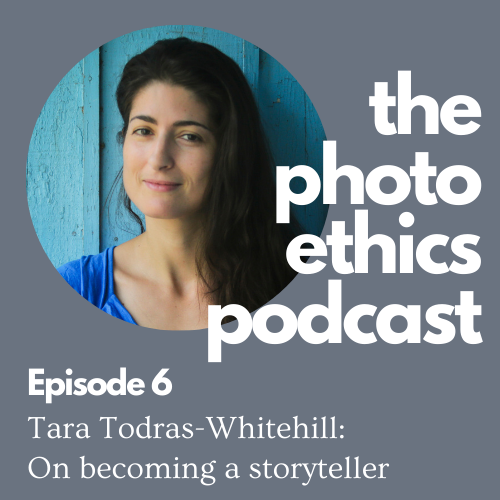
Tara Todras-Whitehill: On becoming a storyteller
In this episode, we talk with Tara Todras-Whitehill about becoming a storyteller. She shares how she first became a photographer, and the ethical situations she has found herself in since. Tara describes her current role training NGOs on how to tell stories powerfully and ethically, while explaining the different ethical contexts between journalism and NGO photography. She discusses the importance
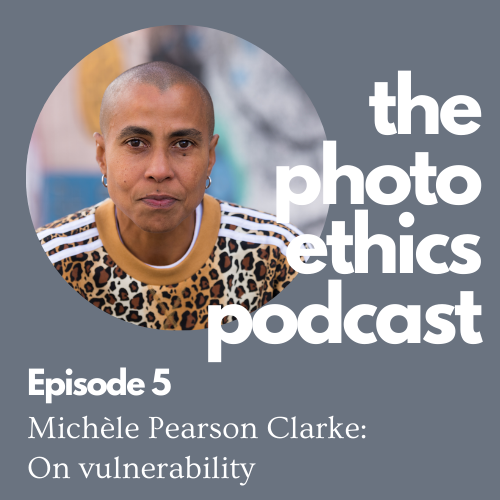
Michèle Pearson Clarke: On Vulnerability
In this episode, we talk with Michèle Pearson Clarke about vulnerability. She talks about the ethical considerations of presenting other people’s vulnerabilities within a gallery space and the responsibility she feels towards the communities she works with. She describes the process she took to be vulnerable herself in her self-portraits. As an artist and a teacher, Michèle explains the impact dif
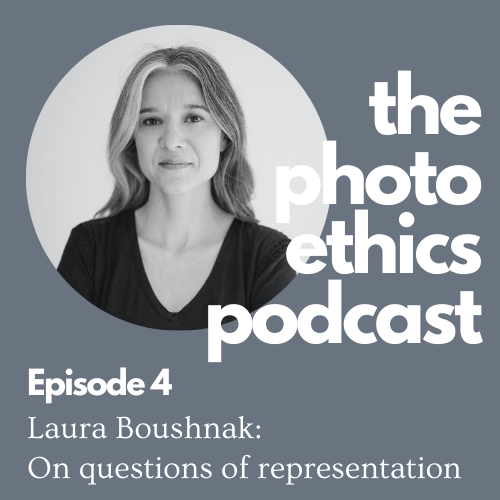
Laura Boushnak: On questions of representation
In this episode, we talk with Laura Boushnak about questions of representation. Laura discusses the importance of being transparent and upfront with the people you are photographing, of earning their trust and respecting their decision to change their minds. She explores how social media is enabling people to tell their own stories and to choose how they are represented. Laura also explains how gr

Toby Smith: On climate visuals
In this episode, we talk with Toby Smith about climate visuals. Toby explains what can make a photograph of climate change successful. He discusses ineffective old tropes, such as images of polar bears, to more effective photographs that allude to solutions or agency. Toby also describes the ethical considerations that went into setting up the Visualising Climate Change open call initiative, as we

Alex Reynolds: On taking a step back
In this episode, we talk with Alex Reynolds about taking a step back. Alex reflects on her own practise and how she first learnt to consider ethics within her work as a travel photographer. She explores the role that social media, this need to share online, and a culture of centring ourselves, plays within the ethics of travel photography. Alex also discusses how she handles the balance of being a
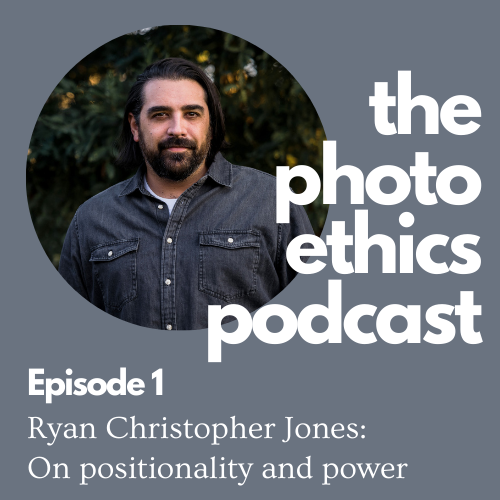
Ryan Christopher Jones: On positionality and power
In this episode, we talk with Ryan Christopher Jones about positionality and power. Ryan discusses the connection between his identity and it’s influence on his photography, and how this ultimately gave him a more nuanced perspective as a photojournalist. He shares his personal experience of ensuring stories are ethically depicted - whether by taking the time to reshape a story, or by doing his ow
Hannah Fletcher: On working sustainably
In this episode, we talk with Hannah Fletcher about how to develop a more sustainable photographic practice. She discusses the issue of sustainability within analogue and digital processes. Hannah explains the need she identified for a wider conversation around sustainability within photography and how this led her to found The Sustainable Darkroom. She explains her relationship with science and w
Tamara Abdul Hadi: On what we have seen
In this episode, we talk with Tamara Abdul Hadi about what we have seen. She discusses how she develops relationships with marginalised people, and the importance of having the right intentions as a photographer. Tamara recounts some of her personal experiences with photography ethics, and how they have altered her perspective. She highlights the need to have a critical eye when it comes to the hi

Aaron Turner: On abstraction and identity
In this episode, we talk with Aaron Turner about the place of identity in abstract photography and art. He discusses the inspiration behind his photographic projects, and why he chose to pursue abstraction as a medium of expression. Aaron shares the reasoning behind his decision to document his family and local community, while noting the issues that need to be considered when doing so. Aaron also
Mallika Vora: On complicating human narratives
In this episode, we talk with Mallika Vora about the necessity of complicating narratives in photography, and providing a more nuanced understanding of events. She also addresses the issue of objectivity within the photojournalism industry, and the need to be transparent with the viewers about why you’re making the pictures you’re making. Mallika emphasizes prioritising the person you are photogra
Polly Irungu: On working intentionally
In this episode, we talk with Polly Irungu on working intentionally. Polly reflects on her experiences growing up and going to university which led her to found the community Black Women Photographers. She describes how intentionality is central to everything she does - from her work as a photographer, to her work with radio news, and then to her work with Black Women Photographers. What you’ll fi
The Other: On class in the industry
In this episode, we talk with Kirsty Mackay, Kelly O’Brien, and Joanne Coates who are working class photographers, visual artists, storytellers, and founders of The Other. They talk about why and how they founded The Other, and the importance of fostering a supportive community. They discuss how they see the role of a photographer, the role of the photographed communities, and the power dynamic be
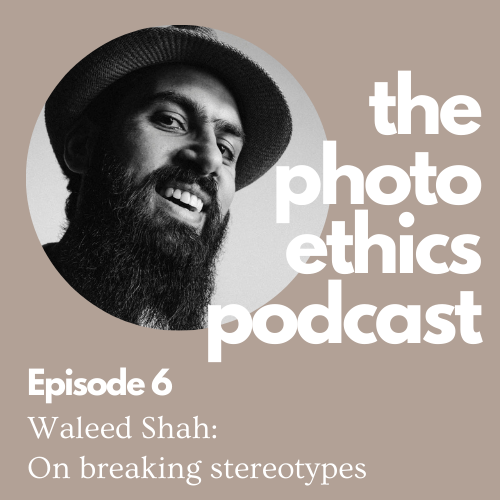
Waleed Shah: On breaking stereotypes
In this episode, we talk with Waleed Shah on how he uses photography to break stereotypes and challenge societal norms, in both his personal and commercial work. In creating work with and about people of other cultures, he acknowledges the importance of cultural sensitivity, and the importance of learning from people who truly understand the culture. Waleed discusses how, in commercial photography
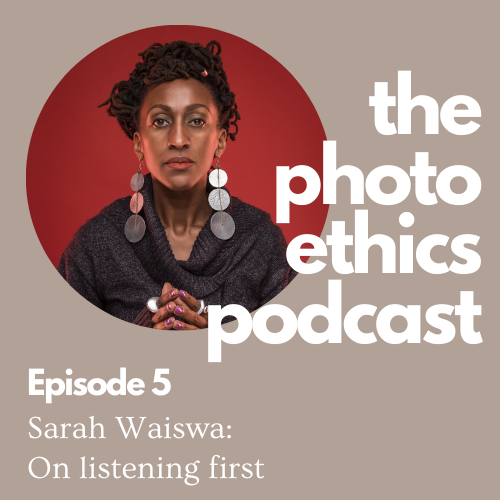
Sarah Waiswa: On listening first
In this episode, we talk with Sarah Waiswa about the importance of listening to the people you are photographing. Sarah describes her experiences working with journalists and working with NGOs, and the difference between them. She highlights the potential for NGO photography to be extractive as a result of the power imbalance between the photographer and the photographed. To counteract this, Sarah
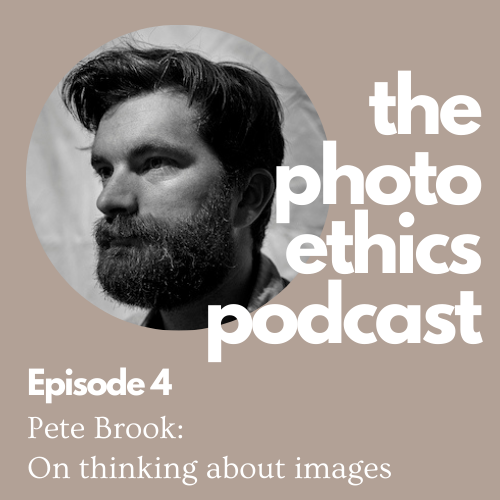
Pete Brook: On thinking about images
In this episode, we talk with Pete Brook about images of incarceration, and his thoughts on photo ethics more broadly. He shares how he first came to learn about mass incarceration, and why he felt so passionately about the issue. He discusses his belief in the importance of formal education on visual culture, and his experience teaching both university students and men incarcerated at San Quentin
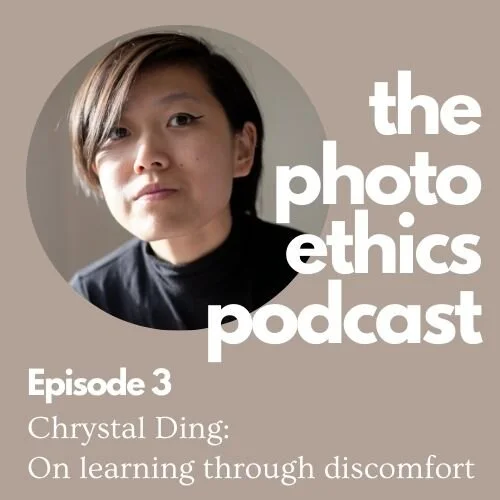
Chrystal Ding: On learning through discomfort
In this episode, we talk with Chrystal about how she prepares for each project, and why she places such an emphasis on the value of research. Yet even with research, Chrystal acknowledges that you may not always be the right person to do the work. She notes that accepting being wrong sometimes, and responding quickly to your mistakes in order to minimise harm is key to being an ethical photographe

Melissa Groo: On empathy with wildlife
In this episode, we talk with Melissa about the importance of empathy and compassion in creating ethical wildlife photography. She emphasises the need to understand the animal you are photographing, and to adjust your behaviour accordingly. Melissa highlights the unethical practice of using photo game farms to capture the perfect shot, which then presents viewers with a misleading impression of th
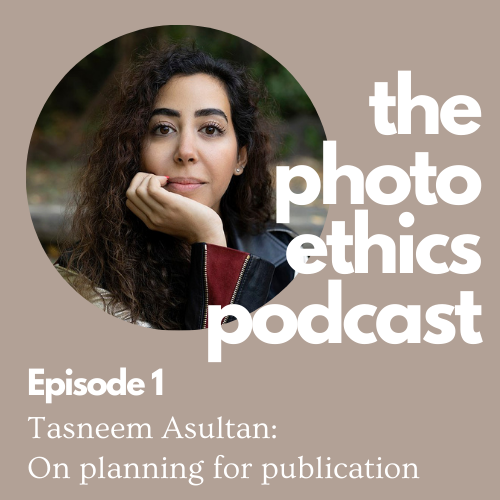
Tasneem Alsultan: On planning for publication
In this episode, we talk with Tasneem about the ethical issues that she considers when planning for publication. She describes her experience around consent, the possible consequences of an image, and how the message of a story can be shifted through a publication’s editing. Beyond this, Tasneem shares how she thinks about the people she photographs, and the impact that can have on how they are re
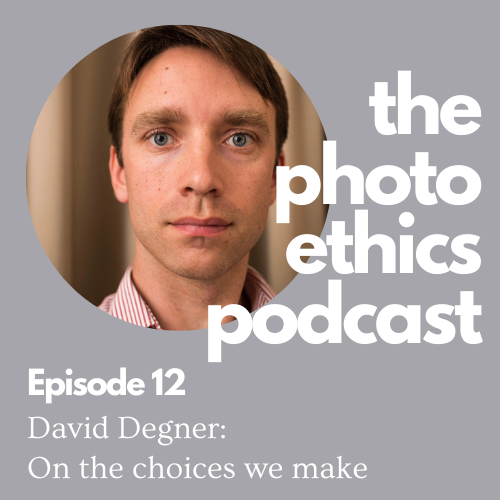
David Degner: On the choices we make
In this episode, we talk with David Degner about his experiences navigating different ethical choices as a photojournalist working at home and abroad. He draws on specific situations he has encountered during his career to explain how his education in photography has shaped the way that he approaches his work, and how he embeds ethics in his practice as a photographer. What you’ll find inside:“Rea
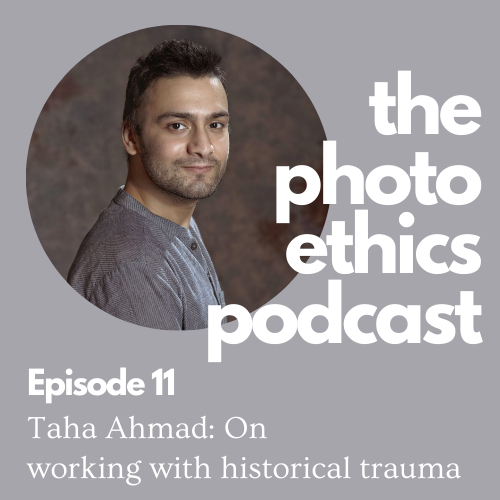
Taha Ahmad: On working with historical trauma
In this episode, we talk with Taha Ahmad about how he navigates ethics in his longterm projects. He stresses the importance of extensive research in his workflow, of building relationships with the people he photographs, and of approaching traumatic histories with care and sensitivity. Finally, he describes the personal experiences that have tested his ethics.What you’ll find inside:“I would not h
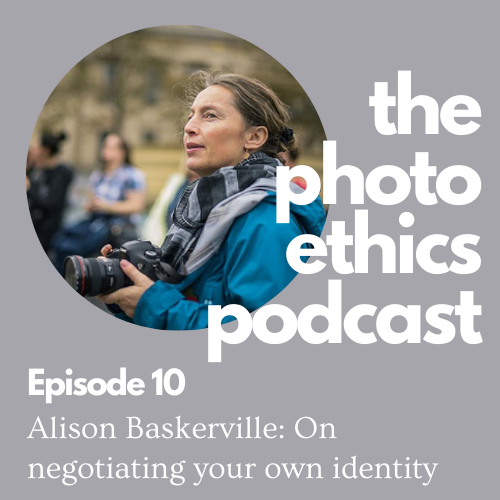
Alison Baskerville: On negotiating your own identity
In this episode, we talk with Alison Baskerville about the importance of understanding one’s own identity before addressing issues of ethics and safety as a photojournalist. She describes how her experience in the military has shaped the way she approaches her work, and what she has learned from her career as a photojournalist. Finally, she talks about the safety movement she founded which is desi
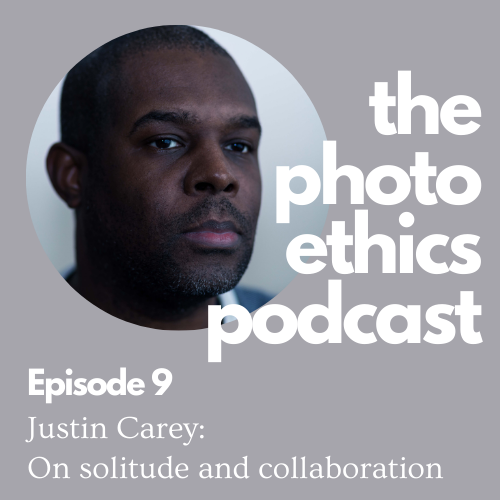
Justin Carey: On solitude and collaboration
In this episode, we talk with Justin Carey about how he navigates relationships of collaboration with the people in his pictures. He discusses the importance of recognising your own position in relation to what you are photographing, and he explains how planning ahead can help to avoid ethical dilemmas, especially when working with family. Finally, Justin addresses the lack of diversity in photogr
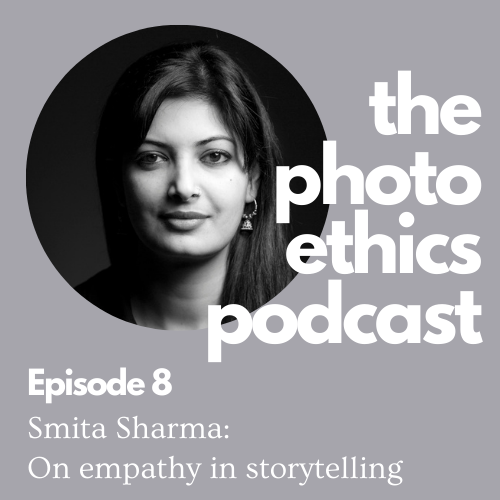
Smita Sharma: On empathy in storytelling
In this episode, we talk with Smita Sharma about how she approaches difficult and sensitive stories by first connecting to people with empathy. She stresses the importance of considering safety, both for herself and for the people she photographs, and she shares some creative strategies that she has used to protect people’s identities. Smita describes how she makes decisions about what information
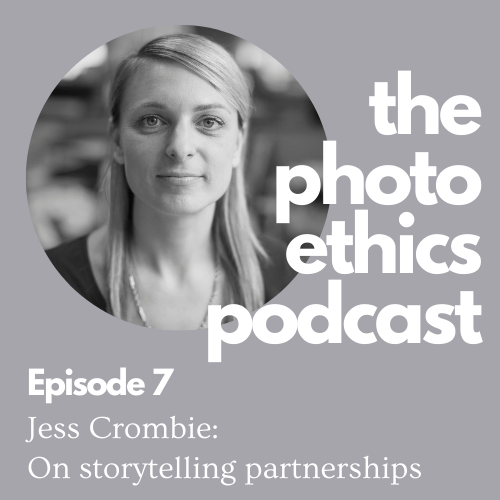
Jess Crombie: On storytelling partnerships
In this episode, we talk with Jess Crombie about the importance of collaboration and partnership when telling other people’s stories. Jess describes some of her experiences from working in the humanitarian sector which made her question the way that content is normally collected, and which led her to a more considered practice that accounts for the power dynamics in these storytelling partnerships
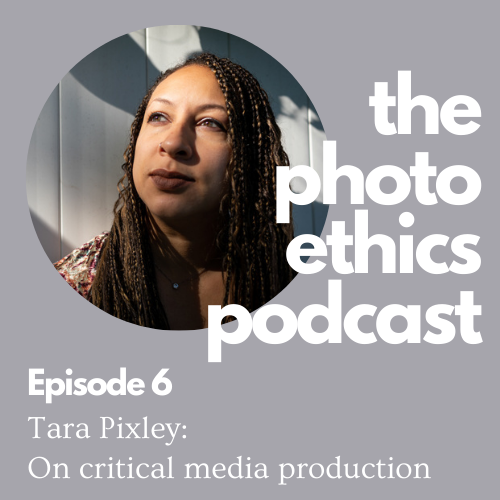
Tara Pixley: On critical media production
In this episode, we talk with Tara Pixley about the vital importance of taking a critical approach to media production. She unpacks our subconscious biases and the myth of objectivity to explain the importance of having different perspectives in the newsroom. She explains that both rights and responsibilities are central to her work in photojournalism. Finally, Tara reflects on personal experience
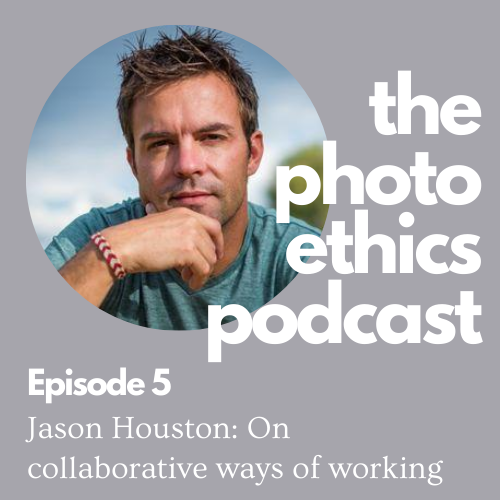
Jason Houston: On collaborative ways of working
In this episode, we talk with Jason Houston about collaborative ways of working in photography, and responsibilities he feels as an image-maker. He describes the steps he takes to educate himself about the communities he photographs and the relevant environmental and social issues at stake, and he explains how he has incorporated participatory methods into his process.What you’ll find inside:“Some
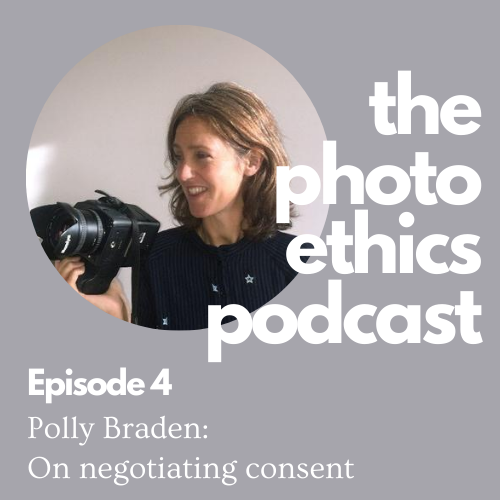
Polly Braden: On negotiating consent
In this episode, we talk with Polly Braden about how she negotiates continual consent with people in vulnerable situations. She describes the importance of pursuing depth and nuance in storytelling, and she explains what it means to be a socially conscious photographer. Finally, Polly discusses fair wages in the creative industry and the process of applying for grants.What you’ll find inside:“If y
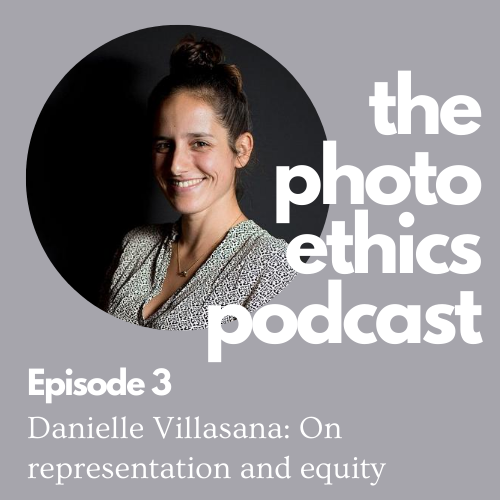
Danielle Villasana: On representation and equity
In this episode, we talk with Danielle Villasana about the importance of telling the whole story. She describes how the media industry has been complicit in promoting a stereotypical view of marginalised communities, and she describes the negative impact that this has on trust in the media. Danielle spends time unpacking our individual responsibilities as image-makers, both toward the people in ou
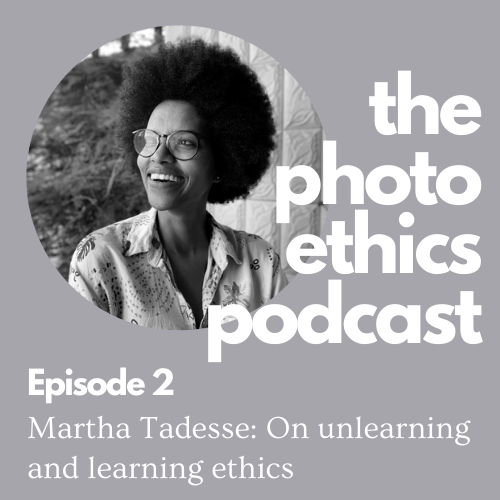
Martha Tadesse: On unlearning and learning ethics
In this episode, we talk with Martha Tadesse about representation, ethics, and how to tell visual stories with empathy. Martha explains how she balances her ethics when working with clients in the humanitarian and development sector. She asks photographers to question themselves about what, why, and how they are photographing, and she calls for photo editors to take a more active role in critiquin
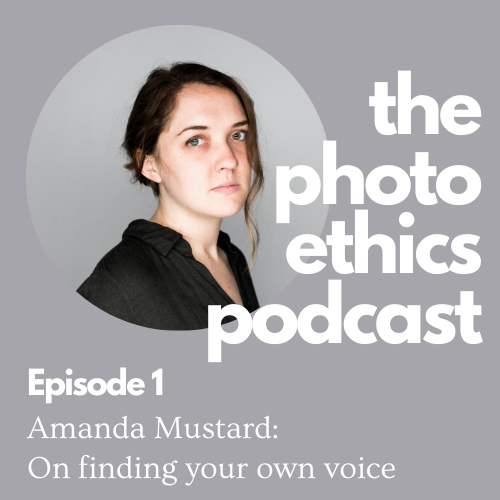
Amanda Mustard: On finding your own voice
In this episode, we talk with photojournalist and filmmaker Amanda Mustard about navigating the photojournalism industry, finding her own voice in photography, and realising that you don’t need to leave home to tell interesting visual stories. She explains how her transition from Egypt to Thailand has coincided with a transition in the type of work she is pursuing, and how she is doing more storyt
Trailer: Welcome to The Photo Ethics Podcast
Welcome to The Photo Ethics Podcast! I’m your host, Savannah Dodd, and I’m the founder of the Photography Ethics Centre. Each week we will hear from an accomplished photographer about the ethics of their practice. We will delve into conversations that explore how these photographers have handled some very sticky situations, we will hear about how their different experiences have shaped they way th
Recommended

Fantasy Flex

زن بودن

Medicine with Meaning

Yours Truly Johnny Dollar Collection

Take Back Your Health®

CBS Radio Mystery Theater | Old Time Radio

Solved Murders - True Crime Stories
紐約鳥|New York Aperture
The Swerve Podcast: Obscure Topics | Conspiracy Theories

The Bread and Banter Podcast
The Church of What's Happening Now: The New Testament
Busted Open
