
Ethics and Video Games Podcast
We explore controversial ethical issues about video games (e.g. what should be censored), in video games (e.g. what counts as cheating), and in video game design (e.g. what works to make a game morally interesting). Your hosts are Shlomo Sher, Ph.D. (Philosophy Professor and Video Game Ethicist) and Andy Ashcraft (Veteran Video Game Designer and Professor).
Episodes

Episode 77 – THE BIG PICTURE!
After 76 episodes and 11 years of talking about ethics and video games, we're ready to give you.... THE BIG PICTURE! - an organized overview of all of the ethical issues in the world of video games we're currently aware of in terms of the responsiblities that different stakeholders in this world have to each other. And all of this in under 52 minutes :) -----------------------------------------
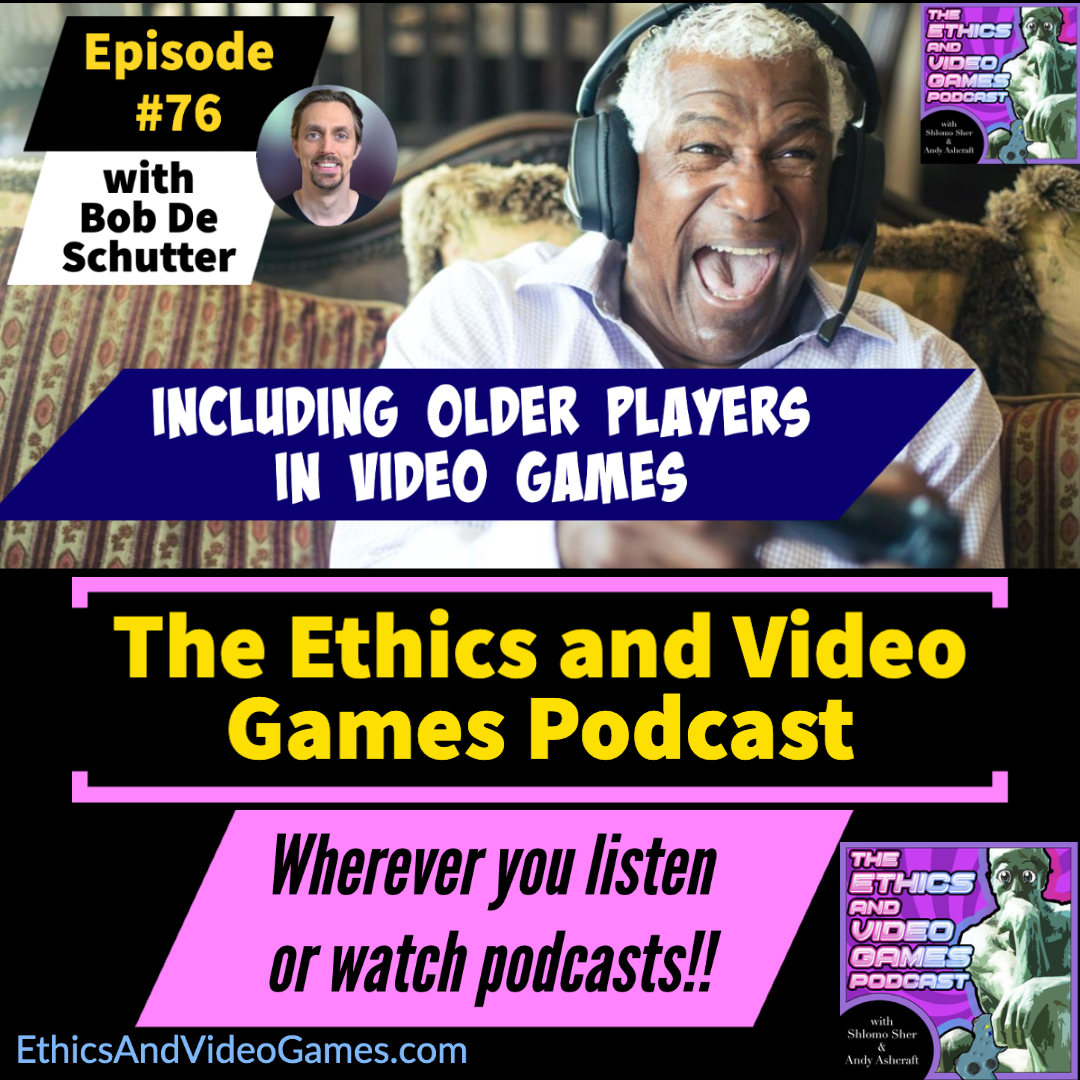
Episode 76 – Older Players in Video Games(with Bob De Schutter)
There are over 50 million players over the age of 50 in the USA alone and those numbers will only continue to grow for an activity that's too often viewed as "kids' stuff". How and when do older players engage with online gaming communities? Do designers need to be concerned about monetizing techniques that might take advantage of vulnerable older adults? What can societies do to help older ga
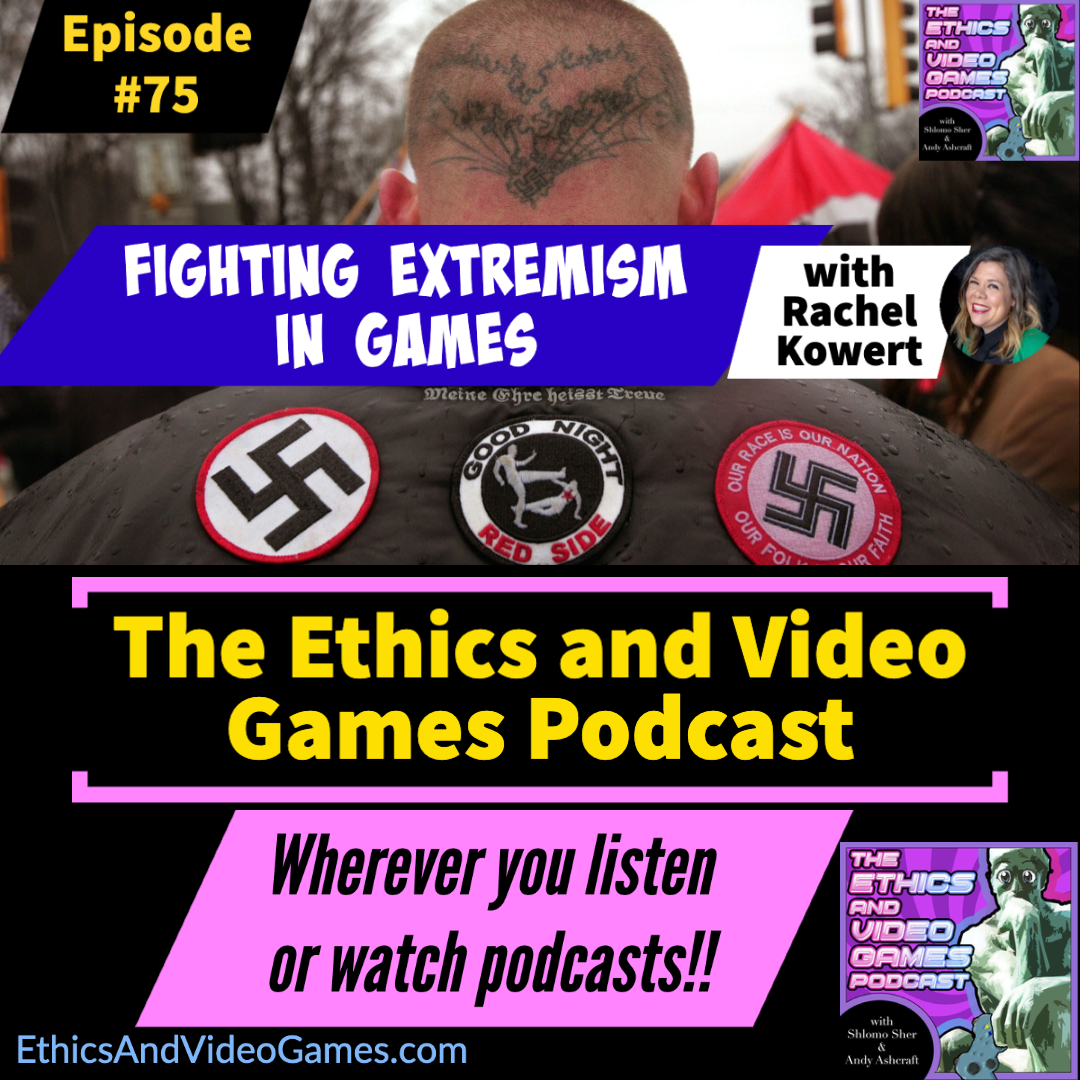
Episode 75 – Fighting Extremism in Games (with Rachel Kowert)
Games are particularly fertile grounds for extremist recruitment. Why is that? What's special about games and gaming culture that might make them attractive spaces for recruitment? How does extremist recruitment work in games? What is being done about it right now? And what can be done to help prevent the spread of extremism through games? ----------------------------------------------------
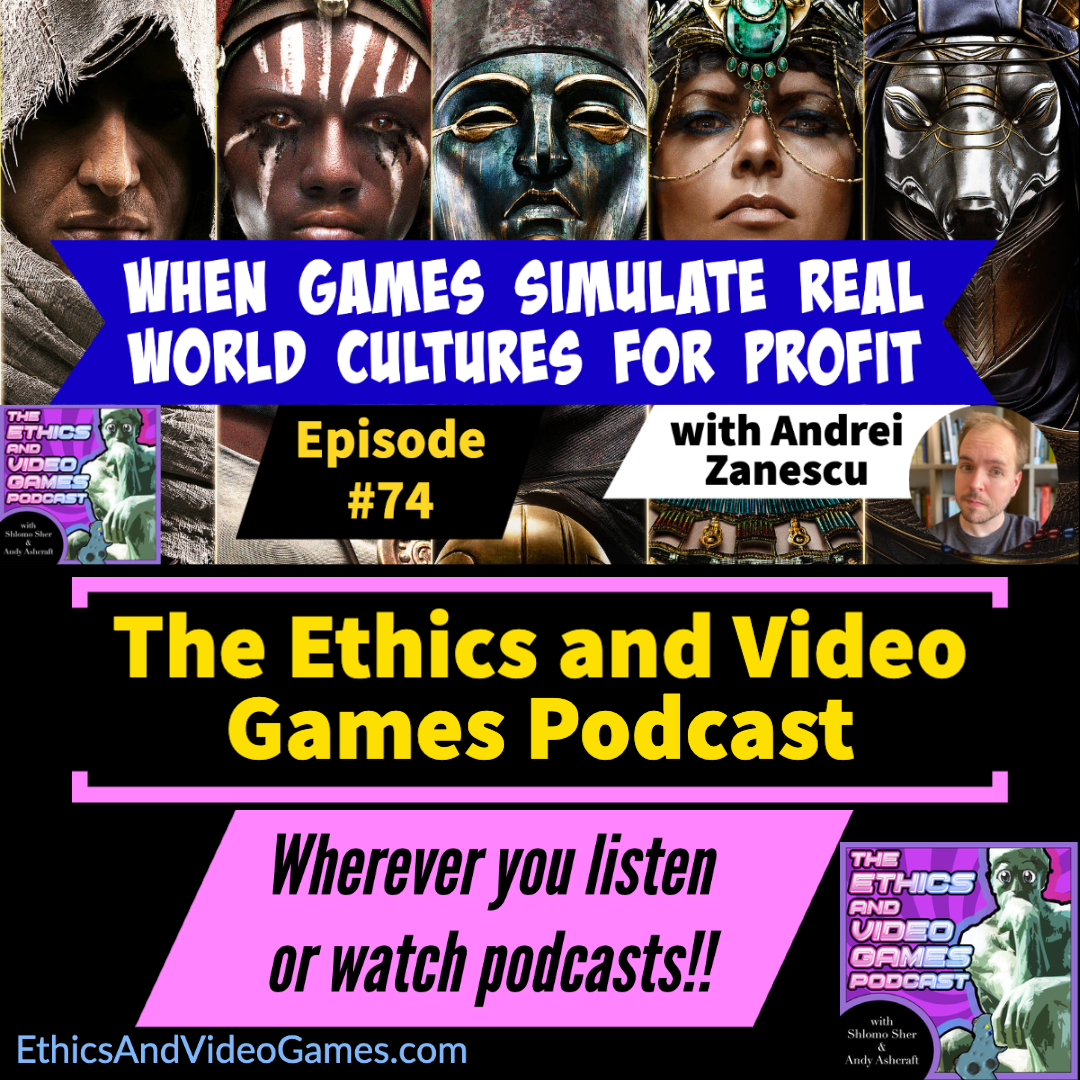
Episode 74 – When Games simulate Real World Cultures For Profit (With Andrei Zanescu)
When game companies simulate cultures in their games they usually focus on the tropes that their intended audiences have about those cultures and then design their game around those tropes. Is there anything wrong with that? If so, what? What can game designers do to present cultures – present and past – more respectfully? --------------------------------------------------------------- Andrei
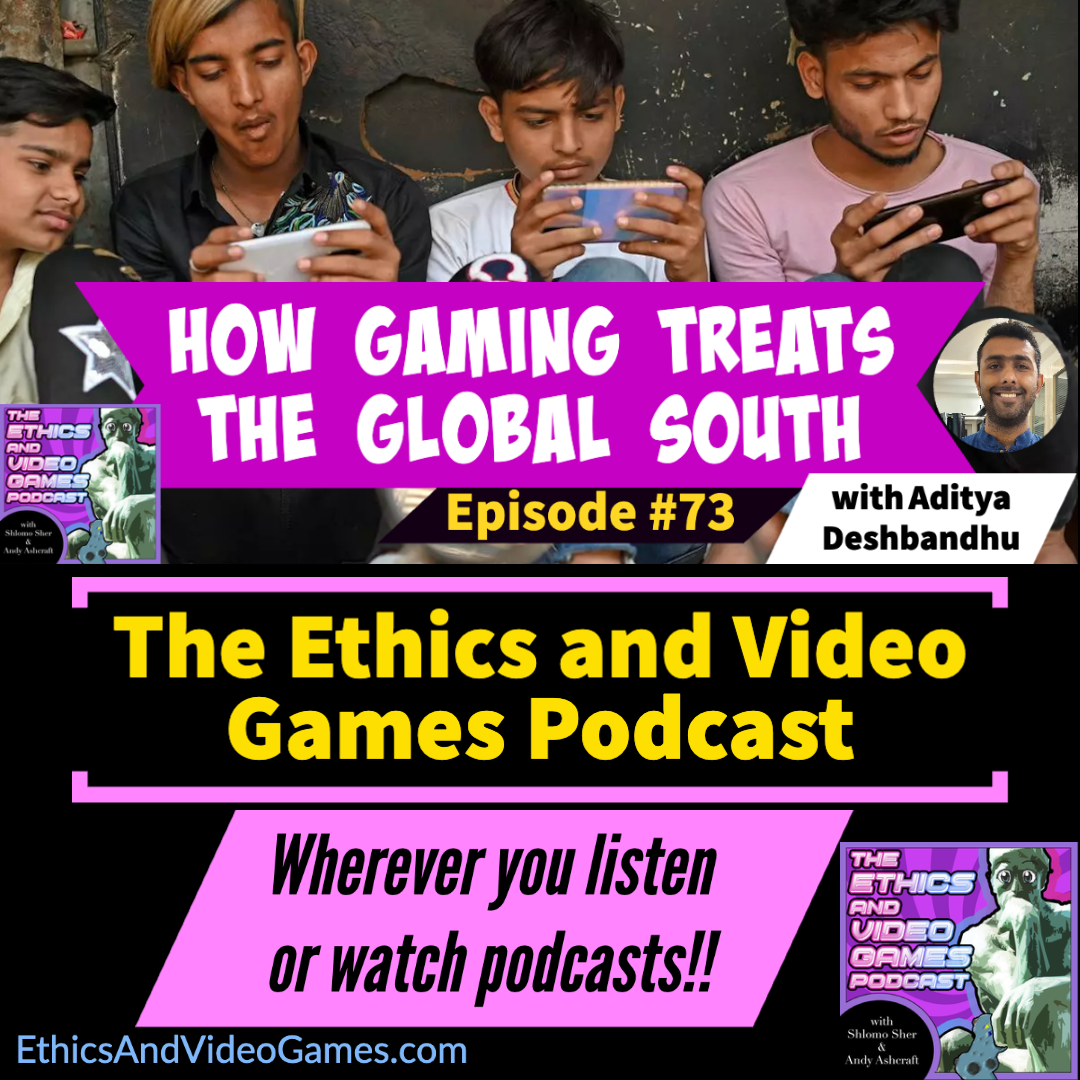
Episode 73 – How Gaming treats the Global South (with Aditya Deshbandhu)
Gaming and game development work differently for the developed global north than the developing global south. What are those differences? How does the global south play and pay differently? Why is it so hard to start a game development company in the global south? How can the gaming world better take these things into consideration in order to be more inclusive to the global south? ---------
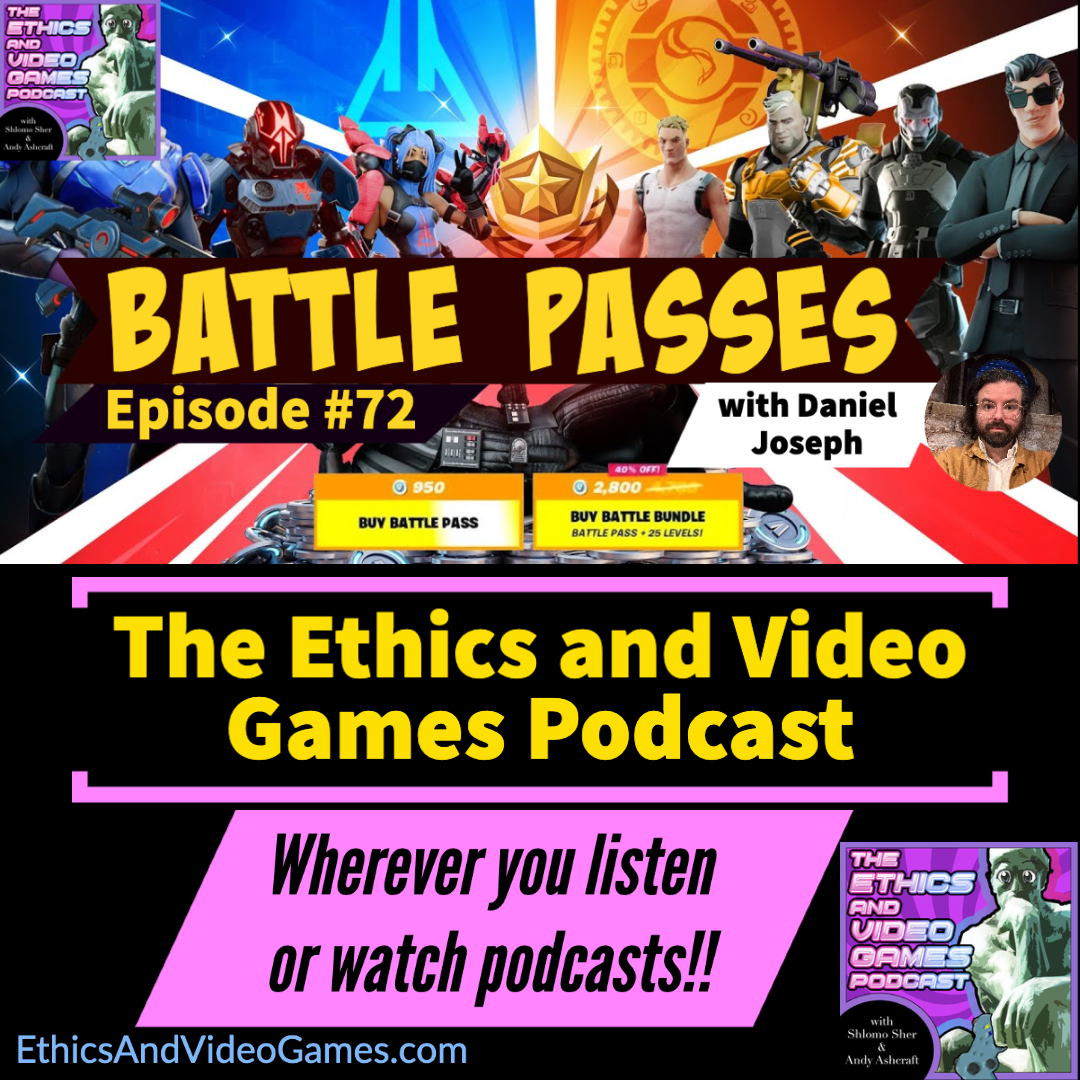
Episode 72 – Battle Passes (with Daniel Joseph)
In a couple of recent episodes guests have mentioned concerns about battle passes. So, in this episode we decided to explore how they work, how they differ from traditional subscription models or microtransactions, why they're so popular today with game companies, and whether they raise any serious ethical concerns. --------------------------------------------------------------- Daniel Josep

Episode 71 – Women in Esports (with Theresa Lee, Joseph Sarnoski, and Kelly Williams)
What can college esport teams do to blunt harassment against female players and make esports more inclusive? Are they in a unique position to help solve these problems in esports? We chat with representatives from Kean University about their attempts to make their own esport teams more inclusive to women. --------------------------------------------------------------- Theresa Lee is a return

Episode 70 – Ethical Advertising in Games (with Celia Pontin)
How can ads for video games and for stuff in games be deceptive or manipulative? What do they need to consider when targeting kids? What sort of guidance do they get from governments or their own industry groups? We chat with Dr. Celia Pontin, former UK advertising regulator specializing in video games. --------------------------------------------------------------- A former advertising regu

Episode 69 – When Video Games Get Kinky (with Kate Gray)
In this episode we explore some of the ethical issues related to kinks in video games – mostly adult ones. How can games allow us to explore kinks? What are some ethical pitfalls designers should consider? How do issues like representation and consent fit in? --------------------------------------------------------------- Kate Gray is a games writer and journalist with a specialist interest

Episode 68 – Ethical Issues With Adult Games (With Fae Daunt)
We've rarely discussed the specific category of adult games on this podcast. So, we do so here and now and honestly, with a bit more speculation and off-the-cuff "let's try this idea out and see if it sticks" mentality. We explore whether adult games should be treated differently than other types of pornography, whether age-gating is actually desirable, and a bunch of other issues. ----------

Episode 67 - Player sexuality and consent (With Fae Daunt + Zhia Zariko)
What should we think about when we bring sex and intimacy into video games? In this episode, we explore issues of player sexuality, in-game intimacy, representations of consent, and how video games can take chances and explore sexuality responsibly. --------------------------- Our guest for this episode are: Zhia Zariko is a media and communication expat into games design and development. Origi

Episode 66 – Video Game Design Lessons from Moral Psychology (with Paul Formosa and Malcolm Ryan)
How do players morally engage with games? What can user experience research and moral psychology tell us about how players experience and think about ethical decisions in games? We chat with philosopher Paul Formosa and Game Designer Malcolm Ryan about their collaborative ongoing research exploring these questions. --------------------------- Our guest for this episode are: Paul Formosa is a P

Episode 65 - Problems with Games and History (with Bram De Ridder)
Games are supposed to be fun and playing in a historical setting or replaying historical events can be really fun. But when does the use of history become morally problematic by misrepresenting that history, leaving out alternative perspectives, or failing to communicate to the player when the game is or is not meant to be historically accurate? --------------------------- Our guest for this

Episode 64 – Monster Ethics (with Dom Ford)
The monsters we see in video games are usually antagonists that we destroy without remorse. But what is a monster and are there ethical questions that arise in relation to how they're represented? In what ways can monsters utilize racist and sexist tropes in harmful ways? Can we treat a type of monsters as a race of pure evil? And is there anything that monsters might do that is beyond the pal

Episode 63 - The challenges of making a game about domestic violence against children (with Mathew Staunton)
How would you make a game about a topic as important, complex, hard to talk about,, and NOT fun at all as domestic violence against children? We chat with Mathew Staunton about his game in progress on this topic and the ethical and design challenges it faces. --------------------------- Our guest for this episode is Mathew Staunton, Ph.D. Originally north Dublin, he is a historian, publisher an

Episode 62 - The challenges of using an AI to reduce toxicity in games (with Camille Guillemot)
Toxicity in online gaming is an incredibly complex problem to solve. Teams of moderators often seem hopelessly outmatched by the amount of toxicity and its sometimes ambiguous nature. But, what if we brought an AI into the game to help us with both toxicity and fraud by bots, which are essentially other AI? In this episode we look at one company's attempt to do just that. -----------------------

Episode 61 - The Ethics of Making Money on Twitch or YouTube (with Mark Johnson)
Making money playing games on Twitch or YouTube sounds like a dream come true! But money never comes without strings attached. Streamers face pressures to build up their audience, ask for financial support, land and keep sponsors. It's hard work and many burn out. Meanwhile, there's questions about the ways Twitch and YouTube benefit from their labor. What are the ethics of making money playi

Episode 60 – Which monetization tactics are truly predatory? (with Elena Petrovskaya)
This is part 2 of our first two-part exploration of predatory monetization. Our guest, Elena Petrovskaya has been researching player complaints about monetization and has categorized them into 35 different types of potentially predatory monetization techniques – from pay or wait to the use of battle passes to aggressive advertising and dark interface design patterns. In part 1 we went over all o
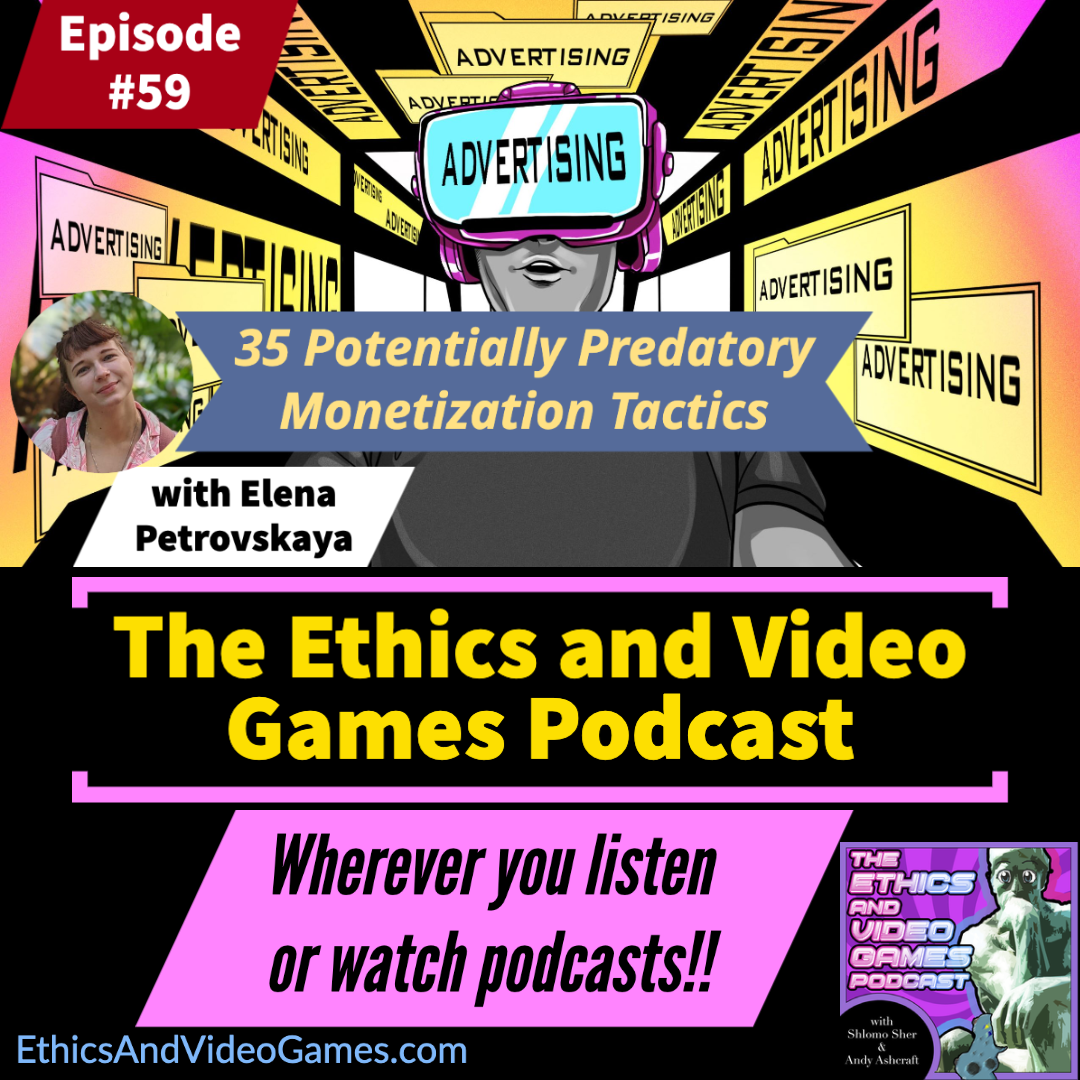
Episode 59 – 35 potentially predatory monetization tactics (with Elena Petrovskaya)
When it comes to monetization in games, what do players see as misleading, unfair, or aggressive? Elena Petrovskaya asked this question to over 1000 players and organized their complaints to create a taxonomy of 35 potentially predatory monetization techniques organized under 8 different domains. There was so much here to talk about, we ended up with our first two-parter episode. So, in this ep

Episode 58 - Politics Tyranny and Citizenship in Video Games (with James "Pigeon" Fielder)
When a player steps into a game, often that game will have a political structure and the player's choices in that structure may respond to their sense of justice. That sense of justice can also connect us as groups or factions in games. Can these factions engage in unethical in-game political action? Can players in massive multi-player games be considered citizens of those gameworlds in some se

Episode 57 - The Ethics of Play to Earn -Part 2 (with Tom Rodgers)
Putting blockchain and NFTs into games and marketing that as Play to Earn promises a revolution in gaming that will make money for both game studios and players. It's a win-win for everybody! – or is it just hype created by cryptobros to ruin games by turning them into money-making machines? What is the promise of Play to Earn supposed to be and what ethical concerns does it raise with regards t
Episode 57 - The Ethics of Play to Earn (Part 1)
Putting blockchain and NFTs into games and marketing that as Play to Earn promises a revolution in gaming that will make money for both game studios and players. It's a win-win for everybody! – or is it just hype created by cryptobros to ruin games by turning them into money-making machines? What is the promise of Play to Earn supposed to be and what ethical concerns does it raise with regards t

Episode 56 - Loot Boxes and the Law (with Leon Xiao)
Most players think that loot boxes (essentially randomized rewards schemes) are a form of gambling, and many are concerned that they'll bring the same dangers of gambling to gaming. Some have called for governments to regulate loot boxes in games as they do with other forms of gambling. What have governments done about this? Has any of it worked? Is any of it necessary? -----------------------

Episode 55 – The Growing Gamblification of Video Games
Games have been getting more and more gamblified in recent years. This has occurred both within games and in terms of gambling on esports and game items out of the games themselves. What is gamblification in video games? How does it occur? Where can we expect it to lead? And should we be concerned about it in the way that we're concerned as societies about traditional gambling? --------------

Episode 54 – How the Games and Online Harassment Hotline Can Help (with Jae Lin)
Players, game devs, artists, voice actors, marketing people, and everyone else that works in the game industry - even game design students - sometimes need to talk to someone who understands how the video game universe can be uniquely emotionally taxing and difficult to navigate. The Games and Online Harassment Hotline was set up two years ago to help! We think they're an amazing resource for the

Episode 53 - How Video games Depict Madness (with Stefan Simond)
We're always interested in the way that video games depict us. One topic that we think has got too little attention is that of how games depict madness, mental illness, insanity…. We chat about the ways video games approach madness, common gaming tropes about madness and psychiatric institutions. --------------------------- Our guest, Stefan Heinrich Simond, is a game studies scholar from German

Episode 52 - How Video Games Represent Poverty (with Adam Crowley)
We encounter poverty in lots in games. We might play in a GTA-"ghetto" or interact with people in a "slum" using common tropes our culture has about the poor. We might be poor ourselves and set out to level up through the tropes of wealth and power. Sometimes our real world economic capacity can even be a factor in a game – say, with pay to win gamrs. In this episode, we look at how poverty is

Episode 50 – Trash Talk in Esports (with Sydney Irwin)
In esports, players trash talk, fans trash talk – even commentators trash talk! Sometimes trash talk is fun harmless banter, but other times is unsportsmanlike and shows disrespect for the game or other players. And, of course, trash talk can easily turn into harassment. What norms do esports have about trash talk and where should we draw the line between morally acceptable and unacceptable t

Episode 51 – The challenge of Creative Collaboration in game development (with Casey O'Donnell)
Game development is often a creative collaboration among people with very different skill sets, passions, and worldviews. What does it mean to treat the people you're working with in projects like these as a part of a team? What does it mean to respect one another? What can be done when interpersonal conflict inevitably arises? --------------------------- Our guest, Casey O'Donnell, is an Assoc

Episode 49 - When AIs Compete in real-Time Military Strategy Games (with David Churchill)
When we heard that David Churchill hosts an AI competition with the Real Time Strategy game Starcraft, we were instantly fascinated. We wanted to know what cheating concerns a competition among AIs raises, and also what real world implications arise when training AIs to control strategic military assets in a game. Dr. Churchill did not disappoint! --------------------------- Our guest, David Chu

Episode 48 – Gaming and the Environment (with Paula Escuadra)
Have you ever considered how gaming and game companies contribute to environmental problems like global climate change? We haven't! At least not until we spoke and were inspired by our guest Paula Escuadra to think about the many ways that game companies and design can help bring about a greener world! --------------------------- Our guest, Paula Angela Escuadra, has spent OVER 12 years elevatin

Episode 47 – Ethics in Pirating in Video Games (with the Studying Pixels Podcast)
Hundreds of millions of players have pirated video games. Most of them didn't feel any guilt about it. Some even felt justified. But game companies, like virtually all producers of creative products, have told us for decades that piracy is wrong – that it's theft somewhat similar to stealing physical things. Are they right? We've teamed-up for this episode with the hosts of the Studying Pixel

Episode 46 - What if Game Companies did good as B-Corps? (with Justin Michaels of ustwo games)
We're used to the idea of organizations that try to do good as non-profits, but what about for-profit companies – like the great majority of game companies? Some for-profit companies are choosing to play a positive role in the world and to do so as a certified B-Corporation. One of these is ustwo games', best known for their fantastic Monument Valley games. We chat with ustwo's Justin Michaels
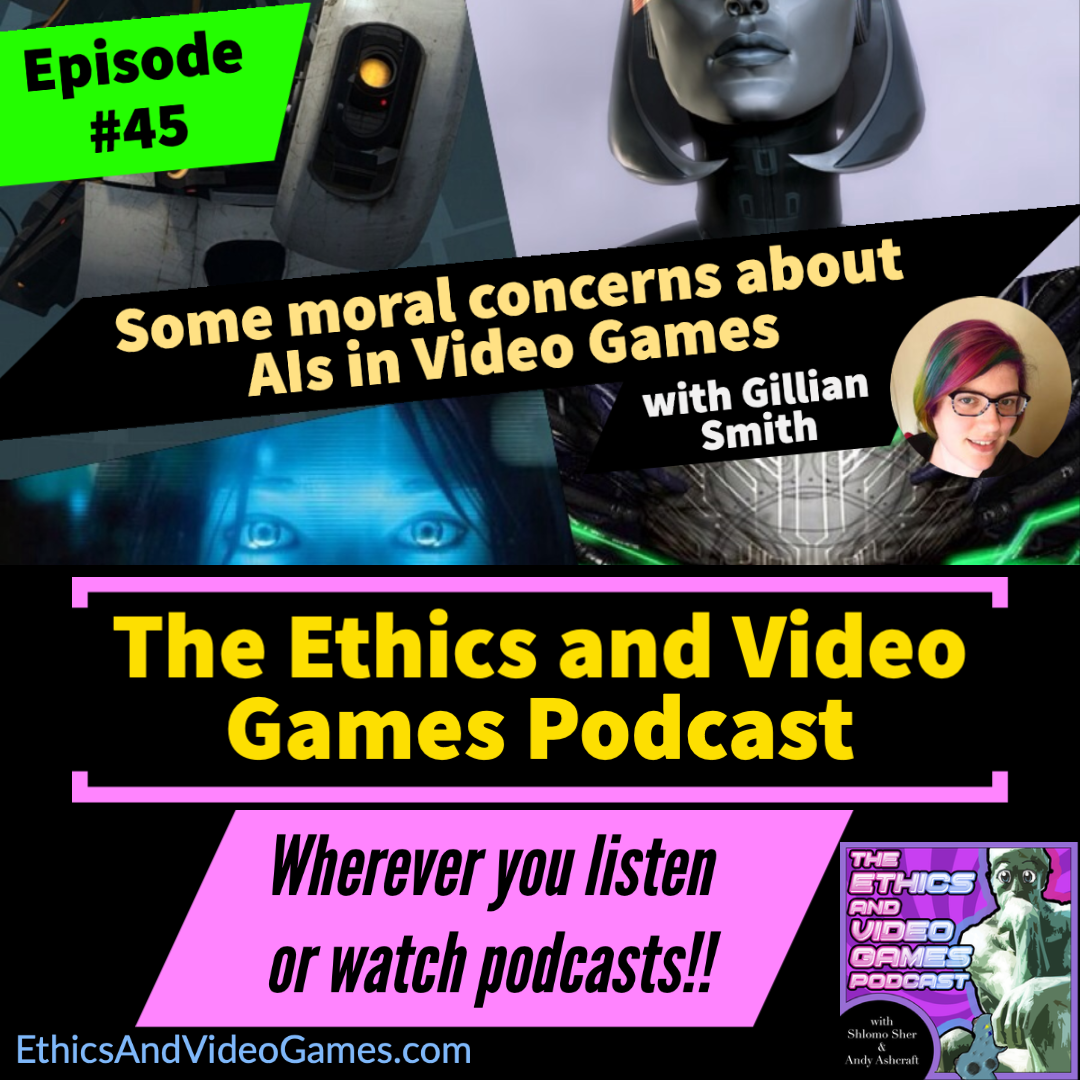
Episode 45 - AI Ethics in Video Games (with Gillian Smith)
It's hard to imagine games without AI, but having AI in games also raises a host of ethical questions involving their use by players and game companies. We explore the possible use of AI for cheating and manipulation, the importance of transparency, and responsibilities of AI's programmers. --------------------------- Our guest, Gillian Smith, directs the Interactive Media & Game Development prog

Episode 44 – Why Video Game Companies Need Ethicists! (with Catherine Flick)
Game companies have lawyers to tell them how to operate within the law. They have accountants and data analysts to tell them what is and is not profitable. But it's very rare for them to consult with an ethicist about the morality of their games or operations. Well, we think that's unfortunate and shortsighted. What are ethicists and how can they help video game companies? --------------------

Episode 43 – What the Research REALLY Says About the Connection Between Video Games + Violence, Addiction, and Sexism! (with Rachel Kowert)
Video games have been accused of being addictive and making players more violent and sexist. Studies have been cited that confirm these claims. And politicians suggesting laws limiting what video games can do have referenced the "scientific consensus" on these issues. But how does good research on these topics actually work and what does it tell us about the connection between games, violence, a

Episode 42 - How to be a good Video Game God (with Richard A. Bartle)
Someday people may be gods – all powerful entities able to control the physics of virtual worlds and the functionalities of NPCs. We might even give NPCs free will, a soul, or immortality – who knows what else? In this episode we have fun thinking about some of the moral choices that would come with being a video game god. --------------------------- Our guest, Dr Richard A. Bartle, is Honorary

Episode 41 – Religion, Ethics, & Video Games (with Benjamin J. Chicka)
We've done 40 episodes about ethics and video games and the word "God" or "Religion" never came up. How do religion and video games connect with one another and what can the religious ethics of Paul Tyllich tell us about how to approach video games? --------------------------- Our guest, Benjamin J. Chicka is Lecturer of Philosophy and Religious Studies at Curry College. His work connects cl

Episode 40 – The Ethics of Video Game Research with Ashley Guajarado and Ann Johnson
There's lots of research going on about video games. Some of it involves product testing like VR games or the effectiveness of interfaces. Some of it looks at the impact of gaming on players for things like violence, sexism, and addiction. What ethical concerns come into play when doing research like this on live human beings like you and I? --------------------------- Ashley ML Guajardo is an

Episode 39: When/how can microtransactions be exploitative? with Ellie Cohen
Video game transactions are a highly unusual, perhaps unique, business model. Our guest Elie Cohen essentially calls it an exploitative scheme where "the house never loses". It's not that they're always bad, but they easily can be exploitative, wrong, or simply "uncool". What can or does make a microtransaction exploitative and what can be done about it? --------------------------- Our guest, E

Episode 38 – Backstabbing ,Scamming, & Treacherous Play (with Marcus Carter)
There's deception in Among Us and bluffing in Poker. But then there are multiplayer games where players you trusted will scam, betray, and backstab you to get ahead. Few things can be as upsetting in a game as being the victim of such treacherous play. But what, if anything, is wrong with playing this way? --------------------------- JOIN THE ETHICS AND VIDEO GAMES COMMUNITY: - Follow/like/shar

Episode 37 - The Problem with Meritocracy in Video Games (with Chris Paul)
A meritocratic system is one whose "winners" are those who earn their positions through greatest talent and hard work. That sounds like a good system – a fair one! And video games seem to be a fantastic place for meritocracy to be actualized – a place where, unlike the real world, everyone competes on a level playing field regardless of class, race, sex, etc. But, as our guest, Seattle Universi

Episode 36: Why video games need feminism and feminism needs video games (with Shira Chess)
Do men and women see the role of fun or leisure in their life differently? How does this translate to their gaming habits? Can playing like a feminist help bring about gender equality of leisure time? What are gaming circles and how can they help? --------------------------- Our guest, Shira Chess, is an Associate Professor of Entertainment & Media Studies at the University of Georgia. She is

Episode 35 - Is it ever morally wrong to enjoy fantasizing about immoral things? (with Chris Bartel)
Is it ever morally wrong to enjoy fantasizing about immoral things in video games? On the one hand, it's just a fantasy. On the other hand, doesn't it seem that something might be wrong about painfully torturing, raping, or hunting down minorities in a game, even though it's all just fantasy? According to philosopher Chris Bartel, it's not about what you do, but why you do it and who you are. -

Episode 34 – How Games Can Make Us More & Less Free (with C. Thi Nguyen)
One way to think about games is as experiences tailored to give us agency – to provide us with clear values and motivations and then force us to overcome obstacles in pursuit of those values and motivations. Engaging our agency in a variety of ways, games can make us more free, but in ways that also pose interesting new dangers for us. --------------------------- Our guest is C. Thi Nguyen, who u

Episode 33: Knights of the Al-Aqsa Mosque' - An Ethics Review of A Palestinian Liberation Game
In 'Knights of the Al-Aqsa Mosque' you play as a Palestinian resistance fighter working to end the occupation of Palestine. It's a game where you play someone that looks like a person games typically depict as a terrorist, but from the perspective of that person and his group being the good guys. The game generated a furious reaction from Israelis and Jews. We found all this fascinating and so

Episode 32 - What can be done about problems of ethics in multiplayer online games (w/Lucy Sparrow)
Online multiplayer games are notorious for having hopelessly toxic environments where harassment and griefing abound. And then there's the cheaters and hackers… Game companies are obviously aware of the problem and have both moral and financial reasons to make player interaction more ethical – and still the unethical behavior persists. What makes ethics in online multiplayer games such a hard pr

Episode 31: How Should Intellectual Property Apply To Video Games? (with Jose Zagal)
When and how much is it ok for one game to "borrow" elements from another game? We often think of these sorts of things through the idea of "intellectual property". What exactly is that idea and how should it apply to video games? --------------------------- Our guest, game scholar Jose Zagal (@JoseZagal) is not just a pioneer on this subject, but also teaches one of only two classes in the worl

Episode 30: Sexism and the Gamer Identity (with Amanda Cote)
What is it to "be" a gamer? How did the gamer "identity" become both masculinized and marginalized? How has this impacted female players and is the "gamergirl" identity useful or counter-productive for female players? We chat with Dr. Amanda Cote who argues that video games are in a crisis of authority related to what a "gamer" is. --------------------------- Our guest, Amanda Cote, is Assistant
![Episode 29: "Cancel Culture" in gaming [Ethics News & Bits]](https://static.libsyn.com/p/assets/0/5/5/9/05591430f52e0632e5bbc093207a2619/Insta_29_-_1.png)
Episode 29: "Cancel Culture" in gaming [Ethics News & Bits]
John Gibson, the (now former) CEO of Tripwire Games tweeted an opinion about a newly enacted and unpopular Texas law. The Gaming Goat released images of their fishing game-themed game that showed a frog that looked like it was communicating symbols of white power. Both complain that they then became targets of "cancel culture" in gaming. What is cancel culture and were these people treated wron
![Episode 28: China's Kids & Content Warnings in Dating Games [Ethics News and Bits]](https://static.libsyn.com/p/assets/e/9/9/d/e99d2871318ff94588c4a68c3ddbc4f2/Insta_28_-_Consent_and_China_-_3.png)
Episode 28: China's Kids & Content Warnings in Dating Games [Ethics News and Bits]
In our ethics news and bits episodes we grab a few recent news items that we want to chat about, but not devote an entire episode to. This time around we look at China's dramatic new restrictions on when kids can play and controversies around the content warnings of two dating games. --------------------------- JOIN THE ETHICS AND VIDEO GAMES COMMUNITY: - Follow/like/share us on Facebook, Twitter

Episode 27: Covid games & just how do you make a responsible ethical decision?
How can you responsibly design a game about an ongoing tragedy like the corona-19 pandemic? How can you make ANY moral decision responsibly? In this episode we introduce a step-by-step approach to think through any ethical decision – using the creation of a game based on the corona pandemic as our example. --------------------------- JOIN THE ETHICS AND VIDEO GAMES COMMUNITY: - Follow/like/share

Episode 26: Fairness in Esports with Matti Karhulhti
Esport is in some ways similar to traditional sport competitions, but in other ways is a totally new kind of enterprise. In this episode we chat with Dr. Matti Karhulati, who researches esports, about some of the unique concerns about fairness that arise in competitive gaming. --------------------------- JOIN THE ETHICS AND VIDEO GAMES COMMUNITY: - Follow/like/share us on Facebook, Twitter, and Y

Episode 25 – How Games Make Us Better People with Karen Schrier
When people talk about games and ethics, it's almost always about potential moral problems with gaming – things like violence, sexism, and addiction. It's almost as if games couldn't do anything good for the world other than just be fun. But video games can also provide us with great opportunities for becoming better people! As our guest, game scholar and author, Karen Schrier, argues in her ne

Episode 24: Video Games and Our Real Bodies with Rob Cover
We're used to thinking about games as fantasy worlds we escape to, while leaving our bodies behind. In this traditional perspective of gaming, video games liberate us from our bodies and free us to be anyone and anything. But, is that really the case? In this episode we speak with Dr. Rob Cover, who rejects this view and argues that it's morally important to remember that we never leave our rea
Episode 24: Video Games and Our Real Bodies
We're used to thinking about games as fantasy worlds we escape to, while leaving our bodies behind. In this traditional perspective of gaming, video games liberate us from our bodies and free us to be anyone and anything. But, is that really the case? In this episode we speak with Dr. Rob Cover, who rejects this view and argues that it's morally important to remember that we never leave our rea

Episode 23: We Design a Game About Criminal Justice
This is the second episode in our "Andy and Shlomo design a game" series. In this game, we want to tackle the issue of crime and punishment. That's right, we want to make a game dealing with the complex ethical questions around how we treat criminals. --------------------------- JOIN THE ETHICS AND VIDEO GAMES COMMUNITY: - Follow/like/share us on Facebook, Twitter, and YouTube - Explore our web

Episode 22: Dragon City – An Ethics-Oriented Game Review
In this episode we'll be walking through a game, in this case 'Dragon City' a free-to-play game by Socialpoint games through an ETHICAL lens. It's a game review, but instead of talking about fun or value or quality, we'll just be talking about certain game features that might be morally problematic. These game features are not uncommon. But "everyone does it" has never been a good excuse! -----

Episode #21: The Psychology of Moral Encounters in Video Games
It seems obvious that we would respond differently to the moral dimension of a game that we're playing, as opposed to the moral dimension of a movie we're watching or a book that we're reading. But what are these differences? And are there ways that we psychologically engage with morality that are unique to video games? We've invited Dr. Jamie Madigan, psychologist, author, researcher, life-lon

Episode #20: Teaching Ethics and Video Games
How can ethics play a role in game design? What's the point of teaching of ethics to game design students? Our guest, game scholar Jose Zagal (@JoseZagal) is not just a pioneer on this subject, but also teaches one of only two classes in the world for game design students on the subject of Ethics and Video Games. -------------------------------- JOIN THE ETHICS AND VIDEO GAMES COMMUNITY: - Follo

Episode 19: The Ethics of Trolling in Games
Trolls are the jerks of the gaming world. They provoke, they insult, they disrupt, they get their gaming pleasure from messing with other players emotions and messing up their games. It's not hard to say that trolling it typically immoral, but are all trolls the same and is trolling ever justified? Joining us for our discussion is Dr. Christine "Chrissy" Cook, an expert researcher on trolls in

Episode 18: What are parents responsible for?
When it comes to the possibility that video games might harm kids, a common and classic position is that game companies aren't the ones responsible here. It's the parents job to make good decisions on behalf of their children, and to protect them as necessary. If children do get harmed, the problem is lazy parenting – parents just not doing their job. How sensible is this view? How far do the

Episode 17: What's the point of playing games?
Asking "Why should you play games?" is very different from asking why you actually play games. It's an ethical question that also asks an existential question: "what's the point of playing games?". In this episode we explore how the answers we might give to these last two questions relate to the biggest ethical question of all – "how should you live your life?" --------------------------- JOIN

Episode 16: What are game companies actually responsible for?
Gamers and non-gamers alike have plenty of complaints about the ways game companies supposedly act irresponsibly. But in this episode, we're going BIGGER than that! We're going to look at 4 ideas about what any corporation is responsible for and apply these to today's game companies. Which idea is right and how might these companies do things differently if they were convinced to see their respo

Episode 15: Implicit bias in hiring practices at game companies with Celia Hodent
When people point out sexism in games and game culture, the classic suggested prescription is that game companies need to hire more women. The idea is that more women in game companies will bring a voice to call out sexist aspects of games, and bring a greater demand to protect female players from a somewhat toxic gaming culture. Women make up about half of players, so why are there still so few

Episode 14: Is excessive gaming a personal or social problem?
When kids play video games to the point where it interferes with their life, whose responsibility is it to help them avoid addiction and get back to living a healthy lifestyle? Most places assume that the responsibility lies with the player or parent and leave it to them to deal with it. But in South Korea and China excessive gaming is seen as an important social problem that demands that the go

Episode 13: Morality Systems part 2 – Can we count the process?
To take a bunch of different moral decisions in a game and count them in some way as if they're related, comparable, or calculable requires a "morality system". In part 1 of our exploration of morality systems, we looked at various types of morality systems and why it was so hard to quantify or even organize morality in the first place. In part 2 we'll look at how philosophers might try to coun

Episode 12: Morality Systems part 1 – Counting the good and the right
It's one thing to design a game where the player is forced to make moral choices, and another to systemize those choices so that they're collectively integrated within the game somehow. To take a bunch of different moral decisions in a game and treat them as if they're related, comparable, or calculable requires a "morality system". In this episode we look at some of the common ways morality sys

Episode 11: Consent in Games
How does consent come into play in the world of gaming? We look at how the idea of player consent works within the RPG table-top role playing community and explore this idea of consent in terms of how you treat players might be applied to video games. -------------------------------- JOIN THE ETHICS AND VIDEO GAMES COMMUNITY: - Follow/like/share us on Facebook, Twitter, and YouTube - Explore ou

Episode 10: Andy and Shlomo design a game!
How do some games create ethical reflection in players? We think about how it's done, then create a high-level design idea on-the-fly for a game we think would give players lots of opportunities for ethical reflection. -------------------------------- JOIN THE ETHICS AND VIDEO GAMES COMMUNITY: - Follow/like/share us on Facebook, Twitter, and YouTube - Explore our website and check out our Video

Episode 9: Only 25% racism for you + Steam bans again
Intel announces the creation of an audio filter targeted for video games that will give players the power to do things like choose to hear only "some" misogyny or white supremacy. What??? And Steam bans yet another game - Super Seducer 3. Were their reasons for doing so good ones? Do they have a morally consistent censorship policy? -------------------------------- JOIN THE ETHICS AND VIDEO GAM

Episode 8: The NEW 6 Days in Fallujah
In 2009, 6 Days in Fallujah, the first major studio release of a game about a real ongoing war was "cancelled" 3 weeks before its release date. Now, in 2021, there's a new 6 Days in Fallujah game and the trailer is out. Is this a more responsible version of the game's concept? We think it's a brave and imperfect step in the right direction along a difficult path the gaming industry has to take

Episode 7: But is it a morally bad game?
Games are sometimes criticized not just for having some immoral aspect like too much violence or unnecessarily sexualization, but of being morally bad games. And if a game is immoral, then we might want to think about banning of restricting it in some way. But how can we decide if a game is immoral or not? In this episode we look at ways to do just that. -------------------------------- JOIN TH
Episode 6: The Gamer's Dilemma - Virtual Murder vs. Virtual Pedophilia
Most gamers believe that there's nothing wrong with virtual murder in games. After all, none of it is real. No one is actually hurt. There is no murder. It's all just fantasy. It might even be a way for some people to release some steam. But, most gamers believe that there would be something very wrong with a game that included virtual pedophilia. Why is that? After all, none of it is real

Episode 5: Are video games like tobacco?
Yeah, we know the question may sound silly. But, like tobacco, video games can be addictive. Moreover, some video games are made in ways that are designed to manipulate their customers into addictive behavior, so that they want to play more, so that they can be monetized more. Doesn't that sound like the historical misdeeds of tobacco? And like tobacco, video game addiction has killed. How fa

Episode 4: To ban or not to ban: Steam's Censorship policies
Until 2018 Steam had a fairly conventional policy that among other things banned content that included hate speech, pornography, the exploitation of children, libel, offensive content, or content intended to shock or disgust viewers. Then, after vigorous internal debate, they dramatically changed that policy. In doing so, they saw themselves as struggling with a very difficult problem. The issu

Episode 3: When Game Met Reality And The Result Was A Sh*tstorm
In 2005 Atomic Games decided to do what no other game company to date had done: to produce a major-release game about a real battle in an ongoing war. They spent 4 years making it, but they're announcement about soon to be released game led to angry public outcry. Their distributor backed up. The game and the company that made it were done. That game, "6 Days in Fallujah", serves as an excelle

Episode 2: Money, Knowledge, and Manipulation in Video Games
Knowledge is power, and in the era of Big Data video game companies have a whole lot of information, which they can potentially use to manipulate players in order to cash in on them. We discuss how they might do this through dynamic reward schemes, how far this information asymmetry may go, and whether players have the ability to fight back and level the playing field. ---------------------------

Episode 1: The Magic Circle, Fairness, and Eve Online
Games are traditionally thought of as acting like magic circles. When we enter the game, we enter the magic circle and leave the real world behind. In our first podcast we explore how the magic circle idea can help us think about fairness and cheating in video games, how this way of thinking was challenged by a brilliant scheme from the chaotic world of Eve Online in 2005, and how this relates t

Episode 0: Ethics And Video Games Podcast Trailer
The Ethics and Video Games podcast is dedicated to investigating the intersection and relationships between video games and ethics. We explore controversial ethical issues about video games (e.g. what should be censored), in video games (e.g. what counts as cheating), and in video game design (e.g. what works to make a game morally interesting). --------------------------- JOIN THE ETHICS AND VID
Recommended

Take Back Your Health®
CBS Radio Mystery Theater | Old Time Radio

Solved Murders - True Crime Stories

紐約鳥|New York Aperture
The Swerve Podcast: Obscure Topics | Conspiracy Theories

The Bread and Banter Podcast
The Church of What's Happening Now: The New Testament
Busted Open

Deadline: White House
Crickets Corner

History of the Earthquake and Fire in San Francisco

Fox news
