Relentless Health Value
Relentless Health Value is a podcast for healthcare professionals and business leaders who want to fix the broken U.S. healthcare system. Host Stacey Richter cuts through marketing fluff to expose administrative waste, hidden fees, and perverse incentives. The show offers practical, actionable advice on topics like PBM contracts, transparency, and buying real healthcare. It’s aimed at self-insured employers, plan sponsors, benefits consultants, clinicians, and C-suite executives. The tone is blunt and focused on driving real change.
Episodes

Why Avoidable ER Visits Aren't the Real Cost Problem: Revisiting Our Interview With HHS Nominee Chris Klomp
Emergency Department High Utilizers and Real-Time Care Coordination, With Chris Klomp (Episode 532) Today we are dipping into the archives for an essential replay from 2016, one decade ago, featuring Chris Klomp back when he served as CEO of Collective Medical, and now nominated to serve as deputy secretary of the Department of Health and Human Services (HHS), a nearly $2 trillion federal health a

Slaying the Three-Headed Monster of Health Plan Networks, With Evan Anderson
Discount Illusions, Billing Errors, and Site-of-Care Markups: A Carrier Network Primer for Employers with Evan Anderson of Handl Health. Episode 531. Whatever the plan was at the very beginning, the big status quo carrier networks have evolved into what Stacey Richter calls a three-headed monster: the contractual illusion of discounts, payment integrity nobody with skin in the game is allowed to c

A Wildly Underappreciated Point: Overpaying for Infusions Means Overpaying for Stop-Loss Coverage, With Jake Velie and Keith Hartman, RPh
The Hidden Link Between Expensive Infusions and Rising Stop-Loss Renewal Premiums. Episode 530. When an infusion claim lands on a self-insured plan's high-cost claims report, it's tempting to treat the price tag as fixed — but the exact same infusion drug can cost 10 times more depending on where a member receives it, and every expensive claim that breaches a stop-loss attachment point can push ne

How Stark Law, Stipends, and Noncompetes Drive Hospital Consolidation, With Eric Bricker, MD
The Chain Reactions Wrecking Healthcare Affordability: Facility Fees, Stark Law, and Noncompetes. Episode 529. Why do hospital facility fees keep pace with inflation while professional fees fall behind—and how did a law meant to stop kickbacks end up fueling a stipend economy instead? Stacey Richter talks with Eric Bricker, MD, founder of AHealthcareZ and former co-founder and chief medical office

Private Equity in Primary Care: What the Data Actually Shows, With Yashaswini Singh, PhD. Episode 528.
Private Equity in Primary Care: Just Another Inflationary Business Model? What Does the Data Actually Show, With Yashaswini Singh, PhD (EP528) Private equity has been buying up primary care practices for years, promising the capital that chronically underfunded clinicians badly need. But does the money actually make care better? Yashaswini Singh, PhD, MPA, the Thomas J. and Alice M. Tisch Assistan

Mark Cuban and Cora Opsahl: The Truth About Pass-Through PBM Contracts and Generic Compliance Ratios
How Discount Theater and Generic Compliance Ratios Quietly Overcharge Patients and Employers. Episode 526. Mark Cuban, co-founder of Mark Cuban Cost Plus Drug Company, and Cora Opsahl, managing director of Peterson Health Analytics and former director of the 32BJ Health Fund, join Stacey Richter for an outtake from their conversation last fall (EP488) on the operational mechanics of the pharmacy s

PMPM vs FFS—The Perverse Incentives Plan Sponsors Sometimes Miss, With Cristin Dickerson, MD
Four Questions Plan Sponsors Should Ask Before Choosing PMPM or Fee-for-Service. Episode 525. This episode is a tangent that never made it into the final cut of Stacey Richter's original conversation with Cristin Dickerson, MD, founding partner of Green Imaging, a physician-led radiology network built on direct contracting for imaging. In episode 485, they discussed how imaging can run 6% to 11% o

Beating Provider Network Pricing Games by Thinking About Buying Healthcare Like a Manufacturer Supply Chain, With John Quinn
John Quinn, founder and CEO of Wellnecity, joins Stacey Richter in episode 524 for an outtake from their conversation last fall on rethinking how self-insured employers build their provider networks. Rather than treating the network as one big, undifferentiated system, Quinn argues employers should think like a manufacturing supply chain: break healthcare into defined "subassemblies," or pods of c

The Sleeping Giants of Healthcare—Why Self-insured Employers and Clinicians Keep Missing Each Other, With Suhas Gondi, MD, MBA. EP523
Why Self-Insured Employers and Clinicians Keep Missing Each Other, With Suhas Gondi, MD. The Sleeping Giants of Healthcare: Why Employers and Clinicians Keep Missing Each Other. Episode 523. Dr. Suhas Gondi, MD, MBA, chief medical officer at Health Strategy and an attending physician at Massachusetts General Hospital, co-wrote a New England Journal of Medicine article — "A Sleeping Giant of Health

How GoodRx Actually Makes Money: PBMs, Cash Prices, and Pharmacy Contracts, With Ge Bai, PhD, CPA (EP522)
Ask Me Anything: How Does GoodRx Actually Make Money, and Who Really Pays for the Discount? Episode 522. A listener asked Stacey Richter a deceptively simple question: how exactly does GoodRx make money? To answer it, this AMA episode revisits a 2021 conversation with Ge Bai, PhD, CPA, professor of accounting at the Johns Hopkins Carey Business School and of health policy and management at the Joh

How Revenue Cycle Management (RCM) Became an Over $200 Billion Healthcare Hot Potato, With Andrew Tsang. EP521
RCM: Why Revenue Cycle Management Is Healthcare's $200B Hot Potato, With Andrew Tsang (EP521) How Revenue Cycle Management (RCM) Became an Over $200 Billion Healthcare Hot Potato. Episode 521. Revenue cycle management (RCM) sounds like the least sexy phrase in healthcare — a back-office spreadsheet problem. It isn't. Andrew Tsang, an independent healthcare analyst and writer of the Substack Health

Cash-Pay Generic Drugs Are a Functioning Market in Healthcare—Policymakers Beware and Be Careful. EP520
Cash-Pay Generic Drugs and the PBM Spread Pricing Problem (EP520) Cash-pay generic drugs are one of the few corners of US healthcare where a real, functioning market already exists — which is why Stacey Richter argues policymakers need to tread carefully when trying to "fix" drug affordability. In this solo episode, Stacey explains why cash generic prices can run as low as $1 a prescription, then

Cognitive Atrophy and Referral Incentives Breaking Primary Care, With Lisa Rosenbaum, MD (EP519)
Cognitive Atrophy and Referral Incentives Breaking Primary Care, With Lisa Rosenbaum, MD (EP519) Primary care physicians are leaving traditional practice for concierge medicine in visible numbers—and the question is whether that exodus is an unavoidable consequence of how the system is built, or something we've simply chosen not to fix. Stacey Richter talks with Dr. Lisa Rosenbaum, a cardiologist

How Do You Explain the Difference Between an ASO Vendor and a TPA? With Claire Brockbank. Episode 518
The ASO vs. TPA Decision That Quietly Costs Self-Funded Employers More What's the real difference between an ASO and a TPA — and why does it matter that self-insured employers working with an ASO pay, by one referenced estimate, about 4.7% more than the insured book of business for the same care? In this Ask Me Anything, Stacey Richter puts a listener question from Dr. Alex Sommers, MD, ABEM, DipA

Prior Authorizations & Pharma Rebate Contracts — How Financial Motives Keep Generics Off Formularies (EP517)
What if a prior authorization has less to do with your medical need than with how big a rebate check a PBM is collecting on a competing drug? In this solo deep dive — a direct follow-up to last week's conversation with Ophelia Johnson on GLP-1s and cash pay (EP516 link below) — host Stacey Richter walks through a "Brand Darling" vs. "Brand 2" case study showing how PBM/GPO rebate contracting and t

Cash Pay From the Pharma Manufacturer Point of View, With Ophelia Johnson (EP516)
Only about half of new GLP-1 prescriptions got approved for coverage in 2023 — a gap Ophelia Johnson says is why pharma manufacturers started building cash-pay and direct-to-employer channels instead of waiting on PBMs. Johnson, who built new channels for the manufacturer behind the GLP-1 boom and now runs e-fi.works, walks Stacey Richter through how the money moves with GoodRx and telehealth, inc

Self-Insured Employers: SNF Fraud or Perverse Incentives? Understaffing, Gamed STAR Ratings, and Medicare Dollars at Skilled Nursing Facilities with Michelle Cera. EP515
Is it fraud — or is it just a perverse incentive? That question sits at the center of Hunterbrook Media's latest investigation into skilled nursing facilities (SNFs), and the answer, as Stacey Richter puts it, matters to self-insured employers and anyone else paying for healthcare. In this episode, Stacey speaks with Michelle Cera, PhD, investigative reporter at Hunterbrook Media, whose investigat

Successfully Suing a Health System for Their Anticompetitive Contracts and Also Collecting Damages for Plan Sponsors and Members, With Matt Cantor. EP514
How the Sutter Health Antitrust Case Opened the Door for Employers and Members to Recover Hospital Overcharge Damages This is Episode 514 (EP514) of Relentless Health Value. What happens when a self-insured employer or health plan member finally says enough is enough and takes a consolidated hospital system to court over anticompetitive contracting practices? That's exactly what antitrust attorney

Revisiting Cunning Anticompetitive Hospital Contracts, With Brennan Bilberry - EP513
The Hospital Contract Playbook: Four Clauses That Turn Market Power Into Higher Prices Across the country, hospital systems have used their growing market power to write four specific contract terms into their deals with insurers — terms that all but guarantee higher prices for employers, unions, and patients, regardless of quality or competition nearby. In this episode, Stacey Richter speaks with

3 Kinds of Broker/EBC Rent-Seeking Payment Models—A Lawyer's Perspective, With Doug Aldeen. EP512
A Lawyer's Field Guide to Rent-Seeking Broker and EBC Payment Models Brokers and employee benefit consultants often get compensated in ways health plans never fully see — and even when the dollars are technically disclosed, the math can hide an enormous overcharge. In this episode, Stacey Richter speaks with Doug Aldeen, JD, an ERISA healthcare attorney who has spent decades in the self-funded spa

The Perverse Incentive Trap Hidden Inside Value-Based Care — and What to Do About It. EP511
When Risk-Based Payment Becomes Its Own Upcoding Arms Race Medicare Advantage plans get paid more for sicker patients, which is why upcoding became a problem — and now health systems are upcoding visit complexity right back, with MA plans automatically downcoding in response. In this episode, Stacey Richter plays an unpublished clip from her conversation with Ahilan Sivaganesan, MD (Dr. Siva), a n

Why Employers Pay More Because of Vertically Integrated Medicare Advantage Carriers with Betsy Seals. EP510
The Line Between Fair Profit and Profiteering in Medicare Advantage There's a simple test for telling a fair profit from profiteering in Medicare Advantage: does the carrier make more money when the patients it serves are worse off? In this episode, Stacey Richter talks with Betsy Seals, co-founder of Rebellis Group and a Medicare Advantage consultant making her third appearance on the show, about

The 7.7% Wake-Up Call: A Roadmap to Align Finance Teams With Non-complacent Benefit Design, With Patrick Nelli. EP509
The 7.7% Wake-Up Call: A Roadmap to Align Finance Teams With Benefit Design, With Patrick Nelli (EP509) The Seven-Step Roadmap That Gets CFOs to Stop Being Passive Price Takers on Health Benefits. Episode 509. As a companion to last week's CEO-focused episode, Stacey Richter talks with Patrick Nelli — CEO of Aligned Marketplace and a former CFO himself — about how to bring finance teams into healt

Why Don't More Self-insured CEOs Take Bold Action in Health Benefits Strategy? With Lee Lewis. (EP508)
Why Self-Insured CEOs Won't Take Bold Action on Health Benefits, With Lee Lewis (EP508) The Three False Dogmas Keeping CEOs From Fixing Their Health Plan. Episode 508. In the show's first-ever Ask Me Anything episode, Stacey Richter puts a listener's question to Lee Lewis, chief strategy officer and GM medical solutions at the Health Transformation Alliance: why do so few self-insured CEOs take bo

4 Core Concepts to Buy or Deliver the Highest Value Healthcare — A Review With 14 Expert Voices (EP507)
4 Core Concepts to Buy or Deliver the Highest-Value Healthcare, A Review With 15 Experts (EP507) Buy Healthcare, Not Insurance: A Through-Line Review of the Four Concepts Behind High-Value Care. Episode 507. Stacey Richter pulls together clips from 15 past guests to lay out the four core concepts for buying or delivering the highest-value healthcare: buy healthcare (not just insurance), avoid the

Price Transparency Data: How Employers, Shareholders, and Clinics Use It, With Jerry DiMaso (EP506)
Price Transparency Data: How Employers, Shareholders, and Clinics Use It, With Jerry DiMaso (EP506) The Price Transparency Arms Race: What Self-Insured Employers and Clinics Can Both Do With the Data. Episode 506. Health price transparency data isn't just a compliance exercise anymore — it's becoming a competitive weapon for plan sponsors, shareholders, and clinics alike. Stacey Richter talks with

The Death of the "What Is Value" Guessing Game for Clinical and Plan Decision-Makers Ready to Move On, With Ahilan Sivaganesan, MD (EP505)
Time-Driven Costing and the Operative Value Index for Surgical Care, With Ahilan Sivaganesan, MD (EP505) Why "Value Equals Outcomes Over Cost" Doesn't Work Until You Can Actually Measure Both. Episode 505. What if the only way to know who's delivering high-value surgical care is to actually calculate it, instead of guessing? Stacey Richter talks with Ahilan Sivaganesan, MD—known as Dr. Siva—a prac

A Back-to-Basics Roadmap Through the Perverse Incentives to Advanced Primary Care, With Ryan Jacobs (EP504)
A Roadmap Through the Perverse Incentives Blocking Advanced Primary Care, With Ryan Jacobs (EP504) Why Evidence-Backed Primary Care Still Can't Scale, and a 3-Step Roadmap to Get Around It. Episode 504. Why isn't advanced primary care (APC) everywhere, if the evidence for it is this strong? Stacey Richter talks with Ryan Jacobs, SVP of Strategy and Partnerships at Marathon Health, about the two ro

Insights to Outwit the Hot Mess of the Non-Healthcare Market (INBW46)
Listener Insights on Better Decisions, Price Transparency, and PBM Spread Pricing Tricks (INBW46) Why "Insight Is Common, Execution Is Rare" Is the Whole Game in Fixing Healthcare. Episode INBW46. In this inbetweenisode, Stacey Richter spotlights two Relentless Tribe members whose LinkedIn posts crystallized something she'd been trying to say all season: that healthcare doesn't lack frameworks or

From Lazy PPO Networks to Smart Collaboration — A Roadmap for Direct-to-Employer Specialty Care. EP503
Direct-to-Employer Specialty Care and Centers of Excellence 3.0, With Ryan Wells, Leo Spector, MD, and Adam Stavisky (EP503) Why Self-Insured Employers and Specialists Need to Start Talking Directly Instead of Through a Lazy Middle. Episode 503. Self-insured employers and the specialists who actually deliver care sit on opposite ends of a long, crowded road—with carriers, ASOs, TPAs, and consolida

How Some Pretty Wild Medicare Fraud Sabotages ACOs and Also Independent Practices and Could Cost Plan Sponsors Such as Self-insured Employers a Lot of Zeros Downstream, With Brian Machut. (EP502)
How Medicare Fraud in Catheters and Skin Substitutes Sabotages ACO Shared Savings and Cost-Shifts to Self-Insured Employers, With Brian Machut (EP502) Why $3.5 Billion in Fake Catheters and an Even Bigger Skin Substitute Grift End Up Costing Self-Insured Employers Too. Episode 502. Hackers are using stolen medical data to bill CMS for catheters and other durable medical equipment that patients nev

Speaking of Infusions, Do You Want to Pay $135 or Do You Want to Pay $13,560 for the Exact Same Drug? With Ivana Krajcinovic, PhD. EP501
Why the Same Infusion Costs $135 or $13,560, With Ivana Krajcinovic, PhD (EP501) How a $135 Infusion Becomes a $13,560 Bill—and the Direct-Contracting Fix for It. Episode 501. Ivana Krajcinovic, PhD, recently retired vice president for healthcare delivery at UNITE HERE HEALTH, a Taft-Hartley fund that purchases healthcare for over 200,000 unionized hospitality workers and their families, joins Sta

Why the Commercial Carrier Market Never Changes — Six Reasons There Is No Market. Take 2 of EP398
Six Reasons California's Health Plan Market Share Never Changes, Year After Year. Take Two Episode 398. In this Take Two rebroadcast, Stacey Richter revisits a conversation with Jacob Asher, MD, who spent 14 years as a health plan chief medical officer in California—first at Anthem, then Blue Cross, then Cigna, then UnitedHealthcare—about why the relative market share of the state's biggest commer

EP500: This Is Episode 500, and It's All About You, Tribe
10 Years and 500 Episodes: What Listeners Say Actually Changed in Healthcare (EP500) Ten Years, 500 Episodes, and the Listener Stories Proving Healthcare Can Change. Episode 500. To mark 10 years and 500 episodes, Stacey Richter turns the mic over to the Relentless Health Value Tribe itself, playing voice messages and reading comments from listeners—benefits consultants, physicians, health system

Self-insured Employers and Other Plan Sponsors Are Paying Millions for MSK (Musculoskeletal) Injuries That Would Have Healed Themselves, With Jay Kimmel, MD. EP499
Why Twisted Ankles Cost Plan Sponsors Millions, With Jay Kimmel, MD (EP499) The MSK "White Space": How Triage-Before-the-Triage Could Cut Unnecessary Orthopedic Spend. Episode 499. Jay Kimmel, MD, an orthopedic surgeon with over 35 years in practice and co-founder of Upswing Health, joins Stacey Richter to unpack the "white space" of musculoskeletal (MSK) care—the moment a member twists an ankle o

The Payment Integrity Arms Race—RCM (Revenue Cycle Management) and Plan Sponsors, With Mark Noel (EP498)
Revenue cycle management is a $140 billion industry — already larger than the US auto industry and growing five times faster. RCM vendors use programmatic clearinghouses and increasingly sophisticated tools to maximize every cent of revenue from a claim. That is their job. On the other side sits the self-insured employer, often relying on less sophisticated processes and vendors who may be financi
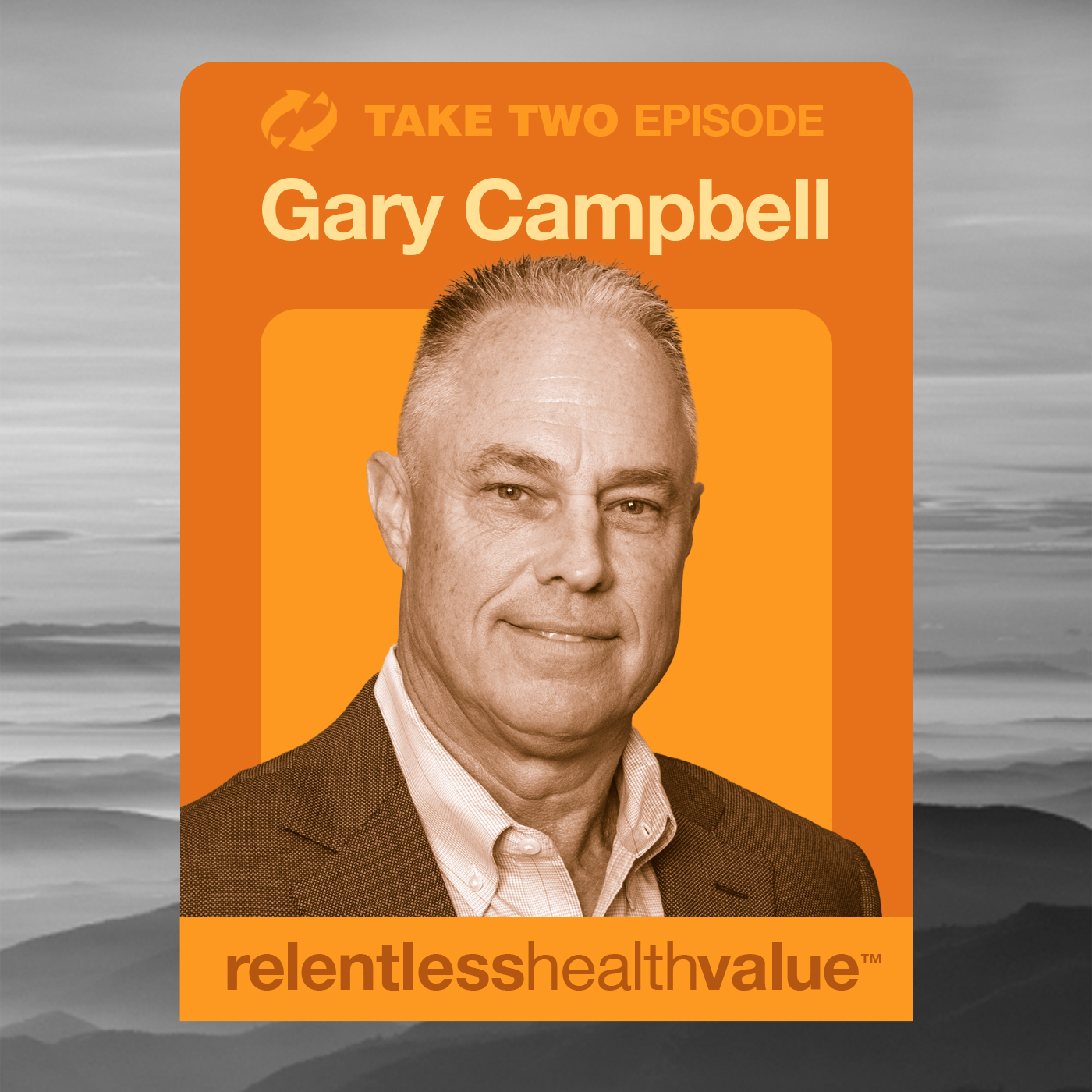
The "Just Spend Everything You're Given" Trap—Lessons in True Provider Fiscal Discipline, With Gary Campbell
What FQHCs Can Teach Every Healthcare Leader About True Fiscal Discipline. There are two very different ways to end up with no profit. One is genuine struggle. The other is simply being very good at spending every dollar you are given. In healthcare, we have no functioning market to tell the difference — and the organizations that are crying poor may just be inefficient. Federally qualified health

What You Don't Know About Healthcare Transactions and Clearinghouses Could Cost You, With Zack Kanter
Healthcare Transactions Cost 1,000 Times More Than They Should — Here's Why Clearinghouses Are Part of the Problem Sending a claim through a healthcare clearinghouse costs 10 to 15 cents per transaction. Sending a thousand business emails at scale costs about 15 cents total. That is a thousand-to-one cost differential for something that healthcare has actually standardized more rigorously than mos

Plan Sponsors Spend About $1.20 to Buy $1 of Healthcare, and Clinical Organizations Receive 80¢ for Every $1.20 Spent, With Mark Newman
Plan Sponsors Pay $1.20 to Buy $1 of Healthcare — and Providers Collect 80 Cents of That A self-insured employer pays $1.20–$1.30 to access a dollar of negotiated healthcare. Providers budget their business around collecting 70 to 80 cents of what they are contractually owed — because denial rates, unpaid patient balances, and collection timelines of 2 to 9 months are the operating reality. The ga
2025 Year-End Themes, Part 2: The Two Things That Have to Change for Any of the Rest of It to Work
This is Part 2 of Stacey's year-end synthesis of the most actionable themes from 2025. Last week covered Themes 1–3. This week covers 4 and 5 — which are, if you squint, really two sides of the same problem: plan sponsors can't buy value when they can't see what they're buying, and they can't see what they're buying because the vendors who benefit from opacity are the ones controlling the data. WH

INBW44: The Relentless Health Value Themes That We Covered Throughout 2025—A Recap, Part 1
As Stacey Richter reflects on a year of Relentless Health Value episodes, three themes kept surfacing in nearly every conversation: the foundational role of trusted relationships, the cost of underinvesting in primary care, and the dominance of perverse financial incentives and profiteering. This is Part 1 of a two-part year-end Inbetweenisode hosted by Stacey Richter, drawing on episodes featurin

Encore! EP450: When Your Health Plan Is $9 Million in the Hole, Who Are You Going to Call? A CPA. And Tell Them to Bring Their Spreadsheets, With Marilyn Bartlett, CPA, CMA, CFM, CGMA
From $9 Million in the Hole to $112 Million in the Black: How Marilyn Bartlett Turned Around Montana's State Employee Health Plan. What happens when a self-funded health plan is headed for bankruptcy and a CPA with a spreadsheet and her eye on the target gets to work? In roughly three years, Marilyn Bartlett, CPA, CMA, CFM, CGMA took the State of Montana's employee health plan from a $9 million de

The Measurement Trap: Why We Track Healthcare Costs and Outcomes Exactly Backwards with Dr. Mick Connors. EP495
The value equation in healthcare is outcomes divided by cost — but here's the revelation Stacey Richter had in this conversation: we've been measuring it exactly backwards. In American healthcare, costs are tracked at the macro aggregate level while outcomes are measured at the narrow individual service level. Flip that — measure costs at the unit level and outcomes at the whole person and whole c

Six Tensions of Pharmaceutical Drug Pricing, With Sarah Emond of ICER. EP494
If a drug keeps a patient out of the hospital — and hospital spend is 50% of most plan sponsors' total costs — why do we design benefits that make patients less able to afford that drug? That's the martini-fueled question Stacey Richter started with, and it threads through this entire conversation about why pharmaceutical pricing in America is so persistently broken. In this episode, Stacey Richte

Bonus Add-on for EP494: ICER and the Pharma Pricing Arms Race, With Sarah Emond
Pharma raises list prices to maximize rebates. Higher list prices blow up patient coinsurance. Pharma responds with copay cards. PBMs fight back with maximizers and accumulators. Prior auths ramp up. Premiums rise. Deductibles climb. And at no point in this cycle does anyone stop to ask: is this drug actually worth its price? That is the pharmaceutical pricing arms race Stacey Richter lays out in

INBW43: Five Baskets of Thank Yous to Hand Out, Along With a Plug for Big Demand Curve Energy
It will take a village to transform healthcare. Stacey Richter says this so often it is taped to her wall on a Post-It. This Thanksgiving Inbetweenisode is her chance to say thank you to the people actually building that village — and to make the case, with a detour through a drunk blacksmith charity auction, that the demand curve is the most underappreciated concept in healthcare reform. This is

Direct Contracts and the ECEN High-Value Network Model, Take Two EP240: With Olivia Ross
Direct contracts between employers and clinical organizations perform way better than what most third parties negotiate — and the Employers Centers of Excellence Network (ECEN), built by the Purchaser Business Group on Health (PBGH), proved exactly that. This Take Two episode revisits that work in light of a key finding from a recent PBGH data demonstration project: plan sponsors can now use publi

What Employer CEOs Are Figuring Out About Healthcare Costs Right Now, With John Quinn. EP493
Employer C-suites have been largely absent from healthcare purchasing decisions for decades — dipping in once a year at renewal, then handing the whole thing back to HR. That era is ending. Boards are noticing missed earnings numbers. CEOs are confronted with 10 to 12% trend forecasts on top of already strained budgets. And cost-shifting to employees — the go-to move for 20 years — has finally hit

How to Run a High-Quality Hospital at 143% of Medicare, With Dr. Sam Flanders and Shane Cerone
Beaumont Hospital Royal Oak was nationally recognized in nine medical specialties, received top hospital awards for seven consecutive years, and charged 143% of Medicare. That combination — genuinely high quality and genuinely low price — is supposed to be impossible. Shane Cerone and Dr. Sam Flanders built the management model that made it happen, and in this solutions-focused episode they explai

The PBGH Transparency Demonstration Project and What It Means for TPAs, Consultants, and Employers
There is zero correlation between price and quality in hospital care. That is not speculation — it is in the data. The PBGH Transparency Demonstration Project, conducted by the Purchaser Business Group on Health with Milliman and Embold and funded by the Peterson Center on Healthcare, combined price transparency data, claims data, and quality and safety scores from Leapfrog down to the individual

3 Problematic Hospital Myths: There Is No Healthcare Market, With Shane Cerone and Dr. Sam Flanders. EP490
The myth is that we have a functioning marketplace. We don't. We don't have a broken market — it's closer to a nonexistent market. That's Shane Cerone speaking, a former CEO of multiple hospital systems, and it is the central argument of this episode: the pricing crisis in American healthcare isn't being solved because the foundational premise — that market forces are constraining hospital prices

How Margin and Mission Work Together at a Multispecialty Group, With Dan Greenleaf of Duly. EP489 Part 2
One third of adults in this country are delaying or forgoing care due to cost. Financial toxicity is clinical toxicity. And yet the standard assumption in healthcare is that affordable prices and financial sustainability are in fundamental tension with each other. Dan Greenleaf's argument — backed by the operating results of Duly, a 1,800-clinician multispecialty group in Chicago — is that they ar

How Mission Becomes a Path to Margin at a Multispecialty Group, With Dan Greenleaf of Duly. EP489 Part 1
Hospitals have increased their prices 256% over the last 20 years while physician compensation adjusted for inflation is down 36%. The average American family of four now spends $24,000 a year on healthcare — up from $6,000 in 2000 — while wages have risen far more slowly. Dan Greenleaf's argument is that in this environment, focusing on mission is not a financial sacrifice. It is a competitive ad

Mark Cuban and Cora Opsahl on Trust, Simplicity, High Deductibles, and Direct Contracting. EP488
High deductible health plans were supposed to give patients skin in the game. What they actually did was create a class of functionally uninsured Americans — because if your deductible is more than you have in your bank account, your insurance is worthless. And then there's the second layer: self-insured employers hired armies of consultants and middlemen to navigate the complexity, which made the

Detective Skills for Following the Healthcare Dollar, Part 2 With Kevin Lyons of the NJ State PBA. EP487 Part 2
The New Jersey state employee health plan is projected to cost $3.5 billion in 2026 — with no medical director employed by the state and no unconflicted experts at the negotiating table. Kevin Lyons, a former police detective and executive director of labor employee benefits at the New Jersey State Policemen's Benevolent Association, which represents 33,000 members, is trying to change that. In Pa

A Former Police Detective Investigates the 3 Big Barriers to the Public Sector Getting Better Affordable Health Benefits, With Kevin Lyons. EP487 Part 1
The New Jersey PPO family plan cost $67,000 in 2026 — having almost doubled in five years, with a 37% rate increase proposal for that year alone, cumulating to 115% over five years. State workers including teachers, police officers, and public employees are paying roughly $25,000 of that themselves. And the state has no medical director, no unconflicted experts at the table, and a legislature whos

How to Operationalize Direct Contracting and Bundled Payments, With Dr. Stan Schwartz of ZERO.health. EP486
A 23-year-old roofing laborer paid $125 for a comprehensive metabolic panel — a test available directly for $6.52. That is not a healthcare problem. That is a pricing failure. And it is the origin story of ZERO.health, a direct contracting platform that gets plan members access to high-quality providers for $0 out of pocket using bundled payments. In this episode, Stacey Richter speaks with Dr. St

Why Imaging Is 6-11% of Plan Spend and How Direct Contracting Fixes It, With Dr. Cristin Dickerson. EP485
Imaging costs 6 to 11% of total plan sponsor spend — and that figure requires aggregating CPT codes, contrast charges, professional services, and facility fees, many of which are split across different code categories in ways that make the true total hard to see. The same MRI that costs $5,000 at a hospital system might cost $300 to $500 at a freestanding imaging center of equivalent quality. And
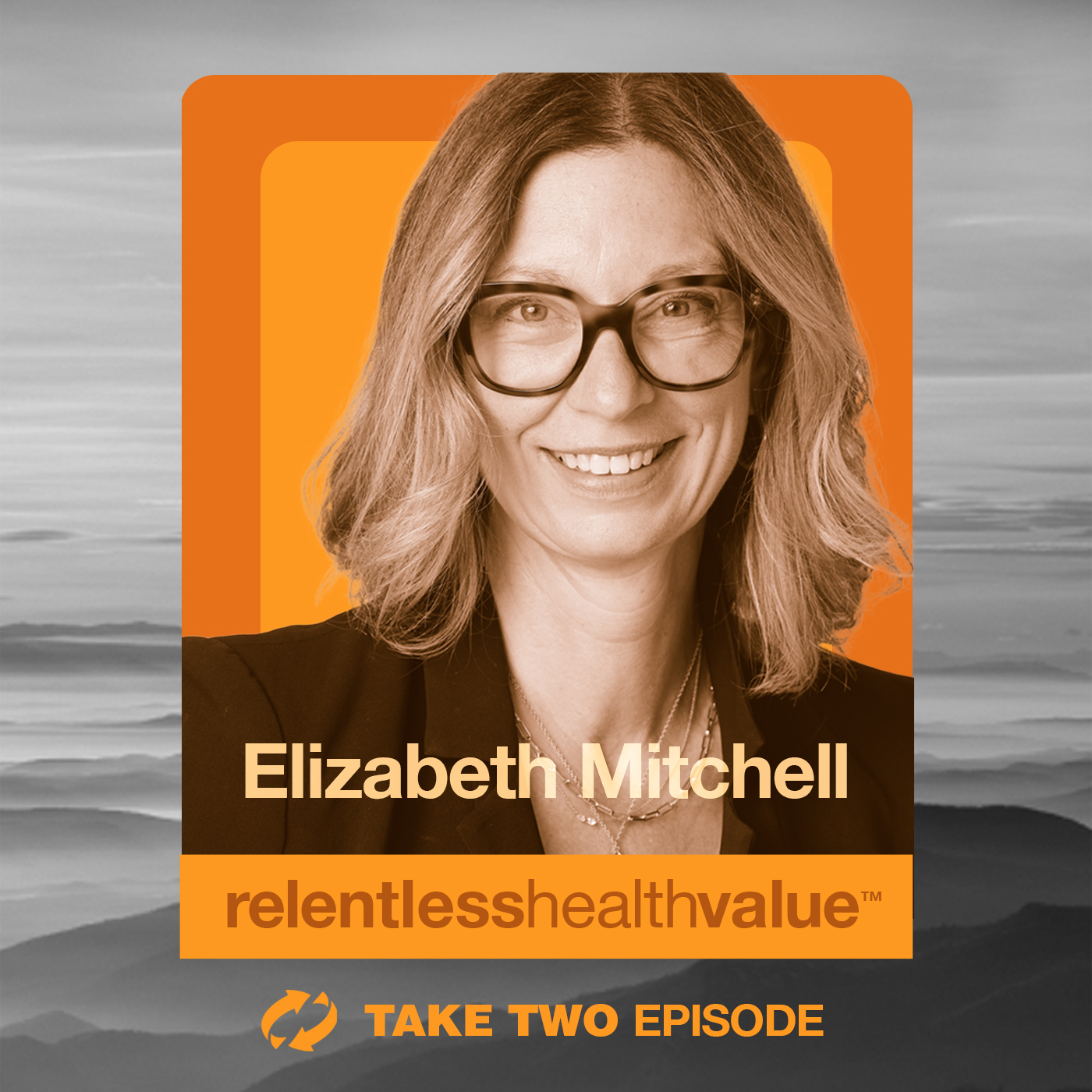
TPA and Health Plan Inertia: What Self-Insured Employers Need to Know, With Elizabeth Mitchell
PBGH member employers collectively spend over $350 billion a year on healthcare. And per Elizabeth Mitchell, 30% of that spend disappears in the middle — not reaching providers, not improving health — just gone into administrative spread, misaligned fee structures, and the cost of a system that was never designed to pass money through efficiently. That number is not speculation. It is what she obs
3 Burning Questions Every Self-Insured Employer Should Be Asking Right Now, With Dave Chase. EP484
Across the country, self-insured employer teams are waking up to the fact that "I trusted my consultant" is not a legal defense. Not under ERISA. Not under the Consolidated Appropriations Act. And the lawsuits — J&J, Wells Fargo, Tiara Yachts versus Blue Cross Blue Shield of Michigan, Osceola County — are making it impossible to ignore. In this episode, Stacey Richter asks Dave Chase, co-founder a

Reversing the Healthcare Cost Flywheel: From Discounts to Better Member Health, With Jonathan Baran. EP483 Part 2
The negative healthcare flywheel spins on one axle: employers buying discounts. Discounts create no incentive for health systems to control prices, no incentive to invest in primary care, and no way to know what anything actually costs. The flywheel just keeps spinning. In Part 2 of this conversation, Jonathan Baran turns it around — and the fix starts with employers refusing to buy discounts at a

How the Healthcare Cost Flywheel Works — and Why It Keeps Spinning, With Jonathan Baran. EP483 Part 1
A 9% healthcare renewal is celebrated as a good year. But 9% is three times the rate of inflation, and it's not going to doctors or nurses — physician compensation has been flat or declining, and nursing strikes are evidence enough of what's happening there. So where does the money go? Jonathan Baran has a very clear answer: it goes to the flywheel. And the flywheel starts with discounts. In this

Bonus Add-on: Honoring Those in Healthcare Who Are Trying Every Day to Do the Right Thing, With Jonathan Baran
When Stacey Richter and Jonathan Baran dig into the incentive structures driving healthcare costs, there is an important caveat: the individuals working inside large health systems, carriers, and benefit consulting firms are not the same as the organizations they work for. A C-suite decision to pursue margin at the expense of mission is not a democratic vote. Most people working inside these organ

How Margin Shoves Mission Off the Bus: A Primary Care Case Study, With Dr. Stan Schwartz
Northeast Oklahoma beat out Colorado, Oregon, and New York to win a landmark federal competition for the Comprehensive Primary Care Initiative. The program worked — emergency room visits dropped, hospitalizations declined, patients loved it, doctors loved it, and primary care physicians earned tens of thousands in quality bonuses. Then a health system executive whispered a question that ended it:

3 Surprising Ways Carriers Make Lots of Money, With Preston Alexander of The Healthcare Breakdown. EP482
One carrier reported $4.8 billion in investment income in 2024. In 2025, United Healthcare recorded $151 billion in intercompany eliminations — payments from the insurance arm to subsidiaries it also owns. And as fee-for-service Medicare prices rise, Medicare Advantage capitation rates follow, creating a flywheel that rewards vertically integrated carriers for allowing underlying costs to climb. N

Take Two: EP445: What Does It Take for an Indie Primary Care Practice to Survive Right Now? With Tom X. Lee, MD
Here is the central paradox of primary care: if you do it really well — evidence-based prevention, early intervention, curbing specialty volume — you cannibalize the very revenue stream that most consolidated health systems use to subsidize primary care in the first place. So why would a consolidated entity empower primary care to undermine its own major source of revenue? Stacey Richter calls thi

Bonus Clip: Dr. Tom Lee Talks About Why Retail Clinics Are Not Doing So Well, in His Opinion
Retail clinics have been a concept for 20-plus years — and by Dr. Tom X. Lee's assessment, they've largely failed to become what they promised. They're convenient vaccine shops and minor urgent care stops, but very few have become true longitudinal primary care destinations. In this bonus clip, Stacey Richter shares a sidebar conversation with Dr. Tom X. Lee, MD, founder of One Medical and Galileo
EP481: Seriously, IRL, What Does "No Margin, No Mission" Even Mean? With Benjamin Schwartz, MD, MBA
"No margin, no mission" was coined by Sister Irene Kraus, a nun who ran a health system — and the spirit of the phrase is simple: if you can't sustain a viable business, you can't take care of patients. But somewhere along the way, as Stacey Richter puts it, enough people in healthcare seem to have adopted Jeff Bezos's inversion — "your margin is my mission" — and the phrase has become a rhetorica

Take Two: EP438: Is It Mission and/or Margin? With John Lee, MD
A third of healthcare waste is someone else's profit. That profit buys a lot of influence — and it's one reason why doing the right thing for patients can get your face smashed against the wall inside a large healthcare organization. That's the real world Dr. John Lee is talking about in this episode, and his question is the one most mission-driven clinicians and operators eventually ask: now what

Payment Integrity Meets Health System Boasts, Such as Our Rates Are 2x Medicare, With Kimberly Carleson. EP480
A lung transplant billed at $1.5 million. An organ charged at $676,000 when the legal maximum is $56,000. After a payment integrity review removed the ineligible charges, that bill came down to $290,000. That's not an edge case — for one plan with 55,000 members and $600 million in medical spend, a single year's audit identified $64 million in excessive charges on claims of $10,000 and above alone
The Rebate Wall: Why Chasing Pharma Rebates Can Block Better Patient Care with Ann Lewandowski - Summer Short
So much can be said about pharma rebates — or, as Stacey Richter puts it after this conversation, monies received back from manufacturers, or post-sale concessions — that the word "rebate" itself has become linguistic gymnastics. Some of these dollars don't always get called a rebate, and some wind up in the pocket of the PBM/GPO or the TPA/EBC instead of the plan sponsor — allegedly, per the whis

What Could Go Wrong Covering High-Cost Claimants With Stop-Loss Reinsurance? EP479.
Stop-loss carriers shoot for 30 to 40% margins on the policies they sell. That figure came from the CEO of a large stop-loss carrier, in what Andreas Mang describes as a moment of weakness. If you're a self-insured employer and you haven't been actively marketing your stop-loss coverage every year, you may be paying hundreds of thousands — or millions — of unnecessary dollars for too much insuranc

Take Two: EP433: The Mystery of the Weekly Claims Wire, With Justin Leader
The weekly claims wire looks like a payment for medical and pharmacy claims. But tucked inside that same wire, invisible to most plan sponsors, are fees that have nothing to do with the care your members received. One multi-employer fund reduced its $13 million in annual spend by $1.5 million just by getting better eyes on what was flowing through. Another plan's network-approved auditor found $21

EP478: Stop-Loss Coverage, Part 1: How It Goes Right, and How It Can Go Horribly Wrong, With Andreas Mang and Jon Camire
Stop-loss is one of the most important buying decisions a self-insured employer makes — and it's almost always the last one, made when everyone is exhausted and ready to just be done. That combination has produced some expensive disasters. This episode is the 101 that makes sure you don't create one. Stacey Richter speaks with Andreas Mang, Senior Managing Director at Blackstone and CEO of Equity

Through Line Show: What the Tribe Thinks You Need to Know About Trust or It's Gonna Be a Problem. Also, Why You Are Smart, With Stacey Richter
"The very real impact of trust, or lack of trust, which may come from too little antitrust." That line, from Dr. Mick Connors, is the through line of this episode — and it connects patients who don't take prescribed medications because they trust their neighbor more than their doctor, to clinicians who are leaving the workforce because they don't trust their employers, to medical students who won'

How to Earn Trust in Healthcare: Four Principles That Actually Work. Bonus Add-on to EP477 with Charles Green
Healthcare is one of the hardest industries in which to build trust — conflicts of interest are baked into the economics, relationships have become transactional, and transparency is the exception rather than the default. So what does it actually take to earn it? This bonus add-on to EP477 revisits a conversation Stacey Richter recorded ten years ago with Charles Green, founder of Trusted Advisor

Talking Whistleblowing and the Pharma Rebates Whistleblower Case With an Actual Whistleblower, With Ann Lewandowski. EP476
An EBC Allegedly Pocketed $27 Million of Client Pharma Rebates. Here's What Happened Next. An employee benefit consultant where 61% of revenue allegedly came from keeping clients' pharma rebates — undisclosed, in violation of the Consolidated Appropriations Act of 2021, funneled into the executive bonus pool. When the compliance officer raised the alarm and eventually disclosed to a plan sponsor,

Is This a Moment or a Movement? Three Forces Reshaping Healthcare With Peter Hayes. EP475
Something shifted after the assassination of UnitedHealthcare CEO Brian Thompson. As Peter Hayes puts it, we've reached a "force majeure of bridges too far" — obvious, over-the-line activities that offend normal people's sense of justice. In this episode, Stacey Richter speaks with Peter Hayes, retired president and CEO of the Healthcare Purchaser Alliance of Maine and former director of associate

Private Equity in Healthcare—The Big Data Points You Really Need to Know, All Together in One Episode, With Yashaswini Singh, PhD. EP474
What Private Equity Actually Does to Your Healthcare Costs, Doctors, and Community Private equity has invested over $1 trillion in U.S. healthcare in the past decade — from neonatal services to nursing homes — and most plan sponsors and patients don't know it's happened until the downstream effects are already deeply pervasive. In this episode, Stacey Richter speaks with Yashaswini Singh, PhD, MPA

How Trusted Primary Care Relationships Keep Patients Out of the ER — and Lower Plan Costs. EP473
I'm revisiting, in a Take Two, this episode with Dr. Kenny Cole because I'm listening to it this time with a new focus — the theme that keeps coming up over and over on Relentless Health Value these past few months: if care teams don't build a trusted relationship with plan members and patients, then in a moment that really matters, the patient will suboptimally wind up in the ER. Across an entire
Recommended

Effective Weight Loss for Moms | High protein, Strength Training, Lose Weight, Meal Planning, Fat Loss, Healthy Habits

The Human-Animal Connection - Pet Life Radio Original

Infinite Health with Dr. Arasi Maran

The Daily

World News Tonight with David Muir
The Joe Rogan Experience

English Vocabulary Help

TED Talks Daily

Learn English B1 with Daily News | English Listening Practice
Talk About Talk - Executive & Leadership Communication Skills

English with Olivia | Slow Conversations & Vocabulary

Stand In The Circle
