
MIT Supply Chain Frontiers
Thought leadership from MIT Center for Transportation & Logistics. The podcast explores cutting-edge research and insights in supply chain management, featuring interviews with industry experts and MIT faculty. It covers topics such as global logistics, sustainability, and technology innovations. Aimed at professionals and academics, it provides actionable knowledge to improve supply chain operations.
Episodes
Making Supply Chain Resilience the Default Design: Lessons from Humanitarian Logistics
When disaster strikes, the response is far more complex than mobilizing aid and supplies. In this episode, we explore how supply chains function as critical infrastructure in humanitarian crises and why understanding them as interconnected systems of systems is essential to saving lives and rebuilding communities.
Joining the discussion is Dr. Jarrod Goentzel, founder and director of the MIT Human
Building Global Supply Chain Leaders: Inside the MIT Global SCALE Network
Supply chains are inherently global, shaped by geopolitical dynamics, regional market complexities, and the interconnected movement of goods across continents. As such, preparing the next generation of supply chain leaders demands immersive, culturally-grounded education that reflects real-world challenges from multiple perspectives.
In this episode, we're joined by directors of the MIT Global SCA
The Latest Technology in Freight Transportation with Samsara
Freight companies face increasing pressure to adopt AI, but which technology is actually working on the road? This episode examines critical findings from ground-level freight operations, revealing why Excel remains the dominant tool despite digital transformation efforts, and why data quality, not AI sophistication, remains the biggest bottleneck constraining freight efficiency. Joining tech jour
Automating Warehouse Inventory with Drones: An MIT SCM Capstone Project
Warehouse automation is often evaluated through an operational lens in terms of productivity gains, labor efficiency, and accuracy improvements. Yet the environmental impact of technologies like drone-based inventory systems remains poorly understood. In this episode, we explore how a capstone project conducted with Verity, a warehouse automation company, and graduate students in the MIT Supply Ch
The State of AI in Warehousing and Omnichannel
AI is “not optional anymore” in large-scale warehouses and omnichannel operations, as it’s becoming foundational to how they function at scale. In this episode, we explore key findings from the State of AI in Warehousing Report and the 2026 State of Omnichannel Supply Chain Report, examining how companies are moving beyond pilots to real-world deployment. From inventory optimization and automated
Decarbonizing Supply Chains with C.H. Robinson
As climate-related disruptions and regulatory pressures intensify, corporate sustainability is a core strategic necessity for all operations of global firms. In this episode, we discuss how companies are navigating the complex transition toward decarbonization while upholding efficiency and affordability.
Joining the discussion are Dr. Sreedevi Rajagopalan and Tori Arnold from the MIT Sustainable
Beyond the Hype: Decoding AI in Supply Chains
Artificial Intelligence is frequently hailed as a transformative force for global supply chains, yet the gap between technological promise and operational reality remains a central challenge for industry leaders. In this episode, host Dr. Matthias Winkenbach, Director of Research at MIT CTL, leads a nuanced discussion on the transition from AI hype to the implementation of functional "decision tec

Why So Much Food is Lost: Inside Global Food Supply Chains
Global food systems produce more than enough to feed the world—yet nearly one-third of all food is lost or wasted. Much of that loss happens far upstream, driven by perishability, cold chain failures, infrastructure gaps, climate pressures, and supply chain inefficiencies that span continents.
In this episode, we’re joined by Dr. Chris Mejía, founder and director of the MIT Emerging Market Economi

Weaponized Supply Chains: U.S.-China Trade and National Security
Rising geopolitical tensions and global trade volatility have revealed a key power struggle: supply chains are a matter of national security. This year’s annual report from the congressional U.S.–China Economic and Security Review Commission warns that China has begun weaponizing key supply chain chokepoints, from critical minerals to foundational semiconductors, creating risks that reach far beyo
Sustainability Still Matters
As global supply chains face new waves of political uncertainty, regulatory change, and economic pressure, one thing remains clear: sustainability still matters. The latest State of Supply Chain Sustainability Report from the MIT Sustainable Supply Chain Lab reveals that despite federal environmental rollbacks and shifting investor priorities, companies continue to see sustainability as central to

What Coffee, Cobalt, and Mangoes Have in Common: Introducing the Emerging Market Economies Logistics Lab
Emerging markets play an essential role in global supply chains, providing much of the food, raw materials, and labor that keep the world running. But they also face unique challenges: fragmented systems, limited infrastructure, and volatile economies. At the same time, these regions hold immense potential for innovation, resilience, and growth if their logistics systems can adapt to meet rising p

The Road to Vehicle Automation: How Far Are We?
Self-driving cars have been heralded by many as the future of transportation—promising safer roads, reduced traffic, and greater mobility for all. Yet despite rapid advancements in technology and a surge in assistive driving features, acceptance of full vehicle automation remains elusive. As the public grapples with questions of trust, safety, and responsibility, the road to widespread adoption of
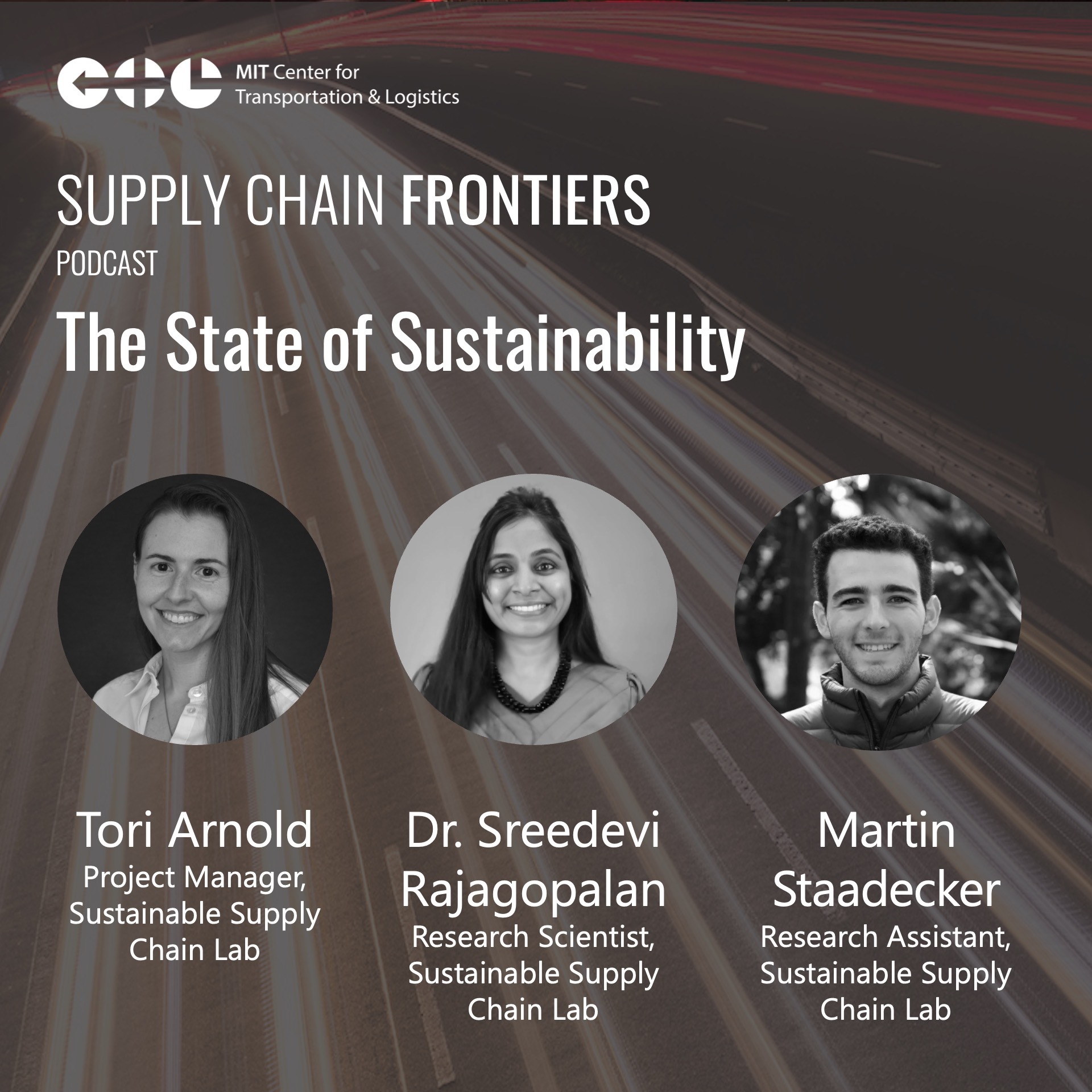
The State of Sustainability
Sustainability has become an imperative for many companies—but in the face of regulatory rollbacks and budget cuts, are those goals here to stay? In this episode, we explore how companies can meaningfully pursue sustainability, even amid shifting political and economic pressures. We discuss growing public support for sustainability, the role of data and modeling in shaping corporate sustainability
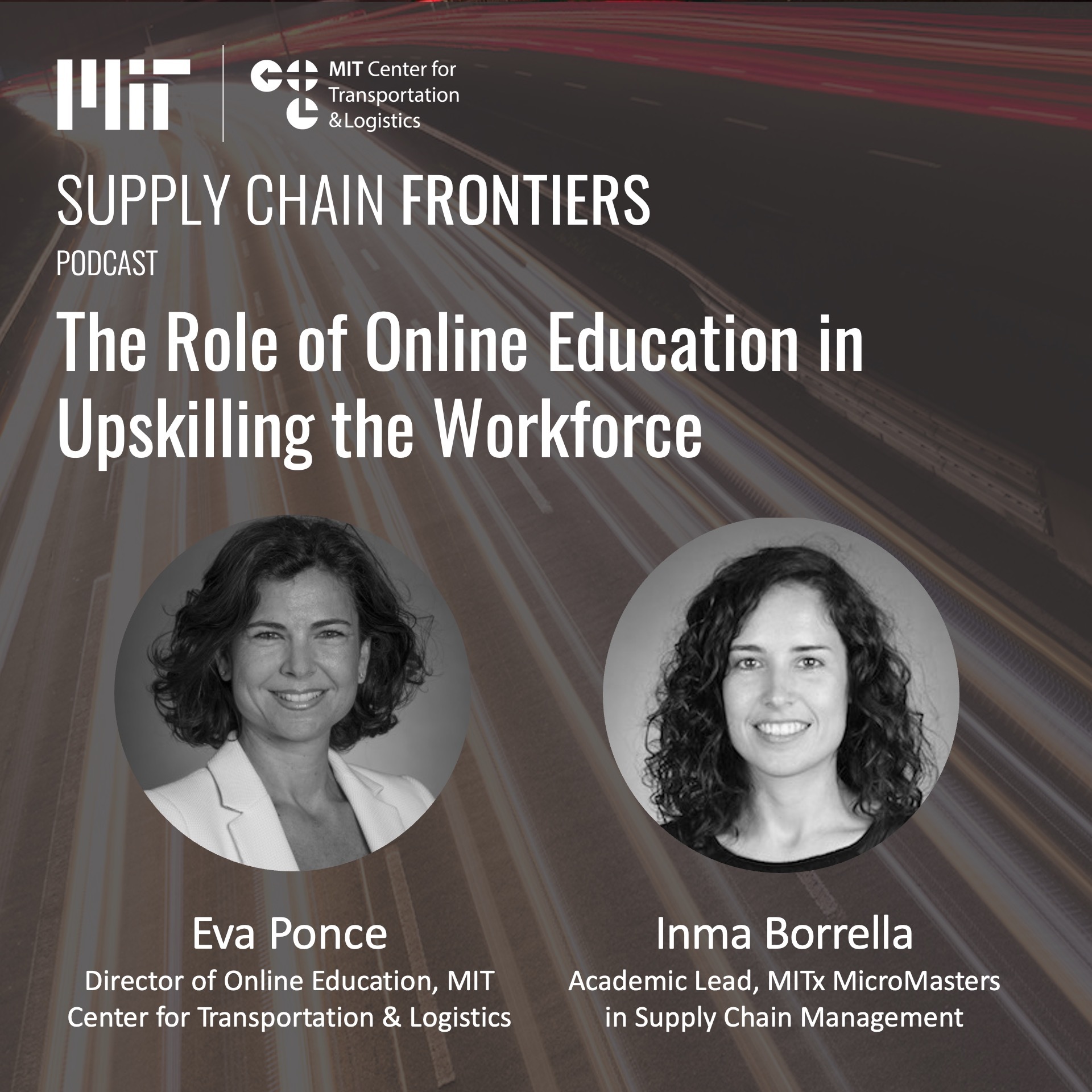
The Role of Online Education in Upskilling the Workforce
In recent years, online education has come to the forefront as an alternative to traditional education programs. Its increasing prominence reflects its adaptability, flexibility, affordability, and far-reaching scale. As the global workforce stands to undergo significant changes in the next 5-10 years due to digitalization, advancements in AI, and automation, employers are increasingly valuing ski
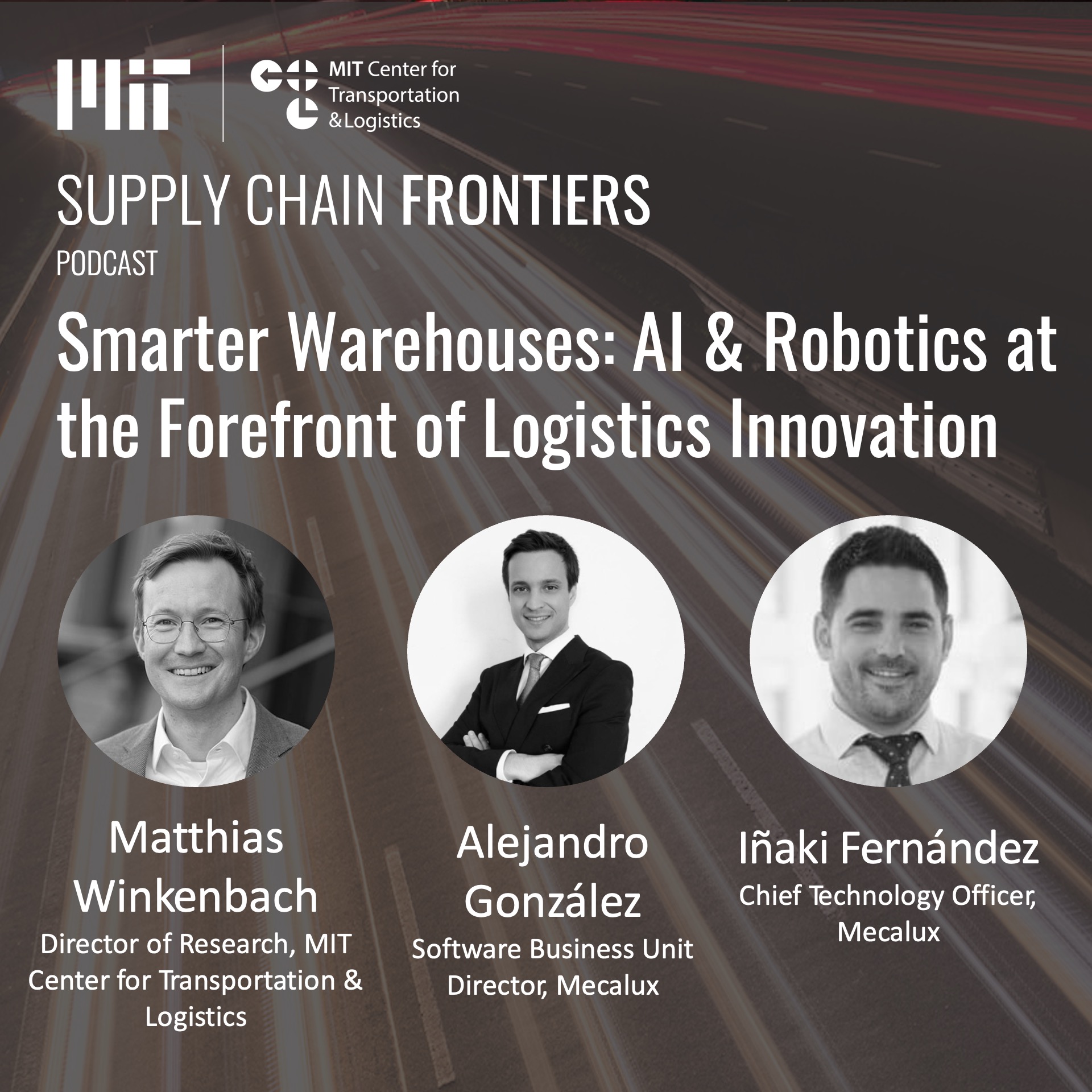
Smarter Warehouses: AI & Robotics at the Forefront of Logistics Innovation
In this episode we sit down with Dr. Matthias Winkenbach, Director of Research at the MIT Center for Transportation & Logistics, Alejandro González, Software Business Unit Director at Mecalux, and Iñaki Fernández, Chief Technology Officer at Mecalux.
Mecalux, a provider of warehouse management solutions, is a founding research partner of the new MIT Intelligent Logistics Systems Lab, which is
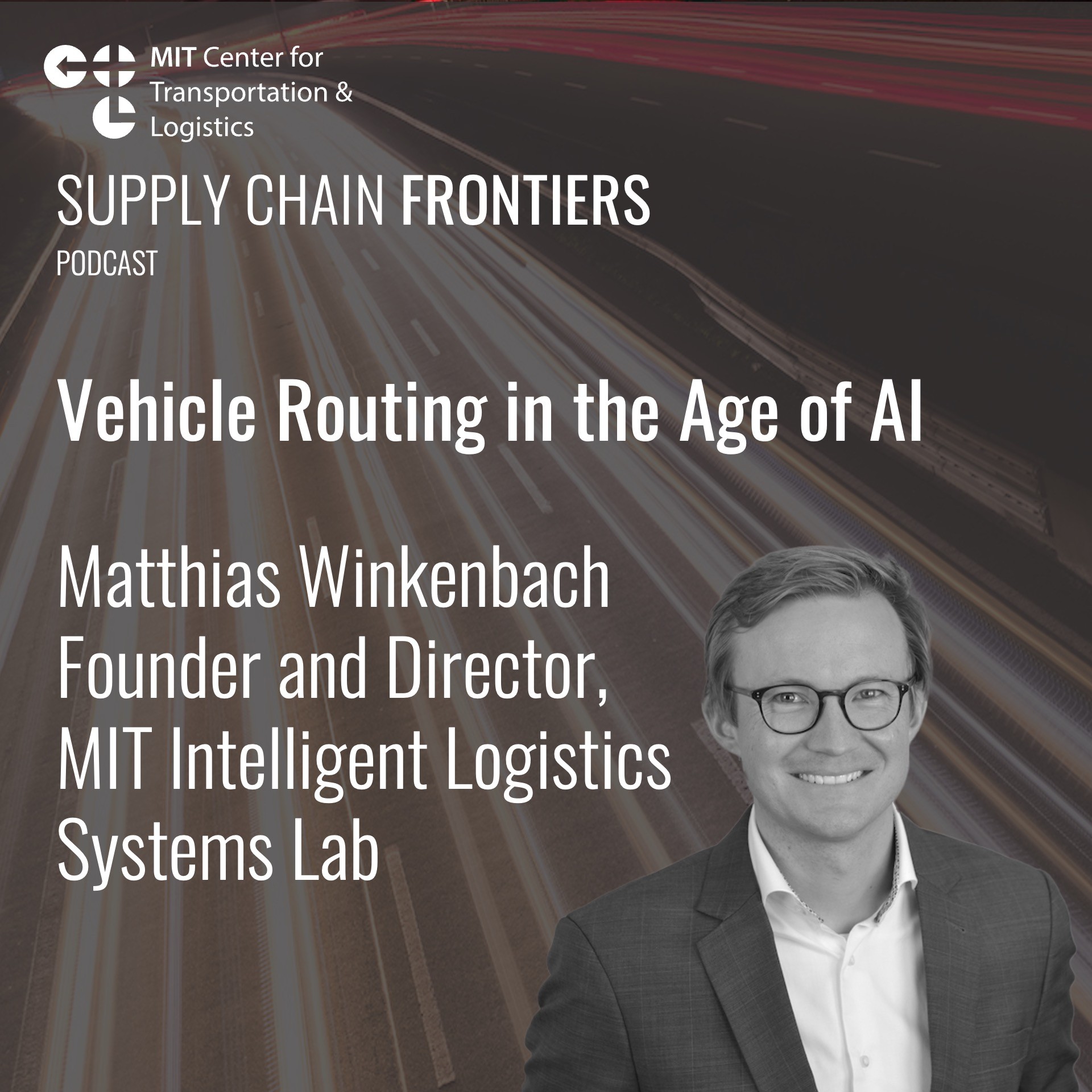
Vehicle Routing in the Age of AI
Vehicle routing is one of the most well-understood, extensively studied problems in both history and academia—it's been studied by academics since the early 1800s. Yet 200 years later, optimal efficiency remains just out of reach. And given the enormous increase in pressure for consumer expectations in recent years, that remaining "last mile" of vehicle routing efficiency could, on a global scale
Empowering Micro Retailers in Emerging Markets
In this episode, we sit down with members of the MIT Low Income Firms Transformation (LIFT) Lab: Director Josué Velázquez Martínez, Postdoctoral Researcher Sreedevi Rajagopalan, and Doctoral Student Fabio Castro.
We discuss the LIFT Lab's work empowering micro-retailers and nanostores in emerging markets to lift themselves out of poverty. These retailers, while making up an overwhelming majority o
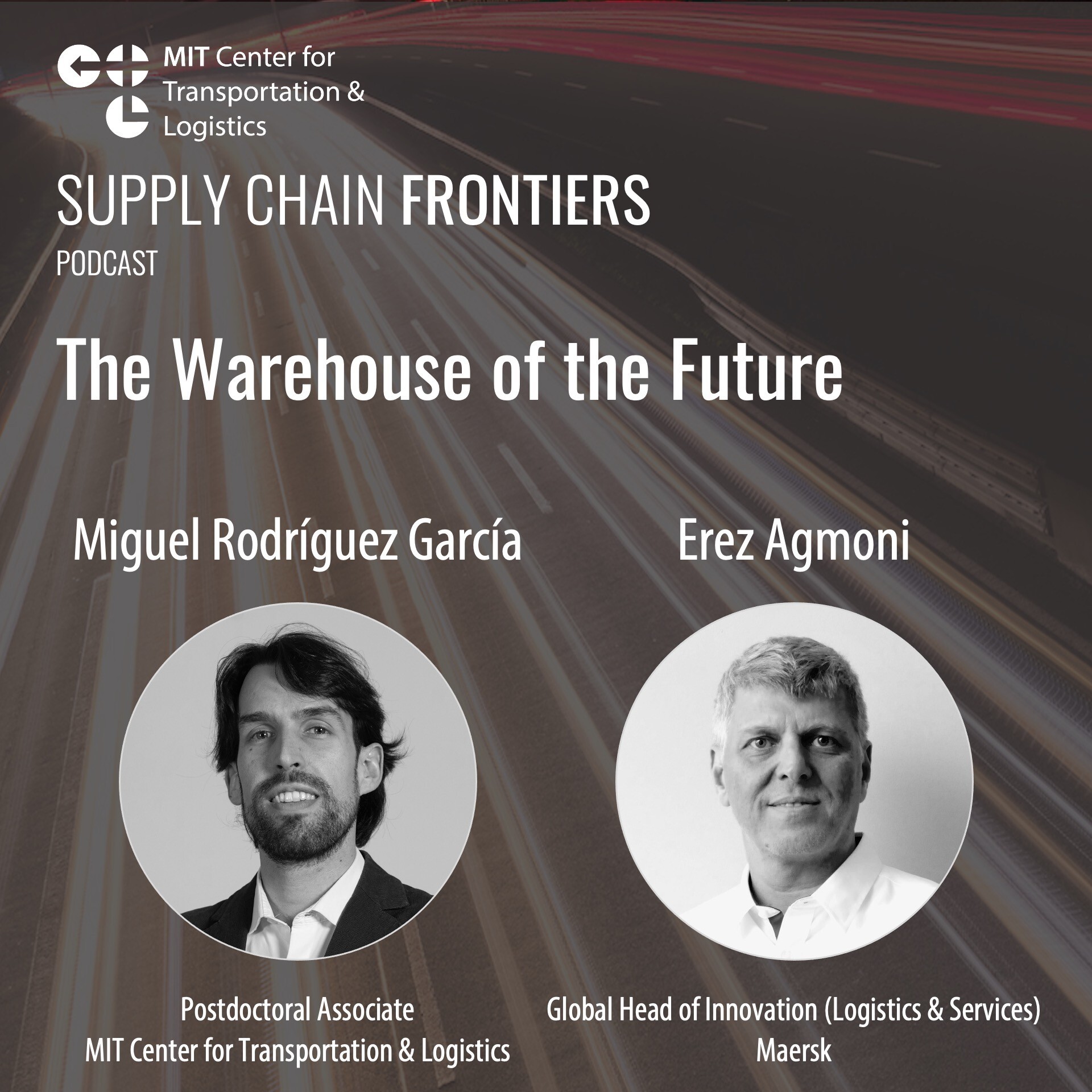
The Warehouse of the Future
Warehouses are undergoing a fundamental transformation—in response to the explosion of growth in the e-commerce space and worldwide large-scale supply chain disruptions, warehouses have gone from places simply for goods to sit to highly interconnected, automated hubs of activity. Warehouses of the future leverage new technologies in automation and digitalization to enhance precision, flexibility,
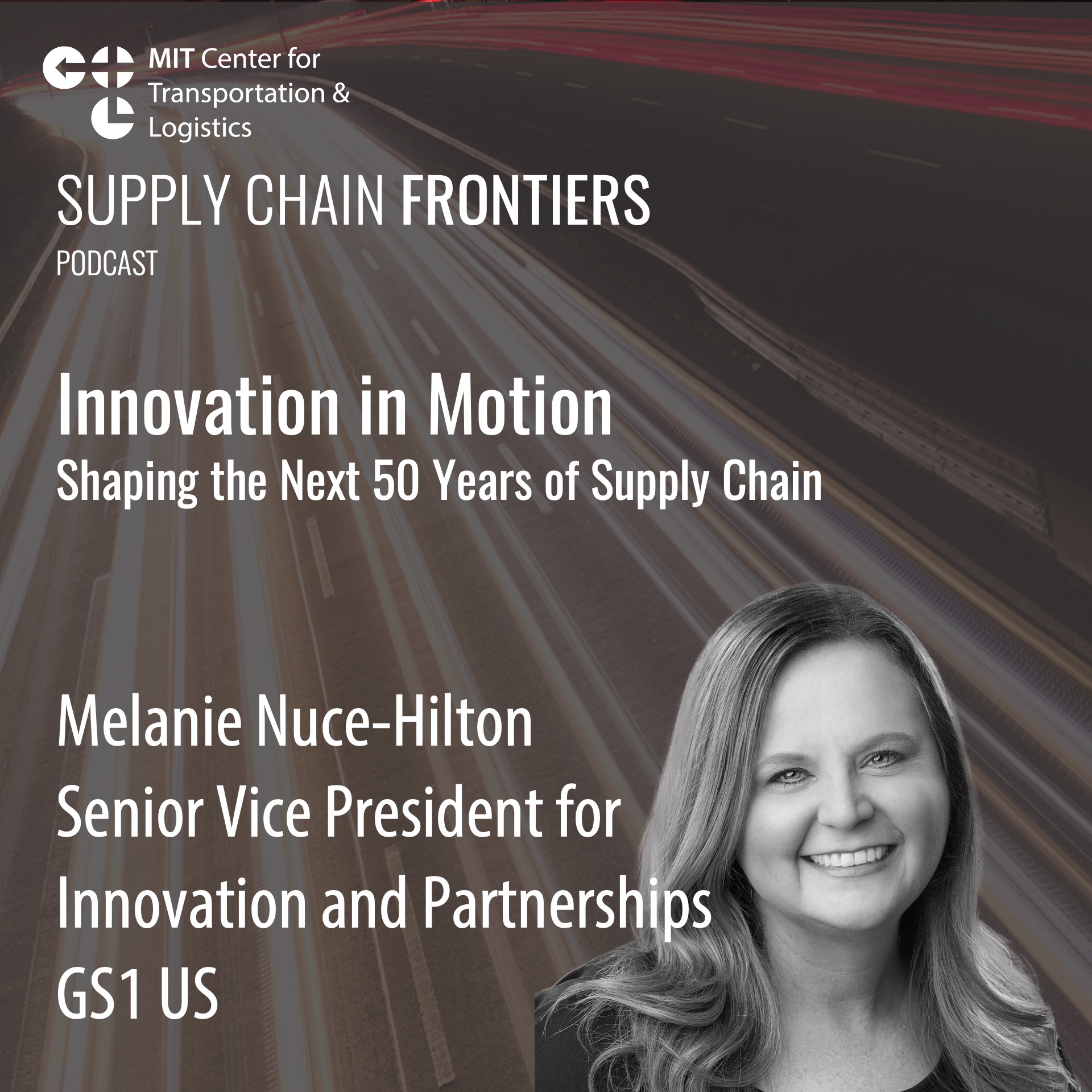
Innovation in Motion: Shaping the Next 50 Years of Supply Chain
On this episode, we're joined by Melanie Nuce-Hilton, SVP for Innovation and Partnerships at GS1 US, a nonprofit standards organization best known for administering the Universal Product Code (UPC) barcode—and celebrating its fiftieth anniversary right around the same time as MIT CTL. Melanie talks all about the history of supply chain standards over the last 50 years, including the UPC barcode, R
Sustainability Contains Multitudes
MIT CTL Research Scientist David Correll joins us to share findings from the State of Supply Chain Sustainability 2023. Pressure on firms to make their supply chains more sustainable has increased over the past four years and isn't going anywhere, though the distinct areas of sustainability on which that pressure focuses are constantly changing. Indeed, sustainability is complex and contains multi
The Magic Conveyor Belt: Supply Chains, A.I., and the Future of Work
In this episode, MIT CTL Director Yossi Sheffi, an expert with nearly five decades of experience in the supply chain and logistics areas, sits down with Susan Lacefield, Executive Editor of Supply Chain Quarterly. Yossi and Susan discuss the miracle of modern global supply chains—a magic conveyor belt that moves goods from mines and forests to supermarket shelves. They also discuss supply chain re
Blue Sky, Gray Sky – Part 2
"Hope is not a strategy."
In this episode, we are joined by Kathy Fulton, Executive Director of the American Logistics Aid Network (ALAN), who discusses her work connecting private-sector resources with disaster response needs: a "gray sky" response, after a disaster hits. For instance, if a supplier has excess food they need to offload, ALAN will connect them with a warehouse with the capacity to
Blue Sky, Gray Sky – Part 1
In the wake of a disaster, restoring supply chains can be critical in assuring that the most vital needs of affected communities are met.
In this episode, Tim Russell and Lauren Finegan of the MIT Humanitarian Supply Chain Lab discuss the fundamentals of humanitarian logistics and disaster response—including how to best build resilient communities, how the public and private sectors can work toget

The New Competitive Edge: Analytics-Driven Supply Chain Design for Value Creation
Supply chain design has traditionally been conducted with only one dimension in mind: cost minimization. The conventions of supply chain design date largely from the 1990s. But major technological strides have been made in the years since, allowing for much more complex considerations to be taken into account. So most companies, by using this obsolete approach, are putting themselves at a competit
Shipper Ghost Lanes - Hidden Costs and Consequences
Truckload transportation services procurement is costly and time-intensive. These months-long procurement events typically result in thousands of contracts between shippers and carriers. The contracts cover each of the shipper’s product distribution lanes or origin-destination pairs.
Due to truckload supply and demand uncertainty, shippers often adopt a coverage strategy to secure contracted capac
Empathetic Leadership in the Field–More Insights with the MIT CTL Military Fellows
This episode marks the second installment of research scientist David Correll speaking with the 2021–22 MIT CTL military fellows: US Army Col. Joe Parker, Lt. Col. Brian Young, and Louisiana National Guard Lt. Col. Stephen J. Luebbert.
Today’s conversation is all about empathetic leadership. Parker, Young, and Luebbert discuss how leading teams in high-stress environments like military combat requ
Supply Chains across Sectors - A Conversation with the MIT CTL Military Fellows
In today’s episode, research scientist David Correll speaks with the 2021–22 MIT CTL military fellows: US Army Col. Joe Parker, Lt. Col. Brian Young, and Louisiana National Guard Lt. Col. Stephen J. Luebbert. The fellows discussed their experiences in the military and the MIT SCM program.
For written and downloadable transcripts visit ctl.mit.edu
Their conversation explores the differences and sim
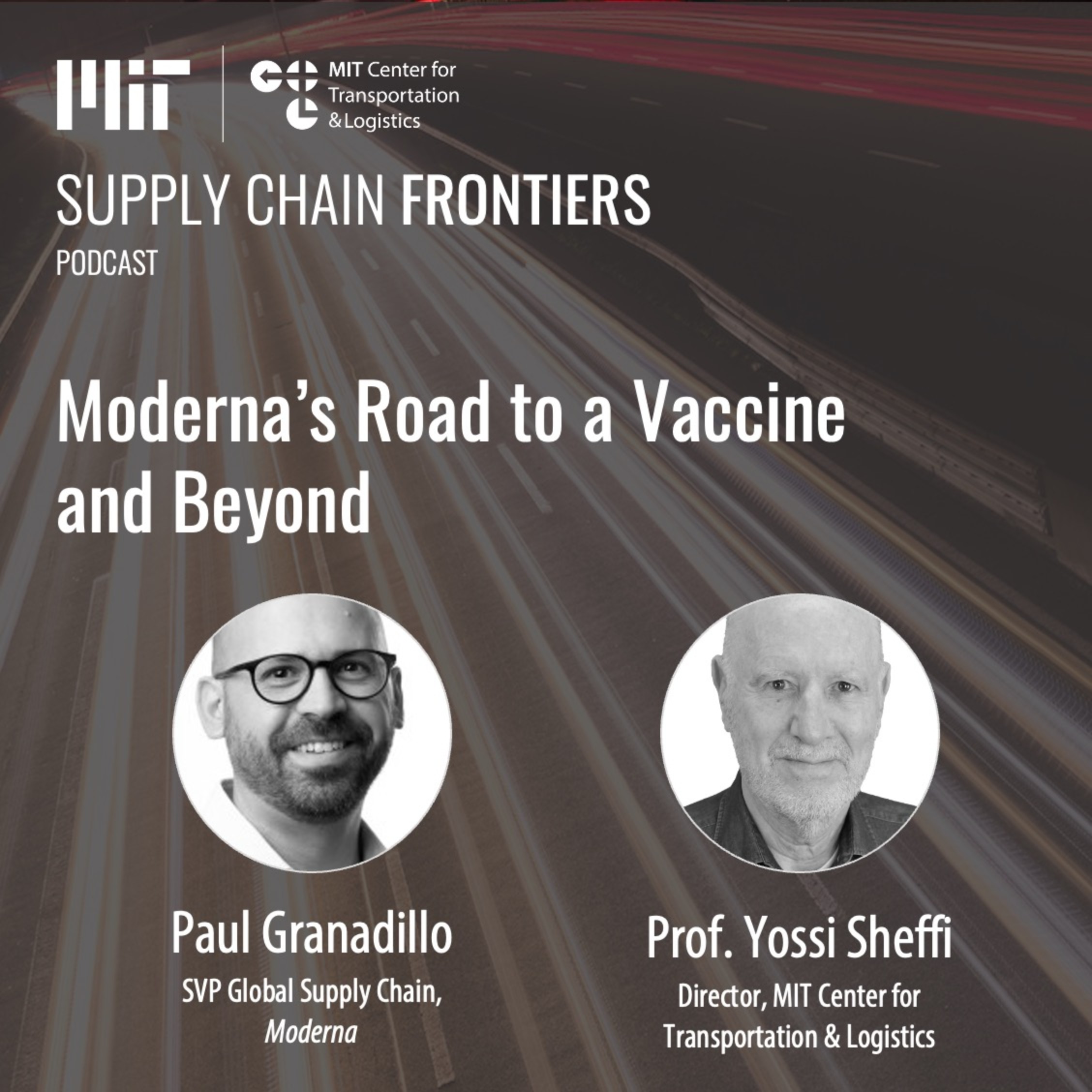
Moderna’s Road to the Vaccine and Beyond
Join MIT Global SCALE Connect for an in-depth conversation with Paul Granadillo, SVP Global Supply Chain at Moderna. MIT Professor Yossi Sheffi speaks with Paul about how the pandemic vaccine response reshaped manufacturing, business, and supply chains at Moderna.
Mr. Granadillo shares his professional experiences learned from joining the company during a time of growth. He describes some of the m
Bottleneck Analysis to Understand Systems in Disruption
Bottleneck analysis aiming to increase asset productivity has commonly been applied inside the four walls of production and distribution facilities. The pandemic disrupted global supply chains with dramatic shifts in demand and constraints in supply with cascading effects. Shippers then dynamically shifted traditional origin-destination patterns causing stress on the networks of logistics service
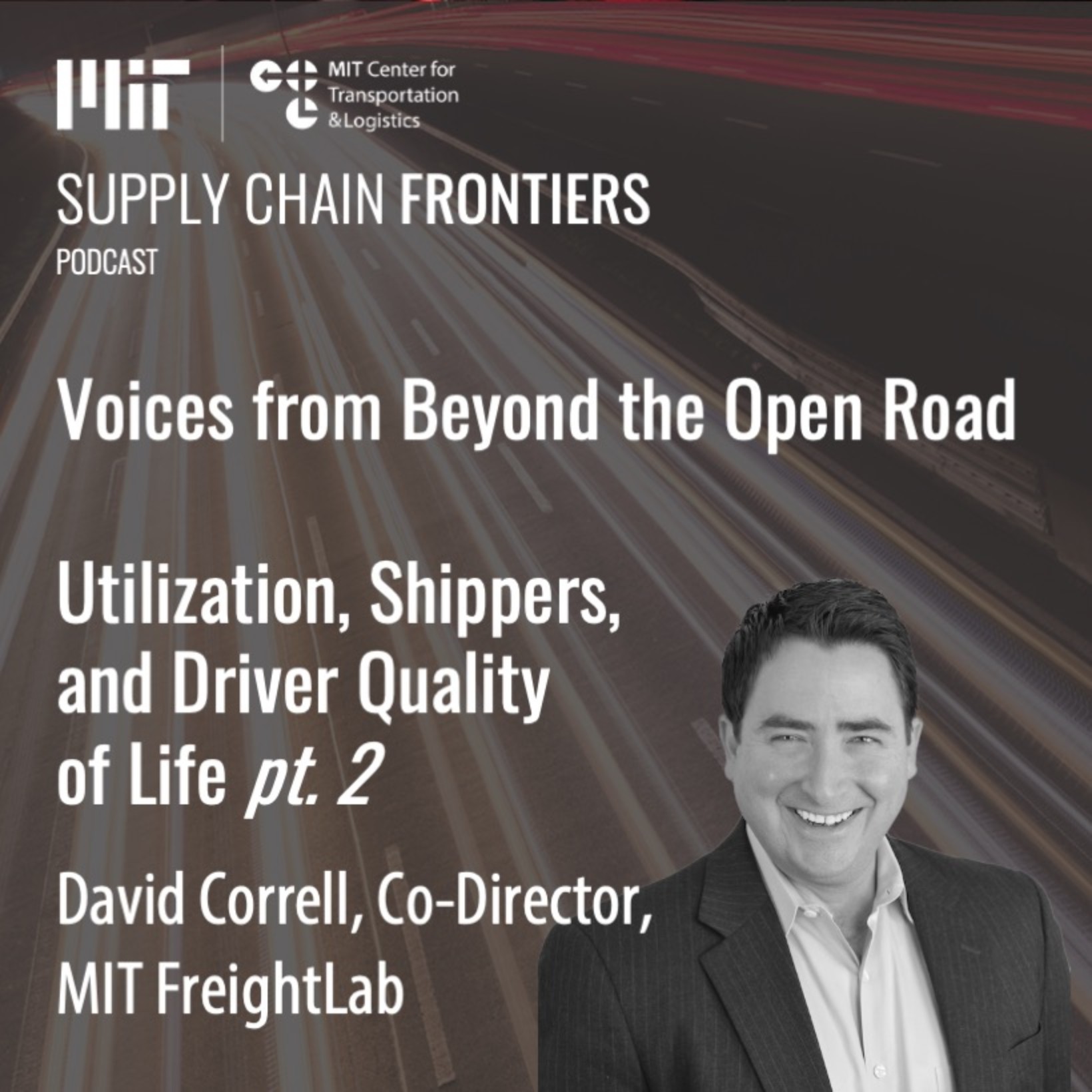
Voices from Beyond the Open Road - Utilization, Shippers, and Driver Quality of Life pt. 2
Earlier this year, MIT CTL's David Correll spoke with over-the-road truckers about their experiences in order to shed light on why it is that U.S. truckers appear to be both scarce and underutilized at the same time.
During the year, Dr. Correll oversaw three MIT SCM master's capstones that addressed truck driver utilization and retention in contrast to shipper and receiver policies and practices
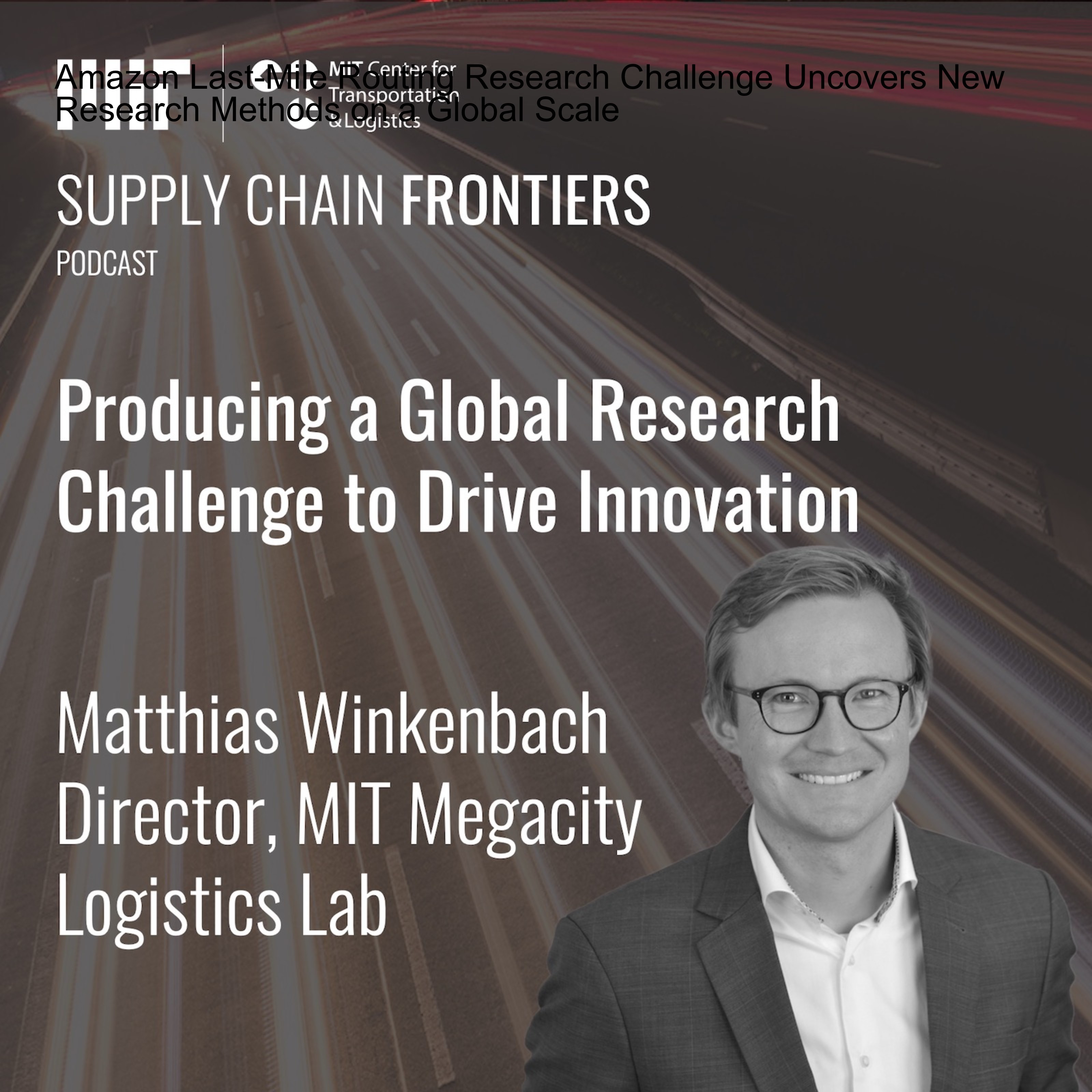
Amazon Last-Mile Routing Research Challenge Uncovers New Research Methods on a Global Scale
The MIT Center for Transportation & Logistics (MIT CTL) and Amazon engaged with a global community of researchers across a range of disciplines, from computer science to business operations, to supply chain management, challenging them to build data-driven route optimization models leveraging massive historical route execution data and machine learning models.
While we congratulated the winning te
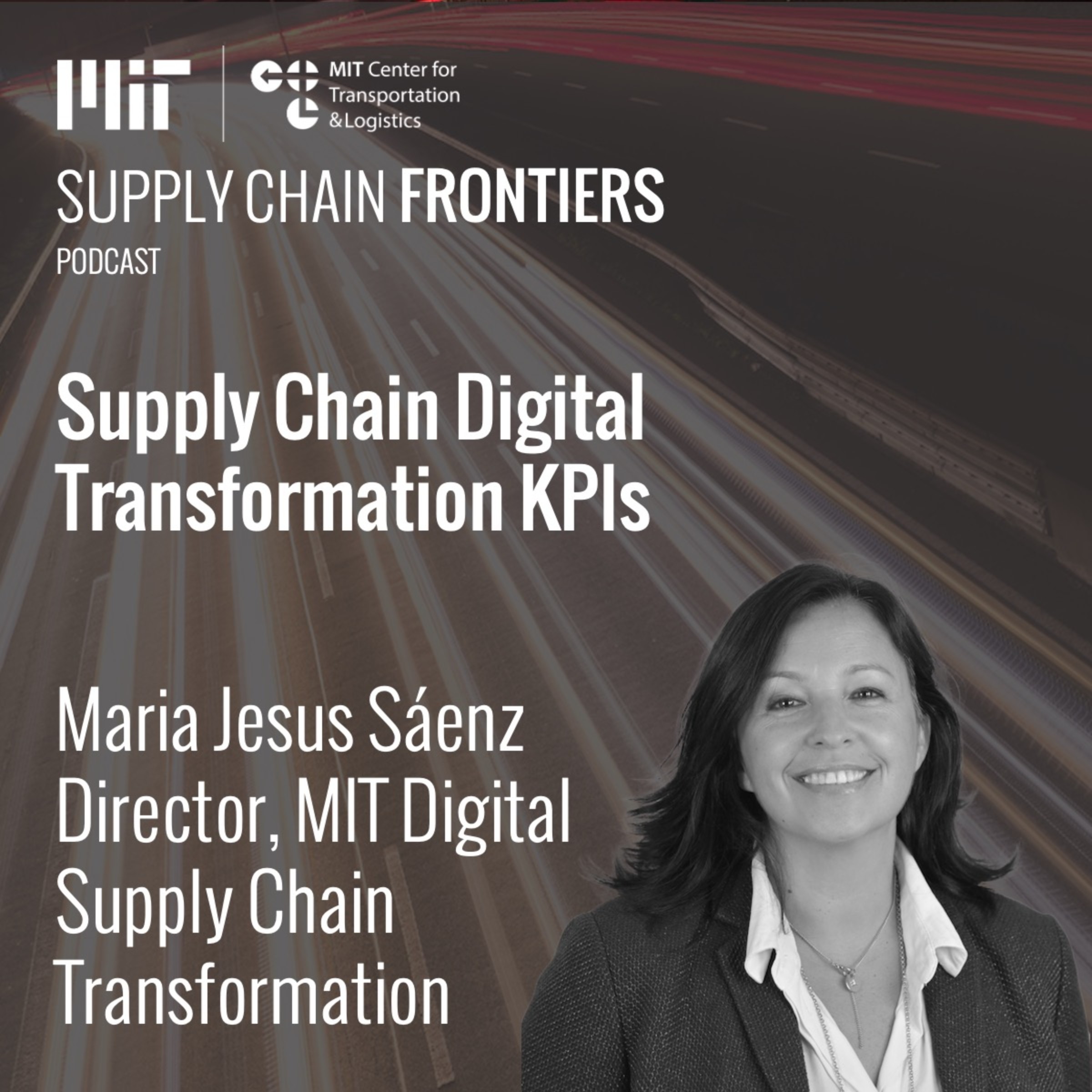
Key Performance and Key Learning Indicators in Digital Transformation
Today, on MIT Supply Chain Frontiers, editorial director, Ken Cottrill speaks with Maria Jesus Sáenz, director of MIT Digital Supply Chain Transformation Lab, about how companies use artificial intelligence and machine learning to identify key performance and key learning indicators during digital transformations.
Sáenz shares examples of how companies may use AI and ML to collaborate on data mode
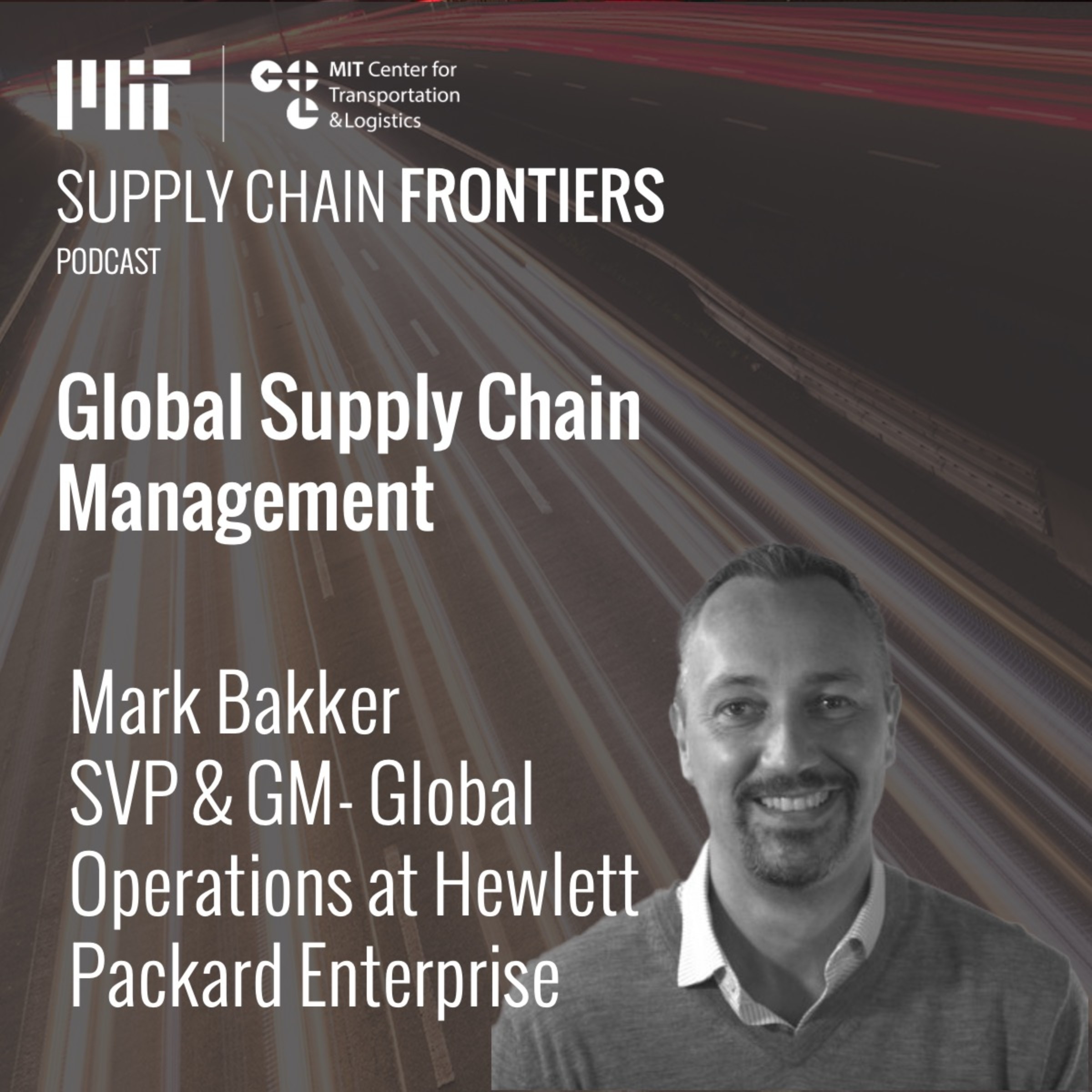
Global Supply Chain Risk and Innovation with Mark Bakker
In today’s episode, Research Scientists Alexis Bateman and Inma Borrella speak with Mark Bakker, Senior Vice President and General Manager of Global Operations at Hewlett Packard Enterprise about the tools and skills needed for sustained global supply chain management when facing disruptions.
Mark shares his insights about how HP Enterprise balanced demand and supply during uncertain conditions br
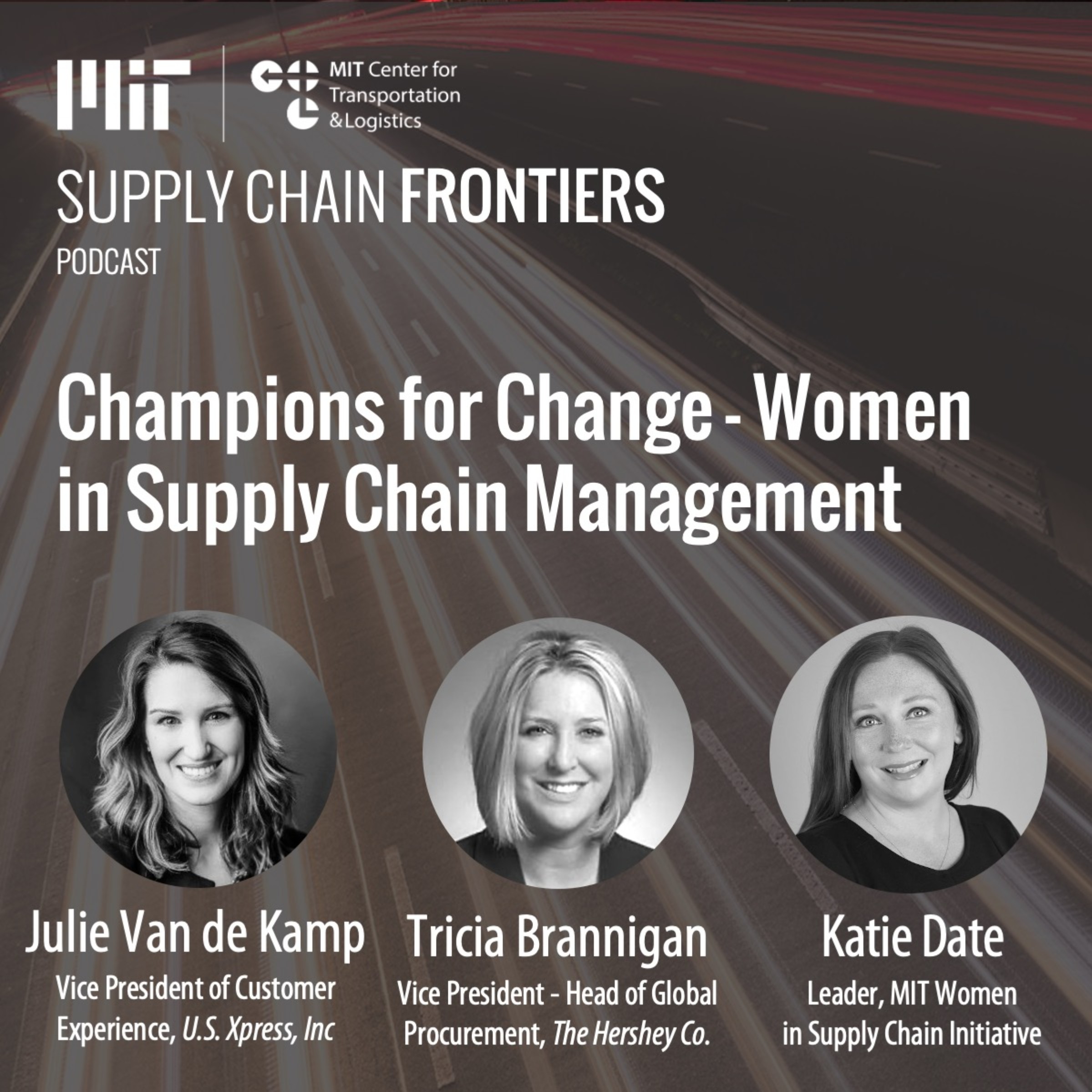
Champions for Change - Women Leaders in Supply Chain Management
This year for international women's day, the MIT Women in Supply Chain Initiative (WISCI) hosted a leadership panel to celebrate women working in the supply chain field. Today's episode offers highlights from the conversation.
Julie Van de Kamp, Vice President of Customer Experience at U.S. Xpress, Inc, and Tricia Brannigan, VP Procurement - Head of Global Procurement at The Hershey Company share

Voices from the Open Road: Utilization, Shippers, and Driver Quality of Life
Supply chains in the U.S. rely heavily on over-the-road trucking to reliably and safely provide essential supplies to businesses and consumers. These networks are comprised of innumerable relationships between shippers who have goods to move and carriers who they contract to move them. It is often warehouse workers and truckers who are the "end users" of these complex relationships.
Today, MIT CTL
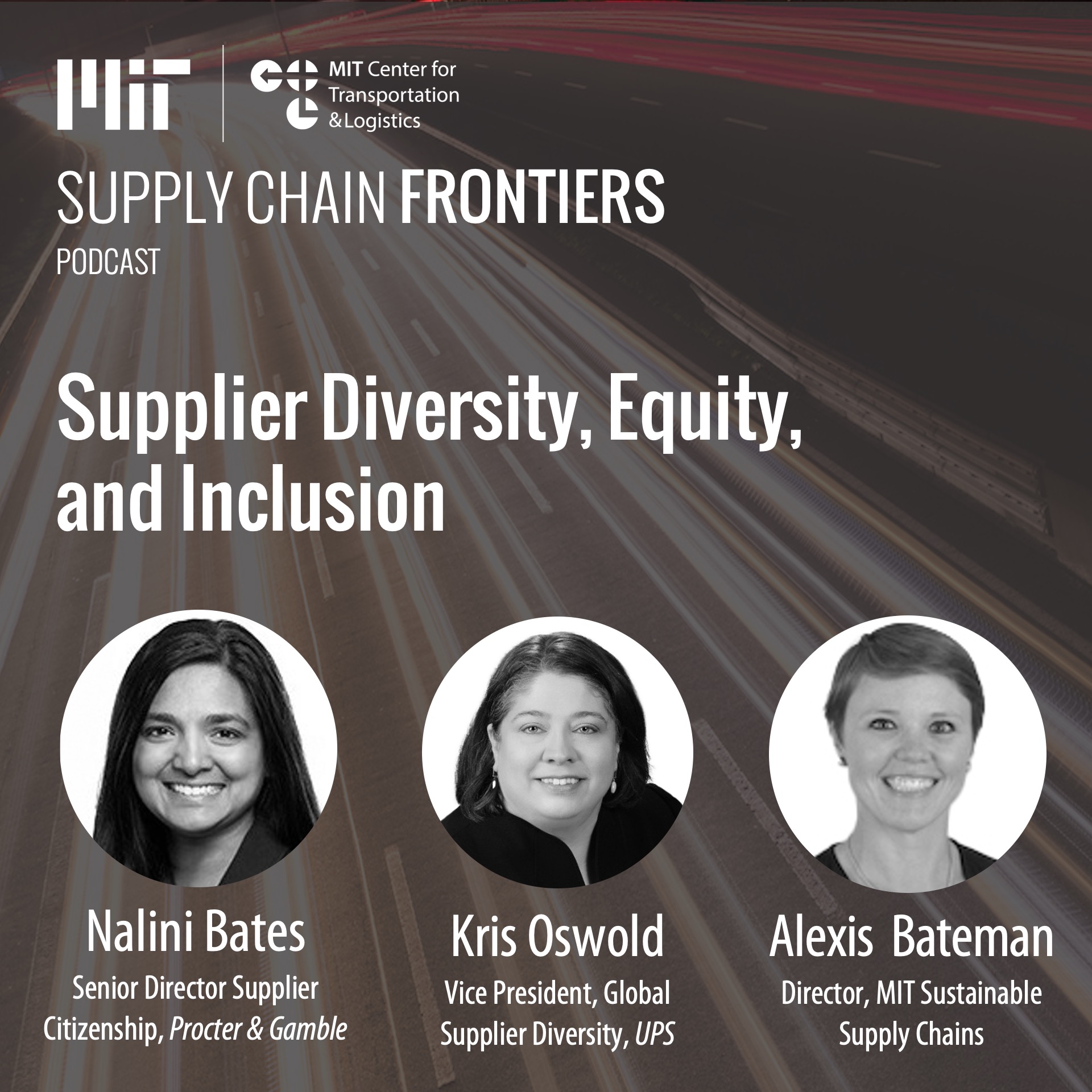
Supplier Diversity, Equity, and Inclusion - Challenges and Opportunities
Initial research indicates that there are both commercial and social benefits to DE&I programs within organizations. MIT CTL and MIT Sustainable Supply Chains make a case for companies to revisit their efforts (HBR article) and, if necessary, commit themselves to take supplier diversity efforts more seriously.
During a recent MIT CTL roundtable*, professionals from across industry met to discuss t

Flexibility for the Future - How Disruption Fosters Innovation
Like never before, companies have learned during the pandemic to pivot quickly across multiple dimensions. They ramped up production, changed their processes, and adopted new technologies, at speed unimaginable before the crisis. In only six weeks, contract manufacturer Flex ramped up its ability to produce ventilators while New Balance designed and produced thousands of masks, in a matter of days
Rapid Systems Assessments for Crisis Response with MIT Humanitarian Supply Chain Lab
Every corner of the globe has suffered from supply chain disruptions during the coronavirus pandemic. Beginning in March with a focus on U.S. food supply chains, the MIT Humanitarian Supply Chain Lab (HSCL) began providing evidence-based analysis to the U.S. Federal Emergency Management Agency (FEMA) to inform strategic planning around the supply chain risks. At around the same time, work was bein
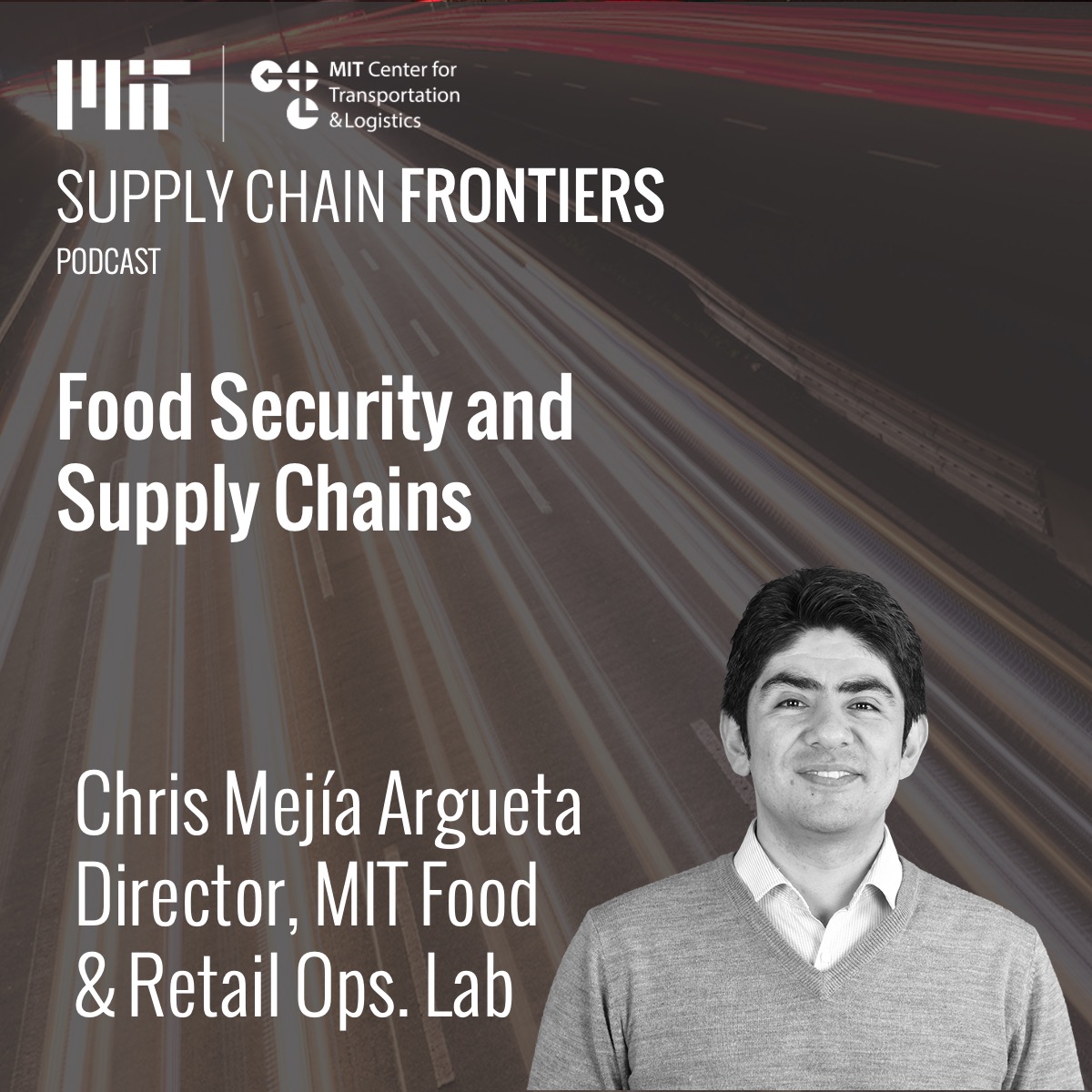
Food Security and Supply Chain Management with Chris Mejía Argueta
Food security is top of mind given supply chain considerations caused by a global pandemic. MIT CTL congratulates the World Food Program staff for their recent Nobel Peace Prize awarded for their work in alleviating hunger. On the topic of food security, MIT CTL’s Ken Cottrill speaks with Chris Mejía Argueta, the director of the MIT Food and Retail Operations Lab about food deserts and some of the

Supply Chain Decision Making and Design in Times of Disruption with LLamasoft CEO, Razat Gaurav
Innovation in supply chain decision making and design has flourished in recent years. The availability of high-quality data coupled with an urgent need to respond to disruption has fostered rapid change in how organizations coordinate, cooperate, and improve their operations. Join LLamasoft CEO, Razat Gaurav in conversation with MIT CTL's Matthias Winkenbach to get a glimpse of how the world's mo
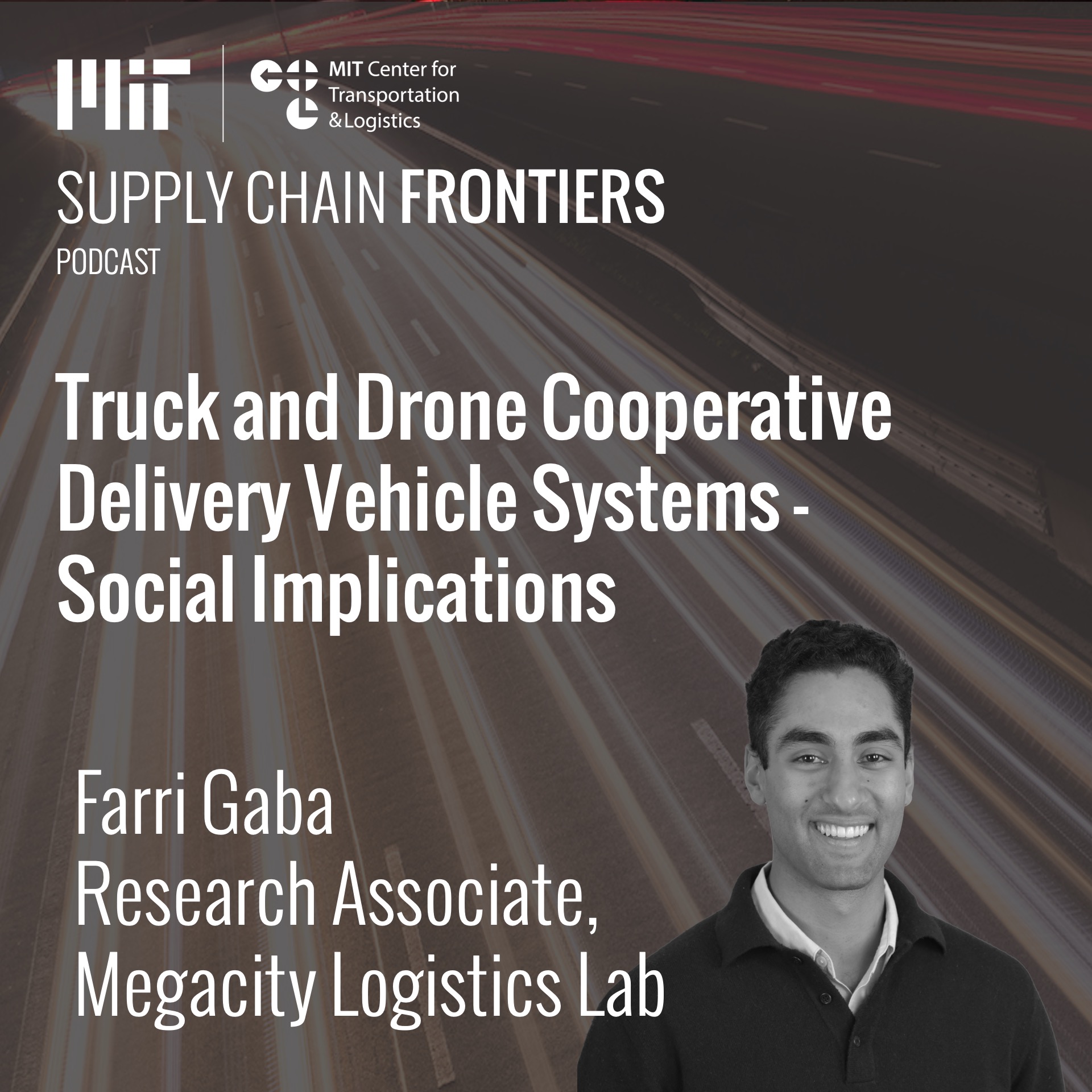
Truck and Drone Cooperative Delivery Vehicle Systems - Social Implications
In the past decade, the logistics industry has experienced substantial growth and its fair share of technological disruption. Particularly in urban settings, consumer demand for same-day or two-hour delivery has ballooned and companies have struggled to meet demand without incurring substantial “last-mile” delivery costs. Farri Gaba, a research associate with Megacity Logistics Lab at MIT CTL, spe
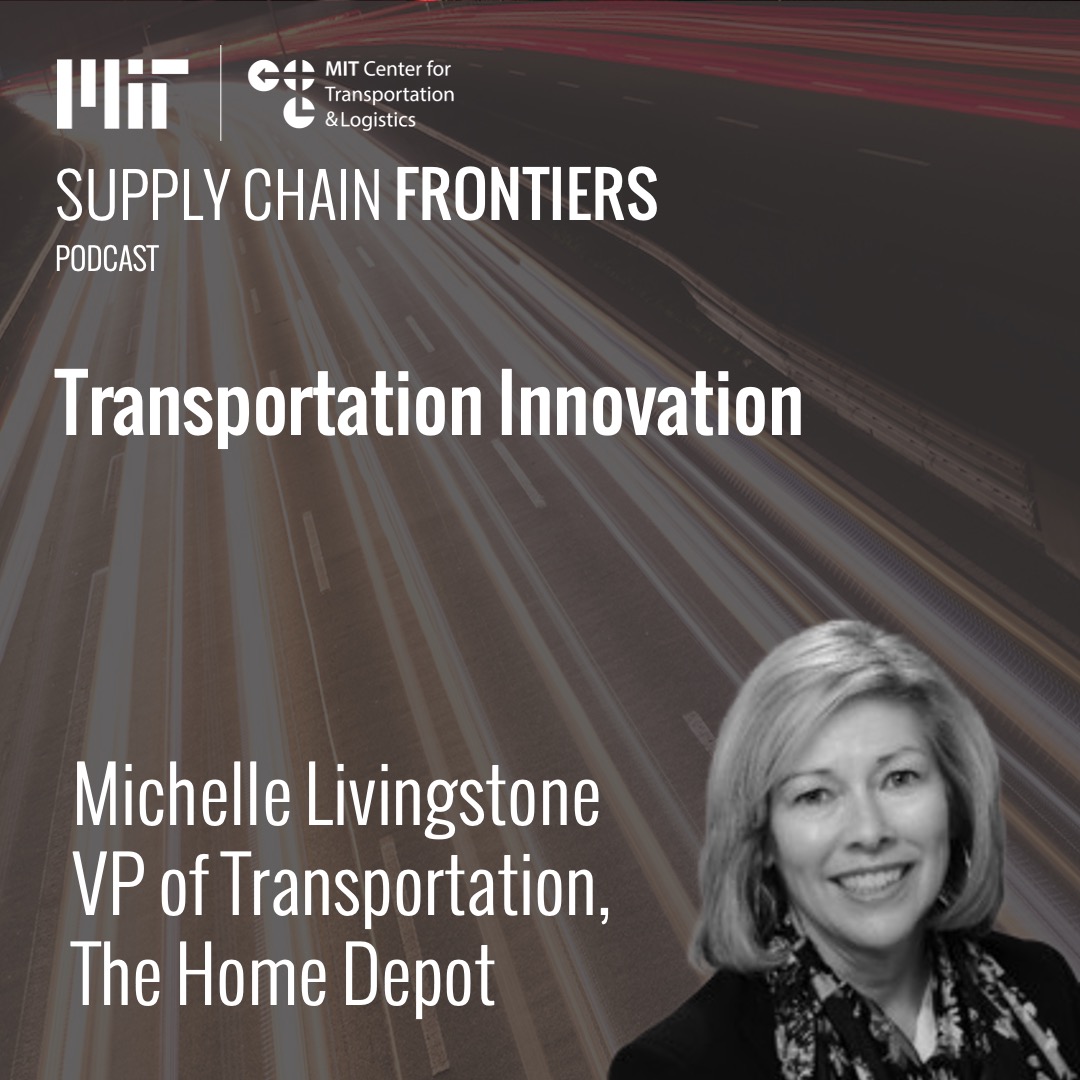
Transportation Innovation with Michelle Livingstone, Vice President - Transportation at The Home Depot
Chris Caplice discusses insights on transportation, people management, and creating the workforce of the future with Michelle Livingstone of The Home Depot. Drawing on over 25 years of experience, Ms. Livingstone comments on her role leading a highly talented team that oversees the movement of all domestic and international shipments into Home Depot‘s distribution centers and outbound to stores. T
50 Years of Earth Day: MIT Perspectives in the Face of Radical Change
Recorded on the 50th Earth Day to explore what the path forward may look like to the 2050 Climate Goals and a more sustainable future in the face of radical change. We explored the ecological, political, technological, and industrial perspectives on the intersections of sustainability, climate change, and innovation, what this means now and for the future.
Hosted by MIT Sustainable Supply Chains
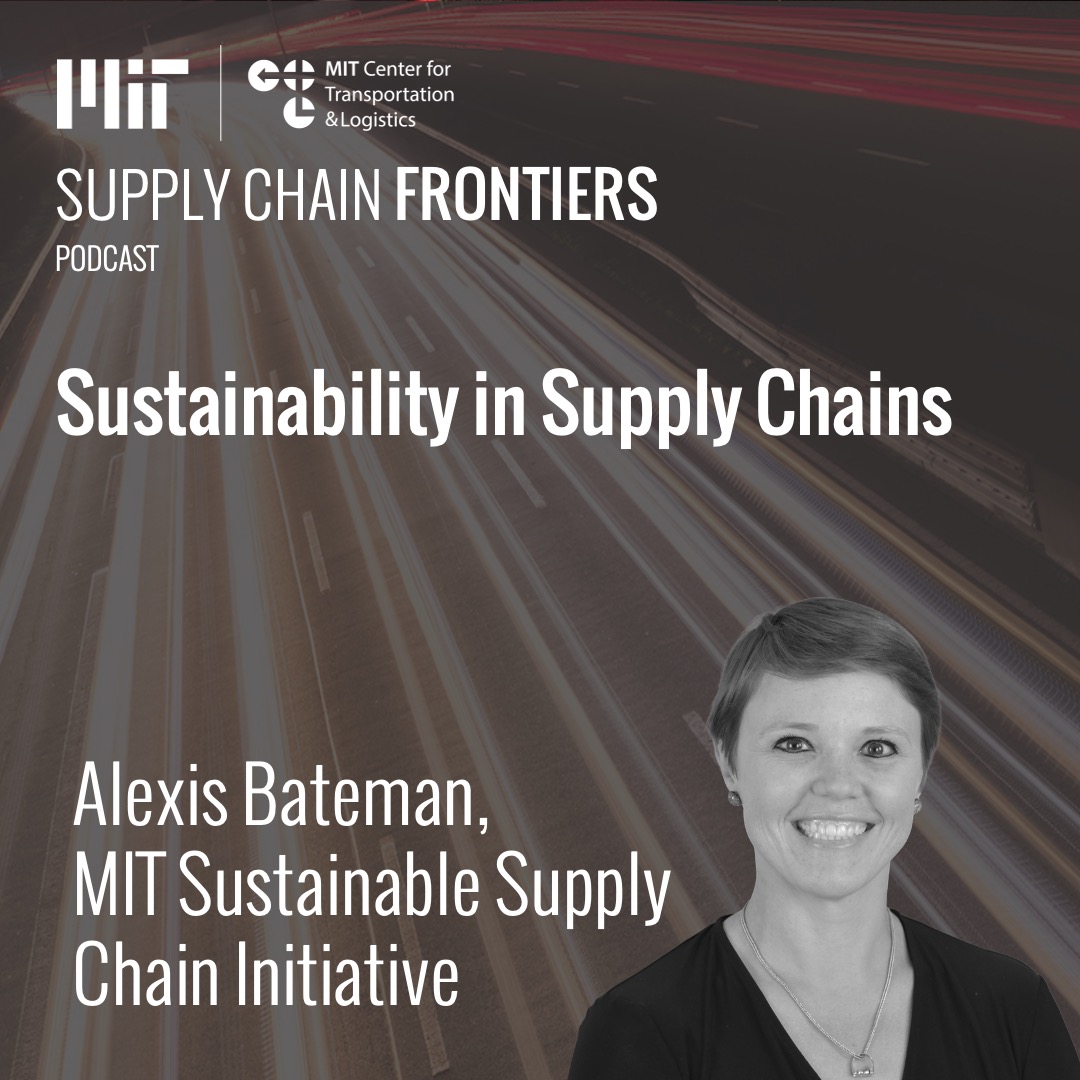
Sustainability in supply chains with Alexis Bateman, CTL Research Scientist and Director, MIT Sustainable Supply Chain Initiative
Join MIT CTL's Ken Cottrill in a candid conversation on the State of Supply Chain Sustainability research area. Learn about a comprehensive new study underway, the first of its kind. Learn more at https://sustainable.mit.edu/
Download the full transcript here.
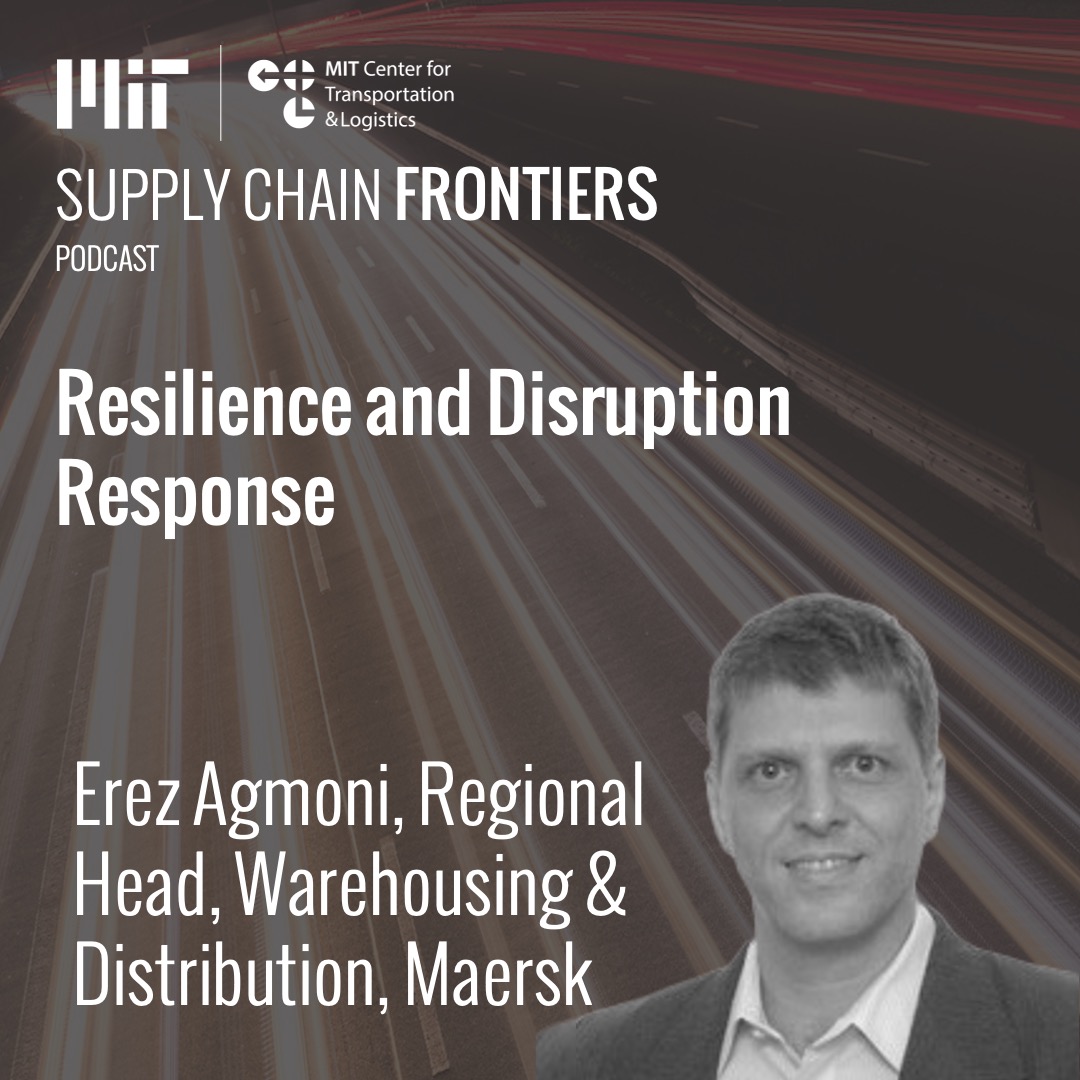
Resilience and disruption response with Erez Agmoni, Regional Head of Supply Chain Warehousing and Distribution - America at Maersk
Join MIT CTL's Alexis Bateman in conversation with Erez Agmoni about disruptions, supply chain design, and resilience tips for the supply chain and logistics professional. Interview recorded as part of mit.ctl.sc3x - Supply Chain Dynamics. Learn more about these free online courses here.
Download the full transcript here.
Recommended

History of the Earthquake and Fire in San Francisco

Fox news

K-Drama Obsessed Mamas | Beyond “Just One More Episode!”

True Crime Classics

The Healer Revolution

Becoming: HER with Nikki Spoelstra

Booked, Blonde & Busy w/ Olivia Ponton
McKinsey on Consumer and Retail

megahired.com

Hard Knocks Podcast

Effective Weight Loss for Moms | High protein, Strength Training, Lose Weight, Meal Planning, Fat Loss, Healthy Habits

The Human-Animal Connection - Pet Life Radio Original
